
In short
CMO Confidential - Episode Summary: The Top 5 Mistakes CEOs and Boards Make When Hiring CMOs
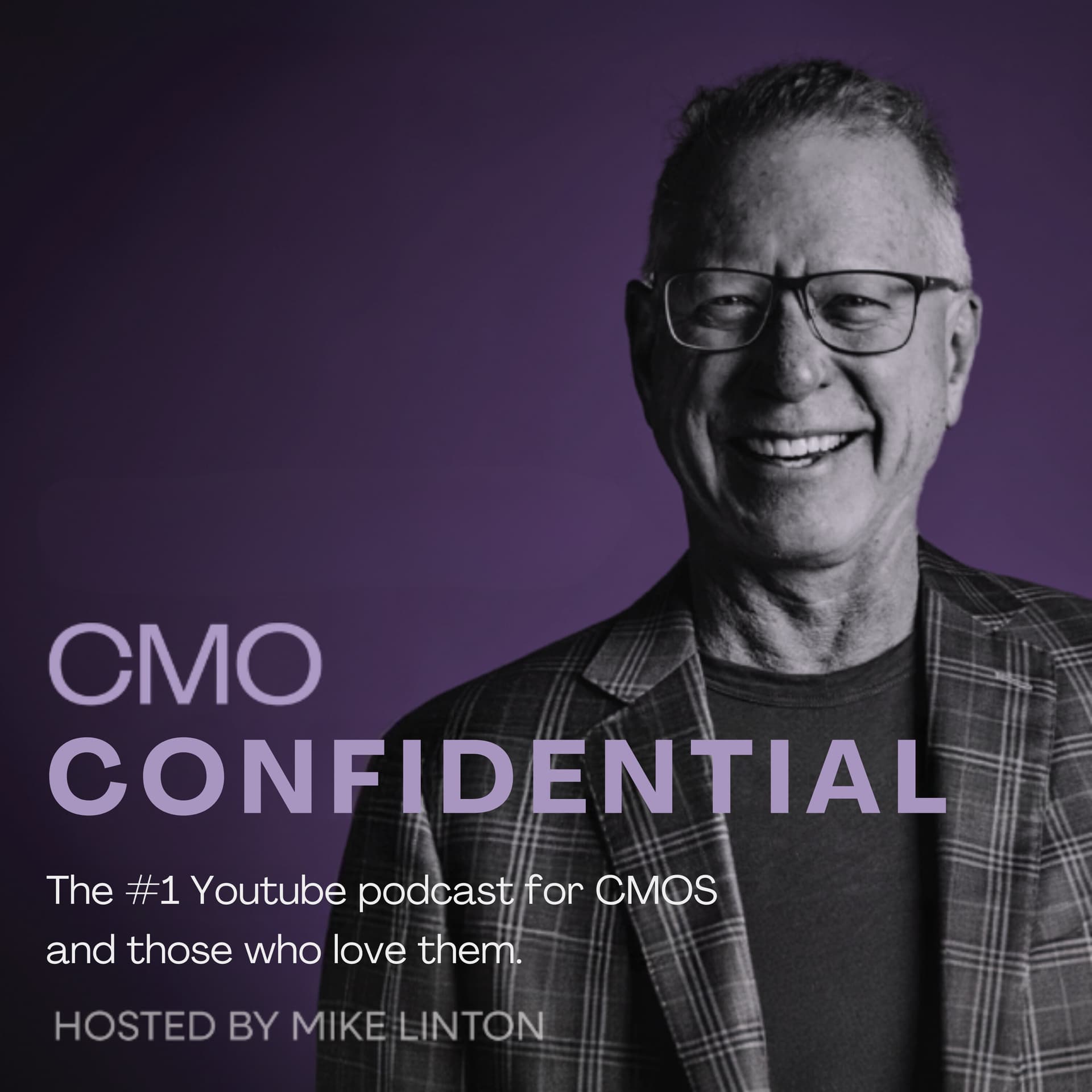
Podcast Overview Title: CMO Confidential Host: Mike Linton Guests: Kate Bullis and David Wiser, Managing Partners at ZRG Partners Description: This episode discusses common mistakes CEOs and boards make when hiring Chief Marketing Officers (CMOs) and how these errors can be reframed through entertaining movie themes. The conversation includes tips on enhancing the hiring process to ensure alignment and effectiveness in marketing leadership roles.
---
Key Themes & Mistakes
- Play It Again, Sam (Playbook Thinking)
- Mistake: Companies often seek CMOs who can replicate previous successes, relying too heavily on established playbooks rather than innovative approaches.
- Advice for CEOs: Avoid narrow thinking; consider frameworks over playbooks to foster innovation.
- Candidate Insight: Inquire about the history of the previous position and ask for specific KPIs to understand expectations.
- I Want the Orchestra (Overly Broad Role)
- Mistake: Expecting a CMO to be an expert in all marketing functions (digital, brand, product, etc.), similar to an orchestra conductor who can play every instrument.
- Advice for CEOs: Focus on the essential skills needed for the CMO role and recognize the need for external support and expertise.
- Candidate Insight: Listen for signals regarding the desire for a "hands-on keyboard" approach; this indicates a possible mismatch in expectations.
- No, No, It's Really a CMO Role (Disguised Demand Generation)
- Mistake: Positions labeled as CMO roles that are really focused primarily on demand generation or lead acquisition without broader strategic responsibilities.
- Advice for CEOs: Clearly define the role's expectations and align the title with the actual responsibilities.
- Candidate Insight: Seek clarity on KPIs being used to measure success and whether the role includes broader strategic functions.
- Stay in Your Lane (Limiting Influence)
- Mistake: Treating the marketing function as merely an execution arm with no agency to influence broader company strategy.
- Advice for CEOs: Ensure the CMO is included in cross-functional discussions to leverage market insights effectively.
- Candidate Insight: During interviews, ask cross-functional peers about their expectations from the marketing function to gauge the role's strategic involvement.
- Death by Committee (Decision-Making Paralysis)
- Mistake: Involving too many stakeholders in the hiring process leads to diluted decision-making and misalignment on the role's expectations.
- Advice for CEOs: Conduct alignment meetings with key stakeholders early in the hiring process to clarify expectations.
- Candidate Insight: Be aware of how many stakeholders are involved in the decision-making process; too many can indicate a problematic environment.
---
Key Takeaways
- Current Job Market Insight: Predictions for 2025 suggest more robust hiring activity for CMOs, especially in startups, as companies pivot back towards growth.
- Importance of Alignment: Clear communication and alignment among stakeholders are critical to avoid common hiring pitfalls.
- Focus on Outcomes: Companies should prioritize desired outcomes and strategic goals over rigid qualifications during the hiring process.
---
Practical Advice
- For Companies: Define the role based on future business goals rather than past qualifications, considering the evolving nature of marketing.
- For Candidates: Ask pointed questions about role expectations, KPIs, and cross-functional collaboration to ensure alignment before accepting an offer.
---
Humor Segment
- Funny Stories:
- A CEO had an unexpected video call incident with her daughter jumping on the bed.
- An interview featured a candidate with a camera angle that made it appear as if antlers were growing from their head.
---
Conclusion This episode of CMO Confidential provides valuable insights into the intricacies of hiring CMOs, wrapped in engaging movie-themed metaphors that highlight the common pitfalls. With actionable advice for both CEOs and candidates, the discussion emphasizes the importance of strategic alignment and the evolving role of marketing leadership in today's business landscape.
Written by AI. May contain mistakes. Listen to the episode to check what was said.
Transcript
Automatic transcript. May contain errors.0:00The CMO Confidential Podcast is a proud member of the I Hear Everything Podcast Network. Looking to launch or scale your podcast? I Hear Everything delivers podcast production, growth, and monetization solutions that transform your words into profit. Ready to give your brand a voice? Then visit IHearEverything.com. Welcome to CMO Confidential, the podcast that takes you inside the drama, decisions, and choices that go with being the head of marketing. Hosted by five-time CMO Mike Linton. Welcome marketers, advertisers, and those who love them to Chief Marketing Officer Confidential. CMO Confidential is a program that takes you inside the drama, the decisions, and the politics that go with being the head of marketing at any company in what is one of the most scrutinized jobs in the executive suite.
0:53I'm Mike Linton, the former Chief Marketing Officer of Best Buy, eBay, Farmers Insurance, and Ancestry.com. I'm here today with my guests, Kate Bullis and David wiser. Now, today's topic, the top five mistakes CEOs and boards make in hiring CMOs. Now, Kate and David are really big players. They're the global marketing and sales practice leaders of ZRG Partners, and both of them are true marketing champions. Full disclosure, I've known both of them for more years than I think any of us would care to share, but it's great to have them on the show. So welcome to CMO Confidential. Thank you, Mike.
1:35Thank you, Mike. Good to be here. Yeah. All right. Let's start by talking about the job market overall. We had an election. Inflation seems to be holding on. And of course, we have AI, which is, I guess, saving everyone or threatening everyone. What are your thoughts on the job market for CMOs in 2025? And when you talk about that also, do you anticipate more or less movement in the CMO space as we look to this year? David, you want to take it? Sure. Well, first of all, the search industry was relatively flat overall in 24 versus 23, coming off of two monster years during COVID. I think everybody is pretty optimistic about 25.
2:20Like you said, Mike, we've got inflation that should be coming down. I think whether you like or don't like the incoming administration, I think people agree they're probably pro-business. Cost of capital should come down. Tax rates, corporate tax rates should come down. They want to bring jobs back to the U.S. So I think all that bodes well for hiring. Yeah. So maybe a little tailwind for CMOs. So if we think a lot of movement or just regular movement? I would actually be out there looking for more or what do you think? I would actually argue that if we were to divide the market into startup and early stage companies and then kind of growth and middle stage companies and then big publicly traded companies, it's that first category that we expect to see more of the action happening in 2025 than in 2020, certainly 2024.
3:26and probably even 2023. We saw continuous action for CMO hiring in mid-stage and large cap companies. But when markets get soft, it's the smaller companies and the startups that suffer the most. And so when we hear about CMOs who are on the street and actively looking, more of them more often tend to be those who have been in the smaller company arena. And now, you know, we've kind of gone through the whole correction in value and everything else. And now maybe this is coming back in 2025. That's what you're saying. Yeah. And we think all boats are going to rise. I think David and I definitely agree that hiring across the board in all three of those market segments that I just named, that's going to continue.
4:18Private equity wants to invest. We're going to see more events this year and IPOs and acquisitions. And so all, you know, as that trickle down happens, everybody's going to hire a little bit more. Yeah. To move back maybe towards more focus on growth than that rapid pullback to profitability. Profitability. Yeah. Which was nice, but you know, it, you know, the markets shift, right? You have to go to where you get paid and now you have to, now that you're profitable, you have to grow the business. So let's, with that as background, we have this topic for today's show, you know, which is the top mistakes CEOs and boards make when they recruit a CMO.
4:57And we want to go, you guys have done a ton of research. It's not just the top of line research, which says, oh, unrealistic expectations or misaligned metrics. It's deep. And you classified these in like movie themes or buttons. And I want to go through each of these five themes and let's discuss the questions COs and boards can look at themselves and say, am I one of these bad themes? Because all these are bad themes. And the questions candidates should ask to say, am I about to enter a bad movie, which features me in one of the starring roles as the person that is the tragedy in the movie. So as we go through these themes, everybody can write themselves in the story.
5:47But the first theme you all came up with was play it again, Sam. So let's go into play it again, Sam. That's theme one. Yeah, I'll jump in. So first of all, I just want to make a comment. And that is, you're absolutely right. A CMO entering into a company that has problems like the ones we're about to describe could end up being the person that loses. But I would argue that the party that loses the most, if they fall victim to some of these issues, are the companies themselves. Because I would say that of these five things that we're going to talk about today, at least four of them really are all about narrowing the role too much.
6:39And the company that narrows the role too much could potentially fall victim to itself, so to speak. Yeah, in a bad movie like this, everyone loses. It's just a matter of when you lose, probably. Right. Yeah. So our first category is played against Sam, which is another way of saying playbook. Bring me, so this is the company that David and I are often approached by that says, just get me the person who's already done this before. They know our products, they know our category, they know our size and scale, and they've played this movie before as the CMO. just get me that guy, otherwise known as fetch.
7:25And that's when a company is just thinking, in my argument, too narrowly saying, just bring us the person who can airlift their last playbook and drop it down here, and we'll be good. And we would argue that that is a narrow way of thinking and short-sighted. And it also assumes that all the companies will operate exactly the same way in the same industry, regardless of anything else. Forever and ever. Yeah. And that all the culture will accept everything that was done at the other company. What, how do you, if you're a candidate, what do you ask people? And when you're, when you're in the interview process to make sure you're not just, you know, being recruited for the wrong reason here.
8:10Yeah. I think asking questions around the history of the position of the person who was in the role before, asking a lot of questions about why are you making this hire right now? You know, the part of the job description, which often gets overlooked, but I consider to be one of the most critical sections is the dashboard. What are the KPIs for the role? If you give me a dashboard of KPIs, I can write the scope of the role. And that gives you a lot of clues around their expectations. By the way, I was going to mention, Mike, some of the industries are more notorious for this than others. And by the way, it doesn't mean that looking for the same old thing again is the wrong way to go.
8:49But in some cases, there's a better way to go. So you want to name any of those notorious? Yeah, well, sure, sure. The pharmaceutical industry is the one that really jumps out. I've received calls from CHROs who will say, look, we need to grow. We need to be more innovative. what we're doing doesn't work and and I ask them well who are you looking for well somebody who's been in pharma for 30 years like well what could possibly go for the innovation right right so that's just one example and again it doesn't mean it's the wrong way to go but in a lot of cases there's a better way to go right I again I think Dave is making an excellent point here just playbook in and of itself is not necessarily bad it's just again it will ultimately at some point be narrow and it won't be enough because if eventually your company if everyone is doing their job is going to evolve and then if your CMO is just a playbook drop it down and right They won't be able to take it to the next level.
10:00We argue when we talk to CEOs about this mindset to think about framework versus playbook. I think that's a good one because the playbook, by definition, if it's already written, it's not very innovative. It might be innovative to you, but it's not going to be innovative to the market. So that's played against Sam. The next one is, I want the orchestra. Yeah. Let me jump in on this. This is probably a scenario that I see the most, where once we start talking with the CHRO or the CEO, picking apart what they expect the CMO to do, what they want marketing as a function to do, and we start drilling down then into what's the profile of the candidate?
10:48Where do they come from? What experience is they bringing? and they will literally list off everything. Well, I want a digital native. I want someone who really understands brand. They need to be a data scientist. They really need to be deep on product. Oh, Marcom and PR are right down the list. And the reality is even the best orchestra leaders have only played half the instruments. So we want to remind CEOs that unless you're going to have an army of one, literally it's the CMO with no support internally or externally, you've got to focus on what you really need from the CMO, recognize that you've got other layers, external suppliers, agency partners who bring other expertise and capabilities.
11:32Right. You want a conductor. The CMO should be more of a conductor than capable of playing the clarinet, capable of playing the violin, capable. It's enough to be dangerous in every function of marketing. But frankly, David and myself, Mike, even you would probably argue that the role of the CMO has become astronomically wide and doesn't seem to be stopping anytime soon. And with that width, you keep throwing in more and more things that you expect the CMO to personally be expert in. And you'll miss the big picture. And then you're also usually throwing in, I want an MBA from a really good school and 20 years of experience in the industry.
12:21And there isn't anybody that fits the bill. And then the other thing, I buy the conductor thing. And you're not just conducting the marketing orchestra. A lot of times you have to conduct ideas through the company. And if they're doing all these checkboxes, often they miss the concept of leadership and communication skills and all the other things that actually make the orchestra work. So how do I know if they want an orchestra? What's the question I should ask in the interview? Well, one of the things that I listen for when a CEO says, I want a CMO who's really hands-on keyboard. That's when my antenna go up.
13:00Hands-on keyboard is code for, well, of course they need to understand Google Analytics, right? Doing things that level two, level three marketers should be doing or agency partners should be doing. So, you know, listening for those kinds of signals that suggest they want someone who's going to play every single instrument. I would jump on that and do like a little plus one. Another thing that I hear that often, you know, puts a flag up in this category is the CEO and board knee jerk to the background of the person, the list of qualifications versus the conversation about what needs to be done to address our goals.
13:44Oh, that is really interesting. You could tear that apart in the interview thing too by sure because they ask you and then that that that hands on keyboard and
13:59it shouldn't you know it's it's our job my job david's job as the search partner to be able to back in to what the right profile should be. And if there are spikes in this conductor's background, fine. But to expect the conductor to be equally expert in every facet is to doom the search. Yes, we killed you because you were, we killed your candidacy because you're terrible at the tuba. So number three. No, no, really. It is really a CMO role. It really is. Tell us that one. In a way, David, would you say this is true? This one is the exact opposite extreme of the last one. So the last one was we want someone who can do it all and not really be a leader but a doer if they have to across every uh facet this one is all about um yeah well it's a cmo and then you get under the hood and what they really want is really just an outstanding tuba player um but we're going to call it a conductor or someone that's great at google analytics right which is exactly yeah this pops up a lot too on the b2b side where when you when you drill it all down all they want is you know digital demand gen they don't want somebody thinking about the brand they really don't want you drifting into the product right um and and by by nature of the title they're kind of overstating the scope of what they really expect So, more often than not, what I see, especially on the B2B side, is this need for a spike in demand generation here.
16:02This is the, ultimately, we're calling it a CMO, but really it's the person that we just need someone to bring in the leads. And beneath this is the thinking, I think, you guys tell me if I'm wrong, which is, we built it, we know exactly what it is, we know the market, your job, go sell it. And if you take that job and the product is wrong, or the market isn't right, you are now selling something against everything, but you have no power to change what you're selling. Is this a fair way to look at this job? Yeah, I would say this is the, yes, I think that the really important message here is that it's not bad to know what your priorities are for your CMO.
16:55If your priorities at the moment happen to be less around brand and more around revenue and lead generation right now, that's fine. But let's either let's call it a priority for now and hire a CMO who's capable of working on that more than anything else right now. Or let's just call it what it is. What you really want is a head of demand generation. Let's call it that. Right. So these companies, if they were really looking hard at what they wanted, they would hire a VP of acquisition or something like that. that they wouldn't hire a CMO. Yeah, call it what it is. Performance marketing or revenue.
17:40We get this a lot. Revenue marketing, growth marketing, acquisition marketing. But they're all the same word for, I mean, all different words for kind of a similar theme. So how do I, as a candidate, I mean, a lot of times you can see it in the job spec is my guess. If you know, I don't interpret. What questions should I be asking in this? No, no, no, really. I mean, it's a CMO role movie to make sure I'm not going to mismatch with this job. Yeah. Go ahead. I think I think we've talked about this. It gets back to really picking apart the expectations of the work. And how are you going to measure my performance?
18:24What are the KPIs that you're setting up for marketing? That's going to tell me whether this has anything to do with anything beyond demand, Jen. does it have to do with product? Does it have to do with analytics? Is innovation part of this? Maybe we need to renovate the brand. Have we done segmentation? If, if the C, if that's not part of the spec and it's not part of the KPI, then, then CMO might be the wrong title. And again, that's not necessarily a bad thing. Maybe the company's not at a stage where a quote full blown CMO is appropriate, but, but let's, let's make sure the title matches the work matches the dashboard.
18:59Right. I couldn't agree more. How, how this person, is measured will likely tell you just about everything you need to know about where you're going to be spending all of your time. Got it. Okay. Scenario four, movie four, stay in your lane. Or if we were in on the baseball field, it will be stay on the mound. You're a pitcher. That's all you do. So let's talk about stay in your lane. This is the one that I also like to call as otherwise known as CMO, the Yes Center. And so this is the idea that where the company sees the marketing team just as an activity center. We'll tell you what we need. You do it.
19:49Thanks very much. Aye, aye. And that is, once again, another example of the narrowing of what the CMO can and should be capable of. And so this is when the company is expecting the CMO to just do marketing, but not influence anyone else side to side in the organization. So when the CMO has access and should have access to all of market insights, shouldn't they be sitting down and helping with product direction? And isn't a lot of this often at very sales-driven companies, or is it more widespread than that? It could be sales-driven. It could be product-driven. Product-driven, yep. I think this one's pretty easy to figure out as a candidate.
20:48And it could inevitably at this level, when you go in for final interviews, whether that means you actually go into a building these days or you're on video, you're going to be talking to your cross-functional peers. And when you start asking them, what are your expectations of the marketing function? How are we going to work together? You're going to learn everything you need to learn about which lane you're expected to stay in. Got it. Yeah. It's a very, it's not strategic at all. um it's reactive versus proactive and this is when you get in the stay in your lane job unless the company is on fire and doing everything right you're going to be held accountable for stuff you have no power in right well i actually i think yeah the stay in the lane job is really just um like i said it's it's it's really allocated to just do your job stay in your lane be quiet.
21:47We don't need you to go anywhere outside of just the purview of marketing activity. Got it. So this is a great job for somebody who has 10 tools on their tool belt, but is okay only using three and somebody who doesn't really see great challenge in expanding their capability and their influence. And there are people out there where that's what they're looking for. So that might be the right job for that person. Got it. Which brings us to the last theme, name death by committee, which is just a great name. Death by committee. You're interviewing for a death by committee job. Let's talk about death by committee and what it means.
22:28Well, I'll start. And this is when the organization either lacks alignment on what is needed in the role. Or, and this is probably what I see as often, there may or may not be alignment, but there are so many decision makers involved that have an equal voice when the CEO, assuming the CEO is hiring for the CMO, when the CEO has empowered so many people, either at the peer level or, and including the board to throw in on their decisions. We cannot align on what the ultimate solve is, because of course, this isn't fetch. This is search. I do love the fetch thing. That's a good CMO. It's so important to empower the right people and not so many people that the decision can never be made.
23:30And is committee a lot like everyone gets to vote on your stuff if you're the CMO, or is it even more unstructured than that? Well, I think what a lot of CEOs or hiring managers will do is they'll take the draft job description, they'll send it to the internal stakeholders, and they'll say, hey, do you have any comments? Are you aligned? What are your thoughts? They might get something back that's meaningful. They might not. But to Kate's point, this is really critical. I mean, this is worth the CEO having a meeting of anybody who's going to be on the interview panel, anybody who's casting a vote, and have a conversation walking through the work, the dashboard, what they're going to be held accountable for, and who we're looking for.
24:15I mean, Kate and I have run into plenty of searches where it's the bottom of the ninth, we're ready to put on an offer, we get a call saying, hey, someone from the board says, I think we need to be looking for someone different. Oh, right. Did you have that conversation with them up front? So this is avoidable. And David and I, that's usually part of our process. When we launch a search, we say to the CEO, we want time one-on-one with the major stakeholders so that we can round back and make sure that there's that alignment early on. And if there's more than seven or eight stakeholders, that's a flag right there that this could be a management, I mean, a committee issue.
25:03So when you two explain the five themes, which are hilarious themes as well, and in the rearview mirror, you can see these really clearly. You can even see them clearly sometimes just looking through the windshield. But still, a lot of these things still happen badly. Badly. The bad movies get made. So when you talk to HR CEOs and boards and you tell them all this stuff, why does it, why do they still end up staying in a bad movie? Yeah, I think part of it is just the urgency to solve the problem, right? Somebody gets recruited out, somebody is asked to leave, somebody gets another job internally, the role is open.
25:51There's just urgency to fill it. And I think some companies will gloss over a lot of these conversations, because they just want to see action. Right. And I would also argue, and I think we've spoken about this. I know David and I speak about it a lot, and Mike, we've spoken about it before. Another major issue that doesn't come up overtly when we look at these five themes is just the struggle of the definition of CMO in the first place. So many of these stakeholders have different ideas for what can and should the CMO be responsible for. So it's not just, well, I lead product, so I want a CMO who will be really great at helping me with product marketing.
26:41Well, I'm the head of revenue, and I really want a CMO who's going to be terrific at filling my pipeline. Those things are fair, considering the audience. But when you've got wildly different expectations because of definition issues, that's a separate thing. And that's when the power of the CEO must come into play. We need a leader to be the leader and say, you might all have different ideas, but we need to do a sit down before we go into the market to make sure that we're mostly aligned, if not completely aligned on what is critical. and then ultimately someone has to make this call. And hold to it because if I go, if these are all bad movies and I would have the ultimate disaster movie, it would be the first four movies, play it against Sam, I want the orchestra, no really it's a CMO role, stay in your lane, all rolled into death by committee where every other function had a vote and a different opinion.
27:42And that would be like the Titanic meets, you know, into thin air or something like that as a movie. so um which is i think a good way to wrap the five uh five movies hey mike can i just throw one other thing out real quick of course this may not be movie level this may be maybe this is just a tv show but the other big mistake and it's more how the search is handled and that's lack of urgency um decades ago my pastor told me if you want to know what's important to somebody look at how they spend their money and look at how they spend their time. And we, we searches can go sideways in a hurry when there's not urgency and when it's not a priority.
28:23I mean, rest assured, I tell our clients, if you're interested in Stephanie, if you're interested in Steven, there's three other companies out there chasing them. And you have to make this a priority. If the search drags on, you start to lose people and it sends the, it sends the wrong message to the marketplace. perfect i won't even go into other disaster movies like the hindenburg or something but but you guys have laid out a really good picture which brings us to our traditional last question it's two-parter you can take one or both but you must take at least one funniest story you can share on the air and or practical advice we haven't discussed yet take it away I'll do you go first okay I've got two very short funny scenarios both are COVID related we were doing a head of marketing search for a food company I'm not going to name them I'm on video with the CEO and all of a sudden I covered up my face and she said what's the problem I said please take a look around her five year old daughter was jumping naked up and down on the bed.
29:34And I just did not think it was appropriate for us to continue the conversation. Second COVID story, I was interviewing a fella whose camera was obviously at the bottom of his laptop. So you get this looking up angle. Behind him were antlers from something he obviously shot and killed years ago. The problem was the antlers perfectly stuck out from his head. Mike, I'm going to find that picture and send it to you. We will post it in the comments because that would be in the era of COVID where everyone took a picture of that and then put it as their background the next time he came on. I actually advised him to move the antlers.
30:14Yeah, the antlers is a bad recruiting tool, too, I think. So, all right, Kate. Well, I don't know that I can top David's funny story. So I would just like to say, you know, on the practical advice side, really, I think companies need to think about what is happening in the next three years for the business. Focus your CMO search not on qualifications. Focus your CMO search on what the business needs, given the goals of the business for the next three years. Paint me a picture of what your company will look like three years from now if you do all the things you want to do. And then we'll back our way into what the right person is.
31:08And there's never one answer. There's always more than one way to skin a cat. We are in the solution business. This is not fetch. And so there are a lot of ways to solve that problem. But let us do that in this market. Let us do that for you. Let's run the search that way and give you optionality. And so I just think thinking about the search as far as the business's goals and then backing into it versus find me a person who can do these five things perfectly. Well, I think that is a great comment to end the show. Thank you, Kate and David. And thanks to everyone for listening to CMO Confidential.
31:51If you are enjoying the show, please like, share, and subscribe. Look for all of our shows on Spotify, Apple, YouTube, and the I Hear Everything Network, which include Marketing, The Battle Between Believers and Nonbelievers, Parts 1 and 2, Synthetic Influencers, Should You Do It Yourself, It's a Bird, It's a Plane, Holy Shit, It's AI, and Is Artificial Intelligence an Extinction Event for Agencies? Also, Kate has an earlier show, which you should also listen to. So, hey, all you marketers, stay safe out there. This is Mike Linton signing off for CMO Confidential.
From the publisher
A CMO Confidential Interview with Kate Bullis and David Wiser, Managing Partners and Global Marketing Practice Leaders for ZRG Partners. Kate and David translate their extensive search experience to classify common mistakes into "movie themes" and share tips on how to recognize if you are directing or reading for a part in a disaster film. From "Play It Again, Sam," to "No, No, It's Really A CMO Role!" to "Death by Committee!" they describe the all-too-familiar plotlines and how to tear apart the hype from the facts. Hints: Look at the dashboard, listen to the questions and beware of the "Hands on the keyboard" role. Tune in to hear why companies should focus on outcomes versus qualifications and why you should always check your Zoom background.
What are the five bad “movies” CEOs and boards keep remaking when they hire CMOs—and how do you avoid starring in one? Mike Linton sits down with ZRG Partners’ Kate Bullis and David Wiser to unpack 2025’s CMO market, why early-stage hiring should rebound, and how capital and IPO activity reset expectations from “profit at all costs” back to growth. They break down the most common failure modes—chasing a playbook, hiring an “orchestra,” titling a demand-gen job as “CMO,” forcing marketing to “stay in its lane,” and letting committees kill momentum—and the exact questions candidates and CEOs should ask to surface scope, KPIs, authority, and alignment.
You’ll hear red flags like “hands-on keyboard,” why the KPI dashboard effectively *is* the job description, and how cross-functional interviews reveal whether a CMO will be a strategist or an order taker. David and Kate close with urgency discipline for searches and a three-year business-back plan for defining the role.
CMO Confidential, Mike Linton, ZRG Partners, Kate Bullis, David Wiser, CMO hiring, marketing leadership, executive search, CEO, board of directors, hiring mistakes, KPI dashboard, hands-on-keyboard, demand generation, brand vs performance, org design, stay in your lane, death by committee, playbook vs framework, 2025 job market, private equity, IPOs, marketing strategy, B2B marketing, growth vs profitability
---
Chapters
00:00 – Welcome & show setup
01:08 – Meet Kate Bullis & David Wiser (ZRG Partners)
01:32 – 2025 CMO job market outlook
02:56 – Where hiring rebounds first (startups vs. public)
04:24 – From profitability snapback to growth focus
05:35 – Theme 1: “Play it again, Sam” (playbook thinking)
06:48 – Frameworks over playbooks: why “fetch” fails
08:16 – KPIs as the real scope: the dashboard test
10:08 – Theme 2: “I want the orchestra” (do-it-all CMO)
12:44 – Red flag: “hands-on keyboard” and checkbox hiring
14:19 – Theme 3: “No, really, it’s a CMO role” (but it’s demand gen)
15:31 – B2B trap: title inflation and scope mismatch
18:25 – Measure what matters: aligning title, work, and KPIs
19:00 – Theme 4: “Stay in your lane” (the Yes Center)
20:20 – Sales/product-driven constraints and influence
22:00 – Theme 5: “Death by committee” (misalignment & vetoes)
23:18 – Fixing alignment: who decides and how
25:26 – Why bad movies still get made: urgency and drift
27:54 – The other mistake: lack of urgency in searches
28:43 – Funniest recruiting moments (Zoom era)
30:21 – Practical advice: define the next 3 years, then the role
31:29 – Wrap and where to listen
See Privacy Policy at https://art19.com/privacy and California Privacy Notice at https://art19.com/privacy#do-not-sell-my-info.