
 Ask ChatGPT


 Consider This from NPR
7 Oct 2026 · 8m · 1 chapter
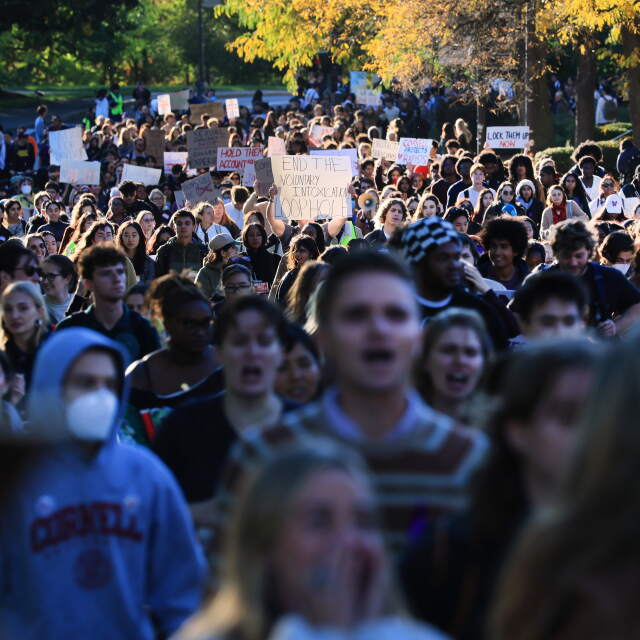
The episode discusses how a New York “intoxication loophole” could affect prosecution of a Cornell rape case involving a former student’s 2024 allegation that she was drugged and gang-raped by seven men. Cornell appointed former acting U.S. Attorney General Sally Yates to lead an independent review; New York AG Letitia James is conducting a criminal investigation. Key claim: under NY law, when an accuser voluntarily consumed alcohol/drugs, prosecutors must prove “physical helplessness” defined as unconsciousness, making semi-conscious impairment hard to charge.
Erin Murphy, NYU School of Law professor and sexual assault law expert.
vomiting, moaning, slurring, or “passing in and out” of consciousness may show consciousness and defeat the “unconscious” standard; evidence like videos, digital images, texts, or testimony that penetration occurred while unconscious could still meet the high bar.
Written by AI. May contain mistakes.
Discussion of New York state law and its implications for the Cornell case.
“New York Governor Kathy Hochul says she would support closing the so-called intoxication loophole.”

Get the gist, explore an idea or ask about something said.
 Claude
On Consider This from NPR, what are the key points of this episode?
Searching your listeningAutomatic transcript. May contain errors.
0:00It's Consider This where every day we go deep on one big news story. Today, a legal loophole could shape how the Cornell rape case is prosecuted. A former student's accusation that she was drugged and then gang-raped by seven men in 2024 has sparked protests across Cornell's campus. Justice for Jane Doe! Justice for Jane Doe! On Wednesday, Cornell's board of trustees appointed former acting U.S. Attorney General Sally Yates to lead an independent review into how the university handles sexual assault claims. On the state level, New York Attorney General Letitia James is leading a new criminal investigation into this case.
0:40We will review the facts, gather evidence, interview witnesses, and if warranted, pursue prosecutions. But pursuing prosecutions could be complicated by New York state law. It's what some people are calling the, quote, intoxication loophole. It generally requires that the intoxicating substance has been administered without the person's consent. That is Emily Miles, executive director of the Alliance Against Sexual Violence. And that's what leaves a serious gap when someone initially consumed a substance voluntarily, but later became too impaired to consent. Consider this. The Cornell case has become a major flashpoint across the country.
1:28At the heart of it is a conversation about consent and alcohol and drug use.
1:38From NPR, I'm Elsa Chang.
1:45Stay tuned for the following announcements and messages from our sponsors. This message comes from BetterHelp. BetterHelp is in-network with more than 125 health plans, with an average copay for eligible members of just$23 per session. Don't have eligible insurance? You can still get 10 % off your first month. Visit BetterHelp.com slash NPR to explore your payment options. That's BetterHelp.com slash NPR. This election season, you can streamline your news intake with Up First. Our team of reporters and editors works overnight, so you can start every morning with three stories you need to know.
2:24in short episodes, 12, 14 minutes long, to save you time and your sanity. Follow up first on the NPR app or wherever you get your podcasts. Austin Tice is an American journalist who disappeared over a decade ago while reporting in Syria. And for years, we've been searching for him. This looks like a secret passage. I'm just pushing a door so he can get in. Go, go, go. Listen to Where Is Austin Tice from NPR's Embedded and BBC Radio 4 on the NPR app or wherever you get your podcasts.
3:04It's Consider This from NPR. New York Governor Kathy Hochul says she would support closing the so-called intoxication loophole. It relates to how state law in New York considers alcohol or drug use when determining whether there was consent before sexual contact with another person. I spoke with Erin Murphy about this. She's a professor at NYU School of Law and an expert on sexual assault law. So can you just briefly explain what New York state law says with respect to the issue of consent in a situation where, say, an accuser has voluntarily consumed drugs or voluntarily consumed alcohol before sexual contact with another individual?
3:45Yeah. So when a individual has voluntarily taken drugs or alcohol and is compromised or impaired, the law requires that the prosecutor prove beyond a reasonable doubt that the person was physically helpless. That's the standard physical helplessness. And the statute in turn defines that as unconsciousness. So loss of consciousness or a physical incapability to communicate unwillingness. Complete loss of consciousness. So let me just picture this. If an accuser were, say, semi-conscious or barely able to walk but still able to sort of walk or slurring her speech at the time that an alleged assault happened, would that not be enough to qualify as physical helplessness?
4:28Generally, no. There's a requirement of lack of consciousness. And, in fact, sometimes in cases you'll see someone who's passing in and out of consciousness. So they might be, say, vomiting and then back unconscious or kind of, you know, we've all seen someone sort of staggering around or lying, they're moaning. So they're making noises which indicate consciousness, even though we would not think of them as capable of making any kind of decisions. That evidence of just awakeness at any level is often and can be used to show someone is not unconscious and not physically incapable of communication because they are moaning or they are, you know, pushing their hand out or turning their head.
5:09The very kind of evidence that you might think shows that someone's not capable of consenting actually shows the contrary under the law of New York, which is it's someone conscious enough to move, to vomit, to, you know, moan, therefore not unconscious. So in such a case, if someone were going in and out of consciousness, that generally, at least in New York, would not be enough for a prosecutor to bring charges of sexual assault? Is that what you're saying? Yes. Or it'd be a hard case to prove. That's what I would say. It's a very hard case to prove. Now, there are cases where you might have evidence that supports the acts of penetration occurring while someone is unconscious during that.
5:50Or you might have testimony where someone says, I lost consciousness and awoke to someone penetrating me. That can support a charge and a jury can find beyond a reasonable doubt that the person was physically helpless. But that's a high bar. Absolutely. Generally, if you have anyone saying, I never lost full consciousness, I was always awake, I just couldn't really articulate words, I couldn't make my body move the way I wanted it to, you know, that kind of incapacitation is not enough. Well, given the requirements under New York state law and what you know about the particular circumstances and alleged facts in the Cornell case, does it seem like it could be a real challenge for Letitia James to bring criminal charges here?
6:35I think we're going to have to see what the investigation uncovered that we're not aware of and what her investigation further uncovers. Often in cases like these, there might be physical images, digital images, videos. You might have text chains or even people who come into a grand jury and say, you know, I said, oh, how did that go down? Didn't she fight back? And, you know, the answer is, nah, she was so out of it, she didn't even know where she was. That kind of evidence can support even this high standard of physical helplessness. So depending on what comes through in the investigation, there may actually be enough to charge even at that high strict standard.
7:10But more to the point, I think it's important, and this is a moment in time when there's been such a strong public reaction, to reevaluate the laws on the books and I think ask, do these laws reflect what we think they should be? Do they set the standard we think appropriate? It's really given way to this huge conversation around these particular requirements under New York state law, so much so that the governor of New York, Kathy Hochul, has said that she would support an update. to New York law when it comes to sexual assault. But how likely is it that New York state lawmakers would agree to overhaul this law?
7:41Well, I would hope that they would take this as an opportunity to do just that. This is not the only state in the country that has a restrictive law like this, but there are many other states that have laws that are more protective of victims in this situation that have standards that would recognize that impairment with alcohol or intoxicants to this degree means that an individual cannot give consent. And if New York state lawmakers were to rewrite the law, could it apply retroactively to this Cornell case? No, any changes in the law would only apply going forward. And of course, for the victim in this case, that's, you know, cold comfort.
8:16But I would hope that at least, if nothing else, she would understand the role that she played and in bringing forward change. And although it was not in place to protect or vindicate her own interests and what happened to her, going forward, it would set a new standard that many people would benefit from. Erin Murphy, professor at NYU School of Law. Thank you very much. Thank you. This episode was produced by Lina Mohamed and Alejandra Marquez-Hanse, with audio engineering by Hanna Glovna. Jonas Adams is our director. It was edited by Christopher Intagliata and Tinby Ermias. Our interim executive producer is Courtney Dorning.
8:56It's Consider This from NPR. I'm Elsa Chang.


