
 Ask ChatGPT


 Consider This from NPR
5 Nov 2026 · 8m · 5 chapters
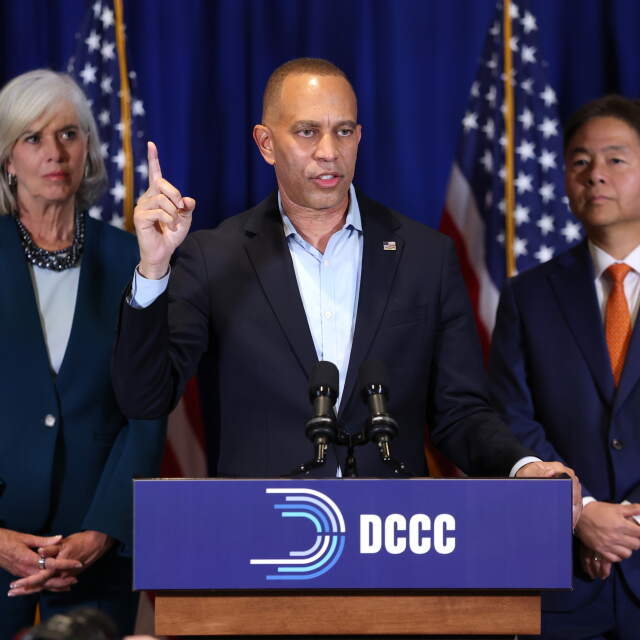
Whether Democrats can deliver on affordability after winning on lowering prices, including gas, food, health care, and housing.
Martha Gimbel, economist, executive director of the Yale Budget Lab, and former senior advisor in the Council of Economic Advisors under Biden. Also referenced: elected officials Sherrod Brown (Ohio), Peggy Flanagan (Minnesota), and Roy Cooper (North Carolina), plus voters Chuck Lockhart, Jennifer Browning, and Alex Garcia.
No “magic wand” exists; supply-side changes take time, so wallets may not feel relief quickly. Biggest short-run levers may be executive actions affecting tariffs and the Iran war. Congress could pursue bipartisan housing/permitting and energy infrastructure measures. Health care may worsen as Obamacare premiums rise and Medicaid cuts take effect; Democrats may need to backtrack.
bipartisan housing bill; bipartisan permitting bill; Iran war and tariffs driving costs; Obamacare premium spike; Medicaid cuts.
Written by AI. May contain mistakes.
Overview of Democrats' commitment to addressing affordability post-election.
“to end this war and stop the pain at the pump.”
Discussion on voter sentiment regarding high prices and affordability issues.
“High prices on gas, on food, health care, housing.”
Martha Gimbel discusses the complexities of addressing affordability concerns.
“To figure out what the new Congress could do to help bring prices down, we called economist Martha Gimbel.”
Exploration of potential policy actions Congress could take to lower costs.
“And so unfortunately for the Democrats, overall, I think it is going to take some time, even in the best of circumstances, to address a lot of the underlying issues that are causing problems.”
Discussion on the hopefulness and challenges of reducing living costs.
“So we will have to see if that's a place where they want to backtrack.”

Get the gist, explore an idea or ask about something said.
 Claude
On Consider This from NPR, what are the key points of this episode?
Searching your listeningAutomatic transcript. May contain errors.
0:00It's Consider This, where every day we go deep on one big news story. Today, can Democrats deliver on affordability? It was the party's central pitch to voters in 2026. We ran on affordability. We won on affordability. And now it's our job to govern on affordability. That is the top House Democrat, Hakeem Jeffries, speaking on MS Now. In victory speech after victory speech this week, Democrats committed to bringing down prices. We will fight to lower your costs and increase your paychecks. Here's what I'm going to throw down for. We are going to lower costs so that families can afford their life.
0:43We have to work to make health care, housing and groceries more affordable. to end this war and stop the pain at the pump. Senators-elect Sherrod Brown in Ohio, Peggy Flanagan in Minnesota, and Roy Cooper in North Carolina. Cooper's campaign slogan was just, Make stuff cost less. Consider this. Even with control of both chambers of Congress, making stuff cost less may not be so simple.
1:19From NPR, I'm Mary Louise Kelly.
1:47Just one subscription that gives you personalized AI right inside your actual workflow. Try Google Workspace with Gemini at goo.gle slash workspace with Gemini. NPR Plus is a great way to support independent journalism. But did you know it also saves you time? Over a year of fresh air, NPR Plus listeners can save more than 17 hours with sponsor-free episodes. As a thank you for your support, get more NPR in less time, plus bonus content and dozens of other sponsor-free shows. Sign up today at plus.npr.org. This week on Shortwave. What is something found on both true crime TV shows and real-life investigations?
2:32Questionable forensics. And it's almost always accepted by lay jurors as providing an objective scientific truth. Interrogating junk science. That's on Shortwave from NPR.
2:53It's Consider This from NPR. Voters have been very clear throughout this midterm season, they are fed up with high prices. High prices on gas, on food, health care, housing. It's requiring me to make sometimes some difficult choices. Sometimes I have to decide between paying a bill, like the power bill, or buying groceries. It feels like we're running a marathon, and no matter how hard you work, you can't ever get to the finish line. That was Chuck Lockhart, Jennifer Browning, and Alex Garcia speaking with NPR earlier this year. Democrats rode that frustration to a massive victory this week, but will they actually succeed in lowering costs?
3:37I'm so disillusioned that I don't want to make the mistake of being too excited for change because it's just it's sad when it doesn't happen. To figure out what the new Congress could do to help bring prices down, we called economist Martha Gimbel. She's executive director of the Yale Budget Lab and served as a senior advisor in the Council of Economic Advisors under the Biden administration. Let me invite you to join me on my time travel ship. We are now in January. It's day one. Democrats control the House. They control the Senate. They have control. They do not have a magic wand. Where might they start?
4:18I think the point about a magic wand is really important here because I do think addressing a lot of these affordability concerns is going to be much harder than many people are hoping. You know, if you think about what causes prices, go back to econ 101, the demand curve and the supply curve, you can affect demand. No one likes that, right? I want to demand as much stuff as I demanded a year ago. And so you have to bring up supply. And bringing up supply takes time. It is not the case that you can simply flip a switch tomorrow and have 10 % more houses than you had the day before. And so unfortunately for the Democrats, overall, I think it is going to take some time, even in the best of circumstances, to address a lot of the underlying issues that are causing problems.
5:11So no matter what their first move in the new Congress, it's going to be a little while just to set expectations. It's going to be a little while before people's wallets start feeling a little fatter. Yeah. I mean, it does speak to the fact that there is some pressure on Congress to act sooner rather than later because anything they do manage to get done and get the president to sign is going to take some time to come into effect. And so if they wait until 2028 to do anything, then voters probably won't see the effects of that before they go to the polls again. So circle back to where do they start?
5:48Where should they start? So, I mean, I think the things that will make the biggest difference in the short run are actually things that have been done via executive action. So the Iran war and the tariffs. The Iran war has played a huge role in driving up costs for American families. And so I think there's going to be a question for the Congress of how quickly they can and want to move on trying to fight the president on those executive authorities and see if they can rein those in. Starting there with things like reining in some of the foreign policy moves, the war in Iran, the tariffs, they're still going to have President Trump in the White House.
6:34So realistically, what are your expectations? You know, I think people shouldn't be too defeatist here. We had a bipartisan housing bill that passed in this Congress, which was not a Congress with a lot of good feeling between many Democrats and Republicans. There's a bipartisan permitting bill on the table that would make it easier to build energy infrastructure in this country, which would bring down energy prices. And so, you know, I think sometimes people get too depressed about the possibility of bipartisan action on the Hill. But actually, even now, there is appetite for that. And so we'll just have to see what they come up with.
7:20What about health care? What can Congress do there? Health care is a big one. You know, Obamacare premiums are set to spike next year. We also haven't seen the Medicaid cuts from the One Big Beautiful Bill Act take effect yet. And so health care is probably going to be a huge source of strain for households next year. It's also one where the government does have a role to play, right? It plays a relatively big role in health care markets, both through directly providing health insurance and through subsidizing some forms of private insurance. Republicans have taken action to make health care more expensive by, you know, driving up the Obamacare premiums and taking Medicaid away from people.
8:09So we will have to see if that's a place where they want to backtrack. Are you hopeful this Congress will be able to lower the cost of living in the U.S.? Well, I'm an American citizen, so I'm always optimistic, but I'm an economist, so I'm always pessimistic. So some combination of those two. You're at war with yourself at all times. Exactly. So bottom line, you know, I am an American. I would love to pay less money for my gas, for my eggs, for my mortgage. Should I be hopeful that that is coming at some point in the not terribly, terribly distant future? I think the thing to really be watching is what the administration's language and posture is on the Iran war.
8:50Because that is the thing where if something changes, we'll have the most and fastest impact on prices. All right. Martha Gimbel, economist and executive director of the Yale Budget Lab. Thank you. Thank you for having me. This episode was produced by Kai McNamee and Connor Donovan with audio engineering by Tiffany Vera Castro. Our director is Jonas Adams. It was edited by Jeanette Woods and Tenbeat Ermus. Our interim executive producer is Courtney Dorning.
9:25It's Consider This from NPR. I'm Mary Louise Kelly. Stay tuned for the following announcements and messages from our sponsors. On the latest Planet Money podcast, protesters in France are asking their government for more money for schools and for pensions. No, why not? There is a bunch of money in the world. Don't say there's no money. There is so much money. She's right. There is money. but maybe not for France. Why does the market seem to be turning on France and what can the rest of us learn from this? Listen to Planet Money on the NPR app or wherever you get your podcasts.


