
 Ask ChatGPT


 Consider This from NPR
14 Oct 2026 · 8m · 4 chapters
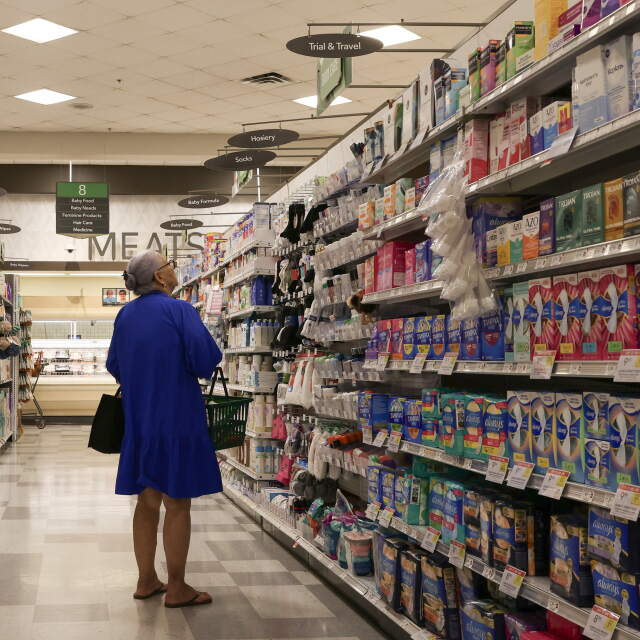
Inflation is rising again, with consumer prices up 3.7% year-over-year since last September, and Americans feeling squeezed as gasoline, smartphones, and rent get more expensive. The episode explores whether the uptick is temporary or signals persistent “overheating” demand, and what that could mean for interest rates.
Austin Goolsbee, president of the Federal Reserve Bank of Chicago; former chairman of the Council of Economic Advisers under President Obama.
The report is disheartening; services inflation is distressingly high; unlike temporary shocks (tariffs, oil), the pattern may reflect demand overheating. Political pressure on the Fed shouldn’t affect decisions because central bank independence is crucial to prevent inflation from returning.
RV/diesel costs described by a listener; rising costs tied to AI/data-center investment (construction, electronic components, electricians, land).
Written by AI. May contain mistakes.
Discussion on the recent rise in inflation and its effects on consumers.
Austin Goolsbee discusses inflation trends and economic implications.
“One subscription that gives you personalized AI right inside your actual workflow.”
Goolsbee highlights the challenges faced by consumers due to rising costs.
“One of the biggest stories of the year, consumer prices up 3.7 % from last September.”
Goolsbee provides insights on inflation's persistence and economic stability.
“As you started breaking out the components, the inflation of the subparts, they didn't look that great either.”

Get the gist, explore an idea or ask about something said.
 Claude
On Consider This from NPR, what are the key points of this episode?
Searching your listeningAutomatic transcript. May contain errors.
0:00It's Consider This, where every day we go deep on one big news story. Today, inflation is heating up. It rose by 3.7 percent since last September. That's according to data released by the Bureau of Labor Statistics on Wednesday. Gasoline, smartphones and rent, they all got more expensive last month and people are feeling it. Right now we're living in an RV motorhome. We do that for about five months and 20 some days a year. And the diesel is one place where we've gotten a gut punch. Anita Barrett lives in Florida with her husband. We're getting by, but we don't have expensive taste. Consider this.
0:39Inflation is ticking up and some Americans are feeling squeezed. After the break, the head of Chicago's Federal Reserve Bank shares his thoughts on what he is seeing and where the economy may be headed.
0:58From NPR, I'm Scott Detrow.
1:27One subscription that gives you personalized AI right inside your actual workflow. Try Google Workspace with Gemini at goo.gle slash workspace with Gemini. This message comes from BetterHelp. BetterHelp is in-network with more than 125 health plans with an average copay for eligible members of just$23 per session. Don't have eligible insurance? You can still get 10 % off your first month. Visit betterhelp.com slash NPR to explore your payment options. That's betterhelp.com slash NPR. This election season, let the NPR Politics podcast save your time and your sanity. We'll help you understand key races, which polls you can safely ignore, and what might happen if power shifts in Congress.
2:13Our short daily episodes come out every afternoon so you can spend less time scrolling through each chaotic news cycle. Make NPR Politics your hub for midterm election coverage. Follow our podcast on the NPR app or wherever you get your podcasts.
2:33It's Consider This from NPR. A report from the Labor Department on Wednesday showed consumer prices in September were up 3.7 % from a year ago, and that is a larger annual increase than the previous month. To better understand these numbers, we called Austin Goolsbee. He is the president of the Federal Reserve Bank of Chicago and the former chairman of the Council of Economic Advisers under President Obama. Welcome. Thank you for having me. We know inflation is ticking up. One of the biggest stories of the year, consumer prices up 3.7 % from last September. What is your initial thought when you heard that number?
3:09Yeah, this report was a little disheartening. I wasn't surprised to hear it because as I've been going around the Chicago Fed District in the Midwest, what everybody's talking about, businesses, individuals, nonprofits, are about costs, about prices, about affordability. The thing that was unfortunate in this report, and you never want to make too much out of any one month's inflation report because there's a lot of variability, but this is now a couple of months in a row where it's not just that the overall inflation was higher than expected and well higher than the Fed's 2 % inflation target.
3:56As you started breaking out the components, the inflation of the subparts, they didn't look that great either. So some things can lead to inflation that is inherently temporary. And those would be things supposed to be like tariffs or oil shocks. Yeah. The services inflation in this report was a little distressingly high. Tell me more about that. Tell me more about that. Tell me what it is and tell me why you think it's happening if it's not related to those big factors we've spent so much time focused on this year. We don't – we're still trying – everybody is trying to get the what is the through line.
4:39And we were hoping that we had a couple of months of encouraging inflation readings and we were hoping that the recent uptick might prove to be a blip. And so far, it's not. The danger is that the inflation is less coming from things that might naturally go away, like tariff impacts on prices, and is shifting more to just old-fashioned overheating of demand. And if it were, everybody's pointing the finger at the AI build out, the high investment. You hear a lot out on the trail. You hear a lot of comments that construction costs are rising radically. Electronic components, electricians, even land.
5:45That anything that data centers and their booming investment are involved in, the software and others, you're seeing prices rising pretty rapidly. You're an economist. You know politics too. You are well aware how much President Trump is pressuring the Fed right now politically on social media, legal challenges that have been pushed back on by the Supreme Court. Do you think his various pressure campaigns will have any effect on what the Fed does next in terms of interest rates, given how clear he is that he doesn't want to see them go up? Well, you know the rules. Any member of the FOMC is only allowed to speak for themselves.
6:28They can't speak for the Fed or what the Fed thinks. Um, there's a reason why economists, and before I got to the Fed, uh, little less than four years ago, I was a research economist and economists are close to unanimous that central bank independence from political interference in setting the interest rate is extremely important. because anywhere that they give up that independence from political interference, that's a recipe for seeing inflation come roaring back. So if people do not want inflation to come back or want inflation to go down, we must separate these outside voices from what the decision is.
7:21I want to last question challenge you this might be tough for a renowned economist like yourself but if you could tell the story if you could tell the story of this economy as you understand it right now in 30 seconds or less what would it be I actually think on the real side as economists call it which is GDP growth consumer spending the job market those have been remarkably stable the job market has been stable without being good in that the hiring rate is low but the layoff rate is also low and the biggest problem facing the economy is no secret to any of you ask anybody it's about prices affordability and inflation and now we're grappling with this concept with this idea, is this inflation going to go away on its own because the tariff shocks, the oil shocks, those kind of things are going to fade out?
8:25Or are we re-entering a very persistent inflation environment, which is going to require more aggressive action to get us back to where we need to be? That's Austin Goolsbee, president of the Federal Bank of Chicago. I got to say, It was a minute and one second, but still a good answer. Thank you so much. Nice talking to you. NPR's Scott Horsley contributed to this episode. It was produced by Jeffrey Pierre with audio engineering by Tiffany Vera Castro. Our director is Kai McNamee. It was edited by Tinbeat Ermias. Our interim executive producer is Courtney Dorning.
9:07It's Consider This from NPR. I'm Scott Detrow. Stay tuned for the following announcements and messages from our sponsors. Want to hear this podcast without sponsor breaks? Amazon Prime members can listen to consider this sponsor-free through Amazon Music. Or you can also support NPR's vital journalism and get NPR Plus at plus.npr.org. That's plus.npr.org.


