
 Ask ChatGPT


 Consider This from NPR
22 Oct 2026 · 8m · 3 chapters
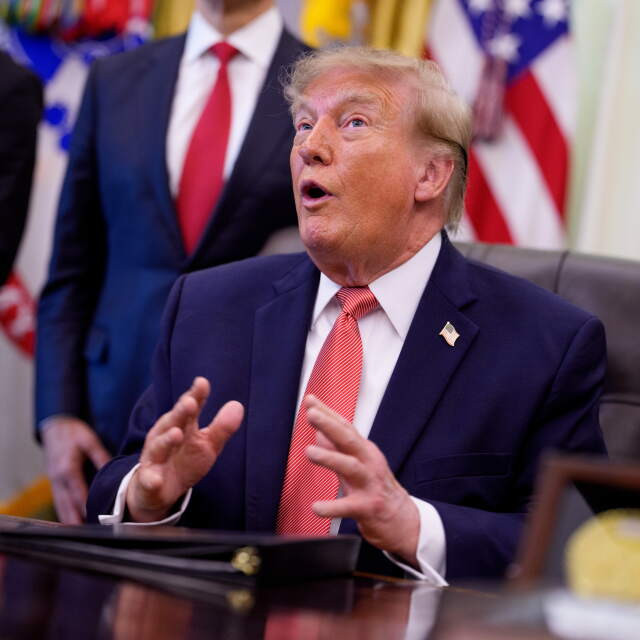
The episode argues that President Trump is turning hostility toward the press into concrete government actions that test First Amendment press freedom. It cites his history of “fake news/enemy of the people” rhetoric, then points to steps like trying to bar CNN, Politico, and MSNBC from the White House; continuing to restrict some outlets from Air Force One; and a Justice Department antitrust investigation into media companies’ coordinated response. It also discusses New York Times reporting that Trump wants to remove the White House briefing room and return it to a Roosevelt-era pool setup.
symbolic moves still matter because they can punish or deter coverage, especially broadcasters via FCC threats, lawsuits, and investigations.
Pentagon reporter ejections not stopping coverage; FCC-style pressure and defamation suits; DOJ actions involving Air Force One leak investigations and NYT home visits; a White House counsel threat to Politico after a corrected story.
Ruth Marcus, former Washington Post columnist and current New Yorker contributor, provides analysis of how Trump’s approach differs from predecessors and its public impact.
Written by AI. May contain mistakes.
Discussion on the evolving relationship between Trump and the press.
“Ruth Marcus has some perspective on the often contentious relationship between the White House and the press corps that covers it.”
Analyzing the implications of Trump's potential decisions regarding the press.
“As we know, as we've talked about on this show, the White House is already trying to limit some White House access for major outlets like the Associated Press, like CNN, with those legal cases ongoing.”
Exploring the complex relationship between Trump and the media.
“So obviously, that would be a symbolic move.”

Get the gist, explore an idea or ask about something said.
 Claude
On Consider This from NPR, what are the key points of this episode?
Searching your listeningAutomatic transcript. May contain errors.
0:00It's Consider This where every day we go deep on one big news story. Today, President Trump turns his hostility toward the press into policy. Attacks on the news media have been a part of the MAGA vernacular going all the way back to Trump's 2016 rallies. Among the world's most dishonest people, look at all of them. Oh, look at all those cameras. In his first term, the press were fake news or the enemy of the people or just losers. And a second term, Trump has gone from name-calling to ejection. Last month, he tried to bar CNN, Politico, and MSNOW from the White House over their coverage. A very simple ban.
0:37I don't want him in my office. I don't want him here. The move was ultimately blocked in a federal court, but the White House has continued to bar some outlets from Air Force One. And the Justice Department opened an antitrust investigation into media companies' coordinated response to his attempted press ban. Then there's the new report in The New York Times that the president wants to move the press out of the White House and turn the briefing room back into a swimming pool. Consider this. Trump's brought the power of the federal government to bear in his fight with the media. It is a test of the limits of press freedom guaranteed by the First Amendment.
1:17From NPR, I'm Scott Detrow. Stay tuned for the following announcements and messages from our sponsors. This message comes from Thumbtack. Recommendations can be great. Maybe someone recommended this podcast and here you are. But home projects are different. If a podcast isn't your thing, you lose a few minutes. If you hire your cousin's neighbor to mount your TV, you might end up with a lopsided screen and wall damage. That's why Thumbtack works. It matches people with top-rated local pros, with photos, reviews, and credentials all in one place. For your next home project, try Thumbtack. Hire the right pro today.
1:56This election season, let the NPR Politics Podcast save your time and your sanity. We'll help you understand key races, which polls you can safely ignore, and what might happen if power shifts in Congress. Our short daily episodes come out every afternoon so you can spend less time scrolling through each chaotic news cycle. Make NPR Politics your hub for midterm election coverage. Follow our podcast on the NPR app or wherever you get your podcasts. Oh, Kevin, it feels good to be back. It sure does, Casey. And what a time the world is talking about AI and what's going on in Silicon Valley. And we are here with a new show to tell you all about it.
2:31That's right, Kevin. On our new show, Machine Gods, twice a week, we'll be bringing you the biggest news in tech and bring you unmatched access to the real titans of this industry. You can find Machine Gods from NPR on the NPR app or wherever you get your podcasts.
2:50It's Consider This from NPR. Ruth Marcus has some perspective on the often contentious relationship between the White House and the press corps that covers it. She was a longtime Washington Post columnist. Now she's a contributor to The New Yorker. So we called her up to understand how different Trump's approach is from his predecessors. what its moves could mean for the press's ability to cover the White House, and how it could impact the American public's visibility into what the head of our government is doing. Let's start with this New York Times reporting. As we know, as we've talked about on this show, the White House is already trying to limit some White House access for major outlets like the Associated Press, like CNN, with those legal cases ongoing.
3:31But Trump has reportedly told his staff he wants to get rid of the White House briefing room. He wants to turn it back into the pool that it was during the Roosevelt administration. What to you would that mean? How serious would that be? Well, it would be serious, but it would all and I think you're totally right. In the second Trump administration, he has operationalized the animus towards the press. But I do want to say, though, that many presidents, Republican and Democrat, have been frustrated with the media coverage that they've gotten. And they have also toyed with slash fantasized about the notion of moving those pesky reporters out of the White House.
4:15Okay. This would be petty. It would be vindictive. It would be bad for the media, but it wouldn't actually be that helpful for the president. Yes, it would get reporters out of your hair. But look at the experience that Pete Hegseth, the Secretary of I Say Defense, has had since he kicked reporters out of the Pentagon. It has not stopped Pentagon reporting. Reporters are going to report even if you kick them physically out of the space. They are not going to stop doing their jobs. So obviously, that would be a symbolic move. It would have some repercussions. Like you said, reporting would continue anyway.
4:57That all being said, what to you are the one or two most frightening, most concerning actual steps taken? Because like I said, I feel like we've gotten numb to President Trump criticizing the press, but it's gone far beyond that lately. Well, you know, if you only surround yourself or expose yourself to questions from reporters who are, say, fawning over your presidency or in line with your ideology, you are not going to get tough questions from the media. And that is not just a problem for us as reporters. It's a problem for the public that relies on us to ask tough questions. That's number one.
5:36Number two, I would say, is the threat of using government power to punish especially broadcasters. Yeah, this is Through FCC, direct threats or investigations or lawsuits over coverage and seeing networks settle or then clearly water down their coverage in response. Exactly. And I would combine that with these frivolous but still expensive and energy-sucking defamation suits. We saw the Justice Department in trying to investigate leaks over the new Air Force One gift that Trump got and the problems with it. We saw them show up at reporter for The New York Times homes. That's something the federal courts pushed back on.
6:23Given that track record, what did you make of what's been going on with Politico this week? Politico reported. What was interesting to me is it's just kind of like staff level gossip. It's about the chief of staff and the president. So it's of note, but still it's not anything that you could claim is national security. And yet there's this fierce response and the promise of a threat from the White House counsel toward Politico. What did you make of that? I thought it was astonishing in particular that the White House counsel, whose job is fundamentally to represent the president, but also to uphold the Constitution, was threatening Politico if it failed to retract its story.
7:07Politico made a mistake in the story. It corrected that mistake. But there is no basis or cause that I'm aware of to call on Politico to retract its story. And this is part of what should be the normal give and take and the normal tensions that are going to occur between any administration and any set of reporters covering them. But in this administration, it has been ratcheted up in a way that I think doesn't serve the administration's interests in the end, but it certainly doesn't serve the public interest. I'm curious what you make of the dynamic that Trump is certainly much louder, much more aggressive, much more likely to follow up his threats with actions than other previous presidents.
7:56And yet he seems to be the most media attuned president we've probably ever had. How do you think about that symbiotic relationship that still exists even with all of these threats? The most media attuned and also the most media accessible. He thrives on that, the hostile interchanges that he has with reporters, but he also needs the attention. And when there were those couple dark days when the pool balked at covering him because he had excluded people from the pool, that's like cutting off Trump's oxygen. So in the end, he needs us as, you know, at least as much as we need him. We can do our jobs calling White House sources, reporting behind the scenes.
8:43But if we're not there, we're not serving as his foils and we're not serving as his amplifiers. That is Ruth Marcus, contributor for The New Yorker. Thank you so much. Thank you for having me. This episode was produced by Alejandra Marquez-Hansa with audio engineering by Hannah Glovna. Our director is Jonas Adams. It was edited by Patrick Jaron Wadananen and Timbeet Ermias. Our interim executive producer is Courtney Dorning.
9:13It's Consider This from NPR. I'm Scott Detrow. Stay tuned for the following announcements and messages from our sponsors. This message comes from Mint Mobile. Ditch overpriced wireless and get premium wireless for less. Go to mintmobile.com slash switch to see which plan works for you.


