

 Consider This from NPR
27 Oct 2026 · 9m

 Add vo to ChatGPT or Claude to ask about everything you hear
vo listened to this episode to put together the overview and transcript, so there may be the odd mistake.
The episode covers Israel’s parliamentary election after three years of war, focusing on how high-stakes the vote feels and what it could mean for governance and regional conflict. Guests/backgrounds: Rabbi Claudia Kraman, an Israeli expat who flew from Boston to vote; Gil Avraham, a Netanyahu supporter at the airport; NPR correspondents Ruth Sherlock (Jerusalem) and Daniel Estrin (Tel Aviv).
many voters see the election as a choice about democracy and Netanyahu’s judicial overhaul; Netanyahu supporters argue his wars keep Israel safe; initial exit polls show opposition led by Gadi Eisenkot ahead of Netanyahu’s far-right/ultra-religious bloc.
expats arriving at Israel’s main airport (nearly 70,000 planned to fly in); chants at Eisenkot headquarters; Netanyahu’s campaign framing around October 7 and “finish the job” on Iran; possible coalition negotiations with Arab-led parties; potential stalemate or repeat election.
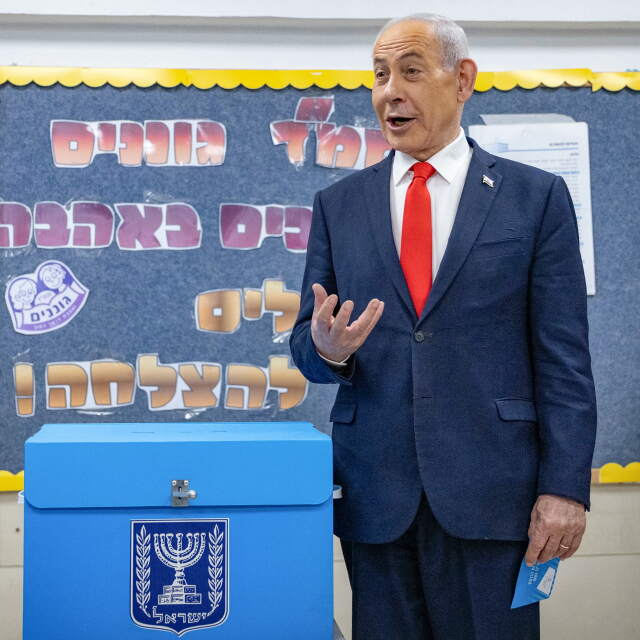
0:00It's Consider This where every day we go deep on one big news story. Today, after three years of war, Israel votes. How high were the stakes for Tuesday's election? For Rabbi Claudia Kraman, high enough to spend more than$2 ,000 to fly in from Boston just to cast her ballot. I just landed and I'm leaving back tomorrow night. She talked to NPR's Ruth Sherlock on Monday at Israel's main airport, where crowds of Israeli expats from around the world arrived to make their voice heard. Nearly 70 ,000 Israelis plan to fly in to cast ballots. That's according to a survey by the America-Israel Democracy Coalition, a group mobilizing expats.
0:42I haven't done this for another election. I've lived in the States for over 20 years. This election feels urgent in a way that nothing else has felt. And I will be back in the States next week to vote in the States because those elections also are incredibly injured to save democracy. We have to save democracy everywhere. Many voters opposed to Prime Minister Benjamin Netanyahu view the election in those terms. They say he's turned Israel into an international pariah, and that his plan to reshape the country's judicial system is in a liberal power grab. But Israel is almost evenly split on Netanyahu, as Ruth experienced at that airport.
1:23In the arrivals terminal here on the one side, You have people calling for change, singing for peace. On the other side, you have people shouting, Bibi for government. Netanyahu should remain in power. Bibi is the king of the world. Okay? King of the world. Gil Avraham was at the airport trying to convince Israelis to vote for Netanyahu. He told Ruth that it's by waging so many wars that Netanyahu keeps Israel safe. Hamas go, Hezbollah go, Iran afraid, afraid from Israel. Consider this. On Tuesday, Israeli voters got to declare what kind of country they want to be. What happens next?
2:11From NPR, I'm Juana Summers.
2:17Stay tuned for the following announcements and messages from our sponsors. This message comes from Google Workspace with Gemini. One subscription that does it all. Personalized AI and premium business versions of Gmail, Google Docs, Drive, and more. Try it free for 14 days at goo.gle slash workspace with Gemini. Support for NPR and the following message come from Washington Wise. Policy decisions in Washington can influence markets and your portfolio. But which developments matter most? Listen to Washington Wise, an original podcast from Charles Schwab. Host Mike Townsend, Charles Schwab's Managing Director for Legislative and Regulatory Affairs, takes a nonpartisan look at the latest news from Washington and how it may affect the economy and investing.
3:04Download the latest episode and follow at schwab.com slash Washington Wise or wherever you listen. This message comes from The Nature Conservancy. For 75 years, the Nature Conservancy has helped protect remarkable natural places. Places that do more than take your breath away. Places that sustain livelihoods. Places that anchor memories and traditions. Places that are an undeniable part of who you are. Together, the Nature Conservancy and supporters ensure these natural places, and the people and wildlife that depend on them, thrive for generations to come. Learn more at nature.org slash 75.
3:47It's Consider This from NPR. The votes in Israel's parliamentary election are still being counted, and even when that's done, the country's many political parties will have to sort out how and whether any of them can form a governing coalition. We wanted to hear about how the day unfolded and how the country and candidates are feeling, so we caught up with NPR correspondents Ruth Sherlock in Jerusalem and Daniel Estrin in Tel Aviv. We recorded at a little after 6 p.m. Eastern Tuesday, which is midnight in Israel. Daniel, I want to start with you. I understand that you're at a gathering of the main opposition party.
4:22Help us make sense of these initial exit polls. Yeah, all the main exit polls so far have the opposition block of center-right parties as the biggest block. This is a block led by Gadi Eisenkot. He is the former military chief of staff. And this block of parties is slightly ahead of Netanyahu's block. He leads a group of far-right, ultra-religious parties. So this is very promising news for Eisenkot and his supporters. I want to play for you a little bit of what it sounded like at his campaign headquarters here when the initial exit polls were announced.
5:03So his supporters there are chanting, he is the next prime minister. And Eisenkot said in a statement after the initial exit polls that they point to, quote, a complete distrust in Netanyahu and the government of October 7th. That's a reference to the Hamas attack three years ago. But the race is not over yet. We could see the map shift as votes are counted throughout the night. And I spoke with one activist with Eisenkot's party, Ophelia Namiyash, and here's how she put it. I'm anxious. Listen, the results are good, but they're complex. It takes time before we have a full picture. But it is certainly a very, very confident mood here at the main opposition party gathering.
5:47Ruth, over to you now. I know you're at Netanyahu's election night headquarters in Jerusalem. What are you seeing and hearing? Well, Netanyahu supporters certainly aren't giving up yet. You know, he is Israel's longest serving prime minister, and people here say there are still many votes to be counted. Here's Netanyahu supporter Eli Pieps. I've been here many times at different campaigns, where at the first hour, that's what the exit polls show, and then you wait a little bit, and Prime Minister Tineau has had a knack of getting over the top when he needed it. This political survival is part of Netanyahu's story.
6:21After the October 7th attacks, few in Israel thought he'd remain in power because of questions over the security failures that led to Israel's deadliest day, But he managed to keep his far-right coalition together, and he responded, of course, with the devastating war in Gaza and the conflicts in Lebanon and Iran. And in this election, he's run on this idea that these wars show he's the only leader with a mettle to keep Israelis safe. He got a last-minute endorsement for President Trump, and now his supporters here say they want to see a broad coalition government, one possibly with Eisenkot in it, but with Netanyahu at the helm.
7:00I mean, it's still really early. It's too early, in fact, to call the election. But Daniel, when might we have a clearer sense of who has won? It's going to take all night for votes to be counted. By tomorrow morning, local time, the vast majority of the votes will have been counted. And so one thing to look for is whether two small right-wing parties get enough votes to make it into the parliament. That could actually shift the map and not in Eisencoach's favor. Another thing to look out for is Israeli soldiers' votes. They have been casting ballots in territories where they're serving, in Gaza, in Lebanon, in Syria.
7:37So as those votes continue to be counted for several days, that could also tip the scales in this race. But the main thing to look at now is if Eisenkot, the center-right opposition leader, manages to get the opportunity from Israel's president and is tasked to start negotiating with other parties to try to form a coalition government. The big question is, will he turn to Arab-led parties? Those parties had a very strong finishing in this election so far, according to the exit polls. And yet his right-wing allies, Eisenkotzkamp, has been very resistant to rely on Arab-led parties for political support.
8:20So we're going to have to see if they make any kind of deal in order to form a coalition government. We could see many surprises here, Juana. One potential option could be some power sharing deal, as Ruth mentions. There could even be a stalemate and a repeat election next year. Wow. Okay. So as we watch and wait for the final results, remind us about the stakes of this moment. No matter how this election goes, what might it mean for the region as well as for those of us here in the U.S.? Ruth? Well, look, this election has very clear and obvious stakes when it comes to a potential resumption of the war in Iran.
8:56Netanyahu has campaigned on a promise to finish the job. That's a quote, direct quote in Iran if he's reelected. And Trump has also suggested this could happen. And there are, of course, you know, big questions about how this changes lives for Palestinians. None of the leading parties here say they believe in a two-state solution with Palestinians. Eisenkot has promised a clampdown of settler violence in the occupied West Bank. But, you know, he says soldiers will continue to remain in Gaza, that Hamas has to be defeated, and they will remain in Lebanon for the foreseeable future. So this election, the other thing to consider here is that it does have a major significance for Israel's relations with the U.S.
9:42in this region and the world. You know, many are hoping Eisenkot will strike a more conciliatory tone to try to end Israel's global isolation that the war in Gaza has really brought about. NPR's Ruth Sherlock in Jerusalem and NPR's Daniel Estrin in Tel Aviv. Thanks to both of you. Thank you, Anna. Thank you so much.
10:07This episode was produced by Connor Donovan and Vincent Acovino with audio engineering by Hannah Glovna. Our director is Jonas Adams. It was edited by James Heider, Mallory Yu, and Tenbeat Ermias. Our interim executive producer is Courtney Dorning.
10:26It's Consider This from NPR. I'm Juana Summers. Stay tuned for the following announcements and messages from our sponsors. This message comes from Google Workspace with Gemini. Ever notice how every new AI tool asks you to explain your business to it all over again? Google Workspace with Gemini skips that. You get Google's AI built right into the premium versions of Gmail, Google Docs, Sheets, and more. No new tools, no extra logins, just one subscription that gives you personalized AI right inside your actual workflow. Try Google Workspace with Gemini at goo.gle slash workspace with Gemini.



Scan the code with your iPhone camera
Listen in the app.