Ask ChatGPT


 Consider This from NPR
29 Oct 2026 · 13m · 6 chapters
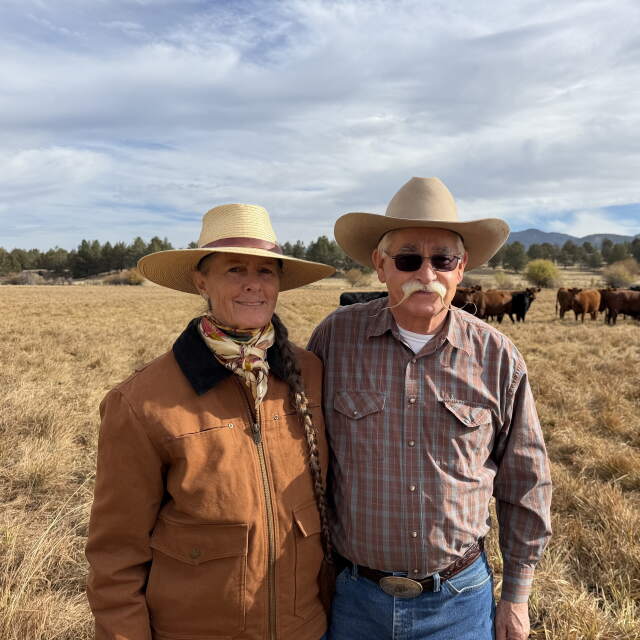
The nationwide redistricting fight and how California’s 2026 congressional map—shaped by Prop 50—has left some rural voters in northeastern California feeling “invisible,” even as it adds Democratic seats.
Rancher Ned Coe (Modoc County; Republican; cattle ranching for decades); his wife Valerie Coe; logger Tristan Allen (Siskiyou County; runs a diesel-heavy logging operation; family there for five generations); rancher Ryan Walker (near Bogus Creek/Klamath River; registered independent; ranching for 50 years).
Gerrymandering makes rural voices less powerful by pairing distant communities (e.g., Cedarville with Sausalito). Coes and others say urban Bay Area lawmakers won’t prioritize local issues like gray wolf protections. Allen says California “doesn’t care” about them; Walker says the district is drawn to dilute his vote.
Prop 50 added five Democratic seats; the new district stretches along the Oregon border and down the coast. Wolf and livestock conflicts; logging diesel costs; Klamath River salmon; Huffman’s planned outreach road trip.
Written by AI. May contain mistakes.
Discussion on how redistricting is shaping voter representation in California.
“which approved the use of a new map that added five Democratic seats.”
Exploring the experiences of voters in Modoc County after redistricting.
“California's Proposition 50 carved up what was once a rural Republican stronghold.”
Ranchers express their concerns about representation and redistricting effects.
“And no consideration will be given to us because it can't be.”
Discussion with a logger about feelings of invisibility in politics.
“He now thinks the only way he can deliver for his community is to bypass his own congressional representative.”
Exploring the identity challenges faced by voters in sparsely populated areas.
“which allow a single worker to pull down 2 ,000 trees every day.”
Voters discuss their feelings about the upcoming election and candidates.
“I don't know that I think my voice should be outsized because I'm rural and sparse.”

Get the gist, explore an idea or ask about something said.
 Claude
On Consider This from NPR, what are the key points of this episode?
Searching your listeningAutomatic transcript. May contain errors.
0:00It's Consider This, where every day we go deep on one big news story. Today, why some voters feel left behind this election cycle. The 2026 congressional map looks different than it did two years ago, due in large part to lobbying by President Trump last year when he encouraged Texas lawmakers to redraw their congressional map to benefit Republicans. Here he is speaking to reporters. Texas would be the biggest one, and that'll be five. We're calling them for a complete redrawing of the congressional map? No, no, just a very simple redrawing. We pick up five seats. Trump's push led to action in a number of states.
0:35Legislatures in Texas, Florida, Louisiana, Tennessee, and North Carolina redrew their maps to favor Republicans. In California, voters approved a ballot measure called Proposition 50, which approved the use of a new map that added five Democratic seats. Let me underscore it's been a good evening for everybody, not just the Democratic Party. But what a night for the Democratic Party. That's California Governor Gavin Newsom speaking to a crowd right after Prop 50 passed. We need the state of Virginia. We need the state of Maryland. We need our friends in New York, in Illinois, in Colorado. We need to see other states, the remarkable leaders that have been doing remarkable things, meet this moment head on as well.
1:19Consider this. In the run-up to the midterms, Republicans and Democrats have engaged in a tit-for-tat fight over redistricting. And in one heavily Republican part of northeastern California, some voters say this battle has left them feeling invisible.
1:36From NPR, I'm Scott Tetreault. Stay tuned for the following announcements and messages from our sponsors. This message comes from NPR sponsor Shopify. No idea where to sell? Shopify puts you in control of every sales channel. It is the commerce platform revolutionizing millions of businesses worldwide. Whether you're a garage entrepreneur or IPO ready, Shopify is the only tool you need to start, run, and grow your business without the struggle. Once you've reached your audience, Shopify has the internet's best converting checkout to help you turn them from browsers to buyers. Go to shopify.com slash NPR to take your business to the next level today.
2:14This message comes from Rosetta Stone, offering an alternative approach to language learning. The app guides users to intuitively think in a second language using images and contextual audio, mimicking how people acquire speech as children. The platform also includes advanced speech recognition technology that compares a learner's pronunciation directly with native speakers to refine accent precision. Learn more about their immersion method and the new Rosetta Stone Sapphire app at rosettastone.com. This message comes from Edison Electric Institute. Behind every moment, America's electric companies are hard at work, strengthening reliability, and innovating for tomorrow.
2:52America's electric companies, powering the energy of every day.
3:03It's Consider This from NPR. California's Proposition 50 carved up what was once a rural Republican stronghold. And now many voters there may soon have a Democrat representing them in Washington. My co-host Elsa Chang recently visited some of them. About four dozen cows are gathered around me, staring at me dead in the eye. I feel like I'm teaching a class of cow students or something. We're in Modoc County, where the cows vastly outnumber the humans. I mean, there are only two people per square mile around here. Come boss! Come boss! That's Ned Coe. He's been ranching up here for decades. he still uses the same cattle call that his dad used to use back in the day.
3:51What are you actually saying? Come, boys? Come boss. Bossy. Bossy. Oh, honey. Come boss. Come boss. We're in Modoc County because Californians voted overwhelmingly for Prop 50 to redistrict the state and gain five more Democratic seats. And so after 13 years of being represented by a Republican farmer, Ned and his wife Valerie are probably going to be calling a Democrat from the San Francisco Bay Area their new congressman, Jared Huffman. When a politician, his base of voters live in the city and they don't identify with our way of life, they don't understand our way of life, he is going to make decisions that benefit them.
4:39And no consideration will be given to us because it can't be. He needs their votes. And voters in Marin County, where Huffman is based, make up 30 percent of the vote in this district, whereas Modoc County makes up just one percent. And they know that we're a very small minority up here and we're largely Republican. So pragmatically speaking, he's not going to spend time on the issues that are devastating our local economies. These are issues, Valerie says, like all the laws protecting gray wolves, which keep attacking the cattle and other livestock up here. A wolf is not in the least bit afraid of a human being.
5:23The only thing that protects us is a firearm and you're not allowed to use a firearm against them. Do you think that the legal protection that lawmakers give to gray wolves reflects a bias against your way of life? Absolutely. This is our business. This is our way of life. and we're not allowed to protect ourselves? I mean, to know that your horse is out in the backyard being eaten by a wolf and you can't even run that pack of wolves off and you have other horses out there. It seems unfair to you. It's cruel. We care very deeply about these animals. We pride ourselves on being good stewards of the land and being good stewards of our animals.
6:01And that love of animals is evident right back at the Coe's ranch house where Valerie's paintings of horses and farm life decorate the walls. Would you like any sugar? Oh, no, thank you. This cattle country went solidly for President Trump in the last three presidential elections. And even though Ned and Valerie Coe are Republicans themselves, they don't like their party's role in the redistricting fight. What was done in Texas was wrong. Two wrongs do not make a right. It was done and the advantage went to the Republicans. It's still not right. And in California's case, the advantage goes to the Democrats.
6:38Again, it's still not right. And Ned says this redistricting battle has only made his job as a county supervisor here harder. He now thinks the only way he can deliver for his community is to bypass his own congressional representative. My approach has been to work with congressional members, whether they're from other parts of California or other states, that will help carry issues forward. You feel that you should go work with representatives of other districts in order to make sure that your interests are taken into account? Yes. Yes. To people like the Coes, this new congressional map does count their votes, yeah, but only enough to ensure that they are politically discounted.
7:26To guarantee that this new district goes blue, a vast swath of it stretches along the entire Oregon border. Then a skinny tendril shoots down the California coast to land at the San Francisco Bay. It would take you something like 12 hours of nonstop driving to travel all that. And we do feel a bit of that trick as we make our way three hours west of the Coe's ranch, deep into timber country, to meet Tristan Allen, who's a logger. This is the Christmas tree hay oven right here. Is that a noble fir? We call them Shasta fir, but that's a noble fir. You pay top dollar for that Christmas tree. I did.
8:04That's my favorite kind of Christmas tree is the noble fir. My wife calls them Charlie Brown trees. She hates them. Alan's entire logging business relies on these giant machines, which allow a single worker to pull down 2 ,000 trees every day. Oh, my God. These trees look like toothpicks in the jaws of that machine. Yeah, it's about 150 feet tall. And then he grabs it and he throws it down where he wants it. Boom! It smells like Christmas right now. There you go. Alan's logging operation burns through roughly 4 ,000 gallons of diesel per day. And the war in Iran has pushed up diesel prices so much, Alan is in the red this year.
8:43But he says he would never give up his way of life here in Siskiyou County. His family goes back five generations here. And even though he's always felt at home in Siskiyou, Alan says he's always felt forgotten by California. I like to refer to Siskiyou County as Baja, Oregon. And as derogative as that may be, no one in Oregon wants us and no one in California cares about us. So we have to figure out how to be heard and make sure that they pay attention. We need to leverage our natural resources so that we can demonstrate to them that we are something. There you go. That's a great word. Relevant.
9:20They need us. But until I convince them that they need us, they don't want us. Do you identify as a Californian? Oh, yeah. Okay. 100%. Northern California. I just had a meeting in Canada two weeks ago and they were saying Bay Area people were saying they're from Northern California. That's what I say. Yeah, you're from Northern California. Well, you're Central California, sweetheart. I'm from Northern California. I'm 22 miles away. This feeling that Alan has of being dismissed, of being almost invisible here in Northern California. Alan says that feeling has only gotten worse since the new district line shoved him, a Republican, in with those so-called Central California Democrats in the San Francisco Bay Area.
9:59It's a feeling that we heard all over here, from the cattle pastures to the timberlands, as well as along the muddy banks of Bogus Creek, only about seven miles from the Oregon border. That's where we met up with rancher Ryan Walker. If you're going to catch any fish, you'll often see them coming through. This little creek is a tributary of the mighty Klamath River. You can sometimes see salmon fighting their way up from the Pacific Ocean to spawn here. The female salmon will make a nice little nest, and the male salmon will fertilize the eggs, and then they'll both die. So they don't even, like, do anything together when that fertilization is happening, and then they die after the whole thing?
10:39After the whole thing. Man, it's miserable to be a salmon. Walker's family has been ranching up here for 50 years, first sheep, then cattle. He's a registered independent, and I asked him how does he feel about the torturous shape of his new district. I mean, of all the redistricting wars that have gone on, you're standing in what is clearly the most ridiculous district to be drawn. You know, the person who lives in Cedarville and the person who lives on a houseboat in Sausalito are entirely different thought process. It's just flat out not good politics because how do we go to a town hall in Sausalito?
11:16Or how does Sausalito come to a town hall in Alturas and have any kind of meaningful discussion to hash out issues? We're not a real district. This district was drawn with the purpose of making my voice less powerful. That's what gerrymandering is. But all of this begs the question, when you live in a sparsely populated area, how strong of a political voice should you be entitled to in a representative democracy? So, yes, we live in California. It's got some big urban centers. They're going to drive policies for the state. You've created the state that's larger than a country that has so many diverse issues going on.
11:57And so it becomes very unfair. I don't know that I think my voice should be outsized because I'm rural and sparse. But at the same time, there does have to be a voice. Any advantages to this redistricting that you could see? So, yeah, the saying goes, ill wind indeed that doesn't blow some good. And is there a silver lining? Yeah, I think there is. Now, the Wolf Area is going to be split among four maybe light blue districts. You know, there's going to be more congresspeople with wolf issues in their district. So perhaps there'll be a greater desire to find a comprehensive solution. For our district, the one advantage is that the entire California portion of the Klamath River is now in the same district.
12:44And there is a traditional friction between coastal communities and upland tributary communities. I mean, what you're saying is the Klamath River is an example of how when you consolidate conflicting interests, sometimes that can actually force a compromise outcome. Sure. Well, and it just brings a force to the table that wasn't there before. So who are you going to vote for in November for your congressperson? Well, I think as we just said, the whole point of Prop 50 was make my vote not count. So what does it matter? I mean, realistically. Are you really not going to vote? Oh, I'll vote on things that matter.
13:20But not District 2, congressperson? I mean, it's such a foregone conclusion at this point. It's just, it's not even. In fact, Walker struggled even to recall the last name of the Republican candidate in the congressional race, who's trailing way behind the Democrat. By the way, that Democrat, Jared Huffman, he gave us a call. He says he plans to, quote, work hard to show up and listen to people in MODOK and Siskiyou counties and in the other places he hopes to represent. He's taking a 950 mile road trip up there this week. That was my co-host Elsa Chang reporting from northeastern California. This episode was produced by Tyler Bartlam and Kai McNamee with audio engineering by Jay Ciz.
14:03Our director is Jonas Adams. It was edited by Christopher Intagliata and Tinbeat Armias. Our executive producer is Courtney Dornick.
14:16It's Consider This from NPR. I'm Scott Detra. Stay tuned for the following announcements and messages from our sponsors.
14:49workflow. Try Google Workspace with Gemini at goo.gle slash workspace with Gemini.