
 Ask ChatGPT


 Consider This from NPR
31 Oct 2026 · 11m · 5 chapters
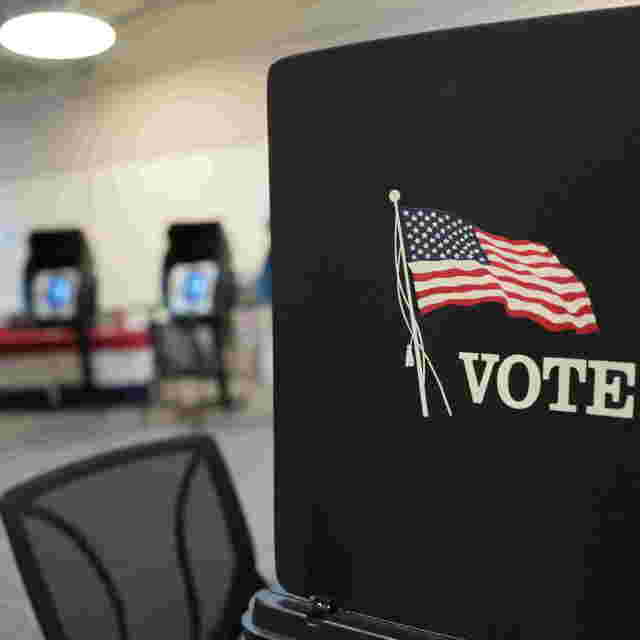
NPR’s Consider This episode previews the 2026 midterms, focusing on the Department of Justice’s election-day monitoring effort and what election officials fear could happen during and after voting.
Miles Parks, NPR voting correspondent; previously broke the story about DOJ notifications via tips from local election officials.
DOJ began notifying counties it wants to monitor, calling it the largest monitoring effort in the department’s history. Officials are uneasy due to prior “unprecedented” DOJ actions and election denial dynamics. Main fears include voter intimidation, aggressive monitors, and the possibility of federal ballot seizures via search warrants.
Fulton County, Georgia—FBI search warrant and ballot confiscation after 2020; Wyoming—reports of “aggressive” monitors; a Spanish-ballot county vs neighboring county without a notification, tied to Voting Rights Act language requirements.
Written by AI. May contain mistakes.
Miles Parks discusses the DOJ's unprecedented monitoring efforts for the elections.
“So we were starting to get that and that list seemed to be growing in real time.”
Election officials express concerns about the political implications of DOJ monitoring.
“Earlier this month, the Department of Justice began notifying the places it wants to monitor on Election Day.”
Discussion on the fears local election officials have regarding federal law enforcement.
“If you are an election official in one of these places where the Trump campaign or people who are spreading misinformation around elections are focused.”
The conversation explores how election concerns have evolved through recent cycles.
“I was going to say, I'm sure many of them would say it's not that outlandish.”
Miles Parks anticipates the impact of election denial rhetoric on future elections.
“On Election Day, Miles, there are so many places you could go.”

Get the gist, explore an idea or ask about something said.
 Claude
On Consider This from NPR, what are the key points of this episode?
Searching your listeningAutomatic transcript. May contain errors.
0:00Gabriel Sanchez: The 2026 midterm elections are upon us. On November 3rd, voters will determine what the next two years of their local leadership and the balance of national government will look like. Listen to the NPR News Now podcast for all the updates you need ahead of and after November 3rd from NPR News.
0:23Miles Parks: It's Consider This where every day we go deep on one big news story. Any good beat reporter relies on tips from sources they've cultivated over the years. And it was a tip from a local election official that helped NPR voting correspondent Miles Parks break a story that the Department of Justice had begun notifying places it wants to monitor on election day.
0:45Gabriel Sanchez: We had confirmed about 15 different counties who had received them, like you mentioned, in blue, red and purple places. So we were starting to get that and that list seemed to be growing in real time.
0:55Miles Parks: When I sat down to speak with Miles for our reporter's notebook segment, he said that although the DOJ sends monitors out in every election, this year it feels different.
1:04Gabriel Sanchez: We've seen the Department of Justice take a number of unprecedented actions during Trump's second term, whether that is suing states trying to access their sensitive voter data, whether it is the president putting executive actions out there that have been struck down by courts for overreaching his authority. And so when you take all of that as the landscape, the idea that the DOJ would be coming, if you're a county voting official, the DOJ coming to your voting locations, it makes you a little bit more uneasy, but it also makes voters nervous about it.
1:36Miles Parks: Consider this. President Trump's name won't appear on any ballot in Tuesday's elections, but he's making his presence felt at polling stations across the country. Coming up, we hear from NPR voting correspondent Miles Parks about the concerns election officials have.
2:05Miles Parks: From NPR, I'm Sasha Pfeiffer.
2:17Miles Parks: It's Consider This from NPR. Earlier this month, the Department of Justice began notifying the places it wants to monitor on Election Day. And the DOJ has said it expects this to be the largest monitoring effort in the department's history. NPR voting correspondent Miles Parks was the first to report on these notifications. When we sat down for this week's reporter's notebook, I asked him how he found out they were being sent out.
2:42Gabriel Sanchez: Last Tuesday night, I got a call from an election official who said, we got a notice and people here are freaking out. I can't name the election official who first told me that. But I basically emailed and called every election official I know and every person who knows election officials in the country and just said, I'm hearing these are going out. Have you gotten one or do you know of anyone who has gotten one of these? And so what that allowed us to do is, A, get a sense of the places that they were going. But more importantly, was talk to the election officials in those places and hear how these requests were being perceived.
3:12Miles Parks: And in terms of how the requests are being perceived, you had one election clerk, a Democrat, actually say to you on the record that they think it's politically motivated and potentially an intimidation technique. Do they feel like there's a risk to saying that out loud, that they might invite more scrutiny from the administration?
3:28Gabriel Sanchez: I did hear that. And I heard that from a lot of people on background and off the record as well, who everyone is very nervous right now to basically get to be under the scrutiny of the Trump administration. I think we've seen in previous election cycles, 2020 comes to mind, what happens in places like Georgia and Michigan and Arizona, whether it is the death threats that come from that, the political pressure that comes from that. If you are an election official in one of these places where the Trump campaign or people who are spreading misinformation around elections are focused. And so, yes, I think there is kind of the underlying fear.
4:02Gabriel Sanchez: I think this election official knew that it was going to be public that the DOJ was coming to his county and so made the calculated decision to talk with us. And I appreciated that. And I think what was so interesting is he had this situation where the neighboring clerk who was a Republican did not receive one of these monitoring notifications. And so this is interesting.
4:23Miles Parks: Is this the one because I went back and read your story where one of the counties was heavily Latino population. So they have a rule where they provide Spanish language ballots. Exactly. And the other doesn't.
4:33Gabriel Sanchez: Exactly. There's a specific provision in the Voting Rights Act that says if a certain percentage of your population is of different ethnicities or different races based on the U.S. census, then you may be required to provide ballot materials. And so the DOJ is saying we're going to this county because we're interested in enforcing this specific aspect of the Voting Rights Act. Though I think a lot of election officials, when you tell them that, and that election official in that county was not comforted by that because this DOJ has not shown any previous interest in enforcing ballot protections for people who speak Spanish.
5:05Miles Parks: So the DOJ might be saying on the surface, we're just going to make sure everybody gets their Spanish ballot. The clerks are afraid they're going to show up to try to scrutinize, maybe detain Latinos.
5:13Gabriel Sanchez: Exactly. And I think, again, there, as you mentioned, this same DOJ sent monitors during the primary to close to a dozen states. And on a whole, that was uneventful that many states who had these monitors at their polling places and at their elections offices found no issues. I will say, though, there was one incident in Wyoming where the Republican governor there and the Republican clerk there said there were monitors who were, quote, aggressive, who did not seem to show a respect for state law around elections. And so at the same time, I would say, broadly speaking, the election officials I'm talking to are expecting this monitoring effort to go somewhat as normal.
5:50Gabriel Sanchez: But I just think that they're on higher alert than they ever have been about this effort.
5:54Miles Parks: And are you hearing from the clerks that they have a variety of fears? I mean, one is that a voter shows up and gets detained. One is that voters may not bother to show up and vote because they're afraid of showing up and getting detained. So what's the universe of worries these clerks have about what could play out on Election Day?
6:10Gabriel Sanchez: The one concern that rises above all else goes back to federal law enforcement, goes back to the Department of Justice, not about this monitoring effort necessarily, but about the idea of ballot seizures and the idea that federal law enforcement could get a search warrant to be able to take possession of ballots. This is something that was not on the radar of local election officials until this year when the FBI served a search warrant in Fulton County, Georgia, which was an area that really was an epicenter for conspiracy theories around the 2020 election. The ballots being seized out of that elections office there was really unprecedented.
6:45Miles Parks: And remind me, that happened after the election. They came in and said, we want all your paperwork.
6:49Gabriel Sanchez: Exactly. Many years after the election, they basically said, we're investigating crimes around record keeping. And so they confiscated all these ballots. But even that idea, the idea that federal law enforcement could confiscate ballots or election materials in the way they did was pretty unprecedented. And so it just opened up a lot of these clerks eyes of like, what happens if it's November 5th? And we haven't even finished counting it. We haven't even finished where, you know, we're still getting absentee ballots that were postmarked, but haven't been counted yet. You know, there were still kind of in the thick of it of trying to determine how many votes we have at all.
7:20Gabriel Sanchez: And we get a knock on the door and it's federal law enforcement and they're saying we have a signed search warrant and we're able to seize X number of ballots. Again, it's an outlandish scenario, but it's one that I can tell you election officials across the country have been preparing for all year.
7:36Miles Parks: I was going to say, I'm sure many of them would say it's not that outlandish.
7:38Gabriel Sanchez: Feels less outlandish now than it ever has before.
7:41Miles Parks: Were the same issues at play when you first began and now it's just gotten more and more intense over the decade? Are you actually seeing new things now that you never saw and couldn't have imagined seen when you started this beat?
7:52Gabriel Sanchez: Definitely the latter. And I think what has been so interesting about covering this beat the last few election cycles is that every election has had actually a different sort of red blinking light concern. When I think of the post-2016 election cycle after the Russian election interference in 2016, for four years, everyone was talking about cybersecurity. Just the idea of foreign election interference, trying to make sure we, you know, we had not been spending a lot of time thinking about hardening our systems until that moment was a real wake up call where counties everywhere were thinking about cybersecurity in a new way.
8:21Gabriel Sanchez: After 2020, it was physical security and all the threats that came from, you know, that intense, intense period that led up to January 6th. After 2024, it has been how to interact with a federal government that is being helmed by a person who does not believe elections are legitimate. And that has just raised a whole slew of new questions election officials have never interacted with before.
8:42Miles Parks: We obviously don't know how the election will play out. Maybe the election monitoring will go perfectly fine. But if you are still covering this beat four years from now in the next election, any way for you to forecast where we're headed, what we might see that's the new iteration of this in four years?
8:57Gabriel Sanchez: Honestly, the thing I'm most curious about is this brand of election denial that President Trump has been kind of seeding in the American public for 10 years. Where does that go from here? And specifically among Democrats, I think we're at a point right now where, and again, at this point, I want to be very clear that election denial is being propped up on the right. But when you ask polling questions about how people feel about election results because of all the fears about the federal government, there are a lot of people on the left who feel that if Republicans win this midterm election, it will be because of some sort of fraud or malfeasance.
9:38Gabriel Sanchez: And it's very possible that that is not the case, that Republicans, you know, this is going to be a very tightly contested election in the House and the U.S. Senate. And so when the entire American electorate is feeling as cynical and as scared and as existential as they are right now, I think it would be naive to think that this level of distrust is going to continue to be isolated among a small portion of Republicans.
10:02Miles Parks: On Election Day, Miles, there are so many places you could go. Will you go somewhere physically? Will you just work the phones? What are you going to do on Election Day?
10:09Gabriel Sanchez: I will be here at NPR headquarters probably for 24 straight hours. And then my plan is on the day after the election, Wednesday after and Wednesday night, we should have a better sense of the places that are still contested. And that will be where I head.
10:24Miles Parks: I hope we'll be able to have you back to visit some of those election sites and you can tell us what you saw and how this played out.
10:29Gabriel Sanchez: Always happy to do it, Sasha.
10:30Miles Parks: That is NPR's Miles Parks. Thank you. Thank you. This episode was produced by Gabriel Sanchez with engineering by Zoe Van Genhoven. Our director is Jeffrey Pierre. It was edited by Adam Rainey and Benjamin Swayze. Our executive producer is Courtney Dorning.
10:54Miles Parks: It's Consider This from NPR. I'm Sasha Pfeiffer.
11:04Miles Parks: Stay tuned for the following announcements and messages from our sponsors.
11:09Gabriel Sanchez: A beautifully designed Squarespace website is the difference between thinking about photography school and selling your portraits online. It's the difference between giving away those cookies you just made for free and running your cookie empire. A beautifully designed Squarespace website is the difference between having a movie reviewing hobby and a movie reviewing career. Squarespace, because no matter what you're into, a website makes it real. Use offer code DIFFERENCE for 50 % off select plans. Terms and conditions apply.


