Ask ChatGPT


 Consider This from NPR
27 Jan 2026 · 11m · 4 chapters
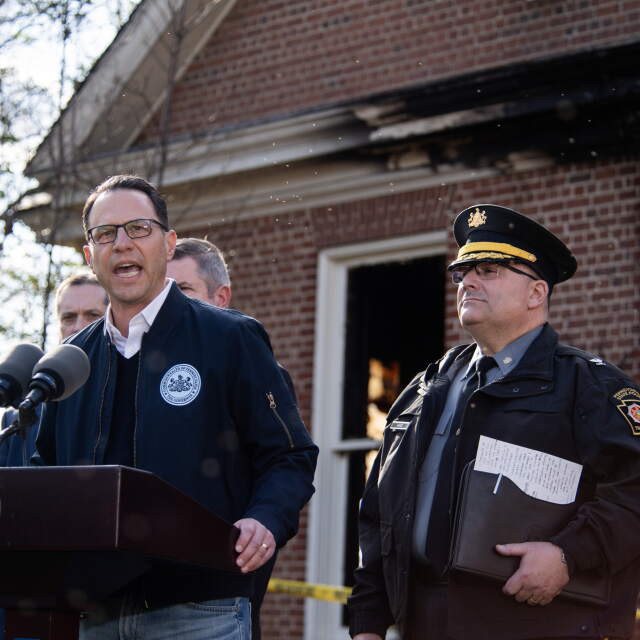
In this episode, Pennsylvania Governor Josh Shapiro discusses his experiences and perspectives on resisting Trump-era policies, his Jewish faith, and his potential future in politics, including a possible presidential run. The discussion is framed around Shapiro's recent memoir, Where We Keep the Light, which explores the intersection of his faith and political career.
Written by AI. May contain mistakes.
Shapiro discusses his experience with political violence and his commitment to his role as governor.
“it is often state governors, specifically Democratic governors, trying to push back.”
Exploration of Shapiro's challenges with ICE deployments and community trust.
“And so to me, this is about community safety, public safety, first and foremost.”
Discussion on concerns regarding election integrity and the upcoming midterm elections.
“We've had elections here in Pennsylvania where sometimes Democrats win, sometimes Republicans win.”
Shapiro shares his vision for the Democratic Party and the importance of community engagement.
“And I think these midterms are incredibly important.”

Get the gist, explore an idea or ask about something said.
 Claude
On Consider This from NPR, what are the key points of this episode?
Searching your listeningAutomatic transcript. May contain errors.
0:00Last spring, in the middle of the night, Pennsylvania Governor Josh Shapiro woke up to knocking and yelling. The governor's residence was on fire, a state trooper told him. The Shapiros had to get out of the house and fast, as ABC News reported. An arrest after what police called an act of arson at Pennsylvania Governor Josh Shapiro's residence, where he and his family had gathered to celebrate the first night of Passover. No one was harmed, but the attack left Shapiro feeling first shaken and then resolute. I wanted people to know that I was not afraid. I wanted people to know that nothing was going to deter me from doing my job as governor and nothing would deter me from practicing my faith.
0:40It was important for me to say that because political violence, while targeted at one particular individual, is designed to stoke fear in a broader community. And I wanted them to see that even though we wouldn't be able to return to the governor's residence for that Seder, we were still going to do a second Seder. Shapiro was one of the most prominent Jewish office holders in the U.S. My faith is just interwoven in everything I do. In his new memoir, Where We Keep the Light, Shapiro explores his faith as well as his career in politics, one that has taken him from state representative to Pennsylvania attorney general during President Trump's first term in the White House.
1:19If someone's going to mess with a Pennsylvanian, they're going to have to go through me. And that includes the president of the United States. Now, as governor, Shapiro faces new challenges coming from the Trump administration, like potential ICE deployments. When Donald Trump deploys, whether it's the National Guard or ICE, into a community where a mayor or a governor does not want them there, he immediately erodes the trust that exists in a community. And instead of making communities safer, which is what they claim they want to do, they actually create danger in a community. And this year's midterm elections.
1:54We know that this president has lied about our elections. We know that they are going to try and undermine the midterms again with their conspiracy theories and with their bogus lawsuits. We will be prepared again. We are already seeing them try to undermine the rule of law and undermine our elections. Consider this. Pennsylvania Governor Josh Shapiro was on the short list for vice president in 2024. Many expect he will run for president himself in two years. So how is he approaching the Trump administration and the current political moment? From NPR, I'm Scott Datro.
2:42It's Consider This from NPR. As the Trump administration applies the forces of the federal government in ways that have never been tried before, it is often state governors, specifically Democratic governors, trying to push back. Pennsylvania's Governor Josh Shapiro has spent a lot of time thinking about how to respond to ICE deployments and demands for voter registration information, among other things. We talked about it when we sat down together in his hometown of Abington, Pennsylvania last week, and a note, we talked before Alex Preddy was shot and killed in the street when one or more federal agents opened fire.
3:16Let's talk about ICE and what's happening in Minnesota right now. Minnesota is the latest example of a series of different locations over the last year or so. How do you think about that line? Is this legal versus do I like this or not like this when it comes to what we're seeing play out with ICE and with other federal agents in Minneapolis? Well, first off, if you want to have safe communities, you've got to build trust between law enforcement and the people that they serve and protect. I made a commitment as governor to hire 2 ,000 police officers and invest hundreds of millions of dollars in violence prevention initiatives to create more trust between the community and law enforcement.
3:58And it's working. We've nearly hired all 2 ,000. I think we're at 1 ,900. We'll surpass that number. Violent crime is down 12 % in Pennsylvania. Fatal gun violence is down 43 % in Pennsylvania. What we're doing is working. When Donald Trump deploys, whether it's the National Guard or ICE, into a community where a mayor or a governor does not want them there, he immediately erodes the trust that exists in a community. And instead of making communities safer, which is what they claim they want to do, they actually create danger in a community. You saw that with the loss of life of Renee Good. And so to me, this is about community safety, public safety, first and foremost.
4:44And this president is eroding that trust. From my vantage point as a governor, what can I do? Number one, where they deploy troops against the law, I will take them to court to stop them. I've been very vocal about not letting the president take the Pennsylvania National Guard away from my command and deploy it for other purposes. And so far, we've been successful at that. Second, we have strong law enforcement, obviously, through Pennsylvania State Police, but also with our municipal police departments that we coordinate closely with. We do not want ICE coming in, eroding that trust. I think what you're seeing with ICE are people who are being dispatched to a community violating the constitutional rights of individuals.
5:29What you see with ICE are people who are harming that trust and making communities less safe. Shapiro is also thinking about another potential looming confrontation between the Trump administration and state governments this fall's election. You mentioned having those kind of tabletop conversations. That reminds me of something that one of your peers, Governor Gretchen Whitmer, told one of my colleagues, Steve Inskip, in a recent interview. She said that government, that Democratic officials are having conversations about this year's midterm elections and that there's real concern based on what we've seen in the past, what sort of statements we've seen from the Department of Homeland Security, from the president and others.
6:05There's real concerns about election integrity and election interference and intimidation. Are you part of those conversations? What can you tell us about that? I am. And without obviously divulging my private communications with other governors, and by the way, I have immense respect for Governor Whitmer. I think she's one of the finest governors in the country and a really good friend. We know that this president has lied about our elections. He took me to court. He and his allies took me to court 43 different times to try and overturn the 2020 election. By the way, I went 43 and 0. They went 0 and 43.
6:39We had a free and fair, safe and secure election. We've had elections here in Pennsylvania where sometimes Democrats win, sometimes Republicans win. Sometimes Trump wins and sometimes Trump loses. We know that they are going to try and undermine the midterms again with their conspiracy theories and with their bogus lawsuits. We will be prepared again. We are already seeing them try to undermine the rule of law and undermine our elections. Let me explain. They asked recently, demanded, I should say recently, all of the private voter information for Pennsylvanians, about 9 million or so registered Pennsylvania voters.
7:18And by the way, not just Scott Detrow and what party you're registered for and how many times you voted, that's publicly available. but all of Scott's private information that the state has a legal responsibility to protect. We refuse to turn that over because I believe they're going to use it for nefarious purposes. And we were sued by the Department of Justice to compel us to provide that information. We still haven't. We're going to continue to battle in court to protect the private information of the citizens of Pennsylvania. That's just one example of how I believe they're preparing to ramp up to try and undermine the midterms.
7:53And I think these midterms are incredibly important. They're important to you. You're on the ballot. I am on the ballot. But I think it is broader than me. And look, I hope the good people of Pennsylvania return me to this position, which I just feel honored to serve them in. But I think right now you have people who, and I'm sure you've heard this too, who can't, I mean this with the most respect, who can't handle the news, who just want to shut it off. And they want to pull the covers over and they want to retreat. And what I would say to them is now is a time to engage, not to retreat. And the best way we can engage is by using our power.
8:31Sometimes our power is engaging with people online. But for all of us, the power we have is the power to vote. And so whether you're privileged to live in a swing state like Pennsylvania or be in one of these swing districts of which we've got four of them here in our Commonwealth, or even if you're in one of these 80-20 districts, show up and vote in record numbers, and that will send a message that we do not accept the chaos and the cruelty and the corruption of this administration. You're running for governor right now. You're running for re-election. This is the type of book that people write when they're thinking about running for president in two years.
9:09How are you thinking about 2028 at this moment in time? I wrote this book because I think our politics are not meeting the moment or the needs of the people that a whole bunch of politicians represent. What do I mean by that? I travel across this Commonwealth and more and more across the country, and I just see goodness. I see people who are bringing light in their communities every single day, solving problems. I write about a number of the people in this book. And I wrote this book, which of course was interrupted in many ways by the arson attack, where we saw not only extreme darkness, but extraordinary light.
9:52And I wrote this book to speak to that. And I think it is important, I hope people will read this, to recognize that our politicians need to do a better job of listening to the people and learning from the great example that the people set in their communities every day. As for the future, you talk about the sort of heart and soul of the Democratic Party and what's that going to look like. I want to have a voice in shaping that. I want to have a voice in shaping that as governor of Pennsylvania. I'm grateful for the chance to talk to someone like you about that. But I don't think anyone can look past the immediate term here.
10:30This year, all of the challenges I have as governor of Pennsylvania and other leaders have in their jurisdictions, but most importantly, these midterm elections. And that's all I'm going to focus on. That's all I think anyone should be focused on. Josh Shapiro, Governor of the Commonwealth of Pennsylvania, thank you so much for talking to us. Good to be with you. Thank you. This episode was produced by Tyler Bartlom with Audio Engineering from Becky Brown. It was edited by Sarah Handel. Our executive producer is Sammy Yannigan. Let's consider this from NPR. I'm Scott Detrow.
It was edited by Sarah Handel.
Our executive producer is Sami Yenigun.
Learn more about sponsor message choices: podcastchoices.com/adchoices
NPR Privacy Policy