
 Ask ChatGPT


 Consider This from NPR
21 Oct 2026 · 10m · 4 chapters
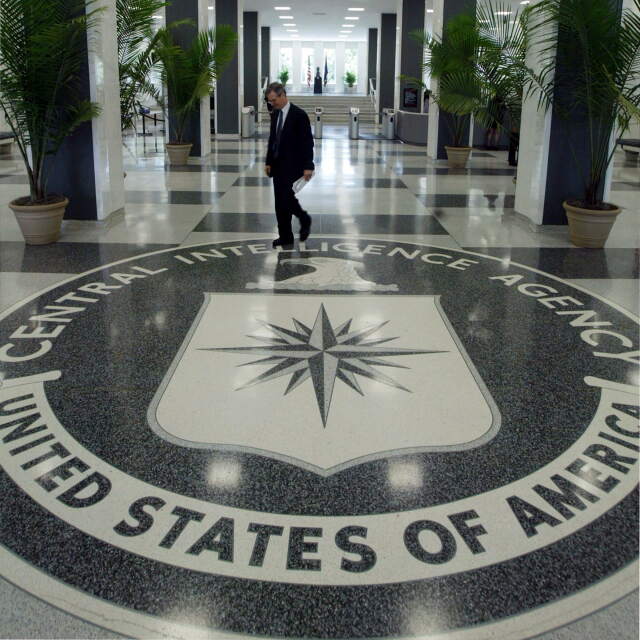
The episode debates whether the U.S. should use intelligence collection to help American companies compete commercially—economic espionage—arguing the old norm against it is outdated given cyber theft and China’s advances.
David Cohen, former CIA deputy director (served twice) and author of a Foreign Affairs article “The Case for Economic Espionage.” Also referenced: Sen. Sheldon Whitehouse (2014 Senate hearing) and Douglas Norman, vice president/general counsel for patents at Eli Lilly (both as sources in the discussion).
The U.S. has “tilted the playing field” by refusing commercial-focused intelligence; adversaries and allies do it. Intelligence should be used for national security-linked competitiveness (AI, semiconductors, quantum).
Eli Lilly formula trade-secret theft; Defense Department claim that more IP than the Library of Congress is stolen annually; a CIA case officer quote: “prepared to give my life for my country, but not for a company.”
Written by AI. May contain mistakes.
Discussion of economic espionage and its implications for American companies.
“NPR has not independently verified that claim, but the threat was top of mind for business leaders.”
Introduction of David Cohen and his argument for economic espionage.
“Try Google Workspace with Gemini at goo.gle slash Workspace with Gemini.”
David Cohen explains the rationale behind advocating for economic espionage in relation to national security.
“David Cohen makes the case for economic espionage in a new article in Foreign Affairs.”
Discussion on the potential challenges and oversight needed in implementing economic espionage.
“Yeah, but it isn't just a fight fire with fire argument.”

Get the gist, explore an idea or ask about something said.
 Claude
On Consider This from NPR, what are the key points of this episode?
Searching your listeningAutomatic transcript. May contain errors.
0:00It's Consider This, where every day we go deep on one big news story. Today, the case for economic espionage, meaning a foreign government stealing a company's trade secrets or other information to benefit businesses in their own countries. Companies now must confront the reality that they are being attacked on a daily basis by cyber criminals who are determined to steal their intellectual property. That is Democratic Senator Sheldon Whitehouse of Rhode Island. He's speaking at a Senate hearing on the threat of economic espionage back in 2014. The Defense Department has said that every year an amount of intellectual property larger than that contained in the Library of Congress is stolen from computer networks belonging to American businesses and government.
0:53NPR has not independently verified that claim, but the threat was top of mind for business leaders. The issue is enormous. Douglas Norman was vice president and general counsel for patents at Eli Lilly, the pharmaceutical company, speaking at that same hearing. What we are seeing are numerous instances where interlopers are stepping in and trying to steal our trade secrets on our formula. Consider this. Advancements in technology have changed the nature of economic espionage. One former top CIA official says the U.S. needs to break with years of protocol and take a more proactive approach to protect American companies.
1:41From NPR, I'm Mary Louise Kelly. Stay tuned for the following announcements and messages from our sponsors. This message comes from Google Workspace with Gemini. Ever notice how every new AI tool asks you to explain your business to it all over again? Google Workspace with Gemini skips that. You get Google's AI built right into the premium versions of Gmail, Google Docs, Sheets, and more. No new tools, no extra logins, just one subscription that gives you personalized AI right inside your actual workflow. Try Google Workspace with Gemini at goo.gle slash Workspace with Gemini. Right now, we are living through some of the most tumultuous political times our country has ever known.
2:28I'm David Remnick, and each week on the New Yorker Radio Hour, I'll try to make sense of what's happening alongside politicians and thinkers like Cory Booker, Nancy Pelosi, Liz Cheney, and so many more. That's all on the New Yorker Radio Hour, wherever you listen to podcasts. This week on Up First, the midterms less than 15 days away. President Trump, Vice President J.D. Vance and former President Obama all crisscrossing the country, rallying voters in key races from Michigan to Georgia to North Carolina. Join us every morning as we guide you through the homestretch of this election season, Up First, on the NPR app or wherever you get your podcasts.
3:15It's Consider This from NPR. Should the U.S. spy on foreign companies to protect American ones? David Cohen makes the case for economic espionage in a new article in Foreign Affairs. Cohen served twice as deputy director of the CIA. And he writes that by abstaining, quote, the United States has tilted the playing field against itself and magnified the Chinese threat. David Cohen joins me in our Washington studios. Welcome. Thank you. Good to be here. Explain what you mean by that. The U.S. has tilted the playing field against itself. How so? So the U.S. has embraced this norm that we would not engage in foreign intelligence collection for the purpose of advancing the commercial prospects of our companies, of American companies.
4:05And the reason that that tilts the playing field against the United States is really for three reasons. The first is that our commercial companies more and more are critical to our national defense, whether it's AI or semiconductors or quantum computers that are coming online that are both sold as consumer products and sold to the U.S. government. The other two ways it's changed is the Chinese are increasingly catching up or surpassing American technology firms in these frontier technologies. So just to sum up what I'm hearing you say, in a world where the U.S. was so far ahead of our foreign competitors, there was no need to deploy economic espionage because we had more to lose than we would to gain if we were that far ahead.
4:55But now China has changed that. Exactly. Not only no need but also much more to lose. That is no longer the case. And the third reason is that there has been a shift in how we think about industries, companies that are involved in national security in this country. You know, the orthodoxy of the 1970s, 1980s of sort of a free market, that has given way to a very deliberate national security-centric industrial policy that has been embraced across several administrations now. So just to spell out the very basic argument here, U.S. intelligence agencies do spy on foreign companies. And this is totally fine so long as it's being used for national security purposes and not to benefit private American companies.
5:46It has long been the case that we collect foreign intelligence for a whole variety of governmental purposes to inform trade negotiations, to inform sanctions policy, even to provide information to companies about how they are going to be attacked by a foreign power. So we will provide to a private firm an indication that they are the target of a cyber attack from a foreign company. But what we won't do is provide intelligence to help a U.S. company compete more effectively in the commercial sector. That's the line that has been drawn historically that I think is time to lift. And you're arguing, look, America's adversaries, America's allies are doing this.
6:32Why not return the favor? Yeah, but it isn't just a fight fire with fire argument. It is really an argument that this is something that we need to do to enhance our national security. So what would this look like? Give me an example if we embrace the change that you're arguing for. Well, I think it's very important that we do this in a way that is carefully controlled because there are dangers here. One is that by favoring certain firms in the economy, that that favoritism sort of bleeds over into corruption, frankly. And so you want to have some rigorous, objective, neutral criteria about which sectors of the economy we will provide this intelligence to and which firms in those sectors that we provide information to.
7:19And you want to be sure that it's not just going to companies that happen to have political connections. That feels like not a small challenge. Like how do you pick which firm, which companies in fields where American companies are competing with each other? So my proposal is that the president working with Congress develop neutral criteria that can be identified in advance and the determination of which firms would receive this information would be subject to careful oversight both by the congressional oversight committees and by inspectors general in the intelligence community to ensure that there isn't sort of undue favoritism being shown for personal or political reasons.
8:13That also feels like a not insignificant challenge, putting up guardrails, having oversight in a carefully calibrated way. I mean, you're a former U.S. government official across many years, both at CIA and at Treasury. Do you have full confidence that Congress and American president are going to work together and do this in a responsible way? Well, I think that is essential if we're going to do this, that that's the way it should happen. My concern, frankly, is that this may be beginning to happen sort of in the shadows. There may be sort of a creeping erosion of this norm going on right now.
8:49And so the worst of all worlds is that we abandon this norm in a circumstance where we don't do it deliberately and we don't do it with some significant forethought and we don't do it with these guardrails in place. Have you floated this idea to your former colleagues at the Central Intelligence Agency? Well, I floated the idea by writing the article and I've had a lot of feedback. You quote a CIA case officer in your piece. This is a case officer back in the 90s. But who said, and I'm quoting, I'm prepared to give my life for my country, but not for a company. Do you anticipate resistance along those lines?
9:31So I anticipate some but not a lot of resistance along those lines. I think that that is very much a 1990s perspective. And I think that the case officers in the agency have also come to recognize the importance of the private sector and private sector innovation, both in what they do in helping them perform their job, but also more broadly in our national defense enterprise. So I think that that reluctance is one that I think is not going to be a significant impediment. Last question that's popping into my head listening to you. At the pace that tech is changing in 2026, are you, David Cohen, still entirely confident that U.S.
10:16intelligence has a skill set that would be of value in helping the private sector get ahead at the rate that AI, for example, is racing forward? I do. I do. I think we have in the intelligence community very skilled analysts and operators who can identify what it is in conversation with the private sector and can go out and get that. But it will require this careful and more robust communication between the private sector and the intelligence community. And it requires, I think, continuing to bring on board into the intelligence community people who have experience, expertise, education in these tech sectors and opening up those channels as well.
11:03So it's not just a channel of communication. It's also a channel of personnel sort of moving in and moving out of the intelligence community in the private sector so that people stay fresh on these technologies. David Cohen, former deputy director of the CIA. His piece for foreign affairs is headlined The Case for Economic Espionage. David Cohen, thank you. Thank you.
11:28This episode was produced by Jeffrey Pierre and Connor Donovan. Our director is Kai McNamee. It was edited by Tenbeat Ermius. Our interim executive producer is Courtney Dorney.
11:43It's Consider This from NPR. I'm Mary Louise Kelly. Stay tuned for the following announcements and messages from our sponsors. Want to hear this podcast without sponsor breaks? Amazon Prime members can listen to consider this sponsor-free through Amazon Music. Or you can also support NPR's vital journalism and get NPR Plus at plus.npr.org. That's plus.npr.org.


