

 Consider This from NPR
24 Nov 2026 · 10m

 Add vo to ChatGPT or Claude to ask about everything you hear
vo listened to this episode to put together the overview and transcript, so there may be the odd mistake.
The AI stock boom—centered on Anthropic’s record IPO—and how everyday investors can (and can’t) benefit through retirement accounts, mutual funds, and pension exposure.
Austin Goolsbee, President of the Federal Reserve Bank of Chicago; Matt Morrow, co-founder and president of Monroe Morrow Wealth Management.
Even IPO buyers may be down after the initial pop; roughly half of IPOs are down 12 months later. Everyday investors typically get exposure indirectly via mutual/index funds already holding small stakes. Pension plan exposure is usually a tiny, diversified slice of large portfolios. A “hurry up and wait” approach—buying some early if desired, then adding later—plus dollar-cost averaging helps manage volatility.
Anthropic IPO (price $83, opened over $100, later around $78); comparisons to SpaceX; mention of NVIDIA’s stock swings.
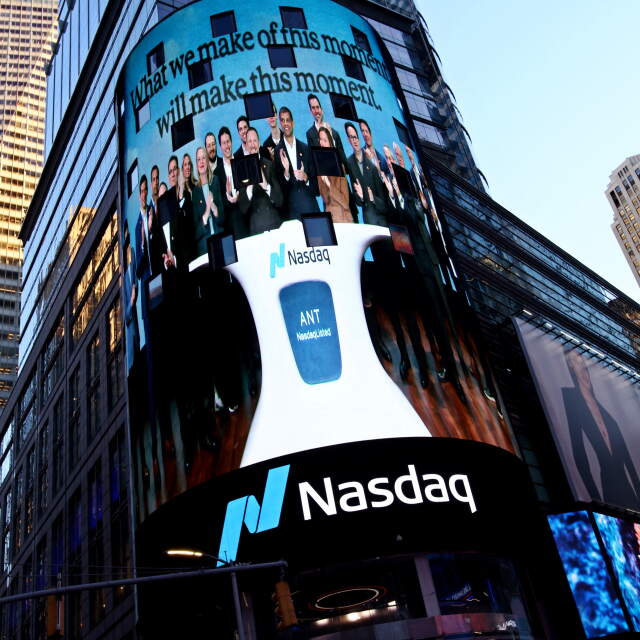
0:00It's Consider This where every day we go deep on one big news story. Today, AI, stocks, and everyday investors. Artificial intelligence companies have recently made some people very rich. Anthropic now officially the record holder for the largest IPO of all time. Last week, Anthropic's initial public offering turned several of its founders into multi-billionaires, at least on paper. Some of the people who've most benefited from this AI wealth creation are company employees and private investors. But what about regular investors, those of us who don't have the means or access to benefit from these early investment opportunities?
0:41It's fabulous that we are coming up with innovations that might raise the productivity growth in the country and might make us rich. Austin Goolsbee heads the Federal Reserve Bank of Chicago. Now that Anthropix stock is being traded publicly, everyday investors can get a piece of the action. That's even if you don't buy individual shares, since many of the mutual funds and index funds that many of our retirement accounts are invested in will include them. Consider this. Anthropix's historic IPO has shaken up the U.S. stock market. How will all that action affect everyday investors?
1:27From NPR, I'm Sasha Pfeiffer. Stay tuned for the following announcements and messages from our sponsors. This message comes from Prolon. Want to look and feel your best this fall? Prolon's five-day fasting mimicking diet is a clinically developed nutrition program with the goal of promoting fat loss while protecting lean body mass. Developed at USC's Longevity Institute, it aims to assist the body in entering a fasting-like state that helps reset metabolism, target visceral fat, and support healthy metabolic markers. Get 15 % off plus a bonus gift when you subscribe at prolonlife.com slash NPR.
2:05This message comes from Rosetta Stone, offering an alternative approach to language learning. Moving past rote memorization, the app guides users to intuitively think in a second language using images and contextual audio, mimicking how people acquire speech as children. The platform also includes advanced speech recognition technology that compares a learner's pronunciation directly with native speakers to refine accent precision. Learn more about their new Rosetta Stone Sapphire app at rosettastone.com. This episode is sponsored by Carvana, which offers the following message. Carvana Value Tracker lets you see what your car is worth, understand how the value changes, and sell your car when the time's right.
2:46Try it now on carvana.com.
2:54It's Consider This from NPR. We just witnessed an explosion of wealth. Anthropic raised$107 billion from its initial public offering and a private placement with large investors. The company's seven founders alone are now worth many billions of dollars. It's hard not to see this historic windfall and think, what about the rest of us? But whether you know it or not, and whether you like it or not, if you have a retirement account or a general investment account, big tech is almost certainly part of your portfolio. If you're wondering in what ways, we're going to get an explainer from financial advisor Matt Morrow.
3:33He's the co-founder and president of Monroe Morrow Wealth Management. Matt, thanks for coming on the program. Glad to be here. Thanks for having me. So for those who did buy shares last week or were able to get in on the IPO, whether they're your clients or not, have they made money, paper money? No, that's the most interesting part about IPOs, right? And we oftentimes say to clients, right, this old adage of the stock market is a device to transfer money from the patient to the patient. And IPOs have sort of proved that over time. And the Anthropic IPO in particular, it opened at, the IPO price was 83.
4:10It opened over 100 a share. As we sit today, it's trading at around 78 a share. So on paper, even those who bought at IPO are currently down. So let's say you were someone who had hoped you could get in on the IPO, but you couldn't, and you're a little disappointed. There are still other ways that people might benefit from Anthropic. pension funds, mutual funds. Can you talk a little bit about the other ways that the general public may benefit or take on the risk of Anthropic shares? There's a handful, dozens actually, of Fidelity Mutual funds that already owned Anthropic in small percentages before the IPO.
4:50So if you owned those particular funds, you had small exposure to Anthropic even before the IPO. The same is true to some extent And many of the pension funds that invest in private equity or venture cap funds, they also may have some exposure to Anthropic pre-IPO. And two ultra-basic investing questions for you. When you talk about Anthropic being part of some mutual funds or index funds, we're basically talking about pooled baskets of stocks and bonds that many regular investors or people with retirement accounts hold, these pooled baskets. Correct. So if I buy a particular mutual fund at a mutual fund company, that mutual fund may own 80 to 100 different companies and the manager is choosing what to buy and sell inside there, which stocks particular companies.
5:35And they do get exposure at certain firms to pre-IPO companies like Anthropic or SpaceX is another great example that was widely held before the IPO inside mutual funds that are available to everyday investors could buy those funds. And a lot of these funds these days are very heavily weighted towards tech companies. Why is that? Well, that's the other part. The market itself, right? I don't think it's much of a mystery to most that technology is dominating our lives the last five to 10 years especially. The companies that are tech-based, whether it be Google's, Microsoft's, Amazon, etc., they are the most – they're the largest companies.
6:20They're the heaviest weighting in the broad indices, the investment indices. And thus, they end up held very heavily across most, well, not most, but most mutual funds that are broad-based U.S. stock mutual funds. Another question about pension funds that had investments or that have investments in Anthropic. I read that, for example, the California Pension Fund for Teachers, CalSTRS, which is the largest in the country, had some pre-IPO investment in Anthropic. There, I assume, is some risk in investing in a company like that. So how might public employees and their future pensions be affected by an investment in Anthropic?
7:00Yeah, I would say there's always risk in any company that the pension plans are investing in or any mutual funds or investment management firms that they're investing in. But when you look at these pensions that are hundreds and hundreds of billions of dollars, those exposures, those small sleeves of something like an Anthropic or a SpaceX or any IPO that we might look at as being kind of a hot IPO, there's such a small amount relative to the overall portfolio and to the diversification that these pension funds hold that even when they don't do poorly, it's not the negative impact you would expect.
7:40on an overall pension fund. There seems to be a public perception that if you can get in on a huge IPO like Anthropic or maybe SpaceX before it, you'll end up rich. What is the reality of the likelihood that you will strike it rich if you can get in on an initial public offering? Yeah, that is all perception. And that's actually one of the most interesting things in investing is the statistic for IPOs, it's roughly just over half IPOs are down 12 months later. from their closing price on IPO day, which is pretty striking to most people. People assume, just as you said, that perception is like, I have to get in on day one.
8:19Our attitude is actually more of hurry up and wait. IPOs, they may pop initially that very first day because there's a lot of excitement. It doesn't necessarily mean that price will be the best entry point to that stock. So are you saying that sometimes it's better not to get in on the IPO, keep tabs on that stock. And if you like what it's doing, or maybe if it goes farther down, later is a good time to try to get in. Of course. And that should be most people's approach to buying any stocks, right? There's not only one good time to buy, right? If it's a company you want to own and you want to own it for the long run, and you're excited enough to want to buy some that first day, that's the key, buy some, And then wait, because you're likely going to get an opportunity to buy more at a better price.
9:10You're getting at what a lot of investment advisors consider common sense conventional wisdom, which is steady investing over time so that whether a stock goes up and down, you kind of have this dollar cost averaging effect. And when we look at NVIDIA, for example, and the whiplash over its CEO who resigned and then was brought back and the stock is bouncing up and down, people might be concerned about how their investments are performing during those shifts. So could you talk a little bit about how that more steady approach ends up evening out these waves? Yeah, I think, I mean, NVIDIA has obviously been a wild ride the last two weeks.
9:44It's a reminder to investors, right, to try, and it can be difficult to do, but to try to follow discipline over emotion. These are very emotional times. When you see a stock swing$20,$30,$40 in a given day, you oftentimes get stuck with that. Well, I'm missing out. The stock's going back up. I need to get in. The thing we advise clients on is step back, right? Stay disciplined. Think about what you're buying and how long you want to own it. And am I being disciplined, right? That idea, the dollar cost averaging you mentioned, am I going to be willing to buy this over a period of time than having to buy it all because I feel in that moment that this is the thing to buy.
10:27That is Matt Murrow. He's the co-founder and president of Monroe Murrow Wealth Management. Thank you. Thank you, Sasha. And would like to note that Anthropic is a financial supporter of NPR. This episode was produced by Sophia Polisakar and Karen Zamora with audio engineering by Maggie Luthar. Our director is Jonas Adams. It was edited by Mallory Yu and Tinbeet Ermias. Our executive producer is Courtney Dorning.
10:57It's Consider This from NPR. I'm Sasha Pfeiffer. Stay tuned for the following announcements and messages from our sponsors. This message comes from Bombas. Whether you're outdoors or just lounging around the house, cool weather calls for cozier footwear. Bombas makes the perfect slippers and shoes, built with smooth, premium suede, plush Sherpa, and warm sheepskin shearling, all with layers of cloud-like cushioning. Perfect for staying in, stepping out, and keeping things cozy all season long. Visit bombas.com slash NPR and use code NPR for 20 % off your first purchase. This message comes from Rosetta Stone.
11:38Rosetta Stone is designed to make language learning intuitive. It mimics how people naturally acquire speech as children, helping users read, write, and think in a second language. More at rosettastone.com.
Scan the code with your iPhone camera
Listen in the app.


