
 Ask ChatGPT

 Consider This from NPR
2 Oct 2026 · 12m · 5 chapters
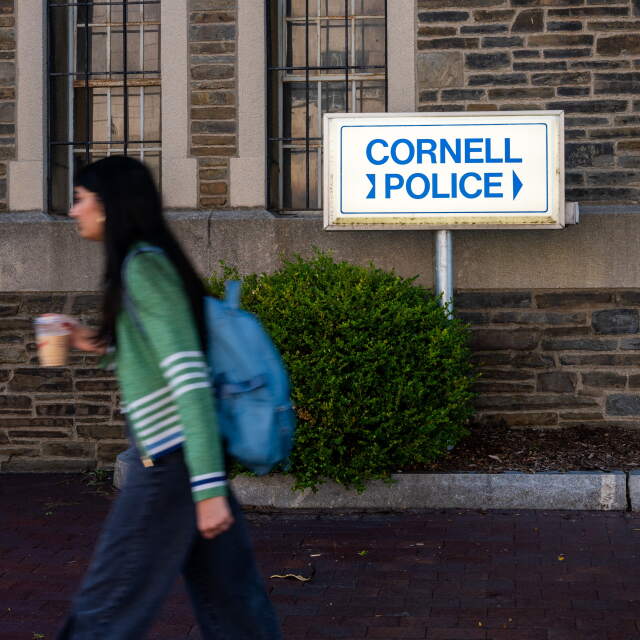
NPR’s Consider This episode about new details in a Cornell University rape case, students’ outrage, and a state takeover of the investigation.
Aurora Berry (WSKG, member station; interviews Cornell student Hannah Schwetz and university policing expert John Sloan). Also: Soraya Shemeli (activist/author of All We Want is Everything), Jessica Valenti (author; Yes Means Yes anthology), Carmen Maria Machado (author; In the Dreamhouse), Jennifer Weiner (author; The Griffin Sisters’ Greatest Hits).
Cornell police allegedly told prosecutor Matthew Van Houten incomplete info; he initially reported the victim’s account as “voluntary, conscious, and consensual” and didn’t charge anyone. Gov. Kathy Hochul appointed NY AG Letitia James as special prosecutor.
Hochul’s criticism of lack of transcript review; students describing “anger because nothing was done”; guests citing ongoing consent/victim-blaming debates and “refusal” by young women.
Written by AI. May contain mistakes.
Details about the allegations of sexual assault at Cornell University.
“Today, new details about how Cornell police handled an alleged rape are causing growing anger in Ithaca and across the country.”
Students express outrage and demand accountability from the university.
“It was really, really nice to see people be emotional about this.”
New York Governor Hochul discusses the lack of trust in local police after revelations about the case.
“This week on the NPR Politics Podcast, a vibe check on election security.”
Discussion of student reactions and the complexities of campus police jurisdiction.
“Instead, he relied on a six-page report from campus police and did not charge anyone with a crime.”
Insights from women writers on their feelings regarding ongoing issues of sexual violence.
“That is Aurora Berry from member station WSKG.”

Get the gist, explore an idea or ask about something said.
 Claude
On Consider This from NPR, what are the key points of this episode?
Searching your listeningAutomatic transcript. May contain errors.
0:00Before we begin, a reminder that everything we do here at Consider This and NPR is thanks to you. Yesterday marked one year without federal funding for public media. We're still reporting because people like you continue to step up to support this work. Consider This doesn't happen without you. Give today at donate.npr.org.
0:24It's Consider This where every day we look deeply at one big news story. Today, new details about how Cornell police handled an alleged rape are causing growing anger in Ithaca and across the country. When this week began, we knew that a woman had filed a civil lawsuit against the university and seven male students, she says, assaulted her. A note here, that lawsuit and this episode include descriptions of sexual violence. Initially, the local prosecutor, Matthew Van Houten, said the woman gave a sworn statement to police that the sexual conduct was, quote, voluntary, conscious, and consensual.
1:00And he questioned details in the lawsuit in which the woman alleged that she was drugged and gang raped. The lawsuit leaves out any reference that Jane Doe made in her sworn statement to consenting to what happened. News broke later in the week, and NPR confirmed that the woman had told Cornell campus police she was raped. Her statement during the initial investigation in 2024 includes this quote, I can say with 100 % confidence I was raped. Van Houten has since suggested that police didn't give him complete information from their interviews. Many Cornell students are outraged. Savita Sastry was one of hundreds who gathered on campus Thursday night to demand change.
1:42There was rage. It was really, really nice to see people be emotional about this. We are her. We experienced that. And this entire week, we had to think about the fact that we were raped. Consider this. The story of what one woman says happened to her at Cornell feels depressingly familiar to many women across the country. How are they living through this moment?
2:07From NPR, I'm Sasha Pfeiffer. Stay tuned for the following announcements and messages from our sponsors. This message comes from MS Now, introducing a community experience that gives you connection, not just content. Visit ms.now slash membership to join and save 50 percent. Offer ends September 30th, 2026. Terms and conditions apply. This week on the NPR Politics Podcast, a vibe check on election security. With barely a month left until the midterms, we're talking about vote by mail, the possibility of ICE at polling stations, and what the Trump administration is doing in the name of preventing fraud, which we know is not a widespread problem.
2:49Plus, the latest on how voters are feeling about all of that. Listen now on the NPR Politics Podcast. This week on Shortwave, the internet is obsessed with inflammation. And yeah, it is true. Inflammation is at the heart of nearly every disease in the body. But it's also the body's natural response to danger. So who really needs to be worried about it? Find out on Shortwave, the science podcast from NPR.
3:24It's Consider This from NPR. At a press conference this morning, New York Governor Kathy Hochul said she lacked faith in the Cornell University Police Department and the district attorney. Somebody knew more than they were letting people know. Hochul has appointed New York Attorney General Letitia James as a special prosecutor to take over the case. Aurora Berry from member station WSKG joins us now. What did Hochul say made her feel like she doesn't have trust in local law enforcement to handle this? Well, it came out this week and NPR confirmed that the woman told university police back in 2024 she was raped by a group of fraternity members.
4:01The governor pointed to that revelation and to a statement by Tompkins County District Attorney Matthew Van Houten that he never saw a transcript of her 2024 interview with police. Instead, he relied on a six-page report from campus police and did not charge anyone with a crime. At the press conference, Hochul said that the woman was failed by institutions that were supposed to protect her. Here she is. In what world would the police learn from a victim that she'd been literally gang raped while intoxicated by five men in a fraternity house and not elevate those allegations to the district attorney?
4:36Hochul also criticized the district attorney for not interviewing her or requesting a full transcript of her police interview. Now that the governor has asked the state attorney general to take over as special prosecutor, do we know what steps happen next? It's hard to say. James even acknowledged that people want answers about what happened in 2024, but it will take some time. She says her office will review the facts, gather evidence, interview witnesses, and if necessary, pursue prosecutions. And I should add that we reached out to the university. A spokesperson said in a statement that they support the appointment of a special prosecutor and, quote, are committed to an independent external review of all aspects of how Cornell has handled this case.
5:19Van Houten, the district attorney, released a statement saying he supports James's appointment and that it has, quote, become clear that we were not provided the full picture by the university. Aurora, assuming you've been able to talk to some Cornell students, what kind of things have you heard from them? I spoke to Hannah Schwetz, who is both a senior at Cornell and an elected official. She serves on the city of Ithaca's Common Council. Schwetz says she heard about this when she was a sophomore. She says she and other students assumed the university was seeking justice. Two years ago, we knew that this happened, and a lot of the emotional, like, horror stuff, we've already felt it.
5:58We felt it two years ago, but now it's turned into mostly anger because nothing was done, is what it feels like. Schwetz is also looking at this from the perspective of a local lawmaker. Cornell University is in Ithaca, but the Cornell University Police Department is part of the university, and they don't report to local government officials. So since campus police and city police are different, what are the rules, if any, about what kind of information they have to share? It really varies by state, but I can tell you in New York that education law gives campus police jurisdiction over Cornell's campus.
6:33In most ways, Cornell police are just like any other police officers, but there's a key difference. I spoke to John Sloan at the University of Alabama at Birmingham, an expert in university police departments. Sloan says if constituents are frustrated with their local law enforcement, they can put pressure on their representatives to hold them accountable. Private university police are more likely to be accountable to university administrators and boards of trustees. Cornell has also denied my station's public records request for information from the University Police Department. We've been told the department's records are private because Cornell is.
7:10That is Aurora Berry from member station WSKG. Aurora, thank you. Thank you. This story can feel so heavy because it's such a common one. An alleged assault, a woman harmed, questions about systems and institutions, and questions about justice. We're going to hear from several women who write and think about feminism. We ask them how this moment feels. They are Soraya Shemeli, activist and author of All We Want is Everything, Jessica Valenti, her landmark anthology is called Yes Means Yes, Carmen Maria Machado, who wrote the best-selling memoir In the Dreamhouse, and Jennifer Weiner, author, most recently, of The Griffin Sisters' Greatest Hits.
7:51Oh boy, how am I feeling in this moment right now? I am sad, and I am angry, and I am tired. It just feels so overwhelming. I'm now getting, like, people are sharing their own stories, and I've also, like, been feeling my own history with sexual violence sort of, like, bubbling up. And so I do feel like I've been getting just this, like, really intense but, like, necessary sort of avalanche of, like, sensation and feeling and pain that's, like, coming from everybody. I feel scared and distressed. I find this really terrifying. I find it terrifying that we've had the tools and the language and the resources we need to talk about this issue and to stop sexual assault and to help victims for decades.
8:39And yet very little seems to have changed. What you're seeing online in the torrent of content that is being produced is, you know, woman after woman after woman after woman in effect saying no more.
8:59The fact that we're still having these conversations that really are about victim blaming or what consent means. You know, like we were talking about this years ago. I've just been thinking a lot about how many people got those texts and sort of knew what was going on and didn't say anything. And so I'm thinking not just about the men who did this, but also the men who didn't say anything. I remember writing about the fact that one of the most common punishments for campus rapists was writing a research paper or a letter of apology to their victim. And I wrote that maybe 15 years ago. So these are conversations that we've been having for a tremendously long time.
9:46Four weeks ago, I dropped my daughter off to start college. And you don't want to scare her. You don't want to make your kid feel like she's heading into a house of horrors. But on the other hand, you want her to be careful and aware and watching out for her friends. But boy, I would so much rather have been picking out posters for her dorm room and talking about how many towels she actually needed. You know, I have a 16-year-old daughter, and so it definitely has sparked conversations with her. I think I've been struck by how unsurprised she and her friends are by this. I think that that is part of what is driving a lot of the anger, too.
10:31I'm having conversations with friends and family. I'm also having a lot of conversations with other writers, other activists, advocates. Women are living with a double, triple consciousness. They're going through their daily lives with the awareness of this case and other cases. and the people around them often are men and maybe men that they like and trust or are in relationships with. And unfortunately, too many of those men don't want to know. You know, like we're in a moment when women's rights are being rolled back across the board. I think sexual assault has always been something that people are angry about and are interested in.
11:15But in a moment when half the country doesn't have the right to abortion, it takes on new meaning. You know, I try not to be like fatalistic about misogyny because I'm like, I want to believe in a better world, you know, for not just me, but like the people coming after me. And, you know, I have nephews and nieces and I have people in my life with kids and I'm like, yeah, I want this world to be better for them. You know, I'm not like the resident optimist. in any circle. However, I say that because in fact, I truly believe this. I think we have a refusal generation. We have a generation of women who are going about the business of quietly, systematically refusing these terms.
12:06I do try to focus on how glad I am that young women aren't just accepting this as a given, that they see it as outrageous, that they see it as unacceptable, and that they're not willing to just sort of shut up about it. That was Jessica Valenti, Soraya Shemeli, Carmen Maria Machado, and Jennifer Weiner. And please keep in mind that there is a National Sexual Assault Hotline. To reach it, text the word HOPE to 64673. You heard reporting in the beginning of this episode from NPR's Brian Mann. This episode was produced by Sophia Palizakar, Mia Venkat, and Connor Donovan with audio engineering by Ted Meebane.
12:50Our director is Jonas Adams. It was edited by Sarah Handel, Patrick Jaron Watananen, and Tinbeet Ermias. Our interim executive producer is Courtney Dorning.
13:01It's Consider This from NPR. I'm Sasha Pfeiffer. Stay tuned for the following announcements and messages from our sponsors. This message comes from Squarespace. A beautifully designed Squarespace website is the difference between thinking about photography school and selling your portraits online. It's the difference between giving away cookies for free and running your cookie empire. A beautifully designed Squarespace website is the difference between having a movie reviewing hobby and a movie reviewing career. Squarespace, because no matter what you're into, a website makes it real. Use offer code DIFFERENCE for 50 % off select plans.
13:38Terms and conditions apply.


