
 Ask ChatGPT


 Consider This from NPR
6 Oct 2026 · 10m · 4 chapters
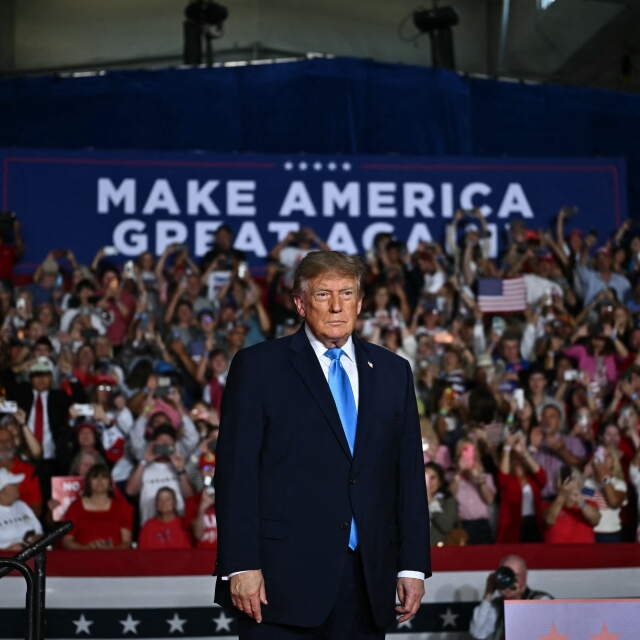
The episode explains how money, redistricting, and messaging are shaping the midterm election landscape, and how diesel fuel prices could become a political issue. It also covers President Trump’s executive order allowing “red-dyed diesel” on highways to lower costs.
Stephen Fowler (NPR, follows money and the electoral map; reporting from Atlanta). Willa Rubin (NPR energy reporter; interviews diesel analysts and energy market experts).
The midterms are “chaos,” with narrow majorities, a foreign-war-driven cost environment, and an unprecedented Republican cash advantage. Redistricting has changed lines for about one in ten voters. Super PACs are reallocating funds (e.g., pulling from North Carolina) toward other competitive races. Likely-voter polling may not translate into turnout; early voting will be a key signal.
Cook Political Report toss-up seats; Democratic House target list expanded to 46 districts. Diesel: red-dyed diesel is normally off-road/tax-exempt; the order allows highway use through year-end without IRS fines, potentially saving up to about 60 cents/gallon, but access is limited to special wholesalers.
Written by AI. May contain mistakes.
Discussion on President Trump's efforts to rally voters and the challenges of voter turnout.
“Obviously, all across the country, we need the president to turn out voters that are his voters.”
Overview of the political ad spending leading up to the midterms.
“That unpacks the stories making news and how they may affect your finances and portfolio.”
Analysis of the competitive midterm races and potential voter turnout trends.
“The midterm election is happening as we speak.”
Exploration of how rising diesel prices affect voter sentiment and political strategies.
“The price of diesel in particular has skyrocketed this year.”

Get the gist, explore an idea or ask about something said.
 Claude
On Consider This from NPR, what are the key points of this episode?
Searching your listeningAutomatic transcript. May contain errors.
0:00It's Consider This where every day we look deeply at one big news story. Today, we're four weeks from midterm election day and a whole lot of races are in play. Polls put the chances of a Democratic takeover of both chambers of Congress much higher than they were a few months ago, which might explain why the National Republican Senatorial Committee put out this video that sounds a little like the halftime speech of a coach who's down by a score. Stakes are high. No matter what state you're in, the margins are too thin. Work your tail off. Republican super PACs are shoveling money into races that were expected to be gimmies.
0:37President Trump is focusing his efforts on rallying the base in states he won big in 2024, like Nebraska. Senate Majority Leader John Thune defended that decision last week. Obviously, all across the country, we need the president to turn out voters that are his voters. In a non-presidential year, in a midterm election, the challenge is always voter turnout. It's election conventional wisdom that the midterms are a referendum on the sitting president, not a choice between the parties. But that didn't stop Thune from trying to draw a contrast. Irrespective of where things are today and what the price of diesel is today, if you want a better future for your family, as you look at this election, the choices in front of you, to me it's a no-brainer.
1:18It's a clear choice for the American people. Consider this. The money and the map are signaling extremely competitive midterms. And speaking of diesel, we'll look at how the Trump administration is trying to prevent high fuel prices from becoming a political disaster for Republicans. From NPR, I'm Sasha Pfeiffer.
1:56That unpacks the stories making news and how they may affect your finances and portfolio. Host Mike Townsend and his guests explore policy initiatives for retirement savings, taxes, trade, and more. Download the latest episode and follow at schwab.com slash Washington Wise or wherever you listen. This message comes from NPR sponsor A24 presenting You Can See Everything. 34 days before she's set to begin her prison sentence, Theranos founder Elizabeth Holmes invites Nathan Fielder and a camera crew to move in with her family and document their every move. This jaw-dropping, once-in-a-generation theatrical event demands to be seen on the big screen.
2:37You can see everything in theaters October 16th. Midlife brings a lot of changes. Your Turn with Alison Aubrey is a new podcast to help you navigate the twists and turns. From health and relationships to creativity and purpose, we can help steer your next chapter. With Your Turn with Alison Aubrey. Find it on the NPR app or wherever you get your podcasts. Support comes from NPR sponsor AARP.
3:08It's Consider This from NPR. The midterm election is happening as we speak. More than a million people have already cast their ballots, and more than a billion dollars in political ads are planned across key House and Senate contests. NPR's Stephen Fowler has been following the money and the electoral map, and he joins us now. Hi, Stephen. Hey there. So a month out from Election Day, if you had to describe the landscape of the midterms in a single word, what would that word be? Chaos. It's a midterm election of a second-term president who's deeply unpopular with voters, with a foreign war that's contributed to high prices, and whose other policy priorities aren't being well-received.
3:46I mean, history points to the party in power losing seats in the House and Senate. Majorities are narrow enough on paper that Democrats could take control of both chambers. But the Democratic Party isn't popular either. Republicans have an unprecedented cash advantage they're using in key races, and redistricting wars have changed the lines for about one in ten potential voters. It's basically like one big game of whack-a-mole, with each day there being even more moles popping up and even more expensive mallets doing the whacking. All right, let's talk about some of those expensive mallets, as you put it.
4:19When you think about the races that are the most competitive, what can you tell us about those? We don't have a crystal ball to see inside election results in November, but sitting here at my desk, I'm looking at decisions made by both parties that show what they're trying to cook up in this last month. The first thing I want to flag is a decision made by Republican super PACs to pull millions of dollars from North Carolina's Senate race. Polls have consistently shown Democratic former Governor Roy Cooper ahead. So this signals a decision to sort of triage that race and redirect money to more competitive Senate races that Republicans hope to hold on to to keep their majority.
4:54And over the weekend, we did indeed see that money invested into another competitive race. Stephen, based on your reporting, I want to get your assessment of which Republican races you think need the extra cash. If we look at the Cook Political Report, it lists seven toss-up seats, including the ones in Texas and Ohio, which you reported are quite expensive. It's not there. Not Texas, not Ohio. I'm thinking Maine or Alaska. Nope. And it's not Michigan or Iowa either. It's Kansas, a state where President Trump won by 16 points in 2024. It's just a sign of the environment we're in and how worried Republicans are.
5:28And that has to please Democrats. So what are they doing as far as signaling with their money and their messaging? Just this week, the Democratic House campaign arm added six districts to its red to blue target list of flips. It's now up to 46 seats. A lot of it's aspirational and stretches into places that Trump won by double digits, like a house district in Little Rock, Arkansas, for example. At the same time, though, Republicans have invested considerable money in some of these places, too, to boost their candidates and attack Democrats, as polls show this combination potentially of a supercharged Democratic turnout, independents backing the Democrats, and a meaningful amount of Republicans staying home.
6:04We know not to put too much faith in polls. We know anything could happen between now and November 3rd. What else will you be watching for amid, as you describe, the chaos of this cycle? The polling snapshots in time that we've seen of likely voters suggest a potentially big blue wave in a month. But the big asterisk caveat here is that we don't know yet if likely translates to actual voter. As in-person voting gets underway in more places, early voting, we'll pretty quickly get a sense of where that energy is, especially in states like Texas, North Carolina, and Georgia, where I'm based, where the majority of people cast their ballots before Election Day.
6:39It also makes the money moves more important to watch because there's a lot of races where last-minute spending or campaigning decisions may come too late to change the momentum. That's NPR's Stephen Fowler in Atlanta. Thanks, Stephen. Thank you. One concern for voters ahead of the midterms is the high price of fuel. The price of diesel in particular has skyrocketed this year. So President Trump has released an executive order aimed at lowering that cost by making one kind of fuel more accessible. It's often called red-dyed diesel. And NPR's energy reporter Willa Rubin is on the line to explain to us what that is.
7:13Hi, Willa. Hello. How are you? I'm good. So what is red-dyed diesel? This is a great question. I put this to Will O 'Neill, principal analyst at S &P Global Energy. He is a follower of all things diesel. Red dye diesel is diesel with red dye in it. That's it. And the reason this diesel is dyed red is because it's taxed differently, because it's used differently. And how is it used differently? Well, it's used for agricultural equipment and other things that go off-road. It's not for vehicles that go on the highway. And it's usually exempt from federal taxes. On the other hand, regular diesel has a federal tax of about 24 cents a gallon.
7:54Now, normally, you can get in trouble with the IRS for driving with dyed diesel on highways. The red makes it easier to catch someone who filled up their tank with the wrong stuff. Here's Will O 'Neill again. Because it's effectively a form of tax evasion. Now, the latest executive order says dyed diesel will be allowed on highways through the end of the year. No IRS fines. So I assume if it is exempt from federal taxes, that is the way it's supposed to save people money. It's cheaper. Cheaper, yes. It could help farmers, truckers, other workers who use diesel to do their jobs. The executive order said this move would put money directly into their pockets, quote, to support their vital service to our nation.
8:35And explain more what that would look like, how farmers and truckers would be using this. So imagine that I am a farmer and I normally use red-dyed diesel in my tractor on my field. Well, now I can also use it to fill up my van, get on the highway, and take my vegetables to market. Now, states also tax fuel, and a handful have recently also said that drivers can use red dye diesel on their highways. So best case scenario, without those state taxes and federal penalties, you get a total savings of about 60 cents a gallon. But for context, a gallon of regular diesel is now about$2.60 higher than it was a year ago.
9:15You know, and this is largely because of the wars in Iran and Ukraine. They've really affected the global fuel supply. And by bringing red-dyed diesel on the market is the idea that this will overall bring more diesel out to the public. Yeah, technically, this will increase the total amount of diesel that people could use. But Jaime Brito, the executive director of oil markets at Dow Jones Energy, he points out that this doesn't mean most people can easily access it. When was the last time that you went to a pumping station and you saw that one of the stations gave you the possibility to feed red diesel into your truck?
9:49Yeah, you can't buy this at most gas stations. You have to go to a special wholesaler like where farmers go or maybe certain gas stations in rural areas. Now, we reached out to the White House to ask how they'd respond to some of these critiques, but we haven't heard back. Besides this attempt at bringing fuel prices down, diesel prices, is there anything else the Trump administration could do to lower the price of diesel? I mean, analysts tell me there's no silver bullet here. You may have heard the phrase diesel export ban floating around. The idea here was that surely if the U.S. stops sending the diesel that we refine here to other countries, then we would have more and then our prices for diesel would go down.
10:27But bottom line, refiners pushed back on this. It would be bad business for them. President Trump said late Friday he was not seriously considering the ban. Experts told me, you know, the only real fix here is addressing the big picture problems, the wars in Ukraine and Iran. And until there is more oil flowing freely around the world again, it's hard to see the price of diesel getting much lower. That's NPR's Willa Rubin. Thank you. Thank you.
11:16Stay tuned for the following announcements and messages from our sponsors. Support for NPR and the following message come from Washington Wise. Decisions made in Washington can affect your portfolio every day. Washington Wise from Charles Schwab is an original podcast that unpacks the stories making news and how they may affect your finances and portfolio. Host Mike Townsend and his guests explore policy initiatives for retirement savings, taxes, trade, and more. Download the latest episode and follow at schwab.com slash Washington Wise or wherever you listen.


