
In short
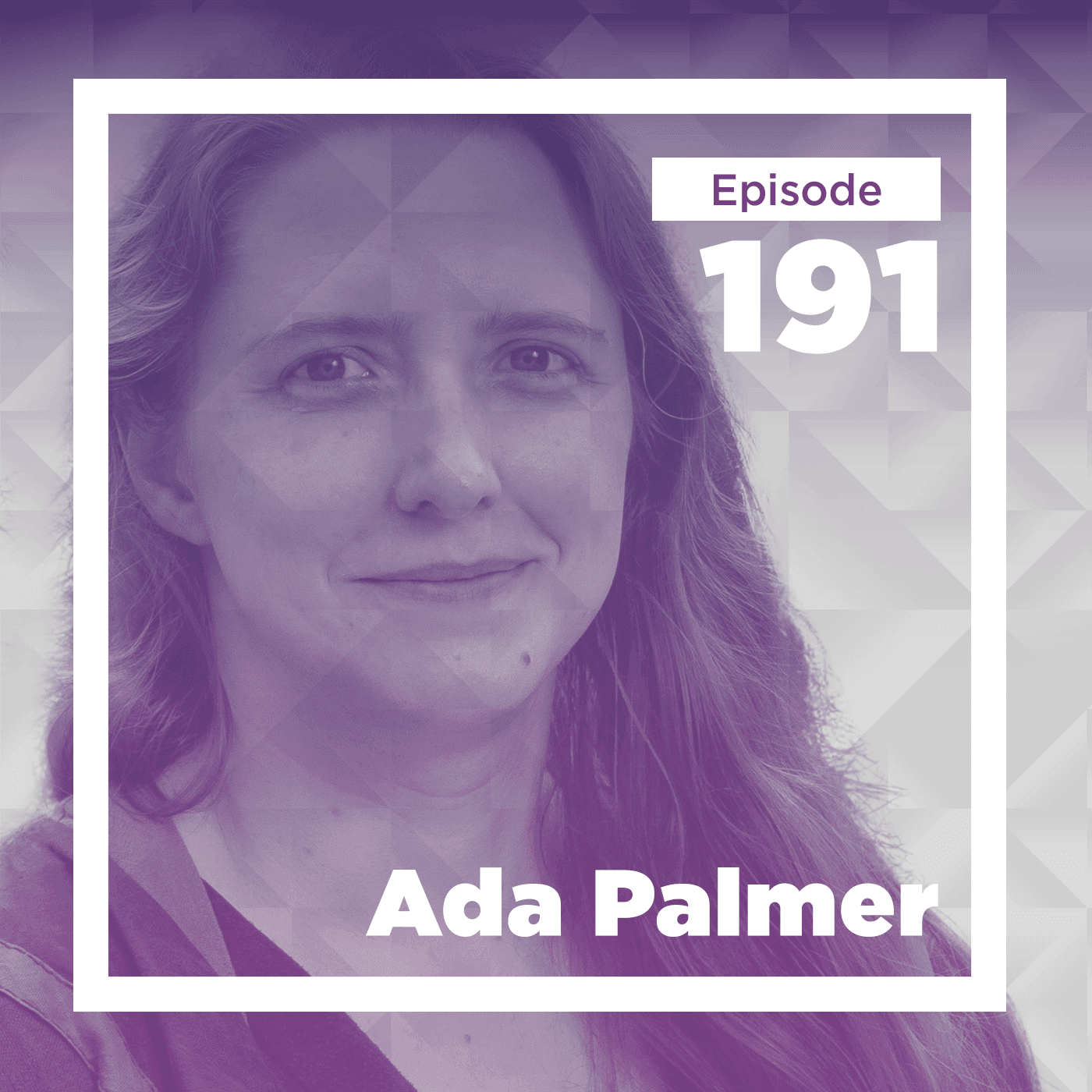
Podcast Episode Notes: Ada Palmer on Viking Metaphysics, Contingent Moments, and Censorship
Episode Overview
- Podcast Title: Conversations with Tyler
- Episode Title: Ada Palmer on Viking Metaphysics, Contingent Moments, and Censorship
- Release Date: June 28, 2023
- Host: Tyler Cowen
- Guest: Ada Palmer, Renaissance historian, author, and musician.
Guest Background
- Ada Palmer:
- Historian at the University of Chicago.
- Studies radical free thought and censorship.
- Author of the acclaimed *Terra Ignota* sci-fi series.
- Composes music and consults on anime/manga.
Key Discussion Points
Renaissance vs. Middle Ages
- Living Conditions: Palmer argues that the Renaissance was worse than the Middle Ages due to increased disease spread and violence.
- Progress: Urbanization led to quicker disease circulation post-Black Death.
- Military Advances: Larger armies and cities concentrated populations, leading to greater destruction.
- Quality of Life: Quality of life indicators (e.g., life expectancy vs. art quality) complicate the notion of a "golden age."
Art in Florence
- Why Florence?
- Florence had a unique protective status, preserving much of its art.
- The city's artistic legacy was maintained through historical appreciation and physical defense mechanisms.
- Art served as a defense against external threats from larger state powers.
Time Travel and Historical Context
- Traveling Back in Time: Palmer expresses reluctance to time travel due to the violent nature of historical periods.
- Health and Safety: Even with health guarantees, the social context and attitudes of the time would make it uncomfortable.
Biography and Historical Methodology
- Underappreciated Historical Methods:
- Biography is viewed as a vital but undervalued historical method.
- Palmer proposes writing a “choose your own adventure” biography of Machiavelli to explore his life decisions.
Viking Metaphysics
- Understanding Viking Music and Culture:
- Insights into how women's studies contributed to the understanding of Viking metaphysics.
- Research on Viking music and metaphysical concepts related to weaving and fate.
Literature and Censorship
- Diderot's *Jacques the Fatalist*: Discussed as a significant work that challenges narrative expectations and explores atheistic themes.
- Censorship Dynamics:
- The Spanish Inquisition was locally driven and often politically motivated, aimed at silencing perceived threats rather than purely theological issues.
- Palmer emphasizes that self-censorship is the most common form of censorship, often instigated by external pressures.
Gender and Censorship
- Political Implications: Palmer discusses the risks of censoring pornography, emphasizing the long-term effects of creating censorship frameworks.
Current Projects
- New Novel: Palmer is writing a Viking myth and history book exploring the implications of worship and cultural transitions.
- Science Fiction Anthology: She is co-editing a collection of essays reflecting on the craft and history of science fiction and fantasy.
Conclusion
- Educational Implications: Palmer stresses the importance of teaching historical context to empower individuals to understand their impact on society and history.
- Final Thoughts: Emphasizes the complexity of historical narratives and the value of diverse methodologies in understanding our past.
Additional Resources
- Full [transcript of the episode](https://conversationswithtyler.com/episodes/ada-palmer/)
- Full [video of the episode](https://youtu.be/xQZLATAUM3k)
Follow-Up Links
- Follow Tyler Cowen on [X](https://twitter.com/tylercowen)
- Follow Ada Palmer on [X](https://twitter.com/Ada_Palmer)
- Join the Conversations with Tyler [Discord](https://discord.gg/JAVWP7vTxt)
- Contact: cowenconvos@mercatus.gmu.edu
---
This markdown document presents a structured summary of Tyler Cowen's conversation with Ada Palmer, highlighting critical themes and insights from their discussion on history, literature, and the complexities of societal issues.
Written by AI. May contain mistakes. Listen to the episode to check what was said.
Transcript
Automatic transcript. May contain errors.0:04Conversations with Tyler is produced by the Mercatus Center at George Mason University, bridging the gap between academic ideas and real world problems. Learn more at mercatis .org. For full transcript of every conversation, enhanced with helpful links, visit ConversationsWithTyler .com. Hello everyone and welcome back to Conversations with Tyler. Today I'm chatting with Ada Palmer. Ada Palmer is a difficult person to introduce and in part I wanted to do this episode so I can introduce her better. But let me tell you what I have now. She's the author of an acclaimed four volume series of science fiction novels known as Terri Ignota.
0:47The first and most famous volume is, too like the lightning, but that's really just the beginning of what she's about. She is a tenured historian at the University of Chicago in the History Department. She studies the Renaissance, the Enlightenment, radical free thought, the history of censorship, information revolutions. Oh, and by the way, her science fiction series was nominated for the Hugo Award for Best Series in 2022. She composes music as well and participates in performing it. She has a Viking mythology cycle called, Sundown, whispers of Ragnarok. She studies anime and manga, especially Osama Tizuka, post -World War II manga and feminist manga.
1:32She consults for anime and manga publishers, blogs at xurbe .com. that's exurbe .com and she can be supported at Patreon just by googling Aida Palmer Patreon. There's actually much more, but that's the start for now. Aida, welcome. Thanks so much for having me, I've been looking forward. Why was living in the Renaissance worse than living during the Middle Ages? This is now, you know, Western and Central Europe. Well, and also Southern Europe. The one word answer is progress counterintuitively. Because as Europe's economy regenerated after the Black Death and merchants started traveling farther people started circulating from town to town more that meant the diseases circulated more quickly.
2:16And so the number of deadly diseases that people were exposed to, especially the Tweety Ages of two and about twelve skyrocketed. So the death rate for kids between two and twelve went way down. Similarly, there were advances in military And in the sizes of cities, there wasn't quite industrialization, but there was a concentration around things like the wall industry, increased population in cities, and more advanced military tech means you can have larger, deadly rewards, in which larger populations of people are concentrated in one place and get struck by an army at the same time, while the army is more effective at breaking in through the outside of the city.
2:55There'd also been a long and slow process throughout the middle ages of what we could call the slow centralization of power. This wasn't yet the absolutist centralised monarchies of the 18th century and Louis XIV, but they were much better at extracting taxes from their periphery than before. Richard King's can afford larger armies and fight more and larger wars. So I like to describe it as the Renaissance is just the Middle Ages only slightly bigger and more so. And so all of the same causes of violence and all of the same causes of death that were happening in the Middle Ages, we're able to happen on a larger scale once we hit 1400.
3:32But isn't living in the countryside really boring? An urbanization was occurring because people preferred or many people preferred a Renaissance kind of lifestyle with all its risks to a more medieval kind of existence that they could have had if they had stayed in the countryside. Yeah, and there were huge reasons for people to flood into the cities. We see cities they get emptied by plague repopulated with enormous speed. When Naples was emptied by a resurgence of the Black Death Earsinia Pestus in 1494 through 1496, this was a city of nearly 200 ,000 that became completely empty and within 20 years it was over 250 ,000 again.
4:11So people were flooding in for opportunities for economic advancement. You traded shorter life expectancies for or all sorts of other things, including better pay and different types of work. One of the things that's fun to remember in the Renaissance is that the actual pay for a day laborer was pretty high. That in Renaissance Florence, which is my specialty, one of the things people never expected is that most sort of day laborers, which is the bottom of the economic totem pole in the city, earned enough to live on working three days a week and spent the other several days of the week enjoying themselves and looking at art.
4:46This is not what we expect, but it was actually true. But isn't that a sign that living in the Renaissance, at least some parts of it, was better than living in the Middle Ages? So the question is, yeah, so the question is, what do we mean by better? Do we matter better by life expectancy? Do we measure better by how you're spending your days? Do we measure better by, you know, two of your three brothers have died, but you wear comfortable clothing or only one of your three brothers has died, but you're wearing itchy clothing because it's been manufactured only with local materials when that being able to import things like alarm fixatives and expensive dyes and high quality olive oil from far away in order to make higher quality cloth.
5:26This is why when people talk about the Renaissance as a golden age, what I like to say is, well, golden age can mean a lot of different things. Do we judge a golden age based on the quality of how beautiful the cities are, how great the art is that being produced, how many consumer goods somebody is living with in a daily life, the quality of your clothing, or do we measure it by life expectancy? Do we measure it by fear? Do we measure it by how many times you have relatives who are on death door from being exposed to the plague and living from it? We've all experienced during post -2020 those moments when a friend would say, oh no, I got exposed and we have that little palpitation of anxiety waiting for the result of the COVID test.
6:04We have letters from Machiavelli and his brother back and forth, oh no, I got exposed to somebody who had The black death now we have to wait two days to see whether I got it those factors of fear So the answer is the Renaissance is a really complicated and sort of high extremes and low troughs Place to live in which a lot of the things that had been true in the Middle Ages became more extreme in both positive and negative ways There's so much wonderful art from the Florentine Renaissance as you quite well know if you had to try to explain that with as few dimensions as possible in the explanation.
6:38Why did that happen? When and where it did? So two reasons and I'm going to give the post -renazons one first. Because Florence came to be a center of the Renaissance and especially in the 18th and 19th centuries came to be a center of the Grand Tour and a place that everyone always had to go visit during the formation of an upper class education for the populations that are reading Sherlock Holmes' life when it comes out. Florence has always been greatly respected and therefore protected. And whenever Florence has been in danger from something, those dangers have pulled back. Even during World War II, for example, both Axis and allies were under strict orders never to damage the artistic legacy in Florence, even as they were allowed to bomb the heck out of Milan and its historic center, Genoa and its historic center, Naples and its historic center.
7:31So one of the reasons Florence seems to have so much more art than everywhere else is that more of it has survived. Which is a decision made by the later centuries, by valuing Florence in a unique way, Venice being its rival in that degree of affection. As for why the art got there in the first place, the short answer is that it's a defense mechanism. So remember, Renaissance Italy is a bunch of little tiny city -states, each of them its own country. They all hate their neighbors and are facing constant small -scale warfare like the wars between Florence and Pisa, or Pratine Florence and Siena.
8:08And meanwhile outside of Italy, there are these large ambitious centralized powers, the Kingdom of France, the Kingdom of Aragon, the Ottoman Empire, the what we call Holy Roman Empire, they would just say Empire to the north, that want to conquer things because it brings an incominent result in a claim for the monarch. Remember those very telling lines in Henry the Fourth Part II where young Henry the Fifth is advised by his father busy minds with foreign wars to achieve peace at home by sending our ambitious noblemen to other places to fight wars. Italy was the place you went to fight wars. Italy was the economic center of medieval and Renaissance Europe because it was, you know, we talk about big tech, big pharma and big oil, right?
8:58But in the Renaissance it was big wool, a big olive oil, and big finances and eternal thing. But Italy was the center for banking. It was the center for cloth production, which was the economic equivalent of the auto industry, giant industry. And it was also the center for the export of olive oil, which was not only a foodstuff at the time, but an industrial product necessary for a lot of production. And it was what you burned for light a lot of the time in oil lamps. So these tiniest salient city -states were richer than the large kingdoms outside of them, had smaller populations. They struggled to raise armies because they didn't have enough people.
9:36They had to hire foreign armies to defend them. And yet they were full of the richest families on earth who literally had mountains of gold piled in their basements. If you're a king and you want to conquer something, do you want to go for anything else or do you want to go for a small friendless Italian city state with piles of gold in the basement? But how does no one protect them? How does that explain wonderful art and Florence? So imagine for a moment that you are the French ambassador and you're on your way to Rome to meet with the Pope because the French king always needs this. Now if you're an ambassador you're at minimum the son of a count because only aristocracy can be ambassadors and on your way south you're stopping off in different cities on the way including Florence.
10:21Now you already have a terrible opinion of Florence because Florence is a pit of merchant scum and validity. Florence in order to prevent noblemen from taking over the republic literally executed everyone in the city who had a drop of royal blood or noble blood. So it's just commoners. There's not a single person in this city who is of sufficient rank to be worthy to talk to you. In addition, Florence has such a terrible reputation for Sodomy homosexuality and perversion that the verb to Florentine is literally the word for anal sex in five different European countries, including in France. So you're on your way to this city and it's full of merchants go, they're all perverts, and there isn't even anyone there who's worthy to host you on the way.
11:05So you're going to stay with your dad's banker, because he's the only Florentine who's addressed you've got. So you show up in the city, and you reach the city, and suddenly wait a minute, it's full of these gorgeous ancient Roman bronzes. Wait a minute, they can't be ancient Roman bronzes, they look like they're new. But that technology doesn't exist, that technology was lost centuries ago. And then you go to the banker's house, and he greets you humbly at the door, saying, I'm sorry, my house is unworthy to host your excellency and he invites you inside. And you look around the courtyard, it's like nothing you've ever seen before with these round circular arches that let enormous amounts of light shine in on the gardens and the statues.
11:44You've never seen this before. Wait, you have seen this before. It looks like the ruins of the Roman villa in the backyard of your father's castle where you grew up. But that doesn't exist anymore. Those arts were lost. And in the middle of the courtyard, there's a gorgeous statue, an ancient Roman statue of a, you know, Bacchus or Deadeesius. And next to it, there's a brand new statue. That's obviously new because it hasn't even turned green yet. The bronze is still ready, but that technology, you know, doesn't exist. And in the corner, there are some men dressed in strange clothes, speaking a language you've never heard.
12:19When you say what language are they speaking? And the banker says, oh, they're speaking ancient Greek, their playtower scholars. And you say, but Ancient Greek is lost. And Plato is lost. How do you have this? Oh, we have lots of Ancient Greek here. Look, here's my grandson, Lorenzo. He's just written as Sonnet in Ancient Greek about the three parts of the soul. And man, here's a little boy reciting a sonnet to you about the nature of the soul in Ancient Greek. And you're like, where am I? All of this stuff is impossible. And that's the moment that your host, Cosimo de Medici, turns to you and says, would France like to make an alliance with Florence?
12:55And you could say no, right? You could say no, we're gonna come here, we're gonna bring our army, we're gonna mop the floor with you because you're helpless compared to our giant forces, and we're gonna burn this down and take the gold, and all this will be gone and we'll be rich. Or you can say yes, let's make an alliance. Send me a bronzesmith and an architect and a Greek tutor and a and we're going to bring them to the court in France, and the king is going to do his court like this, and then when the end voice from England shop, they're going to feel like uncultured country bumpkins, just like I feel now.
13:33That's how it's a defense mechanism, because they are helpless on the military game, but they are so ahead on the culture game that you don't want to hurt them, you want to befriend them so that you can have the art. Let's say you have the choice to be sent back in time to any historical error. You're given whatever language is you need. Please don't send me back in time. Back is terrible. Send me forward. No, forward might be terrible too. Your health is guaranteed. Where do you choose to go for one year? Can I go back? It's a last year? No, seriously. You can. The farther back in time you go, the worse it is.
14:13And it's funny, I had a conversation like this at the Renaissance Society of America Conference a few years ago, sitting down at a table of four historians and six art historians. And we asked the question, if you could go back to our period that we know best, if you could go back in time, would you? And all the art historians said yes, and all the historians said no. Because we study the violent side and the nasty side. and you know, as much as I respected love historical figures I know, all of their general comportment and their attitudes toward outsiders, there's, you know, phobia, their attitudes toward women, it would be a really miserable experience to be there.
14:56Now let's imagine that we can set me up so that not only is my health guaranteed, but they're going to believe I'm local. They're not going to think that I'm a foreigner. They're somehow going to, I'm going to have a fake family and I'm going to have a perfect Dexant and I get have letters of introduction because you're a foreigner. You're suck. Oh, no, I would You've read Deeter. I want none so you're enough Dominican would be best for many periods It depends on the goal if it's I want to live and be okay. I want to be as close to the present as possible If it's I love these people and I want to be them again to know about them I either want to go to a dinner party at Deeter house or I want to talk to Machiavelli You know, laid it is life about the importance of his work after he's written the prince.
15:37If I want to do the most good because I'm actually changing history, then I need to go back to pre -classical Egypt and teach imhotep germ -ferio -disease and handwashing practices. Because he is the earliest medical authority who has the correct background to be able to understand the germ -ferio -disease and the correct degree of authority to be able to teach to people. If you want to actually increase the number of people who have lived by billions, you want to teach hand -gwashing to in -home, in -home to them. Is history just a kind of clutter? And is clutter underrated? Clutter is definitely underrated.
16:16I think the problem with history just a kind of clutter is that just because what is clutter if not a record of the human beings who have been in a place and used it and lived it and all of the delightful experiences. I don't know how often you've been decluttering a room and picked up an object and thought, oh yeah, that wonderful day I spent with a friend or that frustrating day that then got better in a particular way. Or even that frustrating day that didn't get better, but now I have the perspective from which to digest my frustrations. I'm not sure I do declutter rooms. Maybe that's my problem.
16:51There's that wonderful saying, history doesn't repeat it itself, but it does rhyme, that when we look at the past and have reminders of it and go through its layers to understand and have empathy with the past, whether it's empathy with yourself of 10 years ago, when you made a decision that you later regretted, or empathy with somebody 200 years ago, and they need a decision that you struggle to understand, empathy is vital to our ability to work with each other, to forgive the past, to understand how it really was trying to do its best when it set up the world we have and how our efforts to do our best in setting up the future are in no way ethically superior to the efforts of our predecessors.
17:33We know more, which is great. We can do more, which is great. That's been true of every generation for a long time. We have to understand and look at the reasons that people in the past made their mistakes in order to be able to not do similar ones. And we need to go through the clutter to learn all that. Which method of doing history is currently the most under practiced and underrated? So you might have said a while ago, well material culture, maybe that's not true anymore. Weirdly right now I would say that one of the ones that's most undervalued is biography. Unfortunately, partly because biography was a very fashionable genre in the 19th century, and very early 20th century, and so as a reaction against it, it's been pushed away.
18:15but also because biography is one of few arenas of history in which you can make a living actually writing biographies and people will buy them in Barnes & Noble recreationally to read. They're one of the things you can live on. That means that especially in the middle of the 20th century, they were and still are disproportionately written by women because more women don't manage to make a living within the academic world than men. And so biography has come to be an almost gendered practice of history associated with those women who got pushed out of the academy and are trying to support themselves with scholars independently.
18:52That has meant that there's been a move away from respecting biography as a practice. But one of the really powerful things biography does is cut across moments where we draw a line. We talk a lot about when does the Renaissance end and the Baroque period begin? When does the Middle Ages end and another thing begin and then you do a biography of somebody like Tishin who lives into his 90s and you realize there was no line. He lived three three different places where we would draw a line and we often forget that people who lived through one thing are still alive for the next unless we approach them beginning to end through the art of biography.
19:27Who's biography will you write? I'm thinking of doing a choose your own adventure biography of Machiavelli and which you get to different moments in his life when he made an important decision and then I speculate what would have happened if he'd done something different to show how wildly improbable it was that we got the prince and how different humanity might have ended up if we hadn't. That one would be fun. I've also thought about a Chisra and Adventure book biography of Voltaire because there's that amazing moment when he's barely in his early 20s and his father almost decides to arrange him to be banished to South America?
20:03And imagine the world where instead of Voltaire being in France of Voltaire is in South America, both how different France would be and how different South America would be. I love bringing people to think about those contingent moments when a tiny decision made by somebody often unfamous, right? Voltaire's father is not famous the way Voltaire is, nonetheless shapes enormous amounts of what comes after. Those moments are what remind us that we are also powerful and that every single one of us shapes history, not just the people whose names are in newspaper headline. How do we know what old Norse music was like?
20:40We have a couple of recorded songs written and we also have written descriptions in sagas and we have archaeological finds including flutes. We have references to drums but drums almost never survive. Drums and harps are very difficult to preserve over time because the tension on the object the structure makes them decay quickly. But we know, for example, what notes and how many notes of Viking flute could make, and we have various other written descriptions. What is it that women's scholars understand better about Viking metaphysics? It's not mainly that women's scholars understand it, but it was the entry of women's scholars into the field that helped us understand it.
21:20For a long time in Viking studies, nobody wanted to touch metaphysics with a 10 -foot pole. This was because during World War II, Hitler's Minister of Culture was somebody who had done his dissertation on Viking metaphysics. And you couldn't work on Viking metaphysics without citing him. So it made it a sort of a poison field for a while. However, when in the late 60s and 70s the advances of feminism meant that more women were entering academia, but still often being sidelined within academia and pushed into corners of research that others didn't want to touch. A number of them started looking at topics that people hadn't looked at in a long time, including that one, especially because Viking metaphysics revolves around weaving.
22:04Now weaving is a feminine coded, feminine gendered subject both in the Viking period and in the period when history took its formation in the 20th and 21st centuries. Lots of weaving -related equipment had been found in tombs and excavated here and there and then sort of set aside as this is women's work and not of interest except women. Women started looking at it and were like, wait a minute, this isn't a weaving shuttle. This is a staff of sorcery as described in the sockets that very clearly described these staffs of sorcery that look like weaving shuttles because making that metaphysics is dominated by ideas of threads of fate, the norm spinning fate, weaving fate, etc.
22:45And it was women who are first willing to look at that stuff in detail. Why is Tita Rose shocked the fatalist in interesting work? lots of reasons. So Jacques Lefeteliste is among other things and exercise in getting you to realize that there is less in the author reader contract than you think. When you pick up a book, especially something that promises to be a novel, you have certain expectations that there will be an arc. Factors will be introduced, they will develop towards some sort of climax or crisis or suspense. There will be a climax, there will be a denumole, characters will be introduced, to those characters will affect the protagonist's paths through it.
23:26They will have a complete sort of character development arc from beginning to end all of these other expectations. Diderot Jagmophadalist reminds us that there's only one contract between the author and the reader truly, which is when you finish each sentence you will want to read the subsequent sentence. So long as the author keeps that promise, the text succeeds in getting you to enjoy the the path from one end to the other. Detero is therefore absolutely infuriating and does brilliant, ridiculous things, like a point at which the two characters go to bed. And he says, while we're waiting for them to wake up, I'm going to tell you a completely unrelated story.
24:02It starts telling you a completely unrelated story. You say, Detero, you're the one who's putting them to sleep. You can wake them up at any moment. Why are you doing this? He's playing around with the structure of a novel, all of which is a complicated attempt to portray an atheistic cosmos. Because in the 18th century, one dominant way of thinking about providence and of a intelligent designer, whether one thinks of that in a deist or a Christian or other amount of theistic context, is as the author of the author of the great scroll, as Deedero often puts it, who sends players out into the world to enact their deeds, to journey through the world.
24:45This is very much what Voltaire depicts in Kantid, which is full of contrived and improbable reunions and encounters that clearly serve to teach us a moral lesson. The heavy hand of the author palpable as the background of Providence. This is a very common way of thinking in Diderot's 18th century, but Diderot thought, wait a minute, when you look around the world, you meet lots of random people. They don't have character hooks. They don't show up again later. There's no particular borrow less than you got from chatting with that person who is sitting next to you in the wagon or in our case on the airplane.
25:21It just sort of happened and sometimes things get interrupted and you never find out what happened at the end. You might see a funeral go by and never find out whose funeral that was. Doesn't that feel to you like chaos? He's trying to write a book that feels as if it is taking place in a world that has no author. If most of the narrative arcs are the notion that the more people keep on talking, the more it is they end up talking about sex. Only in the middle. It moves rapidly away from that. I know that's the interpretation that Will and Ariel's are not taken toward in their examination of what they call the age of full tear.
25:59But you know, Dero does zoom in non -sexuality a little bit in the middle, especially in the long story they listened to at the inn. But he begins with these, you know, who are they? What are they made of? Well, they're made of atoms and the atoms are currently these people, but they're gonna fade away again. And that theme comes back more persistently than the sexuality. You know, as other work that's about sexuality, he has a lot of discussion sexuality in Ramos Nephew. He, of course, famously went to the best deal for writing the nun, which is a pornographic lesbian novel about nuns. But Jacques the Fadelist has sexuality in it.
Read the full transcript
26:36He's more interested in sexuality as a thing which is very natural and yet very taboo. In the 18th century, he's very interested in this question of, are we to guide ourselves by laws of nature that we deduce from observing nature, the way John Locke and Thomas Hobbes recommended? If so, doesn't nature tell us that section sexual reproduction is one of the biggest parts of life. Why is it silenced by our culture? Is our culture irrational in its behavior toward this? The sex is a tool for getting a question of what is natural or unnatural rather than the end, if that makes sense. A deeterose fascination with sex as a social phenomenon, and you are, how does that tie the two of you together as thinkers?
27:18I mean, I think both of us are very interested in not just sexuality, but also gender, and how an enormous amount that is artificial, a known amount that is culturally contingent or culturally invented, and an enormous amount that's even performative, surround performances of sexuality and performances of gender. In Terra, I canota for example, there's people who are living in a largely genderless future in which only gender -neutral language is used, and people are not intended to publicly acknowledge gender. Nonetheless, are sexually excited by gender because of its taboonus, not because I'm presenting gender as something that is biologically great or any, but because our society has spent literal thousands of years developing complex ways to perform gender in not only language, but in clothing, in physicality, and comportment, in patterns of inflection, in how we walk, which are performed differently in different societies.
28:18And the adoption of genderless language isn't by itself going to mean that people abandoned this ancient vocabulary of performance. It's fascinating to look at the redeployment of transformation over time of so sophisticated a cultural construction as gender. And I think both Diderot and I are interested in that in as much as it gets to the edges of what is biology versus what is culture and how 90 % of it is culture. Dessad, where does that come from? What are the influences on Dessad as a writer? Thomas Aquinas, not lots and lots of things, but he's very interested in the large philosophical milieu in the period.
29:00Remember that the 18th century is a moment when the clandestine bookshop is a major thing. And if anyone enjoys and is interested in the history of censorship and clandestine publishing, I can't recommend enough the work of Robert Darnton, a brilliant historian of clandestine literature. But the same underground bookshops sell all underground materials, which means an underground bookshops, sells pornography, and it also sells Voltaire and Rousseau, and it also sells diatribe criticizing the king, and it also sells radical jensenist theological pamphlets about whether the Holy Spirit derives from the Father and Son equal ear from the Father alone.
29:43The same kinds of people frequent these shops and the same kinds of people buy things. So think Think about how when you go into a Barnes & Noble, the science fiction and fantasy section is one section, even though science fiction and fantasy are different things, but they have a lot of overlap, both in the overlap of readership and in overlap in books that have both science fiction and fantasy elements. It was perfectly natural in the same way for a clandestine bookshops to generate these works that are pornography and radical philosophy at the same time. They're printed by the same printers, sold to the same audiences, and circulate in the same places.
30:20Decide uses his extreme pornography to get at questions of morality, ethics, and artificiality. What are the ethics of hurting each other? Why do we feel that way about hurting each other? What are so -called natural impulses as John Locke and Hobbes were very dominant at the time? Or Dickhart, who is differently dominant at the time in rivalry with them? They make claims about the natural human impulses or the natural character of a human being. what does extreme sexuality show us about how that character might be broader than it is. And I mean it when I say Thomas Aquinas, right? So one of Thomas Aquinas's traditional proofs of the existence of God is that everything he sees around him in nature, this also is one that Aristotle uses but Aquinas articulates it in the most famous way for the Sods period, that when we look around us, it's clear that everything is designed to work.
31:12Forest animals have forest camouflage, desert animals have desert camouflage. Woodpeckers that he grubs have a beak shaped correctly to be able to get grubs. Clearly, therefor, an intelligence designed everything to fit where it needs to fit, so that carnivores have carnivore teeth and herbivores have herbivore teeth. Yes, says Thomas Hobbes, quoting all this and says, and furthervar the penis is round. And the anus is round. So clearly God designed the penis to fit into the anus and not into the vagina, which is a long thin shape. He's playing with the question of why we believe these century or in that case millennium old arguments about what is and isn't natural and inviting us to re -examine questions like well what that a Woodpecker needs does it have what that a Woodpecker needs does it not have because it doesn't have fingers which to disentangle its legs from a thread if it gets tangled up.
32:12In that way, SAD is using pornography to open the questions that Darwin will later answer. If Descartes had truly let loose, what would we have received? Oh, if he hadn't been scared off by the Galileo condemnation, I think we would have received a much more deist version of what ends up being a very Catholic set of ideas about ontology and physics. So Descartes was in the middle of publishing one of his big treatises when he heard news of the Galaileo trials conclusion and of the Galaileo condemnation and he actually withdrew that text from his publisher and then spent several years revising it to be more carefully orthodox.
32:55And I think it would have been a much more deist, It's still theist, but much more deist. We can't know things with certainty except what we do from nature. Kind of text. Greater in alignment, therefore, with what we see in our enlightenment figures like Voltaire and Russo. And for that reason, I think that if Descartes, who becomes dominant in France, bit before the rise of Voltaire and Russo, had been more expressly deist, we would have seen less It's association between deism and Newtonian physics. But we get deism associated with Newtonian physics during the Enlightenment because it's the same people who are a data source sympathetic to importing Bacon's scientific method and Newtonian physics into France.
33:45A simplified version of that answer, therefore, BA, the impact of Descartes' treatise being more deist would have been an enlightenment in which France didn't split into the France being more interested in logic, and this new imported perceived as foreign and British thing being more interested in empiricism and the scientific method, and the two would have been seen as more compatible with each other. Probably we would have therefore seen even more scientific laboratories develop in France in that period as opposed to the centers of material of experimental science settling in England, Scotland and Italy.
34:27Was there an Irish enlightenment? Yes, definitely, but to a lesser extent simply because Ireland was being so smashed and damaged by the warfare and so on with England, especially recovering from wars of the 17th century as well as what was happening in the 18th. And whenever a the polity is in extremists, it has a bit less of a robust opportunity to raise the intellectuals that are necessary to have a leading position. So, if you're partly you've swiffed a bit later, you've Burke. That's pretty impressive for what's a fairly small country. It is. I would say that a part of that is, those are excellent figures and they were embraced by it, our famous and the Angelfun scientific tradition.
35:16But there are certainly two dozen equally innovative and important people from Spain or Italy in the same moment, if not more. Who aren't famous in the Anglophone histories of science because we center the Nationalistically celebrated British Isles area more? That makes sense. Yes, sir. Who actually made the censorship decisions during the French Enlightenment? And fresh out of college English majors. Because bureaucracy, it's the ruler, it's the clergy. What's the actual mechanism? Whose decision is it? So there are two levels. Because France and the King of France by the Enlightenment is sufficiently powerful.
35:59That even though this is a Catholic country and technically the last word in censorship is the Inquisition and Pope. Pope. France manages to get Italy to agree for France to have this be delegated to a bureaucracy under the king. And that bureaucracy is obliged to enforce any rule that the Pope and the central Roman inquisition make, but it hires its own staff and they are genuinely more concerned with questions like whether things are criticizing the king than they are with questions of theology. Many of them, this is a first job at a college for a lit major. And many of them, this is well documented in the work of Robert Darnton.
36:39Many of them are themselves aspiring authors and aspiring professors. We have letters from French censors back and forth. Oh, Jacques, I got your book to censor. Don't worry, I'll do a really good job. And they therefore actually very sympathetic to the radical ideas that are circulating because they are fresh out of college intelligentsia and we're also excited by these new ideas. They tend to let through a lot of things. Now often later Rome will examine the materials of the materials we come famous and will ban them then. This is why, for example, Ditoroso and Dolomarza and Cyclopedi is approved by the French censors but banned by the Pope as of volume.
37:19said then I think it is blood or H and you know at that point Rome catches up with France and says you must ban this thing we command it and under this command the copies that are public in Paris are confiscated Paris is required to hold a public burning of the encyclopedia they marched the copy up to the pot spot they then said it aside and don't burn it instead to burn Jensen is treatises about the nature of the Trinity which is what France actually is afraid of at the time. So there's a lot of layers and permeability. And while the Pope had ultimate authority in some ways to say no you may not have this, that is only several years slower than the short term bureaucracy which is run by lit majors overseen by people who answer to the king much more concerned about political and local questions than about abstract scientific or theological ones and also happy to let people smuggle things through which is why even after the banning of the Encyclopedia.
38:18If you're in Geneva and you're printing something really bad, like D 'Assad, or Janssen is treatises about the nature of the Trinity, you smuggle them into France by wrapping them in copies of the Encyclopedia. Because if you're intercepted at the border, they open up the secret trunk under your wagon and say, oh, it's just the Encyclopedia. Pay me a small bribe and I'll let it through. And you pay a small bribe and they let it through. The banned book providing cover for an even more banned book. What do you take to have been the actual goals of the Spanish Inquisition? The Spanish Inquisition is a very separate thing from the other Inquisitions that I work on in other regions.
38:59I like to avoid using the word Inquisition ever in the singular because it creates the illusion that there was an actual unify—or it doesn't create. It perpetrates the intentional illusion that there was a central unified decision making. The Catholic the church wanted to see more unified than it was. But in periods when it took six months or more for a message to get to Rome from one of the Spanish colonies in the New World, for example, these are local authorities making local decisions in the name of Rome and Rome struggling to catch up to the degree that Rome even printed a manual to guide inquisitors on how to respond if people came to them talking about books that have been banned in Spain that they've never heard of being banned elsewhere and had to sort of fake it and pretend that yes, Rome totally knew that you're bad this.
39:47Yes, it was a very good idea to ban it. So the Inquisition is a blunt instrument and usually a tool of local power. It isn't a government. We often think of the Inquisition as the government, but it's more a non -government body that reaches internationally. Think about UNICEF or doctors without borders and it has the infrastructure to go from place to place. Now think about that operating locally and having agents that are good at crossing borders but depend on the local government for collaboration and economic support in the case of the Inquisition. It doesn't own local authority want to persecute.
40:35That's what the Inquisition will end up persecuting. In Ferdinand, Isabella, Spain and that of their successors, they were incredibly anxious about the imagined treacherous fifth column of descendants of converted Jews and converted Muslims. And so they lavished money on their Inquisition to encourage their Inquisition to advance the mass persecution of what they perceived as a local threat to their crown. This had nothing to do with the practices of the acquisition that were going on at the same time in Italy or in France or in even Spanish controlled territory or Portuguese controlled territories.
41:14So for example in Goa on the west coast of India, in the 17th century the orders given by the Inquisition were to destroy all texts and indigenous languages and try to wipe out indigenous languages and indigenous knowledge. At the same time, the Inquisition in what is now Mexico City was ferociously devoted itself to developing indigenous dictionaries and translating materials into indigenous languages because it decided that the best way to proselytize was through translation. These are the decisions being made by local authorities to try to seek power. Zooming out, however, the biggest pattern in all of them is that the most common form of censorship is self -sensorship, but the majority of self -sensorship is intentionally cultivated by an outside power.
42:02The Inquisition more broadly, especially the Roman Inquisition, spends a lot more of its time trying to scare people into not writing books than it does trying to destroy books that are actually there. If you think about the goal being to silence Galileo, the way to silence Galileo is not to make Galileo world famous by having a giant splashy trial of Galileo. The way to make Galileo silent is to quietly poison Galileo, right? This is Renaissance Italy. We are very good at quietly poisoning people. This is a solved problem. If you want to silence a man, you silence a man. You do not put him on a big show trial.
42:39But what they want to do is silence day card and dozens of others who who saw what happened to Galileo were scared and therefore never wrote the treatises that they otherwise would have. Censorship intends to cause and stimulate self -censorship. And that's a pattern we see broadly whether in the Inquisition, whether in the Middle Ages before there was an Inquisition or whether today in China would be extremely intentionally unpredictable enforcement of when they arrest a blocker, for example, which they do with very little pattern to make it harder to predict whether you are in danger, to make people more scared they might be in danger to again incurred self -sensorship.
43:18Why is it politically dangerous to sensor pornography? It's politically dangerous to sensor pornography because censorship is a very blunt instrument. And we must always imagine how a tool we set up to sensor something will be used in the future by bad actors we disagree with. If you create a tool capable of censoring something, it will still exist and still be there later when people want to censor something different. Hornography is usually where major battles over censorship are fought these days because people don't want to defend it. It's icky and gross and a lot of people don't want it or do want it but don't want to publicly say so.
44:00Don't want to be associated with it. So a lot of people are willing to say, okay, fine, censor this, but then you create the apparatus to censor this and the next stage is someone saying, oh, well, you know, this other book, clearly this is basically the same as pornography because it depicts a same sex couple. Now let's censor that using the same infrastructure you've just created. Almost all censorship isn't carried out by creating a new institution to do it, but by repurposing an old institution that's already there. And new things will be censored using old tools so that when talkies came in, people were very anxious that they could suddenly be bad words in movies.
44:42And all over the place, New Zealand, Australia, the US, methods were set up for censoring movies to make sure bad words weren't used. Well, those are the same methods that were then used to censor discussions of communism during the Red Scare, and that were used to persecute free thinking and socialist authors, the same apparatus that got created for the censorship of a bad word. Once we make it, it exists, and it's very hard to dismantle it. So don't let the fact that we don't care about pornography, enable people to create tools they will use to censor other things in the future. Do you agree with the common claim, which seems supported by some poll evidence, that American women are less supportive of free speech than American men?
45:27Huh. I'm not familiar with that question, although I am familiar with the fact that internationally when we look at things like the movements for women getting the vote in some of the theocratic Arab countries when women got the vote, they disproportionately voted for the very religious and conservative parties so that I think that there is a slight preponderance of women who end up supporting religious fringe movements. But there's also a whole lot of other ways in which women tend liberal, especially within the US. So I think that's a very complex question that and thought about my ship. If we think about why so few of the great books discuss menstruation, is that censorship or do we understand that some other way?
46:18It's taboo which is in some ways a kind of censorship. It's people being uncomfortable discussing a topic. I always make a point of breaking up menstruation when it's relevant in my classroom when I'm describing to students what it was like experiencing the fall of the Roman Empire and that suddenly there's no one keeping peace on the roads and their bandits on the streets and it means that you can't get imported high quality non -each -e wool and you can't get good olive oil, you can only get local olive oil and you can't get fish sauce. I always mention it and you can't get sponges, the sea sponges, which are what women would use as maxi pads.
46:57In the period, now you can't get maxi pads and you just have to shove a bunch of rags up there. And it's always delightful to see the sort of stunned look on the face of most of the voice in the class and the sort of delighted look on the face of many of the girls in the class of, yeah, people that have been straighted too. This is a real legitimate thing. But I would say it is a taboo and a taboo is a kind of censorship because censorship isn't exclusively state actors or organized actors. There's a lot of bottom -up grassroots censorship as well. And taboos are part of Why do we think of velvet as the cloth of the Renaissance?
47:36I think more of brocade as the cloth of the Renaissance, but certainly there were major technological advances in velvet production and a number of other very high -end fabric production in the Renaissance. It's actually quite clear from recent examinations of sketches of machines like those of Brunelleschi that they pretty much did figure out how to make industrial mass production looms. They could have switched over to making cheap cloth at enormous volume the way we did in the 19th century But that was what the Renaissance did or wanted the Renaissance wanted super high -end cloth and when you compare the actual costs of fabric Buying a suit of very nice clothes.
48:22They made out of good quality the Florentine Brookhaed with velvet trim, cost as much as buying a luxury sports car. And you have one outfit or two outfits, you have your Sunday outfit and your regular one, and you wear them all year, and then you get the next year's fashions and a huge part of the purpose of it is to display social status by showing the high end things. So we associate with Renaissance affluence and the Renaissance's biggest industry, the one that's the equivalent of the auto industry, the development of these extremely high -end luxury things that you then show off on your person every day.
49:04What is it about renaissance annotations of Lucretius that's more interesting than Lucretius himself? What do they add? They tell us what the The moment of first contact was like between people in the Renaissance who had vague and often over -the -top mythologized ideas of what ancient Rome was like and then the real ideas of Epicurianism preserved from antiquity. In the Middle Ages they had very little knowledge of Epicurianism, though they knew that it was something. It was mentioned by medieval authorities like Lactantius. It was discussed in bits of Cicero that they had, but they didn't actually have a Koreanism.
49:48They just knew there had to be in this philosophical movement that said that happiness was the highest good and that the world was made of atoms. So they have high and exciting expectations of this work. And then they finally get a hold of it and as they make comments in the margin, we see their moment of first contact. We see which pieces in a long and complicated text stood out to them in which pieces didn't. We see how they respond when a claim like that there is no afterlife is made. And they write things in the margin like, opinion, no one, Christiana, which is written in two of the copies that I have looked at.
50:25And we also see which parts of a very long book that covers lots of topics they find exciting. It lets us see what it was like for that world to encounter a different world. It's sort serve live for us in the margins of a book. Have you ever thought of annotating a classic out of copyright book and selling the finished product as your annotations of the book? No, although I have a copy of Lucretius into which I've not only put my own annotations, but I have also transcribed the annotations from 36 Renaissance copies, color coded and different shades of ink. So it is probably the most heavily annotated Lucretius that has ever existed and it preserves the annotations not only of me but of two dozen Renaissance figures who annotated including Machiavelli and when you page through it you can see a portrait of the whole periods encounter with Lucretius.
51:25So that's a very fun and unique object. I hope you can put it into an LLAM and have it in the public domain. I would love to. Why doesn't science fiction have higher social and literary status? It's so rich with ideas, right? So just working on an essay about this a big part of it is that science fiction as the modern genre that it is came into crystallization to be a specific type of literature as opposed to an author writes novels and two of them happened to have a a spaceship in them, but the other ones don't. Or, you know, Dickens' Christmas Carol is technically fantasy. But nobody thought of Dickens' Christmas Carol as fantasy when Dickens with a live -gust fantasy didn't exist as a genre.
52:13When science fiction originates and crystallizes and as a genre and gets in name, it is in the 1920s and 30s with the advent of pulp printing, which is the moment when we invent these very large -scale machines that can print at mass volume on a much larger, cheaper sheet of paper. So these are not printers that are printing two or four pages on one small sheet of high quality paper. They are printing 12 or 24 pages on cheap disposable magazine newsprint. Those were used to print magazines, but in the US only in not Europe, They were also used to print cheap paperbacks, which then went into racks that were sold in grocery stores and newspapers.
53:03Bookstores did not like to stock those paperbacks. Bookstores, especially in the US, exclusively preferred to stock hard covers. These they made more money on something a hard cover than they did on a paperback. So these pulp paperbacks, as we now call them, were of a different social status because they weren't sold in bookstores, which existed in elite locations like affluent cities or near universities. They were sold at hardware stores in little magazine racks where they competed with Hershey's candy bars rather than competing with fellow books for the allowance money of a kid. And since that was the birth of science fiction and the earliest people who identified and were identified as science fiction writers and readers were producing for that market, it was born for a low status commodity, a very democratizing commodity.
53:55Since, of course, those books were available to people in Hughes, while it's a USA, for example, where there were no bookstores, where towns had no bookstore, but they sure had a rack with 144 cheap paperbacks next to the grocery checkout. But say, Hammett and Chandler have been elevated to the canon, right? With time. In some ways, science fiction hasn't seen the same evolution. Well, I neither has fantasy and neither has horror, neither of Westerns, all of which were genres that crystallized in that point, although fantasy re -crystallizes in the late 1970s after the paperback publication of Lord of the Rings, which Tolkien never wanted to allow to be out in paperback, because it was most status.
54:41In Terry Ignoda, which hive would you belong to? YouTube, which is the high dedicated to exploration of the stars and the conquest of death. I think humanist for me. I nurse a little a Gwyn if you read the major baller. It should be a herch. At least in the fiction there seems to be this suggestion that the only way you can get rid of war is to really narrow or abolish or limit distinctions between men and women. Do you think that's in, you know, left -hand of darkness or dispossessed and do you agree? I don't agree except in as much as there are a lot of behavior patterns that we now culturally code female, which are artificially culturally coded female, but nonetheless which we culturally code female, which studies show are very good at crisis avoidance, consensus building, conflict management.
55:35All of these studies that show that women in political office handle crises better that men in political office in a lot of different ways. This is not a biological thing, but this is a number of behavior patterns, including types of team building and non -zero sum thinking. Our culturally coded female and women are encouraged to do it, whereas men are encouraged more to do aggressive problem solving, haggling, and zero sum thinking. In my own classroom where I often run this papal election simulation. And there's a survey that the students have to fill out to say, what kind of participation in this political simulation would you enjoy?
56:18It's always very interesting to me that, while there's a huge range of genderedness about most of the questions, the question, would you enjoy having a face -to -face opponent where one or the other of you has to fall for the other arise and there is no possibility of compromise you just have to go head on. That question is almost exclusively said yes to by men or men are enthusiastic about it. Women are more wary of it. Whereas the question, would you enjoy being on or leading a team and being in charge of helping a group of people work together to achieve a collaborative goal? Is disproportionately answered Yes, by men.
57:02This is a culture -ation thing. This is something that we learn when we're toddlers, that we learn when we're in elementary school, as different behaviors are encouraged or discouraged among both men and women. And I think that it's not that we need to eliminate the differences between men and women. It's that we need to get more of those female coded problem -solving behaviors to be welcome in positions of power in one way or another. What is the current novel you're writing? Vikings, Viking metaphysics. This one is finally easily to describe. So I really love Vikings. This is a Viking myth and history book.
57:43And it looks at the question, well, it looks at a number of questions, but a big one that it looks at is if the Viking gods are real, And only the Viking gods are real. This is the cosmos that were in his the Viking cosmos, but history is real history. Why did they decide to let the worship of them die out and be displaced by other religions? Why would that be allowed to occur in a world in which they are the actual governing power? And the other thing that's really fun with it is that there's a lot of really great new recent research on Viking myth. we're getting to understand the metaphysics a lot better, we're retranslating a lot of the older candidate, we're realizing that some of the works that were kicked out of the candidate in the 19th century and believed to be spurious or not spurious, so that some of the ones we kept in are spurious that weren't.
58:35And so while there's tons of science fiction and fantasy that already draws on Viking myth, there's very little of it that draws on the very latest in Viking myth. And I'm excited to dive into a lot of that material, which I have access to just because I'm a scholar, right? This is one of the big problems with paywalls because all of this is in journals that are buying paywalls or the ridiculous oxford annotated poetic at a three volumes, $300 of volume. No wonder nobody has this book. And like it's great, it's full of wonderful materials. I wish I could give copies of it to every science fiction writer and fantasy writer that's a friend of mine who likes this stuff so that they could use it in their things.
59:16But good grief nobody can afford to spend $1 ,000 on the Oxford annotated poetic. I only have it because I did a bunch of favors for Oxford editors until they gave me store credit. You know I'm all for what you're doing and your your podcaster would say that. But what do your colleagues think if I may ask? Of the science fiction stuff they think it's great. They think it's an important way of getting the latest research and improved historiography out to where it disseminates to the public. A good way to think about it is that dissemination works as a kind of a pyramid. And at the bottom of the pyramid are a thousand PhD students doing dissertations, discovering awesome new stuff.
59:55And the next level up from that are several hundred books by somewhat more experienced scholars who are drawing on not only their own dissertations but their friends' dissertations and what they've learned from going to conferences is into baiting this to make synthesis that draw on a bunch of that research. And then above that are a couple of dozen popular history books that transform the latest in what historians are saying to each other into a form that then gets out and is accessed by the public. And then that in turn influences, actually it's not a period as far of an hour glass, several hundred television series video games and novels, which are really where we form ideas of history, right?
1:00:40Nobody gets their first glimpse of the Renaissance without already having run into the Renaissance in some form of fiction. We all encounter stories about this stuff before we encounter the scholarship. And so my colleagues have nothing but the best to say about the process of getting it out there in a way that's going to hopefully also mean that another generation of people who want to write more fiction will say, oh wow, there's a lot of new Viking stuff. Let's look at the new Viking stuff and tell even better stories. And what's the science fiction anthology you're editing and writing for? So two different things.
1:01:18I'm doing a collection of essays co -authored with Joe Walton about the subtitle is Conversations on the Project of Science Fiction and Fantasy. And some of it is about craft of writing, but some of it is about the history of the genre. There's a history in there of the actual physical printing of science -fiction books and how that influences what gets written. But there are also zoomed out essays about questions like what I call the protagonist problem and how it is more and more rare these days for any book to have a structure other than centering upon a core protagonist. Or we have an essay there in there about hope, punk way that says about how science fiction historically has served to combat censorship and to increase international empathy.
1:02:06So it's a collection of detailed reflections on the genre, its history, and just how powerful it is to influence the way we think as a society. I'm also co -writing with her a novel about an exoplanet terraforming mission. Great. Last question. Let's say you were organizing a two to three day event. All expenses paid and you get to choose three or four people only living people They would fly from anywhere in the world and come sit around and talk with you For these two or three days a lot people you currently know, but with whom would you choose to meet? Well, can I run my paper election simulation?
1:02:45You can do whatever you want, but who are the people? Well, if I can run my paper election simulation for them that I want a bunch of the Rising young congress people Some of the younger senators, and I also want people from the equivalent levels of power within European Union governments in a few other places, because absolutely nothing teaches you to think about power and how it works like that. And I would love to see legislation that's been shaped by the way that event makes you rethink power. Every time I run it, I have people write to me even years later saying, you know, I decided to run for office because I did this event.
1:03:30I decided to go home to Russia and work with the Democratic Resistance Movement because this event showed me that I really can't make a difference. And especially if I could bring in educational administrators, people who make decisions about what kind of education gets advanced. From some of the powers that shape the world, I would love to help them see that we can teach people better to believe that they have power. And that if we get this into the way we teach people to think, you know, we can save democracy by making people actually be confident in democracy. And the first step to that is people being confident that what they do actually makes a difference.
1:04:11Edipalmer, thank you very much. It's been a pleasure. Thanks for listening to Conversations with Tyler. You can subscribe to the show on Apple Podcasts, Spotify, or your favorite podcast app. If you like this podcast, please consider giving us a rating and leaving a review. This helps other listeners find the show. On Twitter, I'm At Tyler Cowan and the show is At Cowan Convose. Until next time, please keep listening and learning.
From the publisher
Ada Palmer is a Renaissance historian at the University of Chicago who studies radical free thought and censorship, composes music, consults on anime and manga, and is the author of the acclaimed Terra Ignota sci-fi series, among many other things.
Tyler sat down with Ada to discuss why living in the Renaissance was worse than living during the Middle Ages, how art protected Florence, why she’s reluctant to travel back in time, which method of doing history is currently the most underrated, whose biography she’ll write, how we know what old Norse music was like, why women scholars helped us understand Viking metaphysics, why Diderot's Jacques the Fatalist is an interesting work, what people misunderstand about the inquisition(s), why science fiction doesn’t have higher social and literary status, which hive she would belong to in Terra Ignota, what the new novel she’s writing is about, and more.
Read a full transcript enhanced with helpful links, or watch the full video.
Recorded June 28th, 2023.
Other ways to connect
- Follow us on X and Instagram
- Follow Tyler on X
- Follow Ada on X
- Join our Discord
- Email us: cowenconvos@mercatus.gmu.edu
- Learn more about Conversations with Tyler and other Mercatus Center podcasts here.
Photo Credit: Jason Smith