
In short
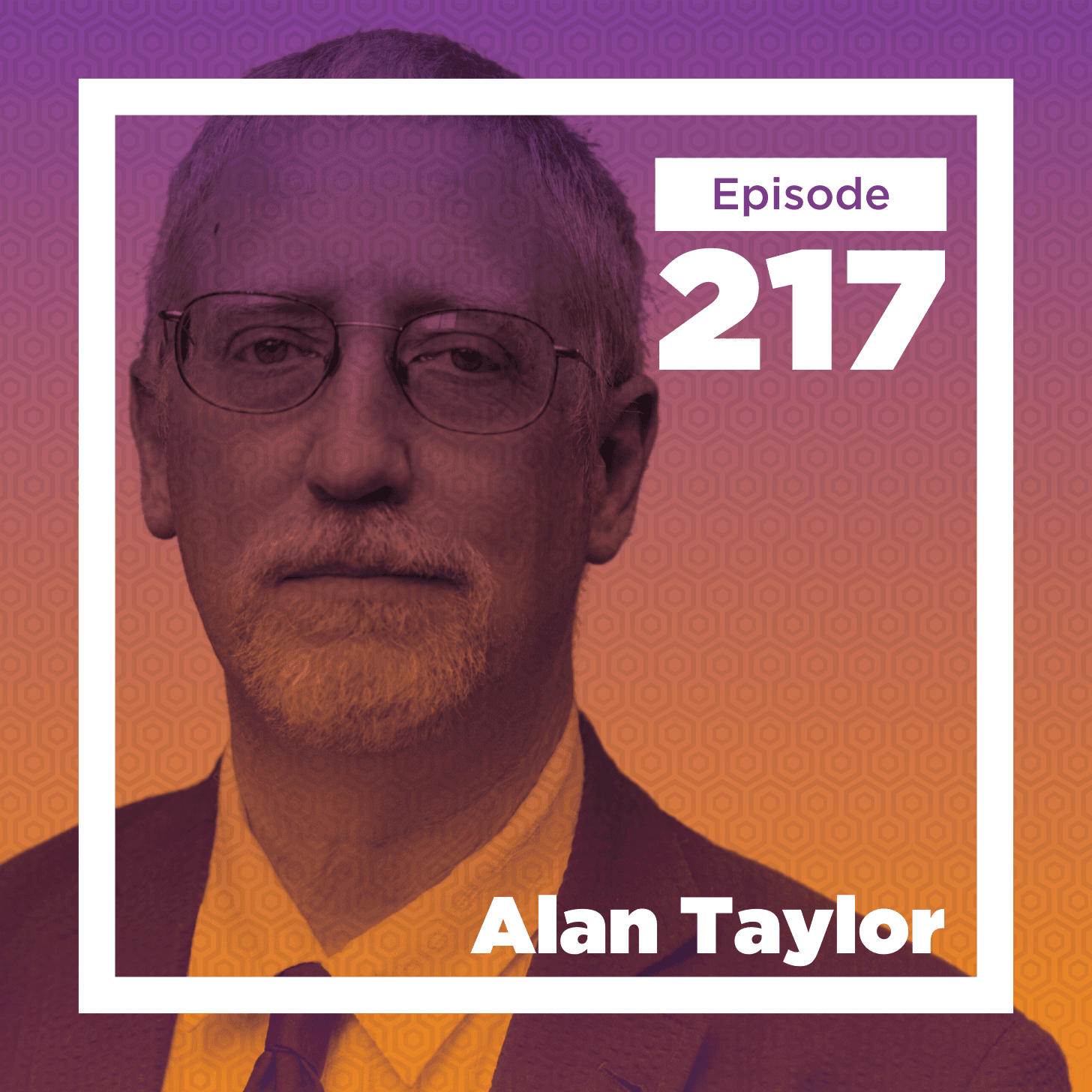
Podcast Episode Summary: Alan Taylor on Revolutionary Ironies and the Continental Civil War
Podcast Title: Conversations with Tyler Episode Title: Alan Taylor on Revolutionary Ironies and the Continental Civil War Recording Date: May 9th, 2024
Episode Overview In this episode of *Conversations with Tyler*, host Tyler Cowen engages with Alan Taylor, a two-time Pulitzer Prize-winning historian and the Thomas Jefferson Chair of History at the University of Virginia. The discussion revolves around Taylor's extensive work on American history, particularly focusing on the early American Republic, revolutionary dynamics, and the complexities of North American relations during and post-revolution.
Key Themes and Discussions
- The American Revolution and Canada
- Reasons for Non-participation:
- The 13 colonies declared independence while Canada did not due to population confidence and British support.
- The presence of a French-speaking majority in Canada created a reluctance to join the revolution against the British Empire.
- Irony of Land Distribution:
- After the American Revolution, land became cheaper in Canada (due to British subsidies) while it became more expensive in the U.S. due to war debts.
- Migration Patterns Post-Revolution
- Reasons for Migration:
- About one-third left for political reasons in the early 1780s; two-thirds migrated in the 1790s for economic incentives like free land and lower taxes in Canada.
- Economic Impacts of War:
- The American economy suffered considerably during the war, leading to asset depreciation.
- Military Mobilization and the War of 1812
- Challenges Faced by American Forces:
- Limited trained military personnel and logistical issues impeded American efforts to invade Canada.
- Native American alliances with the British were pivotal due to American expansionism.
- Post-Civil War Dynamics
- Potential for Invasion of Canada:
- Discussions on invading Canada arose due to tensions with Britain after the Civil War, but public desire for peacemaking led to the demobilization of the army.
- Canadian Confederation
- British North America Act of 1867:
- Various factors including the desire for stability, defense needs, and internal governance led to the formation of Canada as a dominion.
- Historical Perspectives on Democracy
- Jacksonian Democracy:
- The Jacksonian period expanded male voting rights but did not include women or African Americans.
- Evolution of Political Culture:
- Political culture in the U.S. shifted towards a more democratized system, yet retained racial and gender exclusions.
- Historical Narratives and Counterfactuals
- Inevitability of the Civil War:
- Taylor suggests that the conflict over slavery and labor systems made civil war likely, given the deep divisions in American society.
- Comparative Perspectives
- Haiti vs. Dominican Republic:
- Historical burdens of colonialism and revolution shaped the trajectories of Haiti and the Dominican Republic.
- Historical Methodology
- Challenges in Historical Research:
- Taylor discusses the physical and intellectual demands of historical research, including the importance of original sources and the complexities of interpreting historical narratives.
Key Takeaways
- The American Revolution had profound economic and political implications, both locally and internationally.
- Migration patterns in the post-revolution era were influenced by land availability and political stability.
- Military logistics and alliances were crucial factors in early American conflicts, demonstrating the complexities of U.S.-Canada relations.
- The establishment of Canada and the American Civil War were shaped by demographic, economic, and political pressures of the time.
- Modern historical research faces challenges from misinformation and the digital age's information overload.
Conclusion In this episode, Tyler Cowen and Alan Taylor engage in a thought-provoking discussion about historical events that shaped North America. Their conversation provides insights into the nuanced realities of the American Revolution, subsequent wars, and the development of Canada. Taylor's expertise brings depth to understanding the historical forces that continue to influence contemporary issues.
---
For more information on the episode, read the [full transcript](https://conversationswithtyler.com/episodes/alan-taylor/) or watch the [full video](https://youtu.be/1qx5ZdGiKuY).
Written by AI. May contain mistakes. Listen to the episode to check what was said.
Transcript
Automatic transcript. May contain errors.0:04Conversations with Tyler is produced by the Mercatus Center at George Mason University, bridging the gap between academic ideas and real world problems. Learn more at mercatis .org. For full transcript of every conversation, enhanced with helpful links, visit ConversationsWithT Tyler .com.
0:26Hello everyone and welcome back to Conversations with Tyler. Today I'm chatting with Alan Taylor, who's professor of history at the University of Virginia. He could plausibly be considered America's greatest living historian. He's written numerous books on colonial America, Native Americans, the Revolutionary Period, the early now mid and partly latter part of the 19th century. He is one of only very few people to have won two Pulitzer prizes. Let me stress the new book, Publication Date May 21st, is American Civil Wars, a Continental History, 1850 to 1873. I enjoyed reading this very much, learned a great deal from it.
1:11Alan, welcome. Well, thank you, Tyler. I really appreciate having the chance to talk with you. Let's start with the Revolutionary Period. We will work up to the topics in your book. But initially, why did only the 13 colonies declare independence? So there's this thing we later call Canada to the north. Yeah. Why aren't they part of this? Well, it's also all these British colonies in the West Indies, like Jamaican, Antigua, and Barbados. If you look at the population figures, the places that rebel are the places that have the largest populations, and they're connected with each other. So, there is a greater confidence that you can resist militarily, whereas if you're one of these islands or you're one of these small colonies to the north, you're very tenuous and you're very dependent on the British Royal Navy.
1:59And that means that there's a higher threshold in order to build up the confidence to rebel. And what's the influence of new France on this process? Well, in Canada, at that time you had a French -speaking majority and a Catholic majority. And recently, meaning 1774, the British had modified the French Canadians by basically endorsing their system of law and their religion and protecting it by law. And that's one of the things that alienated the 13 colonies that were very much against Catholicism at that time. So the French Canadians were, you know, the devil we know well, which is the British Empire, is better than the devil that we fear even more, which is the the Protestant colonists to their south.
2:41Now, here's a quotation from your writings at page 37, quote, one of the great ironies of the American Revolution was that it led to virtually free land for settlers in British Canada while rendering land more expensive in the United States. Unquote, could you explain that please? Sure, the war was very expensive. So all the states and the United States also incurred immense debts. Well, how are you going to pay for that? This is the time there's no income tax and the chief ways in which governments could raise money were on import duties and Then on selling land and there was a lot of land provided you could take it away from native peoples and So all of the states and the United States were in the business of trying to sell land But also they were liant within the states on these land taxes and all of these go up then to try to finance the war debt Whereas in British Canada, the British government is subsidizing the local government.
3:41They're paying the full freight of it, which means that local taxes were much lower there. And it also meant that they could afford to basically give away land to attract settlers. So they had this notion that if we offer free land to Americans, they will want to leave that new American Republic, move back into the British Empire, strengthen Canada and provide a militia to defend it. So if we think of people who left the original American colonies, how many of them do you think we're leaving for political reasons and how many were leaving because they'll end up north with cheaper? I would say about a third of them are leaving for political reasons and most of those leave very early in the 1780s and then there is a larger number, two thirds of the overall total, who are going during the 1790s in the early 19th century.
4:28And for them, they're not particularly political. So their motivation is that they can get this free land in this lower tax burden by moving into British Canada. We shouldn't exaggerate the numbers, however. We're talking about relatively small numbers, something in the vicinity of about 50 ,000 people at most. And that's a small portion of the millions that lived in the United States. If we think of the American revolution as, at some point, being a kind of surprise, is there any evidence on how asset prices reacted to that surprise? which is the question an economist would ask. It's a great question.
5:03Well, assets are greatly depreciated during the war because these colonies in the New United States highly dependent on transatlantic trade. And so if you've got the Royal Navy, which for almost all of the war is dominating the Atlantic, it's very difficult to send out American produce to European and West Indian markets. and it's very difficult to import goods. And so economists who've looked at the impact of the American Revolution on the economy in the short term, meaning essentially 1775 until 1790, estimate that the economy shrank by a third, which would make it the second greatest depression in all of American history.
5:51So assets were greatly depreciated until there's a new federal government and there's peace. So that during the 1790s there comes a boom, which more than restores the lost property values of the 1780s. In general, why did the British find it easier to mobilize Native Americans as allies? Is it just because they were less expansionist? It's basically again, comes down to population numbers. So you have approximately two and a half million people living in the 13 colonies. Their population is doubling every 22 years. So this is the fastest population growth of any place on earth at that time. And they are an agricultural people overwhelmingly, 95 % of Americans made their living by agriculture at that time.
6:41And as the population doubles, they want the next generation to have the same standard of living, which means they need twice as much land. And so they're expanding. And meanwhile, the British, their population is at that time during the war, is based in Canada, and it's much smaller. So the British are just running a few small forts in the West, and they need Native help to defend those forts against American expansion. So Native peoples are calculating the enemy, and my enemy is my friend. And they see the British is providing them with firearms to resist the American expansion. and so for the great majority of Native peoples, the British Empire is the better bet in order to maintain their hold on their homelands.
7:24Fast forwarding to the War of 1812, which you've written an excellent book about, why couldn't the then more than 7 million Americans overwhelm the three to five hundred thousand? I've seen different estimates, British subjects in what we now call Canada. Well, certainly American leaders thought it would be the Zitomas Jefferson set it would be a mere matter of marching and it turns out wars are always more difficult than their ejectors imagine the United States had virtually no professional military at that time. It an army that was essentially 9 ,000 men spread very thin off over a very large country.
8:03They're going to have to build up their army very, very fast, which meant that they were sending people into combat with virtually no training. And they are going into a difficult landscape in order to try to supply them. So the logistical lines were very long in order to support troops that are going into Canada. And so almost everything that could go wrong did go wrong. And then these American forces start to suffer defeats, which then leads a lot of the American public to say, what are we doing here? The Madison administration, which had declared war, was counting on winning some early victories in order to boost public support for the war.
8:46And when they don't get those early victories instead, they get some catastrophic defeats, then suddenly everything gets much more difficult. It's also the British had some good troops there. They weren't numerous, but they were better trained troops than the Americans had. And they also had the support of Native peoples, which turns out to be an enormous asset when you're fighting in a landscape which is largely forested. And that's because of supply lines and food? Well, the bridge had better supply lines because that's a world in which things move more easily by water. And so the British supply line is basically the Great Lakes connecting to the St.
9:22Lawrence River. So it's a lot easier for them to move supplies and their manpower than it is for the Americans who are trying to go over from one watershed into another one. So they're trying to go from the Atlantic watershed into the Great Lakes watershed and the British are much better established in the Great Lakes watershed. And why, you know, looking after the war, why is there never a third war with Britain as so many people had expected? What did those prognostications get wrong? Well, what they get wrong is that the United States is the most important export market for British goods. And the United States relies on Britain for most of its manufactured goods.
10:09Now on time of the 1820s, the 1830s. Also America is a capital -deficient country at that time. It is a land rich country, but it is relatively labor poor and it is capital poor. There is a push to develop a transportation infrastructure in the United States, a form of canals, and then railroads. The United States does not have enough capital to develop these things. So it's a British investment that makes possible the development of American infrastructure. And so a lot of American states and American corporations that are emerging at that time are highly dependent on British capital and they really don't want war to be robbed.
10:58And American cotton exporters are very dependent on the British market. American weed exporters are very dependent on the British market. So there are such powerful economic interests that lead people to draw back from the And there are a lot of brink string that's a period in which there are tensions between Britain and the United States, but the interesting thing is they don't lead to war. Was there ever a chance of a union invasion of Canada right after the US Civil War? There's a chance because that is one of the periods in which there's a lot of tension that's built up. The Northern leaders and the Northern public were very angry at Britain because they had and allowed the Confederacy to obtain some very powerful and effective warships.
11:48The British had allowed a recognition of the Confederacy, a partial recognition of the Confederacy, in the form of seeing them as a belligerent. And this really alienated a lot of Americans toward Britain, who felt that Britain was insufficiently supported over the effort to suppress this rebellion. So there was a lot of talk and there's a lot of triumphalism because the Union forces in April of 1865 have been so triumphant and the United States has one of the largest and best militaries in the world, which was unprecedented in American history. So there was a lot of talk about, well, let's even scores by taking Canada.
12:30But then on the other side of the ledger is that most Most of the public, while they didn't like Britain and kind of like the idea of adding Canada, they wanted their boys to come home. They had been a long, hard, deadly war, and most of the people just wanted the army to be demobilized. So it's remarkable how quickly the Union Army was demobilized. And once that happens, any kind of organized invasion of Canada vanishes. Yes. Under the counterfactual, would America have won that war? An invasion? Yes, they would have won that war. Yes, absolutely. At that point, because they had an organized military, you know, the British had essentially about 12 ,000 troops, and the Union had about a million.
13:19So it would have been very one -sided. Now, the British Royal Navy was probably still better than the American Navy, so there would have been a lot of collateral damage to seaports like Boston or New York City because the Royal Navy could have come in and done some real damage there. So it would not have been a war in which there was not a lot of suffering on the part of the Americans, but it's a war in which if the goal was to conquer Canada, that could have been readily done. Fleshe at the whole picture for me now, is this why the British North America Act comes in 1867? Yes, I mean the Canadian leaders have a set of problems.
13:56One of the problems is that was a Canadian union, but it's just between what we now call Ontario and Quebec. Quebec was francophone and what would become Ontario is Anglophone. And so there's an uneasy relationship there. Politicians of all sorts say this can't go on. So one of the ideas that he had was Let's bring in some more partners. Let's bring in the maritime provinces, New Brunswick, Nova Scotia, Prince Edward Isle, and Newfoundland. And maybe we can also expand to the Pacific. At that time, there was another British colony, British Columbia. And then the Hudson Bay Company in theory owned all the territory between British Columbia and what's now Ontario.
14:41So there were visionaries who said, But let's build a transcontinental country. And this might help us solve the Anglophone -Frankophone problem. Well, you're bringing in a lot more Anglophone. So one of the things that you offer to the French Canadians is, okay, this will be a looser union. This will be one where you'll have more autonomy for Quebec than you currently have. And that becomes acceptable to most French Canadians. Now, the other thing about it is, there are also Canadian leaders are looking to the south I'm saying, okay, the immediate danger may be over of an American invasion, but there's going to be tension again with Britain and the United States.
15:18And we need to be in a better position to defend ourselves. A final factor is that British leaders were getting tired of footing the bill for defending Canada, and they want the Canadians to pay for it. So all of those factors lead into the creation of the Dominion of Canada in 1867. of it. Short of an American invasion, is there a meaningful counterfactual where Nova Scotia and Newfoundland become part of the United States? Yes. And what does that look like? Well, what it looks like is the people in the maritime provinces weren't so sure that they wanted to be linked with Canada. They had much more robust trading relationship with the United States because they're maritime oriented.
16:00There was no railroad at that time linking the Maritimes to Canada. So there were a fair number of politicians in Nova Scotia for home. The first option would be let's just maintain a status quo. We're an independent colony, we're our own little world, and we have creating relations with the United States. Okay, second option is let's join Canada. And that seems a little dodgy to a lot of people. The third option, which some people put on the table is, well, let's leave the British Empire and join the United States. because that's our primary market. So everything was on the table in the 1860s and early 1870s as to what North America would look like in terms of what we now call Canada.
16:44This is a bit of a digression, but how is it that Newfoundland ended up as a kind of independent crown colony for a big part of the 20th century, given that there was the act in 1867? They then separate again. What's the story there? Well, they're in there are separate British colony and They have a very small population in the 1860s 1870s. The economy is essentially just one thing fishing and The market for their fifth is the British islands They don't really see any economic reason to be linked to Canada They see very powerful reasons to remain linked to the British Empire So they're not an independent country, but they're a distinctive colony, and they will remain a British colony separate from Canada until the late 1940s.
17:36If we look at Canada today, we see, as you know, extremely high levels of in -migration, people from all over the world. Do you in any way see this as rooted in Canada's earlier history? Do you have a different perspective on that? For you, Is it a kind of continuity or reversal? Well, Canada has long been a country that has wanted to have more immigrants. And so they have aggressively recruited immigrants ever since the later 19th century. And one of the powerful considerations is they look at the size of their country, trying to just geographic size. And it's just a notch larger than the United States.
18:15But most of that country is Arctic and sub -Arctic. But even despite that fact, the population density in Canada within the temperate zone, which is approximately within 200 miles of the American border that long stretch from the Pacific to Nova Scotia is still underpopulated relative to the United States. Now, part of that corridor is well -populated, particularly in a terrile and Quebec. But points west, points in the maritime, it seems to Canadians that if they want to develop their economic potential and retain some sort of relatively modest equilibrium with the United States, that they need more people.
19:07And so they've been setting quotas in recent years that are up to 500 ,000 immigrants annually, which for a country of Canada size of about 32 million is a significant number. It adds up over time. So right now the proportion of people in Canada who are of foreign birth is rising. But there's also developing some pushback against that because it is contributing to inflation in the urban centers. You mean just housing prices and rents? Housing prices and medical costs too, because they're committed in Canada to public health care. It's been a system that's been very, very popular because it's then effective.
19:52But right now there are strings on it because it's of the numbers of people. And public funding for it is not quite kept pace with either inflation or the numbers of people who want to use the system. A very general question. You've written about this in a number of your books, but many early commentators, especially in Britain, in Canada, even in America, some of the founding fathers. They were very afraid the American Republic was going to collapse. That it was too large, too chaotic, some thought too democratic. What exactly did they get wrong? The people who thought that. What did they fail to see?
20:28Because those arguments did not sound crazy at the time, right? No, it didn't sound crazy at the time. And then they weren't crazy to worry about it. In that the United States did fall apart in 1860 to 1861. And it took an enormous effort, very expensive effort, in terms of lives and money to put Humpty Dumpty back together again. And so they had spent a long time, ever since 1776, worrying about what actually did happen in the 1860s, 1861. So you could say, well, yeah, they offended it off for 90 years, but there's a recurrent sense of crisis within the American Republic through much of that period of time, because there's just fear that some region within the country would be growing too powerful.
21:21Or there's a recurrent fear that the country is getting too large, getting America's an olive on the Pacific coast. It was an open question whether those American states would spin off and create their own country. So a lot of things still seem to be possible. It's also important to remember that the form of government that they were gambling on, a republic, had not worked very well in the past in Europe. And it had never been tried on this geographic scale. So they They don't yet have the confidence that their institutions will be durable. Surviving the Civil War is an enormous confidence booster that the United States will hold together despite its great internal diversity and despite its geographic scale.
22:17But before that success in the Civil War, that confidence was absent. And let's say circa 1780, what were general opinions like concerning the Swiss Confederacy? That was seen as okay, a failure, big success. It doesn't seem it was very wealthy then, right? Switzerland is almost never mentioned in American writings of that period. If they want to talk about republics, they're much more likely to talk about the Netherlands. So Switzerland is kind of out of sight, out of mind, for Americans. And do you think it was by anyone viewed as a success or just it didn't matter? Well, if they paid attention to it all then they would think, okay, that's that's pretty good.
23:00They've got a Confederacy. It's been fairly long -lasting. But it's a small country. And it was a Confederacy that was very loose at that time. That's what a fair number of Americans thought they wanted at the start of the 1780s, but by the end of the 1780s, most of the top leadership in the American States had come to the conclusion that they needed something stronger than the kind of Confederacy that you'd see in Switzerland. That they needed something that could be more truly a national government. One, where the government at the center could make decisions that would be binding on all 13 states.
23:39So Switzerland recedes as a potential model as the United States experience, there's so many difficulties with its loose confederation during the 1780s. How democratic were the Jacksonians anyway? Your mentor, Marvin Myers, he wrote on this a great deal, as I'm sure you know. Yes, he did. And he wrote extremely well about it. Okay, it depends on how we want to define a democracy. Let's take the kind of definition that we would use today in which we're saying, well, It's the vast majority of adults. It to participate in making the political decisions that will affect them. By that standard, the Jacksonians are particularly democratic because they're not keen to expand the vote to African Americans to say the least.
24:27And they were not keen to open up political rights to women. So the great majority of adults in the United States were not included in the political system as direct participants. Now, if we say, okay, by the standards of the 19th century, and the transatlantic world, women were just not considered to be political participants anywhere, and we're just talking about the male electorate, then you would say the Jacksonians were democratizers in that, in most of the states, they have broadened the electorate by eliminating the property requirement, though, but they have not eliminated the gender requirement that you be male and they have not eliminated the racial requirement that you be white.
25:16African Americans, even where free, could vote only in the New England states at that time. And in New York, if they met a property requirement, which was pretty high. So it's not what we would consider democratic, but it is more democratic than what had preceded the Jacksonians. In so far as you view the Jacksonian period differently from your mentor, how does that difference shape your view of 1850 to 1873, which is what you cover in your new book? Well, I agree with Myers on most things. What I might, you know, Myers is not, is of a generation where the focus was less on race than it has become and thinking about American history.
26:08So that's not an important dimension of his one great book, Jack Sumney in Persuasion. So the role of American expansion into the West at the expense of Native peoples is just what's not on as agenda. Now that's not to criticize him. It's to say he was focused on in political culture, and that political culture he brilliantly illuminated. But if we expand out the story, and literally to think about American expansion, then it looks like a somewhat different story. Not an entirely different story, because the political culture is very much as Marvin Myers described. But if we also bring in just how obsessed American leaders were at that time with racial difference and at their sense of being beleaguered by the British Empire, in that there's this very defensive expansionism that American leaders commit the country too.
27:21And so I would say that that expansionism, the bill that has to be paid for it comes due in the 1850s, in that the United States had had a magnificent military success over a week country Mexico, during the late 1840s. They have conquered 40 % of Mexico, extremely valuable potential territory, including California, Arizona, and Mexico. And then the issue becomes Okay, what kind of labor system will be allowed by law in this concrete territory? Will it be the labor system that prevails in the northern states of free labor? Or will it be the labor system of the more mixed labor system of the south, where enslaved people are a critical element of the economy?
28:08And these economic questions are linked to visions of what's the good society. Northerners had become quite committed to the notion that they had a superior system, and Southerners had become quite committed to the notion that their system was superior at favoring white men and at favoring Republican government. The two systems have evolved in parallel, but now they're going to come into conflict over what sort of labor system will prevail in this newly conquered territory. And is a civil war inevitable by that point? Well, historians don't like to say that anything's inevitable, but I'll come closer to it than the great majority of historians would do.
28:54It's very hard for me to imagine how the leaders of that time, given how committed they were to different systems, and how committed they were to the notion that only their system could support free government. That I don't quite see how they could have reached a compromise. There was an effort in early 1861 to reach a compromise that would have said slavery is protected forever and the federal government can never touch it. that the West would be divided between the two systems, the geographic line that would be extended across the continent, and that there would be certain restrictions on what the federal government could do in terms of protecting industries with high tariffs.
29:46And neither side was willing to accept that compromise. There were people who wanted to compromise, particularly in the border states, places like Kentucky and Virginia that were kind of keen for that kind of compromise. But most of the North had become committed to the notion that the United States was a nation where the majority should rule. And the deeper South had become committed to the proposition that they could not be united in the same country with a Northern public that favored a true nation. And so I just, I really don't see the juncture between 1850 and 1861 where any other kind of arrangement could have averted a conflict.
Read the full transcript
30:31How did proximity to Mexico destabilize slavery in Texas? Mexico had abolished slavery. Now they do have a course of labor system. It's called that P &G. And it involves many Mexicans, but it is not the same thing as buying and selling human beings in perpetuity, meaning into future generations. So enslaved people in Texas are relatively close to Mexico. It's not easy to get across the border, but you do have several thousand African Americans who are escaping from slavery in Texas and going into Mexico. Mexico, and this is perceived by Texans and indeed by southerners generally as a major problem.
31:17They want the United States government to be putting pressure on Mexico to extradite the escaped former slaves. Mexico refuses to do so. So it is a point of attention between the United States and Mexico during the 1850s. When the French occupy and partially conquer Mexico in the 1860s, what exactly do they think they're going to accomplish. Is it about mining or trade or just desire for empire? Well, it's all of the above and it's not entirely well thought out. The prime mover for this is the emperor of France at that time Napoleon III. He's an nephew of the more famous Napoleon I. Napoleon III has very grandiose ideas about rebuilding a French empire.
32:07And he sees an opportunity in Mexico. And he thinks this would position France to become the dominant power throughout the Americas, especially to the South. So he has this notion of Latin peoples, meaning Spanish and French and Portuguese speakers, should all hang together and that they're Catholics and that the United States and its Republican system is a problem and needs to be contained. And so he thought that he would be capturing a lot of trade for France through this geopolitical system of building solidarity with the Latin peoples of Latin America. However, he's plunging his country into a guerrilla war that will be extremely deadly and extremely expensive and he will never be able to achieve the kind of stability in Mexico So that would be essential to fulfill his grandiose vision.
33:07And in your understanding, how does that temporary French occupation sway the rest of Mexican history? Well, there had been an ongoing civil war between the two political movements in Mexico, that were conveniently called the Liberals and the Conservatives. Conservatives were committed to very traditional institutions. In other words, supporting the Catholic Church, supporting the military, supporting landlords. The liberals were modernizers in that they wanted to have a republic where voters would choose their rulers. They wanted an economy that was freed from traditional restraints imposed by the church and by the landlords.
33:55they wanted a 19th century liberal system in which individuals were free to compete for economic benefit. So there are two very powerfully different visions for what Mexico should be. By the French intervening on behalf of the conservatives and then losing, they discredit the conservative movement for a long time. And so it means that the liberal movement, while they don't fulfill all their promises by any means, for example, they don't really succeed in taking down all the landlords. They do take down those landlords that had been most conspicuously supportive of the conservatives and the French imperialists.
34:42But Mexico is going to continue to struggle with enormous inequality throughout the rest of the 19th century. But the Liberals do establish principles of more free elections, not completely free, but more free elections, and of a free press, and of a legal system, which is going to be more equitable than what it preceded it. So I would say that the triumph of the Liberals in Mexico under the leadership of Benito Juarez is one of the most important events of the 19th century in America. And until Poferedeo D .I. is later, why is there so little interest in building up national infrastructure in Mexico?
35:23Oh, there's very powerful interest in doing that, but the problem is again, capital. It's also rural security. Mexico has a major problem with a banditry in the countryside because there's so much poverty. And so starting the 1850s, Mexicans leaders, whether conservative or liberal, are desperate to build railroads, but the striking thing is they've got almost no railroads. Also, the geography of Mexico is not nearly as favorable for building long -distance railroads than is the United States. Very mountainous, very arid. In many parts of the country, the population is so thin on the ground that it's not economically sustainable to run a railroad line, lack of capital, governments that were unstable.
36:12And it's only with the triumph of war as that it's that it's clear that there is a government that can be a partner with American investors. And that's when the railroad system starts to develop any more rapid clip. But given what you know about the history of Mexico, does that make you more bullish or more bearish on the country today? Is that enormous potential for a long time? In some ways, it's realizing the potential, but one here is, while drug gangs may be rural a quarter to a third of the territory, speaking of rural banditry, how do you view the current moment based on everything you know?
36:48Well, I can't pretend to have the kind of expertise on Mexico today. I mean, there are other people that you could consult with. So I'm just giving you my superficial impressions. But those other people will know less about the history than you. So I want your marginal product. Well, what I would want, I can't want to say, I've not ever been to Mexico. I am very hesitant to say very much. My impression from what I do read and so forth and compare it with the past history is that Mexico on balance has been in the 20th century, early 21st century economically successful. That its political institutions have undergone a lot of stress during that period of time, but that they're currently doing okay.
37:35Our political system is undergoing a lot of stress right now. So it's I would be very I would be wary of Analysis that says Mexico is some kind of basket case. It's a mixed bag as you said There are parts of the country where the nation state does not have full security and then there are parts of the country where where people are doing very well and the government is relatively secure So I would be hesitant to go beyond that Given what you know about earlier Caribbean history, how do you view the Haitian instability, which is almost all the time? Yeah, that is clearly a very tragic and long -lasting situation.
38:23One of the sources of Haiti's problems, I'm not saying it's the only source, but one of the big sources is that they had waged a revolution to achieve their independence, and then none of the countries would recognize them as independent because they were fearful of the precedent of enslaved people rising up and revolting killing their masters. And also, frankly, the French had seen a lot of property that had belonged to their nationals wiped out by this revolution. So France refuses to recognize Haiti unless Haiti will pay an enormous financial sum. I can't off the top of my head tell you what that amount is, but it is an enormous amount.
39:07And it then commits the leadership of Haiti to adopting a more coercive system that compels its people to become plantation laborers again to produce crops that can be exported to earn foreign capital so that this can be turned over to France. So it's an enormous burden that Haiti never gets out from under. The 20th century situation is so complicated and I have not looked at that fully, so I'm just saying what from the 19th century has contributed to the impoverishment of Haiti and the establishment of a political tradition of authoritarianism. And it's those two problems that still remain so evident and heady today.
39:53That the Dominican Republic has done relatively well. Do you view that as an issue of deep roots or just a series of later different accidental forces from a historical point of view? Well, in the 19th century, you would not have said that the Dominican Republic was doing well. It reverts back to Spanish control during the American Civil War. And so what I would say is that the Dominican Republic never has this extractive, financial commitment that turns out to be so burdensome on Haiti. At that time, the country was called Central Domingo, meaning the Dominican Republic. And so if you were in the 1870s, you would be hard pressed to say which of these two countries is going to have the better economic future.
40:47But if you look really close on you, that's quite this dead burden that Haiti is carrying, is probably going to be the difference in the longer run. And it is one of the factors that has led Haiti to lag behind the Dominican Republic. Do you think there are deep roots to the now long -standing Cuban communist rule period, or if that again, just something that happened later. In the 19th century, Cuba is still part of this managed empire, and we're a main part of that empire until 1898, when the United States conquers it. It's a period of great instability because many Cuban leaders want to be independent.
41:28They're looking at the other countries of Latin America, Mexico, Venezuela, Colombia, Brazil, on and on, as having achieved their independence. And there is the perspective by many Cuban leaders that they would be a more prosperous country if they were not being ruled by the authority of Spain. But Spain is able to maintain its control over Cuba until there's an American invasion. And then the United States kind of renegs on its initial commitments to recognize a full Cuban independence. It's very grudging the concessions that the United States makes to the Cuban people. So it builds up a kind of resentment for the United States.
42:19They wanted the United States to be the liberator. Initially it looked like the United States was the liberator and then there is a long period of the frustration of those aspirations. So I would say those are aspects that do contribute to the rise of a future revolution that will end up being a communist revolution in Cuba. What do you think Tocqueville got most wrong about America? I'm more impressed by what he got right about it. I guess what you could say is that he did predict there would be a civil war. But he thought it would be a civil war that would be a purely long -race alliance. Now, race, of course, is very, very important to the American civil war.
42:59But I don't think he would have predicted that it would be in a North -South conflict. He thought it would be a civil war within all of the states. So I'd say that's the one area where he didn't get it quite right. How good a novel is Uncle Tom's cabin. We know it's historically very, very important, but just to sit down and read it. What should someone today think about it? If you're looking for a good read today, I would not recommend Uncle Tom's Cabin. If you want to understand sentimental culture of the 19th century, then you should read Uncle Tom's Cabin because it's very much pitched in that vein.
43:35It's a vein that most of us readers today just are not that interested in. Going back to the beginnings of your career, in which regards was main ever the frontier state of the Northeast? Oh, it was very much the frontier state throughout the colonial period and on into the early 19th century. So if you're a Massachusetts and you're looking for a place where you could go and get some farmland, there would be relatively low in cost because hadn't been developed as farmland, you just apply your labor to create a farm, then the easiest place for you to get to was main on into the 1830s and 40s. So it's in the odd position of being along the Atlantic coast and yet it's still a frontier.
44:16What's the closest thing America has to a frontier today? It's not space anymore if it ever was. Well, you know, it's not mean. No, it's not mean. I certainly hope Americans will not regard going into space as something that millions of people are going to be able to do and be able to survive on St. Mars. I think that's a complete folly and waste of money. So the reality is we live on this planet, which has a very thin atmosphere. And that in our magnetic field and the existence of a moon, are rare things. Certainly they're unique in our solar system. and what's beyond that is utterly inhospitable to say the least to our bodies.
45:09So, there is no real frontier anymore. Anywhere in the world. Yes, there are places that are more thinly settled than others. You could say Alaska is still a frontier, but large numbers of people are not going to be able to expand into Alaska. It's not going to be able to support a lot of people. And so as a consequence, we're kind of stuck on this planet. And we have to figure out how to make the best of it and sustain it. I have just some general questions about doing history. Just a simple, kind of physicalist question. What's the most difficult thing? I don't mean intellectually, but just on your body or on your eyes or on your behind, the hardest thing about doing the work of history.
45:52Your eyes. That's, yeah, you're reading a lot of old documents that are written in a cursive and often by people who have a very different style of cursive than we do today. A lot of cases you're looking at stuff that's on the computer screen or on a microfilm reel. So that's the hardest thing. Now, also just sitting still, something that I think is easier for people of our generation than it is for younger people. So, you know, being able to kind of isolate yourself in an archive, there's nothing that makes me very few things, I should say, in this world that make me happier than doing that. But it's not for everybody to do that kind of work.
46:32I know some young people who just have said, you know, like, I try graduate education in this field, but I just, being alone, researching in an archive is just not for me. If you meet a young person and they're potentially promising historian, of course they should be smart, they should want to work hard, but beyond the obvious factors and good eyes, what else do you look for in the person? How do you spot that magic something? Well, it is not easy. For example, I used to run the Graduate Program at the University of California, gave us a graduate program in history. There was a young man who wanted into our program, and on paper he didn't look quite as good as some of the other applicants, so we weren't able to come up with financial support for I immediately admitted him, I sort of thought he wouldn't come, but he came anyway.
47:21And then he turned out to be the very best graduate student he had. What I would say is that it's very hard by the kind of just exam scores or a paper that they've written or letters of recommendation. You're making your decisions on that basis. And they're not always the best predictors. And it's hard to say what would be the best predictor? In this case, this was a guy that was just really driven to work hard. If a professor told him to do something differently, he figured out how to do it differently. That's can be hard to find, I would say. Now your PhD is from Brandeis. That's a very good school, but it's not a top five school in the traditional sense.
48:06And yet you've become, you know, a top -tier historian. And is that harder to do today coming out of a good, but not very, very top school? I would say it's harder today because, okay, we're talking about people who are historians in a college or university setting. And the number of job openings for historians has shrunk dramatically. Boxa complicated reasons for one that's happened. But the general answer is that there's a much smaller public investment in higher education, particularly in the liberal arts and particularly in non -quantitative parts of the liberal arts. And so there's just fewer opportunities out there for somebody to work their way in.
48:56And when that happens, then the marginal advantage that is the prestige of the school you went to becomes more important in the competition for a shrinking number of jobs. So if I were to go on the job market today as a young person, we did the particular abilities and inabilities that I had more time when I went on it in the past,
49:24and I'm not sure What is it you tell graduate students in history or what should we tell them you tell them well your chance of getting a good job is one divided by some number that's a little scary or How is this marketed to people? Well, I can't say how all places market it I can just say what I would say and what most of the people I do know step is if you're going to get a PhD in history with the notion that this is going to assure you of a tenure track job in a place where you want to live, that's not going to happen. Or it's very unlikely that it will happen. Now there are people who are getting PhDs in history who are finding other places that will employ their skills, working for foundations, working for local or the federal government, sometimes working for corporations, which we want to have an in -house historian.
50:21So there is some growth in fields beyond academia, what has come to be called public history. So it's not entirely hopeless. But what I send it to you is if your vision of your future is that you must be an academic and you want it to be in history, I would say that's very, very unlikely it's going to work out. Given current conditions. How will large language models change, how we do historical research? Well, I have to confess I'm not that familiar with how these large language models would work, so I'm going to punt on that question. But say you could wear glasses, and I think this will be possible in less than five years, and the glasses record everything you read and put it into a database that you can search just using your voice.
51:07So everything you've read in your entire life, you would have on file, searchable, you could organize it any way you want. I would think that would change things. I don't know how, not being a historian. Can't, no, absolutely. I mean, giving your description of it, it would change things radically. I'm trying to resist being, you know, the old curmudgeon who says the way we did things and my day or the way things are always should be. So, but I would say is it does seem that AI and the various other technological revolutionary measures that we're right on in the mid -stuff right now in terms of managing data and analyzing data is going to render the individual human mind of less value in the overall process.
51:59And it is going to, it seems to me, is going to diminish the role of, therefore, of individuality and diversity in analyzing data and telling stories about the past, which is what we do at Cistories. We tell stories that we think, and hopefully our readers agree, are meaningful for understanding the past in relationship to their current situation. So all I can say is that it does seem like we're in the midst of a very radical change. I kind of like the system of analyzing data that I grew up figuring out, and I'll be sad to see it go. How can an educated person best use YouTube to learn history without going to Badliastray?
52:44If you're reliant exclusively on YouTube, good luck. To do history really well is to have a sense that you need to see very different perspectives on events that you want to understand. And you need to get as close to the actual original sources as you can. The fact that so much information is now available on Wahim is a two -edge sword. It's mostly good, but there's also lots of misinformation that's woven into it and it can be very hard to tell the information from the misinformation. information. And then there's also a kind of notion that everything is already there online, when in point of fact lots of information about the past still only exists in archives.
53:42And it's also the fact that archives themselves are only a partial survival mechanism for all the things that did happen in the past, most of which were not well documented if we get beyond top political leadership. So it's endlessly difficult, I think, to try to get into a history that is truly true, given those difficult. You have some serious talks on YouTube, which I think represent your views quite accurately. It's you, right? Yeah. Is it typical person better off reading an hour of your book or listening to an hour of you on YouTube, which by the way they might do at 1 .5x, right? So it could take less than an hour.
54:29Right. Well, your original question was not, could people get history just by seeing me on YouTube? That's a different answer. But you could just put into YouTube search in a different historians at Harvard, at Princeton, at University of Virginia, and just listen to their talks. I mean, is that a better thing for people to do than to read their books? I would say no, but again, I'm of an older generation where I think books are the best place to get information, but most young people would not agree with me. And if you're a number of older people would rather listen to something that to read it.
55:06I do think when you read, if you read with some patience, that there's the possibility to absorb information, a full range of information. I often will give talks and people seem to like them, but I'm not always so sure that they've come away from that talk with as deep an understanding as I think they would if they read the same thing as a text. I have one more question, but let me just repeat my enthusiasm for your book by Alan Taylor, American Civil Wars, a continental history, 1850 to 1873. I've also read most of Alan's books and find them all to be worthwhile. I know many other smart people who are big fans.
55:52So Alan, thank you for chatting with me about last question. What is it you will do next? Well, I'm working on a project which is about a set of plantations in Virginia in the early 19th century in the part of Virginia where net turners revolve occurred. So it's, it's, it's punched me into the archives into this fabulously rich collection, which is not and used by historians before. And I'm hoping to tell a story that will show the ways in which environmental constraints and the market economy and slavery all intersect and contribute to the kinds of tensions that would culminate in that turn of revolting 1831.
56:31Alan Taylor, thank you very much. Thank you, Tyler.
56:37Thanks for listening to Conversations with Tyler. You can subscribe to the show on Apple Podcasts, Spotify, or your favorite podcast app. If you like this podcast, please consider giving us a rating and leaving a review. This helps other listeners find the show. On Twitter, I'm At Tyler Cowan, and the show is At Cowan Convose. Until next time, please keep listening and learning.
From the publisher
Two-time Pulitzer Prize winner Alan Taylor is Tyler’s pick for one of the greatest living historians. His many books cover the early American Republic, American westward expansion, the War of 1812, Virginian slavery, Thomas Jefferson, the revolutionary settlements in Maine, and more. He’s currently the Thomas Jefferson Chair of History at the University of Virginia.
Tyler and Taylor take a walking tour of early history through North America covering the decisions, and ripples of those decisions, that shaped revolution and independence, including why Canada didn’t join the American revolution, why America in turn never conquered Canada, American’s early obsession with the collapse of the Republic, how democratic the Jacksonians were, Texas/Mexico tensions over escaped African American slaves, America’s refusal to recognize Cuban independence, how many American Tories went north post-revolution, Napoleon III’s war with Mexico, why the US Government considered attacking Canada after the Civil War, and much more.
Read a full transcript enhanced with helpful links, or watch the full video.
Recorded May 9th, 2024.
Other ways to connect
- Follow us on X and Instagram
- Follow Tyler on X
- Sign up for our newsletter
- Join our Discord
- Email us: cowenconvos@mercatus.gmu.edu
- Learn more about Conversations with Tyler and other Mercatus Center podcasts here.
Photo Credit: (c) Dan Addison UVA University Communications