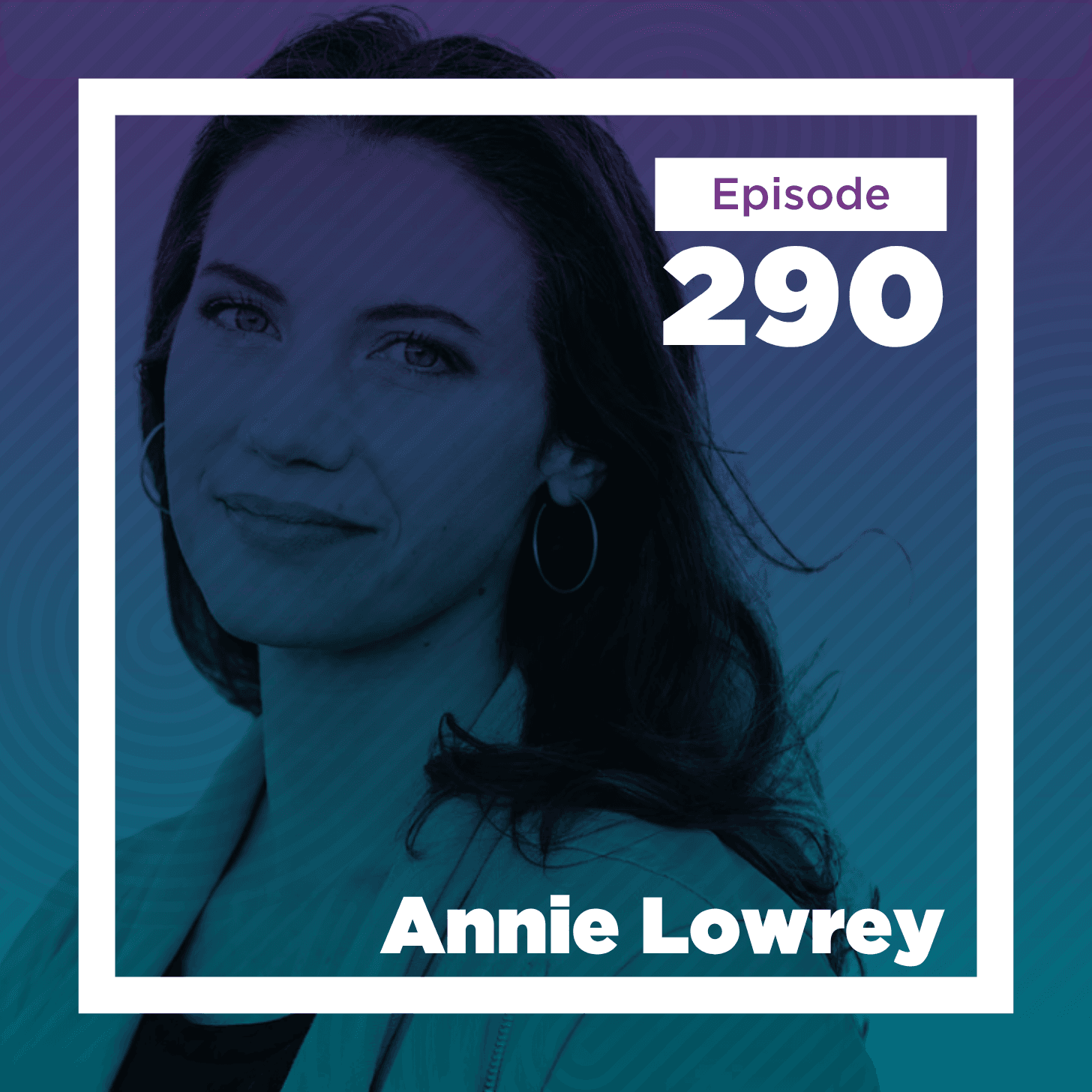
In short
Podcast Summary: Conversations with Tyler - Episode with Carl Zimmer
Episode Information
- Title: Carl Zimmer on the Hidden Life in the Air We Breathe
- Host: Tyler Cowen
- Guest: Carl Zimmer
- Release Date: January 15, 2025
- Podcast Description: Tyler Cowen explores ideas with profound thinkers, discussing various aspects of their work and ideas.
Overview In this episode, Tyler Cowen interviews Carl Zimmer, a prominent science communicator and author of *Air-Borne: The Hidden History of the Life We Breathe*. The discussion revolves around Zimmer's exploration of airborne life, including pathogens and pollen, and the historical reluctance to acknowledge airborne disease transmission. The conversation touches on several topics including the COVID-19 pandemic, the history of aerobiology, and insights from Zimmer’s background.
Key Topics Discussed
- The Hidden Life in the Air
- Zimmer discusses his book, which reveals how the air is filled with life, from pollen to pathogens.
- The conversation highlights why airborne disease transmission was historically underappreciated.
- Historical Perspectives on Airborne Diseases
- Zimmer explains the delay in recognizing airborne disease transmission, referencing 19th-century doctors' views that dismissed pollen allergies as neuroses.
- He discusses the long-standing belief in myasmas (bad air) as a cause of diseases, leading to a scientific blind spot regarding airborne pathogens.
- COVID-19 and Airborne Transmission
- The episode explores the initial hesitance of organizations like the WHO and CDC to acknowledge COVID-19's airborne transmission.
- Zimmer attributes this to historical biases against the significance of airborne diseases and the bureaucratic challenges in public health responses.
- Scientific Developments and Public Health
- The role of ultraviolet lamps in combating airborne diseases is discussed, including potential benefits and the need for further research.
- The complexities involved in improving indoor air quality and ventilation in public spaces like schools are also highlighted.
- The Future of Disease Prevention
- Discussion on how technologies, such as sensors for detecting airborne pathogens, could change the landscape of public health.
- The necessity for better ventilation and filtration systems in buildings to prevent disease spread.
- Aerobiology and Military Influence
- The episode discusses how military interests have influenced the field of aerobiology, often at the expense of public health advancements.
- Ethics and Genetic Information
- Zimmer touches on the implications of using genetic information for societal decisions, such as college admissions and job hiring.
- The potential dangers of eugenics-like applications of genetic data are addressed.
- Various Scientific Theories
- The conversation includes discussions on the possibility of extraterrestrial life on icy moons and the concepts within Lee Cronin’s "assembly theory" related to life definition.
Key Takeaways
- Awareness of Airborne Pathogens: Understanding the life in the air we breathe is crucial for public health, especially in the context of recent pandemics.
- Historical Context Matters: The hesitance to acknowledge airborne diseases is rooted in long-standing scientific misconceptions and societal fears.
- Public Health Evolution: The integration of new technologies and scientific understanding can help mitigate the risks associated with airborne diseases.
- Ethical Considerations: As science advances, ethical implications surrounding genetic information and public health policies become increasingly significant.
Conclusion Carl Zimmer's insights emphasize the interconnectedness of our environment, public health, and scientific understanding. The episode encourages listeners to reconsider the often-overlooked aspects of the air we breathe and the implications for health and society.
For more information, you can access the [full transcript](https://conversationswithtyler.com/episodes/carl-zimmer/) or watch the [full video](https://youtu.be/D70KznMs6PI).
Written by AI. May contain mistakes. Listen to the episode to check what was said.
Transcript
Automatic transcript. May contain errors.0:04Conversations with Tyler is produced by the Mercatus Center at George Mason University, bridging the gap between academic ideas and real world problems. Learn more at mercatis .org. For a full transcript of every conversation, enhanced with helpful links, visit ConversationsWithT Tyler .com. Hello everyone and welcome back to Conversations with Tyler. Today I am speaking with Carl Zimmer. Carl as far as I know is the only person who has both a tapeworm and an asteroid named after him. The approximate reason for this episode is Carl's excellent new book. It's called Airborne, the hidden history of the life we breathe.
0:47Carl is also a longstanding columnist for the New York Times. He teaches writing at Yale, and he has numerous other science books on biology, evolution, heredity, and other topics. Carl, welcome. Thanks a much, Rangley. I'm interested in issues surrounding the progress of science. And if we think of the notion of disease being transmitted through the air, it seems that comes to our attention really quite late in time. In the late 19th century, it's not truly accepted until later in the 20th century. The idea doesn't seem that crazy. Why did it take so long? You know, it's a great question and one that I was thinking about a lot while working on this book.
1:32And I think maybe part of the issue is that when we look back at history, especially the history of science, we tend to rewrite it. We tend to pretend that things were simpler than they really were. And we ignore all the debates in the way that ideas pop up and flourish for a while and then disappear and then come back again. And I think that the idea that something alive could come through the air and make you sick or kill you was in a way in the words of one journalist in in France in the 1860s, just too fantastic to imagine. And so it really, you know, it really strained the imagination even if today we're starting to get used to it.
2:23It's a frightening idea because it makes us feel particularly helpless, you know, because we can wash our hands all day long and keep ourselves safe that way, but you have to breathe. And so I think that there were a lot of reasons, many different reasons for the scientific community to look away and to say, no, this isn't happening or it isn't important. But, you know, birds fly through the air, bats fly through the air, and we've known about little tiny things since the invention of the microscope, which is why at very late 16th century, so people can't just put the two together, they don't have to have known for sure, but it seems it's just not much even if a candidate hypothesis.
3:08Was it really such a big blind spot? It really was. And, you know, again, you know, things that seem clear to us now were not clear even to, you know, the very brightest minds centuries ago. Now, part of the reason I think is that there was for thousands of years an idea that the air itself could actually make you sick. In fact, for quite a long time, the standard view was that if somehow the air became corrupted, it could cause diseases, yellow fever, all sorts of other diseases. And sometimes that would be called Myasmas. Myasmas, an ancient Greek word, hypocritees talked about myasmas, and really felt that that explained why you could suddenly get a lot of people sick all at once, all sorts of different people in a particular place, because the air had gone bad.
4:08And then in the 1600, 1700, there's this group of people who say, we think that there's this invisible world of microorganisms, fungi, bacteria, and so on as there would be later known, that spread disease, not just in us, but in plants and so on. Experts at the time said, this is ridiculous. You don't have the evidence to prove this and so on. And so once the germ theory of disease really took hold in the late 1800s, a lot of it was a fight between people who were saying, for example, cholera was being caused by Myasmas by bad air, leading doctors of the time in the mid 1800s. And the people who were fighting for the germ theory disease, they would say, you know, these are being caused by microorganisms.
5:01In the case of cholera, it's in the water. It's not in the air. And so there was this gradual kind of revelation cholera caused by this particular bacteria, vibriol cholera in the water, yellow fever, not caused by myas, but caused by mosquitoes caring a virus and on and on and on and on and on and so eventually some leading public health experts in the early 1900s just said all this concern about the air this is just this is just this obsolete my asthma concept and we just just rest easy just put it aside it doesn't matter I mean literally some people put that in print. And so that was really a very strong consensus.
5:42And so even in the 1930s, when some crucial experiments started being done, people were still very much primed to ignore it. When are airborne allergies first understood? Well, it goes back to a British doctor in the 1860s and 70s, likely who actually thought that he was sneezing because of pollen in being released by grass. He would walk by these hay fields and he would have this terrible hay fever and he'd say, I think there's something in the air. You know, he would rub the pollen, put his nose, and start sneezing and he would say, well, okay, this is not a good sign. And then he started to wonder in an incredibly visionary way like, well, okay, these plants all around me.
6:32They're releasing pollen into the air. Where does it go? And no one could say, because you know, pollen grains, you know, they're too small for you to really follow them by the naked eye. So he would do these amazing things like he built himself a kite. And he put a little probe on the kite that could where pollen grains could stick to. And it went up, you know, he flew this kite over a thousand feet in the air and he would bring it down and sometimes he would find pollen grains on it. And it was really astonishing. I mean, you would fly, you would fly it over the ocean when the wind was coming from the sea, and you would still get pollen grains.
7:09And he would say like, I think that the winds are carrying these living things for hundreds of miles, thousands of feet in the air. And this was a kind of an idea that very few people at the time really were appreciating. Now, people thought, oh, this is silly. When he published his results, a lot of people dismissed it. They were sure that hay fever was an infectious disease caused by bacteria. Or some people thought, well, it's a neurosis. It really wasn't until the early 1900s, after Blackly had died, that it became clear that no actually what's happening is that when you're exposed to certain things, like pollen grains that you inhale, in some cases it's your own immune system that is mounting an attack on them and making you feel miserable.
8:01Make sure Nozran and makes you cough and gives you all the symptoms of an allergy. And so, you know, Blackley himself never really got to see that he was actually right, but it wasn't that he was getting sick. It was in a way that his own body was mounting this incorrect defense called an allergy. It shouldn't that be one of the easiest hypotheses to establish. So the seasons change, right? The pollen mostly goes away. your allergy goes away, or you clear the field of pollen, or you move house, and your allergy changes. Shouldn't people have figured that out in 800 AD or whenever, just right away, and everyone else accepts it because it's common sense?
8:41Are we that stupid? I think great ideas can just sit around for a long time waiting to be discovered, and I don't think that's unique to airborne disease. I think that's really true across the board for a lot of different sciences. I mean, certainly, really a lot of historians of science have said, Charles Darwin, really guy, but really like the evidence was there for a long time. Someone else should have figured this out first. But at least there, the church is an opponent, right? So you might be persecuted. It's easier for me to understand that mistake, but even that one broke through. It did break through, yes.
9:16And I think part of the issue is sort of the structure of science. So when I'm telling you about this story about this British doctor who's flying kites trying to catch pollen grains It's just one guy. It's just one person who's really miserable behavior who's trying to understand it for himself and You know science really works by numbers like you actually like have to study lots and lots and lots of people and then You know if you're gonna try to tie people's symptoms to the environment in some way well you're gonna actually gonna have to track them over months, years and so on because the environment is changing all the time.
9:55You know, everybody who suffers from hay fever will tell you like, well, I don't know. For some reason, this spring, it's not so bad. I don't know why. That doesn't mean they don't have hay fever. It just means that the environment that's causing the hay fever is changing a lot. So, so there are some basic challenges to really appreciating how what we're breathing in is affecting us. Why was it so hard at least at first? for the WHO and CDC to talk about and admit the airborne transmission of COVID -19. That to me also seems inexplicable. That was in a way one of the entry points for me into writing this book, because during the pandemic and the outset in 2020, a lot of reporters, like myself, we were scrambling to write about this entirely new disease.
10:46And so, and we were talking with scientists who themselves were scrambling to make sense of this new virus on the scene. And so there were lots of questions. And it seemed really peculiar that there was this big conflict that broke out about how COVID spread and that it took quite a while for the World Health Organization and the CDC to really just say out loud, COVID is airborne. Now, that is like laid out in documents online. Like that is generally accepted that, you know, airborne transmission is a really important way that COVID spreads and it does a really good job that way. And so that led me down this path to try to understand why it is that there was this inertia.
11:38And I think it goes way, way back. And it goes back to these battles I was talking about over the germ theory of disease and the way that You know airborne transmission by the early 1900s was really being seen as something that was Just not significant not something to worry about and so even when evidence Strong evidence was being put forward by people who we've long forgotten about people like William Firth Wells and his wife Miljard Wells. Other people were looking at the results and being like, I don't know, I'm not going to accept that. There was a consensus and then that consensus became established as part of public health policy.
12:23And it's also true that if you acknowledge that a disease is airborne and you really want to deal with it seriously, it's going to take a lot to really address it. I mean, if something is just spreading by dry droplets on surface and so on, you know, you can tell people just wash your hands, disinfect surfaces and you'll be fine. But it's quite something else when indoor air is starting to become rife with these pathogens that we are exhaling into it. But the common cold is airborne, measles, many, many other things. The common cold is a kind of coronavirus, right? So even taking their bureaucratic nature into account, I still find it utterly bad.
13:06that they would have resisted that rather than issuing open statements that would have given them an out in either direction. How do you model them bureaucratically? I think public health is just a really challenging line of work, just because you want to reduce death and disease by coming up with measures that are going to apply across the board to the public. And that depends on what you understand about the disease you are trying to deal with. And then when you're dealing with diseases where we don't know that much about it yet, you're in a very tricky situation. Do you go extremely cautious and say like, this could spread in any different way, and we have to completely silo ourselves off.
13:57Or do you say like, well, we don't have clear evidence that it's airborne. So you don't have to worry about that. Where do you draw the line? Public health policy is a hugely difficult and contentious area. It's been, you know, since the start of public health. Now along with that, there's the scientific question of whether these things are airborne or not. And you mentioned measles, for example, it really wasn't until the 1970s that people really agreed that measles are airborne. Even though So it's incredibly airborne. It's the most contagious disease that we know of. COVID might be, you know, in the same ballpark now.
14:34But it took a long time for people to amass the evidence to really persuade the community. What's the rate of return to further investment in ultraviolet lamps now? You know, it could be really quite large. I mean, I haven't seen, you know, economic calculations of that. But as I write an airborne in the book, you know, the idea that you could safeguard the air with ultraviolet light is not new. And in fact, William and mildred wells were demonstrating it in the 1930s. They actually put ultraviolet lamps up in a couple schools in the Philadelphia area and protected the children there from measles outbreaks.
15:19and they did all sorts of other experiments to at least show that there was a potential promise there. Ultraviolet lamps could potentially really help in certain places to make it possible to just go about our business and relax because the air around us is being disinfected. There still needs to be more research to figure out how do you use these lights to safely protect large volumes of air. You want to make sure that the ultraviolet radiation isn't itself like creating any harmful compounds in the air that you might breathe and that might be a problem But these are all things that could be addressed and so you know ultraviolet light could definitely be a part of a real you know serious approach to keeping indoor air safe Maybe my worry as an economist is that it ends up being too much like patchwork So you can take any arbitrarily small area and maybe make it safer.
16:17I don't pretend to know the science, but say you could, but unless you have ultraviolet lamps, more or less everywhere, you're just redistributing. You know, where people will pick up the disease or the other problem. Isn't there a property rights issue that makes ultraviolet lamps unlikely to succeed? Property rights in what sense? Well, there's so many different property owners who would have to do it. You would need a very clear majority of them. Otherwise, you would just sort of pushing the problem around, like toothpaste and a tube. Well, it's certainly not the case that, you know, ultraviolet light would be like the sole trick to protect us from airborne diseases, from new pandemics that travel through the air.
17:01But building engineers who have looked into this and have developed ideas have been arguing that you could put out standards for how clean your indoor air should be, how free of disease. And then you could meet those standards in a number of different ways. So one way would be ventilation. Fresh air. There's plenty of life outdoors, but that life is much more dilute than what you get in poorly ventilated indoor places. So, there are lots of ways to bring fresh air into indoor spaces. And there are air purification systems, filters, and so on. There are lots of different things that can be brought to the table.
17:46And this is an area of new research, too. The US government has a $150 million project underway to develop cutting -edge new sensors that would basically be able to tell you we're detecting flu virus in this building, in time. Those kinds of technologies could then be yet another way to make sure that the air we breathe is safe. How should we reform ventilation in schools? Well, there are actually schools that are already doing this. It's a very patchwork thing, but if you look at places like Denver and Boston, they are using combinations of these technologies. So they are improving the ventilation, they're putting in filters, they're sometimes putting air purifiers in individual classrooms there.
18:31And also, most importantly, they're finding ways to see how healthy the air is. The simplest way to do that actually is just to measure the level of carbon dioxide in the air. This is something that actually, like people figured out in the mid -1800s, as I write about in the book, because, you know, if you are sitting there and you're talking to me and you're exhaling, you are, you know, filling the room you're in with carbon dioxide. And if you don't have a window open, it's just going to keep building up gradually. So amazing. They figured that out before they figured out airborne disease, right?
19:07Because carbon dioxide is truly invisible. Exactly. Exactly. Yeah. It is, it is an amazing history and it really, you really scratch your head. And I think one of the most amazing things about that realization is that it was made by a German hygiene scientist named Max von Pettincoffer. And Von Pettincoffer himself was actually a huge champion of the idea of myasmas. And he believed that cholera and typhoid and all these other diseases were caused by gases that came out of the ground. He had no tolerance for this idea that you were actually ingesting bacteria. He just thought that was ridiculous.
19:47He even swallowed a whole tube of cholera once to prove that cholera was not caused by water born bacteria. He was that serious. He didn't feel very well, but he survived and he decided that proved his case. Great discovery about carbon dioxide. In fact, it's so, it was such a great discovery that when people talk about sort of the safe level of carbon dioxide in a room, sometimes people put it around 1 ,000 parts per million. They call it the pet and cipher number. So he lives on. And yet, you know, he was also incredibly wrong about about a fundamental fact about airborne infection. Science just doesn't follow a neat path the way we'd like.
20:28And in a way that's one of the things it makes us so interesting to write about. How are you often here that when I'm flying on a plane, the air is quite good and well ventilated, not boarding, not de -boarding, but during the flight? Is that true? Yeah, I've talked to a few physicists and air quality experts. And yeah, they generally agree that most planes have really good ventilation systems and filtration systems on board. So certainly if there's somebody with an airborne disease like COVID on your flight, basic physics is going to dictate that when you're flying and that system is actually running, your risk is going to be lower because they're going to pull pathogens out of the air.
21:10On the other hand, when you're boarding and those systems aren't on yet, and lots of people are breathing in a small space, and they don't even have to cough. I mean, people can just exhale, talk, and then might be releasing tiny droplets that float around and can float through the whole cabin. That's an issue. And then also, if you were to take one of these carbon dioxide meters on a plane, I own one. If you take one on a plane, and you'll notice when you land that the carbon dioxide level will go way back up again, because they turn the filter system off, and you're taxing around on the tarmac and waiting to get out.
21:44So certainly, it's something to bear in mind when you're taking a plane, if you're going to decide whether to wear a mask or not. And that doesn't mean that your risk is zero when you're way up in the air and the system is running full strength. Did anticovid masking work? Yes. It worked in the sense that there are a number of studies that show that in different situations when masking policies were put in place, along with other measures, you would see a reduction in risk. And, you know, what are they randomized control trials? I mean, do we really know? Well, there's been a debate about randomized control trials for something like masks.
22:25And so, certainly, there are some experts who say, like, you can only judge this based on randomized control trials. But there are other experts who say, well, that's a bit like saying, we need to randomized control trial to show that hard hats work. You know, the physics shows you how it works. Now, do people need to use these things carefully? Yeah, definitely. But you can actually show, you know, you can study the way that these masks trap particles and so on to show that you're just going to breathe less, you know, virus -laden air. And also randomized control trials themselves. They can be very effective in many different settings, but they're not perfect.
23:07And so, you know, if you run a clinical trial with, you know, poor study design, or if you, you know, analyze it incorrectly, it's not going to be as good as if you were to be taking more careful measures. So, you know, there's certainly, I would say, yes, there's certainly a debate that's going on in the community, but certainly, you know, in a number of reviews that have been coming out recently, the consensus is that masks do help. I would think the strongest argument for masks was simply that a lot of people hated them, and so they would stay home instead, and we know that would work. But when people are making analogies to things like hard hats, or it's very, very obvious, physically what's happening, that's assigned the argument is quite weak, and if I go to a social gathering for two hours, either with the mask or without a mask, and I don't mean the highest quality medical masks we know they work, I think it's highly uncertain where the masks work.
24:01And I've read a good half dozen of those papers. I didn't think they were really very good. I came away agnostic, not convinced masks don't work, but it seemed to me the public health community was far too optimistic about masks, and we're not really following their own standards of evidence. Why is that wrong? Well, there are many different aspects to just something as seemingly simple as masking. So part of the question is, what kind of masks are we talking about? You know, the Center for Disease Control, when it decided, oh, maybe COVID is spreading through the air and we need to think really fast of ways to stop it.
24:50And we have this shortage of surgical masks and 95 respirators. They said, well, just put on a cloth mask. Maybe that will reduce the risk somewhat. And that was a public health measure based on some small studies from a few years before. But again, there are cloth masks, there are surgical masks, there are 95 masks, there are these sort of masks that are called duck bill masks. And so, you know, when you're asking does masking work, one of the questions is, well, what kind of masks are we talking about? And you know, then we're saying, well, you know, how, how are people using those masks? When people say they're using the mask, are they just, do you see them with their nose hanging out of it?
25:31You know, like that's not going to work. In the, in the same way that, you know, if someone, you know, if you say, oh, motorcycle helmets will, will help reduce you step on the road and the people are just, sometimes you see someone with them helmet on and it's unstrapped and you're like, well, that's not gonna work. So there are a lot of these questions that go into it. And so yeah, you will certainly see some studies that may not inspire you, but you know, there are, I've looked a lot of these studies and talked to a lot of experts and I would say, just judging from where we are now, that's the consensus that I described before.
26:05What's your best theory about the anthrax malings? Well, I can only go on all of the investigations that went into this at the time, just to refresh people's memories. In the wake of 9 -11, when these planes crashed into the World Trade Center and in the Pentagon, there was a real fear about an airborne disease attack, Because biological weapons, which are basically weaponized airborne diseases, they had been developed in the United States and elsewhere for decades. And so there were these worries that maybe a rack or terrorist organizations had gotten hold of some of these weapons and were going to use them.
26:49The first hint that this might have happened was that these envelopes started showing up at news offices and elsewhere with powdered anthrax and people would open it up and it would go into the air and they might inhale it and in a number of cases people died. And so the first idea was that this must be Alcada and it must be a terrorist attack. This is what we were terrified of. But all those fears and all that terror actually kind of, I think, sort of distracted people and, you know, it took quite a while for the FBI and very scientists to get a better handle on it. And when they looked at the actual anthrax itself, they said, well, this looks actually like, this is not something that was made in some Soviet lab.
27:41This looks like it was just here in the good ol' USFA, specifically at Fort Dietrich, which was kind of the headquarters of this aerobiological germ warfare research since World War II. There was a person who was identified by the FBI who was going to be arrested and he committed suicide before he could be arrested. I think that it's plausible that he was the one. I certainly haven't seen compelling evidence of alternate ideas, but unfortunately... But there's been no evidence actually linking him to it. You would think, well, once he's dead, it would be easy to find all the ties, the connections, things in his home, notes he made something.
28:24But as far as I know, there was nothing. Right. And there have been people who have questioned, you know, zeroing in on him, people who have sort of come to his defense as someone who wouldn't do something like this. But until there's more evidence, it's really hard to make a theory there would be a responsible one to consider. As you note in your book, the field of what's called aerobiology, who's been a lot of military and national security, almost a domination of the field, a lot of funding, but also a lot of influence. A net, you think that has helped or hurt the field relative to the counterfactual of that not being there.
29:01I argue in the book that the way that aerobiology got turned into biological warfare was quite a tragedy because, you know, this was a science that at the time was just getting off the ground. And in fact, the very name, aerobiology had been coined in 1937 by a researcher named Fred Meyer, who was really kind of emerging. He was going to be, he was really going to lead air biology into the modern age and going to turn it into what might have been a really remarkable new science. He died in a plane crash. That's what happens when you're looking for life in the air unfortunately. And shortly afterwards in World War II, the US military basically started classifying lots of information about how diseases spread through the air.
Read the full transcript
29:52And lots of people came to what what was then Captain Trick to do research that could have been really helpful to understanding airborne disease if it hadn't been classified, but it was classified and most of it stayed classified for a very long time. And it was just sort of almost like a brain drain. And so William Forth Wells, who I mentioned before, who really pioneered the idea that you can get sick from the air around you inside of buildings and so on, And he had no idea that a lot of his basic ideas and technology had been used by the Army in World War II to develop this biological war machine.
30:36And he was appalled after the war. And he said, the way he described his effect on science, it was the suicide of bacteriology. In other words, he just thought this was a terrible thing for scientists to do. So instead of trying to look in the air and figure out how to protect lives to develop better and better weapons for killing people, for causing mass starvation and so on, this was true not just in the United States, but in other countries, especially the Soviet Union, where there was this focus on trying to use air biology as a new kind of theater of war. And even the effects of our public health, I would argue, then instead of looking at public health as an opportunity to sort of reform the conditions in which we are in order to promote health and well -being, to some extent public health, especially in the United States, became sort of a fight against an enemy attack.
31:33And so you literally, you had people, you know, the same people who were building a lot of our modern public health system were consulting with the Army on biological warfare. Some of my friends worry about microplastics in the air. Should they worry? I think we need to be studying this absolutely. There's no question. I mean, you know, in my book, I'm really focused on living things in the air. We have put lots of other things into the air. And so microplastics are a new addition to air pollution. But, you know, even just good old, you know, particulate matter from cars and power plants and so on.
32:10and kills several million people around the world every year. It's a major attack on human health. So yes, microplastics, I think, certainly bear more research, not just in the air, but in our water everywhere. I have some questions about your other books. How much do you think through life on icy moons? Typically in oceans. Yeah, so in my book Life's Edge, I was writing about kind of how far we can push our concepts of life and, you know, can we think about life elsewhere? I certainly think that the icy moons of the outer solar system are the most interesting place to look for life. You know, Mars, that's great, that's fine.
32:54You know, I wish them well as they're digging through the dust and the dirt. But imagine drilling down through the ice and sending a probe into a huge ocean. What is that world like? It might have life in it or at the very least it might have some really interesting chemistry Maybe maybe these are places where life Has yet to form so I can't say whether there's life there or not But there's certainly good reason to think that there might be life there and if there isn't that might be a place to kind of get Some clues about how life begins on places like our own planet What's your point estimate for there being life on the icy moons and our solar system?
33:35I have not done that math. But through some bad I could offer you where you would take it, right? Just intuitively. If I offer you 100 to one odds, you'll take the bet, right? Yeah, a thousand to one odds. Yeah, I think it's, let me put it this way. I think, you know, on a planet by planet, moon by moon basis, it's very unlikely that there's life out there, but there's so many planets and moons in even our galaxy that I'm sure that there is life of some form elsewhere. Whether it's right next door in our solar system, I think it's highly unlikely, but I think it's likely enough that I would love for us to go check it out.
34:19And even Venus, there are actually other people who say, well, forget those icy moons, forget Mars, what about Venus? And this actually ties into airborne, my book, because you might I think Venus, that's crazy. I mean, it's so hot on the surface of Venus, you can melt lead in that air. But the fact is that when you get pretty high up in the atmosphere there, there are clouds up there where things aren't that bad. And we have clouds here on Earth that have lots of microbes in them. They get into the clouds, they hang out there, then they fall back out and more come in. So there could be this sort of aerial life on Venus.
34:59Maybe life started on the surface of Venus and then rose up into the air and now it's staying up there So we're we're at n equals two the one ocean we know has life the one set of clouds We know has life and you won't take a hundred to one bet that there's life somewhere else in the solar system I would think you should take a 10 to one bet on that one Well, you know no one's offered me the money yet So I haven't really had to put my money where my mouth is yet, but yeah, something to think about Is Lecron in right or insane? So Lecron is chemist in Scotland at University of Glasgow and he has this idea that you can explain life with a theory, a theory that he and others call assembly theory, which is about basically like how many steps does it take for something to get produced.
35:53And the things in our bodies, the molecules that make us up, some of them are very small and simple, but some of them are exquisitely big and complex. And they, Lee and others argue that life is what is able to assemble things beyond a certain threshold. And so this would might be a way to actually like identify life on a planet even if you don't know what life is made of. I mean, we can't assume that life is just made of DNA. Like that's an unreasonable assumption. Life might, you know, life on Earth already blows our minds in many ways, at least mine. But life on other worlds, maybe that, you know, maybe that bed is right and there's life on and celibus or some other icy moon.
36:36It might be really, really, really strange, but maybe we can recognize it by this assembly index. Not only could this be assembly theory be a way to recognize life, but it might be actually a way leekronin things to make life. In other words, you Guides you in basically creating a set of chemical reactions where you're creating these these right now He's got these robots that are basically making droplets with different chemicals in them in these vast number of combinations and he's wondering if if they will eventually start to sort of take on the some of the hallmarks of life. And so in other words, yes, he is trying to make life.
37:21He's actively trying to make life right now. And a lot of people think he's kind of crazy. A lot of people think he's quite brilliant. Some people think he's both. I like him. I don't know if he's right. He's a lot of fun to talk to. Absolutely, absolutely. And he has, it's been really interesting watching assembly theories sort of come to the fore more recently and some scientists really take badly to it in a very hostile way. But this is often the case. It feels like sometimes people are just talking past each other and they're not really speaking the same language. So I think because assembly theory is new and it's very interdisciplinary, I think it's going to take a while for the scientific community to really engage with it and decide whether it holds up or not.
38:08I think, you know, as I argue in life said, life is a property of matter. And scientists are trying to explain it. And some of them are trying to explain it with a theory. Superconductivity is a property of matter. And there were a bunch of theories that were put forward about it, including by Einstein. And they were wrong. And it wasn't until eventually some people came up with the right theory that really clicked in and had a powerful explanatory power. So we're not there yet with life and so maybe Lee Cronin is going to be like Einstein and he's wrong or maybe he will be one of the people who is right Over time, how much will DNA information enter our daily lives?
38:49So to give a strange example imagine that for a college application you have to upload some of your DNA Now to one imaginative people that will sound impossible But if you think about the equilibrium rolling it self out slowly, well at first students disclose their DNA, right? And over time, the DNA becomes used for job hiring, for marriage, for in many other ways. Is this our future equilibrium that genetic information will play this very large role, given how many qualities seem to be, you know, at least 40 to 60 % inheritable, maybe more. The term that a scientist in this field would use would be heritable, not inheritable, and heritability is a slippery thing to think about.
39:33I write a lot about that in my book, She Has Your Mother's Laugh, which is about heridity in general. Heritability really is just saying, okay, in a certain situation, if I look at different people or different animals or different plants, how much of their variation can I connect with variation in their genome? That's it. You know, can you then, you know, use that variability to then make predictions about, you know, what's gonna happen in the future? That is a that is a totally different question and you know, you know, It's not totally different. I mean your whole family is super smart, right?
40:13If I knew nothing about you and I knew about the rest of your family, I'd be more inclined to let you and TL And that would have been a good decision. Again, only on average, but just basic statistics implies that Well, you're very kind. I mean, you know, what do you mean by, you know, what do you mean by intelligence? Like I'm, I'd like to think I'm pretty good with words and that I can understand scientific concepts. I remember in college getting to a certain point with calculus and being like, I'm done. And then watching other people like sail on. But look, you're clearly very smart. The New York Times recognized this.
40:44We all know statistics is valid. There aren't any certainties. It sounds like you're running away from the science. just endorse the fact you came from a very smart family and that means it's quite a bit more likely that you'll be very smart too and eventually the world will start using that information would be the auxiliary hypothesis but I'm asking you how much will it? Well, I the question that we started with was about actually like uploading DNA and so there then the question becomes like how much of that information about the future can you get out of DNA? I think that you just have to be incredibly cautious about jumping to conclusions about it just because there are, you know, the genome is a wild and willy place in there and the genome exists in environments.
41:34And even if you see sort of broad correlations on a population level, you know, as a college admission person, I would certainly not feel confident like just scanning someone's DNA for information in that regard. Oh, that wouldn't be all you would do, right? They do plenty of other things now. But over time, you know, say for job hiring. Well, have the AI evaluate your interview. The AI evaluate your DNA. It will be highly imperfect. But at some point, institutions will start doing it if not in this country, somewhere else. China, Singapore, UAE, wherever. However, they're not going to be so shy, right?
42:12I can certainly imagine people wanting to do that sort of stuff regardless of the strength of the approach. And certainly we have seen, you know, even the early 1900s, we saw people more than willing to use ideas about, you know, inherited levels of intelligence to, for example, decide, you know, which people should be institutionalized, who should be allowed into the United States or not. So for example, Jews were considered largely to be developmentally disabled at one point. So especially the Jews from Eastern Europe. So we have seen that people are certainly more than eager to jump from the basic findings of DNA to all sorts of conclusions which often serve their own interests.
42:59And I think we should be on guard that we not do that again. Will embryo selection ever become completely socially accepted? Because there are people doing it now, right? It's not yet a thing, but it's growing. Well, certainly, with IVF, people are going to want to select the embryos that have the most likely chance of surviving. You're going to take a look for any sort of clear abnormalities. And it certainly is possible to, let's say that you have a dominant genetic disorder like Huntington's disease. The technology is there that you could say, okay, we created these fertilized embryos. Let's not use the ones that are carrying this marker.
43:46You can even go before that. Potentially, you could say, okay, we're going to, even before fertilization, say, okay, We're going to just take out the sperm or the eggs that have a marker that for one of these, you know, strongly inherited diseases like hunting minstices will people then, you know, move on to that future. Like that, I can't predict whether they will or not and whether they should or not, I think, is a separate issue. But again, I think one of the dangers is that people will convince us themselves that the information we have about DNA is going to ensure things about their kids that they can't be sure about.
44:28And then you're going to have this sort of lifetime of watching your kid not live up to your genetically encoded expectations. That's one of many dangers I see in going down this road. Why do you think the flint effect seems to be so especially strong for the Ravens part of IQ tests? This has puzzled me for a long time. Do you have a hypothesis? I mean, I certainly haven't done any, you know, my own original research on it. I'm a journalist, not a scientist, but... But you've read plenty, right? I mean, you have a sense of the field. Yeah, yeah, no, absolutely. I've read about it in part because it's just this fascinating thing that there has been this increase in IQ scores and it's certainly not a result of some sort of genetic process.
45:09You cannot explain a rise in IQ scores in so many different countries because somehow people are, you know, being born with different kinds of DNA in some sort of like evolutionary process. That is not happening. So what is happening? You know, I think that there probably are several different explanations for it. And I think we won't, I don't know. I mean, one of them is, might be that, you know, we live, kids grow up in an environment that where just, you know, every day life is more about the kinds of thinking that you encounter on an IQ test. People are using digital devices, for example. There could be just a way that the kind of life we're leading just leads to people doing better on IQ tests.
46:01Now, certainly some people do better than others, and is there an influence of DNA on that? Yes, I think the evidence is there that there is. It's not necessarily a huge account, but in any case, you can have these different things happening all at once. It's something interesting. It's frustrating that it's really hard to actually take these different hypotheses about the flin effect. Maybe it's something about our health. But how do you really rigorously test those things? I haven't seen a lot of rigorous tests of the different hypotheses. I've just said, seeing people say like, wow, this could explain it, which is fine, but not totally satisfying.
46:43If we take, you know, the entirety of science, you've written on many topics in a very useful way, science policy, where do you think your views are furthest from the mainstream or the orthodoxy? Where do you have like the weirdest take relative to the other people you know in respect? Oh, wow. Like I think we should just do plenty of human challenge trials. That would be an example of something you might say. But what would the answer be for you? You mean human challenge trials for like influenza and things like that? Whatever we need to. We should have for COVID, right? It would have sped up the vaccine.
47:16Save thousands or maybe more lives. Rather than wait for people to be infected, you infect them deliberately and call for volunteers, right? You can pay them if you need to. So that would be a view I have that somewhat outside the mainstream, though less outside than it used to be. What would two or three of If you're non -mainstream views B. Two or a a, well.
47:41Wow, I, I, you know, it's in, I, the thing is that, that when I am writing about, you know, the science itself, in terms of like the, you know, scientific findings that are just coming out every day and I tell people about them, and they'll say like, what, that is crazy. And I'll just be like, I'm just telling you about what scientists are discovering about our world. And so, if I describe what whale scientists are discovering about how whales communicate, I'm not going wildly beyond what they're finding and their theories, but to most people, that's crazy. That whales can hear each other across oceans and can change their songs.
48:29That's a mainstream now, right? You're just endorsing the mainstream and I would agree with that. Like I think Wales might be smarter than humans. That's a non -mainstream view I have. Like what are you and non -mainstream views? You know, I guess I don't really... It's interesting that I'm sort of drawing a blank on that simply because like I am just so dazzled by so much that I learn about in terms of the scientific world. So, you know, what is the scientific mainstream is just can be quite mind -blowing to everybody else. So if I just say offhand, like, oh yeah, there are billions of microbes in that cloud you see in the sky.
49:08People say, like, you're crazy. I'm not crazy. So I am a sort of scientifically mainstream sort of person, I guess, and to everybody else, I seem a little crazy. Younger in life, what is it you learned about New Jersey politics? Noting your father was a former New Jersey Congressman, Dick Zimmer. Well, you know, New Jersey politics is, it got a rich, long history of corruption and just rough and tumble kind of activity. I was, you know, very proud just to see my dad, you know, stay above that fray. You know, I live in Connecticut now and I get, it's got its share of corruption too. but still, you know, New Jersey was really quite a place to see all sorts of scandals in action.
49:54So you learned that a non -corrupt New Jersey politics was possible. That's an on -mainstream view, right? Well, it certainly was my experience growing up with my dad, yeah. And his district was what? Near Monmouth County or Delaware River? Where did you go? Exactly. So when I was 10, we moved to pretty close to the Delaware River in and Hunteron County in New Jersey. And so that was when my father was elected to Congress, that was his district. Before my last question, just to endorse Carl's book again, airborne the hidden history of the life we breathe. And indeed, I'm a fan of all of Carl's books.
50:31I think I've read all of them, or very close to all of them, but very last question. What will you do next? Well, I do next. Well, I'm working on a podcast. I can't really talk about it at length right now. There'll be more details later. So I'm kind of entering your world a little bit and it's fun and frightening. And then it'll just be a question of thinking about what the next book is. And I generally just let those ideas come to me because it's gotta be something that's gonna really be something I can live with for years. I don't choose the next book lightly. So it hasn't come yet. Carl Zimmer, thank you very much.
51:10Thank you.
51:14Thanks for listening to Conversations with Tyler. You can subscribe to the show on Apple Podcasts, Spotify, or your favorite podcast app. If you like this podcast, please consider giving us a rating and leaving a review. This helps other listeners find the show. On Twitter, I'm At Tyler Cowan, and the show is At Cowan Convose. Until next time, please keep listening and learning.
From the publisher
Carl Zimmer is one of the finest science communicators of our time, having spent decades writing about biology, evolution, and heredity. His latest (and 16th) book, Air-Borne: The Hidden History of the Life We Breathe, explores something even more fundamental—how the very air around us is teeming with life, from pollen to pathogens to microbes floating miles above the Earth.
He joins Tyler to discuss why it took scientists so long to accept airborne disease transmission and more, including why 19th-century doctors thought hay fever was a neurosis, why it took so long for the WHO and CDC to acknowledge COVID-19 was airborne, whether ultraviolet lamps can save us from the next pandemic, how effective masking is, the best theory on the anthrax mailings, how the U.S. military stunted aerobiology, the chance of extraterrestrial life in our solar system, what Lee Cronin’s “assembly theory” could mean for defining life itself, the use of genetic information to inform decision-making, the strangeness of the Flynn effect, what Carl learned about politics from growing up as the son of a New Jersey congressman, and much more.
Read a full transcript enhanced with helpful links, or watch the full video.
Recorded January 15th, 2025.
Help keep the show ad free by donating today!
Other ways to connect
- Follow us on X and Instagram
- Follow Tyler on X
- Follow Carl on X
- Sign up for our newsletter
- Join our Discord
- Email us: cowenconvos@mercatus.gmu.edu
- Learn more about Conversations with Tyler and other Mercatus Center podcasts here.
Photo Credit: Mistina Hanscom