
In short
Podcast Summary: Conversations with Tyler - Chris Arnade on Walking Cities
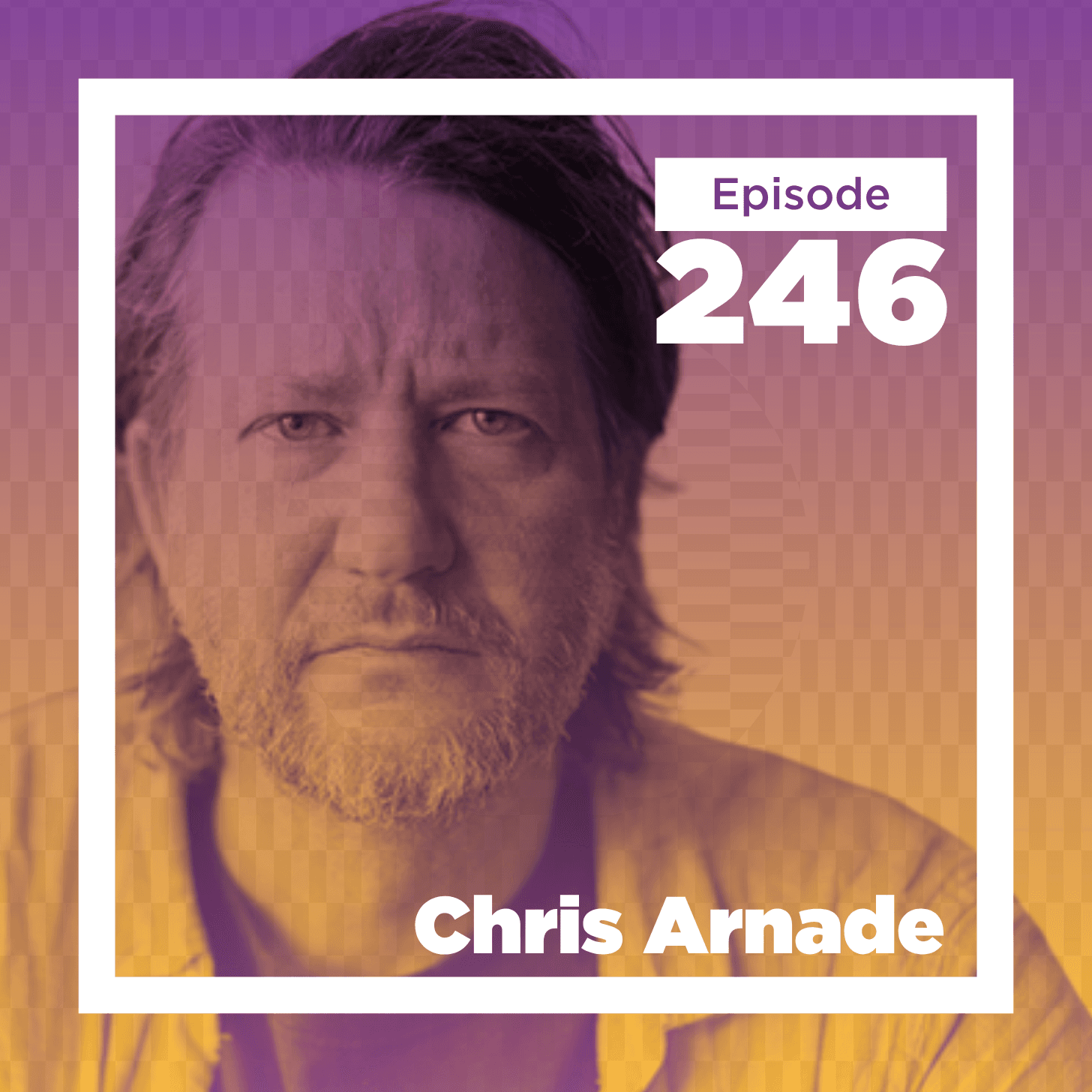
Episode Overview In this episode of "Conversations with Tyler," Tyler Cowen speaks with Chris Arnade, a former Wall Street bond trader turned urban explorer and street-level sociologist. Chris discusses his unique perspective on cities gained through extensive walking and photography in urban environments often overlooked by mainstream tourism.
Key Themes and Discussions
Background of Chris Arnade
- Former bond trader with a PhD in particle physics from Johns Hopkins.
- Transitioned to documenting life in lower-income America, authoring *Dignity: Seeking Respect in Back Row America*.
- Currently focuses on urban exploration and street-level sociology, sharing insights through his Substack, *Walking the World*.
Urban Exploration Insights
- Beijing vs. Shanghai
- Beijing: Described as more intellectually stimulating with a greater variety of local cuisines; top-down urban planning discouraging protests.
- Shanghai: While initially more appealing due to its location, ultimately seen as less interesting due to its ties to the outside world and focus on consumerism.
- Walkability Assessment:
- Chris evaluates cities based on factors including climate, crime, and pollution.
- Recognizes that his approach of walking to learn may not always be effective in cities designed for control and regulation.
Cultural Observations
- Noted differences between Shanghai and Beijing:
- In Shanghai, status is associated with wealth, whereas in Beijing, it’s tied to power.
- Both cities share similarities that can obscure their unique characteristics.
- Pigeons and Snapping Turtles:
- Discusses the role of pigeons in his work, particularly their connection to community among urban dwellers.
- Personal anecdotes regarding his pet snapping turtles, Reginald and another unnamed turtle.
Favorite Urban Experiences
- Seoul: Praised for its blend of efficiency and quirky charm, with a vibrant food scene.
- El Paso: Described as optimistic with a strong sense of community, showcasing the American dream through its working-class Mexican-American population.
Thoughts on Cities and Culture
- Emphasizes the importance of the "guardian class" in shaping cultural narratives and the everyday lives of citizens.
- Discusses the role of elites in constructing cultural frameworks and societal norms, emphasizing that most people are not politically engaged.
Key Takeaways
- Walking as a Method of Learning: Chris advocates for slow travel and walking as essential tools for truly understanding urban environments and the people within them.
- Cultural Insights: His explorations show that the most profound stories and understandings come from engaging with local communities, rather than relying solely on structured political discussions or tourist narratives.
- Diversity in Urban Design: Cities like Beijing and Shanghai illustrate the impact of urban planning on societal behavior, access, and the overall experience of inhabitants.
Closing Reflections Chris Arnade's journey from Wall Street to urban exploration reflects a deep quest for understanding the complexities of society through the lens of walking. His discussions reveal the intricate relationship between environment, culture, and the narratives that shape our experiences within cities.
Additional Resources
- Chris Arnade's Substack: [Walking the World](https://walkingtheworld.substack.com/)
- Podcast Transcript: [Full Transcript](https://conversationswithtyler.com/episodes/chris-arnade/)
- Watch the Episode: [Full Video](https://youtu.be/ob5-SXLkRO8)
This summary captures the essence of the episode and highlights Chris Arnade's unique perspectives on urban life through his experiences and observations.
Written by AI. May contain mistakes. Listen to the episode to check what was said.
Transcript
Automatic transcript. May contain errors.0:04Conversations with Tyler is produced by the Mercatus Center at George Mason University, bridging the gap between academic ideas and real world problems. Learn more at mercatis .org. For a full transcript of every conversation, enhanced with helpful links, visit ConversationsWithT Tyler .com.
0:27Hello everyone and welcome back to Conversations with Tyler. Today I'm chatting live and in person with Chris Arnotti. Chris has a long, interesting and varied history. He started with a PhD in particle physics from Johns Hopkins, was then a bond trader on Wall Street for about 20 years. had a life course shift around 2011 where he started traveling around Lower Income America and he became quite famous for what you might call photo journalism. His writings about Lower Income America and also Trump voters, he published a very well -known book called Dignity Seeking Respect in Back Row America.
1:08He is now, I would say, obsessed in the good sense with a new project which is walking both walkable and non -walkable cities throughout the world. And he writes a sub -stack about his walking and his travels. Chris, welcome. Thank you for having me. If you had to live in either Beijing or Shanghai for ten full years, which one would you pick and why? You know, I thought I was actually thinking about that a lot on the airplane. I couldn't come up with an answer. I think Beijing, ultimately because there There was just more there. Shanghai, I had a better experience in. I think the reason I like Shanghai more initially was just because of my location.
1:45I had a good location. I was right next to the people's park and I kind of had a good four or five days. Beijing grew on me with time though. I just thought there was just more there. I think I would much prefer Beijing. It feels more intellectual and there's a greater variety of Chinese foods there. Yeah. You know, the food part, I didn't do as much time as I usually do in a city when I was in boasting, I am Beijing. I usually try to spend at least 10 days in a place, and in both cases, because of visa constraints, I was there for six or less days. But the food thing to me was interesting was, I felt very much like what I had hoped to find in China I didn't find, which was I thought, I was gonna have like a Taipei experience where there was just gonna be a variety of different foods all over the place on the streets.
2:30And I ended up finding that, it was just, I was eating in mall food courts. It felt very similar. There was a lot of diversity there, but it felt very hard to choose because there was just all crammed together in these small food courts. If you had to explain the fundamental difference between the residents of the two places in a smaller number of dimensions as possible, how would you explain it to an outsider? In those two, in those two. Beijing versus Shanghai. I don't have a good answer to that one because I don't feel like I know it well, either of them well enough. How would you do it? Shanghai, what is status is money and conspicuous consumption.
3:09In Beijing, what is status is power. In a funny way that intersects with making the city more intellectual, having better bookstores and having ties to more of China, Shanghai is more tied to the outside world, which is maybe better for the city, but for me makes it less interesting. You know, it was interesting because I didn't get as much of a sense of those places as you did. I felt the overwhelming feature to me and what kind of frustrated me in some ways was how similar Shanghai and Beijing were, that they were kind of inscrutable to me at the level I do things. And a lot of that to me, you know, maybe the way I approach kind of learning, which is to simply walk 15 miles.
3:50And they're not particularly walkable cities. And you know, that's one of things I've come to have to deal with within my project is, you know, I walk to learn, but some places that's not the, actually write what, write approach. And in both cases, what I, the analogy I use, because I, I walked, you know, 15 miles in, in Beijing or 50 miles in Shanghai. And I kept on saying that it felt like I was in one of those cheap cartoons where the background kept repeating. And it was kind of frustrating to me in the sense of, I didn't feel like I got a sense of either place, at least at the granular level, like I usually do from when I do what I do.
4:27And I don't know if that was kind of intentional, that's what kind of how the seas are designed to be uniform, to kind of to remove any differences. I think parts of Beijing are designed to discourage protests and demonstrations. And that correlates with being hard to walk. It doesn't explain the whole pattern. I mean, I think that there's a lot, you know, I was thinking in particular of that approach when I, I've been reading James C. Scott, who, who writes a lot about the idea of control regulation as control or top -down regulation as control. That's certainly the case in Beijing, where you've gone are the small winding dens of small neighborhoods because those are hard to control.
5:10They're much easier if you replace them by 50 -story towers with a mall next to it. And surveillance. Yeah, and surveillance. And so what struck me when I was in Beijing is not so much the difference between Beijing and Shanghai, but how top -down regulation is often designed, you know, very intentionally for control. And you know, Beijing in particular, you know, feels that way. And that's kind of what frustrated me initially was, I had just kind of said, you know, because I kind of do all these kind of something I didn't see the pants, I just do, you know. So I landed and I said, I'll just walk to Tienemann Square.
5:47Well, that just did that. You know, if they did that one. I actually got there. I actually got there. I actually got there. I got there. Even though I had found out along the way that you had, I went through six security checks or five security checks. And I was supposed to have had a QR code where I'd signed up for it. And I didn't. I just kind of like walked by. I just, you know, so I kind of came up with what I wrote about was there being kind of but I call it totalitarian anarchy, which is, I think they intend to be controlled, but they're just some pull it off very well. They're just too incompetent to pull it off.
6:18Some of that to be deliberate though. I think they feel that if people have a sense of partial freedom, they can control them better along the dimensions they want to, and they're probably correct. I mean, that's kind of what I thought about with the firewall, right, which is, everybody has a VPN, and everybody knows everybody has a VPN, or so that there really isn't a firewall, But it's kind of like, it's kind of like, you know, the idea that you regulate people by making sure that people who are the most ignorant can't possibly deal, you know, like the people who don't have enough get you can't get enough together to figure out how to get around it.
6:52Don't get around it. And the VPN is also a way to monitor them, right? Yeah, exactly. Yeah, you can't actually trust the VPN supplier. I don't like to be conspiratorial because I think this often wrong. But I did notice my VPN kind of clunked out at very odd moments. like I was there during the actual election. The US election. Yeah, when I was following that, I noticed that my vision went out of very in opportune times, like when there was kind of stuff going on that probably wouldn't have been fun to watch or wasn't convenient. So, you think they actually, the Lucy Goosey approach is actually intentional?
7:26I'm not sure they have the option of cracking down entirely, but I think they have come to terms with the partial controls and they found that it's still working. And until it starts, it's not working. Don't try to hard to fix it. What do you think ultimately is driving them though? Like, what is their goal here? Well, when you say them, if you mean the CCP, the inner committee of the CCP, I think it is to make China quote -unquote a great nation again, to drive the United States out of Asia, to have much of the world cow -tow to China, to have China be rich, never democratic, and stable. Now, all that together is probably impossible, but it's not a crazy set of goals.
8:05They're not my goals. I mean, what struck me was, and one of the things I wrote about on both of pieces was I just kept thinking of them as a guardian class, kind of incorporating Plato's Republic. They really do think of themselves as kind of as the guardian class whose goal it is to build the best society. I just don't know what they're working towards because if they're working towards kind of a fully material, increasing material wealth. They're doing well. But if the end point is someplace like Korea, Korea is famously not particularly happy. Yes. Like so, you know, I don't think that's their goal.
8:42But I think they want China to be happy enough. I don't think they're not altruists. I just think it's a very nationalistic view of altruism, where Chinese lexically come before other considerations and anyone who's ethnic Chinese ultimately falls under their purview, which is also different than say an American view. I mean, I'm going back again, because I find it so fascinating, because I don't understand it to the world, to the degree I feel like I understand other places. Like other places I've come away with a pretty quick sense of describing a town in some ways, but like both being at Beijing and Shanghai just felt a little bit, and I don't know, maybe it's a scale, because again, they're not really smart places to walk.
9:26I find it's oddly like America in a number of ways. I think you've written about this too. Inward looking, large, self -confident business -oriented, pretty friendly, pragmatic. But I think a lot of the CCC plan has improvised rather than planned. So something like the fertility crisis, I think they were not expecting. Really, no one was. They don't know what to do. They'll try different things. And the larger the scale at which you operate, the more the so -called plan just becomes improvisation. And again, it's also the problem that comes with top -down management, which is sometimes you just get it wrong.
10:03Yeah. You just get it wrong, you know. And I think they're definitely afraid of disorder and civil war, given their history, in a way we are not. But to me, what's interesting about is how explicit the top -down organization is at the built level as well as at the cultural level. Like everything is micromanaged. But again, with a Lucy Goosey approach to give a little bit of a way to room. But like, you know, the image I will always have, at least Shanghai and other initial images. Asia has very rare and punctious cities and one of the kind of what I like about Asian cities is they have kind of an organic street life, kind of a low regulatory organic street life.
10:46That is gone in China. And so I had to have gone from Taipei to Shanghai to see that. That lack of organic street life is intentional. And they've said, we don't like this. And so there was this neighborhood that was walking through Shanghai, where they had bought up the entire neighborhood, had been old neighborhood, and it was going to be devised for development and to kind of a business park style living. And they had replaced where there had been stores with murals of store life. like, you know, it was like, it's just kind of two -stuned spot on for what they're doing, which is replacing, removing actual organic street life and replacing it with cartoon images of it.
11:27You should try Kunming, by the way, if you haven't been there. It still has organic street life, as does much of Western China. It's more fun. It feels less authoritarian. It's going to Xi 'an next trip. That also has organic street life. It's a bit harder. The further west you go, the harder it is to get a visa. So yes, but you should be able to get to Kunming without problems and she on try the cherries they're fantastic. Now, which is more interesting in a major Chinese city, a McDonald's or a KFC Kentucky Fried Chicken? I'm going to, you know, everybody told me KFC and I stuck with McDonald's because of my past history with McDonald's.
12:02But what struck me about Beijing and China both in cases was it's the one time on my trips. I famously have become kind of online the McDonald's guy because I read a lot about McDonald's in US and the role of McDonald's in US. And whenever I go overseas people expect me to use McDonald's but I just don't use them because people don't use them. There's alternatives in Japan at 7 .11's and Ezekiah's and other countries, other forms of kind of what I would say kind of third spaces, organic third spaces. is embaging. It was McDonald's. And it was interesting. It served the same role it does in US for very different reasons, which is, and the US and McDonald's is the place people go, because it's one function, because it's functional relative to the, to the, to the neighborhood.
12:47McDonald's embaging people go because it's dysfunctional relative to the neighborhood in terms of regulatory rate. Like you just can go and relax. People say that I, I did, I went, I went I don't like fried foods in general, so I didn't really spend time there. I just found myself spending a lot of time in the McDonald's and China, and I find them really wonderful places. My favorite McDonald's in the world is in Auckland, New Zealand, which is the world's largest Polynesian city, and McDonald's there often serves as the center for Polynesian gatherings, not just Murray. Imagine that, yeah. But Cook Islands, Tongan, CG.
13:30Yeah, I can see that. And if you're ever in Auckland, it's a phenomenal McDonald's. You know, the mixing that takes place in McDonald's is just, you know, is absolutely amazing. You know, in the US, it's absolutely amazing. And it's similarly across the world. But again, a lot of other countries have other things that serve that role. And so. Where's your favorite McDonald's in the world? A favorite McDonald's in the world. The one I probably use the most is in LA. I don't remember the name of the street. A lot of my book was written in it. It's kind of in the Mexican East LA Mexican neighborhood.
14:04I forget that should be a good one. The name is of the street is on the tip of my tongue. It's just You know, there's there's just a organic life there that is just absolutely wonderful and I just learned so much in that You know, I was because what when I was in the US do my project I Would literally just sit in McDonald's and I type up my notes, you know and that's where I got up so many of my stories would all to become from just being in McDonald's for not trying to get stories. And it's funny to look back on that period because you know when I was doing this project on addiction and poverty I would talk to people and then I'd meet them in McDonald's and then I would take them outside the McDonald's to photograph them because it just didn't seem photographic you know like but then I was like wait a second this you know the fact that everybody I'm meeting everybody in McDonald's that's the story.
14:51It's just such a great community center for so many people. Why is Seoul, South Korea, possibly your favorite city? It's got a functional dysfunction. It's a little bit more dysfunctional, a little less uptight than in Tokyo, but it has a lot of the same positive qualities of Tokyo, which is very safe, it's very efficient. It's got an amazing food scene if you like food. It's very active. but it's a little bit corkier to me than to do. And I feel like it's a little bit less known and I kind of enjoy that. But also, I just find, when I'm in a place, I like to get into a regular walk and they just have a 10 mile walk.
15:35They're absolutely love. Like I just do it every day when I'm there. It's along the revital. It had been an old drainage ditch and it goes underneath subways and it goes underneath interstates and now it's just a beautiful reclaimed 10 mile walk. What I like there is that the food scene is not Instagrammed to death. So you can find an obscure place that's more or less undiscovered and it can be very good in almost any neighborhood. You know, someone asked me about the best food and I think if you measure the best food by the kind of the median food, like, you know, I actually think Japan is still higher than Korea that way.
16:10But they have the worst food also. Yeah, I mean, you can get some really disgusting things there. I had the night before I got on a 15 hour flight. I had chickens to see me. I, there should, you should not have chickens to see me. You should not have chickens to see me. I refused, I saw it. I know. I, I, I didn't, I had two pieces down before I realized what it was and I'm like, okay, I'm gonna die, I'm gonna die. But it wasn't good. Like, it doesn't look good either. Even for the rescue wasn't good. Like, you know, I'll take a risk if something tastes good. Also, some of the fried foods Japan Japanese have is just, Koreans have some weird food.
16:46One of the things I like about Japan is I can go to the 7 -Eleven and get a good sandwich. Yeah, very good food. The sandwiches in the Korean 7 -Eleven have a lot of sugar in them. Sugar when mixed with ham, things like that. But I actually think Japan has better food in Korea, but I agree with you that the Korean food scene is less understood by the West, and I think it's less precious. But you know, some of the best food I've had in the world is in just small places in Japan that are just, you know, off the beaten track. Yeah. Now, in evaluating cities, how much do you take weather into account?
17:22So I've been to solve at the end of November, which is not even the worst to the winner. And it was awful. It was truly freezing. I love cold weather though. So I was just in Seoul three days ago. Yeah. It was when I got up in the morning. It was 18 degrees and I love that. So I like cold weather. But if you don't like cold weather, don't go to salt. The thing is the winds come off the mountains and it's really cold. When the winds come off, it's just really bitterly cold. And how much do you count to air pollution for? Because that's going to hurt China, right? So yeah, it's for walking especially.
17:56I actually put together a metric on walkability. I think seven, eight categories. and I put climate, climate and crime and pollution are three big factors. Like I think people don't forget about like, you know, I famously rank relative, people got on my ass for ranking LA relatively high as a walkability. Oh, I put it near the top. Yeah, but it's got great weather. And if you can deal with some of the distances involved in that and lack of density, it's just a really wonderful, it's got a massive, a fantastic bus system that part of being able to walk is when you choose not to walk, you can just jump on public transportation.
18:34So it's got a ubiquitous bus system that can get you pretty much everywhere. It's got great climate. And it's also just, it's just a visually impressive city. It's got good skies. It's just like, it's a very enjoyable place to walk. And it's got amazing food scene. It's got a better food scene than almost any place in the U .S. Sure, yeah. I once walked across Sao Paulo, which in retrospect was insane. I wouldn't do it today. Yeah, that's not that's tough. It's tough. Yeah. Do you remember which direction you walked? No, but it was a very long walk and then you know the murder rate then was much higher, but street problems were much less frequent You know, I've always found that I generally A lot of the locals tell me not to go where I go and I've never had a problem.
19:19I think if you are I mean I have zero you can look at zero jewelry on I never were jewelry I dress very simply. I've just never had a problem. I think Latin America is one of the few places in Latin America, Africa, some of the few places where there are real problems. And you do have to have a little bit of common sense. I walked all over Lima, Peru when I was told not to and I was fine. That's okay. But what's your nomination for the least walkable city? Phoenix is pretty bad. And the rest of the world, what was the lowest ranked on mine? I think it's Dakar, it's your lowest ranked. I don't find that so bad.
19:56It was partially the heat, and also there was a safety issue, which is it's not actual violence, it's just the risk of a miscommunication going very badly. When you're in a neighborhood where you're a slum basically where you're one of you white people, it's not that I feel threatened by being robbed. I feel threatened that something you do is it can be just a miscommunication like why are you here? What are you doing here? And so that can spiral out or really control if you don't speak the language. Which, Dakar was really tough. Kampala was really tough to walk. Why is that? I've never been there.
20:30Again, these are cities that I'm not meant to walk. Locals don't walk them. And so people would look at me like I'm crazy. So, because first of all, you can jump on a hack bus. So why would you walk? Right. The boat abot is, which are, and you just jump on the back of the motorcycle. Which I won't do. I did it once, and I'm like, I'm not doing this. This is just a really dumb risk. Yeah, I wouldn't do that. I almost got killed in the first time I did it, but they do it. Consequently, there's no walking infrastructure, and when you do walk, you're at risk of being hit by a boat or a helicopter.
21:05People will walk out of necessity, but there's just no infrastructure, absolutely none. Then you're getting hit by a car, or a motorcycle. Reo for me would be the least walkable. It's very dangerous, but on top of that, there are so many places where walks in, there's mountains, there's tunnels. Yeah. I mean, I have not in this recent project gone to Brazil to walk partly because when I was a banker, I spent a lot of time in Brazil and so I don't really want to go back. I would imagine that just connecting that. So Paul was a lot more walkable than Rio. Sure. Rio is just there's just no go zones.
21:44So like it's just literally that those are dangerous. And also you have you know The topography of a place does determine this walkability. Yeah Serving cities are just disjoint and it's really just hard to walk one of my favorite cities in the world And I quite enjoyed walking it was a mon Jordan And I would encourage people who listen to this side is it's you know people always like what's undiscovered places relatively really undiscovered place And it was safe. You know, I went into some very, quote, rough neighborhoods, but I was, you know, even though I was open about, I opened to people that I was Jewish.
22:18And that most of the hour where it was quite safe. Yeah. Just, I'll absolutely malacumin. You know, you're, you're, you're good. But it's eight hills. Look at it. There are, there are climbs I was taking that I was just, just absurd. Like I'm walking up basically 60 floors of steep flights. And then, you know, you're, you feel like a hero and then a 50 -year -old, 60 -year -old, when he comes right past you, who's been doing it all the day with stuff on her back. I don't know if you've ever been there, but one of my favorite walkable cities was Alexandria, Egypt. I have not been. Because you have both the waterfront and streets with interesting buildings.
22:56And when I was there at least, it was quite safe. It probably still is. I also do these long walks where I, like, I walked across England and I walked across Japan. kind of what I walk the road valley and I walk the Rhine Valley, kind of what you know, 200 mile walks while I do over the course of two weeks. I've been trying to, that's one of the ones I want to do, which is to walk from basically down part of the Nile, you know, up from Alexandria down to Cairo in that region. Yeah. What's the greatest purely physical problem you have with all your walking? He usually, he's a sushon because a lot of interesting places are in very hot parts of the world.
23:32But he never bothers me. I feel very lucky. It's called, I hate. Dehydration and heat are my big problems because, again, places I find really interesting tend to be in the near the equator. So I don't know how old you are, as I've gotten older, I just can't handle the heat. 63. Yeah, okay. So it's, I'm impressed that you can handle the heat. And I've lived in Virginia a long time. I think for five years, I'd never turned on my air conditioner because I felt I should get used to it. And I did when you take the trip as a whole not just the walk with the trip You're not packing very much, right?
24:07That's correct. What is it you wish you could carry but you can't it just doesn't work You know, I would like a few more night outfits You say night outfits. What do you do? You usually have one Go out shirt. So I want to walk in the shirt after a while that gets a bit ragged I feel a little bit like I also whenever I'm traveling I also do attend an ass every Sunday, wherever I am and I would like to I famously wear only sandals. Another pair of shoes would be nice to feel less less disrespectful when I go to mass. So is there anything you bring a double love like I bring a double pair of glasses?
24:48I've never needed them. I bring double tie I bring lots of tie pods. Those are my secret weapon tie pods. I bring backup computer cords. I bring backup glasses. I'm trying to think what else I have a double love. I carry two spare batteries, kind of. I've never seen this second one. I'd lost the first one, but I always like to know like, you know, I won't run out of power. Sometimes I bring spare chargers. For books you use Kindle or how do you do that? I always have one physical book and then my Kindle. I always keep one physical book because I just prefer reading physical books. I always bring my Kindle but try to get by with only physical books.
Read the full transcript
25:25I mean, I think honestly, I never regret underpacking. Like I always feel very, I pack remarkably light and I think that's almost to me if I had one hack to people for traveling. You know, what I would say is when you get home, look at what you brought and see how much you didn't use. You'll find that you didn't use like a third of what you brought and you can buy things on the road, you know, if you run out of stuff like I can't buy that second shirt. Yeah. And sometimes I have. No, I did an episode with Paul Salopec. Do you know who he is? He's walking around the world literally. But literally in a circle isn't exactly the right word.
26:05But and he said trouble with the war with Russia. China at first was an issue of this just during pandemic some of the time. Are you ever tempted to do that? Yeah, you know, the problem is is I've looked at paths and I've looked at, you know, like I looked at walking across the US multiple times. I don't know how much you're going to learn the third day in a wheat field. One day wheat fields is good. Two more days. And you know, the goby desert is the same. Like what am I going to learn the 15th day in the goby desert? You know, so this whole project started with this idea of walking around the world literally.
26:39And I started saying, well, why do I have to I just cut out the middle parts, the boring parts, and focus on the seas, because I like people. I'm focused on culture, I'm focused on how people operate. And so I like people, and I like being around people. So I generally do not, the Woody Allen joke is I'm too with nature. I kind of get that. I like small doses of it, but what do you learn before? I'm the same. I go to 14, like if I walk from here to Florida, like that's a lot of pine forest, man. I'm like, you know, there's not much to learn there. What is it you think you learn least while traveling the way you do?
27:17You know, it's interesting as I've so, I used to be a, you know, I used to be a macro trader, a macro type trader. And so I used to be very pop down. And I think I've in some sense, I've thrown too much of that away. I think I've gone into blind without reading, you know, I could do a little bit more background reading in terms of the political swathe. One of the things I've learned from my project is most people don't talk about politics. I only talk about what other people want to talk about. No one talks about politics. I, being in Beijing, Shanghai, maybe it's not the best example because people would say, well, there's a reason they don't want to talk about.
27:59I don't think that's it. No, I agree. Most of the world. Yeah, you know, I and so even Idaho. Yeah. Yeah. So you know, 98 % of the people aren't political and They don't talk about politics and so when you know, I kind of got beat up on on on social media when people were talking about oh Oh my god Trump's gonna be elected. That's gonna you know the world hates us. No, they don't I've heard more, but you know, I When that's person said that I was actually in a compol a bar in compol with a person Well, woman telling me how much she loved Trump But that was a rare political conversations. Most people don't talk about politics.
28:32And so in that sense is I could probably do more reading outside of the conversations about politics because I could utilize the countries. I don't know what's going on politically because they people don't talk about it. What other macro views of the world have you revised due to your walking, visiting, traveling? Obviously, particular views about any individual place, but I'm a whole humanity. I mean, the biggest change I would say is, I've become religious, although that's not entirely just the walking, but that's just... But do you think the walking is fed into it? Yes. And how is that operated?
29:10You just kind of... I think you... Part of it was utilitarian. It was like, if this works for so many people, but also it was a little deeper than that, which is an understanding that people a little bit more complicated than science leads you to belief, and life is a little more complicated. So in that sense, you know, there's there is something that there is something to What I would call common sense folk wisdom. That's just more than you know something that we need to be explained away with science or or eventually will move beyond I do think there are very human qualities that are you know, I am I am not a relativist I Might have been you know 30 years ago kind of believe in kind of cultural relativism I'm not a relative as I think there are some cultures are just better than others I agree with that.
29:56Why can't we say that? I think part, you know, I had started off as a way back when before I found out I was good at math. I started off with the intention of doing anthropology and I basically, you know, as a freshman, I left it after three months because it was just, it was filled with this, you know, this cultural altruism, which is I just thought was absurd. and now I feel more certain of that. But I would say the kind of bigger thing I've been thinking about for the last two years is I've been, you know, a year is I really do think. If you would, you know, I was famously six years ago as I'm a year, I would say, like, what elites say doesn't matter.
30:39Who cares what people are fighting about on Twitter, but actually, you know. It does matter, I think. Yeah, we elites, we and I put myself, we as an elite, I'm one, we build cultures. We build societies. So we matter immensely. And I've maybe I've gone a little bit too far now where I think all of culture is built by elites. And to almost a level of giving excuses to people who want to reach in terms of their behavior because that's the culture they grow up in. I won't go that far. I think there is free will when people have agency. But I think CCP is an extreme example of what takes place in almost every culture, which is there is a small group of guardian classes, different definitions in different places, who effectively create culture.
31:31And most people are not political. And the way they choose to live is based not on a lot of decisions, based on what culture gives them. Sure, conformity. Yeah. And so I think in that sense, I think what academics do or where elites do, where politicians is immensely important and shapes how societies are built and how they evolve. Putting aside issues of financial security, but how many people do you think should do what you're doing? Is it like, oh, there's only a few of us in the world? Or is it some kind of life Arb opportunity. Let's say 3 % of people actually should be doing if they can.
32:10You know what's interesting is I'm probably going to take like a six month break from what I'm doing because I've leaned too far away from reading books. Like I kind of, you know, there's book learning and then there's what I call this is Cascastic Experimental Learning which is kind of what I'm doing. Like you need both. And so I think if you only do what I'm doing, you're going to kind of miss out on a lot of a lot of the world. But why can't you do both though? So I once had a trip to Goa and I missed time the month soon And I could hardly go out at all. So I went out two or three hours a day.
32:41That was crushingly sad I read a lot. In fact, it was still a great trip. Yeah, I mean I would have to change how I travel Which is part of what part of it's just me which is people are expecting content every 11 days based on walking so you know like if I sit around and reading books But you can write about that too. You have a post on your recent reading. Yeah, I mean, I can, but I do think that you have to do a mixture of both and I've leaned a little too far into the walking in terms of how many other people can do it. It's not You know, it's logistically a hard lifestyle like you have to be a certain personality like I do not mind waking up in a different bedroom every night I do I quite you know this might be just a quirk of my personality I do not mind 16 hour flights.
33:27I kind of look forward to them. Like, you know, I don't fly first class. I fly in economy. Yeah. So if you don't... 13 hours is my limit. 13 is fine. Pass that it wears. Yeah, me know. But like, it's the time to read, you know. Yeah, absolutely. I go to the back and, you know, I know my airplanes now. I know exactly where the steward is. Just hang out and I go back and I talk to people, you know, sitting in the back. So I actually don't mind long flights. And if you've got to, you have to have a personality that enjoys that. I also don't mind, I like talking to people. What do you learn from stewardesses?
33:59You know, I mean, speaking of the, you know, just the Faroe Islands example, I landed at three in the morning, and she got a friend that drive me to the hotel, so small things like that. But you know, in general, they're just addressing people to talk about in terms of like, they tell you about where they grew up, they tell you where to go. I often take some of the information back, you know, So I use information probably in the way they wouldn't think I use information. Like if they tell me go someplace, I may not go there because that sign's like, it's gonna be crowded. And I don't like crowds.
34:33I just like to hear the life stories of people, you know, how they got into the career they got into and what they want out of life. And what's their goal here? Why should more people visit the Faroe Islands? It's just, you know, I said I'm too in nature, but I give an exemption for a Faroe's gorgeous. It's absolutely gorgeous. like physically it's it's it's the most sublime it has a sublime beauty that I just can't you know that was I kind of got people who get religious experiences out of nature it never got old the beauty the beauty I also think it's just extraordinarily functional and I like functional great seafood also it's different although you know you all the seafood have you been.
35:14Of course I've been. How many times have I been to a lot of places? Have you been, how long were you in Pharaoh for? I think five days, I'm not sure, but less than a week, but more than just a day or two. Yeah, it's, it was interesting. I was planning there'd be there for five days, and I canceled my next trip to stay there for two weeks. Yeah, I can imagine that easily. What I liked most about it was I would just go to the bus depot and get on a bus and just get off somewhere and then walked for four or five hours. And then, you know, I would make sure that I would get another bus back because of the time tables.
35:48You can just go, you can island hop and just walk around. I like these incredible, you can't even call them towns, but maybe five homes in a corner somewhere with the world's best view. But the homes are nice. What I didn't like about it, I'm terrified of heights.
36:05And I remember the first day I got there, I walked out of Torchvahn across the island to the other side over the mountain there. It was like a eight mile walk up the mountain and down. Part of that walk there was some kind of cliffs and I was like a little bit scary but I got through it. But I'm like, I'll just take the bus back. That's fine. The bus was more terrifying than the walk because it would go down to pick up these kids and they lived down at the bottom, one of those villages, it was like thousands. Yeah, did this once, yeah. And the road is a dirt road that's maybe, you know, just a car length wide.
36:47And this bus is going around the corners. And I had to move sides of the bus, not to be on the side that was near the looking down the 50. These kids were just like looking down, smiling. I was terrified. is it's on below the world's most walkable city? I think it's one of them. I would put Tokyo up there, Tokyo wins the walkability award. Istanbul is probably my, it's one of the most walkable cities. If it wasn't for the motor scooters, delivery guys, it's got the weather, it's got the beauty, it's got the diversity, it's got the biggest thing what I call for walkability is what I call local distribution, meaning you can always, there's always a shop somewhere.
37:26Yes. It's also, I don't know if your experience was this, I just get over to the Asia side. That to me is a much more interesting side. And get out of the tourist parts. It's just a very, it's just a wonderful city. It has the history. The thing I like about the history there is it hasn't frozen the city. They just, you know, like on the European side is that famous wall, I forget the name of the wall, that was there, been there to the wall that was eventually breached in like 1453 or whatever, 1456, the Northern Defense Wall. It's still there, remnants of it. And it's just use of the car park.
38:05There's this 13th century wall that just uses a car park, which I still think is pretty impressive. So I like the way history is both there, but also not relegated to just kind of a museum -like status. Is anywhere in India truly properly walkable? I've not been since a kid. I canceled this last trip. I was going to go to Mumbai. I don't know. I do a lot of Google Street views before trips and it looks like it. Part of the reason I canceled my trip, I was going to go in January. I had to cancel for a variety of reasons. I'll go sometime soon, but it looks like it's going to be, you know, it looks like it's going to be hard to walk.
38:45I mean, I was able to walk into Jakarta. I was able to walk. I know I found both of them to be. Okay, walkability. Yeah, I agree. How would you compare it to Jakarta? Have you been to both? I've been to both. There's many parts of India. Amrit's R struck me as the most walkable part of India I've visited. The Sikhs are a bit like Mormons of India in terms of how they keep the city. It's fairly well maintained. There's pollution issues, there's weather issues, and there's big. You could call Pothol, sidewalk Pothol issues. So it's tough. Yeah, the Pothol issue is, I mean, it's awful in Jakarta.
39:19it's awful and annoying. You just have to look down a lot. Oh, you can just break an ankle. Right. And then there's somewhere like goa, which is fairly well maintained, but it's just not well set up for walking. You need vehicles to get around. You know, a lot of the developing world, you know, is not intended to be walked. Like, you know, like, it's like contrary. Like, you know, and again, I remember when I was in a noi, people become friends with me and they're like, no, No, no, no, I'm gonna take you on a scooter. I'm not gonna, why are you walking? Like, you know, I was like trying to explain why I was doing.
39:51They were like, why would you walk, you know, when you can go on a moat pad? Like, you know, that's probably the right attitude too. I have the view that people should pick out a place where they're quite sure they don't wanna go, and at least subject to some safety constraint, then go to that place. I agree with that. Yeah. Yeah, I mean, that's kind of my whole strategy, and many ways is, I mean, I mean, although spectacularly failed with Phoenix, I just wanted to be a smart ass and prove that unwalkable Phoenix was in fact walkable. And it did not happen. It's getting less walkable too, right?
40:27It was, it was, I mean, but again, it's no one, no one there walks. And no one should walk there. Like they have no intention to be walkable. Like in that, that's okay. You know, like, I'd current margins, where is it you think you definitely don't wanna go? where do I definitely not want to go? I put aside North Korea or Middle -Wars on. I kind of burned out on Latin America. I spent so much time there as a, during my banking career. I generally don't find, I think Peru is, Lima is quietly some of the best food in the world. Sure. Like if I had to say where, to me one of the dirty secrets is the food you get in a place is not that much better than you can get in the US.
41:14And the average person does not eat that much. Right. The exception is being France, Japan, Korea, and... Italy, I think. And Italy, yes. Yeah, yeah. Italy is, I put it up there as well. In general, I get better, I got better Indonesian food in Netherlands than I did in Indonesia by far. Vietnam, I'd also put up there as a place where the food is exceptionally better relative than what you get outside of Vietnam. Latin America just doesn't really interest me in terms of like, you know, I mean, I don't see a lot of variety in the cities. I'm not particularly into like, I keep on wanting to go. I've had this childhood fascination with Suriname.
41:52And in fact, last night, it's been about an hour looking once again at flights of Suriname to Paris. I can't pronounce the name of the capital. Paris seed. I know. We're it's funny. Just this morning, I was looking up Suriname and thinking of going Paro. Yes, whatever. It's the PCD. I mean, there are direct flights from actually Netherlands, but there's no direct flight from JFK. You can go to Georgia. But also, just doing lots of pin drops, looking at possible places to walk. It's not that interesting. It's spread out as hot. But the mix of groups is interesting. The food is good when you bite in the Netherlands.
42:26Yeah, so hope so I mean I kind of This this morning I booked my next trip and my originally it was gonna be Georgetown and then going to I can't pronounce it Barra. Yeah, this is sure now. Yeah But I just I just for whatever reason it's just the Caribbean's this as an interest me I don't know what it is It just doesn't seem like there's a lot of cultural depth there You know you can you read your you're listening. Just can yell at me who are Caribbean? Yeah, but like I will go there. This is on my list. They're wealthy now. And I think the interesting thing about Georgetown is they have the oil.
43:01So you have the economics side. They had 40 % GDP growth in the prior year. Got to imagine that's incredible. Just to look at that for me is interesting. Yeah. I mean, and Siren Am has a spill over the same thing or they're getting like 20 % growth lower, but still impressive. Yeah. So I think that would be in Latin America, that would be interesting. but in terms of not, yeah, I don't want to go to South Africa either. I have no just to go into South Africa. I went to Cape Town last summer. I was surprised how much I liked it. Okay. I'm afraid to go elsewhere in the country, perhaps, but I mean, I was, I would say considerate, and I walked quite a bit.
43:35I spent six months there as a child, so I don't, I just, I don't know. But that was a very different South Africa also. And there were smaller towns where I quite seriously thought of just moving there for a month. In South Africa? Near Cape Town, to be clear, basically Cape Town. Small towns of, I don't know, 40 ,000 people with fully walkable city squares, perfect weather, amazing food, and prices were maybe one -third of US prices with much higher standard of living. I'm trying to think where else I wouldn't go. I don't have much interest in Scandinavia. I've had good trips there. And Helsinki for walking is one of my favorite cities.
44:15Fair Island surprised me. Yeah, I didn't expect it like fair high and so you know there you go And For in summertime. It's I don't mind the heat, but my wife does and they're great. The work needs of course and incredible But small it's not that I was thinking of doing an orcly shetland ferro trip I've never been to shetland, but orcny side recommend you can do that by boats all three. Oh, yeah, that would be fun and in orc and to get to the But ancient sites in Orkney's, I guess you could do it by bus, but a car is useful. And it feels quite Nordic, not Scottish. And that surprised me a bit. I should have known, but...
44:53I mean, very Norwegian, right? That was my sense. Yeah. Iran I want to go to, but I don't have my hopes up. You know, in places I want to go that I are not particularly easy as basically Russia. I love Russian culture. I absolutely love Russian culture. I've only been twice. I was thinking about one of the trips I'm trying to book is Belarus, but again, it's just hard for a lot of reasons. And there are risks, you know, and I don't know if I prickly one, take those risks right now. But I also know, you know, to the questions of issues of political morality, I would say that, again, 98 % of people aren't involved in politics.
45:30Like, she gets to a place and they don't care. Yeah, and so it's kind of it's unfair to to to condemn a place based on the elites behavior when 90 people don't care and you know Similarly the the opposite behavior is you know I find a lot of foreigners are very forgiving of American policy Because they they understand that the you know The citizens are not so easily responsible with behavior of the country We're very popular in Vietnam, I think when I was in Vietnam people kept asking me to readers kept asking me to write about the political, like what about the war? No one talks about it, nobody.
46:04Like, and I was right next to a, I remember having, you know, talking to some people right next to a, you know, I was in an outdoor bar right next to a memorial to a Christmas day bombing we did, and I think whenever we killed like 30 people, and there was just, you know, there was this memorial, including having a, like a jet fighter, part of the jet fighter, and from the US jet fighter, No one cared. Why do you like El Paso so much? The optimism is the American dream. So I think the American dream is very much alive and the working class Mexican American community. And you see that in El Paso.
46:41You don't have, when I was doing my project on addiction and poverty, El Paso is just fundamentally different. You don't have the despair that you have in places. is you know. And a low crime rate too. Yeah, extraordinary. And in some senses, Mexico acts as the Roach Motel, right? Like, even if you can do crime, go over to Juarez. It's a consequently, there's no crime in El Paso. But it's one of the most optimistic cities in the United States. It has amazing food, by the way. I, you know, I think it's walkable. I can't afford a lot of it. But I can understand why some people might not see that.
47:17I find just the color for buildings. I find the good, well, fantastic weather, by the way, desert. Desert, desert, high desert is always my favorite weather, great weather. And again, the optimism, like you, you know, when you look at working class Mexican Americans versus working class whites, working class blacks in the US, statistically, all the things are the same except for issues of deviance, you know, crime, addiction, you know, the Mexican strength too much. Like, you know, generally, you know, it's, it's where someone can come and really feel. And I think a lot of it is, you know, it's the slope of the curve, not the height.
47:55They can literally look across over to war as to see how their life has improved. And that just brings a great deal of optimism. Looking back on your career as a whole, what were the best things about working on Wall Street? Smart people. Smart people. Yeah. I've had, you know, particle physics, banking. and then I guess, turnalism, whatever you want to call it, writing now, a punditry. And I have found in general that the friends, the group of people that was the smartest, the people I enjoy talking to the most, and I still enjoy talking to most in terms of being able to have kind of discussions that you can talk about anything and not feel like you're gonna offend somebody at a level where generally banker is.
48:43And not all of them, they're like, you know, There is a hierarchy in banking. But in general, I think it was a great way to learn about the world at a very top -down approach. And people make fun of the idea of becoming a specialist in X for what. But that was the great thing about banking is also you had to learn about oil for three months. He became an expert in oil and then three months later he became an expert on palladium or whatever. And I found that kind of intense continual learning to be very, very enjoyable. But were the worst things about working there? It was a very narrow view, again, which is why I'm doing what I'm doing now, which was it was very much, you know, the view from the Ramada.
49:29It's kind of fly in. You know, one of the things I will say is that, you know, I stay away from certain neighborhoods in certain towns, and which is generally the wealthy neighborhoods. They're all the same. I get it, like, they're all variations on a theme. The wealthy neighborhood and Sophia is very similar to, like, a little Fifth Avenue. And that's just not interesting. And that's kind of what bankers do when they look at a place. You just go, and my joke I used to say about, because I did emerging markets, fixed income. So we bond trade in Russia, bond trade in Turkey. He's like, you know, the entire investor base in the bond market of Turkey could fit into this restaurant.
50:11And they often do, like they're all there every night, the same group of people. So it's just very, very limiting perspective. What's the special role that pigeons played in your career? Hi, John, for asking that question. A lot actually I became fascinated with pigeon keeping. When I started this project of documenting addiction, it came basically through pigeons So during the financial crisis, I would go on these long walks in New York, these 15 mile walks, 16 mile walks. And I became fascinated with the pigeon keepers. I would see these flocks, the pigeons above the air. And then I started documenting and becoming friends with these pigeon keepers.
50:48And they were the, there's an old Italian sport brought over to the Bronx in Brooklyn. And now it's mostly a black and Puerto Rican sport. These guys will find these abandoned buildings and put coups up there and just keep pigeons in there. But I find them the extraordinarily I think it's an art form. They call it a sport, but there's really no goal to it. Like, you're not racing. It's just, it's husbandry. I'm a husband tree. You just keep pretty pigeons. And then every day you fly them. And I found this to be a really wonderful hobby. So I started going all around New York, becoming part of this document.
51:21Pigeonkeeper, that brought me to Hunts Point, which started me on my addiction project. How about snapping turtles? I have two snapping turtles, Reginald and no name that are in my pond at home. And so for every, for the last eight years, when the summer comes, they come out and I feed them every night. I find it really fascinating that these two animals, these two creatures, one of which is probably 40 years old, will live underneath the ice. My pond's frozen right now. We'll be underneath the ice for six, seven months, and then they know when to come, where to come to get hot dogs every, at the same time every year, which I think is pretty, pretty amazing instinctive skill.
52:00What's the best thing about writing Sub -Stack? And tell us the full name of your Sub -Stack and how to connect to it. Chris Arnotti walks the world. I would just Google Chris Arnotti walks the world. The freedom to basically do this. I can't believe people are being paid. Not tons, but enough. I literally walk around the world. Like, it's kind of the perfect job for me. I don't think you could do that with it. you know, there's, there's a, I forgot who it was who wrote about back in about the 60s or 70s. Someone who related to the grateful dead wrote about the concept that you could, if you just, if you just have 2000 fans on anything, you could, you forgot who it was who, who had that.
52:44Kevin Kelly or I believe that's it was. No, Stuart Brand, I think, who, who come up with the concept, all you need is 2000 people. That's right. And sometimes One. Yeah, you know, and that's pretty amazing. Like, you know, there's, you know, there's five billion people in the world That's like you don't need to have any people But it's hard to get right it is, but it's not a high her. It's not a high barrier So it's you know, it's it's it's really a niche culture because I have a niche thing You know, and all you need is 2000 people so I really find kind of the sub stack model of allowing people To build a life based on just finding 2000 people who appreciate what they do or 1000 that's a really that's a really liberating You know notion because you know in a big world you can usually find 1 ,500 people who have if you have an if you have a Unique enough interest and do you think you'll turn your suds tack into a book or something else or Why so there's no plan per se like why would you like I don't understand?
53:46I mean I don't really understand books Like in the sense of like but you want to read more of them right? I mean I like I'm glad people wrote books in the past but like you know I think in many cases, kind of a weekly essay is by weekly essay or is it kind of the perfect, at least for me is a perfect way to communicate. Do you use AI at all when you travel? I do not. I'm starting to use it now as a, I take it very good for travel. I started using it as a copy editor, but why, what do you, what do you use it for for traveling? If I'm just arriving in the city, I will have guidebooks, but I'll ask GPT or Claude, what should I see in the city?
54:26And I'll tell it what I'm interested in. It's better than any guidebook. Really? It is. So what do you, when you land in the city, what do you tell them? We'll say you were going to a jian. What would you do? I would say I'm interested in Chinese history, art, culture, and food. So you're a museum guy. I'm a museum guy. And I've been to shian. You know, but so you go to a museum. That's right. So I do exactly the opposite. I've never been I don't the only museums I go to is military history museums because I those are great too There are histories of propaganda which I love The one in Tokyo is incredible Like they're almost histories of histories.
55:01They're they're almost museums and museums at this point So you you go through the museums But in China there are not many good ones to see but in shion by far the best thing to see is in a museum You cannot not go to the museum I'll see the terracotta warriors, right? So I don't want to, you know, what do you get out of the museum? I love the visual arts. Okay, but so I see what's in it. To see and per... But it's elites building an narrative. Okay, okay. If you're interested in that. What can you get out of that that you can't get out of that from a book? So I go... The color plates are not very good compared to the actual paintings.
55:37So to me, I'm kind of asking what was the Walter Benjamin question? Like, you know, the age... The age and mechanical reproduction. Yeah, the reproductions are terrible. Yeah, no, but so. But in the book, you don't really see the process of defining the history and the narrative and how people respond to it. So did you, you've been to the high euphia? Yeah, sure. Did you get something out of it? Of course. Would you get out of it? The visual splendor of it, which cannot be captured in a photograph. Okay, so the aura. Right, aura. Okay, the aura. Yeah. And that helped you understand it better? I don't know if I understand this the word.
56:12I enjoyed it. I felt inspired. I shared it with other people who were there. Yeah. And sometimes I kind of more the, I think you have a reputation of being something of a libertarian kind of like materialist. Is that fair? Oh, I don't know what that means. No, but I'm a little bit broadly libertarian. But no, but like, I'm almost kind of, you're almost more romantic about it than I am here. Oh, much more. Of course. And whereas I find the museums would be kind of like, ah. And a thing you can do with AI is you can take a photo of any picture in the museum or any bird, any plant, any building. And get the history.
56:49And ask it all the questions you want. And that guidebooks cannot do. And that's phenomenal. I mean, again, I love that. And it's free. I mean, if the margin is free, you have to pay some subscription, but it's not much. So what do you think you'll do next? I'm going to do this for another few years and then I don't know. Like I didn't know I was going to do this, you know what I mean? Like, just how did it come about that you did this? What was the moment of realization or decision? Life was stressful, I found I always walked. You know, when I'm at home, I walk out, I have a standard 10 mile daily walk that I do, which is very different from my like learning walk.
57:26It's just therapeutic around COVID. When COVID happened, I looked at actual real tables and I said, oh, I'm a little bit overweight. I was like, you know, that's not good. And so I started walking 10 miles every day and I really enjoyed it. And then I started saying, well, I should just, you know, I should, I, I, I, when I was in Brooklyn, I used to, I walked the entire length of New York subway system above ground. And I've always been into walking. And I just realized, hey, I can just, I can, you know, I think I was looking at some table that like what, about one and a half billion people live in, live in massive cities that we really don't know the names.
57:59Like, you know, these big sprawling Jakarta's. I'm like, I would like to see that. I like you. I agree. That's the normal experience for most people. And so I just started, I booked a trip to Chicago and just started walking to Chicago. Listeners, I love Chris's sub stack. It's walking the world. Chris is book I can recommend as well. Chris, thank you very much for coming on the show. Thank you for having me.
58:26Thanks for listening to Conversations with Tyler. You can subscribe to the show on Apple Podcasts, Spotify, or your favorite podcast app. If you like this podcast, please consider giving us a rating and leaving a review. This helps other listeners find the show. On Twitter, I'm Attyler Cowan, and the show is At Cowan Convos. Until next time, please keep listening and learning.
From the publisher
Most people who leave Wall Street after twenty years either retire or find another way to make a lot of money. Chris Arnade chose to walk through cities most travelers never truly see. What emerged from this approach is a unique form of street-level sociology that has attracted a devoted following on Substack. Arnade's work suggests that our most sophisticated methods of understanding the world might be missing something essential that can only be discovered by moving slowly through space and letting strangers tell you, their stories.
Tyler and Chris discuss how Beijing and Shanghai reveal different forms of authoritarian control through urban design, why Seoul's functional dysfunction makes it more appealing than Tokyo's efficiency, favorite McDonald’s locations around the world, the dimensions for properly assessing a city’s walkability, what Chris packs for long urban jaunts, why he’s not interested in walking the countryside, what travel has taught him about people and culture, what makes the Faroe Islands and El Paso so special, where he has no desire to go, the good and bad of working on Wall Street, the role of pigeons and snapping turtles in his life, finding his 1,000 true fans on Substack, whether museums are interesting, what set him on this current journey, and more.
Read a full transcript enhanced with helpful links, or watch the full video on the new dedicated CWT channel.
Recorded February 27th, 2025.
Help keep the show ad free by donating today!
Other ways to connect
- Follow us on X and Instagram
- Follow Tyler on X
- Follow Chris on X
- Sign up for our newsletter
- Join our Discord
- Email us: cowenconvos@mercatus.gmu.edu
- Learn more about Conversations with Tyler and other Mercatus Center podcasts here.
Photo Credit: Bryan Jones