
In short
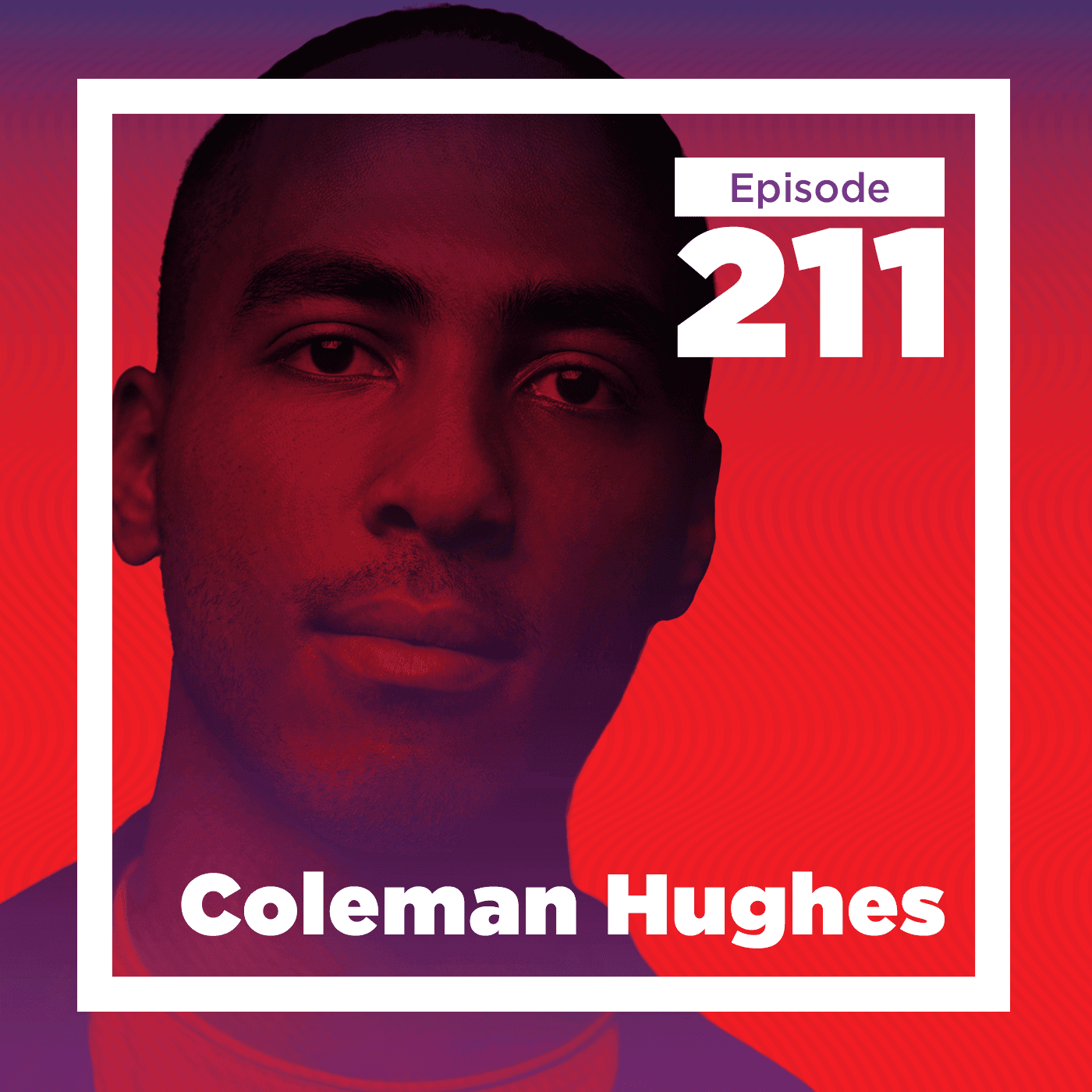
Podcast Notes: Coleman Hughes on Colorblindness, Jazz, and Identity
Podcast Overview Title: Conversations with Tyler Host: Tyler Cowen Guest: Coleman Hughes Episode Date: March 6, 2024 Description: Coleman Hughes discusses his philosophy on colorblindness, identity, and the cultural significance of jazz music, along with personal anecdotes and reflections on various social issues.
---
Key Themes
Colorblindness
- Definition: Hughes advocates for a society that ignores race in public policy and personal interactions.
- Implications: The discussion explores how colorblindness may apply to personal identity and expression.
- Challenges: Delving into whether it is practical or desirable to ignore race and other individual traits.
Cultural Identity and Expression
- Jazz Music:
- Explored whether jazz could exist in a fully colorblind society.
- Hughes believes jazz was born from a racially integrated culture, countering ideas that it requires a distinct racial identity to thrive.
- Cultural Products: Hughes argues that while culture can reflect race, it should not dictate public policy.
Personal Experiences
- Lookism and Ageism: Hughes discusses how perceptions of appearance can affect societal interactions, particularly in his experiences as a Black male.
- Musical Background: Shares experiences from performing in the Charles Mingus Big Band and insights into jazz musicians' creative processes.
Political Views
- Political Environment: Hughes criticizes the toxicity of political discourse today and discusses the evolving landscape of Black political affiliations.
- Conservative Fans: Hughes expresses discomfort with aspects of support from conservative audiences, acknowledging their reflexive political views.
---
Notable Discussions
Jazz and Colorblindness
- Hughes posits that jazz's evolution reflects a more integrated social ethos than the broader American society of its time.
- Tyler Cowen challenges Hughes by questioning whether cultural identity is separable from racial identity in artistic expression.
Addressing Other Forms of Blindness
- Autism and Gender: Hughes suggests that unlike race, attributes like autism or gender have inherent differences that should not be ignored in social interactions.
- Comparison with Race: He argues that race is more socially constructed and thus can be treated differently in public life.
Cultural Dynamics
- Hughes reflects on how cultural attachments to race can influence individual perspectives and political affiliations, particularly in light of his mixed-race background.
---
Key Takeaways
- Advocacy for Colorblindness: Hughes argues for a return to colorblind principles, suggesting it leads to a more equitable society.
- Cultural Integration: The conversation emphasizes the importance of cultural collaboration and how it can transcend racial divides.
- Personal Identity: Hughes illustrates the complexities of identity, race, and culture through personal narrative and observations in the music world.
- Political Nuances: The discussion reveals evolving political sentiments within the Black community and offers insights into how these are perceived across different demographics.
---
Conclusion Coleman Hughes's insights challenge conventional perspectives on race, cultural identity, and public policy. Through a thoughtful examination of jazz and personal experiences, the conversation encourages deeper reflection on the nature of race and its implications in contemporary society.
---
Additional Resources
- [Listen to the full episode here](https://youtu.be/EZttQtZI3lA)
- [Read the full transcript](https://conversationswithtyler.com/episodes/coleman-hughes/)
- Follow Tyler Cowen on [X](https://twitter.com/tylercowen) and Coleman Hughes on [X](https://twitter.com/coldxman).
Written by AI. May contain mistakes. Listen to the episode to check what was said.
Transcript
Automatic transcript. May contain errors.0:04Conversations with Tyler is produced by the Mercatus Center at George Mason University, bridging the gap between academic ideas and real world problems. Learn more at mercatis .org. For full transcript of every conversation, enhanced with helpful links, visit ConversationsWithT Tyler .com.
0:26Hello everyone and welcome back to Conversations with Tyler. Today I'm here with Coleman Hughes. Coleman has a great new book out, The End of Race Politics, Arguments for a Colorblind America. But Coleman is more than just a book author. He is a well -known blogger. He has a very famous podcast, Conversations with Coleman. He has been a star in rap music. He plays jazz music, Trombone professionally in New York City nightclubs And he's all around a public intellectual and famous person Coleman welcome Thank you so much and I have to apologize for stealing the name of your podcast for mine I figured I have a iteration so I have extra reason to do it if your name was Tyler it would be bad But in fact, it's totally fine Now, before we get to your book, I have just some random questions for you.
1:19What have you learned from JJ Johnson? What is most interesting about JJ Johnson is that he was an extreme perfectionist. What people don't realize about JJ, at least people that aren't deep kind of sores, is that most of his solos on his records were prepared to an extent that is not true of his other contemporaries like Charlie Parker, Dizzy Gillespie, etc. Most of their solos were truly improvised. Like if you go to the alternate takes on those records, it's a different solo. If you go to JJ's alternate takes, it's almost the same solo. And I think that rather than be a bug that was a feature of his success, because if you consider the challenges required to make the trombone into a bebop instrument, which nobody thought was possible before J .J.
2:10Johnson did it. It's kind of a kept 22 because the level of perfectionism you would have had to have in order to be the first successful bebop trombone player would also preclude you from being a truly improvisatory musician, which is generally characteristic of jazz musicians. Are most of your trombone solos prepared? No, but in a way, I benefit, this is why you can't compare modern players to players of the past, I benefit enormously from having studying and learned all of many of JJ Johnson's solos. So there were things he had to invent that are now second nature to most trombonus, which make it easier to improvise in that style than it would have been for him.
2:54Physically, what's the hardest thing about playing the trombone? It's actually not the slide. The slide, in my view, that's what attracted me to the trombone, the fact that you push and pull rather than pressing buttons or valves, and that's what makes it distinct. But the slide motion is not actually the trickiest thing about it. The trickiest thing about it is the same thing that's tricky about every other brass instrument, which is the ambassure. That's what separates great trumpet players from poor trumpet players. In my view, the finger technique is not nearly the hardest part. It's always the small muscles of the mouth and coordinating those to play the instrument effectively.
3:32And how was it you ended up playing Trombone in Charles Mingus Big Band? I participated in the Charles Mingus High School Jazz Festival, which they still do every year. It was new at the time. They invite bands from all around to audition. And they identify a handful of good soloists and let them sit in for one night with the band. And I sat in with the band and the band leader knew that I lived close by in New Jersey. and so essentially invited me to start playing with the band on Monday nights. And I was probably 16 or 17 at this point. So I would take the NJ Transit into New York City on a Monday night, play two sets with the Mingus band sitting next to people that had been my idols and were now kind of my mentors, people like Kuhumba, Frank Lacey, who was a fantastic drum -bone player played with Art Blaky and DeAngelo and so forth.
4:22And then I would go home at midnight and go to school on Tuesday morning. And why is the music of Charles Mingus special in jazz? Because it is to me, but how would you articulate what it is for you? I would wholeheartedly agree that it's special even within jazz. The way I would describe it is there are certain jazz musicians that seem to have created their own autonomous island within the landscape of jazz, whereas most of the great jazz musicians sort of resided in the same country. certain people were like often Taiwan on like a on their own island. I would put Mingus in that category. I would put someone like monk in that category or net Coleman people like that.
5:04Mingus' music is my favorite of all of those because it's it sounds like Duke Ellington. If Duke Ellington had had an acid trip and composed things that were broadly in his idiom but just everything was changed a bit. That's how I would describe Mingus. And where should a podcast listener or start if they don't know Mingus. I think you should start with Mingus, uh -uh, because it's the album that would most broadly appeal to someone who didn't know, and you know, any Mingus. I would also very much recommend watching his interviews as his personality as part of the experience of listening to him.
5:42And then my favorite Mingus is probably Black Saint in the center lady is, I think, a masterpiece. piece and the lesser known Mingus piece that is a beauty and was part of his multi, his several hour long composition called epitaph, which I think he never finished. But it's a song called Pinky Don't Come Back From The Moon Looking For Love, man. And it's a beautiful 10 minute or so, just gorgeous piece. And he had a penchant for giving really long names and funny names. So he has another one for instance called, it's a counter factor the song, all the things you are. And Contra fact meaning same chords, different melody.
6:25And he called it, all the things you could be if Sigmund Freud's wife was your mother. So he had these very funny titles. I'm a lifelong Mingus fan and blessed to play in the band. If I want to be charmed by Puerto Rican music, where should I start? Oh, you should definitely start with Hechtel -Avo. I would say Hechtel -Avo's music. It's incredible. It's incredible to dance to, it stands the test of time. A lot of it is thematically dark, actually. Many of his most famous songs, I mean, so for instance, the other me swed it there is an extremely sad song about how his mother died and then his father died and he had a tragic life.
7:08But you would never know that because it sounds so happy and it makes you want to dance. And it's also probably the best example of how trombones can be used because most of that music was performed with Willie Colone, who's arguably the greatest Latin trombone player, and they would essentially, you know, they could sustain the whole harmony of the band if they wanted to without a piano or a guitar, simply by having two trombones playing triple forte, and that's another thing I really love about that music. is Billy Joel at all any good.
7:46That's a good question. You know, I love piano man. I think it's an incredible song. I can't really speak to that much. Billy Joel being gray outside of the few hits, but piano man, I think, is a correctly rated song. I've been thinking about him a lot lately because he has a men's talent, but I don't like most of it. And that raises interesting questions. But when I hear it on the radio. I don't dislike it. I sort of want to dislike it more than I actually do. So which aspect bothers you? Is it in what sense doesn't matter that he's not talented if you like it most of the time? It feels dumbed down.
8:25I grew up in New Jersey as you did. It appeals to a particular culture that I feel I ought to be rejecting a bit more than perhaps I do. I don't know if I'm allowed to say this given the topic of your book, but in some ways it's too white for me. I mean, rhythmically, it can be flaccid, but like if I hear moving out and you know, hard attack, I enjoy that. Am I wrong? So is it that it was so influential that it's become banal for me? For me, yeah. I heard of that all the time growing up probably in a way you'd be out. How did it strike you when you were growing up? The exact same way. Oh, interesting.
9:04Yeah. So I mean, I was wondering if it's just that it was so influential. It influenced everything else and now sounds banal in retrospect, but it sounded banal at the time. And I think purposely so, but it's interesting when I listen to satellite radio, sometimes Billy Joel is on as a disc jockey. He's an A plus quality teacher about music, how he explains things. And I have great respect for that. Yep. I don't think there's much correlation between being able to explain it well and being able to do it well is one thing I've noticed of of musicians. Now, you were a philosophy major at Columbia.
9:39That's now a while back. But what is it you liked most about continental philosophy? The truth is I didn't resonate with much of any continental philosophy. It struck me as not respecting what I value and writing, which is brevity and clarity. And so I might like to read someone who really gets Nietzsche explained what Nietzsche was trying to say, but reading Nietzsche itself was not a very fun experience for me. And so I gravitated strongly towards analytic philosophy. The expositors are often worse, right? You think, oh, they're going to clarify Nietzsche, but you get something longer and more convoluted.
10:21The ones that are really... The ones that are hyper obsessed tend to be very unclear. What would you change in American high schools if you had a magic wand? That's a good question. I mean, so there is research suggesting that longer school days are a good thing. I mean, you know, Roland Fryer's experiments in Texas where he randomly select schools and extends a school day. Among other things, gets good results. On the other hand, there just are a lot of kids that don't resonate with the structure and skill set of high school or public school in, in, in schooling in general and, and they're, their talents lie elsewhere.
11:05I mean, I, I, I know countless musicians that may have even been diagnosed as quote unquote ADHD in school, but the realities they had no trouble focusing in general and certainly had no trouble, trouble focusing on practicing their instrument for five hours at a time, but had no interest in school as it was structured. So I'd be curious what can be done to make school more tolerable for those kinds of kids. We'll get back to miscellaneous questions. But now let's get to your book. Again, the end of race politics arguments for a colorblind America. How would you give us your bottom line message in the book?
11:43I don't usually do this, but how would you explain it? Yeah, I would basically explain it by saying the idea of colorblindness, by which I mean trying to treat people without regard to race and having colorblind, race neutral public policy. That's become a dirty word and a dirty concept in particular on the left in the past couple decades and really in the past decade. So this book is an attempt to rescue colorblindness from the jaws of disdain and argue that it It is the best overall philosophy by which to view the idea of race that we want to raise our children. Even if it's a watered down version of MLK, we ought to raise our children on that message and we ought to get race out of public policy and wherever possible, wherever plausible, use socioeconomics where we want to deal with issues of disadvantage.
12:39If I understand you correctly, you're also suggesting in our private lives we should be colorblind. Yes, broadly, yeah. Or we should try to be. We should try to be. This is where I might not agree with you. So I find if I look at media, I look at social media, I see a dispute, I think 100 % of the time I agree with Coleman pretty much on these race -related matters. In private lives, I'm less sure. So let me ask you a question. Could jazz music have been created in a colorblind America? Could it have been created in the colorblind America? In what sense do you mean that question? It seems there's a lot of cultural creativity.
13:25I mean, one issue is it may have required some hardship, but that's not my point. It requires some sense of a cultural identity to motivate it, that the people making it want to express something about their lives, their history, their communities, and to them it's not color blind. Interesting. So my my counter argument to that would be in so far as I understand the early history of jazz, it was heavily more racially integrated than American society was at that time in the sense that the culture of jazz music as it existed in St. New Orleans and New York City was many, many decades ahead of the curve in terms of its attitudes towards how people should live racially, interracial friendship, interracial relationship, etc.
14:15So yeah, I'd argue that ethos of jazz was more colorblind in my sense than the American average at the time. But maybe there's some portfolio effect here. So yes, Benny Goodman hires Teddy Wilson to play for him. Teddy Wilson was black, as I'm sure you know. And that works marvelously well. And it's just good for the world that Benny Goodman does this. But can it still not be the case that Teddy Wilson is pulling from something deep in his being and his soul about his racial experience, his upbringing, the people he's known, and that that's where a lot of the expression in the music comes from.
14:53And that is most decidedly not colorblind, even Even though we would all endorse the fact that Benny Goodman was willing to hire Teddy Wilson. Yeah, and maybe I'd argue it may not be culture blind though it probably is color blind. In the sense that black Americans don't just represent a race. That's what a black American would have in common. That's what I would have in common with someone from Ethiopia is that we're broadly of the same quote unquote race. We are not at all of the same culture. And so to the extent that there is something called African American culture, which I believe that there is, which has had many wonderful products, including jazz and hip hop.
15:36Yeah, then I'm perfectly willing to you can see that that's a cultural product in the same way that, say, country music is like a product of broadly Southern culture. But then here's my worry a bit. You're going to have people privately putting out cultural visions in the public sphere through music, television, novels, a thousand ways, and those will inevitably be somewhat political once they're cultural visions. So these other visions will be out there and a lot of them you're going to disagree with. So it might be fine to say it would be better if we were all much more colorblind,
16:19but out there, do you not have to in some sense counter them by not being so colorblind yourself and say, well, here's a better way to think about the black or African American or Ethiopian or whatever identity. Yeah, I think that's right. I think they're compatible in the sense that you can sort of push for the soft version of something and the harder version of something if not at literally the same time than by turns. What I've sort of been arguing for is a kind of firewall between the cultural versions you're talking about and the political aspects. But I think you're right that in practice, they may bleed into each other.
17:01They might correlate very highly, right? Maybe I, Coleman Hughes, have no problem separating the fact that I grew up with black and Puerto Rican music and have a special attachment to it. Also I have a special attachment to Puerto Rican food, for instance. I have no problem separating that aspect of me from a demand that the state treat me and my racial group differently, or a political program based on race broadly. But it might be the case that for many people, those are just kind of one in the same or they draw on the same impulse. Now, I'm Irish American and sometimes I go to Ireland and other times I go to Scotland and I enjoy them both.
17:42I don't really think intrinsically one is sort of better or worse than the other, but I would admit that I honestly feel somewhat better about being in Ireland. For some weird arbitrary reason, I think I'm Irish American, this to me is just a bit more interesting. And it's probably me fooling myself, but some parts of it even feel a little bit more familiar than Scotland would. And I fully admit that my placebo or my own self -dolution. Should I feel bad about thinking that way? No, I don't think you should feel bad about thinking that way. And I think that I know much more about Puerto Rico than I would if I weren't one half Puerto Rican.
18:24I know much more about it than I know about the Dominican Republic, say. However, I would ask you a question. I would turn it around. I would ask you, if you were to write an MR post about some issue in Irish or Scottish politics, do you think you would analyze them differently or do you think you would put that little feeling to the side? I think I would know more about Ireland. It would be different. I don't think I would consciously be biased, but I don't think I could quite do it neutrally either. And I'm pretty distant from Ireland, like no relatives there. I've only been a few times. I'm not like an Irish American, you know, sending money to the IRA and drinking in a stereotypical Irish American pub.
19:07There's not really much in my life that would be in the last period. Yeah, but this is what worries me a bit. So if I went to say Ireland and Africa and then when I'm in Ireland, I feel a bit better there because, oh, I'm in Ireland. That's a place with white people, I definitely would feel bad if I had that opinion. And I don't. In fact, I actually, if anything, I'm the kind of prefer to embrace that, which is in some ways distant from me along those margins. But it would be wrong, right? If I said, oh, well, I'm in Ireland, you know, I'm white, that's the white people's place. I can feel a little better about that than being in Ethiopia.
19:49Yeah, then there again, I would underscore the distinction between race and culture. I don't think anyone should feel bad about the inevitable fact that we have more cultural attachments to the things that we know and the places we're from and the foods we grew up with and the music we grew up with. That's all inevitable. And I even don't begrudge someone saying, look, I'm Jewish. I would frankly prefer to live in a Jewish community. I would prefer to marry a Jewish person and so forth. But all of those kinds of feelings, I would argue, are inevitable and you shouldn't fight within yourself. However, I think there should be a strong firewall between saying all of those things and saying, you know, the state ought to treat my group special because of this or another reason.
20:43And like I said, that might be a too hard a distinction for some people to draw. It's not a hard one for me to draw. And so maybe I falsely assume. It's realistic to advocate other people draw it, but that seems to me a sensible place to draw the line given we have to draw it somewhere between Everyone's irrational individual with no attachments whatsoever and any and all expressions of racial and group pride are okay I agree fully when it comes to the state But in terms of separating race and culture they seem quite intertwined to me and a lot of people's cultures talk about their race. It can be in quite unpleasant ways in many cases as we both know.
21:24So is there really that firewall there? I would argue race and culture are fairly distinct. The fact that in America right now, arguably the most bitter kind of differences between two different white cultures, right? I think was it David French who wrote the piece about the Great White Culture War, something like that, a few years back, where you have sort of white Americans of a blue culture and white Americans of a red culture, some who grew up with 50 guns thinking it's normal and some who literally couldn't tell you the difference between a shotgun and a rifle, looking at each other and feeling really all of the sociological kind of feelings of tribal hatred towards one another, but are totally of the same race.
22:19I think that kind of underscores the difference between race and culture. Let me try another hypothetical on you. You might ask, well, should we be race blind, but should we be autism blind? So if I meet a person who is autistic or I think they're autistic, I'll make a point of speaking to that person more directly. You could say I would treat them differently. I think it's efficient, I think it's welcome, it leads to better outcomes, but I wouldn't say I'm autism blind. Now autism isn't culture, it's not race, but it is mostly genetic, right? It's a thing you were born with. Should we be autism blind or ADHD blind or whatever else blind?
23:03No, I don't think we should be autism blind. I think in so far as you know, someone has a totally different communication style. You know that they don't read facial expressions well. It makes sense to take that into account in all of your interactions and communications with them. And for instance, I don't argue that we should be gender blind because at least not in the same sense we should be, we should try to be raceline because there really just are important differences between men and women that shouldn't be ignored, right? You shouldn't treat anyone worse, but I also wouldn't necessarily treat my brother and my sister and my mother and my father the same in every possible conversation or scenario, right?
23:49So it's not about a hierarchy of treatment. It's simply non -identical treatment, right? But my point about race, I think, is that race really is whatever you think about its constructed nature, it's much more socially constructed than all of these other categories, right? Autism is just, there's no, if we have autistic people in a thousand years, they're going to have the same symptoms that they did a thousand years ago. The classic differences between men and women today are quite similar to what they were 50 years ago, and there will be differences between men and women in 100 years. But race is not really like that.
24:34What we think of as a racial difference is heavily influenced by culture. In that sense, they're intertwined, but I think it's much more fertile ground for progress to advocate that people treat those of different races without regard to their race, then to treat people with, say, different personality conditions or genders or so forth, things that are frankly less malleable to begin with. And it's most fundamental terms. If you had to present the micro -foundation for why does race get so much blindness in your view? So culture is extremely contingent. And yet there you don't want us to be culture blind.
25:18And then autism say is mostly genetic. And you don't want us to be autism blind. So the extreme contingent and the extreme non -contingent, you don't want blindness. But there's some point in the middle where blind just makes sense. Or how does the whole model operate? So I guess the model operates in the following way. If I meet two people of a different culture, I'm not going to treat them differently. In other words, let's say to dissect out the variables, I've got an Ethiopian and a black American, same race, totally different cultures, and they're both applying to work at my podcast. I'm neither going to consider their race nor their culture if they're editing my podcast, say, right?
26:02I really only care about their competence there. The sense in which you might not be culture blind is I wouldn't fault the Ethiopian guy for saying, look, I want an Ethiopian wife and I like Injira better than I like barbecue. In that sense, I allow him his non -culture blindness and I don't make him feel guilty in the sense that I don't make you feel guilty when you feel a little bit more bit of something for Ireland. But I would still insist on not treating them differently, right? Not treating them differently where the different treatment might amount to some kind of injustice. I wouldn't insist on being deliberately obtuse about the differences between people with a different mental competencies like autism or depression or God forbid schizophrenia, right?
26:52Schizophrenia blindness is just being obtuse, right? The problem is that schizophrenia is actually a perfect proxy for having a different mind. That's, definitionally, that's what it is. Whereas a person's race is not a very good proxy for having a different mind at all. And it's certainly not a good proxy the moment you have more information about them. The only situations where it might be a good proxy, if you picture a quadrant with stakes and information. So if you're in the quadrant, that's high stakes and low information, you know that there's a bomb in Times Square and you've only got two seconds and you have to decide between the guy that looks like a terrorist and looks like the race of most terrorists you know.
27:37Okay, well, I'm not going to fault you for paying attention to race in that particular corner case. In most of our life situations, we're in the other three quadrants of situations that are either low stakes, high information, low stakes, low information, or low stakes, low information. Or did I get all three? I might have messed that up, but you get the point. We're meeting friends at coffee shops, we're introducing each other and so forth. in scenarios where we can learn about each other. And the moment we have that, race falls away as a very useful proxy. As you probably know, a disproportionate share of American CEOs are quite tall.
28:14How do you feel about lookism? Yeah, lookism is another one where I would feel, it's not that I don't think it's an injustice of some kind. It's that I would feel silly spending very much time trying to budge that particular variable because I don't think it's that budgable. Not saying it's not movable at all, but I would argue that, for instance, in my view, attitudes towards racism have changed pretty dramatically in the past 50 years, in the past 100 certainly. I don't know that attitudes towards lookism have, and that leads me to believe that look is a might be something more like closer to a constant, whereas attitudes towards race are fairly influenceable by, let's say, those of us who are in the marketplace of ideas.
Read the full transcript
29:12I don't want to exaggerate our influence as a whole profession, but I would feel somewhat silly trying to budget variables that might not be very budgable. I worry sometimes that blacks and America face more look is him, even from people who would not typically be considered racist. But when they meet a black person, they really pay more attention to the looks. And I, you know, Obama once said, when he was president, when I'm on TV, the one thing I can't do too much is to get angry. And you look very friendly. You are very friendly. I know you. How would things have gone for you if you looked more savage?
29:47I mean, do you think blacks and America face more look is him? Yeah, I mean, I think probably yes. It's interesting, our friend Noam, who was also on this podcast, said the same thing. He said, if I had to look that was more threatening for lack of a better word, that I might have a different black experience than the one that I have, and that it's not, we often reduce things to race that aren't all racial, right? Like, whether I can say there's only one time I've ever been accused of stealing something from a store that I did not in fact steal, which is often talked about as a ubiquitous experience for black men.
30:28Black people in general. It's only happened once I've been living in New York for 10 years and I buy a lot of stuff from Delis and I've lived in Harlem and I've lived above Harlem and Hamilton Heights. And the kinds of neighborhoods where a black teen might be accused of this kind of thing and so forth. And is that partly because I have a certain look, even if I dress shabbly, I have kind of a certain vaguely non -threatening look, although for some reason it's enough to make employees at Ted feel unsafe, but not deli owners in Harlem. I think there's something to do that, absolutely. Do you think being half Puerto Rican has given you additional or different insight into racism?
31:09And if so, what? It's a good question. I think there may be something to the idea that kids who are products of interracial unions are more drawn towards the idea that race isn't all that important. Because if you grow up in a scenario, especially if you grow up with two happy loving parents as I did, who are clearly of different races and different cultures and so forth. My mother grew up speaking Spanish and my dad was as American as you could get. It becomes difficult to believe that there are deep dividing lines between groups of people because you're immediate context as otherwise. The two people that are most important, your parents, have formed the deepest union any two people can form.
31:59And so it belies the notion, it belies the people that would want to tell you that there are important divisions between the races. So in so far as that's a part of my experience, I think it's possibly influenced me. The white conservatives who are your fans, what do you think they're most likely to get wrong about race?
32:21That's a good question, that's a very good question. And then I'll ask you about the libertarians and whether the conservatives and libertarians get the same things wrong.
32:34That's a stumper. But is there some way in which you feel uncomfortable by their embrace of you that they don't quite, they haven't quite earned the opinion in a way you might feel you have or that doesn't enter into it? No, I feel that sometimes. I feel a kind of undeveloped discomfort and inarticulable discomfort with some of the people that like me. I couldn't exactly say why, but yes, it does come from some sense that the opinion is unearned or that what is an opinion I've come to with great emotional weight and frankly psychological wrestling is an opinion that they've come to reflexively.
33:19And that doesn't sit well with me. In some sense, I would prefer, it makes me feel better about my message if I feel people who wouldn't otherwise come to the views that I have or coming to it, not reluctantly, but knowing the counter arguments against it and taking them seriously, taking, for instance, just the fact and kind of sanctity of the legacy of racism in black culture as a meme, taking all of that seriously and nevertheless coming to the opinion that basically the dominant narrative on race is importantly wrong sits better for me than someone that takes it reflexively and without fully appreciating the count arguments.
34:13So to the extent that white conservatives over index on that way of engaging with me, it does make me uncomfortable. However, if I had stopped doing things that made me uncomfortable, I just never would have gotten to where I am right now. And I think that is one of the biggest things stopping many black people and people of color in general from agreeing with me publicly is not that they disagree with me privately. It's about that they don't want to tolerate those same feelings of discomfort from the white conservatives who will agree with them. And so I've made the choice that I'm willing to tolerate that discomfort, and I think that's the right decision.
35:00How do ageism and racism interact? So it's a common racist trope to take a young black male and call him boy historically. I've noticed sometimes when people talk about you, maybe it's me that's off, but they say pretty often that you're young or very young. You're not actually that young anymore. I mean, do you feel people see you as too young in part because of racial issues or is there some underlying condescension when people refer to you as young or you just don't notice or don't think any of that's there? I don't think that it's a racial issue. So for example, you know, I when I started playing with the Mingus band, which is on most nights, a majority black band, it certainly was in those days, I would always be introduced as young, even up to the point when I was like 24.
35:49And I guess it was a relative thing because most guys in the band were older, but there is just this general phenomenon of youth worship that I do dislike about, I don't know if it's American culture or if this is the same everywhere. I don't really like that we put 17 year old activists on TV if their school was shot up. I think it's a disservice to them. And to that extent, I don't really like being praised because I'm young because there's a part of me that worries that people are kind of correcting, giving me a mulligan on certain things because I'm younger. And I don't like even the intimation of false praise.
36:30So there's that. However, I don't think it's a racial issue. In fact, I would probably it's the opposite in the sense, I hear many more people complaining that black children are viewed as older than they, in fact, are like the case of Tamir Rice, who is 12, but actually did come across as much older than 12. So in other words, you know, teenagers being seen as adults is probably the bigger issue. Are you game for a round of overrated versus underrated? Of course. These are easy ones, of course. The West Village. The West Village. No, very easy. The West Village, overrated or underrated. Underrated based on how much time I spend there.
37:10Though a lot of that time is admittedly spent at the comedy seller. It's an amazing, culturally vibrant place. There's still great music. There's great comedy. And there is a really beautiful cacophony that goes on there. Yeah, I wouldn't trade that for anything. It's beautiful. The Beastie Boys overrated. To me, they're just a bunch of winers. I'm very glad to hear you say that. I think that they have they even made really a mark in the history of hip hop. I think they came around at a time when people were looking for white rappers, and M &M wasn't on the scene yet. That's right. However, M &M made a very important mark in the sense that that I don't think you could find a single great rapper from the past 20 years that doesn't cite M &M as an influence, especially early M &M.
37:59All of the great black rappers would absolutely give him his due in the lineage, whereas almost no one would cite the Beastie boys. Karim Abdul -Jabbar, overrated or underrated. I would say overrated as a commentator, perhaps it's because he's often writing about things that are within my pet purview and because we may have disagreements that are kind of small in the big picture, but same large to me. He's much more likely to jump to racism as an explanation for phenomena in the media. And I do think in the same way that some people have probably given me some false praise for being young or have sort of, you know, that's added to their opinion of me.
38:46I think the fact that he's cream Abdul Jibar and a former basketball player who happens to have this other skill and might lead people to rate his output in that other domain somewhat more highly. Gershwin's Rhapsody in blue. I will go overrated only because I think it's been played to death on airplanes. I think in some way the worst thing that could have happened to it is is for it to become the anthem of whichever airline it's the anthem for. Transphenon. I would say overrated in the sense that I really don't like his idea. I remember almost being offended at the idea of the colonized mind, the idea that, you know, a colonized people, that the colonization sort of infects the mind in a way that that a colonized person must constantly interrogate whether they are parroting the words of the colonizer or whether they're actually holding their beliefs in good faith.
39:51I remember rejecting that in a very knee jerk way because it is so easily used as a way of shutting down a person like myself. And I knew from introspection that my own views were not coming from a kind of like love of whiteness or white supremacy or something. You know, in fact, I remember as a kid, I remember there's this meme of the self -hating black person. I recall as a kid looking in the mirror and being very happy at what I saw, being very happy that I was black and thinking that, you know, had I been white that it just, it would look wrong, you know? So I remember having, frankly, high racial self -esteem as a kid, and I knew that's not where my opinions were coming from.
40:35What have you learned from Noam Dwarman? who's also been a guest on conversations with Tyler. I've learned a lot from Noam Dwarman. One thing I've learned is that if you have warmth and humor and charisma, you can get away with being a lot more, quote unquote, disagreeable in the psychological, in the psychologist sense than otherwise. And I've also learned that there's such a thing as a bullshit detector and some people habit in spades and others don't. And no one does, you're saying. No one has the best bullshit detector that I know. The highest batting average of knee jerk responses to emerging stories being correct, say, both in personal life and in the media, you know, knowing when people are lying without strong evidence.
41:35What's your favorite movie? My favorite movie of all time or my favorite recent movie all time well both all time start with that Okay, I will say probably my two favorites. I'll give you two one would be interstellar and One would be a little miss sunshine And why are those two special? Interstellar I think is Nolan's masterpiece. I'm a big fan of Nolan and many of his movies are the same, but I think he perfected his, calling it a stick is not the right thing, but he perfected his thing with Interstellar. It was just a marvelous movie in its marriage of emotionality and the humanity of Matthew McConaughey's character and the kind of abstract, playing with time thing that Nolan likes to do.
42:26So for example, his early movie, Memento, I think kind of over indexes on the fun of the playing with time without enough real raw human emotion and I think interstellar strikes the perfect balance. Little Miss Sunshine, I would say, is a perfect film in my view. It's hard to say why, but it makes me cry almost every time I watch it. It's a story of a lot of kind of the people. I guess that's one thing that's interesting about it. basically everyone except for the young girl in the movie is kind of a shitty person. The mom is constantly angry for no reason. The husband's like a fraud in a bit of a car salesman and a fake success.
43:09The son is an apple who only cares about himself. Dave Karel's character is modeling and depressed. They all have character traits that you should 100 % avoid, but by the end of the movie they have to come together around this thing that it should be totally meaningless and then it erupts in like a totally inappropriate kind of dance at the end. It's just a perfect film. I have a few questions about politics. Why are more blacks voting Republican these days? And is that mainly a Trump thing or a more permanent shift? Well, it's, this is a very tricky issue. I'm not actually sure what the trend is.
43:44So one thing is that it predates 2020. Trump got more of the black vote in 2020 than he did in 2016. So something was going on in the first term that started the trend. It could have just been the economy was great. It could have also been a Trump effect in that people on the left talk about Trump's racism as one big phenomenon, but really his problem was always with immigrants. And his denigrating comments, at least the ones that are confirmed in on the record, almost all of them were directed at immigrants, not black Americans. Americans. And black Americans are roughly as broadly as anti -immigration as white Americans.
44:26And so the apparent paradox is that, you know, Trump is this quote unquote racist, but black people seem to be going towards him in greater and greater numbers. Well, his racism to the extent you'd agreed its racism has always been directed at immigrants, not at black people by and large. He passed lots of policies in his first term that on their face seem very sort of pro -black, right? The first step act was very progressive criminal justice reform, making funding for historically black colleges automatic. These are things that had Obama done them, he'd have been lampooned by the right as playing identity politics.
45:03And in a way, that's why Trump was able to do them, and Obama wasn't. So there's all of that. And then there's just the fact that Biden is a uniquely, especially weak candidate. And then there's this theory, of course, that the indictments have led to a kind of rallying around Trump from within the black community because he seems to be unfairly persecuted and being unfairly persecuted by the criminal justice system may be something that resonates with black people. I don't actually know that that's true, but you put it all together and you can see how such a trend might ensue. Do you think there are any common patterns of political views amongst black jazz musicians?
45:46Obviously a lot of diversity, but on average, what do you observe? On average, black jazz musicians that I know are, frankly, probably more in the conservative Democratic domain than many people would assume. So for, you know, this is not always widely talked about, but black Americans in general are the most conservative wing of the Democratic base in the sense that almost all black people vote Democrat. But there's quite a high degree of kind of social conservatism, conservative viewpoints on things like immigration and so forth. And if you're white and you have those views, you go to the Republican Party.
46:27If you're black and you have those views, you probably don't go to the Republican party. You probably just vote Democrat with basically a conservative ideology. And that's like a third of black Americans. I would say that there's a lot of black jazz musicians that fall into that category quiet as it's kept. In black hip hop, there seems to be a lot of gender conflict and gender divides. Is that reflecting something real or it's just an aesthetic in the art or what do you What do you mean by that? Men talking about women in a way that many women would find very objectionable. I think it's higher in black hip hop than white hip hop, but feel free to contradict me.
47:10Oh, I think, yeah, I would agree it's higher in black hip hop. I was always amused when I was in college that, you know, there was a very intense variety of feminism around, but some of those same women would go to, like, say, a trippy red concert or an XXX -Tentacion concert. And here, like some of the most brutally misogynist lyrics that have ever been written in any song without any contradiction. And there is a sense, I guess, this unspoken sense that if you're a black man, it's okay to say those things or that it's not really meant or that who cares. Whereas if a white artist had said the same thing, it would be, you know, there would be a bevy of articles the next day.
47:53Yeah, I'm not exactly sure what is behind that trend, but I have to think that the success of someone like Drake is partly because he bucks that trend, like women love Drake. And Drake is the most popular rapper to ever exist. And I think one thing that makes him popular is the very fact that he was squarely within the tradition and school being a disciple of Lil Lane. The school that said the worst possible things, the most dismissive misogynist possible things, and he was accepted and loved that school, but the route he went was to make music for women, to say things that were sweet to women, not to say that that's all he says.
48:38But he really bucked a trend, and in that sense was vulnerable to the critique that he was kind of soft and feminine, which is the greatest possible sin you would think in the rap world, but actually led to the greatest possible success. In the 19th century, it seems that Beethoven and also Queen Victoria were especially popular with a lot of black communities in the United States. Should we think that strange or are you find that intuitive? Well, I've heard it said among the kind of conspiracies in the hotel world that Beethoven quote, is black. That's something that some people believe. That's not, I'm not putting my name to that.
49:16Yeah, I have no, I have no, nothing else to say about that. That's interesting though. Here's a reader question and I quote, for other men who share your political views, what's your advice on dating women? It's hard to find ones who are not woke and not socially ignorant, crazy, conspiracy theorists at the same time. My advice would be, do not talk about politics on the first date? In fact, I would say don't raise it at all. It will inevitably come up, but delay the time that it comes up as long as possible. You're not there to discuss politics. You're there to meet a woman that might potentially be a life partner, right?
49:57So in so far as you go on a first date and a second date, and you begin to like each other's non -political attributes, once politics comes up and there are differences between you two, you may be surprised in her ability to tolerate those political differences once she's realized that she likes a lot of your non -political attributes and in fact she may surprise herself in her ability to tolerate different opinions and you may surprise yourself. Let me now turn to the Coleman Hughes production function. I hope you don't feel this is unmerited praise but what makes you so good at so many things?
50:37What's your simplest theory of that? I guess I've always had a monomaniacal focus on the things I do like. So I'm bad at a lot of things that I just never do. But you think you're good at learning curves for the things you do. Yes, however, it's not really, that's it. That's a false way to frame it. Well, the way to frame it is that I've invested heavily in the things where my learning curve was naturally the best. So for instance, I tried to switch to trumpet when I was 17, but I was no good at it. When I started playing trombone, I got good fairly quickly. And so I invested and tripled down in the areas where I was learning fastest.
51:20I used to be very into languages. I was good, not great. I ditched it completely when I was 12. So I guess I've tripled down on the areas where I have the highest natural genetic advantage as an individual. And this extreme willingness to specialize, where do you think it comes from? You were Are born with it, you developed it, your parents thought you were? No, born with it, 100%. I mean, I've always had just an intense natural desire to focus on whatever I want to get good at to the exclusion of almost everything else. Do you think your jazz education and background has helped you when you have to improvise, when you're podcasting, giving a public talk or otherwise in the public arena?
52:03And not at all hasn't helped me in the speaking domain one bit. What it did do, I think, is that growing up so deeply in the jazz world, which is very diverse, multi -racial, multi -national, advertised the possibility of true, deep, interracial friendship and interracial, you know, working with people of different cultures and not seeing anything weird about that towards a common goal and towards a common passion. And I think not everyone has that. What is your most unusual, successful work habit? Most unusual, successful work habit. I don't know if I have any unusual, successful work habits.
52:53They're successful, but they're not unusual, or they're unusual, but they're not successful. Like I said, I can be very monomaniacly focused on things. So it's possible, for instance, for me to go to accidentally skip meals because I'm working and I don't get hungry and it used to be very hard for me to stop or get interrupted. I've gotten a little bit better at that and become a more balanced person. But I would say, yeah, like working for long stretches of time with no break at all, as opposed to what might be more common advice, which is every hour take a 20 minute break. What do you think you optimize for?
53:34When I work? No, in life. Oh, I like to think that I optimize for or happiness broadly construed, not just pleasure or joy, but a balanced amount of that mixed with meaning. I'm definitely of the school that, though I work a lot, I don't think that work is life. I would like to have a family and do all of that. So I try to optimize for being a balanced and happy human being. I think that's a good thing because to get to into the world I'm in with politics and debate and so forth can be taxing and toxic without balance. What do you think is the fundamental reason why that world can be so toxic?
54:19I guess where other things in life value or incentivize kind of relax, open -minded, and loving attitude, things such as music, the incentives in the domain of public conversation about politics are towards nastiness in a way, towards dissatisfaction. You're supposed to point out the thing you're pissed about. Whereas in other domains in life, such as at church or with your family, you're supposed to think about the thing you are grateful for. So it's kind of precise turning on its head of the wise lessons about how you should spend your time and attention for your own happiness, inverted to maximize the kind of the toxic things.
55:15Could you imagine a world where you just say goodbye to politics? Do something else and you're simply happier. I think the truth is if I wanted to do that, I would have done it. And vice versa, if I wanted to not do music at all and just go fully into it, I think I would have done that too. I think the truth is when I was a full -time musician, gigging trombone every night, I had an itch to scratch that was not getting scratched. Like, for instance, when I was at Juilliard, I would go to the music library and try to pull out books about philosophy. And you know, when I was at Columbia, I was always itching to get off campus and go play some music.
55:53So there are just two sides of me that both need to be fed. Before the final question, let me just repeat. Coleman Hughes, the end of race politics, arguments for our colorblind America, which I enjoyed very much. Very last question, Coleman. What will you do next? What will I do next? Well, I'm going to keep doing my podcast. I'll probably write another book and I will continue to play music, perhaps take up a new instrument and continue optimizing for happiness. Coleman News, thank you very much. Thank you, Tyler.
56:39this podcast, please consider giving us a rating and leaving a review. This helps other listeners find the show. On Twitter, I'm Attyler Cowan, and the show is At Cowan Convose. Until next time, please keep listening and learning.
From the publisher
Coleman Hughes believes we should strive to ignore race both in public policy and in our private lives. But when it comes to personal identity and expression, how feasible is this to achieve? And are there any other individual traits we should also seek to ignore?
Coleman and Tyler explore the implications of colorblindness, including whether jazz would've been created in a color-blind society, how easy it is to disentangle race and culture, whether we should also try to be 'autism-blind', and Coleman's personal experience with lookism and ageism. They also discuss what Coleman’s learned from J.J. Johnson, the hardest thing about performing the trombone, playing sets in the Charles Mingus Big Band as a teenager, whether Billy Joel is any good, what reservations he has about his conservative fans, why the Beastie Boys are overrated, what he's learned from Noam Dworman, why Interstellar is Chris Nolan's masterpiece, the Coleman Hughes production function, why political debate is so toxic, what he'll do next, and more.
Read a full transcript enhanced with helpful links, or watch the full video.
Recorded March 6th, 2024.
Other ways to connect
- Follow us on X and Instagram
- Follow Tyler on X
- Follow Coleman on X
- Sign up for our newsletter
- Join our Discord
- Email us: cowenconvos@mercatus.gmu.edu
- Learn more about Conversations with Tyler and other Mercatus Center podcasts here.
Photo Credit: Evan Mann