
In short
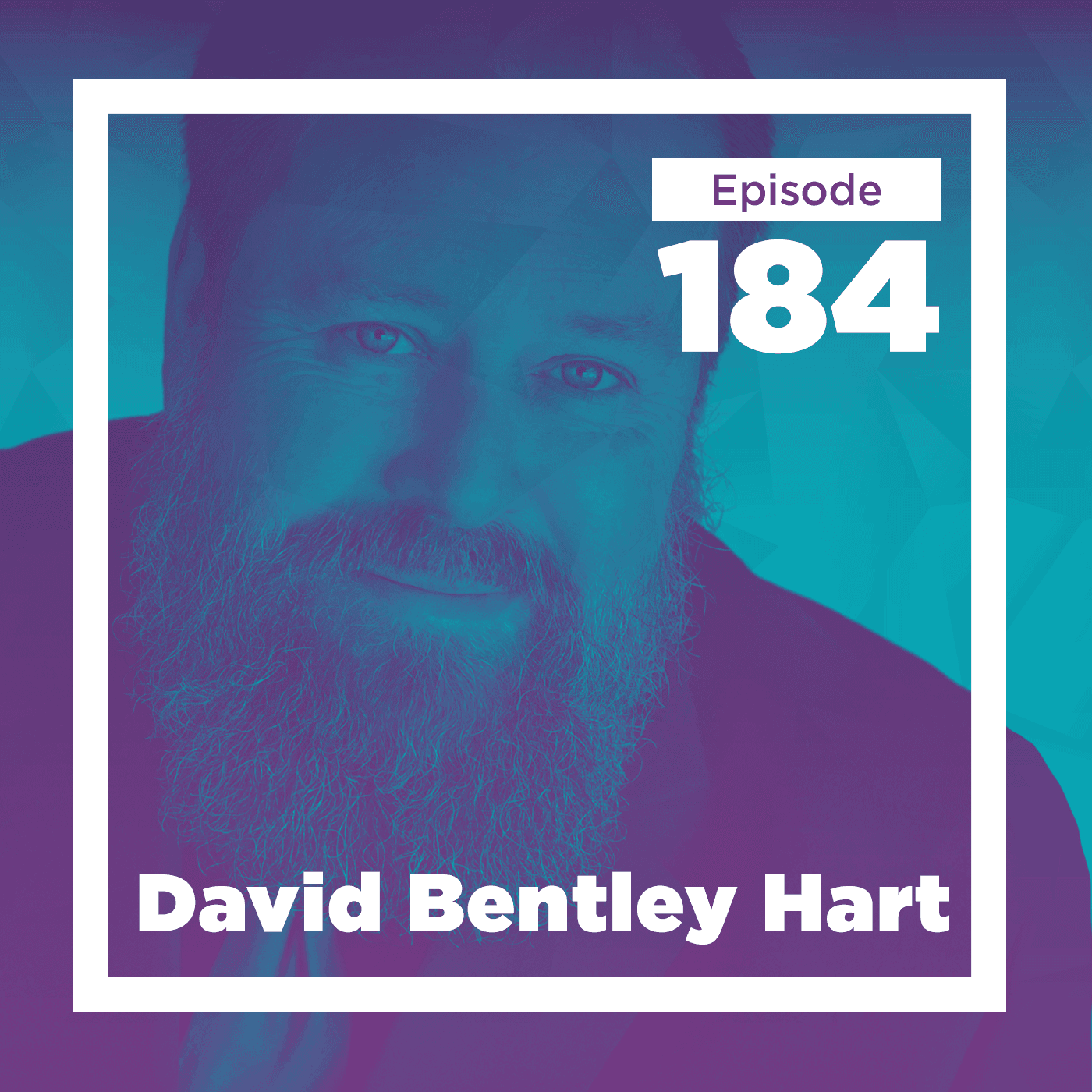
Podcast Notes: Conversations with Tyler - Episode with David Bentley Hart
Episode Overview
- Title: David Bentley Hart on Reason, Faith, and Diversity in Religious Thought
- Release Date: March 23, 2023
- Host: Tyler Cowen
- Guest: David Bentley Hart - An acclaimed writer, philosopher, religious scholar, and theologian with over 19 books and 1,000 essays to his name.
Key Topics Discussed Orthodox Christianity and Millenarianism
- Definition of Millenarianism:
- Commonly understood in Protestant terms as a belief in an imminent transformative event in history.
- Hart's Perspective:
- Orthodox Christianity is less millenarian compared to Protestantism; it emphasizes a spiritual life and mysticism rather than apocalyptic expectations.
- Orthodox traditions foster patience and a long-term view of spiritual life, focusing on moral obligations and charity.
Theological Patience and Political Implications
- Positive Aspects:
- Encourages a nourishing spiritual life that promotes charity and ascetic virtues.
- Negative Aspects:
- Can lead to complicity with oppressive state regimes, exemplified by the Orthodox Church in Russia as a propaganda tool.
Influence of Heidegger
- Heidegger’s Impact:
- Hart discusses how Heidegger's philosophy of nihilism and the instrumental view of the world deepened his understanding of Christian Orthodoxy, emphasizing the cosmic mystery of existence.
Divergence from Catholicism
- Metaphysical Differences:
- No notion of inherited guilt in Orthodoxy; sin is viewed as a state of alienation rather than guilt.
- Different theological understandings of grace; in Orthodoxy, grace is integral to nature rather than an external additive.
Challenges for American Orthodoxy
- Current State:
- American Orthodoxy risks becoming culturally Americanized and losing its distinct identity.
- An influx of converts from evangelical backgrounds leads to dilution and misunderstanding of Orthodox traditions.
Historical Context and Democracy
- Democratic Trends:
- Discussion on the historical governance of Orthodox nations and their correlation with democracy.
- Emphasis on historical accidents rather than direct causal relationships between Orthodoxy and political structures.
Views on the Book of Mormon
- Hart’s Critique:
- Expresses skepticism towards the Book of Mormon, describing it as historically false and lacking literary merit.
Faith and Reason
- Interplay between Faith and Reason:
- Hart argues that reason underpins faith; even faith choices are based on rational judgments, making reason ultimately paramount.
- Criticism of a dichotomy between faith and reason, asserting they should complement each other.
Reincarnation and Near-death Experiences
- Theological Considerations:
- Hart acknowledges the complexities around reincarnation within various doctrines, highlighting the need for careful interpretation.
- Near-death experiences are intriguing but difficult to parse objectively; some testimonies are compelling but not conclusive.
Future of Christianity
- Institutional Perspective:
- Hart posits that a brighter future for Christianity may involve a decline of institutional power and a return to the core spiritual tenets.
Key Takeaways
- Complexity of Religious Thought:
- Hart emphasizes the diversity and complexity within Christian texts, arguing against the pursuit of absolute doctrines.
- Understanding History:
- Historical contexts significantly shape theological and political landscapes; simplistic causation is misleading.
- Engagement with Other Traditions:
- Hart advocates for a rethinking of the concept of religion, suggesting that all traditions possess elements of human virtue.
Closing Thoughts
- David Bentley Hart's discourse on the intersections of reason, faith, and the diversity of religious thought provides a rich framework for understanding contemporary theological discussions and the evolving landscape of Christianity in a pluralistic society. His views challenge listeners to engage deeply with both their own faith and the broader philosophical implications of religious beliefs.
Additional Resources
- [Follow Tyler Cowen on Twitter](https://twitter.com/tylercowen)
- [Subscribe to Conversations with Tyler](https://www.mercatus.org/podcasts)
- [Watch the full video of this episode](https://www.youtube.com/watch?v=QPEhNqTuD0Q)
- [Read the full transcript with enhanced links](https://conversationswithtyler.com/episodes/david-bentley-hart/)
Written by AI. May contain mistakes. Listen to the episode to check what was said.
Transcript
Automatic transcript. May contain errors.0:04Conversations with Tyler is produced by the Mercatus Center at George Mason University, bridging the gap between academic ideas and real world problems. Learn more at mercatis .org. For full transcript of every conversation, enhanced with helpful links, visit ConversationsWithT Tyler .com Hello everyone and welcome back to Conversations with Tyler. Today I'm very pleased to be chatting with David Bentley Hart. How to describe David Bentley Hart? Well the person I know whom I consider to be the best read is David Gordon and David Gordon thinks that David Bentley Hart is the best read person he knows.
0:45David Bentley Hart is an American writer, philosopher, religious studies scholar, critic and theologian, he has authored over 1 ,000 essays, reviews and papers, not to mention 19 books, including a very well -known translation of the New Testament. The topics he writes on include Christian metaphysics, Orthodox Christianity, philosophy of mind, Indian and East Asian religions, Asian languages, classics, literature, music, and more. David, welcome. Thank you. Now I have to live up to that introduction. If you could explain to me as simply as possible, in which ways is Orthodox Christianity not so very millenarian?
1:26Well, it depends on what you mean by millenarian. I'd have to ask you to be a bit more. Say the Protestant 17th century sense that the world is on the verge of a very radical transformation that will herald in some completely new age and we all should be prepared for it. Yeah, Well, in one sense, it's been the case of Christianity from the first century that it's always existed in a kind of time between times, right? There's always this sense of being in history, but always expecting an imminent interruption of history. But Orthodoxy's been around for a while. Well, it's part of an indirated culture of grounded originally in the Eastern Greco -Roman world and has a huge apparatus of philosophy and theology, and I think just over the centuries has learned to be patient.
2:24The notion, the sort of Protestant Millenarianism you speak of always seems to have been born an out of historical crisis. In a sense, you know, the rise of the nation state, the fragmentation of the Western Church, it's always as much an effective history as a flight from history, whereas I think it fair to say that orthodoxy is sort of created for itself a kind of parallel world just outside the flow of history. It puts much more of an emphasis on the spiritual life, mysticism, that sort of thing. And as such, where's it still uses the language, your recognizable language of the imminent return of Christ, it's not at the center of the spiritual life.
3:11And how does that theological patience shape the policies of Orthodox Christian nations and regions? How does that matter? Well, it's been both good and bad, to be honest. I mean, at its best orthodoxy has cultivated a spiritual life that nourished millions and that puts an emphasis upon moral obligation to others and the life of charity and the ascetical virtues of Christianity this self -denial. At its worst, however, it's often been in accommodation with historical forces that are antithetical to the gospel too. I mean, it's often been the case in orthodoxy has been so. Let's say disenchanted with the millenarian expectation that it's become a prop of the state.
4:08And you can see today in Russia in which you have a church institution. This isn't to speak of the faithful themselves, but the institutional authority of the state of the institution rather of the church, more or less being nothing but a propaganda wing of an authoritarian and terrorist government. So it's, you know, it's had both its good and its bad consequences over the centuries. At its best, as I say, it encourages a true spiritual life that can teach one to be detached from ambitions and expectations and the sort of violent projects of the ego, but at its worst it can become a passive participant in precisely those sorts of projects and those sorts of evils.
4:59How would you say your study of Heidegger has deepened your understanding of Christian orthodoxy? A Heidegger? Well. Heidegger, right? Yeah. Who do you understand quite well? Well, he's one of them. Yeah, I'm the philosopher's over it. Well now there you're dealing, I have to admit this question comes a little out of left field, but with me, I never know which aspect to buy worse. Someone might be interested in a given moment, but with Heidegger, it's very ambiguous figure, of course. But he certainly was putting aside his own incredible moral defects for those who don't know. He was a member for a while of the Nazi party as much out of cowardice as anything else.
5:37but I think out of early on at least some degree of sympathy. But when he wasn't being evil, he was he was a very reflective philosopher on how we have arrived at what he considered an age of nihilism, of sort of an age of that values the will to power, the will to power of a physical environment above all other things without any sense of the mystery of being, the piety of not trying to grasp and control and reduce all of reality to instrumentality and utility. And he tells a very powerful story about the genealogy of Western nihilism, how we arrived at what he calls the age of technology in which everything is simply a project of the will and the whole of the world is nothing but a reserve of resources to be exploited for the purpose of acquisition and for the purposes of the will.
6:37Now, I don't agree with the whole story, but as I say, it makes one think about the genealogy of the way we see the world and see the world as desacralized and disenchanted. And that much of the appeal of, I suppose, Eastern orthodoxy to me in my youth was precisely that it was Christian tradition that emphasized precisely the sense of cosmic mystery of Christ and the cosmic mystery of the revelation of God in all things. And there's put this great emphasis on the notion that the heart of Christian thought is the idea of deification, of union with God, of a whole creation renewed in some unimaginable way so that a very popular image goes so that the whole universe is like a burning bush, you know, shining with the glory of God but not consumed.
7:29It's, you know, so I would say that if there is any connection there and since no one's ever asked me this before, I'm not sure there is, but if there is, then, you know, that you can see how someone who takes seriously the genealogy of nihilism that someone like Heidegger unfolds, fold might be drawn to a very robust, among Christian traditions, a very robust depiction of a kind of glorified reality in which the entire cosmos participates in the sacred mystery. You mentioned questions out of left field, who played left field for the Baltimore Orioles in 1970? Merv Retamond, or, well, I see, there would also be Don Buford sometimes played left, trying remember Paul Blair was in center still.
8:20And that was the last year that Frank Robinson was in right field. So if my memory is correct, it was usually Merv Ratteman or maybe the young Don Bale was up then. I'm getting old now. Do you know? I think of it as Buford, you know Blair in center Robinson in right, but I'm not entirely sure either. Well, I think in left field, Earl Weaver was one of the first really to platoon players and sometimes Buford actually play the infield. He was a much more versatile player. But yeah, I think Rathman was still on the team too. So let's say you're trying to explain to a Catholic in metaphysical terms where orthodoxy diverges from Catholicism, not the history, not different views on the papacy, but fundamental underlying conceptual differences on metaphysics.
9:07And as few dimensions as possible, where do you see that difference. In as few dimensions as possible. Well, for one thing, there's no history of the notion of inherited guilt. The whole idea of sin is very different. It's, you know, sin that were sort of born into a state of alienation from God and from the world and from our neighbor as a common Christian idea. But in the West, mostly just as a result of certain translation issues, but also because of the very powerful influence of the Lady Gustin on the development of Western theology, there came that somehow one is born in a state of guilt, which to be honest, was often considered repugnant in the East.
9:52Also, there was no theology then of predestination. This is often also regarded as a—and there was in Western Catholicism, albeit, it's a doctrine without a strict definition. It remains on the books, but it unlike Calvinism, Roman Catholicism doesn't insist that it knows what predestination means. But the real big difference, I suppose then the greatest difference would be the theology of grace. I mean that in the West it became more and more the case that grace was sort of treated as antithetical to nature. Grace was a principle over a gazed nature. It was, it was, if we're given according to a kind of purely predilective predestining will of God, whereas these that kind of opposition between grace and nature simply never took root.
10:44Grace was just a word for the way God deals with creatures, and it was seen as more continuous with nature that we're always already naturally oriented to union with God and that it's an unnatural impediment that separates us from God rather than a failure to receive a super elevating grace. Grace is how I put it this. In Western tradition, Grace became a very extraordinary gift, whereas in the East it remained an ordinary reality from which we were extraordinarily separated by a tragic history that had to be overcome. them. Does the relative lack of counterpoint in Eastern Orthodox church music correspond to anything theological or is that just historical accident?
11:28What depends on which church it all about, a contra -pond, a polyphonic music actually has a very rich history in the western, in the Russian, in the Slavic tradition, especially from the time of Bortiansky and others onward. I don't think so now. Those sorts of differences, as those sorts of accidental differences, there are the things that Orthodox polemicists like to focus on. Every little difference becomes a difference of incredible magnitude for those who are looking for reasons to dislike the other camp. But no, I don't think there's any significant theological difference there. And the Slavic tradition, as I say, is highly contrappontal.
12:08You know, rock mononols, church music. Sure. How does the Orthodox church in America avoid simply becoming an American religion, one of many others. So far it seems to be failing to do that. What's the reason for that failure? Why isn't it strong enough? For any number of reasons one, there's been a huge influx of former evangelicals into American orthodoxy, but the problem is, as orthodoxy doesn't have, most of the communion, unlike the Catholic church, doesn't have a protocol for receiving converts that's very clear. I mean, they just, so he'd come to the liturgy, ask questions, and after a year or so, your, your, your, your Christmas, or something.
12:51And the result is, is that many who come into the church come with presuppositions, forms, and very radically different tradition. I mean, fundamentalist, evangelicalism is a much narrower understanding of, you know, how much speculation is possible. They're not really prepared to look at a 2000 year history and see all the varieties. You know, this is the patristic period, and here's the scholastic, and the Russian religious philosophers of the 19th century were very different, and you know, able to recognize that a huge variety of views is, instead they tend to think in terms of a faith statement of the sort that an evangelical church.
13:32And to be honest, that's become such a dominant faction and so much American orthodoxy, that much of American orthodoxy is intellectually and temperamentally and socially and culturally just American evangelicalism plus saints and incense. And so I would say that I don't think the only way in which the orthodox communities have successfully resisted, this is also the degrees to which many of them have remained riddouts of ethnic identity. And that's not much better that too. So I would say on the whole, the jury is still out. I think orthodoxy in America may very well just be another American religion at the end of the day.
14:15Another generation or two and it won't be any, the only distinctions will be in liturgical form. If one draws a line down the middle of Europe with orthodoxy to the right of that line, And those nations seem to be much less democratic or democratic for shorter periods of time. Is there something causal going on there or is that just historical accident? Well, I mean, I don't know if orthodoxy as such is the issue, but I mean the history of those nations radically different in any number of ways. Some of them, in the case of most of the Slavic nations, have simply retained habits of governance and habits of social organization that go back to a very pre -democratic past.
15:02I don't know if there's any causal relationship between the kind of Christianity, because, of course, Western democratic institutions tended to go ahead and had with some degree of layacization, some degree of secularization. I mean, for the whole point of the French Revolution would be the overthrow of the LCM regime, which is both state and church, dealing with a kind of absoluteist, Gullican church, in a sense, that's a wing of government. So my suspicion is this is mostly historical accident, the cultural tendencies toward reaction in the East or mostly I just have to do with the material conditions and the political histories and the relative material isolation from the huge period of Western European expansion expansion of wealth, expansion of power, and ferment of social change and new ideas.
16:02It was simply the case that after the Middle Ages, early modernity, Western Europe was the center of economic and political power in the Western world. Well, say Poland, Slovenia, Czechia, which has a lot of Catholicism in their backgrounds, they seem to be converging on Western norms, living standards much more than say the EU members to the East, Bulgaria, Romania. Well, there are certain advantages to begin with too, but yeah, I mean better relations. Again, I don't think it has any particular, because it, to be honest, I mean, Polish Catholicism is basically culturally very much like Slavic orthodoxy.
16:49I mean, there you're going to find that culturally Catholicism and orthodoxy are closer to one another in many ways than Catholicism and the East is with Catholicism in the West. I'm trying to draw causal ties between what are very complex social histories. I just think is a mistake. There's no way of saying one way or the other. I mean Greek democracy flourished in the modern age for a while, after the Revolue, after Greek independence in the early 19th century, and Greece remains Orthodox too. And it's even more than Poland is committed to a kind of, a set of real democratic norms. In Poland, there are stronger reactionary forces at present than there are in Greece.
17:39What do you think of the Book of Mormon and what is it about the Bible that so lent itself to this new spin -off or startup? The book and I have no opinions about whatsoever. It's kind of silly. It's where it comes across to me, but I've only read it once. and the Bible, if you say the Bible, lends itself to spin off. So I mean, any religion that has tendencies towards the collapse of the difference and significance between history and eternity, it is always likely to inspire new historical projects that consider themselves. I mean, after all, this is something of the Abrahamic religions, is that they're sort of supercessionist in the way they proceed.
18:25I mean, even even within the history of Judaism before Christianity, it's one covenant superseding another than Christians claim that they've superseded the covenant in some sense. And then Islam is a supersession of the revelation with yet another revelation. So this seems to be just part and parcel of the whole Western Abrahamic or the whole Abrahamic religious tradition. So I suppose I would say that Mormonism is just another for example of the kind of new revelation, the claim of a new revelation. This is a general question I have about the roles of reason and faith in theological argument.
19:06So when I hear members of the Orthodox Church criticize, say, the papacy in ex -Cathedra doctrine, what they say makes perfect sense to me. They deploy reason, they have arguments of reason against the doctrine. But in other contexts, religions, including orthodoxy, they're quite willing to invoke faith. And so we have faith in whatever. So is it reason or is it faith that determines when an argument from reason or an argument from faith is appropriate? Reason. Reason. So reasons the bottom line. It has to be because even if you choose faith, you're choosing to believe something for reasons, even if you're not able to name those reasons yourself, some sort of compelling rational intuition has worked upon you to say, well, I believe I can trust this source.
19:52more than that source. So you may say that, oh, I'm having faith in what it's telling me, but you're having faith in that rather than something else because at some level, maybe a tacit level that you'd have a hard time laying out, you've somehow reached the judgment, and then it would have to be a rational judgment if your faith is of any meaning, that you trust this rather than that. So I would say that, but you know, what is faith? I mean, When you create a sort of division between faith and reason, you're assuming that faith is taking things simply on the authority of another blindly. But that's never actually bit in the definition that any religion, whether you're talking in the Western, when you're talking about peace, peace, and Greek, or shradda in Sanskrit, or any number of other words for faith, it usually means a kind of rational commitment to a certain path for which you have reasons, but those reasons in themselves don't necessarily arrive at a QED, but that as you advance on this path more, you're hoping at least things become clearer and clearer and you understand better whether you really believe it or not, but you have to commit yourself to the path in order to find a way.
21:06You know, the American philosopher William James spoke of the will to believe and he's often misunderstood as if all he was saying was It's okay to choose arbitrarily to believe something. That's not what he said. What he said was when you, you know, it says if you're in the fog saying you encounter two paths and you have a sense that one is more likely to lead to safety and the other to the edge of a cliff. You take that path but you don't take it so credulously that you'll walk off the edge of a cliff if you come to the cliff that the that the act of faith is a way of engaging the mind, engaging reason, so it can explore.
21:47If you don't start with some sort of trust, some sort of possibility of discovering the truth, then you never will seek the truth to begin with. But that's that search requires a kind of combination of a degree of rational judgment and a degree of trust. And you hope that the two prove to be in harmony. If If they're not though, if you reach a point where your faith and your reason come into conflict, then trust your reason. Always trust your reason, because otherwise faith is just epistemic nihilism. Nehilism, sorry, pronouncing the word both ways today is just, it's meaningless. It's just a brute exertion of the will at which point it's subrational and becomes contemptible.
22:31Always trust reason. but make sure that reason is tempered, not it's not petty rationalism, but it's a reason that really can see things in broad perspective and understand in a variety of modalities, don't treat reason as if it's a math equation. So given that perspective, does it ever make sense to think about the deity in probabilistic or Bayesian terms? Because it's sounding almost Bayesian to me. Well, the chance that the God exists to 73%. Well, you're actually God's faith is the question of existence of God. I mean, that's not what I was talking about. When I talk about faith, I meant a path towards the sacred.
23:14There, first of all, it's to define what the word existence means because God would not exist in the way that an individual entity, a finite entity exists. Right. So any, any, any rational arguments you have about God are based on usually a kind of modal metaphysics of the absolute, the contingent or so on and so forth. And, and there, I think reason should be fully engaged. The question is within a tradition, that's when things become a bit more stochastic. It's like, you know, does this, I can start, if I don't start from the premise that when I speak of God, that there's an absolute source and end to all things, then I'm not really interested in the question of religion at all.
24:02But if I believe that may be true, if I have a sense of it or if reason tells me it's so, that it doesn't make sense to believe in a pure physicalism or materialism, then where faith is engaged is in trying to make rational judgments about who can point you towards a deeper understanding and relationship. I don't think that's Bayesian so much as it's not a leap of faith in the vulgar sense, but it is a venture of faith in the sense that you can't start with perfect wisdom and knowledge. You are making rational judgments. And again, rationality is not a single univocal sort of thing. You can also have to do with intuitions, like moral intuitions.
24:49If you come up against a doctrine or a teaching or something that is repugnant to your moral reasoning, then that is significant. It would be deplorable of you to choose to believe it despite the councils of your moral reasoning unless you had really good reasons to think you'd been mistaken. Does the concept of reincarnation make theological sense to you? sure within the systems in which systems you're talking about, put a barva in Buddhism isn't about the reincarnation of a psychological ego. It has to do with an uncontrollable set of karmic consequences that lead to new phenomenal arising. So there you're dealing with one notion, the versions that you find in Vedanta and Bhakti and other things that we call Hinduism or also in Sikhism or Jainism, in which the Jiva, something that is kind of soul passes over, even that's not psychological Self that's that but nonetheless that that's a more substantial sense of the meaning of reincarnation Within those systems.
25:59Yeah, they make perfect sense But again people tend to to think they know what these terms mean and when And when you actually look at the traditions, they have to be qualified and modified and explained at length because you can't step out of an entire world of presuppositions and beliefs and concepts and just take one thing like that, put them off, again becoming image. I'm just choosing to use the Buddhist term. And think you understand what's going on is if you could just transpose it into say, I'm a Presbyterian, and I know what this means because you can't do that. What do you think of the testimonies of what are called near death experiences?
26:44Many of those testimonies coming from Christians, of course. Well, I don't know. Some of them, I think, are quite compelling. Especially the ones that involve being able to reconstruct facts about the surrounding the moment you've got death that you shouldn't have been able to know, like, who was out in the hallway, you know, things I, you can't, you can't completely deny it. But I, at the same time, I think also that you're dealing with a moment of transition in which it's very hard to separate the psychological from the objective. So I wouldn't dismiss them. Many of them, as I say, are quite compelling, but how much you can learn from them.
27:32It seems like a lot more testimony than say from the apostles or in the four gospels that if we wait testimony, one is led in many different directions, including, of course, the book of Mormon. Yeah. Well, I mean, who's test? Oh, come on. I mean, the book of Mormon is supposedly read off from these golden plates that Joseph Smith will show and able to read with magical spectacles plates that no else ever. So, you know, that's that's very much a kind of story. If you want to believe it, you can. But that's not, you know, that's not and you can say the same about everyone's testimony. I mean, I just the judgments you have to make at times just no one's testimony should be taken as an absolute authority.
28:18No one's because no one is free from psychological limitations. So even if fear she is perfectly sincere. That in itself doesn't prove anything, but you can make judgments on character, you can make judgments about coherence. At least, are again a relative judgments. They're not absolute. I think that when the story becomes, I don't know why you keep bringing a Mormonism. I mean, I have absolutely no connection. I've never written about it. By only connection, I've met a few nice Mormons. I've read the Book of Mormon once. I didn't find it particularly well written, but neither for that matter is most of the New Testament.
28:55And I think it's based on historical claims that are objectively false. So, you know, that they're these ancient civilizations and the Americas that just didn't exist. But I think the story of the Genesis of the Book of Mormon is a bit more incredible than say somebody in the first century writing down what his theology is based on, As in the case of Paul, obviously a person who got who, whose life was turned upside down by some kind of experience, he maybe he was a psychotic, I don't know. But you know, it doesn't seem that way when you read him, he's that there's some, there's some powerful spiritual apprehension that he is discovering about the love of God and the grace of God and that over many decades of self -sacrificing life leading ultimately to his death, he lays that out.
29:52Well, that's compelling to me in a way that other sorts of claims that seem more incredible aren't. In the United States, has progressive politics become the new version of a secular Christianity? Well, I don't know. I mean, I may some in some cases, yeah, in some cases not. I mean, it depends on what you're talking about in particular. I think that we have learned both on the, I think in America, but also in the West as such, just to a pathological degree in America, on both right and left, we've learned to start all of our conversations from a position of moral absolutism. I don't know if this has always been the case.
30:35I mean, there have been apocalyptic moments in American history before. I mean, we had a civil war, for instance, but at the present, it seems like both extremes speak in such strident tones of moral indignation that it is tempting to think that they're speaking out of a dogmatic impulse rather than a rational one. That there is a kind of religious intonation in the worst sense in our politics on all sides. Is the future of Christianity as an institution brighter or darker than it was say 20 years ago. Well, 20, I mean, 30 years ago, how about 100 years ago? A generation ago. I don't know. I mean, what would be brighter and darker?
31:20I mean, for me, what would be good? What would be bad? There are people I know, in fact, people near here in Notre Dame who are all terrifically intent on trying to revive a dying Christendom because they think that would be the revival of Christianity in the West, and they allied themselves to these reactionary figures like Victor Orban, whereas I, my idea, my ideal of what would be a brighter future for Christianity would be the final eclipse of that kind of conflation of Christianity with the interests of a particular civilization or culture and nation. I believe that's a profiteous corruption.
Read the full transcript
32:06So, bright in what way? I would say that in many ways, the brightest future for Christianity might consist in the death of many of its institutions and of much of its cultural power. The TV show, The Prisoner, how should it have ended? Ah, now that's an interesting question. The last episode, I will admit, is a bit of a disappointment, but I think it ended properly. I mean, I think Patrick McGuin made his point that number one is the self that we imprison ourselves before anyone else can imprison us. So I think the last episode would have been better had it been written as well as the one just before it.
32:49But you know, you can't have everything. I'm contented with the way it went out. This seems like a minor in a silly question, but it is true. You know, they did a remake for AMC of the prisoner some years ago. In the original, of course, number six, he escapes. Now, his escape is an absolute because he goes back home and it turns out still to be, in some sense, the village. He is still the prisoner of himself, but he destroys the village, right? Yes. In the new version, he saves the village and turns it into a kind of psychotherapeutic spa that you know some people require in place of the reality of this world.
33:33I found that a sublimely nihilistic conclusion. So the way it should have ended is the way it originally ended, not the way the remake ended it. Maybe that's a kind of woke ending, reflecting moral depravity that moral judgments are not complex and the self is unitary and everything is easy and you just have to pick the right side and you can set everything right again. Well what would be the right side. I don't, I mean, I, well, I don't think we know, but I think in the, the AMC remake, the implication is that it's easy to pick the right side. I just got the impression that it chose the therapeutic over the Nostek, that is that in the original program, it was consciously at times a Nostek allegory.
34:14In fact, there was one episode called The Dance of the Dead that just explicitly sort of invokes a Nostek language of, you know, that somehow we're imprisoned in a false reality, and that we should long for the really real at whatever cost, and should seek to escape from delusion. Whereas the new version simply says that in a sense of maybe there is no truth at all, there is no right side or wrong side, there's just the need for therapy to help us deal with the sense of alienation or discontent, and that of those two options, I prefer the former. Maybe at times, narcissism is too pessimistic for Hollywood TV and too in a gallotarian for modern progressivism.
35:00So you have to jettison it. And what do you replace it with? Happy ending. Yeah. Well, I mean, I'm not quite sure what your politics are. So I have no concern one way or the other about how it's viewed in regard to progressivism. I mean, I'm a socialist. So I mean, I'm perfectly fine. I'm not a liberal, but I'm definitely a socialist. So, my concern and yeah, narcissism and his classical statements to the degree there was such a thing. I want to point out that in scholarly terms, who knows? There's so many different schools that we've simply stuck together in cold -nostek that when you actually look at them, the details, much of what we call narcissism is just actually Paul Lyne or Joe Hennie and Christianity in the New Testament restated with an overlay of myth of fabulous.
35:55I think the Beyondist there's been kind of a vogue of narcissism in popular culture, not where you'd expect it, but like you know there were lots of films. Movies versus TV though, it's a big difference Matrix, right? The Matrix things, yeah, which were the, you know, not my not very good films, but the Truman show, which is just a pure, no stick allegory, Gatica done by the same fellow. And in television too, I mean, as far as I know, I don't, as you said, I'm watching often know, but I did a few years ago, what was the battle star galactic of the sci -fi version I actually got hooked on that and watched it through.
36:39And there are plenty of nasty things in that. But they ruined the ending in the final season, right? It's like the remake of the prisoner. No, no, I disagree there actually. I kind of liked the angels turning out to be real angels. But then again, it's been so long since I saw much, or maybe I'm misremembering how it ended. For me, the best parts were seasons one and two, where it stays a bit dark and nasty and problematic. Well, I'd have to go back and revisit it. I have to admit my memories not that sharp, which is the best Bob Dylan song. Blind Willie McTell. I might say Mr. Tamberine Man or Highway 61 revisited.
37:18Well, it all depends on which era you're in. Of course, there's stuff we grew up with. And so I would have said Mr. Tamberine Man up until and then Blind Willie McTell is sort of his revival period, you know, in Fidel's own. And then I like a lot of the stuff, an Omercy, they're the man in the black coat. So I'm afraid he's been around too long. You really have to say, what's the best vintage Dylan? What's the best middle period Dylan? What's the best revival middle period Dylan? What's the best late period? You know, but if I had to choose one to be played while my corpse is being marched in its coffin down Bourbon Street or something, I would go with blind Willie McTale.
38:05Why be so taken with the nation of Bhutan? There was a recent UN survey of happiness. Bhutan comes in 97. There's another recent paper, ranking nations for negative affect. You know, how much stress and hardship is in your life. Bhutan comes in 149, which is not well at all. I, one time you wrote quote, buton conforms better than any other state to my criteria for national greatness. Why not just protect buton? It's a failed state. Well, first of all, that's a satirical piece that was written so long ago that I'm surprised that anyone remembers it. My joke being it was a period when people were talking about American greatness as well before Trump and everything.
38:47I mean, this was something. Sure. There was a book and it was always being couched in terms of economic development, world power and all that. So I chose the most isolated, most militantly rural, most unworldly. Now, after doing that, of course, I had to say, well, then again, when I looked at again, like the treatment of Nepalese refugees in Bhutan was anything but admirable. and all that. But at the time, I was making a joke about what constitutes national greatness. And so the notion that you have a country that didn't have any television in it up to like a decade ago, and only needed one stoplight.
39:31And then they in the whole country. And then they removed it because it offended their aesthetic sense. It just seemed like a funny column with the time. But if you beat it by really willing to go to the mat defending Bhutan against, you know, all its critics. No, no, that was a satire. What do you think of Sarah Rudens' translation of the New Testament? I think it's awful. Why? It's just very bad. I just think it's barely literate. I think it's very inaccurate. I say this not as someone. I think she's done other translations that are quite wonderful. I think her translation of Augustin is the best in modern English.
40:07but I think her insistence on translating philologically in the sense of, you know, taking the meaning of words from their roots and doing other things of that sort all the way through was horribly ill -advised, and I think she also just doesn't know the period very well. She's a classist in one sense, but late antiquity and certainly second -temple Judaism and late late late late Antichristian or just not in her wheelhouse and there just so many things that she gets wrong. And I just think it reads exceedingly badly. I don't know what what what I agree with look to Mithy Johnson who with all the goodwill in the world just described it as a mess.
40:55What do you think goes wrong when that book is translated by committees? of the lowest common denominator wins out and that usually means the the the tacitly approved theology of the most unimaginative and historically uninformed faction in the committee. And there's a concern not to offend against people's piety even even when the text itself so you get translations that are not warranted by the Greek and they're not warranted by the history of the time in which the text appeared, but nonetheless are chosen because they don't offend against people's theological expectations. And that's simply, I think, true of every commit now.
41:37The King James is an exception only because it's based on the tin -dail translation. It wasn't really a committee project. The committee simply dotted the eyes across the tees, fixed a few things, did some goes and but that was first and foremost the work of an individual genius. Even then, the King James should not be used for theology. It's great literature, it's great liturgy, it's better than many later translations, far more accurate, say than a piece of rubbish like the new international version. But it's still a lot of its translation is based on later Christian doctrine, rather than on what the Greek actually says.
42:19What's the most important thing you learned about the New Testament by translating it. We're fools if we think we understand it, but I think even though I knew this, more than ever I came to appreciate the sheer diversity even in the first generation of Christians. I mean, this is not a unified text. It doesn't reflect a unified theology. What it reflects is many different reactions to an event of extraordinary mystery and power for those who are writing about it. At least especially when you're dealing with the Pauline literature, which is very early in the Gospels to are drawn from earlier strata of Christian literature.
42:58I mean, some of the latest of the second Peter there, you're already well into a period of hardening factions. But I think the thing that I came away with is that every attempt to ground absolute doctrine, fixity of dogma in the text is an absurd project because it's simply not there. It does not, it is not that kind of book. It is not an index of propositional content. What was the most difficult word of importance to translate? That's a question. All fails. God with the article as opposed to fails, but that's not the only one. They see there's a cluster of words here, panephema, the spirit. In the sense that there you're dealing with the word that in different contexts can just mean life or breath or the spirit or the spirit of God or the Spirit in you, and sometimes is used to mean all those things at once, because the very concept of Spirit and later antiquity, especially when there was an influence of say stoic metaphysics, was of a kind of element that it won on the one hand was intellectual on another was physical.
44:17You know, it was like the wind really can be called Peneva without it necessarily meaning something drastically different from spirit when we're speaking of intelligence or mind. And also because when you actually get to the way it's used in the New Testament mysteriously say by Paul, it's not clear that he makes the distinction that later tradition may, in fact, he doesn't, he clearly doesn't. That is the divine spirit and human spirit are absolutely separate realities. they're not in Paul, they often are one in the same or only slightly differentiated or differentiated within a prior unity. And you see this picked up in very early theology, like someone like Irenaeus for whom the human spirit is just the divine spirit.
45:06You know, I mean, there's no difference really to speak of between human and divine spirit. And then the way later translations dealt with this was again and again to make decisions that here spirit means the Holy Spirit, which we understand as in later Nicene terms as one of the co -equal persons of the Trinity. Here spirit means human spirit, here and that and so the translations capitalize and or add holy to you know and when you go back to the Greek it's simply not there. It's not talking that in that clear and precise way with all those distinctions in place. It's a much more mysterious word and is very difficult to put it in context from verse to verse to verse.
45:50And in some places, you know that the plural meanings or intended you had to use footnotes. Who's your favorite post -war European composer broadly in the classical tradition? The music that everyone else hates. Oh, the 20th. Well, they say, now that's very unfair because the late 20th century, the second half of the 20th century was a period of no particular style. So they're their composers who are neoclassical or neoromatic as well as, you know, the cutting edge off and guard. I don't have single favorite. I love Stravinsky. I love Ray von Williams. I think it's a wonderful period for music.
46:31I think it is too. It's a period of extraordinary riches. I love Takamitsu Turo. You know, I love I think the wonderful thing about the 20th century was whose age of global music was age Which composers were allowed to draw on the past and at the same time working in new idioms? I you know Benjamin Britain would write Neoclassically he would write he would even wrote some serial pieces, you know 12 -tone row he would write eight only all sounds like Benjamin Britain. It's all wonderful and or then he would draw for the Prince of the Pagodas, he would draw on Javanese Gamalan, you know, I love that.
47:07I love the music, the great composers of the 20th century. There was some rubbish. I mean, you couldn't pay me to listen to Stalkhausen, but I mean, and they're all these wonderful composers that get overlooked because of the decline of the cultural centrality.
47:30So, Hens, Germany. No, I don't have a single phase composer. I messied it. I would be one. I love going to live. And for more recent church music, what would you look to? More recent church music. Say the last 50 years. Dave Brubeck. Good. Which is your favorite recording of the Beethoven's symphonies? I see. I don't have a single one. I think the second Deutsche Gramma fun series with carry on for modern instruments for the 78 series, not the 63. Right. Very good. Okay. For original instruments, if the recording were better, I like, I, I like actually believe it or not, the Roy Goodman performance is, they're just too many.
48:19I mean, they're you're dealing with a repertoire that's been recorded so many times that the virtues of different recordings. things. We have to choose something a bit more reshershade like you. But among the, I mean, everything after they got over the ponderous, overly romantic style of Toscanini and Fort Foundler, and all they got back to, I, uh, Karyon made it more genuinely classical. And then the new, the, the original instruments approach, where they actually use, who's I'm trying to think how the British conductor who did those wonderful recordings using the guitar. Dr. Norenton. Thank you.
48:58Thank you. Doing the actual metronome markings of Beethoven. Absolutely. Absolutely. Hearing the music, realizing that it has all of the grandeur and fire and power of Beethoven also has the lightness of Mozart. The quickness, the agility. There are a lot of great recordings of Beethoven. But I am really glad we got over the almost vognary and approach debate over that was in place well up through the 1950s. Final segment of our conversation. David Bentley Heart Production function. How did you learn all those languages, you know? I just studied them. I know better linguists in myself in the sense that I know people who can learn to speak a language in like a few months and speak it as if they were native.
49:54I'm because of the way my brain is constructed. I have to learn the grammar first, do it, you know, learn this in text, I much and then learn it on paper and then learn to speak it. I mean, except for like the things I got early in school, I mean, you go to French class and Spanish class, you speak it before you really immerse yourself in the grammar. But my approach to most like, which is like the approach I had to Latin in Greek as a kid, I learned the grammar. So I think that whatever the case, I have a talent for languages, but I don't have, I still envy those who can just somehow absorb it without having to master the grammar first and then speak it like a native.
50:40I've known I know a fellow like that at Cambridge who now still live has like 32 languages under his belt. And which languages do you know? Well, if you do, we have time, you can tell us, you know, with varying degrees of competency Western and Eastern, I might say, English, but of course, French, German, Spanish, Italian, and not bad at Portuguese. Let's see, I mean, I'm lousy but competent in Russian. I had to study Hebrew, Syriac in theology. I had Greek and Latin from early on. I studied and I don't consider myself a master of, but I can read now among Asian languages, Sanskrit, Pali, classical Chinese, although I find it so no -mick at times, it's hard to be sure that you get the meaning right.
51:37It's amazing how many really variant readings you can get at the same, say Chinese poem by Levi and the same line. It comes out completely differently for different. And I'm still working at my Japanese. No, I know some British Celtic languages, kind of. I don't know if I'm forgetting anything or not. When I was an undergraduate, I thought I might be doing Native American studies. I worked on Spoken Shayan to be precise, but that's pretty rusty. How do you construct your media diet? What do you consume? You wake up, you want inflow, what do you do? Books. I'm still pretty much living in a different century in that regard.
52:25I do want, I mean, I will pretend I don't watch television ever. I do, I was really hooked on better call Saul, for instance, and breaking bad before that. But, you know, it's mostly books. I don't have a lot of subscriptions to magazines. I don't like the social media at all. I don't like the internet, even though I have a substark newsletter. But I see that as just a subscription magazine, digital form rather than print. How can they subscribe to you at the name of your sub -stack? Oh, it's called Leaves in the Wind. And how would you summarize it in a sentence? Well, all the things I write about, I write about there.
53:05It's not about one thing in particular. Over the years, I've built up a readership that's literary criticism, philosophy, theology, fiction. You didn't mention that at the beginning. I've also published five or six volumes of fiction. So at the sometimes short story show up on it. And this year I've been recording conversations with other writers and you know, it's for people just like to read without necessarily knowing what the topic is going to be in the next post. What's the outstanding theological problem that you think about the most? Relations with other faiths, you know, I think that we need radically to rethink the very category of religion that we've inherited in the modern age, this sort of anthropological notion that these are systems of propositions opposed to one another rather than as the ancient view would be, religion was a virtue that all human beings practiced in greater or lesser degree with greater or lesser understanding.
54:04But, you know, for instance, I don't write happy to draw on the Vedantic sources from India if they illuminate a question for me. And I think we do have to rethink all what exactly it is we're talking about when we talk about religion. The other thing, I guess, because I published that book a couple years ago that all shall be saved is radically, Christians radically need to rethink and go back to the original text and go back to the first century and rethink this grotesque notion of an eternal hell. Yes, you have a whole book on that, which I like very much. Final question, what will you do next?
54:51Well, what I'll do now. I have several projects going on at any given time. I've got a volume of short stories coming out at some point. I've got to finish a second sequel to a children's book. I wrote with my son, we're writing this equals, I was done, I have a book on philosophy of mine that's almost finished, it's coming out from Yale. So I never, I'm never just doing one thing at a time because I'm too, a jittery. If I concentrate on just one, one task at a time, I get depressed. David Bentley heart, thank you very much. Well, thank you for having me. Been a pleasure.
55:29Thanks for listening to Conversations with Tyler. You can subscribe to the show on Apple podcasts, Spotify or your favorite podcast app. If you like this podcast, please consider giving us a rating and leaving a review. This helps other listeners find the show. On Twitter, I'm Attyler Cowan and the show is At Cowan Convose. Until next time, please keep listening and learning.
From the publisher
David Bentley Hart is an American writer, philosopher, religious scholar, critic, and theologian who has authored over 1,000 essays and 19 books, including a very well-known translation of the New Testament and several volumes of fiction.
In this conversation, Tyler and David discuss ways in which Orthodox Christianity is not so millenarian, how theological patience shapes the polities of Orthodox Christian nations, how Heidegger deepened his understanding of Christian Orthodoxy, who played left field for the Baltimore Orioles in 1970, the simplest way to explain how Orthodoxy diverges from Catholicism, the future of the American Orthodox Church, what he thinks of the Book of Mormon, whether theological arguments are ultimately based on reason or faith, what he makes of reincarnation and near-death experiences, gnosticism in movies and TV, why he dislikes Sarah Ruden’s translation of the New Testament, the most difficult word to translate, a tally of the 15+ languages he knows, what he’ll work on next, and more.
Read a full transcript enhanced with helpful links, or watch the full video.
Recorded March 23rd, 2023.
Other ways to connect