
In short
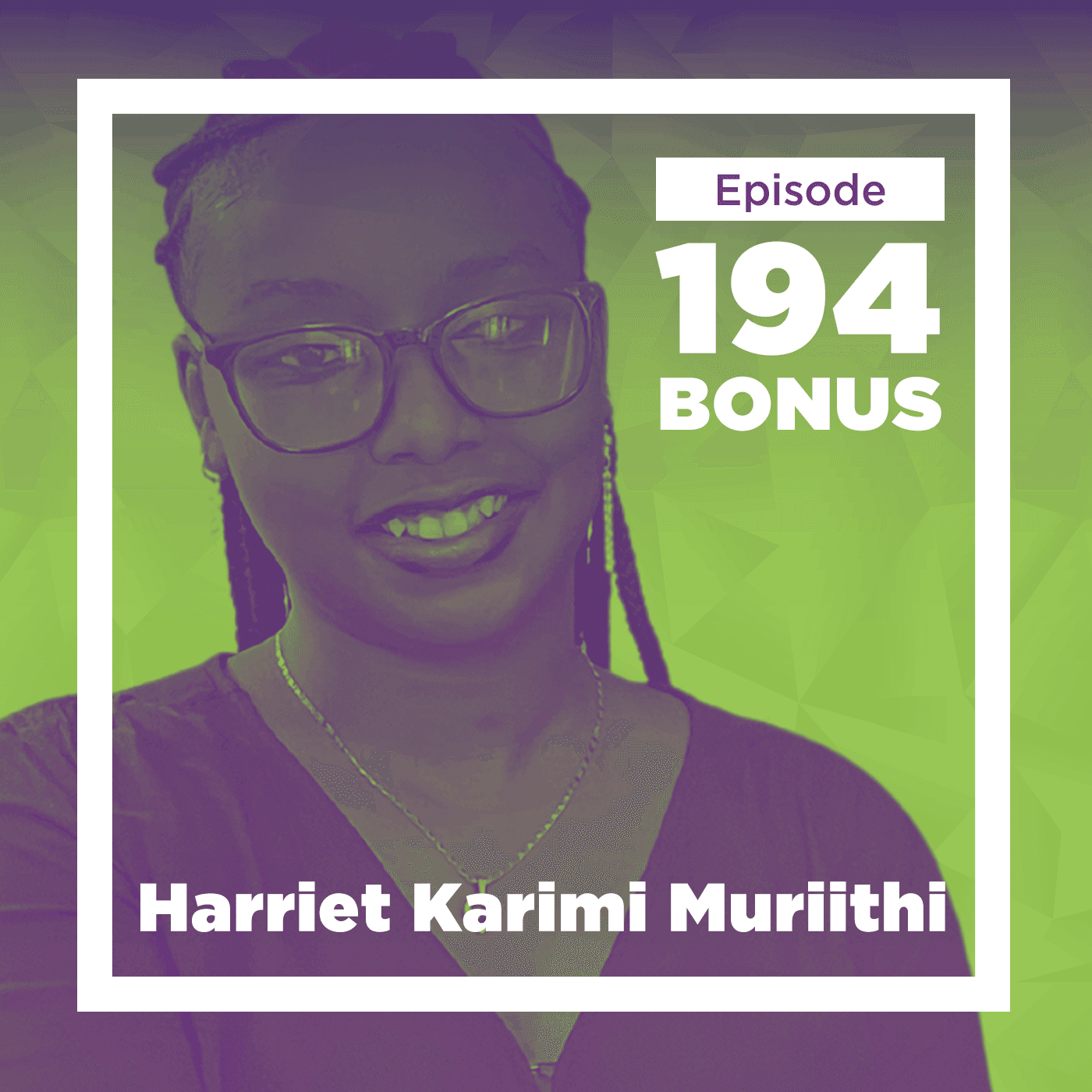
Podcast Notes: Conversations with Tyler - Episode Featuring Harriet Karimi Muriithi
Episode Overview Title: Harriet Karimi Muriithi on Life in Kenya Release Date: June 12, 2023 Description: In this episode, Tyler Cowen speaks with Harriet Karimi Muriithi, a 22-year-old hospitality professional from Nairobi, Kenya. The conversation delves into her experiences growing up in rural Kenya and moving to the capital, her aspirations, and insights on various aspects of Kenyan culture, politics, and technology.
Key Themes and Discussions
Background of Harriet Karimi Muriithi
- Age: 22 years old, works in Tatu City, a mixed-use development.
- Education: Studied supply chain management.
- Ambitions: Aspires to open her own high-end restaurant.
- Cultural Context: Grew up in Kirinyaga County, moved to Nairobi at age 10 for better educational opportunities.
Daily Life in Nairobi
- Opportunities: Describes Nairobi as a city ripe with career opportunities.
- Cultural Diversity: Talks about the variety of languages and tribes in Kenya, highlighting the Kikuyu tribe and its Bantu language.
Education System Insights
- Curriculum Discussion: Advocates for reverting to the older 844 education system, which she feels better prepares students in essential subjects like math and literacy.
- Impact of COVID-19: Shares that the pandemic delayed her education and affected the overall recovery of the Kenyan economy.
Use of Technology
- AI Tools: Leverages AI tools such as ChatGPT for daily tasks and queries.
- Social Media: Active on TikTok, where she shares her daily life and enjoys creating content.
Cultural Preferences
- Music and Literature: Enjoys a mix of Kenyan, Nigerian (Afrobeats), and Western music (particularly Beyoncé), and is an avid reader of fantasy and historical novels.
- Food Culture: Discusses traditional Kenyan foods, expressing a preference for beef over goat meat and sharing her experiences with various cuisines.
Women’s Rights and Gender Issues
- Perception of Women’s Rights: Feels women have made significant strides in Kenya but acknowledges ongoing challenges, especially in rural areas.
- Impact of Village Life: Contrasts the opportunities available to women in urban versus rural settings, highlighting the limitations faced by women in her village.
Political and Economic Landscape
- Government Critique: Criticizes the Kenyan government for economic mismanagement and inadequate support for small businesses.
- Colony History Reflection: Discusses the mixed legacy of British colonialism on current political and social structures.
International Perspective
- Cultural Observations: Shares her views on American culture and societal behaviors, commenting on the differences in respect for elders and familial structures.
- Travel Aspirations: Interested in traveling within Africa and to other parts of the world, particularly Italy.
Key Takeaways
- Ambition and Resilience: Harriet embodies the youthful ambition and resilience prevalent among Kenyan youth who navigate complex socio-economic landscapes.
- Cultural Exchange: Her experiences reflect a rich blend of traditional and modern influences shaping urban life in Kenya.
- Role of Technology: Highlighting how technology can bridge gaps in education and daily life, Harriet represents a new generation of tech-savvy individuals aiming to harness AI for personal and professional growth.
Conclusion This episode encapsulates a vibrant conversation that highlights Harriet's unique perspective as a young Kenyan navigating the complexities of contemporary life in Nairobi. The discussion emphasizes the interplay between tradition and modernization, cultural diversity, and the optimism present in Kenya's youth.
Further Resources
- [Full Transcript of the Episode](https://conversationswithtyler.com/episodes/harriet-karimi-muriithi/)
- [Watch the Full Video](https://youtu.be/MiV7QoBeEzo)
Ways to Connect
- Follow on [Twitter](https://twitter.com/cowenconvos) and [Instagram](https://www.instagram.com/cowenconvos/?hl=en)
- Join the [Discord Community](https://discord.gg/JAVWP7vTxt)
- Email: [cowenconvos@mercatus.gmu.edu](mailto:cowenconvos@mercatus.gmu.edu)
This episode is a testament to the dynamic and evolving narrative of modern Kenya through the eyes of its youth.
Written by AI. May contain mistakes. Listen to the episode to check what was said.
Transcript
Automatic transcript. May contain errors.0:04Hey everybody, this is Sam, one of the producers of Conversations with Tyler. Today we're releasing two bonus episodes to go along with episode 193 featuring Steven Jennings. These two episodes show fascinating elements of the daily life, the culture, and the politics of Nairobi and Kenya as a whole. In this episode, part 1, you'll hear from Harriet Marathi, a young woman working in Tatsu City. A 5 ,000 acre mixed -use development just north of Nairobi. After this episode, make sure to check out part 2 here from the perspective of an elder, Kataigatengi, who also works in Tatsu City, for a contrasting perspective of the rapidly developing country of Kenya.
0:44Now onto the show.
0:50Conversations with Tyler is produced by the Mercatus Center at George Mason University. bridging the gap between academic ideas and real world problems. Learn more at mercatus .org. For a full transcript of every conversation enhanced with helpful links visit ConversationsWithTiler .com Hello everyone and welcome back to Conversations With Tyler. I am sitting here right outside of Nairobi, Kenya in Tatu City and I will be speaking with Harriet Morethi. She's a 22 -year -old toastess and waitress. She works at a restaurant roast by carnivore located in Tatu City. She's worked there for a year and a half and she has strong interests in the hospitality sector.
1:39She studied supply chain management at the Kiyambu Institute of Science and Technology in Kiyambu County. She loves reading books, watching movies, and also traveling. She comes from Kirin Yaga County. Her village is called Kaurumandi. It's near Mount Kenya. I am told the area has spectacular views, especially in the morning. It can be cold, but it's ideal for cash crops such as coffee and tea. She is a Kikiu speaking the Bantu language, and that is one of 42 tribes in Kenya. Harriet, welcome. Thank you so much. What for you makes Nairobi such an interesting city? Why is it the place you chose to live?
2:26Nairobi just has so much to offer in terms of opportunities, career wise. Also it's a very nice place to be in Nairobi. And the part of Nairobi you live in, why did you choose that part of the city? I think I chose because when it was close to the school where I was and now it's close to the place where I walk so it's convenient for me to move around. And languages you speak Bantu, right? That was your family language? Yes it is. English, obviously, and you speak Kiswahili? Sure. Any other languages? Not for now, no. What else would you like to know? Maybe a bit of Italian. Italian? Yes. Have you ever been to Italy?
3:11No, but I do have a friend who just moved in there like last year. If you dream of going to Italy, what do you think you will see or do? I will say it's the views for me and I also know it has a variety of job opportunities around that place. Also the pay can be quite good more than it is here. Do you eat Italian food in Nairobi ever? Not really. It's very good, so if you can get some, I like pasta very much. We do have pasta though. And the artworks in Italy, they're very beautiful, very interesting to see. Sure. You say you like to read books. What are some of your favorite books or kinds of books?
3:54I will say fantasy, history, adventure. Yeah. What would be something you would read in fantasy? Let's see, Dinkun's would be my writer to go all the way. Yeah, his books actually he covers almost every range that I actually mentioned. Yes. And for history, what do you like to read about, about Kenya or about Italy, other countries? History is quite interesting because actually to specialize in Kenya, we have different tribes and they all have different histories which can be actually fascinating, something that you didn't grow up with or did experience on your way growing up. How do you think about what makes Kiyo tribe different or special?
4:43I will say it's special because Kikoyo in general is a bunch of language, but it's divided in different mode of languages because we can actually speak Kikoyo but different versions of it, maybe from the intonations, to the way you communicate, and to different words, to mean the same thing. But say the culture, or the personalities, are they different? For Kikyu? Not really. Not really. Say, there's other people in Kenya. Yes. What are you most proud about when it comes to Nairobi? I'm proud about... The growth I have seen in Arabic grow since I learned. How old were you when you left your village?
5:33I would say I was 10. So that was 12 years ago, that's a long time. Yeah. And what made you decide to leave? I won. The reason why I left my place was I was offered a sponsorship in a school around Kittangela. Yeah, so I left for school and given that you have to choose high schools around your area, I chose around Nairobi and that is how I found my way in Nairobi. And that's because you're ambitious and smart. Yeah. And did your parents come with you where you came here at age 10 alone? No, my parents were left back in Kirinaga but I used to live with my aunt and uncle. And they took care of you?
6:19Yes, they did. And how many brothers and sisters do you have? I only have one brother, way too. And he's still back in the village or he came here or? No, he's still back in the village. And what does he do? I still in school, he's that 10 years old. 13 years old, younger brother. Yes. When you see families in Nairobi, a lot they only have two children. You're a part of a family of two children. Do you think that's the future of Kenya? Yeah, because the economy is quite hard as it is. And having more children is the one that is leading to all these street children. A lot of people in not good businesses like theft and stuff.
7:07And if you think of your future, do you think you want two children or something different or maybe no children? I'm okay with two. Two, yeah. Yeah, I understand. What do you watch on YouTube? I do watch podcasts. Yeah, podcasts, story time. Which podcasts? This guy's... Can you podcast or American? I know these huge guys in America. Like Joe Rogan and Tim Ferris. So yeah, like those ones, but I can't recall the names. What do you find interesting about it? Like what do you listen for or what topics? They're evolving technology that is coming along. You could say the AI, you can see the people who are privileged or like they have money, they help a lot of people.
8:00They just create a random way of reaching out to people who actually need their help. So you're interested in tech. What social media do you use? So, should media we do have a TikTok? Yes. We do have Instagram, we do have a YouTube WhatsApp as well. But which do you like? What's your favorite? TikTok all the way. Because it's more fun? Yeah. You make TikTok videos? I do. I actually do. And can you tell us how to get to them? Sure. What's your side address? It's Hazel. Hazel. Yeah, Hazel Jones. Hazel Jones on TikTok and what are your videos about? Mostly it's about how I spend my days and my walk I'd roast.
8:47Yeah, about how I go about my days. And you do these in English, not bento or both? Both depends. Sometimes it's dancing. Yeah, it makes it interesting when you have a little bit of everything. So you'll dance and then you'll talk. Yes. And your friends watch the videos, many strangers watch? They do. They actually do. When you listen to music, what do you listen to? For me in music, it's about the message conveyed in the music. I'm more of an old soul, the West Life kind of vibe. So you listen to rhythm and blues? Yes, I do. Beyonce? Of course. Is your favorite? My all time favorite. favorite.
9:32Yes. The Lemonade album by her is one of my favorites. Oh, that is an amazing one. And there's a new one. I forget the title, but I think that's quite good. It's a 1970 sound for a lot of it, a lot taken from disco and earlier music. Okay, I'll be sure to check that out. And in Kenyan music, what do you listen to? I used to listen to a bit of bongo. You know, bongo? Of course. Yes, we do that. We also do that right now. Genghetun, Abit, it's the clubbing vibe. Do you listen to Nigerian music? Yeah, they are Afro -Bits. That's very popular now, also in America. Really? Absolutely. A lot of big Nigerian stars now in the US.
10:21On YouTube, most of all. That is interesting. And you go out to clubs at night? Sometimes I do, yes. And that's to hear music or to meet people or how do you think about it? Just for fun? Mostly it's more about having fun. Just letting loads a bit from the normal schedule and work and everything. Also it's a nice way to hang out with friends. like you all can catch up and talk about what has been going on because we all are in different parts right now. Can you tell us a little about the restaurant where you work? Sure, the restaurant is roast by Kaniwore. Right now I'm the waiters, Troghostas, but Hostas is my main thing.
11:08I just help out a bit in service interacting with people because as a Hostas, In overall, I manage and make sure that all the guests visiting the restaurant, they are served quite right, they have everything they need. Yeah, and just checking up on them everyone's in oil. So you have to oversee the other staff and make sure they're working well? Yeah. What's the main mistake sometimes they make? I would call it a mistake, but when we are a bit overwhelmed, we have like five, six your handling and they all want your attention. So you can be there all at once, so somebody has to step in to help out.
11:49And that's you. Yeah. What kind of food do they serve? Mostly it's about meats. We have all five different types of meats. Do you serve game like ostrich or just like beef chicken goat? Right now we're doing the beef chicken goat. But I know main restaurant in Canivo, They offer all that the world even the crocked out. Is goat your favorite meat? No, I'll go with beef. Beef? Yeah. Goat is more like traditional meat, right? Yes. Irritual ceremony. Other people prefer goat? Yeah, I think they do. Because depending on the turn up I see at work on a daily basis, many people prefer to go for the good that age.
12:38Do you like Indian food? I hate the spicy parts. Too spicy. Maybe you don't like it so much. Yeah. You like Ugali? Of course I do. That's the main, like your staple food for breakfast or? I wouldn't say that. I would say I'm more into rice but I do love gali because where I'm from rice is like really available because we just around the moai region and that is where you get the best rice, the pejori rice. That's a little unusual for Kenya, right? There's more wheat here than rice overall. True, but the region where I come from is more rice. More rice. Yeah. That's great. Have you ever had like jala rice from Nigeria or Ghana?
13:24No. That's a good dish. It's hard to make, but I make it very well in Nigeria. Okay. Yeah. And the job you have, why did you take that job? Okay, I took the job because one am passionate about the hospitality industry. I love the way you go to a place that is not your own and you meet different people and you get to get a treatment that will make you remember the place and want to go back there over and over again. Also in restaurants, that is where you find people mostly want to unwind about their days. So the people can be quite It's an interactive and it's amazing. You get to interact with different people from different places.
14:10How ambitious are you? I want to scale over one to ten. I will say an eight point five. So you want to own your own restaurant someday? Of course, that would be a dream come true. And what kind of restaurant would it be? I want to go for a high -end restaurant. And it would be Kenyan food, yes, or something else. Food from your village, a lot of rice, or what's your dream? I will have a mix of everything, more like giving the people what they want. Because from where I'm at, I can be able to see what it is that people love, what they like. I can visualize on that. You think you're a good people person, like very friendly, cooperative?
14:58Yeah, I can say that about myself. A good boss. Yes. Are you good at getting mad at them and firing them if you need to fire them? Oh, not the firing pot. The one I leave it to the big bosses. But if it's your restaurant, you are the big boss. Yeah. I also love giving people chances before I am done, completely done. Why do you think the cost of living has become so much harder in Nairobi in the last few years. The government. What do they do wrong? Everything, I just have a million questions I would like to ask them because the management controls everything, the government governs everything.
15:43So they are the ones who are calling the shots and right now what they're doing, they're pressing on people so much. So you don't think they're running the country that well? Yeah. And do you think it's a question of voting for some other party or do you think deep structural changes are needed? Both, a little bit of both. We could use both because right now we need a complete change around the governments. We need to switch things up a bit so we can run smoothly like we used to, our mailbox. If people try to start a small business, do you think it's very hard? they need to get a lot of permits, spend a lot of money, get licenses, or is it easy?
16:29So if you went to start your restaurant, how hard would that be? It would be a bit hard, I would say. I actually tried to start selling clothes, a while back, sometime last year but one. And it was a bit hectic. One reaching out to people second before finding a spot and the permits as you said. So you find the conjure people as they call them. They are quite distracting for the people who are trying to start up their businesses. And you're clothing sales. Was it from a physical store or online? A physical store. I used to do physical and also what's up is to help me a lot by then reach out to my friends, reach out to people from school.
17:12You talk a lot on WhatsApp? Yes, I do. Yeah. Yeah, so you're very extroverted. Yeah, can be extroverted and introvert, because I'll rather be indoors all day than go out and have fun. Why would you rather be indoors all day? What's your thought there? I enjoy my company and movies. Yeah. And the movies, it's the storyline for me. When I start a movie and I love the storyline, I just want to go with it till the very end. What kind of movies do you like? A little bit of everything. It's the storyline for me. If it's drama, if it's horror, if it's a thriller, if it's fantasy. But is it like Bollywood movie, Nollywood movie, Canyon movie, US movie?
18:00Holywood, Nollywood US. All of those. Yes. And you have like a favorite movie of some kind? Right now what I've been following up on is power. Power, political power, or you mean just people who are strong? It's the storyline for me because the power started when I was quite a bit young and I have seen the people who are acting grow till date and they're still doing it. So I've seen them growing that industry and the storyline is quite captivating. You mean electrical power? No. Just political power. Yeah. So you like movies about political power? Yes. Do you think power corrupts people? Oh, it sure does.
18:46Because when you really want the power, you have to go through extreme stuff. And the people who come out of that process, they care too much about power, maybe. Yeah. You have mobile smartphone, right? Yes, I do. How much time do you spend on it? Given that I work for like 10 hours in a day, I will say spend like 4 -5 hours maximum. And you think that's the right amount to little too much? It's too little sometimes because when I'm tired from work sometimes I don't even look at my phone. I just want to get to bed and sleep. But it makes you happy when you do it. It does. And what kind of phone do you have?
19:30I have a techno, Spark 8C. And that's the Android system or what? Yes it is. And where is it made? China? Yeah. Yeah. Mm -hmm. You see a big Chinese influence in Nairobi? Yeah. I can say that. How do you think that's going? For me, I don't think I have much to say about it. I'm just happy everybody is trying to find the way. Because when they come and they make things a bit cheaper for us, that is exactly what we need. And they help create jobs, right? Yes, interesting. Have you ever been to America? No, I haven't. What's your main impression of it from what you see? You can tell the truth, I won't be offended.
20:17I think it's a nice place, but I will say the blending in or twice if fitting in, before you actually do familiarize yourself with everything that goes on around, that could be quite a challenge. Do you think we're crazy? Sometimes when you all go out on the black people, yeah. Do you think we don't respect our parents enough? No, I wouldn't say that because it's all about the upbringing. Yeah, and it happens in every place, different countries. Yeah. And the race problems in America, what do you think they come from? Technology. Have some technology. Because your technology is more advanced. It is way more advanced than it is in other places.
21:09And you think that increases racism in some ways? Not really. But the platforms, the fact that nobody knows who's talking to who, it makes people have the courage to speak out what they want, and not everything that they do speak out is good. And then they become worse maybe over time because you're saying too much. Including messaging services or online. Yeah. Do you think the world will fix that problem or what do you expect? The world can fix it but it all starts with an individual because once you want to change it and you influence the people you're hanging out with or the people you have around, it goes like that and maybe with time we might see some changes.
21:58Are you an optimist about Kenya? Yes, I am. Do you think you'll live here your whole life or you'll try to go to Italy or somewhere else? I would remind traveling but Kenya is the place I would like to be. Like for leaving, Kenya is the place to be but I would like to visit other places. You like the climate here. Everything about Kenya is amazing. The people, the food. I especially the food. But not the Indian food. Not the Indian food. And in the food, have you seen that change in your lifetime? For the food. Yes. So you've been in Nairobi 12 years. How is it changing? It is changing quite a lot because with time the people are forgetting about their indigenous foods that we used to get at home.
22:51Right now around Nairobi given that it's more residential place. You don't find a lot of places where people want to grow this stuff and the thought of getting them from the villages and transporting them to where you are can be quite hectic because some is spoiled on the way. The budget may be just not pocket friendly. So, yeah, people are more reliable on the junk food parts around Europe than it is around the village areas. Do people here think about the British much? This was once a British colony? Is that an important issue? Or are you all forgotten? History taught us a lot about what happened in the past.
23:33Yeah. But with time we have seen the changes and by now people have adjusted to the day to day living. Do you think being a British colony was good for Kenya or bad for Kenya? Not so good. It is an in -between because we all had something to learn. Like the Christianity mode came along that time. And yeah, I used to go to learn something from them. But they treated people here very badly, yes? Yes, they did. Do you go to church? I do. Christian? Yes. Which branch? I'm a Catholic. What makes Catholic appealing to you? The unity, there is no much diversity as it is in the protestants, because whatever is being taught in the American church, whatever is being taught in the village church, we We have the same Bible, the same readings, scriptures for every Sunday.
24:33It's programmed that so long as you're in the Catholic, you're getting the same information. Do you think fewer canyons are going to church than before? Yes, I will say that. And that concerns you or you think it's okay? It does because it's not me because I'm also affected because I work six days in a week and Sunday is one of the busiest days, you can never get enough day on Sunday. So personally for me, I would say, it has affected Kengans a lot. Walkwise. Yeah. If you marry someone, you want your husband to be religious, Catholic, or it doesn't matter so much. It doesn't matter so much. Just to feed a good person.
25:18Yeah. There's this cult in the South of Kenya, Paul McKenzie. I read about this in the newspapers. How do you understand that? What's your sense of what happened there? That's a tricky and interesting topic at the same time, but I really don't get what teaching it is that this people are getting to the extent that they can go and undergo the fasting session. And their leader is not undergoing the same thing. You know, that is something that is controversial. So it is weird. I'm not in support of it. Yeah, we've had things like that happen in America, of course. What do you think of women's rights in Kenya?
26:03Are they strong enough? Yes, they are. How could women be treated better? Nothing, I will say that is not being done right now. So you think it's really pretty good? Yeah, it is. Because in terms of leadership, we're given equal rights, in terms of speaking our minds out, it's allowed. I think it's quite okay. You just need to walk your way up to the top. And then for women, you think of the same chances as men? Yes, they do. Yes. Are you worried about any of Kenya's neighbors? So there's Somalia, Ethiopia, a lot of fighting. Does this concern you or it feels very distant? I wouldn't say it's distant because every canyone is a human.
26:50And I believe so long as no one is trying to attack the other one and we're all trying to live in peace, everything is going to work out quite fine. Because it's all about peace and the humanity and the friendship between the countries. That's a very Catholic view, right? Yeah, it is. And can you take a lot of refugees? How do you think that is going? I'm not sure how that is going to be going in the next few weeks or months because with the G -Moo cutouts, I don't know how that is going to work out. How is it working out with Uganda as a neighbor? I don't know how they handle it. I haven't read much about it.
27:35But if they're doing K, think that's good. But do you worry that Kenya is better run than most or all of its neighbors and that you will receive a lot of problems through your borders? No. You just think, can you will be safe, it's strong enough? No. But I wouldn't say the management in Kenya is quite as good as our neighbours around. And also we're all walking away to try to improve lives around. What would you do to improve the schools here? The schools curriculum. What would you change? I will take it back to the 844 system. And what is that system? Right now what they're doing, it's called the CBC.
28:26see they have a variety of things they're teaching in schools, some don't even know teachable before, they even teaching PE in schools nowadays. And that's good you think or no. It is okay but right now what people need is to go on with what they used to do. You mean stricter, more math, more reading and writing? Yeah. Just to make sure everyone can read and write very well. Yes, I will say that. How good do you think your school was? Okay, I have been in different schools in primary and secondary hours in one, but schools were, well, do I say it? It all depends on the schools because we have the public sector and the private sectors and the token never much, cannot much or even come close.
29:27Which is better? It is not better but it is okay. But of the private, the public, which of those two kinds of school gives you the better education? The private, of course. Private. Yeah. How is it you ended up curious? From from your family, from a teacher, you were born that way. For me, it just wanted to see more than just what was around me. And coming to Nairobi was the best thing. If you were to travel somewhere else, but in Africa, where would you want to go the most? In Africa. We'll go with Uganda. Yes. Why Uganda? It's just a thing about Uganda and there's way of living days not as expensive.
30:21Yeah, the people seem very friendly when I meet them other places. Yes. You have that impression? Yeah, people can be friendly but it all depends on the approach. And if you think of visiting somewhere in Asia, where do you think of going? in Asia. That's a funny one. Let's see. That's a tricky one. I'll have to research on that. When COVID came here, how bad was that for you? You couldn't go outside, you couldn't meet with friends or how was it? Or maybe not so different? How would you describe it? It was quite hard and it actually delayed my school year. I had to extend time in school, comparing to what I will have.
Read the full transcript
31:10And it was tough. It was tough times. Do you think the country is over that? Not really. Not really. So people are still depressed or upset or frustrated. Yeah, people are now trying to find their way back because COVID really affected a bunch of people. Many people became jobless, Yes, relating with one another became an issue because of the social distancing. Yeah. And you stayed here or you went back to your home place? Actually, did both. I went back to my place, but I also came back to Nairobi. Yeah. In your village, do you see large animals very often? Yes. So you see lions, elephants, giraffes?
31:58We do have elephants, we do have hyenas, not all the animals are there, but we do have some of them. And you've seen them so many times, you're not excited or you're still excited when you see them. It's exciting because you know, you know, he used to sing them on a daily basis and it's always fascinating to see animals. Are any of them dangerous for you? Yes, they are. You know, our place is near Mount Kenya, like I said, and sometimes they run away from the forests and they're coming to pupils, shambles to eat. So it can be a bit scary. And which one is the most scary? The elephants all the way.
32:42Because they're so big and strong and they might just step on you. And they're fast. These things can chase you so fast. Yeah. Are the hippos scary? Yes, they are. They are scary, but you don't get to see so many of this around Kirinaga. There's just a lot more elephants. Yeah. How do you think your village is doing in terms of its economy or people getting richer, happier, or do you think it's stuck? It's stuck. I have been there I like a couple of times and I can't say I have seen as many changes as I would expect to see in that span of years. Why do you think it's stuck? The curious people leave?
33:29Yes, that is one. And the people are a bit closed minded about opening up their minds to things. They make it more superstition than it should be. So they don't have so much Christianity, they have older beliefs? Yes, I will say that. Like what would be something they might believe in? Let me say like, in case you're having disputes or let's see, one, when you see an hour, they say that somebody's going to die or something. Right. And they believe it. Yeah. Yeah. And sometimes it actually happens we had enough. And how much of your village is Christian?
34:19Everybody. So they blend Christian and the earlier beliefs together. Yeah. How are women's rights in your village do you think? The people have not opened up their mind as they should, like I said. So for the women around that place, it's more like a home -based thing. Not many of them go out to look for jobs or even want to do much about studies. They just know they should stick around at home to help their husbands and all and raise children. So not so much opportunity? Yeah. But Nairobi is much better, you think? Yes, it is. Yeah. Yeah. And you think you'll always live in or near Nairobi? Always could be a tough time, but...
35:08But mostly. Yeah. And what do you see if Tattoo City, you work there, right? Yes. And you're optimistic? Yes, I am. Very much so. You see a lot of progress, jobs coming, people visiting. Yeah. Like see a good chance to meet you. Yes. Yes. Maybe your restaurant will be in Tattoo City sometime. Yeah, maybe, hopefully. Will you encourage your brother to move here? Yes, I will. I will. You think he might? Yeah, he is very much interested. Did you or he ever think of moving to Mombasa or some smaller city? Or you just think it has to be Nairobi because it's the best, the biggest? It is all about giving a place a chance, because coming to Kambur for me I mostly came because of school around the Kambur Institute and me moving to Tatto City was close at school and still close at where I walk.
36:11What is Kambur Institute? I it's a long Kambur, it's a college. And what is it they teach? Mostly it's also more of the physical kind of stuff like they have business courses. Like how to build things? Yes. We also have the hospitality in the hospitality there. They do teach hospitality. Yeah. So it's all worth it. And you studied hospitality. No, I haven't. You want to or you think you know enough already? I would remind you because it is something that I am passionate about, but what I did in school was the procurement, the supply chain management. What did you learn from that? There's a lot and there's procurement in almost everything.
37:02Be it hospitals, be it companies, be it the hotels, be it schools. Procurement is everywhere. And it's fascinating how people do that. Do you think you need a degree in hospitality to advance further or you think you can advance just with experience? Now school is important. The school beat is important because the papers will also help a great deal. But it's all about it all narrows down to what you learn on the ground because mostly what is in the books is not what normally happens in the places of work. It's very different. Do you think you'll go back to school or it's too much a waste of time?
37:47I will go back to school. But first, I want to learn more. Learn more on the job. What kinds of things do you want to learn? Interacting with people sure takes a lot of courage and humility because not everybody is quite friendly. Some people just come, like I said, they want to unwind their days and sometimes they're not that good because they can be harsh at times. So that part world is something that I would really like to impound on the humility part because it's a bit tricky. I will say that. What questions might you have for me? Do you like it in Kenya so far? Well, this is only my second day.
38:37So far I like it very much. The green vistas are very beautiful. This part of Kenya is quite peaceful. I've had very good food. It's been good to see Stephen again, but most of it I haven't seen. So I'm going on safari in a bit. My wife is coming tomorrow and she will join me here. I want to come back sometime and see the coast, see the north. So this time I will only see around here and then Safari. Okay. And for the people. People are very friendly here. And it feels easy to me. Okay. That is great. And for food, what is one thing that you would like to try? Maybe the meat. I once visited Tanzania and I very much liked the Ugali.
39:31Now, I don't know if it's the same here, but I go to these meals and westerners, they feed me everything but Ugali. So I hope I can get some more Ugali. I'm sure you can pass by your house and you'll be sure to get some. Okay. But unlike you, I like Indian food. I like very spicy. We have the spicy part too. Yeah. So I will do that. But on Safari, I'm not sure what they serve me, but I think I have no choice. Yeah, but since you're in Tato City, you might pass by roasts. We'll give you the ukali. Okay, great. And if you think about America, what is it you wonder about America? About America is the way of living, the education, how they know so much at a very young age.
40:24They are also quite friendly. Americans, they are pretty direct, fairly open, I think. Yeah. Final question. What is the next thing that you want to learn? What is the next thing I want to learn? In a right now, the way the country is evolving, I believe it's all about gaining a skill. You need to have a skill because employment, the deductions are getting worse and you'll rather be self -employed than it is being an employee. So, for the skills I would like to learn more about technology. I don't want to be left behind. I want to learn more. Do you use chat GPT by the way? Oh yes, I do. And what do you do with it?
41:11I have another few more questions that. I learned about chat GPT through a YouTube channel. and also I have colleagues who are so much impressed by it. And I just like the way it makes work easier for everybody. But it also poses as a threat because once you're getting the AI to do all that stuff for you, you might not need the employees, is he? But do you talk with it? Does it write poems for you? Do you ask it questions? Yeah. All of those. When I have binding questions, when I want to know something, because when you're in the night shift, I will say I'm not much of a newspaper person or news.
41:51So, Chad Jipiti is my way to go. Just more fun. Yeah, Chad Jipiti and Tik Tok. Harry, Marathi, thank you very much. You're welcome. Thank you, too, for having me. It's a pleasure. Thanks for listening to Conversations with Tyler. You can subscribe to the show on Apple Podcasts, Spotify, or your favorite podcast app. If you like this podcast, please consider giving us a rating and leaving a review. This helps other listeners find the show. On Twitter, I'm Attyler Cowan and the show is At Cowan Convose. Until next time, please keep listening and learning.
From the publisher
As a follow-up to the episode featuring Stephen Jennings, we’re releasing two bonus conversations showing the daily life, culture, and politics of Nairobi and Kenya at large. This first installment features Harriet Muriithi. Harriet is a 22-year-old hospitality professional living and working in Tatu City, a massive mixed-used development spearheaded by Jennings. Harriet grew up in the picturesque foothills of Mount Kenya before moving to the capital city as a child to pursue better schooling. She has witnessed Nairobi's remarkable growth firsthand over the last decade. An ambitious go-getter, Harriet studied supply chain management and wishes to open her own high-end restaurant.
In her conversation with Tyler, Harriet opens up about her TikTok hobby, love of fantasy novels, thoughts on improving Kenya's education system, and how she leverages AI tools like ChatGPT in her daily life, the Chinese influence across Africa, the challenges women face in village life versus Nairobi, what foods to sample as a visitor to Kenya, her favorite musicians from Beyoncé to Nigerian Afrobeats stars, why she believes technology can help address racism, her Catholic faith and church attendance, how COVID-19 affected her education and Kenya’s recovery, the superstitions that persist in rural areas, the career paths available to Kenya's youth today, why Nollywood movies captivate her, the diversity of languages and tribes across the country, whether Kenya’s neighbors impact prospects for peace, what she thinks of the decline in the size of families, why she enjoys podcasts about random acts of kindness, what infrastructure and lifestyle changes are reshaping Nairobi, if the British colonial legacy still influences politics today, and more.
Read a full transcript enhanced with helpful links, or watch the full video.
Recorded June 12th, 2023.
Other ways to connect