
In short
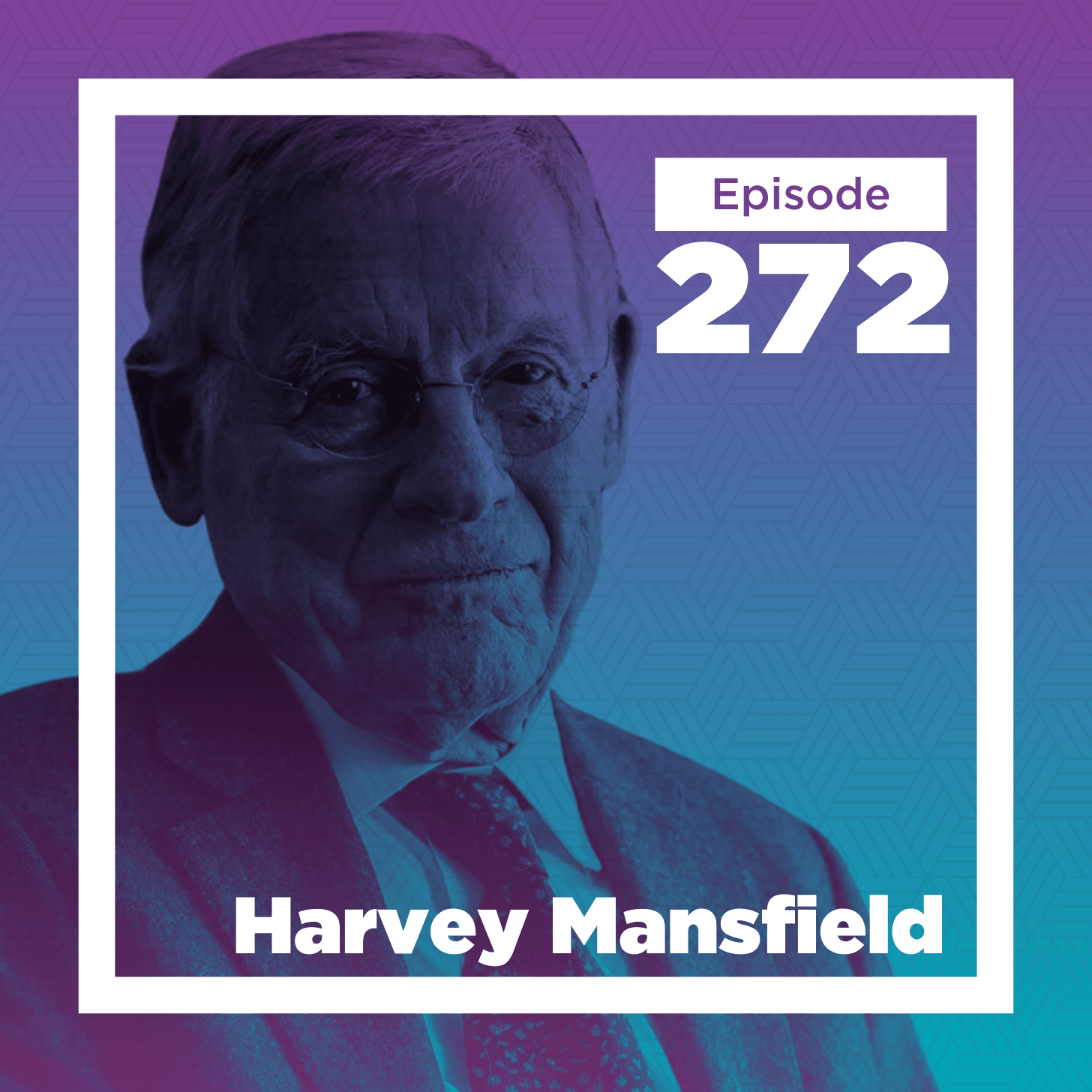
Podcast Summary: Conversations with Tyler - Episode with Harvey Mansfield
Podcast Title: Conversations with Tyler Episode Title: Harvey Mansfield on Machiavelli, Straussianism, and the Character of Liberal Democracy Release Date: January 22, 2026
Description In this episode, Tyler Cowen engages with Harvey Mansfield, a prominent scholar known for his interpretation of Machiavelli. Mansfield discusses his new book, *The Rise and Fall of Rational Control*, and explores various philosophical concepts, theories, and political ideas spanning from Machiavellian thought to modern democratic dynamics.
---
Key Topics Discussed
- Machiavelli and Effectual Truth
- Definition of Effectual Truth: Mansfield argues that Machiavelli's notion of "effectual truth" was revolutionary, laying the groundwork for modern empirical thought.
- Understanding of Modern Science: He claims that Machiavelli's approach allowed for a factual basis in politics, differing from the wishful thinking of previous philosophies.
- Conspiratorial Politics
- Machiavelli's Influence: The conversation touches on how Machiavelli's ideas lead to an inclination towards interpreting politics through a conspiratorial lens.
- Critique of Contemporary Conspiracies: Mansfield critiques the notion of conspiratorial politics in modern America, stating that many events were not conspiratorial but defensive acts.
- Democracy and Leadership
- Trump as a Shakespearean Character: Mansfield argues that Donald Trump exemplifies a "vulgarian" quality, suggesting he connects with the masses in a way that is both democratic and potentially degrading.
- Shakespeare’s Insights: Highlighting *Macbeth*, Mansfield reflects on ambition and how it informs leadership and political dynamics.
- The Future of Straussianism
- Evolution of the Movement: Mansfield discusses the current state and future of Straussianism, emphasizing the relevance of great books and their enduring lessons.
- Criticism of Bronze Age Pervert: He distances contemporary figures like Bronze Age Pervert from genuine Straussian thought.
- Education and Student Dynamics
- Changes Over Time: Mansfield reflects on his six-decade teaching career, noting that while student demographics have changed, their ambition and character have remained consistent.
- Decline of Manliness: He argues that while there’s an eclipse of traditional manliness, it hasn’t completely declined, warning against the negative expressions of masculinity.
- Aging and Politics
- Political Perspective with Age: Mansfield discusses how aging influences political outlook, noting that older individuals tend to focus on the present more than younger ones.
---
Key Takeaways
- Machiavelli's Relevance: His notions of effectual truth and the mechanics of power still resonate in today's political landscape.
- The Nature of Conspiracies: While conspiratorial thinking is tempting, recent history suggests many political actions result from necessity rather than conspiracy.
- Lessons from Literature: Classical literature, especially Shakespeare, offers critical insights into the nature of politics and leadership.
- Endurance of Great Books: The survival of great philosophical texts assures the continuity of deep, impactful thought.
- Navigating Manliness: The concept of masculinity is evolving, with a need to balance traditional values and modern interpretations.
---
Conclusion This episode of *Conversations with Tyler* highlights the intersections of historical political thought and contemporary issues, showcasing Harvey Mansfield's enduring influence on discussions of democracy, morality, and the human condition in politics.
---
For further insights, you can read the [full transcript](https://conversationswithtyler.com/episodes/harvey-mansfield/) or watch the [full video](https://youtu.be/8JDH6Y_hi1Q).
Written by AI. May contain mistakes. Listen to the episode to check what was said.
Chapters
Tap a time to open that second in VOIntroduction to Harvey Mansfield
0:53 to 1:07
Welcoming Harvey Mansfield and discussing his new book.
“Hello, everyone, and welcome back to Conversations with Tyler.”
Machiavelli's Effectual Truth and Modern Science
1:07 to 2:59
Exploring Machiavelli's concept of effectual truth and its relation to modern science.
“Harvey Mansfield, and Harvey has a new and excellent book out called The Rise and Fall of Rational Control.”
Technology, National Defense, and Modernity
2:59 to 4:09
Discussion on the role of technology in national defense and modernity.
“Modern science isn't based on wish or speech, as with Plato and Aristotle.”
Strauss and the Reversibility of Modernity
4:09 to 5:56
Examining Strauss's views on modernity and the ancients' perspectives on living.
“So it's that need for national defense that I think especially drives technology.”
Machiavelli and Conspiracy in Politics
5:56 to 8:01
Analyzing Machiavelli's perspective on conspiracy and its relevance today.
“Machiavelli and his notion of indirect rule, does that lead people to excess attachment to conspiracy theories, which is something we seem to see today, especially on the political right?”
Machiavelli's Views on American Politics
8:01 to 9:13
Evaluating Machiavelli's theories in the context of 20th-century American politics.
“He talked about the 20th century when America sort of saved the world, or if not Europe, at least, America saved the world from three great invasions.”
Secrecy and Conspiracy in Government
9:13 to 10:40
Discussing the necessity of secrecy in governance and its implications.
“So even a babysitter can't say everything to the baby.”
Political Assassination and Historical Insights
10:40 to 12:34
Investigating the trend of political assassination and historical context.
“That impresses people regardless of principle, and they begin to think that because it succeeded so well, it must have been right.”
Shakespeare's Lessons on Leadership and Ambition
12:34 to 14:01
Drawing parallels between Shakespeare's works and modern political ambition.
“What in Shakespeare gives you the most insight into leadership and politics?”
Trump as a Shakespearean Character
14:01 to 16:48
Explore Harvey Mansfield's view of President Trump's qualities through a Shakespearean lens.
“I just pick out this one that comes to mind.”
Show all 25 chapters
The Evolution of Straussianism
16:49 to 18:04
Discuss the future of Straussianism and its roots in the great books.
“Even to call him a Straussian is not correct, I don't think.”
Learning the Straussian Method
18:05 to 21:05
Mansfield outlines how to learn and engage with Straussian methods of reading.
“I don't think that matters fundamentally because people can always find it.”
Comparing Philosophical Approaches
21:06 to 24:11
Investigate the differences between Straussian and analytic philosophy.
“and say Quine and Rawls, both brilliant people, but Quine and Rawls did not have?”
Irony in Philosophy
24:12 to 28:00
Understand how irony differentiates analytic philosophy from the Straussian approach.
“Strauss treats an argument as if it were in a play, a play which has a plot and a background and a context.”
Irony in Philosophy: Straussian vs. Analytic
28:00 to 29:25
Explore the contrast between analytic philosophy and Straussian thought regarding the use of irony.
“So the author is, and what I'm describing is irony.”
Understanding Machiavelli's Context
29:25 to 31:06
Learn about the importance of context in interpreting Machiavelli's works and his views on ambition.
“Is that a complement to Straussian methods, or again, another substitute?”
Empirical Analysis and Fortune
31:06 to 33:18
Discover Machiavelli's views on fortune and the role of empirical analysis in understanding human behavior.
“But the main point is, get the author's view of his context first.”
The Decline of Great Books
33:18 to 36:15
Discuss the decline in the production of great philosophical works since the 19th century.
“The fortune is making something happen, reducing the possibilities of chance, a bad outcome.”
The Value of Travel in Understanding
36:15 to 37:48
Examine the importance of travel and personal experience in enriching philosophical insights.
“or Thucydides said to write a book which is a possession for all times has left us and that the authors are not trying they might have done to write that kind of book.”
Rational Control vs. Spontaneous Order
37:48 to 40:25
Explore the debate between rational control and spontaneous order in social systems.
“So I have to take the Indian's word for it.”
Impressions of Churchill: A Historical Encounter
40:25 to 42:08
Reflect on the significance of Churchill's speech and his understanding of liberal democracy.
“I recall having read that in the early 1950s, you saw in person a speech by Winston Churchill.”
Churchill and the Character of Liberal Democracy
42:08 to 43:26
Explore Churchill's understanding and preservation of liberal democracy.
“As a world historical figure, what was it that Churchill understood?”
Conversations with Students Over Time
43:31 to 45:56
Discuss how conversations with students have evolved throughout the years.
“Over time, how have those conversations changed?”
The Decline and Eclipse of Manliness
46:04 to 47:25
Examine the concepts of manliness, its decline, and its implications.
“But you've argued in writing that manliness has declined.”
Old Age and Political Perspectives
47:34 to 48:45
Consider how aging influences our views on politics and its implications.
“As we all get older and each day face increasing risks of death, does that influence how we think about politics, and should it influence how we think about politics?”
Transcript
Automatic transcript. May contain errors.0:04Hey listeners, this is Dallas, one of the producers of Conversations with Tyler. On April 14th, join Tyler at the 92nd Street Y in New York City for a live taping of Conversations with Tyler featuring Craig Newmark, the founder of Craigslist and Craig Newmark Philanthropies. Tyler and Craig will discuss trust, cybersecurity, and the building blocks of resilient civic institutions in the digital age, along with plenty more, I'm sure. Tickets are selling quickly, so be sure to grab yours before they're gone. You can find the link to buy tickets at the top of the show notes. Hope to see you there.
0:41Tyler Cowen:Conversations with Tyler is produced by the Mercatus Center at George Mason University, bridging the gap between academic ideas and real-world problems. Learn more at mercatus.org. For a full transcript of every conversation, enhanced with helpful links, visit conversationswithtyler.com. Hello, everyone, and welcome back to Conversations with Tyler. Today, I'm speaking with the great Harvey Mansfield, and Harvey has a new and excellent book out called The Rise and Fall of Rational Control. Harvey, welcome. Thank you for having me. Pleasure to be here. Now, given that Machiavelli had no real sense of modern science and its fruits, What ends up being missing from his political thought?
1:29Well, he didn't have no idea of modern science. In fact, I would say that his notion of effectual truth is the beginning of modern science. The effectual truth, he says, is what comes out of the truth, or what is the effect. In fact, if you say to somebody, I love you, the effectual truth of that is, I want something from you. So the effectual truth is the upshot, sometimes not necessarily the intent of the statement. So you must judge then from cause to effect. The word effectual was brand new, actually invented by Machiavelli. It comes from the Latin facere, which has to do with fact. Today, we use the word fact all the time as if it were something that always existed.
2:30But it was Machiavelli and some later thinkers who developed that notion of fact. So the fact of a thing is what it is without any wish or intent attached to it. So that means you can go from cause to effect. And that, I think, is the fundamental notion behind modern science. Modern science isn't based on wish or speech, as with Plato and Aristotle. It's based on fact. Galileo didn't go around asking people, does the earth move or not? He looked for the fact, said it was not a matter of public opinion or philosopher's opinion, but for the effectual truth.
3:29Tyler Cowen:But say when it comes to technology, Machiavelli understood gunpowder, but the idea that our lives could be so safe, nuclear weapons, modern effective birth control, modern media, don't all those things mean that modernity is in fact quite irreversible? Not so much those things, but the first thing you mentioned, gunpowder. Gunpowder means the defense of the state. That's especially what's involved. And it seems that technology must continue, can't really be stopped or reversed, because one country always needs to protect itself against another country. So it's that need for national defense that I think especially drives technology.
4:17Whether or not other new developments come is good, but it's not necessary. It's not something that you must have. But once somebody has gunpowder, then others must have it. And that applies, of course, to all the modern military technology.
4:41Tyler Cowen:Did Strauss think modernity was reversible? Yes, what I just said, I think, came from Strauss. There wasn't any possibility of reversing it. There might be a possibility of improving it, of making it better than it might be otherwise. eyes. He thought that the ancients had more to say on the big question of how should I live than the moderns did. You can understand things better if you begin with an approach from Plato and Aristotle. That's what he thought. Yes, it's not reversible, but it's improvable. So is it a mistake for me to read Strauss as actually a modernist, but who wants to marginally improve the current world with virtue ethics?
5:34It wouldn't be a marginal improvement. He doesn't begin from the modern world, but he begins from the ancient world, which produced the revolution led by Machiavelli, the modern world against the ancient. I don't think you should look at it simply as an approach to, or even at first glance, as an approach to the modern world.
5:56Tyler Cowen:Machiavelli and his notion of indirect rule, does that lead people to excess attachment to conspiracy theories, which is something we seem to see today, especially on the political right? Yes, it does. That's right. I think Machiavelli's notion of conspiracy does indeed have that effect. He wants you to think of politics in terms of conspiracy. Politics isn't what it looks to be, but it's always what's going on behind the scenes. What is behind the scenes is more important. That is the effectual truth, you could say. Whereas the principles, the talk, the justification, the rationalization, that's not worth paying attention to.
6:43or if it is, you have to take it with grains of salt. Yes, it's conspiratorial. The longest chapter in Machiavelli's two great works, The Prince and the Discourses on Living, is the chapter on conspiracy. The conspiracy had been considered by previous thinkers as to whether tyrants should be killed or not. whether that's a just thing for a citizen to undertake. But it had never been actually explained and how to do it, or account given. But that's what Machiavelli does, especially in the long chapter, which is Book 3, Chapter 6, in the Discourses on Living, by far the longest chapter. And he tells you how to do it before, and during, and after.
7:40So there's three stages of a conspiracy and the things to watch out for.
7:47Tyler Cowen:If we look at America since, say, the beginning of the 20th century, is Machiavelli right or wrong? Is it a conspiratorial politics? I don't think he's right. So what did he get wrong? What he got wrong was our frankness, our openness, behavior, the great wars we fought were not undertaken by us. They were not intended. They were wars of defense. He talked about the 20th century when America sort of saved the world, or if not Europe, at least, America saved the world from three great invasions. That was a considerable accomplishment which wasn't intended or conspired for by us. But say even after the Cold War ends, there's plenty of years since then.
8:36Tyler Cowen:Do you think of current politics in terms of conspiracies? Current politics, yes, because it's always possible. It is always necessary for government to be secret. Some of the work I did on executive power had that for a thesis. You can't ever speak without holding back something. So to this extent, Machiavelli is right. If you've ever been in charge of someone or something, you know that you can't say everything that you know. So even a babysitter can't say everything to the baby. You have to say something which is understandable and won't cause grief or trouble. So all politics has that kind of need for equivocation.
9:31In addition, anything that you're doing, you need to plan first. But if you make all your plans open and public, whoever it is that you're acting on, even if it's a friend or a friendly power, will react and perhaps foil what you plan to do. So execution requires secrecy, and secrecy includes conspiracy. In the end, you could say the truth comes out. After the plan has been executed, then people see what was underway the whole time. And at that time, you've got to show that what you did was according to your principles. Now, Machiavelli would say people can be impressed by power or by the fact of a display of power, especially a sensational use of it, as we just had with the capture of Maduro in Venezuela.
10:40That impresses people regardless of principle, and they begin to think that because it succeeded so well, it must have been right. You could even say maybe God intended it and justifies it. So in this way, I'm coming back to the other side for the question you raised on Machiavelli, that maybe conspiracy is always there and always justifiable. But my Americanism or my American principles, my liberal principles, rebel against that. And I do think that America can be seen to have done good things in a very major way throughout the 20th century.
11:28Tyler Cowen:Are we entering a new age of political assassination? And if so, what insights can we get from earlier political theorists? Political assassination. I see what you mean. Israel especially, against the jihadists. But also attempts against Trump. Charlie Kirk is killed. That's right. The healthcare CEO was killed. A lot of cases right here in America. You're right. Well, political theory, at least as regards Machiavelli, comes to the fore. I don't see anything more to add to what I said on Machiavelli. If there's a trend to it, people copy it. I don't think inspired by reading political theory. Peter Thiel, as you probably know, has great admiration and respect for René Girard and the idea of mimetic desire.
12:14Tyler Cowen:What is your view on Girard? I don't have a view on Girard. I'm sorry. Haven't read him. But that's endogenous, right? You don't find it that interesting then? Endogenous. Yeah, there's something to do with violence in there, but I haven't. No, I've read plenty of things and not read plenty of things that I ought to have done as well. So I can't defend myself of that. What in Shakespeare gives you the most insight into leadership and politics? You could think of Macbeth's nature of ambition and the character of it and the way in which it is treated by pacifists or by victorious mastermen. The question of Macbeth is debate between the pre-Christian view of revenge and the Christian view of God's peace, the power of ambition, the role of women, Lady Macbeth urging on her less eager husband.
13:23This is a reminder of something that our political science especially overlooks, the importance and the power of human ambition. Our country is really based on a kind of ambition that's reflected in the separation of powers. I don't mean to be wandering back and forth, but I think you could learn something about American politics by reading Shakespeare and especially Macbeth. But there's any number of lessons to be learned from Shakespeare. I just pick out this one that comes to mind.
14:03Tyler Cowen:If you think of President Trump, where to you does he fit on the Shakespearean map? tragic, comic, ambition, all of the above? He fits in the vulgarian quality of Shakespeare's characters. I've written on that to some extent. President Trump is not a gentleman. He works at a level of discordant impulse, and he's always looking to say something that will strike people rather than persuade them. That led me to think of the vulgarity of democracy. President Trump is, in his way, more democratic than the rest of us because he's able to understand and to impress people who are not refined in their thinking and in their ways.
15:07he's not a man of courtesy. Some of the vulgar people in Shakespeare around Falstaff, for example, could be understood as vulgarian Democrats that Shakespeare wants to present to us. Have you read Bronze Age Pervert, also known as Costin Alamariu? I've read his dissertation, which I guess is the basis of his book.
15:35Tyler Cowen:Is he a Bulgarian? I mean, if his name is Bronze Age Pervert, should I think of him as another Bulgarian? He's a deliberate seeker of what is vulgar and what is uncivilized, or on the edge of civilization. He wants to make a point of the dirty necessities of politics and of founding, so that he doesn't start with the Stone Age or even the Iron Age, but all the way to the Bronze Age. but still just as people are on the edge of beginning civilization. And that might be where the greatest truth or the greatest insight into the need for violence is most obvious. So I read his dissertation. It was done at Yale.
16:27I've had not much contact with him since, but we left on good terms.
16:34Tyler Cowen:It seems he's by far the best-known young Straussian. Should we take what he's doing as a model for what Straussianism is evolving into? No, you shouldn't. Please don't. What is the model, then? Even to call him a Straussian is not correct, I don't think. He picked things out of Strauss, especially from Nietzsche. He presented them to me. He was not the kind of student who was a patient, respectful listener. He had his own ideas. But he was interesting and he's smart. So what is Straussianism evolving into? So Strauss himself is gone. His students are now typically older or they've passed away, like Seth Bernadetti.
17:18What's the future for the movement? I think the future is, if not assured, pretty good. The basis for my thinking that is the great books. I think Strauss emphasizes the great books, is that that's sort of the center of his teaching, and those books are so superior that they, in a way, guarantee their own future. Why is it that we still read Plato's Republic, say, 2 ,500 years ago? So I think the books will always be there, and therefore the basis for Strauss will always be there. And since Strauss has shown what can be seen in those books, I think that will continue. Whether it's true that in recent years, Straussian professors at the most prestigious universities have died, retired, and not been replaced.
18:15I don't think that matters fundamentally because people can always find it. If I just meet someone and introduce some of his ideas, they're always attractive. But it's true that there are many ways in which Strauss is not attractive to scholars and Democrats, by which I mean all of us democratic citizens these days.
18:42Tyler Cowen:But these days, what's the best way to learn Straussian methods of reading a text? You sit down with the AI? I haven't tried that. It works pretty well. Really? Does it? AI wouldn't substitute the words for the original that would try to explain it. It's not as good as Strauss or you, but it's better than most of what's out there. All right. That's not good enough, though. What's the best we've got? Yeah, you want the best. You want the best. And the best is in the original text. I don't think you want to substitute for that original text trying to understand it. So you need to pay careful attention to everything that is said in the way that it's said and in the place that it's said.
19:37Strauss had this concept of what he called logographic necessity. Logographic, meaning where a thing was, what a thing was said by a great book's author had to be there. It isn't an accident. There are no accidents in a great book. Everything is as it should be. So to understand it, you don't want to go to some second-rate explanation that departs from the text.
20:11Tyler Cowen:But many people pick up Plato's Republic and they come away thinking it's a mere homage to totalitarianism. Not all of these people are stupid. Karl Popper was not stupid, but I think he read the book completely wrongly. How is it one learns how not to do that? Today, you can't study with Strauss. You're not teaching at Harvard anymore. What does one do? Look for a Straussian. Look at Strauss' books, especially natural right in history. That's the most easy one to begin with. But also at Persecution and the Art of Writing, which is his explanation of esoteric writing. Read what others have tried to do before you.
20:52Look for somebody, somebody to help. I get a number of emails when people write to ask about things they have seen. and ways they would like to go.
21:05Tyler Cowen:How would you put your finger on what Strauss had and say Quine and Rawls, both brilliant people, but Quine and Rawls did not have? What is that difference? With regard to Quine, Quine famously said, philosophy of science is philosophy enough. Strauss would certainly oppose that and try to introduce Nietzsche to Professor Quine, as I once attempted to do when I was younger. How did that go? Yeah, I was at a meeting of people, and somebody asked about Nietzsche and so on, and so I discoursed for a while. And he sat there listening with a smile and never commented. I was actually pretty good friends with him on a political basis because we both had conservative political opinions.
21:54And we belonged to the senior common room at Elliott House. So I would fairly frequently have lunch with him. And then on a later occasion, I once invited Tom Stoppard, the playwright, to come give a talk at Harvard. And afterwards, we had a dinner to which I invited Quine, and he came because Quine had figured in one of Stoppard's plays. So that's Quine. Now, Rawls is kind of slightly decayed liberalism. So I think Strauss would have liked to introduce John Locke to Rawls and show him how Locke set up things better than he had. Locke's state of nature was a better picture of the fundamental principle of liberalism than Rawls' original position.
22:56Rawls is much closer to Locke, of course, than Quine's nature.
23:02Tyler Cowen:But there's no just appropriation in Rawls in the same sense, right? That's no just appropriation. The labor theory of value is not understood or appreciated by Rawls. The good life is a life which must be earned. I think that's a fundamental principle of liberalism, which today is set forth more by conservatives than by liberals, that needs to be remembered. From a Straussian perspective, where's the role for the skills of a good analytic philosopher? How does that fit into Straussianism? I've never quite understood that. They seem to be very separate approaches, at least sociologically. Analytic philosophers look for arguments and isolate them.
23:48Strauss looks for arguments and puts them in the context of a dialogue or the dialogue or the implicit dialogue. So instead of counting up one, two, three, four meanings of a word, as analytic philosophers do, he says, why is this argument appropriate for this audience and in this text, and why is it put where it was and not earlier or later. Strauss treats an argument as if it were in a play, a play which has a plot and a background and a context. Whereas analytic philosophy tries to withdraw the argument from where it was in Plato to see what would we think of it today and what other arguments can be said against it without really wanting to choose which is the truth.
25:01Tyler Cowen:Are they complements or substitutes, the analytic approach and the Straussian approach? I see. I wouldn't say complements, no. Strauss's approach, I think, is look at the context of an argument rather than to take it out of its context. To take it out of its context means to deprive it of the story that it represents. Analytic philosophy takes arguments out of their context and arranges them in an array. It then tries to compare those sort of abstracted arguments. Strauss doesn't try to abstract, but he looks to the context. And the context is always something doubtful. So every platonic dialogue leaves something out.
26:08The Republic, for example, doesn't tell you about what people love instead of how people defend things. Since that's the case, every argument in such a dialogue is intentionally a bad argument. It's meant for a particular person, and it's set to him. So the analytic philosopher doesn't understand that arguments, especially in a Platonic dialogue, can deliberately be inferior, easily or too easily refutes the argument which you are supposed to take out of a Platonic dialogue and understand for yourself. Socrates always speaks down to people. He is better than his interlocutors. So, what you, as an observer or reader, are supposed to do is to take the argument that's going down, that's intended for somebody who doesn't understand very well, and raise it to the level of the argument that Socrates would want to accept.
27:37So to the extent that all great books have the character of downward shift, all great books have the character of speaking down to someone and presenting truth inferior but still attractive way, The reader has to take that shifter in view and raise it to the level that the author had. So the author is, and what I'm describing is irony. What distinguishes analytic philosophy from Strauss is the lack of irony in analytic philosophy. Now, that philosophy must always take account of non-philosophy or budding philosophers, and not simply speak straight out and give a flat statement of what you think is true.
28:48To go back to Rawls, Rawls based his philosophy on what he called public reason, which meant that the reason that convinces Rawls is no different from the reason that he gives out to the public. Whereas Strauss, reason is never public or universal in this way, because it has to take account of the character of the audience, which is usually less reasonable than the author.
29:27Tyler Cowen:Now, what would a Straussian view be of, say, materialist approaches, which seek to put the great books in context, but the relevant context is not the rest of the book, or comparing it to other great books, but the relevant context is the history of its time. Is that a complement to Straussian methods, or again, another substitute? The context of the time is very important, but it must be got from the author himself, and not from an historian's backward view, an anachronistic view from today. So, for example, Machiavelli, his context is what he saw as his context. And he tells you what that is.
30:16He tells you that the troubles of Europe or Italy can be put in the phrase ambitious idleness, Ocio ambicioso, that is, a leisure that is unoccupied, leaves you nothing to do. So that's his picture of the Christian world that he lived under and which he opposed to say he was some kind of Christian, as some scholars do, because he makes statements that indicate a friendly view toward it to overlook this view that Machiavelli himself offers of his context. But the main point is, get the author's view of his context first. And then, if that's limited or needs to be restated in terms of what we know today, go ahead.
Read the full transcript
31:22Tyler Cowen:If we turned Machiavelli into a series of empirically testable propositions, what percentage of them do you think would be true? A small percentage, because he exaggerates. He exaggerates. At the same time, you could say he's the author of Making Empirical Propositions, something of what I said earlier, The Effectual Truth, he tries to predict what can happen. He has in view a path toward greater liberty and greater virtue that we now call modernity. Knowledge as prediction really begins, I would say, with him. So that what we call empirical, which is understanding based on fact, is really a new way of knowing things in such a way that we can protect ourselves and predict what may happen or occur to us.
32:38For Machiavelli, religion is most important as a form of providence or prediction because most people don't want to know so much know God as they want to know what's going to happen to them. So they want to know what God is going to bring to us or what Machiavelli says he substitutes this, what fortune is going to bring to us. And you can deify fortune, if you like, call it lady fortune, as he does in The Prince. The fortune is making something happen, reducing the possibilities of chance, a bad outcome. So that depends on what we would call an empirical or a factual account. So if you understand how people act in a way different from what they say or what they wish, then you can reduce the effect or the power of fortune or chance and make as a fact what you hope for in defiance of fortune.
34:03So reducing the realm of fortune or of chance comes about through what we might call empirical analysis. I'm trying to say that exaggeration is the requirement of empirical analysis, not the enemy of it. Are there still great books being written today? On the level of canon of great books, I guess I would say in the 20th century, Heidegger, and I would add Strauss to Heidegger, though I know that that's a controversial statement.
34:45Tyler Cowen:Why has the supply dried up? Because Heidegger and Strauss, that's a while ago, right? All right, they are, but it doesn't happen that often that a really great book is written. But if you look at the 18th and 19th centuries, you could name easily a dozen great books from each century, and here we have the whole 20th century. You name two authors. I'm not sure how many books you're going to have that cover, but it seems to be less, even though population is larger, literacy is up, right? What changed? I'm not sure that there has been a change, and I'm not sure that that is a useful speculation.
35:25It's better to not expect a great book. I'll say this. Philosophy has declined since the beginning of the 19th century. It's been historicized such that people doubt that a great book is possible because it's not easy or possible for a thinker to think outside his time. And a great book is always one that is written in a time but for the sake of the future and the possibilities and what will happen and for other times. So I think maybe that ambition to write for other times or Thucydides said to write a book which is a possession for all times has left us and that the authors are not trying they might have done to write that kind of book.
36:31Tyler Cowen:In your own thought, how much have you learned from travel, travel abroad, travel in this country, or does that not matter much? It's a help. It doesn't matter much. I took my family twice to Italy when I was working on Machiavelli. Sped a year in Florence and a year in Rome and read pretty much and wrote pretty much, as they would have done, back in Cambridge. But the flavor of Italy comes out in Machiavelli. That was a joy and a pleasure to become acquainted with. It's a value of being a professor that you get time off for such excursions, and also that you see a lot of different people come through the university so that you can sort of, you can stay, do your traveling by staying at home and seeing them and their differences.
37:32They carry their country and their context along with them.
37:37Tyler Cowen:But you're mostly seeing cognitive elites, right, if you're at Harvard. You're not really seeing what, say, India is like, though plenty of Indians come to Harvard. I'm not seeing what India was like. that's true. Yeah. So I have to take the Indian's word for it. Now, it's a recurring theme in your book, this idea of rational control. What do you think of the Hayekian tradition that suggests that is impossible, the complex systems traditions that see things as a spontaneous order, matters are the result of human action but not of human design, and that rational control is a kind of illusion. What's your view of those thinkers?
38:20Negative. I think that their idea of spontaneous order is an idea which is intended to be a kind of form of rational control and which can be seen in the original author of a rational control named Machiavelli. Machiavelli wanted to let things ride, take the leash off humanity, especially the Christian leash, and let the nobles and plebs fight it out, as happened in Rome. That's how he begins his discourses. The kind of spontaneous order that arises from liberated human beings with all their powers and energies and attempts the way in which modern order originally began. That order comes out of liberation, not out of imposition.
39:21So I think Hayek is just an advanced version of what was originally intended. But what was originally intended also included the imposition that is required to liberate spontaneous order. Spontaneous order always presents itself as not spontaneous, as covered over in sludge and spoiled, prevented, inhibited. So it's something that needs to come to pass, but also, if that's to be the case, needs to be liberated. So I would say that he overlooks, the Hayekian view overlooks the necessity of liberating spontaneity. That doesn't happen spontaneously.
40:25Tyler Cowen:I recall having read that in the early 1950s, you saw in person a speech by Winston Churchill. Is that true? And if so, what were your impressions? That was one of the thrills of my life. I knew it then. That was in England in 1953. And I went to the Conservative Party conference that was held in Margate, a seaside resort, and was able to get into here, Churchill, thanks to my professor, Sam Beer, who was a great student of British politics and whom I was sort of accompanying in England as a student that year. And Churchill was back in power. And towards the end of his term and his faculties, But he began with a greeting to his friend, Anthony Eden, who was the foreign minister who had been in the hospital and had just gotten out.
41:32And the question of the day was whether Churchill would call an election before his time ran out or not. And Churchill said, it's very good to be in the hospital when you're sick, but when you're well, it's not necessary to take your temperature so often. So he was likening an election to taking the temperature of a patient's body and saying it wasn't needed. That stuck in my mind, and it was a nice analogy. one that gives room for thought.
42:15Tyler Cowen:As a world historical figure, what was it that Churchill understood? Churchill understood the character of liberal democracy, that it had a certain character. It needed to be guided. He was not from an aristocratic family, but he was from a very high lane of people, and he was from high society. And he saw that radical forces of socialism were on the march, but that the aristocracy couldn't sustain a battle against them or a kind of comfortable reception of them. So he took the country out of aristocracy into democracy in a way that preserved its dignity and gave himself great deserved fame. So that's what I would say he understood and accomplished.
43:30Tyler Cowen:Now, at Harvard, you've been well known that every year, every semester, you would take out your highest performing undergraduate student and have lunch or dinner with them. Over time, how have those conversations changed? I'm not sure that that's the correct statement. That legend is correct. But in general, your conversations with your students, and you have many of them, right? Yeah. I have. They're not all that different. I don't think that the students in my classes have been that different through the 61 years I taught in character and in interest and in ambition. Women came along. Black students came along.
44:19Asian students came along. Those were all differences of ethnicity. but in character, I find them remarkable and easily attracted in a way. They see the books that I assign and answer to my remarks and try to put their own lives in some kind of relationship to those great books. They don't all become professors, most of them lawyers and businessmen, but they've found something that is valuable and will serve them the rest of their life, give them something to do in their spare time, and give them a kind of guide for what they're working at. I always say to them, do something that you can be proud of.
45:37That's a pretty general advice. But I think it enables a young man or woman to do his or her own thinking and yet come out with something that is solid and objective and praiseworthy. praiseworthy.
46:05Tyler Cowen:But you've argued in writing that manliness has declined. You don't see that in your students over time, or you do? Less courage? How is that evolving? No, I don't think manliness is in decline. It's in an eclipse. So you don't see it as much as you did, except in bad versions such as the Bronze Age pervert. And at the end of my book on manliness, I had a chapter called Unemployed Manliness. That is the danger now that this part of human nature said that men are different from women and want to be and need to express that is something that that we need to hold on to, that can't be repressed without trouble arising.
47:06So the decline in manliness is also a rise in bad manliness. The assassinations, for example, that you mentioned before can be accounted for by the bad education that we get. and to some extent the influence of points of view that deny manliness, particularly feminism.
47:34Tyler Cowen:Very last question. As we all get older and each day face increasing risks of death, does that influence how we think about politics, and should it influence how we think about politics? It does. Well, Aristotle makes a remark about the old age and the young, that old age has a long past and a short future, and the young have the reverse, a short past and a long future. Getting old makes you reminisce, I find, perhaps to an exaggerated extent, and at the same time, it sharpens your concern for the present. So I wouldn't worry about it. Is the old age perspective the more correct one? The old age perspective is probably not more correct.
48:30It's probably too short-term. And it also can induce you to try to prescribe too much for your successors, your family and so on. and impose yourself on them in an unwelcome way.
48:51Tyler Cowen:Harvey Mansfield, thank you very much. Thank you for having me.
48:58Tyler Cowen:Thanks for listening to Conversations with Tyler. You can subscribe to the show on Apple Podcasts, Spotify, or your favorite podcast app. If you like this podcast, please consider giving us a rating and leaving a review. This helps other listeners find the show. On Twitter, I'm at Tyler Cowen, and the show is at Cowen Convos. Until next time, please keep listening and learning.
From the publisher
Sign up for the live Conversations with Tyler recording with Craig Newmark at 92NY!
Few living scholars can claim to have shaped how we read Machiavelli as decisively as Harvey Mansfield. His new book, The Rise and Fall of Rational Control, argues that Machiavelli didn't just write about politics—he invented the intellectual machinery of the modern world, starting with the concept of "effectual truth," which Mansfield credits as the seed of modern empiricism. At 93, after 61 years of teaching at Harvard, Mansfield remains cheerfully unimpressed by most of contemporary philosophy, convinced that the great books are self-sustaining, and that irony is what separates serious philosophy from the rest.
Tyler and Harvey discuss how Machiavelli's concept of fact was brand new, why his longest chapter is a how-to guide for conspiracy, whether America's 20th-century wars refute the conspiratorial worldview, Trump as a Shakespearean vulgarian who is in some ways more democratic than the rest of us, why Bronze Age Pervert should not be taken as a model for Straussianism, the time he tried to introduce Nietzsche to Quine, why Rawls needed more Locke, what it was like to hear Churchill speak at Margate in 1953, whether great books are still being written, how his students have and haven't changed over 61 years of teaching, the eclipse rather than decline of manliness, and what Aristotle got right about old age and much more.
Read a full transcript enhanced with helpful links, or watch the full video on the new dedicated Conversations with Tyler channel.
Recorded January 22nd, 2026.
This episode was made possible through the support of the John Templeton Foundation.
Other ways to connect
- Follow us on X and Instagram
- Follow Tyler on X
- Sign up for our newsletter
- Join our Discord
- Email us: cowenconvos@mercatus.gmu.edu
- Learn more about Conversations with Tyler and other Mercatus Center podcasts here.
Timestamps:
00:00:00 - Bumper
00:00:36 - Intro
00:01:20 - Machiavelli's "Effectual Truth"
00:05:56 - Conspiracy Theories
00:12:39 - The Vulgarity of Democracy
00:16:35 - The Future of Straussianism
00:34:30 - Why the Supply of Great Books has Dried Up
00:37:56 - Rational Control vs. Spontaneous Order
00:40:25 - Winston Churchill
00:43:30 - Students at Harvard
00:46:05 - Manliness
00:47:34 - Death and Politics
00:48:56 - Outro
Image Credit: Erin Clark via Getty Images