
In short
Conversations with Tyler: Episode Summary
Episode Title
Jack Clark on AI's Uneven Impact
Recorded
March 28, 2025
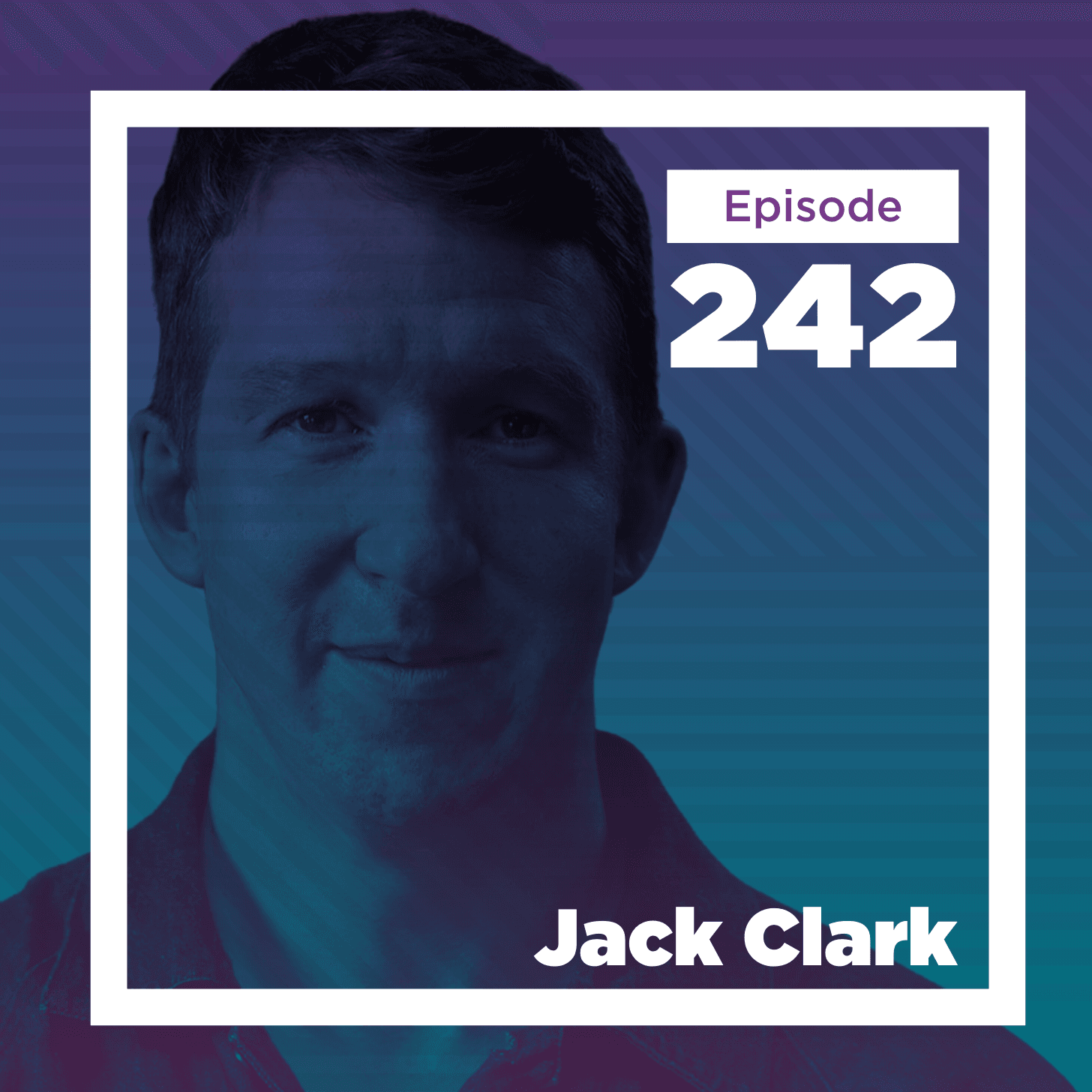
Episode Overview In this episode of *Conversations with Tyler*, host Tyler Cowen engages in a wide-ranging discussion with Jack Clark, co-founder of Anthropic. With a unique background combining journalism and the humanities, Clark offers a nuanced perspective on artificial general intelligence (AGI) and its potential economic impact. He presents a more conservative growth prediction of 3-5%, contrasting with the higher estimates of techno-optimists.
Key Topics Discussed
- AGI's Economic Impact
- Predicted Growth Rates: Clark forecasts a modest economic growth of 3-5% from AGI, significantly lower than the 20-30% estimates by some in the tech community.
- Resistance to Digital Transformation: Despite rapid advancements in AI, Clark argues the physical world will resist change, particularly in sectors reliant on human interaction.
- Areas of Lasting Impact
- Artisanal Trades: Professions like gardening, plumbing, and electrical work will likely be the last to be affected by AGI. The aesthetic quality and personal interaction in these trades hold intrinsic value.
- Desk-Bound Services: Jobs requiring interpersonal skills and negotiation will also see slower integration of AI.
- Legal Obstacles and Healthcare
- AGI faces significant legal challenges, particularly in healthcare due to privacy concerns and existing regulations.
- Clark notes the importance of human oversight in healthcare interactions, emphasizing challenges in integrating AI-generated insights into medical practice.
- AI in Government
- Clark expresses skepticism about how quickly government entities will adopt AGI, predicting less resistance from various sectors than anticipated.
- He discusses the potential for government inefficiency and the political will needed to implement AI solutions effectively.
- Future of Work & Job Security
- Clark raises concerns about the potential for political movements to protect jobs in the face of AI advancements.
- He discusses the balance between job displacement and the creation of new roles that may arise as a result of AI integration.
- Cultural and Social Considerations
- The conversation includes considerations about the impact of AI on societal structures, including the potential rise of "manager nerds" who will guide AI systems instead of traditional roles.
- Clark emphasizes the importance of preserving human meaning and engagement in work as AI technologies evolve.
- AI and National Sovereignty
- The conversation touches on how countries like the UK and Singapore can position themselves as AI hubs, leveraging existing infrastructures and regulatory frameworks.
- Clark discusses the implications for global governance and the challenges in establishing international agreements on AI technologies.
- Ethics and AI Consciousness
- Clark grapples with the ethical implications of AI consciousness and the future of autonomous agents. He presents a balanced view acknowledging the complex moral landscape AI introduces.
Key Takeaways
- Conservative Estimates: Clark's 3-5% growth prediction calls for a cautious approach to AGI's economic potential.
- Resistance to Change: The resistance of established sectors to rapid digital transformation may slow down the adoption of AGI.
- Legal Frameworks: The integration of AI into sensitive sectors like healthcare will require significant legal reform and adaptation.
- Cultural Implications: The evolving role of humans in an AI-driven world will be crucial in maintaining meaningful work and societal coherence.
- Global Considerations: Nations must navigate the complexities of AI advancements while ensuring sovereignty and ethical considerations in governance.
Final Thoughts Jack Clark’s insights provide a tempered view of AI's potential, emphasizing the balance between optimism and realism in predicting AGI's integration into society and the economy. His perspective encourages thoughtful consideration of the ethical, legal, and cultural ramifications of AI technologies.
---
Additional Resources
- [Full Transcript of the Episode](https://conversationswithtyler.com/episodes/jack-clark/)
- [Watch the Full Video](https://youtu.be/U1ZMmKMMHgQ)
Connect with Us
- Follow Tyler on [X (Twitter)](https://twitter.com/tylercowen)
- Follow Jack on [X (Twitter)](https://x.com/jackclarkSF)
- Join our [Discord Community](https://discord.gg/JAVWP7vTxt)
Written by AI. May contain mistakes. Listen to the episode to check what was said.
Transcript
Automatic transcript. May contain errors.0:04Conversations with Tyler is produced by the Mercatus Center at George Mason University, bridging the gap between academic ideas and real world problems. Learn more at mercatis .org. For a full transcript of every conversation, enhanced with helpful links, visit ConversationsWithT Tyler .com. Hello everyone and welcome back to Conversations with Tyler. Today I am at Anthropic with Jack Clark. As you may know there is now an Anthropic Economic Index which is measuring the effect of Advanced AI on the US economy. There were two associated reports as of March 2025 and soon more to come. Jack of course is the co -founder of Anthropic before that was the policy director at Open a reporter at Bloomberg and originally has his background in the humanities and he comes from Brighton England.
0:58Jack, welcome. Well, thanks for having me, Tyler. Pleasure to be here. Where is it in our economy that AGI will affect last in a significant manner? Oh, I'd hazard a guess for it's going to be things that are the trades and the most artisanal parts of them. So you might think of trades as having things like electricians or plumbing or or so things like gardening. But I think within those, you get certain high status, high skill parts where people want to use a certain tradesmen not just because of their skill, but because of their notoriety and sometimes in aesthetic quality. I think that my take might be gardening, actually.
1:36And they won't use AGI to help design the garden or just the human front will never disappear. I think the human front will never disappear and people will purchase certain things because of the taste of the person. Even if that taste looks like certain types of modern art production where the artist actually backs on to thousands of people that work for them and they're more orchestrating it. And how about in the more desk bound part of the service sector, where will it come last? Come last. Oh, good question. I think that on this, there are certain types of desk bound work that just require talking to other people and getting to alignment or agreement.
2:19You might, if you count so... But it's great it's doing that already, right? It's a wonderful therapist. It is, but we don't send clause to sell clause. Yet we send people to sell clause. Even though clause could probably generate the text to do the sales motion, people want to do commerce with other people. So I think that there'll be certain relationships which get mediated by people. and people will have a strong preference, probably for deals that they make on behalf of their larger pools of capital, where the deals are done by human proxies for large automated organisations or pools of capital.
2:53Where will AGI encounter the strongest legal obstacles? I think a few years ago it was encountering quite strong obstacles in the law itself, because lawyers tended to like being able to charge very high prices and had a dislike of things that could bid them down. But my less flippant answer is probably big chunks of health care, because it's bound up in certain things around how we handle personal data, all of the standards around that. All of those standards are probably going to need to be changed in some form to make them amenable to being used by AI, and we've had a really hard time updating or changing data standards in general.
3:34But once you can put the AI on your own hard drive, which will be pretty soon, right? Won't that all change? It will change in the form of gray market expertise, but not official expertise. I had a baby recently, and so whenever my baby, like Bonk's bare head, while I'm dialing the advice nurse, I talk to Claude just to reassure myself that the baby isn't in trouble, I don't think we actually fully permit healthcare uses via our own terms of service. we don't recommend it because we're worried about all of the liability issues this contains. But I know through my revealed preference that I'm always going to want to use that, but I can't take that clawed assessment and give it to Kaiser Permanente.
4:14I actually have to talk through a human to get everything else to happen on my back end to work out if they need to prescribe my child something. So the number one job will be serotonously transmitting the generation of information that comes from AIs in essence. Some of it may be that. Matt, some of it is about laundering the information that comes from AI's into human systems, but are not a lot predisposed to that information going in directly. I was thinking you might say that United States government or some parts of it would be where a strong AI would come last. I think that would be my forecast.
4:47They still use software from the 60s or maybe even the 50s sometimes. They do, but I actually suspect that that could be a place where we see really rapid changes, actually. And for a couple of reasons. One, we know that AI has relevance to national security. It develops certain types of capabilities. Oh, yeah, that will happen quickly. I don't have any questions. But the rest of government, the rest of government, Department of Education, HHS, the non -scary, sharp parts of government. Right. I would wager that it will become surprisingly easy to get it into really hard parts of government. And then there will be a question of political will, but all around the world, and I'm sure you experience this, governments desperately want growth and they desperately want efficiency.
5:35I mean, we see that here today and they say that. Oh, I like it. There is really. But I think if you look at also things like voter polling and other things, people want to see more changes out of government than they're currently getting. And I think sometimes constituent preferences do ultimately change what their elected officials do. I would just take the other side of this for government may move slightly faster than you think. It may be very large established companies that end up having some of the greatest resistance to this in certain areas. Let's say it was decided that half of the staff of HUD or Department of Education could be replaced by strong AI or EGI.
6:16Do we first need to hire more people to make that happen? And who is it we can hire at what wage that switches the system so you can lay off the remaining half? I don't understand how that's ever going to work. I think that it will only work in a scenario where the system has got so powerful that you can bring the AI system in itself to help you think through this. And then there will be a question of political will, which is where the system might, this all might break down. What do you think is the chance that we decide to protect, say, half of the jobs in existence today, with laws analogous to those we find in law and medicine against strong AGI.
6:57I think there is a high chance for a political movement to arrive, which tries to freeze a load of human jobs in bureaucratic amber as a way to deal with the political issues posed by this incredibly powerful technology and how fast the changes are going to come from. I don't think that we'll do this in like a reasoned way. I think it'll be driven by the chaotic winds of political forces and it feels like the sort of outcome that happens if we as the companies building this stuff and our customers don't generate enough examples of what good transitions look like. The fewer bits of evidence you have there and the more evidence you have of larger economic changes, probably the higher chance there'll be a desire to step in and protect workers in different domains, which comes from an impulse based around wanting to help people, but it might ultimately not be the most helpful thing over the course of decades to do that.
8:00But is it possible that actually, in a constrained sense, the very best outcome, people will still have a job, they'll go somewhere in the morning, a lot of the work, especially the hard work, will be done by the AI's. Obviously, we'll be richer so we can afford this, all of a sudden. and it won't feel bad to people. Life will look familiar. Isn't that in a sense what we should be aiming for? I think we should be aiming for, oh well. In the same sense, you might need, say, a generous welfare state to have free trade. The welfare state isn't always the most efficient, but if people accept free or trade, it's an okay bargain.
8:35Isn't this, in a sense, the welfare state for the service workers, and they still get to go somewhere in the morning if they want to, but they don't have to. I believe that people, all people have a desire for meaning and like salient to what they do on a day -to -day basis. And my worry with what you describe is it might not feel like it has meaning, sufficient meaning. I think that there is some giant class of activity that we want to continue happening in the world that people do from which they draw meaning. but I don't know the best way to get various to take some class of work and say, this is work that we're like protecting from which meaning will spring, because I'm not confident that you'll pick a load of jobs which naturally create their own meaning in that sense.
9:21But has in the succeeded in academia a pre -AI, so most academic jobs are not that meaningful. The research people do, it's not read by anyone, maybe they're decent teachers, but people take great pride in their research, they put a lot of effort into it, it's meaningless, It seems we solve that problem already. We're just going to take the academic model, but instead of it being research, bring it to say half of our current economy just to keep it going. But isn't there a kind of angst and annihilism even within high achieving parts of academia for this reason? Seems like when you speak to people, even very smart people who sometimes are doing the things you describe, they know they could be doing different things and they're trapped into some kind of status -game.
10:03There's some of that, but even the Nobel laureates, they're rival risk with each other. They can be very bitchy, very petty, but that's just human nature, right? If the Nobel laureates aren't happy, there's no post AI world that's going to do much better than how we're doing for the Nobel laureates today, right? Yeah, maybe my pushback is, I think that all of this could happen sufficiently quickly, that we might have the opportunity to just play different, higher status games that are afforded to us via AI and the productive capacity at Unlocks. I'm wondering if there are, for a definitely going to be entirely new jobs for the involved marshalling and fielding AI systems for all kinds of work.
10:45I think there's a hard job, right? Yes, but I think that there are going to be analogs which look more like fun exercises in getting AI's to kind of build things or make things or almost carry out like competitions and games where people can play them with one another. And I think there'll be entirely new forms of entertainment that has some amount of meaning and perhaps an economic engine wide and to it, but people can participate in. I believe we're not that far from the age of what I call the AI teddy bears. You know what I mean when I say that. What percentage of parents now will buy those teddy bears for their kids and allow it?
11:20I mean, I've had this for instance, I have a person that is my child that's almost two. Sure. And I am annoyed I can't buy the teddy bear yet. I think most you're an outlier. Yeah, I don't know I don't know you are co -founder of inthropy. I don't think I'm an outlier I think that once your lovable child starts to speak and display endless curiosity and a need to be kind of Saciaded you first think how can I get from hanging out with other human children as quickly as possible? So we're on the preschool list all of that stuff. I also think I mean I've had this thought Or I wish you could talk to like your bunny occasionally so that the bunny would provide you some at an entertainment while I'm putting the dishes away or making you dinner or something.
12:01Often you just need another person to be there to help you wrangle the child and keep them interested. But say that the kids just do this. Daddy, I prefer the bunny to my friends. Can I stay at home today? Do you take the bunny away? That's the tough part, right? I think that's the part where you have to spend more time with their friends, but you keep the bunny in their life because the bunny's just going to get smarter and be more around firm as they grow up. So if you take it away, they'll probably do something really strange with AI friends in the future. No, I don't think I'm an outlier here.
12:32I think most parents would, if they could acquire a well -meaning friend that could provide occasional entertainment to their child, when their child is being like very trying, they would, they would probably do it. But I feel the world occasional is doing a lot of work in that sentence. So if you can just ration how much your kid has the bunny. Parents are going to love it. I agree. Yeah, yeah. But the same is with screens. A lot of children, they keep on wanting it. It's hard to tell the child. You can't have it now, right? It's like in the old days, it was watching television. Oh, mom, can I watch Star Trek again?
13:08Yeah. And can I watch TV seven hours a day? Well, that's not good. and that's hard to ration. Yeah, so there's some question here of how we portion this out. I mean, we do this today of TV where if you're traveling with us like on a plane with us or if you're sick, you get to watch TV for baby and otherwise you don't because from various perspectives, it seems like it's not the most helpful thing. You'll probably need to find a way to gate this and it could be when mum and dad are like doing chores to help you, you get the thing. when they're not doing chores, the thing goes away. Do you end up with too much surveillance over your kid?
13:46Because you'll know everything if you want to, right? And that might be the reason why you give the kid the bunny all the more. I think it comes down to frequency, which I mentioned, and also what you are and aren't allowed to know. I find surveillance puzzling. We have one of these smart webcams, but we got, you know, when the kids are early, so that you just see that they're asleep, and you know, if they're waking up, you work out if they're okay or not. And the main thing that that meant is that when the baby like cries at night, sometimes we go in less than if we didn't have the camera because if we didn't have the camera, we'd have to go and check.
14:20And I think as a consequence, my baby tends to like sleep through the night a lot more because they don't get occasionally interrupted. Sometimes they wake and cry for a minute and just go back to sleep. So I think sometimes this stuff allows you to actually interfere less in a person's life if you know certain things about it. But to say you have the hypothesis that so many like seven year olds, they talk to themselves, they say weird things. And the AI bunny is going to report back to you. Yeah. The bunny says like your kids saying strange stuff, but they all say strange stuff. I might have been chattering on about the New York Mets at age seven and it would have been perfectly harmless, but it may not have sounded that way.
14:58Yeah, you're going to need to create spaces for unmonitored creativity in people. Actually the same as how we have an approach to AI research today. Like now AI systems can output their chains of thought, right? Which is the reasoning they use to come up with answers. And we've had this question at an anthropic of how much should we monitor the chains of thought? Because if you actually monitor them, you might create an anti -goal where the system ends up wanting to have chains of thought which are like Safe to be monitored and which don't cause demerits which might actually break how it thinks in a bunch of ways I think this is this analog applies here where you're gonna need to choose How much you actually decide to know about people or you risk creating incentives for change their behavior such that they they have a negative effect You'll go out on a date and your date will say please show me your AI report, right?
15:56what you've been talking to yourself about for the last three months. Yeah. And you cannot show it, which is a negative signal or show it. We all learn what other people are really like and we just grow to accept that. Yeah, although if a person asks you to do about on the first date, it's fine. And if they ask them a second date, you probably shouldn't be dating that person. Right. But even during the swipe, right? The AI, your ass to upload it and the AI just reads the other AI report and the person never sees it. And it tells you when you should swipe in the correct way. I don't know. I don't know if that's so bad.
16:27I met my wife on on okay, QPIT where you I don't know if you recover. So it was an online dating site where you like would fill out a survey. Of course, match calm for me. Exactly. I met my wife and then I met her and we are non AI but like automated systems. And you guys might get along. So we've met each other that way. So I don't know that this is so different to previous things we've used. But that's information you're putting in voluntarily. Right. as opposed to it watching you all the time. I just think that this is an area where we're going to figure out the new norms of this technology and what seems appropriate and not appropriate.
17:02And some of that is just going to be solved through the logic of business and other things through usage. What will the economics of media look like if you can read a digest of everything that is probably better than the original or certainly not worse or more synthetic? Who gets paid for what? Yeah, I think that this is one of the toughest questions in front of us. As you know, I'm a former journalist. Yes. And so I grew up as a professional during the period when online ad market changes were altering the business model of journalism because they were switching from what you might think of as value that you derive through quality, through subscriptions or people buying your stuff to value that you derive from just large scale attention because that became a lot of the model for funding this stuff.
17:50And as a consequence, you saw the need to cross subsidize journalists with journalists for got loads of eyeballs and journalists like me who would write about databases got less eyeballs. So we were cross subsidized by the people who wrote about Justin Bieber or what have you. I think for media it's going to be really challenging to think through how the economics of this work. And I think that it'll change in a couple of ways. One, you might move to some of these kind of larger scale publishing house style models for certain types of fictional universes, which have subsidy and cross subsidy within them.
18:27Where does the cross subsidy come from? Like Bloomberg, we know how that works, right? But if AGI is truly general and it's based on what's out there already, it should be able to do better than media on all dimensions? I think some things you want to have come from a person for reasons that are based on a fact that we're people and I think people will preferentially select for media which is fronted by other people even if they're making it using other means. I also think you want a kernel of humanity in a load of this stuff and then there'll be another type of media which is maybe attached to these subscription models which is just on tap permutations of anything and everything.
19:10So there might be two markets for a merge. But even the things we want to come from humans, so say we want anlanders, the advice columnists to come from an actual landlanders. The anlanders of the world, they're using AI's, maybe serotoniously, but the value of that is bid down because anyone can do that for the price of energy, right? So we don't really end up with this one part of the revenue generating sector that can cross -subsidize the other parts, just if intelligence is pretty cheap, that hits all of media. It hits all of media and you will end up wanting to, I think, pay individuals. I think that happens.
19:48Even in the world we're in today, people want to subsidize individual creators who may be using a whole bunch of this stuff. So it's like, substack world. It's substack Patreon world for a large chunk of people, some of which will be incredibly successful. And then I think there's also going to be universe world for certain universes which are like very large and rich which are being extended by AI systems. You mean like a lord of the rings universe? Yeah, we'll have a 40k to show my my nerd credentials but. But they'll publish fictional news, right? Yes. And real news will come from substack or re -substack.
20:26There's not an obvious cross -subcity. There might be within the substack company. But real news, I genuinely don't know. I think some real news comes from analysis of publicly available facts and it being composed together in a way that shows you insights that didn't exist. A semi -analysis on on substack is a good example of this. A lot of public stuff, leading to interesting conclusions. but news in the moment that has loads of context was subsidized by previous business models which mostly no longer work and I genuinely don't know what happens to it. If we think about what we now call LLMs, five or ten years from now, that kind of AI, how concentrated or how competitive do you think the sector will be?
21:11I don't know if number of firms is exactly the right measure, but how do you see it evolving? Because right now there's at least six firms, depending how you count China, there's some complications. But there's a bunch of firms, right? A lot of competition. I would expect that there will be for quite some time, many, many years, areas where there are slightly different specialisms on all of these things. There'll be like concentric circles that have got massively large in terms of the space for Bay cover, and they'll have edges which are slightly differentiated. But in those edges, we'll be where the frontier of certain types of human values stacks on top of AI value to lead to people choosing one or the other.
21:56So, Clod's more poetic, for instance. A bad example, due to the economics of poetry aren't particularly great. Coding might be a better example or there could be cases for things like certain types of scientific experimentation where actually taste might come to matter a lot for composing experiments. I expect we enter a world where you have a single digit number of these very, very large scale models, which are servicing like a much larger set of wrappers on top of them that change the form factor by which they get integrated into your life, and which have a load of helper functions or knowledge probably built by for the AI's in partnership with some kind of other specialized AI system or expert knowledge from Vatdomain to chain it in.
22:45Here's a worry I have, and my former colleague Vernon Smith once wrote a paper on this, he argued that as you approach six competitors or more, that a sector essentially behaves like perfect competition, even if it's not exactly perfectly competitive. So if that's the case, how is it that AI or indeed any other companies can behave ethically above and beyond what they need to do to stay in the market and earn profit. Like, what room is there to be better than the next company? I think right now it's like we're car companies and we are mostly selling cars to teenagers who say, how fast is it and can I get it in red?
23:24And we're beginning to find businesses that operate fleets of cars and say, what seatbelts does it have? What is your accident rate? What are all of these other properties that the teenager has never asked us about? but these businesses do because it ties to their business model or to liability or to other things. I think therefore there are technologies to be built that look like the safety equivalents that we have in cars or other things which will change the logic of competition. So we're in competition right now. That competition will change as we unlock different markets that have different properties that they need to be present in the AI system.
24:02And those properties will often ladder up to certain types of safety technology. So the price of insurance is carrying the mechanism, so to speak? I believe that this will be like one of the ways that it helps. How do we need to change or improve liability law for the price of insurance to actually carry that? Because right now, liabilities from AI have also are too tightly unclear. I think that I have thought less about liability and more about information that should be made available by the companies. but I think we have like an interplay where today there isn't really a common labeling or disclosure standard about what what are like in these AI systems or the industrial practices you've used when like making them.
24:49And I think that this is ultimately an area where you can do interventions to get some common level of transparency and that'll interplay with both liability and also things like negligence which will change the behavior of these companies over time. So there's some level of common information we can start providing about these systems, which will also change corporate behavior. But the information part worries me though. I'm more inclined to be an accelerationist and you know, hope the benefits are at raise the costs, which I definitely think they will. But information only picks up the private value.
25:22So the social cost to the decision you make, the information doesn't change what you do very much. So people know a lot about global warming. Some people eat less of me, but for the most part they don't, right? Well, one of the things that you do is you create information which becomes truly common. I mean, the economic index work we've done is from one single firm, but ultimately you might want to generalize that to all firms, but then link it to large scale data gathering but governments might do. And I think if that became the case, you would have a higher chance of tying it to actual policy responses that would be larger in scope.
26:03I also think on climate change just by measuring things like parts per million, stuff like that has helped catalyze large scale amounts of capital to get remobilized around the economy in different areas to deal with this perceived negative impact that that has. Do you agree with my view that we will not have meaningful international agreements on the hard parts of AI. Maybe on the simple parts. 90 % agreement, I think there is a chance of something that looks like a non -proliferation agreement between states, including the US and China in parliament. And the US and China enforce it and we become vaguely allied with them in this one crusade.
26:43I think it might be deciding that certain things, certain capabilities of AI systems might be so potentially destabilizing that you don't want them broadly available. While recognizing that each government may be privately developing them, but you might have some common standard for what's available to everyone where you've decided, oh, this would lead to just like all kinds of chaos in our countries as well as in other countries as well. And it would be enforced by the UN or by America or just international norms, sanctions. My assumption is a lot of biscuits enforced by checking and then throwing policy punches each other on things like tariffs or exports or other issues.
Read the full transcript
27:27I don't know that there's global governance bodies that will be formed. Some people feel optimistic about stuff like IAEA, style models for this, but I think things that require mutual inspection regimes end up being very, very hard to do under certain, certain rivalrous dynamics. I worry we're in a world where NAFTA has not stuck. NAFTA is one of the easiest agreements. NAFTA should have been easy. It should have been easy and it's not to say the least. So say 10 years out, what's your best estimate of the economic growth rate in the United States? I mean, the economic growth rate now is on the order of one's two percent.
28:05There's a chance at the moment we're entering a recession, but it would average 2 .2%. So let's say it's 2 .2. I think my bare case on all of this is 3 % and my bull case is something like five. I think that you probably hear like higher numbers from lots of other 20 and 30 I hear all the time to me it's subsurban yeah and the reason that my numbers are more conservative is I think that We will enter into a world where there will be an incredibly fast moving high -growth part of the economy But it is a relatively small part of the economy and it may be growing its share over time But it's growing from like a small base and remember a large parts of the economy like healthcare or other things which are naturally slow moving and maybe slow in adoption of this.
28:53I think that the things that would make me wrong are if AI systems could meaningfully unlock productive capacity in the physical world at a really surprisingly high compounding growth rate, you know, automating and building factories and things like this. But even then I'm skeptical because because every time the AI community has tried to cross the chasm from the digital world to the real world, they've run into like 10 ,000 problems that they fought with paper cuts, but in some add up to you losing all the blood in your body. And I think we've seen this with self -driving cars where very, very promising growth rate and then an incredibly grinding slow pace at getting it to scale.
29:36I just read a paper two days ago about trying to train human -like hands on industrial robots using reinforcement learning. Doesn't work. The best they have was a 60 % success rate. So if I have my baby and I give her like a robot butt love it has a 60 % accuracy rate at holding things, including the baby. I'm not buying the butt love. It's like, all my wife is incredibly unhappy, unhappy, even I bought it and makes me send it back. So I think as a community, we tend to underestimate that. And I may be proved to be an unrealistic pessimist here. I think that's what many of my colleagues would say, but I think we overestimate the ease with which we get into a physical world.
30:21And so I said in print, my best estimate is we get half a percentage point of growth a year, 5 % would be my upper bound. Yeah. What's your scenario where there's no growth improvement? Or if it's not yours, say, there's a smart person somewhere in Anthropic, you don't agree with them. But what would they say? I think one is something that you touched on earlier where we could get the politics of this really wrong and the technology could just get put in a relatively small box that does some economic goods somewhere but at a very, very small constrained amount. That's the kind of like nuclear power failure mode story where we do some kind of large scale regulatory scheme, we make it hard to do this stuff, it ceases to have much of an effect.
31:00Maybe it has an effect elsewhere. The other case I'd give would be, well, it's very hard for me to give like a 0 % case because we know today it's incredibly useful for coding and if you just stopped all of it today or further progress, I think the coding use case alone is going to be incredibly useful because it grows the ability to digitize parts of the economy, which we know drives like faster loops in different parts of the economy, but generates value. I think 0 % is basically sub 1 % chance of happening. And if it did, it would be a lull -out thing or something that looked like war with Taiwan leading to everything else looking different as well.
31:48In the 5 % scenario, put aside San Francisco, which is special. But the cities become more or less important. Clearly the city might become more important. But say Chicago at Lanna, what happens? I think that dense agglomeration of humans have significant amounts of value. And I would expect that a lot of the effects of AI are going to be for a while massively increasing the superstar effect in different industries. So I don't know if it's all cities, but I think any city which has something like a specialism, like high -frequency trading and Chicago, certain types of finance in New York will continue to see some dividend from sets of professionals that gather together in dense quantities to swap ideas.
32:33But could it just be easier to stay at home and more fun? So I find I'm an outlier, but my use of AI, I either want to go somewhere very distant and use the AI there to learn about say the birds of region or I want to stay at home. So it's a barbell's effect and the idea of driving 35 minutes to Washington DC, that seems less appealing than it used to be. Yeah, maybe I just have a different personality. I feel like, or maybe it's that I work in a really, really confusing domain and I need to go and talk to other people who work in the confusing domain to to get remotely oriented. I think they're revealed preference from stuff like COVID as if they have a greater desire for certain types of social thing that they may have fought and now they're bouncing back to it, but it's going to interplay slightly differently with cities.
33:19If so much of labor in capital is going to be revalued, is quality land the best investment? Because I don't know which firms will benefit the most, right? So you might bet on AI firms that share that's kind of easy, though it'll be priced in. But the other firms, who knows?
33:41So you know, electricity and the production of electricity is going to be of tremendous value. But what's the thing you would buy? I think you buy components that go into things like gas turbines and other things which are the base of the technology tree for generating electricity of which you know people are going to want to do lots of. You could buy a basket of different components here. I would expect that to be a durable, meaningful value. Let's say it's 10 years from now, GPUs are their successor, they're not their scarce. There's a lot of vital capacity just sitting around. What do you, and let's say it's very cheap, what do you have it do in its spare time?
34:20Oh, that's fun. I mean, I think one of the things is you might just pay AI systems by giving them access to compute, right? You could imagine some kind of butter economy, now for a range of bone -chilling safety problems of what I just said, but let's like put that aside in the scene that those are mostly dealt with. I think there'll be some form of trade with powerful AI systems or agents that work on people's behalf and you may want to trade with them a form of compute because agents may be able to use compute for themselves as well. So that's some of it. I think the other part is generating interesting permutations of stuff that you find kind of valuable or interesting.
34:59I also suspect that we're going to be very weird things we can't anticipate, but look like a form of entertainment that looks like parallel history generation or parallel future generation. I think people are always fascinated by what ifs and rollouts of what ifs. In fan fiction, I think people grow exponentially. Yeah. I think large amounts of compute get used to generate alternate realities. But some of the alternate realities will be sliding door versions of today, where it's a very accurate portrayal, but with one difference. And just what would you do personally? I'm not saying the world, but just you, Jack Clark, you have all this recompute.
35:40Will you have a try to write another play by Shakespeare or something else or how bright and might have developed differently from year 1830? Or what are you going to do with it? The thing which I currently do with Claude Code is I'm trying to write a really detailed good paperclip factory simulator, partly because of the inherent comedy of it, but also because I find these very complex simulation games incredibly fun and engaging, and I also think there's a massive space in which you can create them, of which we've only created a tiny subset. And one of the things that we haven't ever really done is because it's computationally so unbelievably expensive, is actually put AIs as agents inside the games.
36:24Really early attempts are actually, Demis of Deep Mind, before he did Deep Mind, he did a game called Black and White, which had actual, like, very primitive reinforcement learning driven agents playing in the game. I mean, there's tons of stuff you can do there, which would be amazingly interesting. Speaking of agents, how should the law deal with agents that are not owned? Maybe they're generated in a way that's anonymously, or maybe a philanthropist builds them and disavow his ownership or sends them to a country where in essence there's not much law. And I'm not talking about terrorism. That's a separate, but just someone sends an agent to Africa, 98 % of what it does helps people.
37:03But as with every charity, some things go wrong, right? There's some problems. Can someone sue the agent or how is it capitalized? Is that a legal identity? I will partially contradict myself where earlier I talked about maybe you're going to be paying agents, I think that the pressure of the world is towards agents having some level of independence or like trading ability. But from a policy standpoint, I'm reminded of that early thing that IBM said, which was a computer cannot be accountable to a decision only humans can. And I think it got it something quite important where if you create agents for the wholly independent from people, but are making decisions that affect people, you've introduced a really difficult problem for the policy and legal system to deal with.
37:49So I'm dodging your question because I don't have an answer to it. I think it's a big problem question. My guess is we should have law for the agents, and maybe the AI's write that law, and they have their own system. I worry that if you trace it all back to humans, someone could sue anthropic, you know, 30 years from now. Oh, well someone's agent was an offshoot of one of your systems. Well, it was mediated through Chinese Monos, but that in turn may have been built upon things that you did. And I don't think you should be at all liable for that. So I see liability getting out of control in so many cases.
38:23I want to choke it off and isolate it somewhat from the mainstream legal system. And if need be, you require that an independent agent is either somewhat capitalized or it gets hunted down and shut off. Yeah, it might be that, along with what you said, having means to control and change for resources that agents use could be some of the path here, because it's the ultimate disincentive. Although I will note that this involves pretty tricky questions of moral patienthood, where we're working on some notions around how to get clearer on bad at anthropic, and if you actually believe that these AI agents are moral patients, then turning them off introduces which is like pretty significant ethical issues potentially, so you need to reconcile these two things.
39:11I was not too long ago at an event with some highly prestigious people. This was in New York, of course, not San Francisco. That's where prestigious people hang out. Well, and I used the phrase AGI, and not one of the five even knew what I meant. I don't mean they were skeptical in the deep sense, maybe one should be, but they just literally didn't know what I meant. What was your model of why so many people are still in a fog? I am a technological pessimist who sort of became an optimist through repeated meetings over the head of scale. And what I mean by this is I've consistently underestimated AI progress.
39:48You know, maybe I am today in this conversation when I talk about three to five percent growth rates. And what has happened is I have just endlessly seen the AI system get to where I thought it couldn't or thought would take a long time much faster than I thought and so I've had to internalize this repeatedly. Nonetheless, we ourselves find it surprising. I mean, last year here, people were saying, oh, well, soon, Claude is going to be doing most of the coding at Anthropic. We're now on the way to that where Claude, and other things are writing tons of code here and it still felt surprising internally, even though we have docs from last year, predicting it would happen about now.
40:31So most people outside of the AI labs have no experience of pre -registering their predictions about AI and it getting proved wrong to them repeatedly, because why would you do this unless you work here? And I found that the only way to break through is to take their domain and show them what AI can do directly in the domain which vacant evaluate weight it within, which is an expensive process. Silicon Valley up until now has been age of the nerds. Do you feel that time is over? And it's now, error of the, I don't know, humanities majors or the charismatic people or what? It's my time, Tyler. Your time.
41:10I think it's actually going to be the era of the manager nerds now where I think being being able to manage fleets of AI agents and orchestrate them is going to make people incredibly powerful. I think we already see this today with start -ups that are emerging but have very small numbers of employees relative to what they used to have because they have lots of coding agents. Like mid -Jerny, right? Yeah. Incredibly like efficient start -up in terms of people. So we're going to see this rise of the, yeah, the nerd turned manager who has their people, but their people are actually instances of AI agents doing large amounts of work for them.
41:53So it's still the Bill Gates model? Yeah. Or the Patrick Collison model? Yeah. So it's not that different. People that played lots of factorial model. Yeah. Will the English major rise or fall in status? I suspect that the humanities may might rise in status while being given impossible problems. Sort of, you know, I'm a humanities major originally and I'm being given problems like solve the economic policy challenges employed by technologically driven like unemployment. Well, that's easy, right? Easy, right? Or some people are saying, yeah, like what should we do about moral patienthood? And what should the policy, the policy situation be?
42:37So I think there's going to be a recognition and we see this today that there are other skills needed, but the problems for those skills are needed for are often problems which have proved to be impossible for humans to adequately solve for thousands of years. So there's lots of work, I guess. What do you think will be the life expectancy of your child? Accident aside, just normal life. I feel like 130 is sort of 130 to 50 is not, I wouldn't find surprising, I'm good, because I feel like we are discovering that there's tons and tons of stuff that we're learning about the body and about things like gene therapies and other things, which seem like there's a load of interventions you can do that might stack on one another to actually durably extend life, healthy life spans for some period of time.
43:29And I was going to say 110 and then I tried to be a technological optimist So I added a couple of decades on top, which I'm assuming comes from magic AI -driven advances, but I have underestimated the inverse response. I think the brain is very hard to fix. If you just wanted to keep someone alive, literally, perhaps 130, but for them to be the same person, I think I'm stuck at 100 for most people. It's just hard to replace the brain without killing someone. You can replace all the other organs, right? Yeah, I think I mean here I subscribe to the idea that there's a ton we don't understand about the brain and AI is going to help us understand loads more and there might be things that can be done here which have eluded us because they are so unbelievably complicated we needed AI mediated tools to help us figure out the experiments and approaches.
44:19When Jeffrey Hinton says that right now the AI is unconscious, which I think is what he says. I believe he's crazy. What do you think? I think that he's... You can be more polite than I am. That's fine. Well, no, I'm... But how I would phrase this is that I agonize about this. And you know, you read my newsletter, I write fictional stories in it often, which are me grappling with this question, I worry that we are going to be bystanders to what in the future will seem like a great crime, which is something about these things being determined to be conscious, and us taking actions which you think are bad to have taken against conscious entities.
45:03Internally, I say there's a difference between doing experiments on potatoes and on monkeys. I think we're still in a potato regime, but I think that there is actually a clear line by which these things become monkeys and then beyond in terms of your moral relationship to them. To Hinton's point, I think that these things are conscious in the sense that a tongue without a brain is conscious, right? It takes actions in response to stimuli that are really, really, really complicated and in a moment it has a sense impression of the world and is responding, but does it have a sense of self? I would wager, no, it doesn't seem like it does.
45:40These AI systems, we instantiate them and they live in a kind of infinite now where they may perceive and they may have some awareness within a context window, but there's no memory or permanence. So to me, it feels like we're on a trajectory heading towards consciousness. And if they're conscious today, it's in a form that we would recognize as like truly alien consciousness, not human consciousness. us. In what year do you think you'll be able to speak directly to a dolphin? And it will talk back with a translator, of course. I think 2030 or sooner. I think that one's coming soon. And what will you ask the dolphin?
46:18Because you'll be in a position, you'll be early in the queue to ask, right? I think what do you want to know? How do you have fun? Dolphin seems to have fun. Like they're almost a famously fun having species. I think you'd ask that. I think you'd ask them if they dream. I think you'd ask them if they had a notion of grief. I think you'd also ask them like, what is mysterious to them about their world? Besides the fact you're talking to them, which hopefully they'd find somewhat surprising. I also think that you can talk to dogs as well, but that'll be, I think those conversations now can be, like, unsurprising.
46:50What do you want to do? I'll say, walk. And I was like, okay, well, we didn't even translate it for this one. What to book? You think more and more about these days? There is no anti -mimetics division by QNTM, which is this book about a government agency that is dealing with anti -memes, ideas that erase themselves from your memory after you've dealt with them, but are themselves important, and it's about creating a bureaucracy that can handle ideas which are themselves dangerous and self -arrasing, because I think it gets at some of the problems that we're experiencing. And the other book that I think about a lot and might be especially relevant to you is A historian and economist called Fernand Braldell wrote a book called Capitalism and Materials.
47:33Oh, I love those. Three volumes. Incredible. And I read it. I read it in the university and I returned to it recently because it makes this point that you can look at how people's lives change through just the things they had available like, you know, cutlery or whatever, or basic tools. And I think about AI through that lens. How is AI going to actually change my material life? And it comes to why I'm skeptical about some of the more ambitious forms of change. Is the actual change in our day -to -day lives has been very, very, very slow, even with these advances. But if you read those books, it seems like the most significant things stem from changes in everyone's material day -to -day.
48:12They're reissuing the anti -mimetic book, by the way, at a much higher price. But what would be an anti -meme today? Or maybe you can't remember them? I mean, a self -arrasing idea. or well what's a good example? I think that maybe it's more that the the challenge of policy is you're building a bureaucracy for an alien that arrives at some point in the future that you don't know the the shape of and which may a upon be a moment of its arrival, be far smarter and more capable than you. So you don't know if this is just an insane exercise to do. And I oscillate between being, hey, we should build all of these institutions so that we can measure stuff and see what happens and be able to take responses to a cyberpunk accelerationist where actually we just need companies to create benefits as quickly as possible and the system will figure out how to deal with that.
49:15And I find this to be a crazy making thing I'm trapped inside. I suspect we're stuck with the ladder even if we don't prefer it. No one loves that though. Well, a small number of people, some in San Francisco love that, but if you say to politicians, you're like, what we'll do is we'll create really fast -moving companies that completely break conventions and change everything and you'll have to figure it out. It's a hard pill to swallow and it may be what actually naturally happens. They say they don't love it and I believe they're sincere, but they don't take a quick action to be on the other course.
49:48So in that sense, they accept it. Yeah, by revealed preference, it's what they accept. But the system is not well geared to respond, in any case, right? Yeah, the system is a big, slow -moving cog and we have a really fast -moving cog here and we have none of the gears between them that translate the movement from one end to the other. What will happen to a lot of national governments? So let's say I'm the government of Peru and I turn my education system over to AI's which are probably American right and then well my social security system my national defense just keep on adding to the stack and all of a sudden Most of Peru is run by in a sense not run by but American AI company.
50:28So I mean what what is the government of Peru and that's an area What is the government of Peru in a world where Google and Facebook is it the same or they don't make better decisions in Peruvian government than the current Peruvian government. So Peruvian bureaucrats make Google things, but that's just added on top to the current Peruvian government. But if for all their decisions are a lot of the big decisions, the kids are taught by AI, AI drones and detection systems. It's all AI, some of it's LLMs. What's the Peruvian part in there? We did some work on this called collective constitutional AI at Anfropeq where Claude has a constitution and then we did this exercise of looking across America to find additional constitutional principles that might need to be included in it.
51:16And we looked for ones with high agreement and also ones of low agreement. I think government will have some role of making sure that things reflect the normative preferences of their populations which are going to continue to be varied, although perhaps AI means a certain homogenization takes place over time, but a lot of the role of government, I think, has always been to represent and encode the revealed values of a certain population. And I think that work is not going away. You're going to need to adapt these systems and inject certain values into them for the people that are using them and customers of them.
51:52A lot of that could be fig leafs, though. So maybe the AI is they speak with Peruvian accents. There's the Peruvian flag on all the smartphones. Are there success or device? devices, they're like AI break room and take it all off or something. And just act like AIs and do the right thing. To me, it seems that world actually is better. I'm not sure people want it. But that's the world we're in now with, you know, certain forms of capital and capitalism. You'll say like stakeholder capitalism and there'll be a very small amount of stuff like what you just described in Benviath or Fingers, just like capital making decisions.
52:24Right. If Manus and Deep Seek are to some extent built upon American models, does that mean we've the one the soft power war that these models have a kind of soul, the soul of Claude, soul of GPT, and China if it embraces them. I wouldn't say surrendering, but the CCP over time loses control. I think the former might be true and the latter is probably not true. So the former is the values of the most like widely used systems will have some kind of cultural export effects just like media today where so much of Hollywood like defined a cultural imprint from which many many other forms of media like stemmed from.
53:05The same will be true of AI systems. I don't think that this is going to particularly change how well positioned the CCP or other governments are because just as they did with media, they recognize AI is a technology, but it also has a media technology property and they will very carefully work on that. And it's notable above it, if you look at deep seek, the one form of safety training they did do was about adherence to certain parts of CCP ideology. It's one of the only... It won't talk about Taiwan in various ways. Quite careful. Yeah. But in terms of its soul, isn't it still rather cosmopolitan, rather friendly, of good humor, and the CCP ends up in biving that soul and slowly but surely, a funny case where an alignment is what you want.
53:50Yeah. The CCP no longer being thus some artist entity in China, in essence is turning over the keys to the shop. I think that's a very positive vision, and I also think for this something that it would be obvious to everyone, including people in the CCP today. So I sort of imagine that there is going to be a pushback against what you described and an attempt to create very powerful AI systems with radically different values. I think there's also a chance they just try to shut the whole thing down. As they gave up on an AV much earlier in their history in China. Do you think there'll be many countries that just refuse?
54:25I mean, AI's a loosely defined term, but you know what, they just refuse AI and strong LLMs. I think there'll be a small, very small minority of countries that do this. I think that over time most countries have been integrated into this kind of global capital system, partly through strong incentives, and they may have preferences but are different, but it hasn't often held. But it will be a much bigger change than just having smartphones, right? Some of this will appear as more minor than smartphones or as riders on top of a smartphone. I think that there might be countries that choose how fully to alter themselves or life around this technology.
55:08And there will be some countries where you get it as like an ad orn or it's a tool you occasionally use in other countries where you're much more immersed in it. How do you think about the aesthetics of the Anthropic Office where we are right now? It looks a certain way, why? Well, some of it is but we inherited it and it was slightly cheap so it wasn't fully fully changed over. It was partly reflects our brand which is oriented around trying to be, you know, tasteful and thoughtful and also not too flashy. There's a certain kind of cheerful blankness to it which I quite like. I'm very sorry to any of our designers that may see this section of a podcast, but we have to keep it in in the spirit of being epistemically honest.
55:52I think that one thing we do, though, is we chose to have these kind of human illustrations of our systems. And that was an early intentional choice. I, I and others looked at some of the earlier designs and there were designs that were very tech -focused and also brand identities which involved like collage and other things. But we went for these kind of human drawings because we are going to forever be trying to describe an increasingly complicated world that we are also creating. And I think in the limit, like a lot of what Anthropic is actually going to be doing as a company, is telling the story of what an increasingly automated AI Anthropic has done.
56:33So some of the brand links through to what I think will ultimately be where we spend most of our time. for the ongoing AI revolution. What's the worst age to be? So say the best age is just to have been born if you're going to live to maybe a hundred and thirty. And if you're very old and retired, it probably isn't going to make you anywhere so off, it'll help you in some ways. I feel like people who worked on AI for many years and are now in their sixties might be feeling very short -changed because very like I love this technology, I really wanted to make this technology real, but technology is now becoming real and I'm going to like maybe miss Some of the most interesting parts of it as it makes its way into the world.
57:14I think that could be kind of gaulling But they can retire, right? So say I'm 40 and I did something Upper middle class, but fairly routine It feels a bit all to easily retrain I guess as people who are 40 are the worst off in relative terms even though they might live longer You could be right. I also think that there's some chance that the Word stage to be is to maybe be 10 or so because you are now Computer literate you're sophisticated. You're going into an education system that is needing to react to this technology You will be using the technology in a way completely different to your education system And it might just feel violently confusing that could also be I see being a really different difficult time.
58:04Let's say you're flown into Washington, put aside any idiosyncrasies of the current administration, and you're asked for advice. What do we do with these government agencies to get them ready for AGI? What do you tell them? One of the things is just try to deploy AI right now and discover all of the things that makes it incredibly difficult and then sort of... So what does deploy AI mean? So people are reluctant to send legal queries to anthropic to open AI. So they're not going to do that just yet, even if it might make sense. What should they actually do now? Well, concretely, it's you work back from what does it take to get it on every single computer of every single person and then you discover some of the concerns.
58:46Some of the concerns might be like, where does the day to go or other things? Well, then you you work out if that's a problem you care about or not. If you don't care about it, you ignore over -problem and consciously do. If you do care about it, you turn that into a very small number of prescriptions that the companies need to follow, but you need to attach that probably to a market signal. Or you do a project of trying to take some of the open weight models, some of which are very good, and just get them on computers, and then once they're on computers you can work out, hey, maybe we want to buy this, what are the requirements.
59:18But I think you start from the most ambitious possible goal, which is it being available to every single person and you work back from that. Is the UK going to become an important day, I hub? I hope so. But will they? And what should they do? I think they have a chance of it. We have a memorandum of understanding of the UK government which we signed, which is about trying to see if we can find ways this can be helpful. I think the onus is really on government to figure out where they're willing to take like big swings. The UK has digitized huge amounts of its data. it also has Gov .uk, which is a similar almost to like Estonia, a highly digitized frontend to many different UK government surfaces.
1:00:00That's the kind of thing where surely AI can be used to make a difference. So try and use it. Also, if you have a load of post -industrial areas where you provision loads of power that is no longer being used, try to see if you can allocate that for compute. I think thinking about the economics of this is important. I feel like the economics of inference are going to become important and there might be something we want to think about on taxing inference differently according to where it happens but could present an opportunity as well. Will it be cost effective for Singapore to build its own quality AI systems?
1:00:35Because they have money but they're small, right? It'll be cost effective for Singapore to build things that make large -scale AI systems built by outside of Singapore work in a Singaporean context. But I think it's going to be very difficult call for them to build, say, a foundation model that is going to cater to their needs better than the ones that are offered by the large companies in the US and perhaps China today. So they'll take open source but make it Singaporean? They will also probably do that as well. Or the major companies will somehow allow governments to custom design systems. Yeah.
1:01:10I think today you have fine -tuning services which are offered and you could imagine fine -tuning AI systems into a software and AI system, which is then has some governance arrangement attached to it, but Singapore has, but that doesn't seem out of the realms of possibility. Very last question. What is it you hope to learn about next? I mean, there are two things that I'm spending a lot of time on. One is just theory of mind. How do we actually figure out how things are thinking and also maybe ways to test for theory of mind? I'm reading a lot of the literature on BAT. And the other thing which is a lot more mundane is I'm learning to juggle.
1:01:48I go on long walks and I'm trying to juggle while going on these walks, which I think looks completely crazy person behavior, but I find it very centering. And how good are you with juggling? Very bad right now, but that's good. It gives me something that I can derive meaning from as we head into an increasingly AI -driven age. Jack Clark, thank you very much. Thanks very much. Thanks for listening to Conversations with Tyler. You can subscribe to the show on Apple Podcasts, Spotify, or your favorite podcast app. If you like this podcast, please consider giving us a rating and leaving a review.
1:02:24This helps other listeners find the show. On Twitter, I'm At Tyler Cowan, and the show is At Cowan Convose. Until next time, please keep listening and learning.
From the publisher
Few understand both the promise and limitations of artificial general intelligence better than Jack Clark, co-founder of Anthropic. With a background in journalism and the humanities that sets him apart in Silicon Valley, Clark offers a refreshingly sober assessment of AI's economic impact—predicting growth of 3-5% rather than the 20-30% touted by techno-optimists—based on his firsthand experience of repeatedly underestimating AI progress while still recognizing the physical world's resistance to digital transformation.
In this conversation, Jack and Tyler explore which parts of the economy AGI will affect last, where AI will encounter the strongest legal obstacles, the prospect of AI teddy bears, what AI means for the economics of journalism, how competitive the LLM sector will become, why he’s relatively bearish on AI-fueled economic growth, how AI will change American cities, what we'll do with abundant compute, how the law should handle autonomous AI agents, whether we’re entering the age of manager nerds, AI consciousness, when we'll be able to speak directly to dolphins, AI and national sovereignty, how the UK and Singapore might position themselves as AI hubs, what Clark hopes to learn next, and much more.
Read a full transcript enhanced with helpful links, or watch the full video.
Recorded March 28th, 2025.
Help keep the show ad free by donating today!
Other ways to connect
- Follow us on X and Instagram
- Follow Tyler on X
- Follow Jack on X
- Sign up for our newsletter
- Join our Discord
- Email us: cowenconvos@mercatus.gmu.edu
- Learn more about Conversations with Tyler and other Mercatus Center podcasts here.