
In short
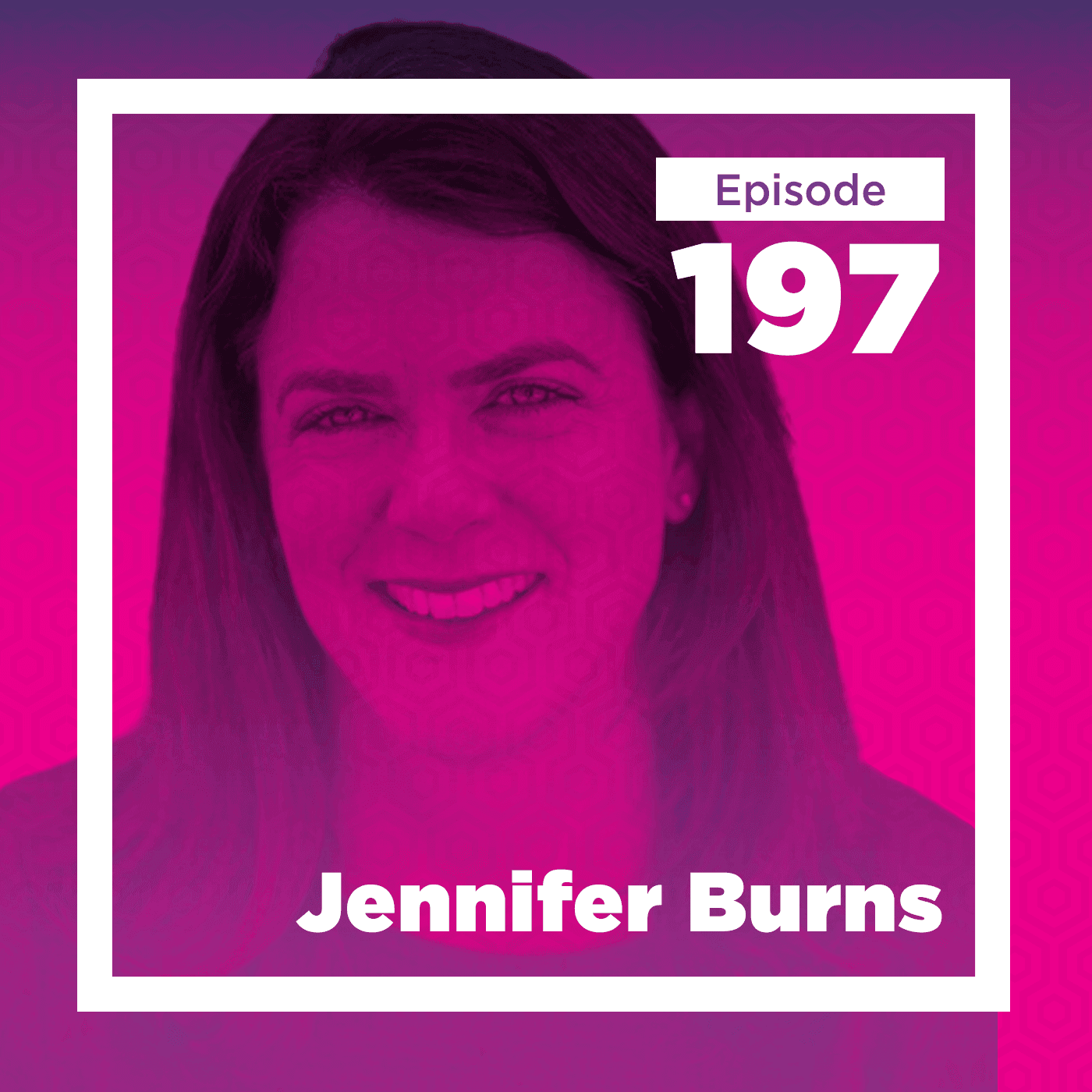
Podcast Summary: Conversations with Tyler - Episode with Jennifer Burns on Milton Friedman and Ayn Rand
Episode Overview
- Title: Jennifer Burns on Milton Friedman and Ayn Rand
- Host: Tyler Cowen
- Guest: Jennifer Burns, history professor at Stanford University
- Recording Date: August 30, 2023
- Description: Jennifer Burns discusses her biographies of Milton Friedman and Ayn Rand, exploring their intellectual legacies, personal lives, and influences on American political thought.
---
Key Themes and Discussions
Understanding Milton Friedman
- Reassessment of Friedman:
- Burns reflects on her evolving understanding of Friedman, initially interested in him as a public figure but later recognizing his contributions as an economist and statistician.
- Emphasizes Friedman's duality of consistent messaging yet intellectual dynamism.
- Early Contributions:
- Friedman was pivotal in the transition toward more quantitative economics in the 1930s.
- His work during the Great Depression involved analyzing large data sets to understand consumer behavior and contributed to the development of statistical techniques still in use today.
- Public Intellectual:
- Discusses Friedman's shift to a public intellectual role, particularly influenced by connections with political figures like Barry Goldwater.
- Reflects on the two phases of his public life: the early years during the 60s-70s and his post-Nobel Prize activities.
- Critique of Dogmatism:
- Reference to a letter from Wesley Claire Mitchell questioning Friedman’s empirical research due to perceived biases.
- Burns considers whether Friedman was overly dogmatic or if he genuinely believed he was testing his hypotheses fairly.
Influence of Rose Friedman
- Partnership Dynamics:
- Emphasizes the significant influence Rose Friedman had on Milton's career, particularly in his public intellectual pursuits and writing.
- Describes how she encouraged him to engage more publicly and helped shape his works.
Ayn Rand's Legacy
- Screenwriting and Novels:
- Burns evaluates Rand's skills as a screenwriter and her best novels, noting that while "We the Living" resonates with historical context, "Atlas Shrugged" suffers from lack of editing.
- Feminism in Her Work:
- Discusses the portrayal of women in Rand's novels and the lack of successful businesswomen in American fiction, attributing this to broader societal norms and historical contexts.
Intellectual Traditions and Contemporary Issues
- Decline of Conservative Intellectualism:
- Burns comments on the perceived decline of a vigorous intellectual tradition on the American right and the fragmentation of ideas in contemporary discourse.
- Future of Milton Friedman's Ideas:
- Predicts that while Friedman’s name may not fade, the interpretation of his ideas will evolve, recognizing the complexities of modern economic challenges.
Relationship with Other Intellectuals
- Interactions with Hayek and Mises:
- Discusses Friedman's reluctance to support Hayek's appointment at the University of Chicago and the complex relationship he had with Mises, highlighting both respect and ideological differences.
---
Key Takeaways
- Friedman's Legacy:
- His contributions to statistical analysis and economics continue to be relevant, despite evolving critiques and changing dominance in economic thought.
- Impact of Personal Relationships:
- The influence of Rose Friedman and his family played a crucial role in shaping his career and public persona.
- Ayn Rand's Cultural Context:
- Rand's role as a female author in a male-dominated field highlights broader issues within fiction regarding gender representation.
- Contemporary Conservatism:
- The fragmentation of conservative thought reflects changes in media and cultural discourse, posing challenges for coherent intellectual engagement.
---
Conclusion This episode provides a comprehensive exploration of Milton Friedman and Ayn Rand, delving into their intellectual legacies, personal dynamics, and the evolution of conservative thought in America. As Jennifer Burns articulately discusses these figures, listeners gain insight into the intersection of personal relationships and intellectual development within the broader political landscape.
Written by AI. May contain mistakes. Listen to the episode to check what was said.
Transcript
Automatic transcript. May contain errors.0:04Conversations with Tyler is produced by the Mercatus Center at George Mason University, bridging the gap between academic ideas and real world problems. Learn more at mercatis .org. For full transcript of every conversation, enhanced with helpful links, visit ConversationsWithTyler .com. Hello everyone and welcome back to Conversations with Tyler. Today I'm honored to be talking with Jennifer Burns, who is a history professor at Stanford University. She has a new book out which I just loved. It is called Milton Friedman, the last conservative, and her earlier book I also like very much. That is Goddess of the Market, Inazairant and the American Right.
0:49Jennifer, welcome. Thanks so much for having me. I'm really looking forward to our conversation. There's so much Milton Friedman, one can read. There's a reasonable amount of him on YouTube. Overall, how did writing this book cause you to reassess Friedman? What's the Delta? That's a great question. I came in really interested in him as the public figure, the YouTuber, as it were, and over time I got more interested in him as the economist. So I think I came to understand and how much that public freedman was the tip of the iceberg on just a much bigger base of inquiry, research, thinking not just in economics, but in many dimensions of economics.
1:31So I think that was one thing. I hadn't fully appreciated freedman the economist. And then I would think as time went on, one thing I came more to appreciate was the way he had both a very consistent message and some change and development in his thought, so the kind of dynamism and stability at the same time. Now Friedman's earliest work on math and statistics. Why was that important? And when was that? So, Friedman, very early in his life, was sort of choosing between a field of mathematics and the field of economics. And when he came into economics, it was really transitioning away from political economy, which was rooted in 19th century philosophy, ethics, considerations of government, to a more quantitative field.
2:16That shift would happen around Friedman, and what was important is that he was there on the ground floor of that in the 1930s. He was trained by some of the most preeminent mathematical economists of his generation at Columbia, not necessarily at Chicago. And over time, he came to reject that approach. This is something not a lot of people, particularly economists, know about Friedman, but it was significant that he rejected it not out of ignorance, but from a position of understanding mathematical economics, having actually made his mark early in his career with several papers. And then deciding that intellectually this was unsatisfying and this was not providing him with the portrait of the world that he thought economics could reveal if done the way that he ultimately did it.
3:07And his early work on stats, that's still cited by mathematicians, right? Yeah, there's something called the Friedman test, which is still included in software packages. So a lot of that happened. So one, he was there in the first era of mathematical economics. He was also there on the ground of really the first era of big data. So during the Great Depression, the government was struggling to understand what had gone wrong and how to fix it. and one approach they took was to gather as much data as they possibly could on consumption, what are ordinary Americans buying, spending. So they ended up with millions of punch cards, right?
3:44They had this very rudimentary technology. And Friedman was one of analysts hired by the federal government in the mid -30s to figure this information out, basically to process this data. And so as he grappled with that in his work of day life, he came up with a couple of statistical, I mean shortcuts is to be a bit flippant, but techniques to enable you to get through data very quickly. And those became important papers. He also had a second discovery that I talk about in the book when he was working at the Statistical Research Group, which was a secret wartime agency. And this was a similar task in that they were given a problem by the Army that said basically, how can we know if our munitions work?
4:25How can we test them more efficiently given that we're fighting the biggest war we've ever fought on two different fronts. And so he came up with what he called the super colossal test. And he was able to conceptualize it and design it, but he wasn't able to prove it mathematically because although he was a skilled mathematician, he said, I'm just, I'm not there. I need a little bit of a better mathematician. So he ended up bringing in Abraham Wald to finalize the results of the idea they had come up with. And this became known as sequential analysis. And, you know, ended up being a huge boon to the US military in terms of enabling them to test their ordinance and move forward.
5:03So it's fascinating in terms of Friedman's later life. His earlier career, his intellectual discoveries are very much embedded in a growing federal government that's growing because of the Great Depression, that's growing because of World War II. And this is what enables him to develop that statistical prowess. It gives him a very strong reputation, a field of economics. But what's interesting is, you know, within five years of that, he's turning his back on those techniques and methods and saying this isn't applicable to understanding human economic behavior. These mathematical models and statistical techniques, these aren't enough.
5:37So what's the when and how a Friedman starting to become some glimmer of say the Milton treatment of the 70s and 80s? What leads him to make the shift and decide, well, I'm going to be some version of America's leading public intellectual and take on this heroic role, change the world and everything else. You know, I think he had opportunities to do that throughout his life, some of which he took and some of which he passed on, but I would say he had a model of that very young in his life when he was a graduate student in the figure of Henry Simons, who is one of these forgotten figures in the history of economics, who I became absolutely fascinated by.
6:13And Henry Simons had a book that was sort of a big deal in the 1930s, it was called a positive program for laissez -faire. And it was an effort to talk about principles of liberalism, what we would call classical liberalism, and apply them in the New Deal context, and use them to critique the New Deal. And then Simon's became very actively involved in promoting what was called the Chicago Plan, which was a monetary solution to the Great Depression. It was actually, it would have been a radical reformulation of the banking sector. and Simon's, you know, had friends in high places was kind of pushing this through the political system.
6:48So I think that was an early model for Friedman. At the same time, about the 1950s, at one point he was offered a birth on Eisenhower's council of economic advisors. And he said, no, you know, he basically wanted to do his work at the University of Chicago at that point. It didn't feel done. He didn't want to step into the public realm. So I think he was always paying attention, always thinking about it. It's really with his connection to Barry Goldwater that he has the first phase of being a public intellectual and that also comes after he's completed with Anna Schwartz, his magnum opus, a monetary history of the United States.
7:28So I think he was both strategic and deliberate and that he wanted to do his major scientific work before he stepped into the public realm. And so there's kind of two phases of him as a public intellectual. There's a 60s to the 70s and then there's a post Nobel Prize when he's retired and then he is still out there But that's when he's on Donohue and you know has more of a presence in the Republican establishment There's a letter you cite from Wesley Claire Mitchell. Maybe it's from 1947 Where Mitchel basically says well, Friedman is too dogmatic He did this study of incomes of the medical profession and we can't really trust it because he's looking for a particular conclusion.
8:08What do you make of that account for Mitchell? Was Mitchell himself biased? Friedman was just flat out right? Friedman was too dogmatic. What do you think? Yeah, I think about this a lot because so that's an episode. I found this letter very just startling and I include quite a bit of it in the book when yeah, Mitchell says to Burns, you know, Friedman to Arthur Burns. This is Arthur Burns, yeah. Right. Arthur Burns wanted to hire Friedman on the National Bureau of Economic Research and Wesley Mitchell basically said, no, he said he can't be trusted not in that he lacks integrity but that he's so committed to what he wants to see that he will selectively interpret the data.
8:44And it's interesting because I see in his letters with him in Schwartz, at one point he says to her, you know, we didn't just go and take a bunch of monetary statistics to see what we wanted to see. We had a hypothesis about what we would see and we went in and gathered data to test a hypothesis. And as I was reading this, I was thinking, you know, he doesn't have a consciousness of what we would call, you know, selective reading or bias or selective recognition of facts to fit a preexisting. He didn't see that as a pitfall or a problem. On the other hand, he does say in some of his later work, look, everyone has a point of view.
9:19So everyone comes from a place. I wouldn't say it's radical, perspectivalism, but it's an awareness that you stand somewhere and we can't get away from this, so therefore we just have to proceed anyhow. So I think he truly believed he was testing to the best of his ability, his priors, and he believed that he was willing to revise them. So I think in some cases he was, in other cases what he found matched his priors. I don't think that invalidates his whole intellectual project, but I think it's interesting his level of confidence in his ability to, you know, to evaluate his own thinking. At the same time, I also think that, I mean, that is one way to do science, right?
10:01You have a hypothesis. You go in with a hypothesis and you see if it's true. So that was very much how he operated. it. Putting aside co -authored works, how do you understand Rose Friedman, his wife, to have influenced Milton's career? Putting aside co -authored work. Like what's the deep psychological way in which this all fits together? Clearly they wrote things together. You mentioned she shaped or maybe even edited a lot of his newsweek columns. At the margin, was she telling Milton be more out there or retreat to your academic life or what's she doing in the show? So she was definitely telling him to be more out there.
10:35I don't think we'd have Milton the public intellectual without Rose. And that is specifically putting together capitalism and freedom. I was never able to untangle exactly what she did because that portion of the archive is missing, I think, not coincidentally. But both of them said she's the one who put this book together. Like, she went into the notes and made it into a book. I don't think he would have done that. She and his son David also convinced him to do Newsweek. They said, you owe it to yourself, to the country. You've got to do this. They've really pushed him. So, I think he would not have been so prominent in the public eye without her.
11:15I think there's other contributions just allowing him to be really singularly focused on his work because she took care of everything else. How else did David Friedman, Milton Sun, influence him? So as far as I can tell, David was an important connection for Milton Friedman to this sort of student libertarian movement that coalesced really around ending the draft, but David was involved in conservative student organizations at Harvard and then at Chicago, where he was a graduate student. So Friedman always had a connection to those communities. There's sometimes, I forget exactly where, but I've seen some libertarian material from the 70s where like David convinced Friedman to do an interview or call into a conference.
11:56And for libertarians in the 60s, late 60s and 70s, Friedman was a bit of a court intellectual. He was too status for their tastes, but he stayed engaged with them. I think David was kind of the conduit. David at that point was much more of an anarcho -capitalist than his father. So I think he helped the elder Friedman sort of keep his pulse on what was happening with a younger and more radical student movement. What was Milton's courtship of Rose Friedman like? It started because of their names. Rose was originally Rose director at Milton Friedman. So they were seated next to each other in class.
12:30And so it was very much a study buddy thing at first. I think Milton always had his iron rose. Rose was like the only woman in a class of, you know, 30 -some economists. So she had, I'm sure, more than one suitor, although she doesn't go into any detail in this. And so they studied together, they spent time together, and there's an anecdote I recount in the book where at the end of their first year in graduate school, you know, as they were getting ready to depart for the summer, Milton tried to kiss Rose, and she sort of rebuffed him. And then they were apart for a year and when they came back together, things had changed.
13:07And she was ready to be in a relationship with him. So then they were in a sex head of couples who spent all their time together. There's then a period where it kind of seems unclear. Like, what is going to happen next? And I don't think that Milton Friedman ever seriously had another girlfriend or considered another partner and same for Rose, but it was in 1930s. economic prospects were slim and it was very much, you know, a cultural moray that a man had to be able to support his wife and children before he would consider marriage. So there's a couple of year period where there's still together and Rose is thinking they're about to get married and Milton is not so sure.
13:46And I think at some point, like his friends were like, what are you doing? Just wise up and marry her. And at some point she kind of called his bluff and said, look, we have to get married and they did. So I don't think there was ever any question of the love. I think it was just there was some hesitation because of their economic fortunes. How is it that you read their joint memoir, Too Lucky People? I mean, is the title, Jasting like they were lucky? When I read the book, I was surprised how bored I was. And I wasn't sure, well, they did this because they wanted to like manicure the story, which is super upright to begin with, to be clear, as I think you would agree.
14:24Or is it actually how they approach things? Like when I read Quinds and Amor, I was super bored, and I concluded tentatively, well maybe Quind was just boring, right? Like how do you think about this? Yeah, I mean, yes. Many people, even those who love Milton Friedman find this not a very compelling read. It's more of a travelogue. I read it as a book that's fundamentally generous in that everybody was someone they enjoyed, the conversations were spirited, arguments were friendly, which is simply not very accurate to how their life was lived, and I'll provide an anecdote about that. They talk, though I think of it, this is a couple in their 90s, that's had a good life, they're looking back, they're reflecting, they're not trying to settle scores.
15:09They're trying to put the most positive spin on anything possible. So I think it's generous in that spirit, but it's not very accurate. And so after a while I realized the biggest person that I was riding against in my biography was not another biographer, but it was two lucky people. That was the text that everybody had in mind that was just simply not accurate in many ways. So I'll tell you two ways that I see it as being inaccurate. One is Friedman recounts an episode of him testifying to Congress and he says, and this is in the early 1940s, I had no idea how Keynesian I was. And, you know, there's been maybe five to ten books and articles that have jumped off that to say, well, Milton Friedman was once a Keynesian and then he had some type of conversion.
15:56And I just do not see that in any of the record I've looked at. And I go into some detail, both in the text and more detail in the footnotes about why I don't think this is accurate. And it's, you know, Friedman's looking at his congressional testimony, her reads it in five minutes and says, oh, this sounds Keynesian, you know, from his vantage point in the 90s. So it's not an accurate depiction of his views or of his location in American economics in the 1940s, but it's taken as gospel because he said it. The other thing I would say, I talk about this in some detail as well. In the 1950s, there was a large conflict at the University of Chicago between Friedman and a group associated with the economics department, the Kowals Commission.
16:40And that was actually a group of mathematical economists, many leftist in nature, and Friedman didn't like their economics and he didn't like their politics. And it was basically an extended turf war. And they mentioned this briefly, but when you dig down a little bit more, so they mentioned tolling coupments, it was a leader of the coals at that point. And it's kind of along the lines of spirited discussion, some conflict. In reality, there's accounts that indicate Koopman's went through a sort of mental breakdown as part of his conflict with Friedman and had to take time away from the university, had to go to a music camp, to rest his mind, and Friedman was successful in getting their Rockefeller grant canceled, basically cutting off their funding sources.
17:26You would know there was conflict, but you wouldn't know that it was very intense and dark conflict, and you don't see that in the memoir, which again, maybe to his credit, he's trying not to consume all the negative things he did, but he's kind of glossing over how intense this was like academic street fighting. It really was. I'm struck by your portrait of the profession in the 40s and 50s. How petty it was. How much people would hold up dissertations. How much individual personalities probably mattered more than they do now. I mean, is that the impression you have of the work you did on that time?
18:02It just sounds horrible. And you think like, oh, things have gotten worse, but actually maybe they've gotten better. You know, it was a professionalizing, it was professionalizing, economics was professionalizing. So in the absence of strong professional norms, there was a lot of room for personality, for prejudice, for all this sort of thing. You know, so there's several economists who were hired without dissertations, you know, and they could, you could be hired and have a good career without actually finishing your dissertation, you know, which is completely unheard of today. So, and then the story I go into in some detail involves them on a Schwartz and how the Columbia faculty simply would not give her a PhD.
18:41They just wouldn't do it. They could not be convinced that she deserved a PhD. It's very clearly sexism at work. And it really took Friedman had to put his foot down and really choose some people out before they decided to give her the degree. So yes, I think in the absence of professional norms, you have a lot more room for power plays for unfairness for prejudice. That said, I think the professional norms can get too rigid to the point where you cultivate groupthink and you close out the possibility of new perspectives, new ideas, new paths. So this was definitely a moment of formation. How do you think about all the work Milton did with women and his shorts most of all?
19:21But his ideas on consumption, he drew from several women researchers. That was unusual back then obviously the work with Rose. Is he in your mind a proto -feminist or this is coincidence or what was it for him? So I don't think sort of neither. I think you wouldn't have Milton Friedman without these women. And sometimes I give a talk called Milton Friedman was a woman. Because I think if you pulled all the women out of his life, you'd have a good economist. I don't know that you'd have a great economist. I don't think you would. Because they did several things. What they really did was provided a counterpoint to his natural inclinations.
19:56So take a monetary history. This would not really have been a narrative or a history. It would have been a bunch of like charts and graphs about the money supply. It would have been closer to say, Kuznet's studies of national income. And so it's really shorts that has a love for history that puts it into a narrative that convinces him to make it a much longer story. And that's why that book resonates because it's not just data, it's a narrative, it's a story. When it comes to the theory of the consumption function, he was basically drawing on the woman's world of consumption economics, which was something that had been a big part of the field, but because of this professional process, which also was driven by men, so there was a sort of machismo to it.
20:43A lot of men had turned away from consumption economics, and since Freeman had not, he He had sort of an advantage. He was zicking where everyone was zagging. Now why was Friedman able to do this? Was he more enlightened than other economists of his day? I would say both yes and no. So there's definitely, I had some anecdotes and stories that he was not feminist in his behavior. And the other hand, compared to economists of his day, he very much was. I didn't find any letter that mentioned anything negative about any of his collaborators as women. I think that's not true for other economists. There are some cases, I think, at Samuelson, who will write letters supposedly in support of his female students that turn out to actually be very negative and very sexist in tone.
21:29I tended to think that Friedman had a way of sort of missing some social cues and social norms in ways that could be detrimental. I think when it came to the women working with him, he had an ability that maybe others didn't to sort of see the person before he saw the woman. And so if it was a very smart woman, he would sort of recognize first and foremost that this was a smart woman. And secondly, kind of register that, you know, this was a woman and then maybe that would come with some of supposed limitations. But he really was generous and supportive of the woman in his life as intellectuals.
22:04And I think that's like his secret sauce because no one else is really doing it at the time. And so it gives him new perspectives, you know, I mean, when you look at his work he was cited for in the Nobel Prize, most of it has a major woman collaborate. It's a monetary history, theory of the consumption function. There's a third which isn't coming to mind, but those two would not have been done without a female collaborator. I knew nothing about this when I started. I was like, this is strange. I also think it's why he wrote books. He wouldn't have written books without these collaborators. I think books still are very powerful.
22:38Even in a field that's moving towards papers, books retain their power. Why did treatment oppose the courtesy appointment of Hayek and the economics department at Chicago? You know, I don't have a ton of information about that because one of the interesting things that happens right when you would think treatment and Hayek's relationship is the most important. So Hayek comes, I believe it's basically 1950 to 1960, he's at Chicago. So right when he arrives at Chicago, you lose the paper trail because now he's there. And so there's not a lot of discussion. My sense is that he didn't consider Hayek an economist because he wasn't empirical enough.
23:20So when Friedman turned away from mathematical economics, he was turning away from theoretical models. He wasn't turning away from data per se, and he really believed you had to have theory, which for him was price theory, empirics, such as his collaborators gathered through the study of consumption, and you had to test that theory with the empirics. And so he saw Hayek, although Hayek really did influence and teach him intellectually, I would say. He saw him not as a proper economist because he wasn't doing that empirical research. He wasn't trying to test his theories with empirical data sets.
23:57I don't think he wanted Hayek training graduate students. He was happy to put Hayek on the syllabus, happy to have him teaching seminars, very involved with him in the broader intellectual endeavors. But I think he had an idea of what and how economics should be and Hayek didn't fit into that at that point. How is it you think that Friedman's influence differed in Britain compared to the United States? How did it differ in Britain? So there is... I see every country has its own version of Milton Friedman. They're all a bit inaccurate, but he had influence in many places. How is Britain different?
24:30Well, I think Britain had, one it had a sort of pre -existing set of ideas that was called monoturism, which actually wasn't Friedman inspired, but linked up with him very closely. I think Friedman actually, he had sort of more and less influence. I think the presidential lecture he gave in 1967 saying there wasn't a long run trade off between inflation and unemployment, there's definitely several key figures in the British political establishment who found that made a big impact on their thinking because they felt like they were living that. We've been trying to spend money to bring down unemployment and now we've spent all this money and unemployment is still going up and inflation is going up and so in a lot of ways, Friedman seemed to be explaining what was happening in Britain and it happened sooner.
25:12On the other hand, he also became a sort of symbolic figure very quickly in British politics, both because the British monetary system is different. It was different at that time, so his advice wasn't technically suitable in many ways. And secondly, he became a much more prominent figure after the Nobel Prize and after his controversy over his connection to the Pinotché regime in Chile. So he then became a sort of whipping boy of left and right. So he does have one a substantive intellectual impact and two a symbolic impact. fact, you know, I don't think his celebrations of individual freedom maybe have the same cultural resonance in Britain as they do in the United States.
25:59I think in the United States he's in some ways tapping into the kind of rugged individualism, frontier spirit, or Americans and were free. He's got more of that to play with than I think he did have in Britain. So you don't see capitalism and freedom, you know, falling off people's lips in the same why in England as it did in the United States. You know, there's a debate in one of the episodes of Free to Choose, where Peter J. who is British, takes on Milton Friedman. I don't know if you remember this. And J. says, well, Milton, you're always inconsistent. You cite utility when you want to make an argument, but when utility is not on your side, you switch back to liberty.
Read the full transcript
26:35Which is it? Which one is your master? Was Peter J. Right? Was Milton wrong? What's your view? I love that exchange because if you recollect Peter J. keeps pushing and finally, Friedman and says, I think this is verbatim, freedom is my God. And I was like, wow, freedom is your God. You know, I expected the lightning bolt to come down. It was very intense, but I think that is ultimately it. And so I think freedom didn't want to believe you had to choose between freedom and greater prosperity, you know, between an unregulated economy and widespread differentials of wealth. He really didn't want to make that choice because one freedom was his God and two He was not any egalitarian, but he definitely was concerned about those who had less and he wanted there to be fewer poor people and so He didn't really want to confront that tension.
27:30He spent a lot of time trying to massage it I think that's where the his interest in what we will call you be eye comes from But the other thing I really do want to stress is in his era It looked plausible that you didn't have to choose. In other words, it's the era of the sort of convergence of incomes. It's the era where as countries develop economically, their income inequality goes down. And so he's seeing a very different set of figures, you know, then we look at today. And as a result, he was much more optimistic that the more capitalism spread, the more inequality would decline, the better off everybody would be.
28:10And he really didn't wrestle very much, although he started to a bit at the end of his life with the conundrum, what if capitalism spreads and things get worse for a lot of people? What do I do then? You mentioned treatment in Chile. What's the bottom line on that whole episode in your opinion? I think in most of it, it was manufactured as a campaign against Friedman because I think ultimately his impact was similar to what any Western trained economist would have had and he was not the architect of the Hinta. He was not particularly connected to Pinotier. He came in after an economic catastrophe and prescribed what pretty much any Western trained economists would prescribed stop inflation.
28:59And he was then tagged as the sort of architect and western endorser of the regime, which was not the case. But I think he came to stand in for people's discomfort with the idea that the Nixon administration had perhaps supported the coup. And I think there's another piece of it is that the dream of Iende was there could be a peaceful road to socialism. And the coup seemed to suggest that was not true, that the peaceful road to socialism could not happen. And so if the coup was not inevitable because it was a manufactured by Western economists and Western governments, then perhaps we could get back on the via Chalena and make our way to the peaceful redistribution of property and power and the success of a socialist government.
29:51So I think he got really tangled up in all these questions about, you know, is it possible to have a peaceful transition to a socialist or communist government and making Friedman the problem enabled you to focus on Friedman or Nixon rather than the very real problems created by the I &A government in Chile. You use the word prescribe, like what just physically literally, what did he do? What's the thing? Oh, yeah, I can talk about that for sure. And he actually didn't do that much, which is interesting. So I'll get a little bit granular. Basically, a nose shut takes over from a country where the state sector has expanded dramatically and inflation is, I think it's almost 600 percent, it could be wrong.
30:39It's hundreds of percent. It makes our stress about, you know, 6 % inflation really puts it in perspective. So when the Hoonter comes in, they basically keep doing everything they've been doing in terms of state control, the economy. They reprioritize a little bit, but they don't really know what to do. So say the socialist governor of the mine is replaced by a military governor of the mine. And then nothing is improving economically. So it's about a year and a half in. There's a changing of the guard internally in the Chilean regime and a group of economists, several of who did have Chicago training, basically are able to get the ear of the dictator and say, look, we need to do things differently.
31:21We need to privatize. We need to open markets. We need to reprivatize rather. We need to open markets to international trade. We need to do all this stuff. And Penochet basically says, okay, let's do it. And it's at that point that they're like, let's bring in Milton Friedman. So then Friedman comes in, the policy has been decided. And basically his role is to speak to what I kind of jokingly call a Chilean deep state. He goes around and he meets with all of the military functionaries who will carry out these policies. And he explains in his very lucid way, here's why this is the right medicine for Chile.
32:00He does interviews. He meets a lot of different people. He meets Penochet very briefly, and he tells him, you know, you have to cut spending, to cut inflation, and he also reportedly says, according to someone who's in the meeting, you know, if you give the people economic freedom, eventually it's going to be in political freedom. And apparently, Penochet is like, yeah, you know, whatever, sure. What I found in the records that I read, the big question that everyone had for Friedman was, this is going to be too painful. We can't do this. This is going to hurt too many people. So even in the military regime, they are worried if we cut all the state supports that have been created and we try to stop printing money and stop inflation, this is going to cause a huge amount of economic pain.
32:42And so Friedman's sort of like a broken record, like, yes, but you have to do this and the quicker you do it, the quicker it'll be over. Cut this bending, provide emergency, economic support, and you'll get through it. And basically, he uses a metaphor of cutting off a dog's tail, just sort of a horrific metaphor, but he says you got to do it all at once, you can't drag it out. So I would say his function is to certify and explain a policy change that has already happened. And so he's basically like a big name, flown in to tell everybody, here's a new program, here's why it's going to work, you know, let's get psyched and do it.
33:19So he's not the mastermind in any way. Part of the reason it's so controversial is, I mean, the real reason his presence there is so controversial is the Nobel Prize, which is awarded, I think it's about a year later, and the really unfortunate part is the Nobel Prize announcement comes just a few weeks after Pinotje's goons have assassinated a regime critic on the streets of Washington, DC. They blow up his car on the streets of Washington, D .C. And then a couple weeks later, Friedman wins the Nobel Prize. Now, there's no connection between these events, but it appears that this sort of, you know, right -thinking people of the Western world are padding the dictator on the head.
34:02That's how it's framed. Like, nobody cares about what's happening in Chile. Look, they're celebrating this economist who's somehow responsible for what has happened. So I think it all gets kind of mushed together to make a political point. What's the future of Milton Friedman? Say 30, 40 years from now. Where will their reputation be? Because University of Chicago is no longer Friedmanite, right? We know that. There are fewer outposts of Friedmanite thinking than there had been. Yeah. Whether he be underrated or somehow reinvented or what? Well, I mean, okay, let me look into my crystal ball. I think he's going to be, I don't think the name will have faded.
34:45I mean, I think there are still names that people read, you know, people still read canes and mill and figures like that to see what did they say in their day that was so influential. I do think that, I think that Friedman has kind of got into the water and into the air a bit. And I do some work on tracing out his influence within economics. No one's going to say, oh, I'm a Friedman, I, or a few people are. But this is someone whose major work was done half a century or more ago. So I don't think that's surprising. It would be surprising if economics had been at a stand still, such as, you know, Friedman still called the tune.
35:19I do think, you know, when you think about the way we accord importance to the modern federal reserve, of course, there were things that happened in the world. But Friedman's ideas did so much to shake that understanding. He's still in policymakers' minds. He's still in the monetary policy establishment's minds, even if they're not fully following him. I think we're in the middle of a big reckoning now. You saw all the debate about M2 and the pandemic and monetary spending. I don't know where it's all going to settle out, and it's a more complicated world than the one that Friedman looked at. I tend to think he's sort of an essential thinker that the basics of what he talked about are going to be known 50 years from now for sure.
36:05Milton Friedman have friends? He did. He did. He had lots of friends. Who is his best friend? Not colleagues, not co -authors, but other friends. Well, so now that's an interesting thing because most of his friends were his colleagues and were those in agreement with him sort of ideologically. He had a friendship with someone named Leo Austin who was a humorist, kind of a humorist. Great writer. Wrote a lot of books about Yiddish culture. Yes, exactly. So he was friends with him. But Austin agreed with Friedman, mostly, right? Yeah. So he'd be in the Industrial Revolution. It sounds very Friedman -Aid.
36:39Probably. I mean, he probably glossed a lot of what he was hearing from Friedman. He apparently did have a friendship with Daniel Borsten, who's a historian at the University of Chicago. I would say most of his close friends, though, were, I would say, either George Stigler or Aaron director were probably his closest friends. And Aaron director was his brother in law, and George Stigler was his grad school friend, and eventually became his colleague. So this is one thing I really noticed in the book that for Friedman sort of friendship and ideological sympathy and commitment to a certain political vision, they're all intertwined.
37:17So he had cordial relationships with a lot of different people, but they weren't quite friends. And even, I think, the great crisis in his friendship with Arthur Burns is a policy disagreement. And for Friedman, that policy disagreement just calls into question the whole friendship, although he very quickly tries to reestablish that connection. And he won't let that connection go. But the fact that it is so stressed by their disagreement over monetary policy I think is really indicative. So yeah, he walked, talked, breathed economics all the time. Your other biography, it's a vine -rand. Again, it's called Goddess of the Market.
38:01I'm ran in the American right. Before the novels, was she a good screenwriter? Let's see, I think she probably was. I mean, she had success in a pretty competitive industry. Most of them tended to be these kind of melodramatic plots. I actually liked the film We The Living, that they did a fairly good version of it. The other thing that's hard to say is she didn't compose a ton of original screenplays, what she would do is take an existing screenplay and kind of tart it up a little bit, make it more interesting. So I don't know that will ever fully, that would be a project actually to try to excavate what it, which films did she have a hand in.
38:40But the fact that she went from Penalist immigrant, you know, to having a creative role in one of the major studios of her time, there must have been something that was recognized. Also, again, as a woman in an era when that wouldn't have counted in her favor to any means. Which do you think is the best of the novels? Some would say least bad, but either way. Hey, like I said, I'm partial to we the living. It's set in Russia during the revolution. So it has that historical flavor. I like it's sort of a Romana clef. It's characters and families she knew. So while the sort of central love triangle is quite imaginative and will strike many readers as not true to human nature, the sort of ancillary characters I think do ring true.
39:27So I think that her flights of imagination were sort of tempered by the fact that she was working from this material. And I think it's just a fascinating glimpse into, you know, Russia 100 years ago. So I think those are, and it's long, but it's not quite so long. You know, the pity with Atlas Shrugged is she was uneditable by that time and she really needed to be edited. Sex scenes in Atlas Shrugged and Fountainhead. What do you make of them as a reader today? I think they're part projection. I think they also can be very usefully read as part of the Romantic genre. Like if you were to pick up a romance novel in the supermarket, you would find a very similar plot structure.
40:05And so it's very much against our sensibilities, they sort of rape as romance, coercion as romance. But again, if you read a sort of dime store romance novel, this is like a trope, that's very common. So I think she was kind of pulling on these tropes. And then I think she was imagining this kind of heroic manly man that if she actually ever met in real life, she would not be attracted to and probably not even be able to tolerate, but in her imagination, this could be sort of an idealized partner. I recall at age 13 visiting the foundation for economic education and Leonard Reed boasting to me in his office that he had high in Rand on his desk and pointing to where that happened.
40:48What was the equilibrium in her love life? How did that work? So let's see, I don't know if, I mean, I'm sure she flirted with Leonard Reed, that would make sense. The equilibrium was she was always drawn to younger men and that is sort of true from the beginning. So she was very much drawn to her husband. She was kind of the aggressor in that relationship. And then there's a couple of, before Nathaniel Brandon, who was her student and then her collaborator and her longtime lover, I think 25 years her junior. There's a couple of other young men who she was testing as potential romantic partners.
41:24So I found a couple in our reminisces of the archive. She would start a friendship. They would come visit her. And then in retrospect, they were like, you know what, if I had wanted to pursue this romantically, she would have been willing or she was trying to set me up. She was trying to seduce me, but she was going a little slow and I didn't know what was going on. So there's like, well, I think there's maybe two people that were kind of in that position before Nathaniel Brandon. And then I think once she was with Brandon, she was pretty content with him. She wasn't looking elsewhere. So I think her equilibrium was what she achieved briefly, which was adoding and supportive husband.
41:59and an exciting secret lover, much younger than her. So she had it briefly, but it didn't last. What was the role of the Roy Child's open letter to Ein Rand? That's a great moment. So Roy Child's writes this letter to Ein Rand. He's basically saying, if I remember correctly, like be in an arco -capitalist, like you haven't gone far enough. Like if you follow the logic of your thought, there should be no state whatsoever. I mean, she wasn't really paying attention and what did she call them? Hippies of the right. You know, she hated anarchists. She hated libertarians. By the end of her life, she hated anyone who liked her, which was a difficult position to be in.
42:38So I don't think that it had an impact on her, but I think it was one of these documents that said to all of you who like On -Ram, but feel like she hasn't gone far enough. Let's go there together, and we can appreciate her without feeling like we have to stay with her understanding of the state or her, you know, clinging to this sort of aativistic state. And my feeling on both her and Friedman, and they're not going all the way to Anarchy, I think it has something to do with their backgrounds in Rans case living through revolution and living in Europe and Friedman's case a very real consciousness of his Jewish identity.
43:17And I think for both of them while they felt the state often discriminated against minorities, I think they were more fearful of what would happen without a state in a situation of anarchy in which they would be identified as you know racial or ethnic or religious minorities. I think they had a visceral fear of that for themselves and for any other community that would be in that situation. And so I think that kept both of them from saying you know blow everything up and let's just see what happens. You know Roy later in his life admitted did Rand was right and that is how an open letter was wrong.
43:52I didn't know that. Change his mind. Yes. Did Rand and Friedman, Milton Friedman, know each other? They did. And what did Friedman call her? A, like, something like a terrible and dogmatic woman who did a great deal of good. And to go back to Leonard Reed, the big schism between I and Rand and Leonard Reed, so Leonard read was an early publisher of libertarian pamphlets and materials, came when he published Friedman and Stigler's Roots or Ceilings, which was an economic analysis of rent control. And they were analyzing rent control from the position of economic efficiency, like the rent control is economically inefficient.
44:33And they were also philosophically opposed to rent control, but they decided, really strategically, rather than get into this whole philosophical battle, we're just going to talk about this being economically inefficient, policy choice and policy argument. I ran understood that Leonard Reed had agreed to use her as a kind of ideological gatekeeper and that he was according to her going to show everything the foundation published to her and she would give it a thumbs up or a thumbs down and then it would be published. So this may or may not have been the arrangement, whatever it was, Reed did not follow that process.
45:08He published roofs or ceilings. And I'm Ren Retta and she hit the roof. And you have this just fascinating situation where this one sort of titan of the American right, I'm Ren is calling another, you know, figurehead of American conservatism Milton Friedman, a communist. She thought that Stigler and Friedman were communist because she could tell they were using this utilitarian argument and scrupulously avoiding any kind of moral argument. And she viewed that as a sort of veiled way of neutralizing discussion of economic issues such that you couldn't make an ethical case on behalf of private property.
45:48And so she became livid. She in Reed had a huge fight, letters back and forth. She's going to have nothing to do with Leonard Reed. Now interestingly, Reed and Friedman and also had a huge fight over this. And part of it was because the original version of the pamphlet, although it was mostly utilitarian and it's argument, it did have a nod to the idea that Friedman and Stigler would like more equality. Then there is now, and they said something like, you know, even if you want more equality the way we do, like you should still support this on efficiency grounds or something like this. And this is that influence of Henry Simon's again, who was much more egalitarian, then Friedman, and when he was close to Simon's, Friedman had a more egalitarian cast.
46:31Well, Leonard Reed, he had a henchman, orable Watts, he was very almost a social Darwinist, I would say. Watts did not want that in there. And so Watts cut that out, and Friedman and Sigler said, no, you need to keep it in there. And they said, okay, we'll keep it in. And then they foot noted it and said something like, well, we disagree with this. And then they published in a bridge version of the pamphlet that cut it out entirely. So, Friedman and Sigler were so mad, and they wouldn't talk to read for like five years. So to me this episode is just so illuminating because it's a question of how do we, in 1946, coming out of the World War II era, coming out of the Depression, coming out of the success of the New Deal, how do we talk about economics, equality, and fairness?
47:16Should we talk about it in the old idiom, you get what you deserve? Should we talk about it in a new idiom? Let's help everyone have the basics. or should we not talk about it at all and use a language of economics about what is the most efficient which ultimately will redound to the greatest good for the greatest number. And it's not really worked out and people have really different positions on this. And so this question of rent control is really huge. There's like a huge percentage of housing stock in the United States was rent control at that time due to the war. There was an enormous housing shortage.
47:46And so this was a really big issue. It was coming up for Congress. So everyone kind of got in and they couldn't figure out how to talk about it in a way they just couldn't figure out how to talk about a period. So that's like the big explosion moment. I think it's 46 and you know in another decade they'll be closer to kind of figuring out these questions. What do you think of the Kris Kierbarra argument that Rand drew a lot of for basic ideas from earlier Russian philosophy? I think there's probably a good deal to it. I don't know that I would lay it all. He really emphasizes that I think it's a Russian silver age.
48:20I mean I think to my mind the clearest through line for her is Friedrich Nietzsche, who would have been a presence in, you know, Russian intellectual circles, but it's not necessarily Russian. And so, you know, the fountain head in its original conception had a head note from Nietzsche in each of its four sections. And she pulled those right before publication, because she thought it's too much. So I would say, you know, this idea, she loved the phrase from Nietzsche like the noble soul has reverence for itself. She loved all those ideas and they've just resonated with her very powerfully. I think even in her unpublished work, she really takes some kind of a bit to the edge of madness.
49:00They're more tempered in the fountain head. But I mean, I definitely, I'm like, yeah, she's a Russian novelist. Look at those books. They're huge. They're panoramic. You know, she's very convinced of her role. She's very convinced of the power of the intelligentsia. Right? that was a complete conviction that a salon of committed intellectuals could cause profound social and intellectual change, which of course she had seen happen. So I definitely think she's part of that tradition, but there's also, you know, she's not just Russian, she's Russian Jewish. And so I think there's a kind of counterpoint to that in her concern with, you know, the powers of this state and her focus on rationality and her celebration of, you know, other cultures, sort of high European cultures beyond Russia.
49:48She in the end would say, Russia, it's just a mystical state. It's interesting because in recent years, when we've seen, you know, the glories of fantasies of, you know, mother Russia or the role of the Russian Orthodox Church or all this, you know, the mythic importance of key or whatever it might be, I think back to Iran grumbling like, it's just a mystical state and like they're all obsessed with mysticism. I'm like, She was right. Maybe so. How did Brandon Mises get along? So Brandon Mises, it's a complicated story. There's some of your more viewers and readers who are more into this literature might have heard of an anecdote or supposedly they screamed at each other at a party that appears to not be true, that appears to be a rumor started by William F.
50:33Buckley to kind of cause trouble. She actually loved Ludwig von Mises. She said on several occasions, my economics is from Mesis. Everything I know about economics, I know from Mesis. So I think they are both thinkers who kind of have this rational framework, who kind of have a few axiomatic first principles that they then build a system upon. So I think she really didn't know a ton about economics and hadn't thought about it until she read Mesis. So in person, they did tend to clash. They are both pretty difficult personalities, sort of in the same way, but the letters between them are always respectful.
51:12And Mises was one of the few people, living people that she didn't cut down to her students, that she recommended her students read, if he read the objective as newsletter, those mentions of him and articles on him. So I think that was an important connection. Why is it in the 20th century in America fiction seems to have been so much more important for the left than for the right, especially if you take away Rand. Why that huge difference? That's such an interesting question. It may have to do with I think a general truism that this sort of artistic and creative and life is often a bohemian life as well in which traditions, whether they be, you know, traditional marriage or traditional monogamy, things like that are questioned as part of the kind of creative process, it seems to be where things ferment.
52:03And so, you know, if you are a person who values tradition and values established norms and social practices, that may not be, you know, an environment conducive to creating imaginary worlds, you know. And so I think you need a culture to support artistic creation and fiction creation. And I think the culture, once a culture tips a certain way, it kind of goes that way. So I could certainly imagine societies and perhaps your listeners will No one's to where, you know, the production affiction is done more by conservative writers or thinkers, but I would imagine they have a culture to support that even if it's just a city, a university, a small tradition, a literary school, but I do think as much as creativity's individual at flourishes in community.
52:48So, you don't have that community, it doesn't get written. Why are there so few successful business women in American fiction? So there's Rand, There's gone with the wind, but very little else comes to mind. Oh, like why there's so few depictions of women as successful business men, business. There we go. I just said it myself. Whatever you want to call me. I think fiction is trying to reflect the human experience. And it's to this date there's just been more men who've applied their life's work in business and women. So I think that's part of it. I think it's too bad. I think, you know, Rand's created some memorable characters because of that.
53:24On the other hand, there is a way in which, sure, her characters are women, but they're not engaging in pursuits that the vast majority of women engage in such as motherhood. You know, they are kind of living masculine lives, although she's describing them as highly feminine. So they're a bit of a blend in some ways. Did Milton Friedman read much fiction? Not that I can tell. I mean, there's some stories where I guess Rose wanted him to come to the opera with her. And he was like, well, can I bring a book so I can read if I get bored? He didn't really appreciate culture. And so there's also on a Schwarzenegger story where he was spending, you know, a semester in Paris.
54:08And she was like, oh, the museums will be so wonderful. And he said to her, why would I go to a museum? I just literally didn't know why he would spend his time that way. So like I said, he enjoyed the fiction of Leo Rosten. That's really the only fiction I've heard of him from mentioning. You know, the literature on Amusia, which is a condition where you're not able to enjoy music, sometimes sightseed, Sreadman, is having had Amusia. I'm not sure that's confirmed. Do you know anything about that? No, I don't. That's interesting. I haven't, I'm not familiar with that literature. It's, that does make sense though, with this story.
54:43And I wonder if maybe they saw that story where Rose, she loved the symphony, she loved the opera, and he was basically like, okay, fine, I'll go, but I need to bring my own entertainment along. So what he did for recreation, he really enjoyed woodworking. Aaron director was a skilled woodworker in his basement, had a whole set up. And so I think Friedman built all the furniture for their first home by hand. So he liked building. He's played tennis and he likes skiing. So I think his relaxation was with his hands or sort of physical in nature. I think otherwise when he was reading, he was reading for work.
55:20I also learned from your book, by the way, that Aaron director and Mark Rothko had been childhood friends. It's remarkable. It's not fascinating. It's really fascinating. I have to say there's a historian. I think he's at the University of Rhode Island, Robert Van Horn, who's really excavated a lot of the early life of Aaron director, and it's absolutely fascinating. Very last question or set of questions, but what will you do next? That's a great question. I have a couple of book projects in mind. One is to just kind of look back a little bit more rather than write a biography of, you know, essential figure to kind of put them together into a broader story of the intellectual history of American conservatism or something like that.
55:59So that's one more of a synthetic history, I would say. There's just been such an outpouring of literature on the subject. I think it would be, some days I think it would be fun to bring it all together. Other days I think it's going to be maybe not so fun to have to pick through all that. I'm also interested in writing something sort of a history of postmodernism because I've been teaching an intellectual history class here at Stanford that's been kind of tracing it across the century. And I think that's potentially really interesting. It would be quite different than what I've done thus far.
56:29And so I guess I'll have to wait and see do I want to strike out for a new terrain or keep kind of Plowing the field I'm in so stay tuned is all I have to say on that Just a one follow -up question on that many of us Observing history have the sense that the intellectual tradition within the American right has been in decline for several decades Like a do you agree and be if so what most fundamentally is driving that change? I think there are you know It's a less vigorously intellectual culture. I mean, one thing I sometimes face with undergraduates is they're genuinely surprised when I say, well, yeah, the conservatives had all the ideas, you know, in the 20th century.
57:13And the conservatives really made an impact because they came up with all these ideas that were really powerful and important. And they just, it doesn't really compute because I think the conservatism they've grown up with is not driven by ideas in any meaningful way. So I think that's certainly true. I would say one of the reasons I think it's happened is that, you know, conservatism became an establishment and then you kind of have a set of greatest hits and you have a variety of ways you can make your living within this establishment provided you sort of adhere to the greatest hits. So there's not a ton of incentives to do things differently.
57:49I do think there's a lot of, you know, ideological ferment on the right or amid conservatives right now, it's heavy on ideas. It's often in, you know, internet forums that are not, like, deep engagement with ideas, I would say, in the same way as when, you know, you're reading books in magazines, I think it's more faster and more rapid. It's really interesting, like, any, where all, there's much more competition in the realm of ideas than there was, right? Besides reading a book or going to college, you can get ideas. because they're sort of coming out of everywhere, coming out of the ether. So I think that's gonna lend less coherence.
58:27And I think you can have a lot of people who are intellectual leaders of smaller tribes, rather than having a couple of the big leaders that everyone's heard of, you know, Friedman Hayek, this and that. I just think we're in a more fragmented place. I tend to attribute it to just kind of the media environment we're in, which probably isn't going away anytime soon. So the question is, can we live and thrive in this fragmented attention ecosphere, or are we going to recreate something akin to the three big networks to filter and manage all the information we have? I think we'll see that evolve or not over the next 50 years.
59:02Again, everyone. The book is Milton Friedman, The Last Conservative by Jennifer Burns, B -U -R -N -S, highly recommended. Jennifer, thank you very much. Thanks so much, Tyler. Thanks for listening to Conversations with Tyler. You can subscribe to the show on Apple Podcasts, Spotify, or your favorite podcast app. If you like this podcast, please consider giving us a rating and leaving a review. This helps other listeners find the show. On Twitter, I'm Attyler Cowan, and the show is At Cowan Convose. Until next time, please keep listening and learning.
From the publisher
Jennifer Burns is a professor of history at Stanford who works at the intersection of intellectual, political, and cultural history. She’s written two biographies Tyler highly recommends: her 2009 book, Goddess of the Market: Ayn Rand and the American Right and her latest, Milton Friedman: The Last Conservative, provides a nuanced look into the influential economist and public intellectual.
Tyler and Jennifer start by discussing how her new portrait of Friedman caused her to reassess him, his lasting impact in statistics, whether he was too dogmatic, his shift from academic to public intellectual, the problem with Two Lucky People, what Friedman’s courtship of Rose Friedman was like, how Milton’s family influenced him, why Friedman opposed Hayek’s courtesy appointment at the University of Chicago, Friedman’s attitudes toward friendship, his relationship to fiction and the arts, and the prospects for his intellectual legacy. Next, they discuss Jennifer’s previous work on Ayn Rand, including whether Rand was a good screenwriter, which is the best of her novels, what to make of the sex scenes in Atlas Shrugged and The Fountainhead, how Rand and Mises got along, and why there’s so few successful businesswomen depicted in American fiction. They also delve into why fiction seems so much more important for the American left than it is for the right, what’s driving the decline of the American conservative intellectual condition, what she will do next, and more.
Read a full transcript enhanced with helpful links, or watch the full video.
Recorded August 30th, 2023.
Other ways to connect