
In short
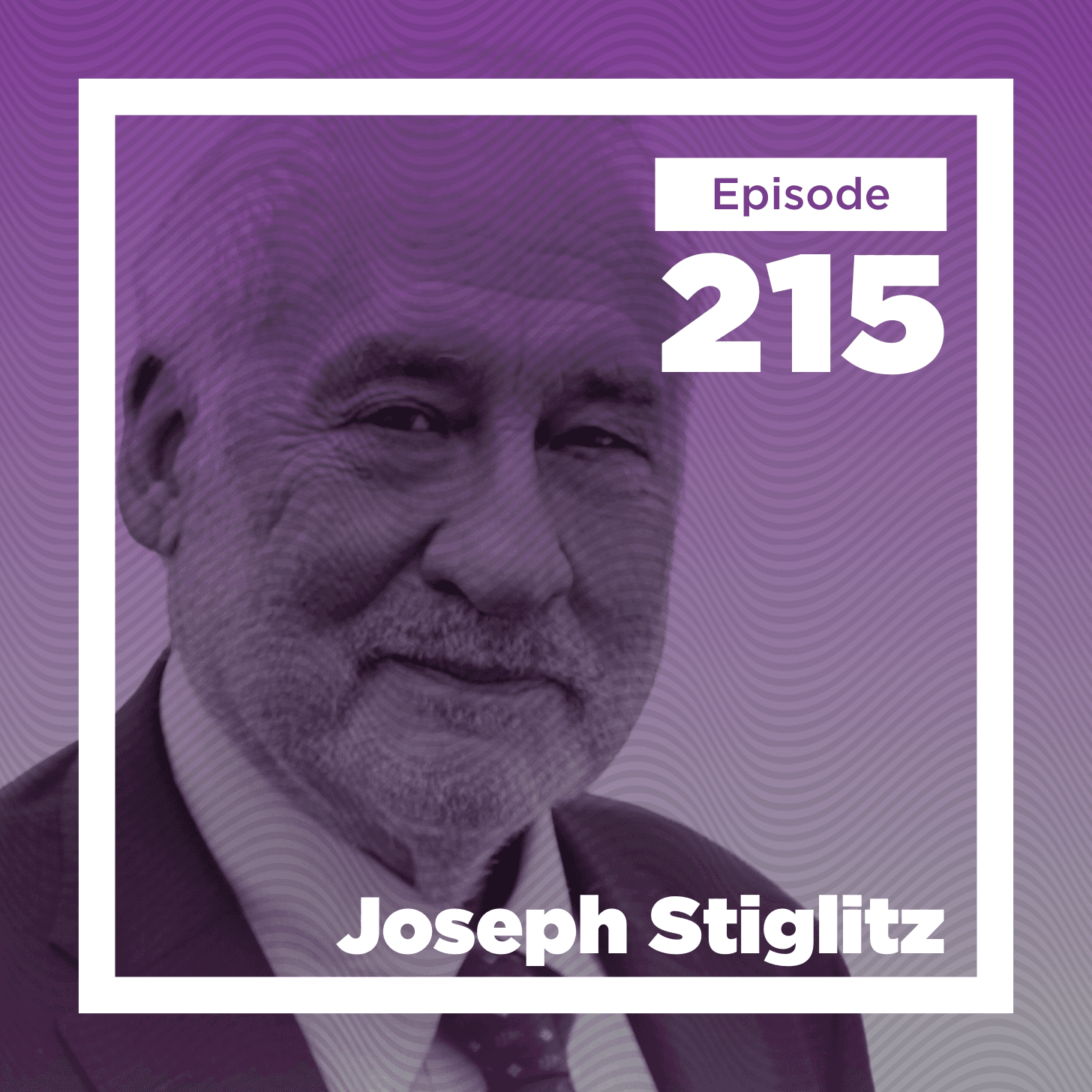
Podcast Notes: Joseph Stiglitz on Pioneering Economic Theories, Policy Challenges, and His Intellectual Legacy
Podcast Overview Title: Conversations with Tyler Host: Tyler Cowen Guest: Joseph Stiglitz, Nobel Prize-winning economist Recording Date: April 22, 2024 Episode Summary: Tyler Cowen engages Joseph Stiglitz in a discussion about his career, key economic contributions, and insights on various economic theories and policy challenges.
---
Key Topics Discussed
Early Career and Influences
- Influence of Debating:
- Debating honed Stiglitz's ability to organize thoughts and understand opposing viewpoints.
- Early debates on government support for agriculture sparked his interest in public policy.
- Fraternities at Amherst:
- Stiglitz opposed fraternities, viewing them as divisive in a small community, advocating for unity.
- Experience in Kenya:
- Stiglitz's time in Kenya post-independence shaped his understanding of development and public finance.
- His influential paper stemmed from concerns about sharecropping and incentive structures.
Economic Theories and Contributions
- Sharecropping Analysis:
- Stiglitz explored why sharecropping persists despite high effective taxation (50-67%).
- Introduced the principal-agent problem, emphasizing risk-sharing between landlords and tenants.
- Georgism and Urban Economics:
- Discussed land rent theories, advocating for higher taxation of land rents to finance public goods.
- Critiqued the application of Henry George's ideas in modern contexts.
- Liquidity and Market Dynamics:
- Examined current views on market liquidity, highlighting issues during financial crises.
- Stiglitz noted that market efficiency theories may overlook complexities of information flow.
Policy Perspectives
- Current Economic Policies:
- Critique of the reliance on monetary policy over fiscal policy, particularly during crises.
- Emphasized the importance of credit allocation as opposed to sheer availability.
- Climate Change and Development:
- Advocated for integrating climate change considerations into economic development policies.
- Claimed that transitioning to renewable energy could be beneficial for developing countries.
Personal Reflections and Future Directions
- Influence of Place:
- Stiglitz's journey from Gary, Indiana, to various prestigious institutions shaped his perspectives on inequality and development.
- Co-Authorship and Collaboration:
- Discussed the benefits of collaborating with various co-authors, enhancing the development of economic ideas.
- Future Work:
- Shared intentions to write another book focusing on the divergence between the wealth of nations and individuals, exploring current economic challenges.
---
Key Takeaways
- Learning Through Engagement:
- Lectures and debates serve as critical opportunities for idea development and understanding audience perspectives.
- Complexities of Economic Systems:
- Economic theories need to account for the nuances of human behavior, information asymmetry, and market dynamics.
- Importance of Policy Adaptation:
- Policymakers must consider the long-term implications of economic decisions, especially regarding inequality and environmental sustainability.
- Interconnectedness of Freedom and Responsibility:
- Stiglitz stresses that individual freedom can impose constraints on others, particularly in the context of urban development and environmental policies.
---
Additional Resources
- Listen to the full episode: [Conversations with Tyler](https://conversationswithtyler.com/episodes/joseph-stiglitz/)
- Watch the video: [YouTube Link](https://youtu.be/dFTaS1HbgWU)
- Follow on social media:
- [Tyler Cowen on X](https://twitter.com/tylercowen)
- [Joseph Stiglitz on X](https://x.com/JosephEStiglitz)
---
This podcast episode provides profound insights into Joseph Stiglitz's contributions to economics and his reflections on contemporary policy challenges, making it a valuable resource for anyone interested in economic theory and practice.
Written by AI. May contain mistakes. Listen to the episode to check what was said.
Transcript
Automatic transcript. May contain errors.0:04Conversations with Tyler is produced by the Mercatus Center at George Mason University, bridging the gap between academic ideas and real world problems. Learn more at mercatis .org. For full transcript of every conversation, enhanced with helpful links, visit ConversationsWithT Tyler .com.
0:26Hello everyone and welcome back to Conversations with Tyler. Today I'm with Joseph Stiglitz. He is one a Nobel Prize in Economics and if they did such things he could have won several Nobel prizes in Economics. He has a 153 page Vita online which is neither complete nor really has any shaft. Most notably today he has a new book out called The Road to Freedom, Economics and the Good society. Joe, welcome. Nice to be here. I'd like to talk about just how your career has evolved. So, there's an anecdote I read. Your breakthrough piece for going back now to about 1970. You're writing with Michael Rothschild on the issue of increasing risk.
1:10And I read that these two pieces, they actually came from an eight -hour lecture you gave in Japan. Is that true? Well, actually not those two pieces, but a series of pieces on corporate governance and and market value maximization came from an eight hour lecture I gave in Kone, Japan. How can you lecture for eight hours? It's easier to lecture than to listen for eight hours. I didn't understand that then, but I now understand that a little bit better, easier to talk than to listen. Did your audience even understand you? Did you have that sense? Well, I did. I did. I did have a sense. They understood me.
1:47they understood the major themes. Much of what I was talking about was mathematical, and it was a more mathematically trained audience, so they could follow the scribbles. But I also think they could follow the idea. One of the ideas was whether a firm that maximized its value, if all firms did that, would that lead to the well -being of society, well being of welfare. And the result of that was that shareholder value maximization did not, in general, lead to welfare maximization. And in those talks, did you outline what sometimes called the unanimity theorem? Yes, I did. You know, when shareholders agree?
2:30Yes. That was one of the ideas in that long, long lecture. And the lecture, you didn't get published in about four, five different papers. And one of the papers was Sandy Grossman was an articulation of that unanimity theorem. That theorem said, what were the conditions under which all shareholders would agree with each other, regardless of what their beliefs were or perceptions, just like if they knew what prices were. And the answer was very, very restrictive conditions. So when you're presenting ideas to an audience, do you find that as you talk about the idea that you actually develop the idea itself, or is it simply something pre -packaged and it stays as it was?
3:14No, every lecture is a learning experience for me. I learn often, Westerns will stimulate me, other developments of the idea, other aspects I hadn't thought of. Most importantly, I come to understand better the mindset of a listener, how they think about the topic, And then what are the difficulties, obstacles they have to understanding my perspective and in future lectures, then I can adapt my presentations to better reflect how they're seeing the world and hopefully do a better job of explaining. This is really part of the art of pedagogy, the art of teaching. How did being a debater earlier in your life influence your intellectual career?
4:05It had an enormous influence. Debating was a very valuable skill in terms of organizing ideas, making you see both sides of the topic because the peculiar way that debating is organized in our high schools is you have to take both sides. You don't know until you go to a debating tournament. Are you on one side of the other. And of course, after you study a topic, you may wind up on one side. But you have to be able to think to understand the other side so well that you can even present their argument. And so that's a really important skill. The other aspect of debating that was really important for me as I was growing up is it really got me interested in economics and public policy issues.
4:59I still remember one of the issues that we debated way back in the 50s was, should the government be providing support to the agricultural sector subsidies? And that's an issue that we are still debating 60 years later. Okay, so you were a debater when you were at Amherst, you were also head of student government, right? That's right. You voted to abolish fraternities. Isn't there good evidence that fraternities raise wages? Unions raise wages. Ferturnities, I was opposed to fraternities because Amherst was a small college, a thousand boys, men, and they had the effect of dividing the community.
5:44The philosophy that I had was that we should be one community. And the fraternities tended to interfere with that. Students from one fraternity would always sit at dinner at the same tables with the members of their fraternity. There were class aspects of fraternities. They were just, I thought, very divisive in a small community. And it turned out that my perspective eventually bailed a number of years later, Amherst did abolish the fraternities. It's an important lesson to me in my political life. Sometimes you begin a campaign knowing that in the next year, two years, while you're actually there, you may not succeed.
6:36But sewing the seeds of discussion, debate, maybe in five, sometimes 10, sometimes 15, 20 years, things turn out and you wind up winning the debate. So you didn't think it was efficient T -bow clustering for networks. If you hang out with a bunch of people, you get to know them very well. They recommend you for jobs, right? That's why the wage is higher. My view is you can hang out, you can form networks, but the way the fraternities were organized was more divisive than the positive benefits that you talk about. Amers with the 1000 kids, 250 in a class, our objective is to have a network of all the kids working together.
7:20And of course, within that, there'll be tighter clusters. There are the physics majors, there are the kids that are interested in sports. There are multiple networks within that small group. And it was probably the foster that kind of diversity of networks that we wanted to emphasize. The late 1960s for how long are you in Kenya and where are you spending your time. The late 1960s I got invited by the Rockefeller Foundation to go to Kenya just a few years after he got independence. In fact, if you remember the history before independence, there was the Mama attacks, a lot of European colonial Scott got killed.
8:05One night I looked under the bed I was sleeping in Karen, which was a suburb of Nairobi, and found a machete unread there, the people who would live there had kept there to protect themselves. It was striking. It was eye -opening, visit, teaching, research, because when saw both the colonial heritage, the fact that there weren't enough civil servants, people trained to run the government, that that the colonial masters have failed and their duty to enable it to be a well -functioning government. And the legacy of colonialism was very present. But it was also very interesting to see what it was like to live in a developing country and to think very deeply about what one could do to promote development.
9:03I went back to Nairobi 50 years later to get a lecture at the University of Nairobi. And what had happened in those 50 years was so striking. Nairobi had grown from a small city to a huge metropolitan area, one of the largest in Africa. The university had grown to be a very large university. It was a really heartwarming event, my lecture, the response, the engagement of the students. So 50 years, it was a big transformation. What was it that had puzzled you about Kenyan sharecropping back then? Back then. One of the issues that was as public finance economists we worried about was the adverse incentive effect on taxation.
9:53And if government takes 50 % of your product, we all say, oh, that's a terrible system at discourages work. General Seng's in the United States is that even the top rate shouldn't be higher than 40%. I think that's wrong, but that was certainly a sentiment, a very strong sentiment. Well, here you have sharecropping, not only in Kenya, but many other countries around the world where one half to two thirds of the produce was taken by the landlord. That was a equivalent to a tax of 50 to 67 percent. And yet this was a prevalent form of tenancy, a way that people, the arrangement that they had with the landlord.
10:44And when had to ask, why was that? How could this seemingly inefficient system persist for thousands of years? That was what motivated one of my most influential papers. That was the idea that there was a risk -incensive trade -off that in the absence of perfect information and presence of a lot of risk, farmers couldn't bear the risk of land ownership. If they owned the land or rented the land more accurately, they rented the land, they'd have to absorb all the residual, the fluctuations in the weather and all the other fluctuations, disease, that they would confront. and with sharecropping, they divided that risk.
11:37A lot of the risk was born by the landlord. And that was a model of what came to be called the principal Asian problem. It's part of the incentive model that now is really fundamental. It was a first formalization of that basic incentive model that is now basic to modern economics. And some of that that the landowner was providing fertilizer, machinery, that's a superprincipal agent problem on both sides, and you need to weigh off the marginal incentives, or was it just monopolization of the land? No, it included, I had a separate paper where I looked at this issue, several papers where I looked at the role of the landlord in providing seed fertilizer and credit.
12:24And what was called interlinking of markets. You might ask again, why not have separate markets for credit, separate markets for seed, for knowing the grain at the end of the harvest? And the answer was that in the presence of these incentive problems, it turned out to be efficient to have this kind of integration of these various activities and that, for instance, by providing the right kind of seed, subsidizing the seed, maybe subsidizing the fertilizer, the landlord could elicit more effort on the part of the tenant. And that was a good thing because on his own, the tenant had less incentive to work because he was being taxed effectively by 50 % because 50 % of his effort went to the benefit of the landlord.
13:32So it became a whole theory of a rural organization. What does it you think of Henry George and George's economics today? Well, that was another set of articles that I wrote in the late 70s concerning land rents associated with the cities. You have a city that has transportation costs. It's expensive to go from the fringes of the city to the center where economic activity occurs and people want to pay more for being closer to the center. And I developed a whole theory of the rents that would arise in that kind of a context as people with a facing cost -free transportation would bid up the price of land.
14:24And then I asked the question, what is a relationship between the optimal size of the city, the optimal spending on public goods by the city, and the ranks that were generated in the way I just described. And there was a remarkable theorem that came out, which was that if you have optimal -sized cities and you tax the ranks 100%, that would be exactly the right amount to finance the optimal amount of public goods. It was a very theoretical idea, but it was a captured and important idea that Henry George, who was one of the great economists of the 19th century had enunciated, which was taxing land rents was the efficient way, the most efficient way for raising revenues.
15:23And is that true today? For a given level of taxation, do you think we should take more of it from landlords? Yes, I think the ownership of land still it provides one of the most important bases of taxation and we almost surely do not tax it as much as we should. When the government say in the New York City builds a subway, those near the subway have enormous increase windfall gain from the value of their land. You can actually document the land goes up. All the citizens are paying for it and yet the owners of the land get a windfall. Now, one of the difficulties in practice is the following, that the theory applied to the round rent, the real value of the land, and property taxes apply both to the land and the buildings that are built on top of them, and differentiating between the two is not always an easy matter.
16:26So this is a general principle in taxation. Again, something that my economics of information is trying to clarify that one of the principles of taxation is to try to, it's often difficult to identify the real variables that you would like to tax. And this is an example of that. Do you favor the deregulations of the current in the NB movement allow a lot more building. No, that goes actually to one of the themes of my book. One of the themes of my book is one person's freedom is somebody persons unfreet him. And that means that what I can do, I talk about freedom as what somebody could do, his opportunity said, his choices that he could make.
17:10And when one person exerts an externality on another by exerting his freedom, he's constraining the freedom of others. So if you have unpettered building, for instance, you don't have any zoning, you can have a building as high as you want, the problem is that your high building deprives another building of light. There may be noise. You don't want your children exposed to, say, a brothel. that is created next door. And some people in the book, I actually talk about one example, Houston is a city with relative little zoning. And I have some people living there describing some of the challenges that results in.
18:01Now when you're young, you spend some time at Cambridge University. What was it like being tutored by Joan Robinson? Joan Robinson was one of the great economists of the last century. She was, you might say very idiosyncratic. She had a peculiar set of beliefs that got more peculiar as she got older. When she was younger, she did some fantastic economic work, very monopoly, trying to understand the role of monopolies in our economy. But as she got older, she got more, she was very supportive of the cultural revolution in China. So you could imagine when I went to Cambridge as a full -bright scholar, she was assigned as my tutor.
18:49One of the reasons she was assigned as my tutor was that when I went to Cambridge on this full -bright, the Department of Economics had to discuss whether I would be accepted. Her view was that my mind had been ruined by two years at MIT. And there was a two -rate wing, right? For her. I was two -right wing and I had to start not as a graduate student. I had to be deprogrammed by beginning as a first -year undergraduate. And there had been a fierce fight in the faculty at Cambridge about whether I should be accepted as a full -bright graduate student. And those arguing on that that I should prevail, but the quid bro quo was that she would be my tutor.
19:38Well, you can imagine I learned a lot from her. I came to understand better her way of thinking, but after eight weeks, we parted. And I got another tutor, Frank Han. One thing that's striking to me about the arc of your career, if I think geographically, where you've been. Well, you started in Gary, Indiana. There's Amherst, there's MIT, there's Kenya, there's Yale, there's Cambridge, there's Oxford, there's Princeton, there's Boston University, there's Columbia, there's seven years in Washington. I'm sure I've left some out. But being in so many different places, how has that influenced what you've produced and what you've thought?
20:14And why didn't you just stay at MIT your whole life? Surely you had that option. Yes, but you could have asked why didn't I just stay in Gary as a young person. I sort of read about this big world outside of Gary and I just wanted to see it. And as I went to Amherst, my eyes opened up more and I wanted to see more. I just had this thirst for seeing more and more of the world. And the more I saw of it, the more I wanted. And that had an enormous influence. I think coming from Gary, Indiana, gave me a kind of empathy for those who didn't start at the top in life. It certainly made me much more interested in development.
21:03Gary was beginning to go through the process of the development that would see over the next 30 years after I left, it was sort of the epitome of deindustrialization in the United States. I think it affected me, made my career very different, affected my economics in a lot of ways. I was more concerned about inequality than most of my colleagues. I wrote my thesis on inequality. It's been a threat throughout my career. Here I wrote in 2012 the book The Price of an Equality and a couple years later, The Great Divide. The good news is, with that long arc, we are finally economics profession. Our society is finally catching up on coming to terms, recognizing the importance of studying inequality and the important role that inequality plays in creating the great divides in our society.
22:05And Paul Samuelson also was from Gary, right? And the Jackson Five. That's right. That's right. It was an impressive, you might say, impressive, in the library in Gary, Indiana, there's a mural that they made recently. I went back to Gary just a few years ago and they were very proud to show me the rural in which the Jackson Five, both Amazon and me are all on that mural. Something else striking about your career that I noticed reviewing for this podcast. This is especially at a time when co -authorship is not nearly as normal as it is now. The number of distinct co -authors you have and they're each famous in their own rights.
22:44So there's Michael Rothschild, there's Avanish Dixit, Sandy Grossman, Tony Atkinson, Carl Shapiro, Andrew Weiss, Greenwald. I'm sure there's others I've forgotten about. I don't see anyone else doing that. There's people who have standing co -authors, like they're Sergeant and Wallace for a while. But what led you to have this pattern of co -authorship? And how was that shaped your thought? Quite frankly, I like interacting with other people. I think I'm a social person. And I've been lucky, you might say, to bubble up with ideas. And I share those ideas with other people, over dinner, over lunch in the coffee room.
23:24And then we start talking and it was ideas start jelling. And we wind up writing a paper together. And I've always felt that each of us have something to contribute. Many of my co -authors bring a lot of mathematical skills to the table. But many of them bring other skills, empirical skills. So I've been just very, very lucky. Some of these, like Andy Weiss, having students in mind, I mean, Ash Roverman were students. And we would start talking about ideas as I try to guide them in their PhD. And when they finished their PhD, they're a whole set of other ideas that we haven't fully developed in their thesis.
24:11And so we start working together in a whole set of papers that follow on. If I think about your 1980 piece with Sandy Grossman, what are your current views on why trading volume is so high? It seems to violate a lot of rationality theorems. Well, if someone's trading with you, you might plausibly assume they know at least as much as you do. Fisher Black famously said, we just need to put trading in the utility function. That's a kind of Deus Machina. What do you think now, 44 years later? Well, I think the basic idea of that paper is still obviously correct. The title of that paper was the impossibility of informationally efficient markets.
24:51And it was an argument against the view that was held by people like Eugene Pharma that markets were informationally efficient, that they transmitted efficiently all the information from the informed to the uninformed, we made the obvious observation that if that were the case, there would be no incentive for anybody to gather information. So the market might be transmitting information, but it would be all free information. It would be information that nobody had done any work to collect. That idea actually in another context worries me very much today that with Google and AI scraping so much information off of our newspapers, off of our podcasts, off of everything they can get a hold of, they're trying to appropriate the value of the knowledge that's been created by other people without paying for it.
25:54So if they succeed in doing that, of course, that will decrease the incentives for others to produce information of high quality and of value. So it's that kind of interaction that was at the heart of our 1980 paper and the themes that we talked about there are still the critical themes that we're talking about today. Do you think today that liquidity from market makers is oversupplied or undersupplied relative to a social optimum? Say in New York, the issue here turns out to be the measurement of liquidity is very difficult. A lot of the liquidity are these fast traders, last traders, people are in the market for a moment.
26:47And we saw that in a couple of the crashes that we've had. It seems like there's a lot of liquidity, but then all the sudden when you have a big event That liquidity rise up Part of what is going on looks to be frank is computers trading with other computers and so it's not inform people trading with uninformed people it's really computers With one body of data trying to make a micro were sent from another trader and they each are going back and forth very fast, they're trying to, they're trying to elicit information. It's not trading for holding a position. It's trading to elicit information.
27:33But as the spreads widen, why doesn't someone with a lot of capital just step in and earn that spread? It would seem there's a self correcting aspect to this if you have high enough capitalization. Well, what I was going to say is what What happens is that at those critical moments when we really need liquidity, the market freezes, we've had some very bad days of that kind. And at that particular moment, markets may not even clear. And actually, they cease to function. And when they cease to function, nobody wants to come in. So, it's not just that there's a spread, that's just not functioning.
28:17And you don't know when you make a trade, whether it actually will be, you think you made a trade, but it may not actually eventually be executed. So we are in this very precarious world where most of the time the market works a lot of seemingly liquidity, but it's an liquidity that can dry up just when we need it. But now you have a very famous 1977 paper with Dixit, and one of the things you show in that paper is there's a coherent way to model firms that, A, face downward sloping to man curves, but B, don't have to worry very much about what other firms are doing. A kind of monopolistic competition.
28:58People have since used that as a rationale for strategic trade policy. Do you agree with that use of the model or what qualifications would you add? Well, I think that model is a way of thinking about, as you said, the ability, a world in which there's some market power, but limited market power. It should deferms themselves. Doesn't have to worry about strategic interaction. In my mind, the more critical issues in strategic trade policy that we're facing today are not those that Paul Krugman argued for based on our monopolistic competition model some quarter century ago and for which he got the Nobel Prize working off of our model.
29:49It's really about dynamics, learning, and resilience. So today the critical issue in trade policy is US Chips Act, the IRA, the Chips Act was worried about, we had glossed the ability to make ships that meant that if anything happened to Taiwan or Korea, we were in a very vulnerable position. Markets don't take into account that kind of defense concern or that even the resilience and that goes back to some of my earlier work that markets aren't very good at assessing risk and pricing in risk into the decision making process. And so here we are, 2023, 2024, and we feel very vulnerable because of this potential lack of resilience, which would be disastrous if there were a war between Taiwan and China.
30:54So that is the argument for our current industrial policies, which are a almost clear violation of the WTO rules. And then the IRA act is another example where we have a strategic trade policy to help move economy towards a green transition and worried that we were falling behind in learning about the new green technologies. Now there are a couple of important issues on this that are very much related to the themes of my book and that is what one person does or one country does can harm another person or another country. So here we're trying to grab more jobs for us in this green transition, but the developing countries and emerging markets don't have the resources to engage in that kind of policy.
32:03And even Europe has complained about the fact that we seemingly are succeeding in getting firms that were going to build factories in Europe, shifting to the United States. So our success in some of these areas comes at the expense of others. So the old model of trade was everybody can benefit. Some of the things we're doing are clearly benefiting us at the expense of others. And that's why you need a rules -based order. This point about trade aside, at a conceptual level, what do you think would be the biggest difference between you and Paul Krugman, two very well known writers, broadly you would each be placed on the left.
Read the full transcript
32:46But how do you think about the world differently? I think that he thinks that monetary policy has a bigger role than I think it does. And you think it's credit or you think it's real factors at this point in time? I think what matters is not the money supply, not the interest rate, it's the credit availability of monetary policy. So it's the mechanism and that what we saw in 2008 that providing so much liquidity to the banking system didn't help that much that the banks were very reluctant to lend out that money and therefore the recovery was a very slow recovery. We would have been better off if we had relied more on fiscal policy than a monetary policy.
33:36So that I think is maybe from an analytic point of view, the main distinction that I think I've discovered in our work. Now your best -sided piece is your 1981 article with Andy Weiss on credit rationing, which is a macroeconomic idea. But do you think that since then the real problem has more often been? We've thrown too much credit at things. So the housing bubble, the student loan crisis, Wouldn't we have been better off with a lot more credit rationing? Well, the issue here was that we weren't very good at credit allocation. And that we thought, let the market rip, we lowered interest rates, we deregulated.
34:19So we didn't look at where the credit was going. the bank supervisors, the Federal Reserve is supposed to oversee, and there are actually several other supervisors that are supposed to oversee the riskiness of the lending. And that's where the fault came. Now one of the things that when I was at the World Bank and since then have emphasized very heavily, one of the signs that there's a problem in the credit allocation is when you see a very rapid increase in the credit in one particular area. It's a scientific. Probably people aren't paying enough attention. And particularly when we saw the increase in credit to housing, we should have been worried.
35:09And as it turned out, the banks weren't doing the kind of diligence that they should have done. There were passing on these mortgages onto investors effectively lying, committing fraud. And there have been a lot of cases of this where they said, well, we've been very careful. We've expected these are mortgages of originating in owner occupied homes, people with this income, they hadn't done any of that. And all of that contributed to the financial crisis in 2008. So the issue isn't the amount of credit, it was the allocation of credit. If they had used that credit for productive uses, how much better our economy would have been?
35:58Well, we built a lot of homes, right? It's turned out we've needed them. The home prices that looked crazy in 2006 now seem somewhat reasonable. A lot of the world built in the wrong place and were shotty. You know, I used to joke that there were huge number of homes built in the Nevada desert. The only good thing about them is they were built so shotally that they won't last that long. You're 1984 piece with Carl Shapiro on Efficiency Wage Theory. Looking back at that now, 40 years later, do you think of that mainly as a contribution to understanding organizations and explanation of unemployment, acclaim about sticky wages, or how do you frame that article?
36:41Because in the piece itself, right? The wage is actually flexible, at least the real wage is. Well, actually, it really is an argument that to understand how labor markets work, or any market for that market, because we look at the labor market, but we point out, it's true of product markets, one has to take on board the fact that there's imperfect information and in that particular case, imperfect monitoring of what workers are doing and that you have to have an incentive to make sure that they work well and that one aspect of the incentive is that there have to be consequences when they don't work well.
37:29And one of the thesis of that paper is that the standard articulation of what free markets like are just wrong. So for instance, the standard view was that demand for labor was equal to supply of labor. There's no unemployment. And what we point out is if you couldn't monitor labor at every moment of time workers would have an incentive to shirk, the worst that could happen to them is they would be fired, but if they were fired with no unemployment, they'd be hired the next moment. So there'd be no incentive to work. So that as part of that equilibrium, there had to be some unemployment to induce people not to shirk.
38:21Now, there are many other mechanisms and in a later work, we'll try to talk about there are other aspects of what's called the efficiency wage model where you have to pay enough to induce people to produce and to work hard that there are other aspects of the labor market as an institution where the rewards are done over the long term. I think I may be overemphasized the role of unemployment as an incentive device, but the critique of the standard model I think is still there and the abortions of taking a broader view of the labor market is still there. From 1986 until about 1990 you wrote a series of papers with SAW on information architectures hierarchies versus polyarchies type one versus type two errors.
39:15Then the 1990s come and you spend I think about seven years working in different roles in Washington DC. How did that cause you to revise what you've done with SAW? Well I had never been in a real hierarchy at the time I wrote those papers. Those papers were asking the question, what are the relative merits in decision making when you have a hierarchy where a decision has to be approved by one person or another versus what we often think of as the merit of a decentralized economy where you have many, many, many different decision makers and you let each of them take their chance. And underneath this was the idea that all human decision -made, all humans are valuable.
40:10There's going to be some cases of disapproving good projects and some cases of approving bad projects. And how do you balance the two and how different systems strain out bad projects without outstanding out good projects. Well, when I came to live in a world of hierarchy, which was what I saw in Washington, I came to both appreciate why in some circumstances you had that hierarchy. But I think I came to appreciate even more the virtues of decentralization what I call polyarchy. And I guess I became more of a critic of hierarchy. I saw too many cases where there was too much fallibility built in and too many good ideas got screened out by the hierarchy.
41:05And hierarchies when the guys at the top are not good decision makers are particularly problematic. should the world bank right now be emphasizing climate change as they seem to be doing a lot of the poor nations have complained they say it's not their priority they actually want to use more energy some of which will be dirty energy what's your view on that I think the world banks emphasis on climate change is important is critical climate is a public good from which everybody it's a global public would from which all of us will benefit. And most especially those in the developing world emerging markets which disproportionately are located along the tropics and those are going to be most adversely affected if we have the kind of climate change that will occur if we don't curb the emissions of carbon, of greenhouse gases.
42:04So it's in their interest that these be curbed. Now, we are at a lucky time for them because over the last 15 years, the price of renewable energy has come down 90 percent more. So, in fact, at the current time, by moving to renewable energy, which is actually more decentralized, you have You are these big makeup projects, developing countries actually, I think, can do more smaller projects better. I think they're really advantaged by going more and more towards renewable energy. One of the things that I've done, a more recent paper that I've written with Nick Stern, Ben -Henadilla, Stern Report, which we're written at the UK about moving them along the green transition was that growth and a green transition are very compatible that actually making an early move to the green transition is actually a pro -growth move for developing countries and emerging markets.
43:16So to me, that kind of tension, which they argue, I think, is a mistraming of the issue. I understand their view that the whole issue is inflicted on them because the advanced countries put so much carbon into the atmosphere since beginning investor revolution. So I understand their sense of grievance, but right now actually the developing countries in emerging markets are the larger emitter of greenhouse gases. So they really have a responsibility and we're not going to address climate change unless they're on board. Climate change is a real example of the major theme of my book on the road to freedom.
44:01It's a real case where one country's freedom imposes a cost on others where the freedom to pollute really does constrained what others can do. If we have more pollution, we're going to get more desertification, we're going to get more plugs, more drugs. And so it is probably one of the most important examples of how the expansion and freedom by some constrains that of others. What's your current view of Hugo Chavez, who is not himself in every way, progreen? Well, he's no longer on the scene, but should we be glad he's gone? I'm very glad he's gone. I think he was terrible. He contributed to ruining a whole country.
44:49That's right. I think he has. The cost to his society, particularly even more of his successor, has been enormous. I actually think it's had an enormous cost to the whole, I would say, Western Hemisphere because the flood of migraines from Venezuela, just finding a place to live a decent life has created problems of migration and affected the politics of much of North and South America. Poland is now converging on Western European living standards. Does that show that shock therapy simply can work if you stick with it? I mean that would be my conclusion. No, I think it shows quite the opposite.
45:36I've had a lot of discussions with the architects of Poland, you might call it miracle. The reason Poland is the most successful of the Eastern European countries are several, but it wasn't the shock therapy that had such a negative macroeconomic effect. It was the fact that after After that moment of shock, they began a very agragistic policy of reform, of creating the institutional infrastructure that is the basis of the market economy. They were lucky that the EU embraced them. And the EU, as they became part of the EU, they got, you might say, the legal framework that is necessary for a well -functioning market.
46:33From the EU, they had a lot of migraines from Poland that went to UK and around Europe that then brought back skills and money back to Poland. And it was really there walking away from shock therapy after a very short period and moving to this gradualist policy that was the foundation of their success in this now three decades since the beginning of the transition from communism to a market economy. You're known as a big fan of reading fiction. Is there a work of fiction you would care to recommend to us all, something you've been reading lately? That's a good question. Most recently I've been busy writing this book and as you may know writing a book takes a lot of time.
47:24I suppose some books that I've always found reading books from the third world, authors writing about Kenya, about Nigeria really ones that I find particularly interesting because they give me insights into the countries that I've been so engaged in in another way through my economics. Final question. What will you do next? Omashoye write another book. But on what? Well, I think there are many themes in this book and in my previous book, People Power and Prophets, where I didn't have time or space to fully articulate my views. I think the problem of ranks -sicking, which I talked about in the price of inequality and I talk about in people, power, and profits has become an increasingly important issue.
48:25And it has meant that there's a big divergence of what gives rise to the wealth of nations and what gives rise to the wealth of particular individuals. And trying to understand what is In the 21st century, the basis of the wealth of nations and what gives rise in the 21st century to the wealth of individuals and how they're similar and how they're different seems to me a very interesting question that I want to think about. Just to repeat for our audience, the new book is The Road to Freedom, Economics and the Good Society. Joe Stiglitz, thank you very much. Nice to be here. Thanks for listening to Conversations with Tyler.
49:11You can subscribe to the show on Apple Podcasts, Spotify, or your favorite podcast app. If you like this podcast, please consider giving us a rating and leaving a review. This helps other listeners find the show. On Twitter, I'm At Tyler Cowan, and the show is At Cowan Convose. Until next time, please keep listening and learning.
From the publisher
Nobel Prize-winning economist Joseph Stiglitz joined Tyler for a discussion that weaves through Joe’s career and key contributions, including what he learned from giving an 8-lecture in Japan, how being a debater influenced his intellectual development, why he tried to abolish fraternities at Amherst, how studying Kenyan sharecropping led to one of his most influential papers, what he thinks today of Georgism and the YIMBY movement, why he was too right-wing for Cambridge, why he left Gary, Indiana, his current views on high trading volumes and liquidity, the biggest difference between him and Paul Krugman, what working in Washington, DC taught him about hierarchies, what he’ll do next, and more.
Read a full transcript enhanced with helpful links, or watch the full video.
Recorded April 22nd, 2024.
Other ways to connect
- Follow us on X and Instagram
- Follow Tyler on X
- Follow Joseph on X
- Sign up for our newsletter
- Join our Discord
- Email us: cowenconvos@mercatus.gmu.edu
- Learn more about Conversations with Tyler and other Mercatus Center podcasts here.