
In short
Podcast Episode Notes
Podcast Information Podcast Title: Conversations with Tyler Host: Tyler Cowen Release Frequency: Every other Wednesday
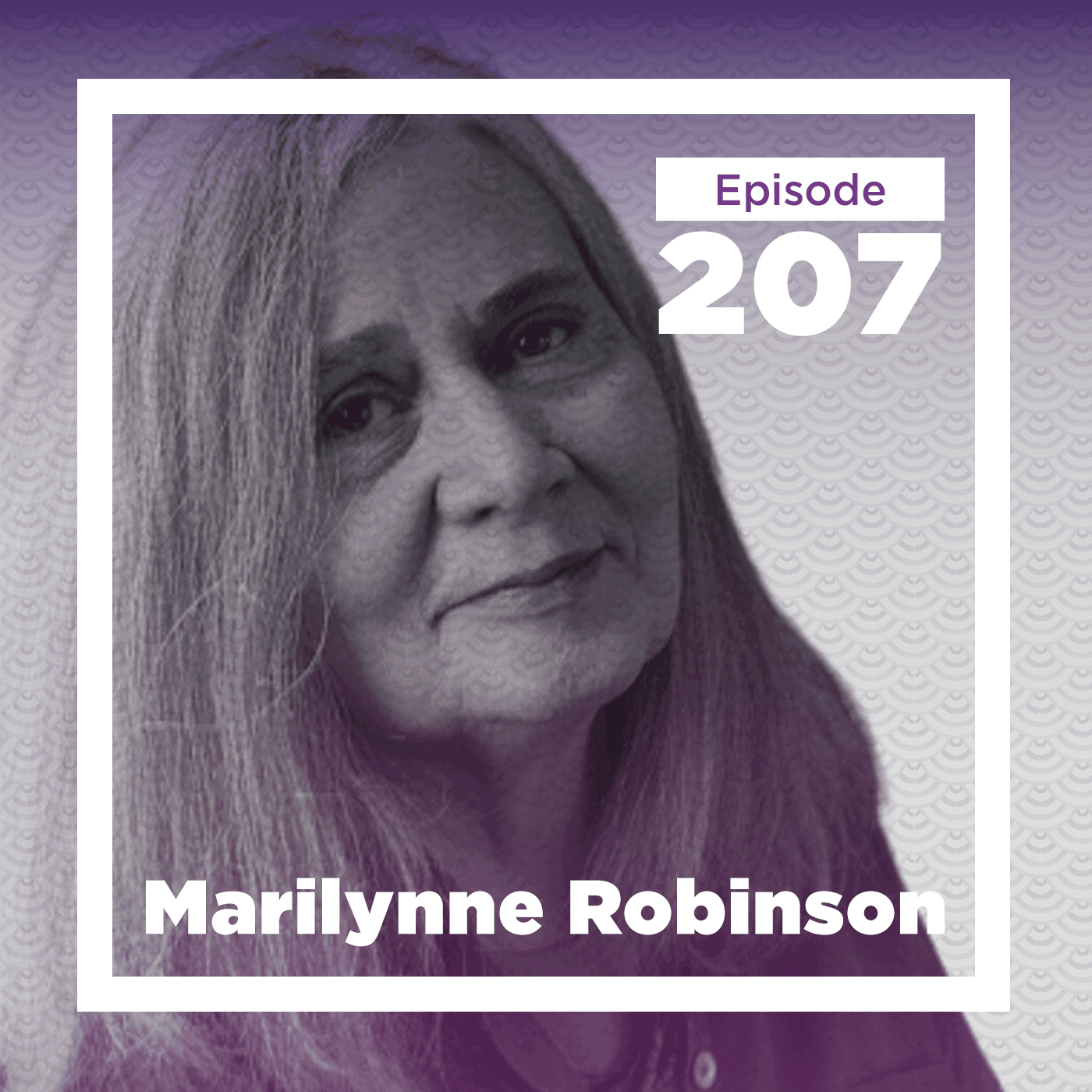
Episode Overview Episode Title: Marilynne Robinson on Biblical Interpretation, Calvinist Thought, and Religion in America Release Date: February 8, 2024 Guest: Marilynne Robinson, acclaimed novelist and essayist Episode Description: Marilynne Robinson discusses her latest book, *Reading Genesis*, and explores themes such as faith, biblical interpretation, and the nuances of human nature, all while reflecting on her academic and literary influences.
Key Themes and Discussions
- Betrayal and Brotherhood in the Hebrew Bible
- Observation: Betrayal among brothers serves as a microcosm for human conflicts.
- Interpretation: Older brothers often face consequences for their actions, reflecting God's choice beyond societal norms.
- Predestination vs. Free Will
- Calvinist Perspective: Discussed the implications of predestination in Calvin's theology and its contrast with free will.
- Robinson's Argument: Emphasizes a God who interacts with humanity while allowing for human agency.
- Characterization in Biblical Figures
- Comparison to Homeric Characters: Biblical figures are portrayed as deeply flawed and recognizable, unlike the often superhuman characters in Homer.
- Example: Moses is depicted as hesitant and flawed, yet chosen by God.
- Complexities of Genesis
- Literary Influence: Robinson believes Genesis has influenced Western literature profoundly, particularly in characterization.
- Interpretive Challenges: She discusses the difficulty of reconciling themes of grace with harsh biblical narratives (e.g., the Flood).
- Levitical Laws and Community Identity
- Function of Laws: Discussed as establishing community identity rather than just ritualistic practices.
- Legalism vs. Morality: Addressed how laws can reflect cultural identity and community cohesion.
- Ritual Sacrifice
- Historical Context: Viewed as both a communal feast and a means of addressing violence within society.
- Current Relevance: Explored whether modern societies have transcended the need for such rituals.
- The Role of the Antichrist
- Theological Perspective: Robinson views the Antichrist as a representation of bad human behavior rather than a singular figure.
- Teaching Literature and Biblical Knowledge
- Experience at Iowa Writers' Workshop: Robinson reflects on her experiences teaching students with varying levels of biblical knowledge, noting surprising familiarity among some.
- Views on Bible Translations
- Translation Preferences: Robinson prefers the Revised Standard Version and critiques contemporary translations for misrepresenting the original text's meanings.
- Calvin's Legacy and Popularity
- Changing Reputation: Discussed how Calvin's views have been misunderstood over time, despite their foundational impact on Protestantism.
Key Takeaways
- Robinson's literary work is deeply intertwined with biblical themes, reflecting a nuanced understanding of faith and humanity.
- The conversation sheds light on the complexities of interpreting religious texts and their implications for modern society.
- Robinson promotes the idea of engaging thoughtfully with the Bible while recognizing its historical and cultural contexts.
Future Works
- Next Project: Robinson hints at her upcoming work titled *Exodus*.
Conclusion The episode presents an enriching dialogue with Marilynne Robinson, who provides insightful reflections on biblical texts, Calvinist thought, and the essence of human experience through literature and faith.
Written by AI. May contain mistakes. Listen to the episode to check what was said.
Transcript
Automatic transcript. May contain errors.0:04Conversations with Tyler is produced by the Mercatus Center at George Mason University, bridging the gap between academic ideas and real world problems. Learn more at mercatis .org. For full transcript of every conversation, enhanced with helpful links, visit ConversationsWithT Tyler .com. Hello everyone and welcome back to Conversations with Tyler. Today I'm talking with Marilyn Robinson, one of America's best and best known writers. She is also a nonfiction essayist and now she has a new book out called Reading Genesis by Marilyn Robinson which I recommend highly. Marilyn, welcome. Thank you very much.
0:48Why is betraying a brother such a prominent theme in the Hebrew Bible? Well, I think it's sort of a small model of the fences against ourselves, the human beings, that happen at every scale. And it seems in the Hebrew Bible the older brother typically does worse, or is somehow dethroned or put down. Why is that? What is that telling us? I think that there's no necessity, no causality in the way that things work among human beings, you know, that God is free to choose the younger brother, the conventions of human society, pre -migeniture, and so on, are not salient in terms of God's intentions.
1:32So in your Calvinist view, is it elevating predestination over human institutions and human choices? I don't think, I mean, poor O 'Kalban always comes up, you know, but I don't think that there is any theologian who ever walked the earth who didn't say that David was chosen over his brothers because it was the intention of God, you know, I mean, a great deal of determinists, the languages poor, but God's choices are reflected continuously in the Bible. And if that scene is predestination, it seems to me that that isolates it from the text in a way that's not appropriate. Do you think there's room in Catholic theology or even Armenian theology for human free choice to be the reason why these different events are happening, say in Genesis or the Hebrew Bible?
2:23That predestination is a bit less general than you're making it out to be in Christian thought or what's your view? It's pretty general in Christian thought. Thomas Aquinas believed in it, for example, wrote about it, you know, and sumac untruthily, dentullies, and also in the suma thelotia. You know, I mean, it's very difficult to conceive of an omnipotent God who is relatively powerless in the way that our conception of freedom would imply. I argue in the book consistently that God does actually restrain himself from, you know, intruding too far on our own nature at the same time that what he intends works his way through our nature.
3:11You're right in your book and I quote, the great figures of Scripture are not at all Homeric, unquote. What did you mean by that? In a Homeric character, well, they tend to be demigods for one thing. their nature is complicated by the influence of a divine parent. And so they're kind of, you know, superhuman in a sense. In the Bible, there is no intention to make anyone exceed his humanity. That God is always working through people that are recognizably fallible, limited human beings. That part of the reason I think that we have so often God choosing almost at random among people is to make the point.
3:54He's acting through them rather than they're acting out of their some singular quality of their own person. So that would be true, say, for the elevation of Moses, who at first is a stumbling, bumbling figure, a stutterer, not very confident, but God elevates Moses. Exactly. And Moses says, you know, I'm really not the person who should be doing this, you know, God says, well, you know, your brother will be your smile, etc. He does not allow the absence of what appeared to be heroic qualities in Moses to be disqualifying of Moses. How is the book of Genesis influenced your fiction writing? You know, I think it is actually influenced Western literature, English language literature, to a point where it's very difficult to say where the influence begins.
4:49I think that there's nothing in ancient literature that approaches it in terms of characterization. And there's very little in modern literature that also would approach it from that point of view. These people who are rather obscure figures in the human world and overlapping generations of herdsmen, And they're incredibly strongly differentiated and characterized. And I think that that's something that has been an influence on all Western literature. How much do you feel that we moderns should feel free to do a kind of pick and choose from Genesis or from the Old Testament more generally? So you're right quite a bit about themes of grace and reconciliation in Genesis.
5:33And they clearly are there, say in the Joseph story. But if you look at, say, God destroying almost the entire world through the flood, or you look at some of the battles fought in Deuteronomy, it doesn't seem to be grace at all. Well, you know that certainly is a problem. I mean, the Bible very directly confronts the horrible aspects of human history and human behavior. That's true. It would be meaningless if it didn't, because those things are so enormously important in human life and history. The fact that it doesn't give us an easy way to understand these things does not mean that they're not remained to its subject, you know, which is the nature of human being and the nature of God.
6:16The picking and choosing is certainly, certainly, characteristic of the response that people have made to Genesis and to the Bible altogether. I think that if I could simply change emphasis and show that there are other ways in which things are to be understood and that there are words like vengeance and jealousy and so on that are bad translations and distort the reading of the text. I mean, I consider the Bible to be the most complex document on the planet, you know, the fact that its difficulties are not resolvable by me in every case or in a case, perhaps. I don't think is a criticism of the Bible.
6:56I once knew a Calvinist. His name was John Robbins, and he was what I call a bite the bullet Calvinist. So he thought the Bible was divine revelation. It was above human judgment. You simply had to latch on to whatever was in there and couldn't really very much use your interpretive faculties to override it. What's the view that you hold that leads you to differ from from John Robbins? Well, you know, that's, I mean, read Calvin, you know, I mean, every, they just people that call themselves Calvinists, there's no, no great likelihood that they will have read the, the institutes or anything else that he wrote, you know, the need of interpretation taking into account what appears to be the overriding meaning of the text is what Calvin and did.
7:45I mean, his whole career was an explication of the Bible by his lights, using his Latin and his Hebrew and so on. He says, we've read this wrong for a thousand years and it will take us a thousand years to get it anywhere near right. So he does not believe in an absolutely straightforward reading of the text. He believes very much in an interpretation that reconciles the text to the best understanding we feel we have about the nature of God. You're right in your book and again, I quote, to refrain, to put aside power is God -like, unquote. What did you mean? Simply that. I mean, the ability to assert to the extent that one can control over another person as a suspect act in itself, you know?
8:35The way that we have been human despite transgressions and all the rest of it, the way that God has loved human beings in their humanity. In order to allow this to happen, we have to assume that God did not assert Himself in a way that disallowed our nature. As a Calvinist who would not in general dismiss the Old Testament, what do you make of a book such as Leviticus? It's highly legalistic, highly ritualistic. Some Christians read Leviticus and become a kind of split Christian Jew almost. Other Christians, more or less, dismiss the book. How does it fit into your worldview? I think that when you read like Herodotus, where he describes these little civilizations that are scattered over his world, he describes them as in terms of what they eat or prohibit or they paint themselves red or they shave half their head, or they're all these kinds of very arbitrary distinctions that people make in order to identify with one coin over against another.
9:45At the point of Leviticus, which of course is an accumulation of many texts over a very long time and a doubt, but nevertheless to think of it as being Moses, he is trying to create and defined distinctive human community. And by making arbitrary distinctions between people, so that you're not simply replicating notions of what is available or feasible or whatever, but actually asking them to adopt prohibitions of food. That's a very common kind of distinguishing thing in Herodotus and in contemporary life. So that the arbitrariness of the laws is not a fault. It is a way of establishing identification of one group as separate from other groups.
10:39So you read it as a narrative of how human communities are created, but you still would take a reading of say, sermon on the Mount that the Mosaic law has been lifted or it's still in place. Oh, it's not still in place. I mean, we've been given other means by which to create identity. Moses was doing something distinctive in a certain period of the evolution of Israel as a people. He didn't want them to be Egyptians. He didn't want them to subscribe to the prevailing culture, which was idolatrous. And he's doing kind of like Plato in the Republic. He's saying, This is how we develop the idea of a community, and this is what the, you know, having said that, then there are certain other things like thou shalt not kill or whatever that become characterizing laws.
11:36Jesus very often says, you know, when someone says to him, how can I be saved? He says you know the commandments, you know, I mean, it's not as if God is an alien figure from the point of view of Christ, whom we take to be his son. Ritual sacrifice plays a major role in the Bible, as you mentioned in your book, including in Genesis. Is that a human universal and it's still with us in some form, as Rene Gerard might suggest, or if we simply transcended the need for all this ritual sacrifice? I mean, in the books of Moses, he has adapted ritual sacrifice so that it's clearly a feast, you know? I mean, it's a sacrificial animal of a kind that they eat, customarily, you know?
12:25And whenever these sacrifices are called for as ritual, they invite the widow, the orphan, the leviate, etc. These people who are assumed to be without resources, you know? I think that this is true also in Homer, that they give bones to the gods and eat the meat as a community. This is probably a huge public health measure for one thing, simply making sure that everyone within a group is nourished, you know, every once in a while. The idea of sacrificing the animal, I don't know, I think it always depends on whether or not the animal becomes, you know, the Thanksgiving turkey or not. I think that that varies from one group to another, but among the the Israelites, I think it was so feast basically.
13:13The negative side of the sacrifice that you do away with something to achieve a kind of ritual cleansing of violent impulses so they don't turn more violent. That's not part of ritual sacrifice in the Bible. Is that element of ritual sacrifice still with us? I find ourselves very puzzling, frankly. I mean, I don't think that we have, I think that what has happened in our civilization, as opposed to civilizations that have come before, is that we have the appearance of a relative absence of violence by historical standards. And then in reserve, in potential, we have a fantastic capacity for violence that would exceed anything that the world has ever seen before.
14:01Maybe if we had some way releasing this, you know, by little, rather than making more missiles and, you know, more bombs, maybe it would be healthier for us, ultimately. What's the role of the Antichrist in your theology? It's mentioned to Daniel, it's in the book of Revelation, but a lot of the Bible, it's just not there. Well, you know, I tend to think there's the Antichrist is probably an array of bad human actors and behaviors rather than being a single figure as some people think that it is, you know. It seems to me that, for example, in the book of Revelation, what you have is this kind of cyclical pattern of history in which these Antichrist figures appear and kind of work themselves through an epic of history and then it goes on to another epic of history.
14:48I mean, it seems to me as if you don't have to look far to see things that are very, very much opposed to Christ, very directly, whether they acknowledge this or not, typically they do not acknowledge it. So I don't think that anti -Christ is necessarily an unusable term. Well, I think that it is a term that should require scrutiny on the part of people who use it, certainly. So for you, it comes in cyclical form and it's a kind of matrix rather than say, I was singling out the Pope or singling out Hitler or some person yet to come. Is that fair to say? Right. Yeah. Well, you know, you look at history.
15:27There are a lot of terrifying people in history, you know. It's not just Hitler. For how many years did you teach literature at University of Iowa and other places? I was about 25 years and then I did lectureships or brief appointments in other places. How hard was it to teach literature to groups of students who I assume very often were not familiar with the Bible? How was that for you? You know, that's an interesting, interesting question. Sometimes if you ask the right question, you find out that there are people in that room that know a lot more about the Bible than you would ever expect them to.
16:10A lot of people tend to be rather private about their upbringing perhaps. And then often it turns out that they were brought up in a religious context. Many, many people are. There is a sad phenomenon of Christianity having become identified with what are seen as very ungenerous positions and values. And so people are very reluctant to be identified with religion because they're afraid that they're also then identified with a kind of politics that they have no respect for. Where in the world have the students most surprised you in this regard with what they knew about the Bible or how they understood it?
16:54I think that, you know, there's a spontaneous generosity and younger people, you know, they they admire Jesus. I think this is is actually a more widespread feeling than actual adherence to Christianity or acknowledged adherence to it. The impulse to generosity, I think in so far as it's celebrated in the Bible is the thing that attracts them. You've also been a preacher for many years. Is that correct in church? No. No. There was a time when the minister was often called away and I would preach and this must have happened three or four times and my whole reputation as a preacher have come from those three or four times I'm actually very anxious about being in a pulpit.
17:40I feel like an imposter and so I don't seek out that opportunity What did you learn from those three or four times preaching? That I had more to say than the 20 minutes of approves up reaching could accommodate. And also perhaps that people in churches have a kind of internal 20 minute timer and begin to notice when you're talking longer than they would have expected. Do you have a view on Bible translations? So it seems to me there's a new generation of translators. There's a John Tabour translation of Genesis just out. There's Sarah Ruden doing the Gospels and the view there seems to be the earlier translations that don't sound rough enough or authentic enough.
18:25They're all a bit smoothed over. What translation or translations do you prefer? Well, I like the Revised Standard version, but that seems to be a little bit difficult to acquire at the moment. I don't know why. It's just the classic American Protestant Bible, you know, and it's latest form. I have problems with the later Bible simply in the sense that they preserve words like jealousy and so on that reflect very badly as they are understood in modern English on God, you know, the Jewish publication society doesn't use the word jealous. they use the word passionate, you know, which sounds to me like, you know, a vastly less injurious term.
19:09I mean, I think that, like by his vengeance, it's a very bad translation of what meant, you know, judgment, applying that one could be vindicated as well as condemned, you know. I haven't seen these terms criticized except with the one exception of the word jealous, And I think that they are carried over because they sound biblical, you know, people have been saying them since they were appropriate translations, but they aren't anymore. And if anything's going to be changed, that kind of thing should be changed. You did your PhD on Shakespeare, correct? Yes. Do you think Shakespeare was a Catholic?
19:47No. Do you think he believed in the Trinity even? I wouldn't go into detail like that. The question of being Catholic or Protestant in Shakespeare's time was more a political question than a theological one, I think. You know, the denomination in appropriate word, but the church, as it were, that somebody in Shakespeare's period would be reacting against would have been the Anglican Church, not the Catholic Church, because the Catholic church had been effectively expelled from England for a long time, you know, for, I mean, since Henry the Gate, on the scale between, you know, having the king as the head of the church, the Anglican model, and the kind of Protestantisms that were flourishing and that were publishing and that were preaching and all the rest of it, popular religion of the period.
20:35I think that's where Shakespeare would be found. Do you think his late play, O 'Inters Tale, makes sense? It's often called a problem play. Is there a problem in the structure of the plot, the setup, the resolution, or do you, do you understand it? I don't know. I don't know if I understand it. I love the late plays. I love the problem. You know, I love the, he becomes very, very fascinated with grace and reconciliation in his late plays. In the winter's tale, of course, it's the reconciliation between the king and his statue with wife. The play makes you realize what has been lost, what has been harmed, what has been, you know, at the same time that it does also a reconciliation and embrace, you know, an undoing, a forgiving.
21:27The same thing happens in Simberleon, you know, same thing happens in, you know, the play with Prospero in it. I'm forgetting that. Tempest is dear, yeah. Yeah. You know, Tempest is. Do you think there are hints in a winter's tale that the Queen actually was unfaithful to the King, or he just completely is imagining it? I think he's imagining it, yes. I mean, you know, where else do you go? But it's very like a fellow in that regard. I think that these women are to be understood as actually, you know, honest, virtuous people. reading Shakespeare as a Calvinist, what do you feel that directs your attention to that say contemporary secular readers might not see?
22:09Calvinism, it was made to evolve. Calvin is making suggestions. He's not a trinal in the way that people seem to think, but he was making really valuable suggestions. And one of them was certainly that any encounter with another human being is an encounter with God, and that it is always a question, and the question is always what would God want from this encounter, you know? In his boss and the institutes on who is my neighbor, I think, as I recall. But in any case, I think that's very beautiful, and I think that that sense in Shakespeare of, you know, of these It's enormously beautiful encounters where people recognize each other, people pardon each other, people embrace each other.
23:00I think that that could certainly be something that he explored as a suggestion taken from Calvin. Why do you think Calvin himself has lost so much popularity as a thinker? Of course, feel free to challenge that premise. But he has a reputation of being an astiguy, not so thoughtful, very intolerant. The word is almost used as a kind of insult in some circles. What's your view on that? The evolution of Calvin's reputation? Well, you know, he was associated with virtually every early revolution in Europe, you know Cromwell the French Wars of religion and so on the Dutch Revolution against Spain.
23:46So I mean he became so important in that sense that of course he was the object of polemic. He was, you know, I mean, the American revolution could be seen as another Calvinist revolution. And so could the American Civil War, if you want to look at it, from the point of view of the Great Awakening and so on, his teachings introduced a great deal of volatility into the existing order anywhere. People defend themselves against that by, speaking of him very harshly, and also completely reversing the implications and the consequences of his theology. The cure, of course, is to read Calvin, which no one does.
24:30And the reason no one does is because they think they know what they're fine to do. So it's very self -perpetuating from that point of view when a negative reputation is established. There's one person who was associated with a physical martyrdom on religious grounds, Mike Servetus, one person, and then look at any other king in Europe at that time, or any bishop in Europe at that time and so on. And you'll see that as sad as it is to have murdered one man, it's a very minor event by the standards of the period. The addition of institutes that I own, I think it's about 1100 pages with relatively fine print.
25:13If you were making a case to people, why they should read it other than, well, you'll see what Calvin really thought, how would you try to persuade them? I say this as someone who, you know, wants to read Calvin carefully. You have to read him very carefully because for some reason are the kind of the familiarity of theological language, if you're interested in theology, so much of that language comes from him, but it's very easy to read And superficially, you know, at the beginning of the institutes, he says, the only true knowledge of God is born of obedience, which is a very important situation of the psyche, the mind and galvanist terms.
25:57He says, if you want to encounter God, descend into yourself, then he says, if you want to understand yourself the kind of lit God. You know? So he creates with this sense of the possibility for very direct encounter between a human being and God, a whole sort of metaphysics of what God is and what humankind are, which is again very beautiful because it's a celebration of the brilliance of human beings. All this he does in the first couple of chapters. He can talk about human beings for a long time with the mentioning sin or any of the things that are normally associated with them because of this sort of renaissance humanism of his celebration.
26:42There's also a few known or sometimes caricatured as hyper Calvinism. Are you a hyper Calvinist? I don't know any of these terms. All I know is I've read his books and I appreciate his metaphysics. as I understand it, which is very imperfectly, the hyper -Calvinists take determinism more seriously, and they think, for instance, that trying to convert people or preach to them is futile, and we shouldn't even bother doing it, because God has settled everything. Well, you know, one thing that Calvinists, perhaps not hyper -Calvinists, have done is produce thousands of volumes of sermons. obviously, I mean, it was a very, very literary, you know, printing press oriented sort of culture.
27:28You can talk about, you know, people who have invented some theory that finds no confirmation in Calvin's own work. They preach several times every week, you know, and did a great deal toward what he considered to be, you know, the education of people in the scripture itself, started schools and so on. If somebody takes an idea and runs off with it and calls themselves a hypervice or hyper that has nothing to do with your source material. How can we tell whether we're saved or damned? Can't. Can't tell. Oh, no, you can't tell about yourself. You can't tell about anybody else. Do you worry that the distinction between saved and damned leads to a certain tolerance amongst religious people for highly in a gallitarian outcomes.
28:19So if some people are elevated to heaven, and others burn in hell, for reasons not related to their free choices, that this then becomes also a political view that extreme inequalities are something that are quite natural and sanctioned by God. You know, that extreme inequalities are something that people seem sadly inclined toward. You know, I mean, that's what a decaying society always sinks into that in one form or another. But Calvin never says that you can judge whether anyone is saved or damned, never, because he believes that as we appear to God, you know, like David and his transgressions and so and we cannot say that those are acts that have a certain value in terms of their impact on the fate of our souls.
29:10His cultures, the Dutch culture, the Protestant English language cultures, the America and the colonial period and so on, are not marked by hierarchy by the standards of the period. If he were to say that there was an egalitarian energy in that period, it would have been communism. Have you been to the Netherlands at all? Yes, I've been there a couple times. Now when you go, do you feel this is a modern version of a Dutch Calvinist culture? Or do you feel it's an extreme rebellion against that? Because if you look at some metrics, say legal sex work, liberal use of drugs, the Netherlands seems to be fairly extreme.
29:54How do you connect that or model that in your mind as an outgrowth of an earlier Dutch Calvinism? Well, you know, the Dutch Calvinism I'm aware of tends to be from in the middle West, and it is not at all like contemporary Netherlands. You know what I mean? Sure, absolutely. You know, it's interesting with the Netherlands. I don't know. I mean, because I have talked with extremely erudite, devout people in the Netherlands. You know, people are so attracted by the sensational, but we know that things happen in the never events that are surprising, but on the other hand, that's gloss. There's a lot of seriousness in anywhere, it's a human tendency.
30:44If I think about this country, we used to have a stronger tradition of a devout liberal Christianity. The Quakers, William Sloan Coffin, Martin Luther King. It seems to me this is weaker today in relative terms, much weaker than it used to be. Do you agree with that? And if so, why do you think it happened? I think that it's probably fair to say that it's true. There's been a loss of certain kind of confidence, no question. One thing we did is disaffiliate ourselves from our own educational institutions. I mean, Harvard, Yale, all these were Protestant schools, founded by congregationalists, Princeton by Presbyterians and so on.
Read the full transcript
31:31When they became you know major national institutions, they stopped being self -identified as Protestant institutions. And I think that the the loss of you know dedicated intellectual institutions has been a sad thing for us, maybe a good thing for the culture at large. What you mentioned having taught, including at Iowa for about 25 years, surely you notice that academics are amongst the most secular people in American society. Why do you think that is? You know, I don't think we can really tell. The thing about it is that, unfortunately, religion has become associated with inhumane values in you mean episode, so among the governing class and so on.
32:26That makes people conceal their religion or their thoughts that are a religious character. I mean when somebody calls you and whom you would always have taken to be secular and said, would you pray for me because I'm in some kind of trouble. You know, you know, how secular is that? You know, I mean, people are private about religion, but I don't think that that means that they're as secular as they probably, as they seem to appear. So you think we Americans are much more religious than it seems at first glance? Yes, I do think that. And do you think the Midwest is still considerably more religious than say most of the coasts?
33:13Well, again, that's the kind of thing I can't really tell. I mean, I spend a lot of time on the East Coast, which is where I am now. And I suppose that is to all appearances, more secular than most parts of the country, but at the same time, you know, there's a flourishing church here of my denomination and so on that we don't know what we're comparing it against for one thing, you know? And also there's just the fact that people can feel that they are sufficiently religious without affiliation with the Church. I mean, many people feel that way. If we take your Iowa, which presumably you know quite well, when I was younger, I had the impression of it as a democratic party leaning a highly educated, fairly tolerant, liberal Protestant state overall.
34:06with obviously a lot of diversity. Today it seems to be a state that say Donald Trump is going to win quite easily, electorally, assuming Trump is running. How did that change and why did the former philosophies held in Iowa not satisfy people? Well, you know, we're talking about something that has happened over a brief period of time, you know, I mean, during the, basically during the governorship of this Kim Moreno's, I think that Trumpism is a kind of a fad that suddenly everybody is doing the same thing, using the same language and so on. I'm very grieved by the change in the political climate in Iowa because I admired its generosity and civility and so on.
34:59And I hope that this is some weird temporary fluctuation, you know, because the kind of basic decency and enlightenment of Iowa was so well established over such a long time, it's hard to believe that this is a permanent diversion. Some thinkers, I think especially on the conservative right, have argued that as America becomes more pluralistic, ethnically and religiously pluralistic, that that on net marginalizes the influence of religion. That it's easier for society to be fairly religious when there's mostly one or maybe two religions in question. But when you have people from all over the world with a variety of religions or just very different understandings of Christianity, there's a least common denominator effect where most of us become more secular.
35:52Do you think that's true? No, I think that one of the things that has been a resource in this country for many years is religious cultures that are derived from the place of origin. In other words, the multiplicity of religious institutions, I mean sustained religion as a phenomenon. I think that you would say without much fear of contradiction, that if you're going to find religious people now you would go to immigrant communities, because they sustain many things for people who might otherwise feel that they are adrift. And some commentators have suggested that the current woke movement, say from the progress of left, that it's intellectually and ideologically an outgrowth of an earlier American Protestantism, that it has roots in a sense in the 17th century.
36:52Do you agree with that? Well, I'd want to know what you mean by the word wokeism. Lots of things in this country have roots in the 17th century, Protestantism. Well, say in San Francisco, there was an institution that was called a woke kindergarten, and it taught American history a particular way. The New York Times, segments, emphasizing 1619, a particular kind of focus on issues of race, class, gender, trans individuals, me too, movement, added up together as allied with the progressive left. I would take that to be one meaning of woke. Do you think that's an outgrowth of American Protestantism?
37:33No. I mean, having lived them, no American Protestants, for 80 years, I would not necessarily say that that is a phenomenon that is anyway especially peculiar to us. Insofar as any social movement wishes to alleviate injustice, unhappiness, pointless cruelty, the way so many discriminations do, insofar as the point is to reduce that kind of criminal misery, really. I'm perfectly happy to have adopted as a Protestant, say, yes, we did that, but I think in fact it just the generous evolution of a democratic society. What do you think of the Benedictine option to just retreat and tend one's own garden, be highly spiritual and not engage much with the world?
38:29Is that a cop out or is that illegitimate way of being religious? Well, you know, I would say it depends on circumstance. I would say that when people feel that impulse is probably because the world isn't a bad way, you know? They were actually withdrawing from problems that could be addressed in theory at it in case. I think we're responsible for each other. And my particular salvation is not as important as my honoring the sacredness of human beings and the world. How did you decide to live and stay in Iowa? So you were born in Idaho, right? You grew up there. Yes. What led you to prefer Iowa?
39:11Well, you know, I went to college in Rhode Island and lived in Massachusetts and so on. And, you know, I was quite a distance from Idaho in terms of, you know, my experience by the time, by the time I was invited to come teach in the Rajasparkshire at the University in Iowa, which is such a classic phenomenon in American literature, you know, that I was very happy to go there and be part of it. How did the Iowa, what you might call writer scene, originally blossom? I must be 80 years ago by now. There was a lot of experiment at the university at that time. They were giving advanced degrees for physical sculpture and for theater and so on, which was very either unusual or unprecedented at the time.
40:05There were already groups of people in that city who met to discuss things that they wrote. The universities just sort of embraced them at a certain point and that became the writer's workshop. And many, many very distinguished writers have come through there. Do you think there's any kind of unique Midwest or Iowa voice infection the way there's arguably a southern voice? I think not because Iowa is just, I mean most of my students were from New York City or from California or people come to Iowa, not to be Iowans, but to study at the workshop, whereas the Southern writers identify as Southern, they want to be expressing that particular culture.
40:51So that's a very great difference. Why is it you think Iowa out competes so many other writing workshops? People can and have set up writing workshops along the coasts in larger cities, Iowa very often still seems to do better. Is that just history and path dependence? Or is there some comparative advantage still in Iowa that makes it work? It's very hard for me to say because it's the only program that I've taught in of that kind. But people, it's a culture, you know? One of the things that I think is a definite benefit is that they learn how to be helpful to one another, the people that are students there.
41:33You know, they're very good critics of each other. That's one of the important things that they seem to learn. The status of the place, everybody's success, it kind of feels like everyone else is success, you know, because of the reputation of it as a community. And as far as the faculty are concerned, we were very autonomous. We simply taught as we felt was appropriate in whatever setting, absolute minimum of meetings or anything like that. And I think that that's part of the spirit of it also, that we are, you know, we are trusted and not regulated. When your students would arrive, what is it you had wished they had known, but they hadn't.
42:19Oh, so much, you know, you know, I mean, in general, well, you know, I can't really generalize because we do get a diverse student body. And some of them are working with the great deal less than others in terms of, you know, educational background and so on. But that doesn't make them less interesting. That's one of the great equalizing things about writing as an If you do it well, you can make anything into an appropriate subject. You can make anything sort of blossom, you know, into meaning. Do you play around with large language models at all and AI? No, no, no. I'm just sneaking past, you know.
43:04I feel very fortunate that my lifespan did not incorporate these things, things, you know, so they became things that I had actually be adequate with. Your very first book, which is called Mother Country, it's about nuclear pollution in Great Britain. Why did you write that book? Many people are surprised when they learn that's a book of yours. Yes. Well, my first book is actually the novel housekeeping. Nuclear pollution came after. I'm sorry, okay. Yes, it was my second book. Well, I was in England, and, you know, frankly, I pick up a newspaper and read about You know, in just in plutonium is considered to be harmful to children, you know, I mean, it was just very, very remarkable the kind of information that was in the atmosphere about what was happening, particularly at this one reprocessing plant on the coast of the Irish Sea.
43:59You know, there are Americans all over England all the time and they can read in newspaper as well as I can. and they don't see things. It's, you know, they see violence and, you know, sereniums and not the fact that things are very different there, many conceptions of what is appropriate, are, you know, economically and so on are very different. I could see what was happening. I could find information about it and also to places. Why should I not write about it? Should the British just have done more and more expensive nuclear reprocessing the way the French did, didn't that work out okay for the French?
44:42And France today is glad that it went nuclear? What is your source of information? That a lot of European nations, due to the Russian energy price shock, have reconsidered nuclear, those that stuck with it, such a Sweden and France, seem to be glad they stuck with it and now possibly want to expand it. And there's better and worse ways of doing nuclear. Britain seems to have done a worse way, but aren't there better ways that some countries have done and we're happy they did them? I don't know if I don't know. I mean there's a great deal of of secrecy, shall we say, the serencies, these things.
45:21You know, I know that France built most of its reactors of very long time ago when just Gartistan was in power. Reactors don't have a a very long life, you know, 30 years, 40 years. There past that would be incredibly expensive to replace them in order to demolish them whatever, you know, decommission them. I don't think we're gonna know. I mean, the prestige of any country, for example, Russia depends on the kind of information that we have about it. And frankly, you don't have to look far in many cases, for example, in Russia, to find that things are extremely problematic and that they are problematic as consequence of nuclear power.
46:09The idea that somehow or other, there is something that can be done with these materials that were never meant to exist on Earth is a polite fiction, it's not true. Do you watch movies much? Not a great deal. Do you have a favorite movie? No. No. I like serializations of 19th century novels. I suppose that's what I would say if I were to be perfectly honest. What other movies have I liked? Well, I'm drawing a blank. But the sense of, say, God's grace that is in many of your books, you might say all of your books. Can you think of something from television or the cinema there when you watch it?
47:00You feel someone is thinking, feeling along the same lines that you are and you think, well, that's reflecting my vision of God's grace. Well, you know, nothing comes to mind immediately, but then I, as I said, I don't watch films very much. I love the ending of the tempest, you know, which is not a movie or it's a movie. It's a good movie version by Julie Tambour, I think. It's quite good. If you haven't already seen it, you would enjoy it. What's the one where the great woman actor plays Prospero? Is that the same one you're speaking of? I think the same one, yeah. Yeah, that's very beautiful.
47:40What is your most unusual successful work habit? Well, I think it's becoming a use to the fact that it takes me a long time to get to the place where I can work on something. You know that all this sort of frustration and depression that precedes my writing, anything, is part of the process of writing. Before my last question, I would just like to repeat to our listeners and readers, Marilyn Robinson has a new book out which I enjoyed very much, reading Genesis, which is about of course the book of Genesis in the Bible, but I'm very happy to recommend all of her books and of course her famous novels to you housekeeping I think being my favorite.
48:23Last question is simply what will you do next? Exodus. I look forward to that. I will read it with pleasure. Marilyn Robinson, thank you very much. Thank you. Thanks for listening to Conversations with You can subscribe to the show on Apple Podcasts, Spotify, or your favorite podcast app. If you like this podcast, please consider giving us a rating and leaving a review. This helps other listeners find the show. On Twitter, I'm Attyler Cowan, and the show is AtCowan Convose. Until next time, please keep listening and learning.
From the publisher
Marilynne Robinson is one of America's best and best-known novelists and essayists, whose award-winning works like Housekeeping and Gilead explore themes of faith, grace, and the intricacies of human nature. Beyond her writing, Robinson's 25-year tenure at the famed Iowa Writers' Workshop allowed her to shape and inspire the new generations of writers. Her latest book, Reading Genesis, displays her scholarly prowess, analyzing the biblical text not only through the lens of religious doctrine but also appreciating it as a literary masterpiece.
She joined Tyler to discuss betrayal and brotherhood in the Hebrew Bible, the relatable qualities of major biblical figures, how to contend with the Bible's seeming contradictions, the true purpose of Levitical laws, whether we've transcended the need for ritual sacrifice, the role of the Antichrist, the level of biblical knowledge among students, her preferred Bible translation, whether The Winter's Tale makes sense, the evolution of Calvin's reputation and influence, why academics are overwhelmingly secular, the success of the Iowa Writer's Workshop, why she wrote a book on nuclear pollution, what she'll do next, and more.
Read a full transcript enhanced with helpful links, or watch the full video.
Recorded February 8th, 2024.
Other ways to connect
- Follow us on X and Instagram
- Follow Tyler on X
- Sign up for our newsletter
- Join our Discord
- Email us: cowenconvos@mercatus.gmu.edu
- Learn more about Conversations with Tyler and other Mercatus Center podcasts here.
Photo Credit: Alec Soth, Magnum Photos