
In short
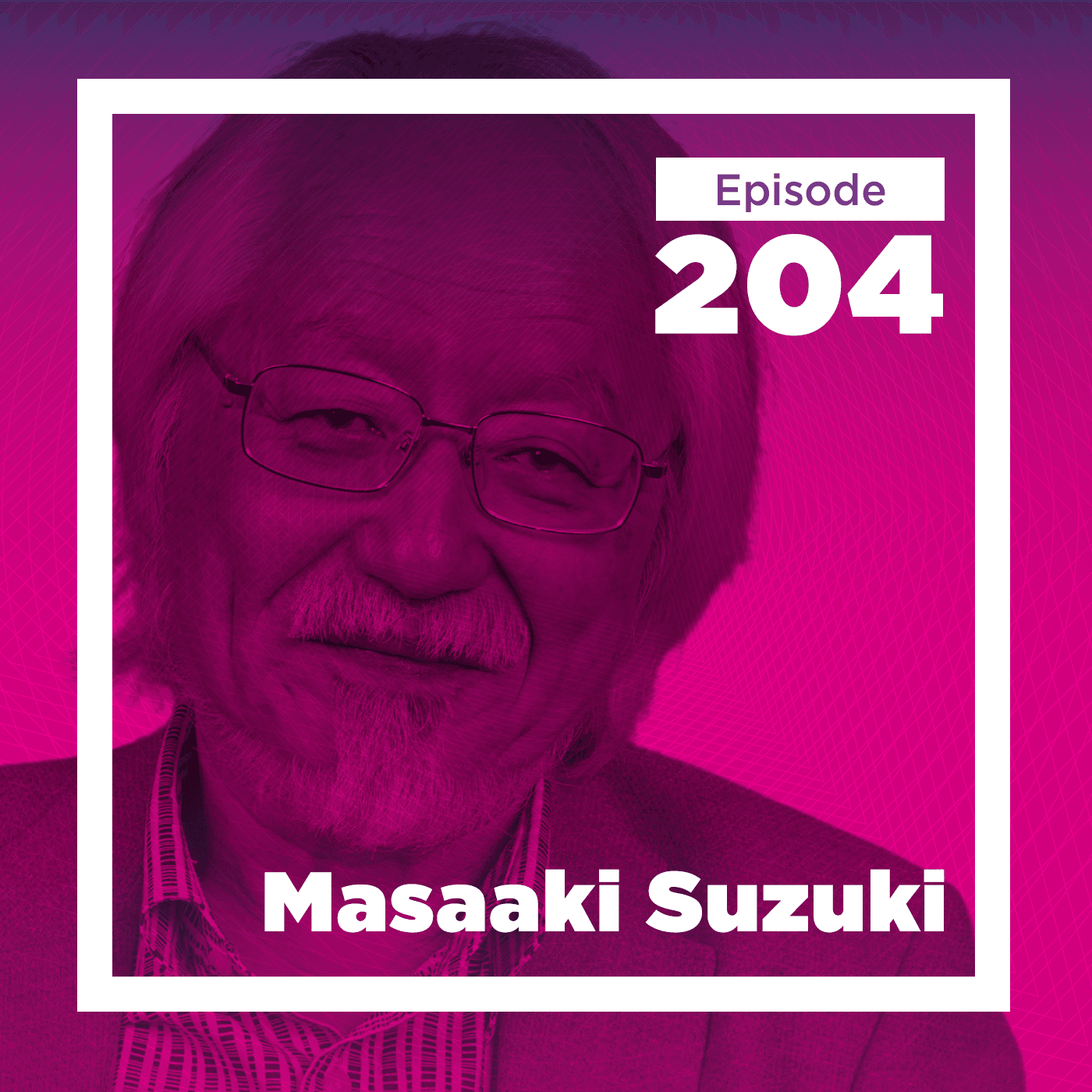
Podcast Episode Summary: Masaaki Suzuki on Interpreting Bach
Podcast Information
- Title: Conversations with Tyler
- Host: Tyler Cowen
- Episode Title: Masaaki Suzuki on Interpreting Bach
- Episode Release Date: October 18, 2023
Episode Overview In this episode, host Tyler Cowen interviews Masaaki Suzuki, a distinguished conductor, harpsichordist, and organist known for his extensive work with Johann Sebastian Bach's music, including his acclaimed recordings of Bach's sacred and secular cantatas. The discussion delves into Suzuki's interpretations of Bach, his musical journey, and broader reflections on music and culture.
Key Themes and Concepts
- Bach's Innovations in St. John's Passion
- Suzuki discusses the dramatic nature of Bach's St. John's Passion, which deviated from traditional liturgical readings, integrating music to enhance the narrative.
- The structure features both dramatic choral work and a mix of solo and congregation voices, showcasing multifunctional musical roles.
- Theological Perspectives
- Suzuki views St. John's Passion as a universal sacred work rather than strictly a Lutheran or Christian piece, emphasizing the music's ability to resonate with diverse audiences.
- He reflects on how his Calvinist background influences his interpretation, suggesting themes of predestination inherent in the work.
- Musical Background and Inspirations
- Suzuki recounts his early exposure to Bach through Karl Richter's recordings, which sparked his fascination with Bach's complexity.
- He emphasizes the evolution of performance practices over time and his study of early music in the Netherlands, which shaped his understanding of Bach.
- Understanding and Teaching Bach
- The importance of translating Bach's texts for Japanese musicians, who may lack a Christian background, is discussed.
- Suzuki highlights the necessity of having deep devotion and interest in Bach's music when selecting musicians for performance.
- Cultural Context in Japan
- Discussion touches upon how Japanese audiences perceive Western classical music differently due to cultural nuances.
- Suzuki reflects on Japan's complex history with Christianity and its influence on the appreciation of Bach’s works, particularly in live performances.
- Contemporary Views on Music
- Suzuki shares his thoughts on Glenn Gould's interpretations and the evolution of Bach's performances over time.
- He mentions the significance of Mendelssohn's revival of Bach's larger works, which had been neglected for years.
Insights and Reflections
- Personal Connection with Bach: Suzuki expresses a lifelong connection with Bach's music, describing it as integral to his identity and life.
- Future Projects: He mentions upcoming concerts in Japan and recordings, continuously contributing to the legacy of Baroque music.
Conclusion This episode provides deep insights into Masaaki Suzuki's interpretations of Bach's music, his personal journey as a musician, and the cultural implications of performing classical works in a modern context. Through thoughtful discussion, listeners gain a greater appreciation for the complexities and nuances of interpreting Bach's timeless compositions.
Additional Resources
- For a full transcript of the episode, visit [Conversations with Tyler](https://conversationswithtyler.com/episodes/masaaki-suzuki/).
- To watch the full video of this episode, check [here](https://youtu.be/qSRtjsrqzsM).
Follow Us
- Conversations with Tyler on [Twitter](https://twitter.com/cowenconvos) and [Instagram](https://www.instagram.com/cowenconvos/?hl=en)
- Tyler Cowen on [Twitter](https://twitter.com/tylercowen)
- Masaaki Suzuki on [Twitter](https://twitter.com/MSuzukiBCJ)
Contact Information
- Email: cowenconvos@mercatus.gmu.edu
- Newsletter Signup: [Here](https://mercatus.tfaforms.net/5060931)
- Join our [Discord](https://discord.gg/JAVWP7vTxt) for discussions and community engagement.
This comprehensive summary encapsulates the rich discussions from the episode while maintaining clarity and accessibility for readers interested in music, particularly the works of Johann Sebastian Bach.
Written by AI. May contain mistakes. Listen to the episode to check what was said.
Transcript
Automatic transcript. May contain errors.0:04Conversations with Tyler is produced by the Mercatus Center at George Mason University, bridging the gap between academic ideas and real world problems. Learn more at mercatis .org. For full transcript of every conversation, enhanced with helpful links, visit ConversationsWithTyler .com. Hello everyone and welcome back to Conversations with Tyler. Today I'm here in New York City with Masaki Suzuki. Masaki Suzuki is one of the greatest musical creators and producers of our time. He has recorded the entire set of Bach sacred cantatas, which in my collection amounts to I think 55 compact discs. He has recorded all of the secular cantatas.
0:51These are generally acknowledged to be the most important and best recordings of Bach's cantatas music ever. He is recording a complete, the organ music of Bach, so he also is a world -class organist and is recording the complete harpsichord music of Bach, works that are commonly acknowledged to be in the top tier. So there's simply no one else I know of with this kind of record of production and quality and dedication and inspiration He also has recorded a good deal of Mozart, Handel, many other 18th century composers. He founded the Bach Collegium Japan in 1990 He teaches also as a professor at Yale University and as many other things as well Masaki Suzuki, welcome.
1:39Thank you for your invitation. It's a really great pleasure to come here. I have many questions for you, but to start with Bach, St. John's Passion, 1724. If you had to explain to us in its most fundamental sense, what was new in St. John's Passion that Bach did? What was the nature of that innovation? Well, probably no one expected at the time to have that dramatic passion, because the tradition of the based on the reading the Bible in the liturgy. So it probably, firstly it was only thought as a Bible reading, but not simply reading instead that the citation, so with some tones. So that was developed to the music, passion music.
2:33And by the time of Bach, that was already developed as a kind of oratorio passion. So that was actually the very dramatic experience already. But the still Bach's time on the one week before the Easter, the passion of the Johann Walter was still performed. That means really only if major occurred from the beginning until the end, just to recite all the Bible texts and so on. That was still performed. So the very first passion of Bach in the Lapsis time was a synchon passion, which was a really shocking experience for everyone I thought. And in terms of choral work, what is new in that passion?
3:20Choral work. Yes. Yes, that is a very, well, the structure the consists of the quia and the asi turbas, so the mass of people, the shouting and so on. At the same time, the quia was also supposed to sing the choral. And so the multifunction, the other time choral. And do you think of St John's Passion as a Christian work, or you conduct it as a Lutheran work, or drawing from a particular gospel? How do you think about that theologically? From my point of view, Saint John Passion, we are doing this work as just a simple general sacred music, sacred work. And we are performing this music not in the literature anymore and we are doing it in the concert.
4:15So there's a plenty of way of to accept or receive or appreciate this music. So we are doing simply the musicians to do our best, to do the sound rise and text rise, everything that's as good as possible. So I think the music can work afterwards to the individuals, according to their situation or thoughts. And your own background is Calvinist. Does that in any way shape how you approach the work? Yeah, that's a really good question actually. I was asked very many times why are you not to Lutheran? But there's almost a kind of predestination in the work. Jesus seems to know what's coming. It's good.
5:05More than in other parts of the Bible. Exactly. Yes. So actually I am very grateful to be a because the Calvin was probably the, well I don't know, I'm not a theologian, I'm not a historian, but still I, according to my knowledge, the Calvin was one of the first reformators who acknowledged the value of the activity and culture of this world, not only in that world in heaven. So it is very often said Calvin was not so So, the sympathy for the music or culture was the same, but that is not true. And he has limited the congregational singing only for the sound, but other than the church, as he outside of the church, he has helped quite a much cultural activity, for example, probably show the sound thing or arrangements and so on.
6:01So that was also helpful to inspire the musical activity in this world. So I think in this way we can evaluate the old musical or whatever cultural activity in this world the other kind of under the very big notion as the general grace of the God. So when Bach is in Curtin in what is Ne... what is East Germany? Which was Calvinist at the time, but he's composing mainly secular works. How do you frame that? Why did he do that? Oh, that's that he didn't have a chance to compose any Lutheran content at that time. From one side he must have been very happy to compose the organ works, instrumental works and also secular contentors and so on.
6:47But probably he wished to do more work to the Lutheran world, Lutheran church and so on. That's why he moved to life. So let's go back and just talk about your career, your history a bit. So you're 12 years old and all of a sudden you hear call ricketers recording a box B minor man How did you come upon that and how did you feel at the time? Well, that's really yeah, that's a little stupid, but the well, I was very very excited Not only with that music, but also I Got the quite big strato equipment stereo equipment from my father And then I was very excited to listen to whatever with the headphone.
7:32Headphones were also very fast experience. And anyway, the B -man Amas was the so fantastic, so wonderful, but I didn't understand anything from the text, from the music. The music was much too complicated and the only thing I played quite much trumpet in the brass band. So that's why the trumpet playing by the German trumpeter, the Adolf Scherbaum, that was really fascinating in the B -manamas. So I actually repeatedly listen to the only Gloria. But anyway, that B -manamas is really the wonderful encounter with the Bach's music. And how is your musical ear back then? So the Richter recording, I think of it as a little bit a mix of overblown and stiff, even though it's pretty good, right?
8:22Now, it's not what people would listen to now. Did you have a sense of that back then, or are you discolored? Blown away. No, no, no. Yeah, well, for other interviews, I have listened back to that record recently. That was completely different and well. It is not acceptable at all for my years, because he was a character must have been really wonderful musician. And also, he played Habscooter by himself and by the conducting, for example, for to machine passion without seeing any scores. That's a really amazing thing. But anyway, his way of music making is well completely more than not only the modern, but the kind of the machine alike notes by notes, ta ta ta ta ta ta, ta ta ta ta ta ta, so that's a really not acceptable anymore.
9:14But at that time, that made probably a lot of excitement for the audience, and that's very nice I think. Do you think there are any older recordings of Bach, say of the B minor Mass, or the passions that have held up? Before the Dutch movement for original instruments? Yeah, well, I listened to the, for example, the Mingleberg, since Massive Passion, a couple of times just as an example, that's a very famous example in history. Yeah, well, that is of course completely different, but probably at that time, it was very beautiful, performance, I think. and that's quite a romantic tempo is completely slow.
9:53Well, I have no idea how it was accepted, but actually it did work out at that time. So this kind of sense of value about the performance is changing all the time. So I think we belong to the quite different generation, but at that time it must have been very light for me. and the very stimulating to do the Bach music. And how was it you decided to study early music in the Netherlands? So I said, just you wanted to study music and then you learned of the movement, or you went there because of the movement? No, no, actually in this way, that I was completely fascinated by the organ itself. So that's why I started playing organ and I got the lessons when I was a teenager before the university time.
10:40And then I wanted to study more organ And my first one teacher was Belgian priest actually in Osaka. I told him that I wanted to be a organist. And so they listened to Masaki. That's the only thing I know. No good organ in Japan at all. So that is no good idea to study to organ here in Japan. So I wanted to study composition. So I did study composition and in university, that was very good, the career, very good process to understand the music. And in between, I just happened to meet the hapsco artist called Motoko Nabashima, Japanese the kind of first generation hapsco artist who studied with Gustav Leonhardt in Amsterdam.
11:24And she was really genius person. She spoke more than six languages in Europe and she has spent quite a long time in Europe and she came back to Japan and I met her and I got a lesson from her. And that was really changed my life. And she introduced me to Tom Koppmann, who was the schoolmate of her. So they were together in the Gustav Reinhardt class. So I went to Amsterdam and I went to the Tom Koppmann concert on the day of my arrival, and that was really shocking. Oh, that's really so fresh and so exciting. So I decided to come to the Amsterdam and that was a very very decision I thought. So if you started with the organ, how was it then you came to conducting?
12:16Conducting is actually has been always outside of my idea because when you perform concert as well as whatever Bach's ensemble music. Someone must lead very possible from the Habskoord as Bach did and so on. I did in that way. Gradually I made some ensemble with my brother and my brother's colleague and the stream players and so on. And then we were simply starting to perform the concert as one by one. And for example, I gave them some sign or some signature. So my brother, Chris says, what do I mean? Oh, that is not clear. That is not the one. Which temple do you want? That's something like that.
13:06So only for this kind of discussion, you know, this, I became a conductor. I'm not a conductor in really traditional sense. And where people telling you, well, you can only do one thing. It's organ, hearts, accord, or conducting. you have to choose one or everyone just let you do all of this. Actually, these three are completely, I think that's an integrated, easily integrated. Oh, yeah, yeah. But you do all three, right? Yeah, well, yeah, but the Hubs go to the organ is for example, there's a completely different instrument but still based on the same idea how to make a music and also conducting, quite a conducting especially, you know, there's exactly the same feeling as you play the Fuga on organ.
13:50For example, the theme comes now, now, now, soprano, and something like that. So that's exactly the same. So only thing the choir has a text, so that's much more, you know, better than the older I think. Given how much music you've produced and how consistent the quality is, what is it you think you know about productivity that other people do not? Well, I've not about other people's, but the productivity, well, that is only the Bach's music is so fascinating, so I can't stop working simply. Yeah, well, I never tried to be productive once, just the only I want to pursue the how to improve our performance, how to realize this and that, the music of Bach and not only Bach, that is only music is there, so nothing else.
14:52If you had to explain what is it about the music of Bach that you still do not understand, what would that be? Well, Bach's music has always together with some kind of puzzles and the nigma, so that But you can never get an answer to all the all the, that kind of unknown aspects of the Bach, for example, Kustiafugra, for example, the Art of Fugue, for example, we don't know why he has really written or why, what kind of situation it was not finished. And in the Contrature, for example, there are plenty of really difficult places to understand why he did in this way and so on. And most of the cases we can find some answers from the text, but still it is not so easy to understand everything.
15:46And that was very good. How good a sense of the grasp of Bach's mind do you feel you have? Or is he just a complete mystery deal? Yeah, quite much mysterious feel, I think. So I'm trying to understand and I'm trying to come closer to Bach's sense or Bach's mind, but actually it is very, very difficult. The more you work, the more distant you can get. That is really... Yes, that's true. When you're hiring for the Bach Collegium Japan, of course they have to be wonderful musicians, but given the extreme productivity demands that will be placed on them, what is it you look for in the people you hire?
16:32Well, the most important aspects from musicians is probably how much they can devote to the music. Sometimes how much interest do they have in that music? Well, I do, for example, singers audition very often. And well, of course, I have to judge sometimes, you know, technical aspects of course, how good or the technical. But not only the techniques, the most important thing is probably they are interested and they are how much they can devote themselves to music. That is the most important thing. So I'm very happy to have now our members and orchestra and singers, and at the very beginning they didn't have any idea what if they Bach's concert especially, and then the choral music or the disc and one song or music, how to do that?
17:28But in between during our walking together they have developed a lot, so that was very nice. And they inspired me again, so this kind of vice versa, the inspiration is very, very nice. Do you think Japanese players understand Bach differently? I don't think so, but only think the... basically Japanese people don't have any Christian background or tradition in the country. So sometimes I have to explain what the text says and so on. And also this and that text comes from this and that, the text of the Bible and so on. But this kind of explanation is not possible in Europe, for example, because everything is already taken for granted.
18:14So no one can really explain about Jesus' parables. And so in Japan, I think it is very good to have that kind of a chance, to talk about that things. And also the German text is, of course, basically impossible in Japan to understand immediately. That's why we need translations. traditions, we provide all the time Japanese translations to audience and also for the orchestra people, all the musicians. But this kind of a translation work is a part of very important interpretation work because we read the Bible, for example, the only through the translations. No one in this world raised the original language in all testament, new testament.
19:02So actually, you know that to make this kind of translations, you know, we have to think on that, consider what it really means and so on all the time. So I try to make quite some translations of Bach's counter to some 20, 30 counter to I have translated myself, but it's a very time consuming. That's why I gave up in the recent, but we have very good colleagues to make good translations. With your Japanese background, do you think you approach Christianity differently? I think so quite different from any other, well actually the each of the countries have different traditional approach to Christianity or whatever religion I think.
19:51But in Japan it's quite different from Korea, for example. In Korea, there are a lot of questions. It is said that 40 or 50 % of the population of the Christian, but in Japan, it's always said that the only 1 % of something. But in spite of that, the Christian culture is very well known in Japan. So everyone knows what Christmas is and even Easter they did quite known nowadays, but there is not so many Christians in Japan. I thought formally that that is a big negative aspect, but I think that is the, it is not possible really to count who is a Christian, who is not Christian. And when we perform the St.
20:37Matthew Passion regularly on the Holy Week, and every year with since 20 years we are doing, now we have regularly three performance in Holy Week in the same venue. So, something like 5 ,000 -6 ,000 people are coming for that performance. And that is an amazing thing in comparison with the number of the Christianity in Japan. So actually, I think that what many people can appreciate of that kind of message from the Bible as well, not only the Bach's music, but from the Bible. So that is my hope. Do you ever think back on what is called the Christian Century in Japan, which ends I think in 1639, when a lot of Japanese convert Christianity fairly rapidly, But then Christianity is suppressed.
21:31Is there some alternate history where Japan becomes more or less a Christian country? Or could that never have happened? No, that has never happened. That is a completely stopped, I think, that religion wise. But it is very interesting that there are quite many evidence that before the 1639, quite many churches were built by the missionaries and from Europe. And also in Auslitzje, for example, where the Older Nogun and the Hathab based the very close to Kyoto, there were quite many churches and also quite some organs at that time. And also, boys, missionaries were sent to eyes, at least from Japan to the Pope in Rome.
22:10And in between, a tatami took a couple of years to reach the Europe. And in between, some of them practiced organ on the ship. And then when they arrived at the Avera in Portugal, one of them could play organ immediately and able one was astonished. But in this kind of connection was completely stopped afterwards. That was very pity. And Christianity was actually left over only as the hidden Christian. So that was a very interesting history. but the probably it is not possible to to to call them Christianity anymore of that but that is a kind of mix up with Buddhism. So the called recent repast of why the musicologist Mr.
23:02Minagawa, that's Minagawa does, who has researched about Dotti history and found out a very interesting thing. Like for example, there are still hidden Christians in Japan in Kyushu area. And I heard that they used to have the funeral ceremony combined with Buddhism and Christianity. So, the quite big houses or temple buildings and in the front side, they do the funeral ceremony according to the Buddhism Buddhist way. And then in between, the priests are supposed to walk around the back to the building and then the while walking they are always murmuring this is not true, this is not true, this is not true and then come back to the Buddhism again, something like that.
23:52So this is really interesting ceremony so there's a kind of mixture with the Christian. So this kind of hidden Christianity or the Christian people had very, very difficult and miserable or history because they were completely depressed and also the torture of many people. But still they have survived in a way. But not really anymore as a Christian, the proper Christian. Well I don't know exactly where I can't I can't tell too much about that but because I don't know exactly but the anyway that's a hidden Christianity is still there. That's very interesting. And you're from Kobe, right? That was originally a Christian center along with Nagasaki.
24:36Exactly. Because they were poor cities, is that why? Yeah. That is the Kobe zone of the most important. After the reopening of the Japan, so 1868, there are probably two Kobe and the Yokohama and even Sendai, the port places, you know, this is the very important to accept the any kind of culture from outside but the Christianity came in and for example there is the oldest Protestant church is in in Yokohama so that is that is the end of 19th century this is really interesting history how do Japanese audiences for classical music say in Tokyo differ from New York audiences? Well, probably a little different American audience are more friendly and more easier to be excited by the performance and as if they look like more inspired directly from the music and also musicians.
25:47And in Japan, Japanese audience say, they sometimes they know very well about the repatriate and very cooperative, but at the same time, not so excited immediately. Probably, the inside is very excited, but we Japanese people don't express directly from inside to outside. We were all told in the school, for example, That is a rule. That is not the intellectual demeanor. Something like that. What do you think of the hypothesis that Japanese audiences? They have a special interest in iconic works, such as Beethoven's Ninth. And there's an insistence that they hear the best or experience the best and single out very particular things.
26:33Do you think that's true? Yeah, Beethoven is a very special being, especially in December. And so they are more than 100 performances in between nine, only in this symbol. In the chorus at the end has special meaning. From Japanese people, you think chorus, the chorus, the lyrics to the chorus ending of the ninth. Yeah, that's of course that is very special meaning. Not only for Japan, but I think that's a musical at the very big events. And in Japan, there are quite some of the projects who gather the people more than 10 ,000 people to sing out. Today, the bit of a nine at the end. So that is quite a beloved event.
27:21But that is a normal musical event. I don't think so. Why do you think Bach's larger vocal works were neglected for as long as they were until Mendelssohn, Right in the 1820s. They're a bit forgotten. The keyboard music is not forgotten. What happened there? Well, I don't know there are a couple of different aspects. For example, passion music of Bach, the St. Masha, or St. John, you need definitely a continual playing for example, but that idea was already distinct, already completely extinct by the time of Mendelssohn. So Mendelssohn has reformed, or the harmonization for the continuo part. He has performed some handtats as well, but he always provided the parts for the brass section or the wind section to fulfill the harmonization on the continuo.
28:19So that the impoveredative parts of the contino could not understood anymore by the time of Mendelssohn. And also it was much easier for them to understand the passion music just as the story telling. So that Mendelssohn has performed the centimusher passion only mainly the older relatives. So he avoided for his first performance. He avoided the nearly old areas even Ausliebe, that he didn't perform the first time. And his intention was to follow the story as directly as possible. So in that way probably it was thought just like the opera production. So the Mendelssohn was indeed that That is a revival of the Saint Magi Passion, but actually that performance is completely different what we are now doing.
29:15How many times do you think Bach heard his own larger scale master works? Saint Matthew's Passion be minor mass? No, there is no evidence that he has any performance, be minor mass. But he never heard it. He never heard it. Only in his mind. And so much passion that he has performed at least the three times, I think. The John is full times, oh five, I'm not sure. But anyway, there's only a couple of times he has really hard and performed his own master works. Now your music is largely online, not all of our listeners are experts in the music of Bach. But if you had to recommend two or three cantatas that you've conducted a place for them to start where would you send them?
30:04That is very difficult one of the most difficult questions Well, that depends on the situation what you you have the experience in the past in experience and yeah, of course But the one of the my favorite contater is for example, ah let me let me see
30:27That's a good one, very good one, of course. And Festerberg, 80. It's true in your card? Well, I don't recommend that as for the first beginner, because that is too complicated. Well, for example, count the number 8, Leapster Jesu, that is a really wonderful music, so you can really use it as a BGM background music as well. And that is really comfortable to listen. And overall the Contata one, oh two, this the hair, dine, organs, and dine, glauvens, that is one, oh two, is the, that's a very interesting structure. The wire has a two double figure. And that is a really interesting structure. And also the area was very dramatic.
31:18So, well, otherwise, playing to your big stuff. In the world today, how many top -tier organs are there for playing the music of Bach, where you can really do it justice? You said there were no good organs in Japan, or you were told this. A datam, yes, yes. How many organs of the highest quality are there in the whole world for you to play Bach? Yeah, how many? That's a really difficult question, but it totally depends on what you think beautiful or what you feel good. Because I prefer personally the historical organs, the original organs like in North and Germany or France or whatever. And well, my really favorite organ in the world is the Chroningen, that's the Matini Kerk, that's built by the Hongkha Sparer Shunitka.
32:15And where is that exactly? The Chroningen is in the north part of the organ. Oh, Groningen, yes, Groningen, yes. That is really wonderfully restored. So that quite much depends on how it's restored as well. Because the organ is had a lot of very long history. So in between, for example, in the 19th century, the all over the historical organs were once renovated according to the musical taste of that time. So nearly all the organs were once romanticized, the romantic way, just changed. So in 20th century most of the organs were re -reinnovated to bring them back to the original situation or 18th century or 17th century.
Read the full transcript
33:06And so how to restore is a really key point actually. So for example this matini kerk in Hroningen, that is the originator, the shunitaka organs, So the original from the very original style is a very, very good, but the beautifully restored by a Jurgen Arden, one of the most important organ builder in Germany. How was it that organs improved in the time of Baroque music and Bach so that he could do what he did? Because it wouldn't have been possible 100 years earlier, right? Yeah, the organ building had been all the time so changing according to the time. And so Bach's time, the second half of the 18th century, the organs around Bach's area, so Jackson and Tuyogen, have quite different characters from North and Germany or Italy or France and so on.
34:00And they had quite many stringy stops, register, stringy sound, quite with contains a lot of high overtones. And that is very close to the string instruments. and that is very, very interesting. So that kind of character is very important for the Bach's organ music, I think, basically. But the Bach's, as I said, there is no organ extent from that time the two play all the Bach's organ music on one instrument. So actually Bach's idea of composition is always surpassed out in organ situation. Here's a question from a reader, quote, how does he explain the to me surprisingly large number of Japanese organ students at top conservatories in Europe?
34:55Nowadays so many Japanese people know. Not so many, you think. Yeah. Now much more Korean, no one is. Korean Korean. Yeah. Well, basically, I think nowadays in Europe, much less numbers of Japanese students are in generally speaking. But for such a famous conservatory like Paris or Rome or Vienna and so on, there are still quite some, I think, but much less than before. And that is probably because the old Japanese musicians can get job now in Japan. So they don't have to really go to the Europe anymore, in terms of getting job. I think it's still very important to live in Europe once if you would like to be a musician of the European music.
35:50So it's very important, I think. Once you arrived in the Netherlands, of course, you've been to Germany many times, earlier on. How did that change? How you understood the music as Bach? Well, before I came to the Netherlands, actually, I didn't have any knowledge. I didn't have any understanding of it. So only the feeling, and I loved organ, and I loved half score. But the only thing is that when I started learning with Tom Kouppenman, you know, what I had done in Japan was not wrong. So I thought that I was really lucky, I thought. Well, actually I was completely ignorant before I came to the Netherlands about Baroque music or about Bach and whatsoever.
36:35So everything was so new to me. So the old knowledge, Tomkupen had so many books and so much knowledge. And he really talked many things like machine guns so many. it. And well, the after that I learned, I read some books and so on, a little bit more objectively, then I became to the conclusion that I'm good, I'm I can say myself, you know, something like that. But if you go to the Bach Church in Leipzig or go to Ornstadt, mentally, emotionally, does something fall into place, or do you just look at it and say, oh, that's nice. Well, for example, in St. Thomas Church in Leipzig, I was very happy to be there for the first time ever.
37:23That was still the airtime and in front of the church there was a huge statue of the Bach and that was so big. But actually the Saint Thomas Church itself is the... Well now that's quite... That is the inside is quite different from the time of Bach and well I was very happy to be there but not really you know I can't make any connection from the heaven through that church you know that's so anyway that's the Bach can be anywhere I think I thought that the Bach can be anywhere in the world so that is very important places and but now it's quite different in the building where it's and the everything is different so you can never feel the original atmosphere.
38:20What do you think of Glenn Gould's highly unusual interpretations of Bach? Well, Glenn Gould's performance was very much and that is not so unusual. That's if you try to make articulations and also to make some kind of effects like the Hubscode and Ogan and so on. I thought this is quite natural conclusion that he did in that way. There is one or two recording of Ogan playing, his Ogan playing, and that was a little strange But piano, for example, goldware evaluation, that's really fabulous recording, I think. What do you think of the view that some of them are wonderful, like the partitas, the English suite in a minor, but say the well -tempered clavier?
39:13It just seems like swooning and the tempos are too arbitrary. It's not charming to me or really. Some of them seem to not work at all. Yeah, could be. I don't know so many different recordings, but at least for the goldware variations, that was a very fast one especially. Sometimes the tempo is very quick and I can't do that in that way, but that's very fascinating performance, I think. The Brandenburg Concertity, what is it exactly that makes them such a major advance over the music that came before? because they seem to come out of nowhere and they're so fully blown the solos are incredible right the ensemble work Yes, I think that to us the Bach's intention to compile the six concertos as a one collection but probably they by then he has composed the quite many concertos We the I think that is very simple called the you know the The New Yorker Bach, especially Michael Morrison, has written about that brand -new concerto that was a symbol.
40:24His intention was to represent the social hierarchy. The number one brand -new book number one is with two horns. That is very, you know, the usual symbol for the court, the dignity of the court. And then second one is the trumpet solo, oboe, recorder and violin. Those four instruments are supposed to be performed by any start -pfiver. So they had to master all these instruments. And so on and so on. And the number three is very interesting, but the number three is, this number was made by Bach himself. And that is three violin, three viola, silly, chelly. So, that's everything dominated by three.
41:15But he didn't compose the second movement. So that is actually movement. What's supposed also three? But the second one is missing. And only one bar in the middle of the page. So he clearly intended to offer him by himself to improvise that the second movement. So that was the intention for the Berlin, he wanted to dedicate to the Berlin the graph and then if you hire me then I can improvise for this movement and something like that. What is it in contemporary classical music that you enjoy? Contemporary music. Well, yes, I enjoy sometimes but probably there are plenty of other specialists for that kind of contemporary music I think, but what do you listen to?
42:08Well, I don't know what is the contemporary but the probably I listen to the Stravinsky, for example, that's one of my favorite composers and I did actually, I made even one CD of the Pricinella and so, even more recent one like Takemitsu and that is very beautiful. But sometimes I can't understand what their intention. So sometimes it's very difficult. Very recently, I used to be the student for the compilation. At that time my teacher was Akio Yashiro, who studied in Paris. He passed away when he was 46 years old. I was a student at that time. But he has composed the wonderful symphony and piano concerti and song.
43:00And very recently I have performed his symphony for the first time in my life, and with the support of Symphony Orchestra. And that was a great pleasure. And this rhythm calls so interesting. So, the structure is quite classical. So his way of composing was in a way conservative, the according to the very classical structure and also rhythm, pattern and so on. But the sound itself is completely well new, I mean, I mean, atonal music. So it was a little difficult for me to enjoy or that kind of sound. But the it was a wonderful experience. What is it you like in popular music? popular music. Again, I don't know what kind of definition of the popular music, but well, I like the singers like Maraikelli, for example, and also Whitney Houston and so on those things.
44:06That's a really wonderful music and so they are really good, you know, to there's a scene, and also the text also very kind of cheer up the people, and that was a very positive aspect all the time. So that was very, very nice. Sometimes in Japanese popular music, we call them... One of the traditional Japanese popular music called Enka. Enka means that is the song for the remorse and also the sometimes reglets and songs and so on and so on. The all the time the... well often Japanese popular songs have that kind of text which describes the negative aspects of our experience. I find it's a little difficult, not difficult, I'm a little pity.
45:02What's your favorite Beatles song? Beatles, Beatles, yeah Beatles Beatles, Beatles, I don't know much about that. Yeah, that's Beatles really, I don't know, but when I was a brass band, you know, we played some Beatles arrangement for brass band and that was the yellow submarine.
45:29Yeah, one of the Beatles songs which are the higher the very top the piccolo trumpet was the as a feature of the line, right? Piny Lane, yes, that's very good. Dad, I feel it. When you're conducting and recording, what is it you're thinking about? You have to concentrate completely on the music or does your mind wander at all or how is that for the tool? No, no, no, no. I, well, basically I can't think anything other than music. And what is happening? Yeah, that happened, or in that bar. And so even I can't think it was a next bar. So the only thing that I always concentrate in what coming next, what coming next, something like that.
46:16And the purpose or aim of that part of the music. So what kind of atmosphere must be realized? I've done some, that is most important things. And you never distracted by physical troubles, like I'm tired of standing or anything. Well, no, actually no distraction, only for the rehearsals, you know, when I start rehearsals, sometimes I feel, today's I'm very tired, but during the rehearsal I always fresh up, so there's no problem anymore. During the music, I can get energy from that. How much do you need a score to conduct? Well, some people conduct with that score. It's my charter. Do you need a score or you use a score?
47:11Yes, of course. Definitely. I always use the score. I never do anything by heart because that is not necessary. and it just takes up more brain power for no purpose. No, actually, for pianists or violinists or singers, for example, they maybe they must memorize all the texts or whatever, and for pianists, most of the pianists are too busy to see the score. So that's a day, of course, must memorize everything. But for conductors, there's no reason to memorize, actually. So just like Anselmei said, And also choir, choir people in the sacred music, not in the opera scene or so ever, but they must keep the scores all the in hand because by memorization you know, your understanding of the music are changing all the time because you know that to realize this and that notes and the texts and so on, without mistakes and so on, then you must take different energy to keep up that.
48:15But what we should do is only to make a music, to make a sound. So I think other than opera's, the sound -repef hormones is, I think it is better to have a score the whole time. Can you just go back and listen to your old recordings for fun or it's finished your dime and you move on to the next thing? Yeah, basically I want always to move on to the next time. Never, never look back. Sometimes I will told to do that because I have to choose the content of this and that thing to make another program or to make a recommendation of the content and so on. But basically I don't look back at all. But you have, say, at least two recordings of St.
49:00Matthew's passion. I think they're about 10 years apart. So when you did the second was you're feeling I just wanted to do something different or you would heard the first and you thought, no, that's wrong, I need to correct it. No, no, no, no. Different visions. Each recording, never, never, then none of them was really perfect. So I always want to do once again like the live performance. So if I have a time, I'd like to do all the contests once again. But then after all then, I probably will want to do once again. So that's why there's never ending story. But for St. Masha Passion is the first recording, I have nothing to regret, but in between we have improved in not only the technical, but also the understanding of the Bach and all the members, choir member, orchestra member, have all developed quite much.
49:56So that's why as a milestone, I think it is very good to do once again. And if I could live another 30 years and then that probably I will do once again. You have one of the best known recordings of Andals Messiah. But as you know there's literally hundreds of recordings of the Messiah. You go and listen to some of them before you record to make sure yours is different or you just figure it will come out different. Do you listen to old ones like Beechham for Inspiration or how do you approach the musical past? That is the... Sometimes I need to listen to the others, recording all the older ones or the other kind of reference, but basically I don't listen to...
50:41I'm trying not to listen too much, that was too much influence. And I think the make recording is very interesting because So that is a quite important experience for all of us, all of our colleagues. And during the recording session, many things happen, and not always very easy, but during that recording session, we all take that music into any cell in our body. That's really interesting. And for example, that the Messiah, recording is a long time ago, but during the recording session, the couple of our colleagues, mother or father or spouse, they have passed away or something. And also my wife, the mother, has passed away just when we finished recording.
51:42as if she has waited for that moment. So that kind of memory is always coming back. And so it is really wonderful experience to keep going with the recording session. Session recording, that's very nice. As you must know, Apple has recently acquired BIS records and you've done so much of your work with them. Well, that changed how you approached recording projects. Well, actually, we don't know yet what's happening now. So I'm so happy to To be working with the BIS all the time since 30 years now and that so I really hope that we can go on in the more less a similar way and We have really wonderful connection the relationship with this company so More people might hear your music because Apple will put it higher in the algorithm, right?
52:36What do you mean this? Well, let's say you're listening to music through Apple services And you just type in Bach. You don't know what you want. I would think it's more likely that Apple puts you at the front Because they own the rights to that music and that more people will hear you. I'm just guessing. Yeah, maybe yeah, maybe that is what the yeah Yeah, probably hopefully yes, so it could be good for you. Yeah, that's a very nice deal So you're now a 67 years old and you first heard Bach when you were 12 years old that's 55 years of I'm listening to Bach, playing it, conducting it, recording it.
53:14Over so many years, how do you think it's affected you emotionally or spiritually or philosophically? How are you different internally? Wow. Well, I'm getting older now. And Bach is always there. So, well, I've never thought in that way the Bach is my life actually. So, so family, as if I am living inside of the Bach's music. So, I can never judge from outside. So, yeah, well, actually, it is not thinkable to live without Bach's music or without music. against. So that is my life only. So last two questions first, what is your favorite pizza in New Haven? Pizza. Well, to perfectly to be honest, I didn't get any bizarre.
54:23It's very good there. Yeah, I know, that's a very famous. Yeah. But well, I don't like pizza so much. Last question. What will you do next? Now, well, after this project with Jail and Juliet, now we are rehearsing of the handles oratorio called L 'Alegreau, Pencil, et Mauderato. That's a very interesting music. But the after a couple of organ concerts in Japan, because the in Cuba in the showing chapel where we have we have made all the CDs recording and that organ that's built by the French organ builder, Mark Gardinier, that was exactly 40 years Ghibli this year. So that's why I will give a couple of concerts there.
55:18So that is actually starting points of my whole career. So that is really important events. And after that I'm coming back to Europe to make another volume six or seven days of the organ series in Khronen. And then I will make a tour with the orchestra with the age of So that's really exciting. And the next year, January, we are going to perform a brand's torture requiem with the pilot instruments in Japan and to make a recording that's really exciting. I look forward to that, Ms. Suki. Thank you very much. Thank you. Thank you very much. Thanks for listening to Conversations with Tyler. You can subscribe to the show on Apple Podcasts, Spotify, or your favorite podcast app.
56:17If you like this podcast, please consider giving us a rating and leaving a review. This helps other listeners find the show. On Twitter, I'm At Tyler Cowan and the show is At Cowan Convose. Until next time, please keep listening and learning.
From the publisher
A conductor, harpsichordist, and organist, Masaaki Suzuki stands as a towering figure in Baroque music, renowned for his comprehensive and top-tier recordings of Bach's works, including all of Bach's sacred and secular cantatas. Suzuki's unparalleled dedication extends beyond Bach, with significant contributions to the works of Mozart, Handel, and other 18th-century composers. He is the founder of the Bach Collegium Japan, an artist in residence at Yale, and conducts orchestras and choruses around the world.
Tyler sat down with Suzuki to discuss the innovation and novelty in Bach's St. John's Passion, whether Suzuki's Calvinist background influences his musical interpretation, his initial encounter with Bach through Karl Richter, whether older recordings of Bach have held up, why he trained in the Netherlands, what he looks for in young musicians, how Japanese players appreciate Bach differently, whether Christianity could have ever succeeded in Japan, why Bach's larger vocal works were neglected for so long, how often Bach heard his masterworks performed, why Suzuki's favorite organ is in Groningen, what he thinks of Glenn Gould’s interpretations of Bach, what contemporary music he enjoys, what he'll do next, and more.
Read a full transcript enhanced with helpful links, or watch the full video.
Recorded October 18th, 2023.
Other ways to connect
- Follow us on X and Instagram
- Follow Tyler on X
- Follow Masaaki on X
- Sign up for our newsletter
- Join our Discord
- Email us: cowenconvos@mercatus.gmu.edu
- Learn more about Conversations with Tyler and other Mercatus Center podcasts here.