
In short
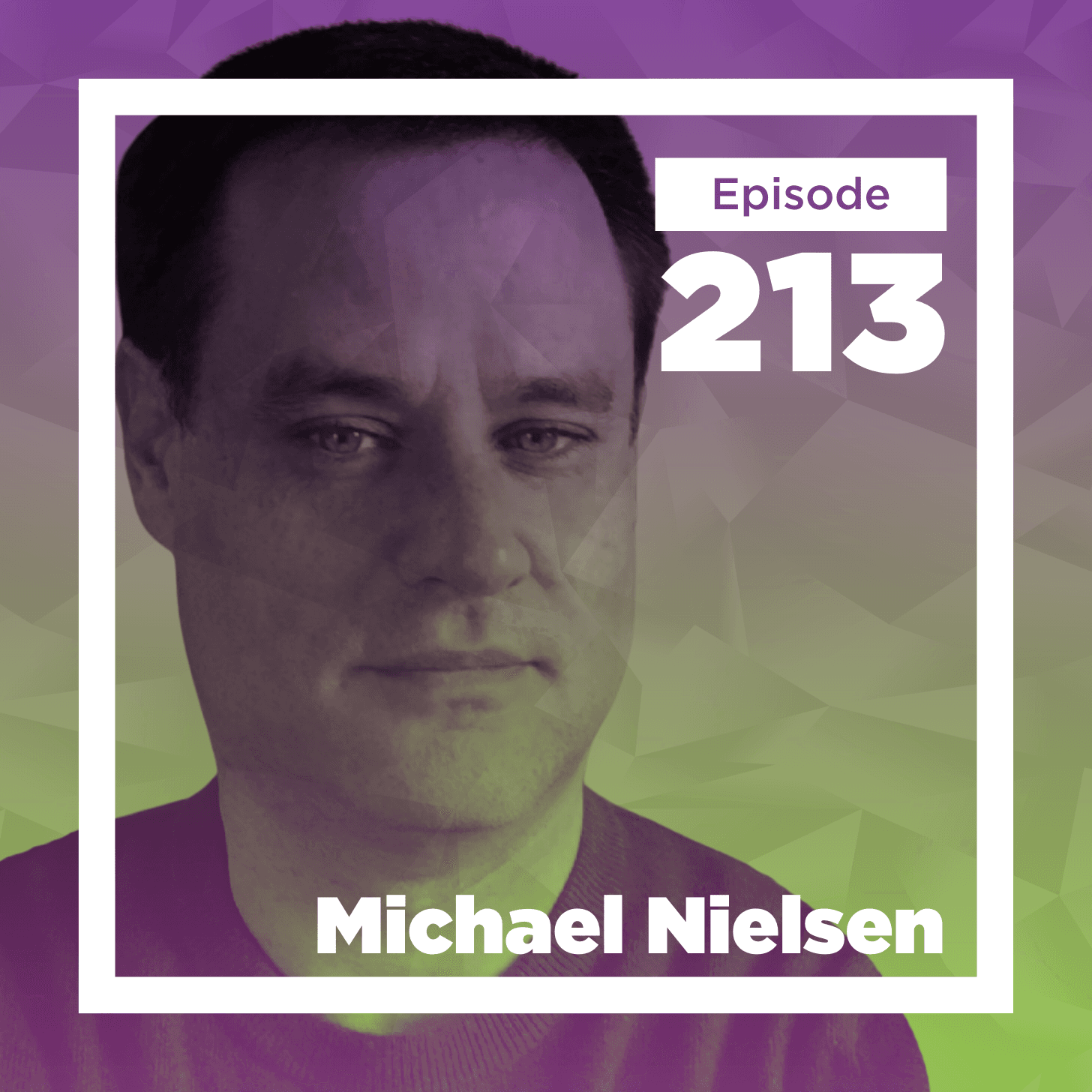
Podcast Notes: Michael Nielsen on Collaboration, Quantum Computing, and Civilization's Fragility
Episode Overview In this episode of *Conversations with Tyler*, host Tyler Cowen speaks with Michael Nielsen, a prominent scientist in quantum computing and the open science movement. They discuss a variety of topics, including aesthetics in the universe, collaboration in science, and the implications of quantum computing for civilization.
Key Guests
- Tyler Cowen - Host
- Michael Nielsen - Scientist in quantum computing and open science advocate
Key Themes and Discussions
- The Beauty of the Universe
- Question of Aesthetics: Why is the universe perceived as beautiful to human eyes but not to ears?
- *Discussion Points*:
- Beauty is often associated with simplicity and order.
- Visual representations of the universe (e.g., images from James Webb Space Telescope) are considered beautiful, while sounds from the universe are not.
- Collaboration in Science
- Finding Collaborators: Nielsen discusses what makes a good collaborator.
- *Characteristics*:
- Curiosity and openness to experience
- Ambition and imagination
- Complementary skills
- Influence of Historical Figures
- Simone Weil's Influence: Nielsen reflects on how Weil's sincerity and extreme dedication to her beliefs inspire him.
- Olaf Stapledon: The discussion includes critiques of Stapledon’s analyses of social structures and collective action failures, particularly in relation to the League of Nations.
- Quantum Computing
- Current State: Nielsen expresses his agnosticism about the current status of quantum computing.
- *Potential Impacts*:
- Discovering new materials through advanced simulations.
- The challenges of quantum money and its implications for security and counterfeiting.
- The Fragility of Civilization
- Vulnerable World Hypothesis: Discussion on the potential future threats to civilization, including the proliferation of nuclear weapons.
- *Concerns*:
- The cost reduction of nuclear weapons and its implications for global stability.
- Need for off-planet colonization as a safeguard for humanity’s survival.
- The Role of Open Science
- Pre-print Platforms: Exploration of why some scientific fields have pre-print platforms while others do not.
- *Cultural Factors*:
- Competitiveness in fields influences the openness of sharing results.
- The Importance of Memory and Attention
- Space Repetition and Learning: Nielsen emphasizes the value of memory techniques in enhancing attention and learning.
- *Personal Development*: He reflects on how travel and different experiences can expand one's understanding and perspective.
Conclusions
- Future Directions: Nielsen expresses a desire to deepen his understanding of religion and its societal roles.
- Lasting Impact: The conversation highlights the interconnectedness of scientific advancement, collaboration, and the existential threats faced by modern civilization.
Additional Information
- Episode Release Date: March 24, 2024
- Full Transcript and Links: Available on the *Conversations with Tyler* website.
Call to Action Listeners are encouraged to subscribe, rate, and provide feedback on the podcast to help enhance its quality and reach.
Follow Us
- [Tyler Cowen on X](https://twitter.com/tylercowen)
- [Michael Nielsen on X](https://x.com/michael_nielsen)
- [Conversations with Tyler on X](https://twitter.com/cowenconvos)
Written by AI. May contain mistakes. Listen to the episode to check what was said.
Transcript
Automatic transcript. May contain errors.0:03Hello everyone, this is Tyler. We want to hear from you about the show. In the show notes, there's a link to a short survey where we want to learn more about you. Why do you listen to the podcast? What do you think is under or overrated about the show? Is there someone you would just love to hear me interview? Your feedback will help us understand our listeners so we can produce better episodes, as well as future live events and listener meetups. Again, please find the link at the top of the show notes to fill out the survey. And thank you. We very much appreciate your feedback.
0:44Conversations with Tyler is produced by the Mercatus Center at George Mason University, bridging the gap between academic ideas and real world problems. Learn more at mercatis .org. For a full transcript of every conversation, enhanced with helpful links, visit ConversationsWithTiler .com.
1:07Hello everyone and welcome back to Conversations With Tyler. Today I'm here in San Francisco chatting with Michael Nielsen. Michael is hard to introduce and also difficult to prepare for because he knows and has done so many different things. He's from Australia, has a PhD in physics, has written what is perhaps the best known text or co -authored it on quantum computing, is one of the leaders of the open science movement, has co -authored with Patrick Collison on progress in science, has worked at Y -combinator, is an extraordinarily prolific writer, reader, commentator, tweeter, mentor to others, mentee, and many other things, and currently is thinking about the fragility of civilization and much more.
1:50Michael, welcome. Thank you so much, Tyler. So you were saying there should have been a metaculous on the opening question. Why is the universe beautiful to humanize? Is it selection? I have no idea. I mean, selection is a very attractive kind of an idea. I mean, kind of to think not just instinctively, but I don't know. Why are there simple rules? Why do we have simple rules, coupling the universe? In fact, why is simplicity and arguably truth somehow associated to beauty? physicists tend to assert that this is the case, but I don't think anybody really knows the reason why. How beautiful do we, in fact, think the universe is?
2:27So people don't buy paintings of the universe, people like you might, right? But it's... Oh, I have a painting. I have the double deep field on my wall, of course. But the most expensive paintings are not of the universe. There are people, there are voting scenes, right? I don't think that's really true. In the James Webb Space Telescope was about, I think, was $10 billion. Yes. and is arguably a machine for producing that kind of image. It's got to be one of the most important sort of image factories and most expensive image factories, if it may. So I'm not sure I buy that. What's the most beautiful image of the universe?
2:59The image of... We have a sort of a sequence of improved images of the three -degree microwave background is... I don't know, is it the most beautiful? It's maybe the most extraordinary. It really is sort of a photograph of the universe as a whole. You can look at that and it says something about structure out in creation. Why do the sounds of the universe not appeal to us so much? Right, so it's beautiful visually, but orally, we create very complicated things which we call music, which are beautiful. Yeah, that's a great question. I don't know why music is beautiful. people have made attempts, you know, there's things like sort of chirp sounds that might be produced near a black hole and sort of ideas like this.
3:46And you're right, they tend not to be all that beautiful. The only ones that I can think of that sort of offhand, you know, it's being produced by evolution. Birdsong is beautiful, but we're actually quite closely related to birds. So it's maybe not so surprising. If I think about things like what's your name? Run, run, run sex myth, I think his name is a composer in Toronto, has made these musical pieces based on the different periods in the solar system. So the, you know, time that the Earth takes the one year to go around the sun, but also then Mars and Jupiter and all these. And they are noticeably not particularly attractive musical pieces.
4:22So yeah, that's a good question. I wonder if the beauty of light isn't part of the reason for the beauty of the universe. So as human beings may be were evolved to be attracted to light, it gives you an integrated theory of the beauty of the universe and beauty of paintings. For me, a great painter, he's very attractive to people because of how he uses light. When you look at the universe, you're typically seeing signatures of light in many cases. You look at the Milky Way, right? It's pretty strange. I mean, we see in such a tiny band of wavelengths, we're really not seeing almost anything. We're not seeing into the infrared and the radio, we're not seeing into the ultraviolet and the X -ray.
4:59So a lot of what we view as beautiful locally, I mean, it's got this sort of evolutionary explanation again. Why the large scale structure is beautiful? Okay, I can maybe attempt to sort of, I partially believe this explanation, which is that we seem to be sort of programmed to recognize and find attractive instinctively novelty, which is associated to structure somehow. And so we look and we see spiral galaxies or things like that. It's reflecting something which is interesting. We don't necessarily know quite what, but maybe there's kind of an evolutionary explanation for why that is attractive at least.
5:39But I can apply that explanation to your question about sound. It's equally as good, and unfortunately it just doesn't seem to hold there. So I'll be, I'm not that confident. Now you've written that in the first half of your life you typically were the youngest person in your circle and that in the second half of your life which is probably now you're typically the oldest person in your circle. How would you model that as a claim of you? I hope I'm in the first five percent of my life but it's sadly unlikely now when you live 200 right which is plausible which is plausible and you would now be in the second half of your life.
6:12Yeah. I mean, I can give shallow reasons. I can't give good reasons. The good reason in the first half was so much of the work I was doing was kind of new fields of science and those tend to be dominated, essentially for sort of almost sunk cost reasons. People who don't have any sunk costs tend to be younger, they go into these fields. So, this kind of early days of quantum computing early days of open science, they were dominated by people in their 20s and then they'd sort of go off and become faculty members. They'd be the youngest person on the faculty. Now, maybe it's just because I found sort of San Francisco and it's such an interesting cultural institution or sort of achievement of civilization.
6:50We've got this amplifier for 25 year olds that lets them make dreams in the world. And that's for me anyway, for a person with my personality, very attractive for many of the same reasons. Well, let's say you had a theory of your collaborators. And other than yes, they're smart, they were card, but trying to pin down in as few dimensions as possible who's likely to become a collaborator of yours after taking into account the obvious. What's your theory of your own collaborators? They're all extremely open to experience. They're all extremely curious. They're all extremely per -social. They're all extremely ambitious.
7:24They're all extremely imaginative. And you think that ends up pairing you with collaborators who are more different than you. So a lot of collaborators are very similar and then other types are very different. So, almost always as well, I will select for somebody who has at least one very strong skill which I do not have. And that's sort of enough diversity from my point of view. And that may account for some of the age differences. Yeah, sure. But also, then there's also this local selection effect when I live in the Bay Area. There's a lot of really amazing 29 -year -olds around. And it's just incredible.
7:55I was told to ask, what's the influence of Simone Vile on you? Oh, what an interesting question. She's one of them, maybe the best examples of sincerity that I know of. The fact that she wrote what she wrote for herself, she wasn't attempting to get published. It was just this deep internal colloquial that was going on. And it's reflected in every aspect of her life. She went off to fight in Spain at a time when women did not go off to fight in Spain. Everything that she did, she did it at 500 miles an hour. She's remarkable as kind of, she's an extreme, very extreme type of a human being in a way that I find very interesting.
8:31If you and she collaborated, what would she on? I don't think, I'm sure she was a difficult person, although her brother, Andre Vile, was a very great mathematician and you can sort of see in some of the stories about the two of them that she must have quite liked as sort of scientist types. Maybe we would have found something to collaborate on. While Charles Sanders purse, still an important thinker. I don't know enough about PS2B. I'm going to answer that question. You and I were both fans of all our Stapleton who wrote the dual classics last and first man and star maker. What's the biggest analytical mistake he made in those narratives?
9:08So a lot of implausible things happen, right? But those are too simple to point to. Where is his understanding of the social world going wrong? You know, he was both, certainly to some degree, a socialist and certainly a pacifist. Though in World War II, he switched out of pacifism. He did. As good might as many people. Yeah. I find myself, as I read those books, actually becoming a little bit more sympathetic, I'm not a pro -era, I particularly sympathetic to them. And I start to think, he has this very long view of history, I mean much longer than most people who say they have a long view of history.
9:41And I think he sort of, he sees some of his pacifism in that light. It's kind of questions about, you know, what's actually good for a species, or in fact not even a single species, but across multiple species, is it good to be pacifist? And that's a really interesting point of view. It's hard to reconcile with kind of a selfish gene, kind of a point of view. But of course, this is an ongoing problem in evolutionary biology. It actually seems like, you know, group selection doesn't quite work, but something at that level has to be a little bit true. So if you take that seriously, then maybe his pacifism, which just seems like a sort of an outright mistake, maybe it's actually justifiable in some way.
10:17And so I'm not answering. What I've been to the inverse of your question, which is to justify the bits that I, I, I prior I find most implausible, but yeah, I think those are my stings. I worry that he too quickly assumes collective action problems are solved, which is close to your answer. So he thinks the League of Nations can be effective for a long period of time, which I suspect was not really contingently possible. And he has the Saga 'lian sense what Hagel would call a national spirit for him is a civilizational or certain stage of man spirit that so shapes how people think. And I hang out with a lot of economists.
10:53I think that's much stronger than the economists believe. Your overall view of the world and what's important. But I don't think it's nearly as strong as Stapleton believed. So the way in which collective spirit rules millions, billions or trillions of beings, I feel he's overestimating the efficacy of that. The comment about the League of Nations is really interesting. I think there's this spirit at the time. Lots of people wanted this idea to work. lots of his friends would have wanted it. I think it's sort of a shallow kind of a mistake that he made there. That you're coming about collective action problems seems much more to the heart of it.
11:29I think he didn't really believe in them or actually sort of understand just how difficult they are to solve, how difficult it is to supply public goods and these kind of things. He always does away with it sort of narratively and it's just, it's assumed away with that really a mechanism being given. And he assumes a lot away in those books. When the problems are interesting, he usually doesn't. And that problem is interesting. And he still assumes it away. I'm not very sympathetic to that at all. But I'm not sure how big a mistake League of Nations was. So clearly it didn't work. And I just criticized him for it.
12:04But if you think about 1815 up through the First World War, almost a century, you have an unprecedented degree of peace in much, not all through that and they maybe thought that was not possible. And maybe that is itself still a bit of a mystery. And then there's World War I, and you feel you can get back to some version of what you had and the League of Nations appears to be the closest path to doing that. And it might have been more plausible at the time. I'm just saying there's a gap between aspiration and what actually happened. I mean, the League and then later with the United Nations. I think you had the hopes and then you had the, what actually happened.
12:41There's a very large gap. Although, I mean, of course, as prototypes, types, you know, over the next few centuries, maybe these things are terrific. Maybe we learn a lot from them, things like that. I don't know whether with the Montreal Protocol have been possible without the United Nations, probably not. I have a very concrete question for you, and this is to clear up a confusion of mine. So I've asked experts in quantum computing, what's the status of quantum computing right now? Some of them say we already have it. Some of them say the others will tell you we already have it, but we don't.
13:09Others will say we're on the verge of having it. And there's two or three other answers I hear, often people who nominally would seem to know what they're talking about. So let me ask you, Michael, what is actually the status of quantum computing right now? I am the wrong person. I am determinedly very agnostic about this. I stopped. I worked on it from 1992 to 2007. And actually, I do keep up with friends. In fact, I'm going to have coffee after this with somebody who's still on the quantum train. It's very impressive progress each year. It is an extremely difficult problem. It's not solved. There's no way it's definitely not solved.
13:44But the fact that there's sort of order a hundred qubit systems Which you can apparently manipulate as you will suggest to me. We just wait. It's going to happen We don't know what it will mean. What's your maximum likelihood estimate for the first year when it will do something useful? Useful to me or useful to civilization and the most interesting thing would be to discover that quantum mechanics was wrong from my point of view They are the most interesting thing. It's probably discovery of new materials. How would it discover new materials? Just by being able to do simulations very, very rapidly, it's very hard to do simulations of stuff down at the quantum scale, the ways that we have, pretty terrible and often produce wrong results.
14:24The fact that we may actually have a very high throughput way of doing lots and lots of simulations, which give correct results. It's like being able to do a thousand times as many experiments as before. That will just speed things up. Insofar as there's anything to discover. I can't tell you what we'll discover. Will there be quantum money? Will all money be quantum money in this world whenever it comes? I actually don't know. I mean, there's this whole idea of Stephen Viesner, which he called quantum money. It's meant to be uncountifiable. I don't know. But isn't everything else counter -fittable if quantum computing is up and running and thus you need a quantum money to protect against just sheer counter -fitting?
14:59Most of the 19th century monies, they were often counterfeit. We don't know the exact percentage, but we believe it was quite high. Yeah, well, it's still true in the world today, never mind the 19th century. Yes, we've talked about before. I won't be surprised if we end up with systems like that. It's hard to make it stable. That's the issue. But my guess is that in the long run, we actually will find ways of making quantum systems surprisingly stable. That's speculation on my part. But if I come back in 100 years time and that's true, we may just have quantum coherence everywhere. Do you think that leads to a mass privatization of a lot of social activity?
15:37So something like AI, we're in San Francisco, the private sector does it. No government is really close to doing it, right? You have to pay high salaries, hire the most talented people. So if AI and quantum computing are done by the private sector, what is government in that world? I don't know. I mean, it's an interesting factor that work on nuclear weapons was actually nationalized. I think 1948 or something like that. So potentially that's just one answer, right? Sort of contingently. But that seems more of a brute force thing. But I don't know what to say. Open AI is done. I'm just saying that's a potential outcome.
16:13Yeah. I think quite a plausible potential outcome. I don't think it's likely, but it's not 99 % unlikely either. Yeah, I mean, that's civilly. It's kind of a very Neil Postman point of view. You have this, basically, you, or almost Larry Leseg, code is law. You just keep building more and more sort of governance infrastructure into the technology and you're moving it out of the hands of the population and into the technology and that seems to be Suddenly the story of the last hundred years and very likely the story of the next hundred years It's the status of linear algebra rising
16:49It's probably has yeah, it's prominent in quantum right? It's prominent in AI I mean, Google is built on, you know, magic's multiplication. You know, it's prominent for a lot of reasons. Well, what should we infer from that about the whole nature of the world? So if differential equations were rising in status to a similar degree, we might infer one set of things. But linear algebra, you almost feel a bit more grounded, don't you? I did. Well, yeah. Because when I took that class, I felt I understood it. I never quite know what your status questions mean, Tyler. I don't know what it means for something to rise in status.
17:24Well, AI now seems more important than it did five years ago. And Matrix multiplication is a big part of that. If quantum computing happens, as you're predicting it well, I think would also make Matrix algebra rise in status. I go, this is a really important tool. It's behind all our quantum money. Do you mean it's going to have more money go to it, more power go to it, more glamour go to it? People are going to regard this as sexy or what? But you would revise your ideas about the fundamental nature of the universe, just like our current understanding of quantum mechanics. It might be incorrect, but at least in the short run, it seems like probability theory is somehow more important than Einstein might have thought.
18:06And as you know, he famously asserted, God is not playing dice with the universe, perhaps incorrectly. I mean, the people who remake this understanding are very good at ignoring status. But others aren't. But others aren't. I think I'm inclined to think, I mean, maybe I don't care. I actually just don't care that much. I mean, if you're searching for comparative advantage in doing creative work, you want to know where status is, but mostly so you can avoid it. Yeah, absolutely. Be sure to status as Peter and you'll be able to say. That's it. It's what we'll put. Is there any chance Roger Panro's is right?
18:43And the human brain is some kind of quantum computer? I would love it if he was right. I think the answer unfortunately is not. not really. It's only possible that there's some very interesting structure in there that is quantum mechanics in some really interesting way. Lots of structure in there is quantum mechanics, all the reason why atoms are stable has to do with quantum mechanics, like all these sorts of things. But like an interesting unsuspected way would be, that would be terrific and I think is not completely out of the question, but it probably doesn't make effect anything about consciousness or anything like that.
19:13I would be very surprised if that were the case. How are we going to make progress toward a theory of quantum gravity, a general understanding of everything we seem to be stuck? Many people hate string theory, many people hate ever at many worlds. Those seem to be two major contenders. Where are we at and what's going to happen next? One fun reason for working on quantum computing is you're trying to build the largest scale fully quantum coherent systems that have ever been built. whenever you push on into a new regime, like there's some chance that things break down. If something was to break down there, that would be fantastic.
19:48Because we'd learn a lot. Because we'd learn a lot. And that's kind of what, the problem in some ways in physics has been that the fundamental theories have been just too successful for the last 50 years. Yes, you're right again, is very attractive for sort of a few years, but over 50 or 60 years, it's terrible. And I think that's certainly part of the issue with quantum gravity. Does it bother you that so many people hate string theory? Think it's now low status? Think it's not aesthetic? Think it's unintuitive? Does that carry any weight with you? Or do you want to be short status again on this one?
20:21I mean, there's the question of, you know, sort of inside and outside. Well, there's the question of inside and outside. The profession, there's also the question of inside and outside. The group of people who know something and those two are not exactly the same group, but there's a lot of overlap. So I mean outside, it affects funding a little bit. Well, we actually may be quite a bit. And so in that sense, it matters. But internally, I think I'm more interested in the question of just how much diversity of opinion is there, people pursuing lots of different ideas. One of the things that I've noticed over many years is I just, I find mathematicians when I talk to them, it's such a healthy culture, because each mathematician is really, well, a lot of them are very unique.
21:01They've got their own sort of particular path and their set of beliefs. Physics, theoretical physics often seems or just a little bit more monotone, that can sum themselves up in a few words when they're talking to their professional colleagues. And that's not so healthy. So I'm really, I'm not so interested in the question you asked. I'm much more interested in the question of how do you generate that kind of diversity? And do you feel that ultimately the final theory of a universe or a metaverse ought to be simple? Who's declaring ought here? But when someone presents a theory to you, Do you ever say, no, that's too complicated.
21:35It might be an intermediate theory at some level, but it's not going to be the final theory. Because I hear this from many people, a lack of satisfaction. You want to surprise. I mean, it's the same when I've, you know, the little tiny pieces of economics I've learned when I hear about, I don't know, Riccati and comparative advantage or something like this. There's just a nice little element of surprise. You're getting a free lunch somehow. So I'm more interested in that than I am maybe in the question of simplicity. What makes for physicists who age well? I spent quite a bit of time thinking about this as actually in my late 20s and went to look and see what seemed to distinguish older physicists who had aged well and older physicists who had maybe gotten a bit too complacent.
22:17So I really could tell having younger mentors was really the key. And why is that important? I don't know. I mean, I have theories. This was an empirical observation. Yeah, but what's your best theory? What I think is probably the case, it's almost a network effect. Basically, if there is some slight sort of downhill slide, and most of your friends, you know, are not quite at the edge anymore, that's going to infect you. But if you still have mentors who are 25, 28, extremely active, and they're active in the latest ways, you get to partake of kind of the positive network effects. And so I think that's why it's very important.
22:53Not just to have people who work for you, lots of 70 -year -old physicists have 23 -year -old students, but actually to have 23 -year -olds, 28 -year -olds, who you really learn from and you regard as your mentors. And holding constant your degree of power and influence, what's the best way to attract younger mentors? Find people who's work you admire and befriend them. And you think that works pretty well. Yeah. And just being nice. I'm not sure being nice is the right... There's there's you have a lot of younger mentors. Yes. You're known famously for being very nice Right. This is partly a question about your own self -awareness But has you being very nice helped you get more younger mentors?
23:35Or they attracted to other aspects of you? I am extremely disagreeable, but in a polite way I hope and a kind way hopefully. So you are very nice then Well, people often find people who are disagreeable actually quite Difficult but there's a if you look at all of the younger mentors as I've had in the last, say, seven or eight years, they're all people who enjoy disagreement. They say the thing that they think is obvious and you say, he's another way of looking at it and they're like, oh, you know, they want to engage. Some people get insulted or they get threatened or they get annoyed when you do that and those people are not going to be, they're not going to be good collaborators.
Read the full transcript
24:09They're not going to be a match. As the years passed, do you think your probability for God existing is going up or down? Which type of God are you referring to here? You're a thing to like a Abrahamic God or what? No, not a particular religion, but some explanation that would seem to stand prior to and outside of what we call physics and would be mystical in some way. Yeah, it's been, that hasn't changed since I was seven years old. But that's weird that it hasn't changed, right? Why shouldn't you've learned a lot? Why shouldn't it change? In whichever direction? I suppose I learned, I had explained to me three basic theories of cosmology when I was seven, one of which was the Big Bang, and then there were two others, which were steady state theory and a third, whose name I don't even remember anymore.
24:53And they leave some questions unanswered. Why is there anything? But as far as I can tell, we haven't made any progress on sort of those things in the 40 odd years since. Yeah, it's frustrating, actually, that's the case. I mean, I think you're correct to say, you've learned a lot, why haven't you changed? And my response to that is, I've learned a lot, because it's really annoying that it hasn't impacted that question more. I think my PE has gone up a modest amount over time. So when I was saying my young 20s, I thought physics was going to make more progress than it has at fundamental theoretical levels.
25:32And the fact that it hasn't nudges me a bit to wonder, well, these other types of explanations that I was not so keen on, maybe they're a bit more more important than I had thought. That hasn't happened with you? No. The thing that that that's an interesting, it hasn't really. I think I just don't think 40 years is very long. If it had been 100 ,000 years, I'd, I'd, but it's all I've got in a sense. I mean, I'm, I know. I'm going to have a bit more, but hopefully yes. My opinion time span is going to be 40 plus something. I think my appreciation for God has gone way up. Like, you know, I appreciate the construction of the religions far more than I did, what sort of notions of God do for people, vastly more appreciative.
26:15But my probability, I don't think, is really changed. And what about evolutionary frameworks, where there's some Darwinian process, some kinds of universes within a broader metaverse, they reproduce at greater frequencies, that shapes the properties of what we live in. Isn't that a kind of substitute for a good explanation, and that rises in probability just a bit? No, I mean, why not? It's, you're relabeling what you mean by universe. If you just sort of use a term that means everything that is, then that hasn't changed it. Our model of what it might be has potentially changed quite a bit over the last few decades.
26:51But maybe there's a simple theory for the metaverse, but we can never ever see it. It's like a master's religion. And then our own universe, there's not a simple theory, but we do know the parameter values we got are enough to ragged across the finish line and that takes some of the burden of physics in a way just like well the platypus it seems an unlikely creature but it has in fact survived. Okay you're just sort of saying that some of the things that seem arbitrary and being in good Australian you appreciate the platypus right? The platypus quite a bit it's good for fooling visiting Americans about whether or not this animal can exist or not.
27:24Yes I still don't find that compelling I think because there's always we've always known that there seem likely to be fairly contingent facts about the universe. I mean, it shifts the level at which they are. It's more interesting if the value of the fine structure constant is actually a contingent fact. That is interesting. Or if some of the coupling other coupling constants are changing over time or sort of models like this. But it's not particularly, it's still not getting at the essential question from my point of view, which is why is there something rather than nothing? That I've long thought is an impossible question.
27:55So we might have theories of parameter values or be able to predict how things interact or what happened a long time ago. But the Heideggerian question, I don't think it's a meaningful question at all. Because the word Y is already embedded in some context, which it sends a self -undercutting query. Open science, why do some fields have pre -print platforms and others not? Is there an actual regularity or is that random and path -dependent? I think a lot of that probably comes down to individuals. My favorite things, a year ago, before they'd started to spread in biology, I would ask, often ask physicists and biologists this question.
28:36And why is there preprints in physics but not in biology? And the biologists would say, well, biology is so much more competitive than physics that we can't possibly bear to share our results too early. And the physicists would say, physics is so much more competitive than biology that we have to share them as rapidly as possible to get the word out. But with COVID, didn't biology go the root, early sun parts of biology go the root of physics? And it just seems like it's just a cultural problem. You know, it turns out it's a little bit more like fashion or something like that. It does need to be solved.
29:07Like if you look at what was done in the early days of the physics pre -print server, some very clever things, actually things which are reflected in some of my favorite economists, some of their ideas were done by Paul Ginsburg when he was starting up the pre -print server. He went very narrow. He didn't try and solve the problem all across all the fields. And he went and kind of twisted the arms at some level of some very high status, high profile physicists to say, you know, I would like you to use this service, send me your best paper. So on the first day, which is named Andy Strombinger, who I think is at Harvard, you know, was on the pre -print server and Ed Witten showed up very quickly.
29:40So these are very prominent people. And you get this sort of just, it's a tiny community, but then you can sort of, you can, you can agglomerate. You can start to attach other communities. But that was just, That's a very contingent fact about history. It could have happened in some subdiscipline of biology as well. Why does so many crummy journals survive? They can be quite expensive. You might also have to pay to publish in them. They seem terrible. That if a good piece were in them, the journal would not certify the piece. If anything, the piece would help certify the journal. Why can't we get out of that?
30:13I mean, there's a complicated set of things going on. One is that libraries pay not individuals usually for subscriptions. They're not actually that really the person getting the utility is not the same as the person as the person making the buying decision. That's always bad. There's also the fact that since the 1990s and the rise of the internet, we get economies of scale. You don't subscribe. Libraries don't subscribe to individual journals for the most part. They subscribe to all these giant bundles, which is actually a terrific idea at some level. It's a way of passing on economies of scale and publication to the customers, but it does go some way to explaining why these crummy journals persist.
30:52But you think in part libraries are inefficient at capturing rents for themselves. Did they get this budget? They spend it on bad journals. It might be better for the world if they just took the money home and bought ice cream. Or did whatever. Yeah. Yeah. There's many other things that could be done with that money. It's difficult for them to reason about having talked to many librarians. They will do things like they will use impact factor. I mean, that's the differentiator that they tend to use. So they'll try and get all impact factor, whatever it is, and above journals. That's the kind of the way they seem to think.
31:23They're just using very imperfect proxy. They understand, as well as anybody, that the proxy is imperfect, but they don't have anything better to do as far as I can tell. So it's a very unfortunate situation. And right now, how high are the marginal returns to greater openness? So put aside terrorists, manufacturing, new pathogens, put aside people figuring out how to make their own nuclear weapons, AI problems. So putting aside the very negative, just if the good stuff were more open, how much more rapidly would science progress? Openness per se, I mean that's a very weak word. You need to be sort of much more specific.
31:59If you look at say the culture around Jupyter notebooks in machine learning, I think having those very openly available and widely available really has driven a lot of progress. You can just write your Jupyter Notebook with your experiment. You make it available to other people, and that can really drive a lot of progress. It's not the same as making your journal article available. It's a much more active kind of a material. Do I think that that is an important component in really significantly speeding up science? Yes. But it's not going to be 2X. I think that there's much larger than 2X possible, and this is a piece of that.
32:34Yeah. But it's not 2X on its own. No, it's actually it's too undefined to term. Openness is always with respect to what platform, with respect to what set of institutions, with respect to what set of norms, with the current sets of norms and institutions that we have, it buys you a little bit, I don't think it buys you that much, but the norms and institutions, they're going to change in response, the way in which people work will change in response. I mean, the Jupyter Notebook example I gave is I think a good example of that. Why are science textbooks so expensive? Is it marginal cost? Is it third -party payment problems?
33:07Is it something else? I don't. Is it instructor lock -in because the notes are geared to the text they've worked with for 15 years? Yeah. Very few professors make that much money from the textbooks that they write, but they're often very protective. I see people complaining on Twitter that they're not going to get the $400 check next year for their textbook under a new open access policy and they're really up and arms about this $400. That's interesting. It's hard for me to empathize with psychologically. I don't understand. I mean, a priori, I wrote this neural nets textbook which I put online for free and that massively, I mean, that's really made a really large difference to the impact which it's had.
33:52In fact, even if I just think purely financially, it wasn't, I wasn't doing it thinking, oh, financially, this will be better off, but the greater impact has actually benefited me much more financially than any amount of royalties ever would. You mean like giving talks or being invited? Yeah. And just in general, people know who you are, what you've done, what you're interested in, and they're much more likely to provide all sorts of different opportunities, including jobs. I think from the point of view of the authors, it really actually doesn't make that much sense. From the point of view of the publishers, it might make more sense.
34:21They can make a... I mean, the textbook market is not huge, but it is multi -billions. You have a well -known article with Patrick Hollison on progress in science slowing down. And it's published at a point, say, right before mRNA vaccines, right before GPT -4, other developments. Right. How well can we know the progress of science at any point in time? Isn't there often, and everything all at once, effect? And in fact, those years we were building up and investing in things that very suddenly then flourished? Yeah, it's amusing to think about different points at time, which you could right, try and write the same article, probably the years before the princopia you would have been able to do the same thing.
35:02There is some question about what certain types of institution make possible. Actually, I don't know. I think really the higher it be in my response is going to be something like, I just think AI is not yet 100 % clear, but I think it's very likely to drive a lot of scientific progress over the next few years. And that's just a case of, we're moving so much of our cognition and eventually also the actuators the way we operate in the world, out into these devices where all of a sudden it becomes much more mutable and hopefully improvable. Do you think the private sector wages of scientists are a good proxy for progress in science?
35:39I think if science is declining in value, you would think scientists would be paid less and less, but over the last 40 years, mostly those wages haven't fallen. I don't think it's a good... Isaac Newton wasn't the richest person to ever live, but he probably did more for a human understanding than any of these. But there's more of a market now. The Isaac Newton of today would probably be pretty wealthy. Einstein, who'd have been wealthy had he done more media, right? But he wouldn't have been wealthy for what he did well. But still his wage would have reflected his fame. He could have endorsed ski boots and other things.
36:15Well, famously he asked for $3 ,000 a year when he moved to the IAS and they gave him 15. I think he wasn't very good at negotiating. But just say that the ages for private sector pharmaceuticals, they seem to go up for quite a while. When the drug pipeline seemed slow, should we have inferred from that? Well, we're building up to some big things, some blockbusters or not. Yeah. This is a question for you, Tyler. Well, that's fine. That's a name asking right. Good reason to do so. I think I'm inclined to think. And there's always this interesting balance. Actually, AI is a really interesting example at this point in time.
36:49There's this theory which has become widely believed to almost everybody that scaling is very important. Scaling is a very capital -friendly story. So it actually moves some of the power and the negotiating power from individual researchers, I think, to the centers of capital. But it is just a story. I think it's quite interesting that it, in some sense, gives the individual researchers less negotiating power. Whether or not this is going to eventually result in a diminished ability to build personal brands and then capture value from that. I don't know. I'm really interested actually to see what will happen over the next few years.
37:23It used to be that the big companies published a lot of papers very openly and that is gradually going away and as that goes away it damages the individual researchers because they're not able to build their brands publicly in that way. They're not as easily able to say, I am the person who did. But this is a small city, doesn't everyone know? I dinner with a bunch of AI researchers last night, they all seem to know each other's relative importance. Yeah, I mean, and you look at their salary, so there's rumors. They're doing fine. The top researchers can be offered five to ten million dollars a year.
37:56Those must be some of the highest science salaries ever, and you're saying, AI is such a big thing. You've seen it to be coming down on the side of the wages predicting something. I think so much money is going in and it's going in on the basis of brand to some extent. And we've hired such and such a person who did such and such a thing. And if that can make your company valuation go up by a few hundred million dollars, then offering them another extra million dollars a year makes sense. But I don't have a grant. This is all local storytelling. Sure. It's not grand theory of what's actually going on.
38:31I haven't thought it through in enough detail to have any confidence there. Now you're working on what I think you call the vulnerable world hypothesis. Yes? That's what Dick Bostrom, yeah, that's his term. What do you think is the cost at which a nuclear weapon could destroy a city? So if that costs only $50 ,000, it seems to me the world's in big, big trouble pretty quickly. What's that cost level where you get very, very nervous? So if it's $10 billion, maybe things are fairly safe. If it's $50K, we're done for. What's the threshold? It's a cost and expertise, but let's say the expertise is comparable.
39:08So somebody who has 50k is probably able to get the expertise as well. Right. Yeah, that's not great. That's my fundamental worry with a without AI. That just that cost becomes low. Honestly, I mean, there's some question about what exactly mean by nuclear weapon? Like, is it portable? Is it? It would render a mid -sized city uninhabitable for a few decades. So I'm very least sort of a multi -megaton, but not necessarily. It would make the headlines. It would make the headlines. A very small nuclear bomb will make the headlines if detonated. Yeah, I mean, if we're getting down to hundreds of thousands of dollars, the issue is the issue is right.
39:43Nuclear weapons are terrible, but they're not civilization threatening directly. Sure, but enough of these go off like they can certainly be destabilizing. That's a yeah, be like the fall of the Roman Empire, maybe worse. Yeah, that's what it starts to seem like. But in what year do you think that the cost will be low enough that that happens? I mean, at this point, I don't have a good sense. I suppose I'm actually more concerned about other threats. But if this is a - My safety is the obvious thing. I wouldn't call it a certain threat. But if you simply think technology will advance. He's the thing, like the nuclear non -proliferation treaty means that we actually have a lot of controls of the ability to produce fissile material.
40:24But that's like League of Nations, right? Ultimately. Yeah, I mean, it is. It's really coming out of that same sort of, yeah, we have this cartel of whatever it is, ten countries or something. It'll fail when the cost is low. It will eventually fail, but that's many decades away. But you have reason to think we're going to last a thousand years and it's civilized today, not every person dead, but I think getting off planet earth and establishing a civilization elsewhere is very, very important. Yeah. Very hard for economic reasons. Yes, but utterly crucial. Robots in a sense make it harder because you could send robots to Mars is to do whatever might be economically useful there means you never work hard on having humans do it.
41:06Yeah, that's true. I mean, we're pretty curious. But the robot will take perfect footage. Whatever is there, the robot will send back to us. You'll have your whatever is the current version of Apple Vision Pro, right? It will see very realistic. You're an economist. I'm a romantic, I think. Might be the difference. But we'd have to settle them at scale. So 20 people on Mars limping along. Oh, it'll be like a million people, not 20 people. But if we can do a million, we can do a billion, I would think. Sure, sure. You want to get, it's still not going to be, it's not going to be self - what's the right term.
41:41It's not going to be an otaku or whatever the right term is. It's not going to be completely self -sustaining. Sustaining that at a million people, it's doing a lot of the, it has a lot of the civilizational infrastructure. And so I think that's the right sort of scale. Casey Hanmer is a nice book. I think it's had a build a city of a million people on Mars or something like that which I think is it's way too optimistic in many of its assumptions but he's got the right scale. Economics aside, what's the main scientific constraint that has to be overcome? Is it gravity? Is it effective radiation on the human body?
42:11Is it water? I mean to some extent we're not going to know until we go there was this great experiment done a few years ago where there was a pair of twins one went up into space for a year, the other one stayed on Earth. So there was the first Just time we actually got to do a controlled or somewhat controlled study where we see what the impact of being in space for a long period of time does to a human body. And I mean they just discovered so many things. This is still below the Van Allen belts as well. So we don't, I mean we just don't, we just don't know the answer to those questions. What's going to, there's a whole bunch of problems.
42:42The regolith on Mars is terrible for human beings. I'm sure that the logravity is going to be bad for them. What else is there, there's shortages of, there's nitrogen fortunately, which we don't have on the moon. So you're making me think, civilization as we know it won't last a thousand years. No, I also have a lot of faith in long -run economic growth. Basically, at the moment for us to go to Mars is, you know, very, very, very expensive given the return or to establish a permanent human presence in space. If we continue to have economic growth, the relative cost is just going to keep going down.
43:16At some point, it's actually not going to be that difficult. Does a vulnerable world, me near universal surveillance? Unfortunately, I think probably yes. Doesn't that then become the great point of vulnerability? Oh, absolutely. Yeah. It's half you could ban universal surveillance from here on out forever. Would you press that button? No, I mean, I think, you know, the history of justice to some extent. So the term surveillance, it's funny. It has negative connotations. people, you know, they think of Bentham and the Panopticon and the Gulagapalago and the Stasi and all these things. But in fact, our ability to supply justice is dependent upon having a good understanding of what has occurred in the present and in the past.
44:03So to these things. But maybe it needs opaqueness as well. It's this optimal mix of surveillance and opaqueness. That you actually have some latitude to break certain laws to misbehave that keeps the system stable, limits the abuses of power, limits how much power the powerful have over us. Yeah, there has to be some sort of Madisonian point of view where you're bringing the powerful institutions into conflict with each other. We do that very imperfectly at the moment, you know, ideas like search warrants and things like this, they're supposed to be checks and balances, but it seems like the organizations which do the of balance are too powerful.
44:44They don't have as strong enough checks on them. I don't know with a, just as a practical matter, the United States is capable of doing this well. I'd be much more comfortable if it was certain other countries. And a strong AI future, where do the economies of scale lie? Say within your lifetime, not 500 years from now. I'm not sure if you're pointing to what you're pointing to. Well, we're all trying to figure out how AI will shape the future, right? So one model is everything is supplied competitively, maybe a bit like fast food today. I suspect that's not true, but it could be true. This is the oligopoly model.
45:23There's the one company races ahead of the others, and then its own AI does R &D at an accelerated pace and they stay ahead forever. Or there's one country, one company, one something controls all the chips. Where do you see the monopoly power evolving? Because it's essential, I think, the predictions of the model. I mean, when I talk to people who know much more than I do, they all point a day a sml has having been surprisingly hard to duplicate, you know, just the ability to... It's not so much do the lithography, but do the lithography at scale, which seems to be very, very... So we should be long Netherlands.
45:56Probably. Yeah. Yeah. That would be an amazing conclusion. It would be an amazing conclusion, but return to the Dutch Renaissance. So it's like agriculture and lithography. and drawing on 17 services. Human services maybe. That's right. Yeah, the return of the Mia. Yeah, yeah. What do you think of the Netherlands as a country? Oh, I love it. I've never spent, well actually, I spent a month there, one, who am I kidding? That's a lot of time. That's a fair amount of time in Liderne, actually. It's a lovely place. It has many problems, of course. I mean, their altitude is not great. In some ways, actually, it's good.
46:33Yeah, they're an interesting sort of a test case. They show what a strong determined civilization can do in response to nature. Yeah, I like the flatness of it. I like the water being everywhere, not everywhere, but most parts, at least of western Netherlands. I find that very attractive. This stereotype I sometimes encounter people sort of view it as being a little orderly. I've heard people say it's dull, but actually I think some of the most interesting experiences of my life were there. I went to a, it was like a jamboree in the field. It was a five days long called Hacking at Random. In 2011, where some people from anonymous spoke, a whole bunch of cryptographers spoke, it was really sort of hacker culture.
47:17And it was just intellectually wild in the most interesting way. And it really, it grew out of Dutch hacker culture. I think there's a lot of, you know, that spirit of the Dutch chrenison still still still visible. How would you describe the quality of this conversations? What were they like different than what's in San Francisco? Oh yeah. How are they different? They're not captured by capital to the same extent. Conversation to San Francisco, particularly with younger people, tend to be extremely idealistic and often very prosocial. But then later there's this sort of negotiation that goes on where they need access to capital to make the dreams come true.
47:56a certain amount of compromise is made, although they also often keep a lot of their original sort of pro -social and idealistic character. In the Netherlands, in those particular events, there have been less of that. They also have less access to capital. Yeah. If someone's gonna travel to the Netherlands, they have a tech background. Like what should they do or what advice do you have? How should they try to learn more from the Netherlands? It's been years since I've been there. So I'm not the right person. But since you have good memory through space repetition. Yeah, maybe. I mean, yeah, I love going to the museums in in in Amsterdam just partially I remember on is maybe my my my favorite painter that that's a yeah, it's hard actually to think of anything else but I think of the Netherlands.
48:40Yeah, yeah, other than Rembrandt's late self -portraits, which I think are some of the most extraordinary things that have done. Let's say we all had better memories. How big is the social gain there? Is there any social gain at all? So you've been in an advocate of space repetition for improving your memory. It works for medical students, it probably works for languages, but are there social gains, especially with AI coming? Well, I'm not actually, I wouldn't say I was an advocate. But you do it. I do it. And you teach other people how to do it. I get benefits from it. And some other people get benefits from it.
49:11And I'm very enthusiastic if they do. And if they don't, lots of people try it and are like, this isn't working for me. Well, stop doing it. Same as, you know, if you listen to Bach and don't like it, stop listening to Bach. to what extent do I think? There are these interesting, there's a long sequence of papers sort of trying to elucidate the connection between deep sort of practical expertise and the role of memory, I suppose most famously, people like Herbs Eimon and Anders Erickson and people like this have tried to understand what relationship if any. It's a little bit murky, they all make very strong claims about an expert as somebody who's acquired sort of 50 ,000 chunks of information and things like this.
49:51They're nice stories. They certainly seem to be born out, but I don't know what the causal thing is. If I talk to you about economics, you can tell me, well, actually not, not just an astounding number of things about economics, but about a lot of different things. But I don't know, are you an expert because you know those things or is it downstream of something? Yeah, is it really downstream of something else? I'm sure it's part of it. If you had a magic memory, it might help you a little bit. But I suspect actually it's downstream of something else. your determination, curiosity, something like that.
50:21Some evidence that students learn better when they take notes of what's being said. Do you feel there's something for some people with memory a bit similar, but until they have memorized it, it's less real for them? I don't just mean that they remember it more, but the initial impact somehow is created or defined by the later act of memorization, like people who take trips and until they photograph something that don't feel they've seen it. Yeah, in fact, they probably didn't, they very likely didn't see it. Perhaps, yeah. It's probably part of the reason why I take photos. I will look more closely.
50:52That seems to be part of the reason I will take notes. It is part of the reason why I do space repetition. It provides me with another way of paying attention to the world. Those things are very valuable, right? Like any general purpose strategy you have, which will cause you to pay attention to the world, is incredibly valuable. And so I collect things like that. Yeah, why did I say yes to coming on the podcast? A huge part of it is because I know it's gonna make me pay attention in different ways. I know that you're gonna ask me questions that nobody else is gonna ask me. And so for me, like the reason I do space repetition and the reason I will come on a podcast with somebody like you who asks very interesting questions, it's kind of the same.
51:34But in some other ways, you're a fan of non -legibility, as am I, had other margins. And there's some tension because when you take the photo, when you remember something, when you write it down, there's less legibility. And there's no tension at all there. You're constantly expanding the legible. And when you do that, there's this sort of penumbra of illegibility that surrounds it. That moves, but it gives you access to those other spaces. You know, you go to the Netherlands, you travel in general, you make more of the world's culture, you make people much more legible to yourself. But that expands what you're able to see as well at the edge of that.
52:11That's part of the reason for doing it. That's part of the reason for wanting to make things legible. What's underrated about travel other than that? Oh my God. Almost everything. You denied saying this, but somebody once said to me that travel is the only education, and it's really stayed with me as expressing some deep truth. I think mostly just the world is so incredibly deep. Absolutely. There's 8 billion people. It's the only way to see that depth and breadth. Yeah, and it's just unbelievable. I mean, you pick almost a random person anywhere, you could spend a great year with them, just learning things.
52:44And you can't unfortunately do that eight billion times. Yes, it's very, very undirated. It's been very undirated in my life. I haven't traveled nearly as much as I should. Why is the midway aircraft carrier? Why is that so interesting? There are many reasons. That's in San Diego, right? It is, yeah. So for about 10 years, It was probably the most dangerous object in the world. It carried nuclear weapons, I believe. Having 5 ,000 people on it, basically, you have, people have been making objects like that for, well, centuries, many centuries. They keep getting better at it. There's so much sort of built knowledge built into that environment.
53:22It expresses so much very deep expertise, and then you have four, or 4 ,500 people, or completely dedicated to a single purpose, they all care an enormous amount about this purpose. They don't suffer like large organizations, have all kinds of bloat and all kinds of problems. So many of those problems are gone away there, but partially because when you're on a boat, it's not so easy to empire build, like there's real reasons to trim fat. You have amazing sort of unity of purpose, what the captain or what the admiral, there was both on the boat, say, that goes. you're not arguing about what the right corporate strategy is.
53:57So you have incredible clarity. You have incredible belief in this purpose. It actually is a high purpose, in their case, talking to some of the sailors. They felt very strongly, they were protecting a civilization that they cared about a great deal. They speak with so much pride about it. So it's almost sort of the perfect floating civilization in some regards. It's just immensely interesting. Here's something you went throughout, and I quote, So the great talent identifiers I know or know of all seem very idiosyncratic. They're rather like Michelin chefs. This is getting us back to the tension between the opaque and the legible.
54:33Why do you think that's true, that they're idiosyncratic? Personally, it's just because the boundaries of knowledge at any given time tend to be idiosyncratic almost by definition. Like, they haven't been commoditized yet. There is a best person at making superconducting circuits in the world. there is a best person. Toma Shelling, I think, was your PhD supervise? Yes. When you reach Shelling, you realise that some of the things he did, he did very well, and he must have been remarkable to talk to him, but he's a little bit illegible. That's right. Even though he's a very, very... And he was when you would speak to him as well.
55:05Oh, bet he was. That's the part of the value. You're like, oh, this person is actually out on the edge of civilization. And I think that people who are good at identifying people who are able to expand boundaries like that, like they need to have some sense of that edge. And here's a question you wanted me to ask you, quote, you initially were skeptical of emergent ventures, but you've changed your mind and become enthusiastic about it. What caused the switch? And what would you change about emergent ventures? I mean, the biggest single thing is just empirical. I've met a bunch of EV grantees.
55:38I've encouraged a bunch of people to apply as some of whom you've given grants to. And they're great. Also, you haven't funded in the way I might have expected. I was talking to somebody. I've actually forgotten who it is. And they clearly had some sort of socialist, quite anti -libertarian ideas. And you've given them a grant and I thought, it might have been a mistake, of course. So typically, Tyler, like he's trying to figure out, do they actually believe in this idea? Do they actually really care? And then you don't mind that certainly not coming to the Maccadus Center to carry forward the libertarian flag.
56:12And somehow I think seeing so many people who are doing very worthwhile things, which have no, or very little institutional chance of support being amplified, that I care about a great deal. And I mean, it seems like Evie is one of the places that is doing that the best, that really, yeah. What do you think we can do to attract more non -legible, but excellent people? Find other people like yourself. Well, they're going to be like you in this abstract way, but actually very unlike you in other ways. And I think about, I don't know, people like Stuart Brand and people like that in the past who've just been wonderful at talent identification, but they're not identifying the same kind of talent as you.
57:01To some extent, they become human marketplaces as well. Like they're actually, they're out of crossroads, they're connecting people to opportunity. That's a very special type of a person. and I maybe met five to 10 people in my life who seemed like that. Well, really strongly. Here's something else you wrote in my quote, I internalized a lot of Ivan Eliyich, John Holt, AS Neal, and Paulo Freire as a kid. What did you mean? You were talking, I think, in the context of agency, but how did that shape you? At the time, as a 12 or 13 year old, it mostly probably made me insufferable to my parents because I hated school already.
57:38That's a good thing, right? It gave me a real way of expressing that, and they dealt with me very patiently. I think over the long term, the most important of those was, for many years I would have said, ill -etched. Maybe still say ill -etched. And basically, his point is about the question, it's about the question of what's the relationship between human beings and institutions and how paternalistic are those institutions towards the humans. So, in Discoaling Society, he really makes the point that in fact schools do not treat children as human, to some extent, at all. Denies the most basic kinds of agency.
58:18And just thinking about that kind of a relationship, what relationship should our institutions have to individuals was very, very important to me as a teenager and then sort of, I mean, through my entire life. Is it why you didn't join OpenAI in 2015? No. And do you regret that decision? Yeah, I suppose I did consider it going as they were getting started. It would have been an interesting life choice. I had a lot of doubts about the wisdom of pursuing artificial general intelligence, which would not at all resolve then, they were just fears. So that was part of the reason. Honestly, really the main reason at that point, it's this point about comparative advantage.
58:58It was like, oh, AI is happening. It's become very fashionable. You know, if you kind of wake up in the morning and it turns out that some institution is mad keen to pay you to do whatever it is you're doing You should actually think about whether you're in the right line of business I tend to think unfortunately for creative work There's an anti -correlation between how valuable what you're doing is and and what you're being paid often Well, it's kind of it's the the anti -economist point of view. It's not it's not right But like there's a simple model in which that is right actually a simple very much kind of an economist model So I have felt for more than a decade that AI was, you know, it becomes sort of around 2011, 2012 when I decided to write, to start writing my book about neural nets, it becomes sort of this unstoppable force in the world or very difficult to stop.
59:43It was clear it was going to attract more and more capital, more and more people. And so also to some extent I just felt like I should go and do something else if that's the case. In the next 20 years, what do you think your comparative advantage will be? I'll tell you after 20 years. But you face a year, something like now, right? The problem is step is before you. The problem is, of course, it's very helpful for motivational reasons to have answers to that, but your answers never turn out to you what the correct answer was. Probably my ability to write. And your Twitter biography says, I'm like, quote, searching for the new menace.
1:00:16What does that mean with respect to you? Just trying to find the deepest possible experiences in the world, in people and things and ideas and places. And final question, what do you think it is that you will learn about next? You love to ask this question? I've heard you ask it before. I will learn more, much more deeply about religion than I have in the past. And that involves travel, going to church, reading books, talking to people, all of those things. It involves all of those things. Yeah, I'm going to see the highest of here in Istanbul in the near future. That's gorgeous. I've wanted to see for almost all way adult life and I have never been.
1:00:55Have you been to Amrit's Orr? No. That to me is the most religious feeling sight I've ever visited. So I would recommend going there. And it's not a hard trip in any way at all. I've never been to India. You must go to Amrit's Orr. And the old cliche, something like when it comes to religion, every Indian's a millionaire, it's not really true. But I still think India is the best place to go to think about religion. Yeah, that makes a lot of sense. Yeah. I'd love to go to Jerusalem as well. I think for somewhat similar reasons. But there you think about tension. The religious aspects of tension, but I think more about tension than about religion per say.
1:01:33Hmm. And it's very useful for that. Michael Nielsen, thank you very much. Thanks so much, Tyler. Thanks for listening to Conversations with Tyler. You can subscribe to the show on Apple Podcasts, Spotify, or your favorite podcast app. If you like this podcast, please consider giving us a rating and leaving a review. This helps other listeners find the show. On Twitter, I'm Attyler Cowan and the show is At Cowan Convose. Until next time, please keep listening and learning.
From the publisher
Take our Listener Survey
Michael Nielsen is a scientist who helped pioneer quantum computing and the modern open science movement. He's worked at Y Combinator, co-authored on scientific progress with Patrick Collison, and is a prolific writer, reader, commentator, and mentor.
He joined Tyler to discuss why the universe is so beautiful to human eyes (but not ears), how to find good collaborators, the influence of Simone Weil, where Olaf Stapledon's understand of the social word went wrong, potential applications of quantum computing, the (rising) status of linear algebra, what makes for physicists who age well, finding young mentors, why some scientific fields have pre-print platforms and others don't, how so many crummy journals survive, the threat of cheap nukes, the many unknowns of Mars colonization, techniques for paying closer attention, what you learn when visiting the USS Midway, why he changed his mind about Emergent Ventures, why he didn't join OpenAI in 2015, what he'll learn next, and more.
Read a full transcript enhanced with helpful links, or watch the full video.
Recorded March 24th, 2024.
Other ways to connect
- Follow us on X and Instagram
- Follow Tyler on X
- Follow Michael on X
- Sign up for our newsletter
- Join our Discord
- Email us: cowenconvos@mercatus.gmu.edu
- Learn more about Conversations with Tyler and other Mercatus Center podcasts here.