
In short
Podcast Notes: Conversations with Tyler
Episode
Musa al-Gharbi on Elite Wokeness, Islam, and Social Movements
Episode Overview
- Host: Tyler Cowen
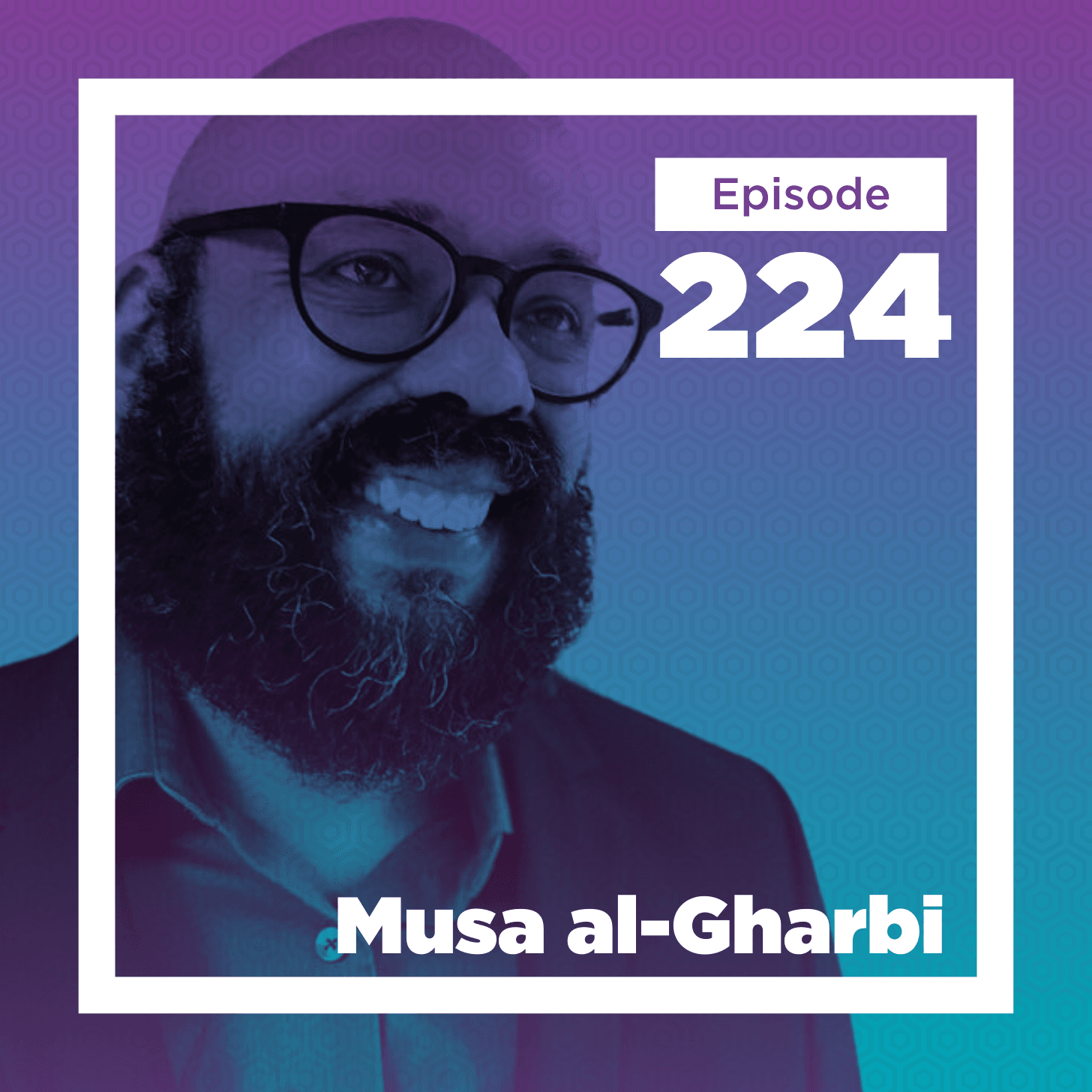
- Guest: Musa al-Gharbi, Sociologist and Assistant Professor at Stony Brook University
- Book Discussed: *We Have Never Been Woke: The Cultural Contradictions of a New Elite*
- Recording Date: September 19, 2024
Key Topics Discussed
- The Concept of Wokeness
- Exploration of the rise and fall of the "Great Awokening" among elites in America.
- Examination of elite overproduction and its impact on social movements.
- Factors Influencing Wokeness
- Elite Overproduction:
- Definition: A condition where society produces more individuals who aspire to be elites than can be accommodated in elite positions.
- Result: Frustration among these aspirants when they cannot achieve expected standards of living.
- Contingency of Wokeness:
- The potential for wokeness to fizzle out after initial peaks due to various societal factors.
- Indicators suggest that the peak of wokeness was around 2021, and trends indicate a decline since then.
- Sociological Theories on Social Movements
- Social movements linked to moments of elite overproduction lead to dissatisfaction and activism.
- The instability of alliances within social movements can cause them to lose coherence.
- Previous episodes of "awokening" are compared to current trends, drawing parallels and identifying unique elements.
- Political Ideologies and Psychological Aspects
- Discussion on why higher neuroticism is observed among left-leaning individuals compared to conservatives.
- The influence of progressive ideologies on psychological states like anxiety and depression.
- Islam and Social Movements
- Speculation on how a "Great Awokening" might manifest in Muslim societies.
- Cultural and historical context of Islam compared to Western wokeness.
- Reflections on the historical relationship between Islam and various social justice movements.
- Musa's Personal Journey
- Musa discusses his transition from Catholicism to Islam and how this influences his perspective as a sociologist.
- Exploration of his identity as a Black Muslim and thoughts on the sociological implications.
Key Takeaways
- Wokeness: Understanding it as a cycle influenced by social conditions, elite frustrations, and broader societal trends.
- Social Movements: The dynamics of how and why social movements arise, peak, and decline alongside elite discontent.
- Cultural Contexts: The significant differences in social movements across cultures, particularly in Muslim societies compared to Western norms.
- Personal Identity: Musa's multifaceted identity provides a unique lens to view sociological phenomena, including the intersection of race, religion, and social justice.
Concluding Thoughts
- The conversation provides a deep dive into the complexities of wokeness and its implications in social dynamics, particularly focusing on the experiences and perspectives of those involved in academia and activism.
- Musa al-Gharbi's insights contribute to a nuanced understanding of both historical and contemporary social movements, highlighting the importance of context in sociological studies.
Written by AI. May contain mistakes. Listen to the episode to check what was said.
Transcript
Automatic transcript. May contain errors.0:03Hi listeners, this is Tyler and I wanted to take a moment to tell you about a new podcast that we have here at the Mercatus Center. It's called Pluralist Points. It's a new show hosted by our new executive director, Ben Cluzzi. Ben speaks with guests through a working to create an environment that promotes productive civil discourse around the tough issues facing
0:48our world.
0:57Conversations with Tyler is produced by the Mercatus Center at George Mason University, bridging the gap between academic ideas and real world problems. Learn more at mercatis .org. For full transcript of every conversation, enhanced with helpful links, visit ConversationsWithT Tyler .com. Hello everyone and welcome back to Conversations with Tyler. Today, I'm happy to be chatting with Musa Al -Garabi. He is a sociologist and assistant professor at Stony Book. Already a very well -known public intellectual, and October 8th is the publication date for his new and excellent book. We have never been woke.
1:40The cultural contradictions of a new elite, I'm very happy to have blurbed it. Musa, welcome. Thank you so much for being here. And thank you so much for your kind words on the book. I'm sure you've been thinking about this question, but how much is the distribution of wokeness amongst the elites as we saw maybe three or four years ago? Is that something sociologically necessary? Or was that extremely contingent and dependent on a whole host of factors ranging from zero I went to straight policy to the rise of Trump, COVID and other matters? Are we out of that moment already? I have published an essay where I argued the greater welcoming does seem to be winding down.
2:21In the book, I argue looking at a lot of different empirical measures and in some of my other published research before the book. But I argue that it seems like starting after 2011 with race, gender, and sexuality and stuff, but starting a year before that with Occupy Wall Street and things like this. But basically starting around 2010 there was this significant shift among knowledge economy professionals and how we talk and think about social justice issues. But that does seem to have peaked around 2021, looking at the measures that I was looking at in the book, seems like a lot of those those are on the decline now.
2:55Do we have a single coherent theory that explains both the rise of the great awakening and its apparent fragility? I can see that it's easy to explain either of those, but how do we do both? Yeah, one of the things that I argue in the book that I think is really important for contextualizing the current moment, is that this current period of rapid change in how knowledge economy professionals talk and think about social justice and the ways we engage in politics and all of this. This moment is actually a case of something. As I show in the book, looking at the same kinds of empirical measurements, we can see that actually there were three previous episodes of kind of greater walkenics.
3:33By comparing and contrasting these cases, is we can get insight into questions like, why do they come about, why do they end? Do they influence? Do they change anything long term and so on? And so to that question, why do they come about, why do they end? It seems like from what I argue in the book, as there seems to be two elements that are important predictors for one in a wokening light come about. One of them is that they tend to happen during moments of elite overproduction when it becomes particularly acute. This is a term drawn from Jack Goldsmith and Peter your church and for people who are not already familiar with it, which is basically when society starts producing more people who think that they should be elites, then we have capacity to actually give those people the lives they feel like they deserve.
4:17So we have growing numbers of people who did everything right. They did all the extra curriculums. They got good grades in school. They graduated from college, even from the right college and the right majors, but they're having a hard time, you know, getting the kinds of six figure jobs they expected. they can't buy a house, they're not being able to get married and live the kind of standard of living their parents had. And so on, when you have growing numbers of elites and elite aspirants that find themselves in that position, then what they tend to do is grow really dissatisfied. But that problem hasn't gone away, right?
4:50The academic job market is still glad at home's cost more than they used to, and yet the great awakening is much weaker. And that gets to my point about how do we explain the contingency? Yeah, I mean, by some of the measures actually, there has been improvement. I mean, the academic job market is tough and will probably continue to be tough for these kind of deeper structural reasons related to growing emphasis on contingent labor and so on and so forth. I argue in the book and in some of my other public work that they're reducing to be some indicators that the kind of the worst part of the 2010s crunch seems to be fading out a little bit.
5:29And so that's one of the things that you might expect would correlate with a great awakening tapering, but the other thing that's really important that ultimately leads these abokinings to fizzle out is that so the elite overproduction creates the motive right it creates the motive for a lot of these elites to condemn the prevailing order and the people who are at the top and who were successful and to try to purge some of those people and create room for themselves and so on. Okay, so they have a motive, but they don't always have the means and this is because as Shemus Khan and others have argued, there's this kind of countercyclical nature of fortunes between elites and non -aletes.
6:07So when times that are relatively good for elites, when the goods and services that they can acquire are they have a lot of power over workers to get goods and services at cheap rates and things like this. Anyway, so times that are good for elites tend to be a little tougher for ordinary workers, but on the flip side, times that are tough for elites tend to be pretty decent for a lot of other people. And so it's hard for elites to get anyone to care if they're having a tough time in a lot of circumstances. But there are some moments when these trajectories get collapsed. When things have been kind of bad and worse for ordinary people for a while and all of a sudden they're bad for a non -trivial share of elites too.
6:46And then those are the moments when the awokenings, because you have a large share of the public, like a large swath of the public that is also frustrated and wants to see some kind of change. And this creates a kind of opening for these frustrated elites. But how does that match with the timing? So real wages for lower earners have been going up pretty well since some point from the Trump administration. Equity prices are still high. It seems like pretty good for both groups and the inflection point of when real wages started going up for a broader category of Americans. That doesn't match to either the beginning of wokeness or its recent decline.
7:23Yeah, yeah. So there are other factors that play. So I argue those are just two of the kind of bigger predictors. One of the reasons why awokenings fizzle out is so when you have this moment where these two things come together, then that creates the conditions for the awokening to take off. But one problem is that as it rolls on, these alliances between frustrated people who want to be elites and other people They tend to be kind of unstable. They're unstable in part because at the end of the day, what a lot of the erstwhile elites want to do is they want to be elites. Like that's the main thing they're concerned about.
7:59They want to find a way to get themselves in the elite structure, practically speaking. That's what motivates a lot of their activism. And so when some of them do manage to get folded in, they tend to disengage. And so that's one thing. And then also, there tend to be tensions within a lot of organizations between symbolic capitalists and what you might call normies because we tend to talk and think about a lot of social problems in ways that are very different from other people. We tend to go about politics in a different way than other people. And this alienates people. And so you start seeing these kinds of internal tensions develop within social movements.
8:36And this is also one of the reasons why they just can't sustain themselves is because the coalition itself is kind of unstable in a deep way. And this is one of the reasons why a localnings typically don't result in revolutions as if they go on beyond a certain period of time, they have a hard time retaining their coherence. Let me give you an alternate theory of the great awakening and tell me what's wrong with it. It's not really my view, but I hear it a lot. So on the left, there's some long term investment in teaching in America's top universities. So you produce a lot of troops who could become journalists and they're mostly left leaning and Then 2011 2012 there's something about the interaction of social media and say the New York Times and other major outlets Where all of a sudden they have a much bigger incentive to have a lot of articles about race gender black lives matter whatever and when those two things come together where, wokeness takes off based on a background in Christianity and growing feminization of society.
9:36By the time you get to something like 2021, enough of mainstream media has broken down that it's simply social media out there going crazy. And that just gives us a lot of diversity of bizarre views rather than just sheer wokeness and besides Elon is owning Twitter. So, wokeness ends. What's wrong with that account? Yeah. Yeah. So for one, I do think that some of the factors that you identified are important for contextualizing the current moment. So for instance, a lot of the symbolic professions, as you like law and consulting, academia, journalism, they are being feminized. I do talk a bit in the book about how this matters for understanding the dynamics and a lot of these institutions, not just over the last 10 years, but over the last several decades, and part because women and men tend to engage in very different forms of kind of status of seeking and competition and things like that.
10:28So that does matter. Things like social media obviously do change the way interactions play out. But you can see actually that things like social media or changes in the media landscape after 2010, one limitation for using those kinds of explanations to explain the current moment is that it becomes hard then to understand how or why it was the case that there were three previous episodes like this on in the 1920s through the early 30s, one in the mid 1960s through the late 70s, and then one in the late 80s through early 90s, in all cases where we didn't have social media or the structure of media, enterprises was importantly different than it is today, before you had, you know, Gen Z kids these days with their idiosyncratic attitudes or before a lot of these professions were as feminized as they were today.
11:15So I think all of those factors you said actually do matter, and they're actually, They actually, they matter in the sense, because each of these episodes, there's so much in common, an insane amount, and when you read the book, and I walk through some of these, I think a lot of readers will be troubled, maybe, by how similar these episodes are, but they're also importantly different. They don't play out, identically, they are importantly different. The role that symbolic capitalists occupy in society changed immensely over the last century. The constitution of these fields has changed immensely.
11:47There are a lot more women, there are a lot more non -white people in these professions than they were in the past and so on and so forth. So all of those factors you describe, I think they actually do matter, especially for understanding the ways in which this period of awakening might differ from previous episodes, but I don't think they explain why the walkinings happen at all. So if woke recurs, do you think there's a ratchet effect where it comes back bigger and stronger each time, a bit like the destructiveness of war, or is it more of a random walk? Like the next wave of woke in 37 years, you know, might be half as strong as the one we just had.
12:27What's your model? Yeah, I think it's it's kind of a random walk. That depends a little bit on so when we look at the last period of awakening in the late 80s and early 90s, that was the last time we had these struggles over what they called political correctness, that kind of PC culture, which we call wokeness. Today, As I argue in the book, it didn't last as long that data wokening. It was shorter than most of the others actually shorter than the one in the 60s shorter than the one after 2010. It was a little shorter and it also wasn't as quite as dramatic. So I think there are these kind of contextual factors that significantly inform kind of how severe it is or how long it lasts, how long it's able to sustain itself or how long it is until the frustrated elites get.
13:08enough of them get satisfied that they disengage. My guess is that it's more of a random walk, but I'm open to persuasion. Why does neuroticism seem to be higher on the political left? Yeah, so I wrote this article for American Affairs that's called something like, how do you understand this subjective well -being gap between liberals and conservatives or something like this? There is a lot of research going back decades and across societies and cultures that seems to suggest that a lot of forms of neuroticism and also things like depression and anxiety and other things like this do seem to be more pronounced among people who self -identify with left ideology.
13:49The question is is there some kind of same similar factors that kind of drive people towards that kind of predisposed people towards neuroticism and also predisposed them towards leftism or is there some way in which progressive ideology might feed into neuroticism, for instance. So in a lot of social justice oriented spaces, there's research that white people, when they engage with minorities, white progressives, when they engage with minorities, they shift a lot, they do things like competence downshifting, which is like when white conservatives talk to minorities, they talk about them and you ask them, like, what's your job?
14:26What do you do? They answer those kinds of questions the same, but they're talking to a black person or a white person. For progressives and liberals, when they're talking to a white person, they'll give a more sophisticated answer about what it is they do, but then when they're talking to a black person, even when you control class marchers and stuff, they downshift. They talk in simpler language in a way that's patronizing. And you see this in a range of studies that white liberals tend to be more conscious of race and therefore change in a more dramatic way how they engage with non -whites versus whites.
14:59And so this kind of rumination, like, oh, am I possibly offending someone? Am I saying the right thing? What is this person thinking of me? Do they think I'm racist? Do they think I'm a good ally? So there's probably a sense in which sometimes people internalizing these progressive commitments and really wanting to be a good ally and wondering if they're a good ally and wondering if the people that they're trying to ally with perceive them to be a good ally can stuff like that. So it could be that the progressive ideology itself kind of exacerbates neuroticism or it could be that there's something about if you're already neurotic that could also like just make these kinds of ideologies more attractive to you compared to ideologies where you wouldn't worry about what is this other person.
15:41So I don't you know I think the relationship there is unclear. It's interesting is that a common driver's thing is that but one thing I will say that I do talk about a little bit in the book is that the symbolic professions. In virtue of gatekeeping who becomes part of them by college degrees and as a result of other factors, the socioeconomic, the kind of community, symbolic capitalists, center development, etc. It is the case that the people who get folded into the symbolic professions tend to think about the social world at all times, even when we're not in periods of a locating. They tend to have very idiosyncratic kind of psychological profiles and modes of engagement and politics that are very different than most people.
16:24We tend to be more ideological in general. We tend to be more kind of extreme or more likely to hold extreme political views. In some ways we're more dogmatic, more conformist, we're very conscientious on the positive side. We tend to be more cognitively sophisticated and so on. So the professions themselves select for this unusual kind of slice of society to begin with and then how that relates to the views we hold I think is a really interesting question and I'm not completely sold on an answer yet How would a great awakening look be different and be different in a Muslim society? Yeah, I mean one of the things that's interesting is when you when you I didn't get a chance to talk about this too much in the book because was space.
17:12You can't talk about everything. Well, one thing that is interesting is that when you look at internationally, there do seem to have been a kind of parallel movements worldwide in a lot of symbolic capitalist spaces and amongst symbolic capitalists in a lot of international context. So for instance, the Black Lives Matter movement had, if you go to symbolic hubs around the world, including places like Seoul, South Korea, where there's not really a meaningful percentage of black people in South Korea. But they have black lives matter protests. And the same thing with Occupy Wall Street protests, or me too, or the March for Science, they played out in a lot of these very heterogeneous international contexts, but mostly among, but in all cases, almost exclusively among symbolic capitalists and in symbolic economy hubs.
18:02And so it seems like there are this set of kind of commonalities in terms of our politics in terms of our interests, in terms of our social position, other things like that, that do seem to drive kind of similar things, not identical. Okay. So how would things play out in a Muslim society specifically, and how would it maybe be different? I suspect, and actually, I don't need to suspect. It is just the case that in a lot of Muslim societies, like say, if you look at Turkey, they had a number of protests related to like the Erdogan government and some perceived kind of oppressive or kind of power grabbing moves by Erdogan and his coalition that were unrelated to the to the great awakening they were about like This guy is doing this thing right now And we think it's bad, but it is the case when you look at some of the protest movements that have happened in places like Istanbul that are more connected to the kind of globalish protest movements that you that you see in America Even in those contexts, things like pushing for feminism or gay rights while much riskier and more controversial in a place like Istanbul than in London.
19:13You do actually see some of those elements around gender and sexuality and stuff laying out in these movements. One thing that's different is that justification is sometimes less. Sometimes it's like purely pretty secular people who are participating in it as well, because in a lot of societies and cultures, not just in the United States, but the Catholic populists are often kind of less oriented towards especially traditional forms of religion. And actually, this is one thing that I think is interesting. And I think this goes to the heart of what you're asking about in some way. Is there is this interesting relationship between wokeness and kind of Protestantism?
19:51Of course, yeah. Yeah, yeah. Buritannism even. Yes. It's an interesting historical relationship, And it's also there's this kind of like really interesting and profound, I think, relationship between the social gospel of kind of white Anglo -Saxon Protestants and the United States and the UK and so on. And a lot of what we understand to be... ...Lokeness today. But put aside Istanbul, which is a kind of bridge city to the west. I went to Konya, Turkey. I visited the grave of Rumi. On paper, you could even argue Rumi is fairly woke as a poet, as a thinker. But I didn't feel much woe in Konya. I mean, what is it about Islam that insulates it from woe?
20:30Or would you not agree with that conclusion? So again, I do think like at least part of the story is that there is this relationship historically, culturally and so on between what you might call weird culture and wokeness and also Anglo -Saxon Protestantism and wokeness. I do think there is kind of this interesting set of relationships. And they're actually kind of, that's a really interesting thing to say, because like actually part of Joe Henrich's argument in the weirdest people of the world is that what helped push for these kind of unique ways of thinking about society in the world was actually not Protestantism.
21:09It was the Catholic Church's kind of marriage and family program that forbid things like cousin marriage and at all of these other kind of forbid polygene and concubines and had all these other downstream effects. And he shows that actually places that the Catholic church had kind of stronger and more pronounced rule over are actually more characteristically weird. And so I think that story that Henrich tells sits at an interesting angle with what I just said about Protestantism, but I think both are actually true. I'm just not sure how to exactly reconcile them. Okay, either way, the point is most Islamic societies and actually not just Islamic societies, but even societies like China and so on have importantly different kind of cultural historical heritages.
21:54Maybe not as different as I wrote a piece for the sociology journal, uh, socios about social science during the Islamic Commonwealth period. One of the big arguments that I make in that paper is that a lot of the ways that we understand a lot of the associations that people have today about Islamic culture and how it's different from the West and why it's different from the West. A lot of these trends are actually, some of them have kind of deep longstanding historical roots, but some of them are actually more of more contemporary vintage. Do you think that you being a Muslim makes you a more perceptive observer of the great awakening because you're coming at it quite from the outside in some way?
22:39Well, I mean, I'm a convert to Islam, though. So I was raised in the United States by non -Muslim parents in a military town in a military community. And I came to Islam later, although, you know, my wife is Lebanese and she grew up most of her life in Saudi Arabia and Lebanon and other places like that. Although she did spend an on trivial share of her childhood in the state as well. But all to say, there might be some kind of a cultural disconnect from a lot of other, but I'll say there's this tendency in the social sciences, especially in my fields, which I don't love where you'll see social theorists make an argument about how it might be that some particular set of society might have unique insight over society compared to most other Americans.
23:28And it just tends to always be the specific slice of society that the theorists themselves belong to. So it ends up being a story about like why am I smarter than everyone else? Why can I see things that everyone else. But I'm not a Muslim. You might see things I don't, right? No, no. Well, and so here's the thing as I think it's actually true. I think it's actually true that people with different kinds of life experiences and backgrounds and values and commitments do perceive and reason about the world in sometimes in non -trivially different ways. And this is why I've long been affiliated with an organization called Header Knox Academy that once used to kind of research on that point and I've done some research on that point myself.
24:08But then also, I try to encourage institutions to fold in a wider and engage with a wider range of thought and perspectives and stakeholders and stuff like this. I actually do think there's truth to that broad point that you and I probably do perceive in reason about the world in different ways and no small part because we have very different life experiences, very different commitments, social ties, social networks and all of that. That seems perfectly possible to me. I just have an aversion to narratives that implicitly or not or directly that again, that are common in my field. That seems to argue that there's some subset of people who have like, especially acute understandings of the social world rather than the point that I made and that I think you also make, which is that we all have actually partially insituated knowledge and by kind of cramming our stuff together.
25:02Who are you gonna really, we get a much more complete, comprehensive, nuanced understanding of the world. That seems true to me. I don't think it's true though, that like, you know, Muslims or people who are mixed race in the case of, or other, like, depending on what these narratives are, have some kind of like special insight. Am I correct in thinking of you as a black Muslim, as opposed to merely a Muslim who is black? Yeah, I think that seems right. You know, there is this kind of interesting indigenous culture. So one thing that's interesting, if you look at Islam in America, or you look a lot of mosques and kind of Muslim communities in America, or kind of geared around the immigrants and the immigrant experience, because a lot of a huge share of the Muslim portion in the United States are first, second, sometimes third generation immigrants, but people haven't been in the United, you know, families that haven't been in the United States for as long as, you know, for generations to generations as well.
25:56But there is this kind of an exception to that general pattern, is that there is a, although Muslims have been in the United States since the, since the, I mean, the founders were, were writing about Islam and Muslims. In fact, using Muslims as a, that's kind of a limit case for tolerance. Like we should be able to even tolerate those people. But, but there is something interesting about, there's this kind of longer indigenous heritage, more indigenous, more uniquely American heritage of Islam in the black community, among American descendants of slaves, black community. Yeah, and so I think that's interesting.
26:33I come at this from a great distance, obviously white, not really religious. My impression from a distance is that in the 1970s, nation of Islam being a black Muslim, it was a quite significant movement. But since then it's been dwindling. Is that wrong? Like, set me straight. Like, I know you know more about this than I do. So I mean, I think it's dwindling in the sense that some of the leaders associated with that movement have been discredited. So even Malcolm X himself, who was one of the key spokespeople for the kind of politically oriented arm of black Muslim culture, grew alienated from people like Louis Faracan over the course of his life and came to see people like Faracan as corrupt as preaching this kind of gospel, this kind of anti -white, anti -Semitic gospel that's out of step with Islam as he came to understand it when he went on polish and stuff.
27:27He came back from the Middle East with a completely different, more universalistic, oriented approach to Islam and began to kind of go to war with Farakhan and others. And then he was killed. So I think things like the assassination of Malcolm X and the gradual discrediting of people like Louis Farrican have made it such that like there's not really a black Muslim political force in like a politically mobilized activist base of black Islam and the way that there was in the 60s and 70s, but there do continue to be a lot of black Muslims. It's just that they're not tied to this kind of weird political structure.
Read the full transcript
28:05That was the case and the as they were in the 60s and 70s. Say you were to try to explain to me some mix of either the theology of black Muslims or the appeal of being a black Muslim compared to say to Sunni Islam. So take Islam for granted. What's the case you would make for it trying to persuade someone or just illuminate what the appeal is? Well, I mean, most black Muslims in America are Sunni. I guess one of the things that's different, I mean, the difference is just more more cultural, right? So again, for for for most other kind of Muslim communities in America, They're just, they're kind of interesting mishmashes of, in fact, a lot of them are actually more specialized.
28:46So, so there are a lot of mosques in America where most of the people who would, who attend them are, for instance, Indonesian or where most of the people who attend them are from Pakistan or India or where most of the, you know, and so there are, there is this kind of interesting ethnic sorting. It's not, and it's actually kind of unfortunate to my mind kind of at odds with the universalistic message of Islam, but you see the same thing in Christian churches in the United States too, right? You have black churches, you have white churches, you have churches with specific subsets of white people, other churches with different, you know, so it goes.
29:19I think actually if I'm revisiting the initial question, I would sort myself as a Muslim who happens to be black rather than a black Muslim, but the reason I answered the question the way that I did in the first case is just because there's a deep sense in which I mean, I was, because I've been black my whole life, but I've been Muslim for a much shorter period of time, about 15 years now I think. And so I guess of the two identities, one of them has a longer standing association, which is probably why I answered the question I did, but now that I understand what you were getting at a little bit better from the follow up questions, I guess I would understand myself more as a Muslim who happens to be black in the sense that there is this kind of longstanding, while I'm more culturally aligned with Black Muslims in America, because there's a more common set of history and culture in all of this.
30:16I subscribe to a more universalistic view of what we should be striving to do as Muslims to engage with people across faith traditions, and so on and so forth. I mean, across ethnic lines and so on and so forth rather than having a kind of parochial inward -looking view at, you know, at Black people as somehow distinct from everyone's. Your last name reflects that universalistic view, right? Yeah, Algarbi, yeah, yeah, of the West, the Western area. And Musa is Moses. Musa is Moses, yes. Why Moses? You know, he's actually, there's a great book that just came out. I think it's Mustafa Ikeh who wrote it called the Muslim Moses.
30:58Yeah, you know how across faith traditions actually like Moses is a figure of great importance across Islam Christianity and Judaism as the central figure who helped bring the law and and kind of guide believers into the you know down the right path and it's funny. So my name is Moses my son I named him Ezra you know because Moses was kind of the bringer of the law as a was a restore of the law or whatever So there's this kind of interesting. I do agree that there is this kind of universalistic orientation even in my even in my name What is it about Catholicism that led you to grow disillusioned with it?
31:34Yeah, so there that's funny. This isn't the thing I've actually talked about yet the core problem that I ended up having is that based on my reading of the scriptures I came to believe that Jesus was not God and did not understand himself to be God and wasn't arguing that he was God made flesh. Even some of the words used to refer to himself like he constantly referred to himself as the Son of Man. Well, in the Torah, Ezekiel is repeatedly referred to as Son of Man, not to indicate that he's God incarnate, but precisely to remind him that he is not, that he is the Son of Man. And so Jesus adopting that turn for himself constantly referring to himself in that way and so on.
32:20So in this and in many other ways as I was reading the scriptures that came to believe that Jesus wasn't God. And in principle, that's not a way that doesn't rule out Christianity in the early church. There were a lot of Christians who didn't believe that Jesus was God who just viewed him as a prophet, but in Catholicism didn't go that route. And the philosopher Kwan had this theory of way of talking about our beliefs. He described them as a web of these interconnected beliefs where some of them are more central. And if you tear them out of the thing, they don't just go by themselves. They pull a lot of other stuff with them.
32:58And in the case of, as a Catholic, if you reject the idea that Jesus is God, if you reject the idea of a Trinity of one God and three persons. Then that changes the meaning of sacraments like communion, but changes the meaning of just so much. And so there wasn't really a way to reconcile Catholicism with the beliefs I came to hold about Jesus and what his message was and what his intent was. And as I left Catholicism, as I became kind of alienated from Catholicism, I gradually came to be alienated from religion writ large and became somewhat militant atheist for a little bit. But that's what started me down the path.
33:40Basically, I came to conclude from my study of the scriptures that Jesus probably didn't understand himself to be God, and that as a consequence, the religious tradition that I had been part of that goes back, you know, millennia, and the kind of rituals that we participated in, that people had been doing around the world for all of this time. But you could have just become a Jew, right? Or some variant of that. So there's something about the idea of the Quran being a book that is wholly on a very different level of all other books. You know, holier and kind than say the Bible. So I was in 80s for a while, but then I had this problem where I kind of rationally convinced myself that religion was garbage.
34:20And there was no God, but I couldn't make myself like feel it. And so this left me in a dilemma where it's like, like, well, I could just say I'm spiritual, but not religious, or I could say that was kind of intellectually unsatisfying to me and spiritually unsatisfying. Or I could just deny these feelings that I had, but that's terrible because then you're like a bad faith atheist and that's really weird. So I started asking myself basically. And so I started looking into other faith traditions. And at some point in this journey, I started reading the Quran and I came to the conclusion that it was a prophetic work.
34:55And so I was like, well, if I think Muhammad is a prophet, and I do believe in God, then maybe I'm a Muslim. And so I looked into it more and eventually took the plunge. But while I do think the Quran is a prophetic work, I actually don't think in and actually the Quran itself is full like over and over and over again. It stresses this point actually. The Torah will actually the the Talmud writ large. Yeah, the Torah, the Gospels. I actually do recognize those as of equal footing with the, I don't, I don't view them as in any way being inferior to to the Quran. I just, I would say that my background in Catholicism in some ways enriched my understanding of of the Quran.
35:34I mean, it's a very rich text for people who have familiarity with the Bible, which I think is actually kind of regrettable and unfortunate that more Muslims are less familiar with Judaism and Christianity than to my mind they would be ideal. But yeah, so I'm not a I'm not a Muslim supremacist in that way. Putting aside Ibn Kaldun, who do you think is the great sociologist of Islam? So that paper I mentioned it's called People of the Book, Social Science in the Islamic Commonwealth period. And it focuses, that one focuses on four people, Al -Farabi, Ibn Kaldun, and Al -Razi, and someone else whose name is not coming to me right now.
36:16But all to say, I actually think, I like Al -Farabi's work a lot. Among other things, one of the contributions I think is really, that's really important of his and is underappreciated. As he is one of the social scientists, he might have been the first person to really come forward with a, oh, Al -Berrini was the other, which is wild for me to forget him, because he is actually really important. Okay, but Al -Farabi actually is important because He advanced what I think is one of the first robust social construction theories of religion. And so he tells this really kind of rich story to explain why it is that religions have so much commonality, but also why they're importantly different.
36:58And the story he tells, he's pretty militant in his work or pretty committed in his work to not basing it on scripture to make arguments from reason and from kind of looking at the, making observations of the world around him. But the story he ends up telling the kind of social construction narrative he ends up telling about religion is actually very robustly, you know, reinforced in the Quran itself, which is another thing that I think a lot of Muslims don't fully appreciate. The argument, Al -Farabi's argument is that religions are, they're divinely inspired but socially constructed and they're kind of have this origin in kind of deep universal truths, but they also are products of particular times and places that importantly shape how people understand and pursue and kind of relate to those truths in ways that can be in some cases even distorting and limiting and he didn't exclude his own society and culture or his own religious faith tradition from this point issues, making it.
38:00So Al -Frabi, I think, is important. Al -Berruni is actually really great. So he pioneered a lot of what we would call today anthropology, doing these deep ethnographic oriented studies of a lot of different societies and cultures, pioneering a lot of empirical methods that we use to study society today. Also, like, really important for integrating math math into for integrating mathematics into social science because prior to Albert, like, in Greco -Roman culture and even before and even in a lot of other contexts, like math, other than like traders, you know, math wasn't used for like practical purposes so much.
38:39And in fact, a lot of people poopooed the idea of using them, trying to, Baruni was actually really important in part, like a lot of his work on like comparing chronologies across I mean across cultures and across geographical locations and things like this was really pioneering and Integrating mathematics into the social sciences and a way that wasn't commonly done before and so he's he's also really important What do you think of the claim you find this amongst people such as Olivia Roy? That extreme political Islam today is not a throwback to something fundamentalist But that it's a quite modern product like requiring modern technology.
39:17And it's this strange creation of the contemporary world as we know it. Yeah, I think he's absolutely right about that. I alluded to that, I guess, briefly earlier in the conversation where I saw a lot of the narratives and assumptions people make when they perceived the differences between Islam and the West today are actually of much more recent historical vintage than a lot of people might assume or take for granted. And in fact, prior to that period, There was a lot of rich interplay, but there were tensions between Muslim and Christian societies, going back centuries. But there was also a lot of rich, very rich cultural transmission, interplay, and so on and so forth as well.
39:58There are these kinds of shifts starting in the late 19th, early 20th century, especially to the broad global economic order and seeing the development of capitalism, seeing kind of colonial expansion of, and also the discovery of things like oil, like transformed, like when you think about Saudi Arabia, like what have is them was was a kind of was an offshoot that was prominent among, you know, a small sect of a very poor society, a poor pretty remote society in Saudi Arabia and discovery of things like oil and the transformation of Saudi Arabia from a rural area. poor place into a rich petro state that's tied to this kind of a store -solifist understanding of religion was a very geopolitically consequential development and completely transformed in a very profound ways that are not fully appreciated.
40:56I think a lot of these conversations, kind of the nature of the kind of geopolitical orientation of Islam in the world. If we think about European, I would call it disillusionment with the assimilation of their Muslim immigrants, is your view that they exaggerate the problem or that there's some fundamental difference between the Muslim and Christian perspectives that just won't be overcome? Or what is your take on that? No matter where the migrants are coming from, if you have large numbers of people that are entering a different society and culture, especially if they're clustering in particular places and kind of forming ethnic enclaves and stuff.
41:37There will be tensions between the longstanding population and the new arrivals. And we're seeing this right now in Springfield in Haiti being fanned on by the current Republican presidential nominees. But even before JD Vance and Donald Trump started talking about this and making it a national issue, there were tensions within Springfield between the Haitians and the longstanding and people in Haiti are not Muslim. That's a thing that you would expect. But don't we know the second generation of Haitians more or less assimilate into being American blacks? Whether one thinks that's good or not, there's a lot of evidence that happens.
42:11The next generation of Muslims, say Algerians and France. I mean, what should we think will happen there? Yeah, I think it's generally the case that a lot of times, and I think this is true across ethnic and religious lines. It's not a lot of times second, third generation. People do integrate a lot more with the mainstream culture in part because they have strong incentives to do that. Like if they want a wider friend network, if they want to succeed in the professional sphere, the schools that they're going to, the, the, the, the, the, the, and so on and so forth, all of the, they're all sorts of pressures and incentives that incline people to.
42:48And on top of that, you know, frankly, it's often the case that, you know, people come to different countries for a reason, because there was often something that was very unsatisfying about the milieu that they were living in, that was unsustainable or intolerable, and so they come to other countries in search of a different life. And this is also a thing that helps push people towards actually pursuing that different life, rather than trying to simply reproduce Sudan and France. Now, that said, there are other elements of their own society and culture that people do from the society and culture they came from, that they think are actually good and worth preserving or that they think are like I actually think this is a better way to do it.
43:27I think so. Why don't we do it this way here? Why do we? And again, these are negotiations that happen kind of across the board when you have large numbers of migrants. And so, you know, I think a lot of these tensions will persist so long as there are continued waves of migration, but we'll ultimately, I'm optimistic that there will be some equilibrium no work themselves out. I think one source of tension in France, I think in particular, is that France has a... And this is why I think it's sometimes easier for immigrants to integrate in countries like America, frankly, is... France does have this really aggressive hostile kind of approach to secularism, a really militant approach to secularism, where for instance in some schools they try to push pork on kids.
44:19They kind of eliminate non -pork options. They say, you know, your kid is either going to eat the same things as other French kids or they're going to go hungry. That's the choice they have. Or they kind of outlaw things like head coverings, even though non's people from Eastern Europe, a lot of people were head coverings other than Muslims, but in order to prevent Muslims from following their own cultural traditions, they make it so that no one can wear head coverings. actually they have partial exemptions to renowns, which is interesting. And things like no one can wear crosses or other forms of religious ornaments in a prominent way.
44:52So this kind of militant, rather than kind of America's more pluralistic approach, France has this really militant, confrontational approach to dealing with religious minorities that I think drives a lot of the tensions in France. It's because they do have this really hostile approach towards religion in general, especially public -oriented religion and religious minorities that I think is unfortunate. I think some of the problems that you see in France are a product of France, but I think in other cultural contexts where there's less of that militant government -oriented hostility towards religion, a lot of these things are easier to resolve.
45:30What's your favorite novel? My favorite novel. That's an interesting question. It's been a minute. I mean, the Brothers by Dusty Ovsky, I really love... When I started writing this book, and actually really starting when I probably when I started my PhD program, I used to read a lot of fiction and it's been a while I realized as I was writing my book that it had been probably a decade since I had read something that was like purposely fiction. I read a lot of, I had a couple of books by Inberto Eco that I had wanted to read for a long time Foucault's Pendulum, the name of the Rose. And so I dove into those, I really enjoyed them.
46:11And so I'm trying to get back into reading fiction now, but it's, it had been a long time, I realized. What's your favorite movie? My favorite movie. I like a lot of the Charlie Kaufman movies. He has this one, Sinectity New York, that I think is really fascinating and a lot of fun. I like Charlie Kaufman, Charlie Kaufman's movies pretty consistently. Woody Allen, a lot of his movies are great. He's been on a big journey in terms of his filmmaking over the years from this kind of slapstick funny stuff to these kinds of things But I think it's all really interesting and good. I love Woody Allen's movies last question fiction aside What do you want to learn about next in the short term?
46:50I have a a second book project a kind of follow up to this one So this book was kind of focused a lot on knowledge economy professionals on the kind of winners in the knowledge economy on institutions of knowledge, production, and so on and so forth. And the initial plan for this book, when I pitched it to Princeton, I was going to do like part of the book focused on us, on symbolic capitalists, the knowledge economy professionals. And then towards the latter end of the book, I was going to kind of turn the analytic lens from the winners in the knowledge economy to people who perceive themselves to be the losers, people who are more sociologically distant from us, who provide physical goods and services to people, who live in smaller towns, more rural areas and so on and so forth.
47:34It proved untenable to do that in the space of one book, in fact, even this book, even when we split it into two books, and it still took a little bit of cutting and polishing to get it into the state of tin today. And so the second book, what I'll be thinking about for the next couple of years, are going to be people who are more sociologically distant from knowledge economy professionals, and and trying to look at the struggle between us and them and to understand it in a deeper way. I mean, I've done some provisional work and I do have a lot of, you know, pretty tight content for the second book and I'll be shopping it out to publishers after we see how well this one does or not.
48:12But I'm gonna be doing, of course, a lot of research and thinking about these tensions in the near future and that'll be kind of occupying my brain space. Again, I'm a fan of Moose's new book. We have never been woke. the cultural contradictions of a new elite, Moussa Algarbi. Thank you very much. Thank you for having me. It was a real fun conversation. Thanks for listening to Conversations with Tyler. You can subscribe to the show on Apple Podcasts, Spotify, or your favorite podcast app. If you like this podcast, please consider giving us a rating and leaving a review. This helps other listeners find the show.
48:50On Twitter, I'm At Tyler Cowan, and the show is At -Cow and Convos. Until next time, please keep listening and learning.
From the publisher
Subscribe to Pluralist Points on YouTube, Spotify, or Apple Podcasts
Musa al-Gharbi is a sociologist and assistant professor at Stony Brook University whose research explores how people think about, talk about, and produce shared knowledge about race, inequality, social movements, extremism, policing, and other social phenomena. His new book, We Have Never Been Woke: The Cultural Contradictions of a New Elite, examines the rise and fall of wokeness among America’s elites and explores the underlying social forces at play.
Tyler and Musa explore the rise and fall of the "Great Awokening" and more, including how elite overproduction fuels social movements, why wokeness tends to fizzle out, whether future waves of wokeness will ratchet up in intensity, why neuroticism seems to be higher on the political Left, how a great awokening would manifest in a Muslim society, Black Muslims and the Nation of Islam, why Musa left Catholicism, who the greatest sociologist of Islam is, Muslim immigration and assimilation in Europe, and more.
Read a full transcript enhanced with helpful links, or watch the full video.
Recorded September 19th, 2024.
Other ways to connect
- Follow us on X and Instagram
- Follow Tyler on X
- Follow Musa on X
- Sign up for our newsletter
- Join our Discord
- Email us: cowenconvos@mercatus.gmu.edu
- Learn more about Conversations with Tyler and other Mercatus Center podcasts here.