
In short
Podcast Summary: Neal Stephenson on History, Spycraft, and American-Soviet Parallels
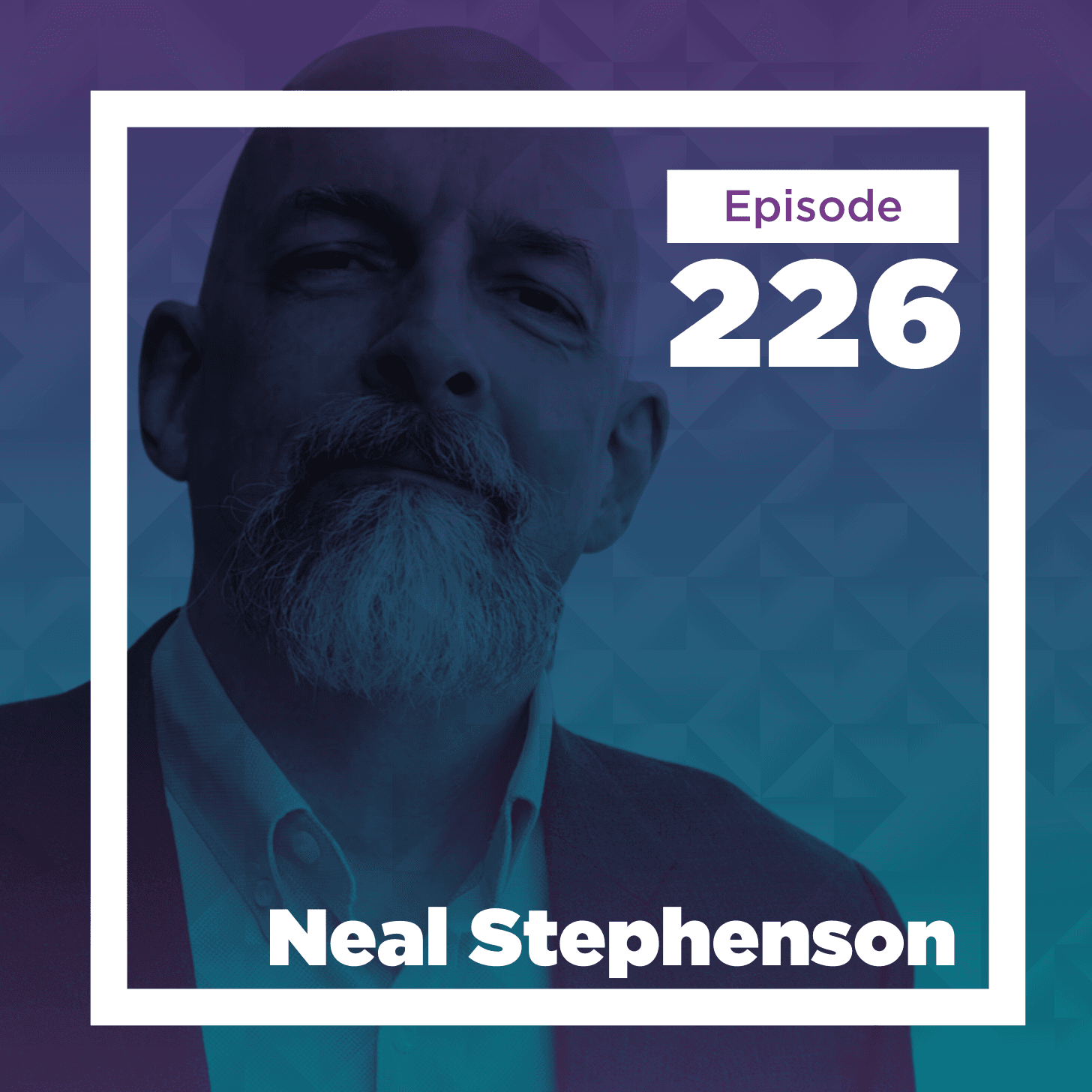
Podcast Title: Conversations with Tyler Episode Title: Neal Stephenson on History, Spycraft, and American-Soviet Parallels Recorded: October 9, 2024 Host: Tyler Cowen Guest: Neal Stephenson
Overview
In this episode, Tyler Cowen engages with Neal Stephenson, a prominent literary figure known for his speculative fiction. The discussion mainly revolves around Stephenson's new novel *Polostan*, which revisits historical themes from the 1930s while exploring broader questions of technology, history, and human psychology.
Key Themes and Discussions
- Transition from Future to Past
- Historical Interest: Stephenson discusses his fascination with history and how it influences his speculative works.
- Current Context: He reflects on the low levels of formal historical education, contrasted with the rise of autodidactic learning through podcasts and YouTube.
- Title Significance: *Polostan*
- Searchability: The title reflects modern marketing strategies to ensure it is easily searchable online.
- Cultural References: The name is tied to a joke within the narrative, highlighting the sport of polo and its relevance to the storyline.
- Espionage Insights
- Psychological Effects of Spycraft: Stephenson explores the mental toll of espionage, suggesting that while spies may start as normal individuals, the nature of their work alters them psychologically.
- Recruitment Characteristics: The best spies tend to be unremarkable, blending into their environments rather than standing out.
- Secrets of Technology and History
- Atomic Age Leaks: The conversation addresses how secrets from the atomic age leaked to the Soviets and the implications of such leaks in contemporary contexts, including AI.
- AI Secrets: There’s a consideration of how proprietary AI information is increasingly difficult to secure.
- Writing Process
- Longhand Writing: Stephenson explains why he prefers writing longhand on quality paper, emphasizing the cognitive benefits of slower writing processes that allow for better editing.
- Reflections on Communism
- Western Intellectuals: Stephenson examines the allure of Stalinism among Western intellectuals, noting their blindness to the regime's atrocities.
- Admiration for Soviet Achievements: He acknowledges certain Soviet accomplishments, mainly in industrialization and women's rights, while also recognizing the underlying human costs.
- Future of Augmented Reality (AR)
- Current Developments: Discussion on the challenges AR faces in gaining traction, including the need for compelling content.
- Investment in AR: Stephenson highlights the reluctance of hardware companies to invest significantly in content creation.
- The Role of Group Chats in Social Media
- Shift from Public to Private Conversations: The conversation touches on the implications of moving from open social media platforms to more private group chats and the potential benefits.
- Public Surveillance and Technology
- Surveillance Culture: Stephenson reflects on the increasing surveillance in society and its acceptance among individuals.
- Comparison with Authoritarian States: He notes that Western nations had a significant head start in utilizing the Internet compared to authoritarian regimes that are now catching up.
- Influence on Technology and Culture
- Literary Responsibility: Stephenson discusses his awareness of the impact his writing may have on technologists and society at large.
- Future Collaborations with AI: He is skeptical about the quality of AI-generated content, emphasizing the value of human creativity and connection in art.
Conclusion
The episode concludes with a sneak peek into the broader narrative arc of the *Bomb Light* series tied to *Polostan*, promising an intricate blend of historical fiction with threads of espionage, technological advancement, and the socio-political climate of the 1930s.
Key Takeaways
- Historical perspectives enrich contemporary speculative fiction.
- The psychological toll of espionage is significant.
- The dynamics of cultural and technological progress must account for underlying human values.
- Emerging technologies like AR face hurdles in content creation and market viability.
- Private communication platforms are becoming increasingly popular as alternatives to traditional social media.
This episode offers a thought-provoking exploration of the interplay between history, technology, and human behavior as seen through the lens of Neal Stephenson's insights and experiences.
Written by AI. May contain mistakes. Listen to the episode to check what was said.
Transcript
Automatic transcript. May contain errors.0:04Conversations with Tyler is produced by the Mercatus Center at George Mason University, bridging the gap between academic ideas and real world problems. Learn more at mercatis .org. For full transcript of every conversation, enhanced with helpful links, visit ConversationsWithT Tyler .com.
0:26Hello everyone and welcome back to Conversations with Tyler. This is my second conversation with Neil Stevenson who needs no introduction, but do let me tell you about Neil's new book, Polestan, which I read an advanced copy of. It's a very different kind of book. I wasn't sure what to expect, but I very much liked it. The real test of this is when the book ends, are you sad that it wasn't longer? And I was sad that it wasn't longer and I will be pre -ordering parts two, three and whatever else comes. Neil, welcome. Good to be back. How is it that you think about why you sometimes switch from showing us the future to illustrating the past?
1:06You know, for me as a continuum, all of my science fictiony books have had callbacks to historical themes, some more than others. So to me, I've always enjoyed history. I've had the opportunity to write historical fiction. I've greatly enjoyed it. It's been a while since I went there. It was like going home almost, you know, being able to go back and work in historical setting again. Sometimes I think that when the present and future are changing most rapidly, that's when we need to write about the past. That it's easier to speculate about the future when nothing's happening. Well, it's interesting.
1:46I mean, we're in a weird situation now where I think that the formal education, people's formal education in history is probably at an all -time low. And yet, there are all of these new ways of learning about history that didn't exist 50 years ago. There's podcasts and YouTube videos and so on that you can sink your teeth into if you decide that you're interested in some particular era of history. So I think that more and more what we have now is kind of auto -died acts out there, so in their own time, not at school, but during their leisure time have decided to become history geeks. Why is this book called Paulistan?
2:33You know, the name is explained towards the very end of the book. There's a funny thing about book titles today, which is that they need to be searchable. They need to be uniquely searchable. So I've had the experience a few times in the last decade or two of proposing a title for a book and the publisher coming back saying, that's an awesome title. You know, we'd love to use it, but it's not going to work when people begin typing it into a search engine. So now the trend is towards finding things that are a little autocomplete pretty pretty quickly. So Polostan is a word that emerges. It's sort of a joke that one of the characters makes toward the end of the book, but it's a reference to the fact that the sport of polo enters into the storyline in a few different contexts.
3:28How many spies do you think psychologically or just totally screwed up? Are are all of them screwed up, or can you be a normal spy, the way you might be a normal grocer? I suspect that it begins to screw you up over time. You might go in normal, but it takes a big psychological toll to be trying to maintain multiple identities and always worrying about divulging information. It's just not a natural way for people to live. From what I can tell, looking at kind of espionage in the year of, say, the Second World War. are the best spies were completely unexceptional people. And that's probably still true today, but you don't want James Bond.
4:11You don't want a femme fatale kind of character who's gonna stand out. You want somebody who just could disappears into the background. And so that's the kind of people that they like to recruit. And you want psychological compartmentalization? People to express emotion? Yeah, I think that it's easiest when you don't have to lie. You know, when you're the role that you're playing is reasonably close to who you really are. I guess unless you're a total sociopath. Well, spies might be total sociopaths, right? There's some reasonable percentage of sociopaths out there. And if you're going to do something as a sociopath, maybe spy is it.
4:53Yeah, maybe it's, I don't know if there's a Myers -Briggs category for that. but maybe that's what they look for. I heard a story once that there was a phase, I don't know, it wasn't the 70s or 80s where there had been some leaks from compromised people in the American intelligence world and so they went, they started trying to hire real real straight arrow types, you know, who just had no blemishes or perceived blemishes anywhere on their record that could be used to kind of compromise them or blackmail them. And they ended up with such pure, innocent kind of characters that the Brits started with holding information because they just couldn't, you know, they couldn't stand having to deal with these kind of small town naive people who were being sent there away by the Americans.
5:44Don't know if it's true, but good story. I'm not saying Mormons are naive, but I'm told the CIA has a disproportionate share of Mormons, which makes sense, right? Yeah. It's, it's, it's where that's where you would go to look to find such people. If we run through different counterfactuals, you know, the secrets of the Adam bomb, which do, of course, leak out to the Soviet Union, but how contingent was that? Can you easily imagine a lot of very different futures where we just can hoard that secret for 10 years or more? Or do you think it inevitably was just going to happen? And you know, there's some debate as to how important that leakage really was.
6:24I mean, at the time, it seems like a horrendous failure to have let that information go. How long would it have taken the Soviets to duplicate that effort, you know, based on some available information? I don't think it would have taken a lot longer. their incentive to build a bomb was too great. And particularly if you're willing to settle for the gun style of bomb as opposed to the implosion device, you know, that's a pretty simple object. It could just be they had multiple decent spies. So if we had stopped the ones who carried the secrets, if there were 20 others waiting in the wings, then it's not that contingent at all.
7:09Yeah. How do you think about AI secrets? Do you think those are bound to flow out or it's contingent? You mean like create secrets or proprietary software that's in AI systems? Or if some people would say it's the weights, the data, it's different opinions as to what the secrets are, but there's something in there that not everyone has. Well, yeah, I mean the way you get those weights is by running these big training sessions, right? that are incredibly expensive. So I haven't actually thought about it before, but yeah, I would imagine that if you've spent billions of dollars to get a set of weights that you're going to try to hang onto that.
7:53How effectively could you stage your own death? You, you really, let's say you really want to do it. If they're willing to do it. To fake it? Or to actually do it. Fake it. But everyone one thinks it's real. I read about it in the papers, Neil is gone. I'm out my head. I weep. And then I forget about it. I don't mean I forget about you, but you understand what I'm saying. Yeah. Yeah. Wait. There's not that many circumstances under which all, you know, physical traces of someone can be obliterated. I mean, that's a fairly hard thing to do. because you know, it would have been easier 100 years ago, but you know, we've got cameras everywhere and we've got DNA testing and other ways to prove that or to have disproved that somebody's actually dead.
8:41So, you know, I guess it would have to be something like a plane crash into the ocean. But then how do you survive it? Oh, yeah, okay. I mean, to kill yourself is one thing, but just to pretend you've killed yourself and state alive seems harder. Yeah, I mean, you could very shoot out, you know, if it was like a small plane, like not a jet airline or full of people, but you know, a single, single cedar, I guess that might work. So higher, a private plane, have it crash, parachute out into somewhere where you're, you're witness getting into the plane and taking off. Yeah. But then there's no way to recover the evidence for some reason.
9:28It's pretty, it's pretty hard to do. I mean, if someone really wanted to, if they were just determined to go and find, you see the efforts that people have gone to go down to the Titanic, you know. Well, I mean, if you can go find that thing and check it out with a submarine, and then it's pretty hard to really find a place that can't be accessed in that way. Do you still write your novels in longhand on legal pets? Not on legal pets, but I do write them on longhand. Yeah. Yeah. I buy this fancy paper from Italy. I mean, I kind of had this idea that if I bought fancy paper, you know, I'd use less of it, a bit more conservative.
10:14I don't think that worked because even fancy paper doesn't cost very much. I like opening the package too much. It comes in a nice package with wax, the wax seal on it. How does long -hand improve your thinking or writing process compared to say typing? Well, I can type really fast. So it's easy to just, you know, keyboard goes burr kind of, you know, thing where stuff gets put down on the screen almost as fast as ideas are coming into my head. And that's not necessarily a good thing. It's valuable for a sentence to be lodged in the buffer for a little while, because it's really easy to improve it or even just to get rid of it while it's between your ears.
11:07But as soon as you put it down on the screen, even though it is editable and all that, it takes on a kind of permanence. It requires more effort to go back and fix it. So I think that the first draft quality is better. It's also just faster to edit on paper. you know, I can just like draw a box around a paragraph and put a big X through it or cross out a word or write something in. And it just takes longer to do all of those things if you're screwing around with a mouse or whatever. Now, you must have spent a lot of time thinking about communism over the last few years. Why use it in your view having come to grips with the topic that so many American intellectuals became infatuated with Stalinism.
11:55And not just agnostic, but positively enthusiastic. This often survived their visits to the Soviet Union. How did that happen? Are we just as humans deranged beings? I don't think it's too much of a spoiler to say that the main character in Polistan is the daughter of Russian dad and an American woman. And the who are both very involved in leftist politics in the late teens, early 20s. So there were a lot of not just Americans, but Westerners in general who went to the Soviet Union in those years because they thought that this was an opportunity to build something great. And this was obviously before Stalinism and all that.
12:42But even then there was all kinds of bad stuff going on. The checker, the precursor of the KGB was coming into power and doing bad things. And if you had the eyes to see it, you could see that this was going in a bad direction. But a lot of those people did not want to see the bad side of things and kind of close their eyes to it. So there's a great book by Malcolm Muggeridge. I think it's called Moscow in winter, which he wrote in the I think 1933, but it's fictionalized, but it's clearly just thinly veiled account of these kinds of people in Moscow in the early 30s. And Mugridge has been there and he knows he knows bad things are happening.
13:33He knows about the the man -made famine in Ukraine probably knows about a lot of other things. He's depicting these western expats who just they refuse to acknowledge any downside to the revolution. There's plenty of stories like that from that era. I don't know if it means that we're deranged. I think we want to see nice things happen in the world. and if we've decided that there's a particular political movement or ideology that's going to make nice things happen, then it's a little too easy for us to deceive ourselves about the downside of such movements. And what is it about the Soviet Union that you have ended up most admiring?
14:22Most admiring. Most admiring, right? Because you've spent a lot of time studying it, reading about it, thinking about it. Well, they make really good rockets. So if you're in the rocket business, their ability to make high performing rocket engines and so on is pretty astounding. The amazing thing that they did in the 30s, which is the period I'm focusing on, was to yank this backward country forward from the 19th century into the 20th century by building this huge industrial base at breakneck speed. And in the course of doing that, it did a lot of terrible things. So when I say that it's admirable, you know, I'm just referring to kind of, oh, look, they build a big steel mill.
15:17Yeah, I'm not taking into account the body count. It strikes me that it was a reasonably favorable environment for enabling strong women. And I'm not sure exactly why, but I do see that in the data. Yeah, so they were pretty serious about equal rights for women. And so for, I think that was maybe a big part of why a lot of Western leftists thought it was a great place because there really were a lot of women getting better education, becoming doctors, getting roles in the military. It was easier to get things like abortions or to get a divorce. So they did kind of put their money where their math was as far as women's rights was concerned.
16:04And to get into the head space or the feel of writing about Soviet Union of that time, And are there specific things you do you put on Prokofiev or you open Dr. Shivago or what, how does that work for you or you just do it? I like to find first person accounts. I like to look at pictures to the iconography of the Soviet Union. You know, there are various people who went there in the 20s and 30s and wrote memoirs Americans, you know, who will memoirs describing their experiences there, as they were written at the time kind of before people knew about Stalinism and the excesses of Stalinism. It's written without kind of a full premonition of how bad things were going to get.
16:55In particular, there's an account of, I don't, I'm not going to be able to remember the name right now, but there was an American engineer who went and worked at this huge steel mill at Magnita Gorsk in the 30s and helped them build that. And so he's got a memoir telling about just his day -to -day experiences of working with these people, kind of the good and the bad mixed together. Is there much in Soviet fiction that you admire? man. I don't know if I've ever read a single word of Soviet fiction. Fossily Grossman, Life and Fate. I'm doing a whole podcast on it. That's a great, great novel. Okay.
17:38Okay. There's some Soviet science fiction like Strukotsky, which ended up turning into the movie stalker from Poland, Stanislav Lamb, probably Yulika Salaris. He's very good. Yeah. Yeah. Yeah. Yeah, I'm sure I know that one. Yeah, I think overall. Yeah. Do you think there are other American fiction writers who've succeeded in capturing something of the Soviet experience? So I think of Norman Mallor's Oswald book, which I think is quite good. It's maybe my favorite Norman Mallor. But not many examples. But I liked what you did with it. Oh, thanks. Thanks. Yeah, I was just listening to the Restless History podcast about the Kennedy assassination and they do a segment on the Oswald's stint in the Soviet Union and Delilo writes about it too, but no, I don't, I'm sure it exists, but I'm too poorly read to know about it.
18:37You know, since when I was 19, I visited Gary, Indiana, which of course is now a while ago. It was more up and running than it is now. And ever since then, I had this dream to visit Magnita Gorsk. I mean, do you really like me also want to go there or it's just somewhere you want to stay away from assuming you could go safely. Forget about the current war and the like. Yeah. If I could go safely, it would be interesting to see for sure, but, you know, obviously I'm not setting foot in Russia anytime soon. Yeah. The story for those who don't know it is that Stalin said, I want the world's biggest steel mill.
19:13And at the time, it was Gary, Indiana. So they just got the numbers on Gary and Deanna. And so, increased them by, I don't know, 10 % and started working on this huge steel mill in this place called Magnetagoras, which means magnetic mountain, which is into yearls out in the middle of nowhere. It's called magnetic mountain because it's an incredibly rich load of iron ore. And so in a pretty short time they built this giant steel mill complex, which still exists, and the city has grown up around it. I imagined that a lot of what made it interesting in 1933 is probably gone now. I did go to Volga grad once, which got a few things in common with Magnetagoras, I guess, the former Stalin grad.
20:05I don't know Russia well, but some part of me feels that the Soviet Union and America had more in common in the 1930s than they ever had before or have had since. Does that make sense to you at all? And what is that something? I think it does. I've actually got one of my characters in the book. He kind of talks about this a little bit because there's this in both cases, there's one part of the country in the United States. It's basically everything from Chicago to the Atlantic, which is densely populated and urbanized and lots of industry. And then in the Soviet Union, obviously, that's the western part of the country.
20:51And then there's this huge hinterland, which is mostly empty. It's got indigenous people. It's got a history of those people being poorly treated by the cosmopolitan industrialized dominant culture. And you know, it's kind of fast open resource extraction zone to feed the industrial beast. So it's got that in common. And you know, I do think that there are some some ways in which those two countries sort of understood each other at the time. And I think I think there was some of that thinking when Americans would would come and visit and try to get involved in building the Soviet Union. There's some common obsession to industrialize, to urbanize.
21:37The working class is quite focal in very different ways, but in both places. But at the same time, idealizing the wide open spaces, the wilderness, the idea of the frontier, so it's kind of both of those things going at once. I have some questions about other issues in tech. Sure. Augmented reality. It's gotten a lot of attention lately. So there's Meta's Orion product, which is forthcoming at some pace. Apple Vision Pro with the second version on the way. What do you think of these? Are we getting somewhere? Or is it still stuck? Well, I think we got somewhere with magically, you know, a few years ago.
22:18I think these products are all kind of doing similar. similar things and sort of the only thing I'm interested in hearing about is how much, how many billions of dollars these companies are putting into the development of content to run on these devices because nobody's going to use them or want them unless there's a reason to put them on, a reason to use them. and making content for an augmented reality device is very difficult. You take ordinary game development, that's no picnic in and of itself. That requires a lot of smart people with specialized skill sets. VR is a whole step above that in terms of its level of difficulty.
23:09and AR is way beyond VR because there's so many other factors that you have to take into account in order to make content that actually takes advantage of what AR can do. So I feel that my general sense is that the kinds of people who invest in building this hardware, they're very comfortable building hardware, they're not comfortable investing and content plays, and they have this mentality of, you know, if we build it, they will come. If we provide the hardware, then creators are just going to somehow jump out of the woodwork and build dual applications that run on this hardware. I think that magically did a really good job of supporting a bunch of different creative teams making content for that device, but they still could have used more.
24:06So far, both of those companies have got programs to try to encourage people to build content, but I think there's still relying on other investors too much to somehow come in and start writing checks and supporting developers. It takes years and millions and millions of dollars to make anything at all that's worth seeing on one of these. And so where do you find the where do you find the investors willing to to write those checks? What do you think of the daily uses of AR? So let's say I don't want to watch a movie on Apple Vision Pro, but I want to walk around to a party and it will tell me the name of all these people I've met before, the names, but I don't remember their names and it tells me who they are.
24:53Now this might violate privacy for some people, but will that be popular? Will there be, oh, I take it into the Whole Foods and it just points me to what's on sale or what's good that day. Is that going to work? I mean, the thing is Tyler, those two applications that you just described are things that we were talking about 10 years ago that magically and they were old ideas then. So I'm not cracking on you for having old ideas. But I'm just saying that what is it about this space that with like probably hundreds of billions by this point that have been poured into building these systems and the zillions of of person years that, you know, we're still talking about the party name finder application, right?
25:45But don't LLMs make all the difference? I mean, that would be the change. So LLMs at a quality level are quite recent. And I can talk to it. It can talk back to me. That's now virtually seamless. isn't that going to mean it's all going to work? It's like becomes the operating system for your AR. It and work and it does work and it's very promising. I'm working on a project with that right now, but there's no obvious, so an organic connection between that and AR particularly. If I want to build an application that uses LLMs or any other kind of cool technology that's come along, Again, I've got to think about the numbers.
26:29I've got to think about, okay, I'm going to have to employ X number of programmers for X years. Here's how much it's going to cost. The investors supporting this project are going to want to get paid back. Now, how many people own AR headsets? Okay, like a few thousand, I don't know. Now, is that tiny group of people going to actually generate enough revenue that the investors who bankrolled this whole project are going to get paid back? Well, regardless of what your answer is to that question, it's definitely the case that there's billions of people, literally billions with a B, who have access to phones, pads, laptops, you know, flat screen technology.
27:18And so that market is so much more enormous, so that the economic considerations force you as a developer to make whatever you're making, you gotta make it run on phones and iPads and all of that stuff. So if you do that, then you might also have the same thing ported to an AR device, but the market and the revenue that you get out your application is going to be completely dominated by the version of what there runs on ordinary flat screen devices. Our social media being replaced by group chats and if so is that good or bad? Group chats like discord, slack, that kind of thing. Or WhatsApp, often small groups occasionally large.
28:07People talk about issues of the world. It's private in a way Twitter never has been. It seems to me those are much more influential. Does that make you feel better about social media or the same? Yeah, I mean, it's hard to feel worse about social media. So I do think that anything that gets you out of the glare of the big social media platforms and kind of de -risks it. You have the feeling that you're talking amongst friends, among people that you know, you don't have to be as guarded, you don't have to spend as much time kind of fending off. bots and dealing with just complete azanine bullshit that comes at you so thick and fast on Twitter or other kind of open platforms.
28:55Does it matter much that it seems today in the United States there's so much more surveillance than say 10 years ago? If people don't seem to feel that it matters, right? I mean, I may have my own opinions, but people are just amazingly willing to put devices in their homes to keep them 24 -7s of valence. You know, listen to every sound that they make and track them with cameras and you know, they're on the internet all the time. I guess we haven't yet seen a huge disaster resulting from that. You know, we haven't yet seen a line of know. I I guess I'm giving a Western perspective here, but it does seem that for a couple of decades, we got like a couple of decades head start before the authoritarian, totalitarian countries of the world figured out how to make use of the internet, right?
29:57So the internet was kind of open everywhere. And now it's not now China and Russia and North Korea have ways of walling off their internet and controlling what goes in and out of the country, information -wise. And in light manner, they're making use of the surveillance capabilities of technology that we've naively provided them with. So I think there have been bad consequences, obviously, in or anybody who kind of runs a foul of the authorities. If that stuff is happening here, I guess I haven't heard about it yet. It doesn't seem to matter yet. You're writing seems to influence actual technologists.
30:48Does that make you nervous at all? Do you feel some kind of moral nervousness every time you sit down to hand write something out? Like, oh my goodness, you know, what's this gonna cause in the world? Or you just go ahead and you write blithely and try to write something that's interesting. You're kind of right. Something that reasonably balanced in terms of pros and cons, and that is rooted in some kind of basic understanding of the technology, and then let the chips fall where they may. You know, the most recent book of that type that I've written was Termination Shock, which is about solar radiation management, solar geoengineering.
Read the full transcript
31:27And you know, I feel like I went to some effort to present a balanced approach there and to present arguments on both sides and to show why some people would think it was great and other people would hate it. My feeling is that if I do that, then, you know, no one can say I'm presenting up sort of a propagandaistic one -sided view of the issue and people are then free to make up their own minds as to what position they want to take. In what year do you think we will first see a novel co -authored by a human and an AI, where the AI does more than just some basic research, but actually writes a fair amount of the novel, and that the novel is at least as good as what a talented human could accomplish?
32:16Well, I mean, something close to this probably happened already. I mean, I'm sure it's happened. So your question boils down to a critical judgment as to quality. My position on this, which I put out in a substack a couple of weeks ago, is that the real purpose of art and the reason we like art is because it exposes us to a very dense package of micro decisions that have been made by the artist. And as such, we're engaged in a kind of communion with that artist. And what makes it interesting is that connection. It may be to a living writer or maybe to a sculptor who died, you know, 2500 years ago, but in either case, we're making a human to human connection.
33:07If we know that we're reading something or experiencing a work of art that was just generated by an algorithm, then that element of human connection isn't there anymore. And furthermore, we know that for every one such book or image or whatever, a million more could be generated just by, you know, clicking a, watching a Python script, basically. And so familiarity or, I mean, the law of supply and demand takes over at that point. So if there is an infinite supply of this stuff, then it's value drops to zero. So even if such a book kind of reads pretty well as a novel, I don't think people are going to be interested in it.
33:54Well, but they may not know. It was partly written by an AI or fully written by an AI, right? I mean, you know, that's an interesting thought experiment. It's kind of crafty, try lie and claim that there was a human who wrote it and you know, create a fake fan club or whatever. I guess that's possible. I don't know. Personally, I'm just not interested in it. I have too many books on my shelf that I haven't read yet. They were written by humans. What for you is the biggest weakness or flaw in current LLMs? They don't yet seem to have of understanding of spatial relations and just basic logical relationships that exist between things in the real world.
34:45I mean, there are a million examples of this on the internet. There are people on Twitter who delight in posting the results of NONSC, LLM to do an arithmetic problem and it'll give you the wrong answer in a very convincing and confident that way. So they kind of don't know their own limitations in that sense. The LLM should say, Oh, well, that looks like a math problem. And I suck in math. You know, I can't give you the right answer. You should, you know, get your calculator out. But they don't do that. They just confidently, you know, give you the wrong answer. You think we can use robots and robotic data to an essence teach LLMs about spatial relations?
35:30The robot will learn spatial relations going through the world, right? Oh, you bumped into a tree, you need to stop and this all gets fed into the LLM. And then we have them make videos and we grade the videos and do reinforcement learning on how good the videos are. And can't we, in less than five years, have AIs that are just awesome, we good at that? We have a terminology issue to talk about here, which is, you know, LLMs. I don't think that an LLM per se is the right kind of architecture to use to solve that problem. I'm sure that you can train a some kind of AI on that kind of data set. And in fact, we know that this is happening with, say, self -driving cars, you know, where you can use, I say, a game engine to create an imaginary city with imaginary roads.
36:23And then you can generate the videos, you know, from the car's point of view of what it would look like to drive around that city. And so you can generate that video data set way more cheaply and rapidly than, you know, if you had to physically go out in a car with a camera on it and drive around in the car. So you can definitely feed a huge amount of synthetic data to an AI system and help it learn that way. It's a different kind of brain from a large language model per se. I have a long question from a reader, which I'll paraphrase, but it basically says, you seem to be better at predicting the future than almost anyone else, and you've done this in a wide variety of areas.
37:09What's your self -awareness as to how this has been possible? I think there's kind of a scatter shot of phenomenon going on where a science fiction book might include a large number of hypothetical inventions and the ones that are in there might be described somewhat vaguely. So a bunch of those might never get realized, but people very generously tend to forget about those. They give the writer the novelist to free pass, you know. And they only take into account the ones that seem to have come true. And there's also some generosity there and that the description of the invention might be a little wishy -washy, a little vague.
37:57But then later on when a somewhat similar real invention gets made, someone's nice enough to to say that the science fiction writer invented this. To say the primer from diamond age, do you feel we have that now or soon with large language models? They will teach you almost anything, right? Not how to make a bomb, but anything scientific, anything legitimate. They'll give you multiple choice questions, they'll grade them for you. They're not perfect, but is that, in fact, what you meant? Much of different elements that have to come together to make something that would work like the primer in the diamond age.
38:35And you just describe one of them, which we can now get with with LLMs. The other or another part of it is, how do you create that special relationship between the learner and the object of the book? So somehow, it's just not as compelling to So, this would go on the internet and pull up a large language model and ask it to teach you something. And you can do it for sure, but you don't see a lot of people that I know of kind of using it that way. So, what you need is to productize that, I think, to use it really grass word. And you know, so package it in a way that a kid or somebody could pick up an object and and you know, open it to the next page and see what they needed to see that day tailored for their learning style.
39:32And I don't know if people are working on that or not. Probably they're working on it. Could you imagine that we have a near future where artificial general intelligence comes, AGI, and that basically people don't much notice or care, and the world just continues. and some people have these big doses of extra IQ in their pocket at a low price, but the world doesn't change that much. Remember, I mean, that sounds like a promising place to begin a science fiction novel, Tyler, you should work on that. I like it. I don't know how important IQ really is. So, I mean, dear earlier question about are we all depraved?
40:13You know, like lots of lots of people with high IQs fell for ridiculous Both during the 20th century and are falling for it today So getting access to you and more IQ in a pocket or whatever doesn't necessarily get you anywhere in dealing with practical real -world decision -making What do you think then is scarce? Is it kindness? Is it common sense? Is it being more skeptical or or what's the one thing we really do need more of? If the marginal value of extra IQ is iffy. I mean, kindness sounds great. But it might be somewhat cheap and supply, right? Like, oh, everyone's kind, but we don't do much about it.
40:59And you know, seven weeks later, there's still babies in Africa with malaria. Yeah, I mean, a lot of people who, you know, going back to our earlier topic, who were involved in terrible political movements in the 20th century and now probably did so in the belief that they were ultimately being kind, that they were trying to improve the world somehow. There's a level of self -deception that can make kind of people paradoxically very dangerous. Do you think readers enjoy reading scenes of torture? And joy in a broad sense of the term? So I don't know about, I don't know if enjoy is precisely the right word.
41:46One of my favorite writers is Joe Abercrombie who writes of fantasy novels and one of the main characters in his whole cycle of novels is a professional torturer. And so the trick that Joe manages to achieve is that he depicts this guy doing horrific things, but he ends up being a really interesting character. And you almost end up kind of rooting for him in a strange way. There's a whole field of what's called body horror, which some writers kind of like to work with. That's somehow fascinating to people. We all have bodies. We all know things can go wrong with our bodies This shows up from from time to time You know fiction So I think that if you're gonna depict it the key thing is just not to do it in a way that doesn't appeal to the worst parts of the reader's human nature Do you like the TV show the Americans?
42:47Haven't seen it by the way has had a whole bunch of torture scenes in it Okay. I haven't seen it. You should watch it. I think it's very good. And some parts of it are not unrelated to themes in your book. That's why, Tyler. I vaguely know what it's about. And so if I'm working on a project of my own, I actively avoid trying to see other fictional treatments of the same or similar subject matter. Did you go see the movie Oppenheimer? I did. What do you think? I would like to see more about making the bomb and less about his bureaucratic troubles getting his security clearance renewed. I mean, like I guess I see why that makes for us a certain kind of drama that plays well on on screen.
43:42This is not what I went there for. Last question, not asking for any spoilers, but on the cover of Polestan, which again I like very much, it says volume one of bomb light, which is going to be some kind of series without giving it away. Is there anything you can tell us about where this is headed? No, I mean, it's about you can guess from the name of the series that it's going to relate to the bomb eventually. And so what I kind of became aware of starting about 10 years ago is that in the 10 years or so leading up to the building of the first atomic bomb, there was all kinds of really interesting stuff going on in the world, in the world of physics.
44:25The neutron wasn't even discovered until 1932. So, within living memory, there were all kinds of physics experiments underway during the 1930s where people like Fermi and the Curie's, Hompton, Milliken, Rutherford, Chadwick were solving the mysteries. You know, pursuing this kind of detective story, you know, how does the universe work? Using very simple, comparatively simple kind of experiments and just deductive reasoning and failing just on the The co -tails of that, you've got people in the world of military, the government, and so on, beginning to understand that this is going to be really important.
45:15They don't necessarily know that the bomb is going to be possible that early, but they know it's important. So all kinds of weird stuff begins to happen that is understood only by a few people in the world, but people are in to know, understand that it's really important. And so to me, there's all kinds of fodder in that situation for storytelling, for novel writing. So I'm starting, I mean, this one really gets going at about 1932, Polistan. It ends in early 1934. It features one of the main characters of the series, who is a young woman who I mentioned before, who's half Russian, half American.
46:01The next book in the series is going to focus more on a different character who's introduced in this book, but we don't see much of him. Then there's a third book planned that'll be based around a different character. And eventually all this sort of comes together in the in the 1940s. And a long way we we see the development of What's going on in the world of physics, but we also see what's happening in parallel with that, with the rise of the Nazis and Stalinism, the Spanish Civil War, you know, everything else that's happening in the world during that decade. Neil Stevenson, thank you very much.
46:44My pleasure. Thanks for having me on your program again. Thanks for listening to Conversations with Tyler. You can subscribe to the show on Apple Podcasts, Spotify, or your favorite podcast app. If you like this podcast, please consider giving us a rating and leaving a review. This helps other listeners find the show. On Twitter, I'm Attyler Cowan, and the show is At Cowan Convos. Until next time, please keep listening and learning.
From the publisher
Neal Stephenson’s ability to illuminate complex, future-focused ideas in ways that both provoke thought and spark wonder has established him as one of the most innovative thinkers in literature today. Yet his new novel, Polostan, revisits the Soviet era with a twist, shifting his focus from the speculative technologies of tomorrow to the historical currents of the 1930s.
In Neal's second appearance, Tyler asks him why he sometimes shifts from envisioning the future to illustrating the past, the rise of history autodidacts, the implications of leaked secrets from the atomic age to today’s AI, the logistics of faking one’s death, why he still drafts novels in longhand, Soviet idealism among Western intellectuals, which Soviet achievements he admires, the lag in AR development, how LLMs might boost AR, whether social media is increasingly giving way to private group chats, his continuing influence on technologists, why AI-generated art might struggle to connect with readers, the primer from The Diamond Age in light of today’s LLMs, the prospect of AGI becoming an unnoticed background tool, what Neal believes the world really needs more of, what lies ahead in Polostan and the broader “Bomb Light” series, and more
Read a full transcript enhanced with helpful links, or watch the full video.
Recorded October 9th, 2024.
Other ways to connect
- Follow us on X and Instagram
- Follow Tyler on X
- Follow Neal on X
- Sign up for our newsletter
- Join our Discord
- Email us: cowenconvos@mercatus.gmu.edu
- Learn more about Conversations with Tyler and other Mercatus Center podcasts here.