
In short
Podcast Episode Summary: Noam Chomsky on Language, Left Libertarianism, and Progress
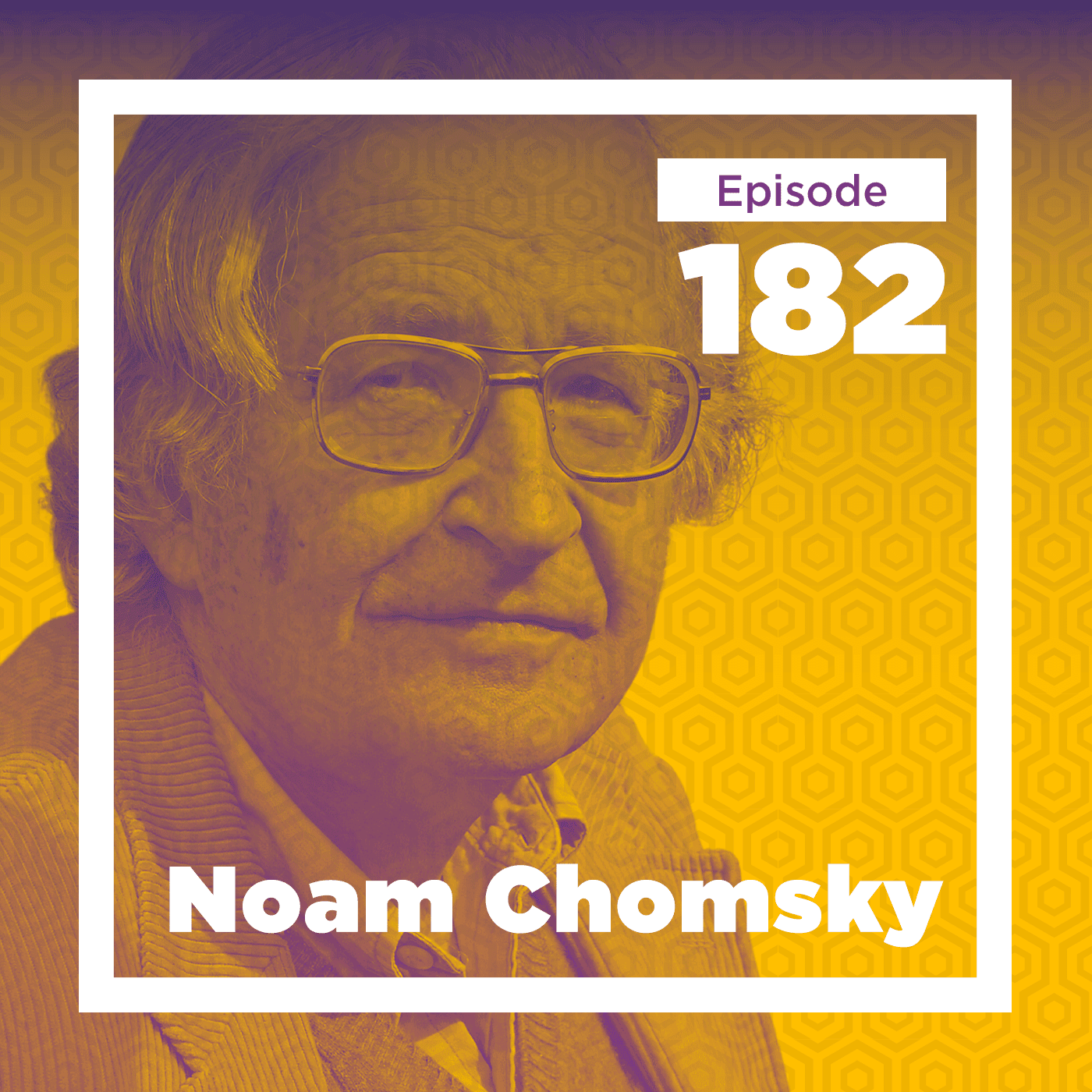
Overview In this episode of Conversations with Tyler, Tyler Cowen engages renowned linguist and philosopher Noam Chomsky. The discussion spans Chomsky's views on language, political philosophy, particularly left libertarianism, evolutionary theories related to language, and his reflections on contemporary issues.
Key Themes and Discussions
- Language and Liberty
- Wilhelm von Humboldt's Influence: Chomsky draws parallels between his thoughts and those of Humboldt regarding the nature of language and the instinct for freedom.
- Humboldt emphasized the fundamental right to be free from illegitimate constraints and the importance of the innate human capacity for inquiry and creativity.
- Evolutionary Approaches to Language
- Critique of Evolutionary Theories: Chomsky expresses skepticism toward certain evolutionary definitions of language, highlighting:
- Misunderstandings grounded in behaviorism that treat language merely as a communication tool rather than an instrument of thought.
- The view that human language may have evolved in ways distinct from animal communication systems.
- Large Language Models (LLMs)
- Criticism of LLMs: Chomsky challenges the assertion that LLMs can inform us about human language or thought.
- LLMs can effectively generate text based on statistical patterns without understanding language's intrinsic principles.
- He argues that LLM performance on "impossible languages" further undermines their relevance to understanding human language.
- Media and Propaganda
- Manufacturing Consent: Chomsky discusses his views on media manipulation, referencing Walter Lippmann's notion of "manufacturing consent."
- He reflects on how public opinion can be shaped and controlled, leading to significant societal impacts.
- The discussion includes the historical context of propaganda and its implications for democracy.
- Optimism vs. Pessimism about the Future
- Current Global Challenges: Chomsky acknowledges pressing issues such as nuclear threats and environmental crises.
- He expresses concern over political leadership exacerbating these problems but finds hope in grassroots activism and public resistance.
- Reflections on Historical Progress
- Change Over Time: Chomsky points out that while there are significant challenges, historical progress has been made in areas like civil rights.
- He references activism during the 1960s that laid the groundwork for contemporary social justice movements.
- Personal Insights and Legacy
- Engagement with Public: Chomsky reveals his commitment to responding to emails, emphasizing respect for individuals and their concerns.
- Reflection on Past Mistakes: He expresses regret over not engaging with critical issues earlier in his life, particularly during events like the Vietnam War.
Closing Thoughts
- Chomsky remains active in both intellectual pursuits and social justice discussions. He highlights the urgency of tackling current crises and encourages continued engagement with critical global issues.
Additional Resources
- [Full Transcript](https://conversationswithtyler.com/episodes/noam-chomsky/)
- [Watch the Full Video](https://www.youtube.com/watch?v=Sk2pVd9Wdiw)
Podcast Information
- Host: Tyler Cowen
- Production: Mercatus Center at George Mason University
- Release Date: February 27, 2023
Engagement
- For further interactions, listeners can follow on social media or join the Discord community.
- Feedback can be sent via email to cowenconvos@mercatus.gmu.edu.
---
This summary captures the intricate discussions between Tyler Cowen and Noam Chomsky, providing insights into Chomsky's perspectives on language, politics, and activism. It reflects the depth and breadth of the conversation, allowing readers to grasp the essence of the episode.
Written by AI. May contain mistakes. Listen to the episode to check what was said.
Transcript
Automatic transcript. May contain errors.0:04Conversations with Tyler is produced by the Mercatus Center at George Mason University, bridging the gap between academic ideas and real world problems. Learn more at mercatis .org. For full transcript of every conversation, enhanced with helpful links, visit ConversationsWithT Tyler .com Hello everyone and welcome back to Conversations with Tyler. Today I'm chatting with Nome Chomsky who needs no introduction. Nome, welcome. Good to be with you. If I think of your thought and I compare it to the thought of Wilhelm von Humboldt, what's the common ontological element in both of your thoughts that leads you to more or less agree on both language and liberty.
0:52Fadoumbolt was, first of all, a great linguist who recognized some fundamental principles of language which were rare at the time and are only beginning to be understood. But in the social and political domain, he was not only the founder of the modern research University, but also one of the founders of classical liberalism, his fundamental principle, as he said, it's actually a epigram for John Stuart Mills on Liberty, is that the fundamental right of every person is to be free from external illegitimate constraints free to inquire, create, pursue people to pursue their own interests and concerns without arbitrary authority of any sort, restricting and limiting them.
1:56Now you've argued that Humboldt was a plateanist of some kind, that he viewed learning as some notion of reminiscence. Are you in the same regard also a plateanist? Well, Leibniz pointed out that Plato's theory of reminiscence was basically correct, but it had to be purged of the error of reminiscence. In other words, not an earlier life, but rather something intrinsic to our nature. The live -knits couldn't have proceeded as we can today, but now we would say something that has evolved and has become intrinsic to our nature. For people like Humboldt, what was crucial to our nature was what is sometimes called the instinct for freedom.
2:52basic fundamental human property should lie at the basis of their social and economic reasoning. And it's also the critical property of human language and thought, as was recognized in the early scientific revolution. Galileo, Leibniz, the later people, they combled in the romantic the fundamental property of human language is this unique capacity to create. Unboundedly many new thoughts in our minds and even to convey, be able to convey to others who have no access to our minds. Their innermost workings, Galileo himself thought the alphabet was the most spectacular or human inventions because it provided a means to carry out this miracle.
3:59Humboldt's formulation was the language enables, language and thought, which were always pretty much identified the language it enables what he called infinite use of finite means. We have finite system, we make unbounded use of it. Those conceptions weren't very well understood until the mid 20th century with the development of the theory of computation by Kurt Gertel, Nell and Tourney, other great mathematicians in the 1930s and 40s. But now the concept of finite means that provide infinite scope is quite well understood. In fact, everyone has it and they're lapped up by now. Was it the distinction between natural and artificial language that led Russo -Australian politics?
4:57So you're left libertarian. Russo is in some ways almost a totalitarian, right? Rousseau is a very mixed character. He's not a systematic thinker. You can find all sorts of things in Rousseau. So if you look at the second discourse on inequality, it's highly libertarian, deriving from basically Cartesian principles about the uniqueness of uncreativity of human thought and language onto a different perspective. fairly libertarian conception of social organization. That's one where so. You can always also find a very different one. Why are you skeptical of evolutionary approaches to language? I'm not.
5:47I'm skeptical of mistaken, misunderstandings of evolution, which lead to all sorts of errors in thinking about how language evolved. So in the modern period, 20th century, mainly under the impact of behaviorism, some other modern tendencies, misunderstood version of Darwinism. It was, has generally came to be believed and still is believed in many quarters, that human language was not the tradition from classical Greece up through the 19th century was that languages, fundamentally, an instrument of thought, thought as what is generated by language, language generates thought there, intimately related, if not indistinguishable, language was described as an audible thought, need not be audible, we know now.
6:5220th century change that, that under behavior influences came to be thinking of languages, basically an instrument of communication, which evolved from animal systems. Every animal down to bacteria has some kind of communication system and even trees communicate. So the assumption is, well, language is just a more developed human language, a more developed form of communication. I think we have, it's controversial, but my own view is that recent work shows that the tradition was quite right, that that's not the way human language and thought evolved at all. They evolved in quite a different way, which is completely consistent with the actual theory of evolution, not the naive version that's often believed.
7:54So it may be, for example, that natural selection played very little or almost no role in the of language and thought, but that's quite consistent with the theory of evolution. Many of the things happen in evolution beyond the natural selection. And in fact, it's pretty good evidence for that. We have only fragmentary evidence from the archaeological record, but it's pretty clear by now that humans appeared on Earth very recently, modern humans, two to three hundred thousand years ago. It's nothing at evolutionary time. We now have genomic analysis, pretty sound, but it shows that the small modern Helmosapiens groups that emerged very quickly began to separate a quickly again in evolutionary time, maybe 50 ,000 years.
8:59We know that they all share the faculty of language and thought, there's needs to be no distinction among living humans in disregard, including the descendants of those who separated maybe 150 ,000 years ago. With that indicates that these capacities were already in place before the separation. Well, if you look in the archaeological record, prior to the appearance of modern humans, there's almost no evidence of any more than very superficial symbolic activity, not just on a bone or something like that. Not long after the appearance of humans, you start getting extremely rich records of advanced creative activity, the cave paintings, for example, which are pretty remarkable.
9:56I was lucky enough to be able to get into Les Co before it was sealed. And it's astonishing. You can understand why Picasso, So when he saw it said, we haven't learned anything in tens of thousands of years. Well, let's go as fairly recent, maybe 30 ,000 years ago, but no. It goes back to maybe 80 ,000 years. These seem like long numbers, but in evolutionary time these are slick of an eye. Well, what does all this suggest? suggests that something happened along with the appearance of modern humans, namely the emergence of these capacities that we're talking about, the Ramesh, Galileo, both and others, and nothing's changed since.
10:50There's been no change that we can detect in the nature of cognitive capacities which seem to be species properties of humans in the technical sense, meaning common to all humans apart from extreme pathology and completely unique, nothing like them anywhere in the animal world. Well, misunderstandings of Darwinian evolution lead you to think that this is consistent with it. It's actually quite consistent with the modern theory of evolution. I mean Darwin did have a famous statement saying that all evolutionary changes have to be very small. He even said if this turns out not to be true, my total theory collapses.
11:44Well, it's now known that that's just not true. There are major changes to take place suddenly. The Lord has known about this. One of them may well have been, seems to have been, whatever happened, pretty much along with the appearance of modern humans, which provided these capacities, which again have no analog in the animal world and are common to the species. Now, you've been very critical of large language models. There's a recent essay by Stefan Wolfram, where he argues the success of those models is actually evidence for your theory of language. That they must in some way be picking up or detecting an underlying structured language, because their means are otherwise too limited to be successful.
12:35What's your response to that view? He's a brilliant scientist. I've talked to him sometimes. I think this is partly true, but partly misleading. So, large language models have a fundamental property which demonstrates that they cannot tell you anything about language and thought. Very simple property. Spilled in principle can't be modified. Namely, they work just as well for impossible languages, as for possible languages. It's kind of, it's as if somebody came along with a new periodic table of the elements, which included all the elements and all impossible elements and couldn't make any distinction on them.
13:30We tell us nothing about chemistry. That's what Lerge language models are. You give them a dataset that violates all the principles of language. will do fine, doesn't make any distinction. What the systems do basically is scan an astronomical amount of data, find statistical regularities, string things together. Using these regularities they can make a pretty good prediction about what word is likely to come next after a sequence of words. A lot of a massive computer power and of course, short unbelievable amounts of data. But as I say, does exactly as well with impossible systems as with languages.
14:24So therefore, in principle, it's telling you nothing about language. There is something like all organisms we have in capacities. There's something about her, the genetic endowment that determines that the embryo grows arms, not wings. And there's something about the genetic endowment that says that an infant, a newborn infant can instantly pick out parts of the noise that surrounds it and say to itself those parts are language and I'm going to not consciously of course it's all totally reflexive. These parts are language I'm going to pursue a course of maturation will determine course of maturation which means that by about two or three years old I basically absorb the fundamentals of language.
15:27Now you can take a smartest chimpanzee or the dogs under my desk because they can listen to this noise forever. If no idea, there's anything there but noise. Well, that's a fundamental property of humans built in. It's the reason why you and I can be having this discussion now, but but a troop of chimpanzees can't be. Do you think your critiques of media and the idea of manufacturing consent in any way spring from your underlying views on language? More from my views on social and political structure. In fact, the phrase manufacturing consent was not mine. I borrowed it from Walter Lipman, as you know, the leading public intellectual of the 20th century.
16:24Good liberal. Wilson, Roosevelt, Kennedy liberal. He was a member of the of Woodrow Wilson's propaganda machine. Wilson, I don't want to tell you this, you know, it better as well as I do, but for the record, Wilson was elected in 1916 on a pacifist program. I'm going to keep you at a war. The US population didn't want to get into the European war very quickly. He decided that the United States should enter the war on the Allied side and had a problem. How do you turn a pacifist population into a raving anti -German maniacs succeeded brilliantly. Part of the device was a commission that Wilson set up called the Committee on Public Information, which of course means disinformation.
17:32Creole Commission, it was called. The Walter Lidman was a member of it. Another member of it was Bernard, who went on to be one of the main founders of the public relations industry. Both Wilson and Bernard were very impressed with how what Lippmann called Manufacturer of Consent, Bernard is called Engineering of Consent, how these techniques could control the public shape opinion completely, turn them into, in this case, a fanatic anti -German people who want to kill everything German. Pants a fronk rudder, have to say hut do a, have to kill a puddle of the German, change your name if you're German, something else.
18:27Also, a huge attack on labor came out of it. It was very effective for the corporate sector. They meant to smash the labor unions with all kinds of claims of anti -patriotism and so on. Well, Lippmann in particular was very persuaded by this, as Bernice was. as a litman called it a new art in the practice of democracy. It's important to understand that the both litman and Bernays adopted the standard liberal position. That the population is stupid. The terms were stupid and ignorant. They don't know what's good for them. We, the responsible men, have to do the planning and the, for their benefit, of course.
19:23And meanwhile, we have to, as Libman put it, protect ourselves from the roar and the trampling of the bewildered herd, the very linenist doctrine, if you think of it, very similar or rhetoric that goes right up to the prison distinction that was made in the Kennedy years between what we're called the technocratic and policy oriented intellectuals, the good guys who worked on policy and so on. And the value oriented intellectuals, the bad guys, what George Bundy called the wild men in the wings who talk about ridiculous things like justice and rights and so on. This is a very consistent property of the intellectual classes from way back, pretty much independent of political commitment.
20:20And any event manufacturer of consent was just to quote some more litman. They said the public have to be, can be spectators, but not participants in action. They are not supposed to take part in any of public affairs. We do that. They, as Reinhold Niebuhr put it, they have to be fed necessary illusions and emotionally put over simplifications. Well, we take care of things for the common good. One aspect of this was separating the economy from public affairs. Economists played a major role in this, including liberal economists, mainly liberal economists. Separate the economy, which is just pure science.
21:14We take care of the science. Publish it of nothing new with it. All of these are major strains in modern thought. They have much earlier origins in the book that Edward Herman and I wrote about manufacturing constantly developed it. Selected these conceptions, looked at the structure of the media, tried to show that in fact, the institutional structure of the media, these conceptions of the nature of the intellectual were combined to yield a very effective propaganda system. You seem to be relatively optimistic about the future, but if human beings are so susceptible to propaganda, why be so optimistic?
21:59Shouldn't you just think we're stuck in a continual illusory equilibrium where people feed us? Be asked and we just keep unbelieving it? Well, first of all, I wish I could say that I were relatively optimistic. If you look at the way the world is going today, it's extremely hard to be optimistic. I mean, we are facing two enormous crises. There's a reason why the Doomsday Clock of the Bulletin of Atomic Scientists was recently moved to 90 seconds to midnight. One is the growing threat of nuclear war, which will be terminal war. Another is the failure to take the necessary and feasible steps to deal with a existential crisis of environmental destruction, removing the opposite direction of both, and there's not a lot of time.
23:04The leadership elements across the board, around the world, very few exceptions, are dedicated to racing to the precipice as quickly as possible. That's not much grounds for optimism. Nevertheless, there are grounds. If you look over history, people have organized, resisted, stood up, overthrown repressive, autocratic structures, created a broader reign of freedom and justice. Plenty of awful things remain, but if you look back at what used to be perfectly acceptable, you can see we've come a long way, even just in the last couple of decades. So go back to the 1960s, for example. In the 1960s, the The United States had anti -missedination laws, which were so extreme that the Nazis refused to accept them.
24:14We had federally mandated housing segregation. That meant that Afro -American black Americans, maybe in the growth period of the 1950s and 60s a black man could get a job at a decent job at an auto plant, but he couldn't buy one of the homes and lev it down. He couldn't and of course, wealth in the United States for most people is property -owning. So the black population was cut out from this opportunity in the 50s and 60s to enter into at some level at least into mainstream American society by segregated federal laws which mandated segregation less than the late 60s. Women's rights, women were still in the 1960s under federal law not regarded as years, basically, regarded as kind of property, was until 1975 that the Supreme Court finally ruled that women have the right to serve on a federal jury, for example, and be all sorts of changes have taken place, countries much more civilized than it was just 50 or 60 years ago.
25:45Well, it didn't happen by magic. It happened by lots of popular struggle. You go back in history, there's more and more examples of that. And you can see it right now. I mean, I mentioned that the leadership class is racing to disaster. But there's a lot of activism among the public, mainly young people saying we insist on a better future. You see it at the cop meetings, you know, the regular meetings, cop 26, 27. Now there's actually two meetings going on. Like in Glasgow, last time was Sharma Shach, so far away nobody could come. But in Glasgow, So there was a meeting going on inside the halls where the ladies and gentlemen were doing nothing and outside in the streets there were tens of thousands of young people demonstrating.
26:46Saying, we have to take steps to prevent the disaster that you all know is coming from heating the environment and we demand it and insist on it. Well, those one of those meetings is a reason for pessimism, the other is a reason for optimism. A nuclear war, what has been your opinion of the doctrines of Thomas Shelling? It's okay. I mean at an abstract level, yes, you can talk about these things. Fact of the matter is that even contemplating the possibility of nuclear war is insane, literally insane. There cannot be a nuclear war between major powers, the country that launches a first strike will be destroyed, even if there's no retaliatory strike, just from the effects of nuclear winter.
27:48There's a lot of casual talk about these things and you know, shelling can carry out his game theoretic analysis and so on. But the basic point is every step has to be taken to ensure that there is no possibility of this happening. I mean, there are people who understand that people like former defense secretary William Perry, for example, has been his whole life in the nuclear establishment in the state system. He says he's terrified. W terrified. terrified once because we're racing towards disaster day by day, doubly terrified because there's no attention being given to it. And sometimes it's just astonishing.
28:48So the Pew Polling Agency, a couple of weeks ago, came out with the give regular studies of public attitudes on all sorts of things, very valuable. The latest one, they gave people a couple of dozen choices of issues and asked them to rank them in terms of urgency. Nuclear war was not even on the list. Climate change was on the list. It was ranked at the bottom of the 21 choices. That's manufacturer of consent in a form which is going to destroy us all. Why does the whole left libertarian tradition, at least to me, seem to be so weak today? So if I mentioned Rudolf Rocker to someone, the chance they have heard of him is extremely small.
29:41I'm sure you experience the same. Maybe they've heard of him because they've read your writings. But to have heard of him separately, that hardly ever happens. The new left of the 1960s. Mostly has vanished. How and why did that happen? I don't think it's true. I think the new lift of the 1960s, which incidentally was a very breath period. It's scattered, splintered, but it left a major imprint. What I've just described was largely an effect of the new lift of the 60s. Chain it civilized the society in many ways. Things were just taken for granted in the 60s. You couldn't possibly even say no.
30:27Well, that's the effect of the activism of mostly young people, what was called the new lift. So it's not a movement, but it's all over the place. And it's changed the way we see and think of things almost everybody. It's libertarian socialism, ranarchism. Of course, they're not going to be popular. We have a class -based society, rigid class -based society. The business classes, the ultra -rich are dedicated to class war. They're basically vulgar Marxists, values inverted, constantly fighting a harsh class war. They control the resources, control the institutions, control the economy. So yes, ideas that they don't like, you don't hear.
31:28Nothing novel about that. and go back to George Orwell. One of his essays he wrote about how in England, he was said in free England, unpopular ideas can be suppressed without the use of force, just because of the class nature of the society and the subordination of intellectuals to power. or incidentally his essay was suppressed just to make it a little more dramatic, found later in his unpublished essays. If I think of some of the new left critics of, say, the Cold War, the revisionists, you've seen more mailmen, Pentagon capitalism, Sydney Lens, D .F. Fleming, I'm sure you knew many or all of these people.
32:15To me, they sound, if anything, more like the Trumpian right, then say the Democratic party. This has been this odd inversion where foreign policy ideas fears of a deep state manipulating the system, those have shifted to the Trumpists. What do you make of that? How do you feel? Well, the revisionists didn't talk about a deep state. They talked about the existing public institutions, the corporate sector, which has overwhelming roaming, role in determining state policy, the military industrial system, which is a large part of the economy. You read people like the main writers at the time, Gabriel Calco, others, they were talking about how this determines the nature of policy.
33:07It doesn't sound at all like the new, I mean the new right has some of that rhetoric, but it's a joke. the right way in the Republican Party are just serval, servile worshipers of the very rich and the corporate sector. Just take a look at their legislative programs. During the Trump years, there was one major legislation, which was a state let's call the Donor Relief Act of 2017, tax cut that was a gift to the super rich and the corporate sector at the expense of everyone else. Take a look at their programs right now. Main programs are, first of all, guarantee that it's a rid line. You cannot touch the huge Trump tax cut.
33:56Now what you have to do is defund the Internal Revenue Service. Why? Because they go after tax cheats who are the wealthy and the privileged. Can't do that. We have to protect them, save them. I mean, meanwhile, what Trump managed to do pretty effectively is like a good demagogue is stand up with a banner in one hand that tells working people, I love you. Well, with the other hand, you step them in the back. That's the very, that's basically the policy. When you look at foreign policy, Tucker Carlson, the rest, you say, we don't want to waste money in Europe, but there's a bottom line to that.
34:46We want to save our resources for a war against China. It's insane. I mean, you're right about the Democrats.
35:03They're That's true, the group are abiding, but the GOP is much more even more dangerous. If I look back on someone like Susan Sontag, she becomes, it seems, to be a mauist. Why is it that left libertarianism touches her and many others so little? What's the appeal of mauism? Isn't that the opposite of left libertarianism and what you stand for? There was a tendency in what's called among left intellectuals, late 60s, early 70s, to flirt with Maoism. They had no idea what it was. It was a very mixed story. I mean, it had very brutal harsh elements, destructive elements. There were also aspects of malism which aren't discussed much here.
35:59The scholarship is aware of them. One of the things that the Malist policies did was save a hundred million people, a hundred million people, were saved from death and starvation as compared with Democratic capitalist India in the same years. You look from 1979, 1949, liberation to 1979, compare the demographics of the two countries. There's a gap of 100 million people killed in India as compared with China simply because of the lack of carrying out rural development and healthcare programs. There's no big secret about this. It's discussed by some of the leading scholars, like Amarchus Inn, for example, Nobel Laureate and economics.
37:02This is one of his main specialties, hardly obscure, but you don't hear about it. That's manufacturer of consent again. But this is not why people like on people on the left flirted with malism, they had all sorts of confused ideas about malism. In fact, if you want the most enthusiastic, malice in the country, his name happens to be Henry Kissinger. He adored Mel. He worshipped him. If you want to picture of this, I urge that you take a look at very important scholarly work that just appeared. Carol and Eisenberg's extensive detailed study of the Nixon Kissinger years using extensive archival material.
Read the full transcript
37:59One of the things that comes out is Kissinger's starry eye to adoration for mal with a he himself was a terrible psychopath that for mal in particular. which do you feel has seen a better trajectory if you compare the two countries Nicaragua which is experimented partially with socialism and Panama which has been more capitalistic hasn't Panama just done much much better than Nicaragua and I've been to both countries in the last ten years to me it doesn't seem close what am I missing? You're missing what actually happened Nicaragua in the 1980s was the second poorest country in Latin America after Haiti.
38:45The Sun and the Nistra revolution in the early 80s began to change that. It began to institute programs which were very much praised by the World Bank International Financial Institutions organizations like Oxfam which were finally doing some, Nick Ruggler had been in the hands of the United States for, since late 19th century, and it was a catastrophe, like, to every country in US and it began to escape from this in the early 80s. Very successful. Well, Ronald Reagan launched the war against the United States was actually brought to the World Court and condemned for international terrorism, technically, on lawful use of force in its war against Nicaragua, ordered to pay substantial reparations of the Reagan administration and Congress responded by stepping up the war.
39:53Well, the war hadn't effected. Destroyed the programs of development, destroyed the hope restored Nicaragua back to pretty much US control. It hasn't completely succumbed. So now, the tutorial maintains some social programs, but it's never been able to carry out the programs that were begun in the early 1980s. A Panama's totally different story. It's a place for U .S. investment, capital investment, Pano -alcanal is a huge income resource. There's just no comparison between the two. Wouldn't Cuba be better off today, much better off? If it had gone the path of, say, Dominican Republic, inviting a lot of multinational corporations, have free trade zones, special enterprise zones, Dominican Republic's now one of the wealthiest countries in Latin America.
40:51So let's take Cuba. Cuba was a Cuba is the oldest issue in US foreign policy goes back to 1820s when the US intended to try to conquer take Cuba from Spain and turn it into another slave state. Well John Quincy Adams, Secretary of State realized that can't do that now, the British are too powerful, they want to let us do it. So we'll wait until, as he put it, Cuba falls into our hands by the laws of political gravitation. We'll get stronger, Britain will get weaker, then we can take it over. 1898, it happened. Cuba was liberating itself from Spain. US invaded on the pretext of liberating Cuba.
41:46In fact, it was for preventing Cuba's liberation from Spain. US turned Cuba into a virtual US colony. Stayed that way, it was a massive corruption, mafia, brutal conditions, horrible conditions for the working for most of the population. 1959 Cuba freeed itself. Within a few months, US planes from Florida were bombing Cuba. March 1916, your later Eisenhower administration formally determined to overthrow the government of Cuba. Kennedy came in, launched an invasion, failed, initiated a major terrorist war against Cuba. That was a long time ago, right? Cuba has had plenty of time to grow and recover, and it's very critical.
42:40critical. Cuba has been under savage attack for 60 years, sastanishing that it's even survived. Well, it survived, barely. It has better health statistics than the United States. It's developed a biomedical system, which is one of the wonders of the world, despite US sanctions, which are so strict that if Cuba wants something to use for vaccines from Sweden, they can't get it. The United States is a very violent and brutal country. When the United States imposes sanctions, they are third -party sanctions. Every country in the world has to accept them. The world is overwhelmingly opposed. Look at the United The United Nations, the votes are 184, two United States and Israel, total opposition, everybody obeys the US sanctions out of fear of the most violent country in the world.
43:47The fact that Yucuba has even survived is an astonishing thing. And if you look at things like health statistics, quality of life and so on, it's one of the best in the hemisphere, even better than ours. But the European Union can trade with Cuba, right? And a lot of the health statistics have been revealed to be fraudulent. Latin America can trade with Cuba. You can fly from Mexico to Cuba. If the European Union tries to trade with Cuba, the US threatens it with throwing it out of the international financial system. The European Union obeys the US sanctions. Who's the thinker on the left, saying the last 20 years whom you admire the most?
44:30The people I admire most are the young people in the streets who are on the front line of trying to save the world from disaster. There are a lot of very good people, but not up to me to rank them. But as a writer, who is it you learned from? You look forward to their next book. You try to meet with. Well, I found recently that the, in this day and age, the easiest way to write and reach people is through the internet. So because a lot of people don't read books much anymore. So I've been doing regular books of interviews and discussions. Several have come out in the last year. Others are in the works.
45:18We'll be out soon. And who's the thinker on the right whom you've admired the most over say the last 20 years? That's the same point. I mean, I read plenty of good work from what's called right to left, but it's the quality of the work that counts not the person. I don't rank people. A few questions about the Nome Chomsky production function. How have you stayed so mentally vital, so late in life? Just the incentive of so much to do of such enormous significance. I don't see any way to stop both on the... And in both of the areas that we've been talking about, I try to maintain and do maintain a lively commitment the intellectual work, a lot of new work there, but the issues of human concern are just overwhelming.
46:21I mean, we have to face the fact that we are in a unique moment of human history. Nothing like this has ever happened in the couple hundred thousand years that humans have been on earth. We know have to decide within a couple of decades whether the human experiment is going to continue or whether it will go down in glorious disaster. That's what we're facing. We know answers, at least possible answers, to all of the problems that face us. We're not pursuing them. We're going the leadership is going in the opposite direction. How can anybody relax under these circumstances? Do you think it's genetic that you're still going or just essentially volunteerist?
47:16Nobody knows the thing about it. But it's you and Henry Kissinger, right? Who would have thought they would be the two of you? Human genetics or a mystery? Why do you answer every email? Because I take people seriously. I think people deserve respect. two final questions. First, what's the biggest misperception people have about you? Depends what they read. People read. Newsweek, for example, they'll have the assumption that I think we shouldn't. We should hand Ukraine over to the Russians. Sure, that's the way the manufacturer of consent works in the ideological journals, if people read what I say or they'll have a different opinion.
48:06Final question, what is it that you will do next? Well, the thing I'll do next in ten minutes is have a long discussion at a major conference in happens to be in Texas on social and political issues. Annual conference takes place there. After that, go back to the regular work of the two sides of my brain. Social and political issues, intellectual contributions. In your career, where do you feel it is that you've been most drawn? There are a lot of things that have been wrong. So for example, take the Vietnam War. That was very much involved in it. In fact, it was my whole life for a couple of years, but I got involved much too late.
49:04I got seriously involved in the early 60s when Kennedy sharply escalated the war. It was almost nobody concerned with it that time. But the time we've gotten involved was ten years earlier. I didn't know it at the time, you know, now when the government made the basic decisions early fifties that set the stage for what became the most hideous crime of the 20th century. That was the time to be getting involved. Not when I did many other things like that. There's so much that should be done that I haven't managed to do right now. You can say the same thing. The Holocaust isn't the most tedious crime of the 20th century.
49:58The late 20th century. I'll lay 20th century. Noam Chomsky, thank you very much. Thank you. Thanks for listening to Conversations with Tyler. You can subscribe to the show on Apple Podcasts, Spotify, or your favorite podcast app. If you like this podcast, please consider giving us a rating and leaving a review. This helps other listeners find the show. On Twitter, I'm At Tyler Cowan, and the show is At Cowan Convos. Until next time, please keep listening and learning.
From the publisher
Noam Chomsky joins Tyler to discuss why Noam and Wilhelm von Humboldt have similar views on language and liberty, good and bad evolutionary approaches to language, what he thinks Stephen Wolfram gets wrong about LLMs, whether he’s optimistic about the future, what he thinks of Thomas Schelling, the legacy of the 1960s-era left libertarians, the development trajectories of Nicaragua and Cuba, why he still answers every email, what he’s been most wrong about, and more.
Read a full transcript enhanced with helpful links, or watch the full video.
Recorded February 27th, 2023
Other ways to connect
- Follow us on Twitter and Instagram
- Follow Tyler on Twitter
- Join our Discord
- Email us: cowenconvos@mercatus.gmu.edu
- Learn more about Conversations with Tyler and other Mercatus Center podcasts here.
Photo credit: Duncan Rawlinson - Duncan.co