
In short
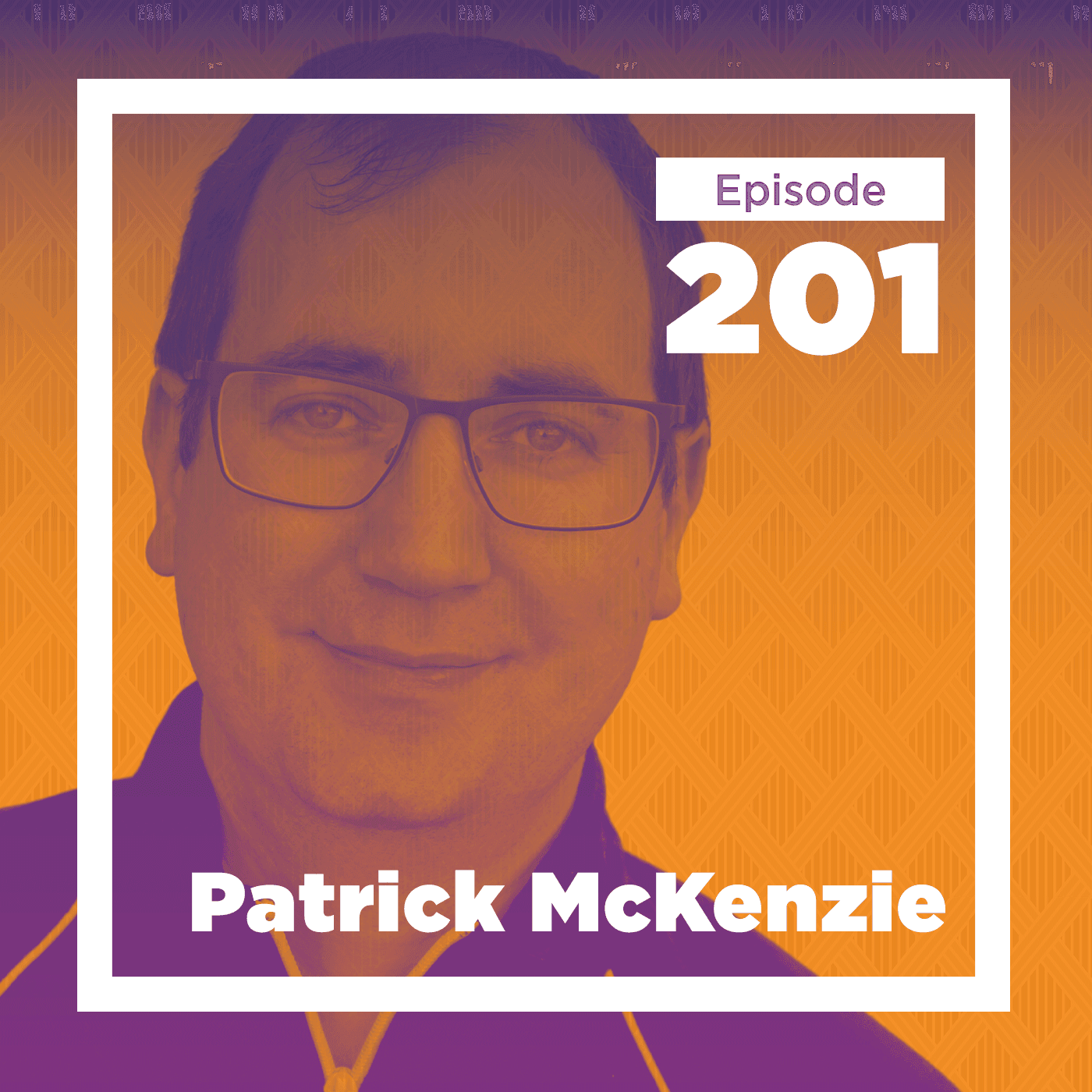
Conversations with Tyler: Patrick McKenzie on Navigating Complex Systems
Episode Overview In this episode of *Conversations with Tyler*, Tyler Cowen interviews Patrick McKenzie, a prominent figure known for his insights on complex systems, entrepreneurship, and technology. The discussion ranges from financial systems to cultural experiences, touching on various societal issues and innovations. Patrick reflects on his journey from writing influential blog posts to advising tech companies and launching initiatives like VaccinateCA.
Key Topics Discussed
- Impact of Blog Posts:
- Patrick's 2012 blog post on salary negotiation has generated millions in economic value, highlighting the significant impact of well-placed advice.
- Systems Thinking in Business:
- Patrick describes his work as one that intertwines systems thinking with business practices, emphasizing the importance of understanding the infrastructure behind technology.
- Financial Systems and Trust:
- The conversation delves into trust dynamics in various sectors, contrasting how we perceive risk with real-world implications.
- Cultural Perspectives:
- Patrick discusses his experiences of reverse culture shock upon returning to the U.S. after living in Japan for nearly two decades.
Detailed Summary
- Signature Fields on Credit Cards
- Misconception about Signatures:
- Patrick explains that signing the back of a credit card does not legally bind the user to charges and is often ignored by clerks.
- Security Flaws:
- He discusses the outdated nature of relying on signatures for security and critiques how this practice fails to adapt to modern technology.
- Trust and Risk in Financial Transactions
- Bank Tellers vs. Waitstaff:
- Patrick argues that while bank tellers are more trustworthy due to systemic safeguards, both roles are ultimately covered by regulations that mitigate risk to consumers.
- False Credit Card Declines:
- The phenomenon of false declines is attributed to systemic errors within the complex financial infrastructure rather than individual malice.
- Cultural Insights from Japan
- Entrepreneurship and Social Status:
- Patrick reflects on how entrepreneurial status is perceived in Japan versus the U.S., noting that entrepreneurs are often undervalued in Japanese society.
- Learning the Japanese Language:
- He shares his journey of learning Japanese and how it shaped his professional experiences in Japan.
- Observations on Debt Collection
- Nature of Debt Collection Jobs:
- Patrick reveals the harsh realities of debt collection jobs, the relatively low pay, and the psychological aspects of the work environment.
- Economic Reflections
- Maple Syrup Heists:
- He draws parallels between unexpected fraud in the maple syrup industry and broader economic behaviors.
- Tether's Stability:
- Discussing Tether, he questions its sustainability and the systemic issues surrounding it.
- Elon Musk’s Vision for Twitter as a Payment Platform
- Skepticism about Twitter's Future:
- Patrick expresses doubt about the feasibility of Twitter becoming a successful payments platform, citing fundamental differences in user expectations.
- Geothermal Energy Exploration
- Future Learning Goals:
- Patrick mentions his interest in geothermal energy as a potentially transformative technology for sustainable energy solutions.
Key Takeaways
- The Importance of Systems Thinking:
- Understanding the underlying systems in economics and technology can lead to more profound insights and innovative solutions.
- Cultural Context Matters:
- Personal experiences and cultural backgrounds significantly shape perspectives on entrepreneurship, trust, and societal norms.
- Reflections on Education and Talent:
- Non-traditional talent can often outperform credentialed professionals in specific contexts, emphasizing the need for flexibility in valuing skills.
- Negotiation and Societal Scripts:
- Negotiation reluctance is deeply rooted in societal norms, which can lead to significant economic inefficiencies.
Conclusion Patrick McKenzie’s insights reflect a deep understanding of the interconnectedness of technology, finance, and culture. His experiences underline the importance of questioning established norms and the potential for individuals to drive change through informed actions. The episode encapsulates a journey through complex systems, emphasizing the need for fresh perspectives in navigating them.
For more insights, you can [listen to the full episode](https://www.conversationswithtyler.com/episodes/patrick-mckenzie/) or watch the [video here](https://youtu.be/FAxsoZ36OFI).
Written by AI. May contain mistakes. Listen to the episode to check what was said.
Transcript
Automatic transcript. May contain errors.0:04Conversations with Tyler is produced by the Mercatus Center at George Mason University, bridging the gap between academic ideas and real world problems. Learn more at mercatis .org. For full transcript of every conversation, enhanced with helpful links, visit ConversationsWithT Tyler .com. Hello everyone and welcome back to Conversations with Tyler. Today I'm honored to be talking with Patrick McKinsey. Here is Patrick's own description of himself, and I quote, The broad through line of my work is systems thinking applied to businesses. I think the social organization of the internet and its impact on the world are underestimated by almost everyone, including Silicon Valley.
0:50Everything important to you in the world sits atop several infrastructure layers. I am a storyteller for some of those layers and the people who build them. An alternative description of Patrick that I might give you is he's a guy who moved to Japan for no legible reason at all and became famous by writing on the internet, and now everyone looks to him as a person who knows a lot about everything. His sub -stack is called Bits About Money, and on Twitter you can find him at PadiO11, many people in fact call him PadiO11. Patrick, welcome. Thanks very much for having me. Why is it you still have to sign the back of your credit card?
1:32So like many answers, the true thing is that that is a bit of a misconception. You actually don't have to sign the bit of your credit card in the legal realism sense, in that you can fail to sign the back of your credit card and go throughout your life untroubled by that fact. And most people who do that will be untroubled. The original reason for signing in the back of the credit card was rather than authentication or authorization, meaning that the store clerk would thoroughly apply their forensic judgment in determining that the person signing the receipt and the person signing the credit card was the same person.
2:06It was about solumniation. You are making a solum legally binding promise to the bank when you receive your card that you are good for charges made using that payment instrument. And that was the reason for having the signature field. That is also the reason for having the signature field on credit card receipts that you are promising to the merchant that you will pay them under the agreement that you have with your bank. Now that everyone understands that when you hand over your credit card that is a binding promise, we don't really have that much social need for that solumniation anymore. And so So it is this vestigial feature that is honored in the breach in a lot of places.
2:41The vast majority of clerks won't even check signatures these days, which people are sometimes annoyed by. They put on the back of the card, ask to see my ID. That has no legal effect. The clerk is not a forensic investigator. And the clerk also probably has far less knowledge of the credit card infrastructure than you do. If you are writing ask to see my ID, although if you're writing ask to see my ID, you have a sort of bounded amount of knowledge about credit card infrastructure. So one of these little idiosyncrasies about the world that's probably someone anachronistic in a couple of years.
3:11And you're giving them your signature, right, by signing the back of the card. If someone stole it, they now have your card and your signature. Yeah, a lot of what we would call pre -modern thinking about security in terms of payments was not... I won't say not all that well thought out. There are choices that were made back then that were good in the era they were made that are disastrously bad right now. For example, if I had a bank account and I have a secret controlling that bank account, and that secret would allow me to take all of the money out of that bank account, you might think, how should I protect this secret?
3:45The answer you would come up in 2023 is not. I want to print it in machine readable type on every check that I give to everyone. But in fact, that is what we did back in the day. Many, many tens of billions of dollars of check fraud happened over the years because of that issue. And we sort of just like took the punches and developed a vast shadow infrastructure to defame this like fundamental Irreducible security hole in the heart of the checking system. So yeah, putting your Signatures that like the the handwritten physical signature as very terrible security properties anyone who has seen it can reproduce it They are very easily reproducible by computers.
4:20They are less easily reproducible by humans checking them for correctness or consistency is terrible. There are the forensic analysts who go to court and try to compare signatures against each other. If I were to say they were practicing witchcraft, I think that would be an uncouth thing to say. I don't think it is necessarily untrue. Not a technology we would use in 2023 and going forward to secure anything that we actually care about. Whom do you trust more, your bank teller, or the way Trist to whom you hand your credit card? a bank teller by a country mile, although it is ultimately irrelevant.
4:56The reason to trust your bank teller versus your waitress is that while those appear in, say, the United States context to be like jobs that are relatively similar on the social ladder, they in fact are not, or all of the reasons that correlate with class, et cetera, et cetera, and whether someone is likely to engage in malfeasance and also the built environment around bank tellers versus waitresses who are far less likely to get taken advantage shop that a bank teller than a waitress. But it is ultimately irrelevant because in the case you are taken advantage of by either a bank teller or a waitress, we have an extremely effective public -private regulatory state machine, which will make you whole for that.
5:32It will be annoying, but you won't actually lose money. And so I go through my life spending very few cycles worried about either individuals in the financial industry or individuals in the restaurant industry taking advantage of my payment methods. If I try to use my credit card and it's a false decline, that is they won't take it when they should. What's the most likely reason for that? Remlitz. And it sounds like a joke, but say that everything I say is in my own opinions and stripe as a corporation does not actually endorse the existence of fiscal gremlins. I'm not sure I don't. Many people in the payments industry have spent a lot of time looking at the true source of false declines.
6:11And eventually the best you can do is reduce it to some sort of error term where you don't know specifically what system is at fault. And the credit card ecosystem might present to you as a single pane of glass that interact with just like you interact with a single pane of glass on your iPhone is actually a stitch together patchwork collections of systems that have existed for last several decades. Somewhere in that stitch together patchwork, someone had a hiccup and then your credit card gets what we call a spurious decline. The rate of spurious declines is something of a trade secret, but it is much higher than any rational human being.
6:47What expect is a tolerable rate of spurious false activity within a system that that has persisted for so many decades is an interesting sort of collective action problem because it's a stitched together patchwork of systems. There's no unitary authority saying you must commit to decreasing your rate of false declines by 50 basic points within the next two quarters or there will be consequences. There is limited visibility into what is actually causing the problem. Credit cards are an enormously lucrative business. And for the longest time, all players were like, yeah, gremlins, I don't know what to tell you.
7:19So I know a little bit more to tell you than gremlins, but unfortunately some of it is trade secrets. A thing that is not exactly a trade secret is that it is not the fact that in fact, the case that problems are not solvable in the world, you actually can move the false decline rate by having the right people in the right places actually work on the false decline right? Stray cause a number of things you can read it from various PR announcements. So much shockingly, long -standing, multi -decade problem is frequently have the rough form where like if one executive anywhere cared about this and did the bare minimum of effort, you would have somewhat surprising results on them relatively quickly.
7:55The thing that most surprised me on that score outside of the payments industry was when I had this long -running assumption that we're doing about as good as we can with rockets. It's the laws of physics are a thing. We've dumped billions of dollars into this problem and the smartest, you know, literal rocket scientists in the world at it. And then Elon Musk came around and said, actually, you know, I think we can cheat like the costs of getting things up to orbit by, oh, three orders of magnitude. And then if you had told me that in 1990, I would have been very young to a pint of wine in 1990, maybe like 2005.
8:26If you had said that was like past one, 2005, I'd say, I had bet against that seems like a priori, extremely unlikely to happen. And now we have an existence proof of it happening, and I'm re -evaluating what I think about the world and how tractable various problems aren't it. If I buy a gelato for $7, they make me sign with my finger on the screen, and all I do is run my finger on the screen, and it has nothing to do with my signature. Why doesn't the coast theorem eliminate this practice? Can you refresh my memory on what the coast theorem is? Well, just gains from trade are reaped. People don't do pointless things that benefit no one.
9:01they would agree to take my payment without running my finger on the screen, and I wouldn't run my finger on the screen. So ultimately, that comes down to a choice of various firms involved in the interaction. It is the case that you can make a lot of credit card payments without doing any finger on the screen or signing receipt, small dollar, small yen transactions in Japan, for example. There are various POS systems, point of sale systems in the United States that won't ask you to sign it. But if you're asking to rationalize the Sun, why does a smart team like I assume exists set toast make a signature input thing anyway?
9:39There are anchors in our social practice about doing things and sometimes things persist in those anchors for far longer than they're actually required or produce any sort of value. Would be my dominant hypothesis. But I also think it is probably the case that toast could build a flag to turn that off tomorrow, many people would not choose to turn it off for basically rational reasons. In a country of near full employment, why would anyone work in the debt collection sector? It's ugly work, you feel bad, you have to abuse people. Maybe you try to intimidate them, you might even make implied threats that if not illegal, they're in some gray area.
10:17Why do it? Is the wage so high? So the wage is certainly not so high. As a background information for people, I used to work in the other side of debt collection. I was this random internet nobody that goes writing letters to debt collectors. You attempt to get low sophistication individuals to assert their rights under various U .S. consumer legislation. The typical debt collector is a high school graduate. They make plus or minus $15 an hour, perhaps that has shifted a little bit as inflation, as it has had the last couple of years. But probably speaking, it's that. You have pay scale. There's not two different from McDonald's for a much, much worse working environment, and so on.
10:52One reason, and I think this is over advanced in the world, but is partially explanatory in this case, is that the existence of about to use the word evil on anti -do, don't want to use the word evil. You're allowed to use the word evil on this podcast. The existence of evil is an actual thing in the world, and our models of the world must include evil to be accurate models of the world. There are some people who enjoy inflicting suffering on others, and if you enjoy inflicting suffering, a debt collection is a wonderful gig for you. Some people who enjoy inflicting suffering going to the police, for example, is not the fact that all members of the police enjoy inflicting suffering, but that is like a major source of utility for at least some people who get that job.
11:36Another thing for debt collection is that in the places where debt collectors actually live, the economy as a whole can be near full employment, but in rural New York that might not be great. It might not be quite co -full employment and more office jobs that are available a debt collection call center or a more solubrious call center might be the only office job available. So relative to the choices that are actually presented to you that might be the most rational thing even if you hate the environment and turn out in your end. And indeed the turnover rate for debt collectors is astounding. It's on the order of, oh, it making up numbers does sound like I can't know what I'm doing.
12:14It is higher than it is for fast food restaurants, which is already close to 100 % a year, meaning in the expectation they expect to turn over the typical employee in less than a year. And you think they leave because they don't like it or they leave because they're bad at it and they're fired? Overwhelmingly, they leave because they don't like it. There is a production function for jet collectors in a way that there is far less of a production function for McDonald's employees. Certainly, there are ways to be a bad McDonald's employee. But if considering just the, are you physically capable of making a burger or not?
12:46Almost everyone who McDonald's hires is actually physically capable of making a burger. There's probably at least an order of magnitude difference, perhaps more, in terms of productivity of the amount of dollars collected per hour by debt collectors. And so it is possible to be a negative productive debt collector, and since your activity is tracked, your employer will eventually come to understand that about you. But most people who leave don't leave because this is a job that is beyond their intellectual capability or because the script they are given doesn't work or etc. etc. they leave because the job is sold strong.
13:17How did the maple syrup ice change your overall view of the world and of humanity? What's the model update? So going back to evil is an actual thing in the world. I often assume that large well regarded professionalized industries have a rate of crime associated into with them, the trounce to zero. And so I would assume like, okay, agriculture is relatively heavily regulated. Maple syrup is an agricultural product. The only buyers of maple syrup by the container pool are, quote, unquote, real companies. And therefore, I would expect rounds to zero supply chain fraud in maple syrup. And it turns out that the amount of supply chain fraud in maple syrup is actually quite higher than zero.
13:59And the chain of custody for cars of maple syrup is much less regimented than you would expect that chain of custody to be. And there are smaller buyers of maple syrup, not on the scale of you or me, but on the scale of a small maple syrup or finery who just don't do as many checks as the large producers or suppliers, etc. do. And so it is possible to steal millions of dollars of maple syrup and sell it on the black market, which kind of blew my mind. This sort of rhymes with how tied the well -known detergents in the United States is used to say commodity on the criminal and semi -criminal, slash system D, less criminal undergrounds, in that tight can be resold online marketplaces are getting a lot of the attention, but like the traditional way to use tight as a currency for people who had less access to dollars was to resell the tight to a corner bodega.
14:50And since the corner bodega can easily verify that the tight hasn't been tampered with because the tight seals on it and has basically unlimited it willing us to do small dollar transactions that make money. That was a way to recycle tide that which had been stolen or which had been acquired in means that we're not stealing, but also not exactly the official way of getting tied and recycle it into the more or less legitimate economy. Insofar as we think that the corner bodega is more or less legitimate, which I think is a complicated story. Do you ever encounter sectors where there's less fraud than what you had been expecting.
15:25Or is there just more evil all around? And you were naive and now your riser. So, I broadly think people over -predict evil and under -predict competence. And then I thought I was sophisticated for believing this and got to my adult life and realized, oh, wait, evil actually exists. I need to increase my prediction, but maybe not to the level that society generally predicts it. Places where there is much less fraud than I expected to be. One place where we detect much less fraud than I would expect us to detect is in insider trading and other forms of obviously legal market manipulation. I'm undecided on whether that is truly, truly rare relative to the size of all market participation.
16:05Or we are just abominably glad at detecting people that do it with like a B plus student level of executionability. Because when the SEC announces like, hey, we got this person for insider trading here is the evidence. They did it on their work computer at Goldman Sachs after googling how do I get away with Google insider trading on their work computer at Goldman Sachs, and that is barely an exaggeration, by the way. Then they left a huge paper trail. This repeats in all the SEC's press release. And so I'm wondering, am I getting a biased look at the world? Or are we only detecting the dumbest possible criminals?
16:38Or is it that no one doesn't cider trading after they achieve some level of competence? Because they're easier ways to make money that don't involve going to prison? For a while, and continuing, I thought that crypto was sort of drawing a lot of the fraud out of the more traditional sectors of the economy, because if you do it in crypto, that wasn't fraud, but it was fraud, it would get away with and make a substantial amount of money doing, and you could do it in broad daylight and still get invited to the best parties. But I don't think that is fully explanatory, and my model is that there should be much, much more fraud happening than the legitimate parts of the economy than there is in crypto.
17:11And yet we can see like the obvious frauds in crypto and the investigation of those obvious frauds, and we don't have nearly that level of visibility into the real economy. and so I'm continuing to be conflicted by this. As we're speaking in October 2023, Elon Musk has suggested that he will take X, formerly Twitter, and turn it into some kind of universal payments app. What's the chance he can succeed with this? And if you're bearish on it, what's the fundamental problem? If hypothetically does that, he will likely hypothetically be attempt in commercial negotiations with a company that I previously worked for.
17:45And so I'm absolutely not speaking for them in the following. As a neutral market observer. It seems extremely unlikely that you will successfully embed patents into the Twitter experience, the X experience these days. It feels journalists feel some sort of obligation to call X now that the official name is X. Twitter will always be Twitter for me. So I'll call it Twitter. The thing that users expect to get out to Twitter doesn't involve payments, doesn't typically involve interaction with businesses or even generally with like individuals that surround a repeated interactive basis to get an entirely different basket of goods out of it.
18:16and simply grafting payments onto that basket of goods will not make people adopt the payments. I understand from a product management perspective how you could believe that that would be fantastically valuable if you got it to work because the super apps that exist in large portions of Asia are fantastically valuable businesses and they have figured out loops that get users to adopt it for one feature and then adopt all the other features because it's already on your phone and the bus Dev to get it reinstalled on all the phones and et cetera, et cetera, et cetera. This is much harder than that gloss I've just getting of it.
18:44But yeah, the fundamental reason why I'm extremely bearish on it happening for Twitter and I would put the percentage It's below 1 % far below 1 % is that this is very very hard It feels unlikely to me that the organization that is Twitter is Resourced or competent enough to make this happen which I will say I'm an enormous fan of Twitter I think it is actually one of the descriptively one of the most important products that exists on the internet because it is not but emeliorated a lot of cross -organization coordination problems that happen in very important places. It is broadly underappreciated how Twitter is the message bus, the sort of sub -Rosa coordination mechanism for the United States Federal Government, for every counterparty that the United States Federal Government or any agency or individual in faces, for the media, for everything.
19:35And so people like C Twitter and they see celebrities posting and you know the phenomenon that is Posting and etc etc and to a very real degree It is like an integrated part of the operating system that is the world But that doesn't mean that you can graph payments on it onto it and succeed just because you want to If I go to Western Union and Santa money to Mexico Why are the fees and transfer costs so high? It doesn't seem like it should be that hard So this is an enormously frustrating thing for me because the crypto industry has been saying, why are Western Union fees so high? And yet very few people in the crypto industry seem to do like the college undergraduate level thing that one would do to answer that question, which is, why don't you read their annual report and see what they spend all the money on?
20:18What they spend all the money on is retail points of presence by the customer in both countries. 50 % of all revenue taken in by Western Union goes to have a physical point of presence by you sending it and by without lots of generality, abuela and mexico. Do those have to exist? Could you do them cheaper? Eh, you might be able to, but the problem such as this, is like most of the cost, or most of the complexity is by abuela and mexico, and there is not one single, like abuela and mexico where you just replace this one branch. You have to coordinate this worldwide change in behaviors to like materially compress that fee.
20:54That is why the fees are so high. Another reason why the fees are so high is regulation. And this one is, we as a society could choose to do things better and have not chosen they sat. And I wish we would. Due to anti -money laundering and no -your -customer requirements, the amount of compliance drag on small transfers of value in the world is very, very large. The rationale for it, such that there exists a rationale, is that, well, if you can do small transfers of value easily without proving your identity, then you could do large transfers of value by breaking it up in a small transfers value that are unsurveiled.
21:34And then that would enable crime and terrorism and tax evasion. And so even if you're ascending, typical transfer might be $200 to Mexico, you have to go through this song and dance about proving your identity to the transfer agent. They have regulated yada yada yada and that entire edifice imposes a lot of costs and a lot of things that are undesirable from user experience perspective. And both in terms of people will tell you that they don't enjoy them. And in terms of if you were to implement two parallel procedures, the one that didn't require that level of regulatory hoop jumping would have a higher success rate by equivalently motivated people.
22:10I'm a long time cryptoscptic. And one of the things that I think I see eye to eye on with the crypto folks is that MLKYC impose an enormous cost on society and then where we differ is they think, oh, I will make a technological solution to this and just ignore all the laws. And I think, well, to the extent that we believe this is true, we should probably work on changing the laws and regulations and or changing how we implement them and products that are actually valuable. Why are you banking parking lots usually so empty? Ooh, so this is a straightforward result from queuing theory, if you can believe it, queuing theory slash operation science, by the way, tremendously under understood by many people to whom it is professionally relevant.
22:50Be that isn't it? When you think of your typical stop -and -end bank you go in, perhaps you're deposit to check, perhaps you talk to the teller, you probably think I will have like three minutes of dwell time so you expect to be in and out. But the thing that's bank really wants to optimize for is new account opening. New account opening requires 30 to 60 minutes plus plus of dwell time depending on what type of account you're opening and then when you like back out that variability, it turns out that gratuitously overprovisioning the parking space almost all of the time, maximizes for not losing new account opening at a few like very limited windows per year and those very limited windows can make or break the branch's ability to contribute to their larger financial institution.
23:34The number of accounts that bank actually opens per year in terms of checking accounts per branch is like that is a number that one can have access to in various places, and depending on the bank and the locality, et cetera, it's between 200 and 500. And so if you turn away, like, a single customer or two customers in a row to open accounts because you had three parking spaces where you could have had seven, you've done a very outsized amount of damage to your financial institution and thus over provision the parking in all the places. So I should infer that I shouldn't keep much money in my checking account.
24:07That's a correct inference from that. The margin for the bank must be fairly high, which means my return all things considered is relatively low. I don't think you'd even need any insight knowledge about banks to know that one should not keep much money in checking account or a CD or one does for the bank. Anything you might do with the bank to ask you the Willie Sutton question, why do people try to rob banks? It seems like a low return activity, the form of crime where you're most likely to be caught. But it largely is a low return activity. The FBI, so they published that, some send the median haul that a bank robber gets.
Read the full transcript
24:42It is about $8 ,000. And it is the worst possible way to earn $8 ,000 because a career bank thief, the other word for that is long term guest of the United States government. It is impossible to get away with over an extended period of time. Not to give people advice on becoming criminals. But if one wanted to describe like a criminal that was using their faculties to the best their abilities. Credit card fraud is so amazingly more lucrative than robbing banks. You can do it without ever threatening anyone. You can do it with only as much sophistication about how the system works as the typical bank defes.
25:17Indeed, you do see like casual fraud by unsfisticated, let's say, non -professional criminals, high school students, etc. who earn or gain access to value through that casual fraud much more than they would if they stuck up a bank. And therefore, you know, So the people that actually do stick up banks are overwhelmingly drug -ledicted, they're overwhelmingly well disproportionately struggling with mental illness, etc., etc. It is not a that big risk. That by the way is also a reason why banks are part of a few reasons. Like banks are not optimized to defeat people doing bank robbery, which is surprising to many non -specialists.
25:54If you join a bank, one of the first things that they say in the event of a bank robbery, don't be a hero. So this does not matter to us at all. Comply with all demands, get them out of the bank as quickly as possible. Do not fight, do not chase, etc. Partly that is due to the liability risk. The way the US system fuses these things, the net present value of a young bank employee is worth a lot more than $8 ,000. And if they get shot on the way out the door, the bank might be liable for millions of dollars of a settlement to that individual, whereas if the person walks away with $8 ,000, Oh, yay.
26:28But the other part of it is that the banks truly aren't at material risk from losing cash in robbers. How old were you when you moved to Japan and why did you do it? I moved to Japan almost right after university as I suppose I would have been 20. The original reason, and I wish I had a copy of the cyberdick collection, posted it on my wall somewhere. I had gone to university, Washington University, and never seen St. Louis to study computer science and was worried because the Wall Street Journal The .com bust means that engineering employment will cease in the United States of America. All future engineers will be hired in China or India at a fraction of US prevailing wages.
27:05I thought, oh, shucks. The Wall Street Journal was never wrong, but I really wanted to be an engineer. Clearly, successful engineers in the future will be playing a Venn diagram game where they do one hard thing that is engineering and one hard thing that is speaking a foreign language. And I thought, speaking foreign languages is sorry because it's the only class in high school that it did not get an A in for showing up Spanish. But well, there's very little advantage or an American in my position to be Spanish because there are many Americans who speak Spanish better than I ever will. The amount of trade and software between the United States and Spanish -speaking countries is presumably lower than it is with other countries.
27:41So I made a spreadsheet trying to quantify things like what's population of country, what percentage of their rational adults are capable of doing business English, what's the size of their software industry, how much software just Microsoft sell there, etc. etc. etc. Do -do -do. Sort by column H descending and Japan is at the top of the list. So I thought, okay, I'm going to learn Japanese and then I'm going to go to Japan after university for just a few years to get better at business Japanese. Then I'm going to come back to America, get a job Microsoft in a Japan -facing role and I will have a nice safe job in the tech industry, despite what the Wall Street Journal said, it's about the tech industry ceasing to hire Americans for the positions that I actually want to do.
28:16And it turns out that there was a great deal of rigor there, chasing a conclusion that had actually absolutely no basis in fact. It is not the case that the technology has stopped hiring Americans in the last 20 years. But it also led to what was ultimately one of the most important decisions in my life. I went over to Japan, I lived there for 20 happy, astrics years, my wife over there, etc. So often that I mention this to people as an example of you can have great reasons for doing something and have that utterly not matter. Also, I tried to tell sophisticated people that other people who they have a high degree of regard for, like some sophisticated people for whatever reason have a high degree of regard for me.
28:59Even people you have a high degree of regard for sometimes make very large decisions based on very small amounts of data or like very small amounts of consideration with regards to that decision. And therefore, you should update your world model about that. And be very careful about saying things like, oh, the tech industry is so over, ha ha, as a joke, because it is quite possible that someone would listen to that and just perceive the surface level meaning of it. And then the tech industry would lose the services of someone who, in expectation, it might very much want to have had the services up in 20 years.
29:32How hard was that learning how to read Japanese? It continues to be a project. And this is after 20 years, right? Yeah, granted my feelings on this are partly filtered through the lens of something of a writer in English and so I'm not bench or my self against the typical students of the Japanese language, but I'm much more working myself against my own proficiency in reading a writing English. So I feel an enormous camp when my proficiency in reading writing Japanese, relative to my proficiency in English, and that weighs on me. If you step out of the me view of the world, the point at which I was an effective professional at reading a Japanese was maybe two to three years after I got to Japan.
30:09So after a total of six years of study, and I was not the most diligent student during those six years, if you're not a heritage reader of Japanese or Chinese, you should like bench market at least three years to be professionally capable at it. If you're doing a startup, how was that evaluated in the Japanese marriage market? Extremely poorly historically. Both in the United States and in Japan, One of the most influential works of fiction ever is the social network. I bang the drum on this a lot, that the social network raised the status of entrepreneurship for proto -entrepreneurs worldwide.
30:44Thus, we can see it in the data. There was a wave of applications to places like my combinator that will disclose that data, but also see it in the actual narratives of people who went on to found companies that became worthwhile. Unfortunately, it gets expanished out of the public narrative because you don't want to tell serious people, oh yeah, I totally started doing a startup versus going to Google because the social network gave me social permission to do so, but that is a real thing. Anyhow, to Japan, I was once walking around Tokyo and there was a group of preschoolers being led around by their fairtaker and one of them asked me in Japanese, hey mister, what's your job?
31:21This is at about 10 -30 in the morning for context and I said, I am an entrepreneur and preschooler, might you said, yeah, Pada Yumusokuka, which means just as I thought he is unemployed, that is like the form of too perfect anecdote to encapsulate a broader societal zeitgeist with respect to entrepreneurship. Like many things about Japan, this gets, you know, there's all sorts of like askriks as you can put on that too. Like Japan loves entrepreneurs in the same fashion that like Catholicism loves saints, but they all happened a while ago. These are things that are changing over time, etc., etc.
31:55But broadly speaking, entrepreneurs are extremely undervalued in the Japanese dating market. You once cited the following idea on your blog and I quote, most people want to become wealthy so they can consume social status. Japanese employers believe this is inefficient and simply award social status directly. That's not you writing, but it's you citing. Can you explain? Sure. people in the professional managerial class devote an extreme amount of care into their career and time. And so by their reveal preferences, this matters to them exceptionally. And in the United States, it's often said that this is because you want to earn a lot of money and buy the big house.
32:39So you can bring your friends over to the big house and show them that you're successful. And so you have indicia of respected institutions endorsing you, which is the sort of like more gets it feel of the world. The analogs of the US professional managerial class in Japan are similarly overworked, treated even more terribly to a substantial degree. Like, there is an ingrained culture of abuse in Japanese labor -slash -employer relations where at that culture there are parts of it in the United States, but not to nearly the same degree. The thing that you are trying to do if you are a salary man is not to get the promotion so that you earn more money because you will not earn appreciably more money.
33:21And indeed you will not earn appreciably more money than the false course of just taking social promotions through your entire life. The thing you are trying to do is get a higher, both true and sound to be true. There was a chart of engineers at the company that I worked at back in the day when I was a salary man. And there was a young man, I'll call him Tanaka San, which is not his actual name. And Tanaka -san had a couple of weeks of seniority versus me in my role of the company. And so in the default ordering of the social hierarchy of a Japanese company, he would be above me on this chart that is based down the wall.
33:54And it's based down the wall for an actual business purpose because if someone's out of the office that day, you write to their absent or they're at a customer site or etc. But the order matters. Everyone knows the order matters. And one day I watched two young OLS office ladies, the co -ordination in Japan, going up to the chart, and they had Tanaka -san's name in one hand, and my name in the other hand, and one of them asked the other, which of these goes first? The first one said, well Tanaka -san has seniority, it should be him. And the second one said, yeah, but Tanaka -san really screwed the pooch on that last project.
34:26And the other one said, oh yeah, good point. And there was like a literal like moving hands up and down, and a significant glance between each other and said, yes, that is the correct ordering with better contact versus Pakistan. Tiny little anecdote that shows much more about the shape of the world. A huge amount of the effort involved in the culture that is Japanese Salar Man is convincing the people that matter to who are most of your social network at work, who will be there at your wedding, who your boss will give a speech at your wedding because that is the culture that we operate in, that you have made it.
35:01If you are ambitious, etc, etc. There are people who declined to participate in the same fashion as people declined to participate in the United States. But that is the broad accepted outline of the culture. And how is it that your ambitions rose steadily in this environment? You weren't beaten down, you weren't discouraged, you didn't just fly home either. But you kept on setting your sights on something higher. What was that like inside you? Interestingly, from having the perspective of being around people who are incredibly ambitious the last couple of years and whose ambitious had positive social purpose.
35:35One of the great regrets of my life is that in my 20s, I had so little ambition and was so beaten down and didn't take more aggressive actions to exit out of the situation I found myself in. I remember. So after I quit the Salary Man job, which by the way, Salary Man is a full -time employee of Japanese company, I've company owned two body and soul and returned it to credibly promises to at least historically credibly promises to insulate you from all risk. I worked at jobs that are described that at for about six years burned out terribly, made a socially appropriate excuse to quit, which is the one thing that you as a sounderman are not allowed to do.
36:10And I remember April 1, 2010, thinking, I could get on a plane right now with nothing but the clothes on my back. Clothes the Japanese chapter of my life entirely. And walk into Jeff Lawson's office in San Francisco, who was the CEO of Twilio. He doesn't know me. but I think after walking into his office, I can beg Barrow or steal the job there and just do something much more impactful, important, personally fulfilling, etc. over the next couple of years, the thing that I've been doing in the last couple of years. But I'm not willing to call it quit -sun, just Japan adventure yet. I do enjoy living here, working here is terrible.
36:47I will try to, you know, carve out a little some some lits of living for my tiny internet software publishing operation that I was running at its time and see what happens. And then indeed the thing that happened three months later is that that met the young lady who eventually became my wife. And so we were off to the races. Wasn't it efficient in some regards that you had so many years out there in the wilderness, so to speak, because you learned so many things, you're still young, right? You have a whole big long career ahead of you. And by avoiding becoming famous too early, you had this super hyped up learning curve that you're now still benefiting from.
37:23Is that true or false? I wanted to be true. I think that it is fulsier than most people who would say that would give credit for. I know many people liked the musical Hamilton. I also liked the musical Hamilton, but the thing about the character where he feels like he's running out of time despite that maybe not being rational. The struggle I've often had. I know rationally speaking, I have at least 20 plus years of my career left, I also know that there is a level of energy and health that I had access to in my 20s that I no longer have access to. And so I feel some counterfactual regret as to things that I actually spent that energy and health on, which was running the World of Warcraft raid guild and being a Japanese salaryman for many years.
38:05I do not think that six years as Japanese salaryman optimized for me learning all the things. I think I could have extracted most of the signal from that experience in six weeks to six months and then left, but felt myself socially constrained from doing so. So I definitely don't regret moving to Japan because of the other non -professional knock on FX on my life. But the degree to which my career slash impact on the world, you know, X personal life, X family, X reason, two wonderful children and being married to a wonderful life, the degree to which that is enhanced by my level of understanding of business Japanese or ability to function in a Japanese office environment, etc., seems to be like rather limited it versus my ability to write well in English.
38:47I will say one thing about the experiences that having a lot of free time in your hands in the evenings and no outlet for English was a great push in the right direction of writing more than most people do in their 20s. The compounding effects of writing more are responsible for a lot of the good stuff that has happened to me and a lot of the good stuff that I've been able to accomplish in the world. crypto questions. Why hasn't Heather collapsed yet? Right? People have run at it many times. Not too long ago, I think the price fell even to 93, which is dangerously low. It bounced back, it seems they can always redeem.
39:22What if it isn't a fraud? I pre -commit that if it is not a fraud, I should have enormous egg on my face. On the other hand, there exists sufficient evidence on the public record in the CFTC case and et cetera. At times in the past, it has been an out and out fraud that had essentially no backing and that they had done forensic accounting on it. And for their examination period was about 18 months since I said that it was less than act in more than 75 days in the examination period. And so from one sense, I can claim victory. It's a fraud. I was saying it was a fraud before it was cool that the government now acknowledges that they did friday things at some point fast.
39:59But I think it should also collapse. It's not just a tinkering around the margins fraud, but there is actual, a huge amount of actual criminal activity there. One sort of the naive answer is, do we expect frauds to collapse quickly? Probably no. It made off was active for 17 or 18 years. The only thing that actually brought his fraud to light. Well, various kinds of sentient knew about it. The thing that made it undeniable was being unable to to meet redemption requests in the wake of the global financial crisis. And made off, importantly, did not cause the global financial crisis of all the crimes in the world he was innocent of that one.
40:35But people said, Bernie, you have all this money for me. You alone among all people I invest my money with have avoided this crisis, which is great because now I need money. Can you wire it to me? You did not have the money to wire and that's how his crimes came to light. So to a certain extent, it not collapsing is like, you know, the thing that we expect to happen on every day until a collapse is cut strafically. The thing that we would expect the collapse to happen with is my dominant narrative is like some form of government and action against their reserves that are custodyed in some national institution in New York, followed by the public disclosure of that action, which might not be a total freezing, but enough to start the domino and then a classic run on the bank and then the pipes get overwhelmed, yada yada yada and price goes down substantially below 93.
41:20In a famous interview on Bloomberg, or Tether's character witness, one Sam Bankman freed, said that he believes that is astoundingly unlikely that Tether is worth a true sense like 30, but you could quibble to whether it's worth like $0 .99 or a dollar and a penny. I think there is a material chance it is like truly worth something like 30, potentially negative after you've, you know, had government fines and other actions on top. So I continue to expect that to happen. Circa, late October 2023, Bitcoin is priced as high as 33K. Why is that? Surely it's good for many things then, right?
41:58It's been through a lot of price knocks, right? It's not a bubble in the sense that no one has ever asked why is the price so high? It's been crushed what five, six times since it's origin and it keeps on coming back. Is it a proven asset class? Some things have a price and have liquidity at the moment and you can trade them. And on one hand, that is evidence, right? And on the other hand, that is not necessarily dispositive. I feel intellectually obligated to say I was saying that Bitcoin is overpriced at $17. I still believe that to be true in a lot of senses, meaning if it's actually $17 today, I'm going to say it was overpriced at $17.
42:36Do I believe it is overpriced at $33K relative to the amount of actual utility that's demonstrated in the world and the tens of billions of dollars that have been injected into creating infrastructure for it, absolutely yes. But some sense of epistemic humility have been watching that ticker for over a decade now, and the ticker and market participants keep voting against my view. Question, why is it because of manipulation? Surely yes, but that is not a full explanation. Is it because of some amount of utility? I think the amount of realized utility by Bitcoin and a great cryptoscapic. But if you were to say, OK, hold your nose for a moment and steal only on the case for crypto utility, tell me about your favorite projects, et cetera.
43:20I would point out a lot of things that weren't Bitcoin, but involve some sort of like intellectual descent in community crossover with Bitcoin, but Bitcoin, as itself, is clearly not the best product that crypto has come up with. And yet, the market says it is by a comfortable margin, the most valuable product that crypto has come up with. I don't know how to square that circle. 100 years from now, if we were all to look back as historians and say, oh, the internet, that was in fact a big mistake. What's the most likely scenario that could bring about such a judgment? I do not have a super developed point of view with respect to the, like, whether AI is going to end the world.
43:58I think relative to most well -educated people, I think that can't be dismissed out of hand. People who spent a long time thinking about it have spent a long time thinking about it And the arguments advanced against them by people who dismiss it out of hand are like clearly less than powerful arguments. But I wouldn't put a very high percentage chance at it, which I say to excuse the following. If the human race does not exist in 100 years, it is almost definitely because of some knock -on consequence of the invention of the internet. And if the human race ceases to exist and the internet was necessary in the causal path to get there, then I would regret the internet.
44:34In every other case, I would not regret the internet. I have an abuelience and love for it in a way that people in our social class in the United States are aggressively socialized out of having abuelience and true love for anything. I think that the internet is the capital G capital W great work of the human race in a lot of respects. It is magical. It is a encapsulation of the best things about our society that is also tremendously instrumental useful in making all the good things better and and immediately rating all the problems over like sufficiently long time scales. It seems like naturally to me that this is extremely important.
45:14This is extremely valuable and it seems extremely underrated by almost everyone, including people who would consider themselves at great fans of the internet, but say, oh, you know, like I'm a great fan of the internet, but I am a great fan of like penicillin too. I think like in aggregate internet, the internet is obviously more important than penicillin by many orders of magnitude. is it more important than medicine? I will bite that, but if the internet is more important than medicine, like the entire institution of medicine from time immemorial to, you know, reasonable like extrapolations of what we can do right now, is it more important than writing?
45:47You couldn't have the internet without writing. So writing was very important to get to the development of the internet. That might be one of the most important things about writing was that like writing got us to the internet. And that sounds like a little bit of, I know people will take that poll quote and say, know, this crazy, uh, non -intellectual person. But I think that there is a reasonable case for it. When you ran Vaccinate CA, which helped people in California get access to COVID vaccines, what is it you learned about talent? What is it I learned about talent? Yeah. Because you had to run it with other people, right?
46:22What did you learn? Dealing with the people, getting them to cooperate with you. What was the surprise? It was a lot of non -traditional talent, right? It was a lot of non -traditional talent. Word learned is funny because there's some embedded expectation of surprise, like you didn't know something and then you came to know something. There was a thing that I would have put a high probability on prior to the Vaccinate C -A, that Vaccinate C -A increased my credence on, which is that relative to credentialed talent in institutions, like throwtard is the dark board about it, but let's say county health departments, for example, and they're heavily educated in their field, they are credentialed, there's a democratic process that ultimately backs up to the decision of county health department.
47:06J. Randow, person on the internet, can maybe be better at like important faces of pandemic preparedness given two to six weeks versus a like county health department that is prepared for exactly this problem for their entire professional career. Yes, straightforwardly yes. And that is the thing I would have believed in 2018, but now I have an existence, proof of. And now the work of county health departments continues to be important, etc. I do want to eventually be able to make coalitions with people who are necessary to achieve impact in the world, and part of being able to make coalitions implies not throwing them under the bus all the time, but it is extensively underrated how effective non -specialists can quickly become to be, and how sort of spiky talent is distributed and how the internet can act as a force for bringing together the right spikes of that in a very fast fashion and creating a leverage good with it.
48:01If you had to explain or express in its most basic fundamental terms, why people are afraid to negotiate more and negotiate harder? What's that explanation? There is a societal script, a guest being greedy. And it is such a fundamental script in so many societies for so long that I have a strong suspicion that might literally be baked into the operating system that is being a human. The notion of negotiating for salary or negotiating for anything else is something that you have to kind of like go against that cultural and possibly even biological programming to be able to do. Now humans go against their cultural and biological programming all of the time in many important ways, but it requires an immense amount of effort.
48:46Most people don't devote that effort or don't perceive themselves as being allowed to do that in ways about salary and negotiation. This creates crazy inefficiencies in the world, until quite recently, so I wrote one blog post about salary and negotiation back in 2012. I wouldn't call it a blog post, but between you and me on the internet, it's a blog post. Hundreds of thousands of people read that every year, and many of them choose to write me an email and say, hey, I use the advice that you wrote in this, I can't believe it's an upload post. And it resulted in a plus, you know, $25 ,000 to $125 ,000 delta in the salary I got.
49:22And I keep a folder in Gmail of the aggregate impact of that. And stock counting sometime after it was like $10 million plus a year for like economic and impact from one blog post. What do I come to believe about this? one, I clearly under -optimized my selection of picking things to write about because that was the shining star in my portfolio for so long and yet I never attempted to take the knowledge that it was the shining star and do more stuff like that in the future. Two, society was hideously under -optimized in that it took like one guy of no special skill in this field, like writing for one day on the topic to unlock tens of millions of dollars of value.
50:00And that's just the stuff we know about, presumably there are people who get a salary, create them, do not email me about that. And then, a three, it like disemplies that there are a lot of sophisticated actors who are making huge, huge mistakes that could probably be ameliorated for about as much effort as that blog post took to write, but who have not taken that effort. You've left Japan, you've returned to the United States, you chose Chicago. Why Chicago? Straight forward, reasons on this one, my parents live in Chicago and my family grew up here. I feel a little bit of pain at the phrase, I left Japan.
50:35I'm an American who lived in Japan for many years, and I expect at the future to, at some point, be an American living in Japan. But at the moment I'm an American living in the United States, mostly for family reasons. What is most surprised you about returning to Chicago? I am having more difficulty with dealing with culture shock than my children who have never known an Asian other than Japan or my wife who has not materially spent time outside Japan. And the shock is coming in a little ways and big ways at the same time. As those of you who have been present in the United States for less 20 years know, the United States is a different country in 2023 than it was when I kind of sort of left in 2004.
51:11And so even though I'm like someone who followed much of the news about this on the internet, a lot of it has hit me like quite hard in the face all at once. But there are some things that like creep up over time that are not that noticed, But like really obvious if you if you only experience living in America and like once every 20 year increments One of those those things is like portion sizes are so much larger than they were when I was growing up to a degree where There are many restaurants that attempt to serve me things that are The act of attempting to serve that would put me off the the notion of eating because it does not seem to be designed to be an amount of food edible by a normal person with my anchor for what normal people ate and like that late 1990s.
51:56This is not just me saying this by the way you can look at pictures of McDonald's portion sizes over time and track them as they go up into the right. There are a lot of little things that Japan does write. It seems to recall the will to have nice things. In the United States, many places lack the will to have nice things and suffer as they have consequences of that. These are just a million little paper cut annoyances like the delivery company deciding to deliver my bed to the middle of the front yard because I couldn't get into the house. Your rich and powerful nation that puts up with such obviously suboptimal things like that, and I'm hitting a lot of them all at once, and it is causing it to be a culture shock, reverse culture shock rather.
52:39Last question, what is it you plan to learn about next? Hmm. I've been answered to this question. It is more of the engineering reality of geothermal heat and electricity extraction between in six and 10 kilometers below the surface of the earth, because I'm going to be doing a tiny bit of a pro bono work on behalf of a nonprofit organization that isn't helped into popularize that technology as part of the energy mix of the next couple of years. And you're bullish on it, I take it. I think I'm bullish on it. Met Jamie, who's the founder of this organization two years ago, and it was the very head of that idea that just sticks with you and torments you in your dreams and it's the thing that you can't get out of your head even if you go through many other things in life.
53:20Like this says, for your little professional connection to all the things that I've ever done, but it is the idea that will not let me alone in my quiet moments. And so I will have to exercise it by learning about this and seeing if the field deserves to have its current hold on me. And if not, I will find something else to rattle on. But if yes, then we should probably do something with that knowledge. Patrick McKenzie, thank you very much. Thank you very much.
53:49Thanks for listening to Conversations with Tyler. You can subscribe to the show on Apple Podcasts, Spotify, or your favorite podcast app. If you like this podcast, please consider giving us a rating and leaving a review. This helps other listeners find the show. On Twitter, I'm At Tyler Cowan, and the show is At Cowan Convose. Until next time, please keep listening and learning.
From the publisher
Few can measure the impact of a blog post they wrote, in the millions of dollars a year, but Patrick McKenzie has the receipts. His 2012 post on salary negotiation is read hundreds of thousands of times each year, and he has a Gmail folder brimming with success stories. This achievement is just of his many contributions, which include starting several businesses, advising Stripe and other software companies, and spearheading the launch of VaccinateCA. Lately he's been writing Bits about Money, a biweekly newsletter on the intersection of tech and finance.
Tyler sat down with Patrick to discuss signature fields on the back of credit cards, whether bank tellers or waitstaff are more trustworthy, the gremlins behind spurious credit card declines, how debt collection and maple syrup heists should change your model of the world, Twitter’s continued success as the message bus for government and civil society, crypto vs traditional money transfers, the intended desolation of bank parking lots, why he moved to Japan and how it affected his ambition, why Tether hasn't collapsed, the internet as a Great Work, how he's experiencing reverse culture shock after returning to the US, what he'll learn about next, and more.
Read a full transcript enhanced with helpful links, or watch the full video.
Recorded October 26th, 2023.
Other ways to connect