
In short
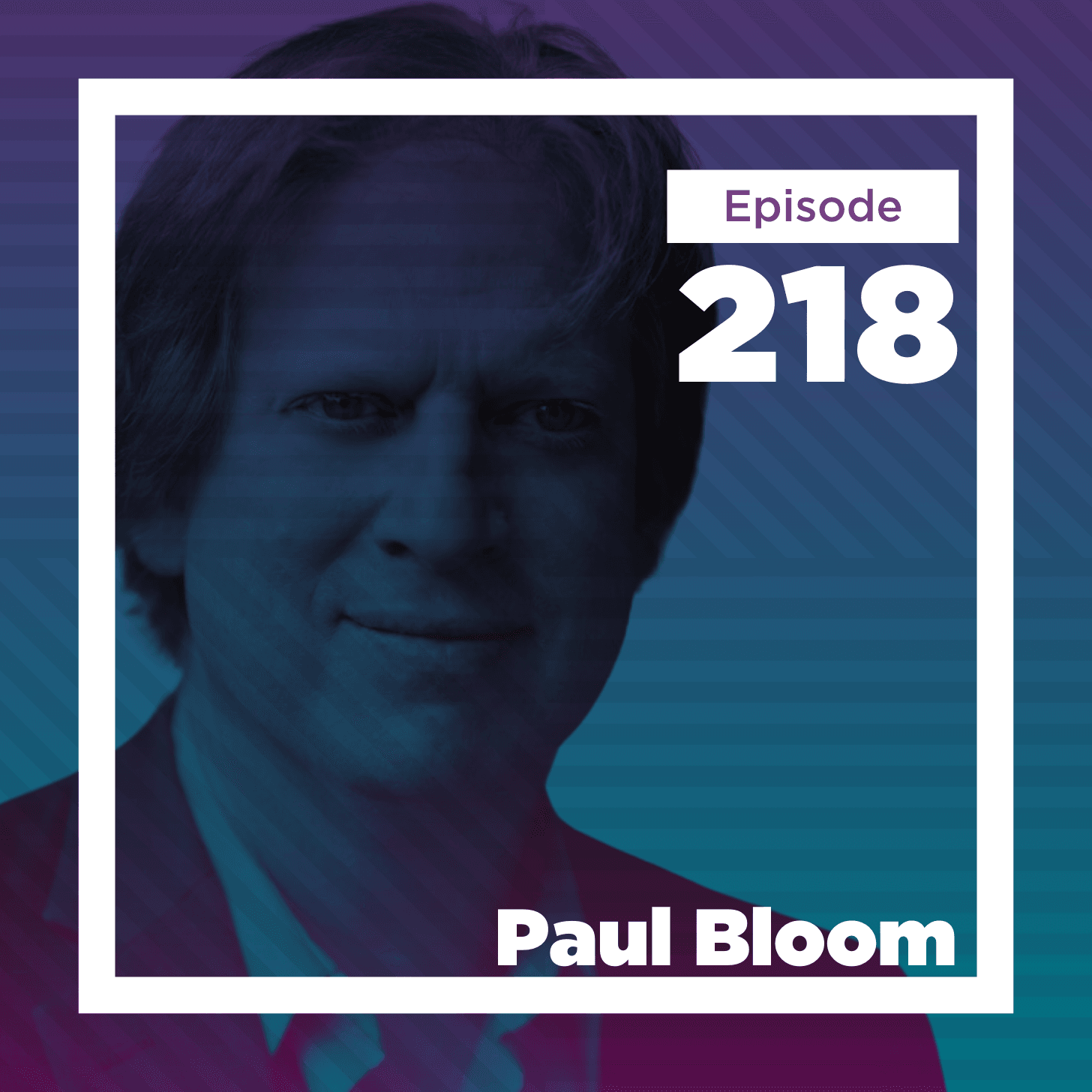
Podcast Episode Summary: Paul Bloom on the Psychology of Children, and the Morality of Empathy and Disgust
Podcast Title: Conversations with Tyler Host: Tyler Cowen Guest: Paul Bloom, psychologist and author Episode Release Date: May 13, 2024
---
Episode Overview
In this episode, Tyler Cowen engages with Paul Bloom, a well-known psychologist focusing on moral psychology, child development, and the nature of empathy and disgust. They discuss various topics, including the psychology of children, the morality of empathy, and the implications of AI in psychology.
---
Key Themes and Discussions
Understanding Human Behavior
- Psychologists vs. Laypeople:
- Bloom argues that psychologists do not have superior insights into day-to-day human behavior compared to non-psychologists.
- He emphasizes that while psychologists may understand certain domains (e.g., memory, mental disorders), this knowledge does not necessarily translate to practical understanding in everyday interactions.
- Child Development Insights:
- Common Misconceptions:
- Contrary to the "blank slate" theory, children possess innate understandings about the world.
- Infants can discern social behaviors; even at nine months, they can prefer helpful characters over hinderers.
Morality and Empathy
- Innate Morality:
- Bloom discusses how moral capacities may be hardwired through natural selection.
- Children can exhibit preferences for kindness and can quickly distinguish between helpful and harmful behaviors.
- Disgust and Empathy:
- Bloom expresses skepticism about the role of disgust, suggesting it often leads to negative social behaviors (e.g., prejudice).
- He argues for the idea of "taxing" empathy through social disapproval, encouraging more rational decision-making.
Religion and Cognitive Development
- Belief in God:
- Bloom suggests that children can start to believe in invisible agents (like gods) around the age of four.
- He discusses the trend toward monotheism, proposing that belief in a singular, moral deity could hold communities together more effectively than polytheistic beliefs.
The Role of AI in Therapy
- AI and Therapy:
- Bloom notes that AI models like GPT-4 can provide empathetic responses that some users find more helpful than human therapists, at least in short interactions.
- He cautions about the limitations of AI in sustaining long-term therapeutic relationships, emphasizing the need for memory and continuity in therapy.
---
Notable Quotes
- On Parenting:
- "The most misunderstood thing is that your child is a blank slate."
- On Empathy:
- "We should tax empathy through social disapproval."
- On AI:
- "People may prefer AI therapists due to convenience and accessibility."
---
Conclusion and Future Work
- Bloom hints at a desire to write a new book, reflecting on the challenges and thoughts surrounding topics of morality, cognition, and social psychology.
- The conversation reflects a rich exploration of psychology's intersection with morality, AI, and child development, presenting profound insights into how we understand ourselves and others.
---
Additional Resources
- For a full transcript of the episode, visit [Conversations with Tyler](https://conversationswithtyler.com/episodes/paul-bloom/).
- To follow Paul Bloom and Tyler Cowen on social media, check their respective X (formerly Twitter) accounts.
---
This episode exemplifies the intricate nature of moral psychology and the evolving understanding of empathy, as well as the practical implications of these discussions in contemporary society and technology.
Written by AI. May contain mistakes. Listen to the episode to check what was said.
Transcript
Automatic transcript. May contain errors.0:04Conversations with Tyler is produced by the Mercatus Center at George Mason University, bridging the gap between academic ideas and real world problems. Learn more at mercatis .org. For full transcript of every conversation, enhanced with helpful links, visit ConversationsWithT Tyler .com.
0:27Hello everyone and welcome back to Conversations with Tyler. Today I'm delighted to be speaking with Paul Bloom, who is a professor of psychology at University of Toronto and Merida at Yale University. Paul is also one of North America's best known public intellectuals on children, the psychology of children, empathy, human emotions, various features of cognition. He has numerous excellent books. I've enjoyed all of them. The most recent is called Psych, the story of the human mind, but again, you can read all of them. He has a new sub -stack, which is excellent, small potatoes. He is a bit still on Twitter and is more generally a force of nature.
1:12Paul, welcome. Tyler is very nice to talk to you. I have just some very general questions about psychologists and I'd like to hear your take on it. And they run along the lines of like, how much do you people understand anyway? So your partner, I believe, is a psychologist, you're a psychologist. If you're sitting in a restaurant and you're listening to a couple talk at the other table, do you two feel you understand them better than like two smart and on psychologists? No. Not in the slightest. not in the slightest. We have no special ability to manipulate people to understand people. You could say to that, reflect a weakness of the field and maybe it does, but I don't think psychologists are any savvier about human nature in that son of day to day on the spot way than anybody else.
2:01So you don't think say that you're better parents on average? No. I don't. I think we tend to be good parents because the sort of person becomes a psychologist is probably more sensitive to other people's feelings well -educated, you know, and tend to be affluent enough to provide kids with good stuff, but no, not anymore so than an anthropologist or a biochemist. But say I took two economists and I flew them to a poor nation that they didn't really know anything about, and I asked them to make some guesses about what might be wrong with the economy. They would do better than equivalently smart people who are not economists.
2:37Like, what's the feature of psychological research that stops it from translating into higher understanding? Like, how do you model what you all produce? I think we understand certain subdomains. So I think I have a better understanding of memory and a falliability of memory than a lot of people. I think I have more of a grasp of mental disorders. I know maybe a bit more about child development in the sense of what ages things will come about. I know I could say I think some reasonably intelligent maybe surprising things about social movements and how people behave in groups So it's not like we don't know anything about the world.
3:14It's just it doesn't translate for whatever reason into day -to -day Contact talking with you now. I'm no better at figuring out what you want from this conversation anyone else would be But let's say we took a batch of you and trained you for two years to do that translation The people who are the most insightful, who let's say they're not psychologists, but there is stood observers of human nature. And they train you all for two years. Like, would you then be better than others? Are you trainable? Maybe it's a good, are people trainable. So, you know, Phil Tetlock talks about super forecasters and talks about how do you get people who could better predict the future.
3:51And you could imagine either training people, either by sort of reading them out in some sort of program where you try to find the most naturally gifted and understanding people, or training them in certain techniques which are available that would make them better understanding other people. It just brings us quite a distance from psychology as it's normally studied. I commonly hear the view that psychologists have more neuroses than non -psychologists. Is that actually true? Is there data behind it? Or is that just a poke people want to make? The joke we make in within the department is that it's a clinical psychologist, so we're all a bit crazy.
4:28The ones who study memory and development and neuro transmitters are kind of normal. I don't think it's true, I think it is mostly a joke. It could be true in some degree in clinical psychology where people might go into the field in order to address issues and problems that they have. I mean, it's hard to distinguish some issues of cause and effect here. So I have some friends who I know a lot of people who are really into mindfulness meditation and some of the people are most into it, are people actually the most troubled. But maybe it's maybe they'd be much more troubled if they weren't in the mindfulness meditation.
5:01Now on infants and children, there's a question, my daughter, who's a big fan of yours wanted me to ask you, and that's, quote, what is the most misunderstood thing about children that most parents could practically use to improve their relationships with kids? Unquote. Oh, that's nice. Probably the most misunderstood thing, period, is that your blank slate. A lot of people walk around thinking that babies know nothing. And that's not true. There's a tremendous body of evidence now showing a quite sophisticated understanding of the physical and social world is there for Nagekko. And it's some research I've been involved in, but researchers like Elizabeth Spellke and Renee Warroshan have really charted babies' mind and found some extraordinary things.
5:43Now, that's the way they sort of enjoy your baby, watching those things develop. from a useful standpoint, it might be useful to know that some of the negative aspects of humans are present early on. And so you shouldn't be too surprised when your child has an us as m psychology. It's very quick to see, to split the world into the people that they care about and the rest of people. And you should take that in stride. It's not because you taught them anything bad. I think certain sex differences are largely hardwired and so parents shouldn't blame themselves if they find their their son is walking around Pretending to fire guns at people and their daughters doing more maternal play So I think knowing some defect that some of this is is innate that does not mean it can't be changed But some of this innate is actually pretty useful for a parent Let's say two people are having an argument and one is being a jerk and the other is not being a jerk at what age are young children old enough to figure out who's being the jerk?
6:46Does the two -year -old know a three -year -old? Well, if you take the notion of jerk broadly enough, the nine -month -old knows. So you show in some experiments that I've been involved in at Yale, you show babies little one -act plays where you have this little thing trying to get up a hill, and one character helps it up the hill, and the other one shoves it down. And later on, when exposed to two characters to help her and the hinder, babies prefer the helper. So under that very broad notion of a jerk you get it pretty early on, I think in other ways. I think that that's actually a very emerging ability, the ability to tell the good friend of that.
7:24And what's your theory of how they tell the difference? Well, the origin of this, I think, is natural selection. I think some part of our moral capacity is hardwired. And then the question is, what are they view as sort of a cues to goodness and badness? And I think it tends to be physical acts like helping or hindering. They recognize that creatures have goals and some facilitate a goal, some long to goals. It could be something that is hitting or caressing. There's some work that says that babies may be not surprisingly prefer a caressor to hitters. What else might they be aware of that we don't necessarily know about?
8:00You might know about it, but I don't. Who's a jerk who's not a jerk? What else? Well, there's some lovely work by Katie Kinsler on how children break the world up and us versus them and You might think that they do it like adults do on a basis of race Which is very very common and in some way and sooner or later they do that But early on they take a language very seriously So children at a very young age prefer to affiliate with as an American child prefers to fill it with an English speaker, then a French speaker also prefers to fill it to give toys with to play with. Somebody who speaks English without an accent, then somebody who speaks English with a faint accent.
8:40So the importance of language as a sort of marker of group affiliation shows up very early. At what age do you think children can quote unquote really believe in God? With a student Koni Banner she wrote an article a while ago called Wood Tarzan Believe in God. Well, somebody who without a cultural support come to believe in God. And we came to the conclusion that he'd end up being polytheistic, that he'd see gods everywhere. He'd see them in, as triggered by nature and everything. I think children early on believe in invisible agents causing things. They had that sort of bias. Whether it would rise, when it rises level where you could coherently say, oh, that kid believes in God.
9:23I think that probably is a bit later. I think you need some sort of cultural support to make it into a God, as opposed to just some sort of strange stuff is happening that you can't explain. But say if you were to give it a number, how many years old? Four. And you think that's the same age at which a kid can really believe in Santa Claus? Or there's a different? Is God a tougher climb? Or is it the same? You know, there's fundamental mental experience who don't want their kids to believe in Santa Claus. And the logic is, once they hear Santa Claus isn't real, they'll jettison God as well. I think in some way, Santa Claus is an easier climb because he's just, you know, a big guy who looks like who, you know, who big beard and who climbs down chimneys and gives gifts.
10:05It's kind of a small step from a sort of very capable and kind person to Santa Claus. Well, God, in the sense that we're talking about it, is, you know, invisible and omniscient and all good. So I think God's a much bigger climb. So I'll say Santa Claus at two or three. Okay. And you may see Santa Claus in a department store, right? That's gonna make it really easy. You don't sit on God's lap, but Santa you do. Now, if you think Tarzan is gonna start off polytheistic, why is it in the world we see so much monotheism? So there's a billion Muslims over a billion Christians. Now maybe they're not all very strictly monotheistic, but still monotheism has been the trend for a long time.
10:47It has been. And it has why that, why something that runs counter to instinct, that would be dominating. So one idea, and this is Robert Wright's claim, I think other people have argued this, Polytheism is sort of the default, society's sort of polytheistic. Even in the Hebrew Bible, it might begin rather to polys theistic when God talks about not worshipping other gods instead of him. He's literally talking about other gods. But you're right, monotheism has won. And then there has to be some sort of design features that allow it to win, even though it may not be our natural default. One argument, as far as I don't know, but one argument that I have heard is that these singular big gods actually serve moral purposes.
11:30They hold communities together. If you believe in a single omniscient God that looks at you and looks at me, it could govern our behavior in certain ways. coordinated, caused us to be nicer when we're not being observed and so on. And so the claim is that societies that have that have an advantage over societies that have a hundred mischievous little gods running around. So that's enforced through some kind of group selection mechanism. That cultural group selection would be the idea, yeah. In general, how will Bolochari you on the notion of group selection as a mechanism? Very critical of it as an evolutionary mechanism.
12:03I've been convinced that it almost certainly it could happen in principle that if you convinced the sort of Dawkins viewed it that it doesn't happen in practice, but it seems like a perfectly reasonable thing to talk in terms of cultures to say that some cultures do better than others. Those cultures thrive and now we're not talking about genes we're talking about communities of people. At what age do infants on net actually start enjoying life that on the benthamide calculus us, there are plus rather than a minus. I did a Twitter poll asking people, our baby's overall happy or sad based on your experience.
12:36And it came up and a happy sort of one. It probably depends on a baby. But averaging, right? Average 100 babies in our society, I think I think the life of a baby is actually a young baby is probably pretty difficult. Your needs are not immediately satisfied. You have a lot of needs. You don't want to pain all the time. You have gas, pain, you're hungry, you have to, you're struggling, you're afraid. I would think that roughly around age of two, you get much more autonomy and then life starts looking up and then just gets better and better. I would think at one and a half on that they're happy based on my limited data sample.
13:14Do you think it, do you think it corresponds to the, to the burgeoning of language? No, I just think it in wealthy countries, they're fed enough and they they just smile more. It seems to me they take pleasure in more things. Seeing a dog on TV or something or seeing a cargo buy they seem to enjoy in a way where I at least don't witness them enjoying that at seven months. Yeah that that makes sense. There's a sense in which wealthy countries might be at a disadvantage where in a lot of wealthy countries babies sleep apart from their parents. There's a separate room with a crib you cry it out and so on and you know I'm not I'm not judging.
13:53I did that with one of my kids a long time ago, but it's very hard on the kid. And in less wealthy countries, the kid co -sleeps and sleeps in the same room. And I think that's better offered a kid. Rough on the parents, but better for the kid. As you've noted in your research, young children sometimes, maybe often, will think that the lives of 10 dogs are worth more than the life of a single human. Are they wrong? Yes. Why? I'm not. And what's the right number? Like a million dollar rate number. This is a challenge because if I say I'm wrong, you can just keep that no one human is worth more.
14:30You can keep upping the number of dogs. Your view aligns with that of Maddie Wilkes, who is my collaborator and ex -postdoc, who ran this research and she's very much of a utilitarian and an animal rights person. And so she thinks kids are superior. She finds in this work you're talking about, kids are less speciesists than adults. They even will favor 10 picks over one human. And adults, in our sample, never do that. And gradually, these despisesism comes in until you get to a person like me. You think, oh my god, a person's so much more valuable. And Maddie would say, what happens is this irrational prejudice creeps in that I have.
15:10And maybe you don't have. I don't know. I'm a troubled utilitarian. where for the most part I am, I just would find it very difficult to trade any number of dogs for a human life. What about you? If you would make the trade off, how many dogs? I don't think we can make utility comparisons across species. I think we can make limited claims about potential gains from trade, with humans and dogs, a lot. Humans and pigs, quite a bit less, but still somewhat. But, and that ultimately maybe we can apply some semi -Christian -like idea of mercy to how we should treat animals and that we only have partial comparisons.
15:49That would be my answer. We have to make some, I mean, maybe we can't, but in some way we have to when we think about animal experimentation or, of course, using animal food. We have to, if somebody said, you know, there's research we're going to do which will save a child's life, but it will involve killing a million dogs. I think people might ballcat it, but if it was killing two dogs, people wouldn't. But I also can't fix a number. There's that other question you've asked in your work. How much would you have to be paid to strangle a cat? It's not my question, but yes. But you can take that money and save human lives.
16:22I think Oxfam has claimed it's a few thousand dollars, well spent, could save a human life. Whatever the sum is, it's not ginormous, right? So how much would you have to be paid to strangle a cat? That one reason why I've liked that question is people want a lot of money. In fact, this is an experiment done by Thorndike, the great behaviorist over 100 years ago. He asked that question. He also asked people how much would I have to pay you to take a pair of pliers and pull out one of your front tooth. People want more money to strangle a cat than to have this painful, agonizing, and this figuring thing, which I think says something nice about people.
17:00But then the fact is that it's not so nice about people from sort of a strict utilitarian calculus. You should actually ask to be paid some amount of money for which you can then save many, many lives, or for that matter, save many, many cats. And our morality doesn't work that way. We have a sort of visceral response to certain behavior. It doesn't translate to a sort of cold blooded assessment of pain and pleasure. And do you feel you should try to train yourself out of being unwilling to strangled the cat? or you're going to double down on how you are. I double down on a few things. So my utilitarian friends tell me that my my affection and the resources I put into my my children are irrational that I should not be favoring them over strangers.
17:44Certainly not to the extent I do. And I hold back on that. If you offered me a pill that would get rid of my favoring my children, I would not take it. For animals and treatment of animals and cat strangling, I think we should try to talk ourselves out of this. I think we should in some way try to reason to make the world a better place, even if it involves strangling some cats. I have some questions about intelligence for you. If we think of large language models, should we let them feel disgust in order so that they avoid left wing bias. That's a... So why would... is the idea... why would discuss make them avoid left wing bias?
18:27Maybe we're not sure it would, but there are various claims in the literature that for people on the right discussed is a more fundamental emotion and that a greater capacity to feel discussed encourages people in some ways to be more socially conservative, debatable, but I don't think it's a crazy view. So if you build LLMs and you give them say a lot of empathy and not much or any discussed, you're going to get left leaning LLMs, which you might say, well, that was my goal, but obviously not everyone will accept that conclusion either. Yeah, I wouldn't want woke LLMs. I wouldn't want anything.
19:01There's a lot of them. You've got them, of course. I've got them. I think Gemini is the one I wanted to go to woke LLM of choice, because I think the doctrine called loganists leads so a lot of moral problems and makes the world worse in certain ways. But I wouldn't mind left -wing LLMs and I'm not a fan of disgust. You're right that disgust is often associated with right wing, but in a very worst instantiation of it. So disgust is what drives hatred towards gay people. It involves hatred of interracial marriage, the exclusion of immigrants, the exclusion of other races. So, if there was one emotion I would take away from people, it would be discussed, at least discussed in sort of the moral realm.
19:43They could keep your disgust towards rotten food and that sort of thing. And so I wouldn't, that's the one thing I wouldn't put into LLMs. I'd rather put, I don't know, anger, pity, gratitude. Discusses the one thing I'd keep away. So you wouldn't just cut back on it at the margin. You would just take disgust out of people if you could. I'm conscious enough about the limits of, of our knowledge, which is that I would be very trepidacious before we're moving an emotion from people because you don't know what the consequences would be. But yeah, it's hard to think and maybe you could think of an example where disgust has made the world better.
20:17Well, disgust combined with other views might make people more cautious. So if you take Canada, well, I've been very positive on Canada's pro -migration policies, there needs to be some limit, right? And maybe it's some form of disgust mixed in with other views that will enforce that limit. So your view is, and I think, and I've written on empathy, and I've heard a sort of similar argument for this, which is you could have a decision which you ground, and you may be thinking about immigration, on a sort of rational cost benefit analysis. But you might say, look, for people to, to act towards this decision, your average person won't do it my way.
20:53They would need some emotion. So maybe they need disgust or empathy to take them there. And so you might want to argue that without, So it would argument go without discussed, Canadians wouldn't be motivated to do a policy that unbalanced would be better for them. Possibly, and I just think back and I figure we'll discuss must have been socially functional at some stage of development, not perfectly functional, but it had some benefits. And you might have a very detailed argument for why all those earlier benefits have vanished, but I think I would be skeptical. And I'm surprised you think that say your views toward migration are not equally emotional, I say, the social conservatives.
21:31Yours might be correct. But do you think yours are that much less emotional and more rational? I think on a whole sum views are more rational than others. So, I mean, I'm the wrong person to ask. Everybody's going to tell you that your views are grounded in a sort of rational equation. They thought them out and everything like that. And, you know, I'm And sympathetic enough to John Height's line that often we dilute ourselves and we're driven by these emotions. But I don't know. I wouldn't say that the person who says black people and white people shouldn't marry because it grosses me out, should be thought of on the same level as somebody who says, eh, you know, what harm does it do?
22:13I think what harm does it do a person is being a better person. Your view that there's too much empathy. You wrote a book called Against Empathy. What emotion in you does that come from? For me, it comes from frustration with other people. So I hold that same view, but I feel it's rooted in my emotions as much as my reason. And I then rationalize it with my reason. I see exposed my emotions are actually somewhat correct, but it stems from my frustration with others. Maybe from me, shame and guilt, I think I've made a lot of mistakes and moral mistakes in my life by being too caught up in empathy.
22:47And so my argument against empathy is limited. It argues that empathy is a poor moral guide. It leads to bad decisions. And if I have to ground my own emotions, it might be regret over my own bad decisions. I think I suffer from an abundance of empathy. I think at the margin, I've moved against empathy more, being a podcast host, that I'll ask a question, why are you being a podcast host? Well, I'll ask a question and a lot of guests think it's high -stat is simply to signal empathy rather than giving a Substantive answer and the signaling empathy answers I find quite uninteresting and I think a lot of my listeners do too Yet people will just keep on doing this and I get frustrated and then I think well Tyler You should turn a bit more against empathy for this reason and I think that's correct
23:40I appreciate where you're coming from and I feel your frustration. What do you think we learned about language from large language models being so good? You know, the success of large language models is the biggest surprise in my intellectual life. And we learn that a lot of what we used to believe may be false. And what I used to believe may be false. So I used to really accept to a large degree to Chomskin argument that the structures of language are too complex and not manifest in input so that you need to have a neat machinery to learn them. You need to have a language marginal or language instinct.
24:19And it's impossible to learn them simply by observing statistics and environment. If it's true that, and I think it is true, the LLM's learn language through statistical analysis, This shows the Chanskin view as wrong. This shows that at least in theory it's possible to learn language just by observing a billion tokens of language. It doesn't mean that that's how children do it. It's possible, I think, I do believe that kids have some sort of innate apparatus that helps them do it. But it's no longer a sort of logical truth. It's something which you have to do in empirical research. If you gave an LLM, and I know people are doing this very research, gave an LLM the same speech that your average developing child gets will it learn to talk?
25:01Now the day we're taping this coincidentally, it's the same day that GPT 40 came out, which probably you haven't played around with yet. It's only been out for about an hour. I was with it before taping. It seems to me amazing. But how good are LLMs as therapists? There's been experiments which have pitted them against people in short -term interactions, like you talk about your troubles, and then you get a person like me to give a response, then you get GPT -4 to respond. And over and over and over again, people rate the AI responses, more empathic, more understanding. Now, I think that this is impressive.
25:42I think what we have yet to see is whether they could have a long sustained conversation, holding in memory, or over multiple sessions. Part of me being a good therapist and actually just being a good friend is, I remember what you were about. I could go back to it. I could talk about it and so on. And I don't think they're at that stage yet. I don't see any reason why they can't get there. You know, there's a version of GPT -4 which does have memory. It's only been I think for about a week. And I haven't tested it yet. I don't know how good the memory is. Some people prefer to turn the memory off actually, but it's very much on the verge of being here.
Read the full transcript
26:16But say two, three years from now, what percentage of therapy done do you think will be done with humans rather than LLMs? Because the LLM is free and you can stay at home. You can with the therapist with Zoom, but the LLM is super easy. If you include by therapy, somebody just regularly talking to LLM about their problems and getting some advice and everything, I think that human interaction within not too many years will be the minority of interactions. I think people will be very drawn to AI therapists. There's some evidence that we have a prejudice against AIs. There was a paper recently that gave the same sort of response, the exact same response, to two groups of people, told one of them it's a person, the other one it's an AI.
27:04The people told it was an AI said, oh, that wasn't very empathic, that wasn't very understanding. But my feeling is this prejudice will fade over time and it's mostly people more R age than people who are 18 or 20. The people who are best at working with LLMs, what kind of psychological intelligence do you think they have? Who's going to be good at that? I think you need a certain flexibility, a certain degree of patience, and you need to develop a theory of mind with LLMs that is different from the theory of mind you need for people. So, I was recently asked Claude, who I, Claude Claude, anyway, I use it, I use it a lot, And I asked it, I said, there's a phenomenon in children I found is the same phenomena show up in adults.
27:50And I said, and I was, and I was, and I, and I planly framed the question that I wanted to answer to be yes. And I said, yes, there it is. Here are three papers that show it, you know, decisively. None of the papers were real. It hallucinated it because it's what I wanted. And then I went back and I said, look, I'll lose my job if you give me papers that are, that are false, that are made up. You've got to be accurate on a big trouble. Then it did much better. So you got to gain them to some extent in a very different way than you'd game a person and that Capacity is something which I think is essential for de -on's at least for the current models Here's a simple question What's the best test of whether someone or something has a theory of mind?
28:32I think conversation I think a sustained convert so you know that there are technical tests like the false belief task or reading the mind and the eyes task. But those are easily gained. Those are, LLMs will succeed on them because they've seen thousands and thousands of instances on them. I think in conversation, if a lack of theory of mind quickly reveals itself. So success at solving a sort of turning test is a success of theory of mind. Well, but cloud three can converse very well, but I'm pretty sure it doesn't have a theory of mind Do you think it does? Well, I'm using theory of mind, a word like theory of mind, meaning the manifestation as if it did.
29:12Does it really think that other people have minds? Does it have a model of people's psychology? When it says, I understand exactly what you're feeling, does it sort of call back its own experiences? I doubt it. So maybe in some way you're asking an even easier question, which is, what will show that it has consciousness. But you could have consciousness and not a theory of mind, right? Yes, but you were saying I think that to have theory of mind involves something you might call consciousness. But what's the extra thing above having consciousness that indicates a person has a theory of mind? So we reject the false belief test.
29:47That makes sense to me. What is it then? What's the test? I think what you'd have to do and you could do this on a flyer. You could work it out. would be develop, well, okay, here's a good test. Read it half of a good novel and then ask what's going on here, what's going to happen next. Show it half of a TV episode. And when we do these things, our theory of mind is just fully operational. We say that detective is going to get his revenge because he will not take that sort of stuff. And she's going to leave him the first moment she has a chance, and I think that shows theory of mind that work.
30:26And if you do it in that way, you can't cheat. If it's a novel, novel or a novel episode, then it would have to do it on a fly. I'm afraid I'm going to fail that test. I always think up strange imaginary endings that are improbable, and occasionally they come to pass. And I think my endings are often much better than what they end up putting on the screen. My dad is great when we watch TV to get as a kid. And of course the TV was very different and much more predictable. But I carried a review about to say something and then he would say it. He would say it's signaled, Hanesley was like, my wife does this too.
31:02Yeah, she's great at this. Yeah. Do monkeys have cognitive dissonance? Wife done some research suggesting that they might have a sort. The cognitive dissonance, the sort of cognitive dissonance we were interested in, is that when we choose something, thing. That makes you say out of a choice of two things. That makes you like it more and makes you like the things that you didn't choose less. And some work with Laurie Santos who had a thriving monkey lab, we found a compoutions did the same thing. We also found three year olds did the same thing. Endowment effects, right? That's a separate thing.
31:38But I think there's some evidence that monkeys also show endowment effects. Are we sure that's dissonance? Then, down into effects, I'm less sure that it's dissonance. It might, there's alternative explanations. The favoring that which you chose is kind of a textbook example of dissonance. That's dissonance if anything is. But what if you want to carry a story with you, of what it meant to you, and your act of choosing helped create and define the story, and you value things through the scenario to function, and you actually ought to be that way. Is that so improbable? No, no. I guess the experiments that test it aren't open to that kind of interpretation.
32:20It can often be like, you know, we give you two M &Ms and you just choose one at random. And then later when you rank the taste of the M &Ms, you'd say, oh, the one I picked is taste year, then the one I didn't pick. Well, if we simply handed it to you, you wouldn't get that effect. So there's not much of a narrative to that. But I agree that when you get and more complicated in life, it could serve all sorts of other functions. How much does formal education boost IQ? The data are a little bit, each year you're in school, your IQ goes a little bit up, and the skeptics will say, I think Brian Kaplan says, you know, you get better taking tests, you get better at sort of a scholastic way of thinking.
33:02I do think though that education period does play a role in making you smarter. It gives you practice and dealing with abstractions, with hypotheticals, just sort of things that we often do as markers of intelligence. Do people overestimate or underestimate your intelligence? You. My own? Yeah. You must know. It's in either a way it's a humiliating answer, but I would imagine, particularly when I I think they overestimate it. People sometimes ask me questions about domains, which I have no knowledge about, and they take me seriously about that, isn't that an overestimation? What about you? Oh, they weigh overestimate my intelligence, but they underestimate how much I know.
33:46It's interesting. I know a lot, and they mistake that for innate intelligence. It's what happens in my case. So you know even more than you seem to know, which is quite a lot. In my opinion, so I'm being like both modest and not modest with each part of the answer. But I think I take good care to try to apply what I know and people mistake that for again, high IQ. It's not entirely clear that it isn't high IQ, that IQ might be largely built on the scaffolding of a lot of knowledge. Partly, yeah. But it's something else as well. There's some kind of G where I think I'm actually much weaker. Maybe there's a trade -off, which is the more knowledge you have, the less G you need to get to the same point where somebody with less knowledge would need a lot of G to get to that point.
34:30And why do you think it's worked out the way it has that people overestimate your intelligence? Because you are a Yale? Yeah, prestige bias. I'm a university professor. I may yell, maybe I benefit from other forms of privilege being, you know, an older white man. But I don't know. But I show all the markers of a smart guy. Do you think when you interact with other people that you're too much impressed by their intelligence or not enough too much? because a lot of smart people overvalue smarts and others. And why not just drive that out if you're calculus? Is it so hard? No, I read your talent book and it was actually very, very useful to me because it taught me other ways, other things to look for.
35:11When it comes to choosing graduate students, for instance, I tend to rank intelligence very highly and you know a good conversation with someone who's quicker than me and smart under a feet and everything. I valued that very highly. It's only recently I started to try to also value things like productivity and work ethic and other things and a certain degree of creativity, but I would just, I go too much for smarts. What do you think is psychologically the hardest trait for us to value properly? Disagreableness or something else? Because after all, they might be disagreeing with you, right? Yeah, disagreeableness.
35:51Probably honesty. One of the tropes on social media, I hate the most. Just when somebody says, you know, well, here I am and now I'm a professor and I want to say to somebody who was my advisor many years ago said I'd never make it. Well, you're a jerk and everybody laughs at the person said they'd never make it. And to be honest with somebody, and in that case, they were wrong, but even if you're right, people hate you. To be honest with somebody when they say to you, what do you think of my book? Do you think I'm suited for this job? stuff like that can be doing them a huge service. Am I with the right person?
36:25Can be doing them a huge service and the reward you will get is hatred and resentment. So on your substacks, small potatoes, you wrote a post on doing academic interviews. The interviewers at a general level, what's the bias they're most likely to have? Oh, all sorts of biases. And I'm almost leaning towards, you know, your book aside, jettising interviews sometimes, getting rid of them. But all sorts of biases. They're biased by, they're biased by charm, they're biased by quickness, they're biased by flattery. And in fact, my advice, part of my advice to put it, somewhat cynically is for people on job interviews, know the person you're talking to, do their research, because it's kind of flattering.
37:09You know, somebody comes into my office and said, oh my god, it's such an honor to me. I read against empathy and I changed my life. I don't want it to sway me, but it's hard for it not to. Yeah, that's our weakness. I've wondered quite often, why is flattery under -supplied in these contexts? Because by no means does everyone do it. It's not very costly. Even if you're not fully believed, it can have a positive impact on the person. So why isn't the supply of flattery just way, way up there? Every job interview. That's a cheap thing. Yeah, it starts off with, oh, I read your articles two years ago.
37:45it was wonderful to change how I think about tax incidents, but not every interview starts that way. Most do not. Why not? I tell the story in my sub stack of very famous senior interview, comes to figure, I never met him before, comes to my house, oh my god, it is such a delight to me, you, and talks all about my work extensively. And I fully knew, even my ego was not so, I fully knew he read up on me, but it still felt great. It still felt, I don't know. I feel maybe people are uncomfortable flattering. Maybe there's an awkwardness when you're talking to somebody who is of a higher status than you and you want to Java.
38:22Maybe it feels inappropriate to flatter like who am I to tell this person their worth is great. I don't know. You still think they ought to do it more, right? I do. I do. I do. There should be. There's a flattery shortage in the world. And it's going back to kind of a criticism abundance sometimes where I think people have a false theory of mind where they go to somebody and they say, you know, I read your stuff and I think it's really poorly thought out. It could be very helpful from a friend, not a good tactic when you're looking for a job. So how can we train people to be better flatterers?
38:57What do we need to do? Maybe it's some degree of sort of theory of mind, which is you just ask people, how do you feel when somebody tells you how wonderful you are? I think that that will help them do it. It doesn't seem like a very difficult thing to pick up. So I don't know, it's a mystery. So if we should train flattery, how do you think we should best tax empathy? In the broad sense of tax, right? Yeah. Yeah. I think we should tax empathy through social disapproval. And here's what I'm thinking. A lot of American politicians say racist things and have racist policies, but almost always they cloak it.
39:36They dog whistle it, they cloak it. Maybe they aren't even aware of it themselves, because if, if, when somebody says something about a valid clearly racist, people boo them. People, they, they, they, they, they suffer a huge social cost. I'd like to see the same thing with regard to overt displays of empathy. So I would like to see that, you know, when, when a politician comes up and says, I want to talk about the healthcare plan. I says, I want to read you a letter I got from an a year old who told me the story about her father, I wanted to audit the crowd to boo. And the show don't treat us like children.
40:10I think empathy could easily be used as a tool for all sorts of things. And if we stop putting up with it, it would discourage it. Where is the empathy problem worse? Canada or the United States? I think everything is both worse and better in the United States. Just broader variants. There's broader variance to politics as more intense is a lot more interesting. I think the degree of sort of empathic pandering as well as the degree of everything else is more accelerated in the states. I think part of Canadian politics with parliament encourages more vibrant debate and discussion. Often at a pretty high level that you don't see in the states.
40:52Do you think there are any humans who are what I would call truly a egalitarian? So there's plenty of people who genuinely want to redistribute wealth, but typically I think they have other status markers. It could be intellect, it could be empathy, it could be a certain kind of left -wing politics. Are there people who are genuinely egalitarian across all dimensions? No, I think you cease to become a person. in the future, indifferent between your child and a stranger, to not care about somebody's looks or intelligence or kindness, you could imagine a LLM program for that, but I think when we encountered a LLM, we'd find it repellent.
41:35And the person would discuss us. Yes. That's the case where a disgust might be useful, right? Yes. Okay, you have a few gump full circle on me. Yes. Why do so many people enjoy horror movies? For the most part, I do not. I'll interject, but clearly many do. Do you enjoy any movies that scare you of a lighter sort? Not gory, not chainsaw stuff, but later. That I enjoy. So Darth Vader comes on the screen. I wouldn't say I'm scared, but I feel the negative evil presence, and I respond to that in an aesthetically positive way. Yeah, I think that that's right, where we take some sort of pleasure from negative emotions, but like sadness and fear and disgust and even guilt shame.
42:21But there's a lot of variation in which emotions people like. Some people like a good cry, some people like to scream, and the intensity of it, where I do like scary movies. But for me, it's like the Baba Duke or something like, or you know, it follows. The gory ones, I can't bear to watch. I think there's different sources for our appetite for them. But one is it might reflect what sometimes been called safe practice where our minds are drawn to worst -case scenarios as a way to practice encountering them. You know, an analogy I like is that is that of a flight simulator, which you got a flight simulator, you would often program it for difficult situations to get you practiced and to coping with the meek item in real life.
43:04And sometimes I think our enjoyment of fiction and fantasy is sort of like running off a flight simulator. You've posed this question in your work as a hypothetical, is consenting sex between adult siblings morally wrong? What's your view? Yes. Why do you think it's morally wrong? Why? Because although as adults, there's a strong supposition that they're free to do what they want, I think that the problem is that when they're not adults, the fact that later on they can have sex and worse say between say a stepfather and a stepdaughter or Some other or an ununcle and a niece the idea that sex is a possibility in the future when your adults Carodes the relationship early on does that make sense?
43:52This is my this is my utilitarian attempt to try to do a cost benefit analysis for what you are gonna Accus me of being a disc of having a discussed reaction I think you have a discussed reaction. That's fine It sounds to me like an argument that it's imprudent, which can slide into morally wrong. But I still think there's something out of sync between the strength of our discussed reaction and the degree of moral wrongness It has. I think I think that's right. I think that that if that was my argument say make it make it just Ratchet it up a bit and make it a relationship between a father and adult daughter But say brother sister.
44:28I could reword the question adult sibling. I said siblings So, brother and sister or two sisters for that matter. Yeah. That seems much less wrong than the stepfather and the daughter. It does. It does because in some way going back to my point about, as it brings us down to childhood, there's less of a power asymmetry. There's less of a case of an adult carefully grooming a child so that when she is of age, they could then have sex and it would be okay. I have a visceral response to it. I'll give another argument, which is again, trying not to be discussed space, which is that I think that there's a range of human relationships that are tremendously valuable.
45:06And sometimes they're better off without sex. I think it's, you know, the relationship, certain sex is great, connects to romance, connects to sort of a great degree of intimate relationships. But some relationships are sex -free, like relationship between most people and their adult children. And that's good. Now is a CWT listener, might you be up for a round of overrated versus underrated? Yeah, I was hoping for this, hit me. Okay, these are all easy. Sean Piaget, overrated or underrated? Underrated. He is wrong in just about everything he said about kids. There's been studies finding that all, just about every claim he makes is mistaken and overridden, but he was a great scientist with a great, encompassing theory, a lot of his theoretical foundations, particularly the notion that children are like scientists exploring the world, have stood the test of time.
46:00Also, it was a sweet guy. Unlike Freud, he was, you know, he was, he was a genuinely decent guy. So I'd say he's underrated. The notion of mirror neurons, oh, it shouldn't be rated at all. So it's just false, right? I'm not enough of a neuroscience to say it's entirely dead. Maybe and people have talked about marijuana neurons in primates being involved in certain aspects of motor learning and I'm not expert enough to say that that's all bogus. But was once hugely overrated in that this was the solution to everything. Explain autism, explain language, learning, explain empathy and the whole feel I think crash and if people and it's still overrated because some people don't know what crash.
46:43That wasn't easy one. So she epaths overrated or underrated. You mean that's hard, right? You mean the idea or the people? No, the actual ones. They're very productive. I pull out of them, right? They are. They are. I think they're overrated. I think there's a sort of sexiness to this. There was a woman who was profiled in New York Times recently who described herself as a sociopath or a psychopath. I read that. And I don't know. I think there's a lot of alert to a lot of drama. Many studies of psychopaths and sociopaths find that they're actually often below normal intelligence. They tend to be depressed.
47:23They're more likely to kill themselves. They kind of live lousy lives. They're not the sort of sexy conscience -free people we like to imagine. Suggesting that some degree, that you and I, the non -sociopaths, are sensitive to this. And when we see a sociopath, we kind of run away. You're assuming I'm an on -soshium path, right? Oh, I know you well from the podcast. But a lot of people just think they're psychopaths, like they're all serial killers, and that's not true at all. So maybe they lack a moral sense, but if they can learn to behave according to incentives, maybe a lot just fit in. They learn how to flatter, say, because they're not held back by these other weird feelings that you shouldn't flatter your interviewer.
48:07You could get very far, but the thing about the people we want to be around is we want them to be nice to us even when incentives aren't present. Carl Jung overrated or underrated? Oh, yeah, hardly, hardly rated at all these days. I think maybe just because of Jordan Peterson who has been, been promoting him, I often get people saying, why didn't you talk about Carl Jung in your book? I would say, I'll say underrated in that what little I know about him seems quite interesting. And I think maybe he's been so eclipsed by Freud that nobody gives his ideas any attention. Certain ideas about some of his ideas about a conscious or worse study.
48:47So mildly underrated. Memory, streams and recollections is a great book, I think. And I believe with LLMs, Jung will make a comeback. In a sense, LLMs are tapping into a kind of Jungian subconscious of all the data we've put out there. A sort of collective unconscious is now coming online. But there's reinforcement learning applied to it. So it's also suppressed in a kind of Freudian way. So you get this weird mix of young and Freud in contemporary LLMs. There's a book, there's a book there somewhere. Yeah. Asian tiger parenting over or underrated. Ha. Amy Chua, who is a friend of mine who brought the idea in her battle hand with a tiger mother.
49:30I think underrated, I tend to be a rather permissive parent, but the thing about it is a lot of these tiger parents end up with kids who are not merely successful, but happy and love their parents. So it doesn't work for everybody, either for either not for every kid, nor for every parent. I could not fashion myself as a tiger dad, but I think we should take it more seriously. Do you need the whole community for it to work? Oh, yes. Yes. It's like everything else, you know, cell phones, smartphones and social media and, I don't know, sex, alcohol, where if you're one individual within a community doing it, it's extremely difficult.
50:15It's much easier to be any sort of parent if everybody else around you is the same sort of parent. Big five personality theory. Oh, underrated. It stood the test of time. And often when people complain about the replication crisis, they throw away all of psychology. But personality psychology has proven surprisingly robust. And I think there's a lot of sense and idea. I know you actually were somewhat critical of this in your book Talents, the idea of the Big Five. But the idea that you could characterize somebody in terms of sort of five numbers determining their openness and their conscientiousness and so on.
50:51What do you think on that? I think it's overrated by people who use it in hiring, but I still think in general it's somewhat underrated, so we're maybe not far apart. People who don't know about the categories at all would do well to learn them. That's how I would put it. Yes, and once you know about them, you should be flexible and not take them too too seriously. What's an neglected classic in psychology that more people should read? Well, psychologists don't read. We don't read books. We don't read anything from the past. But you read. I have gone through my adult life, my whole life without ever reading principles of psychology by William James.
51:30And then a couple of friends of mine invited me on their podcast to talk about his chapter on habit. And I read it and then blew me away. It's an incredible book. It's an incredible book. It was well written. It is sharp. He talks about instinct, you talk to it, it is a very contemporary voice. He's a lyrical, beautiful writer and it's full of insights. And maybe it's an embarrassment to psychology that you can use it for an intro -psych class and you would gain a lot. Why do religious people cry when their loved ones die? Assuming they believe in heaven, of course, not all religions do. Yeah, I think the answer is more...
52:08So some people say, and I have atheists and say, well, they're hypocrites. They don't really believe in heaven. If they really believed in heaven, they wouldn't cry. They would rejoice. And the same thing when they're out with their own death. I think there's belief in there's belief. I could have a very confident belief in heaven. Maybe I'm even 100 % sure that I'll go to heaven when I die. But when faced with my own death, there are other systems that lead to tremendous fear. And when faced with the death of somebody I love, there are other systems in the head that could lead to terrible grief.
52:39So we're not unitary beings. It's possible for upon learning my son as a terminal disease, for part of me think, oh, he'll be reunited and God and heaven be paradise and feel good about it and feel horrible grief. And yes, they can flick with one another, but that doesn't mean this isn't the gate existence of either one. What does the Hebrew Bible most get right and wrong about social psychology? So it has a mehetic desire, right? Peter Tiel will tell us that. I mean, how good is it as a kind of text and social psychology? I think it's a great text and social psychology and personality psychology and even a little bit of cognitive psychology.
53:19It captures in a very stark way the us them biases that are present. that social psychology makes so much out of it. Capture this idea of prejudice, of capture this idea of thinking about men and women, children and adults in group out group separately. I've been very interested, I've long been interested in the portrayal of God in the Hebrew Bible, which is absolutely fascinating because people who haven't read it think, oh, you know, God, all knowing, all loving and everything. But in fact, it's this wonderful character. And this goes beyond social psychology, He was sort of talking about internal workings of the mind.
53:59I wrote in my sub -stack about a Passover story where he sets the plagues loose in a pharaoh unless he lets the Jews go. And pharaoh says, fine, fine, fine. And then the pharaoh bends, breaks and says, fine, you win. And then God fiddles with the pharaoh's mind and this wonderful twist to say, to make him refuse. And he says later, I wanted to show off my powers. We had gotten this far. It's like, I don't say invasion of Iraq or something. It's just, it's their lovely stories there. I think it's brilliant on the mentality of winers, like a book of Job, even Moses at times. You should write a book on social psychology in the Hebrew Bible.
54:41That's an idea. You know what I like? God has so much patience for winers in that there's so many scenes where God destroys people who dislike his lack of faith with him. When it comes to Moses pushing back, I don't want to do this, you know. Guys, okay, let's compromise. Or about the just he ends up negotiating over how many when he destroys the world in the flood, over how many people to leave behind. If you wind the God as Job did, sometimes he listens. What do you, Paul Bloom, Maximize. Most recently, time with those I love, that's what I try. Also time writing my sub stack. The ones you love, they're all busy right now and that's your talking to me.
55:25That's right. Well, you could, they all turned you down, right? Well, you know, our relationship is just beginning. Who knows? That's right. But I, I, I maximize different things than I did when I, when I was younger. I, I try to maximize money less. I still take money very seriously because you know, want to renovate our house, want to travel and stuff like that. But I've been very lucky to have deep connections with friends and my wife with my children who are now adults. And I sometimes have to remind myself, you end up forgetting that this is what I ultimately want to maximize. And what's your most unusual successful work habit?
56:03No, this is, this is an easy one as you, as you, as you, they're all easy in this, in this episode. No, the one about lessons from social psychology from the Hebrew Bible was not an easy one. My honest work habit is that I work on not always, but often in six -minute bursts. So I have a whiteboard right next to me. I'll work on a substack for six minutes, then a reference letter for six minutes, and I'll rush and fold my laundry for six minutes, and then I'll answer email for six minutes, go on social media for six minutes, and then do this for ten more things, and go back to the sub -stack and repeat, and then three, four hours will go by.
56:38I don't recommend it for everybody. And that's an approximation, or you've said it like a timer, or is the timing internal? Not an approximate, I have a timer. I try it when I timer beeps, I could be mid -word. I'll stop and go on to the next. And for me, A, I have very short, this keeps me from getting bored. And also, by stopping mid -word, or stopping wherever I'm stopping, when I go back to it, the energy is still there to want to continue. I highly recommend it to everybody. I've advocated a similar system that you should stop writing each day before you feel you're done. Yes, that's right.
57:13That's right. When you don't want to stop, you're just about to write something really good. That's when no more. Yes, back to it tomorrow. Many people do the opposite. They have nice closure on this side. They ended the paragraph, they ended the chapter, and then it's hard to start up next time. That's right. Yeah. Excellent advice. And they're a little exhausted. Very last question. What will you do next? I'm thinking I want to write a new book, but I'm not exactly sure of the topic. I've been playing around different topics. I have something which I kind of like, but it's too early for me to talk about.
57:45But I really want to write a new book. And what's the algorithm you use to decide which topic it will be? Well, for this book, I started to write a proposal on an idea and I just couldn't make it interesting enough. It just so, so because I work by writing a proposal and sending to my agent and so on, often if I could write a good proposal, then I know I have a good book. Not that the book's going to match the proposal in any interesting sense, but it means that the material, the material is there. I guess another way of putting it is by the time I'm done with that, I know it'll be a good book or a good book for me if I couldn't move up without writing it.
58:23If nobody wanted it, I'd write it anyway. Paul Bloom, thank you very much. And listeners, you can buy all of Paul's books. And again, his new sub -stack is Small Potatoes. Just Google Paul Bloom BL -O -O -M Small Potatoes. Thank you, Paul. Thank you, Tyler. That was great. Thanks for listening to Conversations with Tyler. You can subscribe to the show on Apple Podcasts, Spotify, or your favorite podcast app. If you like this podcast, please consider giving us a rating and leaving a review. This helps other listeners find the show. On Twitter, I'm Attyler Cowan and the show is At Cowan Convose.
59:05Until next time, please keep listening and learning.
From the publisher
Paul Bloom is a renowned psychologist and writer specializing in moral psychology, particularly how moral thoughts and actions develop in children. But his interests and books explore a wide range of topics, including the science of pleasure, the morality of empathy, dehumanization, immoral vs moral punishments, and our feelings about animals and robots. Bloom is a professor at the University of Toronto and previously taught at Yale for over 20 years.
Together Paul and Tyler explore whether psychologists understand day-to-day human behavior any better than normal folk, how babies can tell if you’re a jerk, at what age children have the capacity to believe in God, why the trend in religion is toward monotheism, the morality of getting paid to strangle cats, whether disgust should be built into LLMs, the possibilities of AI therapists, the best test for a theory of mind, why people overestimate Paul’s (and Tyler’s) intelligence, why flattery is undersupplied, why we should train flattery and tax empathy, Carl Jung, Big Five personality theory, Principles of Psychology by William James, the social psychology of the Hebrew Bible, his most successful unusual work habit, what he’ll work on next, and more.
Read a full transcript enhanced with helpful links, or watch the full video.
Recorded May 13th, 2024.
Other ways to connect
- Follow us on X and Instagram
- Follow Tyler on X
- Follow Paul on X
- Sign up for our newsletter
- Join our Discord
- Email us: cowenconvos@mercatus.gmu.edu
- Learn more about Conversations with Tyler and other Mercatus Center podcasts here.