
In short
Podcast Episode Notes: Peter Singer on Utilitarianism, Influence, and Controversial Ideas
Podcast Overview
- Podcast Title: Conversations with Tyler
- Host: Tyler Cowen
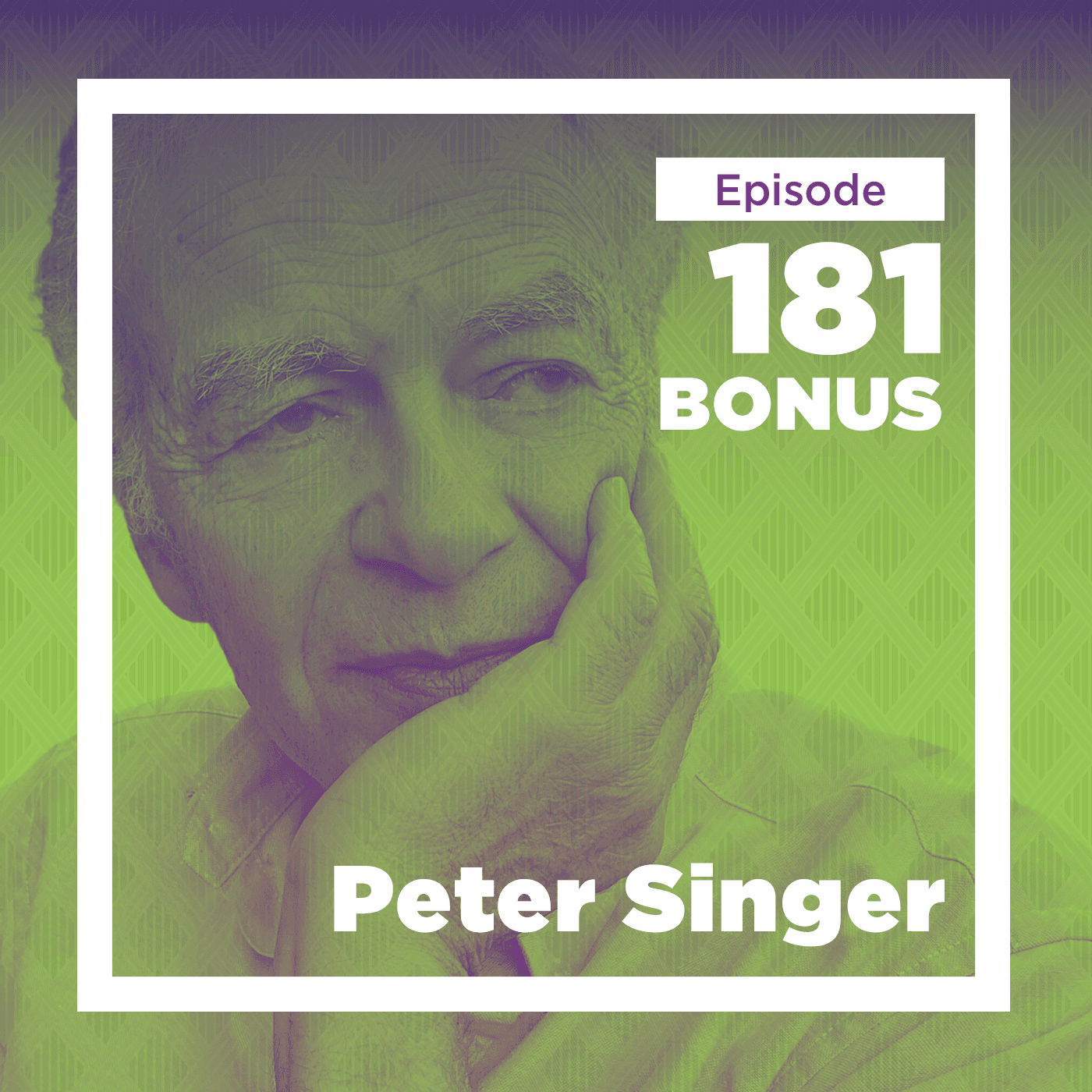
- Guest: Peter Singer, influential philosopher from Princeton University
- Episode Release Date: May 25, 2023
- Episode Focus: Exploration of Singer's philosophical views, particularly on utilitarianism, ethics regarding animals, and controversial ideas.
Key Themes Introduction to Peter Singer
- Peter Singer is renowned for his work on ethics, particularly concerning animal rights and effective altruism.
- Discussion of his newly revised edition of *Animal Liberation*, which contains significant new material.
Utilitarianism and Ethical Considerations
- Utilitarianism's Limits: Singer discusses whether utilitarianism is practical beyond marginal changes, emphasizing its effectiveness in addressing smaller ethical questions.
- Meat-Eater Problem: Singer reflects on the dilemma of animal suffering versus human prosperity, asserting that humans often prioritize their immediate needs over ethical considerations regarding animal welfare.
Ethical Comparisons
- Discussion on whether we should wish humanity had not settled in certain regions (e.g., New World), and the complexity of comparing human and non-human well-being.
- Singer argues for prioritizing the suffering of animals in factory farms over historical ethical questions, promoting action against animal suffering.
The Role of Rationality
- Singer maintains that rationality is a significant aspect of human evolution that can lead to ethical considerations, although it has its limitations.
- The dialogue touches on whether human evolution allows for a universal ethic that extends beyond personal biases towards kin and kind.
Controversies in Philosophy
- Singer advocates for open discussions on controversial topics, including the ethics surrounding abortion and secularism.
- He co-edits the *Journal of Controversial Ideas*, which aims to publish papers that address contentious subjects often avoided by mainstream journals.
- A significant number of submissions focus on transgender issues, reflecting the current cultural climate.
Effective Altruism Movement
- Singer critiques the Effective Altruism movement for its long-term focus at the expense of immediate issues like poverty and animal suffering.
- He argues the need for a balanced approach that doesn't overlook present-day suffering.
Personal Reflections and Future Directions
- Singer reflects on his career, philosophical insights, and how he plans to approach retirement from teaching.
- He emphasizes the importance of finding meaning and fulfillment in life, encouraging listeners to contribute positively to the world.
Key Takeaways
- On Utilitarianism: While practical for small changes, utilitarianism faces challenges in large-scale ethical dilemmas.
- Animal Rights: Genuine concern for animal welfare requires significant lifestyle changes, including dietary adjustments.
- Philosophical Discourse: Engaging with controversial ideas is essential for philosophical growth and understanding societal norms.
- Secularism and Population: Secularism's influence on birth rates raises questions about its long-term viability and societal impact.
- Effective Altruism: A more immediate focus on current suffering can enhance the effectiveness of altruistic efforts.
Conclusion Peter Singer's insights challenge conventional thinking around ethics, particularly regarding animals and effective altruism. His discussion encourages deeper reflection on personal values and collective responsibilities in shaping a more humane world.
---
For more detailed discussions and direct quotes, refer to the full transcript or video available through the podcast links.
Written by AI. May contain mistakes. Listen to the episode to check what was said.
Transcript
Automatic transcript. May contain errors.0:04Conversations with Tyler is produced by the Mercatus Center at George Mason University, bridging the gap between academic ideas and real world problems. Learn more at mercatis .org. For full transcript of every conversation, enhanced with helpful links, visit ConversationsWithT Tyler .com. Hello everyone and welcome back to Conversations with Tyler. Today I'm here with Peter Singer of Princeton University. Peter is one of our most important and influential intellectuals. For our purposes what is new, there is a new and very much revised edition of Peter's Classic Book Animal Liberation. It is now titled Animal Liberation Now, the Definitive Classic Renewed, and by my estimate it's about two -thirds to three -quarters new material.
0:54Peter, welcome. Thanks very much, Tyler. It's good to be with you. When large language models make it possible for us to speak with dolphins, what will be the first question you ask? Ah, what do you think of humans, maybe? And what do you think they will say? Not very... nothing very positive, that's for sure, because a lot of dolphins have been caught in nets for catching tuna and impaled to stop the meeting fish that people one in some parts of the world. I don't think they'll think too well of us. And what do you expect the dolphin to ask you? So we explain to the dolphin that you're Peter Singer, right?
1:28Right. What's the question? Why have you failed? Why have you failed to stop humans treating animals so badly? So I'll ask you the dolphin question. Why have you failed? It's harder than I thought it might be. And that begins I think with the fact that humans eat animals and it seems like we're very conservative about what we eat. Relatively few people are prepared to really think ethically and openly about what they eat. They're worried about having to change that, eat something different, maybe stand out from their friends and family by not eating meat and therefore implicitly criticizing those people when they do eat meat.
2:06I think there's a whole lot of factors that just make it hard for people to make that fundamental change about what they eat, and without that they're not really going to fundamentally change what they think about animals. I have a general question about how totalizing ethics can be, or how totalizing utilitarianism can be. So if someone says to me, as you likely would, well, if the margin we should treat animals better, much better, I would agree. But if someone asks the question, say, do we wish that human beings had never settled the New World? And there would then be many more intelligent mammals alive in the New World today.
2:39I simply think that question is intractable and that the limits of utilitarian reasoning are fairly tight around marginal changes, small events. So I'll ask you, do you wish that human beings had never settled the New World or New Zealand? No, I don't wish that. I agree that the question is intractable. I'm not sure whether it's intractable in a philosophical sense because we can't sum up the values or whether there's just so much factual information that we don't have, including how do we make comparisons between the well -being of the bison, let's say, that we're here more numerously as compared with the well -being of the humans.
3:18If you think so about the Earth's current population, which is what about 8 billion human beings, can we conclude that it's too many because it's too much pressure on animals, or is that also an intractable comparison in the same way? Yeah, I don't think you can say it's too many or it's too few unless you make assumptions about the kind of technology that we have available to live in a sustainable way on the planet and to allow non -human animals to live as well. But also in that question of course there's the issue of how do we compare the value of human lives and let's assume that they're human lives that are lived positively, that they're rich and fulfilling human lives, with the lives of non -human animals.
3:57I mean, I totally agree that they're different. And I think it's reasonable to argue that a rich and fulfilling human life contains more happiness than the life of, I don't know, a cow or a sheep. I'm not going to deny that. I don't think animals are equal in the sense that their lives contain equal value without of humans. But you still think in principle we should be trying to do these total comparisons of one state of affairs against another. Or those just big picture questions that we need to set aside. we should be content with marginal comparisons. Because you're sounding like more of a marginalist than what I was expecting.
4:31I see. Well, I'm certainly prepared to say that clearly the suffering we inflict on animals in factory farms is indefensible. We cause far more suffering than any good we do for humans, arguably actually it's a negative for humans as well. So that's what my focus is in animal liberation now. And in fact, a lot of my work has been aimed at that, it's been aimed at what we should do about people in extreme poverty. It's been aimed at things like should we have the right to say we've had enough of life and we want to die if we're terminally ill and in pain. So in a way the big picture questions that you're asking, I find them interesting theoretical questions and I can give you the answer that a utilitarian would give if you want that answer.
5:14But in practice I do think that I can't really make a lot of headway with that. How do you think about what is sometimes called the meat eater problem? So most countries, probably all countries, as they become richer, they start eating more meat. At some point they start treating the animals less well, if not factory farms. There's just more mass production of animal meat. Do we need to calculate a trade -off for those countries to become wealthier? Or do we just root for the wealth and figure we'll sort it out later? My view over the long term has generally been that countries will have to pass through this stage where they've got wealthier, they can purchase more meat, they raise animals in factory farms to do that.
5:55But then eventually they'll go on to become more humane and more civilized and they'll see that that's the wrong thing to do and they'll treat animals much better and the outcome will be better on the whole than it was before they became prosperous when there are a lot of people in extreme poverty and they also went treating animals well although they didn't have the power to raise so many of them but still because they were using them for food and because if your own survival is at stake or that of your family you need to eat more that you'll do anything to animals to do so it was not a good situation.
6:28So in other words what I'm saying is I was prepared to swallow the short term negatives for the long term outcome. I have to admit that I've become less confident about the long term outcome. I still hope that it's there but the fact that there's been relatively little progress in terms of treating animals better over the 48 years since the first version of animal liberation appeared, does make me concerned that we're not going to be going in that right direction or not for a long time. I'd say you could peer ahead in other 70 years, 80 years, and things basically didn't get better compared to now.
7:05Would you then think the meat eaters problem is a real dilemma? Moral dilemma, if it seems it's not a stage, people will just keep on eating meat through factory farms, more or less forever. And I would think yes, there's a real question as to whether it would have been better if people had not had the prosperity and the ability to rise animals in that way. You once wrote a book entitled Darwinian Left. Do you think you're becoming more or less Darwinian over time? My Darwinian intuition is people won't ever get much better because they evolved to eat animals, not to have factory farms, but to kill them in painful ways and simply not worry about it.
7:39What's your current view on how Darwinian you are? I'm still 100 % Darwinian. I don't think there's an alternative explanation of how we exist and of the biological elements of our nature. But I also think it's compatible with being a Darwinian to say we are a being who's evolved the capacity to reason, and reason can lead us to conclusions which can influence our behavior. I don't see that as being anti -D Darwinian or non -D Darwinian. I just see it as a realistic appreciation of the fact that we have evolved as rational beings and that leads us to certain conclusions we wouldn't have reached otherwise.
8:15But one might start seeing in Darwinian fashion that the evolution of rationality is just far more selective than what we might wish for, right? So these people who are very reasonable and then in other contexts they'll do terrible things. They could be a prison guard, it could be animals, you've written plenty about many many other examples. Is there really this general faculty of reason that overrides those evolved intuitions? I think there certainly can be and I think there is for some people some of the time. The question would be, is everybody capable of that or even if not everybody, are we capable of getting a dominant group who do follow reason in general, universal directions who use it to develop a more universal ethic that applies to a wider group of beings than their own kin and family and those that they're in cooperative relationships with?
9:05I think there's evidence that that is possible, and we don't yet know, to what extent that can spread and start to dominate humans in future generations. I wonder sometimes how much we can have an ethics that truly separates morality from partiality. So here's a question I gave to Sandbankman Fried. I said, as a utilitarian, let's say a super -being offered you a gamble, where we would, in essence, double the population on Earth, create a dual Earth somewhere equally happy with 51%, and 49%, we wipe out the Earth we have now. That would represent an increase in expected value, and furthermore, I .S.
9:42Sam, would you keep on playing this game double or nothing? Now, Sam being Sam, he just said yes, and indeed in his own life, he did continue playing the game double or nothing. And he ended up with nothing, oh, worse than nothing. But doesn't a thought example like that mean we can't really be utilitarians in the big picture of things We need to be more loyal to the earth we have and not consider gambling it away for these extra earths I think it says more about gambling than it does about being a utilitarian I agree it's a paradox and you could say it's a paradox particularly for maximizing utilitarians who normally will talk about Maximizing expected utility and this seems to be a case where you don't want to maximize expected utility Although, of course, there are arguments that would say, well, your expected utility is actually low, given that you can't infinitely long keep doubling utility, I assume.
10:33But you know, you had our hypothesis where you have a twin earth, right? And if you could just create a twin earth, I guess you could. But for the real world, we can't keep doubling utility. And so we shouldn't do double or nothing. I'm not claiming to solve this paradox, by the way. I think it is an interesting and somewhat baffling problem with maximizing expected to utility. But does the question show not only that it's some unusual paradox in a corner of the moral universe, but that in all our choices, that assessments of utility are within some framework that is pre -assuming a certain amount of partiality, and that there's no escape from that partiality, no fully objective outside viewpoint?
11:11I don't understand why you're seeing this paradox as relating to partiality. I mean, it's just as true if we're completely impartial about universal good, right? I don't understand why you think that it shows that we inevitably are going to be partial. Well, take the Bernard Williams question, which I think you've written about. Let's say that aliens are coming to the earth and they may do away with us and we may have reason to believe they could be happier here on earth than what we can do with earth. I don't think I know any utilitarians who would sign up to fight with the aliens, no matter what their moral theory would be.
11:43Okay, you've just met one. I've just met one. So you would sign up to fight with the aliens. If the hypothesis is like that, that the aliens are wiser than we are, they know how to make the world a better place for everyone. They're giving full weight to human interests, but they say even though we're giving full weight to human interests, not discounting your interest because you're not a member of our species as you do with animals, but unfortunately it just works out that to produce a better world, you have to go. I'll say, okay, if your calculations are right, if that's all right, I'm on your side.
12:14And you're making them a little nice, you're calling them wise, they may or may not be wise, they're just happier than we are. They have less stress, less depression, so if they could rule over the earth, they would do a better go of it than we would. So I would still side with the humans. I would not. I mean, what you've shown now is that their interest happened to coincide with the universal good. That's the way to produce more happiness full stop, not just more happiness for them. And if that's the case, I'm on their side. How do we know there is a universal good? You're selling out your fellow humans based on this belief in a universal good, which is quite abstract, right?
12:48The other smart humans you know mostly don't agree with you, I think, I hope. But you're using the kind of language that Bernard Williams used when he says, you know, who's side you on? Right? You said you're selling out your fellow humans as if I owe loyalty to members of my species above loyalty to good in general. That is to maximizing happiness and well -being for all of those affected by it. And I don't claim to have any particular loyalty for my species rather than the general good. But if there's not this common metric between us and the aliens, what you just measure, you hook people up to a scale, you measure, they have more of it than we do, let them come in.
13:26If that doesn't exist, what is the common good or universal good in this setting? I don't know if that doesn't exist, but you said they're happier than we are, which suggests that there's a common metric of happiness. And that was the basis on which I answered your question. If there's no common metric, I don't really have an answer. I would try to use the metric of overall happiness. And I'm not sure why I wouldn't be able to use that. But if we assume that I couldn't, then I would just not know what to do. So you wouldn't fight for our side even then. You'd throw up your hands or just not be able to do it.
13:56This is not about a football team, right? You can give your loyalty to a football team and support them even though you don't really think that they're somehow more morally worthy of winning than their opponents. But this is not a game like this, there's everything at stake. To what extent for you is utilitarianism, not only a good theory of outcomes, but also a theory of obligation? I'm sure you know the Donald Reagan literature, there's, oh, you prefer the outcome with more utility. Yeah. But what should I do? Can still be a complex question? Well, it can be a complex question in the sense that it may be that we don't want If we can be confident in our calculations that we are doing the right thing, then I think the obligations that we have are to maximize utility.
14:42But it's been argued that we're more likely to make mistakes if we do that and rather that our obligations should be to conform to certain principles or rules. And I think that depends on how confident you are in your ability. I certainly think we should follow rules of thumb sometimes when we can't be sure of what's the right outcome and we should do what generally is accepted. and you go back to San Bankman Freed, obviously, I think that was his mistake. He was too confident that he could get things right and fix things and didn't follow basic rules. Or at least it's alleged that he didn't follow basic rules.
15:13Like, don't steal your clients' money. But isn't there a dilemma above and beyond the epistemic dilemma? So say, you, Peter Singer, you're programming a driverless car and you're in charge. Ideally, you would like to program the car to be a utilitarian and benhamite car. that if it has to swerve, it would sooner kill, you know, one older person than two younger people and so on. But let's say you also knew that if you programmed the driverless car to be bent on my, basically the law would shut it down, public opinion would rebel, you'd get in trouble, the automaker would get in trouble, how then would you program the car?
15:45Yeah, I would program it to produce the best consequences that would not be prohibited by the government or the manufacturer. So I'm all in favor of making compromises if you have to to produce the most good that you possibly can in the circumstances in which you are. But doesn't that then mean individuals should hold on to some moral theory that may be quite far from utilitarianism? Well, as such as a compromise, you need to be very intuition driven, non -utilitarian, just to get people to trust you, to work with you, to not so utilitarian at all. You may be, that will depend on your own nature as to whether you think you're going to be led astray if you're not intuition driven, or you may think that you can be aware of, you know, self -aware about the risks that you're going to go wrong, and you're not exactly intuition driven, but you're driven by the thought that I could be mistaken here, and it's probably, you know, going to have more value if I don't just directly think about how to produce the most utility.
16:46Let me continue with the number of the easy questions. If you take current AIs, large language models, you would agree they're not sentient, they're not beings. Right. I would agree with that. So they don't count, I agree with that too. So there's something about sentience that is essential for a being to count. But we actually know very little about consciousness. You can read philosophy of mind. You can look at neuroscience. science, it seems to me one of the most mysterious and baffling areas in all of human knowledge. We have introspection, I'm not sure how much to trust introspection. So does it worry you to be erecting a moral theory based on sentience, some notion of utility happiness, when all of our scientific inroads toward that concept seemed to be at least for the moment very, very badly flawed?
17:33So they're incomplete. Certainly. Are they flawed in the sense that would lead us astray in terms of making those decisions based on sentience? I'm not convinced of that. But say you're trying to compare human animal welfare to non -human animal welfare. We have a sense many of these other animals were sentient, that's pretty much certain, they feel pain, but we don't know how to compare them to us. We don't really know even where in science to look for such a unit of comparison. How do we know they don't just overwhelm our well -being? Derek Parfitt -like conclusions, doesn't want to just become a radical agnostic.
18:09If all of our judgments rely on this utility thing, which to me is somewhat mysterious. So I don't think you have to be completely agnostic about all these issues. I think there are some cases, and again, I would instance factory farming, where we can be very confident that what we're doing is causing more pain and suffering than it's doing good to us. But that's not to say that there aren't a lot of other questions, including that question you asked about, is it good that humans colonize North America? Where it's harder to make those decisions because they are involving comparisons. And some of these decisions are quite practical too, for example, even within the animal movement, if you say, well, should we focus on trying to get people not to eat chicken because chickens are so intensively farmed and there's so many of them, it takes less of a chicken to make a meal than it does of a cow.
18:57So should we do that? Or then we're trying to compare the suffering of more chickens with fewer cows or fewer pigs. I agree those questions still ones that we can't really get a grip on, but that doesn't mean that there's nothing we can do that is based on sentience, happiness, suffering and so on. If there are many intelligent and sentient space aliens, would that make the extinction of the human race less of a tragedy? If the idea is that then these intelligent and sentient aliens might populate our planet or take Yeah, they're just out there. They're just out there. So speed of light is too fast.
19:34We'll never catch them. Vice versa. So then the extinction of our species is still just the same loss, right? It's a loss of a certain amount of happiness and the fact that it's less of a proportion of happiness or well -being or sentience in the universe doesn't mean that it isn't the same loss. So it's linear and separable? Yes. So the notion of a universe empty of sentient and intelligent life, there's nothing special about the zero point. No, I mean, as you say, assuming that the existence of some sendient life isn't going to regenerate and repopulate the universe, that's a reason why extinction is worse than the loss of most of us species, but otherwise, no.
20:14What is the margin at which you wish to police nature? So I've argued, for instance, we should not subsidize carnivores per se. There may be some other reason to do so, but the idea, oh, we're going to introduce wolves back into this national park, should not be an especially desirable prospect. What's your view on that and where should we stop? Yes, that was an interesting pioneering article that you wrote, I think, Policing Nature, and I tend to agree with it. So I think it's reasonable to raise a question about why we should reintroduce predators. And as you said, there may be effects on other animals and plants in the area we're reintroducing them.
20:49But to do so just for its own sake, just because they were once here and were once part of the ecology is not to my view a sufficient reason for introducing them if we know that is going to increase the suffering of some prey animals. But how much should we spend trying to thwart predators? I think that's difficult because again you would have to take into account the consequences on not having predators and what are you going to do with the prey population? Are they going to overpopulate and maybe staff or destroy the environment for other sentient beings. So it's hard to say how much we should spend trying to thwart them.
21:25I think there are questions about reducing the suffering of wild animals that are easier than that, and that that's a question that may be at some stage you will grapple with when we've reduced the amount of suffering we inflict on animals generally. But it's not knowing near the top of the list for how to reduce animal suffering. What do you think of the fairly common fear that if we mix the morality of human beings and the morality of nature? That the morality of nature will win out. Nature is so large and numerous and populace and fierce, human beings are relatively small in number and fragile, and if the prevailing ethic becomes the ethic of nature, that the blending is itself dangerous, that human beings end up thinking, well, predation is just fine, it's the way of nature.
22:07Therefore they do terrible things to each other. Is that what you meant by the morality of nature? I wasn't sure what the phrase meant. Do you mean the morality that we imply that we attribute to nature? Red in tooth and claw. If we think that's a matter that is our business, do we not end up with that morality, trumping ours, we become subordinate to that morality? And a lot of very nasty people in history have actually cited nature. Well nature works this way. I'm just doing that. It's a part of nature. It's more or less okay. How do we avoid those series of moves? Right, it's a bad argument and we try and explain why it's a bad argument that we don't want to follow nature.
22:46That the fact that nature does something is not something that we ought to imitate, but maybe in fact we ought to combat. And of course we do combat nature in many ways. Maybe war between humans is part of nature, but nevertheless we regret when wars break out, we try to have institutions to prevent wars breaking out. I think a lot of the activities combating nature's way of doing things rather than regarding it as a model to follow. But if humans are a part of nature flat out and if our optimal policing of nature leaves 99 .9999 % of all predation in place, we just can't stop most of it. Is it then so irrational to conclude?
23:27Well, this predation must be okay. It's the natural state of the world, our optimal best outcome leaves 99 .999999 % of it in place. How do we avoid that mindset? I think we're going to avoid that mindset because if we don't have any option about leaving it in place, we just regret it. I do regret the way nature works. I mean, I think it's a very powerful argument against the idea that this world was created by an omnipotent, omniscient, and omnipotent creator. That just seems to be impossible because of the way nature works, but you know that's the world we live in. Given low fertility rates in virtually every wealthy nation, is there something self -defeating about secularism as a philosophy?
24:09Is secularism responsible for the low fertility rates? I mean I think Roman Catholic couples in some of these countries have birth rates that are as low as secular people. Well as these countries have all secularized, right? Israel is somewhat an exception. there above replacement. I don't know of any other wealthy countries. It's not only secularism, but it's secularism plus birth control, plus a number of other features of modernity. Does that mean this whole enterprise is just self -defeating? I hope that it's not self -defeating, and I hope that birth rates will drop in less secular countries as well, or that those countries will become more secular.
24:46I think that project of secularism is is San and right, and I certainly hope that we won't see a world in which secular people are future children and religious people have more children and therefore secularism disappears. I accept that there's a possibility that that could happen. I think that would be a very bad outcome. But why be so loyal to a project that is so poor at producing utility? Babies being utility, right? Happiness, well being something. Well, I think one reason for supporting secularism is that it seems to me to be true. I mean, I don't think that there is a divine being. So I can't simply say, let's adopt the idea of a divine being and fool ourselves that there is one.
25:27I would rather say, given that there isn't, let's find ways of having enough children to produce good long term outcomes. But you do have this piece. I think it's titled, Secrecy and Consequentialism, where you say a true consequentialist should be willing to entertain or even advocate ideas, just because they will help the world. So why not move away from secularism? Become a kind of religious drowsy and the Amish have more kids. We all need to have more kids and that would be one of the false ideas that you would at least publicly embrace. Yes, the article secrecy and consequentialism, and I should acknowledge my co -author, Katerjina Delazariratic, is more about acting in certain ways that you keep secret, like when it might be right to lie, but bad if your lie became known publicly, then it's about fostering general ideas like becoming religious.
Read the full transcript
26:19And I would think that there would be sufficient negative consequences to that particular idea that we wouldn't want to do it anyway. Should abortion be legal or illegal, say, in Western countries? I think abortion should be legal. From utilitarian point of view, which I would not myself apply to abortion, but why isn't it just better to have the babies, the benefit to the baby, the baby to be, seems to outweigh the costs to the family? For a start, not all abortions reduce the number of children who will be born. Often abortions terminate a pregnancy that is poorly timed, but the couple have a plan to have ex -children and they will have ex -children.
26:57But you're really on average, the number of babies will go down, right? If abortion is easy. Possibly it will on average, but those babies would be born to mothers who did not want to have them at that particular time. Maybe their circumstances were ones that would have made it difficult for them to bring up the child well. And so the child might be a less happy child and the mother or the parents might also be much more stressed because they had to rear a child at a time that wasn't suitable for them. So the fact that yes, there'll be an extra being in the world and we can hope that being is going to have a positive life still doesn't mean that abortion actually is maximizing utility.
27:35But that's a lot of stress on the family to outweigh the value from a whole new life and then that baby will become an adult in turn, have other children. If the optimal discount rate is lower, zero, it's really a lot of future gain you're foregoing, right? So, but I mean you're assuming that having more children in the world today is a net positive, which may be the case, but there are also negatives to it in terms of that child and then adult will continue to use products that consume energy and produce more greenhouse gases and deprive wildlife of habitat. So there's a whole lot more involved than just simply saying having another child is a plus.
28:15Sure, but you don't say, well, once population falls enough due to low total fertility rates. Well, then the time will come to ban abortion. I've never met a person who made that calculation. They're either, you know, four or against abortion being legal. They don't say, oh, at current population levels, but in 80 years, get back to me. I'll change my mind, which suggests to me it's just not a utilitarian calculation. I do think it would make a difference if the world were underpopulated. There's one question is whether you would make it illegal. Another question is whether you would discourage or think that individual women who had abortions were doing something wrong, I think they are relevant factors.
28:50But what you want, if population falls and you want to have more people, then I think there would be better ways of doing that than prohibiting abortion. You would give baby bonuses as... Oh, but two boats, right? You don't have to do one or the other. Well, but you're probably going to get enough of a population increase by doing the ones that involve more conception rather than more pregnancy termination. Now, you're one of three co -editors of the Journal of Controversial Ideas, which I believe started in 2021, is that correct? I think we produced our first issue then, yes. What have you learned doing that?
29:24So I've learned that there is a need for our journal, actually. I guess I suppose I thought that when we began, but I wasn't really sure. But one of the interesting things is that we have published a number of interesting papers, not necessarily saying I agree with them, but papers that have worthwhile ideas that should be out there, which would not have got published otherwise, which were being rejected. And that happened in the most recent issue, which we just published at the end of April, this year, with an article called Merit in Science, which actually had 29 co -authors, I think two of them were Nobel laureates, and was objecting to the fact that, as the author's claimed, positions, research jobs, and also research grants were not simply going to those with the best qualifications or the greatest merit in scientific terms, but we're going also on the criteria of maximizing diversity and inclusion.
30:15And the authors of that paper, I say, distinguished group of scientists, submitted it to the proceedings of the National Academy of Sciences and was told that they wouldn't publish it because it might be harmful to some people. And I think they shoved it around to another couple of journals before somebody suggested they send it to us. And, you know, it was published in the journal Controversial Ideas. It was written about in the Wall Street Journal and the New York Times. We've had 100 ,000 views in the month since we published that issue, which for a peer -reviewed academic journal is pretty unusual.
30:46And it's open access, right? It is free open access. That's right. We are supported by donors. Anybody who would like to donate to us, please do so. But, yeah, we're managing. If you look only at submissions and not acceptances, what's the most common topic you see crossing the desk of the journal? At the moment, I would say it's transgender issues. Because there's so few outlets where you can say your mind or... There's a lot of hostility about it, so there's two things about it, Journal One, as I say, that we are prepared to publish controversial ideas that other places are not prepared to publish.
31:17The other is we're prepared to publish under a pseudonym, if the authors don't wish to be identified with the article. And so roughly, I'd say about a third of the articles in each issue, authors prefer to publish under a pseudonym. And in the area of transgender studies, that's because many academics have been severely abused and harassed and their lives made quite difficult if they have published things that were seen as transphobic, although I think that term is used far too broadly. We could simply say they were not accepting the idea that a person's identification as a gender is necessarily the last word as to what their gender is.
31:58Do you worry that with AI everyone will just be identified? Oh, who's writing style is this and it will tell you? That's a possibility actually. I must admit that's when I hadn't thought of. It could be a worry. I don't know whether maybe we'll get an AI that will be able to mix people's writing style so that they're harder to identify. Do you ever reject good or potentially good pieces just because they're not controversial enough? Yes. And we say that in our call for papers that articles must be controversial in some sense, and we tell our reviewers that, and occasionally they write back and say, yeah, this is a reasonable article, but I don't see why it couldn't get published in any other journal, so we don't publish it then.
32:38Organizational, institutionally, put aside philosophy, but what do you think of the current effective altruist movement? So I think it's making progress. I think it's a good forum for ideas, and I think it's had significant influence. So, on the whole, I view it positively, which is not to say that I view every aspect of it positively. Let's say you were called in to give advice and probably you have been. What do you tell them they should do different? I've had concerns about the extent to which effective altruism has moved in a direction of a very long term thinking about the future. So thinking not just about the present or even the next century or two but thinking about the next million years or Will McCaskill I think is talked about the next billion years?
33:24I understand why he's doing that. He's talking about the possible loss that could exist if we become extinct And if in fact there is no other Intelligent life in this corner of the universe. So we're not replaced by others So yeah, I can understand why he wants to emphasize the importance of preventing extinction But I think there's there are a number of concerns one is uncertainty about whether we can actually make a positive difference in this direction and Also whether if you encourage people to ignore present suffering you're actually going to have a long -term drawback in that people may become more callous and that may actually contribute to making the world a worse place so my advice is not to forget about the present and to continue to have really major focus on things like reducing extreme poverty, reducing animal suffering, protecting the environment from climate change right now.
34:18I'd like to see effective altruism with more of a focus, not an exclusive focus, but more of a focus on those issues. Is there too much emphasis on existential risk from AGI in your opinion? I'm not an expert on that risk, but yes, I think there is too much of an emphasis. And I think perhaps that has something to do with a lot of the people in E .A. people people who like these kinds of problems, how are you going to align super intelligent AGI with human values? That's a really interesting problem, and in some ways it's a more interesting problem than how are you going to reduce the suffering of animals in factory farms or even how are you going to help people in extreme poverty.
34:56I think that's perhaps why there's been more of a tendency to talk about that and focus on it than is really justified. Not everyone knows you've written a book on Hegel. What if you learned from Hegel? who was not a utilitarian, right? Not in the assembly. Definitely not a utilitarian. And let me just say firstly, that book was written a long time ago, I think in the early 1980s. Secondly, it's a very slim book. It's a hundred page book for what was then called Past Master's series by Oxford University Press. But it's a good book. Let me just make a point of adding that. Thank you. I'm glad you think it's a good book.
35:28I think what I learned from Hagel was that the nature of society at a time, including its economic interests does influence people's ideas. And of course, you know, that's an idea that a lot of people will associate with Marx, but Marx really, I think, took that from Hegel. So I'm going to say that that's an insight that I learned from Hegel rather than from Marx. If you today were to write a book about some other philosopher, you know, you're granted the free time to do it miraculously. Who would that philosopher be? Well, I did, again, with Catergene de la Zaria, I wrote a book about Siddwick.
36:00And Marx too, yeah. Yeah, I have written a very short book about Marx as well, yes. But yeah, I'm interested in the English utilitarians, but I'm interested in the roots of utilitarianism as it goes back further. So I'm not sure. David Yumes, certainly a favourite philosopher and in some sense an early utilitarian, I suppose if I had free time to write, Hume would certainly be a candidate. Where did Parfid go wrong? So the final two volume set, to me it seems like a mess. Intellectually, what happened there? It's a three volume set now. Three, okay, yes, yes. You think the whole three volume set is a mess, or you think the third volume is a mess?
36:37It's often interesting. The whole thing to me seems a mess. The project is too hard. He's not thinking marginally enough and to make all of consequentialism and maybe Kantianism compatible. I just don't think it can be done. I like the fact that you think the project is too hard and you started off by asking me about whether it was a good thing that humans settled off America. Okay. So I think I see the project as making a case for the idea that there are objective values that things matter objectively. And I think it makes a significant contribution to that project. So I don't think of it as a failure.
37:14There are some parts of it that may be a failure. It may be the attempt to reconcile the three theories, a form of consequentialism, a form of kantianism and a form of contractualism. Maybe that's a failure. Certainly the proponents of those other theories, or non -consequentious theories, don't really prove it. And in fact, I don't like the form of consequentialism that he ends up with as part of the triple theory. And I talked to him about that, and the third volume, to some extent, grapples with that. And in the volume, I edited this collection of papers called Does Anything Really Matter, which originally Palford was going to reply to in the volume, but then his reply characteristically for Palford grew so long that it had to be a third volume, and that's really why there's a third volume.
37:58So yeah, so I think that there are problems with what he says about consequentialism and he doesn't really address act consequentialism. It's ruled consequentialism that he's reconciling with the others. And so I don't think he succeeds in producing reconciliation between the major ethical theories. I think that part of it is a failure. Why did he fail? I would say he became so committed to the idea that he had to show that morality is objective that otherwise nihilism is true, nothing matters, and his whole life would be a waste, that that influenced his acceptance of arguments that otherwise he would not have accepted.
38:36Who's an underrated philosopher that we should be reading more, talking about more, thinking about more? I used to say that Sidwick is an underrated philosopher because he's the best of the utilitarians of the 19th century utilitarians and he certainly was neglected and that's why The Catagena and I wrote the point of view of the universe to try to show that he is a great philosopher and that ethics is still relevant, but other people like Pafat have also prized him. So I'm not sure to what extent he's still neglected. Say someone active today, whose work you admire, maybe not even in your areas.
39:11So okay, as a younger philosopher, and I must admit he was one of my students, I greatly admire Richard Chappell. He's somebody who has a fairly popular sub -stake blog now and has a little book on Pafat, but in fact, we're talking about, does a lot of interesting work. I'm a big fan of your book, Pushing Time Away, my grandfather and the tragedy of Jewish Vienna. A few questions in that direction. Should we respect the wishes of the dead? Yeah, that's a good question. And I had that feeling in writing this book, because so for those who don't know this book is about my maternal grandfather, who was a victim of the Holocaust.
39:47I was born after the Second World War, so of course, I never knew him. He left a lot of papers, a lot of writings, and I wanted to read them. And in a sense, I suppose I thought in reading them, and then subsequently, when I decided to write about him, that I was bringing him back and undoing the terrible crime that the Nazis committed against him and so many others. But did I really think that I had an obligation to do that because of he might have wished it? I toyed with that idea, but I never fully convinced myself of it. But never fully rejected it, either, right? Yes, perhaps that's true.
40:22You know, I've held different forms of utilitarianism throughout my career. And for quite a long time, I was a preference utilitarian. And a preference utilitarian thinks that what you, the good you should maximize, is the satisfaction of preferences. And there's a question then about whether the preferences of the dead can't. And my supervisor at Oxford, R .M. here, thought that they did. So he thought, in fact, that if there was some ancient Roman, you stumbled across his tombstone and he engraved on it, I want an oil lamp to be burning on my gravestone forever. That gave you a reason, not necessarily an overriding reason, to put an oil lamp on his gravestone and to watch that it kept burning.
41:03I wasn't totally convinced of that, I must admit. If population shrinks in the past, accumulates, we're going to be in big trouble, right? Yes, that's right, because we'll all have to be looking after the preferences of all of those in the past. But anyway, I'm now a hedonistic utilitarian, so on that view, no, the only reason to pay attention to the wishes of the dead is that the living will have more confidence that their wishes will be respected. Referring especially to early 20th century Vienna, during times of great cultural achievement, our most thinkers utilitarians, and I would say no, but I want to hear your view.
41:37I have lived, actually, thought about Vienna's heyday. No, certainly they were not utilitarians. But then utilitarianism is a relatively new theory and I say in terms of spreading to non -English speaking cultures that's happened much later too. So it's not surprising that people were not utilitarians in late 19th century, early 20th century Vienna. But they knew enough, they knew Bentham and Hume and they knew consequentialism in some form, they could have been. It wasn't some mysterious idea they'd never heard of. Isn't this like the driverless car problem, where you actually want a society of non -utilitarians?
42:16I don't know. Do you? I mean, again, you know, yes, there was some wonderful works of culture and art produced, but the working class had a very rough life, and maybe they would have had a better life if there had been more utilitarian thinking. If I try to think today, which government in the world is most utilitarian, not globally, not for animals, but just for its own citizens. I would tend to think that Singapore. Does that make sense to you? It's quite possible. I think the Australian government is actually reasonably utilitarian and I'm more familiar with them than I am with the governments of Singapore, but Singapore is a strong candidate.
42:52If I think of Singapore, it's a big success. People are quite well off. They have more freedom than a lot of outsiders like to admit, but it seems not that happy to me relative to per capita income. Australia relative to income seems really quite happy to me. Are those consistent with your impressions? Maybe there's things that utilitarianism has no control over, like better climate. It's not sort of hot and sticky and humid like it is in Singapore all the time. Australia has great beaches. The natural assets will play a role in how happy the population is. On your book about your grandfather, your ancestors, at the very last page of the book, you say that justice was done to the Nazi leaders.
43:30And I fully agree. But for a pure utilitarian, what does that mean? I think we want to punish people who do great evil as a way of indicating that it's got an expressivist function, that this was a terrible thing that they did. And so this is a kind of ultimate condemnation that people should learn from, be educated from. And also a deterrent function if other people think that they're gonna get away with that. But in terms of just downright justice, flat out right and wrong, I consider myself a two thirds utilitarian, but not completely. You're more than two thirds. Can I pull you down to two thirds and bring injustice for these extreme cases where you can just point and say that was wrong?
44:09I think we all have that intuition. It's not that I don't have any retributive intuitions. I don't want retribution. I just want to be able to say it's wrong without having to count up the utils. Sorry to say that what they did is wrong. Right. and that they should be punished for it. Sure. But it's not that I want retribution per se. As you noted, there are other reasons to punish them. Yes. So I'm happy to say that what they did was wrong and they should be punished for it. At a level that is compatible with utilitarianism, but also compatible with a lot of other views. Is that enough for you?
44:39But is there some non -utilitarian reason that you're willing to call your own and let in the door? And if so, how do you stop that reason from growing? Yeah. So at a theoretical philosophical level, I'm going to say no. It's all explicable in terms of the utility. But, you know, as I say, that doesn't mean that I don't have non -utilitarian intuitions about it. What do you think of Freud as a philosopher? So I don't think Freud was a great philosopher. I think that if he were a great philosopher, he would have been more open to different ideas. And clearly he was highly authoritarian in his thinking.
45:11He had a set of ideas and wasn't really prepared to broke up position to them. And that's why my grandfather broke with him, along with Alfred Adler when the split between Freud and Adler occurred. My grandfather, this is what my mother and aunt told me, my grandfather acknowledged that Freud was in some sense the great aginious, but just really didn't like the way he behaved and how authoritarian he was and therefore sided with Adler. And I think if Freud had been more open to ideas, he wouldn't have treated descent, whether Adlerians or other forms of descent in the way he did. Why does so much of professional philosophy today seem so boring?
45:52It's my subjective opinion, but I meet many philosophers who, to me, don't seem philosophical at all, not at all the case with you or the other guests we've had on this show. But what has gone wrong? Or do you challenge my premise? No, I don't. Really challenge your premise. I do think there's a lot of good work being done in philosophy. Sure. But I think there's obviously immense competition for jobs and particularly for tenured jobs and you're going to be reviewed, your case for appointment or for tenure is going to be reviewed by your peers, other philosophers and they are going to look for work that is the kind of work that gets published in a highly rated journals which is going to tend to be worked that reviews, criticises, builds on, work that is already going on in those journals.
46:37So I think it's difficult for young people to break away and say, here's a different area that I want to work in, or here's something that is broader, less narrow that I want to work in. And so we tend to get articles which say, well, here's a theory that some philosopher holds. I've got an objection to one part of this theory and maybe I've got an alternative to that. And so, in a sense, instead of aiming for the really the lifeblood of the subject, it's aiming for the capillaries of the subject in a way. It's the smaller things that you can get right and you can get articles published in good journals.
47:14How would you reform that? I think you would really have to change the system of making appointments and tenuring people, you would. But what would you replace the status quo with? The dean does it all, the students vote, there's no tenure whatsoever or a lot of options. Do you have it? Yeah, there are a lot of options. I'm reluctant to get rid of tenure. It has been a protection for people to have different and controversial. But it's not so much anymore, right? Given that you started this journal, which I'm glad you did. But surely you must think tenure is not enough now. Yes, it's not enough, but I worry that people with controversial ideas would simply get fired by deans when people on Twitter start criticizing them.
47:53I've really been disappointed in some of these recent controversies where people have been criticized for saying things, the extent to which university administrations have not stood up to this Twitter storm and have instead suspended, or in some cases, people who were not on tenure dismissed or not reappointed people for controversial ideas. And I think tenure has provided protection for some people, so that's why I'm still reluctant to get rid of tenure. But I'm not sure, maybe giving students more of a role in appointments would be a reasonable factor because they would be interested in things that the professional philosophers might not see as part of philosophy, but they would.
48:33For how many years have you taught at Princeton now? 23, 24. How have your students changed over that time? What do you notice? It's actually got harder to get them to do the reading, I think. When I first came to Princeton, I was very pleasantly surprised by you could set students reading and you would find that when you talked to them about it, they nearly all had read it. I think they're reading less now, that's disappointing. So that's one difference. Otherwise, I still find, always found that there's a reasonable level of idealism. I think that fluctuates. But I find American students, again, this is particularly a Princeton experience.
49:09There are some of them who are just wanting to get through the course and get decent grade and get on with the degree. But there are quite a few who come to philosophy courses, and particularly ethics courses like mine, really wanting to think about what they're going to do with their lives, what are their ultimate values, how are they going to live. And I find that refreshing. And I don't think that's changed dramatically in any direction either up or down over the 24 years I've been at Princeton. Last three questions. First is a mental state utilitarian, surely you're concerned with happiness.
49:43What advice might you give us today to enjoy our own lives better? Oh, I am very concerned with happiness and the advice I would give is to think about making your life fulfilling and meaningful, not to think that it's just about earning more money, buying more consumer goods, having a richer lifestyle, but contributing to making the world a better place. So this is obviously the goal of effective altruism, but there's a lot of psychology research showing that people who are generous and are thinking of values and in their lives are and how many with values do actually find their lives more rewarding and more satisfying.
50:19In the spirit of your new book, animal liberation now, what are three things we can do to help other sentient beings? Well, firstly we can stop eating non -human animals and particularly I would say stop eating animal products from factory farms. That seems really important. Secondly, we can support the organizations that are trying to combat factory farming. And if you wanna find the best ones, you can go to animal charity evaluators, which is like an effective altruism site for animal charities. And thirdly, you can get political about this. You can tell your political representatives at all levels of government that animals matter and that you're going to be more likely to vote for people who have strong policies on animal welfare.
51:04Final question. After your book tour is over, what will you do next? Oh, I'm going to relax a little bit from what I've been doing. I'm going to be teaching my final semester at Princeton because I'm retiring from Princeton at the end of the fall semester and I'll want to put some time into doing that and then I'm going to stop and think are there still other things that I'm really keen to write and do? I'm sure I'm going to be speaking, doing short form writing about the issues that are important to me. Do I still have a major book in me at this stage? I must admit I'm not sure what that would be but you know I've been working hard on animal liberation now and more recently been trying to promote it and publicize it.
51:44So I think I need to take a break and take stock and think. Peter Singer, thank you very much. Thank you, Tyler. It's been terrific talking to you again. Thanks for listening to Conversations with Tyler. You can subscribe to the show on Apple Podcasts, Spotify, or your favorite podcast app. If you like this podcast, please consider giving us a rating and leaving a review. This helps other listeners find the show. On Twitter, I'm Attyler Cowan and the show is At Cowan Convos. Until next time, please keep listening and learning.
From the publisher
Peter Singer is one of the world’s most influential living philosophers, whose ideas have motivated millions of people to change how they eat, how they give, and how they interact with each other and the natural world.
Peter joined Tyler to discuss whether utilitarianism is only tractable at the margin, how Peter thinks about the meat-eater problem, why he might side with aliens over humans, at what margins he would police nature, the utilitarian approach to secularism and abortion, what he’s learned producing the Journal of Controversial Ideas, what he’d change about the current Effective Altruism movement, where Derek Parfit went wrong, to what extent we should respect the wishes of the dead, why professional philosophy is so boring, his advice on how to enjoy our lives, what he’ll be doing after retiring from teaching, and more.
Read a full transcript enhanced with helpful links, or watch the full video.
Recorded May 25th, 2023
Other ways to connect
- Follow us on Twitter and Instagram
- Follow Tyler on Twitter
- Follow Peter on Twitter
- Email us: cowenconvos@mercatus.gmu.edu
- Learn more about Conversations with Tyler and other Mercatus Center podcasts here.
Photo credit: Katarzyna de Lazari-Radek