
In short
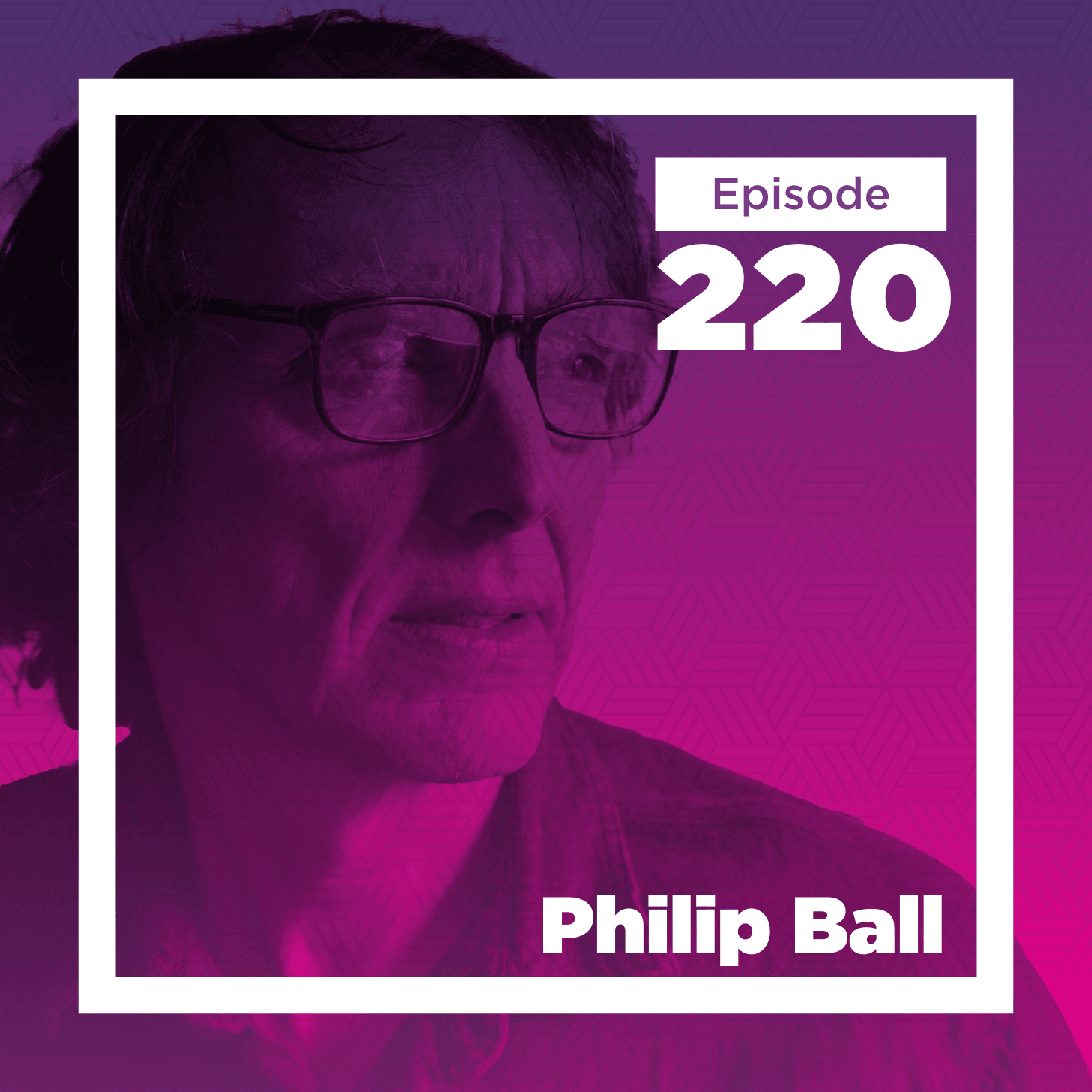
Podcast Notes: Conversations with Tyler - Philip Ball on the Interplay of Science, Society, and the Quest for Understanding
Episode Overview
- Title: Philip Ball on the Interplay of Science, Society, and the Quest for Understanding
- Host: Tyler Cowen
- Guest: Philip Ball, an award-winning science writer and author of over 30 books.
- Recorded: May 22, 2024
- Listen to the episode: [Full Video](https://youtu.be/x1K4LnJs9To)
- Transcript: [Full Transcript](https://conversationswithtyler.com/episodes/philip-ball/)
Key Themes and Discussions
- Historical Context of Science and Power
- Scientists vs. Power: Philip Ball reflects on the historical failures of scientists to stand against oppressive regimes, highlighting the Nazi era as a case where many scientists did not effectively oppose the regime.
- Modern Recognition: There is a growing recognition among scientists today of their need to mobilize against threats, particularly in relation to climate change.
- Current Pressures in Academia
- Pressure to Publish: Ball discusses the unrealistic pressures on scientists, particularly young researchers, to publish frequently, leading to misconduct and a focus on results rather than understanding.
- Conflict of Interest: Concerns about the relationship between science and commercial interests, particularly in pharmaceuticals, where negative data may be underreported.
- Technology and Ethics
- Artificial Wombs: Discussion on the technology of artificial wombs amidst a fertility crisis, questioning the ethical implications and whether societal pressures necessitate such technology.
- Societal Changes: Ball emphasizes that declining fertility rates are more a result of social choices rather than infertility.
- Science and Religion
- Christianity and the Scientific Revolution: The role of Christianity in fostering a curiosity-driven approach to science during the Scientific Revolution is discussed. Ball argues that many early scientists viewed their work as a way to understand God's creations.
- Counterfactuals: Difficulty in measuring Christianity's net positive or negative impact on the development of science due to the intertwining of faith and inquiry during historical periods.
- Myths of the Modern Era
- Modern Myths: Ball identifies emerging modern myths, including those around AI and societal anxieties, suggesting that narratives help us process fears and uncertainties.
- Zombies as a Modern Myth: The zombie myth is highlighted as a reflection of contemporary societal anxieties.
- New Perspectives on Biology
- Regeneration: The science behind regeneration in species like axolotls and its implications for understanding human biology.
- Computational Biology: Discusses the debate on whether biological processes can be considered computational, emphasizing the complexity of cellular interactions.
- Critique of the Selfish Gene
- Limitations of Dawkins' Theory: Ball critiques Richard Dawkins' "Selfish Gene" concept, suggesting it oversimplifies biological interaction by framing genes as agents rather than part of a larger cooperative system.
- Gene-Centered vs. Holistic View: Calls for a more integrated understanding of biology that considers the interactions among genes rather than isolating them.
- The Future and Challenges of Science
- Decline in Transformational Discoveries: Discusses concerns about a perceived slowdown in groundbreaking scientific discoveries relative to the number of scientists.
- Institutionalization of Science: The expanding bureaucracy and caution in funding and publishing may inhibit high-risk, innovative research.
Key Takeaways
- Historical Failures: Scientists have often failed to oppose power effectively, but there is hope for better institutional support in modern science.
- Publishing Pressures: Unrealistic demands in academia can lead to misconduct, calling for reforms in how research is conducted and evaluated.
- Society and Technology: Declining fertility rates may not necessitate artificial reproductive technologies; the focus should be on understanding societal changes.
- Religion and Science Interwoven: The historical relationship between science and religion remains complex, challenging the notion of an inherent conflict.
- Emerging Myths: Modern myths reflect societal anxieties and are crucial for understanding contemporary issues, especially in technology.
- Integrated Science Understanding: Moving beyond reductionist views of biology is essential for future advancements, especially in understanding complex diseases and regenerative capacities.
Conclusion Philip Ball's insights bridge various disciplines, integrating history, science, ethics, and societal implications, fostering a broader understanding of the interplay between science and human experience.
---
Connect with Conversations with Tyler
- [Twitter](https://twitter.com/cowenconvos)
- [Instagram](https://www.instagram.com/cowenconvos/?hl=en)
- [Newsletter Signup](https://mercatus.tfaforms.net/5060931)
- [CWT Discord](https://discord.gg/JAVWP7vTxt)
For further exploration, consider reading Philip Ball's latest book, *How Life Works: A User's Guide to the New Biology*.
Written by AI. May contain mistakes. Listen to the episode to check what was said.
Transcript
Automatic transcript. May contain errors.0:03Hey listeners, this is Dallas, one of the producers of Conversations with Tyler. We'll be hosting a listener meetup in Los Angeles on October 16th from 6 -8pm at the home of a fellow CWT listener. This time we'll be yours to ask Tyler any questions during our Q &A, mingle with other CWT fans, and chat with me and other members of the team. If you'd like to attend, please register via the link at the top of the show notes. guests and plus ones are always welcome, just have them register at the link. We're really looking forward to seeing you there. Now on to the show.
0:40Conversations with Tyler is produced by the Mercatus Center at George Mason University. Bridging the gap between academic ideas and real world problems. Learn more at mercatis .org For a full transcript of every conversation, enhanced with helpful links, Visit ConversationsWithTiler .com Hello everyone and welcome back to Conversations With Tyler. Today I'll be chatting with Philip Ball. I think a Philip this way. I mean we've had over 200 guests conversations with Tyler and I think three of them so far have shown they are able to answer any question I might plausibly throw their way. Philip I believe is number four.
1:23He is a scientist with degrees in chemistry and physics. He's written about 30 books on different sciences, both he and I have lost count. He was an editor at Nature for about 20 years. His books cover such diverse topics as chemistry, physics, the history of experiments, social science, color, the elements, water, water in China, shartrick, ethereal music, and more, But most notably he has a new book out this year a major work called How Life Works a users guide to the new biology Philip welcome Thank you Tyler lovely to be here What is the situation in history where scientists have most effectively stood up to power not counting Jewish scientists say leaving Nazi Germany or the Soviet Union?
2:13Gosh, now there's a question to start with, where they have most effectively stood up to power. You know, this is a question that I looked at in a book, it must be about 10 years old now, which looked at the response of German physicists during the Nazi era to that regime. And I'm afraid the response, my conclusion was the response was really not very impressive at all. You know, on the whole, the scientists acquiesced to what the regime wanted them to do, even if they weren't. I mean, very few of them were actively sympathetic to the Nazi party, but they mounted no real effective opposition whatsoever.
2:50And I'm afraid that looking at that as a case study, really, made me realize that it's actually very hard to find any time in history where scientists have actively mounted an effective opposition to that kind of imposition of some kind of ideology or political power, whatever. So history doesn't give us a very encouraging view of that. I think that said, I think it's fair to say science is doing better these days. I think there's a recognition that at an institutional level, science needs to be able to mobilize its resources when it's threatened in this way. And I think we're starting to see that certainly with climate change, which, you know, scientists have come under fire a huge amount in that arena.
3:36and I think there's more sort of institutional understanding of what to do about that. Scientists aren't being so much left to their own devices to cope as best they can individually. But I still think that there's this attitude, I think, that is still somewhat prevalent within science, that it's a bit like we're above that. This is exactly what some of the German physicists, particularly Werner Heisenberg, said during the Nazi regime, that science is somehow operating in a pure sphere, and that it's removed from all the nastiness and dirtiness that goes on in the political arena. I think that that attitude hasn't gone completely, but I think it needs to go.
4:16I think scientists need to get real, really, about the fact that they are working within a social and political context that they have to be able to work with and to be able to, when the occasion demands it, to take some control of and not simply to be pushed around by. And that, I think, is something that can only happen when there are institutional structures to allow it to happen, so that scientists are not left to their own individual devices and their own individual sense of morality to do something about it. So I'm hoping that science will do better in the future than it's done in the past.
4:53Which do you think are the power structures today that current scientists say in the Anglo -World world are most enthralled to. So you wouldn't say it's the fossil fuel companies, right? So on climate change, many people have spoken up, but on what issues is there still this problem? Where are the biggest biases now? Absolutely. There are questions being asked and concerning situations arising with the relationship between science and what you might call commerce, really, between and industry. So particularly, for example, in drug development and pharmaceutical companies, there have been instances where it seems like the science has been either knowingly or unconsciously distorted by the commercial interests involved.
5:37You know, it's very clear that certainly pharmaceutical companies themselves tend to under -report any work that seems to conflict with what the, you know, the message they want to put out if they're developing a drug. So there's under -reporting of negative effects or of null effects. So I think the conflict between scientific research and the commercial interests relating to it is one area where there are real problems to be sold and questions to be asked. But I think that there's also now an increasing problem simply within the structures of academia itself. I think this is the thing that perhaps worries me most about the way science is being steered or pushed these days that there are these tremendous pressures, absolutely unrealistic pressures on scientists and particularly young scientists starting their careers to publish as much as they can and commonly hear the complaint from young scientists that they have no time to think anymore.
6:35You've just got to do. You've just got to put work out there. And it has led in recent times to some quite high -profile cases of scientific misconduct where results have been basically data has just been invented to create a publishable piece of work. And I think that even when that's not quite so obviously fraudulent, I think there are strong pressures on scientists to find the results that they are hoping to find. So there's a strong pressure for cognitive biases to creep in. So this is something that ought to be eminently fixable because there is no reason science has to be this way But there have to be these tremendous pressures on scientists to constantly be producing results Constantly be chasing after the you know what sometimes seems like the diminishing pools of funding There must be better ways of doing things than this But we haven't yet found them and I think that's really one of the things that the scientific community as a whole has to address how can we reverse these unrealistic pressures to produce in science?
7:43When it comes to policy, do you think current scientists are too safety conscious? I wouldn't say they are actually. Well, in policy now that really depends what you mean. I mean, there are, for example, you know, we can raise this question during the pandemic, was there too much caution with things like the testing vaccines or the, you know, the various measures that were introduced. And of course, that is a question that became hugely politicized. From what I saw, I think that it absolutely wasn't the case with the vaccines. I think that the balance was exactly right there, that they were properly tested, while still being accelerated to a degree that, you know, we absolutely needed.
8:23And that was really a question of money more than anything else. There was so much money thrown at the problem that it was possible to do things all at once that normally would have been done in succession, that the drug companies could afford to take those risks because they have the financial backing. So I think in terms of things like that, in terms of the safety of pharmaceuticals, I think at the moment I see no cause for concern, there has been worries about whether scientists have been too cautious in their views about climate change so that some people say, surely we knew 20 or 30 years ago, that this was already a huge problem.
9:02Why weren't scientists making much more noise about it than as they are now when things are getting to a really desperate stage? And that was a process that I really saw unfold as an editor of Nature, we were handling, a lot of the top climate papers at that time when the worries of climate change were starting to be raised. And I saw scientists going through an incredibly careful and cautious process of not wanting to be alarmist, not wanting to claim more than the data allowed, allowed them to say with confidence. And it felt to me as though that was right. It felt to me as though that is why today we can say with such confidence that climate change is real and that we know something about the causes and that it seemed clear that they are primarily anthropogenic.
9:51Because there was that very cautious, very careful checking out of the grounds for saying that during those years. It may well be the case that because of that caution, the alarm wasn't raised soon enough, and it's very hard to know how to manage that discrepancy, but I do feel that now we can be very confident in the conclusion sort of being reached. And so it's absolutely right that scientists, climate scientists in particular, are really making strong statements and raising the alarm about what the future holds in this regard. So I don't think that there's too much caution there. How far away are we from having artificial wounds that work?
10:33Yeah, well this has been a serious question for the part, well it's actually been a question for almost 100 years now. This was something that some scientists were debating the 1920s and 1930s. In fact, it was that debate that led to Aldous Huxley's brave new world, which essentially talks about this sort of in vitro gestation of whole populations. So, you know, that question has been around, to Matt Research has been around for at least 100 years now. We're getting closer. It's an incredibly slow process. And we're kind of coming at it from both directions now. So there are technologies, there are techniques now that are being used to keep alive babies that are born very, very prematurely that would previously have died.
11:18And then from the other direction, it's becoming possible to grow embryos for longer and longer periods outside the wound. This isn't done with human embryos because in just about all countries, that's forbidden for longer than 14 days. But with animal embryos, it's clear that they can be grown for much longer than that, almost to the point of full gestation actually, certainly up until about sort of halfway through where you've really got something like a fetus. So we have the technologies that are getting there from these two directions. I think the broader question is, Why would we need a technology like that to do the whole job?
11:55It's certainly for humans. It's not clear that there's a call for it. It's not clear that there's any real social driver for that sort of technology. There is a big fertility crisis, right? Oh, there absolutely. Well, there is for various reasons. Well, that's the call for it, right? We need more people in the future at some point. Well, if we need more people in future, I don't think... I mean, I think this is one of those problems like many problems, there is a social and economic problem that is not going to be solved by technology. So, you know, the idea that it's questionable if this really is the case, but if there is the case of declining fertility, it's not at all obvious that what we therefore need is more children made by artificial means, not only because we have no means of doing that at the moment, not only because we don't understand and all of the ethical and safety issues associated with potential technology like that.
12:53But also because if there is a decline in fertility, in fertility rates in the number of children being born in some countries, that isn't because it's impossible, that is because of social changes that are the things that we need to be looking at. So if we're concerned about a problem like that, I mean, it's not clear to me that it actually is a problem at the moment, You know, the problem of population growth is the problem that we still face. So I'm not sure that we're going to see artificial wounds developed in the near future for human reproduction because I don't think that there's a clear need for them.
13:31But isn't that a case of scientists? Maybe you're self -included being too cautious. So you understand asymptotes. A smaller population would be fine five years from now. But if we just keep on shrinking, It seems virtually every country except Israel and parts of Africa have gone below replacement rates, right? often considerably below South Korea is at 0 .7 We can't just have things shrink shrink shrink. I mean the ethical Endanger implications of that are quite extreme especially for countries with debt or a lot of retirees Well, I think one of the as you say one of the issues that that raises is more about the change in demographic where you have an increasingly ageing population.
14:12And you know, that's also because we're living longer in a lot of countries. And so that certainly needs to be talked about. And we need to think about what the answer to that is. I'm not sure that the answer to that is simply to have more children. It's been predicted by, I mean, I'm no expert in demographics, but it's been predicted by demographers for a long time that actually we were going to go and are going to go through a population hump that we're going to, it's going to peak at maybe something like 9 billion or so. And then it's predicted to decreased to something more like perhaps 6 billion or something which I think would be a fantastic thing because that is one of the, one of the big challenges that we have been facing is the growth in population.
14:57It demands that that creates food production for energy, for economic growth generally. So I don't see any reason to believe that a decline from that if we reach that figure of 9 billion that a decline from that is going to be inherently bad in itself. I certainly don't think that at this point there is any reason for anyone to fear that somehow the population is going to shrink to nothing. I don't think anyone feels that's the case. But I do feel that, as I say, if there are concerns of that sort to be raised, then what we need to be asking is what is behind this decline in fertility? It's not fertility in the technical sense.
15:43It's not infertility. There are issues there to some degree, but that doesn't seem to be causing the decline in birth rate. It seems to be the choices that people are making. So why are they making those choices? That's what we really need to understand. But it could simply be for a lot of people kids aren't that fun and we're just on that asymptote forever because that won't change Many other things have become more fun like the internet or playing with AI Kids have become a bit more fun. Maybe it's safer to raise them But the basic joys are more or less constant. So then we're stuck again Well, in my experience kids are a lot of fun But I think it's really important that you know not everyone is made to feel as though they ought to feel that way So, absolutely, I think if people choose not to have children, then I think there's often a problem, actually, that if people make that choice, it becomes stigmatized.
16:37It becomes what is your problem with children. And I absolutely think that to terrible attitude to take, I think it absolutely has to be a matter of personal choice. I think for some people also, I mean, there are all sorts of reasons why this seems to be happening. you know, for some people it may be an economic one. Kids cost a lot of money, not everyone can afford that. But it's the richer societies where birth rates fall, right in Niger, you have seven kids to a family. Yeah, yeah. The Nordics, which have freech, childcare, all sorts of benefits from others. I mean, they're, you know, often between one and 1 .5 and they do many things right.
17:13They're very nice places. Pretty easy to raise kids there and they're gonna disappear. I don't know that they're going to disappear. I think it would be, it's important to understand why it is those trends are happening and to have some sorts of projections of how they might ultimately play out. My understanding is certainly that in some Asian countries where birth rates are falling, it's, and I think this may be true actually in some African countries as well. There seems to be some connection to the increasing empowerment of women, which has to be a good and important thing, and particularly in some Asian countries, women are increasingly thinking, you know, why should I follow the traditional route of, you know, getting married young, raising a family rather than having a career?
18:00And also, as women in those countries get greater access to education, they become a bit more discerning about, you know, what they're going to accept, what they're going to look for in a partner and what they're not. And I think that, too, has to be a good thing. And I think that, you know, if that's the case, if women when a finding actually, you know what I would rather not start a family young, get married young, I would rather actually have a career. I would rather have my own independence. It seems to me that not only is that a positive thing in itself, but that is something we need to understand, you know, why they faced with making that choice, why they faced with the choice of either a career or, you know, a conventional family life.
18:45Again, these seem to me to be quite social questions that we need to ask that don't have and shouldn't have a technological solution. Why isn't the human body more symmetric? So my heart's on my left side, right? Yeah, it's pretty symmetric. We do have this bilateral symmetry, but it's not perfectly. So, and the question of why that is so, why would we have these small asymmetries? I'm not sure it may be wrong, but I'm not sure that that's something to which we have a clear answer. You know, it may be, I mean, we have some understanding now, and it's a really interesting understanding of how developmentally that happens, how that symmetry is broken in the body.
19:31It's really fascinating to see how that happens, and when you start to think about it, it's not obvious why it should happen at all. if we start from this symmetrical bundle of cells, how does that symmetry get broken in the first place to create any sort of structure? So we have some understanding of how it happens developmentally. But whether there's an adaptive benefit or a physiological benefit to these small asymmetries that appear certainly internally in the body, I'm really not sure. You know, it may just in some cases be an evolutionary accident. Now you've written a book on invisibility.
20:07after I read your book I was wondering how much would it be worth today to be you know well as is the invisible man so you're enabled body 30 year old man in the United States or in the UK and you could turn invisible at will and then be seen again and they don't capture you or imprison you to be studied for science how much is that worth well you can go around and steal things or see people make it or what what is it what's the equilibrium yeah it's actually entirely, it's so interesting that those are the two things you, you know, and light on us, hey, you could do those things because that really is the message of H .U .L.'s book.
20:46And it's a message that he took from an ancient myth that you first crops up in Plato's Republic, a myth of a chap called Gamaeji's, who is a shepherd, who finds a ring of invisibility. So he's just going about his job as a shepherd, but then he comes across this ring. And what does he do? The first thing he does is he gets to go on the expedition of, I guess it's sort of taking the taxes or something to the king, uses the ring to kill the king, seduce the queen and become the ruler, the tyrant, in fact, of the population. And the message that Plato wanted us to get from that story and that HG Wells wanted us to get when he rewrote it as the invisible man is invisibility corrupts.
21:30And invisibility there is a kind of metaphor for lack of responsibility. When you can evade responsibility for your actions, which is exactly what you're talking about, we could do if we had this rig of invisibility that is a corrupting capability to have. And it seems almost inevitable that that is what happens. And in fact, it's what we see happening all the time now, particularly on the internet, where that anonymity, effectively that invisibility that the internet provides, that social media can provide to some people, or they think it provides, anyway, we see that that encourages them to do things and to say things that they would never do to someone in person.
22:16And sometimes it's even called the Guy G's effect. So these stories that we have told traditionally about invisibility seem to have this kind of moral conclusion that actually invisibility, it sounds like it would be a wonderful superpower, but we have to really beware of that temptation because it's a very strong corrupting influence. I mean, look, that's of course, that's what happened in the Lord of the Rings, right? That was entirely the metaphor of the rig of power there. So I would say, I mean, you know, in military terms, invisibility would probably be worth enormous amounts, and the military in particular is investing in research that is trying to find materials and so forth that can confer some degree of invisibility, whether it's to radar or to infrared or whatever.
23:08I think the message from history and from mythology is that invisibility is a power to be very wary of. And do you think you could turn it into a hundred million dollars or a billion dollars or how much? I think you could name your price if you had a technology that no no only you you're invisible no one Asked you it You can lift wallets from people's pockets whatever you want you see having having written that book and have He looked into the history of it I would like to feel that if someone said came along and said here's a ring of invisibility It's all yours and just yours do what you want with it I would like to think that I would be like Gandalf and I would say no, take it away, don't tempt me with it because I know where that stuff leads.
23:51If one had it, then of course, the sky's the limit. You could take what you like and that's the worry. So yeah, for me, I would say I would love to feel that I would resist that temptation. Why is it that we, as evolved humans, find outer space beautiful? Is that a coincidence? or is there a reason why it worked out that way? Well, we find it, I mean, I certainly find it beautiful. I find it beautiful to see it from Earth. Actually, I find space itself, the thought of space itself, terrifying. And I feel that really how we should see it. And in the, you know, this era of space travel, I think we're seeing, but that's the case.
24:34I mean, I was really struck by how, when William Schattener was taken by Jeff Bezos on one of these flights on the, is it called Blue Origin of the Flight? I think so. Yes. So he took Schattener up there, Schattener, of course, being Captain Kirk of Star Trek. And Schattener came back and said, he felt this profound emptiness really, loneliness, terrifying loneliness. He felt that he was looking at death when he looked out into space, which is absolutely not what you'd expect to hear from Captain Kirk, right? And I think that's right. I think that's the right way to see it. Space in reality, when we're out there, when people are out there, it's constantly trying to kill us in all sorts of ways with radiation, obviously it's incredibly cold, it's a vacuum, So it's a deathly place.
25:27So I think that space looks beautiful to us from this place of safety. And it's because it's a place of safety that actually, I think, space reminds us of how precious it should remind us, of how precious this place is, this place where we have the privilege of being able to look out onto the stars from somewhere that gives us everything we need. And, you know, from that perspective, it is awe -inspiring. And, you know, that's really, I mean, I guess I feel when I, you know, look out on a night like that, when I'm away from London, away from the light pollution, that what I feel is awe -in -the -old sense, in the 19th century sense of the sublime, this sort of slightly terrified awe of, you know, what is out there of our, I wouldn't say our insignificance, but our small part in something that is just so vast.
26:26You know, when you really think about what all these pinpricks of light represent, you know, some of them being certainly, if you look through a telescope, some of them being entire galaxies, and we have no idea. We really have no idea how far that goes out to. There's a beauty to it, but it's a terrifying beauty. Speaking of terrifying, what's the hidden or you could say Strousey and reading of the Charter Cathedral in France? Ah, well. The way I presented it in my book, I'd call my book Universe of Stone. And the idea behind that title was that in some sense, the Gothic cathedrals and Charter is certainly my favourite.
27:07And I think it's one of the earliest of the true Gothic cathedrals and one of the most beautiful and spectacular, in some sense what they represented was a model of the universe, a kind of medieval cosmology, because at that time, and in fact, as it happened particularly in Sharta and the Cathedral School of Sharta, there was a resurgence of interest in the philosophy of Plato, and Plato had this idea that the whole of the cosmos was built on principles of a sort of cosmic harmony that involved geometric ratios between things. And so the Gothic cathedrals themselves, they are planned according to ideal ratios, simple ratios of, you know, heightened and width and so on of proportion.
27:54Ratios of 1 to 2 and 2 to 3. And that design and that wish to sort of convey somehow this kind of sense of order and cosmic harmony. That's, I think, what we respond to, even today in those places, even though we, of course, we can't see them through beddie -ever -lies, and we're used to seeing now gigantic constructions of all sorts, but nevertheless, for me, the Gothic cathedrals still retain something that modern architecture hasn't managed to capture in the sense of conveying that kind of sense of harmony and order. So that's absolutely what the Gothic cathedrals were aiming to do. And we know that the the people who were designing them, the as we would now think of them as the architects, were drawing on those plutonic ideas of harmony and try to express them explicitly in what they did.
28:50It starts to sound like we're getting into Dan Bram territory here and you know people have claimed it. I think there's It's probably claimed in Dan Bram's novels that there are all sorts of hidden codes and so on within the Gothic cathedrals. But I think actually the real meaning is there in plain sight because we can see that they are built according to these principles of proportion that we know were important to the theologians and to the architects who worked for them. But it's Harmony plus demons, right? Like I take the message of the cathedral to be demons rule, even the heavens. It's a scary place to go.
29:23So, you know, it's like shat and iron out of space. I'm in the cathedral, I'm thinking, my goodness, this is terrifying. You know, that's exactly what Napoleon has said to have said. The French Republic was famously going to get rid of all this religious nonsense that it was going to be built on principles of reason and so on. Napoleon said that in the Gothic cathedrals, even an atheist, will feel uncertain of themselves because of that. And I think that's quite right. I think it's absolutely right. I mean, I'm an atheist and I certainly had that feeling inside Charter. And there is something again.
Read the full transcript
30:00There is something about that sort of terrifying or, but I think there it's also a kind of an or just at the sheer feet of engineering that they represent that was done by obviously, you know, by hand. I mean, with very sort of primitive machinery for lifting and so on, but there was no mechanization there. The fact that these places were built and that they are still standing so many of them after a thousand years is truly extraordinary. And I think, I mean, I thought you might be talking about the fact that you do also, literally, and some of these cathedrals have the demons around you, the gargoyles, sort of up there, looking down at you.
30:41I think that to some extent, and we can see this in what was actually depicted, to some extent there's a playfulness there that I think people have always had, that this stone mason's had. There's a delight that they had in creating these grotesque and often quite playful carvings. High up there, sort of out of sight perhaps of the priests where they were free to let their imagination have free reign. Why are you so much late medieval culture or science? You could say music, tapestry work, concentrated in northern France. What was special about that region at the time? The early Gothic era certainly did starter in northern France, so it's this region called the Yield de France.
31:24So it's the region, I suppose it's within, I can't remember quite what distance it's typically said to be, but I think within about 50 mile radius of Paris. It was absolutely that was a center of learning at that time. Britain, I have to say, England was very much an intellectual backwater at that time. So France was certainly one of the regions where there was this Resurgence of learning there was some of it happening in Germany as well But France was a more unified country and it had been so to some extent ever since the Emperor Chalmein in the ninth century so it had had this stability and Chalmein in fact himself was famously wanted to sort of bring about a sort of Resurgence of learning it only really kicked off around the the 11th century 11th 12th centuries are often called the medieval Renaissance.
32:13But I have to say that a lot of that learning was imported, was brought from the Islamic countries, from Spain, which was occupied by what were then called the Maurs. And because in the centuries preceding that era, that was the era of the golden age of learning in the Islamic nations. They, the Islamic scholars, translated a lot of the works of the ancient Greek Sarastopol and Plato and many others into Arabic. And the European scholars, many of them from France, but also from Germany and from Britain, were coming down to Spain to get hold of those works and to translate them to learn Arabic and to translate them from Arabic to Latin.
32:59And so that was really what created this influx of learning into Western Europe at that time. It was coming from translations of Arabic works. if we think of the 17th century scientific revolution in England, putting aside the longer term role of the church and preserving manuscripts and the like. But do you view Christianity as being a net positive or net negative behind that development? I guess I feel in a way that's a question that it's hard to see what the counterfactuals would be to that because history is history, right? So to all of the scientists in the, certainly in the 17th century, the time that's often called the scientific revolution, Christianity was just a given, the fact that God existed and you know, no one really at that time questioned that.
33:50They had different ways of understanding that and of expressing that, but for those scholars, you know, that was just a given and so that informed everything that they were doing. So it, for some people, for example, the Anglo -Irish scientist, as we now see him, Robert Boyle in the 17th century, it was a Christian mission to try to find out all that we could about God's creation, about this world that God had created. That was a duty, a Christian duty, to be curious, to be interested in everything in nature and boil would make these long lists, this sort of random list of things he wanted to find out about, things he wanted to discover.
34:33It was really the first golden age of curiosity that time. And I think that's, to my mind, that's a better way of looking at it than calling it the scientific revolution. It was the age when curiosity was kind of liberated. So there was in early times, in medieval times, there was often a sense expressed by some theologians that curiosity was something to be at best cautious of and it was very suspicious of or even condemning of because they saw it as a prying into things that it was not humankind's preserve to ask about. By the 17th century, really through the process of the Renaissance and the humanism and the resurgence of learning, it had become, it became acceptable to have this almost universal curiosity about the world.
35:22And that's absolutely something that we see in people like Boyle and Newton and the Fellows of the Royal Society in London, but also of other scientific societies that started elsewhere in Europe. And as I say, underpinning all of that was a profound religious faith. So sometimes that was, you know, a motivation for that curiosity. And sometimes it was in the case of Isaac Newton, for example. That was the framework within which he was developing his theory of gravitation. The question with the picture that he presented of the planets, you know, revolving around the sun and the moon revolving around the earth because of gravitational force being held there by gravity.
36:05That was all very well, but the question was, well, how did that get started? What got them moving in the first place? We understand now that once they are moving, they'll continue to do so. For Newton, that wasn't really a question at all, because of course God did it. It was God's creation, and it gave a coherence really to the picture that he was looking for. I mean, you can certainly find, of course, the obvious counter -example is the persecution of Galileo, which is often sort of misrepresented. Galileo was, to some extent, the architect of his own misfortune, which is in no way to excuse the kind of treatment that he got from the Catholic Church.
36:43So there were absolutely, there were tensions between this new understanding, this new way of thinking about the world and the old idea, according to some, that, you know, you shouldn't ask too much, or that it was, well, it was just God that did it all. There were tensions there, but I don't know that we need sort of see that as weighing in the balance, the pros and the cons. It was simply how history was, it was simply how ideas evolved. So, yeah, I kind of, you know, for most of the history of science, religion has been there as the backdrop, whether it's Islam or whether it's Christianity or whether it's Judaism, it's been there, and science developed.
37:22So, you know, I think this idea that there was somehow a big tension between science and religion. In many ways, it's a modern construct. It's something that really only started to become emphasized in the late 19th century. For various reasons, for various prelimical reasons, I don't think it's something that we can really see throughout the history of science. Now, you've written a book about myths. Do you think there were myths from the last ten or twenty years that will stick? say the way Robin Caruso is still around as a story or Sherlock Holmes is still around. What would those myths be?
37:58Yeah. Or would we stop producing them? No, I'm sure we haven't stopped producing them. So my book about myths was actually about what I call the modern myths and it's exactly those stories. So I'd begin with the earliest one that I look at from early modern times is Robinson Caruso. It wasn't difficult to identify the candidates for that sort of status. So they were things like Frankenstein, Dracula, Jekyll and Hyde, Sherlock Holmes, and the latest myth I look at in that book is Batman. So, you know, that's 100 years old now, actually. It's amazing to think that that's the case, but it virtually is.
38:33And I don't think there's any reason to believe that we have stopped this process of inventing modern myths. I feel that it probably takes at least 50 years before some new narrative clearly acquires that sort of mythic status. And I think that one of them that is now emerging that has is the zombie myth. I mean, the idea of zombies is an old one. It started to become popularized in sort of Western culture in the 1930s. But I think it was really crystallized in the horror movie, the movie horror films of the 1960s, particularly the George Romero films. So I think that we now all have a sense that the zombie myth is something about the zombie apocalypse.
39:16and so it's not individuals on these, it's the, we're being, you know, the humanities overrun by a horde of mindless zombies. And that's, you know, so that's the sort of basis of the myth. We sort of have that now. And I think that we're going to continue, I think it's inevitable that we're going to continue to develop myths because what I argue in that book is that we have these narratives acquire mythic status is because they satisfy some need in us to explore anxieties, social anxieties in stories, in a way that allows us to look at them and explore them and think about them, myths are tools for thinking with.
39:57They don't have a moral, they don't have a clear conclusion, they allow us to explore those anxieties and there will always, sadly, there will always be new anxieties, the race we are starting to see, we already have to some extent a mythology of AI. That's absolutely going to be a nexus around which certain mythologies are going to start growing. And that's because it's a new technology, it's an old idea, but now that it's becoming a reality, those anxieties are really, really strong and with us and prevalent.
40:35And so pros and cons to that because the myth that we have around AI, and it's one that's being fed at the moment sometimes by tech companies, even, is the AI apocalypse. The AI take over that we suddenly AI becomes super intelligent, and it has no need for us and it wipes out humanity. That I think is a very convenient myth for AI companies, because it's something that's sort of out there in the indefinite future, and they can say, oh, sure, we're worrying about that, we're taking care of that. Whereas the real dangers and risks and things to be worried about with AI are much more mundane things that are here and now, you know, deep fakes, the production of misinformation.
41:17Trivial but but sometimes important misuses of AI because we attribute it too much power. Those are the things that we should really be concerned about now. So, you know, it could be that the myths that we develop kind of get in the way of the things we should really be worrying about in the here and now. Let's turn now to your new book again, How Life Works, a user's guide to the new biology, which I enjoyed very much and learned a great deal from. A simple question. Let's say an octopus loses an arm, and then the arm can grow back. Sort of what exactly in the octopus knows to grow the arm back, and where to have that growth stop.
41:58What's regulating this response? Because if I lose an arm, that doesn't grow back, right? I don't have that regulator. Yeah, yeah. This is an extremely active area of current research. My knowledge of Octopus anatomy is not sufficient to know whether altipuses can do that. I suspect they can't, but I may be wrong, but some creatures can, and certainly salamanders can, and axolotls can, they can regrow limbs that they have lost. So some creatures, some complex creatures, can do this. And we don't know exactly what enables them to do that, other than that in order to do that, you will have to have a reserve of something like stem cells, something that maintains a kind of stem cell like state, like the cells that we grew from in the early embryo.
42:46Those are stem cells that in the early embryo, they're able to grow to any tissue type in the body. And in our bodies, we have what are called adult stem cells, which can produce a limited number of tissue types. So we have them, for example, in our bone marrow, they continue to produce different types of cells in our blood, but they can't produce muscle cells or brain cells or something. Whereas in creatures that can regenerate their limbs, they seem to have a kind of stem cell that can regrow into many different, into all the tissue types that that limb requires. The question of how that is done in a body that is already grown, rather than an embryo where everything is growing and communicating and finding its way together, that is a profound one that I think we don't yet fully know the answer to.
43:41It's an area of intense research at the moment, not least because it raises that prospect of regenerative medicine, perhaps even in humans. So if we understood how that is possible in a complex creature like an axolotl, might it not be possible to develop some kind of capability like that in humans? We don't know the answer to that, but it's not obviously the case that we couldn't. Are you, or believe the axolotl cells are doing computational work? Is that one way to put it? That could be one way to put it. Certainly, it's got to be a sort of collaborative process that the cells will have to be communicating with each other and communicating with other cells in at least some part of the rest of the body, in order to figure out, literally, where they are and what they have to become as a result of that.
44:30So that is a kind of computation of, you know, one cell communicating with those around it and so forth. So that could be one way of thinking about it, but we don't know the language really of that computation, other than that we know that cells communicate with one another in various ways. They can exchange chemical signals just as they do in our synapses, in our brains. They can exchange mechanical signals so that if you tug on the membrane of a cell, that can induce the cell to do something or to grow or develop in a certain way that it wouldn't have done otherwise, and they also communicate electrically.
45:07So not just neurons, but all cell types pretty much in the human body have the potential to communicate with one another to sense the electric signals that other cells can produce and to respond to those. We know the languages that cells use, but we don't really understand the kinds of conversations that they're having in a creature like an axelothal to produce, you know, a fully formed, fully developed replacement limb. Do you think that my cells are doing computational work in a way that, though I cannot regrow a limb, in some manner makes me smarter? There's this big, well it's an argument really, sometimes it's a raging argument in neuroscience about whether we should think of the brain as a kind of computer, whether it's doing computation or not.
45:53And no one agrees about this. So I'm fairly agnostic on this except that I have a feeling that it's not necessarily the most useful way to think about what's going on during cognition, to think of it as being just like the kind of computation that's going on in the, you know, electrolytic circuits of our laptops. But you can see why that analogy is made because the neurons in our brains and other cell types are wired into networks that are clearly sending electrical pulses to one another and triggering each other to do likewise. So, you know, it looks very much like, in some ways, like the exchange of electrical pulses between transistors on silicon chips.
46:35But there are differences in that process as well, sometimes profound differences. And so, it's really not clear at the moment whether there is any straightforward or even any translation at all between the kind of computation that is done by silicon circuits and the kind of cognitive processing that is being done by neurons. But you're an atheist, doesn't it total logically have to be computation? So no one ever said it had to be like a computer like I have on my desk. But it's in some manner, you know, in the touring sense, a computation. Well, that's the thing. It really depends on the, you know, the context you're talking about.
47:15I mean, there are people, there are physicists who say, well, in some sense, we can think of everything that happens in the universe as a kind of computation of particles interacting with one another and responding to one another. And certainly, we can develop a quantum mechanical description of what's going on in terms of the exchange of bits of quantum information between particles. So that's one way of looking at it. If we mean computation in that sense of, you know, simply interactions between particles, then sure. I think, you know, that's at the most fundamental level that seems to be what we're going to find.
47:54But, you know, whether that means we can use fully use computational concepts to try to understand brain circuitry is another matter entirely. I mean, we, you know, talk it in some ways. We talk about them in similar terms. We talk about memory and data storage and so on. And I think there are absolutely analogies to be had there. Whether they're strict formal parallels between those two processes, I think, is something that is, it's yet to be decided. And perhaps more importantly, it's yet to be decided whether that will be a useful way to think about those two processes, whether it will help neuroscientists formulate theories and understanding of how the brain works.
48:41I think that's still an open question. Tell us why you reject Richard Dawkins' vision of the selfish gene, as his book was titled. Okay. I think it's actually not quite as straightforward as rejecting it. You know, when I was writing my book, I wanted to think, you know, clearly this has been an extremely productive metaphor and way of portraying certainly what goes on in evolutionary biology. So I don't think it would be fair or proper to simply say, well that's nonsense, you know, it's time to get rid of that. So in what way has it been useful? How to put it in the right container, I suppose.
49:18And the way I saw it as this, I'm going to get, you know, set aside the question of selfishness, which I'll turn back to in a minute, whether that's a good metaphor, but the idea that we can essentially reduce everything in biology to what the genes are doing. That is a picture that has been very productive to evolutionary geneticists, to understand how particular mutations of genes alleles, as they call different variations of a given gene, how they spread in a population. So if you get an alleles arise, the mutation of a gene that conveys some kind of property on the organism that gives it an adaptive advantage, advantage, you know, in competition with all the others, then that alley always likely to spread because that organism will have more offspring and so on.
50:10And all of that is, you know, this is standard neo -toll windian theory and all of that is perfectly valid. So within that picture, a gene -centered view of that process of how alleles spread. You know, has been useful in that arena. The problem I have is when that comes to be seen as the basis for understanding everything that life is. Because, you know, the problem with that is that there is no life in that picture. It's as simple as that. I think it's really interesting that what happens there, that the genes themselves in that picture are portrayed as little agents. You know, Richard Dawkins, more or less explicitly, does that.
50:47Of course, he's not saying they have any, you know, any purposes or any goals or intentions or any life in reality, but that is how they are portrayed as though they are little organisms competing with one another, with goals, their goal being to replicate as much as possible. Even the fact that they can replicate, their portrayed as being able to replicate, no gene replicates. Genes are replicated, they are replicated within cells by cells. And that's an important distinction if we're going to think about how life works. but it may not be an important distinction to make in the context of evolutionary genetics.
51:24So that's really where I want to sort of locate that picture of that sort of gene -centric view, that it's a particular model, and the selfish gene metaphor is a metaphor for that particular model, for use within evolutionary genetics. It does not speak about what genes are in a biochemical sense, or what they are in a developmental sense. And in fact, it seems fairly clear that when we're talking about genes in terms of how an organism develops and what the role this particular bit of the DNA seems to play in that development, that's a rather different notion of a gene to this notion of the selfish gene in a pool of different alleles replicating.
52:10The evolutionary gene and the developmental gene aren't necessarily the same thing. And certainly when we try to think about a gene in molecular terms, it's become very fuzzy. More and more fuzzy, the more we've looked into what genomes really are, you know, what they really do. And what our DNA does and what the different sequences of DNA do, we find that what we think of as genes seem to overlap. There are some things that we call pseudo genes that maybe once were genes, and aren't any longer, but maybe they can come back as genes. There are regions outside the parts that we think of as genes that actually seem to have some important role in development.
52:48So the whole picture becomes very fuzzy. And also within that picture, I think the question of selfishness is important, because the selfishness refers to the tendency of a particular gene variant, an allele, to spread at the expense of other variants of that particular gene. That's very different from the notion of a set of genes in a genome working together to make an organism. But they have to work together to make an organism. So they're not competing with each other. The gene that produces one enzyme isn't competing with a gene that produces some other enzyme. They have to work together. So they're cooperative.
53:27So I think that that selfish metaphor isn't saying anything about what genes do biochemically. It's talking about that particular model. But say I want to defend the gene -centered view. It seems to me that CRISPR actually works. It's not counteracted by some complex set of macro interactions. If I look at genetically modified foods, corn, rice, and we apply genetic modification, it's quite predictable what will result, right? We're just not surprised at what we get. Yeah. Isn't that evidence that the gene -centered view, while maybe incomplete? In predictive terms is really doing very well. Like what would be a prediction your biological ecosystem view has in those cases that the gene -centered view would not have?
54:13Well, I don't see it as a, I mean, this isn't some rival to that position. This is an expression of what we have an attempt to summarize what we have learned over the past 10 or 20, the 30 years since the Human Geno project really about the way life really functions. And within that, it's absolutely beyond question that genes have a central role to play. Of course they do. They are the things that we that we inherit from one generation to the next. And it's absolutely the case, as you say, that we can use now a gene editing technique like CRISPR, and we're getting better ones now, more accurate ones even.
54:52We can use that to address some diseases that are caused by a gene mutation. So it's being used, for example, to cure sickle cell anemia, which it comes about because of a mutation to one particular gene. It's possible that it might be used for things like cystic fibrosis for which that is also true. All of these applications are for diseases that are in sickle cell anemia, maybe this is less so, but most of them are rare. And they are caused by, they They are traced back to, I should perhaps say, just one particular gene, or maybe, you know, might be a couple of genes, they're monogenic. In those situations, we can edit that gene, whether in principle, in the embryo, or sometimes in the adult body, as being done in sicker cell anemia.
55:41We can make that edit, and we can have a predictable response. On the whole, a predictable response from that edit. So that's absolutely true because the condition is being caused by a single gene. Most of the health conditions that concern the developed world are most in fact, the concern the entire world, you know, heart conditions, obesity, diabetes, as well as just about all the traits, the physical traits we have, you know, height and intelligence and so on cannot be traced back to just one or two genes. They seem to be correlated with, so differences in different individuals seem to be correlated with differences in the genetic profile of many genes, sometimes hundreds, sometimes even thousands of genes.
56:30So you know, a significant part of our total complement of genes. That has what's become clear and that is why it's not at all clear that techniques like and CRISPR gene editing are going to be at all useful to address diseases like that. Not only because you'd have so many targets you'd have to try to hit and you're going to get some off -target hits and you know that's going to cause problems, but also because all of those genes they're not just involved in that one thing. They're doing all kinds of tasks. They're doing many things. And so if you start changing them around you don't know what else you're going to be producing what other kind of phenotypic changes you're going to produce.
57:11And so what we need to understand is not to identify the genes and think we can address the problem there because or the you know the condition there because it's a rising at some other level in the organism at a higher level in somehow in the way all these genes are interacting with each other and with the other components of the genome or with the other components of the body, perhaps in directing cells to do something different, it's at a higher level that the real causation of a lot of these conditions arises. And so it's there that we need to be thinking about intervening. That's really one of the messages that I'm wanting to try to get across in the book.
57:51So it absolutely doesn't bring into question that idea that for some conditions we can identify specific genes that are in a real sense the cause of that outcome. But for most of the way life works, for most of the things we're interested in in development and in medicine, that's not going to do the job. We have to have a higher level understanding of how that condition, how that trait is coming about. That's a more complex business that I'm trying to kind of tease apart in my book. I have some general questions about science for you. So I read Carl Friston with the free energy principle, the notion that it makes sense to understand systems as somehow minimizing the difference between the state of affairs prevailing at a moment in the goals of an organism.
58:39In psychology, this translates into some view of minimizing surprise, think somehow happens so that what the agent expects and what happens, those two are brought together. I mean, are these useful ideas, or are they just semantic reorganizations, or scientists picking up on this? What's the status of all this work? So this is the so -called free energy principle that... Yeah. Yeah, the Carl Friston, if it's called as neuroscientist at UCL here, has been a central proponent of. And I see different views on this. I think it's too early to say to what extent it will be useful. I find it a very interesting idea and a lot of neuroscientists are looking into ways in which they might be able to use this idea to formulate and maybe even to answer questions.
59:26And it is something that can be formalized. There is a mathematical theory behind it. But others have said, and I think this is a common complaint I might have about these kind of, in some ways, they tend to be theories of everything. or theories of a very big thing at least, sometimes in order to be so, they become so abstract, so mathematically abstract, that it becomes very hard to see how you relate the ideas, which are interesting and maybe even producers of in themselves, but how to relate them to the lab work that a biologist, that a neuroscientist is doing. How does it relate to what they're actually finding out?
1:00:07How does it help them to pose new questions and to construct and devise new experiments. And so, you know, I think at the moment it feels to me as though it's at the stage of quite an abstract idea that people are trying to find ways of turning into something more concrete to address a specific problem, whether it's in neuroscience or elsewhere, or maybe even computer science, to see whether it's going to be useful. But, you know, I applaud the fact that we have theories like this at a very general theory sort of trying to understand something like in this case, Carl thinks that in some sense it can be considered a generalized theory of agency.
1:00:46And whether or not that's true, I think that a generalized theory of agency is absolutely something that science needs. I have a number of friends who seem to be quite worried that they have too many microplastics in their testicles and in their bodies more generally. Is there serious evidence behind that worry? I, well, I mean, whether I haven't followed the work on whether they're accumulating in the testicles, it would be certainly concerning if that was the case. And there has been discussions about whether plastic pollution has some kind of role in what we seem to see as a declining end sperm count in male fertility.
1:01:23In the more general sense, microplastics are absolute, there's clear evidence that it's a problem that you see them everywhere. You see them in the Antarctic. you see them in marine organisms, it's very clear that they're now a global pollution problem. And one that's very... What's the harm to me as a body? I don't think we know yet. Actually, I mean, I think that's the problem, that it's maybe still too early to know to what extent that's going to be a problem. I mean, I can't help feeling that any substance that doesn't break down, that simply accumulates in the body in this way, that doesn't sound like something that you want to have happening in your bodies, and in your tissues, it's also sometimes suggested that some of the additives, the plasticizers that are added to plastics like this, can function a little bit, they look chemically or a little bit like certain hormones, and they, so they can mimic hormones and induce hormonal changes in the body.
1:02:20And there's a lot of research going to that at the moment that I'm absolutely not an expert in, but that's one of the concerns that's being raised about them. A Michael Webb put forward the hypothesis that progress in science has declined radically in percentage terms, and he points out in terms of the number of scientists we have many, many, many more, not to mention more in China, more in India, more around the world, yet overall rates of productivity growth. They're not higher, they're actually somewhat lower than say the 1960s. We now have many more women in science, so has there been this radical slowdown in the pace of actual discovery per scientist, not in absolute terms, but per worker.
1:03:00Like our scientists today, per worker, just much worse. Just worse. No more. Yeah, good question. There have been some studies that have tried to quantify this, and there have been suggestions that actually transformational discoveries seem to be slowing down more recently. I mean, that seems a bit of an odd thing to say in this of, you know, we talked about AI, but also biotechnologies, some of the biotechnologies that are, you know, appearing today are so incredibly powerful and transformative. I mean, I guess I, I, I'd say, first of all that it's not entirely obvious that we can expect to see advances in scientific understanding relating to productivity growth.
1:03:43It depends what science we're doing, you know, certainly if we're trying to understand the topology of the universe, say, we can't expect to see much commercial return from that or certainly not directly. But I think that what I do see happening is that the expansion of science, really, that maybe it is, to some extent, a victim of its own success, that you see the institutionalization, the increasing institutionalization of science. I think sometimes it seems that it gives rise to a more conservative approach to things, more cautious approach to things so that it becomes harder for scientists who are working at what you might think as a more high -risk frontier of research.
1:04:28It becomes harder for them to do that, becomes harder for them to find funding, becomes harder for them to get their papers published because of this, this, this increasing caution there. So there's a sort of what statisticians might say are aggression to the mean. Everything becomes a little bit more mediocre and safe and a lot of people in science complain that blue skies research, as they call it, research that is just saying, what if? What happens if? What would happen? Just curiosity -driven research. That's becoming harder and harder to do because there's an increasing demand for short -term commercial return on scientific research.
1:05:07And that, you know, perhaps gives rise to a greater timidity in what science is being permitted. So I think that that does seem to be a problem. You know, I think it's hard to know what to expect, I have to say, because one could also argue, well, we've got all their low -hanging fruit, right? You know, all the sort of easier stuff to figure out about how the world works and about what things to make. We've kind of done that, and now we're onto the really hard stuff. It's sort of diminishing returns. Now, I don't know if that's true. I think that there are still immense questions that we haven't answered in science, but they seem to be incredibly hard ones.
1:05:43Questions like, why is consciousness switch? You know, we don't even know if science will ever really answer that, whether it's a philosophical question, but it's possible that part of that decline in science is because we're looking at more challenging problems now. Last set of questions is about you. What's your favorite science fiction book? Ooh, that's a very nice question. I don't read as much science fiction as I used to, but I used to be, I read all of Philip K. Dick's books really in my younger years, and I think they were, they had that kind of mythic quality that I found in those older myths that I talked about.
1:06:21And I also devoured the works of J .G. Ballard, which is very interesting to me how back in those days, Ballard was just kind of dismissed as a genre writer, a science fiction writer, you know, and he never had any proper characters and so forth. than these days, Ballard is seen as a total visionary, as he clearly is. He saw so much of what was coming back in the 1960s. So I would certainly name those two as two of my favorite science fiction writers. Now you do not have a traditional academic post and for a long time have not had one. If you meet a young writer who's very smart, great worker, and he or she wants to go into science writing, what advice do you give or what is it they should know that maybe they don't know?
1:07:03Because you've done it. Yeah, well, I guess I did it back in the day when one could just kind of wander randomly into it, as I did, whereas these days it's much more professionalised and I think that's very good, that you can now take causes in science journalism and learn how to do things properly in a way that I had to learn on the job in a very sort of messy way. So, you know, I absolutely think that that would be something I would recommend get a training in science journalism because some of them are very good. They will equip you to do what you want to do. I would say for anyone thinking about wanting to go into a science book writing, it's really important that you aren't doing it so that you're going to become rich because I mean it's the same for any writer actually, you know, this is not way to become rich.
1:07:53You have to love what you're doing. You have to have a real passion for what you're doing. And I think certainly for book writing, it feels to me like, you have to have something to say. It's not enough there to just do a translation job of a difficult field. You really need to have something to bring to it, some insight to bring to it. So figure out what it is you want to say and figure out what kind of voice you want to say it in. And the way to do that is to read, to read very widely and to find out what works for you, what sort of voice works for you. So with someone who's written about 30 science books and most of them have more than one thing to say, like what trade is it in you that has given rise to you having so many things to say relative to so many of your peers?
1:08:39Well, I'd like to... What's the sauce in Philip Ball, the secret sauce? I'd hesitate to put it that way when somebody of my peers do such a fantastic job. But I think for me what it is is that I have this extremely privileged position of being able to choose a topic and spend two, three, however many years, really digging into it. And so I've always felt given that opportunity, I've really want to make the best use of it that I can. and so I want to continually be finding out about new topics to take the opportunity to discover something entirely new. So there are some writers, not just in science, who think who decide this is going to be my area, I'm going to become a specialist in this area, I'm going to become known for writing about this topic.
1:09:30That's fine, you know, if that's if you clearly want to do that. But for me, it's just such a wonderful opportunity to express my and you know give free reign to my curiosity to find out about these new topics and they pop up. They suggest themselves with, you know, I would never have imagined myself, you know, way back when working for nature writing a book about Gothic cathedrals that presented itself in one way or another. The more I started looking into it, the more I thought there's a story here and it's a story that I haven't really seen told. A story about how the cathedrals were built in connection with an emerging new view of the cosmos, a new view of how the world worked in the Middle Ages.
1:10:15So that's the kind of thing that I look for. I'm waiting for the sort of penny to drop of aha. I can see something new in here. And this is an area that I'm going to be enriched by spending two or three years finding out about. Before I pose my last question, just again, your latest book, How Life Works, a user's guide to the new biology? Final query. What will you do next? Ah, now that I have to keep under wraps. Well, I've just had a book deal pretty much agreed and I'm going to keep that under wraps for now. But I can want to tell you is next next, that is the book that is going to come out later this year, which I've already written.
1:10:57It's a relatively short book because it's highly illustrated. I've done one or two others of this sort with the same publisher. And it's an illustrated history of alchemy. So that's what I've been writing since finishing How Life Works. I've had a fantastic, as I knew I would, I've had a fantastic time writing it. And I know that because I've worked with these people before, it is going to look absolutely gorgeous. So an illustrated history of alchemy. Philip Ball, thank you very much. Thank you. Thank you. Thanks for listening to Conversations with Tyler. You can subscribe to the show on Apple Podcasts, Spotify, or your favorite podcast app.
1:11:36If you like this podcast, please consider giving us a rating and leaving a review. This helps other listeners find the show. On Twitter, I'm Attyler Cowan, and the show is At Cowan Convose. Until next time, please keep listening and learning.
From the publisher
Register for our LA Listener Meetup
Philip Ball is an award-winning science writer who has penned over 30 books on a dizzying variety of subjects. Holding degrees in chemistry from Oxford and physics from the University of Bristol, Ball's multidisciplinary background underpins his versatility. As a former editor at Nature for two decades and a regular contributor to a range of publications and broadcast outlets, Ball's work exemplifies the rare combination of scientific depth and accessibility, cementing his reputation as a premier science communicator.
Tyler and Philip discuss how well scientists have stood up to power historically, the problematic pressures scientists feel within academia today, artificial wombs and the fertility crisis, the price of invisibility, the terrifying nature of outer space and Gothic cathedrals, the role Christianity played in the Scientific Revolution, what current myths may stick around forever, whether cells can be thought of as doing computation, the limitations of The Selfish Gene, whether the free energy principle can be usefully applied, the problem of microplastics gathering in testicles and other places, progress in science, his favorite science fiction, how to follow in his footsteps, and more.
Read a full transcript enhanced with helpful links, or watch the full video.
Recorded May 22nd, 2024.
Other ways to connect
- Follow us on X and Instagram
- Follow Tyler on X
- Follow Philip on X
- Sign up for our newsletter
- Join our Discord
- Email us: cowenconvos@mercatus.gmu.edu
- Learn more about Conversations with Tyler and other Mercatus Center podcasts here.