
In short
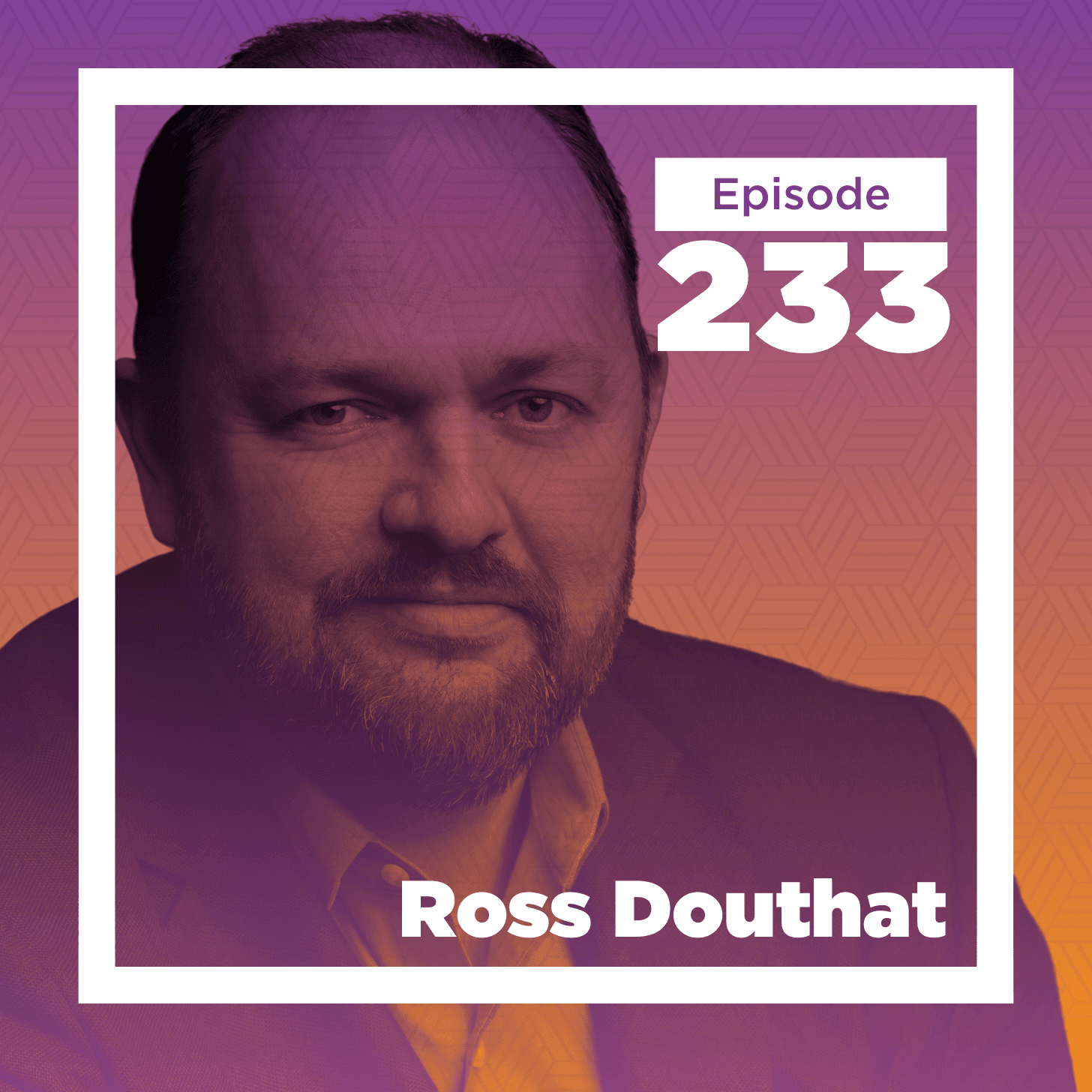
Podcast Notes: Conversations with Tyler - Episode with Ross Douthat
Episode Overview
- Title: Ross Douthat on Why Religion Makes More Sense Than You Think
- Date Recorded: January 16, 2025
- Hosts: Tyler Cowen and Ross Douthat
- Theme: Exploration of Douthat's views on religion, spirituality, and their relevance in a modern context, as presented in his book "Believe: Why Everyone Should Be Religious".
Key Themes and Discussions
- The Nature of Religious Belief
- Douthat argues that elements like UFO sightings and the simulation hypothesis do not undermine religious belief; instead, they highlight the pervasive nature of spiritual inquiry.
- He posits that even modern phenomena can only be understood through a religious framework.
- Simulation Hypothesis vs. Traditional Theism
- Douthat compares the simulation hypothesis to Gnostic views, suggesting that the entity running the simulation could represent a lower-tier deity, rather than the ultimate God of traditional monotheism.
- He emphasizes the importance of recognizing our relationship with these 'simulators' and maintaining spiritual alignment, regardless of the nature of existence.
- Religious Diversity and Cultural Context
- Douthat acknowledges the significant role of family and culture in shaping religious beliefs (e.g., children of Hindus typically identifying as Hindu).
- He argues that while diversity in religious practices is notable, it does not negate the validity of seeking a connection to a higher power.
- The Persistence of Spiritual Experiences
- The discussion touches on the consistency of spiritual experiences across cultures (e.g., near-death experiences), suggesting that these experiences indicate a deeper truth about human existence beyond cultural conditioning.
- Douthat asserts that people often report encounters that might not align with their societal beliefs, indicating a common thread of spiritual experience.
- The Role of Psychedelics in Spirituality
- Douthat discusses the relationship between psychedelic experiences and spirituality, arguing that while these substances alter brain function, they may also open pathways to understanding the supernatural.
- He cautions against dismissing these experiences as mere drug-induced hallucinations, suggesting they may reveal deeper truths about consciousness and its connection to the divine.
- The Intersection of Faith and Modernity
- Douthat reflects on the challenges posed by modernity, including the rise of atheism and skepticism towards religious traditions.
- He argues for the necessity of faith in navigating contemporary existential questions, suggesting that a return to religious engagement is crucial for personal and societal coherence.
- Speculation on Extraterrestrial Life and Religion
- The conversation also ventures into the implications of potential extraterrestrial life on religious belief. Douthat muses on theological interpretations of these beings, pondering their relationship with God and humanity.
- Future Projects and Cultural Reflection
- Douthat is actively working on a fantasy novel, expressing a desire to explore themes of enchantment and disenchantment in storytelling.
- He reflects on the transition from written to oral culture in the digital age, acknowledging the need for writers to adapt their methods of engagement with audiences.
Key Takeaways
- Religious Inquiry: Douthat champions the idea that religious questions are unavoidable and necessary for understanding reality.
- Cultural Influence: The influence of culture on religious belief is significant but does not invalidate the pursuit of spiritual truth.
- Spiritual Experiences: The consistency of spiritual experiences across cultures suggests a deeper truth that transcends individual belief systems.
- Future of Religion: Douthat believes there is a compelling case for religious belief in today's world, as it provides a framework for addressing existential crises.
Conclusion This episode of "Conversations with Tyler" features a rich dialogue between Tyler Cowen and Ross Douthat, offering listeners insightful reflections on the interplay between religion, modernity, and personal belief. Douthat's arguments present a persuasive case for why religion remains relevant and essential in contemporary discourse.
For further engagement
- Read the full transcript [here](https://conversationswithtyler.com/episodes/ross-douthat-3/).
- Watch the full episode [here](https://youtu.be/T7cDKkrp-nM).
Written by AI. May contain mistakes. Listen to the episode to check what was said.
Transcript
Automatic transcript. May contain errors.0:04Hey listeners, this is Dallas, one of the producers of Conversations with Tyler. We'll be hosting our next listener meetup in Boston, Massachusetts on Sunday, February 9th. We can't think of a better way to pregame on Super Bowl Sunday. Please click the link in the show notes to learn more and register for the event. We're looking forward to seeing you there, now onto the show.
0:26Conversations with Tyler is produced by the Mercatus Center at George Mason University, bridging the gap between academic ideas and real world problems. Learn more at mercatis .org. For a full transcript of every conversation, enhanced with helpful links, visit ConversationsWithT Tyler .com. Hello everyone and welcome back to Conversations with Tyler. Today I am here live and in person with Ross Douthet. Ross is arguably the best columnist in the world. He has many excellent books and he has a new book which I'm a big fan of called Believe Why Everyone Should Be Religious. So perhaps today my soul is on the line.
1:09I know it's very high stakes. This is the highest stakes conversation we've ever had. And if I fail my punishment, my punishment will be, no, there's eternal stakes. I once, when I was a much younger man, was draguned into debating Christopher Hitchens on a beach in Nantucket, I was substituting for Andrew Sullivan. Who won? Hitchens. It was an absolute route. That's too strong. It was a route. And he, I mean, he was at the peak of his powers. And maybe I had not yet come into my full powers. I don't know, I can tell myself that. But afterwards, I was convinced that I had added 100 years in purgatory to my allotment for those failures.
1:54So we'll see how this goes. And your theology is converting me when you points? It's not really a Catholic view. Is it? No, no, no, it's not. There's no, probably no toaster of it. But you know, you don't wanna. It's not going to lose you points. It's not going to lose me points. Let's put it that way. Yes. And it may be an indulgent style. It might compensate for some failings in other areas. People who have, you know, there's probably people who have been alienated from, you know, the truth about existence because they disliked something I said or did, right? So every day is a new chance to make up for those failings.
2:30I have a basic question about what does it mean to be religious? So let's say I believe in the simulation hypothesis, which comes from Nick Bostrom, Robin Hansen has cited it. The notion that if we can make a lot of simulations, there's a pretty good chance we are ourselves living in one. How does believing in the simulation argument differ from being religious? Like outside the sphere of normal life, how do we distinguish what we might call a God from what we might call, I don't know, whoever created the simulation? I mean, I think functionally, the simulation hypothesis is doing some of the work of a kind of polytheistic or nostic religion, right?
3:12Where whoever is running the simulation, the version of advanced consciousness that is capable of effectively creating and sustaining our world and presumably, however many trillions of others, they have running inside their simulator. That entity is not the creator god of classical theism, it's not the god of Christianity, but I think it's reasonable to describe, again, this hypothetical simulation runner as a small G god, certainly, and you could regard it as, you know, the way that Gnostics regarded the Demi -Erage, right? The kind of intermediate spiritual power that created this world and was responsible for all its misery and woe, right?
3:59And the Gnostics would say, therefore, you need to get past that demi -erge and escape to the higher level where the true God waits who actually created the whole thing, the Hoshabang. Maybe they would say you didn't create the Hoshabang. I don't want to overstate my familiarity with the intricacies of Gnosticism, or you could say, or you could be a kind of polytheist, and there are forms of polytheism that are arguably compatible with sort of an ultimate monotheism. You could say, okay, there may be an absolute God beyond the simulators. I would say if you could convince me of the simulation hypothesis, I would still say there probably has to be a God beyond the simulators.
4:40But the simulators themselves are in the position of God's to us. And I guess where I would say that view crosses over from sort of analysis to religion is the point at which you start trying to figure out what is your relationship to the simulators. Should you have one? I think you probably should, right? If you actually believe you're in a simulation, you should try and figure out what do the simulators want from you? Do they have your best interests at heart? If you think they do, then you should be trying to bring yourself into alignment, if you will, with whatever they have in mind. And if you think they don't, then I would suggest trying to send up prayers to whatever powers might be out there that could rescue you from the simulator's hands.
5:27But either way, I think the simulation hypothesis is in effect, an acknowledgement that there's no escape from religious questions. And I think the failure of the hypothesizers maybe is not fully taking seriously the implication that we might be, you know, the playthings of secondary gods. But you sound surprisingly close to the demi -erge hypothesis. So clearly you believe creation is possible, and you don't dismiss Bayesian reasoning. How much weight you give it is an open question. So why not think there are multiple layers of God? What we think of as God is just part of the chain. In Bayesian terms, if a God created us, well, some thing, some being, could have created that God, why aren't you led to that as a view with pretty high probability?
6:19I mean, I'm led to the view with pretty high probability that there are intermediate powers between us and whatever you want to call God, right? But the more you make the chain complicated, it can stretch in both directions. You mean, oh, in this, you mean stretch in, well, it can stretch in the direction you're saying where we would eventually become God's child. The Christian God What is a demi -erge? There's some higher God who created that and maybe many other gods. It seems, once you even consider the logic of the simulation hypothesis, you become fairly agnostic about the true nature of the ultimate God.
6:55Right. I mean, I think the weakness of the simulation hypothesis is that we don't have any actual evidence for it. It's incredibly speculative. and it assumes a capacity of what you might call subcreation that is completely speculative and not in evidence, right? So I wouldn't dismiss the simulation hypothesis any more than I would dismiss the various multivircial hypotheses that have ended up substituting in at least some intelligent people's minds for what I think of as the rather more obvious likelihood that sort of the old -fashioned religious world view is correct. I don't dismiss them out of hand, but I think you are in the position of multiplying hypotheses, multiplying speculations.
7:49And in the life that we have a certain parsimony is probably wiser, we have access to one pretty big, complicated, interesting varied world. That world appears, I would say, to have been fashioned for a reason. That reason appears to include us. There appears from spiritual experiences to be intermediate powers and then probably some sort of higher power. I think working with all of that rather than adding on six levels of speculation about further change that we can't see is probably the better part of our. But truly it's hard to say, not dismiss the Trinity, not dismiss, you know, the intermediate with Elf beings, and then invoke Occam's razor, right?
8:33You could just be a Muslim, there's one God, indivisible, that's that. Or be Unitarian. But your Occam's razor has to incorporate the religious phenomena as we experience them, right? Or I would say that it has to, right? So if any theory, I mean, first of all, I don't, I do think that sort of the parsimony of the hardcore deists or unitarian or anti -supernaturalist Muslim, if you, you know, the kind who don't have any traffic with gin and, you know, things of that nature. That kind of parsimony, you know, is plausible enough. It's certainly more plausible than hard materialism. I certainly, if given the option, I would choose that over the worldview of Richard Dawkins or Daniel Dennett.
9:24But I don't think it adequately encompasses sort of the terrain of actual religious and spiritual experiences that people have that I think is a crucial reason for the persistence of religion, even in an allegedly disenchanted age. It's obviously the point of origin for most of the world's religions. Most of the world's major religions make some kind of accommodation even when they are monotheistic to the idea of intermediate powers. So yeah, if we had no, I mean, I think it's useful to think about counterfactuals, right? Like if we lived in a world where every religious experience was the kind of religious experience where you just had sort of a sense of oneness and deep connection with a singular being who seemed responsible for existence, right?
10:14People have such experiences. If that were the only kind of experience you had, And then that anyone had or that 99 % of religious experiences fit that pattern, then yes, parsimony, I think, would suggest, you know, whatever might be out there, there's not just probably one God, but that God is probably the only higher power concerned with us with whom we might be in relationship. In the event, though, there's a much wider range of spiritual experiences. There does seem to be a realm of powers that, again, you could classify them with the small G -God. You could classify them as Christians would usually in angelic and demonic terms.
10:59But yeah, I think the variation, both the variation and the consistency in religious experience, right? There's a lot of variation, but then there's a certain kind of consistency of the kinds of variations across cultures. you want something that I think explains that and the theory that explains that is that there is some sort of hierarchy We're not just alone with the one true God This gets us to the part of your book where you discuss me and I'm never quite sure how one settles on a particular Religious belief so if I go to Sri Lanka the children of Hindus tend to be Hindu the children of Buddhists tend to be Buddhist Muslims, some Christians even.
11:39That is the way of things. And that makes me very suspicious about our particularist intuitions. So if you just showed up and said Tyler, I will save your soul, you should be a deist. We'd have a very different conversation. But when someone puts forward a very specific claim, I just don't trust their specific intuitions. They seem so tied to society, conformist pressures, family, what they learned as a kid. I just think we should look at all of Sri Lanka and figure, hey, these people ended up where they did, because if had they grew up, that's fine. It's maybe good for social cohesion. But then move on to just thinking about it more abstractly.
12:13Why is that wrong? Well, right. I mean, and this is where, you know, I've been saying to some of my religious friends that this is my most liberal book in a certain way, in that I go a certain distance with that argument. I do think that the diversity of religious traditions strongly suggests that some form of connection to God is available in a lot of different places. This is the official teaching of the post -Vatican to Catholic Church. It's not some radical, controversial opinion, but it is on the liberal side of potential theological interpretations. And I don't think it's given absent any other indication of what kind of religion you should be, what sort of religious perspective you should have, a default to the one that works in your culture, is I think by no means crazy.
13:05I guess my question for you, as you know, since you read my responses, is what do you make religion distinct from other forms of knowledge, belief, and belonging? Because everything that you just said about religious belief obviously applies to politics. But much less. Much less? Much less of politics. religion seems far more heritable. But even if it were the same, I would, I would sooner conclude we should be more agnostic about many things than conclude we should be less agnostic about religion. Certainly, but you are a professional arguer. You take strong views on all kinds of questions. You are a trained economist who takes all kinds of strongly held views on economics that are hotly contested by, you know, maybe not equally intelligent, but almost as intelligent rivals who have different views, right?
13:55And you could say, well, you know, once you reach the, you know, heights of economic theory, at that point, you're dealing with people who, you know, no one has inherited Keynesianism from their parents and so on, right? So, you know, you should be able to trust the choices that you versus Paul Krugman and so on have made. Well, maybe, but there are all kinds of other ways in which your economic views are conditioned. They're presumably - I'm just conditioned by, right. But it just seems to me that there's a tendency to sort of place religion in this special category, right? And say, okay, you know, it's, it's inherited, it's culturally contingent.
14:29And therefore, it's silly to have arguments about this belief versus that belief. But, you know, people change religions all the time, right? Like new religions come into being because of conversion. People change their minds because of argument. It's not like we don't have tons of examples of this. And I feel like it should be possible to balance a certain respect for the reality that, you know, there's religious diversity for a reason. There are hard questions that you're not going to argue your way to a singular answer, but also say the argument is worth having, and maybe you or I can make progress on some of, you know, our own views on those questions, right?
15:06But you're responding, saying, well, everyone else, including Tyler Cowan, has these weird inconsistencies, while I agree, I don't see how that gets you to religious faith. It might get you to some kind of Bayesian deism Wait, which sorry which incons, everyone has weird inconsistency. Well everyone is influenced by the views of their parents on all kinds of things The soap I use actually is still the same soap my grandmother used when I was a kid. That's probably related, right? It's arguably irrational no doubt. It's true But saying that happens everywhere, I don't see how it gets you to religious faith.
15:44I just think at best it gets you to some kind of probabilistic deism. Well, I guess the argument in the book is that you can get beyond probabilistic deism into what I would characterize as, you know, maybe probabilistic supernaturalism. I don't know, I don't know exactly the right term. I use the term religion, as you said at the outset, as obviously a contested term and people argue about what constitutes a religion. But I think you can get somewhat probabilistically to the view that not just that deism is true, but that there is a fundamental order to the cosmos in which human beings have an important or significant role to play.
16:28there are, you know, sort of divine or supernatural impingements on our reality that seem significant in various ways, there's, you probably have a soul that is related to your body, but distinct in some way. There's probably life after death. I would say, and, you know, people can read the book and agree or disagree, but I think that there's a preponderance of evidence in favor of most of those claims. Now, once you get, I agree that even going that far, quite a bit past deism, doesn't get you to a particular religious decision. And there, I mean, I have some explanations at the end of the book about why I'm a Christian and why I think the choice to believe in, let's just say, the significance of Jesus' life and death and resurrection seems like a rational sequel to those initially rational ideas, but I think there's absolutely a reason why religious believers talk in terms of relationship on the one hand, you're seeking not just a sort of theory of God, but a relationship with Him or them, if you prefer, but also in terms of divine grace, right?
17:44That, you know, the relationship runs both ways, and to some degree, it has to be up to the higher order of existence, You know what your relationship to that order might be. But what I'm trying to suggest is I think there's a broader and thicker foundation for seeking that relationship than many intelligent people right now seem to think. Does it worry you that when many people take psychedelics, they feel spirituality, religion, the presence of God, the supernatural. It's obviously a natural cause. Why? Why is it obviously a natural cause? Well, it could be that God is intervening every time someone takes LSD and giving you visions, but it just seems it's the operation of the drug and that there can be quite naturalistic reasons why people feel religion, the presence of God, the supernatural, and it's not in a way that mysterious or linked to actual deity.
18:41I don't think that that's true. What is the naturalistic I think it's quite clear that taking a psychedelic drug does something to the normal operation of your brain that changes your conscious experience of reality. I don't think we have any kind of sort of demonstrable proof of why the particular ingredients in ayahuasca yield consistent seeming encounters with a particular kind of being. Like, of course, of course, neuroscience didn't figure that out, right? I don't pretend you would be I would be absolutely. I mean, it seems to me that neuroscience needs to have some theory of how normal human consciousness operates before it can have a coherent theory of how abnormal human consciousness operates.
19:26I mean, look, if the religious, if the religious world picture is correct, right? Again, broadly speaking, then whatever the self is, whatever the soul is, it obviously exists in some sort of dynamic relationship to its body, its brain, its chemistry, its bloodstream, all of that, but the fact that you're more likely to have a supernatural experience when you shake up that material substrate, I don't think tells you anything about the actual nature of what you're encountering. If you think of, first of all, hermit's in the desert, who go out into the desert and and mortify their flesh, right? Or, you know, Native Americans on a spirit quest and so on, right?
20:13It's always, these are, you know, traditional religious practices that even absent psychedelic drugs have always taken, taken as a given, that the default experience of the world is natural and material. And if you wanna have a supernatural experience, you need to shake up the natural substrate a little bit. I don't think that, you know, ingesting drugs that shake up how your brain works is necessarily any different. And if you take, you know, again, I understand that this is not this this this seems like a sort of outlandish conception, but again, it is the religious conception, right? Religious conception is that your your minds coexistence with your brain effectively sort of reduces your minds capacities to enable it to sort of operate normally in physical reality and that sort of shaking up the brain, there's no necessary reason why that wouldn't...
21:11Yeah, sort of open the mind's capacities a little more. Monkeys can't do this in your view. Like do monkeys have a soul? Tree shrews. I mean, I think we should be somewhat agnostic about... But trilobites don't have a soul. Trilobites, trilobites. Well, I mean... But there's some day of transition, and that to me seems very weird. You know, for a long time, everything operates according to quantum mechanics and Einstein and Newton. And then one day, there's like a monkey or a tree shrew, and that animal eats a magic banana and is somehow infused with free will or a soul or the ability to contemplate the deity.
21:49But it's still subject to all the same physical laws. Well, it would be very odd to me. It's like Descartes' interaction problem. How one day is different from the next? But what does the day look like when the Trellabite becomes the God -perceiving human? What's the critical event in the middle? I don't know what the critical event is in the middle. I mean, I don't think we have any kind of access. But even in principle, access to that. Like if someone believed in a fairy world that we can't access, you could be skeptical. You mean a multiverse or a single hypothesis? Say it like a multiverse or something like that.
22:23But there's no interaction problem to explain. or as when someone thinks that a God -like being is interfering all the time with the principles of quantum mechanics, not impossible. It just seems to me very strange. But don't the principles of quantum mechanics under one perfectly reasonable interpretation suggest that for physical reality to exist at all, some sort of consciousness has to be constantly performing an act of perception to collapse possibilities into reality. Right? I mean, it seems to mean that it's not how I interpret quantum mechanics. We can go deep. I don't think we understand what measurement means in the theory, but it doesn't have to be a subject of Lee -Conscious mind.
23:03We don't all have to be Bishop Barkley that you need God to prevent, you know, everything from popping out of existence because God is perceiving it all all the time. Right, but don't you think that's a somewhat common sensical? However, anti -materialist interpretation of what seems to be going on at the deepest level of reality? I don't know what it means the deepest level of reality. I don't know that. We don't know what the, all right, at the quantum, I won't say the deepest level, at the quantum level of reality. It seems as far as we can see with our perception, right, that in order to go from contingency to reality, you need an observer, right?
23:42You need measurement. How do you get measurement without consciousness? What does that, what does measurement even mean? Absent consciousness. Electrons bump into each other. Something you don't need consciousness. But if you had a measuring stick in there, that would collapse. Who puts the measuring stick in there? Humans, but when they're not watching, the wave function still collapses, right? Well, but it doesn't. The measuring stick says it does. But we made the measuring stick. But we're not watching. You don't need subjective consciousness. You need some process of resolution. I deny that you can have a measuring stick without a process of consciousness.
24:16The measuring stick without a process of consciousness is itself just a ruler, absent your consciousness. A ruler is a collection of atoms and molecules cut out of a tree with some markings on it. In order for the ruler to be an instrument of measurement, you, Tyler Cowan, have to be perceiving it and be conscious of it. Yeah, I think the ruler exercises. devices. In fact, I mean, I want it just to go, you can't say the ruler, suffices. Look, I want to go back to your prior question, I think, is a fundamentally difficult question. We do not know what constitutes the transition from non -conscious life to conscious life.
24:56Now, we also don't know exactly what constitutes the transition from non -life to life. We have some difficulties figuring that out as well. But I think that there is, you know, if we were having a conversation about sort of difficulties in the Christian interpretation of the human person. I think the interaction between what we know at the moment or understand at the moment about evolution and human origins and the traditional Christian account of the fall, that there are some real points of tension in there that Christianity has not sort of figured out perfectly satisfying resolution of. That would be a different kind of book than this one, but there is an interesting argument there.
25:37But it's an interesting argument precisely because it takes place in a larger context where we have good reasons to take the supernaturalism of the human mind very, very seriously. It's a mystery, not just because the Christians don't have a full account of it, because the materialists don't an account of it at all, right? Because there is no satisfying materialist account at the moment of what consciousness is, why we experience it the way we do and so on. And nor is there a satisfying account. And now I'm going to circle us back to the measurement problem of why our consciousness is capable of all this measurement, all this successful measurement at all, right?
26:21I mean, And it's not just the difficulty for the materialist isn't just that you have this fine -tuned universe that in its basic structure seems to have been jerry rigged for our emergence. It's not just that problem, which the materialist tries to solve by positing an infinity of invisible worlds that are supposed to be more compelling than Fairyland, not sure why. The further problem, it goes down to us, but then it goes back up, right? Because human consciousness has turned out to be really good at not just figuring out how to survive on the African savannah, right? But figuring out how to plumb the deepest secrets of the physical laws of the universe.
27:06Like we've figured out something about quantum mechanics, something about this deep structure of the universe that is very peculiar in a narrative where it's trilobite brains giving way to monkey brains, right? If it's unlikely, but it's this way, if it seems incredibly unlikely that the universe should be fine -tuned in a way that allows for the development of conscious life, it seems to me even more unlikely that that conscious life would then work its way back up to understand its own, to understand the secrets of the universe in full. I think I'm closer to the Colin McGinvue that we're just not smart enough to understand consciousness.
27:46It's a puzzle. It should make us more agnostic about many things, but it's not an excuse to go multiply all these other entities. But the entity that you're, the entity involved is, no one is, no one is multiplying entities when it comes to explaining consciousness. They are simply describing the entity that is Tyler Cowan and that is Ross Douth, that you have immediate access to, more immediate access than to anything else in the world. I think most of my decisions are made without my awareness and what I feel is my consciousness is some kind of blipper epiphenominant skating on the surface of that.
28:20I know a lot of evidence. I mean, this is where I don't really believe you. I don't think that that's, I think certainly that like if you're driving through Arlington, in Virginia, there is a set of unconscious things that your body does out of habit as you drive around that you are not self -consciously doing. Certainly, there's lots of things you are a mind in some kind of dynamic relationship to a brain and body. There's plenty of things going on that your consciousness is not responsible for, but you write books. Do you not? You host podcast. Some part of me does, yeah. You're not. Most of it happens beneath the surface and I'm not aware of the decisions I'm making.
Read the full transcript
29:00But you are not supposed to reconstruction of it that makes me feel like I'm in control. But I don't think I am very much if at all. Don't you think you've maybe just sort of imbibed a bit too much of the sort of materialist spirit of the age? I don't even call it materialist. I want to give you credit. I think you write your own books. I think Tyler Cowan, you know, with some assistance obviously from, you know, angels on one shoulder, demons on the other, maybe some fairies thrown in, I think I think you, I want to give you credit for actual existence. I don't think it is, I don't think that this sort of theory of the mind as aggregation actually does justice to the direct experience of being a human being.
29:47But if there are many alien beings on other planets, as I would say now seems likely, whether or not they've ever come here. Does that make Jesus Christ less important? Why does it seem likely? We keep on discovering more planets. Yes. That appear possibly habitable. We don't know what's on them, but it's certainly more likely than if we were not discovering any such planets. So we should be raising our probability. It's a big place out there. I mean, I would be shocked if there was not other mindful life in the universe. I would also be somewhat surprised. I do think that the Fermi question still seems to hold, even given lots of life -friendly or seemingly life -friendly planets.
30:33It seems the silence of the cosmos seems quite odd. If at the very least there are lots of star -faring species out there capable of sending messages into the deep, you might think that we are among the first. in which case we seem fairly special, or you might think that there are just very, very few, in which case I think we seem fairly special again. I think it's unlikely. Would be my guess. They destroyed themselves and left no signals tracing their way through space. The speed of light is a tough one. Maybe we're somewhat early. I agree it's a puzzle. I don't find it insuperable. I mean, so just to go back to your question, And I mean, I think that the question for the Christian given the existence of other beings with our kind of consciousness in the galaxy would be, you know, what is what is there?
31:33What is there apparent relationship to God and yeah, just just to God, right? Because I mean, this is where the Christian doctrine of the fall is sort of useful, right? the presumption would have to be that either they had some kind of, you know, that there was some role for Jesus in their existence, and maybe we're the vehicle for that, you know, there are fun science fiction novels where the Jesuits send missionaries to other planets. I think you could imagine a scenario where the Catholic Church would very quickly try and recruit some missionaries to evangelize an alien species, or you could have the scenario that you get in Christian science fiction novelists.
32:17You get a little bit of it in Madeline Lengel, you get it in C .S. Lewis's The Space Trilogy, where there are other species in the universe that are made in the image of God maybe, and they have not fallen. And we have. We are alienated from God in some profound way that other species might not be. So those I think would be the two reasonable moves that a Christian might make confronted with some form of extraterrestrial life. I do think, though, again, that the silence that we are faced with suggests that something more is going on than just life is commonplace. It's all over and we haven't run into it yet.
33:01I think it either has to be quite rare or, you know, to be, I mean, in both the Lewis and the Lengel novels, there's a kind of supernatural blockade on planet Earth because we fell, right? Like, I mean, yeah, I mean, this is obviously what people, people who believe, people who believe that, I guess, UAPs, right, as we're now supposed to call them, the UFOs, people who believe that those are actual visitors from other worlds, they have to believe in a kind of, you know, non -supernatural natural version of that, right? They have to believe that there's some sort of like management of Earth's knowledge of the galaxy going on to explain why there are all these crafts zipping around, but we've never heard a radio signal from deep space.
33:43So you could imagine a kind of more supernaturalist version of that hypothesis, I suppose. And if you're weighing those probabilities that UAPs are alien drone probes, versus angels and demons, just what do you bring to bear on trying to figure that out? Because even I, I would say this, UAPs have increased my probability that there's a God, because there are not many explanations for them. There's China, there's Russia, there's Kraftoverrown, there's Allian Drone Probes, and there's what you could call broadly supernatural. Yeah. So there's like five explanations. Yep. And that's one of the five.
34:23Well, there's, yeah. So it's up my piece. I mean, the move that people make is to say that they're interdimensional. That they could be, this is sort of the, I don't know what that means. But I also don't know what that, I don't know how you distinguish that from sort of essentially super naturalist explanations. I mean, so my basic, if you had asked me, you know, five to ten years ago, my basic view about UFOs, I didn't have strong views about them. But I would have said that most of what I'd read in the literature about sort of personal encounters with supposed extraterrestrials seem to line up reasonably well with pre -modern accounts of encounters with angels, demons, and maybe especially fairies.
35:09This is an argument that the ufologist Jacques Vallet made early in the uf -o, many decades ago, that if you compare an account of an alien abduction to an Irishman's tale of being abducted by the unceiligcourt, there's a lot of interesting similarities. So, there are two conclusions you could draw from that. You could say, well, there's this kind of Jungian unconscious that human beings have that grants us these weird dreamlike experiences. And in modern times, we attribute them to aliens and we used to attribute them to fairies, or you could be more of a supernaturalist and say there are beings out there who like to, you know, pardon my language, fuck with us, right?
35:56And they do it in different ways, in different times and places. That seems to me to be the straightforward reading of the data on individual encounters, right? Abductions and counters, that stuff. I honestly don't know what to make of the craft zipping around stuff. And that's part of why it's interesting. I have difficulty fitting it into a sort of non -supernaturalist paradigm. I think you can, right? You can say the best argument would be these are extraterrestrial drones sent from deep space or from some observation base deep under the oceans, right? If we're going to get really, really kooky.
36:41And this is what you'd expect from an advanced civilization many light years away, they can't travel to every planet that has life on it. So they, you know, have some drones, keeping an eye on things. I guess you could make that argument. Then if you make that argument, then you sort of have to separate that from all the kind of paranormal UFO abduction stuff and say, Well, these are just separate things. One belongs to the realm of religious supernatural Jungian experience and one is literal aliens visiting us. I find that unsatisfying. I feel like they're probably, if they aren't Chinese drones, right?
37:16If they aren't sort of native Earth tech, I don't know if it's probabilistic reasoning or not, but my mind sort of wants there to be a connection between weird abduction stories and Navy pilot sightings. But I don't, I guess it's a case where I sort of, I'm, I find the subject quite interesting, but I don't want to make any kind of commitment because I think we lack, you know, we just conspicuously lack evidence. I mean, there is, I think there's a sort of, you know, a contingent of Christian and religious interpreters of this stuff who say, you know, look, it's probably demonic. It's basically how the old gods of paganism who are really demons get back in they pretend to be Instead of pretending to be angels of light.
38:06They pretend to be ets of light and so on You know if you had my friend Roger here on who's you know writes a lot about mystical issues and this lately started writing about UAPs He's very interested in that argument. I think were that the case? It would be quite striking and strange that there would be actual craft of some kind involved, certainly kind of departure from what we know about supernatural interventions otherwise, kind of an escalation that would be kind of strange. Yeah, I mean, it doesn't. And also, if I were a, let's say, a Syrian demi -demon trying to get worshippers back, Right, after all these thousands of years, I feel like this strategy might be, I don't understand the end game, I guess, of sending a bunch of crafts zipping around to freak out Navy pilots.
39:03I don't know how that, like, what's the plan there. So yeah, I'm trying to be, you know, resolutely open minded. In general, you wait personal testimony higher than I do. Let me see if you can talk me into it a bit. So, something is recorded in data sensors and confirmed across multiple sensors. Maybe I don't know what it is, but I believe there's something there. But if people say x, y, and z, there's all sorts of religions, neither you nor I would sign onto, and plenty of humans who will assert, insist, that there's direct evidence for that particular religion. So the story of Joseph Smith, the plates from LDS would be one example, but this plenty of religions that don't even exist anymore, where there is very particular stories that people have attested to.
39:55And we really do dismiss them in the numbers of the tens of millions or maybe even billions. So for willing to dismiss all those stories, I mean, isn't David Humerite and we should not dismiss the stories, but they're not going to budge out of a more common senseical worldview. Well, I guess that, yeah, I mean, I don't dismiss all of those stories. I guess that's part of my strong departure from human assumptions. I think that certainly there are fakes and frogs and charlatans in religion, and there are people who are just sincerely mistaken who think that they had a religious experience when they have a diagnosis of some form of mental illness or insanity.
40:46Right. At the same time, I think that there, I think that the wide range of attested spiritual, just frankly bizarre experiences that human beings have of which UFO encounters are a subset that again has familiar antecedents going back millennia. I think we should take those seriously and have a a theory of what they are that is more complex than fraud meets insanity meets delusion, right? And part of this is just, you know, knowing people who've had those kind of experiences, reading a lot about those kind of experiences, not just in my own tradition, but in other religious traditions. I think that they correspond to something real, even if the interpretation that people give to them is wrong or deluded or misguided.
41:43So I don't think that Joseph Smith was, in fact, chosen by God to restore the lost truths about Jesus Christ, polygamy, and the ancient civilizations of the New World. I don't think that's true. Do I think that Joseph Smith didn't have some kind of weird supernatural encounter? I'm less confident about saying that. And the same would go, I don't think that Muhammad is the seal of the prophets. Do I think that Muhammad either hallucinated or made it all up? Again, I'm certainly much less confident than you would be in saying that. It's almost in his Islamic doctrine. And I'm holding, right? There are these various tiers of prophets and they're imperfectly right, but they're getting at the divine.
42:30Yes, I think any coherent theory of supernatural experience, given what you can encounter just by reading William James, has to say either there's infinite realms of deception out there. This is something that some religious believers would say. There's one subset of totally authentic, trustworthy religious experiences, and then there's vast realm where it's all demonic deception. Or you have to say that there's just a range of ways in which people encounter God in the supernatural that do get filtered through sort of cultural assumptions and through imperfect, I want to say imperfect prophets, let's just say imperfect human beings.
43:19And that helps yield the diversity of religions in the world today. But you can also see patterns in those things, like near death experiences. The range, there is cross -cultural variation in near death experiences. If you have a near death experience as a Tibetan Buddhist, you are more likely to see the Buddha. If you have a near death experience as a Catholic, you're more likely to maybe see an archangel or a Catholic saint or something. But at the same time, there are some pretty clear commonalities to suggest that people in Tibet and people in Indiana are having the same kind of experience when they die and are resuscitated and report, the lights, the tunnel, all the strange things associated with those experiences.
44:07So, yeah, I think there's a challenge here, obviously, for any kind of dogmatic religion, right? You do have to figure out, like, okay, why is there this consistency, but also this variation. But there's also a challenge for the humans to say, well, we're just writing off this fairly consistent cross -cultural realm of human experience because it's all supposed to be myth and hallucination. I mean, the people who have these experiences are not generally the kinds of people who you would describe as prone to hallucination and insanity. either are of course cases, but that's not sort of the norm.
44:50And the other thing, sorry, I'm just going on a bit, right, on the humian point, right? Like if you go back and read Hume, and he doesn't exactly say this, but you eat. You really have the strong impression that Hume thinks that once you get rid of established religious authorities and sort of the universal teachings of antique stories from the Bible, that a big swath of supernatural stuff will just sort of go away. Now he says, you know, human's still. And that's wrong, right? Human still have this propensity to the marvelous, I think that's the phrase he uses. I mean, I don't think he'd be surprised by some persistence.
45:29But I think the original humian theory is, most people believe in the supernatural because someone has taught them about it at church and they're these legends handed down from misty antiquity. And that's, I think we just know that that's not true. That's not what's going on. And that's, I think, one of the multiple places where atheists, skeptics and materialists have some sort of prior updating to do about what we've learned over the last 200 years about what life is like under allegedly disenchanted conditions. But doesn't it worry you that for all of these instances of the supernatural, there's never enough evidence accumulated to convince actual scientists?
46:09No one's captured an elf, right? But as far as I know. And you could switch the topic to some other instance of the supernatural, but there's plenty of testimony of elves. Yeah, I mean, I guess I would, I worry though a little about, I mean, the assumption, the assumption of supernatural experience, I would say, is that there's, let's say, Let's say there are two ways in which it could manifest itself, just to massively simplify it. You could say it manifests itself through some kind of reaching in where a higher power, God, angel, demon, whatever is sort of operating in human reality, or you could say it relates to some sort of native gift, right?
47:00The idea that some people have psychic powers, right? And so on. In the first case, you are pretty clearly dealing with, you know, sort of, wills and intentions and intentionality and choices that are not, you know, that are essentially the equivalent of human will and intentionality and choices and so on. Right? And so, saying like, well, we should be able to, you know, consistently predict when someone will be possessed by a demon or something, and under the right laboratory conditions, it's like saying, well, we should consistently predict when two people are gonna fall in love under the right laboratory conditions.
47:38I don't think that's, I mean, again, the hardest core materialist might say, eventually, we should, right? We should be able to, you know, see what's happening in their brains, like these two people are gonna fall in love, but in practical terms, right? Science hits a limit when he, certain kinds of human agency enter the picture. And I don't see why it wouldn't hit a similar limit. I don't see why you would imagine that you could devise a laboratory system for reliably conjuring the supernatural. On the second case, I have a conjure it, but there's no way to measure it reliably. What do you mean by?
48:13I mean, whatever it would take, the editors of science and nature, whoever they may be, I suspect they don't believe in what you believe in. Whatever it would take to convince them. So we have no tools that will bring them along. It's, at some odd margin of being quite non -legible. It's that way on purpose to test us or it just turned out that way or it seems like a weird, I mean, I think it has to be, I think it has to be that way on purpose in order for the sort of basic coherence of physical existence to obtain, right? Like I think actually the sort of scientist's point originally that you You can't do science if an angel is always, you know, if you can always assert that an angel is just responsible for moving a planet around.
48:58I think that is a decent enough explanation of why, you know, you wouldn't, you know, you wouldn't sort of expect sort of constant predictable operation of supernatural forces in the world. I am also though, I mean, I think that there are, there are also reasons to think that, you know, I mean, there are a lot of, for instance, with psychic phenomena, right? Like this has been subject to thanks in part to, like the CIA's interest in it, right? This has been subject to a lot of quasi -scientific scrutiny over long periods of time. And you do have, you can find people who have done studies that technically stand up to the rigors of scientific expectations that seem to prove the existence of some kind of size, some kind of paranormal ability.
49:57But then you enter into the replication crisis, right? And you have, you have, you know, competing studies and recreations of those studies. But I don't want to say, I don't want to rule out, in fact, the possibility that if you, you know, if sort of more scientists set aside their materialist presumptions, that you wouldn't be able to get better data about, but I think it would have to be data about characteristics of human beings, right, rather than characteristics of angels and demons. I think the latter is sort of inherently inaccessible to the tools that we use from modern science, whereas I do think it's reasonable to say if people are psychic, maybe we should be able to design a set of experiments that offers clearer indications in that direction.
50:51I am, though, also, but when you read, I quote Freeman Dyson, I think, in the book, Maverick, Pauli Math, scientific genius, right? And he was a believer in psychic phenomena. And his argument was basically that if you read about the cases where people have these kinds of experiences, they're similar to cases of bursts of artistic creativity, or things again that it's very hard to predict and measure scientifically. They happen under periods of great physical or personal duress. They happen around the deaths of a loved one. They happen in inherently eccentric circumstances seem to, again, if these capacities existed, be the things that generated those capacities, which, again, creates some problems for laboratory measurement.
51:49I would say. This gets back to my interaction set of worries. So people report seeing and hearing angels and demons, right? But there's not an MP3 file or a photo where you would, oh, here we go. And that's very odd to me. It's not logically possible. It just seems highly unlikely. Well, I mean, there are... I mean, there... I mean, what... I guess what kind of... None of them seem to have failed at. Would convince you. Well, I mean, you know, Catholics always go for this one. So you know... I can hear Winston Churchill on YouTube, right? There's, right, well, you can, you know, you can, there's the, you know, miracle of the sun, the Fatima and early part of the 20th century did happen in front of a large number of witnesses.
52:31There are, you know, powerful newspaper accounts, I think, including in the New York Times. I mean, there's a reason that it's been hotly debated ever since. But it was, whatever it was, it was something that clearly had there been video cameras there. Something would have been perceived, right? Right. There's a similar case in Egypt involving an apparition of the Virgin Mary where there's footage and so on. But what would be, I guess, convincing to you, right? If I presented you, if I presented you tomorrow with a video of the Archangel Michael, walking through the halls of Torchemason, wielding a sword, you would assume that it was AI generated, right?
53:10At this point. Well, I would forget to someone and I could find out. Well, it's not, but at some point soon you won't be able to find out. But if you're right, if you're right about the progress, if you're right about the progress of AI, but that is not one to date Makes me much more skeptical Right, but they're Right, I mean You want You want God to man and you want me, but you want to produce a bull form that can be verified It just seems odd that it never turns out that way Yeah, I mean did you read Carlos Ayers book they flew no? Okay? It's worth reading, I would say, is a book about levitation.
53:49The 1500s and 1600s, sort of Reformation and Counter -Reformation era levitation by various saints. And, yeah, I'd be curious what you think about that book. There were no cameras, obviously, in the early 1600s. Air's argument is that by any normal, evidentiary standard in terms of collective witnesses and consistencies of witnesses and so on, these stories of levitation would seem to pass muster. So you have to be operating there in the realm, not just of personal delusion, but a kind of mass delusion. In the contemporary world, yeah, there hasn't been a claim of levitation since in the Catholic Church, since I believe a nun who is involved with the French resistance in 1930s and 40s, and there was photography then, so it's fair to say, you know, shouldn't we have a photograph?
54:45However, if I presented you with a photograph from the 1940s of the Levitating Non, I don't think you'd be convinced of it, right? Well, I would have people look into it for me. Right. Yeah. Right. But I mean, that's, you know, it would be grainy and so on, right? I mean, you want video... The best, you want the best... The best, you want the best video. Yeah. I mean, I don't think that's... I don't think for the more extreme forms of supernaturism, that's completely unfair request, but we'll see what we get over the next 50 to 100 years. I mean, you've already updated your priors about UFOs based on video evidence.
55:21Absolutely. Yeah, yeah. All right. Well, we'll end my priors on God for a minute. All right, so we'll come back to the video. I'm not in touch with the video. I think we can revisit the video evidence question. We only have a rather short number of decades of widely available video technology. So I think just general, which also has happened to be a period of sort of, you know, peak erud secularism. So I think I want to say that I think generalizing from that to a universal point that you could never have video evidence is maybe a little bit of a leap and we should give it a few more decades and see what surfaces.
55:58What do you think of Peter Tiel's fascination with the Antichrist? I think Peter is more apocalyptic. Then you are. Then I am. Not enough intermediaries in history. So all the stakes are on the table at once. I think it's more that the threat of the anti, like, I mean, he, you know, I think he's going to maybe elaborate his theories of the Antichrist at some point in the future. On video. On video, most likely, yes. And I think that the, you know, what we've seen so far, I would say, in the 21st century, I mean, take the Antichrist to be some sort of comprehensive global rule by a singular power dedicated to sort of a false view of reality.
56:45I don't know if that's how he defined it, but let's say I would that might be how I'd define it. I think we've tended to see sort of brief flares of forces and powers that sort of resemble that, but then quickly collapse under pressure from competing forces, other forces and so on. So in 2008, Barack Obama was for six months the most popular man in the world, not just in the US. He could have been elected president of the world. So you could say, well, in that moment you could see how one person, one incredibly charismatic individual could dominate the world in a mass media age. But six months into his presidency, Obama was back to being a normal politician with normal enemies, totally unpopular in various ways and so on.
57:32Or again, to take an example that I'm sure, I know that Peter's been very concerned about. Like the alignment of big tech companies with control over the internet with sort of woke ideology and its hostility to free speech and its sort of ideological fantasies, right? You can say, okay, that's not an individual, but it's a system, a system of interlocking directorates, a cathedral, the Yarvan phrase, from which we can't escape. But it kind of seems like we can't escape from that right now. The rule of the true rule of the woke cathedral where no descent was broke. What did last for? Six years?
58:18Yeah, and Donald Trump was president for some of those years. So I think that to be, I think to be a kind of an anti -Christ fear, you need to fear some power not yet fully in evidence, and that power, if you want to be non -supernatural, could be whatever, the machine god view of AI, right? I think if you take a kind of maximalist, duma view of of strong AI, then that's effectively a theory of the Antichrist. Or you could go back to our early discussion about the Sumerian gods returning and using the guys of aliens or something, that to enthrall us all. That could be a theory of the Antichrist.
59:06But those are theories of things not in evidence to me in the year of our Lord 2025. So I worry less about the Antichrist today than I did at various points recently. Should Peter just be an Opus Day Catholic? He's right leaning. Peter, Peter shouldn't quite... Peter should be a Catholic. I don't know if he should join Opus Day. I think it's okay. I mean, I'm not in Opus Day. I think it's okay to be a normal Catholic, right? I think, you know, I'm... Are they not normal Catholics? Well, one of the, well, one of the, I may have said this to you before, but one of the curious things about being a conservative Catholic who writes for New York Times, right, is that, you know, people have an idea that, you know, that you are the most, you know, intense, intense Catholic who ever lived or something like that, right?
59:59Which of course, you know, ultimately, you should be, we should all, you know, be seeking to be saints and so on. But in practice, I mean, you know, I'm trying to go to Mass on Sundays. I try to go to confession, right? I try and, you know, sort of try and lead a serious Catholic life, but I'm not, you know, I'm not, I think it's possible to have that be or destination rather than saying, okay, you know, you need, you know, this more intense order, this, you know, this more intense and subculture or anything, anything like that, right? So I think it's sufficient to say, yeah, you know, Peter should convert to Catholicism and attend masks on Sundays and holy days of obligation and you know, go to confession, I think that's enough.
1:00:49Catholicism in Mexico is pretty friendly to this idea of intermediaries, but in the United States it's pretty suspicious. Does that make you uncomfortable being an American Catholic? There's other ways you could be a Catholic, But you strike me actually is not that much of an American Catholic. Well, I don't doubt your sincerity in your state of use. No, but see, the same not to fit. Well, the thing is, I'm interested in the intermediaries as a, I guess you could say, would be analyst of what is actually going on in reality. I'm interested in what is going on in reality. I think these intermediary spiritual experiences are part of reality and they're interesting and they have a place in any argument for why one should be religious.
1:01:32In my everyday life, I'm not like, you know, I'm not out there performing exorcisms, right? I don't take ayahuasca. I think there's a prerent interest in intermediary spiritual powers that is forbidden to Christian, certainly to Catholics. You're not supposed to be trying to contact the spirits of the dead or doing divination or these kind of things. And so I feel like I'm comfortable enough. I mean, I think you could say that maybe, well one, I think Mexican Catholicism kind of is part of American Catholicism now to some degree, right? But I think it's okay to say Mexican Catholicism maybe captures the totality of existence more completely than suburban, suburban American Catholicism without necessarily wanting to spend all of your time in that zone.
1:02:33And especially because that zone, the Mexican example is actually a good example of where you would say that temptations come in, right? Because Mexico has a whole zone of quasi -catholic, pericatholic, folk religion, right? Where you're attending mass, but you're also making deals with Santa Muerte, right? and you know, you'll talk to priests who work in that territory who will say that they feel like their parishioners are sort of, you know, you know, yeah, going to mass one moment and making deals with minor demons the next and that's not what you're supposed to do at all. Does the ex -cathedra doctrine make sense to you?
1:03:12Concerning the Pope. I would say I have more questions about the nature and limits of people authority today than I did 10 or 15 years ago before the age of Pope Francis. I think it makes sense that if there is a God and if the second person of the Trinity came to earth to suffer and die for your sins in mine and if you know if there was a church established that was supposed to carry the you know carry that revelation and forward throughout history that that institution we would be protected in some way from the most serious forms of error. So in that sense, yes, some version of infallibility makes sense to me.
1:03:57I think the parameters of what could and couldn't be considered infallible are a little bit shaky. So maybe the Pope shouldn't get to decide when he's speaking ex -cathed. Well, the Pope, yeah, I mean, it's not, well, this is the thing, right there. Again, the Francis era has raised all of these debates. Just as Protestants run into difficulty arguing about what the authority of Scripture actually delivers, Catholics run into difficulty arguing about where the specific lines are of when and when not the Pope is speaking infallibly. I think I'm, I'd say, you know, when the Pope, when the Pope defines a dogma of the church infallibly, like the dogma of the immaculate conception or something like that, I think that has a useful clarity.
1:04:49I think on questions of morality, yeah, the historical record gets a little murkier. What have been the inspirations behind your fantasy novel online and free, right? The Falcon's children. Yes, online, serialized on Substack. Free for now, though, once I get through two -thirds of it, I think I need to pay wall and see how many people are actually interested in. Hold the interesting back. That's right. Hold the throng's back. I mean, it's a combination of things. First, I was a sort of Tolkien and Subtolking nerd in high school. that one of the lines is that people either become a conservative by reading Atlas shrugged first or by reading Lord of the Rings first.
1:05:36Sometimes I was Lord of the Rings. So I always liked fantasy as a genre just as a reader and something to play around in. So I've always I wrote a very bad fantasy novel in high school and then I started another one in my 20s and abandoned it. And then when I was ill with Lyme disease for a while, over, well, now I guess it was four or five years ago, and I did this. I sort of went back to that novel. One of the things about at least the kind of illness I had was that, you know, it was a very physicalized illness in which my consciousness to, you know, my consciousness felt sort of, you know, somewhat imprisoned in my body and I was sort of looking for things that my consciousness could do while feeling imprisoned and sort of trying to do writing fiction again seemed like one of them so I sort of went I went back to it and took the stuff I had from my 20s and worked through it again and then I have various sort of high -flown theories about why fantasy is an interesting genre that connect to many of the things we've been talking about here that you fantasy sort of occupies.
1:06:47It's very interested in the transition from an enchanted world to a disenchanted world, right, from pre -modernity into modernity. And this is true. This is as true of George R .R. Martin's novels as it is of Tolkien, right? This is sort of a recurring question that fantasy is navigating is, you know, has magic disappeared, is magic coming back, is it about to disappear these kind of things. So I think that sort of that aspect of fantasy is timely for our psychedelic and UFO haunted moment. And finally, in terms of actually publishing it, obviously I, you know, my intention was to write it and sell the rights to HBO and retire from newspaper column writing and provide for all of my many children that way.
1:07:36That has not happened. But I I decided to put it out there in part. You have this, it's you, right? You have the line about, you know, you should be writing for the AI, right? For the, you know, you want your, if so much of the future is going to be, maybe this isn't how you'd put it, but so much of the future is going to be, you know, AI reading the internet and doing things with the internet, you want to put your work out there. When you say things like that, I think to myself, you know, that, that might be true of my columns, maybe I'm writing my columns for the AI, but I have sort of a different view with fiction and creativity, which is that I was like, well, I don't fully believe that AI is going to be capable of human level creative writing, but on the off chance that it is, I'd like to get my own writing out there before that moment arrives.
1:08:27It's capable of some kind. finishing a song of ice and fire to the satisfaction of George R .R. Martin's fans, not yet. Right. If it will be, and then at some future point, the world will be absolutely flooded with works of art that have no actual human consciousness behind them. And I think works of art that have a human consciousness behind them are inherently better, no matter what our descendants might think about this subject. So I thought since I have this novel written, I I should put it into the world. So, you know, without an HBO serialization deal, that is what I'm doing. My readers wanted me to ask you, how's your health going?
1:09:14I mean, it's much, much, much better than how it was when I was at my worst. You know, you reach a certain point with recovery from a chronic illness where you're always telling people, you're 90 % or 92 % right without sort of, you know, it's sort of asymptotic to recovery. You're always sort of approaching 100%. and never quite getting there. But I feel like I am still making progress towards full health. And in practice, what tends to happen is that I feel about 97 % well until I get some other illness. And then some of my old symptoms come back. And I slip back. And unfortunately, we have a lot of illnesses that run through our house because we have a lot of kids.
1:09:59So I get, I slip back a fair amount. but which is to say there's still something in my system that my body has mostly suppressed, but that recurs. But generally, I'm, yeah, I'm in obviously a much better place than I was at my worst and also a better place than I was when I finished the book about having Lyme disease. Last two questions. First, your father wrote a poem about you. It's called The Hold. It's about you as a kid. Do you like it? I love all of my father's poetry. My father has a new book of poetry coming out in fact in just a few months. Before the last question, just to again reiterate the new Ross -Douthet book, Believe, why everyone should be religious, excellent, great, wonderful book.
1:10:43I very much enjoyed reading it, and once I could, I read it right away. Last question, what will you do next? In part, it probably depends on, you know, sort of internal questions at the times and playing around with different day job possibilities. I think one interesting question raised by the age of the internet is not just whether we're transitioning to a future where AI, we're just writing for the AI's, but also the shift from the written word back to oral culture in different ways. So we have a podcast at the times I'm, I prefer the written word to oral culture. I prefer reading greatly to listening to podcasts.
1:11:28I read transcripts of your podcast. So do I. Rather than listening to them. But I'm trying to accept the reality that ours is going to be a more oral culture. I'm doing my sub -stack of the fantasy novel. I'm reading the chapters. I'm not just publishing them. So I'm trying to think about that zone. If I acquired a really large number of readers for the fantasy novel, I would just go ahead and straightforwardly write the sequel. I think that there's also a, it might not be a book, but a project to be written that's a bit different from the sort of telian anti -Christ view of our future. And that's a bit more optimistic, but that treats the current moment as a kind of kind of bottleneck in a way.
1:12:14As you know, I'm somewhat obsessed with demographic decline and collapsing birth rates and so on, but I think it's interesting to think about 21st century culture, internet culture in particular as a culture that's going to kill off a lot of, you know, not just if long, long standing institutions, maybe entire countries may simply disappear, but other forms and other forces are going to come through the bottleneck and create whatever world exists on the far side. So that's, yeah, that's an interesting question too. But I'm also sort of looking forward to having, you know, in the wake of this book some more straightforward arguments about why my friends should practice a religion.
1:12:58Ross, thank you very much. Thank you Tyler. It was a pleasure, as always, and I'll work on the, you know, video evidence.
1:13:08Thanks for listening to Conversations with Tyler. You can subscribe to the show on Apple Podcasts, Spotify, or your favorite podcast app. If you like this podcast, please consider giving us a rating and leaving a review. This helps other listeners find the show. On Twitter, I'm Attyler Cowan, and the show is At Cowan Convos. Until next time, please keep listening and learning.
From the publisher
Sign Up for the Boston Listener Meet Up
For Ross Douthat, phenomena like UFO sightings and the simulation hypothesis don't challenge religious belief—they demonstrate how difficult it is to escape religious questions entirely. His new book, Believe: Why Everyone Should Be Religious makes the case for religious faith in an age of apparent disenchantment.
In his third appearance on Conversations with Tyler, Ross joined Tyler to discuss what getting routed by Christopher Hitchens taught him about religious debate, why the simulation hypothesis resembles ancient Gnostic religion, what Mexican folk Catholicism reveals about spiritual intermediaries, his evolving views on papal authority in the Francis era, what UFO sightings might tell us about supernatural reality, why he's less apocalyptic than Peter Thiel about the Antichrist, and why he's publishing a fantasy novel on Substack before AI potentially transforms creative writing.
Read a full transcript enhanced with helpful links, or watch the full video.
Recorded January 16th, 2025.
Help keep the show ad free by donating today!
Other ways to connect
- Follow us on X and Instagram
- Follow Tyler on X
- Follow Ross on X
- Sign up for our newsletter
- Join our Discord
- Email us: cowenconvos@mercatus.gmu.edu
- Learn more about Conversations with Tyler and other Mercatus Center podcasts here.
Photo Credit: Abigail Douthat ©