
In short
Podcast Notes: Sam Altman on Trust, Persuasion, and the Future of Intelligence
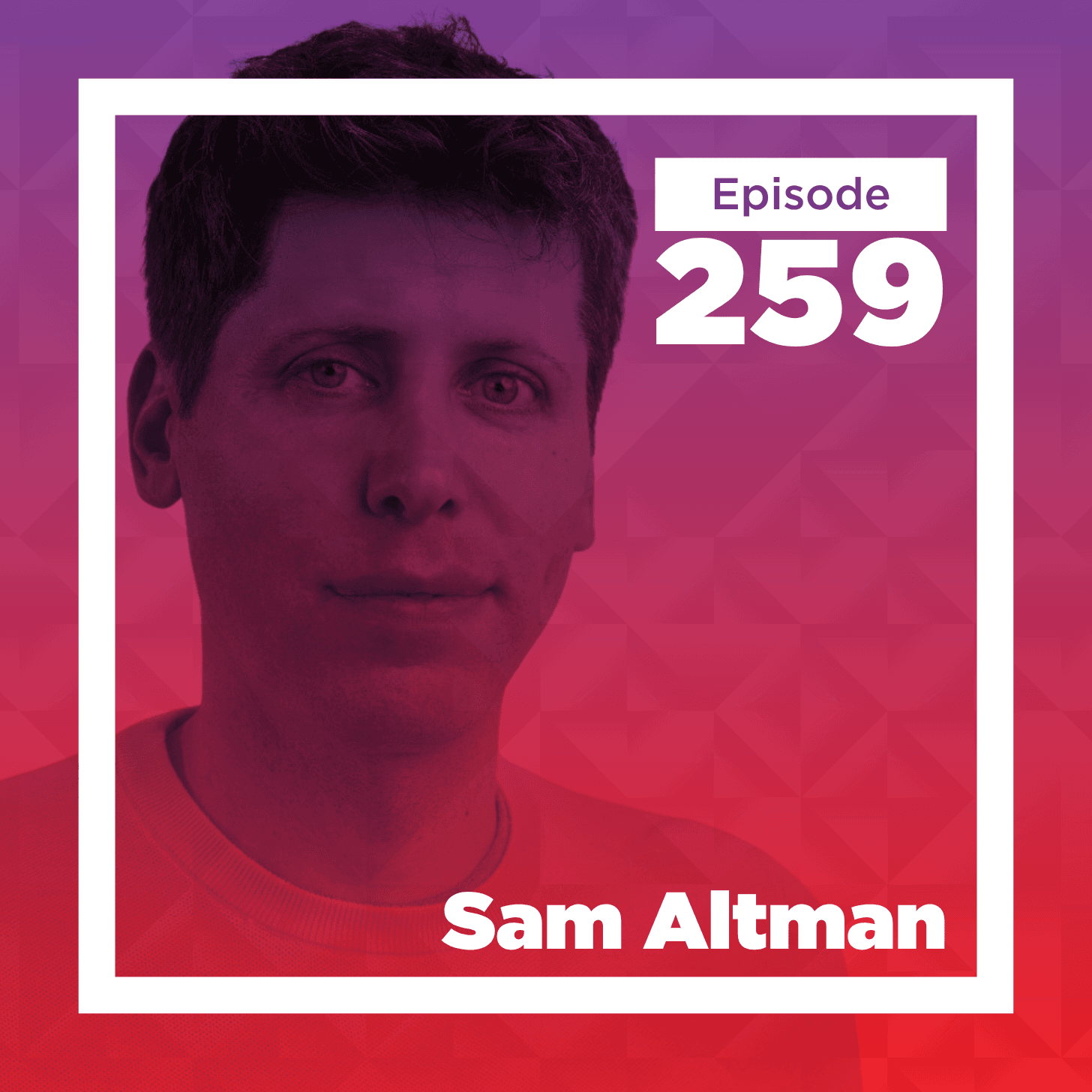
Podcast Title: Conversations with Tyler Episode Title: Sam Altman on Trust, Persuasion, and the Future of Intelligence - Live at the Progress Conference Date Recorded: October 17, 2025 Host: Tyler Cowen Guest: Sam Altman
---
Episode Summary In this episode of *Conversations with Tyler*, host Tyler Cowen welcomes back Sam Altman, CEO of OpenAI, to discuss the rapid advancements and implications of artificial intelligence (AI). Altman shares insights on OpenAI's growth, hiring practices, and the potential future of AI in various sectors, including healthcare, commerce, and creative industries.
Key Themes and Discussions
- Managing OpenAI's Growth
- Productivity and Delegation: Altman emphasizes the importance of effective delegation and hiring talented individuals to manage the expanding operations of OpenAI.
- Simplicity in Focus: As demands increase, having a clear understanding of priority tasks has simplified decision-making.
- Hiring Practices
- Differences in Hiring: Altman compares hiring for AI versus hardware roles, noting the longer cycle times and higher capital intensity in hardware tasks.
- Intangible Qualities: He highlights the importance of finding individuals who possess lateral thinking and adaptability, particularly in innovative roles.
- AI in Everyday Life
- GPT-6 and Scientific Research: Altman speculates that GPT-6 may facilitate significant advancements in scientific research, potentially leading to an AI-driven revolution in various fields.
- AI-Driven Productivity: There is a shared belief that AI will reshape productivity across numerous sectors, including academic and corporate environments.
- The Future of AI and Society
- AI CEO Possibility: Altman discusses the potential for divisions within companies, including OpenAI, to be operated primarily by AI within a few years.
- Trust in AI: He expresses concerns about the public's trust in AI, predicting that while the technology will advance quickly, societal acceptance may lag behind.
- Freedom of Expression and Ethics
- Freedom of Expression: Altman reflects on the evolving views regarding freedom of expression in the context of AI, emphasizing the need for adult users to have autonomy.
- AI Persuasion: He is more concerned about unintentional AI persuasion leading to societal changes than about overtly malicious uses of AI.
- Commerce and AI Monetization
- Future of Commercial AI: Altman discusses the integration of AI in commerce, including partnerships with major retailers like Walmart.
- Revenue Models: He outlines the challenges of monetizing AI while ensuring that the technology remains beneficial for users.
- Energy and Resource Constraints
- Chip Manufacturing: Altman identifies energy supply as a significant constraint in chip production, emphasizing a need for advancements in sustainable energy solutions, particularly fusion and solar energy.
- Cultural Implications of AI
- Transformation of Work: Altman predicts that AI will significantly alter work environments and cultural habits, particularly in how individuals interact with technology.
- Long-Term Views on Education: He anticipates a shift in the value proposition of college degrees as AI reshapes job markets.
---
Key Takeaways
- AI’s Role in Society: The growth of AI presents both opportunities and challenges that will require careful navigation as society adapts to new technologies.
- Hiring for Innovation: Finding and empowering innovative thinkers is crucial for organizations seeking to thrive in an AI-driven future.
- Trust and Ethical Considerations: Building public trust in AI technology is essential, especially as it becomes more integrated into daily life and decision-making processes.
Closing Thoughts Altman leaves listeners with questions about the future of AI and its integration into every facet of human life, suggesting that while the technology is advancing rapidly, the societal implications require comprehensive thought and planning.
---
For More Information:
- [Listen to the Full Episode](https://conversationswithtyler.com/episodes/sam-altman-2/)
- [Watch the Full Video](https://youtu.be/cuSDy0Rmdks)
- [Follow Tyler Cowen on X](https://twitter.com/tylercowen)
- [Follow Sam Altman on X](https://twitter.com/sama)
Contact Information:
cowenconvos@mercatus.gmu.edu
Discord
[Join our Discord](https://discord.gg/JAVWP7vTxt)
Produced by: Mercatus Center at George Mason University
Written by AI. May contain mistakes. Listen to the episode to check what was said.
Transcript
Automatic transcript. May contain errors.0:04Hi listeners, this is Tyler. Please mark your calendars for Friday, January 9th. We're hosting a CWT listener meetup in Austin, Texas at Parkside on East 6th Street. This is your chance to connect with fellow fans and meet me and also the entire CWT team in person and to enjoy some great conversation over light refreshments. We'll have a Q &A session plus plenty of time to mix and mingle. Space is limited and filling up fast, so click the link in the show notes to register now. It's first come, first serve, and plus ones are absolutely welcome. Just make sure they register at the link as well.
0:46Hope to see you there.
0:53Conversations with Tyler is produced by the Mercatus Center at George Mason University, bridging the gap between academic ideas and real-world problems. Learn more at mercatus.org. For a full transcript of every conversation, enhanced with helpful links, visit conversationswithtyler.com.
1:17Hello, Sam. Happy to do this with you. Excited to do it again. Now, the last two months or so, there have been so many deals involving open AI, and I'm not even talking about the globetrotting. A lot of them are local, or there's new product features, such as Pulse. Presumably, you were productive to begin with. how is it that you managed to up your productivity to get all this done i mean a lot of i don't think there's like one single takeaway other than i think you always are people are almost never allocate their time as well as they think they do and as you have more demands and more opportunities you find ways to continue to be more efficient but we've been able to hire and promote great people and i delegate a lot to them and get them to take stuff on and that that is kind of the only sustainable way i know how to do it i do try to make sure we increasingly as what we need to do comes into focus and there's as you mentioned like a lot of infrastructure that needs to be built out right now i do try to like make sure we understand or i understand like what what the the core thing for us to do is and it has in some sense simplified and there's it's very clear what we need to do so that's been helpful i don't really know i guess another thing that's happened is more of the world wants to work with us so deals are quicker to negotiate.
2:32You're doing much more with hardware or matters that are hardware adjacent. How is hiring or delegating to a good hardware person different from hiring good AI people, which is what you started off doing? You mean like consumer devices or chips? Both. One thing that's different is that cycle times are much longer. The capital is more intense. The cost of screen up is higher. So I like to spend more time getting to know the people before saying, okay, you just go do this and I'll trust that it'll work out. But it's kind of otherwise the theory is the same. You try to find good, effective, fast-moving people, get clear on what the goal is and just let them go do it.
3:14I visited NVIDIA earlier this year. They were great. They were great to me. They're super smart. But it just felt so different from walking the floor of OpenAI. And I'm sure you've been to NVIDIA. Like people read Twitter less. At least on the surface, they're less weird. Like, what is that intangible difference in the hardware world that one has to grasp to do well in it? Look, I don't know if this is going to turn out to be a good sign or a bad sign, but our chip team feels more like the OpenAI research team than a chip company. I think it might work out phenomenally well. So you're extending the model of your previous hires to hardware.
3:49With some risk, but we are. There's this fellow on Twitter. His name is Rune. He's become quite well known. What is it that makes Rune special to you?
4:03He's like a very lateral thinker. You can start down one path and sort of jump somewhere completely else, but keep going down, you know, stay on like the same trajectory, but in some sort of like very different context that's sort of unusual. He's clearly, he's great at phrasing observations in an interesting, useful, whatever way. And that sort of makes him fun and quite useful to talk to. I don't know. He brings together a lot of skills that don't often exist in one person's head. And how does that shape what you have him work on? So you see this about him and then you think, ah, Rune should do it.
4:44I very rarely get to have anybody work on anything. One thing about researchers is they're going to work on what they're going to work on. And that's kind of that. But someone put an essay online, and it said in all the time they worked at OpenAI, they hardly ever sent or received an email that so many things were done over Slack. Why is that? What's your model of why email is bad and Slack is good for OpenAI? I'll agree email is bad. I don't know if Slack is good. I suspect it's not. I think email is very bad. So the threshold to make something better than email is not high. And I think Slack is better than email.
5:16We have a lot of things going on at the same time as you observed. and we have to do things extremely quickly. It's definitely a very fast moving organization. So there are positives about Slack, but there's also like, you know, I like kind of dread the first hour of the morning, the last hour before I go to bed, where I'm just like dealing with this explosion of Slack. And I think it does create a lot of fake work. I suspect there is something new to build that is gonna replace a lot of the current sort of office productivity suite, whatever you think of like docs, slides, email, Slack, whatever, that will be sort of the AI-driven version of all of these things.
5:56Not where you like tack on the horrible, like you accidentally clicked the wrong place and it tries to write a whole document for you or summarize some thread or whatever, but the actual version of like you are trusting your AI agent and my AI agent to work most stuff out and escalate to us when necessary. I think there is probably finally a good solution for someone to make within reach. How far are you from having that internally? Maybe not a product for the whole world, that it's in every way tested, but that you would use it with an open AI. Very far, but I suspect just because we haven't made any effort to try, not because the models are that far away.
6:37But since talent, time, human capital is so valuable within your company, why shouldn't that be a priority? Probably we should do it. But there's like, you know, people get stuck in their own ways of doing things. And we got like a lot of stuff is going very well right now. So there's a lot of activation energy for like a big new thing. What is it about GPT-6 that makes that special to you? I think GPT-5, if GPT-3 was like the first moment where you saw like a glimmer of something that felt like the spiritual Turing test getting passed. GPT-5 is the first moment where you see a glimmer of AI doing new science.
7:12It's like very tiny things, but, you know, here and there someone's posting like, oh, it figured this thing out, or oh, it came up with this new idea, or oh, it was like a useful collaborator on this paper. And there is a chance that GPT-6 will be a GPT-3 to 4-like leap that happened for kind of Turing test-like stuff for science, where 5 has these tiny glimmers and 6 can really do it. So let's say I run a science lab and I know GPT-6 is coming. What should I be doing now to prepare for that? It's always a very hard question. Like, even if you know this thing is coming. Let's say I even had it now, right?
7:50What exactly would I do the next morning? I mean, I guess the first thing you would do is just type in the current research questions you're struggling with. And maybe it'll say, like, here's an idea or run this experiment or go do this other thing. But if I'm thinking about restructuring an entire organization, type of GPT-6 or 7 or whatever, at the center of it, what is it I should be doing organizationally rather than just having all my top people use it as add-ons to their current stock of knowledge? So I've thought about this more for the context of companies than scientists, just because I understand that better.
8:26And I think it's a very important question. And right now, I have met some orgs that are really saying, like, okay, we're going to adopt AI and let AI kind of do this. But I'm very interested in this because, like, shame on me if OpenAI is not the first big company run by an AI CEO, right? But just parts of it. And I thought the whole thing, that's very ambitious. The finance department, whatever. Well, but eventually it should get to the whole thing. So we can use this and then try to work backwards from that. And I find this a very interesting thought experiment of what would have to happen for an AI CEO to be able to do a much, much better job of running OpenAI than me, which clearly will happen someday.
9:03But how can we accelerate that? What's in the way of that? But I have found that to be a super useful thought experiment for how we design our org over time and what the other pieces and kind of like roadblocks will be. And I assume someone running a science lab should kind of try to think the same way and they'll come to different conclusions. How far off do you think it is that just say one division of open AI is 85 % run by AIs? Any single division? Not a tiny, any significant division, mostly run by the AIs. Some small single digit number of years. Not very far. Not very far. And how does that...
9:39When do you think I can be like, okay, Mr. AI CEO, you take over? CEO is tricky because the public role of a CEO, as you know, becomes more and more important. Let's say I stay on the... If I can pretend to be a politician, which is not my natural strength, then AI can do it too. But let's say I stay involved for the public-facing whatever. Just actually making the good decisions, figuring out what to do. I think you'll have billion-dollar companies run by two or three people with AIs, I don't know, two and a half years. I used to think one year, but maybe I've put it off a bit. I'm not more pessimistic about the AI.
10:15Maybe I'm more pessimistic about the humans. But what's your forecast? I agree on all of those counts. I think the AI can do it sooner than that. People have a great – and I think this is a good thing for society and a good thing for the future, not a bad one. People have a great deal higher trust in other people over an AI, even if they shouldn't, even if that's irrational. You know, the AI doctor is better, but you want the human, whatever. So I think it may take much longer for society to get really comfortable with this and for people in an organization to get really comfortable with this.
10:49But on the actual decision-making for most things, maybe the AI is pretty good pretty soon. And you're hiring a lot of smart people. Do you ask yourself, what are the markers of how AI-resistant this very smart person will be? like you have a implicit mental test for that or you just hire smart people and hope it's all going to work out later no i do ask i do ask questions about that but people will just lie right like they know you're taught they're talking to open ai what do you actually look for in them i mean a big one is how they use ai today and the people who still are like oh yeah you know i'd use it for better google search and nothing else that's not necessarily disqualifier but that's like a yellow flag.
11:28And people who are like seriously considering like what their day-to-day is going to look like in three years, that's a green flag. A lot of people aren't. They're like, oh yeah, you know, probably it's going to be really smart. Do you think scientific labs might get GPT-6 this year? Not this year. Not this year. Here's a very difficult question. As you know, both you and I were fans of nuclear power, but we also know the insurance for nuclear power plants is provided by the government. The plants might be quite safe, but people worry. They're nervous Nellies. There's a lot of parties involved.
11:59So the federal government does the insurance. Do you worry that the future holds the same for AI companies, where the feds are your insurer? And how do you plan for that? Again, even if AI is pretty safe, as with nuclear power, people are nervous Nellies. How will you insure everything? Like at some level, when something gets sufficiently huge, whether or not they are on paper, the federal government is kind of the insurer of last resort, as we've seen in various financial crises and insurance companies screwing things up. So I guess given the magnitude of what I expect AI economic impact to look like, sort of I do think the government ends up as like the insurer of last resort.
12:48But I think I mean that in a different way than you mean that. And I don't expect them to actually be like writing the policies in the way that maybe they do for nuclear. And there's a big difference between the government being the insurer of last resort and the insurer of first resort. Last resort's inevitable, but I'm worried they'll become the insurer of first resort, and that I don't want. I don't want that either. It's not, I don't think that's what will happen. What we're seeing with Intel, Lithium, Rare Earths, is the government is becoming an equity holder, again, not of last resort, but of second or third resort.
13:19And I don't mean this as a comment about the Trump administration. I think this is something we might be seeing in any case or see in the future after Trump is gone. But how do you plan for open AI knowing that's now a thing on the table in the American economy? Look, there are all these ways where you can imagine that. I put almost no probability on mass onto the world where no one has any meaning in the post-AGI world because the AI is doing everything. Like, I think we're really great at finding new things to do, new games to play, new ways to be useful to each other, to compete, to get fulfilled, whatever.
13:52But I do put a significant probability that the social contract has to change significantly. I don't know what that will look like. Can I see the government getting more involved there and thus having some strong opinions about AI companies? I can totally see that. But we don't live our lives that way. We just kind of try to work with capitalism as it currently exists. And I believe that that should be done by the companies and not the government. although we'll partner with the government and try to be like a good collaborator. Like I don't want them like writing our insurance policies. Now, I did a trip through France and Spain this summer with my wife.
14:26Every hotel we booked, other than the first one, we booked through, well, we found it through GPT-5. We didn't book it through GPT. Almost every meal we ate, right. And you didn't get a dime for this. And I'm telling my wife, well, this just seems wrong, right? What is the new world going to look like soon enough? How will that work? I think if chat GPT finds you, to zoom out even before the answer, one of the sort of unusual things we noticed a while ago, and this was when it was a worst problem, chat GPT would consistently be reported as like a user's most trusted technology product from a big tech company.
15:03We don't really think of ourselves as a big tech company, but I guess we sort of are now. And that's very odd on the surface, right? Because AI is the thing that hallucinates. AI is the thing with all the errors. And this was when that was a much more of a problem. and there is a question of why. Ads on a Google search are dependent on Google doing badly. Like if it was giving you the best answer, there'd be no reason ever to buy an ad above it. So you kind of like, you're like, that thing is not quite aligned with me. ChatGPT, maybe it gives you the best answer, maybe it doesn't, but you're paying it or hopefully all are paying it.
15:34And it's at least trying to give you the best answer. If we, and that has led to people having like a deep and pretty trusting relationship with chat GPT. You ask chat GPT for the best hotel, not Google or something else. If chat GPT were accepting payment to put a worse hotel above a better hotel, that's probably catastrophic for your relationship with chat GPT. On the other hand, if chat GPT shows you its guest, the best hotel, whatever that is, and then if you book it with one click takes the same cut that it would take from any other hotel, and there's nothing that influenced it, but there's some sort of transaction fee, I think that's probably okay.
16:17And with our recent commerce thing, that's the spirit of what we're trying to do. We'll do that for travel at some point. I'm not worried about the payola issue, but let me tell you my worry. And that is, there may be a tight cap on the commission you can charge, because we're now in a world, say, where there's agents, and someone finds the best hotel through GPT-7 or whatever, and then they just talk to their computer or their pendant, and they go to some stupider service, but the stupider service is an agent that books very cheaply, and they only really have to pay OpenAI a commission equal to what the stupidest service will charge.
16:51So one thing I believe in general related to this is that margins are going to go dramatically down on most goods and services, including things like hotel bookings. I'm happy about that. I think there's like a lot of taxes that just suck for the economy and getting those down should be great all around. But I think that most companies like OpenAI will make more money at a lower margin. But do you worry about the discrepancy between the fixed upfront cost of making yours the smartest model compared to the very cheap cost of all the competing agent has to do is book it for someone? And how do you use the commissions to pay for making the model smarter, in essence?
17:34I think the way to monetize the world's smartest model is certainly not hotel booking. But you want to do it nonetheless. I mean, I want to discover new science and figure out a way to monetize that, that you can only do with the smartest model. There is a question of like, should, many people have asked, should OpenAI do Chai GPT at all? Why don't you just go build AGI? Why don't you go discover, you know, a cure for every disease, nuclear fusion, cheap rockets, the whole thing, and just license that technology? And it is not an unfair question because I believe that is the stuff that we will do that will be most important and make the most money eventually.
18:13But my story, my most likely story about how this works how the world gets like dramatically better is we put a really great super intelligence in the hands of everybody we make it super easy to use it's nicely integrated we make you beautiful devices we connected all your services it gets to know you over your life it does all the stuff for you and we invest in infrastructure and chips and energy and the whole thing to make it super abundant and super cheap. And then you all figure out how the world gets way better. Maybe some people will only ever book hotels and not do anything else, but a lot of people will figure out they can do more and more stuff and create new companies and ideas and art and whatever.
18:55So maybe chat GBT and hotel booking and whatever else is not the best way we can make money. In fact, I'm certain it's not. I do think it's a very important thing to do for the world. And I'm happy for OpenAI to do some things that are not the like economic maxine thing. Now you have a deal in the works with Walmart that people can use GPT. They ask questions, what should I buy at Walmart? And then they can buy it at Walmart and you want to Walmart have some arrangement. Do you think Amazon will fold and join that or are they going to fight back and try to do their own thing? I have no idea. If I were them, I would fight back.
19:28You would fight back? I think so. Yeah. Ads. How important a revenue source will ads be for open AI? Again, there's a kind of ad that I think would be really bad like the one we talked about. There are kinds of ads that I think would be very good or pretty good to do. I expect it's something we'll try at some point. I do not think it is our biggest revenue opportunity. What will the ad look like on the page? I have no idea. You asked a question about productivity earlier. Yeah. I'm really good about not doing the things I don't want to do. And that's something you don't want to do? You know, we have the world expert thinking about our product strategy.
20:06I used to do that. I used to spend a lot of time thinking about product. And now she's much better at it than me. I have other things to think about. I'm sure she'll figure it out. Whether or not you agree with it, what is the best, this is not a bubble argument? Is it just the insatiable demand for compute? There's a lot of arguments I'm tempted to give. But I think the intellectually most interesting one is we have no idea how much past human level intelligence can go and what you can do with it as it does. So there's all the arguments that everyone has made. The one I would like to see people talk about much more is how are you even supposed to think about vastly superhuman intelligence and the economic impacts of that?
20:52Now, OpenAI is in talks with Saudi Arabia, with UAE. Let's take the most optimistic scenario for how all that goes. What is it that top open AI management needs to know or understand about those countries? And how is it you learn it? Well, it would depend on what we were doing with them. Putting data centers in a country or taking investment from a country or deploying commercial services would be very different than a set of other collaborations we could imagine. But generally speaking, to put data centers in a country, what we need to understand is who's going to run it? We don't operate our own data centers, but Microsoft or Oracle or somebody else.
21:33What workload are we going to put there? So what model weights are we going to put there? And what are the security guarantees going to look like? We do want to build data centers around the world with lots of countries. But for this question, which is kind of the main thing we deal with other countries for, those are the kinds of questions, if we were, which we don't have current plans, if we were like developing a custom model for some country, we'd have a whole bunch more questions. But they have different legal codes, different expectations from a deal. I'm I'm not saying it's in a bad way.
21:59It's just quite different, right? And you do the Jared Kushner thing. Here's the 25 books I read. Or you sit down and you ask GPT-6 how to understand this culture. Or you bring in three experts. We bring in experts. You bring in experts. We talk to the U.S. government a lot. We bring in experts. Again, if we're building a data center that a very trusted partner is going to operate, we know what the workload is, and it's being built like a kind of U.S. embassy or U.S. military base, we have a very different set of questions than if we were doing other things, which we have not yet decided to do and we'd bring in more experts for.
22:30And those are quite intangible forms of knowledge often. How good do you think GPT-6 is at teaching you those things? Or you still need the human experts to come in? Because you could just ask your own model, right? I don't think GPT-6 will have those intangibles. It might surprise us, but I wouldn't. I'd be very, that'd be very unexpected if I was like, oh, don't talk to experts anymore. Do you have an evaluation for that in the works? Actually, for something very close to that, we do. I don't want to pre-announce it, but that class of stuff, yes, we do have... You do? Yes. Yeah. How good will GPT-6 be at poetry?
23:06How good do you think GPT-5 is at poetry? Not that good. It's not what I want it for, so that's not a complaint. My guess is in a year, you'll have some model that can write a poem as good as the median Pablo Neruda poem, but not the best. I was going to say, I think like, I don't want to say GPT, whether it's six or seven, but I think we will get to something where you will say this is like a, this is not a long way to the very best, but like, this is like a real poet's okay poem. In my view, there's a big gap between a Neruda poem that's a seven on a scale of one to 10 and one that's a 10. I'm not sure you'll ever reach the 10.
23:45I think you'll reach the 8.8 within a few years. I think we will reach the 10 in it. You won't care. Who won't care? You won't care. I'll care. Well, I promise. I mean, you'll care in terms of the technological accomplishment, but in terms of like the great pieces of art and emotion, whatever else produced by humanity, you care a lot about the person or that a person produced it. and it's definitely something for an ai to write a 10 on its technical merits but you know my classic example of this is the greatest chess players don't really care that ai is hugely better than the chess it doesn't demotivate them to play they don't really care that they are they really care about beating the other human and they really like get obsessed with that dude sitting across from them but the fact that the ai is better they don't care watching two ais play each other, not that fun for that long.
Read the full transcript
24:45Well, let me tell you my worry about reaching the 10. Evaluations rely a lot on these rubrics. And the rubrics will become good enough to produce very good poems. But maybe there's something about the 10 poem that stands outside the rubric. And if you're just training on rubrics, rubrics, rubrics, it might in a way be counterproductive for reaching the 10. I mean, evals can rely on a lot of things, including when you call a poem a 10 and when you don't. And you can read a bunch in the process and provide some real-time signal. But say we have no human poets today writing 10s, and we're asking those same people to judge and grade the GPTs.
25:22I'm worried. Again, I think it will be fine. But to me, we're talking about a 9, not a 10. You don't have William Wordsworth working for OpenAI. This gets to a very interesting thing, which is, let's say you can't write a 10, but you can decide when something is a 10. Yeah. That might be all that we need. Maybe humanity only decides collectively what's a 10 and there's something a little mysterious and history-laden about that process. Okay, but still we can do it. Now maybe our decision is not very good because it is history-laden and it does drift over time and some things we all agree are great.
26:00The next generation decides they're not, whatever. But if whatever process humanity has to determine but a poem is a 10. You could imagine that providing some sort of signal to an AI. Now, again, if you know it's an AI, maybe you don't care. We see this phenomenon with AI art. To the extent you end up building your own chips, what's the hardest part of that? Man, that's a hard thing all around. There's no easy part of that. Yeah, no easy part of that. Well, Jonathan Ross said it's just keeping up with what is new. No, I'll tell you what might... People talk a lot about the recursive self-improvement loop for AI research, where AI can help researchers maybe today write code faster, eventually do automated research.
26:42And this thing is like well understood, very, very much discussed. Very little discussed are the, or relatively little discussed are the hardware implications of this. Robots that can build other robots, data centers that can build other data centers, chips that can design their own next generation. So there's many hard parts, but maybe a lot of them can get much easier. Maybe the problem of chip design will turn out to be a very good problem for previous generations of chips. You know, the stupidest question possible. Why don't we just make more GPUs? Because we need to make more electrons. But what's stopping that?
27:16What's the ultimate binding constraint? We're working on it really hard. I mean, this is, you know. But if you could have more of one thing to have more compute, what would the one thing be? Electrons. Electrons. Yeah. Just energy. Yeah. And what's the most likely short-term solution for that? Short-term solution. Easing, not full solution, but easing of the constraint. Short-term natural gas. Long-term. In the American South. Or wherever. Long-term it will be dominated, I believe, by fusion and by solar. I don't know what ratio, but I would say those are the two winners. And you're still bullish on fusion.
27:47Very much. And solar. Do you worry that as long as it's called nuclear power, even if it works... Did I say the word nuclear? No, you didn't, but other people will. The people just won't want it. Getting back to the irrationality point in the insurance. you're the economist not me but i think there is some price point at a given level of safety where the demand for this will be overwhelming if this is the same price as natural gas maybe it's unfortunately hard if it's one-tenth the price i think we could agree it would happen very fast i don't know what the cut point is between do you ever worry there's some scenario where ultimately super intelligence doesn't need that much compute.
28:30And in some funny way, by investing in compute, you're betting against progress over 30 year time horizon. In the same way that like people always want more energy if it's cheaper, I think people always want more compute if it's cheaper. So even if you can make incredibly smart models with much less compute, which I'm sure you can, the desire to consume in all sorts of new ways and do more stuff with more of an intelligent, take that bet every day. The related thing I worry about is that there is like a huge phase shift on how we do compute. And we're all kind of like chasing a dead-end paradigm.
29:05That would be bad. And what would that look like? I don't know. We like all switched to optical compute, like full-on optical compute or something. And just have to spend a lot of money all over again. Yeah. Well, not on all of it. Like the energy is the energy. But yes, on everything else. Now, I love pulse. Why don't I hear more about pulse? or do you think there is a lot of chatter out there? People love Pulse, but it is only available to our pro users right now, which is not that many. And also we're not giving much per day to users and we will change both of those things. But I suspect when we roll it out to Plus, you will hear about it a lot more, but people do love it.
29:41It gets great, great reviews. And what do you use Pulse for? There are kind of only two things in my life right now. Like there's my family and work and clearly this is what I talked to ChatGPT about because I get a lot of stuff about that. You know, I get the odd, like, new hypercar came out or, like, here's a great hiking trail or whatever. But it's mostly those two things. But it's great for that, both of those. I'd just like to do a brief interlude on your broader view of the world and just see how I should think about how you think. So people in California, they have a lot of views, like, on their own health, some of which to me sound nutty.
30:15What do you think is your nuttiest view about your own health? that you're going to live forever, that, you know, the seed oils are bad, or what is it? Or do you not have any? I mean, when I was less busy, I was more disciplined on health-related stuff. I didn't have crazy views, but I was like, I kind of ate healthy. I didn't drink that much. I, like, worked out a lot. I tried a few things here and there. Like, I once ended up in a hospital for trying semaglutide before it was cool, like that kind of stuff. But I now do basically nothing. I don't, you know, I eat junk food. I don't exercise enough.
30:53It's like a pretty bad situation. Like I'm feeling bullied into taking this more seriously again. Yeah. But why eat junk food? Like it doesn't taste good. It does taste good. Compared to like good sushi, you could afford good sushi. Someone will bring it to you. A robot will bring it. You just really want that chocolate chip cookie at 1130 at night. Yeah. Or at least I do. Yeah. Do you think there's any kind of alien life on the moons of Saturn? Because I do. That's one of my nutty views. I have no opinion on the matter. No opinion on the matter. I don't know. Yeah, that's a way of passing the test.
31:28What do you think about UAPs? Do you think there's a change? I think something's going on there. You think something's going on there? I have an opinion that there is something that I would like an explanation for. I kind of doubt it's Little Green Men. I extremely doubt it's Little Green Men, but I think someone's got something. And how many conspiracy theories do you believe in? Because I believe in close to zero, at least in the United States. They may be true for like Pakistani military coups, but I think mostly they're just false. like true conspiracy theory not just an unpopular belief correct you know i have one of those uh what was that the x-files shirts like i want to believe yeah i still have one of those shirts from when i was in high school i i like i want to believe in conspiracy i'm predisposed to believe in conspiracy theories and i believe in either zero or very few yeah i'm the opposite of that i don't want to believe and i believe in very few like maybe the white socks fixed the world series way back when.
32:20Yeah, stuff like that. I don't quite count that. Like a true, like massive global government cover-up that requires like a level of competence to people I just rarely ascribe. Now, some number of years ago, this was before even GPT-4, I asked you if you were directing a fund of money to revitalize St. Louis, which is where you grew up, how would you invest the money? Now it's a quite different world from when I asked you last time. And if I ask you again to revitalize St. Louis, how would you spend the money? Say it's a billion dollars, which is not actually transformational, but it's enough that it's some real money.
32:58A billion dollars, and I'm willing to go spend personal time on it? You have free time. The universe grants you free time. You don't take time away from anything else you're doing. You're in charge. I would go try to start a thing that is like, this is not like a deeply incisive answer because I think this would like, this is not a generally replicatable thing, but unique to me what I could do, I think I would try to go start a Y Combinator-like thing in St. Louis and get a ton of startup founders focused on AI to move there and start a bunch of companies. That's a pretty similar answer to last time.
33:33I didn't remember what I said last time, so that's a good sign. You said the same thing, but you didn't mention AI. But AI to me seems quite clustered where we are in the Bay Area. Is trying to get AI into St. Louis the right way to do that? Isn't that, in a way, working at cross-purposes? I mean, this is why I said it'd be like a unique-to-me thing. I think I could do it. Maybe that's like hopelessly naive. Yeah. Should it be legal to just release an AI agent into the wild, unowned, untraceable? Do we need some other AI agent to go out there and tackle it down? Or is there minimum capitalization?
34:08How do you think about that problem? I think it's a question of thresholds. I don't think you'd advocate that most systems should have any oversight or regulation or legal questions or whatever. But if we have an agent that is going to like capable, like with serious probability of massively self-replicating over the Internet and, you know, sweeping all the money out of bank accounts or whatever, you would then say, OK, maybe that one needs some like oversight. So I think it's a question of where you draw the threshold for where it should not be. But say it's hiring the cloud computing from a semi-rogue nation, so you can't just turn it off.
34:45What actually should we do or will we be able to do? Just try to ring fence it somehow? Identify it? Surveil it? Put sanctions on the country that's sponsoring it? What do we do for people that do that today? Well, there are a lot of cyber attacks that come from North Korea, and I think we can't do that much about them, right? My naive take is that, I don't know what the right answer is yet, but my naive take is we should try to solve this problem originally for people using like rogue internet resources. And AI will just be like a worse version of that problem. But it will have better defense also.
35:19For sure. Yeah. Now, if I think about social media and AI, here's one thing I've noticed in my own work. I'm so, so keen to read the answers to my own queries, to GPT-5. But when people send me the answers to their queries, I'm bored. I don't blame them. Like, I know it's super useful for them. But that makes me a little skeptical about blending social media and AI. Am I missing something? Or would you try to talk me out of that somehow? No, I've had the same. I don't want to read your ChatGBT queries either. Yeah, but they're great for me. I'm sure. And I'm sure you don't want to read mine, but they're great for me.
35:56So ChatGPT, I think, is very much like a single-player experience. I don't think that means there's not some interesting new kind of social product to build. In fact, I'm pretty sure there is. But I don't think it's the, like, share your ChatGPT queries. Videos or what? Any sense of what that would look like? That one's doing well. You know, people clearly, like, they love making their own, but they also like watching other people's AI-generated videos. But no, I think none of this stuff is the really interesting kind of things you can imagine when you and I and everybody else have like really great personal AI agents that can do stuff on our behalf.
36:35There's probably entirely new social dynamics to think about. And just the physical form of chat GPT on my screen or on my smartphone, is that more or less going to stay the same, but the thing will be better? or 13 years from now, it will physically just be an entirely different beast? Because I can talk to it now, you know, now it does video. And is it just a better version or somehow it morphs? We are going to try to make you a new kind of computer with a completely new kind of interface that is meant for AI, which I think wants something completely different than the computing paradigm we've been using for the last 50 years that we're currently stuck in.
37:14Like AI is a crazy change to the possibility space. and a lot of the basic assumptions of how you use a computer and the fact that you should even be opening and having an operating system or opening a window or sending a query at all are now called into question. I realize that the track record of people saying they're going to invent a new kind of computer is very bad. But if there's one person that you should bet on to do it, I think Johnny Ive is like a credible, maybe the best bet you could take. So we'll see if it works. I'm very excited to try. But haven't you already been surprised how robust it is that people love typing text into boxes.
37:52This sort of shocks me in the bigger picture. People are still texting all the time. It's one of the most robust forms of internet anything. And maybe that will just stick forever and it's a sign of our own limitations. But how do we get past that? Texting, command lines, search queries, that doesn't my favorite interface. Yeah. I think like... You like it, I like it. Maybe we're just going to keep it. Well, a lot of people use it. Like people love to text, people like ChatGPT. I remember when we were thinking about the interface for Chachapute, I was very set that this was something people would be familiar with and want to use.
38:28And I think I grew up as a child of the internet with a lot of conviction that that was the right kind of internet. Texting was like my life as a teenager. If you have some kind of ideal arrangement, partnership, with an institution of higher education, say within two to three years, what does that look like? You get to write the whole thing. I suspect that the whole model should change, but I don't know what to. I think the ideal partnership would look like we try 20 different experiments. We see what leads to the best results. I've been watching these AI schools pop up with great interest. It seems like a lot of them with very different approaches are all showing positive results.
39:10But I think the first few years of the ideal partnership would look like we run 20 wildly different experiments. Sometimes I have the fear that these institutions don't have enough internal reputational strength or credibility to make any major change. Forget about AI. and that to do a partnership with an institution like that is maybe intrinsically frustrating. And for the next 10 years, the actual model is kind of privatized AI use on the side by faculty, by students, by labs. And in a sense, there is no partnership other than actually just marketing your product to these people. Do you ever think that might be true?
39:48Yeah. And I don't, it wouldn't like super upset me if that's what happens. Yeah. What do you think will happen to the returns to a college degree? Not Harvard, not Stanford, but like a quite good state school. Five, 10 years out. What's the historical rate of decline of the value of that? Recently, it's gone down, though for a long time it was going up quite a bit. Yeah, I mean like the last decade. Gone down, I don't know how much. I would kind of guess that it goes down at a slightly higher rate than the last decade, but it does not like collapse to zero as fast as it should. And then it's the returns to doing what other than learning AI that go up, like being on the college football team or what?
40:31I don't think the returns will, I mean, the massive returns will accrue to doing AI for a small set of people. But I think the returns to using AI super well will be like surprisingly widely distributed. I am not a believer that the, I think the most important thing AI will do is discover new science for all of us. And people will, a lot of people will benefit from that. And people will start companies or get jobs doing that. But I am not a believer that that is like the only thing that eventually makes money. I think people will just use AI for all sorts of new kinds of jobs or to do existing jobs better.
41:05and you know maybe the starkest example of this in 2025 is what it the day-to-day of how you know the average programmer in silicon valley did their workflow at the beginning of this year versus the end of this year extremely different extremely different and you don't really have to know how to program ai to do that but you now have like you can get more done and you probably have much more value and the world's going to get much more software i think we'll see things like that for a surprising number of industries. But say five years out, there's a so-called normie person. They're not a specialist.
41:38They want to learn how to use AI much better. What will they actually do that will give them a high return to acquiring that skill? To learn how to use AI specifically? Yeah, yeah. Not program, not the inner guts, just actually in their job. I'm smiling because I remember when I was a kid and Google came out there, I had a job teaching older people how to use Google. Yeah. And it felt like a, it just couldn't wrap my head around. I was like, you type the thing in and it does this. And, you know, a thing that I'm hopeful about for AI is that I think one of the reasons ChatGPT has grown so fast is it is so easy to learn how to use it and get real value out of it.
42:15So we don't need startups to do that? To teach people how to use AI? To teach people, yeah. There is such a startup or what's the institution? My school will teach me? That's hard to believe. You know, 10 % of the world will use ChatGPT this week. Didn't exist three years ago. I suspect a year from now, maybe 30 % of people will use Chachapiti that week. People, once they start using it, do find more and more sophisticated things to use it for. And this is not a top-of-mind problem for me. I think, like, I believe in human creativity and adoption of new things over some period of number of years.
42:50But you might just want to support or invest in the startups that will do this. Because if you're bullish on AI, presumably you're bullish on those startups. And it will help your business in turn. So it seems odd not to have a theory of how we're all going to learn to use AI better. Like you can go to dog trainer school and they teach you how to train a dog. Okay, maybe I have like a blind spot here and I promise I'll go think about this more. But if you ask Chatsby Tealeg, teach me how to use you. Yeah, maybe that's it. It's pretty good. Yeah, so maybe you're the school. Maybe. Yeah. Let's say when your kids are old enough that they're grown, they can go out on their own.
43:24In that future world, which is not like so far off, Do you think you'll still be reading books or you'll just be interacting with your AI? Books have survived a lot of other technological chains. So I think there is something deep about the format of a book that has persisted. It's very Lindy, whatever that current word for that is. But I suspect that there will be a new kind of way to interact with a cluster of ideas that is better than a book for most things. So I don't think books will be gone, but I would bet they're like a smaller percentage of how people like learn a new or interact with a new idea.
44:04And what's the cultural habit you have that you think will change the most? Like, oh, I won't watch movies anymore. I'll create my own or whatever for you. AI will obliterate what you did when you were 23. I mean, this is kind of boring, but I think the way I work, you know, where I'm like doing emails and calls and meetings and, you know, like writing documents and dealing with Slack, like that I expect to change hugely. And that has become like a real, and I have like a cultural habit and like a rhythm of my workday at this point. But spending time with my family, like spending time in nature, you know, eating food, my interactions with my friends, that stuff I sort of expect to change, almost not at all, at least not for a very long time.
44:54You think San Francisco will remain the center for AI? Putting aside China issues, I just mean for, you know, the so-called West. Yeah, I think that's the default. It's the default. And you think the city is just absolutely making a comeback? It looks much nicer to me, seems nicer. Am I deluded? I love the city. I mean, I love the whole Bay Area. I particularly love the city, but I love the Bay Area. And so I don't think I'm a fair person to ask because I so want it to be making a comeback and to remain the place. I think so. I hope so. But, you know, very biased. AI will improve many things very quickly, but what's the time horizon for making rents or home prices cheaper?
45:37That seems like a tough one. Not the fault of AI, but land is land, and there's a lot of legal restrictions. Yeah, I was going to push back on the land is land. There are a lot of other problems that I don't think AI can solve anytime soon. I wouldn't, I mean, there could be these very strange second-order effects where home prices get much cheaper, but sadly I don't think AI has like a direct attack on solvent anytime soon. Food prices? I would bet down. But what, you know, in the short run energy might be a bit more expensive. How long does it take for food prices to go down? If they're not down in a decade, I'd be very disappointed.
46:15If we think of healthcare, my sense is we're going to spend a lot more on healthcare. We'll get a lot for it because there'll be new inventions, but a lot of the world will feel more expensive because rent won't be cheaper. Food, I'm not sure about. Healthcare, you'll live to age 98, but you'll have to spend a lot more. You'll just be alive more you're spending, right? So are people just going to think of AI as this very expensive thing or will it be thought of as a very cheap thing that makes life more affordable? I would bet we spend less on healthcare. I bet there are a lot of diseases that we can just cure or come up with a very cheap treatment for that right now we have nothing but expensive chronic stuff that doesn't even work that well.
46:55So I would bet healthcare gets cheaper. Through pharmaceuticals, devices? Through pharmaceuticals and devices, and even like delivery of actual healthcare services. Look, housing is the one to me that just looks super hard. And there will be other categories of things that we want to get more expensive, and of course those will, status goods or whatever. But I would take the healthcare goes down bet. And with all the blizzard of new ideas coming, you know, patent law, copyright law, those are based on earlier technologies and earlier models of how the world would work. Do we need to reexamine or change those radically for an AI-drenched world?
47:32Or we can just keep what we have and modify it a bit? I really have no idea. I'm a big free speech advocate, but I can imagine the world saying, well, with all this AI-driven content, we need to re-examine the First Amendment. Do you have a view on that? I put out a tweet recently about how we're, you know, going to be allowing more freedom of expression in ChatGPT. And this is the famous erotica. You know, it's funny what people get upset about. It is funny what animates people. Because all you're saying is you're not going to stop people, right? Well, we used to not a long time. I mean, well, that's not totally fair.
48:12We're going to allow more than we did in the past. But like a very important principle to me is that we treat our adult users like adults and that people have a very high degree of privacy with their AI, which we need legal change for. And also that people have a, you know, very broad bounds of how they're able to use it. And to me, this should be one of the easiest things to agree on by like most people in the tech industry or even like most people in the US government. Like this was, I kind of dashed this tweet off and closed my computer and it didn't even like hit my mind that it was going to be like, you know, really a firestorm.
48:54It was that we made a decision, which I also think was a fair one, over the summer, that because there were new problems, and particularly because we wanted to protect teenage users, we were going to heavily restrict ChatGPT, which is also always a very unpopular thing to do. And along with the rolling out of age gating and some of these mental health mitigations, we were going to bring back and in some cases increase freedom of use for adults. I was like, yeah, you know, I'll tell people that's coming because the first model update is shipping soon, but this should be a non-issue. And like, boy, did I get that one wrong.
49:32So clearly people, I think maybe it's just people don't believe in freedom of expression as much as they say they do. That is my opinion, yeah. That was kind of my only, like everyone thinks, okay, my own freedom of expression, I can handle it. I need it. My ideas are all right, but yours, like. And for greater privacy rights, is it subpoena power that needs to be changed or something else in addition? Subpoena power. I believe that we should apply at least as much, well, let me just say, I believe we should apply as much protection as when you talk to your doctor, your human doctor or your human lawyer, as you do when you talk to your AI doctor or AI lawyer.
50:08And right now we don't have that. Correct. Do you think there's enough trust in America today for people to trust the AI companies the way we sort of trust doctors, lawyers, and therapists? By revealed preference, yes. Yes. By how many people talk to it. LLM psychosis. Everyone on Twitter today is saying it's a thing. How much a thing is it? I mean, a very tiny thing, but not a zero thing, which is why we pissed off the whole user base or most of the user base by putting a bunch of restrictions in place. The treat adult users like adults includes an asterisk, which is people that are treat adults of sound mind like adults.
50:46You know, society decides that we treat adults that are having a psychiatric crisis differently than other adults. And when we saw, it is one of these things that you learn as you go. But when we saw that the kind of like put JAT-GPT into role playing mode or, you know, pretend like it's writing a book and have it encourage someone in delusional thoughts. 99 point some big number percentage of adults totally fine with that some tiny percentage of people also if they talk to another you know person who encourages delusion it's it's bad so we made a bunch of changes which are in conflict with the freedom of expression policy and now that we have this mental health mitigations in place we'll again allow some of that stuff in you know creative mode role-playing mode writing mode whatever of chat gpt i the thing i worry about is not that you know there will be a few basis points of people that are like close to losing grips with reality and we can trigger a psychotic break and we can get that right the thing i worry about more is it's funny the things are like sticking your mind someone said to me once like never ever let yourself believe that propaganda doesn't work on you they just haven't found the right thing for you yet and again i have no doubt that we can't address like the clear cases of people near a psychotic break but for all of the talk about ai safety you know i kind of would divide most ai thinkers into these two camps of okay it's it's the you know bad guy uses ai to cause a lot of harm or it's the ai itself is misaligned wakes up whatever intentionally takes over the world there's this other category that gets third category gets very little talk that I think is sort of much scarier and more interesting, which is the AI models like accidentally take over the world.
52:35It's not that they're going to induce psychosis in you, but they're, you know, if you have the whole world talking to this like one model, it's like, not with any intentionality, but just as it learns from the world and this kind of continually co-evolving process, it just like subtly convinces you of something. No intention just does. learned that somehow. And that's like not as theatrical as chatbot psychosis, obviously, but I do think about that a lot. Maybe I'm not good enough, but as a professor, I find people pretty hard to persuade, actually. I worry about this less than many of my AI-related friends do.
53:10I hope you're right. Yeah. Last question. On matters where you can speak publicly, at the margin, if you could call in an expert to help you resolve a question in your mind of substance what would that question be i have an answer to this ready to go but only because i got asked to well maybe i'll tell the story right after there will come this is like a kind of take this spirit spiritually not literally there will come a moment where the super intelligence is built it is safety tested it is ready to go it is gonna like you know we'll still be able to supervise it but it's gonna do just like vastly incredible things it's gonna be self-improving and it's going to launch the probes to the stars, whatever.
53:50And you get the opportunity to type in the prompt before you say, okay. And the question is, what should you type in? And do you have a tentative answer now? No, I don't. The reason that I had that ready to go in mind is someone was going to see the Dalai Lama and said, I'll ask any question about AI you want. And I was like, what a great opportunity. So I thought really hard about it. And that was my question. Sam Altman, thank you very much. Thank you.
54:23Thanks for listening to Conversations with Tyler. You can subscribe to the show on Apple Podcasts, Spotify, or your favorite podcast app. If you like this podcast, please consider giving us a rating and leaving a review. This helps other listeners find the show. On Twitter, I'm at Tyler Cowen, and the show is at Cowen Convos. Until next time, please keep listening and learning.
From the publisher
Register for the Austin listener meetup
Sam Altman makes his second appearance on the show to discuss how he's managing OpenAI's explosive growth, what he's learned about hiring hardware people, what makes roon special, how far they are from an AI-driven replacement to Slack, what GPT-6 might enable for scientific research, when we'll see entire divisions of companies run mostly by AI, what he looks for in hires to gauge their AI-resistance, how OpenAI is thinking about commerce, whether GPT-6 will write great poetry, why energy is the binding constraint to chip-building and where it'll come from, his updated plan for how he'd revitalize St. Louis, why he's not worried about teaching normies to use AI, what will happen to the price of healthcare and hosing, his evolving views on freedom of expression, why accidental AI persuasion worries him more than intentional takeover, the question he posed to the Dalai Lama about superintelligence, and more.
Recorded live at the Progress Conference, hosted by the Roots of Progress Institute. Special thanks to Big Think for the video production.
Read a full transcript enhanced with helpful links, or watch the full video on the new dedicated Conversations with Tyler channel.
Recorded October 17th, 2025.
Other ways to connect
- Follow us on X and Instagram
- Follow Tyler on X
- Follow Sam on X
- Sign up for our newsletter
- Join our Discord
- Email us: cowenconvos@mercatus.gmu.edu
- Learn more about Conversations with Tyler and other Mercatus Center podcasts here.
Photo Credit: Jeremi Rebecca