
In short
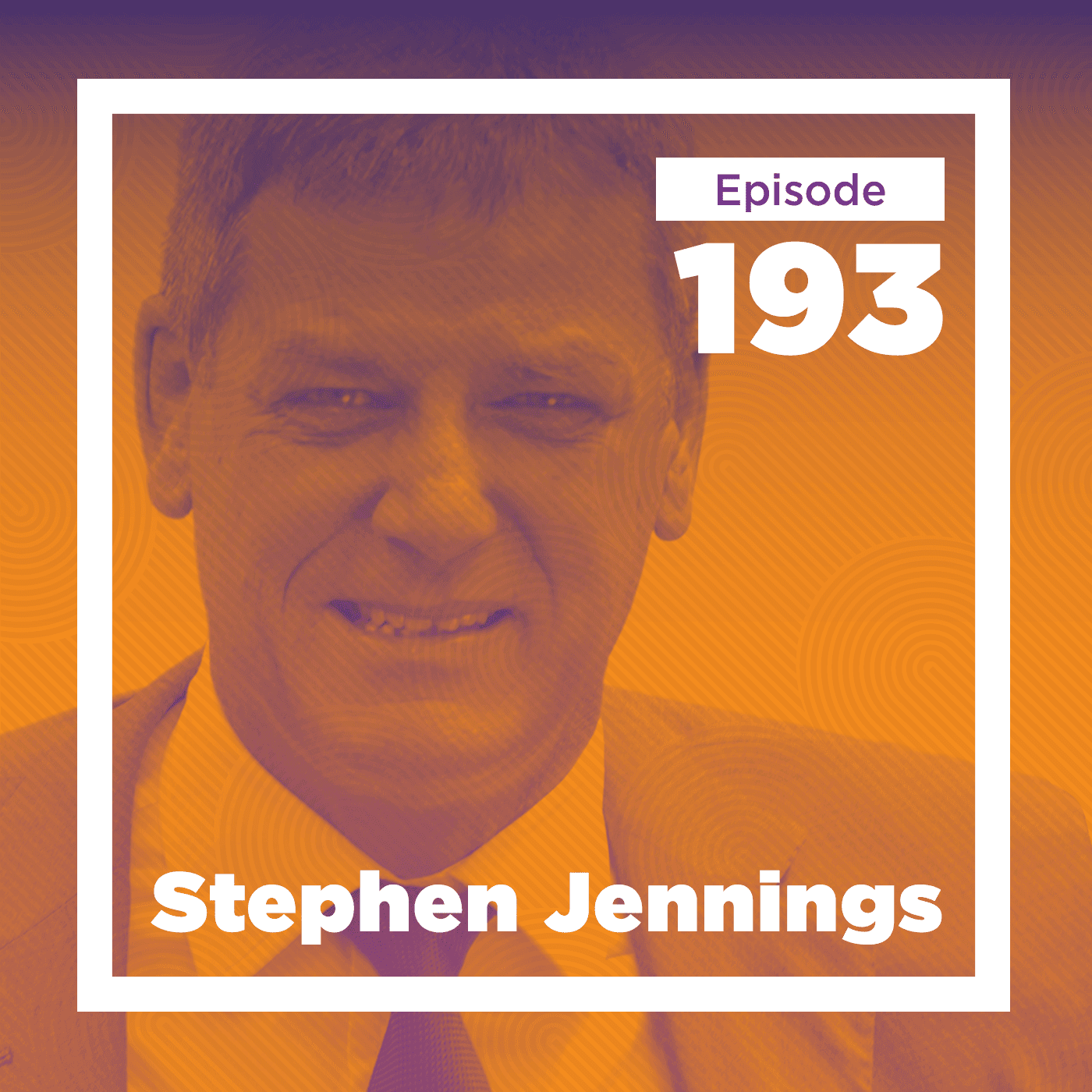
Podcast Summary: Conversations with Tyler - Episode with Stephen Jennings on Building New Cities
Episode Overview In this episode of *Conversations with Tyler*, host Tyler Cowen speaks with Stephen Jennings, founder and CEO of Rendeavour, about urban development in Africa, specifically focusing on Tatu City, a multi-use development project near Nairobi, Kenya. Jennings shares his insights on the potential for economic growth in Kenya, the unique challenges faced by urban areas in Africa, and the strategies implemented in Tatu City to create a modern urban environment.
Key Themes and Discussions
- Optimism about Kenya
- Economic Growth: Jennings is optimistic about Kenya's economic trajectory, citing an average GDP growth of over 5% since the 1980s.
- Political Modernization: The shift from a dictatorship to a vigorous democracy is highlighted as a significant factor enabling growth and stability.
- Infrastructure Development: Continuous improvements in infrastructure, such as education and healthcare, contribute to the overall development.
- Challenges in African Urbanization
- Low Agglomeration Externalities: Many African cities experience low efficiency due to poor planning and infrastructure, leading to congestion and service shortages.
- Historical Context: Jennings notes that the breakdown of planning in the 1960s has led to haphazard urban growth and associated challenges.
- Tatu City's Vision and Strategy
- Urban Planning: Tatu City is envisioned as a model for world-class urban infrastructure, aiming to incorporate collaboration externalities to enhance city efficiency.
- Current Development Status: Tatu City is currently operational with various industrial companies, educational institutions, and residential units planned for a population of around 250,000.
- Design Philosophy: Tatu City aims to reflect Kenyan culture in its aesthetics while prioritizing green spaces and walkability.
- Governance and Utility Management
- Privatization Insights: Jennings applies lessons from his experience in New Zealand’s reforms to structure utilities in Tatu City, optimizing service delivery through economies of scale.
- Community Engagement: The city aims to be inclusive, accommodating various income levels and ensuring affordability in essential services.
- Talent Constraints and Human Capital
- Human Capital Challenge: Jennings identifies the biggest constraint to Tatu City's success as the lack of skilled labor and the need to integrate world-class professionals into local teams.
- Recruitment Approach: Emphasis on a thorough vetting process to ensure team members align with the project's long-term vision and cultural context.
- Broader Implications for Kenya
- Urbanization as Unity: Jennings suggests that urbanization plays a crucial role in breaking down tribal divisions, fostering national unity.
- Policy Recommendations: Discussions on governance issues affecting urban development, such as land titling and traffic management solutions.
- Agricultural Productivity and Economic Development
- Government Role in Agriculture: The need for government support in R&D and infrastructure to boost agricultural productivity is emphasized, along with the balance between enabling and avoiding excessive control over the private sector.
- Vision for the Future
- Transformational Projects: Jennings expresses a desire to see more long-term, sustainable projects emerge in Africa, highlighting the need for appropriate capital structures and stakeholder alignment.
- Learning and Adaptation: He mentions his ongoing quest to better understand and manage human resources in Africa as part of his larger vision for Rendeavour.
Concluding Thoughts In summary, this episode of *Conversations with Tyler* provides an in-depth look at the ambitious urban development plans in Africa, specifically through the lens of Tatu City. Stephen Jennings offers a hopeful perspective on Kenya’s potential, while also addressing the significant challenges that remain in fostering urban efficiency and national unity. The discussions also highlight the importance of governance, human capital, and cultural resonances in shaping the future of urban environments in Africa.
---
Key Takeaways
- Kenya's Growth: Factors contributing to optimism about Kenya's economic prospects.
- Urban Challenges: The unique issues faced by African cities in terms of planning and efficiency.
- Tatu City Development: A model for integrating modern urban infrastructure with local culture.
- Talent Development: The critical role of human capital in executing long-term urban projects.
- Unity through Urbanization: The potential for urban settings to foster national cohesion among diverse ethnic groups.
For further insights, listeners are encouraged to visit the full transcript or watch the episode on the official platform.
Written by AI. May contain mistakes. Listen to the episode to check what was said.
Transcript
Automatic transcript. May contain errors.0:04Conversations with Tyler is produced by the Mercatus Center at George Mason University, bridging the gap between academic ideas and real world problems. Learn more at mercatis .org. For full transcript of every conversation, enhanced with helpful links, visit ConversationsWithTyler .com. Hello everyone and welcome back to Conversations with Tyler. Today I am sitting in Tatu City, which is a special enterprise zone right outside of Nairobi Kenya. And I'm here chatting with Stephen Jennings. Stephen and I go back a long way. We knew each other in New Zealand over 30 years ago where we worked on New Zealand reforms together.
0:47To give you a brief overview of Stephen's biography, he was a critical figure in New Zealand and Treasury, working on those reforms. Later at Credit Suisse, first Boston, he has an extensive history of working in emerging economies. And he is now founder and CEO of a company called Rendever. Stephen is based in Tattoo City itself, again right outside of Nairobi. And Tattoo City is an attempt to reimagine urban environments for Africa. There are numerous other projects in other countries. and we will talk about what Stephen is up to, Stephen. Welcome. So, so good to be with you Tyler and it's been amazing to reconnect.
1:28It's like those 30 years were really like a week. I think 32 years we figured out right? 32 years. We just picked up the same threat of conversation and what is it thinking? Now try to sell me on Kenya. If I look at some of the other major African economies, they appear to have taken steps backward in the last two to three years. Why be optimistic about Kenya in particular? So, Ekenia has been on a path of modernisation, political and economic modernisation and development really going back to the 80s, so it's averaged over 5 % GDP growth over that period, but it's also modernised as an economic and political system moving away from one party, essentially dictatorship, to very vigorous democracy and pluralism as we saw last year.
2:13Huge development of infrastructure, modernisation of economy, improvements in school enrollment, life expectancy, you know, every indicator of development, as with much of the continent, has really been transformed over the last 25 years. And our expectations, that will continue. But say if politics is the major risk to African development, as it's proven in so many countries, why be more optimistic about the politics here? You know, we have a more pluralistic system. You haven't had the or dictators or disruption you have had in many other African countries. So the transition is very organic.
2:50We have the checks and balances of a system that you'd like to see in a country investing for the very long term. That's not necessarily the case in the likes of Nigeria or Wanda, or even in South Africa today. Why is it that so many African cities at least appear to have very low or even zero agglomeration externalities. It's not true for cities around most of the world, but it seems to measure is true for Africa. What's the difference and where does that come from? Something that's very unusual about Africa. So as you know in Asia, with growth, you saw agglomeration of economies and cities became more efficient.
3:27There's some pretty obvious reasons why that hasn't happened here. So proper planning and controls really broke down in the 60s. So there were no, the plans were not enforced. the development was completely haphazard. Utilities were not modernised and capacity was not built, so you have huge capacity issues and shortages around power, water and other amenities. You have enormous congestion problems. So the cities are clogged, the service levels are poor, the planning has been almost non -existent, and there are massive capacity issues and transport issues. So as they've grown, they've become more congested and less efficient.
4:06So you have a plan through Tatoo City and some of your other projects in essence to bring in collaboration externalities to at least some African cities. Is that a fair way to put it? Yeah, 15 years ago it was a plan. I think it's way beyond the plan now. I think we've proven beyond a shadow of a doubt. A few create new large -scale world -class urban infrastructure and administration. They will function as normal cities and you have the demand that you would normally have for a normal, efficient international standard city. So just give us some basic facts. Where is Tattoo City right now? And where will it be headed when it's more or less finished?
4:42Yes, Tattoo City is the only operational, especially economic zone in the country. And there's 5 ,000 hectares of fully planned urban development. It is at quite an advanced stage. So we have 70 large -scale industrial companies with us, including major multinationals and many of the regional leaders. We have 3 ,000 students come on site every day to our four new schools. We're advanced in building the first phase of the first new CBD for the region. We have tens of thousands of core centre jobs moving into that area, together with other modern office amenities. So all of the elements, we have many residential modules, thousands of new residential units at a wide range of price points.
5:26So all of the elements of a new city are in place. So how many people will end up living here? Around 250 ,000 and how many businesses? There'll be thousands of businesses. Yeah. The GDP of part to city. How would you imagine it? What would you compare it to? Assume things go out the project is mature. No, I think We're in seven projects in five countries. I think we're aware of every project across the continent But there's very little doubt at all that this will be the leading new city and the largest new city in Sub -Saharan Africa and eventually it'll catalyze a whole region. You don't have a barrier around this, the spillover effects in terms of development and infrastructure will extend way beyond the borders of the city and we already begin to see that.
6:11Why not do a charter city? We're first cousin, well, there's a lot of reasons that we haven't really had charter cities happen. It's a very interesting thought experiment. The whole issue of sovereignty, seating sovereignty and taking someone else's sovereignty is a pretty kind of intractable issue, but we're like first cousin to a charter city. So we're a private municipality with a lot of devolved authority. So we have the ability to make decisions the way that a charter city would be. We have the incentive to optimize the NPV, the long -term value of the city. And you can see that we've created many of the benefits in terms of quality of governance, quality of infrastructure, security, environmental amenities.
6:55So many of the envisaged benefits of charter cities are being realized within this model. So the way you've designed water supplies, sewage, electricity, local infrastructure, how is that drawn upon your background as a reformer and privatiser in New Zealand? So you're a chance to do it, right? Not in New Zealand, yeah, for sure. So did you learn there and how are you doing it here? Well, it's a bizarre situation that every area of reform and business that I worked and around the world, the threads of that are picked up in this project. So the governance issues through the reform efforts, designing SCZ legislation, obviously as a public policy issue, but I've worked extensively in water and power, so understanding how those businesses should be structured and organised makes it a lot easier to set them up and managing them.
7:43So, you know, a city is very, it's much more multi -faceted than you would think. The work that I did in New Zealand on Treaty of Weitangi issues with Māori has also informed a lot of thinking around community and properly right issues. So it's been this bizarre experience of all these threads for judicely being drawn together in these projects. What's the hardest part about designing the incentives for a sewage system? Not the physical work, but thinking through the incentives. The challenges have to do with scale and time horizon. So, in environments where utilities are not being provided by municipalities, everyone tries to solve their own solution, create their own solution.
8:25So they'll have their own water solution, their own power solution, their own, maybe their sewer solution, their own security solution. Clearly there's zero economies of scale and people don't have the expertise or even the desire to solve those solutions. So you have these very patchwork, extremely efficient and non -sustainable solutions to these very basic problems. So a city has the advantage that you are able to solve those problems for everybody and there's just a tremendous economies of scale. So in terms of quality and cost, you get these tremendous advantages over what everybody outside of that environment is able to create.
9:03But because Rendevar owns the sewage system, there's not the usual hold up problem with some outside authority. Is that fair or no? Yes, so one of the things you're solving is the whole problem at many levels. So everyone has to deal with bureaucrats who won't supply water, who won't provide licenses, who create tax issues. Every element of government you touch, there's a whole up issue. So there's economies of scale in solving that or mitigating that on behalf of everybody else. We have to deal with it, but it's more efficient to deal with it once than thousands of times for each to develop our nature is it?
9:39Well, let me tell you one of my biggest worries. See if you can talk me out of it. The more success you have in solving these hold up problems, the more the land the whole community is worth, right? That's what success means in the sense. So you create one really big hold up problem that the incentive of politics to confiscate the rents from the land goes up. And in terms of risk diversification, you put all the apples into this one big hold up problem. It becomes a juicy or target. How do you think about why that might work out? Well, clearly that is a risk. So the way you have to counterbalance that risk is you have to be adding more and more to the community and to the overall economy.
10:17So tens of thousands of jobs become hundreds of thousands of jobs. And those hundreds of thousands of jobs can end up supporting a million people or half a million people. A few of the largest source of FDI, a few of the largest proponent of investment within the country. So you have to be over time recognized as providing huge benefits to the wider community. Give us a sense of the range of price points. Say someone wants to live here. What is a cost? So you know, people envisage these projects as being like gated communities for the elite. And that is one model, but that's, if you think what a city really is, that is not a city.
10:57So a key dimension of building a city that's efficient and has a gleneration economies is much juicimics, tin -cream. And you can't just pay lip service to that to make NGOs happen. It's actually now interesting to do that. So for housing, we go down to about $30 ,000 for what is really a world -class product produced by Unity Homes. So in terms of the finish, the environmental amenities, security, pools, bars, these really are world -class units. Equally, we want the owners of major businesses and the biggest entrepreneurs in the region to come and live at Tartu City. So we might have a product where just your land is going to cost you a million dollars before you build your house.
11:43But it will be extremely beautiful. It will have amazing amenities and you'll be in the heart of the project. But we do and we have to accommodate for that full range. and not just in housing, things like restaurants and services, now salons. You can make it just for the elite in the shopping mall, or you can have a variety of formats where you accommodate everybody. And we go out of our way, and it's very unusual how we think about that. We want the worker who's earning $250 a month to do some of his shopping, to have a restaurant that is affordable for him. We make a big effort to provide those services for those people.
12:19Let's say either you or someone else wants to do a version of the idea, but with the price point at $10 ,000, what problem needs to be solved or what problems for that to be possible? How do you, the price point for what? For a home. So you're selling dwellings for 30 ,000 here and someone wants to, they're inspired by what you've done, but they're going to be in a poor location and they want to bring costs down so they can sell dwellings for $10 ,000. So that's exactly the problem to be solved. Yeah, but what needs to go right for that to be feasible? It's not so much what needs to go right. It's the planning the technology and the scale So if you want to get the costs way way down in the for a unit you can't have car parking Car parking is actually very if you're trying to go from 30 ,000 to 20 ,000 to 15 ,000 you can't have car parks So you you're building houses for people who will live within the city and who are gonna be within a walkable distance of their work Obviously you're going to go up.
13:19You need more and more scale. It's a chicken and egg problem and getting affordable housing in Sub -Saharan Africa, because no one has cracked that scale problem to what we're doing here. So you need bigger scale. You need to go up a little bit. I think we know with our partners that we can go from... We already know how to go from 30 ,000 to 20 ,000. And then it's going to get much harder going from 20 to 15 ,000. If cars cost so much for the community, how are you regulating cars? It's not the cost of the car. It's the cost of the land. Sure. But say I want to buy a unit that has a place for me to put my car, I can pay more and do that or I can't do that or No, absolutely you can and you can have two cars or three cars.
14:01I just have to pay a steep tariff to be able to do so. But if somebody else who would love to have a properly built, safe, secure apartment for 15 ,000 with nice amenities and a park and a playground, you can do that, but you probably won't have car parking for those people. In the mature version of the idea, how do I get from one side if I do city to the other? Let's say I don't have the car. There's no street cars, right? There's shuttles or I walk or there's e -bikes or... So a lot of ideas on urban planning, a bonnet or a driven by retrofitting of existing cities. There's a lot of principles that are paid lip service to, but the application of those is compromised by the fact that 99 % of the time urban designers are involved in the game of retrofitting.
14:50Imagine you sit down with a clean sheet of paper and you can think about how people are going to move around in the city and you can do whatever you want to. So if you ask the urban planner he will still start with designing a road. But maybe you start by saying no let's do human green corridors first and then we'll talk about the roads about how they fit around those human green car adults. And let's, as designs would say, create an invitation so that people really want to walk, they really want to cycle, they're not even on the side of a road, they don't have to go near a road. So they're the opportunities and we're in one of the most beautiful and one of the nicest climates in the world.
15:30So we have opportunities that you just don't have in a normal urban planning setting to change mobility to massively reduce the importance of cars but to bake that into the how we plan from the very beginning and that's very unusual. As you know there are many refugees in Kenya from other countries. Is there a possible vision where a special enterprise zone is built for them? It becomes a real functioning city or is it simply not profitable, too many obstacles? Or can you think of doing that? Diversity, as you know, if you look through history, the cities that really prospered, that made a difference, that were hugely innovative, they were diverse.
16:13They were safe havens from people for all kinds of backgrounds, including foreigners, peps even people that have been persecuted in other environments. So this diversity, this mixing of people, this crossroads concept, this global marketplace, and beating that in everything you do is vitally important. So you need mosques, for example. We want to have a big Somali community here. If we want that, we need to specialise infrastructure for them. We want to be the main hub for Chinese investment in the entire region. So we need to specialise institutions. We need to pay respect to Chinese culture.
16:46We need to listen to them, work with them, and quite nuanced issues sometimes. So you definitely don't want to go into any kind of segregation along those lines. What's the aesthetic vision for Tattoo City? You know, we're in one of the most beautiful countries in the world. We're in a country with huge cultural diversity and a very vibrant and distinctive culture. And we have a clean sheet of paper. So from a design and aesthetic perspective, we want this to be a Kenyan city. We don't want this you walk into Tattoo and you think, well, this is a bit like Dubai or this is a bit like Santa and a Jairan is big.
17:25that would be complete failure for us. But what does that mean concretely? What I mean I'm here now, but what do I notice as a visitor? Or I say that makes this a Kenyan city. So the way we're designing our CBD, there are a lot of subtle cultural references from different co -cubic, but also other tribal groups. And CBD, central business district, right? Yes. So what would be a reference of that kind? It could be the facade of a building, it could be the pattern on an aplaza, It could be who designs and the cultural references in a major sculpture. Here the Magumi tree is very sacred, so the scent we will be moving a massive historic and culturally important Magumi tree into the centre of the plaza.
18:07And then the other element is making it very green, very walkable and very beautiful and very safe. And baking that into how we plan the city from day one, really committing in a very deep way to those principles. generally that quite superficial in modern cities and this is because you're constrained by the old city. There's this huge element of retrofitting. We don't need to do any of that, but you need to embrace those principles in a very whole harder fashion. Takes more time, takes more effort, but the payoff I think is going to be massive in the medium term. Let's say you put aside budget constraints, forget about your shareholders, you're thinking unrealistically, realistically, you're up at night, excited about something you know you can't do.
18:50But what is that something? Is that it? I'll answer the question, but we don't think like that. Sure. So sustainability means it's commercially viable. So you have a lot of city projects that are massively subsidized by governments, particularly in petro -states. Our models are exactly the opposite. It doesn't matter what we want or what we might want to pay for. or matters what our developers and our clients and our residents, what do they want and what are they prepared to pay for. So we can bring all kinds of ideas of ours and all kinds of costs, but you can't do that and it's wrong to try and do that.
19:30So we don't try and impose solutions or levels of infrastructure people don't want or styles that people don't want. It's probably not how we look at things. There's things that we think our residents will want that are hard to bring. So let me give you an example. You can have good schools that the community is happy with or you could have a world -class school And in my view, there's a qualitative difference between those two because if you have a world -class school You will bring world -class Professionals the best professionals in the world and whatever that industry might be They'll want to come to your city because their children can go to a school that's as good or better than anywhere else So that's the kind of thing that challenges us.
20:16Putting aside all questions of politics, if you just think of constraints on the business side of what you're doing, what's the biggest constraint you face? The biggest constraint we face is human capital. We're obviously not land constrained. We're unleveraged, we have very good cash flow, we have very good finance and partners. We're absolutely not capital constrained in any way. So we're trying to do some world class infrastructure. world -class execution, world -class buildings, world -class technology. And by definition a lot of the human capital to do those things, it doesn't exist in this market.
20:53City scale, landscaping, urban realm, these schools don't exist. So you either have a lot of foreign consultants fly and fly out, they're not particularly focused, they're not necessarily the best consultants in the world, and it's just extremely inefficient. The constraint is embedding world -class technical people within a Kenyan team. What's the key variable that will determine whether the talent question goes well for endeavor or goes not so well? What is that in Japan? A lot of experience in doing the same thing in other businesses and other contexts, which I've been doing for 30 years now.
21:30You have to spend a lot of time. You have to spend a lot of your time identifying those people. checking those people, persuading those people, and integrating those people. It's very easy to hire some very senior development manager. But it's very hard to find the right person who's going to be committed to your project who will integrate your team and train local professionals. So it takes a lot of time and a lot of judgment. And what question do you ask people to try to determine if they're that young professional who wants to devote his or her life building out, see, tattoo city? Yeah, well, not, you know, interviews, it's pretty well documented.
22:11Interviews are a very inaccurate way of selecting and evaluating people. But it's often what you have. We'll check their prior work in a lot of detail. And we'll spend a lot of time with them, and we'll put them in a lot of situations without them actually knowing that we're deliberately doing that to see how they will react, how they will react with our local staff or they might be a dinner after a long day when they think it's time to relax. But we're actually looking to see how they interact with our clients. Do they listen? Are they respectful? Are they really interested? Or are they just going through the motions?
22:48So a lot of the recruitment information comes away from the interview process. How do they behave when you're actually negotiating they're dealing with the other teams, they're winning their deal. Are they timely? Are they honest? Do they play games? Do they change their position? So we rely on a lot of those kind of data points. Putting aside Tattoo City, which is your favorite part of Nairobi? And what about it? You find so interesting. It's one of the most lovely countries. I've been to over 100 countries coming from New Zealand. I know what a beautiful country is. You have incredible diversity of environmental amenities here.
23:23So amazing national parks, but very diverse from desert -like areas to mass -eye mara. You have incredible coastline, you have incredible cultural diversity. But say in Nairobi, what gets you excited about Nairobi? Other than improving your diet. Getting on my bike with a few friends on a Sunday morning, writing for 60 -70 Ks through just idyllic diverse countryside. like, why do you think the cost of living in Nairobi has so much skyrocketed lately? Everything's inefficient. Government's inefficient. But there's a delta issue when there's a levels issue, right? So is it food prices, energy prices, or what's going wrong at the margins?
24:06Yeah, clearly given the structure of the Kenyan economy, the external shocks have been very unfavorable. So fuel is imported here and grains are imported here. So they've been the big two short term drivers, and clearly they will unwind now to some extent. How should Nairobi fix its traffic problems? It's so far they've done what everybody does, and they've built more and more capacity, and as everybody knows, more and more capacity creates more and more demands. But it achieves nothing, and it's actually clogged up the centre of the city more and more. Clearly, there should be congestion charges, as there should be everywhere.
24:40But it's harder to do in low -tech settings. What do you think it can be done? I don't think through, I think technology is really, it's like so many economic problems. They're technically easy, but they're politically complicated. And obviously people try and blame the technology. No, the technology exists. It's developed a long time ago. It's ubiquitous, but there's not the political world to apply that technology. So the city will get more and more congested. Can a subway system be built? So most of the rest of the developing world has been through exactly the same problems. They're really problems of governance.
25:15The 99 % problems of governance, water, power, municipal transport. These are all governance problems, not technical problems. Urban realm, we know that these problems can be addressed. In my view, the governance issues here and in most of Sub -Saharan Africa mean that these problems won't be solved for the next 25 years, at least. Hence the demand for new modern urban environments. should we be trying to title all land in Nairobi and in Kenya? Or is it more efficient when you have a sector with untitled land, lower prices, less formality, arguably less regulation? What's the right way to think about the land titling issue?
25:55You know Stigler said all regulation is rational devised. So the inefficiency in land titling and land offices is very purposely designed to be inefficient, anti -facilitate corruption and cartels and land offices, such a huge source of rents. The Kenyans are in the process of digitalisation. They can digitalise the whole thing in great transparency in their sleep probably in six months. It's a question, is there the political will to deal with those cartels and the rent seekers who are benefiting from the existing system? But you think it is an ideal to title everything, even though rents probably would go up?
26:34No, absolutely it is. I mean, lack of land, poor enforcement and definition of property rights is one of the biggest barriers to development in the region. As you know, Kenya has many different ethnic groups, tribal groups. If you think about the prospects for Kenyans, all truly thinking of themselves as a single nation, what variable does one track to see how well that's going? I mean, is it the soccer team? Is it what music they listen to? Is it something about politics? It's probably urbanisation because once people move into an urban setting, those tribal barriers and differences they gradually melt away and you can see that and you're going to see it this week in our office.
Read the full transcript
27:16Most of our staff, they grew up in an urban context, but you're not going to distinguish anyone by the tribal background because they're living together, they're working together. So I think through urbanisation those barriers are really, they've already eroded massively. The politicians like to stir them up every election cycle, but the underlying integration I think is very pronounced. I think it's much less of an issue than the outside world probably thinks. Is there a risk that Kenya becomes too top heavy with Nairobi overdeveloping the way arguably London has, Vienna has an Austria? how are the second and third cities doing in terms of health or certain amount of political balance?
27:57Yeah, no, the incentive structures are profoundly different. So, you can use Ellen to have the highest proportion of tax revenues that go to central government. So it creates this huge bias towards development in the capital city and centralisation. So here we have a very devolved constitution and with that devolution, a lot of revenues are given to the local counties. So the structural reasons for that concentration and the likes of UK don't exist here. And then at just a practical level you drive around, you see phenomenal development all over the country. But it's 47 counties, right? Isn't that too many?
28:33There's too much devolution over time, economies of scale, it'll evolve back if only de facto to being a smaller number of counties. What's the right way to think about optimal federalism for Kenya? There's too much, this to a little? We know that Switzerland is the most devolved country in the world and we also know that it's one of the most efficient and we know that New Zealand and the UK are the most centralised and that model is not exactly working. I don't think there's any right answer and a lot has to do with culture and experience and skills that have developed. This degree of devolution is quite new here.
29:09It's going to take decades for it to really work efficiently. So I think it's much better than the centralized model, vastly better. It's this short -term transition costs, but medium term I think it's going to be really great. How many counties there should be? I don't know, and I don't think anyone else really knows either. Canyon demographics. Nairobi, I read, total fertility is 2 .5. That's quite low for Africa. How did it get there? How does that shape economic development for Kenya? Yeah, so it's one of the really amazing things about what's happening in Africa. Birth rates are falling very quickly across the continent, virtually everywhere with the exception of a few places, places like Nigeria, and that decline is accelerating, and it's falling faster.
29:51The forecast are revised pretty regularly now. And that's birth control, leader marriage, or what? Is it the same with factors or something? I think it's the same fact as that of driven this incredible reduction of birth rates across the world. And as the likes of Charlie Robertson have said, the Democratic dividend really kicks in when birth rates fall from three and a half to two and a half. That's when people can save, that's when dependency ratios really start to improve. And Kenya is at the vanguard of that process across this region. So that demographic dividend is really going to kick in over the next 10 years as they move towards 2 .25, 2 .3 kind of birth rates.
30:30What you can do to boost productivity and can you agriculture? These are all the easy questions, right? But it matters a lot to have that saving surplus that later funds industry have been issued. Yes. So I don't think there's a problem in any of these countries that hasn't either been solved well or poorly many times in other countries. So we know where there's been successful agricultural revelations, more recently in countries like Brazil, for example, with us is very sophisticated and effective interplay between government institutions, R &D, application of new ideas and the private sector.
31:09So the government has a very important enabling role if you want to optimize that agricultural transition. But what does that role consist of? What should they actually do? It consists of very specialized research and development, which is specific to the crops, climate, seed types, and so forth that are relevant here, as you saw in Brazil. It's partly to do with infrastructure, cold chain, these kinds of issues. So it's the government playing a catalyst role, but at the same time getting out of the private sector. It's a subtle balance, which at the moment Kenya probably isn't particularly good at.
31:44How can Kenya have better risk sharing against drought? Which is a recent problem, right? Right? Incidentally, some of it comes from climate change, a lot of its external. Right. The weather is going to be what the weather will be. Some of the R &D ideas, so Brazil developed hybrid strains of grass and crops that were more drought resistant. So you need that R &D element so that your agriculture can adjust to these new climate conditions. And it's a problem that's hard for the private sector on its own to solve. So ideally you need this interplay with really well -managed scientifically enabled government institutions and the private sector private sector is very strong in flowers and horticulture here But most the heavy lifting has been done by the private sector So there's some issues where there was a role for the bigger role for the government to play have the university It's done enough in terms of agricultural R &D They've contributed.
32:43There are success stories. No flowers, it's a massive success story. But I think there's more that can be done there as well, yes. What could can you do to develop its tourism resources more effectively? A lot and very quickly. Again, it's an area that we've studied in a more benchmark against the likes of Sir Costa Rica, which has similar amenities. But as it had a tenfold growth in visitor numbers. So the tourist assets here amongst the best in the world and their large scale. But the promotion and the support for infrastructure has been extremely poor. Visitors come to Kenya and they are just completely blown away.
33:23But so many people don't understand the quality of that visitor experience. So there's a lot of work to be done and it's not difficult work and it's work that can be done very quickly to promote and support in some key infrastructure areas, including transport and air transport. As a business person, how do you think about when is the right time window for entering an African market? That very much depends on your product, your time horizon and the effort that you're going to put in. I don't think you can generalize about that. But you were here quite early, right? Before it was obviously a good idea.
34:02And what are the other countries that Rendevers operating in? But our business model is about being a pioneer and dealing with issues that probably a lot of other investors don't want to deal with and getting set and getting in the best position on surfing terms whether we want to be exactly where the wave is going to break before anybody else. We also have an asset class where we're trying to line, you know, 30, 40 -year asset class with a 30, 40 -year transition. So it made sense for us to come early and to commit very early. But that's not necessarily the case for everybody else. Why are there so few you could call them perpetual projects in Africa, project design to run on more or less forever?
34:47I don't think there's so many perpetual projects anywhere. is not so many projects that literally have a 50 -year time horizon because there's not really very much 50 -year capital. Private PE money is supposedly seven years but you have to sell before the seven years so PE is really five years and people think of that as being long -term capital. DeFi money, DeFi say they have a long -term, they don't have a long -term capital at all. It's one of the many myths about deifieds. They do have to generate a return. They do talk about exits. They don't go into 30 -year projects. So yeah, that's very unusual.
35:27I think anyway. Thinking in terms of perpetuity, you view that as comparative advantage or risk or you're all crazy or some mixed of those or... Is the vision of founders or... It's definitely a comparative advantage because on every dimension you're trying to find less competitive spaces. So you've definitely got a need to build these very long -term projects and there's virtually no capital available. So that gives you a competitive edge. It's very hard for somebody else to come and spend billions of dollars on a 40 -year project. It could happen. It's very unlikely. But within a endeavor, there then has to be some higher level of trust at some level, relationships with investors or who's funding you or how do you think about the different pieces that go up?
36:13into endeavor having that comparative advantage. You know, any really good business has alignment. So it has alignment with its capital structure, with its values, with the selection of its, you know, your senior executives. It's no use having a 40 -year project and you have some guys who wants to make all his money in the next two years. There's an underlying inconsistency there. And capital structure and shareholder identity is vitally important. It's very easy to bring someone in. They're very excited about the project. They'll help fund this module or that module. They know someone who can help us with something.
36:49But the guy's got a, or the woman has got a five year view. Three years down the line, we got a problem. Because he's trying to get an exit or he's trying to get some more cash out of something where it's not optimal in an NPV sense. So being very disciplined about sheerholder selection is extremely important. I take it to be your view that economic development is in some sense the default. It's not automatic, but there are forces pushing economies in that direction. If you had to reduce that view down to your most fundamental belief, where does that view come from? Well, it started in New Zealand working with you because we saw how a country could be changed and we saw how growth could be catalyzed.
37:30I guess that opened my mind to change. I have this idea that humans evolved over a period of time where no change happened. So we're wired to think that the world doesn't actually fundamentally change. I think that's like a cognitive default. But that's actually a variance with the world's experience since the Industrial Revolution. So the experience since the Industrial Revolution is a wider and wider group of countries with a more and more diverse set of institutional settings and styles of government have experienced economic takeoff and very high rates of growth by historical standards. So there's a disconnect between the way people think and what has actually happened.
38:15And my default setting is unless you do things really badly, the capital GDP is going to grow and it's probably going to grow quite quickly. And that's what's happened in most countries in the world. Whereas people look at Africa and they look at the past and they've got this default setting, probably nothing's going to change. But in my mind, the biases massively to change, more change, more growth. What do you think is the bulk that is influenced you most? It's a very good question. I think I've read just about everything in development. There's nothing I really like very much. Development is a black box.
38:50I don't think there's anything that has much predictive power. There's a lot of explanations whether they be policy settings, location, culture. I think 90 % of them are exposed, very few of them are predictive. Some of them are just topologies. I really like facturization. It's descriptive, more than analytical. It makes it clear that most of the world has been on a very similar development trajectory. It's just not sequenced. Sweden started early. Ethiopia started late. but the nature of the transition and the inevitability of that transition other than very extreme circumstances is kind of the same.
39:30And what do you think economists get wrong? I don't think we really understand development at all because if we could predict it, we can predict virtually nothing. It's just too complicated, it's too connected with politics. And I think there's a lot of feedback loops and elements of development that we don't understand properly. We certainly can't quantify them. Because the development is happening in such a wide range of settings, from communism, dictatorships through two very liberal systems, and with all different kinds of industrial, on every dimension there's a huge range of variables. to go back to New Zealand.
40:11What is the most positive future in terms of economic growth for New Zealand? What does that look like? What should be done? Well, as you know, I'm very negative about New Zealand. We have very sadly been a huge underperformer on just about every economic and social indicator you can look at. I think there's partly a cultural element. I've thought that for a long time. I used to think that the very high immigration that we had would put some spark and some dynamism back into our society. that hasn't been happening. You think that's the immigrants who self -select to going to New Zealand? Are there somehow swamped by native Kiwi culture?
40:47I think it's primary of the latter. Yeah. And self -selection. People, you won't go there if you don't like that culture. Yeah. If you want to go to somewhere more dynamic, more competitive, you'll go to Australia so that reinforces their culture. I see some hope in Maori, EU and Indigenous businesses, contrary to what most people would think. They bring a different culture, they bring a more open -minded international culture in many ways, and they are being very successful. But that's a small part of our economy. I don't see a lot of silver linings. If you look back on the New Zealand asset sales of the 1980s, 1990s, how well do you think they went?
41:27What did we learn from that experience? I think clearly I'm biased. I think they went extremely well, and you have to judge that by the productivity improvement and the likes of telecoms, power, forestry. But these were incredibly poorly managed assets, hugely wasteful, very low levels of innovation, and archaic levels of technology. So yeah, and unleashed a lot of value creation. But I think societies that can't take the medicine generally don't perform very well. So New Zealanders are still obsessed with the fact that the 80s reforms, there was so many things wrong with them. Notwithstanding the fact that virtually every change has stood the test of time and hasn't been reversed, you see it in the same, you know, that just to blame for so many things that are wrong in the UK.
42:20But if it's so bad, just go ahead and reverse everything she did. And I think countries that have been successful, they have wave after wave of reform, change, innovation. The change is painful, the structural adjustment costs. But if you're good at absorbing that, understanding that, and moving on to the next round of change, as the Chinese have in some ways, that's a huge strength. If you can't do that, it's a big weakness. At least for a while, the New Zealand business community seemed to be strongly behind reforms, free -or -market, free -trade. That's fairly exceptional. Was that just luck or are there organic forces behind that?
42:55I think fundamentally we've had quite an entrepreneurial society. People went to New Zealand, indigenous people went to New Zealand, but it wasn't easy place. They had to build their lives. They had to build communities. They had to build infrastructure. They had to be pioneering in nature. They had to be in some sense entrepreneurial. New Zealand ended up as one of the richest countries in the world with one of the best education and one of the best health systems in the world. It's in the facts. but at some point we put our feet up, you know, probably you have to go back to the 60s and 70s and complacency, crept in and many dimensions.
43:30And the most obvious one is education. We had objectively one of the best education systems in the world. Kiwis were leading thinkers in many areas. They were successful internationally. But we have one of the worst and most unequal education systems in the OECD today. We have third world levels of educational attainment for sub -sectors of our community. Do you have a sense of how to reform that? I think New Zealand is about, as you know, one of the most analyzed, the over -elect analyzed countries in every area reform. So it's not a technical issue again. Every area reform, the work is being done, it's sitting on the shelf.
44:07It comes back to the desire of society for change and the desire of the politicians to implement that change. How important is it that it's relatively hard to build new housing near Auckland. I know that's eased somewhat due to legal changes. But still, there's a movement, right? Yimbi for Auckland and New Zealand. Is that a major issue or a minor issue? It's a rific issue. Auckland has some of the least affordable housing in the world. I think number five last time I worked. Yet only 2 % of New Zealanders built upon. It's just massive paradox. And we're meant to be the country that believes in a fair guy.
44:46but it's hugely hypocritical. If you're a bus driver, you're never going to buy a house, and a huge proportion of your income is going to go and rent. The biggest source of inequality in New Zealand is housing costs, which through regulatory change could be fixed. Just look at Tato City, we can build a good apartment that anyone will be happy to live in for $35 ,000. In Auckland, that's going to cost you $400 ,000. And that could be changed in months. Everyone knows, Queenstown, Milford Sound, but what's the most underrated part of New Zealand? Tauranaki. Are you going to tell me it's Tauranaki?
45:28Beautiful places off the beaten track. Yeah. Somewhere in the North Island. There's gorgeous pockets everywhere through that absolutely beautiful country. Yeah, with lovely, really friendly people and very diverse and specific environment. So yeah, if you're going there, you should go to the tourist highlights, but go to the off the beaten track and you'll see so many wonderful, beautiful places and you'll meet a lot of very friendly people. And growing up in Taranaki in particular, how did that shape you in your views? Right? You're not from Auckland, you're not from Wellington. You're not outside or within New Zealand.
46:05I was at the end of that pioneering period where you grew up with grandparents who lived through the Depression and had lived through the war. And the values that were engendered in that period was at the tail end of when that was being passed on to people. And at that time New Zealand was a leader. You felt as a New Zealander, we could take anybody on, and we could beat them, whether it was sport, economic performance, even areas of innovation. That's always been part of me. How do you think playing rugby early on influenced how you approach the world? It was more that when you played rugby it was competitive.
46:46From a very young age in terms of, it was very monocultural so it was very limiting in a way. But it was very competitive, it was serious. You had to train. It didn't matter what the weather conditions were. You were going out and you were bare feet and playing and you were going to enjoy it. and you didn't enjoy it. So yeah, attention to detail, training. You know, it's a paradox, the all blacks, everyone expects them to be the best team in the world and to prepare and play to the nth degree. But we're not like that and everything else we do. It's a weird paradox we've got. So you know, put some of that up as a child.
47:24What do you find inspiring about rugby and Kenya? Well, we went and watched the children from Summers Rugby, the Lages children are playing. I find it enormously inspiring. I see the shared joy that that children have of just being supported to go out and kick a ball round. But I see their school levels, I see their dedication. They're physically tough. They want to train, they want to learn. They're not grumbling. They're not, they are physically strong. And there were no parents there, right? Yeah, but they were not me and my child. They're not being babyed. It was pretty full on the girls. It was pretty full on they were getting knocked around and bruised but they were loving it.
48:06They were letting me get up. If you think about New Zealand culture, cinema, books, music, what is it from New Zealand culture that inspires you or stuck with you? You know, we were very strong and a lot of areas. A key we split the atom. A key we was the first person to climb ever. Economically we were top three in the world. As I said things like social services, we were a leader. Why not be the best? Why not go the extra mile? Why be mediocre with anything? Why think that Kenya can't take the world on? I guess that's a very dumb and part of my thinking. I genuinely and 100 % believe anything is possible in Kenya.
48:56Just how determined you are, how organised you are. What is it from Russian culture that is stuck with you? Yeah, quite a lot I would say. Yeah, not pre -judging people, not believing in stereotypes, really doing your homework and understanding issues deeply and the history of issues and how history has shaped how people think and how they behave before you judge them what little and try and influence them. Resilience, intellectual capacity, yeah I learned a lot. If you were to contrast Kiwi culture and Australian culture, how would you boil that down to the smallest number of dimensions? I think Australia is much more competitive.
49:42They're comfortable being competitive. Kiwi's a very polite and cultural surveys show this. We're not very assertive at all. We find Australians offensive because they're in your face, but they're actually just telling you the truth and they're cutting to the chase and they're getting stuff done. So it's, I think time is shown. They've turned out to be a much more dynamic, outward looking, competitive and vibrant economy. We're very closed. We're one of the most restrictive countries in the world for FDI, but yet we're meant to be friendly, hospitable people. So that full -on competition that in your face kind of culture, it's I think it's very different on each side of the Tasman now.
50:23And how long have you lived in Kenya now? I've been coming here for 15 years a lot and my wife and I have been living here for three years. And putting aside all the projects, the business and all But just how has living in Kenya changed you? Yeah, we've absolutely out of ten, it's a ten, that's for sure. Yeah, it's a wonderful country. Extremely friendly people, very diverse community, gorgeous environment, lovely climate. But you've got the energy, you drive through the local community, you can see the energy, you can see how every three to six months, it's changing, it's developing. There's aspiration right through society.
51:03All of Kenya, yeah, there's huge problems, but all of Kenya thinks that this place is going to change, and they want it to change. Amazing work ethic. And the chance to do big projects that can be transformational, that you don't really have in so many places. So a lot of pluses. So let's say an educated restaurant, who has traveled a lot, is pondering a two -week trip to Kenya, putting aside Safari, which everyone will do, and of course they fly into Nairobi. But what else should they be doing or thinking about or looking for? Definitely the cultural experiences and getting, again, off the beaten track, with not a lot of tourism, maybe not a lot of development, very isolated areas where traditional lifestyle is still, as it would have been many, hundreds of years ago.
51:49And you go to the north to do that or all over or... You go probably to the far north, to Kana or Samburu area. Yeah, and also you're going to go somewhere very beautiful. You may not see a lot of lions, but you're going to see gorgeous scenery and you're going to see extremely interesting people. And on the coast, why should you do? The coast is very diverse, so you can go to where all the people are, Deani Beach. You can go north to Lamu, which is more this way, here, the experience, or you can go south and get somewhere absolutely gorgeous and isolated. I had my first dive here a few weeks ago.
52:24I'm literally in the water for 45 seconds. I'm still going down and a seven -meter -wale shark cruises past me about four meters away. So the range of experience here that's so accessible is fantastic. Very last question. What is the next thing you will try to learn? I'm trying to understand and I'm trying to get help my team to understand the best way to manage and work with people in Africa. Because I think we thought we knew a lot, but I think there's some things we don't understand as well as we might. So how do we get the most and create the most opportunity for our African human resource?
53:07Stephen Jennings, thank you very much. Thanks so much Tyler.
53:13Thanks for listening to Conversations with Tyler. You can subscribe to the show on Apple Podcasts, Spotify, or your favorite podcast app. If you like this podcast, please consider giving us a rating and leaving a review. This helps other listeners find the show. On Twitter, I'm Attyler Cowan, and the show is At Cowan Convos. Until next time, please keep listening and learning.
From the publisher
Stephen and Tyler first met over thirty years ago while working on economic reforms in New Zealand. With a distinguished career that transitioned from the New Zealand Treasury to significant ventures in emerging economies, Stephen now focuses on developing new urban landscapes across Africa as the founder and CEO of Rendeavour.
Tyler sat down with Stephen in Tatu City, one of his multi-use developments just north of Nairobi, where they discussed why he’s optimistic about Kenya in particular, why so many African cities appear to have low agglomeration externalities, how Tatu City regulates cars and designs for transportation, how his experience as reformer and privatizer informed the way utilities are provided, what will set the city apart aesthetically, why talent is the biggest constraint he faces, how Nairobi should fix its traffic problems, what variable best tracks Kenyan unity, what the country should do to boost agricultural productivity, the economic prospects for New Zealand, how playing rugby influenced his approach to the world, how living in Kenya has changed him, what he will learn next, and more.
Read a full transcript enhanced with helpful links, or watch the full video.
Recorded June 12th, 2023.
Other ways to connect