
In short
Podcast Episode Summary: Stephen Kotkin on Stalin, Power, and the Art of Biography
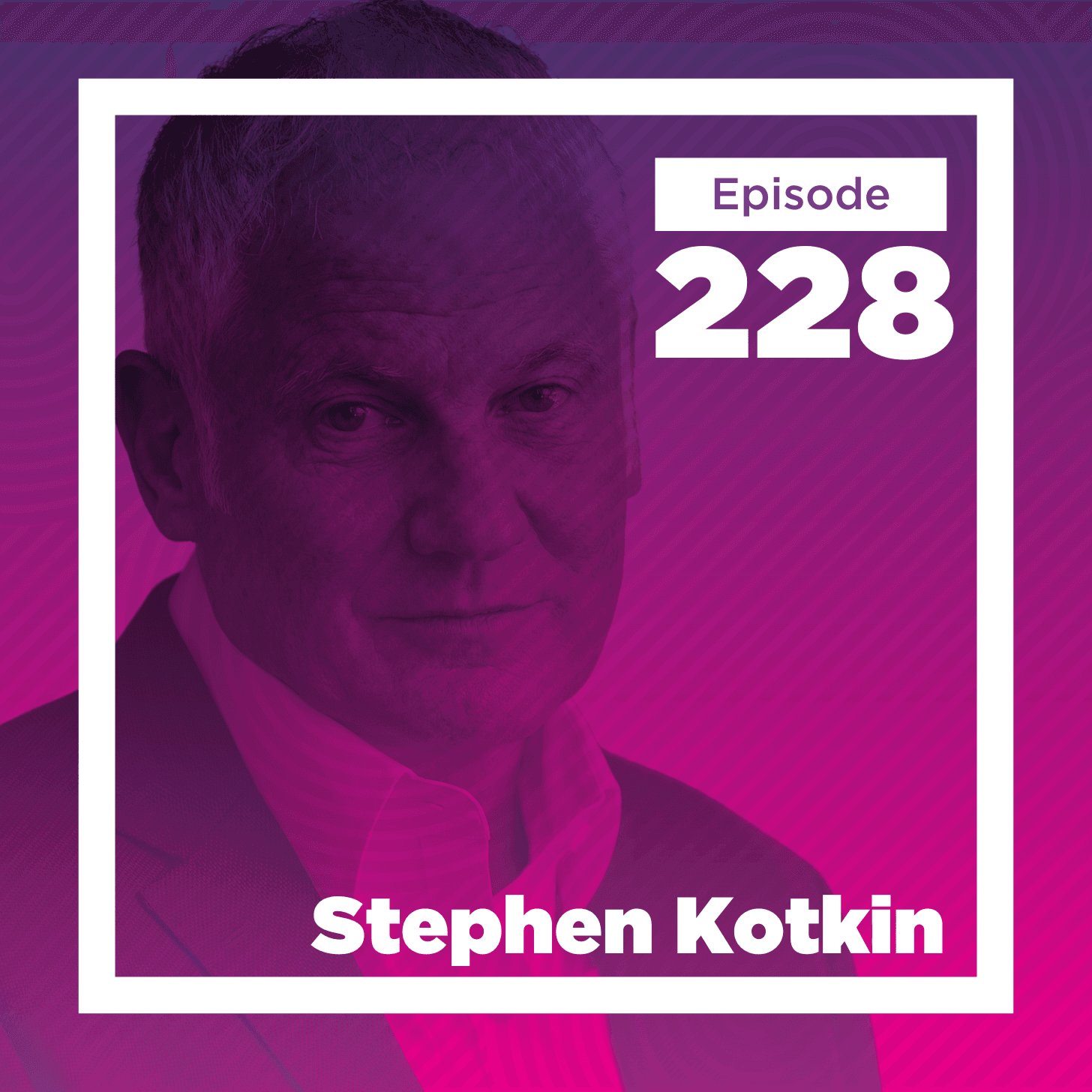
Overview In this episode of *Conversations with Tyler*, Tyler Cowen interviews Stephen Kotkin, a renowned scholar of Russian and Soviet history, particularly noted for his comprehensive biography of Joseph Stalin. Kotkin discusses various aspects of Stalin’s life, the functioning of totalitarian regimes, and his experiences living in Soviet Russia. The conversation extends to cultural topics, such as the state of Buddhism in Russia and modernist urban planning in Soviet cities.
Key Themes and Discussions
Stalin and Totalitarian Power
- Mechanics of Power: Kotkin emphasizes that totalitarian power is exercised not only through top-down terror but also through countless decisions made by individuals in society.
- Archival Research: His work relies heavily on deep archival research combined with personal experience from living in the Soviet Union, which informs his understanding of Soviet life.
Cultural and Social Insights
- State of Religion: Kotkin shares insights into Russian Buddhism and the persistence of shamanism in Siberia, indicating a complex interplay between ancient traditions and modern influences.
- Siberian Identity: The potential for Siberia to separate from Russia is discussed, highlighting its vastness and sparse population. Kotkin notes that Siberians have little incentive to remain part of the larger Russian state.
Urban Planning and Life in Magnitogorsk
- Modernist Urban Design: Kotkin reflects on the failures of Soviet urban planning in Magnitogorsk, where modernist designs did not align with the needs and preferences of residents.
- Personal Experiences: He recounts his life in a polluted, one-industry town, noting the warmth and hospitality of the people amidst harsh living conditions.
Artistic Genius Under Stalin
- Cultural Production: Kotkin discusses Stalin's complicated relationship with cultural figures like Prokofiev and Shostakovich, acknowledging that while Stalin appreciated their genius, his regime still imposed severe restrictions.
- Influence of Background: The discussion touches on how Stalin’s Georgian heritage may or may not have influenced his views and governance.
Intellectual Influences
- Michel Foucault's Concept of Power: Kotkin reflects on his learning from Foucault, particularly the idea of micro-power and how daily life and personal decisions reflect broader power structures.
- Historical Context: He articulates how experiences inform one's understanding of power dynamics, particularly in totalitarian systems.
Future Works and Reflections
- Next Volume on Stalin: Kotkin discusses the challenges he faces in completing the next volume of his biography of Stalin, particularly focusing on World War II and the Cold War dynamics.
- Moral and Intellectual Strain: He shares the emotional toll of studying such a dark history, contrasting his scholarly pursuits with the moral implications of Stalin's legacy.
Key Takeaways
- Understanding Power: Totalitarian regimes function through both coercive power and the complicity of ordinary people, leading to self-disempowerment.
- Cultural Complexity: The interplay of modernity and tradition in Russia is significant, as seen in the persistence of shamanism and the challenges of modern urban life.
- Art and Politics: Artistic expression under totalitarian regimes is fraught with tension, offering insights into the regime's selective appreciation of cultural figures.
Conclusion This episode offers a rich exploration of Stalin’s legacy, the complexities of Soviet life, and the interplay of power and culture in a totalitarian state. Stephen Kotkin's insights shed light on the nuances of historical narratives and the ongoing relevance of these discussions in contemporary society.
For further details, the full transcript and video of the episode can be found on the [Conversations with Tyler website](https://conversationswithtyler.com/episodes/stephen-kotkin/).
Written by AI. May contain mistakes. Listen to the episode to check what was said.
Transcript
Automatic transcript. May contain errors.0:03Hey listeners, this is Tyler. As the year ends I'm reflecting on the incredible stories listeners have shared with me about how conversations with Tyler has impacted their lives. From inspiring career changes to fostering intellectual growth, this show has profoundly impacted your lives and for that I'm delighted and also grateful for your listenership. Please help us keep the conversations going in 2025. Your support will ensure that conversations with Tyler remains the source of inspiration and growth for listeners worldwide. This year we're offering four special incentives to those who give.
0:42First, those who donate $250 or more by December 16th will receive a shout out on our annual Retrospective episode releasing Christmas Day. Second, the first 24 people who donate $750 or more will sponsor one of our episode transcripts in 2025 and receive a podcast shout out. Third, those who donate $1500 or more will join me for a small group virtual, ask me anything and also receive the transcript sponsorship and podcast cast shout out. Finally, the first six people to donate $5 ,000 or more will be invited to an exclusive in -person dinner with me in Northern Virginia in Spring 2025 at one of my favorite restaurants I might add and that's in addition to the virtual Ask Me Anything transcript sponsorship credit and podcast shout out.
1:38Your donation supports everything including production costs, enhance transcripts, live events, and listener meetups. Every contribution in any amount helps us bring you more conversations. So to support conversations with Tyler, click the link at the top of the show notes. Thank you.
2:00Conversations with Tyler is produced by the Mercatus Center at George Mason University. Bridging the gap between academic ideas and real world problems. Learn more at mercatis .org. For a full transcript of every conversation, enhanced with helpful links, visit ConversationsWithTiler .com.
2:23Hello everyone and welcome back to Conversations With Tiler. Today I'm chatting with Stephen Kotkin, who's a senior fellow at the Hoover Institute, but he was also a professor of history at Princeton University for over 30 years. He's one of the best and best known scholars of Russian and Soviet history, perhaps best known for his multi -volume biographies of Stalin. Stephen, welcome. Thank you so much for the honor of the invitation, Pilot. Let me start in another direction. What's the state of Russian Buddhism today? Yeah, I wish I knew. It's an excellent question. I haven't been to Russia since January 2020.
3:0320, we had the pandemic, of course, and now the war. I can say that there was a lively, no longer underground Buddhist presence in Russia. It obviously predates the Soviet period, it goes way back. The Russian Army was involved in inter -Asia, conflict over a long time, and had first -hand contact with Buddhist peoples. But where things are today, just in general across the board, not just on Buddhism, it's not so simple. How much shamanism do you think is still around in Siberia? Culturally, significantly, but how deep the belief system is, is a tougher question. Right? You know, it's always the problem between practicing versus raised in the tradition.
3:58So just about everyone in Siberia from non -European background, from non -European descent, will have had some exposure to shamanism in cultural terms, but how many of them will visit shaman's for those big life traditions, life changes, those moments where there's births or deaths or that's a harder thing to pin down. I've traveled to Siberia probably more than a dozen times voluntarily, I should say. And I encountered quite a bit of it there. And of course, the anthropologist did a good job gathering artifacts and retaining the artifacts. There are some museums. Again, it's been a while, but my last visit there, which is probably seven or eight years ago now, there was still evidence that it was alive.
4:54Can you imagine a future where for some kind of cultural or historic reason Siberia peels off from the more western parts of Russia proper and I don't mean because of a Chinese invasion But because of Siberia itself like what's in it for them the current union? not much But there are not very many people there So it's a colossal space and it's far more empty than Canada So think about Canada, which is roughly not exactly but roughly equivalent in location. And Canada itself has not a large population. But think about Canada with a far less denser population even than it has now, with effectively not Toronto, no Montreal, no Vancouver, but only provincial cities and unpopulated or sparsely populated areas in between.
5:54Connection, connectivity, governance, economy, all of those would be supreme challenges without the current connection or orientation, if you will, that they have towards European roof. I've been told that in Siberia it gets colder as you move eastward and not just as you move northward. Is that true and if so, how is it influenced Siberian history? Western Siberia and eastern Siberia are dramatically different. Landscapes, Flora and Fauna, weather patterns. We think of everything east of the Urals as a coherent unit more or less. In fact, historically there have been three units, Western Siberia, Eastern Siberia, and the Russian then Soviet and now again Russian Far East.
6:43And they're quite distinct, as you just mentioned, not just in the weather patterns. The rivers are really the determining factor there. The rivers are colossal in Siberia and they set the living patterns, the landscape, they've shaped the history quite a bit. you know Lake Baikal, the largest freshwater lake in the world, and a tremendously important water source. If you're dependent on the Himalayas for your water, which is one way to describe Asia, that is to say almost every important river in Asia, comes from that mountain range. As those glaciers are reduced in size or potentially vanished as the snowcap glacial areas of the Himalayas no longer feed the river systems in the same way, the Siberian river systems are all of a sudden supremely important as a strategic resource, not just as a basic resource.
7:46And Lake Baikal becomes a way in which you could imagine that water -stark populations that are really large on the southern side of the mountains, I .e. China, become much more interested in the water sources of Siberia. So ironically, the resource we think least about, no, everyone will think about coal and oil and gas and gold and you name it. you could go right through the whole periodic table for Siberia. But it's the water over time that might prove to be among the most and maybe even the most important resource. And that could determine the kind of future that you're poking at for the region as a whole.
8:29So if we can disalinate water at a reasonable cost, Siberia becomes much more irrelevant? Potentially. Again, with technology, that's true of just about anything and everything. If we can move away from hydrocarbons that changes geopolitics rather dramatically, at least potentially, right? So similar with technologies of managing water. De -solonization, you would know better than I, but it's the scale that we're talking about. We're not talking about something the size of Israel, right? The something, the size of Israel is a neighborhood in a Chinese urban agglomeration. Now Colin Thurberin in his famous travel book on Siberia, he called the place and I quote, dull and poor, unquote.
9:16Agree or disagree? I think he's right about the poor part. I wouldn't say it's dull, quite the contrary. If you've ever seen real Taiga, which is dense forest, not tundra, which is not forested, But if you've seen Tyga which is thick ancient trees far And all of the ecosystem of that meaning not just the far Scanopies up top which you can barely see from the ground but the entire ground and Everything that's living there and growing there and happening there. It's a wonder So from a pure ecological point of view. I think dull would be almost a criminal appellation for Siberia. We don't want to put anybody in jail over what they say.
10:11We've been practicing that at universities now for a little while and it hasn't worked. But you get my point. So just ecologically it's not dull and then one could go on. The people of course and etc.
10:28Is Siberian label as you know. So all the Russian exiles feasted on Siberian butter in European exile before the revolution but of course it came packaged as Danish butter. How did you become so interested in the Obe River Valley? Travel? G .K. Chesterson, the writer has this line about history is really travel and you know travel it gives you a wider perspective widens your horizons and teaches you about your homeland, your home country, and all your experiences prior to that. So in some ways history and travel overlap, at least in Chesterson's formulation, and I just went there. And having gone there, I discovered that you had a kind of palimpsest, you had multiple layers that were not visible and not well known, including the Buddhist layer.
11:26There was a genocide by the Qing troops against the Jungars in Inner Asia, and it affected greatly the origins of the Dalai Lama as an institution, a pan -buddhist institution throughout Asia. And all of this stuff is visible in that river valley, the Old, the Eardish, the Eardish is effectively a tributary of the Old. And so if you start from that point of view, you go through the set, you have the agricultural settlement and transforming the land into farmland. You have the Soviet industrialization, that kind of toxic civilization that they built. Right up through plans to reverse the rivers with exploding nuclear devices, the kind of scientific lunacy that you see often in these projects where the rivers don't flow the way you want them to flow and you think that there won't be second and third -order consequences to reversing the flow of a river.
12:29And so the region turned out to have so much history lay it in, not all of which was visible to the naked eye, but all of which would be visible if you dug deeply into the source materials. and you traveled around a little bit place names, for example, showed me the Buddhist, the Jungar prehistory with many of the place names, which the origins were clearly not Russian words, and so if you poked into the etymology, you discovered that history, even though there were no visible signs, not even cemeteries, visible signs of their presence just a few centuries before. Whatever happened to the science city in Siberia, is Akadim Gorderdok or has it pronounced?
13:14Yes, Akadim Gorderdok or we would call it academic city. Still there and it's still really large and important. So it still produces science? Yes, it does. It's had a number of triumphs over the generations. It's had some really high -powered institutes, cybernetics, for example, a big presence out there. It no longer has the same level of funding that it had in the Soviet period when budget constraints were a little bit different, but it's still important. The problem for the Siberian academic city is its remoteness from other centers like manufacturing centers. Most of the Siberian region around it is old -fashioned metal industry and mining.
14:08The kind of stuff that we would call dirty industry today, steel plants, dependent on coaking coal, for example, very much mid -20th century style industry. And so the scientific achievements could not easily translate into a new product of economy, what you might call precision manufacturing or knowledge economy. So they had the science belt but they didn't have it connected very well to applications in an industrial economy that was forward -looking. So they fell into a little bit of a rut. Why would the Soviet so obsessed with cybernetics and AI, saying the 1960s, is that they understood where things were going or it just was a big stupid mistake?
15:01You can have a rule out big stupid mistakes if we're honest certainly about our own lives and analogizing from them. The Soviets were interested in cybernetics because it was about more efficient ways of gathering and using information. So the PlanD economy at core, which was a fantasy, never a reality. In practice, the PlanD economy was central control over some scarce commodities, resources, products so that you could prioritize. And you could therefore supply those privileged factories in your supply change with the scarce resources to produce predominantly military industrial products but not exclusively.
15:50And the rest of the stuff come with May, that was black market, including black market factory and factory. So cybernetics was a solution whereby you could make planning work better. You could kind of optimize the information you were getting from the localities and then you could optimize the way that you organized things. It was a fantasy in a different light and it's the same one that the Chinese Communist Party has today, which is to say if your authoritarian politics and your productive economy don't mesh very well, turn to technology, turn to technological solutions to get beyond the fact that you refuse to do the structural reforms on the institutional side to ensure that the productivity, the dynamism, continues.
16:44And so it's this eternal fantasy that science and tech will enable you not to have to give up central control, power, communist party monopoly. From the scientific point of view, it was fascinating because that's who they were right they were exceptional world class mathematicians world class physicists world class computer scientists and so for them it was the same thing it would be for scientists anywhere now in the 1980s you went to live in Magnetagorsk in the Ural Mountains other than your work in your curiosity is a historian of Soviet Union what was the best thing about living there just as a citizen of Magnita Gorsk?
17:32Was there anything you liked? For sure. It was a harsh environment. Pollution wouldn't begin to describe the orange air in the town. It was a one company town, one industry town. They had a gigantic integrated steel plant. And they had next to no pollution controls. Because they had installed pollution controls, but they didn't use them because it lowered their output and they were paid and got their bonuses based on quantitative output. So the place was harsh as harsh could be, but at the same time the people were astonishing. There is something that for foreigners that's really captivating about all Slavic cultures, the Russian one included, which is the degree of hospitality and the warmth inside people's homes.
18:28So outside there's mismanagement, corruption, unreadable air, undrinkable water, no places to shop because the goods have all been stolen. But inside people's homes there's everything in anything. In a modest way because the size is not comparable to the kind of middle -class life we would imagine here or in Europe or in Japan, but inside, despite the constrained circumstances in terms of the amount of space, the warmest and best people you could imagine and the conversation, which was about novels and plays and poetry and science and the meaning of life and philosophical turns. And that was even before you started drinking.
19:16Now the early plans for Magnita Gordes, they incorporated various ideas of utopian urban design. Did any of those come to fruition? Did you see any of that when you're actually living there, like a rationally constructed in built city along some kind of different principles? Yes, and it's still there to this day. They built a city according to European modernism and they discovered that it wasn't very livable. So they had these fantastic buildings that looked like your Bauhaus from Germany or your Vechsthetta from Austria, which were not ornamental but still elegant. They were spare on the ornaments but still they had an industrial design elegance.
20:07The problem was families didn't want to live with one bathroom down the hall for everybody. They didn't like that efficiency as people in your profession might call it. They didn't want to live where their children were raised collectively by somebody else. They wanted to live as self -contained nuclear family units where they had a kitchen and toilet facilities and showers and baths inside their own space rather than sharing that with others. So it was this fantastic modernist project that was brought to fruition at scale and the people in it didn't want to live that way. The regime soon enough changed its mind, the central regime, and stopped facilitating construction architecture by the German imported German architects or the Soviet emulation of them, and instead turned away from this building of modernist communal apartments towards family, self -contained family apartments, which were infinitely more popular, and then of course came the Stalinist Baroque ornamentation outside the apartments to differentiate those buildings.
21:29You have kind of three phases, the spare, modern, ideologically -inflicted European, this is the way people should live, the 20s and 30s. Then you have the Stalinist Baroque, indulgent family apartments, which are very expensive to build, and then you have the cruise chef, a five -story cement blocks, very poorly constructed, in prefabricated fashion. So those are the very basic history of the buildings there, but that first piece that you asked about was built and is still there. And which of those did you live in? Neither. None of them. I lived in the self -contained American cottages built for the U .S.
22:18and other foreign engineers hired on contract to help build and launch and initially it was thought to manage the steel plant. Remember the steel plant is not a carbon copy but derived from the Gary Indiana plant that was built a few decades earlier in Central United States and so they had a colony which they called the American colony even though there were also Italians and Germans and others there and they had built these self -contained cottages, meaning the kind of house that you and I would see in an American suburb, and that's the plate. It was removed from the town a little bit, isolated for security purposes, and also to keep the Americans isolated from the local population, as well as vice versa.
23:11And those cottages also survived. I don't know if they're still there, but they survived into the the mid to late 90s and I stayed in one of those and I was under of course 24 seven surveillance. Now Magneto -Gross had been a closed city. So what was it that people wanted to talk to you about or hear about? What were their questions? Everything and anything. But priority, do they want to hear about the Pope or about the Beatles or about the President or what? Well, the the principle was just curiosity. And so they had been marinated in propaganda, not just denied information. We have a wrong view of censorship that it's only suppression.
23:54It's also promotion of certain kinds of information and certain kinds of ways of thinking. And so both the denial of the information and the promotion, the marination that they went through. So they would ask me the simple questions that That would seem silly in some way, but fully understandable to me, were workers ever allowed to go on holiday? Or were just, or were recreational resorts solely for the bourgeoisie? Those kinds of questions. Because that was the information they were marinated in. Also they wanted to know specific questions about people, individuals, was Ronald Reagan really a dangerous guy who wanted war, Reagan of course was president back then when I was in Magnet course.
24:46And so in the gamut they also wanted help in finding some children's clothes because there were no children's clothes available. They wanted medicines because medicines weren't very short supply. They wanted me to carry correspondence out and then mail it when I was finally back in the US to some relatives they might have abroad that they wanted to navigate the censorship. So their isolation was really profound. Now some things had penetrated through. If you watch a foreign film, for example, and you watch a French film and you see how the French live, the apartments that they have, the furniture that they have, if they walk through a store, some type of store, just as part of the moving.
25:42If you see them on the street and they pass a grocery store and you see the fruit, a raid on the street in front of the store. So you'll see oranges, you'll see bananas, as you'll see things, the most exotic things imaginable for the people isolated in the Yoram mountain area in a closed city. And they would then ask me, is that what shops are really like? Do people really have apartments with seven and eight rooms? Is it really possible to go on a trip without asking permission, an exit visa, for example? For them to travel, they needed not just the visa from the place they were going to, but they needed an exit visa it to be able to leave their country.
26:27So this was all pretty remarkable that I, as a young man, was plopped down into this. I remember I could speak the language and so I could converse without an interpreter. I didn't need minors and I was also not afraid. So I would just go places. I would just travel around either walk or take mass transit and chat people up. When I was taken to, There was an observation platform outside town where you could see all of Magnita Gorsk in front of you and the mayor and various other dignitaries took me to this. They were very proud and I understood that pride and not a civic pride. And then I turned around and the other side of the platform showed what looked to me like a prison complex.
27:17And I said, oh, that must be the prison. and they all got red faced and they said to me, oh no, we don't have a prison here. Because this is their normal way of denying reality so that they don't get into trouble and a foreigner doesn't get the wrong impression. And I said, yeah, you're right. It's only in places like New York City where we have where I'm from, where we have prison. Out here in Magnet, of course, you couldn't possibly have a prison because you don't have any criminals. whereas in New York we have as many prisons as as you could imagine and that broke the ice and then they said well yeah you know it's not just New York actually we do have a prison and that's it and so they begin we began to get to know each other get to understand each other whereby I didn't make fun of them and they feared me less and less you know in other words I appreciated them for who and what they were and they appreciated the fact that I had this curiosity, this willingness to learn this open -mindedness about learning who they are, what they are.
28:25When I took them to the cemetery, actually the other way around, I should say, they took me to the cemetery for a commemoration. And we were there for the solemn part of it. And then afterwards I asked if we could take a walk. And they said, why would you want to walk through there? It's muddy and I said, let's just take a walk. So I walked with them through their cemetery, after the solemn ceremony. And I started to narrate the lives of the people whose headstones we were passing. Because I had been in the archives, and I knew the families, I knew the history, and they were astonished. because they themselves didn't know their own history, certainly not to the degree I knew it.
29:14And so they began to see my appreciation, my respect for their history. That is to say, I didn't validate Stalinism, enslavement of the peasantry, gulag, all of that is beyond validation. It should be condemned and was condemned. But then you, at the same time, you have understanding. You have empathy, right? Radical empathy. Whereby, you're not trying to validate what they did, but you're trying to appreciate how they could do this. Who did it? Why they did it? And as I walked them through the cemetery for a long time, and there were almost no headstones where I couldn't make some type of comment.
29:54Sometimes I knew a lot, sometimes I knew just a little piece. Sometimes I was wrong, I guessed, because the names were similar. You know, you'd walk through a cemetery and you'd see the name Smith, for example, on our side and You might imagine it was one Smith, but it was a different Smith. So that happened to me After that cemetery walk where I was respectful during the solemn part of their ceremony and then I was like a teacher That's why I had the Freudian slip that I took them out to the cemetery when in fact they took me out and And that went a really long way in establishing the kind of trust, mutual trust.
30:32And gradually over time things melted and I got more and more access to the documentation. In the archives, they would only let me read newspapers at first. They had full runs of the local newspapers, which are rare. They were not allowed to be exported, so our libraries in the US didn't have local newspapers from the Soviet Union. to any great extent, certainly not full runs. And even the central libraries, the Library of Congress equivalents in the Soviet Union didn't always have full runs of very local newspaper, some of which were fly by night. And I would sit with the archivists, call them over.
31:13They've been sitting in this archive their whole lives. And there were a number of them. Five or six, they were all women, because this was considered women's work. work, and no one came to work on their history. Who would do that? And so there I was, the only person besides the archivists, and I would call them over and I would say, look at this, and I would then explain what I had discovered in their history. And some of them were really sharp and knew their history well and had done a lot of research, and even those people I could teach things to, by that point, they were bringing me stuff, sometimes things which weren't necessarily approved to bring me, but they would ask me, how do you interpret this?
31:57Because they were working on some project and they couldn't figure it out and maybe I could figure it out for them. So by the time I left the city the first time I went back twice. I was there in 1987, 1987 and 1989, both obviously prior to the Soviet Union collapsing in 1991. And they were now recruited to my side. So the the local secret police, the KGB, as it was then called, were very concerned that an American agent was recruiting local people. But I wasn't trying to recruit them for anything. I was just interacting with them on the basis of mutual interest and empathy. And so the city became in some ways conquered by me and the fear that that produced in those who have the sort of deep suspicion that every American is an agent, the CIA is unbelievably capable, an octopus, everything that happens in the Soviet Union that goes wrong is a result of the foreign plots and all of this kind of stuff.
Read the full transcript
33:02So that's small number of people who had high positions of authority were scared, I scared So many of the other people from all walks of life, including from the propaganda apparatus, several of whom were conducting surveillance on me, the local newspaper, some of them were not, some of them were, and what I didn't care because I had nothing to hide, and only to gain from the interactions with the people. So it was quite remarkable to be plopped down in that isolated town and that time period, and it was forever for me. I have some questions about Stalin. So if we take some of the great Soviet creators, Basteronak, Shostakovich, Bulgakov, Eisenstein, did Stalin understand they were geniuses?
33:52Because for all the bad treatment, he didn't quite crush them the way he could have. What was Stalin's attitude toward them? Stalin was one of those people for whom high culture was a mark of your advancement, civilization, what the Germans called Bildung and what the Russians called kluturinus from klutur, the German word, meaning what we probably would call edification, potentially. And so Stalin's generation was about people acquiring some familiarity with high culture in all its forms, whether opera, painting, novels and poetry. It was a literacy acquisition culture where acquisition of literacy meant in the first instance reading and writing, of course, which Stalin learned from the Orthodox Church schools he attended, but also literacy in a broader sense.
34:56Who are the great musicians? What's the classical canon in music? Who are the great artists? Who are the great novelists? Both Russian but also more than Russian. Pan -European, not quite Asian, global stuff that didn't have the same resonance. The world wasn't globalized in the same way, and much of the undeveloped world was under colonial rule, as you know. So for Stalin, that was an important mark of his rise as an individual and as his self -worth. He was predominantly self -educated, but not completely so. He had just as much education as the vast majority of revolutionaries at his level.
35:42Some completed university, most did not complete university. He went to a seminary rather than a gimnazium, and so therefore, university was inaccessible to him. But Trotsky put on the heirs of being more educated than Stalin, and certainly Trotsky was more adaptive foreign languages based upon exile in Europe. Trotsky spoke multiple languages and read multiple languages fluently. That wasn't the case for Stalin. Stalin had a kind of working bizarre or market level knowledge of Persian Armenian the languages that you would expect someone in the caucus Who went to the marketplace? So he grew in that milieu and acquired that affinity for the culture and then your question is about his judgment Could he judge for example that Bulgakov was a superior writer or or Eisenstein was a superior filmmaker.
36:39And the answer is yes. He made those judgments and not very many adherents to Marxism -Leninism or the Communism, members of the Communist Party, shared those tastes with him that those bourgeois or potentially bourgeois inclined writers or writers who predated the revolution in origin who might have criticized Communism and certainly didn't adhere to Marxism. of the Lennonism that they were valued in pure cultural terms. So Stalin, yes, of course, he also had his prejudices and his blind spots. So some high culture that you and I might appreciate, he didn't appreciate. He loved Chekhov the most because the heroes in Chekhov were not only the main characters, also the villains, and Stalin would remark that Chekhov's villains were credible.
37:39They were believable villains. They were full -bodied villains in addition to the heroes. So yes, non -trivial because he's the arbiter of what, if anything, of high culture is distributed, shown, allowed, and so his tastes were critical as the despot in the system. And so those writers didn't thrive the way they would have thrived in an open society. But on the other hand, there's something about cultural production under despotic conditions, hot house despotic conditions that also brings out different sides of those people. Why did Prokofi have return in 1936? Was he just stupid? He wasn't making it in Europe or how do you make sense of that?
38:27I wouldn't have gone back? Some people who went back were arrested and executed or sent to prison labor and remote waste to return to your original questions about Siberia. But exile is difficult. Losing your native language is difficult for people. Immigration or exile. Immigrants often go voluntarily meaning they're looking to a They're looking to settle into the new culture. They certainly want their children to be completely assimilated in many cases. For exiled, it's a little bit different. Often you didn't leave voluntarily. Often you were kicked out or you barely escaped. You nurtured hopes to go back at some point.
39:20Either the regime would change or it would soften if it didn't fall. Moreover, if you are a really accomplished player, you have an exceptional talent. That talent and the appreciation of that talent is different at home than it is abroad. There's this fantastic scene in Mephisto, the film about an actor who remains in a grand Natsi Germany, not greater Germany, into the Nazis. And he goes on stage, and the Nazis rule there. So there are swastikas on the curtains and other indications of the Natsi regime. And someone asks him, this is Klaus Maria Brantau, the actor who plays the part, this fantastic film.
40:14Someone says, you know, how come you didn't, you're doing this and how come you didn't leave and he rebukes the question and says, you know, not everybody can amigrate. Not everybody can leave. For some people, the German language and the theater is our life. And we may or may not like the Nazi regime, but why should we give that up? And it's a moral dilemma, obviously. That's why the question was posed. But there's not necessarily a single answer or a single black and white answer, despite the fact that you can be seen as a collaborator for the kind of stuff he did. So Prokofiev goes back to do music.
40:57To do music, to appreciative audiences. He's supremely talented and everybody there knows that. And so does he fully understand how bad the regime is? 1936 the regime is about to descend into the the frenzy of the mass arrests the so -called great terror of Stalin 36 to 38 So Prokofiev doesn't understand all of that, but who did at the time? But what he does understand is that it's a musical culture and he is a master musician. What do you think of the hypothesis? I think it comes from James Hughes that it was Stalin's visit to Siberia and his time there that gave him a sense of what was wrong with the Soviet Union, that you needed to crush the Kulaks to be quite oppressive?
41:52Is that true? No, it's not true, sadly. I've been to that same place where Stalin went in Barnaul in 1928. For a while in the museum, not on display, but in the back room, they had the wooden sled that carried him from the railhead to the gigantic barn where he gave the speech that he was going to move forward on collectivization. It was a decision he had already reached and it was a trip that he took in order to break the party's affiliation with the Ku -Lok's. Many of party officials in the provinces in the 20s had grown rich by liaison with the richer peasants. They had married their daughters to Kulakst.
42:48They were typical corrupt officials at the provincial level and Stalin wanted to teach them a lesson that that wouldn't fly anymore. And he went out there and delivered a searing speech, which of course then was nationally publicized about how the collective is a full -speed forward on collectivization and the Kool -Axworn enemy. People didn't understand they didn't believe the how could he be doing this right? So you have to remember for Marxist Leninists the base determines the superstructure. So the nature of the economy or what they would call social relations, socioeconomic conditions, determines the kind of politics you have.
43:41So if you have a Communist Party in power and you have defector market relations in the countryside with a proto or quasi -Buswalk class, richer peasants, meaning they had more than two cows, known as Kulox, either the base would triumph or or the superstructure, the Communist Party would have to get rid of the base over the long term. They were all Marxist -Leninists in the Communist Party, and they all agreed with this, even the corrupt ones, who were feeding well in the liaison with the Kuulux. What they never imagined was that you could do this, that you could collectivize agriculture across all of Soviet Eurasia through those multiple, multiple time zones.
44:31Where would you get the wherewithal, the capacity to implement that, to take people's property away from them? So voluntary collectivization as of 1928 when Stalin makes that trip, whose Siberia, its western Siberia, voluntary collectivization is 1 % of arable land, 1%. meaning that the people who couldn't farm themselves individually or as a household, as a family, they went into collectives voluntarily because they were incapable of managing on their own. So, for you to be able to make 99 % collective, as opposed to 1 % collective, You needed to take people's property away from them and force them into these collective arrangements.
45:26Now the property wasn't a desure property, it was only de facto property, but de facto property is still property. And so Stalin made that trip in order to announce that this was now going to happen. And the others around him were very skeptical that this was feasible. they didn't have a soft spot for the Kool -Ox, don't get me wrong. In the Central Committee, in the Central apparatus in Moscow or other party, bastions like Leningrad or Kiev and Soviet Ukraine or Novi -Ceberesk and Western Siberia. But they had the skepticism that this could be done. And so Stalin did it. That was the thing that shocked them all.
46:08And when in the process of doing it, He caused famine and he was undermining potentially the party's own rule He just kept going all the way through because he had the courage of his conviction and Then when they complained about him he made a mental note of that and He exacted his version of revenge on them a few years later For their criticisms of him when he did this so he did this because he believed in true Marxist -Leninist fashion that this had to be done. He felt himself to be a man of destiny, and therefore he could do this, and he was looking to find the shock troops to galvanize the half -educated youth to take violence out on these kool -oxes and to force the villagers into these collective arrangements.
47:05And so what he did, and this is what totalitarianism is, He galvanized people's agency and those people using their agency destroyed their own agency. They disempowered themselves by taking up his call. Do you think Georgian blood -fued culture influenced Stalin at all in this? Yes, so there were a lot of Georgians and there's one Stalin. You know, so people argue that he got into fights on the school yard and that the fights were nasty. And therefore he became a certain type of person. They argue that his father beat him and therefore he became a certain type of person. The problem with arguments like that, Tyler, is that I got into fights in the school yard when I was his age.
48:00People beat me up because I was a half Catholic, half Jew at a Catholic school. This was an angle with New Jersey, right? And I was small and people knew that they could maybe take me on bully style because I wasn't as big as they were. My father also disciplined me with the proverbial belt when I got out of hand. And I didn't go on to collectivize agriculture. I'm not responsible for the deaths of 18 to 20 million people. So you're not going to be able to explain Stalin as a phenomenon or even as a personality with those types of tropes. So what explains Stalin, at least in my view, what I argued and continued to argue in biography is the experience of getting into power and then exercising power.
48:57It's building and running the dictatorship. It's managing Russian power in the world that makes Stalin who he is. Not because there's some kind of DNA there. I don't go for cultural DNA like arguments. But it's about your geography. It's about your capabilities as a great power relative to other great powers. It's about the institutions that you've inherited, not only the ones that you've created. And so this mix of Stalin building a dictatorship inside the dictatorship and exercising that power creates the kind of person that we know a style. You know how I know that? I refuse to use sources that were retrospective.
49:47If you survived the Stalin collectivization terror and you wrote a memoir, you looked back on those days in the school yard that Georgian revenge culture and you said, oh I remember when he was 11 and you know he put the cat in the microwave. I knew right then that we were all gonna die. Right? And And so that retrospective memoir approach where you know what happened and then you go back and find the, I refuse to do that. So I only look prospectively at what people said about him in real time. And he resigned six times in the 1920s from the dictatorship, from the position of General Secretary of the Communist Party.
50:33Three times we have a written document and three times we have solid testimony that he did it orally for multiple sources who were present. and all six times there might have been more, but we have six documented times. All six times those people who worked most closely with him refused to allow him to resign. Because he was carrying the regime on his shoulders, he was the only person in that group capable of doing so. He was dedicated like nobody else to the cause. and they didn't see the Stalin that we would later see. In fact, those people in the room with him, those six times, he murdered almost all of them in less than a decade in some cases and in less than two decades in other cases.
51:22And yet they didn't perceive that he was going to murder them because otherwise they would have contrived to get him out, let alone accepted his multiple resignation. So when you look at Stalin in real time, you see a transformation in his personality in symbiosis or in some relationship with building and running that dictatorship at that time period. And so I'm very hesitant. Of course he has a personality. Of course he has these experiences as a youth and of course they inform him, right? He goes through church school and so he has a liturgical way of expressing himself. Meaning like the liturgy, he enunciates points and repeats them over and over again.
52:15Sometimes it reads just like a catechism, his Marxism, let it is. So you could say that it's likely that his orthodox upbringing, his church, school experiences, including at the seminary, influenced him. So I don't deny that there's a personality and influences. But you're trying to explain one of the three bloodiest dictators in the history of our planet, right? Hitler, Stalin, and Mao. It's a very small category. You can't put anybody else in that category in my view. And in explaining people like that, life experiences when they're young or trips to Siberia or Georgian coast, there were a lot of Georgians who grew up in that time period, who are gentle as gentle could be.
53:06And some of them are Communist Party members. What did you learn from Michelle Foucault about power or indeed anything else. Yeah, I was very lucky. I was in Burke. I went to Berkeley for a PhD program in 1981. I finished in 1988 and then my first job was at Princeton University in 1989. And in the middle of it, I went for French history and I switched into Hopsburg history and then finally I switched into Russian Soviet history. And I started learning the Russian alphabet my third year of the PhD program when I was supposed to take my PhD exams. So it was a radical shift. And Foucault, I met him because he came to Berkeley in the 80s, just like Derry Doc came, just like Habamos came, Claude Levy -Stroes, the anthropologist came through.
53:57It was California, they were Europeans, and there was a wow factor for them. Foucault was also openly gay and San Francisco gay culture was extraordinarily attractive to him. It was unfortunately epoch of the AIDS epidemic. So one time I was at lunch with him and he said to me, wouldn't it be amazing if somebody applied my theories to Stalinism? And I'm sitting there, okay, I'm 23 years old. Imagine if you had traveled to Switzerland in the late 19th century and you went up in those end -to -dean mountains and you were at some cafe in the mountain air and there's this guy with a huge far head and hair up in the air sitting there and you went and introduced yourself and you said, you know, hello, I'm Tyler and he said, hello, I'm Friedrich Nietzsche.
54:50You would say, well, geez, you know, I mean, this is interesting. I should have more conversations with you. So that's the experience I had. I had Red Foucault in seminar because it was very fashionable to do so obviously, especially at Berkeley, especially in a culture that tilts one way politically. And I think you'll guess which way that might be. But I didn't understand what he said. So I went up to him as a naive with the book Madness and Civilization which we had been forced to read. And I started asking him questions, what does this mean? What does this mean? What is this passage? This is indecisive.
55:33And he patiently explained to the moron that I was what he was trying to say. And it sounded much more interesting coming from him verbally sitting across just a few feet away than it had on the page. And I was lucky to become the class coordinator for his corset burcling. And so he gave these lectures about the truth, the problem of the truth teller in ancient Greece. It was very far removed from it. I had no classical training. Yes, I had Latin in high school because I went to Catholic school when it was a required subject. And I started as an altar boy with a Latin mass, which quickly changed because of what happened in Vatican II.
56:16But no Greek. so it was completely Greek to me. You'll forgive me for that wasn't planned that I was just happened spontaneous. Anyway, so I just kept asking him more questions and invited him to go to things and so we would have lunches and dinners and I introduced him to this place little Joe's in a little Italy part of San Francisco which unfortunately is no longer there. It was quite a landmark back then and then he would repair after dinner to the bath houses in San Francisco by himself. I was not part of that. I'm neither openly nor closeted gay. So that was a different part of Foucault that I didn't partake in but others did.
57:00Anyway, so I would ask him these things and he would just explain stuff to me. So I would say, what's happening in Poland? You know, this is the 1980s. And he would say things to me like the idea of civil society is the opiate of the intellectual class. And everybody was completely enamored of the concept of civil society in the 80s, especially via the Polish case. And so I would ask him to elucidate more. You know, so what does that mean? And how does that work? And he told me once the class in France came from disease in Paris, that it wasn't because of who was a factory worker, who wasn't a factory worker, but it was your neighborhoods in Paris and who died from cholera and who didn't die from cholera.
57:47And a colleague of ours who was another fellow graduate from the Berkeley ended up writing a dissertation using that aside, that throwaway life. I was able to ask him these questions about everything and anything and what he showed me, this is your question, what he showed me was how power works not in terms of bureaucracy, not in terms of the large mechanisms of governance, like a secret police, but how all of that is enforced and acted through daily life. In other words, the microversions of power. And so it's connected to the big structures, but it's little people doing this. That's why I said totalitarianism is using your agency to destroy your own agency.
58:35And that means denouncing your neighbors, right? Being encouraged to denounce your neighbors for paracies and participating in that culture of denunciation, which loosens all social trust and social bonds and puts you in a situation of dependency on the state. So you're a gung -ho activist using your agency. And the next thing, you know, you have no power whatsoever. And so those are the kind of things that I could talk to him about. And after he passed away from AIDS in the summer of 1984, it was the AIDS epidemic horrific. He passed away and we had a memorial for him. I was still a PhD student, remember?
59:16I didn't finish until ADA. And there was this guy, Michelle Desertot, who wrote a tribute to Foucault in French that he was going to deliver at the event was called the laughter of Foucault. And I had these conversations with Dissertot about his analysis of Foucault, the pleasure of analytic work, which had been a hallmark of Foucault. And this laughter of Foucault and Dissertot taught me a phrase called the little tactics of the habitat, which became one of the core ideas of my book, my dissertation and then book Magnetic Mountain about this micro power stuff. So even though Foucault was gone, I was able to extend the beginning of the conversations with Foucault through Dissertel.
1:00:05And I learned how power works in everyday life and how the language that you use and the practices like denunciation that you enact or partake in helps form those totalitarian in structure so it's not just the see because the secret police are not there every minute of every day. So what's in your head? How are you motivated? What type of behavior are you motivated for? And so we say, okay, what would Stalin do in this situation? Many people approach their lives. They've never met Stalin, they'll never meet Stalin, but they imagine what Stalin might do. And so that gets implanted in their way of thinking.
1:00:48It becomes second nature. And I learned to discuss and analyze that through full call. I have to say I didn't share his analysis that Western society was in prisoning that the daily life practices of free societies were a form of imprisonment in its own way. I never shared that view. So it wasn't for me his analysis of the West that I liked. It was the analytical toolkit that I adapted from him to apply to actual totalitarianism the so -called. Much of that is a theme in Vassaligrosum in Slyphin Fate, right? The passivity of people, denunciations, the logic of decentralized control. Yes, I read growthsman later.
1:01:40So remember I'm an ignoramist like most graduate students, but even more so because I don't know any Russian history. I have no Russian history training. I'm learning the Russian alphabet. And so I don't have that deep and rich feel for the place that I would only develop later on by reading life and fate and and and much else everything that was really Grossman wrote. So what I had was French history. I had the The Inal School. The Inal School, founded by Mark Block and Lucian Fev in the 20s. It was the journal was called Anal and it was known as the Inal School. And Brodell, Fernand Brodell, became one of the most famous proponents of the school.
1:02:26Although Pierre Chonou, I prefer much more, I like Chonou's, Seville in the Atlantic much more than I like Brodell's, Philip in the Mediterranean. Favre was my favorite by far, and Favre decided, unlike Blanc, Favre decided to continue to publish during the Vichy days, and Blanc went into the resistance and was eventually killed, and Favre had the whiff of that, that, that, that, that, that, that, that, that actor in the Mephisto movie that I was talking about. But anyway, It's this fabulous historical eruption that comes from the French. And what they do is they do total history, meaning they take a place, they go into the judicial archives, which record daily life, and they do economy, society, culture, and politics all rolled into one.
1:03:19So that's what I decided to do. But in the Soviet case, and I became the first case study of any Soviet place based upon archival material with this magnetic mountain project. But I did it on all school style, splicing in the theories of micro -power and micro -politics from Foucault and Dissertel. So then I had to learn, okay, so I started learning the Russian alphabet as a PhD student at Berkeley, instead of taking my exam. I had this professor Sergei Kassatkin, an amigree who was well out in years, probably 70s, maybe even older, I'd never asked them. Who had immigrated in the Civil War in 1920, out through Harbin, and then became an Orientalist.
1:04:12He wrote a Mongol Mongol dictionary, not a Mongol Russian, but Mongol Mongol dictionary. And new Chinese, new Japanese, worked for British intelligence in World War II, and he ends up at the end a life or later days at Berkeley teaching intensive Russian for beginners. So I took Russian two hours a day, five days a week with a tiny number of other students in Sergei Kassakin in the classroom. So that's my level of understood. Vasily Grossman is very far at that point. I'm trying to figure out how Jaren's work, you know, how the past tense work, how you the ancient Greek than it is to English in its grammar and some of the behavior of the language.
1:05:01So mastering that and then getting on a plane and going and Gorbachev comes into power and I have to do PhD research and then I finished this and four years later I'm assistant professor of Russian Soviet history at Princeton University. So this is like some kind of fantasy dystopia talk about novel, right? like this is just unimaginable. I don't even know if a novelist could have imagined this life. And then I have the backfill, and I have to start reading the bulgakov, and I have to start reading the Grossman. And of course, I have to read them in the original Russian now. So I don't read them in translation.
1:05:40I don't go through the point where I read them in translation when I was a kid, and now I'm a professional reading. The first time I ever read them was a Russian language. just like I read Kundera's book of laughter and forgetting and after I learned Czech it was part of my Czech language training at Berkeley. I studied Czech before Russian because I did hopspok history. So all the backfill I discovered this amazing ancient civilization with all of these layers and like music and graphic arts and literature and poetry and theater and that was a bonus. I had It was a problem of how power work and the connection between geopolitics institutions, daily life, ideas.
1:06:27And I discovered a world that I had not appreciated, not even anticipated. Okay, sure. I wasn't totally ignorant in the way that maybe I'm portraying it. I was predominantly ignorant. So I'm not exaggerating my ignorance here, but it was deep. I had studied European intellectual history, University of Rochester as an undergraduate. So I knew the German, the French, British, some Italian stuff. I studied German and French languages as an undergraduate. So I was not a complete unwashed, ignoramus. But Russia was a world that I would only discover later. And it was a stroke of luck. What do you like best in Korean art?
1:07:16Yeah, it's funny. You should ask that question. When I was a assistant professor at Princeton, I got a sabbatical and I went to Japan and it had no obvious relationship to my work and I was an assistant professor in tenure track and you can imagine what the senior faculty told me. They say, are you out of your mind? You know, you're coming up for tenure. And the next year you got to submit your file for tenure. The end of your fifth year, and this is your fourth year, and you're going to Japan. And I went to Japan for language boot camp. I enrolled in a language boot camp that was 18 months for Asians to go to Japanese University.
1:08:03So from Mongolia, from Korea, from Hong Kong, from everywhere across Asia was an amazing mix of people'sstonishing school and there were two non -Asians in the school myself In this class that I was in and the cultural at the Shay at the Austrian Embassy in Tokyo And I'm sitting there with these Hong Kong people and the teacher says something and nobody in the class understand a word And then everyone looking puzzled at the teacher and then the teacher goes up to the board and writes a couple of characters and you hear this loud sigh from all the Hong Kongers, oh, that's what it means what she's trying to say because they can read.
1:08:47They can read the characters, they're not identical, but they're close enough. Now they've been changed in slightly different ways in the different cultures that used them. Anyway, so I got introduced to Asia. I had a supervisor at Tokyo University Social Sciences to do shot Canada was called. And so I would go to language boot camp for half the day from sort of early morning till about right after lunch one o 'clock or so And then I would go over to an office at Tokyo University this very privileged amazing place where I had this Russianist who was also a Koreanist Wada Haruki He was a gem of a scholar and he was sort of pro -engagement or sunshine policy the kind of anti -cold war, what were you expect?
1:09:34Little bit pink on the outside, red on the inside, but so air you died and such a gentleman, and I remember I'm speaking Japanese after a while, and so that's really helpful. And he introduced me to this other professor named Hamashta, who was in the Oriental Institute next door, and had a seminar in Japanese language about the Chinese tributary system over a millennium. So I had this immersion in East Asian stuff as a result of the curiosity of wanting to do the Japanese language. I did rewrite my dissertation. I did have a completed manuscript when I came back from the end of that trip in Japan.
1:10:19Somehow I was voted up for tenure at Princeton and spent 33 years there as you alluded to it. But I got this bug that, well, I had this bug earlier and I was able to live it with this year and a - I ended up two and a half years in Japan. My dormitory at Tokyo University was at a place called Komaba. Komaba Todai Mai was the stop and it was at the Mingkei -Kod. Folk Art. It was at the Folk Art Museum, the Japanese Folk Art. And so I fell in love with Japanese furniture and folk art. And I discovered the Koreans had the same thing. So I met my wife, who's Korean, South Korean citizen still to this day, in Kanazawa, Japan, the backside of Japan, not the Pacific side, at a Japanese language program, an advanced program, not the beginner one that I had started, the previous time in Tokyo.
1:11:14And she was a PhD student at Columbia, writing a dissertation about how Korean ceramics influenced Japanese ceramics. So it was a cultural transfer from Korea to somewhere else, which was not typical in the Japanese acquired Korean culture, which is not something that they would admit, because for them they were the superior, remember the colonial rule there. Anyway, so I began to learn more and more about Korean culture, including green folk art and green furniture. And so that's the piece. The stuff that my wife taught me, which is early modern, what we call early modern ceramics, is still has a place in my heart.
1:11:57But it's really the craftsmanship what we put in the folk museums, but is the high quality furniture and other accoutrements that maybe one day were in the kitchen, and now are on display in a museum case. And our house has some of these artifacts that we were able to purchase in antique shops, in Seoul, as well as in Tokyo, because you can purchase Korean Art and Artifacts in Japan because of the colonial period the Japanese took a lot of stuff back. And so I had this fabulous new world that opened up to me, just because I had this curiosity. I could have learned Chinese and I took a trip in 87 to both China and Japan to compare them to decide which East Asian language I was going to take up when I had the opportunity.
1:12:49And I spent two months in China traveling the whole thing all the way from Harbin, Trans -Siberian Railroad Harbin, all the way down to Hong Kong, Xi 'an and the Terracotta Warriors, Shanghai high in the boondin. This is China 87 so it had just begun to open up and foreigners were fueued and far between and it was a poor country and it was amazing and I got to Japan and it was aiz Japan this modernity that worked all the stuff about Japan is number one Japan won the Cold War we're turning Japanese now as the pop song had it and I was captivated and so instead of choosing China piece I chose the Japanese piece but it was a selection I chose it only theoretically because I couldn't enact that yet.
1:13:40It was only later on when I had the privilege of being an assistant professor at Princeton with a sabbatical year that I decided to boldly go to Japan and then I said I had that summer in Kanazawa where I met my wife and then I had another year in Hokkaido, the Northern Island, where I was at the Slavic Research Center for the full year and met a huge number of amazing people. And so that all stays with me including the art side and because my wife is an accomplished curator, we do a lot of travel together where I'll give a lecture about some geopolitical issue and my wife will have meetings that I'll trace along to with the museum directors and the other curators.
1:14:24And so I have a very privileged, very lucky ability to experience that art world, including the Korean art that you asked about. Last question with two related parts. First, when is your final style and volume coming out? And what will you do next? Yeah. The final style and volume is taking me longer than I thought. But part of it was accidental. I had three separate unrelated cancers that put me in a tunnel for about 18 months of medical care. They were detected early and I had the finest imaginable doctors. So again, luck in my life and luck, there's synonymous here. It wasn't one cancer that spread.
1:15:11It was three separate cancers that arose. But after I had the first one which was caught early, they were looking at the first one. to see that I didn't have it anymore and the microscopic quality of the surveillance enabled them to discover the insipient other cancer in a very early stage. And then that happened again, a third time after the second cancer, the treatment had been conducted and they were looking to see that it was successful. So that sent me back a little bit, 18 months, maybe two years. It teaches you a lot about life when you go through something like that. I won't go into the details, but I'm sure you understand.
1:15:52The bigger reason that it's taken me longer is the difficulty of the subject. Each one of these three volume has been harder than the previous one. The first one I thought I'm never going to finish this thing. It's just so hard. And I pulled it off and then I said, okay, I can do this. And then I took the second one on and it was not quite exponentially harder, but it was significantly hard. And now the third one I'm feeling the same thing. World War II is so much bigger than anything else that's come up in the first two volumes. And it took me forever to get to the truth about the war. So much of what we think to be true, including of course about Stalin's behavior and Soviet society during the war and various battles.
1:16:43I discovered really didn't have solid evidence behind it in many cases, not in all cases, but in many cases. So I worked through the war part, which is half the book, half a volume three, and now I'm in the Chinese Revolution. And so I'm in the Cold War, the 45 to 53 period. And we know a lot about that, and it's hard to be fresh about the Cold War. So many great scholars have gone into the previously secret archives and brought out amazing material and written really fine and political books. But what I discovered about the Cold War stuff is the preoccupation bordering obsession with non -strategic questions like the fate of Poland.
1:17:31Now, for polls, the fate of polls is existential. Don't get me wrong. Just like for Lithuanians, Latvians, and Estonians, and Ukrainians today, as we speak on this podcast, I get all that for them. But is it core, is it central to the global order that forms after 45? That's a much harder, more difficult question. And so what I've discovered is what I call the four partitions. China, Korea, Japan, and Indochina. And in so many ways, that was so much bigger than the fate of Poland. Again, not for the poll. I have Polish ancestry, so I understand what I'm talking about to a certain extent. besides just being a story.
1:18:27But if you look at the East Asian story, that's where so much of the Cold War still reverberates today and I would argue is not over. So China could have been partitioned and wasn't. Korea could have been completely taken over by the Soviets but instead was partitioned Because Truman asked Stalin to stop at the 38th parallel, even though Truman didn't have soldiers on the ground to prevent Stalin from doing so. Stalin was ready to invade the whole islands of Japan, and had already given the order. So Japan should have been partitions and wasn't. And then of course, Indochina, what we know as Vietnam today, was part, so you have these These four partitions, two of which happened, Korea and Indochina, both of which led to war.
1:19:17And two partitions that didn't happen, one because the Communist one in China and one because the Communist got nowhere near power in Japan. And so that's the really big story in the later part of Stalin's life, the 45 -53 period. And I'm working through that now and I discovered that it's not as simple as It's present once again like World War II. I have to go back and dig and dig and dig to verify and to make sure that the things we believe actually happen they're actually true and Kind of excavating layers of possibility paths not taken decisions made We know well the episode of General George Marshall.
1:20:03He's famous for the Marshall Plan in Europe and is considered one of the great statesmen American history, but in China he is mission completely failed. It failed as bad as his mission in Europe succeeded. And so when you give equal or even greater weight in my view as would be warranted to the East Asian story of the Cold war and Stalin's role in it. It could potentially freshen up our understanding of this. And then of course it connects to the present day. So volume three is called totalitarian superpower because the Soviet Union was a superior totalitarianism to Nazism, but it was an inferior superpower to the United States, which is why it was successful in one case and unsuccessful in the other case.
1:20:57What totalitarian superpower has a certain resonance for where we are with China today, not identical of course, but a certain resonance. And so I'm working my way through this and I'm bogged down now in the Chinese Revolution and Indochina and the Korean Peninsula and the Japanese occupation in fresh and astonishing ways at least for me. Again, there are great books, amazing scholars that we're all reliant on, but I'm trying to get to the source on many of these things. And so I've got a ways to go. We're still only halfway through. We're still several years away, unfortunately, on volume three, but I have the sense of momentum.
1:21:40I was working on it before we got on this call, going through some of this stuff from 45 and 46 on the East. Don't get me wrong. Berlin is a big deal and the division of Germany and their Berlin story and the blockade there and the Kuhn -Chekl -Solachian the Marshall Plan. I'm not trying to suggest that that's trivial. I'm just trying to suggest that there are things that are also extraordinarily important that have not been given the same way. As to what I'll do next, I hope I'm going to get my life back. I've been in Joseph Stalin's company for not quite two decades now, a little more than a decade and a half.
1:22:24And it's been remarkable. I've learned a lot and I've certainly stretched my mind and come to understand the world in power much better than I did before, even though there's a ways to go. but it's enough already. Seeing the evil, you probably don't have the, your world is mostly digital. You don't have the experience of going through documentations with his signature on it, and there's dried blood on the page. So that's the kind of work I've been immersed in. I understand how his mind works. It's not his blood that's on that page. It's somebody else's blood from their interrogation that he's reading in signing Auckland.
1:23:12It's been a gift to understand power that original journey I was launched on because Stalin is the gold standard of power. If you want to study how power is accumulated, how it's operationalized, and what the consequences are, there's no bigger story than his story. And so from the point of view of power, it's endlessly fascinating. It's a lifelong learning. It's a gift, as I say, but from the point of view of morality, freedom, the stuff that I cherish and believe in our privilege to be able to experience. It is just devastating. The moral squalor. I mean, there is no limit. The moral squalor is just bottomless.
1:24:02And you live in that world. Not 24 -7. I'm sitting here in Stanford University in a plush office, overlooking the campus, Silicon Valley is outside the door. and a $3 million, $3 bedroom houses on sale for $10 million down the street. I saw this, it's not my life 100%. It's not something that envelops me all the time. But it is something that absorbs me in my life of the mind, my work experience. And then of course, I've finished the section on the war and all of these places that I just wrote about, they're in the news today. So people talk to me about ex city, Cromatore skin, Ukraine, or a fill in the blank, whatever place that was obscure to Americans not long ago and is now known to them.
1:24:57And all the stuff happened back then in the 40s, only it was the Nazi land army against the Soviet land army. So all those place names and all that history and I just wrote about the war, which was really more than war. It was mass murder, World War II on the Eastern Front. And here I am, and I never thought I would live through war in those places again. Of course, again, I'm not there. I'm not living in Ukraine. My relatives haven't been killed there. Just like they weren't in the 1940s in the historical material that I'm immersed in. But you get a feel for this and it has an effect on you. Even if you then can close your laptop and go off to some fantastic sushi par.
1:25:46You know what I'm talking about. Stephen Kotkin, thank you very much. My pleasure, thank you for the opportunity.
1:25:56Thanks for listening to Conversations with Tyler. You can subscribe to the show on Apple Podcasts, Spotify, or your favorite podcast app. If you like this podcast, please consider giving us a rating and leaving a review. This helps other listeners find the show. On Twitter, I'm Attyler Cowan, and the show is At Cowan Convos. Until next time, please keep listening and learning.
From the publisher
Donate to Conversations with Tyler
In his landmark multi-volume biography of Stalin, Stephen Kotkin shows how totalitarian power worked not just through terror from above, but through millions of everyday decisions from below. Currently a senior fellow at the Hoover Institution after 33 years at Princeton, Kotkin brings both deep archival work and personal experience to his understanding of Soviet life, having lived in Magnitogorsk during the 1980s and seen firsthand how power operates in closed societies.
Tyler sat down with Stephen to discuss the state of Russian Buddhism today, how shamanism persists in modern Siberia, whether Siberia might ever break away from Russia, what happened to the science city Akademgorodok, why Soviet obsession with cybernetics wasn't just a mistake, what life was really like in 1980s Magnitogorsk, how modernist urban planning failed there, why Prokofiev returned to the USSR in 1936, what Stalin actually understood about artistic genius, how Stalin's Georgian background influenced him (or not), what Michel Foucault taught him about power, why he risked his tenure case to study Japanese, how his wife's work as a curator opened his eyes to Korean folk art, how he's progressing on the next Stalin volume, and much more.
Read a full transcript enhanced with helpful links, or watch the full video.
Recorded November 13th, 2024.
Other ways to connect
- Follow us on X and Instagram
- Follow Tyler on X
- Sign up for our newsletter
- Join our Discord
- Email us: cowenconvos@mercatus.gmu.edu
- Learn more about Conversations with Tyler and other Mercatus Center podcasts here.