
In short
Podcast Notes: Conversations with Tyler - Episode with Steven Pinker
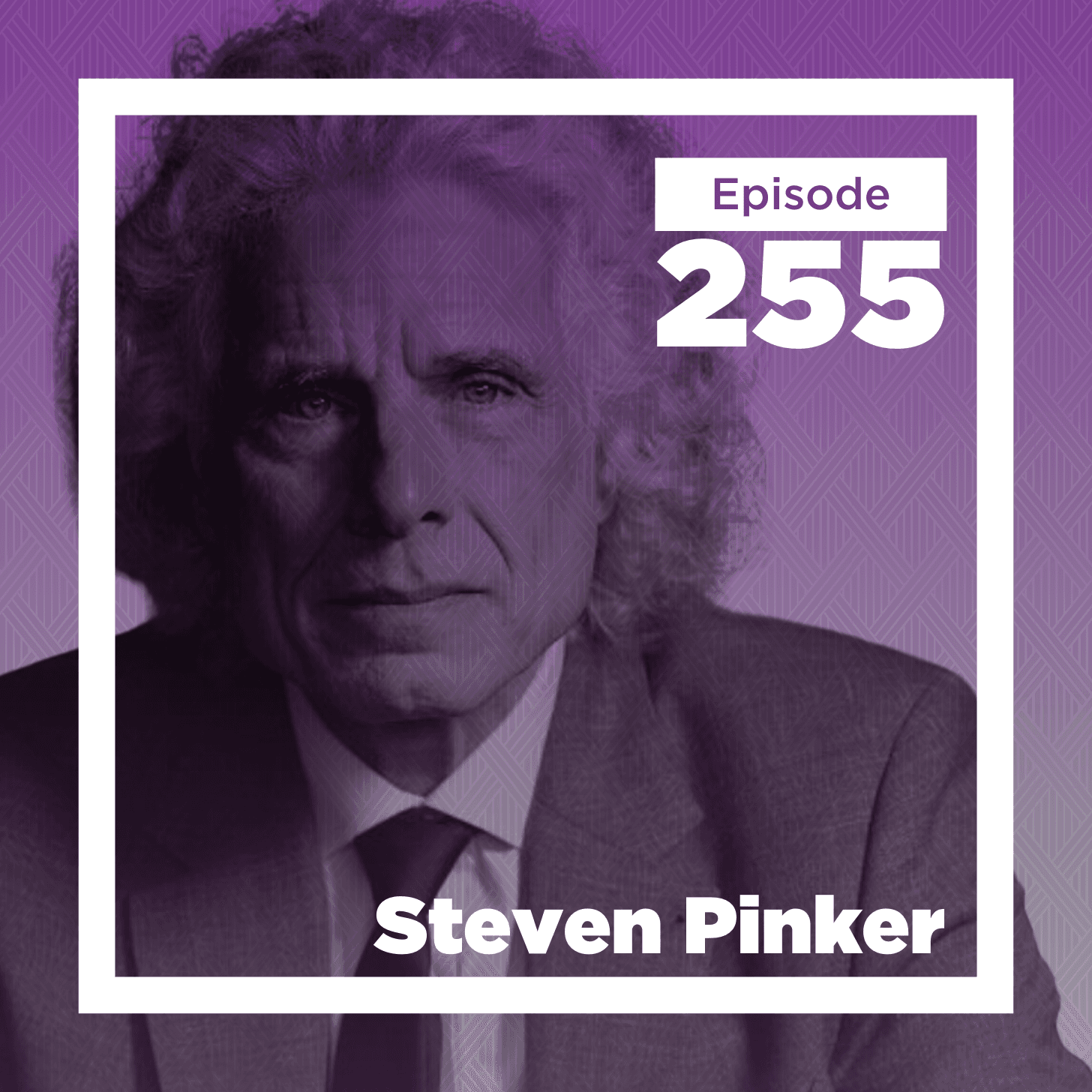
Episode Overview Title: Steven Pinker on Coordination, Common Knowledge, and the Retreat of Liberal Enlightenment Release Date: September 12, 2025 Host: Tyler Cowen Guest: Steven Pinker Description: Steven Pinker discusses the concept of common knowledge and its crucial role in human coordination, touching on various topics including political structures, the internet's impact on knowledge dissemination, and the future of liberal enlightenment.
---
Key Themes and Concepts
Common Knowledge
- Definition: Common knowledge refers to shared information that exists in a recursive format (e.g., "I know that you know that I know...").
- Importance: Essential for human coordination, influencing behaviors such as accepting currency or recognizing authority.
- Examples:
- Currency acceptance relies on widespread acknowledgment of its value.
- Social norms, such as obeying traffic rules, depend on mutual understanding of those norms.
Coordination vs. Common Knowledge
- Real-World Coordination: Many real-life situations show that coordination does not always require complex common knowledge (e.g., a simple glance at a traffic circle).
- Limitations of Common Knowledge Models:
- They may not accurately capture the simplicity of many coordination situations.
- They break down with minor changes in assumptions, indicating fragility.
Differentiated Knowledge
- Role of Differential Knowledge:
- In elite decision-making (e.g., oligarchies), the presence of differential knowledge can drive action and create common knowledge.
- Example: A child revealing the emperor's nakedness generates common knowledge, enabling societal change.
The Internet and Knowledge Dissemination
- Anonymous Posters:
- They can both reveal uncomfortable truths and spread misinformation, complicating the landscape of common knowledge.
- Raises the question of whether society suffers from an excess of common knowledge.
The Liberal Enlightenment
- Current State:
- Pinker believes the liberal enlightenment is in retreat but not gone forever.
- It faces challenges from tribalism and authority-based social organization, which are more intuitive to human nature.
- Future Prospects:
- While there are setbacks, the intrinsic advantages of science and universalism could support a resurgence in liberal values.
Academic Insights
- Grade Inflation at Harvard:
- Pinker critiques grade inflation practices, suggesting that grade distribution does not reflect student merit accurately.
Linguistics and AI
- Large Language Models:
- Pinker expresses concern that linguistics has had little impact on AI development despite some principles being implicitly included.
Cultural References
- Music and Preferences:
- Discussion includes Pinker's favorite track on the Beatles' "Rubber Soul," highlighting his interest in cultural artifacts.
---
Key Takeaways
- Common Knowledge's Role: Essential for societal function, affecting everything from economics to governance.
- Fragility of Models: Real-world scenarios often show that coordination can occur without complex common knowledge.
- Impact of Anonymity: The internet's anonymity presents both opportunities for truth-telling and risks of misinformation.
- Hope for Liberal Enlightenment: While under threat, the principles of liberalism have enduring qualities that may allow for its revival.
- Academic Standards: Critique of current educational practices highlights issues of meritocracy and standards in elite institutions.
---
Closing Thoughts This episode provides a rich exploration of how common knowledge influences human behavior and societal structure while delving into the current state of liberal enlightenment. It raises important questions about the balance of knowledge, truth, and societal norms in an increasingly complex world.
For more insights, listen to the full episode on [Conversations with Tyler](https://conversationswithtyler.com/episodes/steven-pinker-2/).
Written by AI. May contain mistakes. Listen to the episode to check what was said.
Transcript
Automatic transcript. May contain errors.0:04Conversations with Tyler is produced by the Mercatus Center at George Mason University. bridging the gap between academic ideas and real-world problems. Learn more at Mercatus.org. For a full transcript of every conversation, enhanced with helpful links, visit conversationswithtyler.com.
0:27Hello, everyone, and welcome back to Conversations with Tyler. Today, I'm delighted to be chatting with Steven Pinker. Steven needs no introduction per se, but I will point out he has a new and excellent book called When Everyone Knows That Everyone Knows… The subtitle is Common Knowledge and the Mysteries of Money, Power, and Everyday Life. Stephen, welcome. Thank you. How important is the reasoning behind common knowledge? So say you get a bunch of men in the room, and at the end of some thinking, one of them concludes that he He has spinach on his teeth, using common knowledge. Let's say that mode of reasoning was somehow not allowed to us.
1:08How much lower would GDP be? It would take. It would be almost non-existent just because all of our economy depends on coordination, on people doing things that are in everyone's interest if everyone does it in the same way, beginning with money itself, with currency. Why do we accept a piece of paper in exchange for something of value? Well, we know other people will accept it and give us something of value. Why do they do that? Well, they know that still other people will. Everyone knows that everyone knows that money has value. That's what gives it value. I mean, as long as they do. And that can unravel when you have hyperinflation or a bank run or a currency attack.
1:48Political power. No government can have snipers on every rooftop and telescreens in every room, surveilling you 24-7 with the Stasi ready to pounce on you if you break a law. A lot of our laws, a lot of recognition of authority, who's the boss, depend on just common knowledge, namely, he's the boss or she's the boss. She gets her way because she knows I'll obey. I'll obey because I know she gets her way. And for as long as that lasts, as long as that common knowledge lasts, you have structures of authority and reporting and power and responsibility. There, again, it depends on nothing but common expectations.
2:27It can unravel, as when you have a big public demonstration where people see each other, seeing each other, seeing each other opposing the regime, and then the authority of the regime can evaporate. But surely there's a difference between coordination and common knowledge. I think of common knowledge as an extremely recursive model that typically has an infinite number of loops, and most of the coordination that goes on in the real world is not like that. So if I approach a traffic circle in Northern Virginia, I look at the other person, we trade glances, there's a slight amount of recursion, but I doubt if it's ever three loops, maybe it's one or two.
3:04And we also just slow down our speeds precisely because there are not an infinite number of loops. And we coordinate. So what percentage of the coordination in the real world is like the traffic circle example or other examples? And what percentage of it is due to actual common knowledge? Yeah, so common knowledge, in the technical sense, does involve this infinite number of arbitrarily embedded beliefs about beliefs about beliefs. So thank you for introducing the title with the three dots, dot, dot, dot, because that's what signals that common knowledge is not just when everyone knows that everyone knows, but when everyone knows that, everyone knows that, and so on.
3:43Now, the answer to your puzzle, I devote a chapter in the book to what common knowledge could actually consist of. And I'm a psychologist. I'm not an economist, a mathematician, a game theorist. So foremost in my mind is what's going on in someone's head when they have common knowledge. And you're right. We don't—well, we couldn't think through an infinite number of I know that he knows thoughts, and our mind starts to spin when we do three or four. But instead, common knowledge can be generated by something that is self-evident, that is conspicuous, that's salient, that you can witness at the same time that you witness other people witnessing it and witnessing you witnessing it.
4:24And that can grant common knowledge in a stroke. Now, it's implicit common knowledge. That is, one way of putting it is you have reason to believe that he knows that I know, that he knows that I know, that he knows, et cetera, even if you don't literally believe it in the sense that that thought is consciously running through your mind. And I think there's a lot of interplay in human life between this recursive mentalizing, that is, thinking about other people, thinking about other people, and the intuitive sense that something is out there, and therefore people do know that other people know it, even if you don't have to consciously work that through.
5:02And a kind of proof, you gave the example of recognition of, well, of norms and laws like who yields at an intersection. The eye contact, though, is crucial because I suggest that eye contact is an instant common knowledge generator. You're looking at the part of the person, looking at the part of you, looking at the part of them. And so you've got kind of instant granting of common knowledge by the mere fact of making eye contact, which is why it's so potent in human interaction. and often in other species as well, where eye contact can be a potent signal. But there are even species that can coordinate without literally having common knowledge.
5:41And I give the example of the lowly coral, which presumably not only has beliefs, but doesn't even have a brain with which to have beliefs. But coral have a coordination problem. They're stuck to the ocean floor. Their sperm have to meet another coral's eggs and vice versa. They can't spew eggs and sperm into the water 24-7. It would just be too metabolically expensive. So what they do is they coordinate on the full moon. On a particular, on the full moon or depending on the species, a fixed number of days after the full moon, that's the day where they all release their gametes into the water, which can then find each other.
6:17Now, of course, they don't have common knowledge in knowing that the other will know. It's kind of implicit in the logic of their solution to a coordination problem, namely the public signal of the full moon, which they, over evolutionary time, it's guaranteed that each of them can sense it at the same time. Indeed, in the case of humans, we might do things that are kind of like coral, that is, there's some signal that just leads us to coordinate without thinking it through. The thing about humans is that because we do have or can have recursive mentalizing, It's not just one signal, one response, you know, full moon, shoot your wad.
6:57There's no limit to the number of things that we can coordinate creatively in evolutionarily novel ways by setting up new conventions that allow us to coordinate. But I'm not doubting that we coordinate. My worry is that common knowledge models have too many knife-edge properties. So whether or not there are timing frictions, whether or not there are differential interpretations of what's going on, whether or not there's an infinite number of messages or just an arbitrarily large number of messages, all those can matter a lot in the model. Yet actual coordination isn't that fragile. So isn't the common knowledge model a bad way to figure out how coordination comes about?
7:37Well, so yes, there could be a direct link between a public conspicuous signal and the desire to coordinate. And I think you're right. That's probably what happens most of the time. But in cases where there's doubt as to whether the signal has been received or how it's interpreted, or where there's no way in which you can generate such a salient signal, that's when we get what's often interesting in life, namely you're trying to get inside someone else's head. Do they know what I know, or do they know that I know it? And a lot of our, not our routine automatic interactions, but the ones where we kind of stop and think and calibrate our responses are cases where recursive mentalizing does come into play.
8:20The choice of words in a fraught situation would be an example. A veiled bribe, a sexual come on, a solicitation for a big favor like a donation, where you put some mental effort into exactly how do I frame my overture so that my hearer catches my drift without knowing that I know that they know, which could change the basis of a relationship. And by the way, I've skipped a step here, which is that I suggest that human relationships like friendship, like authority, like romance, transaction partners are all coordination games that are solved by common knowledge. Sometimes when we want not to change the relationship in force, we actually take steps to avoid common knowledge, as in innuendos and euphemisms where the message gets through, there's enough uncertainty as to whether your hero knows that you know that they know that the relationship can survive the threat from the overture.
9:24Doesn't differential knowledge play a big role in helping us understand what will happen? So say I'm part of an oligarchic elite, and we all decide the actual lead dictator is about to fall. That becomes common knowledge within the oligarchic elite. But that's not enough. Someone has to move first. Someone has to have differential knowledge that maybe they can take over, or maybe they're the more courageous one, or maybe they know who in the armed forces will support them. And the actual model of cooperation is this optimal blend of differential and common rather than just common knowledge. No?
9:58Yeah, I think that's right. Often, once they make their move, they generate the common knowledge that allows everyone to coordinate. But there has to be some kind of either private knowledge or private initiative that launches the proliferation of common knowledge. I start off with the story of the emperor's new clothes. So why did that little boy blurt out that the emperor was naked, which then generated the common knowledge? Now everyone knows that everyone knows. Why him? Why then? I think part of the understanding of the story is that children, being kind of naive and innocent about certain conventions and norms that govern adult life, often do blurt out truths that adults don't—they don't have the same internal kind of payoff structure that adults do.
10:44They don't have the fear of ostracism or condemnation that adults do. For a while now, we've had this thing called anonymous posters on the Internet. Do you think, on average, they make the world better or worse? Ha, interesting. Probably worse. I hadn't really thought it. Well, okay, but they help make some things common knowledge, right? If there are things that are not common knowledge, some anonymous poster will say it. There'll also be misinformation. information. But is that a clue that maybe at the margin, we have too much common knowledge rather than too little? So it's a good question.
11:17So, I mean, you asked, the way you posed the question is, on average, is it better or worse? So it's kind of a matter of counting up the cases where it is a little boy saying the emperor was naked. And unlike the story, using anonymity to be able to escape reprisals, punishment for generating the common knowledge, you'd have to count up the number of cases where that happens compared to all of the misinformation, trolling, hiding behind reprisals as a way of being aggressive. You know, I think a lot of the shaming mobs, a lot of the trolling, a lot of the degradation of discourse in social media comes because of that anonymity.
11:58Is it worth it because sometimes it is a little boy saying the emperor is naked? That would be harder to tell. But take even the cases where the anonymous posters are right. So as you and I know, there's a lot of alt-right views out there. In general, I don't agree with them. I think they're quite wrong. But I also think that if some of them were correct, some of the conspiracy theories, it would actually be better if we don't all know them, that we would lose too much faith in elites. And it's better that we do not have too much common knowledge, again, if those claims were true. Do you agree?
12:29Ha. So you have to set up, I guess you'd have to set up the hypothetical. That is, are there cases where there's a noble lie, where we're better off if everyone believes it? I think a somewhat different case, other than an outer lie, would be a genteel, benign hypocrisy, where you have a common pretense. And your sometime collaborator, Robin Hanson, writes about that in his book with Kevin Simler, where he gives some examples, and I actually repeat them and add some of my own, of cases where it's not an outright lie, but it's a case where there's some things that are true that you avoid saying.
13:08Robin Hansen gives examples like if someone drinks from a whiskey bottle in a paper bag on a park bench, the paper bag isn't really fooling anyone, but the police may choose not to arrest him under the pretense that he's not drinking an alcoholic beverage in public. Why would they do that? Well, if they tried to enforce the letter of the law, it would be too much like a police state. It'd be a waste of resources. On the other hand, if they failed to arrest someone who is overtly drinking, they'd be surrendering the authority of the rule of law in general. And so the paper bag, what it does is it allows them to say the rule of law still holds in general, even if we choose, as we say, and it's an interesting idiom, to look the other way.
13:55Now, more consequence, and there are other cases in law enforcement that work like that. Escort services, does anyone really believe that someone's paying only for an escort? They get away with it. Tobacco paraphernalia, which is basically drug paraphernalia. And of course, it's a question of where you draw the line so that the law doesn't forfeit all of its authority. By which I mean, in going back to the top of the conversation, the common knowledge that the rule of law applies, which is necessary given that the police can't enforce everything 24-7. Then on the international stage, things like, is Taiwan a sovereign state?
14:31Well, of course it is. But the official policy of the United States is that it doesn't exist, and of pretty much every other country, as far as I know. Taiwan included, right? In a funny way. Taiwan included, yes. So I don't know if that would be an example. It's not exactly a noble lie, but it's a common pretense. And again, the reason, you can spell out the reason, although if you spell out the reason, then that kind of undermines the reason. But the reason, of course, being that it would be considered an affront, a challenge to China's sense of authority, prestige, standing, preeminence, because it stakes a historical claim to all of historic China, which if it was explicitly breached by formally recognizing Taiwan, it would be a challenge to China's authority.
15:17if nations act as if it was a sovereign state without saying it's a sovereign state, then China can maintain the pretense that its claim is valid. Or yet another example is, does Israel possess nuclear weapons? Their official policy is, we're not saying yes, we're not saying no. Now, everyone knows that Israel has nuclear weapons. If there wasn't some suspicion, the weapons would be useless because they wouldn't be a deterrent. On the other hand, if it was part of the official policy that Israel was a nuclear state, then its Arab rivals would feel that they had to acquire them as well so as not to lose face and standing.
15:55Or say determinism were true and free will were false. It would be disastrous if we all believed that, right? So I think it's a good thing there's not more common knowledge, because I think determinism is true. Okay, yes. Well, that's a whole other discussion. I mean, one could say that determinism is necessary for the kind of incentive structure that holding people responsible imposes. Namely, if I condemn you, punish you, shame you, hold you responsible for bad choices, well, you're less likely to make those bad choices. That's why we have a regime of holding people responsible. So kind of paradoxically, you need some degree of determinism for the idea of holding people responsible for their choices to have any effect.
16:43Is a shelling point the same thing as common knowledge in your approach? So a shelling point is, I think it's more like common salience. So it's closely related. So just a Schelling point is a choice that people make to coordinate that has no intrinsic value other than the fact that everyone else knows that it exists. It's something that pops out. Schelling's original example is a couple separated in New York. This is before the era of cell phones. How do they coordinate in the absence of common knowledge? It can't just be that each tries to guess where the other one would go, because if he knows that she likes to go to the bookstore, so he goes to the bookstore, the problem might be that she knows he likes to go to the camera store, so she might go to the camera store.
17:28Well, he knows that, so maybe he should go to the camera store. But then she knows that he knows that she likes to go to the bookstore, so she might think, oh, he's going to go to the bookstore after all, ad infinitum. But if there's some point in the landscape that kind of commends itself as something that is salient enough, obvious enough, recommends itself, like in Schelling's example, he guessed that the couple would meet at the clock in the middle of Grand Central Station at noon. Even if it wasn't where they would have been separated, simply because if you have to pick someplace, what place are you going to pick?
18:03A shelling point is something that is salient enough to enough people that they alight on it as a solution to a coordination problem in the absence of common knowledge, per se. So, Stephen, where would you go in New York to actually meet them? I know where you'd go to meet me. Yeah, Grand Central Station. Because it would pop into our minds, and each of us knows it would pop into the other's mind because we both read Tom Schelling. Nowadays, Grand Central Station isn't what it used to be, and it's quite possible that it wouldn't be a Schelling point. That is a point that serves as a coordination equilibrium simply because each one knows that the other one knows that it would pop into the other one's mind.
18:41And Schelling actually addresses that. He wrote in 1960 when Grand Central was much more influential. And indeed, I think people did studies and they showed that people actually would, as he predicted, use the clock in Grand Central, not as a plurality of choices. But as Schelling notes, because he noted this is very fragile, he said this is the point when it comes to actually choosing what we now call a Schelling point, common salience. This is where game theory, rational analysis, logic leave off, and human whimsy, caprice, even poetry take over. That is, anything that pops into mind as a possible solution is a solution because it popped into your mind if it's likely to pop into the other person's mind.
19:26So he suggested, well, maybe the couple will rely on whimsy and look for each other at the lost and found. Or maybe something came up in conversation the night before. Or maybe there was a guy with a sandwich board advertising a particular coffee shop. When it comes to the points that people converge on because the other one knows that they will converge on it, But there doesn't have to be any rhyme or reason other than human psychology. It pops into your mind. Okay, so where would you pick? As a bagel? Somewhere, right? I think it would be probably Times Square. Maybe the statue of, what's his name, Sammy Kahn?
20:07The kind of grandstand in Times Square with a statue of the Broadway promoter. That might be what I do. I don't think you're going to meet many people there. Maybe not. Maybe the former world. Trade Center site, I thought of. Moynihan Station is not crazy. No, I think it is, and Schelling points this out, it is dependent on the context of your relationship with that person. So it would be something like that may have come up in conversation, something that you remarked on, a quirk that one of you has that the other one knows about. That's just it. When it comes to a common knowledge generator or a substitute for common knowledge, really common salience.
20:47There is no predictability. There needn't be any predictability from outsiders other than it likely to pop into the mind of the people involved. Do you agree with Robert Allman's argument, at least as he makes it in the model, that if you meet an epistemic peer and you each announce your views, you ought to end up agreeing with them, even without debating the issue or exchanging information about the facts. the mere fact that you have these two opinions, you should be able to converge. Yeah. So if, I guess I do. I mean, of course, it's dependent on the assumptions that go into the theorem. This is the famous theorem that rational agents cannot agree to disagree, or more accurately, rational agents who have the same priors, that is, they come to a problem with the same understanding of the situation, and hence the same degree of credence in hypothesis is before they even look at any evidence, and they share their posteriors, that is, each one kind of tells the other what their subjective estimate of that idea is, without sharing the evidence that they use to come to that assessment, just what the assessment is, then the theorem says those assessments have to be the same.
22:02That is, rational agents with the same priors and whose posteriors or common knowledge cannot agree to disagree. Those assumptions are seldom satisfied, but if they are satisfied, then yeah. And how does that actually manifest itself in some real-world situation? Well, I don't know if it was Allman himself. It may have been, I think, Giacopoulos who pointed out that a corollary of Allman's theorem, which sounds totally counterintuitive, even crazy, is that rational agents should not engage in speculative trade. That is, buying a stock in the expectation that you know that its value will rise and you can sell it at a profit.
22:41This is exactly what all the investment analysts tell me. Don't try to time the market. Don't try to outguess other investors. Just buy an index fund and be content to share in the overall appreciation of the market. That's a corollary of Alman's agree to disagree theorem based on the similar intuition. Namely, since prices are common knowledge, at least in a large public market, if you have insider information, that changes the assumption. But since prices are common knowledge, any hint that you have that some company is coming out with an insanely great gadget or there's going to be a pent-up demand for this or that is almost certainly already reflected in the price.
23:23so you can't reasonably expect to make a greater profit by speculating on private information. Am I your epistemic peer when it comes to chocolate? I've probably eaten a lot more of it than you have. I've had it in more countries. I've written a book on food. So if I tell you chocolate is good and you shouldn't dislike it, well, should you just agree with me? Will you, in fact, just agree with me? I won't. I'm one of those freaks who just does not enjoy the taste of chocolate. Oh, that's fine. But you can agree you should enjoy the taste of chocolate. But I ought to. You ought to. That's right.
23:59Yes. I ought to if I had the same constitutional makeup as you, then perhaps. I mean, this is a case where the epistemic peers don't share priors. And this could even, when it comes to preference, I don't know if you could talk about the prior probability of a preference, but when it comes to just the brute force gut feeling, look, I just don't like chocolate, you know, that would be a case where it isn't irrational to not share those priors. I mean, that's just the way I'm wired, and I just don't like it. I don't like most ballet, but I admit I ought to. I just don't have the time to learn enough to appreciate it.
24:34Or take Alfred Hitchcock. I would say North by Northwest, while a fine film is really considerably below Rear Window and Vertigo. Will you agree with me on that? Or do you think I'm not your epistemic peer on Hitchcock films? Well, your preferences are presumably different from beliefs. That is— But no, quality relative to constructed standards of the canon, right? Oh, well, there—okay. So that is the criteria exist external to both of us. We both agree that they are reasonable. So, okay, we agree that the criteria are reasonable. We agree on everything that went on in both movies. We each share—then we share our assessments.
25:16I put rear window at 0.7, you put it at 0.4. Is one of us irrational? Well, maybe. Okay, you're going to budge now, right? And you're going to agree that I'm right. Or we're not doing too well on this element thing, are we? We aren't. Because I'm going to insist, North by Northwest, again, while a very good movie, is clearly below the other two. You're going to insist, yes. And I'm going to insist. I'm going to insist. I'm going to insist that it's— I thought that you might not agree with this, but I'm still convinced that if we had enough time, I could convince you. And hearing that from me, you should accede to the judgment.
25:51Well, I should. No, that is right. And, oh, okay, I'm open. Again, this is – but crucially, we're not – there can be no element of just raw subjective preference. It has to be, does it meet the criteria of, I don't know, the majority of Rotten Tomatoes or Roger Ebert and Pauline Kael and a panel of their peers. So yeah, if that existed, then yeah, I'd be open. And I'd say, well, I don't agree with Pauline Kael's criteria, but who am I? But you're not open on chocolate? Again, if it's a matter of just, do you like the taste? there it is, there's, you know, de gustibus, non est disputandum. When it comes to just preferences, I don't think that priors apply or are even meaningful.
26:45But say I had that gene where, you know, cilantro to me tasted like soap. I don't. But if I did, I would admit, well, it's really wonderful. You know, I just have this disability. And you have the chocolate disability. Well, if you reframed it as a descriptive statement about other people's tastes, well, yeah, then it's just a question of asking them. If it's a question of, you know, what is better, better means I would choose it. There, it seems to me that priors don't apply, that it's not a question of a descriptive belief, but there you really can have your own tastes. What's the best Bob Dylan album?
Read the full transcript
27:23Let's see, I would say, you know, Highway 61. I think I'd say Bringing It All Back Home, Blood on the Tracks, and Highway 61 is number three. But they're close. What about Blonde on Blonde? Fourth. Really? Okay. It's a little too long, and some of the songs are a little harsh in terms of the sound engineering, I find. But it's very, very good, right? Yeah. Not to mention that in all of these lyrics, the songs, there are some lyrics that are rather misogynistic by today's contemporary standards, but somehow he gets away with it even retroactively. Is the liberal enlightenment gone forever? I sure hope not.
28:03But what do you think? I mean, sort of betting odds. It seems to me what we used to think of it is gone forever. We may salvage some parts of it for the new thing that will be, whatever that is. I guess I'll say not gone forever, but certainly in retreat. Why not gone forever? Well, because it's got some built-in advantages. One of them is reference for science, which is, you know, the truth is what refuses to go away when you stop believing in it. And so any method that is optimized for finding the truth has just that built-in advantage. It can be repressed, there can be censorship, there can be irrationality, but in general, something that finds the truth, it's got that going for it.
28:46And universalism, namely that if liberal enlightenment depends on universal human rights, the maximization of human interests, The fact that we're ultimately kind of birds of a feather, we all want to be alive rather than dead, that there is something logically incoherent in saying I deserve rights because I'm me and you don't because you're not me. I can impose that by brute force, but to the extent that we all have to agree on something, we're not going to agree on me being imperial leader. So now they aren't guaranteed to succeed because there is brute force and infirmities in human psychology and cognition and mob effects and all the rest.
29:30But nor is liberal enlightenment defenseless. And the fact that some things tend to be, I don't believe in historical momentum. I think that's kind of mystical. But there are some things that do look, if not irreversible, to have an awful lot of historical momentum. So like human sacrifice, all the ancient civilizations did it. Now it's kind of gone. And I don't think it's coming back. Why? Well, a combination of we've got enough knowledge about cause and effect to know that throwing a virgin into the volcano will not, in fact, bring good weather or make a plague go away. Some degree of empathy for the average person so that we don't want to cut the beating heart out of someone's chest, you know, on average.
30:15Likewise, slavery exists clandestinely, but we don't have any legal slavery anymore. Democracy in Mauritania, don't we? Don't we have more slaves in the world today than we did way back when, by some counts? Well, not as a proportion of the world's population. Oh, sure. But maybe it's the absolute number that matters. Well, if you said to a slave, don't worry, you know, you're only one-tenth of a thousandth of the world's population. It wouldn't be that much of a consolation. No, but if you said to a randomly selected person, almost certainly you're not going to be a slave, then that does matter.
30:48That is, from behind a veil of ignorance, if an average person has some likelihood of being a slave and that's way down, then that matters. But in any case, legal slavery that is enforceable by the state and carried out in open slave markets no longer exists. Will it come back? I think probably not. There are other things where it's not inexorable, it's not monotonic, but it certainly seems to have a direction. And that doesn't guarantee that it continues because there is no such thing as literal momentum. But it does indicate that as there are greater means of exchanging information, as there are wider and wider pools of people exchanging information and having to agree on common interests, there is some force, some vector.
31:37Now, again, I don't want to say it's going to win, just that it exists. And so it's not that liberal enlightenment, I think, is gone forever. And it isn't even gone. I mean, it's still more countries are democratic than not, even though if it's fewer than it was 20 years ago. So liberal democracy is kind of on its heels. There is some retreat. But, you know, we're still better off than we were in the 90s, the 80s, the 70s, the 60s, the 50s in terms of liberal democracy. So I don't think it's gone forever. I think my view would be science will do fine, but even the Enlightenment proper did not have universalism to begin with.
32:13And the future for universalism, to me, looks quite grim. And I think we will have a steady stream of low-level conflict across major powers. So China does all these cyber attacks on us. And they would have been acts of war way back when. And we just put up with it. Russia sabotages EU infrastructure. That might have been an act of war way back when. We just put up with it. And we'll just be creeping up, up, up that threshold, not to nuclear war, but we'll get as close as we can get without deterrence really having to kick in. And the world will just be more violent and have more conflict. Why is that wrong?
32:48I think that's interesting because, as you say, it doesn't result in war. and war would be much worse. So the invasion of Ukraine, rewinding the clock 100 years, that could have been like the assassination of the Archduke in Sarajevo. It could have been that NATO decided to go all in and something like World War I or even worse could have happened. As awful as Ukraine is, and that is awful, it's not as bad as World War I. And if these cyber attacks, these insults, because of a norm threatened by Putin, no doubt, and by Xi, that you don't invade your neighbors, you don't try to rearrange borders by force.
33:25We haven't had another world war. And if what you said is correct, things could suck. But still, they could suck much worse if we had a world war. And I think it is less likely than it was 100 years ago. If you had to model in as fundamental and abstract a set of terms as possible, not relying on the names of individuals very much, why liberal enlightenment is in retreat today, what does your model look like? I think the most basic answer is that liberal enlightenment is not particularly intuitive. It doesn't really fit our human nature in the sense of our conception of how our societies ought to be organized.
34:01What's much more natural is tribalism, deference to authority, conformity. I think liberal enlightenment is a great idea. It's like a lot of counterintuitive discoveries of organized rationality. It is commendable, even if not intuitive. So I think there's a natural backsliding, unless it's constantly propped up. People are going to say, well, the solution to our problem is we need a strong leader. What is a strong leader? Well, once he's a leader, he gets to say, what's what's what? The idea that a leader just temporarily presides and is bound by fiduciary duties laid out with checks and balances and safeguards, it's a fabulous idea.
34:45It's not particularly intuitive, in the same way that markets are not particularly intuitive, in the same way that science is not particularly intuitive, but they're still good things. So it's kind of natural to think, why do people have superstition, belief in paranormal, belief in woo-woo? Why do they not grasp economic fundamentals like trade is good is not some? Why is congestion pricing in uber rational, even though people hate it? There are probably a lot of cases where people just left to their own devices kind of backslide away from liberal enlightenment principles. Do you think we have stirring liberal thinkers of today who are younger than 55 years old?
35:27Not stirring enough. I think we do have such thinkers. Derek Thompson, Martin Boudry, Cathy Young, although I guess I haven't kept track of her age. She's younger than 70. But yeah, there are very young people. Ezra Klein. I'm talking now about journalists. If you go into academia, there would probably be even more. And there are other people that I think our audience may not have heard of that are in my email correspondence. Are they stirring enough? Are they like a whatever Slavoj Žižek has? Do they have it? Probably not, although that might be an inherent problem in that influence by charisma kind of goes against the whole idea of liberal enlightenment, where it ought to just be the quality of the content of your ideas, not who looks more dashing in a scarf.
36:17Liberal Enlightenment is at a disadvantage in that regard in that it oughtn't to rely on charismatic thought leaders. How much of a liberal was Napoleon? Not. Well, wait, let me back off. Wasn't he quite a liberal? He just loved war too much, and he was an egomaniac, and he wanted to take over other countries, and that killed millions. But wasn't a lot of his program quite liberal? You're right. There were certain, you know, kind of, well, rethinking institutions and laws, introducing rational things like the metric system. But yeah, it could be that his own malignant narcissism subverted the liberal parts of him.
36:55Doesn't everyone at Harvard deserve an A - or an A? They made it into Harvard, right? Okay. Same with Stanford. Yes. So I actually have data on this, because that's what our dean told us, not with a whole lot of conviction, when we had a meeting about great inflation. And she said, well, we like to think of it as grade compression. Maybe students are just getting better and better and better. And I just know that that's not true because I have records from performance on my multiple choice test in my intro psych course, which I've taught for more than 20 years. And so it's pretty constant year to year.
37:30And there's no subjective sliding grade. And the performance has gone down. So students are not doing as well as they used to. and I've been forced so as not to drive away all my students to inflate my grades. I give way more A's than I used to, just so I don't have an empty lecture hall. And it's not because the students are getting better and better. And we know that a lot of Harvard students are admitted on non-meritocratic criteria, even putting aside, forget about the whole hot button of racial preferences, but legacies, athletics, social action, they sorted clothes for the homeless, They circulated a petition.
38:08They hung out with artists in an artist colony. Harvard does not admit students on meritocratic grounds. So if you're the boss, what would the median grade at Harvard be? Median grade? Median grade. Let's see. B minus? And how many students at Harvard, what percent do you think essentially deserve A minus or A? They're just very smart. They work hard. They're great. Maybe Harvard classes are harder, but they just ought to have good grades because they're wonderful. A quarter? 25 %? Only a quarter? I'd be shocked if it's only a quarter. Your admissions department must be terrible then. It is terrible.
38:47I've argued that as much. They use holistic criteria, which is mumbo-jumbo. It's mysticism. The reason I say it is I think I'm a pretty good lecturer. I mean, for whatever that's worth, everyone thinks they're a good lecturer. No, I don't doubt that. I'm sure you are. But my lecture hall is two weeks into the semester or three weeks into the semester, it's half empty. So anyone whose fanny is not in that seat, I think, does not deserve an A. Because, you know, it's not asking a lot. It's like less than three hours a week. And they get to hear, you know, me. I mean, I don't think I have a big eagle, but people in the real world actually pay money for tickets to my events.
39:22And for Harvard students, it's already paid. They still stay away because they have more important things to do, like pulling an oar or singing in an a cappella group. Do they deserve a name? I frankly think they don't. Are you discouraged that linguistics has had so little impact on current large language models? Yeah, I am. And, you know, I don't know whether it's that linguists themselves have not made themselves useful enough, have not been part of the conversation. Or, I mean, the cynical view is linguistics has just been on the wrong track and it has nothing to contribute. I tend to think more of the former.
39:56Now, there are some features in large language models that actually implicitly build in some of the insight of linguistics. The fact that you've got all of these hidden layers is an acknowledgement that the regularities in language and the regularities in thought that language expresses are abstractions. They're not triggered by individual words, but they're patterns and patterns of patterns, groupings and larger and larger groupings. The fact that one of the breakthroughs in this generation of large language models is what I call attention, attention heads, which are basically processors that look at temporally separated words in search of regularities as opposed to adjacent ones.
40:39The fact that they're not trained on words themselves, but on tokens that correspond to more or less to morphemes. The fact that they're trained on embeddings, which is, again, not the words themselves, but some backhanded indirect representation of meaning. In that case, the context that a word typically occurs in. So there are a lot of discoveries of linguistics that are implicitly built in. But linguistic theory in the sense of what you see in a journal like Linguistic Inquiry don't have direct counterparts. Now, maybe they wouldn't need all of those gigawatts and all of those GPUs if they were able to cut to the chase quicker by building in linguistic insights.
41:22My hunch is yes, but the models are so complex that I can't say for sure. Does it favor Chomsky? Does it favor the view that language is simpler than we thought? Where does it push your intuitions? Yeah, it has changed my intuitions that these models are capable of more than I would have guessed that they're capable of, given how they're built. But that may show that my intuitions break down when it comes to billions, tens of billions, hundreds of billions of parameters, 90 hidden layers, training that would be the equivalent of 30 ,000 years if a child was listening to it. my intuitions may be useless of what you can accomplish at those scales, which leads to a kind of ignorance of all of us so far until we probe the models to find out what's in the black box and what's responsible for their intelligence.
42:16Does it mean that the linguists and cognitive psychologists were wrong all along in saying that you need rules, algorithms, propositions, mental models, that it's all just massive statistical patterns? Or is the discrepancy between the fact you have to train these models with the equivalent of 30 ,000 years and a human child can speak in two years, say that it's almost a coincidence that they're as capable as they are, they're kind of capitalizing on all this input that we humans have put out there, and that they're doing something human-like in a very different manner than the human brain. I tend to think the latter, and the fact that they are so vulnerable to confabulation, hallucination, blends, as my former student Gary Marcus insistently points out, is a kind of hint that they're doing things in a different way than the human brain is doing things.
43:13How long do you think it will be before they can write a poem, say, As Good as the Median poem by Pablo Neruda? The thing is that the fact that Pablo Neruda didn't write it itself goes into our assessment of how good a poem it is. That a human work of art— What a blind taste test, right? Yeah, a blind taste test. Yeah, I don't know. They're already better at doing things probably like composing limericks or higgledy-piggledies on the fly. They're not great literary quality, but they are often very stringent formal criteria. They're remarkably good at that. The thing is that, again, we're going back to the North by Northwest versus Rear Window.
43:51What goes into assessment of quality and to what extent is there such a thing as objective quality of works of art? I tend to think that our assessment of a work of art isn't completely extricable from our knowledge of its provenance, which is why a fake da Vinci, an imitation da Vinci, is just not the same as a real da Vinci. In terms of the experience, in terms of any judgment, how it's produced goes into our assessment of what kind of work of art it is. Before my last two questions, let me just plug your book again. It is called When Everyone Knows That Everyone Knows... The dots are important.
44:30and the subtitle is Common Knowledge and the Mysteries of Power, Money, and Everyday Life. A fascinating read. Last two questions. First, what's your favorite song on Rubber Soul? Mine is You Won't See Me. I'll announce in advance, but I know it won't change what you say. I really like that song. I think I've just seen a face. It's a good pick. I like the sort of bluegrass rhythms behind it all. Yes, and just the kind of insistent rhythm and the piling up of line on line. Final question. What will you do next? Oh, one possibility is to revisit all the indicators of progress. What's the report card on the world 10 years after I published Enlightenment Now?
45:14What progress has continued? Where have we backtracked? And in a sense, answer your question, what are the prospects for liberal enlightenment? Steven Pinker, thank you very much. Thanks so much, Tyler. Always a pleasure.
45:28Thanks for listening to Conversations with Tyler. You can subscribe to the show on Apple Podcasts, Spotify, or your favorite podcast app. If you like this podcast, please consider giving us a rating and leaving a review. This helps other listeners find the show. On Twitter, I'm at Tyler Cowen, and the show is at Cowen Convos. Until next time, please keep listening and learning.
From the publisher
Steven Pinker returns to Conversations with Tyler with an argument that common knowledge—those infinite loops of "I know that you know that I know"—is the hidden infrastructure that enables human coordination, from accepting paper money to toppling dictators. But Tyler wonders: if most real-world coordination works fine without recursively looping (a glance at a traffic circle), if these models break down with the slightest change in assumptions, and if anonymous internet posters are making correct but uncomfortable truths common knowledge when society might function better with noble lies, is Pinker's theory really capturing how coordination works—and might we actually need less common knowledge, not more?
Tyler and Steven probe these dimensions of common knowledge—Schelling points, differential knowledge, benign hypocrisies like a whisky bottle in a paper bag—before testing whether rational people can actually agree (spoiler: they can't converge on Hitchcock rankings despite Aumann's theorem), whether liberal enlightenment will reignite and why, what stirring liberal thinkers exist under the age 55, why only a quarter of Harvard students deserve A's, how large language models implicitly use linguistic insights while ignoring linguistic theory, his favorite track on Rubber Soul, what he’ll do next, and more.
Read a full transcript enhanced with helpful links, or watch the full video on the new dedicated Conversations with Tyler channel.
Recorded September 12th, 2025.
This episode was made possible through the support of the John Templeton Foundation.
Other ways to connect
- Follow us on X and Instagram
- Follow Tyler on X
- Follow Steven on X
- Sign up for our newsletter
- Join our Discord
- Email us: cowenconvos@mercatus.gmu.edu
- Learn more about Conversations with Tyler and other Mercatus Center podcasts here.