
In short
Podcast Summary: Conversations with Tyler - Theodore Schwartz on Neurosurgery, Consciousness, and Brain-Computer Interfaces
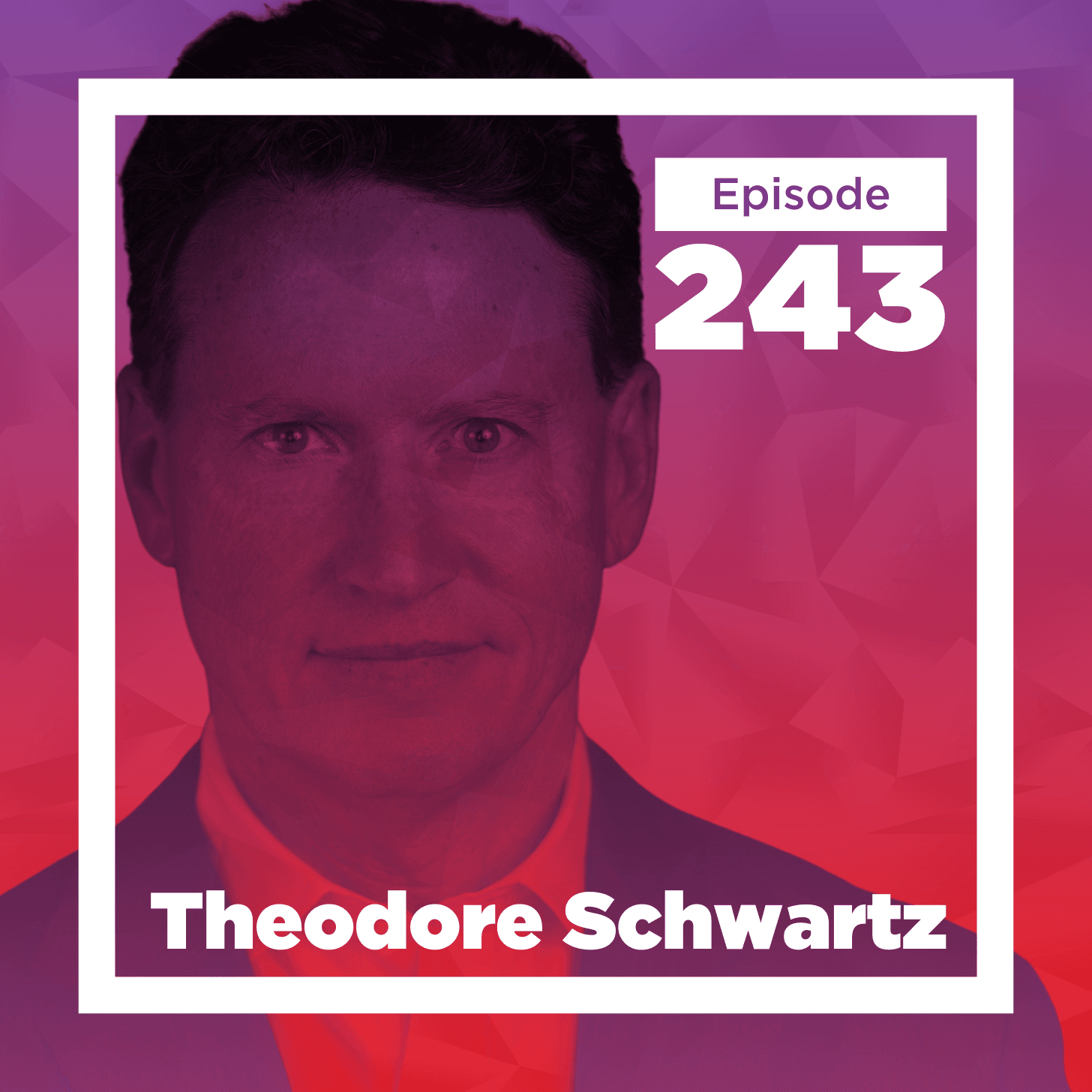
Episode Overview In this episode of *Conversations with Tyler*, Tyler Cowen interviews neurosurgeon Theodore Schwartz. Schwartz is an accomplished neurosurgeon with over 500 published articles and a recent book titled *Gray Matters: A Biography of Brain Surgery*. The discussion explores a variety of topics related to neurosurgery, consciousness, and the future of brain-computer interfaces.
Key Topics Discussed
- Neurosurgical Training and Experience
- Duration of Training: Neurosurgeons complete four years of undergraduate education, four years of medical school, and six to eight years of neurosurgical residency, totaling up to 16 years.
- Condensing Training: Schwartz argues that parts of medical education could be condensed without sacrificing quality, potentially shortening the path to becoming a neurosurgeon.
- Role of AI in Neurosurgery
- AI in Diagnostics: AI excels in interpreting MRI scans and assisting with initial diagnostics, though decision-making in surgery remains a human-centric task due to the complexity and variability of cases.
- Data Collection: Schwartz notes that there is a lack of standardized data collection regarding surgical outcomes, which could help improve practices and outcomes in neurosurgery.
- Choosing a Neurosurgeon
- Recommendations: Schwartz advises patients to seek referrals from healthcare professionals and to obtain multiple opinions to find the best neurosurgeon.
- Experience vs. Insurance: Many skilled neurosurgeons accept insurance, which allows access to quality care without exorbitant costs.
- Challenges and Demands of Neurosurgery
- Physical Demands: Neurosurgery requires stamina, dexterity, and the ability to focus under pressure. Schwartz shares his personal journey of overcoming physical challenges associated with long surgeries.
- Emotional Toll: The profession can lead to personal sacrifices, including issues with work-life balance and mental health.
- Consciousness and Free Will
- Philosophical Views: Schwartz expresses skepticism about free will, suggesting that our decisions are influenced by brain circuitry and that our consciousness serves as a storyteller rather than the originator of decisions.
- Impact of Brain Conditions: The discussion touches on how neurological conditions can impact personal identity and behavior, as illustrated by case studies involving epilepsy.
- Innovations in Brain Treatments
- Deep Brain Stimulation: Schwartz discusses the established use of deep brain stimulation for conditions like Parkinson's and its potential to alter aspects of personality.
- Future Technologies: The conversation includes optimism about brain-computer interfaces, including companies like Neuralink that aim to enhance communication and interaction through technology.
- Personal Reflections
- Satisfaction and Happiness: Schwartz reflects on the emotional complexities of being a neurosurgeon, highlighting the happiness derived from successful surgeries balanced against the weight of complications.
- Philosophical Influences: His background in philosophy informs his understanding of consciousness and the human experience, particularly in the context of neurosurgery.
Key Takeaways
- Neurosurgery is a rigorous field that balances technical skill, emotional resilience, and continual learning.
- AI holds promise in diagnostics, but the irreplaceable human element remains crucial in surgical decision-making.
- The conversation touches on profound philosophical questions about identity, free will, and the nature of consciousness, indicating that advancements in neuroscience could reshape our understanding of these concepts.
- Innovations such as brain-computer interfaces and deep brain stimulation represent exciting frontiers in neurosurgery with the potential to enhance quality of life for many patients.
Conclusion The episode provides a comprehensive look into the field of neurosurgery, weaving together practical insights, philosophical musings, and the latest advancements in technology. Schwartz's experiences and research contribute to a broader understanding of the brain and its complexities, suggesting that the future holds significant promise for both medicine and philosophy.
Additional Resources
- [Gray Matters: A Biography of Brain Surgery](https://www.amazon.com/Gray-Matters-Biography-Brain-Surgery/dp/0593474104)
- [Full Transcript of the Episode](https://conversationswithtyler.com/episodes/theodore-schwartz/)
- [Watch the Full Video](https://youtu.be/mdU9GLpGDrM)
Written by AI. May contain mistakes. Listen to the episode to check what was said.
Transcript
Automatic transcript. May contain errors.0:00Hello everyone, this is Jeff, one of the producers of Conversations with Tyler. I'm excited to let you know about a special live show we've just announced. On July 22, Tyler will be joined by David Brooks for a live taping of the podcast at the 90th Second Street Y in Manhattan. Tickets are available to purchase right now at 92ny .org. This will actually be David's second time joining Tyler. We're thrilled to welcome him back, And we haven't done a live conversation with Tyler a couple of years. So this is a rare chance to see the podcast recorded in person. So don't miss your opportunity to be in the room for what's sure to be a fascinating conversation.
0:40In fact, Tyler's already shared with me some of his chat GPT informed prep. So again, tickets are available right now at 92ny .org. I expect them to go quickly. So go grab your tickets now. Hope to see you all there.
0:59Conversations with Tyler is produced by the Mercatus Center at George Mason University, bridging the gap between academic ideas and real world problems. Learn more at mercatis .org. For a full transcript of every conversation, enhanced with helpful links, visit ConversationsWithTyler .com Hello everyone and welcome back to Conversations with Tyler. Today, I'm delighted to be chatting with Theodore H. Schwartz. I saw his book in a Barnes & Noble. I bought it. I read it. I loved it. It is called Gray Matters, a biography of brain surgery. But more generally, Theodore Schwartz is professor at Cornell Medical Center, at New York Presbyterian Hospital.
1:45He has written over 500 articles on neurosurgery and related topics. And he runs a science lab devoted to epilepsy research. Theodore. Welcome. Tyler, thanks for having me. It's really a pleasure to be here. Now the medical education process for a neurosurgeon. There's four years of undergraduate, right? Eight years of medical school and then how many years to be a neurosurgeon. So med school is actually four years for everybody. It's universal and then neurosurgical training is anywhere from six to eight years. The average is usually seven years. You do one year of internship and then I did years of a junior residency, you often do research, could be one in two years folded into your residency training, and then you would do additional two more years of senior and chief residency.
2:34So I was not done with my training until I was 33 years old. So it could be as much as 16 years for a person? Yeah, it's a long road. Is there a way to condense or shorten that? So say you skip undergraduate education or most of it, a person starts at age 21, they finish by age 26. I found most of what can be taught, can be taught in five years. Is that not true? You know, I do agree with you. I think that the undergraduate education, a liberal arts, I was a philosophy in English major, right, which was wonderful. And I loved the expanding, you know, universe that I explored. But to be a neurosurgeon, I did not need to read Nietzsche and Kirkgigard.
3:14And even in medical school, there's a lot of things that are done that could be condensed. We rotate through the hospital for two years, choosing what we want to do and if you know what you want to do you could condense it. So I do think that undergraduate education and medical school could probably be condensed into six years instead of eight. But I'm not sure that the neurosurgery training, that could be condensed as well. Obviously you don't have to do research, right? If you're not interested in research you don't need to do it. You probably can learn how to be a neurosurgeon in four years.
3:42But if you think about you being on the table, right, rolling into a hospital and looking up at the person who's about to open your brain and take care of your most precious possession, you want them to have a little bit of experience. You want them to have some age and some wisdom when they're taking care of you. And if we condense everything, then that person could be 26, 27 years old. So I think we have to balance education with the wisdom that's required to be a great neurosurgeon. But as you say in your book, the neurosurgeons with less than five years experience, on average they're not as good.
4:20So if we shorten the earlier process, you'll end up with many more neurosurgeons who have say 11 years of experience, and if someone tells me, well, you're surgeon, you know, he raced through everything in six years, but he has 13 years experience doing this operation, and here's his track record. I'm going to be just delighted. it. I'm not going to say I want someone who went through 16 years, some of which was soup jumping, and he has only four years of doing this operation. Yeah, I don't disagree with you. So again, I'm not arguing with the training part. I think we could do it much more quickly, for sure.
4:54But as I mentioned, there's a certain amount of maturity involved in making decisions that we make that plays in. It's not just years that you've been doing it, but it's also wisdom. And wisdom comes with age as it does was with experience. As you know, for ordinary medical diagnosis, and I do mean ordinary, even GPT -4 does slightly better than human doctors on average, are there parts of neurosurgery? And I don't mean moving around your hand and making decisions on the spot, but where you think AI models soon will just do better than the humans. I think that in the interpretation of MRI scans, a patient comes into your office with conglomerative symptoms and you got to figure out what they have.
5:37Those things in AI are very good at. But often, you know, neurosurgery is different than internal medicine. We're usually not presented with diagnostic dilemmas or radiographic dilemmas. The dilemmas that we face are decision -making, physical decision -making in the operating room. That's really what neurosurgery is all about. Remember, a patient will come to us. They already have an MRI scan in their hand, right? So they're coming on and they're saying, I know I have a tumor. I know where it's located. What should I do about it? And the other thing that's tricky about having an AI make a decision.
6:11Let's say you have a tumor that could be observed, it could be radiated, it could be operated upon. So you have three options. But what's going to factor into whether to do the surgery or not is how good the surgeon that you're seeing is doing that surgery. And not all surgeons are created equal. So the AI will not necessarily be able to take into account the skill level of the particular surgeon that you're seeing because that's unique to that one surgeon and that one surgeon alone. But we could measure that, right, if the surgeons would allow it. In theory, you could measure their outcomes and have them enter their outcomes into a database for every surgery that they do.
6:54Right now we are so far from doing that. that we have no idea what goes on once that OR door is closed and a surgeon is on their own, there's really nobody looking over their shoulder for the most part. So yes, I think that data could be accumulated, but we're not even close to accumulating any of that right now. Why isn't there some institution, a private sector governmental that insists that data be collected and processed? That would be very valuable. Yeah, what's interesting is what's collected now and tracked by hospitals is what they care about. And what you learn when you're in the practice of medicine is that the priorities of a hospital and the priorities of an individual position are not completely aligned.
7:35They're partially aligned. So for example, one of the things that we measure now that hospitals are very concerned with is whether your patient comes back into the hospital after a certain period of time and whether they get an infection or not. Tool Goanda, you mentioned before in his checklist, his checklist is wonderful for reducing infections and certain frequent complications. But when I'm in the operating room, I'm concerned about whether I'm gonna be able to get this whole tumor out or not. I'm concerned about whether my patient is gonna be able to see when they wake up after surgery, whether they're gonna be able to walk when they wake up after surgery.
8:11And often there's a push pull decision making, a Sophie's choice of saying, should I leave some tumor behind to make sure that the patient can walk after surgery or should I be more aggressive and try to take it out and try to cure them and put them at risk of some sort of a postoperative deficit? None of that is tracked by hospitals. Hospitals are not really concerned with whether you get the whole tumor out or not. They're concerned with whether you get an infection or not, whether you get a clot in your leg or not. They're certain very specific things that they track because that's how the government judges them and determines their reimbursement.
8:42And so, unfortunately, the things we measure, the things that are easier to measure, and the things that the government wants us to measure, but they're not necessarily the most important things to be measured in a neurosurgical operation, and the same would be true of a cardiac surgery or urology acquisition. So, let's say I need a neurosurgeon, and assume also I can't contact you. I have a decent income, but not so much money that I can just buy the best talent in the world. How should I actually make that choice? Well, the economics of medicine are quite different than other things because most doctors will take most insurance plans.
9:17So if you have a private insurance, whether it's United Blue Cross or Etna, you can see an incredibly good neurosurgeon who is likely to take your insurance. There are some pockets of places in the country where some physicians may not take insurance plans. But for the most part, most of them do because the insurance companies have such a powerful control over the patients and the patient volume. But if you think about it, and I know economics is really what you are all about, if you think about it, it's somewhat unfair to the physician because the insurance company fixes the rate that they'll pay a surgeon.
9:48So if I am day one out of my neurosurgery training and I take out a brain tumor and you have United Health Care, whatever your insurance is, I'll get paid X dollars. If I'm 30 years older and I have 30 years more of experience. And I take United Health Care and you come to me 30 years later and you're going to get a much better product. I get paid exactly the same amount as the resident who was the first day out of their training. There is no accounting for experience and expertise in reimbursement for physicians for what they do. I may have a bigger volume, right? So I may do more cases because more patients come to me because I have more experience and more of a reputation.
10:24But for every widget I produce, I get paid exactly the same and and the quality of the product can be dramatically different. But how do I find someone say as good as you? Do I call a parver or what do I actually do concretely? I Google who's the best neurosurgeon? Unfortunately I've tried that and you get some oddball answers. Some of them are correct, some of them are incorrect. I think the best thing to do is try to find someone that you know a friend of yours who's in the healthcare profession and have them call around and ask their friends because they'll know someone who is a neurosurgeon.
10:55And it's really the neurosurgeons know who are the top neurosurgeons doing a particular operation because those are the people who write the most articles, give the most lectures, do the most volume. They're people that are known to be very, very good. It can be very hard for a consumer to know that. And what I found is most consumers are so awed by the fact that you are a brain surgeon, you know, that you've gone through this training, that they sort of take what most surgeons tell them at phase value. I happen to practice in New York City where everyone gets second, third, fourth opinions. So, you know, people are a little more critical about their physicians and do more research.
11:27But I think it is very important to get second, third opinions and speak to people in the medical progression. I know what economists are like. So I'd be very worried, no matter what my algorithm was for selecting someone. Yeah. Now, say the people who've only been doing operations for three years. Should there be like a governmental warning label on them the way we put one on cigarettes, dangerous for your health? And if so, how is it they ever learned? You raise a great point. And I thought about this, I talk about this quite a bit. The general public, when they come to see me, for example, I'm at a training hospital and I practice most of my career where I was training residents.
12:02And they'll come in to see me and they'll say, you know, I want to make sure that you're doing my operation. I want to make sure that you're not letting a resident or do the operation. And you know, I will have that conversation and I'll tell them that I'm doing their operation but I oversee residents, you know, and I have assistance in the operating room. But at the same time that they don't want the resident touching them in training, we are obliged to produce neurosurgeons who graduate from the residency capable of doing neurosurgery. What they want neurosurgeons to graduate fully competent because on day one you're out there taking care of people, but yet they don't want those trainees touching them when they're training and that's obviously an impossible task to not allow a training to do anything and yet the day they graduate they're fully competent to practice on their own.
12:49And that's one of the difficulties involved in training someone to do neurosurgery, where we really don't have good practice facilities where we can, you know, have them practice on cadavers that are really not the same or have models that they can use that are really not the same or simulations just not quite as good. You know, I don't, at this point we don't label physicians as early in their training, but I think if you do a little bit of research when you see your surgeon, you know, there's a CV there, right? So it'll say, this is when he graduated or she graduated from medical school and you can do the calculation on your own and say, wow, they just graduated from their training two years ago.
13:25Maybe I want someone who has five years under their belt or ten years under the belt. It's not that hard to find that information. How do you manage all the standing? When I started out, I had horrible back pain standing in the operating room, excruciating. I couldn't stand for more than half an hour and my low back would go into spasm. And I realized very early on that neurosurgery is a physical activity. You not only have to stand for long periods of time, you can't have a significant tremor. You have to be able to focus for long periods of time and you have to be able to work on very little sleep because sometimes you're getting woken up at 2 in the morning to do emergency surgeries and then you have to go back in the next morning to keep operating.
14:05What helped me in the end was learning how to do a lot of core exercises that strengthen in your core, planks and things like that. And then just practice and experience, like anything. The more you do it, the more you strengthen those muscles, and the better you can tolerate it. But for many years, I had excruciating back pain and I was constantly stretching the operating And I think a lot of surgeons go through that until those particular muscles that they need are strengthened. Let's say we put you in charge of the process, selecting who gets trained to become a neurosurgeon. How would you improve what we do now?
14:36Well, you know, we choose, at the top programs, surgeons often based on research criteria. A lot of the top programs want someone who have worked in labs and proven that they have a research brain and if they're going to contribute to the field. And that is one aspect of neurosurgery for sure. We want people who are going to improve what we do because medicine is constantly evolving and we need to get better. But on the other hand, you know, surgery is very much a tactile, physical sport that requires judgment and coordination and stamina and sacrifice and grit. And some of the best neurosurgeons combine all of those qualities and we interview the residents for, you know, 20 minutes when they come in.
15:26And it's very hard to evaluate them on all of those qualifications, which is why what But a lot of students do want to go into nursery as they'll actually rotate it that program. So they'll show up there and spend a month. And we'll see what they're like. We'll see if they have the stamina. We'll see how they function at 6am and if they're functioning just as well as at 9pm. And if they're upbeat and they can maintain a positive attitude and positive mood in the face of all of that work, then that's a good sign that they'll do well. But I don't think we fully evaluate our nursery -to -residence as well as we should.
16:00I think you're right. We need some more sort of great physical stamina assessments that we can apply to them. How much does IQ matter? I don't think raw IQ matters that much. You know the the end of the book I quote this there's an article that came out in the British Medical Journal that looked at the IQs of neurosurgeons rocket scientists and average professionals and Essentially found that they were all about the same and and I don't think that raw IQ is what makes a great neurosurgeon. You know, it is psychologically very demanding because you are taking care of people at a moment in their lives that is, you know, the most critical where they're in most of need of help.
16:43And they basically hand over to you their most prized possession for four hours, six hours. And you have to be on your A game every time you're under the microscope doing neurosurgery. Because, Because one false move, one damaged blood vessel, one damaged nerve, and that individual that you're taking care of may never walk again, they may never see again, they may never wake up from that operation. And you don't want to take that lightly. It's an enormous responsibility. And so you want to make sure you choose people who are going to be completely dedicated to the task. Just as you had to learn standing for so many hours in a row, did you have to learn concentration or did it just come to you naturally?
17:25I think I've always been pretty good at concentrating. You know, I think, you know, we do have to take a lot of tests along the way and you have to sit in your room and study and memorize an enormous amount of information. And that takes the ability to sort of sit and focus for long periods of time. I'm also a musician, which I found very helpful because the ability of sitting in a room and practicing an instrument, which I would do for hours and hours and hours, if you want to become very proficient at it is something that lends itself to neurosurgery. And you played bass, right? Yeah, I played the bass.
17:56Classical or jazz? So I started on upright and I moved to jazz, sort of R &B, funk fusion, that genre. And who's your favorite jazz bass player, Ron Carter? No, I love Ron Carter, but I have to say Jaco Pastorius. He was an electric bass player, I don't know if you're familiar with. No, it's very flamboyant. It's wonderful to listen to. Yeah, yeah, he was the man, for sure. Why do so few women go into neurosurgery? The surprise me when I learned it from your profession. So the numbers are going up. Women are actually doing better. They're now at maybe 10%. I think we expect them to be at about 30 % in a few years.
18:30But it's a very demanding career. And as you know, women often are focused on childbirth and having the freedom to raise their children in the way they want to raise them. And neurosurgery doesn't always allow a woman to do that. But if depending on how you want to, you know, run your life and what you want to do obviously, you know I know many women who are neurosurgeons and have children and their wonderful mothers to their children They may not have you know four or five children. They may have one or two children just to have the time But I think that is a limitation, you know to know that you're not going to be there as much as you may want to be for your children Why do so many neurosurgeons get divorced?
19:08I? Think it's the same thing, you know when you have a career where not Not only are you out of the house for a long time and you get called out of the house at awkward times, so that could be on Valentine's Day, right? That could be at two in the morning. But even when you're there, even when you're at home, there's part of you that's always absent. You know, one thing that I realized is no matter where I am, there's always part of me that's thinking about the patients that are in the hospital that I operated on last week and how they're doing and maybe one of them is struggling a little bit and I have to be aware of that and I'm thinking about the patients I'm going to operate on next week and the challenging case is coming up and How those are going to go and I'm visualizing them in advance?
19:57constantly so The past and the future of what you do is weighing on you all the time so that even when you're present at home You're not fully present at home. It's just a very demanding career and it's an unforgiving career And I write about in the book, there's some stories of some famous neurosurgeons like Harvey Cushing or Gazi Yashargil who people don't necessarily know all those names. But there's a famous story about Cushing who was really the founding forefather of neurosurgery. The turn of the century, 1905, he really was the first surgeon to dedicate his career to neurosurgery, which at the beginning of the century had a mortality of about 50 percent.
20:36And at the end of the career, his career was down to about 8 % really remarkable what he had done to make neurosurgery safe But he went into operate on a Saturday morning on a patient and he got the news that his second son Who had just graduated or finished his third year at Yale? It was in a car crash and died He got the news in the morning and he Walked into the operating room and he did the full operation that what he was set to do and then he went and claimed his son's body when the operation was done. And that just tells you something about what kind of, a human being he was, what sort of focus, dedication, self -restraint and discipline was required of hardy pushing to move the field forward the way he did.
21:19But wouldn't a substitute be called for it? So if I'm the patient, I would want it arranged in advance that my surgeon, if that happened, they would sub in someone else. Maybe they raised the price to me. Even if some individuals might do it just fine, And I would never do that. Well, think about it. Back when Harvey Cushing was a neurosurgeon, there was no one to sub in for him. There were no neurosurgeons. The field didn't exist. He was the first surgeon to dedicate his life just to neurosurgery. So it wasn't like there were other surgeons that had even remotely the ability. So even Harvey Cushing with his son's death weighing on him would have given you a better outcome than any other surgeon of that error.
22:00Now in the modern day, yes, of course, there are you know hundreds and hundreds of competent surgeons who could sub in and yes a surgeon nowadays should cancel that operation It handed off to someone else you can't arrange for that in advance We don't have the ability to do that I often think about that you know the morning when I see my patient before we go into surgery every morning We come in we see them when we do consent and we talk to them and I can speak for myself. I usually go to bed at 10 o 'clock the night before and I haven't had a bit of alcohol you know, because I want to make sure I perform it my best, but that patient doesn't really know what I've been through.
22:35They don't know that there wasn't some horrible tragedy in my life the night before. They don't know that I, you know, didn't binge on some, you know, not a drug addict at that moment in time, because we don't do drug testing, and we don't do any sort of testing for surgeons before they walk into the operating room. I'm not saying that should be done because I think we'd all like our freedoms and not like to be under that kind of scrutiny, But it is ironic, you know, we do give an enormous amount of trust to these individuals without really knowing what's going on in their heads. And I think surgeons are expected also to, we're held to a higher standard and we should be, right?
23:08We're expected to take care of our personal lives in a way that separates it from the work that we do. Putting yourself aside, I mean, do you think you're a happy group of people overall? How would you assess that? I think where as happy as our last operation went, honestly. I think that yes, if you go to a neurosurgery meeting, people have smiles on their face and they're going out and shaking hands and telling funny stories and enjoying each other's company. But it is a way that we deal with the enormous pressure that we face. Not all surgeons are happy go lucky, some are very cold and mechanical in their personalities.
23:44And that can be an advantage, right, to be emotionally isolated from what you're doing so that that you can perform at a high level and not think about the significance of what you're doing, but just think about the task that you're doing. So on the whole, yes, we're happy, but the minute you have a complication or a problem, you become very unhappy and it weighs on you tremendously. And it's something that we deal with and think about all the time. The complications we have, the patients that we've unfortunately hurt and not helped, although they're few and far between, if you're a busy neurosurgeon doing complex neurosurgery, that will happen, you know, one or two times a year and you carry those patients with you constantly.
24:24Is the brain a relevant bottleneck to living forever? So, say longevity science, it somehow pans out. We understand all the ages of kind of disease, we get some sort of fix, but we can replace your liver, but not your brain, right, without killing you. Is there a way around that? Yeah, well, let's hope that AI is, right? Because the brain is just a very complex information processing machine. So the hope is that someday we'll have some sort of inorganic way of reproducing the same connections we have in the brain so that we can live on more permanently in another form. But certainly the biology, the biological material of the brain is problematic because those cells don't reproduce and they deteriorate, they don't regenerate.
Read the full transcript
25:10Do you have a view on the Star Trek transporter? So you studied philosophy. Does it kill you? Would you step into one? I was there was there was that other what was that magic the show about the magicians with Hugh Jackman? Do you remember that show? The prestige I think it was called. So no, he would do this he would do this magic act and it would literally kill him every time he did it and he would be revived. I would let Spock go through first and if Spock told me it was okay, I'd fall abined. But it's only the spot copy that says it's okay. Like we have data from television that says it copies you successfully, but is it really you?
25:45Right? Or did we make a good copy of you and you're dead? Well, I would argue over time, we all change. Right? So the Tyler Cowan of five seconds ago is different than the Tyler Cowan that's sitting here right now. So if you could replicate yourself so that there were two Tyler Cowans, I think those two people would diverge in who they are because they would be completely different people one second after they became a different person because their molecules would be on a different path. They'd have different experiences. They'd be in a different location in space. So I think we're constantly changing.
26:22So I think I would go in the transporter. Given that people can live after split brain events, does this mean we're really two people or more people? Yeah, so I don't think that the unified self really exists in the way that we think it does. You know, as you mentioned, there's a neurosurgical operation called a corpus callusotomy where we can split the two sides of the brain in half so that they become two independently functioning brains and that person does not feel like two people. They feel like one self. Even though the left side of the brain will make the right hand do one thing and the right side of the brain will make the left side do something else.
27:01So both halves of their body are being controlled by different brains and sometimes they're behaving in opposite ways, but yet the individual still feels like a unified individual. How is that possible to have two brains and still feel like oneself? We can also remove half a brain. We do a surgery called a hemispherectomy where we take out half the brain and that person doesn't wake up feeling like half a person, right? And we know that all that we are is our brain, You know, that's what creates ourself. So I think that there are, you know, hundreds of different modules processing information in the brain and determining what behaviors we should do and making decisions for us.
27:39And then we carry out that behavior. And then there's another part of the brain that basically is a storyteller that tries to make sense of it all after the fact. So I do not think we have free will in the way that most people do. I think that our brains make decisions for us. We carry out those behaviors. and then we write a story that makes it into a logical timeline that makes us feel as if we were the ones that there was a self that made that decision whereas in fact that self didn't really exist. So what you think is you in your opinion is just the storyteller part at best. At best. Yes, it creates a story of a self just like it creates a story of free will.
28:18And does the storyteller part also not have free will? Because that's my view. Are you willing to go that far? Yeah, I don't think the storyteller part has free will. I don't think we know where those stories come from. I don't think we know where our ideas come from. I think they just emerge into our consciousness. I can't explain consciousness. I can't explain why it's something it's like to be Tyler Cowan and it's like something different to be touched words. I have no idea why that is. So that's still a mystery. Deep brain stimulation. People tell me all the time it has great potential. What's your opinion?
28:51Is it made up? Is it tried? Does it have potential? So, I mean it not only has potential but that's what we do right now. So the treatment of Parkinson's disease right now is to put an electrode in the brain and that will stop your tremor in your hand if you have Parkinson's disease with a tremor. So we use deep brain stimulation for that purpose. We also can reduce seizures. We can treat patients with epilepsy with deep brain stimulation and reduce their seizures. And we're getting to the point where we can start to treat depression and obsessive compulsive disorder and Tourette's and certain psychological issues with deep brain stimulation.
29:27We can alter someone's behavior, someone's desires, feelings based on deep brain stimulation because all of our behaviors derive from circuits in the brain that are firing in a particular way. So one great example was a patient who had deep brain stimulation. and when they turned on the stimulator, they started to like a particular type of music, a musician. And when they turned it off, they no longer like that musician anymore. So those kinds of desires can be created and extinguished with stimulating electrode in the brain. The truth is, really, any part of your personality can be altered with an electrode or a number of electrodes placed in the right places and altering the circuitry of your brain appropriately.
30:11Any part of your personality or just through some that are flexible? I think any part because you're all parts of your personality are based on brain circuitry and once we alter that circuitry we will alter who you are. Just like when someone develops Alzheimer's disease and no longer recognizes their children, they become a different human being, they become a different person because the brain wiring has changed. So 30 years from now, would you have a forecast? asked what else will be able to do with deep brain stimulation? Yeah, predicting the future is a tough one, but you see research in the works, right?
30:46You're incredibly well published, well read. You things in medical science can take 10 to 20 years anyway. You must have a sense. Well, I think we'll have a very effective treatment for depression and certain mental diseases, things where it's circuitry that's involved, but the biology is still intact. And then we can also talk about brain computer interfaces because I find that to be one of the most exciting forefront. And I don't know if you when you said deep brain stimulation, were you also referring to brain computer interfaces? Not yeah, but I'm going to ask you about that. But I just I just wanted to make sure you were differentiating.
31:19But yeah, I mean, you could imagine disorders. You know, there's a there's another famous case of someone who had a large brain tumor. And when as the tumor got bigger pushing on their frontal lobe, they became very very interested in child pornography and couldn't control themselves. And you know, we're good, we're going to go to jail and they found this huge brain tumor and they took the tumor out and those desires went away. And then five years later they came back and they re -imaged the patient's head and the brain tumor had recurred. So that's the frontal lobe. It's the area where we did frontal lobotomies that is very sensitive for behavior.
31:54So it's clear that so much of who we are is based on the circuitry of our brain and how while it's functioning, and alterations in those circuits can have profound effects on personality and behavior. Why do you think it's so hard to find biochemical correlates of depression? If it's just a physical thing. Well, I think we have some, right? I mean, there are medications that we take that are pretty effective at alleviating depression. The thing about medications and the biochemical part of it is that when you take a medication as a pill, it goes everywhere in your brain, right? And depression is probably only in certain places in your brain.
32:31There are only certain frontal lobes circuits that probably mediate the depression. But if you take a drug that alters a neurotransmitter in your brain as a pill, right now, that goes to everywhere in your brain. So it's going to have side effects. It's not going to be selective for just the circuits that are causing the depression. There's a new technique that we have called focused ultrasound, which is a fascinating device, where we can focus ultrasound beams through the skull into the brain and open up what's called the blood brain barrier. So when I take a drug orally, take a pill, put an IV drug in, a lot of those drugs don't get into the brain because there's protection because the brain doesn't want poison or toxins to influence the brain.
33:08So not everything gets in. So you could imagine a time in the near future where you take a pill for depression that's very effective and then you do focussed ultrasound, open up the blood brain barrier only in those circuits in those anatomic areas that are important for depression and that drug will only get into those specific areas in very high doses and that could be a much more effective treatment than what we have now. GLP1 drugs seem to have the potential to limit addictive behavior. What do you think we learned from that? Well, again, I think it says the same thing that I've been saying all along.
33:41You speak about addiction. There's another famous story about people who are taking a certain Parkinson's drug and they became compulsive gamblers. We know that certain medications that you take, changing the chemistry of your brain can and make you more prone to risky behaviors and gambling. And the same is true of addiction. I think using deep brain stimulation to modify addiction is something that's being tried right now. There are animal models where that's being done fairly effectively. What do you think of neural ink as a company? They're products, what they do. Yeah, so I am very interested in brain computer interfaces.
34:16I think that neural ink has created a very unique and interesting device. There are different ways to create brain computer interfaces. There are basically two different classes of devices. And what Neuralink does is it puts electrodes into the brain itself to record from individual neurons. There are other devices out there that put electrodes on the surface of the brain. And we don't know at this time which one is going to be better. They're probably both quite good. But what Musk has done with Neuralink is a great device because the electrodes that he put in are malleable, right? They're not rigid electrodes.
34:48So the brain is constantly pulsating and moving and so the electrodes can move with the brain which is great Previously all electrodes put in the brain would create a dense scar around the electrodes to try to pop them out Those electrodes don't appear to do that But I think what's important for the audience to understand about Brain computer interfaces and neural link is just one company among many companies out there that are creating brain computer interfaces that In institutions academic institutions around the world we've already seen that you can put a brain computer interface into someone's brain is paralyzed and you can have them move a robotic arm you can have them drive a car you could have them speak if you have someone who cannot talk because they can't move their mouth you can take the language production out of their brain put it into a computer and have a robot or a picture of someone's face speaking as that person is thinking what words they want to say so that technology already exists and it's just about making it commercially available and making itself contain.
35:51So you don't have wires sticking out of your head. And so I think I think our link's going to be very successful. I really do. What I worry about in the short run is the business plan and the market. Right now there's a limited market for paralyzed people who have ALS or locked in and need that type of a device, although the market is bigger. What will be fascinating is if we get to the point where we can do it in a non -invasive way and enhance normal human beings. right? So someday Tyler we could be having this podcast and you could have a device in your brain that allows you to communicate with me wirelessly through a computer.
36:25That is not unrealistic and we could have this whole conversation virtually just by thinking about what we want to say to each other. So speculatively what's your best guess as to how long it might take until I'm hooked up to GPT dash whatever it is by then? Yeah I think that making the surgery safe could be 15, 20 years. That could happen. And do we have a way of getting the electrodes out of there? Would we need to do that? Or is it irreversible? No, you can pull them out. You can pull them out. So the electrodes that go in the brain, that's one of the risks, right? Because if you have a normal human being, you don't want to put electrodes in the brain and risk damaging the brain.
37:04Right now, the neural ink device puts electrodes in part of the brain, the control movement, and these are people are paralyzed. So they're not using that part of the brain. But there are other brain computer interfaces that just put the electrodes on the surface of the brain. So they don't damage the brain at all. And that's the kind of thing you can do in a normal human being. And you can get the same information from an electrode on the surface of the brain as you can from electrodes in the brain. And so the issue is you have to open up the skin and the skull and slip them in. And you know, there are some risks to doing that.
37:32But just getting the electrodes on and off the brain without damaging the brain is something we can already do. Let's say the FDA decides such devices are safe and at least medically they're effective. Say for people who are paralyzed, should we have institutions that regulate what people can do with these or should we just let people choose the enhancements they want? No, I think they have to be regulated. I mean right now, you know, all these kinds of studies are any medical device, right, is regulated. There are the FDA, you have to do IRBs if we want to study them. But say we know it's safe, it's past that barrier and I just show up and say I'm Tyler, I'm fine, but I want to think like GPT 11, please hook me up.
38:15Should I be able to do that the way I might go to a hospital and ask to have my appendix out? Well that's a different, so you're talking, I don't like that analogy of the appendix because you need your appendix out for a medical reason, right? As opposed to you just want to be hooked up to chat GPT. But you could ask to have your appendix taken out. You say, oh, I'm going to North Korea for a year, the embassy. I want to have it taken out now just in case. People have done this plenty. Yeah, but that's there's an indication for it. So, no, I think the time will come if it can be completely safe to hook you up to a computer safely.
38:48You don't need permission to buy a cell phone, right? Like right now we already have a brain computer interface. It's a cell phone. It's just that it's very slow. So once it's perfectly safe, then absolutely, you will not need to be regulated. Any more than Facebook and X need to be regulated by the government because of abuse. I mean those types of things may need to be regulated. What you can do with it, if we feel like it's detrimental to society, but just the fact that you want to buy a cell phone, no one's regulating your ability to buy a cell phone. And it'll be the same thing. Do you have an opinion on electro -convulsive therapy?
39:19You know, shock therapy. Yeah. So ECT basically is giving someone a seizure. And we found out years ago that patients who had depression and then suffered a seizure got much better, their depression got better. So we thought, maybe we can trigger a seizure by essentially putting a cardiac defibrillator on the skull, stimulating the brain, causing a seizure with the patient under anesthesia, then wake them up. And it does work. It makes people better. I wouldn't say it's the most delicate, refined treatment for depression at the moment. And it's only used for very refractory depression. But right now, it is one of the best treatments we have for depression.
39:53And so I think it should be used in capable hands and qualified hands. Hopefully we'll have more refined treatments for depression in the future. And we'll look back at ECT and be like, wow, that was crazy. We were doing ECT. We have such a better treatment now. But the fact that it can work at all, what do you infer about the brain and depression other than determinism? Well, I think, as we talked about, depression is a mechanical, neurologic, biochemical, disorder or it's the normal of someone but they don't want that to be their normal. Anything, any feeling, any emotion that you have can be altered based on changing the chemicals and the connections in your brain.
40:32And ECT does that. A seizure is a wave of neuronal depolarization and chemical release that's very, very powerful in the brain that alters the network functioning of your brain. How is studying and treating epilepsy changed your view of what humans are and human behavior? Epilepsies are fascinating disease because it's a disease of the circuitry of the brain and not the anatomy of the brain. You know a lot of neurological neurosurgical illnesses in particular brain tumors you know aneurysms there's an anatomic problem. Often when we operate on epilepsy we You see, the brain looks completely normal.
41:14It's the circuitry that's abnormal. And some of the symptoms that an epileptic can have are symptoms that mimic human experience. So there are famous cases of, for example, I read about Dostoevsky, who was an epileptic. And he used to experience the presence of God in all of his, when he had a seizure. He was 100 % certain that God exists and he would have a religious experience associated with that seizure. and that's been well described. And then when you treat them, either with medicine or surgery, and you cure them with their epilepsy, their religious experiences go away. And I'm not trying to diminish religious experiences per se, but the fact that you can alter someone's beliefs and their religious experiences by altering the brain tells us a lot about religion and about the human mind and the human brain.
42:05And people who are epileptics, What is that correlated with in terms of personality or temperament or any other features or is it just evenly randomly distributed? It's mostly randomly distributed. It doesn't say anything specific about who you're gonna be. What kind of a person you're gonna be? Unfortunately, you know, there's different types of epilepsy. There are epileptics who the medicines don't really work that well and epilepsy can be a devastating disease to those people and if you have it when you're younger and you're developing, you're brain may not develop normally, But there's some people who run epilepsy and take medication and have very few seizures and they have very high IQs and are very highly functional.
42:41So it doesn't have to alter your brain or your personality in any particular way. And there are some lucky people who can live with it without any noticeable alterations. Taking all factories into account, what do you think is the most significant bottleneck limiting progress in brain surgery today? I think the fact that we have to open up the head with a scalpel and drill to get into the skull. And I think the holy grail for us is to put down the scalpel and to not have to drill through the skull and to be able to deliver energy into the brain without opening up the head. And we can do that now with radiation, with focused radiation.
43:21But focused radiation can only do so much. We can do it with focused ultrasound as well. Someday we'll be able to optically focus light into the brain in certain areas and maybe have optogenetic things that we give into the brain so that the light alters the circuitry of the brain. We can operate on the brain through the blood vessels, which is great. You can treat an aneurysm literally by sticking a needle into someone's wrist and threading a catheter up into the brain and putting metal coils into an aneurysm, whereas in the past we would have to open up their skin and their skull and open the skull and go around the brain and dissection of the brain and find the aneurysm and put a clip around it.
43:56It was very invasive and would take hours and hours. Now we can do it almost non -invasively with a little needle stick. I think our biggest problem is that we have the skull in the way. Are nanobots a realistic hope? Yeah, I mean, fantastic voyage. If you know that old movie where they would shrink the scientist and the ship down into a nanobot size and put them into the blood. Yeah, sure. I think that would be great. But again, you have to get out of the blood vessels, you know, and into the perencoma of the brain to do things There are some diseases you can treat from within a blood vessel, but there are other diseases that you can't treat Within a blood vessel, so the nanobots have to be able to get out and get back in John if Kennedy was there one shooter or two?
44:36What's your perspective? I think there was one shooter, you know that there's many controversies about Kennedy whether Lee Harvey was motivated by the FBI or the Mafia I'm not going to weigh in on but in terms of the bullets what's fascinating about that controversy is that when JFK rolled into Parkland Memorial Hospital and was examined by neurosurgeon Walter Camp Clark He did not find an entrance wound in the back of the head and The Warren Commission said that Kennedy was shot in the back of the head and that's where the RV hospital was standing and It was never quite clear why the surgeon examining him didn't find an entrance wound.
45:16And one of the things I tried to do with this book is that there's a lot of papers written in the neurosurgical literature that the general public is not aware of. And so 50 years after Kennedy was shot, a guiding Bob Grossman who was the chairman of neurosurgery down in Houston wrote an article and he said, you know what, I was in trauma room one and I was standing right next to Kemp Clark when he did his examination, but I was a first year out of my training. And there was an entrance wound and I felt the entrance wound. And I'm not sure why Camp Cart left it out of his report, but there definitely was an entrance one.
45:45So there was a second witness who was in the room at that time who corroborated the Warren Commission's report that there was an entrance room in the back of the head, which then places the single shooter in back because you have just one entrance room and an exit one coming through the parietal of. If you think about medicine as a whole, what do you think is your most non -conformist medical belief? The view that you hold that the other people you respect would think is a little weird or too speculative, or maybe just flat out to agree with. That's a tough one, because I tend to be very scientifically motivated in the opinions that I give.
46:23I try to follow the literature. I tend not to be out on a limb too much. But I will say there was a period of time in my career when I was starting to do minimally invasive neurosurgical procedures. And what that means is, instead of doing the procedures that I had learned where you open up the side of the head and take off the skull and pull down the muscle and go around the brain, you know, I was learning and pioneering surgeries where we go in through the nostrils with endoscopes or make little incisions in the eyelid. And I think at the time when I was doing those operations, most neurosurgeons thought they were crazy and that they shouldn't be done and that they were unsafe.
47:02But it was only because I was doing them at the time and I knew that I could do it and And the other surgeons had never seen it done. They had never experienced it. So they didn't realize what could be accomplished. So I think there are some instances where you've experienced something firsthand and other people haven't experienced it. And you may hold a belief that's different than them, but ultimately science will prevail. And ultimately, the burden of proof is on you to show that your new technique is as good or better than the other technique. And I wouldn't expect them to believe me until I was able to prove it by writing dozens and dozens of articles and having other people who also were doing that surgery.
47:42So it was reproducible to prove that it was correct. But in general, I tend to follow the science. So I'm not much of a wingnut. Do you think there are areas of science, though, where the institutions are so screwed up that you don't actually trust the product of what is coming out? And there's some kind of systematic bias in the ideas being generated. I mean, I think, yes, there's always going to be politics involved and we always come to any problem from a unique single perspective and institutions are going to have their biases. So yes, that is true. But in the long run, the scientific method will figure it out and there will be one right answer and that institution, whatever their biases will be proven wrong in the long run.
48:23Now, those people might be dead and won't be able to apologize at that point. But I think... We're not in the long run now. Like the food pyramid it used to tell us, in essence, eat more carbohydrates. It's not obvious. That was the right thing to say. It's probably the wrong thing to have said. But it was our best guess at that moment in time based on the available evidence, right? And that's all sciences. It's our best guess based on the available evidence. And once that evidence changes, then we could all be wrong. I mean, I think the best scientist is the one who says, this is how I do it now, but I could completely wrong.
48:53So just if you can show me better evidence, I will change my mind. but based on what I know now, this is what I'm saying. And you think the process is that efficient? Well, again, it takes time, right? I think it's efficient over time. Given enough time, it's that efficient. Given day -to -day, year -to -year notes, not that efficient. How do you think about your own production function, so to speak? So you have, what, 500 articles, 200 book chapters, seven text books, one of my readers calculated. That's a paper or a chapter every two weeks for the last 35 years. Plus all these operations. How is it you do it?
49:26What's your secret? You know, I think you become more efficient at things as you get older because you become better at them So an operation that would take me eight hours, you know 10 years ago takes me four hours now and then three hours You also have people who help you right? So if I'm writing a paper I have you know a resident and I may say you know I have an idea for a paper. Why don't you write the paper and send me the rough draft. Here's the data and And so if I have six or seven of those people who are writing papers for me based on my ideas and giving me a rough draft and all I have to edit it and make sure that the data is correct and help them with the introduction of the discussion.
50:02You can be much more efficient because you have people who are helping you and when you start your career you don't have those people under you who are helping you. But once you've proven that you can write a lot of papers then you get contacted by millions of people who say, hey I want to write a paper with you because they know that you can get it done. And so you say, I say great, I have a great idea. You realize that idea, I will help you write it. And then it allows you to sort of multiply yourself by having people who work with you on what you do. Do you still play music? I do, I do. I'm in my office now.
50:31I have three bases and two guitars. And I played with a group of neurosurgeons in a band called the neurosurgery jazz quintet for many years. We played it all on meetings. And I'm playing. I have a friend who's 60th birthday is coming up who's a friend of mine who's a musician and he asked me to Bring my bass guitar, so I'm practicing a little bit for that What's the age at which on average neurosurgeons begin to decline enough where you wouldn't necessarily want one handling your case? Yeah, you know age is as you can imagine different with everybody, right? Just like the president of the United States.
51:05There's no absolute age that that President is too old, it really has to do with the competence. But on average, right? That's the one that I layer on average by age 38 is over the hell, but LeBron is pretty good at 40. Yeah, I would say somewhere in the early 70s, there are surgeons in the early 70s who are quite good, and everyone's just going to be a bell shaped curve, right? You understand that, obviously. And so some people are going to be on the tail end of that curve and operate well later than that. But I would say the middle of that bell shaped curve is going to be late 60s early 70s.
51:35Do you think neurosurgeons are a group of people with excess self -confidence? The stakes are so high, it's so nerve -wracking. You had to get through a lot of years of work, even to get there. Yeah. It's funny you mentioned it. My brother -in -law, who works at Goldman Sachs, was telling me that he was at some meeting where someone was giving them a lecture about ego and confidence. You can imagine Wall Street traders have a lot of ego and confidence. The conclusion was that neurosurgeons have more ego and confidence than any of the Wall Street traders. But the way I talk about it is you have to at the same time have confidence and humility and you have to combine the two and It's very difficult to do but yes, you have to have a certain amount of confidence to tell someone sitting in front of you I want you to trust me with the most important thing in your that you possess which is your brain and your health I'm you're gonna basically go to sleep and give it to me for four hours and put it under my care and I'm gonna do some risky stuff But you need to have that done.
52:36And I have to have the confidence to say, I'm the best person to do this, or I'm one of the best people to do this for you. And you have to feel that, right? And you have to earn that. At the same time, when you make a mistake and it doesn't come out the way you want it, and that will inevitably happen to everyone, you have to have the humility to say, what did I do wrong? How can I do it better? You also have to have the honesty to say to your patients, Look, I'm going to do my best for you. That I can promise you. But these are the risks and these are the known risks. Because if you're too confident, you get to be arrogant.
53:13And if you're arrogant, then you're telling your patients that they're going to do perfect you're lying to them. And then you don't change. You don't look introspectively when you make mistakes and say, all right, well, you know, this wasn't perfect. How do I get to, how am I going to do this better next time? So I think you have to be confident, but you have to be humble at the same time and you have to have just that right balance. And the neurosurgeons who are quite self -confident. Do you think that's compartmentalized? Or do you think they're generally quite confident in many other spheres of life?
53:42I think that changes person to person. I know some neurosurgeons who are quite talented and they are humble, sweet. They don't appear to be, you know, arrogant in other aspects of their life. And I know others who are differently. I really think that there's no stereotype for that. I think the sweet ones, another area, is there often the most arrogant, right? It's the kind of front. I would more likely suspect them of extreme arrogance than the apparently arrogant individuals. All right. Now you're getting to your two steps away, you're double thinking it. I don't know. It's hard to know. What has it been in philosophy that's interested you the most?
54:20You must still think about philosophical issues. You hold them in your hands every week or more. You know, I read a lot about philosophy of mind and philosophy of intelligence and consciousness and self and agency. So I'm constantly reading and listening to podcasts of new thinkers about those ideas. I find that fascinating. And it's certainly based on my knowledge of the brain. My father was a Freudian psychoanalyst. So we're up in a household that was very concerned with the brain and the mind and behavior. And I will often try to carve out an hour or two a day to try to read and better myself and think about those types of philosophical ideas.
55:02Circa 2025, what do you think of Freud as you become underrated? Look, I think at the time, the fact that Freud realized that we have an unconscious that is controlling what we do, based on what was going on at the time. Some people think just like Copernicus and Darwin, Freud was that revolution that sort of took our own agency and our control of ourselves, the ego, and sort of said, no, you know, this, the ego is like this little tiny thing. The unconscious is really what's making all these decisions. And now, circa 2025, we realize that the brain is doing an enormous amount of processing that we're not conscious of.
55:46And that unconscious processing is exactly what Freud was getting at back in, you know, Victorian London. So, in Vienna, excuse me, I think he was probably underrated and I think, you know, if you look at Freud from a feminist perspective and you don't like, you know, penis envy or you look at the Edipold complex and just judge him that way, then sure there's a lot to criticize. But if you look at his structure of the mind and how he subverted the power of the ego and sort of validated the unconscious, I think he was brilliant. Before we get to my last question, let me just plug the book again.
56:21Gray Matters, a biography of brain surgery, Theodore Schwartz, Love the Book, Reddit Cover to Cover, very quickly. Congratulations on that. Final question. What will you do next? So you'll appreciate this. I'm starting a company to make a device. It's something I've always wanted to do and I'm hopeful that it's something that will allow me to touch not just one individual, I'm help one individual, but it'll be a medical device that will help thousands of people and hundreds of thousands of people. So I'm gonna move a little bit in that direction. Good luck with that and Ted, thank you very much.
57:00Thank you. Take care, it's been a pleasure.
57:05Thanks for listening to Conversations with Tyler. You can subscribe to the show on Apple Podcasts, Spotify, or your favorite podcast app. If you like this podcast, please consider giving us a rating and leaving a review. This helps other listeners find the show. On Twitter, I'm Attyler Cowan, and the show is At Cowan Convose. Until next time, please keep listening and learning.
From the publisher
Get tickets to the CWT live show at 92NY with David Brooks!
Theodore Schwartz stands at the pinnacle of neurosurgical expertise. With over 500 published articles, 200 pieces of commentary, and 5 patents to his name—effectively producing a scholarly work every two weeks for three decades—Schwartz spent most of his career at Weill Cornell Medicine, where he pioneered new minimally-invasive surgical techniques and led the Epilepsy Research Laboratory, among many (many) other things. His recent book Gray Matters: A Biography of Brain Surgery offers readers an insider's view of one of medicine's most demanding specialties.
Tyler and Ted discuss how the training for a neurosurgeon could be shortened, the institutional factors preventing AI from helping more in neurosurgery, how to pick a good neurosurgeon, the physical and mental demands of the job, why so few women are currently in the field, whether the brain presents the ultimate bottleneck to radical life extension, why he thinks free will is an illusion, the success of deep brain stimulation as a treatment for neurological conditions, the promise of brain-computer interfaces, what studying epilepsy taught him about human behavior, the biggest bottleneck limiting progress in brain surgery, why he thinks Lee Harvey Oswald acted alone, the Ted Schwartz production function, the new company he’s starting, and much more.
Read a full transcript enhanced with helpful links, or watch the full video.
Recorded January 31st, 2025.
Help keep the show ad free by donating today!
Other ways to connect
- Follow us on X and Instagram
- Follow Tyler on X
- Follow Theodore on X
- Sign up for our newsletter
- Join our Discord
- Email us: cowenconvos@mercatus.gmu.edu
- Learn more about Conversations with Tyler and other Mercatus Center podcasts here.