
In short
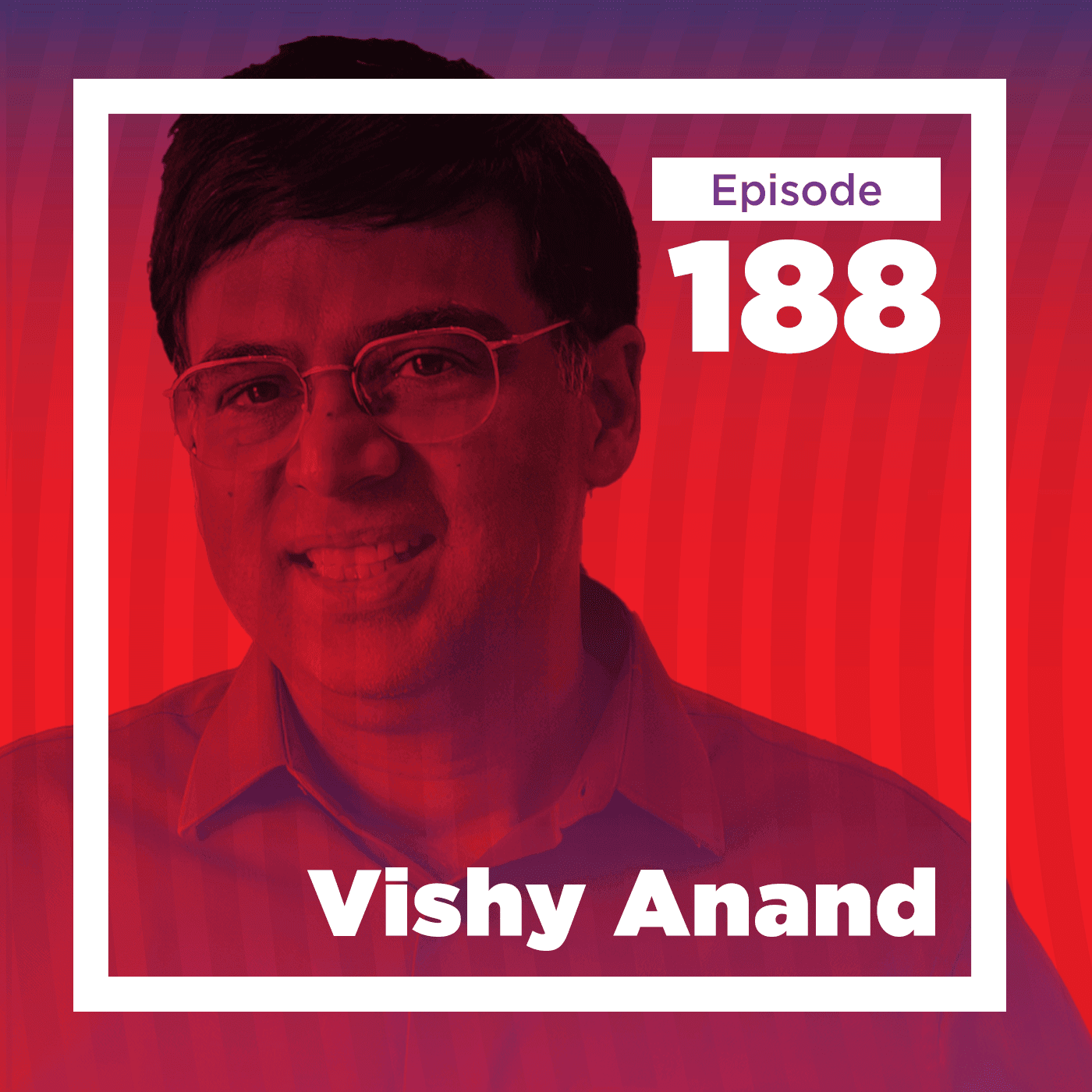
Podcast Summary: Conversations with Tyler - Vishy Anand on Staying in the Game
Episode Overview In this episode of *Conversations with Tyler*, Tyler Cowen interviews Vishy Anand, a five-time World Chess Champion and a prominent figure in the chess world. The discussion explores Anand's remarkable career, his strategies for remaining competitive at the top level, personal experiences, and insights into the future of chess.
Key Themes
- Anand's Career Milestones
- Became India's first grandmaster at age 18.
- Has been India’s number one ranked player for 37 years.
- Achievements include winning the 1991 Reggio Emilia tournament against top players.
- Techniques and Strategies
- Importance of systematic preparation in chess openings.
- Anand’s experiences working with trainers and coaches.
- Psychological insights into opponents like Karpov and Ivanchuk.
- Challenges and Adaptations
- Anand discusses periods of struggle and recovery in his chess career, such as a multi-year slump.
- The evolution of chess faced with technology, particularly the influence of AlphaZero on understanding chess strategy.
- Chess Culture and Community
- Anand reflects on the social aspects of participating in tournaments.
- Importance of mentorship for young Indian chess players.
- Recommendations for best places to eat in Chennai, illustrating his connection to local culture.
Key Discussions
Breakthrough in 1991
- Anand's victory at the 1991 Reggio Emilia tournament marked a turning point in his career.
- He attributed his success to rigorous preparation and systematic thinking about openings, contrasting it with earlier, more intuitive approaches.
Psychological Aspects of Chess
- Anand shares insights on psychological warfare, especially when facing opponents like Kasparov and Ivanchuk.
- He highlights the importance of staying attuned to an opponent's psychological state during a match.
Endurance in Chess
- At age 53, Anand remains a top ten player, showcasing endurance that is rare in the sport.
- He discusses the decision to semi-retire, focusing on enjoying the game rather than full-time competition.
Influence of Technology
- The advent of advanced chess engines like AlphaZero has reshaped traditional understanding and preparation in chess.
- Anand notes that players must now adapt to rapid changes in opening theory influenced by computer analysis.
Notable Quotes
- "The key to staying a top ten player at age 53 is to enjoy the game and not just play for competition."
- "Many players are good actors when it comes to losing; I prefer to embrace the emotional turmoil."
Closing Thoughts
- Anand emphasizes the importance of community and mentorship in chess, looking towards the next generation of players.
- The episode concludes with a light-hearted discussion about personal interests, cultural reflections, and the evolving landscape of chess, both in terms of competition and community engagement.
Additional Resources
- [Full Transcript of the Episode](https://conversationswithtyler.com/episodes/vishy-anand/)
- [Watch the Full Video](https://www.youtube.com/watch?v=XACy_6D4WLk)
Connections
- Follow Tyler Cowen on [X](https://twitter.com/tylercowen) for more discussions.
- Follow Vishy Anand on [X](https://twitter.com/vishy64theking) for insights into his career and chess philosophy.
- Join the [Discord community](https://discord.gg/JAVWP7vTxt) for further discussions.
This episode not only highlights Anand's illustrious career but also brings forth valuable lessons in resilience, adaptation, and the enduring spirit of chess.
Written by AI. May contain mistakes. Listen to the episode to check what was said.
Transcript
Automatic transcript. May contain errors.0:04Conversations with Tyler is produced by the Mercatus Center at George Mason University, bridging the gap between academic ideas and real world problems. Learn more at mercatis .org. For full transcript of every conversation, enhanced with helpful links, visit ConversationsWithT Tyler .com. Hello everyone and welcome back to Conversations with Tyler. Today I'm honored to be in Chennai with Bishi Anand, five time world chess champion and one of the greatest chess players of all time. Bishi, welcome. Thank you, Tyler. Let's go back in time, 1991. You're playing in Regio Amelia, arguably the strongest tournament of all time when it happened.
0:47Carp office there, Casparov, even Polugewski shows up, right? And you win. What was the change in you that enabled you to be in a position to win that tournament? I think it's just the work I'd been doing had kind of accumulated and had hit a certain level. So to give you some background, I qualified for the candidates for the first time in the Inter -Zonal in Manila in 1990, about July 1990. And Rijamilia was a year and a half later. So for the first time I started to work seriously on my openings. I got together some trainers. the training will look very funny to modernize, but back then it was considered, let's say.
1:26What is it they would do to you? Well, we were actually sitting aboard and moving the pieces ourselves. And for the first time, they systematically went down a list and said, if you're gonna play this opening, all these things have to be checked. And I had not thought like that before. My thing was, I'll check the top two things and I'll figure out the rest. Which was not as silly as it sounds today, because back in the day, that's how you play chess. the computers couldn't play chess at all at that stage. So for the first time I thought in an organized way, I started to work and you know, there are people who contradict you, who are strong enough to contradict you and tell you, no actually I think you're wrong here, you should think of this mover, this is better, that is better, I once did this and what have you.
2:06So you start to work like that on a systematic basis. I played my first candidates match in January, and I against Drave and suddenly I was paired against Karpov for the quarterfinals. That was going to be in Brussels in July, so roughly a year since I qualified. Again, I worked with Guravich, who had been on Casper of Steam and so on. I started working with him a lot. I had played Linares, I played Munich, so I suddenly started to play very strong tournaments and faces opposition regularly. I'm good at which taught me lots of things. First of all, a lot of personal insights about carpuff. You know, he always used to say, when carpuff was fidgeting, it was lips like this, that means he's not quite, he's calculating, but he's not quite sure what's happening and he's nervous.
2:51And then you look for it and you actually see the man fidgeting with his lips and then you realize that his moves are shaky. You know, it kind of opens your eyes to the practical element. We worked very hard. Again, I think the level with him was one notch higher than what I'd worked with Van De Veel and Hellers. one funny story. The first day I asked Gura Vich if I could watch there was a Star Trek going on in the background. Would he mind if I watched that while we work? And he said no. He said if you want to watch Star Trek I'll go to my house. You call me when it's over. I'll come back but we're not doing two things.
3:21It's a Star Trek. Yes, we're talking 91. And I said forget it. I'll switch it off. And I was going to know I didn't see why I couldn't have that running in the background. We just chose the Gulse in professionalism if you like. But it was Just like that, his thing was very systematic. During the match with Karpov, we would adjourn games that again were still happening then. We'd adjourn games which means that you seal your fortieth or your sixtieth move. You continue another day. And Guru which would sit and analyze for me, we would discuss the position briefly, then he'd tell me, no, you go to sleep, I'm going to spend the whole night working.
3:58So he would work till three or four in the morning, checking everything alone. And the next morning when I woke up, he would brief me on everything. And then you suddenly realize, oh my God, how many things he found while he was working on this position. Mine was very scatterbrained, because I was an intuitive player. I often couldn't explain what it is I was going to do. I would find their correct move very often, but if you pin me as to why, I didn't really know. It was just the way I played chess. So this kind of thing, I played a couple of tournaments between Brussels and Regiomilia. Specifically, I played in Tilburg.
4:30I beat Casper, I beat Carpoh, I beat Kamzky, I beat Coach Neu, I beat Shot. But I also lost to Casper, I lost to Kamzky, I lost to Carpoh. And some of these losses were just ridiculous. Because you were playing too intuitively? Because I was volatile. Some positions I would get excited to think that things are going very well. It's start playing fast, miss a few things, then come back. I stepped over the mark, there's that. All the things. I think made the difference was I was suddenly facing people who didn't resign the game very quickly, who didn't collapse. Especially, carp of. Even in the worst positions, you would continue resisting.
5:06And that's an art you learn. And then you realize this point is not going to come easily. I've got to push again and push harder. And it's one thing, training for this, but it's not real. The second thing is actually facing it over the board. And then it becomes real in a way. And all these things combined, and then in Rage Emelea, I won my first game with Salov. I suddenly thought, I actually played that game quite well. I don't know what happened, but I played that game quite well. Then I beat Casparo in the second round. Again, it seemed pretty easy, and I've already beaten him twice within two months.
5:36Then I lost to my trainer. You're a trainer, yes. My trainer. He seemed to know, he lured me into a totally harmless position, and then waited for me to get impatient. And I mean, literally someone who has good psychological insight into you. That was annoying. Then I got incredibly lucky against Polograevsky. and then a couple of draws against Gelfand and Ivanshiya amongst others. And in the last round, I beat Believski still in a natural way. I mean, it's not like I'd gone so that far from my roots, but it happened and Casparo Druidh with Halifone, a cup of Druidh with Gelfand and I realized I'm on first place.
6:12So that was a very nice surprise. I remember a fact -sing a friend, just I won, I won, I wrote it three times and I don't know if everyone in audience will know what a facts machine is, but anyway. We did some of us remember. Yes, I did that and I was very excited and so on. I felt stronger. I realized that the same people who cost me a lot of problems early in the year, I was at least able to deal with them. It's a work in progress because they also constantly work at self -improvement and so on, but at least I felt I could confront the many equal terms. If you were playing Ivanchuk back then when he was at his peak, younger, how would you approach that psychologically?
6:47because he's a very dangerous opponent, right? If he's in the right mood, he can whip Magnus at five minutes, yes. He is very dangerous, but there are some patterns. I found that actually we met in the world cadet, so the under -16 championships in 1984. And then we kind of kept bumping into each other, and actually my initial score with him was quite positive. I think I've never had a negative score against him. But quite often in painful moments, moments when I wasn't expecting an danger from him, that's when he would beat me. So there's a clear pattern. I wouldn't call it underestimation, but you kind of feel you're wallowing in your strength and you think, it'll probably work out fine.
7:28There's no need to worry about all these things. And then that's when he would beat you. And when you're fully concentrated, well his coat is not so good. So the solution kind of suggested itself. But he was a tricky opponent all my life. The thing is because I started out with an early plus coat against him and he saw it as a stiff rivalry. Initially I just thought well he's so yet so he must be better than me so I didn't feel any rivalry. Then even when I got better than him I didn't switch into this that he's my rival. I kept thinking well they're all rivals but we're also saying you know how to get to the world championship but he's felt his rivalry much more and then the next year Louis Renter or the organizer of Linnaris he organized a friendly match between a venture could be and I beat him there slightly undeserved I mean in sense I didn't get good positions but I won them anyway but you know that's just and I think it bugged him a lot and so for many years he would ignore the rest of the tournament he almost couldn't concentrate against the others then when he came against me you knew he'd been waiting the whole week for this one game and it was kind of annoying to have such a mark on your back that this one guy who is just looking for thinking of you all the time while you're thinking all your opponents in a very organized fashion.
8:42Anyway, many years later in Tata Steel in 2003, I, in Vakan's A, I realized that he wasn't even concerned about me anymore. Now the new mark for him was Panamariya, who had just beaten him. So I felt really okay, he can have Chuki. But Ivancuk's level can vary enormously. And I think that was the tricky part in playing him. You had to focus a bit harder than others. You couldn't get by and just natural moves because he could be playing genius moves or his level could drop a lot. And he's even more vulnerable, I think, psychologically than many others. So, if he's not in the right frame of mind, his level can plummet.
9:24But equally, he can suddenly motivate himself to do great things. And the hardest problem even is that he looks totally distracted during the game. And that also lulls you into a false sense of security. With him, it's always psychology watching his face, things like that which mattered more than the actual moves. 1995 to fast forward, you beat Kasparov at the Intel Grand Prix. Legend has it, you spent only 10 minutes on your moves. And this was a slow classical game. How did you manage that? Why only 10 minutes? It was actually a rapid game. It was a rapid game. It was a rapid game. So we played it in Moscow.
10:03And I kind of found myself playing against him. I didn't, it was a morning session. We had an evening session. So both matches won the same day. And I just wanted to play something relatively harmless. So I played some solid setup. I thought today is not the day for the theoretical battle. I just play something sensitive. We in before, quick takes to go. Came back and I'll just do something sensible. And we'll worry about this another day, theoretical battle another day. One of the things about Gary, it doesn't come up very often. Obviously, the results are very favorable to him, but over a long enough career you'd notice it often enough.
10:38You give him position where he is not very active and he thinks he has to lash out. And this has nothing to do with this understanding of chess. It's simply he has to lash out and pre -tactical. And for instance, Karmeneek is lethal with him. Because he knew how to get the kind of positions where Gary would lash out and then he would punish it. My style didn't allow me to punish him quite so well. So I've exploited it on few occasions, but that one went like a dream in Moscow. And it made up for losing to him a little bit earlier in the month in Riga. So I was happy to win that against him. Then when I went and lost to Ivan Chukand, the final, who did his typical thing of suddenly realizing his whole life dependent on this one game?
11:19So I lost to him and then played the match against Gary a few months later. Speaking of Kramnik, in your match against Kramnik, you played 1D4 a number of times, which was surprising, why didn't he respond with a more hyper theoretical line, like try the Grinfeld, say, and try to catch you unprepared, because usually you've played E4 in your career, at least up till then. That's right. What had changed at the meantime, one is computers, which meant that even a player who didn't have a lot of experience in an opening, might simply have good computer moves. And if you have good computer moves, you understand them well and you play them where they're supposed to be played.
11:55Then understanding cannot make up for it. The computer is evaluation, the gap is just too strong. So imagine that the computer says this move and your plus one. I will take that against anyone, I will take that even against a specialist, because those are pretty good odds. In fact it is one of the things which is leveled preparation, that a club player who knows one opening well can play against a top grandmaster in that opening. And so the top grandmasters inside has to be take a look at the club player, sort of gauge what the work he might have done, have a sense of what areas he specializes in, then avoid them at all costs because that's the best strategy for success.
12:35Your avoid the club player's preparation, it doesn't matter if you're playing it well or bad. The difference in level will show. But if you playing anything was the computer could have hired a guiding hand, you have pretty bad. Anyway, the thing with Kramnik was that I had a team, all of them We had eight months during which I could have trained a lot. And we trained a lot on default. We found interesting ideas, I played training games, again, to get a make -up for the lack of understanding. Play training games, check it again with the computer, go deeper and deeper, try to understand hidden nuances and so on.
13:06So I was pretty confident that we had lines prepared against the Grunfeld things. In fact, I had a complete default repertoire. Start to finish. Even the most obscure lines, the job from a second was, give me a line that doesn't lose, and I don't look embarrassing. I can make a few moves come back, and then we can go drill deeper once we do, if he does something unexpected. So it wouldn't have been that easy. But if he had the confidence, it wasn't the bad strategy to try. He could have done it. Not because he thinks he's gonna outplay me, but because he thinks, well, I know this just as well as you.
13:38And let's see what you got. It's that kind of thing. So it's not quite as easy. In fact, I face this often myself in reverse, that Kharamini used to play for suddenly, a lot against me. And it's very nice to say I have more experience than him, but where should I strike? Which is the area he's likely to be weakened? That's not easy to pick out. Two of your wins with plaque in that match are from the semi -slaw. You get very tactical positions. Why would he make that kind of mistake? That is very strange. I would have to say he took it personally. He took this opening personally. He just said, but this is this opening, my understanding of chess, everything I believe in chess, on the chess board tells me this I'm better here.
14:17And so he kept going back to it. First time it can happen. I mean, he plays the main line, he thinks he's well prepared, and then I have this slightly unusual line that I've prepared at depth. It goes bad. But game five, I think he took it personally. By game eight, I had moved on, because I knew that allowing for everything, we knew that his sense that white was better was correct. And we had run as far with this as we should and we went to our second opening, which is the Rianna and we went to that. But it's really only game five. He took it personally, he came in, but once again we had outstanding prep and by a miracle, my trainer, my Polish trainer, by Teixek, he literally, you know, we have this Harit conference from 2 to 25 or something where they just brush me up on everything and last minute stuff and everything.
15:04So at about 220, Radix said, look, there's one thing I want to show you sit down. So I sat down and he showed me this one line, exactly which happened game 5. And he said, this is a terrible line. I've spent all night on it. I finally found an emergency solution. It's an emergency parachute. You play Rook C5 at this point. The Rook is kind of active on this rank. And I've checked it. It doesn't lose on this spot. Go. So his job was, there's no way we can cover everything in chess. I'm giving you sort of this position for dummies. This is all you need to know and you'll have to figure out the rest on your own.
15:37So I said, okay. So when I sat at the boat and I had this chance to play Ruxify, I thought, thank God he briefed me on this at this point. So this I'm luck as well. And I knew every move I made, I said Ruxify, I don't trust this position well. But Radik told me it works. That's good enough. So we went with that and then he blundered. But I was already in a very good situation. I knew what I had to do. I knew I was where I was supposed to be. and I knew that I wasn't worse, which is enough to take to the board. Your match against Apollo, you had help from Kramnik, Kasparov, Carlson. How did they each help you differently and how does that reflect something about them as chess players?
16:16So Carlson, he had already been my sparring partner before the match with Kramnik and we repeated that. So literally he came over, we played three days of Blitz, five minutes And the idea was I would select all the positions that I was going to use and play it against him. And we would not tell Carlson what we were going to play. We were using Carlson's strength as a practical player and saying, if I surprise you with this, let me see how you react. Maybe you've faced this before, let me see how you react. And try to play against that because I thought Carlson is of the level of Kramnik and Topolo.
16:50So playing against him gives me a good sense of how they'll play, how the games were materialized and so on. He did that in both times. He didn't help much during the match. I think once in a while, Nielsen was obviously in touch with him. So they would chat on Skype or whatever, and he might give an impression, but it wasn't more than that. Kasparov would call in a couple of times. He gave me some of his notes in specific openings. He said, look, they are outdated. But for what it's worth, here they are. And you can check them with modern analysis. That's fine. Kramnik was the heaviest. We had come to the conclusion that Kramnik's approach against Topolo hadn't been a bad approach.
17:28So we were copying the Catalan, what we call the Elisthaviration of the Slavddefens, and we were copying many aspects of how he played the game. Because he doesn't like to be passive, right? Is that how you think about it? Topolo. Yeah. Topolo doesn't like to be passive, but he's also much more of a... he actually can play position which has incredibly well, but over the board he tends to lapse in this area and he's the gap between him, between his positional play and his sharp openings that he's really comfortable with is huge. So stylistically he's more limited and the idea was you are a better natural player than me.
18:08So you should try to steer the game through to slavs Mohamlis which is how we came under the Kremlin approach. Mohamlis waters play sensible and don't get into forced lines that much and you'll probably have the easier time of it. I mean more of a philosophical thing. So, Kharamnik called, as I'm sure no, after the fourth game, I'm flattered that you are trying to copy my openings, but you're doing it very badly. Can I help? I mean, literally, my bad luck is what he said, which is the funniest story. So, Bissar, of course, you can help. And I was amazed how dedicated he was. He could easily, he was just doing this on his own thing.
18:50So he could have easily said, I'll help you for an hour. I would accept it. I'll look at your notes for 10 minutes. I would accept it. But there were days he sat with the team till five in the morning, working all night. He had just gone to Baku to play an event. He played there. And then at night he would work with us. And for the team, it was great because we were getting his insights into the opening. We realized there was so much weight missed. He started to think. And every game, he basically became my fifth second from game five till the final game. And I couldn't possibly thank him enough.
19:23And I just beaten him two years ago in the match. So again, it was, I think his ability to put that aside that impressed me. We had kind of spoken a little bit the previous year about his new bond daughter and kind of broke the ice. But I was still feeling awkward. I thought it might take a bit of time for both of us to move on, but in fact he seemed to be able to take this very well. And so they all helped me in different ways. And it was nice. When you get that kind of feedback, it of course gives you a level of confidence. In your 2013 game against Aronion at Tata, when you played 15 for Black, Bbc5, all the ensuing combinations in tactics, how much of that were you seeing in advance?
20:03So that's literally this position. Yes, and you played... And I played Bbc5. I'll tell you. I spent 25 minutes in this position because I couldn't remember a thing. I vaguely remembered that, sorry, I'll move the pieces right here, that if he goes H3 then this is the draw. And that's what he should do, right? And that's a draw. And there should be four then? That is some draw. I think you take and there should be eight and the night is loose. The details are thing. But when he played F4, I thought this move I don't remember at all. I was searching for racking my brain to find out why. and I could not figure it out.
20:38Then suddenly I had this, almost something flashed in my head. And this night was on this square, on D3. In your head. In my head. I suddenly, some variation flashed where I had a night on D3. I couldn't for the life of me connected, but I started to look, is there something, there are obvious moves anyway, I can do this, trying to get to D3. I can play if I have all the, based on the same ideas in the game. But none of them seem to work. This one is too slow. He takes and he is thing. This one, I mean, he'll allow me to take and recapture it. So what's the deal? Eventually by elimination, I realized it must be Bishop C5.
21:17There's nothing else. But once I started looking at Bishop C5, it started look good to me. And then it closes very fast. It's finding out 80 % of the map. Then the rest fills in very fast. It gets excellently. And you knew 90 E5 was coming at that point. That was a thing. So I'll tell you, I played Bishop C5 because if he takes, I take, he captures here, then my dream, my vision, whatever is check and night captures D3 and then that night which pops into D3 works. So that's all I had to reconstruct but it is beautiful that with very little I was able to reconstruct it. Now I went here, Aronian was a bit shocked because he had not given it a lot of attention But it was very courageous on him, his part we even get here.
22:03Because I had prepared this for a match against Gelfand. And the guy lets me, and basically says, show me what you got. Show me what you and your team spent a month on. Yeah. That's, it's brave, but it's also kind of irresponsible. I mean, unless you have checked it yourself very thoroughly. So he seems to be in slightly flippant about it. Anyway, after Bishabhi too, the rest played itself. For me, Bishabh, see if I took 25 minutes. I don't remember 95, I might have taken me five minutes, but more because I was double checking rather than anything. But this came effortlessly. Because already we are talking of this night has to support this one.
22:35The queen and bishop are going to flood into d4. Night have to check is going to win all these little dots. So while this is maybe the most spectacular move, it's the less difficult move to find, especially once you have done this. So now if you ask me, before I saw bishop c5, did I see night d5? I did not even see bishop e2. I was more focused on the main thing. I didn't see bishop e2. So once he played B -2, everything else filled itself and I flooded in. And of course, the big advantage was by now, Rotlavi Rubinstein was coming into my head. I knew what happens, well, we'll get the structure a bit later, but I knew what happens when you get this bishop all pointing in this direction.
23:14Smothered me, age three, because it's impossible. Roughly speaking, this was Rotlavi Rubinstein with the night here. It's a classic game in history. And so I knew the patterns and all the details check out. So, one sample at night day five, the rest came pretty fast. There was only one more thing I had to find. King H1 night takes she for, again, every move loses except what he did. And then F5 is a brilliant move. F5 is fantastic because for a dangerously long time and later on you shut up and you realize what you could have done. For quite some time I consider this move. Yeah, but then Queen H7 is the draw, right?
23:50Or maybe you're even worse? Maybe even worse. Yeah. But the beauty is this move was slightly easier to find because seven years ago Kramnik had allowed Queen Hed 7 against Fritz mate and Kramnik and pretty much everyone said there is no way I would have allowed Queen at 7 if the knight had been on f6 Because to a human immediately it signals danger all over the place, but a knight on f8 you almost forget it's there Whereas for a computer it sees that both moves allow Queen at 7 So at some point I realized, oh my God, Queen at 7, well, that would spoil a very nice position. Then by elimination, again, I could play a 5.
24:25And once again, all the dots come in. And the Queen will come to H4 in one way or another, it will be over. And then you just knew you're completely winning. And there's one more detail if you like, which is that here I have to play this. Yeah, it wins. It's the only mode that doesn't lose, but it's the, but it also wins. When Magnus did the Lex Readman podcast, he drew a distinction between chess players who see only short lines, but are great at evaluation. He called himself one of those, or Karawana, who calculates very long lines, but is not as good at evaluation. Does that dichotomy make sense to you?
24:56Very much. It's just the way your brain processes starts. So some people fill in the gaps intuitively. When the pieces feel right, when the broad picture looks right, the answers will come to you, and you're guided more by the sense of what is good and not. Of course, Karuna does it as well to a lower degree. So he calculates a lot more to fill in the gaps. And therefore, Karuna is a lot better at finding exceptions. The natural players miss exceptions because what looks good to them, they happen to stumble on the one position or what looks good isn't good. And it hurts them. Karuna tends to miss that less often because he's not.
Read the full transcript
25:31In fact, Karuna's approach you could almost exaggerate and say, it's closer to a computer than many other humans. Of course, he's 1 % of the way closer, but it doesn't matter. And there are players who approach Chessanamo systematic way, and they're the ones who tend to find exceptional ideas and things like that because of the way they don't rule out stuff just on dogmatic grounds or something like that. But we are talking very small differences. I think one of the understanding is much closer to let's say Carlson's than thing. But yes, his approach is to calculate everything and look for very specific solutions.
26:04Carlson's, as this is, hand will make them move. You just know where the pieces go, and then you don't need the details. And how do you prepare differently against each type of player? I don't get down to that level of detail. If I was playing a match, I could try to incorporate that approach. But so much of chess is just getting the opening right, the moves right, the concepts right, that you don't have time to microtaug it like that. It just doesn't work. And you're more of a bit... Perhaps others are able to do it. I would think the maximum level you could do it at is to choose the kind of opening which favors you the most intuitively and say, from what I know of my opponent, this is the position where his fidgeting uncomfortably in his chair.
26:45And once you've chosen the opening, you hope that, well, that insight actually plays out. But at least for me, I've never been able to target much more. Like I said, when I was playing Topala, I used my insight into saying, well, these openings will work for me and you know, he'll get impatient, he'll try to do something active. Maybe I can punish him. But once I've done that, the rest are just long lines and I can't use that insight anymore in the games. You'll have flashes of this at most, but chess is actually mostly long variations. What goes on inside your head during a match that no normal human could guess at?
27:20Surprisingly, how distracted we are during a match, even in very critical moments, I'll be thinking, what I can have a dinner, what I should have done yesterday, that I met that jerk yesterday and you know this kind of stuff. And your brain wanders off and it's almost, it's almost like taking your foot off the gas. Your brain wants to wander off for a while, you let it and then you come back and you keep one part focused on what's happening but while you're open and thinking you can wander off. Whenever somebody tells me, I don't know how you concentrate for Salinas, I understand that they don't know how we play chess or that they haven't played chess themselves because we do not concentrate for Salinas.
27:56very few people do it and I would think even the brain simply says goes on strike periodically and then comes back so I think that's how it works. You've argued in your career you had a down period something like 2011 to 2013 until recently Karawana seemed to have a down period for a while. Why does that happen to very top players? It's very hard to explain I mean if you could even see it coming you could start to think about it but my feeling is it catches most people of God They repeat a recipe probably too long and it's not like anybody else spotted it coming. Suddenly notice, hey, it's not winning, after one or two tournaments you think, it's not winning quite as much as you used to, didn't you?
28:38And then you take a look and you realize that slowly some resistance has built up in his games, resistance to the free flow, the most natural flow, but it's very hard to see it coming and then when you're stuck in it, it's very hard to see how to get out of it. And in most cases, at least my experience, the way to get out of it is to stop thinking about how to solve it and almost lighten yourself and get back to playing a normal game for normal reasons. And you'd think that method could be refined and you could apply it systematically, but if it did, nobody would have slumps anymore in form. So there is something clearly that we can't quite pick up on.
29:18It's a kind of staleness that gets into your game. It's probably an accumulation that if you're doing too well for too long, others have been working non -stop trying to understand you. And at some point, without you, or them realizing it, the gap is closed. And then you're encountering more resistance. You're doing what worked perfectly before, but you're encountering more resistance. You can't see why. And the opponents don't understand why they're not losing, but they suddenly think, yeah, this is the work that are better for me. And somehow the gap closes, and the time has come for you to move on or something else, bring some fresh perspective.
29:51What's your favorite multi -pithe on skate? I like the one with the Pope. There's several with the Pope. Well that's true, basically Michelangelo. Michelangelo, Michelangelo. I like argument clinic very much. Yes, and there's a lot of nice stuff with the Ministry of silly wallets. So the parrot is very good. Yes, cheese shop is very good. Yes, the dead parrot is very good. Summer rice proust, you know that one? They didn't show that one that much. Yeah, no that I missed, but those were nice. And also the Yokshaman, these guys all talking about how poor they were in their childhood. Yes, that's fantastic.
30:27I love the idea of cardboard box in the highway. Was faulty tower as ever is good as Marty Python? I'll tell you the first time I was staying with... I visited the Indian Consul General in the Hague. And he invited me for a stay for lunch because he's also from Chennai. So he invited me to stay for lunch. And so I said, well, that's very nice. Thank you, Elstey. Either before we were about to have lunch or about, or after we had lunch, he said, OK, I'll put some. He put a cassette in, and it was faulty toes. And I started watching. At first, I didn't understand the humor at all. I wasn't even that familiar with multipython then.
31:06It gives you an idea. But the humor seems strange. And then there's always this one situation which is so absurd that you just can't stop laughing. At some point I was laughing, but like a person who could not stop. And I was choking almost. And that's when I knew, so I would have to say, Faltitas are as good. There are lines which are fantastic. There are simply, don't mention the word, right? Don't mention the word, maybe I've just watched it way too much, but this hotel inspector is great. The health inspector is good. and what I love is this blind or well this deaf old lady who comes by and complains about everything and he says what were you expecting from a hotel window talking and also the lovely thing yes madam that's the sea it's between the land of the sky it's perfect stuff what's the most underrated queen song I don't know I I rate all of them very highly bright in rock I might pick I've heard Bohemian orhapsody too many times at this point yes I've heard Bohemian orhapsody as well and my problem is my son recently discovered Queen so we listened to it again almost in overdrive.
32:14I don't think I have a underrated Queen song. I'm aware that there might be songs that I've underrated. You're right. But for me I rate them perfectly highly. But I have this habit of listening to my four or five favorite songs in an album and kind of ignoring the ones I don't like. My son is more disciplined in that way. He'll actually listen to the whole album. So he asked me questions about songs I'll, some I'll be, I'll give him in, two or descriptions. Other ones I'll say, you know, I've never heard that one. In chess, opening preparation, where does that end? What's the bottleneck? Does it just keep on going until the first 33 moves are pre -packaged?
32:53Some lines will go that far, but equally you can use the computer to solve the problem that the computer has created, which is that if you take a single line you can go very far. But you can also deviate an earlier and earlier stage and you can always, you can have it running on 20 lines and you go for line number 17 and you think and you'll find that you're not able to work it out just as thoroughly. You need time to do it and before you do that you move to the next one. So no one's quite able to nail every possible. You can always surprise someone. We saw this with Ding recently and he actually went H3 in one position.
33:31It was a surprise. Surprise backfired because Yahn seemed to know exactly which line to play. And he went for the one line where H3 turns out to be a disadvantage. That's very hard to nail down. You have to get quite deep into it. Mostly that works. But yes, even with that qualification, the opening preparation everywhere is just building up and up. There are lines I neglect for six months, and then I come back to them and I realize, my God, I have to update everything. I'm not sure of anything, any of this preparation anymore. The problem in preparation is not whether it's detailed. The problem is whether you can believe in it.
34:07And if you have not checked it 100%, it's worthless. I mean, it's like a 99 % guarantee before you go to the operation. You want to have 100 % guarantee, right? So it's 99 % is simply not good enough, and that's the problem with opening preparation as well that the computer allows you to question everything. Every new version, every new program, every new piece of hardware, each one of those things can drive it. So every six months or a year, you start, I have to start all over again cleaning your stuff. On the other hand, it's one of the great joys in chess research is to come to an opening that you're not seen in five years.
34:40And that first day, you're discovering everything new. Every single line you refute and clean up and You feel like you've cleaned your entire house of clutter and you feel wonderful. So that's, it's a double -edged sword. I will concede that, but it's a pain in the neck when you want to lay on something. The people are playing the Geo -Corpiano again. Is it that we've discovered it's better than Ruello Pes or just we're sick of all the old lines and we're going to try something different for three years and then move on and the two night's game is even coming a bit into fashion. And is it cycling or continuous improvement?
35:14It's a lot of it cycling. At some point, I don't remember maybe five or six years ago, there was a kind of individualistic collective sense that maybe the Rylopus is neglected territory, let's go back there and try that because of Italian and the Giacopiano, my God, there's nothing left to find. And then we do, everybody goes after the Rylopus for a year and suddenly a couple of guys say, let's look at the Italian again and you think, There are a few things we haven't picked up on, so you swing back there. And it goes like this, but it's an arms race and we're not winning. Was it a kind of market inefficiency that the King's Indian defense could survive for so long?
35:55I mean, Rajabhav did pretty well with it until recently. You've played it a fair amount, but it just seems like a bad move, right? There's a time when it looked just lost. Yeah. No, I mean there was a time maybe five, six years ago when the King's Indian just looked lost because the computer always said it was lost. And recently, maybe even a year ago, the computer said, no, I confirm it's dead lost. But people have always said that there's something fundamentally unsound about the King's Indian, but it couldn't quite prove it. And that was where people are going on. You know the famous quote of Kochnai, right?
36:26He said, he told the Iron Picket, the King's Indian is not an opening, it's a disease. And so he was basically, he had it right all along. And so recently Fabiano started playing head six in the Kings and the classical Kings Indian. And the beauty of that is it's not quite a futile. It's got just enough life to drag on for a while and people come to parts of the Kings Indian that they like. So the Kings Indian that aligns you that you find difficult to play. But if you come in from a Grunfeld move order and white does something against anti -Grunfeld and you swing from there back to the Kings Indian or you come from a Benony move order and you get into the Kings Indian or even you put the Bishop on E7 and rotate it this way that way.
37:07Kings Indian concepts turn out to be very dynamic and healthy, even if you're not getting to it in the same structure opening. So Kings Indian players have found a way to get the Kings Indian fix for the week without having to go down the old main line. And that's how it goes. But computers will contradict themselves every couple of years. So maybe the pendulum has swung to the farthest side. Does Fisher random have a future? Or it's just a side thing forever. Fisher random actually has a brilliant future because it is a form of chess which has not been understood at all. However, with this thing, Fisher random was conceived as a way of avoiding opening theory.
37:50Later on people rediscovered it as a way of avoiding computers. Now we realize we are not avoiding computers at all. They are just as good at Fisher random or no -castling as they are at chess. new versions we are never going to catch up with computers. But for playing amongst ourselves this is completely new territory and we can there's a lot of scope for creativity and everything we used to look for. It's a variant with a lot of promise. Maybe the one which I just play is the most comfortable with. However, in the meantime I have played no no -carsling a few times. That turns out to be fascinating.
38:22The first time I sat with my computer and I had to play a night of three rook G1 and repeated four corners, all four rooks and nights so that white couldn't castle anymore and then switch on the engine and analyze openings like this. And I realize that almost every opening can be re -evaluated if you're king com castle. And so everywhere the right plan turns out to be H4, H5, rook H4 thing except the ones where it's not and you don't, there are no general rules yet or we have not come that far. So we find every little detail. Now, there are lots of other versions that are coming up. And you can, versions you can have as many as you dream of.
39:00So you can have pawns moving sideways, pawns capturing straight and moving diagonally. You can have every which variant you want. You program it into the computer and let it play a million games and see what comes pops out. So this may be a solution for the distant future, but for the moment, just looks healthy enough. especially if you vary people who have played too much classical chess have around of faster controls and then we need to do too many faster controls you go back to classical and if you keep varying like this that's one thing that keeps the game moving along. The second thing that works very well is for instance what they do in a data style which is to have a mixed field.
39:37Not all super prepared top gm's but a mixture of very young courageous juniors with top gm's you have that mix that and it also leads to a lot of unpredictability. So if you keep moving around, you change the format, change the variant, change the time control, change the change that you just keep shuffling, we can go on for quite some time. Is there a chance that 10 years from now say rapid play is the world's just championship? I wouldn't rule it out. I wouldn't rule it out, but I feel that classical would still exist. It's just public taste would have moved along. And the same could be said for Blitz just if you want.
40:11And we're also dealing now with thanks to the revolution of the last five or six years, which in general, I mean, what happened with the Queen's Gambit, what happened in the last couple of years, which is that maybe the number of people who are casual fans of chess are far greater than serious fans of chess. Sure, of course. And they are actually following the game now. But before they would follow it once in a while, now they actually have an impact and you sense it in the numbers. Thanks to them, I think they may not have this old attachment to classical chess. They may also not know who Cup of Lanka was.
40:45And when that is felt in the sport, then the sport will inevitably cater to their tastes more and more. But I don't think that classical chess will disappear. It's just that it used to be 100 % of chess. Then for the last couple of decades, it's been about 80 % of chess. Now I would say it's closer to 30 % or 40 % of chess, which leaves the other variance fighting with 60%. The other time control is fighting with 60%. And it's a question of the mix. There will always be some role for having a lot of time to think and find interesting stuff. But all the time is very hard, especially given modern preparation.
41:16How is it you think that playing so much as a streamer seems to have made Nakamura a better? Psychologically better too, right? I don't think the streaming helps him become a better player, but what it has done is it's taken a lot of pressure off him. He really felt he had only one way to show who he was, that was the chess board. And now he suddenly realizes, I've got this other method where people appreciate me and cheer me. In fact, many years ago in 2011 in Tata, still he made a winner's speech. And I was kind of surprised the way he said, it's so wonderful to be in Holland where we're appreciated for our chess in the US nobody would care or something like that.
41:50And he did this as the winner in the closing speech. And I thought, well, quite a strange thing to say. But if you keep that thought in the background, now he's got the adulation he wants. In fact, he seems to crave it. He goes back and does a recap every day and things like that. He really seems to want it. What I think is helping him is playing Blitz tournaments nonstop online. That allows him to keep there. And it might be the best way to train for a modern computerized opening preparation here where there's so little to do with preparation because the computer solves everything. But you can test every concept a million times, practice over the board.
42:22And that's why he's so good at it. And that's why all the best players now are playing these online blitz events. You can put me in the spot and say, well, if you think that's the case, why aren't you doing it? I haven't gotten around, I do some training online, but I don't feel like sitting from midnight to three in the morning, playing online blitz these Tuesday events and so on. But if you were much younger, could you imagine yourself as a streamer? I can imagine being a streamer now very easily, but what I don't see myself doing is spending all night playing. Also, I don't feel like playing that much, Blitz.
42:55I always tell myself, I should do a bit more, but in the end, the body just doesn't get up and then that's it, you just don't go there. I easily see myself trying streaming or something, but it's a question of how long you want to invest in it. I mean, again, success is not gonna come very fast. There's a lot of crocodiles already in that watering hole. You'll have to spend some quite some time and do stuff daily and things like that. And so it's a big time commitment is what I'm trying to say. and then so I could very easily see myself doing it. And I've done versions of it over the last couple of years.
43:26I did a lot of online coaching, lots of my talks that I used to give for companies I do online as well nowadays. So I've done versions of it. I could see myself doing that, especially commentary on how difficult it is instead of going to a tournament and doing commentary from there just to sit in your room and do it. It's very easy. So that I could see the other bit. Probably I'm just a bit old. I think it was MVL who made the remark that in a post -alpha zero world, what we've learned is how much chess is truly the concrete and how huge generalizations there are. Does that make sense to you? What do you think we've learned from alpha zero?
44:03That's a broad agenda. I don't even know if it starts with alpha zero, but maybe that's where it became the most visible. But he's right. There are no general principles anymore. In fact, new general principles emerge. Now, what is we push the H &A ponds so whenever we want and it's not a bad move. But 20 years ago these mows would have been considered betraying the complete lack of an interest education. Now, it's not there. So everything we used to think was bad, we forced to evaluate move by move. Some of them will turn out to be bad, many of them won't. And you just have to know specific reasons and you'll just have to get into the details.
44:40So he's right about that. I think it's probably a cry from a person who's I mean to prepare this stuff all the time, but anyway, he's right, I think. Just nowadays it's about finding out exceptions to everything. And that's where a lot of the growth is at chess player. Because all of us be hardwired to think these things are good, these things are bad. But imagine that you now have to wander in the field of everything you thought was bad and realize that half of it might be good. That's kind of where we see ourselves now. Rukchi won against the Nidor. Is that a novelty move or actually a very good move?
45:09Because no one played it in the time of Fisher, right? No, not at all. But even when Fisher played H3, people thought, what the hell is this? And then they said, oh, but Fisher did it. It's OK. So I need a stamp of approval. And the computer is now the new stamp of approval. Rukchi won by the way, pre -dates Alpha 0 and it pre -dates modern engines. We're talking at least 15, 20 years. Bishop D2 on No6. That is such nonsense. Even when the computer is running, I think about this is nonsense. The fact that it doesn't lose on the spot tells me that, especially with a computer, It doesn't lose on the spot.
45:39It tells me nothing but this is nonsense. But there are people who play it and then mixing, you know, this theory building up. At age 53, you're still in the world top 10. There's no one else in the top 10 close to your age. And you have been India's number one for what? 37 years? 38 years? 37 years. What keeps you going? What motivates you? I like playing chess. A couple of years ago, I decided to that maybe playing full time, playing the whole year round and trying to compete at the highest level. It wasn't worth it in terms of the amount of time and effort I would have to put in for the results I expected.
46:11So I decided to semi -retire. A decision made easy in the pandemic, because everyone was semi -retired in the pandemic. But the key thing was not to come back after the pandemic was over. So I played a little bit here and there when I could. Because I still like playing. And I like, for me, just tournaments are primarily social events. You meet everyone and you hang out with everyone again. So when I did all that, I enjoyed myself and then I'll say, okay, now for four months, I'm not going to play anything. much longer break than before. Also, I'm living in India more or less the whole time when I'm not playing, so that's increased, changed a lot.
46:42Some of it is family. You know, my son is growing up, so you also want to prioritize what you're doing with your time and so on. But I really enjoy the few tournaments that I play. So when I play these rapid -rubbed blitzes and I have these one or two events in the year, I try to four or five months before leading up to them. I start training again. Just to get back back in this frame of mind where it's just is not just some philosophical thing where you can do this and you can do that. It's concrete moves, like Enveil said. And the most important skill in chess is if I was sitting at a board now with the clock ticking, what would I make in this position?
47:20And then suddenly the infinite variety of choices you have becomes irrelevant. You have to make only one move. And how do you switch to that frame of mind? I try to stick there. But I really love analyzing and working on chess. And maybe even just like Fahikaru having something else fill part of your life allows you to come back to chess with much more enthusiasm. These long breaks, then when I get back to chess, I'm much more enthusiastic about playing and I look forward to it. So that might be a huge fact as well. You hate losing as much as Kasparov does? To me, it seems he isn't even close to me, but I admit I can't see him from the inside and he probably can't see me from the inside.
47:57When I lose, I can't imagine any one of the world who loses as barely as I do inside. inside. So you think you're the worst at losing? Hi. At least that I know of. Couple of years ago I know a people will say but how are you such a good loser and I'd say I'm not a good loser, I'm a good actor. I know how to stay composed in public. I can even pretend for five minutes but I can only do it for five minutes because I know that once the press conference is over once I can finish talking to you, I can go back to my room and hit my head against the wall because that's what I'm longing to do now. And in fact, it's gotten even worse because as you get on, you think, I should have known that, I should have known that, I should have known not to do that.
48:36What is the point of doing this a thousand times and not learning it and you get angry with yourself much more? So I hate losing much more, even then before I think. There's an interview with Magnus on YouTube and they asked him to rate your sanity on the scale of 1 to 10. I don't know if you've seen this. And he gives you a 10, is he wrong? No, he's completely right. He's completely right. I think sanity is being able to show the world that you are saying, even when you're in saying. And therefore, I'm 11. Overall, how happy you think top chess players are. So, you top 20 players. I think they're very happy.
49:11They understand that they're able to beat chess players. They can have a pretty good life doing so. So, just like anybody who finds that they're doing what they wanted to do, what they would be doing anyway, even in other worst circumstances. but they're able to do it in a pretty nice way and challenging way. Then we understand the privilege. In fact, the funny thing is how many chess players are happy even not being top players. Because they just again, one of these callings, you find yourself in it and you really enjoy it. It's very quite hard for a chess player to quit and switch to something else.
49:43They always have this time lag. I was quite surprised to see when Kenneth Rogoff became an economist. That's odd, yeah. Yeah, well, he became an economist, but recently, maybe seven, eight years ago, somebody asked him, so what's it like thinking about chess again because he had come to a chess tournament? He said, but I never stopped thinking about it. And for me, that was strange because I would assume that after five years, it drops way below. But apparently, he kept at it all that time. He would think about chess every day. When I see him, maybe you know the dynamics. Right. Well, yeah, he doesn't want to talk economics with me.
50:17Sure. If you had to boil down, your cognitive ability or abilities into a small number of dimensions as possible. What's the cognitive ability you have that makes you special? I think the ability is, well, is it cognitive? The ability to pull out details from a mass of information that I've seen. So, in just, we may see a thousand games from this, and then at the board, I may be able to distill the right idea from all that. So, being able to extract useful ideas from a lot of information. Also, good visual intelligence, just in chess, the only skill which a top chess player has to have really is the sense that something is going wrong.
50:58And that's a visual thing, because with very few details, you suddenly think, I feel uncomfortable, there's something wrong here. That's one of the most important skills you can have in chess. And besides, probably just the usual mix, a bit of memory, good memory, at least for things that I'm interested in, ability to focus on one thing and keep at it. So, and is there some other area where you have also a remarkable ability? Wow. So Magnus seems to be great at fantasy football, some chess players are great at bridge. I'm sort of good in games and lots of these games you play just for fun. You mean, I find that I started an acceptable level, so maybe that is some skill there, but I have not thought about it that much.
51:38That's two questions. There's so many talented young chess players from Tomonado. you, obviously you know them, you play with them. And if you're looking for who will really climb to the top, like Praga, Gukesh, other than just how well they play at the moment, what else do you look for? If they're very young, I want to see a certain amount of fanatism. Fanatism is good when you're in your teens, but quite a few of them have that. I think maturity is maybe the most important thing, because pregnant and Gukesh have taken some horrible blows. But whatever you realize is that they're quite strong.
52:11In a way that I'm amazed, maybe because for me losing hurts so much more, I get to no longer understand people who are relaxed about losing. And maybe I was once more relaxed, I don't know. But Pragan Gukesh, both have taken some of the tough times recently quite well and come out of it. Now they're both going gangbusters and it's great. But they've had difficult times as well. And there are things I look for on the chess board, just a sense that they understand a lot of stuff without having to just like I mentioned earlier, they know where the pieces go and if I look at their games I can quickly get a sense of which area they're focusing.
52:45I mean some of them have no understanding of just at all but they have amazing sporting qualities which is that they're tenacious, they're able to keep resisting. You can see that they don't have this dip of being annoyed with themselves up at the position and therefore their performance goes down. If anything they're still finding only moves, they're still hanging in there. So some things like this will alert me to some sporting qualities but the chest qualities I think I look for first. If not, I wonder, well, they don't have this. What could I want? They're positively bring to the table that composes for it and then I realize, ah, they have these other sporting qualities, maybe even their fitness, their ability to hang in there, things like that.
53:23Last question, where's the best place to eat in Chennai? You should go to some of these would -be homes and we have some places where they serve traditional South Indian breakfast. I think that and not in the bigger places. You have to go. I went on idly, I went to, that was very good. Morgan Adley is very good, there's some nice ODP joints, there's Matsya, you can try that. We go to the old Dasa chain as well, there used to be something called Dasa Brakesh, so that's nice. Well for me it's almost a childhood thing, literally that's how we used to snack when we were young. And besides that some place with the good tali gives you, I think a good sampling of everything in Botswath Indian and Indian cuisine.
54:02Peshyanand, thank you very much. Thank you, Plesha. Thanks for listening to Conversations with Tyler. You can subscribe to the show on Apple Podcasts, Spotify, or your favorite podcast app. If you like this podcast, please consider giving us a rating and leaving a review. This helps other listeners find the show. On Twitter, I'm At Tyler Cowan, and the show is At Cowan Convose. Until next time, please keep listening and learning.
From the publisher
A five-time World Chess Champion, Vishy became India's first grandmaster at age 18, spurring a chess revolution in the country. Now 53, he is still a world top ten player and has been India's number one ranked player for 37 years. As newer talents emerge and old ones retire, Anand's continued excellence showcases an endurance seldom seen.
Tyler and Vishy sat down in Chennai to discuss his breakthrough 1991 tournament win in Reggio Emilia, his technique for defeating Kasparov in rapid play, how he approached playing the volatile but brilliant Vassily Ivanchuk at his peak, a detailed breakdown of his brilliant 2013 game against Levon Aronian, dealing with distraction during a match, how he got out of a multi-year slump, Monty Python vs. Fawlty Towers, the most underrated Queen song, how far to take chess opening preparation, which style of chess will dominate in the next ten years, how AlphaZero changes what we know about the game, the key to staying a top ten player at age 53, why he thinks he's a worse loser than Kasparov, qualities he looks for in talented young Indian chess players, picks for the best places to eat in Chennai, and more.
Read a full transcript enhanced with helpful links, or watch the full video.
Recorded August 7th, 2023.
Other ways to connect
- Follow us on X and Instagram
- Follow Tyler on X
- Follow Vishy on X
- Join our Discord
- Email us: cowenconvos@mercatus.gmu.edu
- Learn more about Conversations with Tyler and other Mercatus Center podcasts here.
Special thanks to Nabeel Qureshi for his help with the video and transcript.