 Culture Lounge by ASSOULINE
2 Oct 2026 · 9m

 Add vo to ChatGPT or Claude to ask about everything you hear
vo listened to this episode to put together the overview and transcript, so there may be the odd mistake.
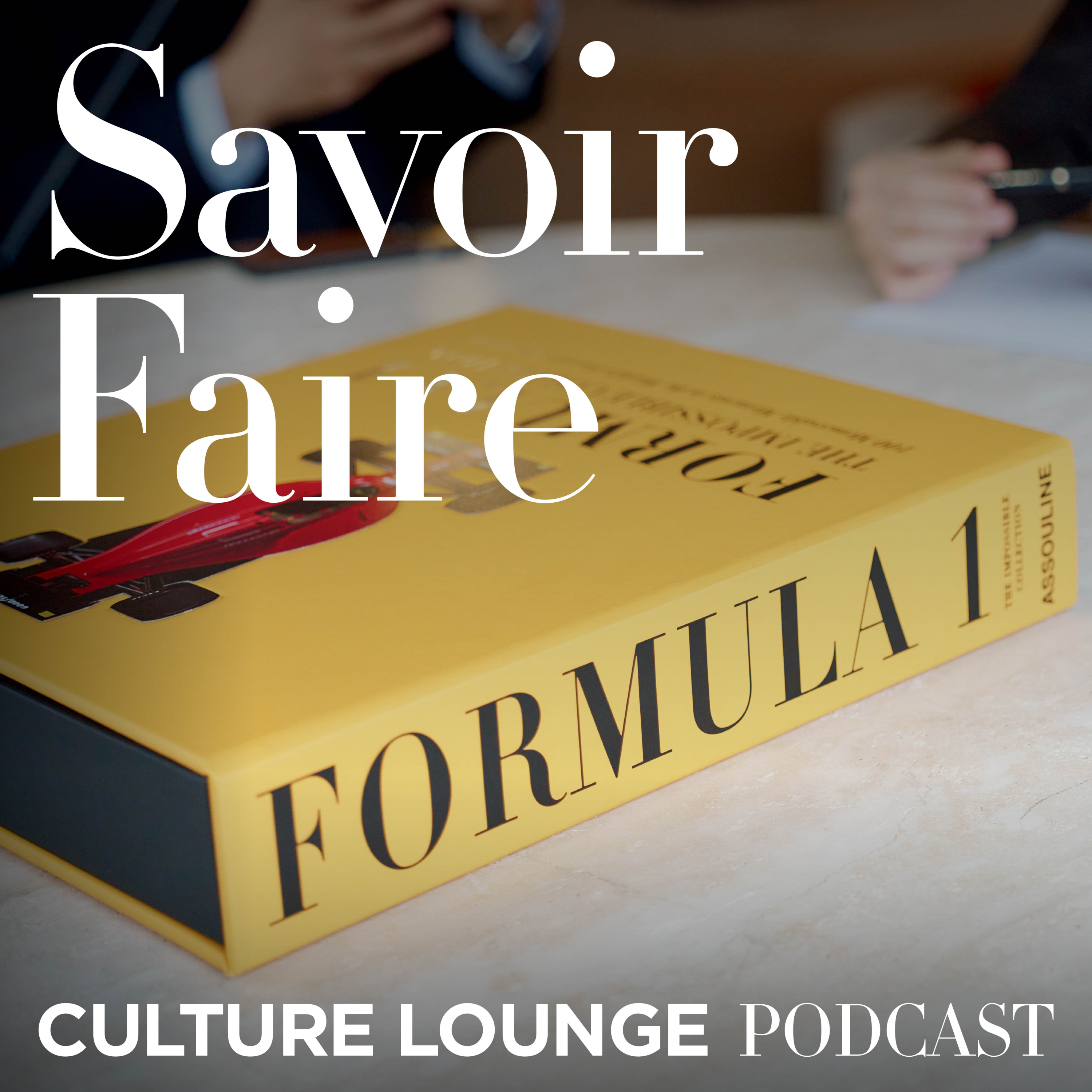
Craftsmanship and editorial teamwork behind a luxury Formula 1 book, “The Impossible Collection,” likened to an F1 team.
Prosper (creator/producer of the book; leads the savoir-faire and production approach) and Martine (editorial lead; spearheads selection and works with author Brad Spurgeon).
every step must be 1000% coordinated or the book fails; the Ferrari car is used with permission from Ferrari’s CEO; the book is “haute couture,” made by hand, with rubber-touching clamshell, sprayed rubber scent like burnt track, and hand-tipped images by white-glove artisans; each copy is unique.
rubber cover, one-year hand-sprayed oil/clamshell process, metal plate printed and glued/screwed, Jean-Todd’s approval for the forward, and Schumacher/Ferrari history guiding image selection. Netflix’s F1 coverage boosted interest and sales.
0:02Alex Assouline: Today, we're here to talk about the savoir-faire behind Formula One, the impossible collection. So, Prosper, this book is especially important because you always make the analogy in the office that we're like an F1 team. Tell us more about that. It's because it's true. I say that because everybody's important in making a book. Everybody. at each step. So when the car stops to make the oil, the change, etc., it's extraordinary how if one makes a mistake, the book can fail, you know, in the production, in copywriting, anywhere. So it's because I feel it's really the team has to work 1000 % together.
0:52So for me, that is Formula One. When we decided to create this book, we did it in rubber. we put in the cover one car in a metal plate but it's not a car it's the car it's the car who is at the MoMA at the MoMA who is the most important museum in the world they have one car and it is this Ferrari so we need to ask the permission to the CEO of Ferrari to can have the authorization to use this car etc what he gives to us etc This is one. So I wanted to touch the rubber. Number two, I wanted something completely insane. It's when we open it to smell the rubber burns. As if you're on the track. On the track.
1:44And I wanted to smell that. So we create, and this takes us one year to create, the oil. Because we spray all the book, the clamshell of the book, the inside of the hardcover with this spray. So when you open this book, you touch the rubber. But just after that, you smell that. And I feel this is something extraordinary. We give everything what we can to be sure the DNA is complete. But when the book was done, we asked Jean-Todd, who is somebody who is part of the history of Formula One and as everybody knows, to see it, to see if he was okay to make the forward, you know. And he was, he said, chapeau, you know, it's fantastic.
2:34It's really good. So that is also a moment of satisfaction.
2:41Alex Assouline: is there any other specific points of the craftsmanship made in Italy that is important to note can you ask us through the production process of a book like that I would like to say all of these books without pluriel are unique, they are made by hand it's haute couture, this collection is exceptional and I really say that because I really truly believe on that so if we continue to talk about Formula 1 Each picture are tipped on by hand by an artisan with white glove, turning each page. The rubber, you imagine the complicity on that. To have the spray made by hand on each of these books. The metal plate to be printed with the right color on metal and to be glued and screwed.
3:31It's not a piece of salami, you know. each book is unique because we want to give the impression of the customer when he bought this book, he have something made for him, not one of a book. It's because I put a book with no S, no pluriel. But thanks to our partner, which is an Italian printer, who is fantastic and play the game. Because it's not easy to be our printer.
4:05Alex Assouline: Yeah, because again, you push boundaries with them and always create beautiful things that you're proud of in the end. So Prosper, you just mentioned that at Asurine, we work a lot together like an F1 team. So you mentioned that image and it's actually printed and big and framed in our design room. So we see it every day. But as we all work together and tandem on these beautiful books. Martine, you're really spearheading the whole editorial side of the business, right? So can you tell us about how the book transcribes these 100, you know, iconic moments of the sport, but how hard was it to come down to that selection?
4:46Alex Assouline: So you worked with the author Brad Spurgeon on this, right? Yes, but the choice of the author was fundamental. It was very important. I had the help of Jean-Todd for that. And so he was somebody that Jean-Todd, you know, recommended. And Jean-Todd was the director of Ferrari for decades, right? Yes. At the moment, he raised totally, completely because he brought the pilot who became, you know, sensational. And for 10 years, Schumacher, and for 10 years, they were winning everything. He came to Formula 1. He came to Ferrari. He was French, not speaking one word of Italian. All the Italians were, you know, waiting for this guy to put it, you know, away because the team didn't like to have a French coming, you know, and be the one to be the manager.
5:42But he did it and he put, you know, the Formula One thanks to Ferrari, you know, he put that in the first. So he was, I could really work with the author and also the person who is close to Jean -Todd with images. so that was really a big help and then I was myself saying okay I'm going to learn but I want also to surprise myself so I was trying to find always the image who says something you know strongly and that was all the work at the end I think that it was a really good result
6:39Alex Assouline: and I can tell you it was thank you it is interesting to link it with moments also you know of the time and it is interesting also to see a book years after you finished it and if you have the same surprise the same envy to see it the same you know engagement with putting the page and absorbing the book, that it makes it because you did it. It's good. So do you think the Netflix show about F1 helped the commercial front of the book? Because there was a lot of communication around it, right? Yeah, a lot. And that changed everything because Formula One was something, you know, a little bit far from a lot of people.
7:35and since Netflix came it became something very different. It opened the interest of a lot of people.
7:45Alex Assouline: And brought a lot of energy to that and lots of people are following all these series. You see them preparing, you know, like warming up and the training with the neck. Have you seen these videos? It's absolutely incredible. Extraordinary. And you see all those champions, you know, those, they are incredible. And you can see that. It's extraordinary to all, yes. With these 100 beautiful moments and most important ones for the sport. Some of them are gods in their countries, you know, and they are considered like its names, fabulous heroes, yes. Thank you. It was great to discuss this wonderful book.
8:26Alex Assouline: Let's keep racing and maybe a third edition soon. Oui, d 'accord. Thank you for joining us in the Culture Lounge. We're so glad you're here. Each episode is a carefully curated conversation, a celebration of the arts, ideas, and people that make life more beautiful. We hope you live with a little more of that beauty today. New episodes arrive every other Friday at 9 a.m. Eastern. Listen on Spotify and Apple Podcasts, and be sure to subscribe so you never miss what's next.
In this episode of Savoir-Faire, Alex, Prosper and Martine Assouline revisit Formula 1: The Impossible Collection and the year they spent creating a scent, sprayed by hand onto every copy, evoking the feeling of being on a racetrack. Prosper explains why he has always compared the maison to a racing team, where success is achieved by every person working together with precision, and Martine recounts the hunt for the 100 hundred images that best represent the sport, and the pleasure of opening a book years after finishing it and still wanting to turn the page.
Scan the code with your iPhone camera
Listen in the app.