 Ask ChatGPT
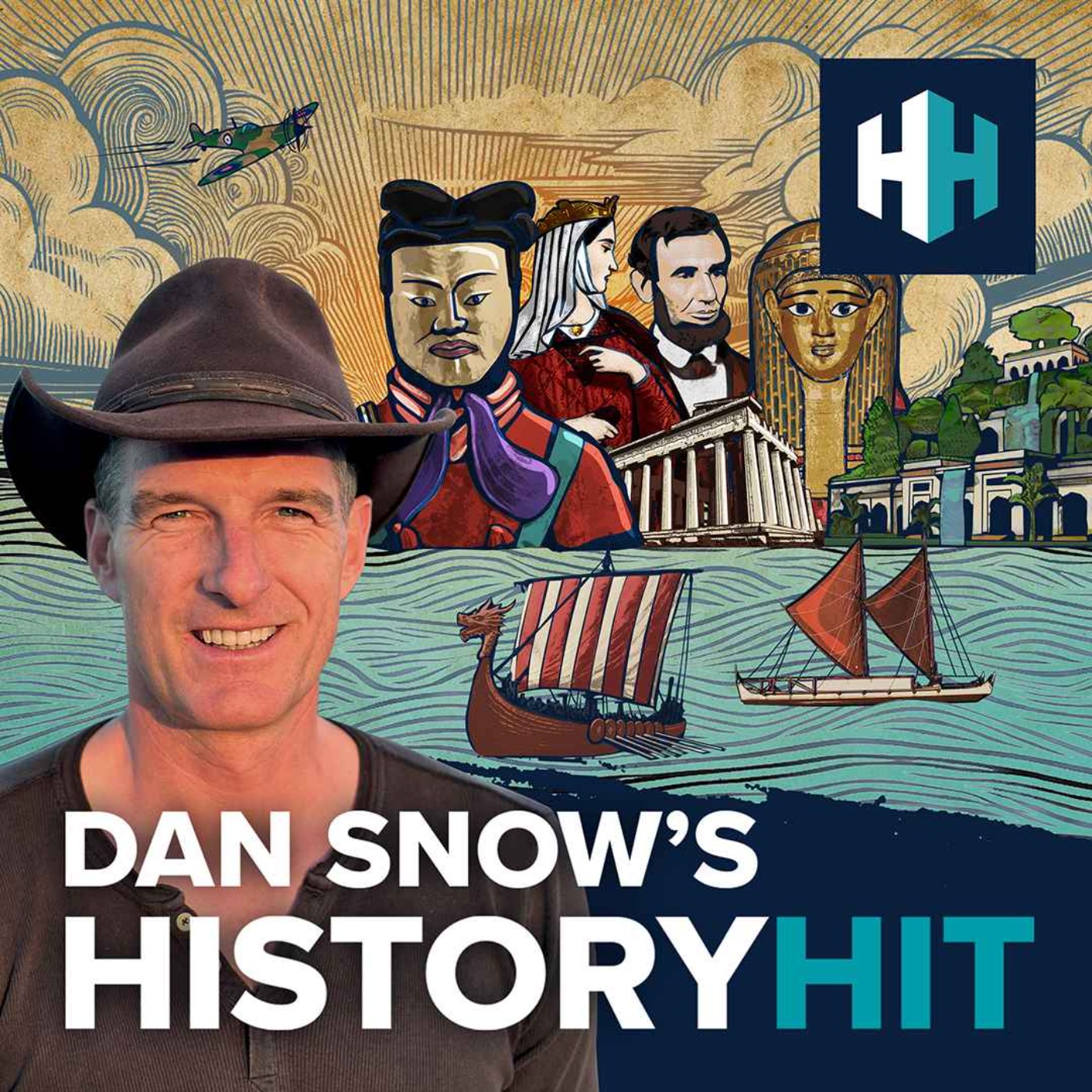


How the Declaration of Independence (1776) emerged from British colonial policy, revolutionary political ideas, and popular persuasion—and how its universal claims still shape U.S. politics in 2026, despite slavery and dissent.
Gary Gersell is emeritus Professor of History at Cambridge University and author of Liberty and Coercion: The Paradox of American Government from the Founding to the Present.
British victory in the Seven Years’ War expanded empire costs, prompting taxes, forts, and troop quartering; colonists demanded representation (“no taxation without representation”). Enlightenment and earlier English debates about rights and parliament helped turn grievances into universal principles. Thomas Paine’s Common Sense (Jan 1776) accelerated independence by attacking kingship and arguing economic inevitability. John Adams pushed the Continental Congress toward independence and selected Thomas Jefferson to draft the Declaration. The Declaration’s “all men are created equal” universalism coexisted with slavery; Jefferson’s draft slave-trade paragraph was cut to secure southern support.
Boston Massacre (1770), Boston Tea Party (1773), Lexington/Concord (1775), Continental Congress, Common Sense sales (50,000/100,000 estimates), New York’s delayed assent (July 15), Washington reading the Declaration to troops, Lincoln at Gettysburg (1863) and MLK’s “promissory note” (1963).
Written by AI. May contain mistakes.
Discuss the importance and impact of the Declaration of Independence.
“A piece of paper so powerful, it launches a global superpower.”
Examine the events leading to the American Revolution and colonial resistance.
“A lot of people start this story, don't they?”
Analyze the Enlightenment ideas that influenced the American Revolution.
“Gary, what is so striking to me about this and listening to you talk about it is it is like like all wars.”
Discusses the American Revolution's parallels with ancient republics and the fragility of such systems.
“It should also be said that there's nothing new about an anti-colonial revolt, right?”
Examines the significance and implications of the Declaration of Independence in the context of a slave society.
“But of course, as universal as they wish to be, anyone who wanted to partake of the benefits of that religion had to subscribe to the beliefs of that religion.”
Explores the evolving sentiment for independence leading up to the Revolutionary War, including conflicts and Congress meetings.
“There are also differences within the colonies of the North.”
Highlights the powerful impact of Thomas Paine's pamphlet 'Common Sense' on American public opinion and aspirations for independence.
“And this profoundly changes the discourse and also helps us understand that at this moment, this revolution ceases to be a matter of what elites are doing and not doing in the American colonies.”
Explore the political dynamics leading up to the Declaration of Independence.
“Chasing Shadows is out now on the Echoes of History podcast.”
Discuss the drafting of the Declaration of Independence and its contentious elements.
“Now, Thomas Jefferson, plantation owner in Virginia, a brilliant man, a polymath.”
Explore the complex political landscape surrounding the drafting of the Declaration of Independence.
“in which the most prominent words that all men are created equal and are endowed by their creator with unalienable rights, he felt compelled to say something about the slave question in the North American colonies.”
Discover the significance of July 4th and the reality of unanimous support for independence.
“There's a sense of, they can feel the hand of history on their shoulders.”
Understand how the Declaration of Independence was received by ordinary people.
“And I'm interested because on the 4th of July, those printed copies, one of them goes up to New York straightaway and it ends up in George Washington's headquarters.”
Analyze the challenges and ideas surrounding the creation of a new American government after independence.
“almost unprecedented idea of how they wish to organize themselves going forward as a society.”
Learn about the lasting impact of revolutionary ideas on American governance.
“who died tragically just this past week at the age of 92.”
Explore the evolution of American ideals from the Declaration to modern challenges.
“But one of his seminal works is called The Creation of the American Republic.”

Get the gist, explore an idea or ask about something said.
 Claude
On Dan Snow's History Hit, what are the key points of this episode?
Searching your listeningAutomatic transcript. May contain errors.
0:00Hey friends, if you love this podcast and want to decide what history we cover, then you need to become a Dan Snow's History Hit subscriber. Pitch your topic and if I like it, we'll make it into a subscriber exclusive episode. So far we've covered the English Reformations, the Hudson Bay Company, the Trail of Tears, all of which have been decided by dedicated subscribers. So take the reins of your favourite podcast by heading over to historyhit.com slash subscribe or sign up in your podcast player.
0:32This is a paid partnership with Apple Card. The coolest flex at brunch these days is not the Bloody Mary with the bottomless gold flake caviar topping. It's not whipping out your wallet to pay. It's not having a wallet at all. Jack's been an Apple Card user since 2019. That's the same year he tossed his wallet in the trash. Because Apple Card holders earn 2 % daily cash back on purchases made using Apple Pay. It's the only credit card designed for the iPhone. I tap to pay with Apple Card at the grocery store, at the gas station, at restaurants. And yes, I use it at my second home, the farmer's market.
1:02Jack tapping to pay with his Apple Card with Apple Pay is his favorite thing to do. And the pleasant vibration and chime sound means I just got 2 % daily cash back on my latest purchase. Apply in the wallet app on your iPhone today. Subject to credit approval. Apple Card issued by Goldman Sachs Bank USA, Salt Lake City Branch. Terms and more at AppleCard.com. Therapy's biggest impact doesn't show up in some dramatic breakthrough. It shows up in the smallest moments. You bite your tongue instead of escalating. You put your phone down instead of firing off that text. You say what you actually mean instead of what would hurt someone else the most.
1:37Nobody applauds those moments, but they quietly change your life. That's what growing feels like. And that's exactly what Grow Therapy is here for. Grow is therapy that works, covered by insurance. Sessions average$21 with insurance, and some pay as little as$0 depending on their plan. There are no subscriptions, no long-term commitments. You just pay per session. Grow connects you with thousands of high-quality, licensed therapists across the U.S., offering both virtual and in-person sessions, nights and weekends. You can search by what matters, like insurance, specialty, identity, or availability.
2:14And you can book a therapy session in minutes and begin in as little as two days, not the national 48-day average. See if you could pay as little as$0 for therapy in seconds at growtherapy.com slash ACAST. That's growtherapy.com slash ACAST. growtherapy.com slash ACAST. Availability and coverage vary by state and insurance plan. A piece of paper so powerful, it launches a global superpower. In fact, I'm going to say it's the most important single piece of paper in the history of the world. 250 years ago, the Declaration of Independence was broadcast as a mission statement, as a planning document to introduce a revolutionary new form of government on this earth, and as an eviction notice to British King George III.
3:12But since then, it has become much more than that. For two and a half centuries, Americans haven't just lived in the shadow of that declaration. It has been given a new life by every generation. So how did a 1776 notice of termination create modern America? To mark the vitally important 250th anniversary of the Declaration's adoption on the 4th of July, we are going to look at the raw politics of Americans' founding creed. Joining us to dissect how those radical words still shape our world in 2026 is the emeritus Professor of History at Cambridge University, Gary Gersell, author of liberty and coercion the paradox of american government from the founding to the present he's one of the best in the business let's get into it
4:15gary great to have you back on it feels like this is the big one we've been building up to this it was it was brewing for a while let's we're going to just briefly give the backstory because i want to get into the that that summer of 76 and the writing what it means in a second But is it worth going back to the people? A lot of people start this story, don't they? With Britain and Britain and its American colonies, great victory over the French in what people call the French Indian War, the Seven Years War in North America. So suddenly these British colonies, suddenly the British Empire in North America, A, it's vast and there are no obvious, well, no obvious threats to it, really.
4:52Certainly no big European threats to it because Britain is now dominant across this space. The French have been defeated. Spain increases its territory in North America as a result of the British victory because the French cede the vast Louisiana territory, the continent of what becomes the United States west of the Mississippi. They cede that to Spain. So Spain is present. France has been defeated. But the colonies have acquired enormous territory. And the settlers and the colonies which are hugging the eastern seaboard, especially the poor settlers, are heading west for free land. And the cost of maintaining this suddenly much larger territorial space is exorbitant.
5:40And the British in Britain feel as though they help the colonists by defeating the French. And now that such a big empire has been acquired stretching far to the west, that the colonists ought to pay more of share for the upkeep of that empire, especially as they're pushing west. They're encountering lots of indigenous peoples, tribes. Fights are breaking out. Colonists are winning some. They're losing others. They're demanding forts on the frontier. It's a vast territory and a costly one to defend and maintain. So it's not as though there are no enemies of the British because the indigenous peoples are there.
6:19And many of them are emboldened by the French-Indian War. And so Britain feels compelled to establish forts. extend its protection, and in return for that, it begins to impose taxes and some of the costs of maintaining that empire on the colonies of the sort that they haven't had to put up with before. This is a good time. The defeat of the French is good for the colonists. This increases their abilities to trade. They are beginning to prosper. They are beginning to feel their present and the upbeat of the future. There are elites, there are merchants, they have power, they have established partially self-governing institutions.
7:03And so the war speeds up the process of the British colonies in North America beginning to feel more independent, more self-sufficient, more successful. And if they are going to be asked to contribute to the British empire through taxation. They want representation in parliament. And this is something that Britain is simply not willing to grant. And that's one of the slogans that generates a lot of conflict, no taxation without representation. And then there are conflicts, efforts to impose taxes, resistance on the part of the British colonists in North America, and an increasing desire for respect representation and barring that discussion begins to consider some form of more distant relationship and perhaps some form of separation the another flashpoint for the colonies is the british are quartering more and more troops in american cities especially northern cities and especially Boston.
8:17And colonists are expected to quarter these troops in their homes to pay for their upkeep. And this militarization of British colonial policy becomes very upsetting and helps to explain why one of the cities that has the most intensive quartering, Boston begins to explode first with the so-called Boston Massacre in 1770, when a demonstration of Bostonians engages with British troops. The British troops are scared. They're frightened. They fire on the crowd, kill five people. It's a flashpoint, and it generates a tremendous amount of anger and further consolidates the feeling that the Americans ought to think more deeply about some kind of independence, some kind of separation.
9:08Another flashpoint is the Tea Party of 1773. This was also a time of mercantile expansion on the part of the Americans. And the British are trying to enforce mercantilist policies. They want to control all trade. They want to run all trade through their trade routes. And they want to control everything from the metropole. And the merchants of the northern colonies in particular want their freedom, want their independence. And when a tax is slapped on tea, the Sons of Liberty, so-called Sons of Liberty, gather in Boston in a nighttime raid on British ships, dress up as Indians, sneak onto the ships and toss a lot of tons of precious tea overboard.
9:54That is a tea party. That is when the slogan of liberty begins to enter the discussions and the consciousness of these British colonists in North America. And that further accelerates the confrontation and begins to lead to a situation that is going to lead by 1775 to armed conflict. Gary, what is so striking to me about this and listening to you talk about it is it is like like all wars. It's about land and power and money and trade and and threat. And yet what we're talking about today is this astonishing document. And you've mentioned it a few times now. What's so striking about the American Revolutionary War is it's also a war of words and ink and extraordinary scholarship and polemic on both sides.
10:47And there's a sort of intellectual plane on which this conflict takes place, which this declaration so eloquently falls into. What is it about that highly literate society? it's the Enlightenment. As sort of merchants are getting annoyed about trade and sort of, you know, taxes, there is also this superstructure, isn't there, of thought. And how do the two relate? I mean, is the flowery language just a cover for venal, you know, people worrying about how much tax they're paying for the Imperial Centre? Or does the ideas, the intellectual ideas, really matter here? The ideas really matter. I think it's not just a cover.
11:31There were, of course, those in the ranks of the revolutionaries who were doing it for instrumental reasons and just to free their mercantile projects to gain the greatest profit and to have the most freedom of the seas and opportunity to prosper without the British overlords. But what distinguishes this moment is the conversion of these resentments into a set of universal principles. And I think what really, and I think in a moment, you or I should read a sentence from the Declaration of Independence, just so we can, it's a beautiful, extraordinary sentence. but I think it ought to be with us as we, because it illustrates your point about the depths of learning and the deep aspirations of, of, of this moment.
12:26The British subjects in North America, on the one hand, are heirs to a vigorous discussion going on in Britain, really from the time of the civil war in the 1600s about the rights of Englishmen, the rights of the crown, the significance of parliament as an institution of representation. Even though there's a glorious revolution and settlement in the late 17th century, that doesn't end the discussion about the proper way of organizing the politics of a society. So some of this thought comes from that extraordinary set of events in 17th century England that live on in the colonies. And of course, especially in the North, in the ranks of the colonists, they are well represented by Puritans who come from the parts of England where Cromwell was very, very strong and where discussion of republicanism, small-r republicanism, as a proper way of organizing society took off.
13:36So that lives on. And the elites in American society wanting to be like the elites of British society, even though none of them, with the possible exception of New York, none of them approach the scale of wealth that aristocrats had in England. They want the classical learning. They want to understand the classics of Athens and Rome. and they are well-versed in this. And throughout the American Revolution, not just the revolution, but leading up to the Constitution, these discussions are constantly drawing on parallels with ancient Greece and Rome and the desire to establish a republic, to sustain a republic, understanding that republics are by their nature very fragile institutions.
14:29this is all on the minds of the American revolutionaries and there's a depth to this discussion which makes it impossible to see it simply as a cover or a set of instrumentalities that are going to get a bunch of hungry merchants their due. So these ideas circulate. It should also be said that there's nothing new about an anti-colonial revolt, right? in human history. Wherever there have been empires, there have been anti-colonial revolts, and the anti-colonial revolts are very much part of the Roman Empire itself. All over the place, the Romans were constantly trying to put down anti-colonial revolts.
15:14But this may have been the first anti-colonial revolt to clothe the ambitions of that anti-colonial revolt in universalist terms. And this may be a moment just to read a sentence from the Declaration of Independence. We hold these truths to be self-evident, that all men are created equal, that they are endowed by their creator with certain unalienable rights, that among these are life, liberty, and the pursuit of happiness, that to secure these rights, governments are instituted among men, deriving their just powers from the consent of the governed, that whenever any form of government becomes destructive of these ends, it is the right of the people to alter or to abolish it and to institute new government, laying its foundation on such principles and organizing its powers in such form, as to them shall seem most likely to affect their safety and happiness.
16:13That's an extraordinary sentence. It is one sentence for several reasons. The most important reason is that it universalizes the aspirations toward life, liberty, and the pursuit of happiness. It's declaration that all men are created equal. We will talk soon about the contradictions of making that declaration in what was a deeply slave society. But what we see here is the declaration that, in effect, all men are to be judges of their own happiness. And if they judge their own happiness to have been neglected or betrayed or forgotten, they have the right to withdraw their consent from the government that is ruling over them.
17:06Yeah. Now, this may sound plain to 21st century years or 20th century years. At the time, revolutionary. Revolutionary, because this was a time in which almost everywhere on the planet, kings and queens were expected to rule. And they did not rule by consent of the governed. and they did not think that all people had a right to judge the adequacy of their own happiness, their own life, and their own liberty. These words make that aspiration to be free, to have liberty, to have happiness. It makes that aspiration available to everyone in the world. The closest we get to this kind of universalism before this time would be in one of the great religions of the world, Catholicism, Protestantism, Islam.
18:03But of course, as universal as they wish to be, anyone who wanted to partake of the benefits of that religion had to subscribe to the beliefs of that religion. So this is a universalism that there is a reference to the creator, but it's a creator. It's not God. It's not the church. It makes the aspiration contained in these words available to the whole world. We are obviously going to come back to the text, but let's just get everyone from 75 shots of fired in New England. There is an unsatisfactory, messy campaign in and around Boston. The Brits withdraw from Boston. 76 matters this big year because the Brits are sending the largest expeditionary force that has ever sailed from British shores to try and reconquer their colonies in North America.
19:00What is the political and military context for the declaration? It's clear there's a campaign coming. The Brits, and no doubt some in America, were expecting to be decisive. This is going to be a year where there's going to be a massive clash of armies, a massive siege for the American colony's largest city, New York. and what so why does the language of the revolutionaries over that winter 75 76 how does it change from well we still might be able to compromise we're going to send a petition out saying actually if you give us devolution or devo max we might be able to come to how does that harden into independence actual independence by the early summer of 1776 well as you mentioned There is military conflict in the spring of 1775 in Lexington and Concord, what Ralph Waldo Emerson called the shot heard around the world.
19:54Not quite the shot heard around the world, but a significant shot. And there are fights that are continuing after that time. The colonies in response called the First Continental Congress. So this is the first Congress that assembles all of the colonies in North America into one assembly. So that is a very significant step because the colonies were deeply independent of each other. And for many of the colonies, their relationship to London was much closer than to their neighbors in the north and south. So they are developing a sense of themselves as a nation by calling this Continental Congress.
20:34And they send various proposals to London, to the king. The king is hugely annoyed. He doesn't want to be bothered by this. He thinks it's a minor rebellion that can be easily put down. And then when they refuse to relinquish their claims, the North Americans, in early August, he declares them to be in revolt against him and his crown and declares them to be beyond the protection of Britain or its empire. And this is, in effect, a declaration of war, not in so many words, but that becomes the occasion for beginning to mobilize a fleet and an army that is going to sail to North America to put down the rebels.
21:26There are efforts by various colonies to strike a compromise, strike an agreement. The colonies are very different from each other. The biggest difference is between the North, where you have a lot of self-sufficient farmers and artisans in the South, which is ruled by large plantations with slave labor forces. There are also differences within the colonies of the North. New York doesn't really fit very comfortably with Boston, and nor does New York fit very comfortably with Pennsylvania. So there are negotiations going on throughout this period, and they're going nowhere. And the preparations for war are intensifying, and the First Continental Congress begins to raise an army of its own.
22:16And then into the middle of this comes this little pamphlet, actually not so little for the time, by a British immigrant in North America by the name of Thomas Paine called Common Sense. And this 47-page pamphlet, which is published in January of 1776, is one of the most successful polemics of the modern world. The colonies at this time have a population of about 3 million. It's estimated that in the first three months, this pamphlet sells 50 ,000 copies in a nation of 50 million people. Over the first six months, it's estimated that 100 ,000 are sold. And of course, these copies are being passed from person to person.
23:04So everyone is talking about Tom Paine and common sense. And there are two or three major points in the Common Sense pamphlet. One is that kingship is for fools. Every king or kingship began through theft, through rogue individuals, seizing territory, seizing power, no legitimacy. Dynasties produce simply bad blood and stupid heirs. It's a stupid way to govern. The sarcasm of this toward royalty and kingship is deep. It's biting and brutally effective. And this encourages many, many Americans. Tom Paine is just an ordinary artisan. He's not part of any elite, but he effectively changes the discourse.
24:00and he allows Americans to begin thinking of having a system of government that has no king. And if they are going to begin to think about having a government that has no king, then they have to begin to think of independence, because under no circumstances will King George III allow a set of his colonies to renounce their loyalty to him. Kings, of course, are used to ruling by divine right and claiming their authority from God. And Thomas Paine declares all this to be a form of foolishness. He also makes a very effective economic argument, which is that the colonies are growing, their territory is larger than Britain, their commerce is more vigorous than Britain.
24:50He's arguing that it's in the natural course of evolving societies that these colonies are going to continue to expand. They're going to overtake the economy of Britain. They are going to have economies of scale. They are going to have vigorous production. They are going to have vigorous forms of innovation. They have access to resources not available to Britain itself. And he begins to make an argument that it is a natural set of events for this nation that is growing by leaps and bounds year by year to simply be independent. And it's a matter of common sense, just as getting ring of kingship is a matter of common sense.
25:38So it's a set of radical revolutionary arguments dressed up in extraordinarily accessible, sarcastic, and brilliantly effective language. And this profoundly changes the discourse and also helps us understand that at this moment, this revolution ceases to be a matter of what elites are doing and not doing in the American colonies. This is a moment when the revolution begins to acquire a popular base among artisans and farmers who, of course, are going to fill the ranks of the soldiers and the military that George Washington is trying to organize. It's hard to think of another example of a political thinker transforming, changing the course of history, changing the real world politics and events.
26:27I mean, Marx's Communist Manifesto was published decades, generations before any version of it was even then problematic, but any version of it was put to the practical test. And here we go, just months after the publication of this book, the Americans are taking the almost unimaginable step. It's fascinating. Yes, yes. I think it is comparable to the Communist Manifesto. The Communist Manifesto does have some short-term effect in terms of the revolutions of 1848. But you're right, its greatest impact has got to be felt in the 20th century. So for Tom Payne to write a pamphlet of this sort and for it to have such immediate and powerful effect, it's hard to find a precedent for that or a subsequent development that matches this extraordinary influence.
27:18We're going to pause right there, but there's more coming up after this. This episode is brought to you by TikTok. I never thought about the history of coffee. You make it, you drink it, nothing more to it. Then I've had a TikTok video about how people in the 1700s would pour their coffee into saucers to let it cool before drinking it. I love that sort of discovery. A detail, but suddenly you're imagining how people lived and drank and socialised. Now I wonder what all baffle historians about us. Mugs. It's a ceramic vessel, but crucially it has a handle. Well, that's the joy of TikTok, folks.
27:52You look for one thing and find yourself somewhere completely different. Your next discovery is waiting on TikTok. Learn more at TikTok.com slash discovermore.
28:29I tap to pay with Apple Card at the grocery store, at the gas station, at restaurants. And yes, I use it at my second home, the farmer's market. Jack tapping to pay with his Apple Card with Apple Pay is his favorite thing to do. And the pleasant vibration and chime sound means I just got 2 % daily cash back on my latest purchase. Apply in the wallet app on your iPhone today. Subject to credit approval. Apple Card issued by Goldman Sachs Bank USA, Salt Lake City Branch. Terms and more at AppleCard.com. Therapy's biggest impact doesn't show up in some dramatic breakthrough. It shows up in the smallest moments.
29:02You bite your tongue instead of escalating. You put your phone down instead of firing off that text. You say what you actually mean instead of what would hurt someone else the most. Nobody applauds those moments, but they quietly change your life. That's what growing feels like. And that's exactly what Grow Therapy is here for. Grow is therapy that works, covered by insurance. Sessions average$21 with insurance and some pay as little as$0 depending on their plan. There are no subscriptions, no long-term commitments. You just pay per session. Grow connects you with thousands of high-quality licensed therapists across the U.S.
29:40offering both virtual and in-person sessions nights and weekends. You can search by what matters, like insurance, specialty, identity, or availability. And you can book a therapy session in minutes and begin in as little as two days, not the national 48-day average. See if you could pay as little as$0 for therapy in seconds at growtherapy.com slash ACAST. That's growtherapy.com slash ACAST. growtherapy.com slash ACAST. Availability and coverage vary by state and insurance plan. Hi, I'm Matt Lewis, host of Echoes of History, the podcast that plunges you into the ranks of the Knights Templar across ancient Egypt and behind the barricades of history's great revolutions to explore the worlds recreated in Assassin's Creed.
30:32In our new series, Chasing Shadows, we're in feudal Japan alongside samurai warlords and shinobi spies. Whether you're gearing up for Assassin's Creed shadows or captivated by Japan's rich history. This podcast brought to you by Ubisoft and History Hits is a must listen. Chasing Shadows is out now on the Echoes of History podcast.
31:01So, okay, so we got this Continental Congress meeting. They, through the, what we might call, through the spring, are they edging closer towards independence? What's stopping the machine, the Declaration? Is there still some dissension? Do they need to, like some of the parliaments in England in the 17th century, do they have to get rid of a few delegates before they can all agree? What are the politics of getting towards this Declaration of Independence? Well, there is no Declaration yet, and no one is yet thinking of a Declaration, but the man who is... There are some people thinking about independence, and probably...
31:39The most important figure in this respect is John Adams, who's a political figure in Massachusetts, and he's got to play a critical role in the Declaration, in the Constitution. And of course, he's got to be the second president of the United States of America. And interestingly, among the founding fathers of the United States, he's not thought of as one of the more radical figures. But he is the one who begins to push hard for independence. And I think it's no accident that the hardest push for independence is coming out of Massachusetts. It's coming out of Boston. It's coming out of the out of the home of of Puritan intensity.
32:24John Adams is not a Puritan, but he's not that far removed from those original religious zealots who settled in who settled the Massachusetts Bay Colony. They were fiery figures, and they were no longer those who the Bostonians making the revolution are not themselves Puritans, but they have some of that Puritanical fire, and they're putting it to secular uses. And he is the key figure in trying to move the Continental Congress toward considering independence. And you're absolutely right. There is support among some colonies. There's not support among other colonies. Several of the delegations are split.
33:09But you begin to see the momentum begin to build. And here, the constant availability and discussion of common sense. This is a natural development. This is not a matter of treason or betrayal. This is a story of people coming into its own and deserving its own nationhood. This begins to increase, and at the same time that anger at George III increases because the military confrontation is coming. The armed conflict is becoming more and more of a possibility. He is the one who pushes the Continental Congress toward independence and insists that the Continental Congress begin discussing this as a possibility.
33:57And when he gets close enough to think that it's time to draft a memo, he actually drafts the first memos, but he doesn't consider himself to be a great writer or a great draftsman. So he plucks what the man who he considers to be the finest draftsman and the finest political writer in America, a man by the name of Thomas Jefferson, to actually write the declaration. and he gets authorization from the Continental Congress to appoint a committee of five. This occurs in May and early June 1776. And he curates, let's say he curates the voting among the delegates to make sure that Thomas Jefferson is the man to get the most votes for the committee, which means he then is in a position to actually do the draft of the Declaration of Independence.
34:56Gary, it's very exciting to think that this is, well, I'd love you to help me here, that there's so much hagiography in it. So this is not a case of pork barrel politics and boats being bought and people being locked in bathrooms during key vote. This really is, in April, May, June, this is a discussion about ideas, about principles, about a kind of intellectual debate going on. The kind of thing we'd like to hope happens all the time in our representative bodies. But is that what you think was afoot? Was there a spirit of intellectual debate in spring of 76 in Philadelphia? Yes, but not just a spirit of intellectual debate.
35:37It was also a commitment to a mission that was going to have the elites of these colonies accused of treason and thus subject to jail and death if they were to be defeated. Right, so the Brits are painting them in as well. Yes. So it is a very spirited discussion, but it has to be accompanied by a seriousness of purpose and understanding that to take this step is going to imperil the lives and fortunes and families of those delegates and anyone who supports them. There are moments in history where extraordinary events happen, where extraordinary breakthroughs occur. And this is the moment. Now, Thomas Jefferson, plantation owner in Virginia, a brilliant man, a polymath.
36:45He was a political thinker. He had been writing, even though he was still a young man, he had been writing extensively on questions of politics, questions of rule, questions of governing by consent, questions of religious freedom. he was able to do this because he was the inheritor of a rich set of British experiences, thinking. He's developing them further, adapting them to the environment in which he was living. And he was an extraordinary writer. John Adams got this, you know, put his money on the right man. And so it is a very spirited debate. It is a very serious discussion of ideas, but they understood the risks they were undertaking
37:45by committing themselves to this enterprise. And it may be that their determination to clothe their rebellion in universalist terms was a way of them, in a way, protecting themselves or at least insisting on the integrity of their aspirations, that these were not simply a bunch of Rebbe merchants in New England or greedy landowners, plantation owners in the southern states. People who had a bunch of money to London moneylenders. Yeah, and there was that side to them. George Washington was a great speculator. When this group of architects of the American Republic, when it comes time to design the Constitution after the Revolutionary Wars are over, they are deep into expanding their own enterprises, expanding their land to the West, expanding their plantations, getting rich, wanting to approximate the wealth of British aristocrats.
38:52So I don't want to suggest that this was not part of who they were. But this is a moment when an extraordinary set of ideas coalesce and receive the support of ultimately unanimously of all 13 delegations represented. And talk to me about that unanimous acclamation or vote. How did it go? Was it ever in doubt? Was there some tense moments in the days leading up to July 4th, 1776? The draft had to be submitted by Jefferson first to his committee, and they didn't make that many changes to it because John Adams and Jefferson were thinking along similar lines. And the other members of the committee either didn't feel themselves capable or didn't take that much interest.
39:42One of the committee members was Benjamin Franklin, who was very distinguished but also very ill. but between the it comes out of the committee on um july 1st or 2nd of 1776 and then it goes to the entire continental congress and it's heavily debated and edited over the next two days and jefferson was a wonderful writer but also a rather verbose writer and they they cut about 25 to 30 percent of the declaration out of the declaration Jefferson said the best bits are gone, but my finest writing is gone. That's always what an author thinks, right? Just quickly go, do we have those? Do we have the 25 % that was cut?
40:25Do we know what that is? Oh, yeah, yeah. We have that. We have that. And then some of it was due to redundancy in flowery language, and they wanted something direct and efficient. But there was also a very significant paragraph that Jefferson wanted in that the Continental Congress got rid of, and that was on the slave trade. And the Jefferson, a slave owner himself, and a deeply committed slave owner, by the way, and we can talk about that contradiction before our time together is up. He wanted to put in a paragraph as one of the grievances against King George III that he had started a slave trade which had burdened North America with a terrible, terrible problem.
41:21So you see what Jefferson was doing here. On the one hand, he was acknowledging the sin of slavery. On the other hand, he was blaming it entirely on someone external to the North American colonies, the king. and but for the king, America would have been free of this terrible problem. Jefferson, in fact, was prospering on his plantation from the work of his slaves. Some of the people who signed the Declaration of Independence would ultimately free their slaves. Jefferson never did. So this was disingenuous on his part, but he felt that if you're going to write a document in which the most prominent words that all men are created equal and are endowed by their creator with unalienable rights, he felt compelled to say something about the slave question in the North American colonies.
42:20But he hastened to absolve him and all the other slave owners from responsibility, targeting George III as another of the terrible policies he inflicted on what would otherwise be a healthy and free society governed by a healthy and free people. Now, it's not that delegates wanted to put in a franker recognition of the reality of slavery. It just was the case that this never would have gotten through the Continental Congress. It never would have attracted the support of the southern delegations where slavery was flourishing. had any reference to slavery stayed in that document. So the most substantive excision from the document was this paragraph acknowledging the horror of slavery on North American shores.
43:18And I guess, Gary, it's a good point. At that stage, being a member of that Congress was already a seditious act. If the Brits were going to reconquer these colonies, these men would have been in dire straits on trial as you say families property all that threat lives so actually in a way that british intransigence does help to make john adams's case much easier because you say look guys we've crossed the whether or not we issue the declaration we've crossed the rubrican you're all do if the brits landed army in philadelphia you're all doomed right so we might as well go the whole hog here we might as well dissolve these bonds and give ourselves some justification for this war because the die is already cast.
44:03Yes. Once they land and we lose, if we lose, we're cooked. Yeah. Yes. So let's go down with the cause that we can be proud that we... Yes. You know, go down with our banners unfurled and flying in the wind. Yes. It also raises the question of whether a more adept ruler, a more adept king with more adept advisors might have found a way through this at an earlier moment when compromise was still possible because there was plenty of support for compromise. It may have been possible to contemplate some sort of representation for the colonists in parliament. There were other paths forward which, to the rulers of Britain, just all of them were unacceptable.
45:04And one wonders whether there might have been more cleverness, more flexibility, more of a Machiavellian approach to politics. where they could appear to be giving something while maintaining control in the metropole. One does wonder that, Gary. This one wonders it all the time. The other thing you don't mention, a big ocean. I mean, I think the big ocean, the kind of geographical factors are part of it as well. But yes, imagine if Ben Franklin's plan, Americans in the Westminster Parliament, Imperial Parliament, 250 years later, Gary, you and I, part of one great, happy transatlantic family, and none of us would be in this mess.
45:48Yeah, and all the problems of America and Britain, obviously, would be solved. Everything would be perfect. That's right. No question. Everything would have been fine. Okay, so tell me about the day. So we get Congress unanimously agree to this. Tell me about the day itself. There's a sense of, they can feel the hand of history on their shoulders. They don't know what's going on. Tell me how this debate, this acclamation, this vote is then transmitted onto the paper and beyond. Well, July 4th is the day where they claim to have unanimous support for the Declaration of Independence. They do and they don't.
46:23July 4th is the day that sticks. That is the anniversary of American independence, for which America will be celebrating, perhaps celebrating, perhaps mourning, the 250th anniversary of this extraordinary document. But New York assented only in theory because New York was the colony that was probably closest to wanting to mimic London in terms of its aristocracy, the centralization of power, even a kind of kingship. So in the North, they were the colony's slowest to get on board. And the delegates from New York thought they had the support of the colonial government back in New York, but did not want to act until they received explicit approval of this document that was approved on July 4th from the colonial government back in New York.
47:24And that comes on July 15th. And that is the moment of true unanimity. And there are various, and that's when this document receives its formal name, the Declaration of Independence, and is first committed to parchment. and then it's committed to parchment again on August 2nd by a master printer and it's the document printed on August 2nd and distributed to the colonies that now sits in the National Archives in Washington DC so the the official final document is August 2nd 1776 it's fascinating because the ones that aren't the printed document that people be familiar with were printed on the night of the fourth of july and spread all those that but those had no that's so fascinating those that would not have did not have the carry the sort of official stamp of officialdom i suppose but they were sent all over the colonies weren't they well now independent states i've got the final paragraph here i love that simple declaration that one of the last lines um it's very very wordy as you say but there's one clause that These united colonies are and of right ought to be free and independent states that they are absolved from all allegiance to the British crown.
48:51And so it goes on. And I'm interested because on the 4th of July, those printed copies, one of them goes up to New York straightaway and it ends up in George Washington's headquarters. He then reads it or he has it read out to his assembled forces the following day, I think it is. it has a very what is the effect of this document on normal people because there's a sort of riotous party in new york when it's when it's read out isn't it and the effect has on the men this these are words that really matter even on the battlefield well you can imagine imagine ourselves as ordinary people in in the military farmers artisans people with some security, some land, but without great resources.
49:36And we are reading a document that we probably never expected to see in our lifetimes and that many of us probably couldn't imagine. This was a profoundly unequal world. If people had had access to life, liberty, and the pursuit of happiness, it was because of the graciousness of their Lord or king. It was not by God-given rights that no one could take away. And, you know, a less cited part of that first incredible sentence of the Declaration that, you know, people have, they have to give their assent to a government that governs them. And if they haven't given their assent, then they have the right to withdraw from that government and establish something different, more to their liking.
50:36We were beginning, you know, we as ordinary people, again, this is the importance of the Thomas Paine pamphlet. Imagine a declaration of this sort without the ballast provided by Tom Paine and common sense. so this the mil George Washington's military the crowds in New York and Boston and in Richmond Virginia they have been reading common sense for half a year at this point and everybody's reading it or if they're not reading it they're hearing about it they're talking about it they're talking about it in um in in tea shops and in in saloons in in in gathering places and in their churches they're talking about it everywhere.
51:24And so this sense of freedom and independence, people have begun to glimpse this possibility, but to see it in writing, and shortly after that, it being committed to parchment with the bold signatures of all the people who were there at the Continental Congress, I'm not surprised that it inspired inspiration. Now, it should be said that not all Americans wanted independence. There's never a society where, no matter how popular a politics or how popular a revolution, it never commands the loyalty of all the people, right? There are always dissenters. And there were people in the American colonies, estimated as many as 20%, who did not want independence from Britain.
52:22They are the so-called Tories. Some of them went to Canada and others of them themselves became vulnerable if they made their Tory sympathies public. So as much enthusiasm as there was, any radical event is going to generate a radical counterreaction. That's just in the nature of these events. And so there is going to be resistance among some sectors of American society. So there is great jubilation among a large majority, but it does not encompass all the British subjects living in North America. Gary let's talk about finally what it what it means what it meant at the time what it still what it still means um it on one level we talk about the soldiers and who are about to face the British onslaught at New York they now they were fighting for each other they're fighting for their mates they're fighting for their they fight for all the things soldiers usually fight for but now they've got that top order motivation sort as well they are fighting for this astonishing exciting almost unprecedented idea of how they wish to organize themselves going forward as a society.
53:32That makes a difference, does it? Yes, yes. And it's not clear at this point what kind of government this new nation has got to create. There's a lot of support for establishing a republic model on ancient Rome or the early modern Italian city-states. But there are also segments of the society that begin to contemplate America having its own king or queen and establishing a kind of society that mimics European society. Those sentiments are there. but and it's going to take well from 1776 to 1791 the period of 15 years for a new government to take shape and the first government that is established as a result of the revolution the so-called continental congress manages to get america through the war but it does not everyone by the end of the wars is saying this is not a satisfactory form of government And so it's going to take another intense period of political thinking, political contemplation, political innovation, yielding the Constitution, 1789, ratified in 1791, for America to become a republic and for America to decide to put as the first three words of that document, we, the people, which ratifies one of the most important components of the Declaration of Independence that we the people are deciding on the government that we're going to create.
55:12And they create a republic with no kings, by the standards of the time, quite liberal access to the franchise and to the vote, system of representation, system of divided government so that the so-called tyranny of George III could never be reproduced on American shores. And this process of political thinking, what you indicated and what you noticed in the beginning of our conversation, this is still just beginning. And there's a 15-year period that the well-known historian of the revolution, Gordon Wood, who died tragically just this past week at the age of 92. he was hit in a parking lot in Providence, Rhode Island.
56:03But one of his seminal works is called The Creation of the American Republic. And it's a deep study of all the ideas and all the streams of thought flowing into the creation of the American Republic. And again, because of Thomas Paine and his contribution, this becomes not just a conversation among elites who have had access to the best education that the ancients can provide. This becomes a process that involves ordinary people in their institutions, in their houses of Congress, in their various states, experimenting, innovating, claiming rights for themselves, expanding the rights of ordinary people versus the rights of elites.
56:45This institutes a great period of experimentation that has got a lead to a republic that, unlike most republics, survived its first 230 years. One needs to call attention to the tragic contradiction of this moment, which is the perpetuation of slavery and the feeling among people of color, especially African Americans in the United States. They had to live with another 70 years from the Declaration, another 87 years of slavery before the Civil War breaks out. But it's very significant in this regard that Abraham Lincoln, in his greatest speech at Gettysburg in 1863, invokes the spirit of the Declaration of Independence in his 287-word speech, which is regarded as the greatest speech in American history.
57:42And it begins with four score and seven years ago, which is a reference to the moment of 1776. And he goes on to call in those 287 words while he is marking the horrific death that occurred on the battlefields of Gettysburg. He calls for a new birth of freedom to complete the work of freedom and the work of extending inalienable rights to everyone living on American soil. And then 100 years after that, Martin Luther King, exactly 100 years after that, Martin Luther King in 1963, when he gives his famous speech, I Have a Dream, on the mall in Washington, the great civil rights march, which launches the civil rights revolution into its highest phase.
58:34he talks about a promissory note delivered by the founders and is referred to, he's referring to the Declaration of Independence. And it illustrates the degree to which those people who the Declaration of Independence failed, many of them returned to the Declaration as an inspiration and as a hope that the dream of this declaration and the promissory note made to all American citizens, regardless of their color, their ethnicity, their sexuality, their politics, would be covered by this promise of 1776. I will end on a somewhat gloomier note, just taking you through the ages. I remember well the bicentennial celebration of the Declaration of Independence in 1976.
59:28And that was another very tumultuous time in American history. It was deep divisions over race. The civil rights movement was fracturing. Deep anger about the Vietnam War. Right after Watergate and the constitutional crisis that President Nixon generated. And many of us young people, I was young at the time, were angry at the formal celebrations going on regarding the bicentennial issuing from Washington and the White House. Gerald Ford had succeeded Richard Nixon in the Oval Office. And our reaction to the official festivities that we were unhappy with inclined us to launch a people's bicentennial in the tradition of Thomas Paine to declare that the Declaration belonged not necessarily to elites and not simply to men of power and not solely to people who had betrayed the promise of America.
1:00:31It belonged to the people of America and elevating the consent of the people to their system of governance, we undertook a quite high-spirited and determined effort to return to what we took to be the true aspirations of the Declaration of Independence. What I find wanting at this moment of the 250th is the kind of energy that flowed into the people's bicentennial of 1776. You can imagine a lot of Americans unhappy now with the state of their country And even though a portion of the Declaration of Independence in that moment is being recovered in the No Kings marches that have punctuated Trump's second administration, the fire, the energy and the hope that have sustained Americans for more than 200 years from the Declaration, I would say currently that fire and that hope is not present in the American republic, which is a clear sign that the republic is suffering from the Constitution.
1:01:39a very serious, serious ailment. The antidote, though, sounds to me like the declaration and the words contained therein. Unlike most republics in recorded history that survived for 10 or 20 or 50 years, the American Republic has proved extraordinarily durable, as is testified by the 250th anniversary that is upon us. I imagine that quite a number of signers of the Declaration of Independence did not think that what they were creating was going to last 250 years. Thank you so much, Professor Gary Gersel. Thanks for coming on. Thank you for having me.
1:02:44This is a paid partnership with Apple Card. The coolest flex at brunch these days is not the Bloody Mary with the bottomless gold flake caviar topping. It's not whipping out your wallet to pay. It's not having a wallet at all. Jack's been an Apple Card user since 2019. That's the same year he tossed his wallet in the trash. because Apple Card holders earn 2 % daily cash back on purchases made using Apple Pay. It's the only credit card designed for the iPhone. I tap to pay with Apple Card at the grocery store, at the gas station, at restaurants. And yes, I use it at my second home, the farmer's market.
1:03:15Jack tapping to pay with his Apple Card with Apple Pay is his favorite thing to do. And the pleasant vibration and chime sound means I just got 2 % daily cash back on my latest purchase. Apply in the wallet app on your iPhone today. Subject to credit approval. Apple Card issued by Goldman Sachs Bank USA, Salt Lake City Branch. Terms and more at AppleCard.com.
1:03:59the world and explore the past. Just visit historyhit.com slash subscribe.
Born from revolution, this bold vision of liberty toppled the old order and reshaped the course of democracy. Today, we discover how a few powerful ideas changed history forever.
Joining us is Gary Gerstle, Emeritus Professor of American History at the University of Cambridge.
Produced by James Hickmann and edited by Natasha Hughes.
We need your help! Let us know what you want from Dan Snow's History Hit by filling in our anonymous survey here: https://forms.gle/PvgayWLkWGjYT4St6
Dan Snow's History Hit is now available on YouTube! Check it out at: https://www.youtube.com/@DSHHPodcast
Sign up to History Hit for hundreds of hours of original documentaries, with a new release every week and ad-free podcasts. Sign up at https://www.historyhit.com/subscribe.
You can also email the podcast directly at [email protected].
Hosted on Acast. See acast.com/privacy for more information.