 Ask ChatGPT


The Late Bronze Age “Mycenaean world” (c. 1500–1200 BC) that underlies the Odyssey, focusing on Mediterranean sea trade, elite diplomacy, Mycenaean society, the Bronze Age collapse around 1200 BC, and how Homer may preserve Bronze Age memories.
Professor Eric Klein is a leading expert on the Mycenaean world and author of Love, Diplomacy and War, centered on the Amarna letters.
The Mediterranean was tightly interconnected by sea and land; kings used diplomacy, gifts, and marriage negotiations alongside warfare (e.g., Egypt–Hittite peace after Kadesh). Mycenaeans (mainland Greece) were known to Egyptians as “Tanaya” and to Hittites as “Akiyawa,” likely on the periphery rather than central to the “G8” of great powers. Mycenaean palaces were tightly controlled (Wanax kings; Linear B evidence). The Bronze Age collapse involved supply shortages (e.g., tin/copper), drought/famine, earthquakes, and disease, causing major population decline and political disruption.
Amarna Archive letters (Akhenaten/Amenhotep III era); Linear B tablets; fortified sites like Mycenae/Tiryns and the Lion Gate; Egyptian faience plaques with Amenhotep III found at Mycenae; Hittite references to Ahiyawa and contested Troy/Willusa; Homer’s ship catalog and material details (e.g., chariot wheels, boar’s tusk helmets) as possible Bronze Age “nuggets.”
Written by AI. May contain mistakes.
Discussion on the interconnected trade and diplomacy of the era.
“through one of its most extraordinary surviving sources, very lucky to have it, the correspondence exchange between the great kings of Egypt, Babylon, Assyria, the Hittite Empire and Cyprus.”
Insight into Mycenaean society, culture, and their connections with other civilizations.
“I was in Crete once in the museum and I saw the images of Egypt on some of the paintings that are so extraordinary.”
Exploration of the culture of hospitality and social dynamics in Mycenaean times.
“Homer's writing a couple of centuries later, or rather Homer's pulling everything together a couple of centuries later.”
Explore the significance of hospitality and social interactions in Mycenaean society.
“Chariot wheels, bronze, things like that.”
Discuss the interactions and perceptions of the Mycenaeans by neighboring powers.
“As the saying goes, if these walls could talk.”
Discuss the interactions and perceptions of the Mycenaeans by neighboring powers.
“So, the place they ought to inhabit, they should be subservient.”
Explore the complex relationships and warfare among the Mycenaeans and Hittites.
“So we've definitely got the Mycenaeans around and in a warlike posture, I would add, on that western coast.”
Understand the causes and effects of the Bronze Age collapse on Mycenaean Greece.
“says Agamemnon brought this many ships, and Menelaus brought this many ships.”
Understand the causes and effects of the Bronze Age collapse on Mycenaean Greece.
“Which other nuggets have really come to your attention?”
Discuss how Homer portrays historical truths and myths surrounding the Mycenaean era.
“Some things got through, but most did not.”
Explore the significance of the Amarna letters and their impact on our understanding of the Bronze Age.
“Using Homer carefully, he does add light and life to this whole period.”

Get the gist, explore an idea or ask about something said.
 Claude
On Dan Snow's History Hit, what are the key points of this episode?
Searching your listeningAutomatic transcript. May contain errors.
0:00Hey friends, if you love this podcast and want to decide what history we cover, then you need to become a Dan Snow's History Hit subscriber. Pitch your topic and if I like it, we'll make it into a subscriber exclusive episode. So far we've covered the English Reformations, the Hudson Bay Company, the Trail of Tears, all of which have been decided by dedicated subscribers. So take the reins of your favourite podcast by heading over to historyhit.com slash subscribe or sign up in your podcast player.
0:32Outdated technology isn't going to improve a disconnected healthcare system. Next. So what will?
0:38Eric Cline: At Optum, we wake up every day and work for better. We call it healthy optimism. It's how we use insights and technology to help providers focus less on paperwork and more on patients. Will we fix it all overnight? No. But we'll wake up trying again and again until healthcare works as one for everyone. That's healthy optimism. Learn more at Optum.com.
1:29And yes, I use it at my second home, the farmer's market. Jack tapping to pay with his Apple Card with Apple Pay is his favorite thing to do. And the pleasant vibration and chime sound means I just got 2 % daily cash back on my latest purchase. Apply in the wallet app on your iPhone today. Subject to credit approval. Apple Card issued by Goldman Sachs Bank USA, Salt Lake City Branch. Terms and more at AppleCard.com.
1:56Hi folks, you're listening to Dan Snow's History Hit. It was a world built on the sea. Merchantships carrying copper, gold, ivory, olive oil, textiles across hundreds of miles of sparkling ocean. Kings exchanged lavish gifts and assurances of eternal friendship one year and sailed to war the next. Fishermen cast their nets. Pirates prowled the coastlines. Cities grew on international trade. The fate of entire kingdoms could rest on a particular ship, making it safely into harbour. This is the world of 1200 BC, the closing years of the Bronze Age. Another name for it is the Mycenaean Age, and it's in that period that we believe the Odyssey takes place.
2:54Stretching across the eastern Mediterranean was a network of powerful civilizations unlike anything Europe would see again for centuries. The Egyptians that ruled the Nile Valley. The Hittite Empire dominating Anatolia. The kingdoms of Mycenaean Greece controlling the Greek archipelago and mainland. while wealthy trading ports like Ugarit connected east to west and beyond that inland where Babylon and Assyria competed for power in Mesopotamia. It's in this world that the Odyssey is set, a time of voyages, of peril and prizes, unknown lands, peoples, dangers, mighty empires, exotic discoveries and wealth.
3:39But I love studying this period for reasons that extend far beyond the Odyssey. Because this was a time when everything came to a sudden end. This glittering golden age of Mediterranean trade collapsed, and we're still trying to explain why. Today I'm joined by Professor Eric Klein, leading expert on the Mycenaean world. His new book, Love, Diplomacy and War, explores this remarkable period of history through one of its most extraordinary surviving sources, very lucky to have it, the correspondence exchange between the great kings of Egypt, Babylon, Assyria, the Hittite Empire and Cyprus. Can you believe we still have these documents?
4:16These extraordinary letters that offer a rare glimpse into the late Bronze Age world and its alliances, rivalries, trade and politics. This is the final episode in our series explaining everything you need to know about the Odyssey and its world.
4:39Eric Cline: Eric, great to see you. Thanks for coming back on the pod. Oh, my pleasure. Thanks for having me back. Do you know the one thing that I regret most about my early days of historical awareness and research is thinking about Egypt and Greece and the ancient Near East in these little sort of silos. And what work like yours does is just remind me that, of course, these places are next door to each other. They are sharing. This is why there's an explosion of activity in this part of North Africa and Eurasia. It's all happening partly because of collaboration and competition. Yeah, collaboration and competition, good way to put it.
5:14Eric Cline: It's a tightly interconnected world back then. I mean, we're talking 1500 BC down to about 1200 BC. So late Bronze Age, is that what we can call the Late Bronze Age, right? Absolutely, Late Bronze Age, yes. Across the Mediterranean, everybody's talking to everybody else. And is that because of the geography, the technology? I mean, you can obviously travel on land between, as we know, Ramesses does, for example. He travels up into what's now Syria. But also with the Greek world, it's pretty easy as it go Crete into the Nile Delta and back again. And we can trace that. You can definitely sail counterclockwise around the Mediterranean, no problem.
5:51Eric Cline: Like you said, Greece down to Crete, down to Egypt, and then up around the Levant, and then to what's now Turkey. Yeah, and upon occasion, you could go the other way as well. But you can also, if you're over in the Eastern Mediterranean, of course, you can go by land to get from Egypt to Mesopotamia and the Hittites and all that. So it's a tightly interconnected, I would say, globalized Mediterranean world. I kind of like that globalized Mediterranean for its time. I was in Crete once in the museum and I saw the images of Egypt on some of the paintings that are so extraordinary. So we've got maritime trade because the thing about those mariners is they don't stop, do they, Eric?
6:28I mean, that's one thing. We call them smugglers, call them pirates, raiders, traders, whatever you like. They will move stuff around and sell it, won't they, in these ships?
6:34Eric Cline: They will, and sometimes they had dual roles. You can be a merchant and a pirate at the same time. An explorer and who knows what else. Now, what about elite diplomacy? Because this is something I'm so interested in your work. There are these letters and requests and marriage alliances across reasonably different types of states, aren't there? Yeah, they are. So we've got a number of archives from back then, including a famous one, the Amarna Archive, which was found back in 1887. Dates to the middle of the 14th century BC, high point to the Mycenaeans, but also high point of the Egyptian New Kingdom period.
7:08Eric Cline: And in this archive, which were the royal letters of Akhenaten, the heretic pharaoh, and his father, Abmanhotep III. So, but the 18th dynasty, so peak New Kingdom Egypt. Okay, these guys are ballers. Okay, fine. Yes, you don't get more peak than that. And they're writing back and forth to the other great kings, the king of Assyria, king of Babylonia, king of the Hittites. And yeah, there's marriage negotiations, there's alliances, there's pleas from the others for the Egyptians to send gold. I mean, we've got all kinds of diplomatic things going on back then, embassies, embargoes, you name it.
7:41Eric Cline: I mean, it's really similar to us today, more similar than you might expect. And so it's not all Ramesses taking on the Hittites or taking on the people of Kadesh and fighting. Sometimes you're saying these Egyptian pharaohs actually saw quite a lot of kinship with rulers of these other states. There was a sort of international elite almost. Yeah. Actually, I call them the G8 of the ancient world. Absolutely. And yeah, sometimes they're fighting, absolutely. But other times they are in diplomatic negotiations. So the Hittites and the Egyptians are a very good example, right? You've got the Battle of Kadesh, like you mentioned, but you've also got eventually a peace treaty, like the world's first peace treaty.
8:22Eric Cline: I think there's a part of it in the United Nations. So, again, it's very similar to today. And where do the Mycenaeans fit into all of this? Are they across Greece at this point? Are they just in Mycenae? What's going on with these guys? So the Mycenaeans are on the Greek mainland, right? You've got the Minoans on Crete, but you've got the Mycenaeans on the mainland. They both are on the periphery of the world that we've just described. So we've got mentions by the Egyptians of the Mycenaeans. They knew them as Tanaya. That was their name for mainland Greece. They knew the Minoans as the Keftiu.
8:58Eric Cline: And we've also got the Hittites mentioning the Mycenaeans. They're probably Akiyawa. But we don't have any evidence of kings marrying daughters or princesses from the other area. We don't have that for the Mycenaeans. So while they're in the commercial orbit, and probably also diplomatic to a certain extent, they don't seem to be in the middle of the rest of them, as you might imagine. But then again, Greece is out on the edge, if you look at a map. Perhaps a little bit uncivilized. They're out there on the frontier between what lies beyond, like the Italians beyond. I mean, God knows what's going on with those guys.
9:35Eric Cline: Yes. But the Mycenaeans themselves, they're in control of the whole Greek mainland. We've got a whole series of kingdoms or city-states, if you will. Okay, so city-states that share a culture, a language, religions? Yes, absolutely. Culture, language, religion, absolutely. In fact, a lot of the later Greek gods and goddesses, Zeus, Poseidon, Hera, Athena, they're already around in the Mycenaean period. We know this because we're able to read their writing. It's a very early type of Greek. We call it Linear B, but it is very early Greek, deciphered by Michael Ventress back in 1952. And we can find out a lot about the Mycenaean culture at that time.
10:15Eric Cline: Now, we've got different city-states, kingdoms, if you will. You've got the famous ones, Mycenae, Tyrans, Pylos, and so on. Each of them has their own king, which we know from the Linear B tablets. He's called a Wanaks. Each of those wanaks or wanakai has a warrior caste beneath them. And then below that, you've got your normal people. And below that, you've got your peasants. We can figure out the social classes back then. And we can also figure out exactly what's going on in the palaces. Simply put, they're in charge of everything. Taxes, economy, administration. When the capital cities, when the king, when the palace is doing well, everybody's doing well.
10:58Eric Cline: when they fall, the whole thing collapses. Right. And this is the world that gives us, we think, the Iliad and the honesty. Yes, we think. That's a good way to put it. Homer's writing a couple of centuries later, or rather Homer's pulling everything together a couple of centuries later. But he seems to be describing kind of a combination of his own period, but with memories of the Bronze Age. So he does mention things that were not around in his time period, but our Bronze Age. And one of these things, as you've already mentioned it, but there's a centrality of that palace and the king. If people are familiar with Greek history, we think, you know, we talk about democracies and oligarchies and despotisms, and that's all much later on.
11:39This is, in some ways, I suppose, more familiar. There is a charismatic war leader. There is a guy with a crown on his head, basically.
11:46Eric Cline: Right. I mean, think Agamemnon. That's basically what it is. Think Menelaus, right? So that's what we're talking about. But a charismatic king, I mean, Agamemnon is described as the king of kings. And so he would have been in charge. You want a flotilla, an armada, you got to go up to Agamemnon and ask for this. So whether or not he existed, somebody like him existed. And you think probably he held sway. So when he, we think about empires differently now, don't we? But if he requested troops from his allied city-states, they would probably say, how many do you need, sir? Yes, exactly. Yes, sir.
12:21Eric Cline: They would jump. Yes, exactly. Right. Well, it wasn't always clear that the others understood this. And by the others, I mean the other powers. Like when the Hittites talk about Akiyawa, we're not sure if they just mean Mycenae, or if they mean Thebes, or if they mean the whole of the Greek mainland. And they don't seem to have been clear about it themselves either. So the Mycenaeans were this known unknown, if you will, on the far edge of the world at that time. How interesting. And we're talking warfare, very prominent. You think about Tiryns in particular, which I've been to, and Mycenae, massive walls.
12:56I mean, astonishing fortifications. And are those for show? Or do you think that tells us this is a pretty warlike society?
13:03Eric Cline: Those are not for show. Those are fully functional. Mycenae, Terrans, Pylos, they're all heavily fortified. We've got the Lion Gate at Mycenae, for example. Most of them fit the same kind of a pattern. And I tell my students, for example, if you're running up to capture one of the cities, you've got your shield on your left hand, because it doesn't matter if you're left or right-handed, you've got your shield on your left hand. You're protected from the guys on the wall above you on your left. You're not protected from the guys on the tower to your right, and you're going to be dead before you even make it through the Lion Gate.
13:36Eric Cline: So they planned these fortifications at the cities extremely well. And at some of them, they even had their water supply inside the town, the big tunnel going down and out to the spring. So it is definitely a warrior society. And a lot of the tablets, the Linear B tablets that we've got, are actually economic. They're documenting what came into the palace and what went out. Chariot wheels, bronze, things like that. But we also have the stories that Homer tells us, like the hospitality for strangers, right? That was a big thing in the Iliad and the Odyssey. And it seems to have been something they practiced back then.
14:18Eric Cline: So invite the stranger in, feed him, and then ask who he is, that kind of thing. Okay, but Eric, just because you brought that up, I'd like to have a little tiny detour. I've always wondered what that means, because Odysseus is always being invited in. Five minutes later, he's eating with the princess and the king. Do you think they would have been able to recognize other members of the elite? So we're saying strangers and travelers. Do we mean by that that when a shepherd's straggling along the road, the king's not going to get him in and give him a good meal at his table? I mean, how do you think deep down that culture of hospitality really works?
14:49Eric Cline: Well, it's an excellent question, because honestly, we don't know. We don't have the records telling us about that. But we do have adjacent things. For example, we've got a lot of gift-giving, especially in the Near East, those letters out of Marna in Egypt that I mentioned. The kings, when they're writing back and forth, they are always saying, with my message, I am sending a gift. Here it is, three chariots, five people, this, that, and the other. And that whole idea of gift giving goes, I think, along with the idea of friendship to strangers and all of that. It does make sense in a way to me.
15:24Eric Cline: And could you tell the elite from a regular person? I think, of course. For one thing, they would have an entourage with them and all of that. But to be honest, it is guesswork, because at least from the Mycenaean records, their tablets are not talking about that. They're strictly accounting and all that. So it is a little bit, as I say, of guesswork there. Is there an element of which to travel, to voyage, to knock on the door of Tiryns and then the next city? Are you laying claim to being some kind of important and interesting and elite person just simply by doing that? You're not going to get just random tillers of the soil maybe doing that.
16:03And so perhaps the kings felt they could let these interesting folk in to hear what they'd say.
16:07Eric Cline: Maybe, maybe. I definitely think you're not going to get your average tiller of the soil traipsing around, right? What you're going to have, though, rather than the kings, unless they're going fighting, you're going to have their emissaries. You're going to have the merchants. You're going to have the diplomats going from one place to another, from Mycenae to Tyrians, Mycenae to Pylos. And we do see things in the linear B tablets where they're talking about shipments from other kingdoms, basically, within the Mycenaean world. And all of those kind of people are sources of fantastic essential intelligence, right?
16:41You want to hear bits of gossip about who's in and who's out, not just in Tiryns, but, you know, dare I even ask, in Crete and beyond. So actually, maybe it is in your interest to invite these people in, give them a drink, hear what they've seen and heard on their travels.
16:54Eric Cline: Yeah, I think so. That's how you would spread the news back then. They didn't have the internet or texts, you know, and phones and all that. So for sure. We also, we have, for instance, there's one wall painting from Pylos down in south of mainland Greece, where we can actually see a bard singing with his harp or lyre. And that may have been another way to spread the news as well. These kind of traveling bards is probably better than traveling minstrels, but something like that. So, yeah, spreading the news that way. But the merchants and the diplomats would have carried the news as well as the messages.
17:28And we talk about the endemic warfare. Do you think this is a time when actually alliances and subservience had to be earned and might be quite short-lived? Do you think that if the charismatic king warrior dies or is injured or declines, it wouldn't necessarily pass to his son? There wouldn't be a sort of orderly succession of obedience to his son. I mean, another city-state may emerge and become hegemonic.
17:52Eric Cline: Yeah, that's always the possibility. We see that in later Greece, so it may have been the case here as well. we do get some idea that there might be some dynastic succession. And I mean, we've got, you know, Telemachus and Odysseus and all of that. But again, we don't have a record of that in the linear retablets. It doesn't say that. It's not that it couldn't have happened. It's just that they don't mention it. But we do have that kind of thing over in the Near East. We do have dynastic succession for the Hittites, for the Egyptians, for the Assyrians, for the Babylonians. So I would imagine it would be something similar for the Mycenaeans as well, if they're on a parallel track.
18:30Just before we leave Mycenaean behind and talk about that wider world a little bit more, is it possible to characterize what these other states thought of the Mycenaeans? I mean, they were obviously regarded as a little bit on the edge, a little bit fringy. You don't want to marry your daughter off to one of them. But were they seen, did they drink too much? Were they particularly violent? Is there anything that you can say kind of characterizes these Mycenaeans in the eyes of the Egyptians and others?
18:51Eric Cline: No. They don't mention anything like that. What we do get are things like wall paintings and the tombs of the nobles in Egypt, where they're showing a diplomatic embassy bringing gifts to the pharaoh. That's about it. Yeah. You're listening to Dan Snow's History. There's more to come.
19:15This episode is brought to you by TikTok. I never thought about the history of coffee. You make it. You drink it. Nothing more to it. Then I've had a TikTok video about how people in the 1700s would pour their coffee into saucers to let it cool before drinking it. I love that sort of discovery. A detail, but suddenly you're imagining how people lived and drank and socialised. Now I wonder what all baffle historians about us. Mugs. It's a ceramic vessel, but crucially it has a handle. Well, that's the joy of TikTok, folks. You look for one thing and find yourself somewhere completely different.
19:48Your next discovery is waiting on TikTok. Learn more at TikTok.com slash discovermore.
19:58This is a paid partnership with Apple Card. The coolest flex at brunch these days is not the Bloody Mary with the bottomless gold flake caviar topping. It's not whipping out your wallet to pay. It's not having a wallet at all. Jack's been an Apple Card user since 2019. That's the same year he tossed his wallet in the trash. Because Apple Card holders earn 2 % daily cash back on purchases made using Apple Pay. It's the only credit card designed for the iPhone. I tap to pay with Apple Card at the grocery store, at the gas station, at restaurants. And yes, I use it at my second home, the farmer's market.
20:29Jack tapping to pay with his Apple Card with Apple Pay is his favorite thing to do. And the pleasant vibration and chime sound means I just got 2 % daily cash back on my latest purchase. Apply in the wallet app on your iPhone today. Subject to credit approval. Apple Card issued by Goldman Sachs Bank USA, Salt Lake City Branch. Terms and more at AppleCard.com.
20:47Eric Cline: pessimism it's never going to improve a disconnected health care system next so what will at optum we're working every day to connect primary specialty and pharmacy care and help lower prescription costs will we fix it all overnight no but we'll wake up trying again and again until health care works as one for everyone that's healthy optimism learn more at Optum.com. As the saying goes, if these walls could talk. And on the Betwixt the Sheets podcast, we make it our business to discover what happened behind closed doors. And even more importantly, in the bedrooms of people all throughout history.
21:33Kings, queens, mistresses, servants, and everyone in between. We also get up close and personal with medieval aphrodisiacs, lethal Victorian makeup routines, and look at the scandalous lives of beloved children's authors. Nothing is off limits. In other words, it's the best bits of history, with me, Dr Kate Lister. Listen to, but twixt the sheets, the history of sex scandal in society, twice a week, every week, wherever it is that you get your podcasts. Brought to you by the award-winning network, History Hit.
22:13So, the place they ought to inhabit, they should be subservient. They should be bringing gifts. They should be...
22:18Eric Cline: They should be, yes. I would think in the grand scheme of things, they were a power, but not a great power. I mean, at this time, the Egyptians and the Hittites are the two great powers in the area. Assyrians and Babylonians behind them. Mycenaeans and Minoans, yeah, they're going to be on the periphery. But, you know, they're dangerous. You've got to watch out. If there's any truth to the Trojan War, you can see the Mycenaeans have a bite. Yep, they can project force overseas. Let's talk about New Kingdom Egypt and the Hittite Empire, because you write so weird about these. New Kingdom Egypt, I mean, again, these lines on the map didn't mean quite what they do now.
22:52But what are the sort of bounds of this kingdom that the boy King Tutankhamen may have ruled over or attempted to? But certainly some of his predecessors, certainly Horemheb, one of his successors, Ramesses II and his father Seti tried to rebuild. You know, what are we talking about? Down to the Cataracts, the Nile, as far as Khartoum today, or not quite that far into Sudan?
23:13Eric Cline: I wouldn't go quite that far, but certainly down to Aswan, if you will. And of course, you've got all this new kingdom, all the rulers are in what is now Luxor, Karnak, right? The old kingdom was up in Giza. Now the new kingdom is down in Thebes and Luxor in Upper Egypt. So the Mycenaeans, Minoans, they're in touch with these guys. I mean, This is the high point of the New Kingdom period in Egypt. It's really, it's the golden age. Yeah, King Tut is emblematic of it, but everybody else, you go back to Hatshepsut, and then Thutmose III, come through Akhenaten. And in fact, if I can bring up Amenhotep III again, middle of the 14th century, and he mentions the Aegean.
24:01Eric Cline: There's one statue-based list, which we call the Aegean list now, on which Amenhotep III lists Mycenae, Knossos, and other places, and actually calls them Tania and Keftiu, mainland Greece, and Crete. It's quite obvious that Amenhotep III knew about the Mycenaeans and the Minoans, and whether that list on the statue base is a geographical itinerary, which I kind of think it is. At the very least, you know there are connections. And in fact, At Mycenae itself, there are some faience plaques. This is halfway between clay and glass. And on those plaques, there's about 10 of them, is the name Amenhotep III, both on front and back.
24:47Eric Cline: They are not found anywhere else outside of Egypt except at Mycenae. So there must have been connections of some sort during that mid-14th century, which means Amenhotep III and Akhenaten would have known about the Mycenaeans. Well, would they have heard the story of Troy? Who knows? That's amazing. Was Troy sung of in the court at Thebes? We don't know for the moment. That's amazing. Okay, so then we got the Hittite. We go up through Sinai into what is today Israel, Palestine, Syria. Where do the Hittites, who are roughly speaking in Turkey, are they in Anatolia? This is the question that Ramesses spent a career trying to answer.
25:24Where's the fault line between the Egyptians and the Hittites?
25:27Eric Cline: Excellent question. So the Hittites are up in central Anatolia, modern-day Turkey. They actually captured the whole thing. They go all the way out to the west coast, to Troy, which we'll get to. But they also come down to the south, the southeast, if you will, down into what is today northern Syria, and even further down into, well, almost down to Lebanon, I would say. The fault line, as you put it, between the Egyptians and the Hittites would have been at about the city of Kadesh. And in fact, that's why they fight their famous battle there in about 1279 BC for control of the Levant. The Egyptians want to push north of Kadesh.
26:06Eric Cline: Hittites want to push south of Kadesh. Fight a major battle. It's a draw, right? And since it's a draw, they both claim they won, when in fact neither one did. So we've got, as I mentioned, the Hittites and the Egyptians are the two greatest powers at that time, and they are duking for control of Canaan at that time. So, and eventually they sign a peace treaty. The Egyptian pharaoh seems to marry one of the Hittite princesses. We may even have the Hittite king come on a visit to Egypt at that time. Yeah. So, this is the world that we find the Mycenaeans involved in, and perhaps the Trojan War as well.
26:45Eric Cline: If it takes place in about the 13th century BC, we're going to have Troy, where it is now on the western coast of Anatolia. It's on the periphery of both the Mycenaean world and the Hittite Empire. It's what I call a contested periphery. So it's a little bit like the Kadesh of the Aegean, right? So it's this city that sits, unfortunately for it, in between these two great empires. Yeah, absolutely. That's a great way to put it, yes. So I wouldn't be at all surprised if the story of the Trojan War, in actuality, if we were able to go back and look at it, if it weren't actually a war between the Mycenaeans and the Hittites.
27:24Eric Cline: And it just happens to be held at Troy, and Troy is kind of collateral damage, if you will. So I think there's a bigger picture here, and we actually do have evidence, textual evidence, from the Hittites that the Mycenaeans were fighting on the western coast of Anatolia all the way back in the 15th century BC. So one might think in terms of Iliad and the Odyssey, if the story of the Trojan War is not a telescoping of two or three hundred years of fighting in that region that Homer and the other epic poets managed to distill down into one epic tale. So we've definitely got the Mycenaeans around and in a warlike posture, I would add, on that western coast.
28:10Eric Cline: And I think that's how they're interacting with the Hittites because most of the mentions of Ahiyawa, as the Hittites call the Mycenaeans, are in a militarized context. I love that idea of telescoping. It's not quite the same, but I imagine Shakespeare, he writes Henry V. He's basically sort of writing about the way that the English tend to fight the French in that part of the world. And it's sort of, there's a sense of that there as well. So if that is true, that was part of this. At times, there could have been this exchange of gifts, as you've pointed out, this is a kind of interconnected world, but at times that breaks down and there will be violence.
28:46And then perhaps some sort of peace settlement. There would be an agreement afterwards, marriage alliances made and tribute swapped around, depending, I suppose, on the outcomes on the battlefield.
28:54Eric Cline: Yeah, absolutely. And in fact, if we look at the archaeology of Troy, we can see the Mycenaeans are happily trading with the Trojans before the so-called war breaks out. We've got imported Mycenaean pottery in the earlier levels at Troy. But we've also, again, have the Hittite records. The Hittites knew Troy as Willusa, and they document peace treaties that they signed with the rulers of Willusa, including one guy named Alexandu of Willusa. And Alexandu of Willusa sounds a lot like Alexander of Ilios, which is the other name for Paris and Troy. In fact, the Hittites record four of these battles and treaties and such.
29:38Eric Cline: And I think two of them, they talk about the ruler of Troy having been overthrown by another power, and that the Hittites have put him back on, have reinstalled him. So I do wonder, I mean, I think there is a nucleus of truth at the basis of everything that we're told by Homer. And I think he is reflecting some memories. And so I'm wondering if one of those mentions by the Hittites is also the one that Homer talks about. So in my mind, it's not, was there a Trojan War? It's which one of the ones the Hittites mention is the one that Homer is mentioning. And when you're reading Homer, what are the bits as a historian really speak to you?
30:18Is it, we talked about the hospitality, we've talked about seafaring. I think it, from what you're saying, it's the idea of this kind of coalition building is very interesting. I can remember on a Menelaus, they kind of reach out. Odysseus doesn't really want to go. They kind of half strong army. So the idea of what Mycenaean power meant at the time, you know, yes, they're city-states. Yes, they have all these little kinglets, but it's clear that there's one king, that there's a sort of supreme king who most of them have to kind of do what they say. Although that gives them all sorts of wonderful friction, like Achilles falls out with Agamemnon.
30:48As I say, Odysseus doesn't want to join in at such. So does that feel quite real to you?
30:53Eric Cline: Yes, it does. But as a historian, I want to figure out if it's real to that period, or if it's more real to Homer's period, because he's living in the Iron Age. So as a historian, I want to go in and kind of dissect it. And I'm looking for things that could be true Bronze Age versus later Iron Age. So I'll give you just like one example. It gets really nitpicky. Like how many spokes are there in a chariot wheel? Yeah, right. Yeah. Are there, you know, six spokes? Are there four spokes? Are there two spokes? How did you make a Boar's Tusk helmet. Well, Homer might have seen one, but they weren't being worn in his day.
31:33Eric Cline: And yet, Homer describes a Borschtus helmet absolutely accurately. So, things like this, including the shields that they were using, an Achilles shield, the way it's described, is that actually Bronze Age? Is it Iron Age? And then, of course, you've got the famous catalog of ships, right, which you're referring to. When Agamemnon says jump, everybody says sure, and how many ships do you want? There is in Book Two of the Iliad a catalog of ships where it says Agamemnon brought this many ships, and Menelaus brought this many ships. And that seems to be a true memory of the Bronze Age that was handed down orally.
32:11Eric Cline: So as a historian, I go in and try and dissect what Homer is saying. And yes, we can believe this. No, this is probably, you know, epic poetry. And I try and fish out the nuggets that we can use. You listen to Dan Snow's history. Don't go anywhere. There's more to come.
32:37Outdated technology isn't going to improve a disconnected healthcare system. Next.
32:42Eric Cline: So what will? At Optum, we wake up every day and work for better. We call it healthy optimism. It's how we use insights and technology to help providers focus less on paperwork and more on patients. Will we fix it all overnight? No. But we'll wake up trying again and again until healthcare works as one for everyone. That's healthy optimism. Learn more at Optum.com. This is a paid partnership with Apple Card. The coolest flex at brunch these days is not the Bloody Mary with the bottomless gold flake caviar topping. It's not whipping out your wallet to pay. It's not having a wallet at all. Jack's been an Apple Card user since 2019.
33:20That's the same year he tossed his wallet in the trash. Because Apple Card holders earn 2 % daily cash back on purchases made using Apple Pay. It's the only credit card designed for the iPhone. I tap to pay with Apple Card at the grocery store, at the gas station, at restaurants. And yes, I use it at my second home, the farmer's market. Jack tapping to pay with his Apple Card with Apple Pay is his favorite thing to do. And the pleasant vibration and chime sound means I just got 2 % daily cash back on my latest purchase. Apply in the Wallet app on your iPhone today. Subject to credit approval. Apple Card issued by Goldman Sachs Bank USA, Salt Lake City Branch.
33:53Terms and more at applecard.com.
34:02Which other nuggets have really come to your attention? I mean, I suppose the interplay of violence, acquisition, and then also kind of marriage, if we want to call it marriage or sexual slavery, whatever it might be. but it's this landing on a foreign shore, taking goods, cattle, things that are described in very bold terms, and then women, and then how sometimes those women can forge subsequent alliances. I mean, that feels very interesting to me.
34:26Eric Cline: Yeah, absolutely. And to me as well. And it rings true. We've got in the linear B text, like at Pylos, we have mentions of women from Asia Minor who are now slaves, and they must have been captured in raids or battles or small wars or whatever, much like the Trojan War. The other things, though, that kind of ring true to me, even though they're a bit fantastical, is when Homer talks about the stories of various people traveling in foreign areas or objects that came from foreign areas. I mean, he mentions a mixing bowl from the king of Sidon that makes its way back to Greece. That's totally plausible.
35:04Eric Cline: And somebody like Odysseus trying to get home, landing in a place like Egypt and spending some time there. That also is certainly within the realm of plausibility, if you will. It is, of course, extremely difficult, if not impossible, to try to trace his actual voyage. You can't do that, but, but. Eric, I'm sure you know, but there's a whole industry. It seems to be retired, rather cheerful British officers who've left the army and go and retire to Greece, and they travel around looking for all sorts of possible sites. Yeah, nice project of retirement, yes. The interesting thing is that Homer's describing this Bronze Age world, all the things we've just talked about.
35:46There is then some kind of cataclysm, and Homer's writing after that. So there's a veil of tears through which Homer, in a way, is looking at this period. And we call it the Bronze Age collapse. Around 1200, this sort of community of nations, this globalized order collapse. I'm feeling, hang on, I'm feeling a bit stressed talking about this at the moment. But this kind of international order, which was far from perfect, but this international order seems to quite dramatically, something happens to it.
36:10Eric Cline: Absolutely. What had been going along, I mean, going along merrily, if you will. They were happy for 500 years, give or take. The usual problems, but whatever. But yes, just after 1200 BC, everything collapses just within a couple of decades. Basically, that international network that we've been describing, that collapses. and everybody is split asunder, if you will. There's probably supply chain shortages. You can't get tin anymore, hard to get copper, that kind of thing. But you've also got a series of natural catastrophes. You've got, it looks like drought, you've got famine, you've got earthquakes.
36:49Eric Cline: We have some textual evidence of disease. I mean, basically everything that could go wrong did go wrong pretty much simultaneously. So the whole thing collapses and they have to rebuild Greece goes back to almost ground zero. But, you know, you mentioned a veil of tears and a curtain and such. I frequently call it in my lectures now a porous membrane. Some things made it through. Some things got through, but most did not. The names of the gods and goddesses, yes, those got through. But the Wanox, the king, there's no Wanox in the Iron Age. There's no Wanox in Homer's time. It's now Basileus. Name for king is Basileus in his time.
37:29Eric Cline: There was a Basileus. There were a bunch back in the Bronze Age, but they were much lower officials. They were below the Wanox. So, you know, so some things make it through and some things don't. But Greece, Greece takes until the early 8th century, just before the time of Homer, to get back up to where it had been at the time of the Mycenaeus. I mean, there was a huge population decline, maybe as much as 60%. We think there's something like 600 ,000 Mycenaeans on the Greek mainland, or Mycenaeans and Minoans, in like the 13th century. By the 11th century, they're down to 300 ,000. They've lost over half their population.
38:10Eric Cline: So it was not a good time. And do you think Greece suffers worse? I mean, Egypt has its time of troubles, but do you think that Greece is an outlier even in the troubles that afflicted this entire globalized Mediterranean system? Yeah, I do. Much to my own chagrin when I listed how well everyone did in the aftermath, well, after 1177. I've got the Mycenaeans and Minoans down in category four out of five. They did almost worse than everyone else. Only the Hittites did worse, basically. But the problem, it turns out, we think now there's a lot of new work going on. Joseph Moran, the excavator at Tirins, for example, thinks that the Mycenaeans were much more fragile and vulnerable than they appear, even to outsiders, and that they may have overextended during the good periods, like in the 14th and into the 13th centuries.
39:05Eric Cline: And when the drought hit, they weren't ready. And they had overexploited the peasants in doing things like building the Lion Gate at Mycenae and draining the Copaeus Basin. So it may be that the Mycelians were not as all-fired powerful as they appeared to others, kind of like a Wizard of Oz effect, if you will. But he also says, and others as well, Martin Fine and Erika Weiberg from Uppsala, they have suggested that the overexploited peasants in the Mycenaean hinterland, if you will, they might have actually rejoiced when the palaces fell. They're like, oh, finally, now we can have some peace.
39:45Eric Cline: So, yes, I do think the Mycenaeans did worse than almost everyone else at the time. but the question is why and that's what we're still trying to figure out which is a really interesting question and you mentioned hittites well they disappeared and i wonder now that you say that i wonder if that's why they're sort of not mentioned in homer because they've disappeared as a political entity by the time homer's writing so this mycenian hittite war homer's not going to be quite as familiar with the the former political structure you know centuries old political structures in what is now you know asia minor turkey so maybe that's why they don't get the part they deserve in Homer.
40:21I don't know, just thinking.
40:22Eric Cline: Yeah, no, you're quite right. Absolutely. I mean, the Hittites are basically not mentioned by Homer. Why not? So yeah, it's because they're completely gone by the time he's living. We do have the Neo-Hittites that do survive the remnants in North Syria, and they keep going for a couple of hundred years. It is those Hittites, the Neo-Hittites that I think the Bible mentions, because the Bible doesn't know the actual Hittites either, but they do know the remnants that survived, the scrappy ones up in what is now North Syria. So there's a lot of interesting parallels between Homer and the Bible in terms of oral transmission, which is eventually written down and so on.
41:02Eric Cline: But the lack of knowledge of Hittites in both of them is another parallel. We're all talking about Homer this year. We're all interested in Homer. As more discoveries are made, as archaeologists and scientists push back the frontier of what we know. On the whole, does it make Homer more or less fascinating as a source? I mean, do you think now, oh, geez, a lot of that is just fantasy? Or is it a bit of both? Or do we think, wow, this was more in this than we thought initially? I'm on the side of, wow, this is great. Yeah. Everything that we find, it brings Homer to life and Homer brings that period to life.
41:37Eric Cline: So we have so few sources from that time period. I mean, And as I mentioned, even the linear B tablets, they're just straight economic accounting tablets. We don't have epics and stories and poems from the late Bronze Age in Greece. We have them elsewhere, but not from Greece. So Homer and then Hesiod, I mean, welcome to the party, gentlemen, and thanks for bringing your gifts. So, yeah, for me, Homer used very carefully. I will stress that. Using Homer carefully, he does add light and life to this whole period. And in turn, your archaeological colleagues are adding stone and bone and pottery and earthenware and gold to the stories in Homer.
42:21Eric Cline: Yeah, absolutely. Putting flesh on the bones, if you will. Yes, between the two of them. Yeah. We're developing a full picture. Well, Eric, and then you're encapsulating that whole picture in your wonderful book. So thank you for those. Tell us what the latest one is called. The one that just came out is on the Amarna letters that we've mentioned. It's called Love, War, and Diplomacy, the discovery of the Amarna letters and what they told us about the Bronze Age world, something like that. Just quickly on that, they were discovered around about the late 19th century. Did people know at the time what an astonishing resource they were?
42:52Eric Cline: They did not know because when they were found in 1887, there was a big race, a race to decipher them. Acadian and cuneiform had only been deciphered 30 years earlier. So that's what I do in half of the book is talking about the race to decipher. There were two British scholars, well-known, Archibald Henry Sace, an Assyriologist. He was at Oxford. And the famous Wallace Budge, the infamous Egyptologist at the British Museum. And the two of them were part of the race to translate, along with five young German scholars who I dubbed the young Berliners. And the whole race to translate, I think it's as interesting as the race to translate Egyptian hieroglyphics and so on.
43:37Eric Cline: And they did not realize before they translated them the world of the late Bronze Age at that time. And in fact, Sais said that besides the Hebrew Bible, the Amarna letters are the most important source we've got textually for the late Bronze Age. So it was a real revelation. It rewrote history as we knew it. And it was only, what, 140, 150 years ago. And just why were they preserved? Was it a rubbish tip they'd been thrown out? Or was it part of the archive as we have other parts of the ancient Near East? The archive had just sort of collapsed. The library had collapsed for whatever reason. And they were just there ever since then.
44:13Eric Cline: They seem to have been left behind because they're in Akhenaten's capital city, which he built and only inhabited for 10, 20 years. When Akhenaten died in about 1330 BC and King Tut moved the capital back down to Luxor and Karnak, they left behind this archive. The thinking is that what they left behind is the closed cases. Oh, this is done. We don't need it anymore. and they only moved the correspondence that was still open, if you will. So, no, they're not burnt or anything like that, which is really unusual. But given the climate in Egypt, they're just preserved. Wonderful. Makes you think what else we may find to shed light on these periods.
44:58It's so exciting. Eric, thank you so much, as ever, for coming on the podcast.
45:01Eric Cline: Oh, always a pleasure. Thank you for having me.
45:09well thank you so much to Eric and actually to all the guests who joined me on this series explaining the Odyssey and the world that it springs from it's just it's been such a pleasure I hope you've enjoyed it please leave us a review wherever you get your podcasts and we'll do more of these series explaining the history behind the big movies just say the word but the content never stops certain is on top here no no don't you worry as we head into deep summer later this week we're kicking off a new season on shows that we've recorded all over the world. So we've got the history of the Great Wall of China, medieval Krakow, from one end of the Silk Road to the other, the siege of Malta, and much more as well.
45:43So whether you're travelling or in need of a little escapism, this podcast has got you covered, folks. And we're starting, well, we've been quite literal, where most journeys begin. We're starting at the airport with a short history of why those strange and important places are the way that they are. See you Thursday. Oh, oh, oh, oh.
46:34I lost his wallet in the trash because Apple card holders earn 2 % daily cash back on purchases made using Apple pay. It's the only credit card designed for the iPhone. I tap to pay with Apple card at the grocery store, at the gas station, at restaurants. And yes, I use it at my second home, the farmer's market. Jack tapping to pay with his Apple card with Apple pay is his favorite thing to do. And the pleasant vibration and chime sound means I just got 2 % daily cash back on my latest purchase. Apply in the wallet app on your iPhone today. Subject to credit approval. Apple Card issued by Goldman Sachs Bank USA, Salt Lake City Branch.
47:05Terms and more at applecard.com.
47:08Eric Cline: Pessimism. It's never going to improve a disconnected healthcare system. Next. So what will? At Optum, we're working every day to connect primary, specialty, and pharmacy care, and help lower prescription costs. Will we fix it all overnight? No. But we'll wake up trying again and again until healthcare works as one for everyone. That's healthy optimism. Learn more at Optum.com. Optum. Have you been enjoying my podcast and now want even more history? Sign up to History and watch the world's best history documentaries on subjects like how William conquered England, what it was like to live in the Georgian era, and you can even hear the voice of Richard III.
47:53We've got hundreds of hours of original documentaries plus new releases every week and there's always something more to discover Sign up to join us in historic locations around the world and explore the past Just visit historyhit.com slash subscribe
48:23Thank you.
48:58Thank you.
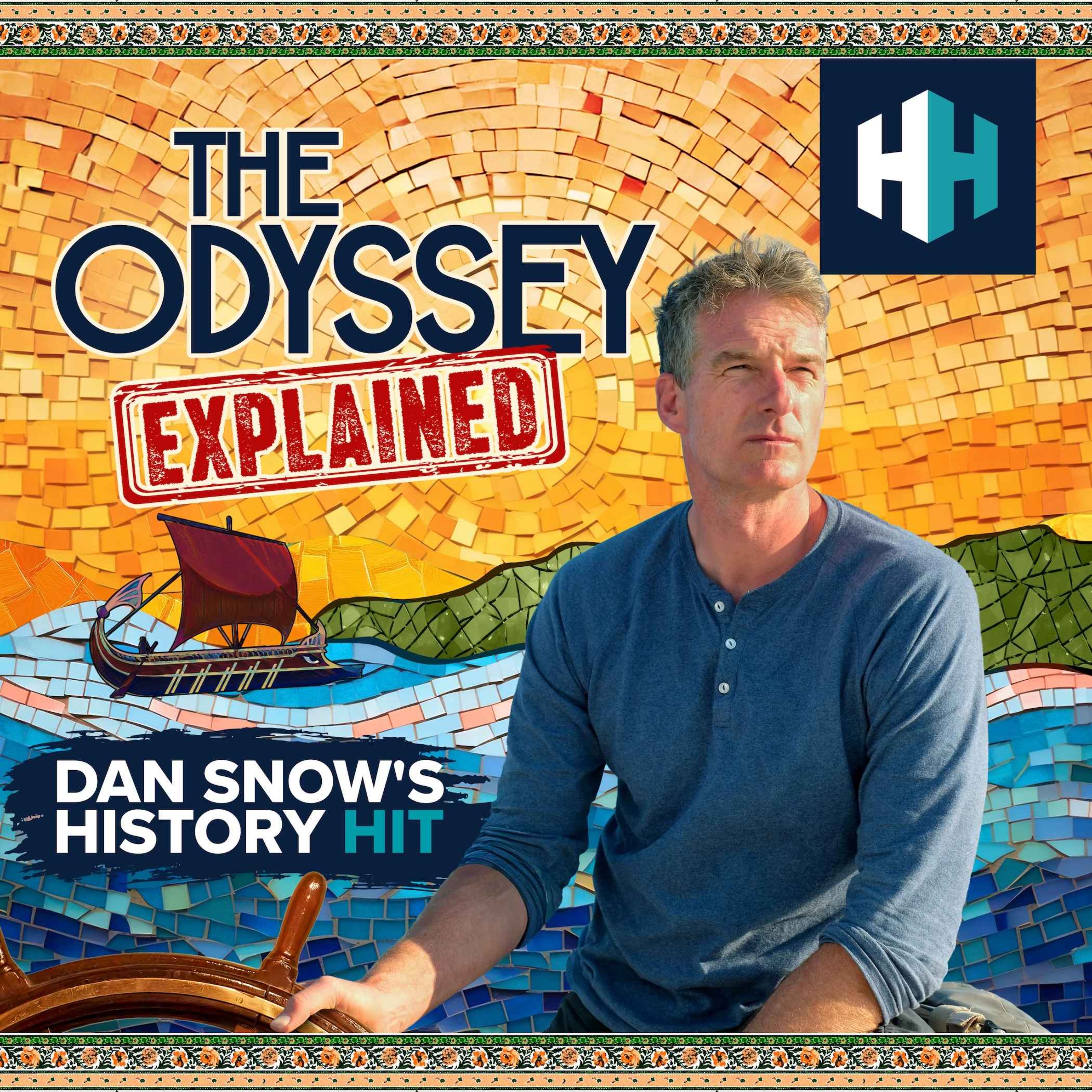
Before 1200 BC, the ancient world was more connected than you'd ever imagine. Egyptian pharaohs, Hittite emperors and Mycenaean warrior-kings trading gifts, forging alliances and going to war across the glittering Mediterranean. Then, in just a few decades, it all collapsed...
Professor Eric Cline joins us to unravel this lost Bronze Age world: the real diplomacy behind Homer's epics, the letters that rewrote history, and the catastrophes that erased Mycenaean civilisation.
Produced by Mariana Des Forges and edited by Dougal Patmore.
We need your help! Let us know what you want from Dan Snow's History Hit by filling in our anonymous survey here: https://forms.gle/PvgayWLkWGjYT4St6
Dan Snow's History Hit is now available on YouTube! Check it out at: https://www.youtube.com/@DSHHPodcast
Sign up to History Hit for hundreds of hours of original documentaries, with a new release every week and ad-free podcasts. Sign up at https://www.historyhit.com/subscribe.
You can also email the podcast directly at [email protected].
Hosted on Acast. See acast.com/privacy for more information.