 Ask ChatGPT


Life after leaving Big Tech, using backpacking lessons to rethink job security, financial planning, and adaptability amid AI-driven layoffs.
Kevin Martin (“Kevin 2.0”), Nashville-based. Former Apple employee for nearly 13 years; left around Christmas 2025. Financial independence/early retirement (FIRE) background; backpacking goal of 1,000 miles in 2026. Host: Dan Beach (Data Engineering Central).
Big Tech feels less safe due to COVID-era overhiring and AI as a layoff excuse (e.g., Square cutting ~25% of staff). Over-architecting creates burnout; flexibility beats rigid plans. Financial “kumbaya” doesn’t arrive after quitting—psychological risk persists. Index funds and foundational systems matter more than chasing hype (stocks/crypto).
Benson-Mackay Trail (300 miles/3 weeks) with extreme solitude; Great Smoky Mountains juvenile bear repeatedly sniffing his tent for ~6 hours; JMT (Yosemite to Mount Whitney) with hundreds/thousands of hikers, a rain-jacket “wetting out” gear failure, and a “surrender” mindset. Type-two fun: suffering in the moment becomes meaningful later.
Written by AI. May contain mistakes.
A dramatic opening with a bear encounter.
“I hear the bears enter my camp at that point and I knew what it was and I knew exactly what was going to happen.”
Kevin shares details about his life after leaving Apple and his backpacking goals.
“I think the last time we talked, you had not gone on even your first through hike yet.”
Discussion on the changing landscape of the tech industry and job security.
Exploring the perceived safety of tech jobs and the fear of layoffs.
“a chaotic time and i don't think anyone knows what actually is happening and what's going to happen next um it's been very interesting for me to be kind of like on the other side looking and observing people.”
Kevin and Dan discuss financial preparedness and advice for tech workers.
“And the craziest thing now, and I had the light bulb moment.”
Kevin shares insights on establishing strong financial foundations.
“If you were going to give them like five bullet points of like, if you wake up tomorrow, what you do just to be a little bit more prepared, you know, financially.”
A discussion on over-planning in both finance and hiking experiences.
“Did you have a plan of like, I want it to take X amount of weeks?”
Kevin recounts his experiences and lessons learned from his hiking adventures.
“I just, I'm thinking about like, we're the same generation, like Castaway Tom Hanks.”
Explore the challenges of shifting from a high-performance tech career to new personal goals.
“I struggle with it with money even to this day, but I do feel like you nailed it.”
Hear a thrilling story about encounters with bears while hiking in the Smokies.
“I had the Derson X-Mid, Gossamer Gear Mariposa Pack.”
Discuss the importance of flexibility and adaptability in outdoor adventures.
“And it taught me that you need to be flexible in the moment.”
Preparation strategies and mindset shifts for hiking the challenging John Muir Trail.
“I did not come back and try to do a bunch of training and all that.”
Experience the camaraderie and connections formed on the John Muir Trail.
“The Sierras, I've never been, but they look beautiful.”
Learn about 'type two fun' and how challenging outdoor experiences can transform your perspective on life.
“So I would say most people had never done more than a weekend of backpacking.”
Discover the personal growth and problem-solving skills gained from hiking challenges.
“I can deal with this car that broke down.”
Explore the relationship between life enjoyment and achieving financial stability.
“I feel like maybe our lives, the way we live it, especially in this country, we just get sort of soft in a sense.”
Understand the dangers of overspending and the importance of financial literacy.
“I had every spreadsheet known to man about my financials, projecting how much money I needed.”
Hear about upcoming hiking adventures and the challenges of nature exploration.
“the one thing, you know, all this college, high school, the one thing that could have taught me, all I had to say was like, live below your meat.”
Discuss the implications of AI technology on the future of work and everyday life.
“It borders Northwestern, North Carolina and South Carolina.”
Examine the environmental impact of tech companies and their expansion.
“So like whenever I see big company lays off 10 ,000 people because of AI is I'm like, is that real or is that a financial move?”
Discussing worries about environmental impacts and the need to adapt to changes.
“Like it does kind of worry me a little bit, that part of it.”
Sharing personal insights gained after leaving a job at Apple, focusing on flexibility and happiness.
“thinking about your life, like it's all changed so fast, your life, right?”
Exploring the realities of climbing Denali and personal hiking goals, revealing motivations behind them.
“like that's what I really need to be focused on, not the, you know, the stereotypical stuff that everyone says.”
Discussing future hiking plans and potential entrepreneurial ventures in the outdoor space.
“So I would do, um, most of basically Virginia.”

Get the gist, explore an idea or ask about something said.
 Claude
On Data Engineering Central Podcast, what are the key points of this episode?
Searching your listeningAutomatic transcript. May contain errors.
0:00Kevin Martin: I hear the bears enter my camp at that point and I knew what it was and I knew exactly what was going to happen. And I was like, I'm just not going to mess with these guys unless they get too close to my tent.
0:15Welcome to the Data Engineering Central podcast. I'm Dan Beach, your host. Today we have Kevin 2.0, round two, Kevin with us. How's it going? You survived so far anyways, huh?
0:24Kevin Martin: Yeah, it's going amazing. Glad to talk with you and I've got a bunch of stuff to catch you up on and happy to be here. That's awesome. Yeah, you were on before. If people don't know you, they can go check out on Mapped, right, on Substack. And we talked before. You can all leave links to that previous conversation. And that was, I'll let you give a little intro, but it's like you worked at Apple for a while. You decided to go live your life. Been backpacking since then. I think the last time we talked, you had not gone on even your first through hike yet. Is that correct? Exactly. Yeah. Yeah. So quick background.
0:56Kevin Martin: Kevin Martin. I live in Nashville, Tennessee. I left my job at Apple last year right around Christmas time. So I worked at Apple for almost 13 years and I went into 2026. Oh, just really kind of just trying to figure out what to do with the rest of my life. And my goal was to backpack a thousand miles. I had a couple what I would consider longer through hikes, depending on who you talk to, it could be shorter. But there were two, 300 mile through hikes, one in the southeast, one in California. when I was on last time, I had not done those yet. So I had a lot of learnings and a lot of good experiences with that.
1:26Kevin Martin: But yeah, I left my career kind of try to figure out what's next. I was fortunate financially, I was super into the financial independence, retire early movement for the past, let's just call it half decade, a little bit longer. And I was one of the lucky few that I was able to pull the ripcord. And now I'm on the other side. And I'm learning each day. You know, yeah it's not as easy as people make it sound and i'm sure we'll get into that but uh i've had a lot of learnings that's funny of like thinking you know i think you timed it pretty good yeah i was like i wonder if he came back from john muir and like got on his phone and was like what happened to the world you know like kind of every day so yeah yeah that's true um yeah i've been following you and it's just funny and i suppose it's even more apropos now and i can get into it but man the world is crazy like people working in tech you're working at apple it's just like i don't know who it was the other day who'd i see or is it microsoft offered a big buyout to like 60 000 people or something like that no one is safe no one's apparently not i'm gonna knock on wood because i've been safe so far yeah yeah yeah um is that like what you've gone through on the trail and just like just seeing the world change with ai and i'm sure you still know people at apple and all this stuff changing are you glad you've kind of missed the craziness i guess of wondering what's going to happen next oh i feel like i hit the window perfectly i feel like it's a chaotic time and i don't think anyone knows what actually is happening and what's going to happen next um it's been very interesting for me to be kind of like on the other side looking and observing people.
3:11Kevin Martin: I feel like we have all these scripts that we are in this programming that we run that's just kind of like default state that people do without even realizing. And it's just been super interesting for me to be on the outside and look in and kind of like I'm on the outside of a fish tank looking at what people are doing. And a lot of it's self-induced and then a lot of it is just the crazy world that we live in. It seems like you have a very apropos message for like this time because like if we've both worked at tech companies I still work at tech companies I mean it's been probably like the best if you think about it it's like anyone working in any sort of like tech company no matter what you're doing for the last probably like decade probably maybe even 15 years it's been like it's been good times right I feel like just like solid I really I mean you had the 2008 thing kind of I don't even you know whatever but like it's been good times and it feels like people are waking up a little bit and what I mean I don't mean that in a weird way but it's like you know our parents went and worked like my dad worked the same place for like 30 years and retired and like it's just I think we've all known that's been over but this seems really like forefront now that the financial expectations of you know maybe we should approach things a little bit differently.
4:32You know, people have never heard of emergency funds are probably like Googling it. It's probably like the number one Google thing, probably in the last, you know,
4:40Kevin Martin: I was actually thinking about this the other day. So like my dad's generation, same as yours, you know, he had the same company for 40 years and he gets a pension and a gold watch his way out. And then my generation, I feel like it was insane with you is like, I feel like it was more about finding the right company that you could get in. If you got the right company, like I got in with Apple, like you could make it still. And it feels like we're now in like version 3.0. You don't have that anymore. And even if you are at the Microsoft or Facebook or whatever, like it's not a safe job anymore. And it's kind of like we're seeing this movement to everyone as their own free agent.
5:18Kevin Martin: And at any time you might need to deploy that free agency, whether it's your choice or not. Yeah, it almost seems like some of those big tech companies now are almost more un, it almost feels like they're more unsafe than like the, maybe a little star. I don't know if that's true or not, but it almost seems like it flops so much that like, like I, I'd be surprised if someone like wanted to work at Meta or something, right? Just like reading the news or Amazon and be like, what if they hire me and fire me like in three weeks? Cause that could probably happen. And the craziest thing now, and I had the light bulb moment.
5:53Kevin Martin: I don't know if you remember this, but Square, Jack Dorsey's company, they laid off like 25 % of the F. He mentioned it was because of AI and all that, and the stock went up 25 % after hours. So I feel like what's actually happening is a lot of these big tech companies way over hired during COVID, the COVID time. They're super bloated. A lot of the people there aren't actually doing anything. And there's a free out now. Like you can get rid of fat and fire people. Basically. And say it's AI driven and the stock's going to go up. So to the actual employee, like no one is safe. Like nobody is safe.
6:29Sure. Yeah, I totally agree. It's a weird world and strange world. And yeah, it's definitely changed.
6:36Kevin Martin: I think it happened quick. Like talking about these big tech companies, like man, in 2022 and 2023, the big tech stocks were doubling and tripling. That was the place to be. And that was two years ago. So you got to adapt. That's crazy. Tell people, neither of us are financial advisors. And this is like skipping ahead a little bit. But what would you, somebody's like watching this, someone working in tech and they're sweating and going to bed every night. If you were going to give them like five bullet points of like, if you wake up tomorrow, what you do just to be a little bit more prepared, you know, financially.
7:16Kevin Martin: I think this depends a lot on where the person is in their financial path and like also their age. If you are a young person, I'm saying like you just graduated college, you're in your 20s. or if you're someone that has not taken the right steps financially, I always recommend the book, I Will Teach You To Be Rich by Rameen Stakey. I read that book when I was 23. I spent one weekend in Chicago at a coffee shop putting the systems in place that he has in that book. And I literally never touched it for 15 years. And that's the reason why I'm in the spot that I'm in now. So that book has tremendous ROI if you actually do it.
7:48Kevin Martin: He also has videos on YouTube where you can just watch and he'll tell you exactly how to do it. So I feel like that's the foundation. You need to have that foundation in place regardless of where you're at. And then once you are there, then you can start, like I then pivoted and went towards kind of like the FIRE community. And like that was, there's a lot of negative parts of that, which we talked about last time and we can talk about again, but it would just be trying to get to 25 times your annual expenses in invested assets. And when you get to that point, in theory, you don't have to work anymore.
8:23Kevin Martin: In theory, there's a lot of nuance there And there's a lot of debate on that, but I would start with the foundations, no matter who you are. And if you're beyond that, you can graduate up the rung of like getting more and more money invested. And I personally am a big believer in just index funds. Yeah. I don't. Not a crypto bro over here. Yeah. Yeah. Not quite. I mean, a lot of people have guessed and got lucky with a lot of this stuff over the last years. But I feel like at some point, indexes are the way to go. yeah i feel like it's a been hard as long as you've been in the market in like the last 10 years it's pretty it's like 20 you know you go back and sometimes i go back and look i'm like can't be that common to get like 23 returns like a year after year after year like i remember debating with a buddy that worked at amazon i was at apple he was at amazon and we were debating about who was going to be the first trillion dollar company and this was like in 2020 or 2021 and apple hit it and i was like there's no way that a company can ever get to 2 trillion and And then now they're at$5 trillion.
9:23Kevin Martin: So it's like, there's no limit. Switching to a little bit, let's talk about your first, like, so not the John Muir Trail, but the one before, right before you were, like, basically, I think you were just like weeks when we talked. I don't know. I could be wrong. But you're, like, pretty close to going. Yeah. Tell us about that trip. What was it like? Yeah. So for those that are kind of catching us. So I set a goal to backpack 1 ,000 miles in 2026. and I was going to do that starting with a through hike called the Benson Mackay Trail that runs, starts in Georgia, goes through North Carolina and ends in Tennessee.
9:59Kevin Martin: That was my first time ever doing beyond like a week. So it was, it took me three weeks to do is 300 miles. I was that your plan. Did you have a plan of like, I want it to take X amount of weeks? Did you plan it out or are you kind of like, I did. And I, that's what we can get into the mindset there. Cause it's a big negative and a big learning I had throughout the year, but I, significantly over-architected this thing um in every way possible i trained like crazy i ended up over training before i over trained before the hike like i my i got my blood panels done and my doctor's like dude like what the hell are you doing and he was like you gotta stop which i did and then i over-architected the actual like logistics of the trip the food the resupply all that um and it all worked like everything works my plan worked perfectly but i I like micromanaged it so much that it was, it took a lot of the enjoyment out of it.
10:54Yeah, it makes sense.
10:55Kevin Martin: But I had a great experience. I went out, I walked 300 miles. It took me three weeks. I had a lot of questions about my physical ability to do it. And then my mental ability to be alone on my own for that long. And like what I was going to do if things went wrong. There was a, on this trail, there's no one out there. So I would go like five days at a time without seeing another. Seriously? Yeah. Wow. So yeah, I'd go like five days at a time without seeing another human. Then I'd see like a person in the parking lot. We talked for 10 minutes and then it'd be like another five days. But I learned a lot about myself.
11:26Kevin Martin: I learned a lot about like what not to do in terms of micromanaging and over architecting things and all the stuff that I worried about didn't happen. And then the bad stuff that did happen, I didn't even consider. So I will get into the next hike I did, but I kind of took the inverse approach to that. And it's a lot better of a result for me. Were you like five days by yourself? I just, I'm thinking about like, we're the same generation, like Castaway Tom Hanks. Did you find like a stick that you talked to? You carry your stick with you? It's actually not like crazy as it sounds because, so there's not a lot of water on this trail.
12:02Kevin Martin: So like, I was always worried about finding water, finding a place to camp, finding a place to hang my food with the bear hang and all that. So like, I was always just like the next problem needed to be solved. I was thinking about tonight. Where am I going to sleep tonight? I was getting dark and then I would go to sleep. I'd wake up and I would just be walking all day. So there was never like the I never had Wilson as the volleyball or whatever. It was just more about like, hey, what's the next hurdle I have to get over? Were you expecting to go that long without? Do you think you're going to see more people or no?
12:35Were you kind of or you didn't hadn't really thought about that part? You didn't like whatever.
12:38Kevin Martin: I had thought about it. So this trail is like a sister trail, the Appalachian Trail. If anyone knows about that, there's thousands of people that do that. If you go hike the AT, there's people everywhere. This was known as like the solitude, more rugged version of that. So I knew it would be empty. However, I did think there would be more people than there were. I think in those three weeks, I saw eight through hikers. And then, you know, flash forwarding to when I did the John Muir Trail, I saw literally hundreds, maybe thousands. Sure. it's interesting parallels between like the finances we're just talking about in the world we live in and like over architecting and on the trail.
13:14So I feel like, I think maybe we're just trained to do that, but I feel like the simple approach to financial freedom or, you know, people that are worried about getting laid off and AI and all this stuff. And like, there's a lot of TikTok stuff, there's, you know, it's like, actually it's, you know, the boring stuff, right if you can if you can just tell yourself i'm gonna like i'm gonna put 500 bucks a month in a brokerage account and i'm just gonna forget about it it's gonna automate it i'm never gonna look at i'm not gonna think about it it's not sexy no one's gonna clap it'll probably work out better for you in the end if you're instead of like trying to pick the next tech stock like
13:54Kevin Martin: you talked about or crypto or i don't know yeah like if you have the foundation in place and then you have the mindset that you can be flexible when unexpected things happen and it's not the end of the world. I feel like that's the key. I struggle with it with money even to this day, but I do feel like you nailed it. There is a parallel. And what I think happened is I left Apple December 23rd was my last day. And I hiked this trail in April, 2026. I was training and getting ready for the first quarter of 2026 for this trail. I basically just replaced Apple with this new goal over micromanage and to be like a top performer at.
14:31Kevin Martin: And I didn't even realize I was it at the time. Like I knew that was a pitfall. I'd had some people tell me that had like left their careers that, Hey, you're going to try to start a new company and try to do this other thing really quick. And I was like, well, I'm not going to do that. And then in hindsight, I just took the top performer mindset from Apple applied it to this trail and then continue to burn myself out like more. That's super funny. Did you have any, I'm a big gear guy. Cause I do a lot of backpacking. And did you have any gear? Did you have i just find it interesting did you like tent leak did you did you have any gear failures like when you're out there that far that long did anything or not really i never had any gear failures i came back really wanting lighter lighter gear for sure and i had invested so i started backpacking pretty seriously in 2023 so i've got four years of investing in gear and stuff so i had my my stuff pretty dialed in but i still had too much food way too much food um I trimmed a bunch of things for my next hike, but I didn't have any major gear failures.
15:31Kevin Martin: I had the Derson X-Mid, Gossamer Gear Mariposa Pack. All my gear was great. I just continually evolved into be more light. Yeah, totally. Does that food have something you got to tell people the bear story? Does that food have anything to do with those bears wanting a little piece of your leg or something in the Smoky Mountains? It didn't. So just a quick run through. So Great Smoky Mountain National Park has like the highest bear population for capita in the country. They're all black bears in the narrative in the backpacking world is that black bears are large humans. Like pets, basically, right?
16:06Kevin Martin: You just yell at them, they run off. And that's what I've done my whole backpacking career. And even on this trail, we were talking beforehand, I saw 15 to 20 bear before I got into Smoky Mountain National Park. And they all sprinted off and freaked out. It was a big, huge commotion, but they got out of the way. However, I met a guy that was a through hiker right before the park and he was complaining about the bears. And he was like, they are super aggressive. The campsites are all bear magnets. You had a bunch of problems. And I was like, it's not that big of a deal. This guy doesn't know what he's talking about.
16:38Kevin Martin: So anyways, flash forward to like my third or fourth night in the Smokies. I saw comments in the ThruHiker app that there was a bear problem at the site I was going to be sleeping at. And not a big deal. The lady had posted, hey, a juvenile bear came through camp and we couldn't get it to leave for like half an hour. And I was like, okay, I can deal with this. So I got to the campsite. Of course, I'm the only person there. There's not another campsite. The closest campsite in either direction is seven miles. So I'm literally by myself. eating dinner. Everything's fine. The sun's going down. I'm kind of tired.
17:09Kevin Martin: So I jump in my tent, read my Kindle and I hear the bears enter my camp at that point. And I knew what it was and I knew exactly what was going to happen. And I was like, I'm just not going to mess with these guys unless they get too close to my tent. And then immediately a juvenile bear comes right up to my tent. He's like sniffing the door of my tent, like a dog would. And I do everything you're supposed to do. I yelled, I screamed, I shook my tent on the trekking pole. I did everything you're supposed to do. And it just got more aggressive. And it got to the point where I was yelling and screaming for about 30 minutes and it wouldn't go away.
17:46Kevin Martin: And I was like, I don't know. I don't know what to do. I didn't really want to get out of my tent at this point because I knew there were multiple bears and I didn't know where the other ones were. And then just as quickly as they came, they went away. And I was like, wow, what, what happened? And then they came back every 30 minutes, same exact drill, every 30 minutes until two in the morning. So it was like six hours of the same process. They would come up, the one would circle my tent, the other ones wouldn't, they were just on the external. I never even really got close to them. And I fell asleep, I guess, at about two in the morning.
18:18Kevin Martin: And I woke up the next day when the sun came up and I was like, I'm getting out of here. And I - You're packed up so fast in your life, probably. Yeah, I packed up so fast. And I even like jokingly yelled into the woods. I was like, Hey, where are you guys at now? Like as a joke, just by myself, like whatever. I packed up my stuff. I walk out and then I put my pack down to make sure I have everything. And I look up and the one is getting out of the woods, super low to the ground. Like my dog is before she chases a squirrel, like stalking, going to where I was sleeping. And at that point I realized that they had stayed there all night.
18:54Kevin Martin: And I just booked it and got out of there. and I reported it the next day. The rangers were not surprised at all. These kind of issues were happening all spring. And ultimately, they ended up shutting that site down and it was shut down for a couple months. But it was not an enjoyable experience. But again, like I over-prepared and over-architected this hike to think of everything that could go wrong and what I was going to do. And I never thought I was going to have multiple bears for six hours. So I could have never projected that. And it taught me that you need to be flexible in the moment.
19:26Kevin Martin: be able to handle the problem as it arises and you can't over architect and think about everything that could possibly happen it's the same with money yeah were you close to the end how close were you to the end of the that trip when that happened did you have to stay another week out i think i had either three or four nights after that so yeah i actually wrote this unmapped post and my sub stack post um i was good the next day i was like i'm not gonna let this define my trip everything's good and then the next day i went to a shelter and i was by myself and i went to a shelter in the park and it had a piece of paper that was laminated that on the one side had every black bear fatality in american history on one side and on the other side it had every black bear incident in in the national park since 1900 or whatever and i was like why the hell is someone leaving this here like so that like gave me worried for the rest of the trip and by the end I'm just ready to get this thing done.
20:22Like your nerves are shy.
20:23Kevin Martin: You're like, I came out here to relax. What's happening to me? Yeah, exactly. How long was it between the two trips and how long did you take off? Did you go back home after you got done? Yeah, so I finished mid or late May. And I did the next trip. I started that August 18th. So I had about three months in between. I did not come back and try to do a bunch of training and all that. Like I tried to maintain my physical condition. I did upgrade a lot of my gear to try to get lighter. And then this is actually a good segue. Do you want me to just talk about the James? Sure. Yeah. Yeah. Yeah. So the John Muir trails in California, it runs from Yosemite national park to Mount Whitney.
21:04Kevin Martin: Mount Whitney is the tallest mountain in the lower 48. So I started on the summit about Whitney and then went, it's about, it was like two, it ended up being about 250 miles total when you count everything, but North to Yosemite. it's one of the most sought after trails in the world it's extremely hard to get a permit for it's a bucket list item for any backpacker and I after the first experience like the first trip was a grind like I got worked it was hot there was no water I had this bear thing there was no one out there and I even thought to myself like man I don't know if I have the grit to want to do this again but I had already got the permit got the gear got the travel people knew I was going.
21:46Kevin Martin: So like, I couldn't back out. And I felt, I felt a lot of guilt, like, Hey, this is a dream of so many people. And I'm in a position of actually being able to do it. And I am not super jacked up about it. So I went out there, the opposite approach. I didn't over architect anything. I, I only planned my food resupplies. So I had three, three, just two resupplies. And that was it. And I was like, I'm going to let the dots in between fill in as they go. And it ended up being like the most epic, incredible, amazing experience of my life. I've been all over the United States doing outdoor stuff for 15 years.
22:22And I did not know, I'd never seen anything like the Sierra
22:26Kevin Martin: Nevada. Um, just so many cool people out there, just random people that you would meet, spend the whole day hiking with and just hear their story. And it was like, no doubt the best experience of my life. And it was the complete opposite of the first one. And it was more of just kind of surrendering and like, Hey, I'm just, I'm along for the ride on this. I can deal with it. And all of my anxiety was gone. I didn't worry. I didn't over-architect. And I've since been trying to apply that to my personal and financial life as well. Yeah. The Sierras, I've never been, but they look beautiful. I've read John Muir's book and it's a special part of the country, apparently.
23:02Kevin Martin: It's incredible. You got to get out there. The only hard part for me is if you're not from there, the altitude. So over half the trail was at over 10 ,000 feet. That's crazy. So it was a hike to get out there. Like it took multiple days to get there and then multiple days of altitude problems. So like, unless you're going for like multiple weeks, it's hard to get out there. Yeah. And I suppose the weather at that sort of the cold, hot weather, crazy weather above it must be kind of crazy at that sort of altitude. I remember reading the, was it your rain jacket that failed? Oh yeah. Yeah. I did have a gear failure on that.
23:36Kevin Martin: So I actually hit the window perfectly in terms of weather. So like late August there, there's, there was no bugs. It was hot during the day, but hot is like 70. So like you just, there's a lot of sun exposure, but it was not terrible. There's water everywhere and it got chilly at night, but nothing crazy. We had one rainstorm and I did have a gear failure where my, my gear, my rain jacket wetted out and I was super mad about it. But it turns out everyone on the trail had the same problem. It was a, it was a bunch of rain and everyone had gear failures. but I was frustrated with myself for, for, for putting myself in that position.
24:15Kevin Martin: But yeah, late August on the JMT is incredible. And the people I've heard, that's one of the like best parts is meeting people from different walks of life and backgrounds and all ages and where they come from. Did you meet some pretty cool people? Yeah, it was super interesting. It was not what I expected. It was definitely an older crowd. Okay. I would say the average person was like 55 to 65, a lot of couples, a lot of people doing it for the second or third or fourth or fifth time. Most people out there were beginners. So I would say most people had never done more than a weekend of backpacking.
24:49So it's like a pretty big to go from a three day trip to a three week trip,
24:53Kevin Martin: but they were enjoying it. But yeah, I met so many cool people from all over the world, all sorts of ages. Yeah. It was just super enjoyable. Talk about that type two fun that you talked about, because I feel like, especially even now in the workplace with AI, everything that's going on, it's very applicable to probably the life stage of a lot of tech people. Yeah. And I think this is one of the good things about getting outdoors and having uncomfortable experiences is it makes your normal life a lot easier when you realize, hey, this isn't a real problem. This email is not a crisis. This is a work email that I'm going to forget about in two weeks.
25:32Kevin Martin: So type two fun. I learned about this in 2016, I climbed Mount Rainier and my guides on Rainier told us about type two fun. And the way they described it was that type one fun is like going to the ice cream shop. You just love it. It's, it's enjoyable the entire time, but you forget about it. And there's no lasting memory of it until you go to the next ice cream shop. Type two fun is something where it sucks in the moments. You're out there, you're soaking wet, your rain jacket wets out. and you're like, this is terrible. I'm never doing this ever again. And then you think back on it, but when you think back on it, you had this positive life-changing experience where you remember, Hey, we were huddling in the tent with the two other guys and we're all soaked.
26:13Kevin Martin: And it was like, you remember it, uh, like the silver lining of it. And then you do it again. Um, I've had that happen with every outdoor experience. The truth is like people see these images on Instagram of like outdoor stuff. They don't see it sucks to get there. Most of the time there's bugs around you're there's no you're hungry you're hungry you're tired so a lot of this is is a little bit of suffering in the moment um so i think it's good to go through that it's good to have these like micro doses of suffering and then when you get back to the real world and your boss makes a comment that you don't like or whatever it's like it's not that big of a deal it's like this is a made-up manufactured problem this is not real i know what real problems could look like and And I would say anyone can do that.
26:56Kevin Martin: And by the way, it doesn't have to be going climbing Mount Rainier. You can just go for some people. You can just go on a hike for two hours on Saturday and get some. Go for a run, whatever. Yeah. I don't know how many times in my life I've been like, you know, 300 feet from the top of the pass. And you're just like, you're packed. You just want to lay down. You're packed heavy. You're just like, why did I ever say I'd come out here to this people and climb this? And I, you know, you just want to curl up in a ball, but yeah, you're right. Later you look back on it and what I say to myself is like, man, why didn't I just take up golf?
27:35Kevin Martin: Like of all the hobbies in the world, I could have gotten to Mexico and sat on the beach. I could have taken up golf and I chose this. I chose to sit in my tent and get slammed with wind all night or whatever. But, um, yeah, it makes your life different. Like it does when you come back and like, if you're in tech and you're stressed, right. and you're late on a problem, who knows? It's just like life problems that come up and you just, being able to deal with adversity and know that like, hey, I did this thing. I can deal with this car that broke down. I can, whatever it is, right? It's just like, whether it's in work or just in your life in general, you just realize that we live good lives in America and you've got a warm place to sleep in your house and you've got food and like, yeah.
28:20So type two fun definitely teaches you.
28:22Kevin Martin: I'll tell a quick story on that. So I did the Georgia section of the Appalachian Trail in 2023. Like 70 miles, right? Or something. Yeah. It was like, I think it's like 76, 70 to 80, but I did the Georgia section. And before that I had done a bunch of mountaineering and like weekend kind of trips. And I was overconfident. I was like, Oh, I can go walk. I can go walk for five days. And I got freaking worked. Like it kicked my butt, like really, really badly. I really had type two fun, like really struggled. And I remember I, like I had a bunch of things pop up that I didn't know what to do. And I figured it all out.
28:58Kevin Martin: Like all of the problems I was competent enough to figure out. And I got back to my car when I was leaving. And I looked up at the Appalachian mountains and I like where I just came from. And I was like, I can figure any of these problems out. Like if there's a problem at work or something happens, like I can figure it out. Like it may not be a solution that I want. Maybe that the best solution, but like any problem that comes up, I can find a way to solve. Yeah, for sure. It's a human. I feel like maybe our lives, the way we live it, especially in this country, we just get sort of soft in a sense.
29:30Like if you're spending your weekends on your couch and I don't know, right. You never get rained on or like, it's the human spirit's amazing though. What we can deal with, what we can go through. People probably have no idea what they're even capable of because they've not tested themselves or been tested.
29:46Kevin Martin: And even on the flip side of it, just being outdoors in nature, like has some sort of effect. I don't know what it is. Like, I don't know what the science is behind it, but it just has like a natural calming effect. And like, it reminds you of how small you are in the universe and how, how much beauty is out there. And you see the deer and the bears, whatever it is like, and it kind of, it has a grounding effect for sure. At least for me. Sure. Switching back to like the financial side of things. How do you, have you found yourself able to enjoy like balancing life, like enjoying life as well as like balancing financial security?
30:21How do you, how do you see that? And as well as talking about like this type two fund, everything you've been through, like those are sort of like sacrifices in their own way. because you don't have to put yourself through that and how that relates back to financial sacrifices that people will again to like be financially fit they're probably going to have to make some financial sacrifices of some sort that may not be fun in the moment you know what i mean yeah i think for me i the first part i'll go after is kind of just like the mental side of
30:55Kevin Martin: at how I would tie the two together. So I think by nature, I over architect things. I had every spreadsheet known to man about my financials, projecting how much money I needed. And I just way over planned for it. And I thought once I got to the end of the line and quit my job and no longer needed to work, I thought that was the finish line and it was all gonna be kumbaya from there. The reality is whatever your psychological flaws are, the problems you have in your brain or just the way you view the world, that's going to exist and just last something else. It keeps following you. It's out the door as you left Apple.
31:32You went with you.
31:33Kevin Martin: Yeah. So like you said earlier, I kind of jumped from the top performer at Apple to the top performer of preparing for this trail. I've had to learn that about myself kind of the hard way. And what I've learned is also like with the financial side, there's never the kumbaya moments. Like you always are going, at least me, I'm always going to think I need more money. I'm always going to think I'm at risk and going to lose it. And I'm trying to apply what I've learned on the trail, specifically the JMT to that of like, I can be flexible if I need to go. If the world comes to an end and I can go get a job at Lowe's and make something like I'm not better than that.
32:09Kevin Martin: um so like it's instead of having this like all or nothing approach of like i'm either set for life or i'm screwed like i'm just trying to find like a middle ground of like i can be flexible i can adapt to it um and then in terms of the second part like the type two fun i think like the overspending of the average american and like what people do and like i mentioned earlier it's like the the fish tank i'm on the outside looking in and i see that everywhere around me. I notice it everywhere. People are working jobs they hate. They're stressed out. They have a family at home and they don't have any free time.
32:46Kevin Martin: They don't have any time to pursue whatever they want to be doing. So they replace that by buying the fancy new car or getting the kitchen done, putting them in more of a financial harm. And they're just trading that short-term happiness or being indebted and having to work the rest of their lives. and granted like some people not everyone has a high paying job that gives them flexibility but what i'm specifically talking about are people that make a lot of money that are spending it all um i think the focus needs to be on setting yourself up for the future not hey i want to rivian because it looks cool i'm gonna go into debt for the next seven years on it yeah it's a drive through any suburb of any city in america in the midwest where i'm at or tennessee where you're at and it's like man you drive around town and it's like tahoe's cadillacs big trucks in town big house you know big houses and that was the weird thing about apple is like you know i had some people that i was open with about money but like you don't really talk about that with everyone but the the underlying thought is like hey if you've been here for a long for 10 years you should have a lot of money um and the truth is most of them don't most of them had spent it all and like granted each each person has different life experiences and all that but like there's also a ton of rivians and porsches driving around that parking garage and then you're stuck yeah it's just uh i don't think it's i mean i think back to like my pre like once me and my wife got married we kind of i think we'd found like dave ramsey and like get rich slowly i'd find all that kind of stuff for me and it's just like why didn't anyone told me.
34:31I didn't know any better. You just get your paychecks. You just live your life. You're just living with your family and friends. You pretty much spend everybody. Most people, right, before they know any better, you spend what you earn and go on trips and go to the movies, go out to eat. You just go to work five days a week, come home, spend your money. It's like the one thing, you know, all this college, high school, the one thing that could have taught me, all I had to say was like, live below your meat. Some, no one even, not even that one sentence. It's never, no one tells that to you, you know?
35:09And I think, you know, I can't remember if we talked about this last time or not, but I, uh, you saw, you see someone driving a fancy car and
35:17Kevin Martin: you're assuming, wow, that guy's rich. It doesn't mean he's rich. If he has a, if he has a fancy car just means he has a fancy car so it's like i don't care what people what kind of car i drive i don't care if people think i have money or not i think removing that like identity where you have to prove externally that i'm rich and have all this money like if you can get rid of that psychological barrier i think that's a big help because at the end of the day no one cares what kind of car you drive like right no one cares right and yeah it's a nice car but it also probably has a$1 ,500 car payment or something that you don't want.
35:51Kevin Martin: Exactly. Yeah. Are you, so what is, are you going to take the rest of the year off? Are you going to? I have one more trail I'm doing. It's called the Foothills Trail. So it's a 76 mile trail. It borders Northwestern, North Carolina and South Carolina. Okay. That's fun. That's a beautiful area. It's supposed to be amazing. So I'm going to do that next month. I actually was on another trail last month called the Bartram trail. And I stupidly did not know this hurricane was coming. And I got out there. I met this other dude on the trail and he was like, Hey, did you hear about this hurricane hitting the day after tomorrow?
36:28Kevin Martin: And I was like, what? And he's like, yeah, we're going to get six inches of rain. So me and that dude hiked for a day. And then we were like, we got to get out of here because they got like 60 mile an hour winds. And, um, but yeah, I, uh, I mostly completed what I want to complete for the year, but I have one more that I want to take advantage of, like during peak fall foliage season. Yeah, for sure. How of, um, just switching a little bit to like AI technology, the future of work. Do you have any predictions? Do you feel like it's made you, I feel like as a creator myself, it's, I'm like torn about it.
37:05I'm just curious. I always try to get people's thoughts on AI. Are you like, just generally bullish on it? Are you kind of like mad? Do you not like it? You're like, that's okay. I'm going to use it. How it helps me. Does it bother you? I'm just curious where you sit about it. Just generally.
37:21Kevin Martin: So I use AI in my personal life, like all day, every day. So I'm like, I'm in the rabbit hole for sure. However, I'm not technical. So like you would know way more. I'm not an expert on this stuff. Like I just, I have, you know, Gemini and Cloud. I use that kind of all day. in terms of my view on AI, like when it first, like in the 2023 timeframe, I wanted to become like the expert on it. And then I realized that's just a losing battle. No, like it's just changing too fast. And like, I kind of just get sick of hearing about it. I view it as the way that it's like amazing in some sense of the word that it's like, you can do some incredible things immediately.
38:00Kevin Martin: Like I have a certain kind of way of eating and I'm tracking like certain kinds of foods. And I had Claude build me an app that I could just track. And immediately, like in five minutes, I was able to put this thing together and I've used it for multiple weeks now. Like, that's incredible. In the past, I would have been paying like, you know, eight bucks a month in the app store. So on the one hand, it's amazing. On the other hand, it's just like, I do think it's just resulting in mass quantities of just garbage everywhere. It's like we have, we went from unlimited information to like five times the information and the quality is just going down like crazy.
38:36Kevin Martin: so that's the general feel on it and I feel even more so that's probably the case in the work world yeah for sure I mean it's nice to have I use it every day too and it's like even in the woods like what is this tree what is this tree again or like can I eat that mushroom I probably shouldn't ask you that but it's like helpful but it is I don't know I just finished a book recently about kind of like the 1870s like the rise of like the railroads and that kind of like changed the world you know it like upsets everything and part of me kind of views it like that it's like it's here you know i'm sure there's a bunch of pissed off cowboys when the railroad came through too you know like what's going on and so i feel i don't know if i can that's just how i like mentally think about it i'm like it's just another industrial it's a digital revolution instead of an industrial revolution and i feel like the cat's out of the box and it's going to be what it is right these companies like we talked about they're gonna use it for whatever they want they're gonna blame it on things or fire people and because they're actually using ai now or i don't know it's but it's here i feel like it's as individuals what are we going to do about it right it's just taking over everything so we use it and i think my hot take on it just from like a layman's perspective is i think most of what's most of what we hear right now is just hype yeah for sure like you hear that all white collar jobs are gonna be gone in six months whatever whatever um i feel like if there are a small percentage of like entrepreneurs and maybe small small startup kind of companies that are like actually using ai and like replacing people and like crushing it but i feel like in the big fortune 500 world it's just slop that people are just creating more and more garbage and creating more and more busy work that nothing is actually getting done.
40:27Kevin Martin: So like whenever I see big company lays off 10 ,000 people because of AI is I'm like, is that real or is that a financial move? And it's correct. I believe it's a financial move. Yeah, for sure. It seems to be most of the people I've talked to in the interview. It's kind of like, yeah, it seems like most people understand that it's like, it's just a, was the perfect storm. And they, they use that as an excuse probably to now the challenge is though like that's me saying that in 2026 like in three years it could be completely taken over the world i would not be shocked by that yeah it's interesting here not that far from me to the south we've got a bunch of data centers here in the midwest and cert you know for obvious reasons because we have a lot of windmills like we got wind power and if the land is compared to the east or west coast our land is cheaper right um there's more of it and like Microsoft just bought, like it's been this huge deal because Microsoft came in and bought like 600 acres of woods and they're going to put a data center in there.
41:24And like people are mad about the water and taking their 600 acres of woods away. So yeah, it's been kind of interesting to see that part of it too, right? The, how it affects the nature around us. You know, you hear a lot of people around here anyways, they're putting a lot of them in and they use a lot of water, which is obviously a precious resource for us. And there's that part of it too, that, you know, it's like, man, they're building, they're putting how much money in, right? I've seen some of the numbers about Google going negative cash flow because they're spending so much and where are they putting this stuff?
41:55And they're big companies. They can put it wherever they want. They got the money. And I hope they, I hope we can keep our national parks clean and these hiking trails, right? Like it does kind of worry me a little bit, that part of it. I'm like, man i hope they don't come after our precious nature yeah yeah it's um i guess my view is it's
42:17Kevin Martin: coming one way or the other we gotta kind of have to adapt however yeah i agree 100 on the on the nature side of it like i don't i 100 agree with you on that yeah for sure um can you tell us a little bit like so can you give me like just top three like after this i don't know i'm just thinking about your life, like it's all changed so fast, your life, right? You know, you, this quit an apple, you've done this this year. Do you say you came out of there with like, like I've come out of this with like, I don't know, a couple of lessons for people, like maybe one or two lessons about life. If you like boil everything down to what you've been through.
42:54Yeah.
42:55Kevin Martin: I think a couple of things. One, if you have a huge goal, a financial goal in the future, then you think once you get there and leave the job, everything's perfect. It's not true. life continues to adapt and cause its problems and challenges. And yeah, I view it as my job to try to be more flexible. And I've also learned not to put the happiness five years in the future when I get, when I leave the job and I'm trying really hard to focus on just making today a great day and doing everything I can to make like today. Awesome. Cause I I'm the kind of person that's like I put a hike on the calendar in November and all I think about is it in November.
43:33Kevin Martin: And then before you know it, it happens. And then I have another one on the calendar and I'm always living in the future of the anticipation of the future. And like my focus is like, what can I do to be happy today? Um, so really those are the two things that I've learned so far. And I think like financial scarcity, like if that's, if you're a person that has that, like it's going to only amplify, uh, if you do leave your job, like I was warned of a couple of different things that would happen if you leave your career at a young age. And none of those happened to me. People always say, hey, your identity is wrapped up in working at Apple.
44:09Kevin Martin: What are you going to do when you introduce yourself and you can't say it? I'm Kevin. I work at Apple or whatever. Like, I don't care about that. I was told, hey, there's no one your age is going to be available during the day that you're just going to be bored out of your mind all day. And in fact, it's been like incredible. Like my days are actually great. But the big psychological things that I have like unmasked over the year, like that's what I really need to be focused on, not the, you know, the stereotypical stuff that everyone says. Can you give us, you know, I can say no. Do you have any like, can you drop us any hints about what's, have you thought about next year?
44:48Kevin Martin: Oh, for sure. Any hints about what's coming? I'll walk you through my entire, I'll walk you through the entire thing. So my typical high performer self, I wanted to climb Denali since I was three. Sure. And I told myself by the time I'm 40, I'm going to climb Denali. And I decided like, hey, this is the year I'm going to do it. I have the time. I have a deal. It is a big deal. But I actually looked into like, what is the actual day to day life of a person that's climbing Denali? Like, what does this look like? And the reality is you're carrying 150 pounds on your back, including a sled. you're hiking 10 hours a day you get to your tent it's gonna be sub-zero the entire time you're gonna get to your tent you're gonna spend an hour and a half digging a place to put your tent and they're gonna melt water for two hours and you're gonna go to bed you're gonna likely get stuck in your tent for a week at a time with blizzards there's a 50 success rate it costs it's gonna cost me about 20 or 25 000 and it's the deadliest year this year in the past and i would ask myself Like, do I actually want to climb Denali or do I just want to be the person to be able to like tell the world I'm the guy that climbed Denali?
45:58Kevin Martin: And I realized I don't actually want to do that. So it took me a long time to wrestle with that because it's like. Whatever, like the ego thing is like, that's that was that was an ego decision, not like something I actually wanted to do. So in terms of like, what do I actually want to do? There's a couple of things that are like kind of life arcs for me. So I want to hike the entire Appalachian trail. I'm at mile 433 right now. So next spring, I'm going to go out and try to do a 300-mile section. I also want to climb all the 14ers in Colorado. Oh, that's a good one. Yeah, I've climbed zero. So next year, I'm going to go out and go on a couple trips to Colorado and knock out a handful of those.
46:39Kevin Martin: I'm really trying to get away from specific metrics. Like I'm going to climb 25, 14 years next year. Cause then if I climb 23 out, I'm like, I fail. Um, so I want to focus next year on the 14 years and the, the AT. That's awesome. Which section of the AT would that be? Like which state? Right now I'm about 30 miles South of Damascus, Virginia. So I would do, um, most of basically Virginia. Okay. Yeah. If you do the 14 years, um, I went through a kick of 14 years too when I was in college, but if you go get capital peak for me i failed that one you failed okay if you could give a little kick for me that would be nice pick your brain on that because i i've climbed mount rainier and i've climbed mount whitney those are my only two 14ers in the grand teton which is a just below 14 but i'm going to start with the easier ones of course and then work my way up but i'd like to take a big chunk out next year that'd be fun maybe i could meet well i could follow you up one maybe next year for you know if in your front range somewhere i'll like you know i'll carry your backpack for you i'll be a little shirt by band i'm looking at getting an airbnb and like the oh like the what's it called not breckenridge it's not silver thorn maybe hold on a second there's silver tin and silver thorn i get confused anyways i'm gonna get airbnb like near the breckenridge area and like try to knock out like i don't know maybe 10 of next year sure that's that's super fun and um i'll leave notes so everybody can follow your sub stack are you still sticking to kind of sub stack that's where your life is happening for the most part yeah i don't post anywhere else i actually haven't posted on sub stack in like two months i gotta get back to back on the kick of that but uh i haven't had anything major to update so i haven't done anything there yet sure are you gonna um now my last question i promise Um, are you, have you, are you going to be doing anything entrepreneurial, entrepreneurial around like the outdoors finances of you?
48:42Are you still going to like, just say, I'm not going to work for a while. Have you kind of thought you can do something?
48:50Kevin Martin: So the answer is, I don't know. And like, I want to do that. however i just realized this whole thing that i just kind of replaced my apple top performer thing and all this hiking stuff i just had that like epiphany in the past couple weeks so if i tried to pivot and create like another company it would literally just be replacing that so like my goal for the rest of this year is to to not do that specifically not do that specifically not do that and like see what materializes over the next couple months however i would love to do that i I would love to have some sort of business in the outdoor space.
49:22I just don't want to like, you know,
49:27Kevin Martin: fill the, fill the flaws in my soul by just starting a company and having all the focus on that immediately. If that makes sense. Yeah, it totally does. You're just going to be chilling down in Tennessee, you know, down South. Yeah. It's a, it's a fun place. It's cool. Well, I'll leave links to all, I'll leave links to all your stuff in the notes. If anyone watching this, they want to check it out. and then your sub stack i definitely go read it it's some of the best writing and stuff to follow it's awesome my thanks for coming back and catching up it's yeah i look forward to uh next year and some 14ers and whatnot that's it sounds fun thank you yeah
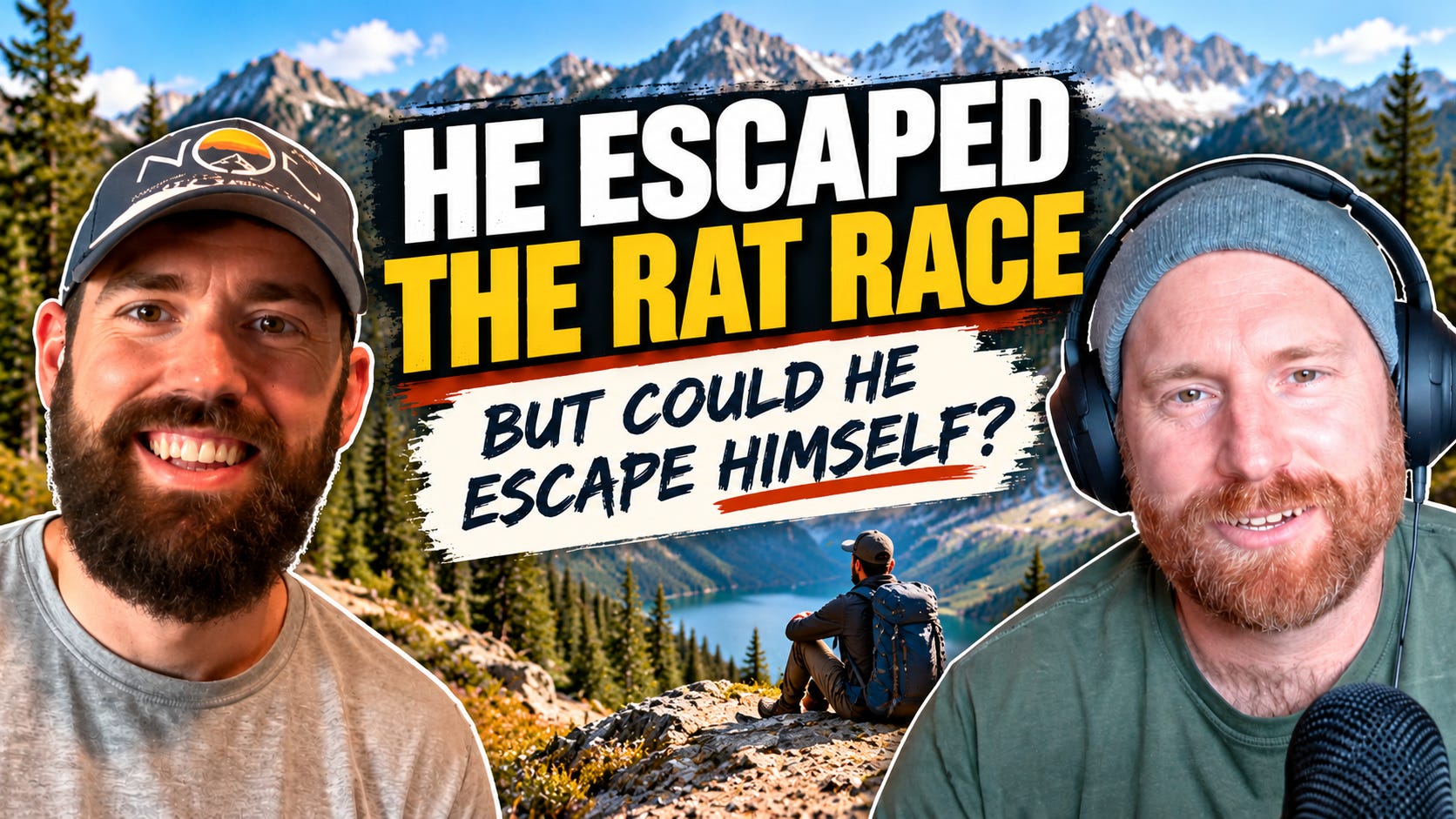
What happens when you finally achieve financial independence, walk away from a successful career in Big Tech, and have the freedom to do whatever you want? Is it everything you imagined it would be?
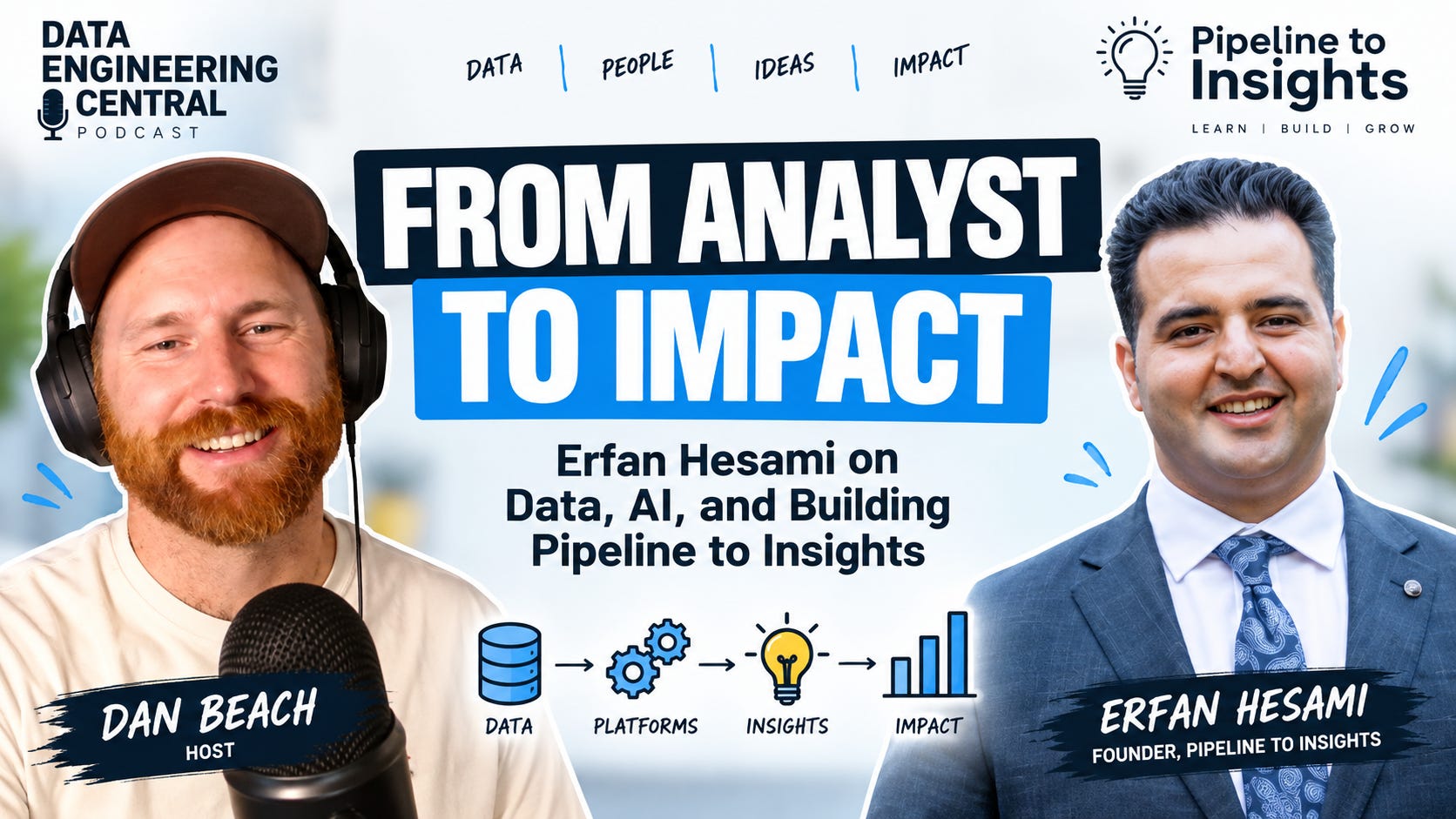
In this episode of the Data Engineering Central Podcast, I’m joined once again by Kevin Martin, who spent nearly 13 years working at Apple before deciding he’d had enough of the corporate grind. When we last spoke, Kevin had just left Apple and was preparing to spend much of 2026 backpacking some of America’s most beautiful wilderness.
Thanks for reading Data Engineering Central! This post is public so feel free to share it.
Well, Kevin is back, and he’s got some stories to tell.
Since our last conversation, Kevin has completed hundreds of miles of backpacking, including the Benton MacKaye Trail and the legendary John Muir Trail. Along the way, he spent a terrifying night with multiple black bears circling his tent in the Smoky Mountains, experienced the incredible beauty of the Sierra Nevada, and learned some unexpected lessons about himself.
One of the most interesting things Kevin discovered was that leaving the corporate world doesn’t necessarily mean leaving behind the mindset that made you successful there. After years of working in a high-performance environment at Apple, he found himself approaching retirement and backpacking with the same intensity, planning, and expectations that he’d brought to his career.
* We dig into that realization and what it means to actually enjoy the financial freedom you’ve worked so hard to achieve.
Of course, we also wander into plenty of other topics, including the changing landscape of Big Tech, AI-driven layoffs, whether anyone’s job is really safe anymore, and the importance of building financial independence in an increasingly uncertain world.
* We talk about lifestyle inflation, the FIRE movement, the psychology of money, and why doing difficult things in the outdoors can completely change your perspective on everyday problems.
Perhaps my favorite part of the conversation is our discussion about happiness and the tendency to constantly chase the next big milestone. Whether it’s a promotion, a financial goal, retirement, or climbing a mountain, there’s always something else waiting on the horizon.
At what point do we stop chasing the next thing and actually enjoy the life we’ve built?
It’s a fun, thoughtful conversation that goes well beyond technology and money. If you work in tech, dream about financial independence, love the outdoors, or simply find yourself wondering what life might look like outside the traditional career path, I think you’ll enjoy this one.
Grab a cup of coffee and join us!
Thanks for reading Data Engineering Central! This post is public so feel free to share it.