
 Ask ChatGPT

- Podcasts
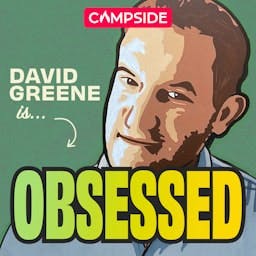
- David Greene is Obsessed
- David Greene is obsessed with obsessions
In short
Origin Stories behind the scenes on David Green’s new podcast, David Green is Obsessed—why he’s “obsessed with obsession,” how he left NPR, and how the show works (planned spontaneity, asking about the origin and meaning of fixations).
Guest backgrounds
David Green is an award-winning American journalist and former co-host of NPR’s Morning Edition; his Russia reporting became the basis for Midnight in Siberia. Matt Scherr hosts Origin Stories (Campsite Media) and interviews Green about the podcast’s creation.
Key claims
Obsessions aren’t just interests; they shape identity and reveal what we long for (community, comfort, warmth). People may not realize they have obsessions because the word can feel different. Interviewing should stay human, authentic, and allow discomfort; structure should leave room for unexpected turns.
Notable examples
Pittsburgh sports as Green’s obsession (Steelers/Penguins/Pirates/Pitt Panthers) tied to his late mother and community. Michael Simon (celebrity chef) as first guest; David Arquette’s Bozo the Clown obsession; Rosie Grant’s gravestone recipes leading to fear of death. Arthur Brooks’ astronaut example about identity loss. Interviewing examples include Terry Gross with Quentin Tarantino and Green’s own tense Mike Tyson interview.
Written by AI. May contain mistakes.
Chapters
0:45
Exploring the Meaning of Obsession
Discover what it truly means to be obsessed and how it shapes our identities.
“And Matt talked to me about the origin of this show and my obsession with obsession.”
1:20
David Greene's Background and Career Shift
David discusses his decision to leave NPR and pursue new paths in storytelling.
“Bozo the Clown, plant-based eating, pizza, public bathrooms.”
2:32
The Challenges of Leaving NPR
David reflects on the challenges and fears surrounding his decision to leave a stable job.
“I want to start with, I remember when you retired from NPR.”
4:40
Finding New Directions After NPR
David shares his journey of exploring new opportunities after retirement from NPR.
“And it's amazing to leave a place that you truly, truly love as much as you ever did, which was the case for me.”
8:53
Inspiration Behind the Podcast 'Obsessed'
David reveals the origin story of his podcast and the passion for discussing obsessions.
“Doing sports, have traveled the world and told some stories and have been trying film.”
12:41
Personal Reflections on Obsession
David discusses his personal obsessions, particularly with Pittsburgh sports and their significance.
“And I hope helpful to people who listen, who maybe come out of an episode saying like, huh, like, let me think about this thing that I can't stop thinking about and why.”
14:02
David's Connection to Pittsburgh
Discover how Pittsburgh's sports history shapes David's sense of community.
“I love the history of what Pittsburgh sports have, you know, the role they've played in helping that city through hard times.”
14:39
The Nature of Obsessions
Explore the different types of obsessions and their personal significance.
“Today, I'm speaking with David Green about his new podcast, David Green is Obsessed.”
16:36
Balancing Identity and Obsession
Discuss the risks of tying one's identity too closely to a profession or obsession.
“But yeah, they're also more obsessive people than others.”
18:26
Finding Freedom in Obsessions
Learn how obsessions can provide warmth and comfort while navigating identity.
“I I guess it's not even your profession.”
Show all 19 chapters
20:31
Choosing the First Guest
Understand the significance of camaraderie in selecting guests for the podcast.
“And Brooks gets at this a little bit in his book.”
22:44
The Magic of Conversations
Delve into the unpredictability and depth of conversations about obsessions.
“But it would also go in a totally unpredictable direction, which I think is the most fun part of the art of conversation.”
24:55
Interviewing Techniques
Discuss effective strategies for preparing and conducting engaging interviews.
“I mean, I'm assuming with someone like Arquette, all right, he's open, he's out of the closet with his Bozo obsession.”
28:00
The Art of Authentic Curiosity in Interviews
Learn how to maintain authentic curiosity during interviews while balancing preparation and spontaneity.
“Anyway, but you have to know enough to hit it.”
29:15
The Importance of Human Connection
Discover the significance of human-to-human interaction and how it enriches conversations.
“And you still don't know where something is going to go.”
31:58
Uncovering Deeper Conversations with Celebrities
Explore strategies for prompting celebrities to share more than their usual talking points.
“I think it's also the psychological reality that people do want to be asked about themselves.”
33:51
Navigating Difficult Interview Moments
Learn how to handle discomfort and tension during interviews and maintain composure.
“I think I heard another Tarantino interview with her, but no, not that one.”
37:07
The Evolving Relationship Between Media and Audiences
Understand the changing perceptions of journalists and how to engage skeptics effectively.
“But just stay there like you're another human being.”
42:01
Engaging Skepticism Through Storytelling
Learn how to engage skeptics in conversations about controversial topics.
“I am as committed to facts and the truth and holding people in power accountable as anyone out there.”

Ask about this episode
Get the gist, explore an idea or ask about something said.
 Claude
On David Greene is Obsessed, what are the key points of this episode?
Searching your listeningTranscript
Automatic transcript. May contain errors.
0:00If you'd like to join the Obsessed community, head over to joincampsite.com. We'll give you updates on episodes, some behind-the-scenes access, and a whole lot more. That's joincampsite.com. Hope to see you there.
0:15Campsite Media.
0:22I know some of you might be wondering, why the hell make a podcast about obsession? I think the answer is kind of obvious or not. It's because I'm obsessed with obsession. So when it comes to the origin of this show, we're going to take you into something a little different this week. We're going to go behind the scenes. I am going to talk to Matt Scherr, who hosts a great podcast, Origin Stories, also produced by Campside. And Matt talked to me about the origin of this show and my obsession with obsession.
1:00What does it mean to be truly obsessed? Not just interested, but compelled, captivated, shaped by something you can't quite let go of. That's the animating question behind David Green is Obsessed, the new podcast from Green, a former Morning Edition host. Every episode features a different guest and a different fixation. Bozo the Clown, plant-based eating, pizza, public bathrooms. Funny and incisive, obsessed as about the wild variety of human experience, and also about what our obsessions say about who we are and what we want to be. And over it all is Green himself, one of the most talented journalists and interviewers on the planet.
1:48That's this week on Origin Stories.
1:54Welcome back to Origin Stories. Our guest today is David Green, an award-winning American journalist and former co-host of NPR's Morning Edition. A master interviewer, Green has traveled around the globe in search of stories. His reporting from Russia, for example, became the basis for the book Midnight in Siberia. Today, we're going to be talking about David's new podcast, David Green is Obsessed, which, as the title indicates, chronicles the fixations of a range of famous guests. David, welcome to Origin Stories. Matt, thank you. Thanks for having me. Of course. I want to start with, I remember when you retired from NPR.
2:38I remember it so vividly because I've been an NPR listener my entire life. And I remember thinking, well, this dude is too young to retire. uh he's not retiring retiring age uh so let's start there what happened with your decision to leave NPR what prompted that god I think it was a lot of things on a practical level waking up in the middle of the night for almost a decade really takes a toll on your body um on your relationships friendships and marriage your psyche I mean you just really feel like a zombie for a lot of the day. And so while it, you know, working at Morning Edition and hosting was, you know, the best job of my career, I think, you know, the hours take its toll.
3:29It was also a really challenging time in the news business. And, you know, the thing that I loved about that job was, you know, deep dive conversations with people, whether they're celebrities, whether they're not celebrities, just real storytelling interviews, trying to understand what makes a person tick. That was my favorite part of the job. I loved traveling. I loved going to a place and being a curious visitor and telling a narrative story about a place. Probably the thing I loved the least was live interviews at seven o 'clock in the morning with a member of Congress, especially in a partisan environment that wasn't quite what it is today, but it was approaching that.
4:14It just, you know, it felt important. I was playing a role in our society and political discourse, but I had done it for a long time and it was just getting exhausting. But I think, you know, Matt, the biggest factor was probably just knowing in my mid-40s that I wanted to use new muscles that I hadn't used before and just have another chapter in my life. I blissfully and, you know, I'm so fortunate, been in public radio for a very long time at that point at NPR. And it's amazing to leave a place that you truly, truly love as much as you ever did, which was the case for me. And had I gotten a job offer to host Morning Edition and I hadn't been at NPR, I would have taken it in two seconds.
4:58But, you know, it's just one of those crossroads in your life, I think. Do you want to dig into the place and the thing you've been doing for so many years? Or do you want to kind of break out and chart a new course and try new things and tell a different story about yourself? And I decided the latter. But it was a hard, hard decision. And, you know, I still think about it a lot, as you can probably imagine. One of the great pleasures of this show is hearing people like you talk about these moments when they had to make a big decision. And more often than not, when I'm interviewing someone, they made a huge decision that paid off.
5:32But I always have this, it brings up this fear for me because I'm always like, but weren't you scared? Like, weren't you scared to not have stability, especially in the media world? Wasn't it, I don't know, wasn't there fear there? And I guess I'd ask you the same thing. Oh, a hundred percent. I mean, I was, I had an audience of, I don't know, 12, 13 million people a week. You know, I walk into that studio every morning at 5 a.m. Eastern time. It was 2 a.m. when I was doing this on the West Coast. And as tired as you might be, you know that the stakes are high. You have millions of people who are counting on you to tell the story of that day or that moment in their lives, in our history.
6:19It was an incredible privilege and honor to be sitting in that chair. And, you know, I would make sure to never forget that. I mean, I would be there sometimes with, you know, just one of my co-hosts or alone in the studio. And I would always imagine someone I had met at some point along the way who said they listened. And, you know, I would just imagine them in their kitchen or, you know, waking up to their alarm, taking their kids to school, going to work, streaming somewhere. And just to make sure that connection was something that was never lost on me. So yeah, giving that up was huge. And from a place of, isn't this my calling?
7:00And I'm just saying goodbye to that. Felt irresponsible in some ways. And then the personal fear of giving up this platform and audience and feeling like I will never have this kind of impact again for the rest of my life was terrifying. Yeah. When you'd made your decision about retirement, did you have your next thing planned out? Or did you at least have an inkling of what you wanted to do? Or did you just like eject yourself out the door and say, let's see what happens? I would say a little bit of both. Like I remember telling my wife, I knew the things I loved that I wanted to hold on to and lean into more.
7:35One was, you know, international travel and telling stories from around the world. One was sports because I loved sports and I wanted to get as far away from politics as I possibly could. And I wanted to get into film or TV somehow and dabble and learn from someone great in that space because I had never really done it a ton before. So in a way, I had the framing of what I was hoping for and some of the themes. But man, you sort of give up this safety net of an institution like NPR and suddenly you can feel totally lost. I mean, one thing I did was run to Ukraine when that conflict started. And my wife was like, what are you doing?
8:21Like, you don't have security. You don't have producers. You don't have colleagues who are there with you. Like, what the hell are you doing? But, you know, I started working with some friends and put together a little media company and somehow found my way to Ukraine and did a podcast that I'm really proud of, but had like, you know, some tiny, tiny fraction of the audience that I used to have at NPR. and have done some projects that totally flopped and have learned along the way. But I'm doing some of the things that I had planned on. Doing sports, have traveled the world and told some stories and have been trying film.
8:58So I guess if you say you wanted to check some boxes when you leave a big job and do something scary, I've checked them, just not in the way I ever planned and also not without huge stumbles along the way. Let's talk about Obsessed. So what's the kernel of this? When did it first cross your mind, maybe I want to do a podcast about people who are obsessed with stuff? I think it really goes back to a conversation in a bar. I mean, what doesn't go back to a conversation in a bar? It was actually a bar that my wife owns in Washington, D.C. I had written one book about Russia when I came back from being based in Russia for NPR and came to Morning Edition.
9:42It was a book about the Russia that we don't always hear about. You know, I got out into the remote areas of Russia. I took the Trans-Siberian Railway and just listened to people talk about their country, their lives, Vladimir Putin. It was, you know, it was half kind of travel romp and half, I hope, kind of exploration of a country that we don't fully understand. So I'd come back and was talking to my book agent at my wife's bar and he was asking me what the next book was going to be. And he said, you know, David, you should write a book about Pittsburgh sports because he knows that I obsess about Pittsburgh sports.
10:20I grew up a lot of my childhood in Pittsburgh. I am like a ridiculous Pittsburgh sports fan. Like I'm one of the ugly sports fans who you see at a bar screaming, being obnoxious. I actually, I have to find bars where I can safely watch Steelers games when I'm with other people who are lunatics like I am, or else I feel like people are going to think that I'm crazy. And so he said, you should write this book about Pittsburgh sports. I was like, you know, I'm open to that. And he said something that really stuck with me and pissed me off. And we're dear friends to this day. So there's no hard feelings that actually led to the podcast we're talking about.
10:58But he said, you know, I think what I love about you and Pittsburgh sports is you really use it to shape this like identity that you want people to see. you know, that you're not the public radio, Ivy League educated nerd. You're actually a man of the people who likes being in a sports bar and drinking Miller Lights on weekends and watching Steelers games. And I was so angry. I remember I literally hit my glass on the bar and I was like, Howard, what are you talking about? And he was like a little taken aback, but I was like, that's me. Like I am not the public radio, you know, I don't want to go to poetry readings on weekends.
11:39Like I want to be in that bar with my people watching the Steelers because it means so much to me. And he just like calmly leaned back and was like, what, what other things are you that passionate about that you would get so angry talking about and defending? And I started thinking about it and I realized just that moment, that window opening, you know, for us to try and understand what sports and Pittsburgh sports means to me. Like there's something to explore here. So we started talking about maybe a book about obsession, started working on that, but then, you know, shifted to the podcast naturally, I think, because I love conversations.
12:17It just felt like if, if we just sit down with someone, talk about what they obsess about, it could be fun. It could be entertaining. It could be compelling. And then we go to the next level together. And And it's like, what does that obsession mean? And what does it tell us about you? And that's where the show came from. And I love doing it. And it's been really, it's been fun. It's been eye-opening. And I hope helpful to people who listen, who maybe come out of an episode saying like, huh, like, let me think about this thing that I can't stop thinking about and why. What does your obsession say about you, David?
12:54Your obsession with Pittsburgh sports? I think it says a few things. One is I am still reaching for a connection to my mother who died about two decades ago and who was my biggest fellow Pittsburgh sports fan. And every time I go to a Steelers game, watch a Steelers game, watch any Pittsburgh sporting event, I feel like I'm talking to her. And there's something incredibly soothing and comforting about that. I think it says that I long for community. I moved around a ton when I was a kid. I lived in Philadelphia, Florida, Pittsburgh, Western Kentucky, Lancaster, have moved around since then. I never really had that anchor, like that place.
13:45I'm jealous of my wife. She goes home to her hometown in Ohio and has gone to see her parents and where she grew up. My father lives in New Jersey. I can go there and get that feeling to some extent. but I moved around so much. I just don't feel one connection to one place. And Pittsburgh is that for me. I love the city. I love the history of what Pittsburgh sports have, you know, the role they've played in helping that city through hard times. I mean, the downfall of the steel industry and it just, I feel a sense of community and camaraderie that I don't get anywhere else. I go there, I feel myself in Pittsburgh.
14:24And then when I watch the Steelers or the Penguins or the Pirates, or the pit panthers. It just gives me that feeling of community, and I think it's something I long for.
14:39Welcome back to Origin Stories. Today, I'm speaking with David Green about his new podcast, David Green is Obsessed. Obsessions are so interesting because there's different sorts of obsessions, there's the ones that we are public about, and then they're the ones that we don't want to talk about as much that we might find embarrassing, like a Pokemon card collecting. I'm not talking about that. Not that there's anything wrong with that. There's anything wrong with that. Have you ever met anyone who doesn't have an obsession? I'm kind of curious. And are they like a ghost? Like, is it possible to be a human being in this world in 2026 without an obsession of some sort?
15:21You know, it's a really good question. I actually, I was talking to my wife about this a few weeks ago. I asked her like, what are your obsessions? And she actually said to me like, huh, like, I don't know if I have one. I knew she had some and I had some ideas what they were. But I think the word can land differently for different people. So sometimes you might not think you have an obsession, but you do. I mean, my wife creates spaces. She creates restaurants like they're paintings. I mean, she's amazing when it comes to culinary stuff, but really where she excels and where I see her eyes light up and her passion emerge is when she is creating a new space for people to gather.
16:03There is no doubt in my mind that that is an obsession, but it's not something that would come to the top of her mind immediately when you say that word. So I think it's one thing I encourage people to do is what does that word mean to you? And, you know, I love exploring that because it can be negative. It can be positive. It can be everything in between. It can be unhealthy. It can be energizing, you know, what your obsessions are. So it's really, it's an all-encompassing word that can mean a lot of things. So someone who doesn't think they have an obsession, I bet if you dig deeper, you'll find one.
16:36But yeah, they're also more obsessive people than others. And I think I'm particularly obsessive in a way because when I get something and hold on to it and like it, I want to keep digging in more and more. And I think there are some people who, you know, are less like that, who are like, I want to keep more variety in my life. You know, that was fun hiking last weekend. I had a blast with my friends. But like next weekend, like I think I'd rather golf because I don't need to hike seven weekends in a row and develop an obsession around this. So I think it does depend on the person. I think it has to.
17:07I mean, I take your point there. some obsessions which will not be healthy, drugs, spending, absorbent amounts of money, gambling. But have you read Strength to Strength by Arthur Brooks? No. Should I? You can, but it's one of those books, respect Arthur Brooks if he's listening, I don't think he is, that I can explain to you. I can explain the gist and then you don't have to read the book. But it's good. It's like full of examples. But the idea is that too often in this society, especially, and he's speaking to his peers. He's speaking to upper middle class, educated people who work in fields that they love.
17:41There's a real danger that your identity can be so wrapped up in your profession that when it goes away, you disintegrate because you have nothing else. So his example, which is impossible to forget, is being on an airplane and watching an astronaut walk down the aisle. He doesn't name who it is. The astronaut walks towards him and sits in front of Arthur Brooks, and the whole plane had stood up and clapped for the astronaut. And then Arthur Brooks can hear the astronaut say to his wife, they're cheering for a person that I haven't been in 30 years, and I have nothing. And that was me a long time ago.
18:17And the moral of the story, of course, for Brooks is that it can be dangerous to be too wrapped up in one part. It's true. I I guess it's not even your profession. It can be dangerous to be wrapped up in one identity because that identity will not always last. Anyway, I'll just say that like this obsessions fit neatly with that idea. It's like it's something else that gives you warmth, like energizes you, feeds you. Yeah, and I mean, to come full circle a little bit, I think the identity I had as host of Morning Edition was a little bit of an obsession that I felt like was going too far. I didn't want my own obsession with that identity to imprison me.
19:03And I think maybe I'm some version of that astronaut. Like I still get people, you know, it's been like five years since I left that job. We're like, oh, David Green, I listen to you on Morning Edition all the time. And I'm like, you don't anymore. But also like the fact that that's the only thing that comes to mind and will be maybe for the rest of my career. I don't know. It's an interesting relationship if you get obsessed with and wrapped up in an identity. And maybe that's okay. Maybe it's okay to have gone through a phase of your life where you're so immersed in something that it becomes who you are and how people know you.
19:44And freeing yourself of that can be liberating, but also really scary. But I do think that there's an obsessive part of that. And I'm sure there are a lot of people out there listening who can relate and say, have I been doing this thing for an extra 5, 10, 15, 20 years? Maybe it's for the stability. Maybe it's because I'm making money and supporting my family. But is it also because I can't imagine not having this as my identity. It is warm. It is comforting. And you obsess about it. Yeah. I mean, it's sort of a great, someone could listen to this conversation and be like, Like, wow, fuck you guys.
20:20Like, you guys got to do exactly what you wanted to do and felt really good doing it. So that's your, you know, that's the penalty you pay, that that becomes your identity. But I also think the inverse is you could live for your obsessions. And Brooks gets at this a little bit in his book. I'm thinking of people in my family who are more blue collary and who worked a job just to work a job. It was just a job. And then poured all their life into the things that they loved. Family, hockey, baseball, Pokemon cards. And that was who they were. So I don't know. I don't know if there's a right answer, but it is, thinking about obsessions, it is, we make choices, right?
21:03I don't know how else to say it. I don't want this to sound sad. Like, I'm not sad saying this, but it's a strange way to look at one's life. Yeah, strange and revealing, I would say, but hopefully productive. Tell me about how you decided on the first guest for Obsessed. It came from camaraderie, I think. I have a neighbor, Michael Simon, who is a celebrity chef. That's what he's known for. That's his identity. But he and I would talk about sports nonstop. You know, he's a diehard Cleveland Browns fan in the same way that I'm a diehard Pittsburgh Steelers fan. And so it felt like he got me as an obsessive sports fan, and I got him as an obsessive sports fan.
21:49And I wanted to at least start with a guest who I shared an obsession with. So it could be kind of a journey of mutual discovery and empathy. But I also knew that Michael's an incredibly entertaining, fun guy. And if you listen to that episode, we end up talking about going to get a pedicure together, my first pedicure, because I felt a lot of insecurity around getting a pedicure and going with a tough guy celebrity chef felt like it gave me the cover I needed to go get a pedicure for the first time. So it was just one of those conversations where I had a feeling that it was exactly what I wanted.
22:29We start with an obsession. We understand Michael's life and the role that sports plays in both his connection to his city, connection to family, all stuff that really I could relate to when it comes to sports. But it would also go in a totally unpredictable direction, which I think is the most fun part of the art of conversation. So, you know, it felt like a good place to start. Did you have a format, David, when you did that initial conversation? Were you still working out the format for the show or did you have it all set up? I think we're still working on it. You know, it's funny. Conversations to me are both, they're at their best, and this is going to sound weird, when they're both very well planned out while leaving room for anything to happen and to make any turn that you end up making.
23:21and that's really the core of it. I think the structure, I wanted to just say, hey, listen to a bunch of conversations with me and other people. That doesn't grab people. I think the hook is these obsessions and inviting all of us to think about the obsessions you're going to hear about and obsessions in your own life. So I wanted to start there. What is the obsession we're here to talk about? Why the hell does this thing get you excited? why can't you let go of it and then really go into what you learn about yourself i mean one of one of my favorite conversations we had was with david arquette the actor who you know is obsessed with bozo the clown and i don't i don't just mean obsessed like he now owns bozo the clown he bought the ip for bozo the clown he is bozo the clown so like understanding why david loves bozo the clown so much was was funny on its own but then like really digging deeper and you know remembering that David, you know, really went through some struggles with addiction and alcoholism and how he has used Bozo to give himself the freedom to be silly, ridiculous, with no limits, which is kind of what you feel when you're drunk, but you're always, you know, regretting it in the end and worrying about it.
24:39When you're Bozo the Clown and you're not drinking anything, but you can live that completely silly side of yourself with abandon, you know, understanding that that's part of his love of Bozo the Clown, that that's the magic I think of these conversations. Is it easy to get people to talk about them? I mean, I'm assuming with someone like Arquette, all right, he's open, he's out of the closet with his Bozo obsession. Has anyone been like, actually, I don't really want to, I don't want to talk about that with you. Not on this show so far. And I think this is, these conversations are so open that I think, and I've always loved this as an interviewer, if someone does get uncomfortable, even if it means you don't end up going there, it's like just hearing and experiencing their discomfort in a moment like that can teach us so much.
25:32And, and, and, you know, I would never put something out in the world that, you know, someone had said like, please don't share that. But it's like when it, when a conversation gets awkward or unexpected or uncomfortable, that doesn't necessarily mean that a conversation is going off the rails to me. I think it can very much be exactly what you're looking for. And so if I have people thinking out loud about the meaning of their obsessions, I think it's great. I do hear people when we're on the first couple layers, it's Rosie Grant loves gravestone recipes. It's like recipes that families put on gravestones of people who they've lost.
26:11It's like she can talk about that and did a book about it easily. When we get to the point of her own fear of death and how this has helped her confront that and overcome it, she was totally okay talking about it, but the conversation slows down and gets more raw. and to some extent I think it's exactly what I'm looking for.
26:42Welcome back to Origin Stories. Talk to me about your interview prep for these because you are a better interviewer than I will ever be. I'll just tell you my interview prep strategy now, which is to read a little bit and then to be an absolute idiot and then let people tell me what I'm wrong about. It's perfect. It's perfect. It sometimes works, although recently someone was like, oh, you're doing that thing. I read about it once where you're pretending to not know anything because they teach you that in journalism school where you're trying to do everything at a fifth grade level. I was like, no, I really do need you to tell me.
27:18But I think your approach is much better for a lot of reasons, not least because you don't look stupid. But you have to know what's been covered, right? You have to have an understanding of what this person has talked about before. And then if nothing else, you have to have a little bit of – you have to know enough to be able to dig. The metaphor that comes to mind is like a dentist with that fucking horrible pick that they stick in your gums. It really hurts so much. I fucking hate that thing. It's so bad. It hurts for days. Yeah, especially the over-aggressive hygienist who have clearly had a bad day and they're taking it out on you with this prick thing.
27:56They never mean it either when they apologize. Oh, sure. Okay. Anyway, but you have to know enough to hit it. You have to know, am I right there? You'd have to know, all right, there's these things that it could be like a good poking sensation or a bad one, but you have to know that there are these things that is going to energize this person in some way or like, I don't know. You tell me. Yeah, I think I prep the same way you do. Like I prep and I want to be ready and think about the questions I want to ask. But I do want to be like, I think whatever it is, I want my curiosity to be authentic.
28:35And so I'm not going to pretend I don't know something, which is what you're saying. Like, you know, if we are critics would say like, oh, you're acting like you don't know something. But just you're curious. It's like, hey, you know, I read this about you and it made me wonder X. Like that's still authentic curiosity. I read this chapter about this part of your life, which is signaling to everyone that you've, you know, done your prep. But, like, you really want to get to the bottom of it, the origin of it. Like, I mean, to use, you know, the journey that you're on on this show. So I think there's just stay authentic.
29:09That's always the thing that I do. And also, but, like, you can prep as much as you want. And you still don't know where something is going to go. And when I teach interviewing, that is the most important thing because people who are learning how to interview, I think you can be so insecure that you do over-prepare to a point where you're like holding this list of questions and this game plan like it's a security blanket so tightly that you're not actually listening. And that is the worst thing you could do. When you think about relationships with an audience, it's like when they hear you not listening to someone's answer and asking another question as if it's just like part of a list going from number four to number five.
29:59that's when I, as a listener, I'm gone. Like I've just, I've lost my connection to the conversation. And so I think, yeah, it's, I often call it, not just in interviews, but in journalism, like planned spontaneity. It's like you plan out a trip or an interview or the course of a conversation. You have a feel for where it could go, but you leave absolute space for spontaneity. And if a conversation goes to a different place, And all my years, I've had conversations coming out with colleagues who are like, well, that's not what we expected. Should we kill it? And I'm like, kill it. I was like, that was the greatest interview ever.
30:37That's stuff that no one has ever heard before. We got beyond the book. We got into life. That's what we're going for. This is the one hazard I'm thinking while you're talking is that I don't know if this happens to you. Sometimes my wife's a museum curator, and I'll go to events, and she'll leave me with some patron or whoever, or donor. and she'll come back in 15 minutes and I will have just spent the whole 15 minutes grilling them about their lives without saying anything. And then my wife will always be like, oh, sorry about that. He's a journalist. I'm going to remove him. Same conversations with my wife all the time.
31:07Yes. It's amazing because, and I actually don't mean this to like valorize myself. It's really what's happening is that is now my way of interacting with the world. That's what makes me comfortable asking people a shitload of questions that they maybe don't want to answer. Yes. And I'm sure you probably get this with your wife too. Like my wife will come back and be frustrated for many reasons. One is apologizing and saying to the person, I'm so sorry, David goes into journalism mode. But then she'll be like, how did you learn that from that person? Like I've known this, I've known my aunt my entire life and you just spent 10 minutes with her and like found her soul.
31:44Like what the hell are you doing? And I'm like, I don't just being a human being. I mean, just being curious, especially in this day and age, when we don't have enough human-to-human contact. I think that that kind of skill is more important than ever. I think it's also the psychological reality that people do want to be asked about themselves. I mean, we talked about warmth earlier, and my six-year-old first grader calls it, my cup is filled. That's how she expresses satisfaction. I love that. And people get that by talking about themselves. And it doesn't, you know, being asked about themselves, which is a vanishing thing.
32:21I mean, I really do think it is a vanishing thing to be asked about yourself out of context, like not in a Slack exchange or not in a dinner party way where you're supposed to talk about whatever tidbit you got from the Malcolm Gladwell book or about Greenland or something when you're actually asked about yourself. It's not as expected. I mean, maybe it was never expected. I don't know. Maybe I should stop there. Maybe it's like not a lost art, But it does just, it's amazing how that lights people up. It really does. Yeah. And the out of context thing, I think is, it's what I've loved interviewing, particularly like celebrities who do interviews all the time about the thing that they do.
33:03And that's been a real bright spot for me working on this show because it's, you know, it's allowed me to talk to people about the things that they're not always asked about. And there's this beautiful thing that happens when I think you see a person get off their talking points or their familiar lines and phrases and go to a deeper place. It's almost more uncomfortable, I think, for them sometimes because they're so trained and so used to talking about that next movie, that next book. And I'm sure you get this too, like when you actually get deeper into the roots of something, it's like they don't talk about that that often.
33:44And to get out of context with someone who's usually in a specific context, really fun. Did you ever listen to the Terry Gross interview with Quentin Tarantino after Django Unchained came out? I don't think I heard that, Quentin. I think I heard another Tarantino interview with her, but no, not that one. Why does that stand out to you? I want to ask you this about discomfort of your interview subject and how to deal with discomfort or frustration or anger, which wouldn't happen on this show. I'm asking more generally as when you're thinking about teaching interviewing. But she was really pushing him about the race thing.
34:17Now I don't remember exactly what it was. I think it probably had to do with the depiction of a lynching. And she was pressing him about it, and he went dead silent. Like, and I thought the thing, I thought my stream was broken because I remember I was, I think I was streaming it at the time. I was like, oh, it's broken. And then like Terry Gross comes back in and she's like, and Quentin has his arms crossed and he's leaning back and he looks, and she's like, you look really angry. And I was so taken by that because I could not, I would freak out. I would be like, oh God, he's, he's best. I got, I got to get out of here.
34:51But she just rolled with it. So I asked that as a way of asking about how you would handle something like that and how you teach people to handle something like that. I think, you know, the interviews I talk about, one is with Chrissy Hine from The Pretenders. She had written a really powerful memoir growing up, I think, in Ohio, being mistreated by men. I mean, she had already gotten into the zeitgeist over, you know, it sounded like she was blaming herself when she was sexually assaulted, which a lot of advocates for rape survivors were like, this woman is like, we see her as one of our leaders and one of the great feminists in our popular culture, and now she's letting us down by saying something like that.
35:37So I got her, we started interviewing her, I started asking her about the book, and she was like, why are you asking me about this book? Well, you wrote this, it's beautiful, you're promoting it, want the world to know about it. She was like, just read the book. What else do you want to know? And I was like, oh, shit. And she's tough. And it was that moment where I had to collect myself and stay there and ask her some really hard questions, including about a lot of the conversation around how she wrote about when she was assaulted when she was young. It was really hard. But I think you just stay in it as if you are in a conversation at the dinner table, working through something really hard with another human being.
36:25And what I encourage people to do is just keep being the human. You know, don't worry about the microphone. Don't worry about how this is going to air. If you need to say something like, I need to take a second to digest what you just said, or if you need to say, God, okay, I'm really struggling with what to ask you next because this has gotten really uncomfortable. Whatever it takes, I don't know if you listened to an interview that Scott Simon did with Bill Cosby when he started asking about a lot of the stuff that Cosby had done that we all know about now. very similar to Terry Gross. He wouldn't say anything.
37:01And Scott Simon just kept saying things like, okay, you're looking at me. You're shaking your head. No. But just stay there like you're another human being. The scariest I ever was was probably I went to interview Mike Tyson, who had written a book. And he had talked about in this book the violence inside him. And so I thought it was my responsibility to bring up his rape conviction and how that related to violence. And I talk about interview prep. I had listened to other conversations he had had where he was asked about that and knew that it was going to get uncomfortable. But my colleague, my producer, was sitting next to Tyson holding the microphone.
37:44We're in his house outside Vegas. I was sitting across from him, and I asked that, and he gave me the look of death. And it was silent for a minute. And then he said something like, you think you're a tough guy asking me this? And I knew that he's unstable at times. I was more worried for my producer, whose eyes had grown to the size of planets. And I just stayed there. And I just said, Mr. Tyson, this is my responsibility. I think your readers have a right to hear you talk about this. It was really hard. It was scary with someone like that. People do that for a reason, though, which is that it works most of the time.
38:23And like you can see it with someone like Trump who sort of brought it to its logical extreme, right? Which is that I'm not going to answer, I'm not going to answer, and then I'm going to get angry. And I'm going to hope that my anger pushes you away, which often it does. Because as an interviewer in these situations, unless you are prepped or just a very, you know, level-headed person, like you feel the heat rising. You're like, oh, like you feel some panic set in, right? And it's very hard to recover from that. So, I mean, it works is what I'm saying a lot of the time. It didn't, you know, I guess if you're a veteran, it doesn't.
39:00Maybe it's, do you think it's a matter of practice being in those situations or being in versions of them that you get used to it? Yeah, I think it's a matter of practice. And it's also a matter of reminding yourself what the danger is. Did I think Mike Tyson would actually have jumped up and punched me and my producer? Probably not. We're in his house. He probably is thinking about his reputation and how that wouldn't do so well. You know, I interviewed the president of Turkey, Erdogan, years ago. And I was asking him about his relationship with Assad in Syria. And it got very tense. And he gave me the look of death.
39:36And I remember thinking, if I were in Turkey right now, I'd be scared that I was about to get arrested and thrown in prison. But I was in a hotel in New York around the United Nations. And I was like, OK, I'm on my turf. I'm OK. But if you're abroad and you're asking world leaders questions and you're in their country and they have access to your passports and so forth, there are different levels of danger. Being in Russia for all that time, I thought about asking the wrong question. If you're being listened to, that can get you in trouble. But yeah, it comes with experience. And also, again, just being present as a human, not just an interviewer, and being willing to tell someone you're talking to.
40:16Like, this is very uncomfortable for me right now, and I'm struggling pondering what I'm going to ask you next, but I'm trying. And that can lead to raw moments that are very powerful. One thing I've noticed recently is this approach has trickled down maybe because of Trump, maybe because of just the climate that we're in. And I've encountered this reaction among ordinary human beings who are not celebrities, are not high profile, who are suspicious of the media, who get their backs up right away, who think or say out loud, you're asking this because you're biased in some way. And that's one thing, this is a little bit of an aside, but I really, this is one thing that I feel strongly as a journalist now has really changed in the past five to 10 years, that there's a suspicion of media, a hatred in some cases of media, a sort of feeling that they're not out to get the whole truth.
41:09You know, we're out to demonize or to hold an agenda. And I don't know. I mean, I feel that very viscerally. And I do. I really worry about that. Like, that worries me a lot. Yeah, no, it worries me too. And I think you described it really well because I don't know. I don't think I think about what you're talking about a lot. We're not doing anything that differently. But we as journalists are being judged differently. and I think it's easy to see it that way and I think there's a lot of truth in that. But I also want to keep soul-searching myself and I hope that we all in this business keep soul-searching because I do think there are things that we can do differently on our side to get through this and over that and I think respect is a big part of it.
42:01I am as committed to facts and the truth and holding people in power accountable as anyone out there. I also think there are ways to tell stories that can feel less confrontational to people who are your greatest skeptics and critics. You know, you can explore the concept of whether an election was stolen, for example. If someone truly believes that, you know, there's this great new news site called Tangle News that has, you know, I think done a really good job of exploring things, getting to the truth, but not disrespecting an audience that might believe something that you know as a journalist is not true.
42:42But it's like, how do you keep them engaged in the journey of discovery and not feeling like they're being judged and dismissed and made to feel stupid for believing something? And that's the space where I think we can do a lot of work, not giving up, not sacrificing our values at all, but just making sure that in the way we tell stories, the way we do reporting, the way we investigate gives people an on-ramp to be in it with us. Yeah. And that's where curiosity helps, doesn't it? I mean, if you can ask someone instead of dismissing them, if you can ask the questions, it makes a big difference.
43:21Yeah. Why do you believe this? Why do you believe that? What does it say about you? How did you get there? Why do you so believe this thing or like this person so passionately? What does your vote say about you? Not how could you? Yeah. All right, David. Thank you so much for doing this. I really enjoyed this conversation a lot. I did too, man. Thank you. I really enjoyed it too. And I really appreciate it. You can find all recent episodes of David Green is Obsessed wherever you get your podcasts. Origin Stories is a production at Campsite Media. It's hosted by me, Matthew Scherr, and produced by Abakara Don.
43:57This episode was sound designed by Blake Rook. Theme music is by Doug Slaywin. Our studio engineer is Jimmy Guthrie at Arcade 160 Studios. Special thanks to Chris McLeod at Blue Elevator Productions.
44:20We're Sarah Turney and Courtney Nicole. Crime has impacted both of our families, teaching us how the last conversations, the missed red flags, can change everything. On The Final Hours, we examine the moments before a disappearance and the questions that never got answered. Listen to and follow The Final Hours wherever you get your podcasts. New episodes every Monday.
From the publisher
We're going back to the beginning! In this special cross over episode David joins Matthew Shaer to talk about the origin of this podcast.
You can learn more about Origin Stories on Instagram, TikTok & Youtube.
To connect with the team and gain access to behind the scenes content, join our community at joincampside.com. You can also find us on Instagram, TikTok & Youtube. Email us your latest obsessions at [email protected]!
More from David Greene is Obsessed
All episodesWe use cookies.They keep VO running smoothly and help us improve it. Privacy policy