Ask ChatGPT
 David Senra
28 Oct 2026 · 1h 11m · 26 chapters
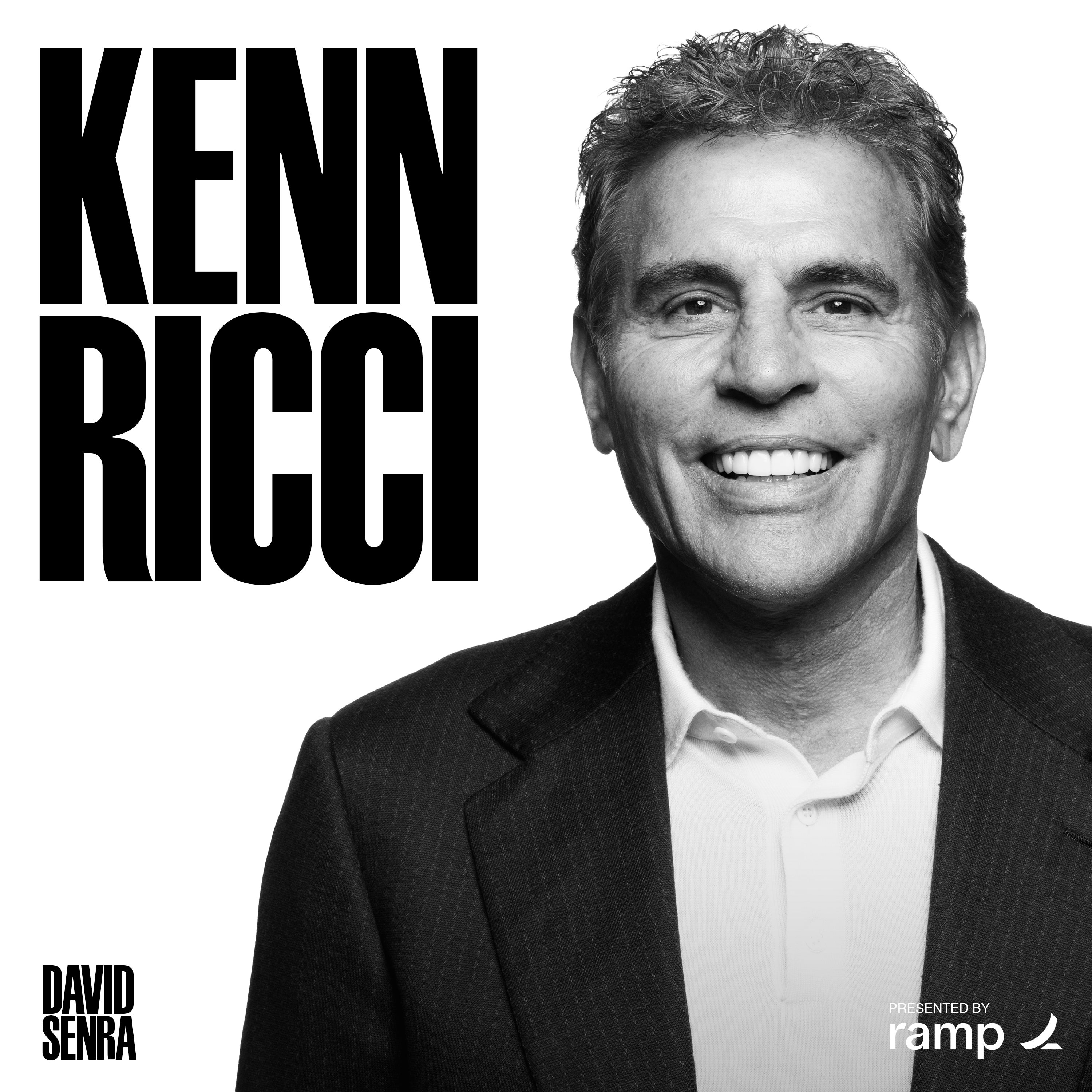
Kenn Ricci recounts building Flexjet (via Corporate Wings, Flight Options, then Flight Options/Traveler merger) from a $27,500 charter start into a major private-jet fractional/ownership business, and argues for raising kids by sharing wealth early rather than “ruling from the grave.”
Kenn Ricci is an aviation entrepreneur and former pilot. He grew up with a father who worked for the U.S. government’s organized-crime investigations (undercover “Richard Dill”). Ricci later trained through ROTC/Navy-to-Air Force pathways, flew small aircraft and jets, then entered charter aviation.
Early wealth education builds trust and reduces entitlement/jealousy. Wealth-transfer “trust” is often undermined by professional gatekeeping. Trust and transparency beat helicopter parenting. He also claims fractional ownership succeeded by matching aircraft utilization needs (planes want ~1,200 hours/year; average owners fly ~300).
Homeschooling kids with travel; forcing a commercial flight to teach “public” flying; annual family wealth meetings (kids now 37/31/25); teaching giving to Disney (as a child). Business examples include buying Corporate Wings for $27,500, competing with NetJets’ consignment “quarter shares,” and scaling after Buffett’s 1998 NetJets purchase.
Written by AI. May contain mistakes.
Kenn Ricci shares his unconventional approach to raising his children through extensive travel experiences.
“And we didn't take them to Paris and London.”
Kenn discusses his perspectives on wealth transfer to children and the importance of open communication about money.
“Oh, my father was a grade 12, worked for the U.S.”
Kenn reflects on his childhood and the influence of his father's career on his views about wealth and parenting.
“I want to be here alive when they're making stupid decisions with their money or making good decisions with their money.”
Kenn reflects on his childhood and the influence of his father's career on his views about wealth and parenting.
“I found one of my all-time favorite quotes when I was reading the book Zero to One.”
Learn how open discussions about wealth among family members can create trust and understanding.
“and I really went into that when the youngest one was around 16, where we really started going through, like every year we go through a spreadsheet.”
Discover the challenges of generational wealth transfer and how to prevent family conflict.
“we're not just not gonna toss people into the middle of it because we don't know their personalities.”
Explore Kenn's journey into aviation and the influences that shaped his career choice.
“Take me back to like, well, first of all, how old were you going to learn how to fly planes?”
Learn about Kenn's pilot training experiences and the initial aircraft he flew.
“He said, the Navy has ships and the Air Force has planes.”
Understand the challenges Kenn faced early in his career as a pilot and the industry landscape.
“In fact, I'll often say there's two people that are very successful in business.”
Hear about Kenn's experiences working for a company involved in fraudulent activities in aviation.
“You know, the airlines were Pan Am, TWA, Northwest.”
Discover how Kenn bought his first company at 26 and the motivations behind this decision.
“And they were never, they were always in the air.”
Learn how Kenn Ricci transitioned from owning Corporate Wings to flying celebrities and establishing a niche in private aviation.
“And he said, well, how are you going to pay for it?”
Understand Kenn's strategy for scaling his aviation business and flying internationally with high-profile clients.
“So I'm building the business concurrently with doing these celebrities.”
Discover how fractional ownership changed the aviation industry and Kenn's competitive strategy in response.
“And there's, you know, when you build businesses, there's these steps, right?”
Examine the rapid growth of Flight Options and the challenges Kenn faced with cash flow and acquisitions.
“You start with how many planes with flight options?”
Learn about the complexities and risks involved in company acquisitions.
“Or do you not have a good enough product to do it?”
Discover the emotional struggles and conflicts faced after losing control of a company.
“You grew up, you know, middle class in Ohio.”
Explore the transition after a buyout and the decision to find new opportunities.
“Why don't I go find the deals and then decide who I want to bring in?”
Uncover the process and motivations behind reacquiring a struggling business.
“And what's the most amount of money we can abscond with from these wealthy people that buy jets?”
Learn about the strategic acquisition of Flexjet and the challenges involved.
“I buy this company back in the nadir of the financial crisis.”
Kenn Ricci discusses the challenges of expanding FlexJet and securing funding for new aircraft.
“Picking that up was$180 million they probably needed at the time.”
Ricci shares insights on the complexities of merging FlexJet with Flight Options and the cultural hurdles faced.
“If they didn't pull that card on me, I would have had to be committed in each category, light jet, mid jet, and heavy jet to buy them the Barbardier product.”
Ricci explains why he chose to keep FlexJet private and the philosophical implications of wealth.
“Like, so for a while, you got two different colored pilots flying and you got the blue pilots and the brown pilots.”
Kenn discusses his personal journey of self-discovery and the influence of mentors on his values.
“But I've always struggled with the question, like, why am I here?”
Ricci shares insights from his experiences that underscore the importance of service in life.
“That clip got tens of millions of views.”
Learn how empowering employees enhances customer service and trust.
“It's not about what you do when things are going well.”

Get the gist, explore an idea or ask about something said.
 Claude
On David Senra, what are the key points of this episode?
Searching your listeningAutomatic transcript. May contain errors.
0:02I just interrupted you before we started recording. I wanted, you brought up your kids. You're talking about the addiction of flying privately. And I have three children and they're six years apart. So there's 12 years from the oldest to the youngest. And when I was building the business, and of course, remember I started the business, I was flying too. So I would fly and run the business. When you raise a child, you start on Braille and you start to figure out like, you know, what's the relationship going to be like that I spend enough time that I I miss Little League games. But I decided I was going to give them a love of travel.
0:31So I had them all skip eighth grade. And we traveled during their eighth grade year. And we didn't leave for the whole year. We'd go on six three-week trips. And during that time, I would homeschool them. And I'd make them build a curriculum around where they wanted to go. And we didn't take them to Paris and London. I mean, we took them to places around curriculum. Who wanted World War II? Who wanted to go to India? Who was fascinated with Asia? So we built these curriculums around. Actually, the two places I made them all go was Auschwitz and North Korea. So I'm probably the only person that's been three times to North Korea.
1:04But, you know, life changed. So starting in 2005 to 2017, think of the 12 years between. The youngest one who, when he did his trip in 2017, I realized, had never been on an airline. And I realized— An airline? You mean a private jet? No, no, no. He'd never been on an airliner because life for me had changed. Oh, he'd never been— He never flown commercial. He never flown commercial. And so I decided it's a bad way to raise a child. So I decided his name's Austin. So I said to Austin, we're going to go commercial. We were going to Tokyo. And we go to the airport, never done this before. We wait in line, check our baggage, wait for our seat to be called, sit down, don't take your shoes off.
1:48But all the things you do, right, security and so on, we sit down and finally we're getting ready to take off. And I look over at Austin, I go, Austin, what do you think? He goes, hey, dad, there's people on this plane I don't know. So what he didn't get was like the commercial, the public part of commercial transfer. It's funny that you, we were talking about this right before we started recording. I was like, we got to hit play because I'm so interested in, like you started talking about, you know, a lot of people that build successful companies like you do. There's this huge doubt in their mind.
2:20Like, you know, I'm hugely driven. I have a goal in my life, but like there has to be things that are sacrificed for that goal. Obviously, time with the children is one thing that people do. But one of the things you didn't even know I was going to ask you first was I heard you talk about something that's interesting to me. That is, you decided to share your wealth with your kids, not when you die, not when they're older, but right now. You have a very interesting perspective on this. Can you explain what you're doing? I came to believe that we have the wrong perspective on raising children. We seem to think it's about this time we spend with them.
2:52So therefore, we kind of raise this helicopter mentality, right? We go everywhere with the kids. We don't let them out of our sight anymore. When I was growing up, I left at 9 in the morning on my bike, and I just had to be home for dinner. And mom didn't chase me around Cleveland, Ohio, right? Those days are gone. We tend to think that we put time into them. That's the essential. When what we really need to put with them is we need to show them that we trust them, and they can trust us. Think about wealth transfer. And if you don't tell your kids about their financial arrangement, you're saying you don't trust them.
3:26And I told my wife, girl, you know, when the kids were young, I go, you know, we're thought we're thought as parents to talk more about sex than we are about money. And the reality is money will get you in a lot more trouble than sex will. So I had three observations about wealth transfer. One is that there's a whole cottage industry around trust and the management of generational wealth transfer. And there's big money in it. The system wants you to think you have to control wealth because that brings in the trustees. That brings in the law firms and the banking firms and all those necessary professionals to kind of skim away your wealth.
4:03Second of all, the Chinese have a saying, the son of a lion is a lamb. And so I think people that create a lot of wealth, particularly if it's entrepreneurial wealth, tend to have, they're lions. And lions control things. And so why not buy into the system where you control your children? And so this is why these trusts are set up. At 25, they get this. At 35, they get that. At 45, they get this, right? And this is kind of a way to control from the grave or for the patriarch or matriarch or the wealth to still be influential even when they're not around because they're used to being in control.
4:44They want to be in charge. They want to be important. They don't want to lose their relevancy. And then finally, there's the most bizarre one to me is if we tell our kids, if we give our kids wealth and we tell them about wealth and they know about this, they'll become lazy. Well, man, does that say you must have been an awful parent. If that was the one thing that flips the switch, you couldn't parent through that? So I decided, A, number one, most importantly, I love my children and I love watching them be happy. I want to watch them spend their money. I want to watch them be wealthy. But most importantly, I want to help them.
5:19I know a little bit about wealth. I knew a little bit about, now I'm accidentally wealthy. I didn't get here with some monetary plan, financial plan. Hold on, we're going to dive deeper on that. But give me some background. Did you grow up middle class, poor? Like, what was your childhood like? Oh, my father was a grade 12, worked for the U.S. government. He's actually a spy. He had a fascinating background. He came out of World War II, worked in the OSS, worked in naval intelligence, and then had a, in the 60s, early 60s, Bobby Kennedy set up the OCD, the organized crime drive through the Treasury Department.
5:53And my dad was a part of that group that investigated domestic, mostly mafia, mostly organized crime in that era. His undercover name was Richard Dill. He was investigating in a lot of cases, Italian. He was Italian. They changed his name to Dill. Think of that. That's the government at work. I remember one time he, by the way, he only in 17 years of undercover work, he only worked on three cases. So it shows you the time it takes, right, to be in. So his undercover name was Dick Dill. Richard Dill. Dick Dill. Richard's always short of getting. Yeah, yeah, yeah. He was investigating the police chief of Lincoln, Nebraska.
6:34For both ties to the mall, we're going to cry. I'm seven years old at the time. He can't tell you. I don't know much about it. But I knew that we had to go live in Nebraska for two months because he was there undercover as a family. This was the greatest time of my life. We stayed at a holiday unit, had a pool. I'd never been any place where they had like a pool outside. So that, that hits on it's like middle-class somewhere around there. Didn't have a pool. The reason I wanted to start on this and I'm going to still pull on this thread if you don't mind is because I have this other podcast called Founders.
7:00I read biographies of history, great entrepreneurs. People struggle with this all the time. It's in these books for going back 200 years. They're like, I was, essentially the problem is I was the son of a poor man. My kids are the son of a rich man. What do I do here? And so I had the, the luck of a lifetime to be able to go and have dinner at Charlie Munger's house right before he died, probably six months before he died. And one of the questions I asked him was, because me and him had run, he read, you know, hundreds of biographies. I was doing the same. I was the, my like craft and the main, before I started the show, like all I was focused on.
7:31And I was just like, what's the answer to that? Like you read the same books I do. What, what's your answer? You know, he grew up, he wasn't poor, but they were in a home all. It was like a normal life. And he goes, you give them the money. And because Munger is just no bullshit, straight to everything. And I go, why? He goes, because what he goes, they'll hate you if you don't. And he goes, and what's the point of building a relationship and making all this money? And then at the end of your life, your kids hate you. And that was his very simple way of looking at this. Fantastic. Fantastic insight.
7:56Right. Like I said, I want to watch them enjoy their wealth. He did say one funny thing though. Cause somebody, I think I may have asked him a follow-up, either me or somebody else to follow up. And I go, yeah, but won't that make them a little less ambitious? He goes, yes. And in his case, I think he gave, he gave a couple hundred million to I think nine kids or something like that. And he's like, yeah, some of them have $250 million and they're not as ambitious. Like, so what? They're different. Every kid is different. In fact, one of the things we have these family meetings once a year where we talk about wealth.
8:24And one of the things I start out with each project, because when I look at why families rip apart over wealth, right, it's really in two areas. One of them is that they feel somehow they're entitled to be equal, but they're not. I have a child that started inheriting wealth 12 years before the youngest one. You don't think his estate, you don't think what he has, appreciated at different rates than the youngest one. So I start every meeting by going, look, guys, you're not equal. It doesn't mean I don't love you. It doesn't mean it's just how things are. And the sooner you get over that fact, the happier you'll be.
8:53It just wasn't set out that way. So are you already given all the wealth you're going to give to them? Or are you keep, how do you, like, how does that? Well, yes, pretty much so, because we gifted shares of a family-limited partnership when they were very young. Did you get this idea from Sam Walton? No. You know, that's how Sam Walton avoided a lot of it. He didn't do it to avoid estate tax. He's like, well, if you want to avoid estate tax, you give your kids the asset before it appreciates. It's so logical. The crazy thing is he did this. His father-in-law gave him the idea. I've read every single book on Sam Walton.
9:26And his father-in-law gave him the idea. They did this when the value of Sam Walton's company was like, I think the shares that he gave to his four kids were$5 ,000 each. Ditto. Okay. I started the family of the departure in 1990. I had my first child in 1990. So I have the vision of what it's going to do five years before it happens. Right. And as soon as I could, as soon as I could, I gifted shares. When they were born, I gifted. It's a family limited partnership. So the general partner, which is me, still can, you know, I have all the flexibility in the world to make distributions. It's a phenomenal vehicle.
10:00So Walton had it right. It's a great vehicle. So they're not created equal. I want to watch them happy. I want to watch them use their way. But also I want to guide them. I want to be here alive when they're making stupid decisions with their money or making good decisions with their money. I've made stupid and I've made bad decisions with money too. But so why can't I be the one to guide them? Otherwise, assuming they still love me when I'm dead, they tend to love you more when you're dead. But in any case, assuming they still love me, well, they're going to go, well, what would dad have done?
10:33Well, isn't it better to like be here alive when they ask you, what should I do, dad? You know, that's the foundation of it. So I think sometimes we want to rule from the grave. You have this trust environment that's there. And then if this is going to spoil your kids, then you really weren't that good of a parent. If that was the one thing that did it, they couldn't handle this. Or maybe the alternative is it's all the more reason to give it to them when they're alive so you can guide them through it, right? As opposed to when they're dead and you can't do anything. When you're dead and you can't do anything about it.
11:02I want to tell you about the presenting sponsor of this podcast, Ramp. I have been reading a lot about SpaceX lately. SpaceX is one of the most valuable businesses in the world. And one of the main themes in the history of SpaceX is constantly attacking and questioning your cost. Ramp helps many of the most innovative businesses in the world do exactly that. The median company running on Ramp cuts their expenses by 5%. And one thing SpaceX has demonstrated is that a religious dedication to controlling costs can help actually increase revenue because you can pursue opportunities you couldn't otherwise.
11:33And we see that in the Ramp data, too. The median company running on Ramp also grows their revenue by 16%. So when you're running your business on Ramp and your competitors are not, you have a massive competitive advantage that compounds over time. Ramp is the only platform designed to make your finance team faster and happier. Many of the top founders and CEOs I know run their business on Ramp. I run my business on Ramp and you should too. Go to Ramp.com to learn how they can help your business save time, save money, and grow revenue. That is Ramp.com. I found one of my all-time favorite quotes when I was reading the book Zero to One.
12:09The quote says, The single most powerful pattern I have noticed is that successful people find value in unexpected places. And they do this by thinking about business from first principles instead of formulas. That is exactly what AppLovin has done with their advertising platform. AppLovin connects you with over a billion potential new customers in mobile games. AppLovin allows you to capture undivided attention. AppLovin ads are full screen videos that are watched for an average of 35 seconds. That is retention that blows other ad platforms out of the water. And you can launch on AppLovin in minutes.
12:43You set the goal and AppLovin achieves it. No complex setup, no expertise needed. And AppLovin scales quickly. They can put your ads in front of over a billion potential customers. Other businesses have seen immediate results, scale to hundreds of thousands of dollars of spend per day, and increase their revenue by millions. So you want to get started quickly before all of your competitors are on AppLovin. And you can do that by going to AppLovin.com. That's AppLovin.com. Have you seen any downsides to this decision? Not one. Not one. In fact, I've seen many things I didn't really, I didn't think would happen.
13:20So for instance, I asked them, now remember, this is going back. When they're young, I started talking to them about money. Now at five years old, six years old, now we're not talking about tax effective or compounding interest. But what I taught him early on was giving. So our early family meetings were all about who should we give money to and why. My daughter loved animals. My son loved Catholicism. And my youngest son, when I remember the first time we were giving, he was maybe six years old. He always wanted to give it to Disney. And I was like, well, Austin, Disney's not really a non-for-profit.
13:55They're doing okay. They have their own methodology. So I taught them first to give. Then before we started really diving into the estate, and I really went into that when the youngest one was around 16, where we really started going through, like every year we go through a spreadsheet. Where's the money? How does it transfer? Who has control of it? Where's the bank? Like all the stuff you need to know, everything. But before we did that, we did a personality test, and everybody reported on their personality because kids are different. who thinks left brain, who thinks right brain. So I wanted the kids to understand how they could get along.
14:32So I started with that. So then we started talking about money, how it transfers, like what we would do with it. Two surprising things. Number one is that it creates this trust. And I have this amazingly trusting group. Now the kids in the group of five, my wife and I, and the three children, they report, they show us their estate and what they spent money on. And we share this. How old are the kids now? So 37, 31, and 25. Okay. Yeah. Okay. So it's been going on for a while. But the other thing, like I mentioned, I'm accidentally wealthy. You have to realize that even when we were talking about this, we weren't talking about it at the volume we're talking about.
15:14I mean, my personal net worth has accelerated in the last six years, along with FlexJet, which is the asset I own and, you know, one of the largest assets I own and protect. One of? It's got to be the largest asset you own. Well, it's the largest one, yes. What else you got that I don't know about? Well, I mean, I always say I'm an inch wide and a mile deep. I've made a lot of investments only in aviation. I probably know more about the area of aviation. I've invested it. I own SimCom, which I sold to CAE. I owned what is today Atlantic Aviation. Hold on. So this is exactly, so I want to start talking about the business because I think I understand what you did with your kids and why you did it.
15:52And I think, again, anybody who's wealthy has to think through these things. I think discussing them openly is a service to other people. Oh, I'm sorry. Let me finish what I learned. Go for it. Okay. So number one, this amazing trust that they got amongst themselves, right? They started investigating and reading about biographies and families that blew it. and they came to realize that the third transfer of wealth, the third generation is the tough one. And so they've started to talk about - Shirt sleeves to shirt sleeves in three generations. This is something very durable to our human history.
16:19So they've come together to talk about the next passing of wealth and generational. And two things that they've come up in the last year. One is they decided not to include spouses in these meetings. They decided that each one of them, two of them have spouses, one doesn't. They decided in these meetings that each one of them will decide how to share financial information in their own family. That this isn't a group share. This is us five. And we've been doing this for 10 years, 12 years. And it's not something, we're not just not gonna toss people into the middle of it because we don't know their personalities.
16:50We didn't have 10, 12 years of grooming to get them to this point. So that was number one. Number two was when they look at generational wealth transfer and why families come apart. One of the things that happens, other than they all feel like they weren't treated equal, They're mad at the patriarch for not treating them all equal, which we've gotten over. But the other thing that happens is one of them does really well, takes the money and makes a great investment. And the other ones do less. And then there becomes a little jealousy amongst them. So they decided, they came to the idea that any investments they all make, they're going to share.
17:25And the person who has the investment. The three kids. The three kids. Wow. The person that has the investment can put 60 % of it in, but has to offer. but not required 20 % to each of the other siblings. And they can participate or not, thereby alleviating the opportunity for them to be jealous. Look, I gave you the opportunity to come in, you came in and you didn't, or we share the upside together. That was their idea, not my idea. That's really interesting. Okay, so let's go to the source of the wealth. Yeah. You were a pilot, okay? Take me back to like, well, first of all, how old were you going to learn how to fly planes?
17:57You talked about my upbringing with my parents a little bit. My dad was a government employee and I went to a Jesuit high school. St. Ignatius. And they sent, at the time in the 70s, they sent 30 people to Notre Dame. They moved them right from there to Notre Dame. And I loved it. I wanted to go there. And I was, I got admitted. And then I'm going up for a visit. And I grew up in a, you know, houses have two by fours. Our has one by twos. So I could hear my parents. I'm an only child. And I could hear my parents talking the night before I'm going to Notre Dame. And they say, you have to tell him, we shouldn't let him go.
18:30Because what if he goes up there and he likes it? And then he wants to go and we tell him we can't afford to send him. My mom was saying I wouldn't let him go. And my dad would go, let him go. Maybe he doesn't like it. And then he comes back and says, I don't want to go anyhow. And then we don't have to have the subject. But I knew going up for that class visit that it didn't matter how much I liked it. I knew what was coming when I came home and said whether I wanted to go or not. So I was inclined not to go and put my parents in a bad position. When I get there, I ask them on campus, is there financial aid available?
19:00Like, well, you missed the deadline. This is March. But the Vietnam War, this is 1974, the Vietnam War was still very ripe, very raw. And people did not like the military. And so they said, if you're willing to go into ROTC, they're always short of the candidates. They're never fulfilling their quota. So for some reason, don't ask me why, I decided I wanted to be a Navy pilot. Maybe I like the double-breasted suits, whatever. So I go down to the ROTC building, and there's no cell phones. And I'm looking through the glass window. I'm trying to read upside down on the phone what number to call on Monday morning to tell them they had a new naval aviator.
19:37Why did you pick aviation? You had never flown a plane or anything? No, I had to go in the military. I know I had to go out on TC. I figured if I got to go into the military, flying looks like a lot of fun to do. I'm copying the number down and somebody taps me on the shoulder and they said, can I help you? And I said, yes, sir. I'm an incoming freshman at Notre Dame and I would like to join the Navy because I want to fly. And he said, you've been admitted to Notre Dame? I said, yes. He goes, I'm shocked because they usually admit smarter people than that. He said, the Navy has ships and the Air Force has planes.
20:08I'm Colonel Mueller. I'm head of the Air Force detachment, and I'm enrolled in the Air Force. And I never heard, I never knew how my parents reacted, but I came home. Because then they'll pay for school. Yeah, yeah. I don't know that I've ever told this story. It was the first time I learned how to defraud the government. It was, I'm a freshman at Notre Dame. I'm enrolled. I've got my hat. I've got my uniform. and the sergeant who administered that said, now, I know you're a plebe here, but here's how you get$100 a month stipend for general expenses. He goes, but there's other income. He goes, here's what you do.
20:41You go to the bookstore, you buy all brand new books. You bring me the receipt. I'll reimburse you for the new books. You take them back to the bookstore and then you buy the used books. So like my first interaction was the military. I was taught like how to take advantage of the US government. But do you take time off from Notre Dame to learn how to fly? No, no, no. You learn it concurrent. You, one day a week, and this was the tough one, one day a week you have to stay in uniform. And believe me, at that time, post, you know, that Vietnam War era, that was not an easy task because people did not like the military at all at that time.
21:17So, you know, you have all these courses around the Air Force. In the summer, you go to whatever your summer program was, your summer school and so on. And then, so that's where I learned to fly. So what kind of planes do you fly? The first place you find. You know, the Cessna 152, Cessna 172. They're not putting you in like the F-16. No, that comes after grade. No, in fact, you know, when you graduate, what happens, then you go to general flight training, which is done like in T, at that time was done in T-37s and T-38s. And then you get assigned, you know, it's a year and a half before you get control of a jet in the Air Force.
21:49There's the primary training, then there's the training you go into. Okay, so you mentioned, hey, I'm an inch wide, but I'm a mile deep. Yeah. All my businesses focus on this. We mentioned Buffett and Munger. I don't know if we said it on the show or if we were talking before, but we both mentioned Buffett and Munger a bunch of times. And their whole thing is like know your circle of competence and just stay inside that circle. So that sounds like what you did. I always say my portfolio of investments is unbelievably diversified. It's cash and airplanes. That's my diversification strategy. So what's the first business you do in aviation?
22:20So first of all, I don't think of myself as a businessman. In fact, I'll often say there's two people that are very successful in business. One is a person that just gets business. They could run a yogurt store. They could run a steel manufacturing plant. They just get business. They understand how they're connected. They see market strategy and business is just very clear to them. And the other ones that are just passionate about what they do. You're passionate about your podcast. You're successful in business because this is what you love to do. I'm successful because I love to fly and I learned everything airplane.
22:51Right. That's what put me here. But I didn't, I never had a goal to become wealthy or to build a business. That's the accidental wealthy part of your journey. Sure, of course. In many ways, right? Accidentally that I even formed a business. Accidentally that, you know, that when I go into private aviation, there's only 5 ,000 jets in the world. And today there's 35 ,000 jets. So part of my luck. Wait, wait, wait. Say that part again. Yeah. When you started. So when you were in 1985, figure about. There's only 5 ,000 jets? 5 ,000 jets in the world. And today there's 35 ,000 private jets in the world.
23:23So part of my luck was just to be when this industry grew up. I entered an industry because I could have been an airline pilot. I could have stayed in the military, but I was attracted to private aviation. It was more free to me. It was more spontaneous. It was more interesting. The people you would meet, there's no cockpit door. I could have conversations with passengers and learn from them. So who knew in 1985 that private aviation would be this unbelievable growth industry in the next 40 years? I didn't know that. So that's part of it. But what I'm really doing is flying. I leave the military.
24:00I become a cargo pilot flying air freight. Then I go to Northwest Orient. I'm at Northwest Orient in a very brief period of time. They have a furlough, so I lose my job. So Northwest Orient doesn't exist anymore? No. It was an airline. It was an airline, yeah. So you're an airline pilot. You know, the airlines were Pan Am, TWA, Northwest. The airlines that flew all around the globe, they were the good airlines. They were the airlines that were the prestigious ones. Okay, so you're in Northwest Orient. You said you got furloughed, which is another name for fire. Yeah, it's a fancy term for I don't have a job.
24:30So I came back to Ohio. Ohio, birthplace of the Wright brothers. Yeah, well, that's in Southern Ohio. Yeah, but I think Dayton, right? Yeah. But my father was, he didn't see it as a very stable career. He said, I know a lot of pilots and they're all airport jockeys. They just kind of move from place to place and they end up taking whatever job they can. It's just not a stable industry. So it was at that time that I went to law school. And I really— So you love flying and pilots. Your dad's giving you, in hindsight, bad advice. Considering where your life has turned out. And you're going to do something you don't love.
25:09Correct. Correct. For prestige or money? He would have said you needed something to fall back on in case this aviation thing doesn't work out. Well, the aviation thing worked out okay. Did he live long enough to see it? You know, he died in 1991, so kind of. Okay. Kind of. He saw me have a business. He saw me fly. He flew on one of my first Learjets, loved it. Okay, but he never, I mean, you know, he would never, he never saw this coming. Got it. The only job I can have in law school is a part-time pilot. So I'm a fill-in pilot for a company called J &J Aviation. And J &J Aviation was a fraud.
25:46I mean, I'm just an employee there. But what they did was in the early 80s, they had investment tax credit of 10%. And if you bought an aircraft, you got an immediate 10 % credit. So they would sell these citation jets for$750 ,000. So they had about a fleet of about six airplanes. And then they'd sell these citation jets to investors on the West Coast, a long way from Cleveland. and they would, they'd get the$75 ,000 investment tax credit. And then they pay the$750 ,000 for the plane. And then the head of J &J was a guy named Jeff Tolk. And every month he would pretend that these aircraft were on lease, but they weren't.
26:24The aircraft didn't even exist. He would make up a dummy statement. He would say it flew 40 hours this month. The revenue was, was$90 ,000. The expenses were$78 ,000. Here's your$12 ,000 check. So he simply put the 70, the million five, the two aircraft, he put the million five in the bank and kind of dribbled out the interest in a fake statement. Well, finally, after about a year and a half, the owner said, we got to see our jets. And they were never, they were always in the air. They were never around. But one day they caught him and he flew the coop. So this little company, J &J Aviation, had like three employees, you know, a secretary, a dispatcher.
27:00And is it just charter? Yeah. Okay, the charter was using these managed airplanes or these phantom airplanes. But there were six of them. There were Navajos and these little tiny piston engine aircraft. And the dispatcher, dispatcher there, Rick Michaels, calls me up. And he says, he said, you know, nobody here wants to do this. And I don't have, I'm not smart enough to do it, but you seem to know a little about aviation. You should buy the company. So I call my dad. And you're how old at the time? 26. And you never thought you were going to be an entrepreneur? No. In fact, I didn't even buy this company to be an entrepreneur.
27:33I bought it so I could still have a job. Like I needed to make sure these airplanes didn't go away so I could keep flying. I mean, that was the whole goal. And Rick said he could do it by himself. So I left, I kept, I knew I had to employ the dispatcher and run. It ended up with two of the planes left. So I had four airplanes when I started. And I called my dad and I said, dad, I'm going to, I want to buy this company, J &J Aviation. I'm actually going to name it Corporate Wings. And he goes, oh, he goes, I go, it's$27 ,500. And he said, well, how are you going to pay for it? And I said, well, the company has$27 ,000 in the bank, so I think I can just use their own money to buy them.
28:09And he goes, oh. He goes, well, what are you doing for the other$500? I go, well, why do you think I called you? So that was really how I bought Corporate Wings. And that company's still here today. Explain how you get from Corporate Wings to Fleshets. Right away, I decided, where is the niche for this Corporate Wings? Like, everybody has a charter plane. Like, but how do I get bigger niches and so on? And I, you know, life is timing. I mean, I met someone who worked for Chapman Freeborn. I don't know if you know this company. They move all the rock stars around. So they move the freight. You know, every rock star comes with a stage.
28:41And part of that stage can go on the land. Part of it has to go in big aircraft, depending upon what. But it's a cargo moving system. And along with it, they had this ancillary business to move the star, to move the celebrity. I'm watching this documentary on the Eagles, the band The Eagles. And they have a bunch of success early on. And one of their favorite things about being in a band and being a rock star is that they have this private plane. Absolutely. It's like a little turboprop. The big groups went in those turboprops because they needed 15, 18 seats. It's the single performers that went in the corporate jets.
29:14Okay. I flew Elton John, Brian Adams, Bruce Springsteen, Tony Bennett, Barbara Streisand. Those were the ones. Those were my clients. So with Chapman Freeborn, whenever they would get a cargo movement and they needed to move the celebrity, I made a deal with them to do that. And that was how that was really your initial niche. But it was really because I wanted to fly and I thought it'd be your pilot. Yeah, of course I am. Of course I am. Sure. And you know what? It was a good gig because you when you flew those celebrity tours, say a pilot at that time got seven thousand a month. If you flew a three month tour, you would get twenty thousand a month.
29:51Of course, he had no work for that. And it was kind of perfect because I could fly the tour for three months and then have the rest of the time I'd work on the business or, you know, kind of learn the business and figure it out. So I'm building the business concurrently with doing these celebrities. Then I have these big planes. So I start to go more international. I fly, you know, I flew Richard Branson for a year and a half. I live in London. Best flying because I got to learn the world. Wait, wait. So you're flying Richard Branson. Now this is a corporate private jet. Correct. And you're just.
30:22Remember, to get the celebrities, I had to go to people that wanted to buy a large, like a Gulfstream, a Gulfstream 2 at the time. OK. And I had to tell them, you use the aircraft. I'm going to lease it out three months a year, which will pay for the aircraft for the whole year. And so I got people to give me airplanes on that financial agreement. They're putting up the money? Yes, correct. OK, so that's how you're doing this is very limited. Correct. Yeah, correct. I'm doing it without without any. There's no Ken Capital at this point. I don't even have. I got the five hundred dollars from dad.
30:49So now go into the 90s and along concurrent with building this business, once you have the large cabin filling in the rest of the fleets, kind of easy because people think if you can do the big stuff, if you can travel the world handling my airplane, so we is you must be qualified. So we start to build a managed fleet of aircraft till it gets to in the low 20s. And there's, you know, when you build businesses, there's these steps, right? Like without any other help, I could run three airplanes myself. You know, but then if I want to run 15, that's kind of the next step. I need 17 people to run 15.
31:26And then I need 17 till I get to 30. And then when I get to 30, I need 35 people. There's these steps of infrastructure. So I'm about where I need to be. And so in the early 90s, we don't even realize this today. But today, big manufacturers, Gulfstream, Bombardier, Cessna, they pre-sell their aircraft. And they don't build them if they're not sold. But going back to the 90s, they looked at it like the car industry. Cessna had a dealer network where people, to be a dealer, you had the level of dealer. If you bought three single engines and one twin engine, you were this level. If you bought four twin engines, you got this commission structure and you were a larger dealer.
32:07But when the business didn't sell, there were all these whitetails. Wait, what's that? A whitetail. So a whitetail is a plane that doesn't have an N number on it because they don't know who to title it to because it's not sold. Okay. So it was like the auto industry. They kept building, kept the manufacturing run going. And if they couldn't, if sales couldn't keep up, then they just parked them in a lot and called them whitetails. Well, the Gulf War I happens in 1991. And it goes ahead that these whitetails, Hawker has these whitetails. And Richard Santulli, who was the founder of NetJets, goes to Hawker and says, you can't sell the airplanes.
32:42I'll take 20 of them and sell them on consignment fractionally. Is that the first? This is how fractional. That is the invention of. That's the invention of fractional ownership. Rich Santuli, brilliant, realized that the average company flies an airplane 300 hours a year. A plane wants to fly 1 ,200 hours a year. So why don't we get four people to share them? What does it mean a plane wants to fly 1 ,200 hours a year? Well, because if you look at a lot of things, number one is an airplane doesn't like to sit around. They break when they don't fly. The fluids leak out. So they want to fly, number one.
33:16Number two, they had the capacity to fly 1 ,000 to 1 ,200 hours a year. So an average corporate owner at that time was leaving the plane in the hangar five days a week. And so why not utilize that dead asset? That was his vision. And so he initially thought, well, if I get four people to each put 200 hours on the plane, that's kind of the perfect. So I'm going to sell the planes in quarters, which is why if you see NetJets' N number today, it still ends in QS, quarter share. because originally they only sold 200 hours. Now today you can buy a hundred hours, 75, but that was his vision. And he sold these whitetails, these consignment aircraft.
33:55So he never put up any capital. He said, if I sell them, I'll give them back to you. So all of a sudden now this becomes in vogue. And where is he stealing customers from me, the charter operator? Because in the charter business at that time, if you took my plane and went to Florida, I had to charge you to return the plane back to Cleveland. Otherwise, how did I get it home? Yeah. He had the idea of this floating dispatch. I'll drop you in Florida. And then the next client, I'll figure out how to get them from here to there. Well, that was attractive to a lot of different companies. And so he was starting to steal business.
34:30I got a little nervous. So between 1993 and 1996, I'm watching this unfold. And I say, well, he's selling these brand new assets because he's getting them from the manufacturers on consignment. it, I'm going to go into the used market and I'm going to buy them used, pre-owned, previously enjoyed, I like to say. And I'm going to go ahead and I'll have the exact same airplanes he did. So whatever NetJets had, if they bought brand new Hawkers, I had a used Hawker program. If they brought brand new Citations, I just emulate them, had a used Citation program. That was my vision. I would be buying them used at half price.
35:08So the service is the same. It's still, you can fly. You only pay for it when you're on board. It's just the buy-in is going to be 50%. That was my vision. But unlike him, I couldn't buy these on consignment. I had to have capital to do it. So in 1996, I put together, this is my first time really starting to look at a business. It's the first time I kind of understand the depth that I have to present, the presentation, you know, looking at cash flow and projections. and I go out to different banks, probably 35 or 40 of them with this idea of fund me the amount of money I need to start the business.
35:45I think I needed 30 or$40 million. I wanted to borrow it. And they look at me and the banks are like, we don't get it. Like, where's our collateral? We have the tail of the airplane you're selling out. Like, how do I have a quarter of a plane? So none of them were a buyer. I think at the end of, of, of 12 months or 15 months of being on the road, I had maybe$7 million of opportunities if I put up assets equivalent to$7 million. It was the worst financing ever. In June of 1998, Warren Buffett buys NetJets for$750 million, and he christens the industry. And I just happened to be the guy who saw the banks last.
36:23And that summer, I got almost$300 million of debt financing. So again, accidentally wealthy. Because they're like, well, Warren is doing what we want in. It's a good idea if Warren's doing it. That Ken had a good idea. Yes. Yep. And all of a sudden, Bombardier Capital, Boeing Capital, Fleet Bank, all 50 million here, 50 million there, gave me these lines of credit. That allowed me to buy the initial fleet, which I went active October 13th, 1998. But what is the company? Is it still Corporate Wings? No, I branded that product Flight Options. Okay. That was the brand. Deal is how the best founders turn the world into their talent pool.
37:02I've been studying how history's greatest founders operate for a decade. And one thing they all have in common is they understand that recruiting and hiring the very best talent is your most important priority. A players recognize other A players, which is why top companies like Ramp, Shopify, Eleven Labs, Uber and DoorDash all use Deal. Many of the top founders I know have personally invested in Deal after using their product. And what they discovered is that Deal is the best company in the world at building infrastructure for global hiring. Deal will help your business hire, pay, and manage any worker anywhere in the world so you can retain the best talent anywhere and spend the rest of your time focusing on what you do best, delivering value to your customers.
37:40The founder of Eleven Labs has a great description of the value Deal can give your company. He said, We built 11 Labs to break down language and communication barriers. With Deal enabling us to hire and support exceptional talent anywhere, we can accelerate our innovation and bring more voices, stories, and ideas to every corner of the world. Deal is trusted by over 40 ,000 companies and growing fast. Learn how they can help your business by going to deal.com forward slash Senra. That is deal.com forward slash Senra. So that's flight options. You start with how many planes with flight options?
38:14Well, once I get the financing, probably 25. Okay. Why'd you pick a number like that? There were three different fleets. Okay. Two light jets and a medium jet. And you need about eight aircraft to be your core fleet. In other words, if you and me are both going to buy a share of an aircraft, we recognize there can't only be one. Because if you and I want to fly the same day, who gets the plane? Yeah. So you had to show the potential prospect that you had a fleet. And eight was about the number that people, well, oh, you have eight citations. I'll buy one. And then you have, you can service us.
38:46So if you had 25 planes to start out, how many customers, like when do you hit your limit? Like, oh, 100 people is too much? Like, what's the? No, because remember, these are core fleet. These planes never get sold. What I do from this point on is if four people buy the citation, I buy another citation. Okay. So these 24 aircraft will always stay with 24, 25 for very long. And you know what? That's still a model we use today. If we look at our fleet of 365 aircraft, we would tell you that about 70 of them are core fleet. They don't get sold. They're just there to support our customer's ownership and a share of a jet.
39:20Okay. Yeah. Because we need that because on peak travel days, we're going to have more demand than there's just not enough airplanes to go around. So we still have that core fleet model. Okay. But this is called flight options. Yes. How do we get from flight options to flight ships? Okay. So it's a little longer than you probably hoped. but a hundred million dollars in sales between October and December. Four hundred. Wait, first three months of. David, this was the most amazing thing I've ever seen in my life. People thought it was such a great bargain that they would send me a check. I think the buy-in at that time was like$800 ,000.
39:53People would send a check for$800 ,000 and say, send me the paperwork. I want to fly tomorrow. In other words, they loved it so much. They knew they couldn't fly until I had the money. They'd send me the checks and they'd go send me the paperwork. We'll get to that stuff later. Just let me fly. Yeah. So 100 million in the first three months, 400 million in the next year. And now all of a sudden, I've got a tiger by the tail and no clue, right? Because a business that grows that fast is immensely complicated, particularly for cashflow. And I think at that time, I didn't really realize that in capital intensive industries, particularly like aviation, the balance sheet is the whole game.
40:28It's not the income statement, it's the balance sheet. Forget income, forget EBITDA, it's free cashflow. And how strong is your balance sheet? that's what drives that business. I didn't know that in 1998. I hadn't figured that all out yet. I'm in my early 40s when this is happening. And so then I bring in an equity partner. So now I have some equity partners around the table. 2000, we have the dot-com bomb. So I've been through four recessions. That was number three. So now the business is struggling a little bit, cashflow struggling, not volume struggling. And we decide, you know, when a business is in trouble, there's two things you can really do.
41:05Well, three things, I guess you could close it down. Two is that you can sell it for a song. Or three, you strategically change direction. So you go to the bankers because your problem is always the credit markets. It's always who's out there for you. And you say, oh, I have a new strategy. I'm going to merge with this company. Here's the projections. And you buy yourself time to see if you can put these companies together. Acquisitions, mergers are incredibly difficult. I hate them. I don't do them very often. And I think they're immensely culturally, they're damaging. Why do you hate mergers?
41:38I hate them for me because for me, I think they're a sign of weakness because you can't build your business on your own. You can't, whatever this company is offering you in terms of, let's say it's market share. Let's say they have a part of the market and you have a part of the market. And you say, gosh, we'll capture the market. Well, do you really need to spend 12, 10 times cash flow to gab the market? Would you invest that money yourself and grab the market share? Or do you not have a good enough product to do it? So I think we don't analyze enough what it costs. For whatever your logic is for bringing that in, give me the logic for why you're doing that.
42:16And I would tell you 90 % of the time, you could probably do this yourself without the acquisition. Now, once you do the acquisition culturally, if you have a business built on culture, which is essential for me, it's essential for us, it's impossible. So building a cult, bringing it in, you know, you can integrate a culture if 10 % of the workforce is being added, adding 30%, 40 % culturally impossible. And then you're going to destroy your culture. So you probably had, you probably overpaid. I don't know if your business, if the business reasoning is sound, and you really put your culture at risk.
42:47So that's why I don't like them. Okay. So, but you were, this was the - I'm in trouble. I'm in trouble financially. So you have to. Yeah, I haven't figured this out yet. You're asking me, this is 26 years ago. I have knowledge that's accumulated since then. So we merged with a company that's also in trouble called Traveler. It's a division of Raytheon. And we do the, we slap it together 50-50. Are they in the same business? What are they doing? Yes, they have a company called Traveler that has a brand new product line, but also fractional ownership. And Raytheon owned BeachJet at the time, Beachcraft, Beach Aircraft.
43:21And they had merged it with Hawker Beach. It became Hawker Beach. And so they were trying to see, they had travel air as a distribution channel for their aircraft. So it's not making money. It's losing$30 million a year. They slap it together with flight options, which was marginally breaking even. We were making money, but not free cashflow. So we put these two company, consolidate, get rid of the back office. Raytheon wants to focus on missiles and submarines. And in the concept of putting these two together 50-50, we come up with shareholders roulette. Are you familiar with that term? Yeah, where you have to.
43:56You have to make an offer to buy or sell. At the same price. Yes. So I had 18 months to underwrite the transaction. I go to Warburg Pincus. I need an outside, I need an investment partner to do this. They see the model. They value the business at 360 million. I go running up to Lexington, Massachusetts to go into Raytheon to tell them I'm here with your$180 million. This company was a piece of shit. And now I'm here. I figure, where are you putting the Ken Rickey statue that I found? Like, I found all this money for you. And they looked at me and they thought I was stealing the business and they bought me out.
44:28Oh. And I'm gone. 2002, I've lost my throne. It was the worst day of my life. I was passionate. I love this business. My friends were in the business. Hold on, we got to pause here because it's very interesting. How much of the 180 codes do you personally? You hit the nail on the head. You have a knack for asking the exact right question. I own 16 % of the company. Okay. Fast forward today, the punchline is going to be I bought this company back and now I have a controlling interest. So who thought the worst day of my life? But still, like you thought, let's go back to like you were, you learned how to be a pilot when you're in college.
45:03You grew up, you know, middle class in Ohio. You have millions of dollars and you just said it's the worst day of your life. This is really, really important because the whole point of this show is like I usually talk to people that do things for a very long time. and there's like this new industrial like entrepreneur ecosystem and it's driven by investors and they tell, they give the worst advice to founders ever. They're like, start, scale, sell. It's like, I've talked to all these investors, or excuse me, these entrepreneurs have sold. They all talk about like this. If you sold something you loved, they're like, yeah, but your, Travis from Uber was in that chair and he made billions of dollars and lost Uber.
45:38Ask him how he felt when he had four or five billion dollars dropped in his head. He didn't give a shit. He didn't give a shit about it. Absolutely didn't give a shit about it. start scale, get a new investor. It's crazy. So, okay. So worst day of your life. Let's take, take me to that. You were like, I thought I was going to have this company. They bought you out. First of all, no one was going to be more passionate about building that business than me. I don't care who Raytheon put in there. It was never going to, you know, these businesses are small margins. They're, they're highly technical.
46:05It's a, there's not an MBA program at Harvard on how to run private aviation. At least there wasn't at that time. It's become a lot more popular now. You're in your forties at this point? Yeah, 42. Married with children? Yes, at the time. How many kids? Two children at the time. Okay, so you got a couple, you know, tens of a million dollars, whatever the number is. What's your thought process? Like where? Well, first of all, I always say it was the worst day of my life. I lost my throne. I lost my passion for living. I lost the vision. I didn't have any vision. Like, what am I doing now? And then, you know, when you do this, it's horribly conflicting because you don't want the company to succeed without you, right?
46:42You had to be the binding force. So you really don't want it to succeed. But on the other hand, you don't want it not to succeed. You've built this baby. Your friends are there. If it doesn't succeed, then your whole idea was for shit. So it's very conflicting. And I got so tired of being in Cleveland and at a restaurant. What happened? People wanted to hear this story. Because at the time, you know, there's 800 employees, so mostly in Cleveland. So I decided I was going to move. This is what we were talking about before. I was like, where do you live? You're like, Arizona. I was like, how the hell did you wind up in Arizona?
47:13I just decided I was going to go west of the Mississippi. I was going to be in a big town. It was Denver, LA, or Phoenix. And LA was a red eye to get back east. So I decided, and Denver was a little cold. So I ended up in Phoenix and been there since 2003. So now, nothing to do. I'm in Phoenix. At least I'm not being asked what the hell happened. And Warburg Pincus obviously took a liking to me. That's why they backed me. They said, we want to get more into this space. We'd like to give you$250 ,000 a year. You'll be our executive in residence. You'll find deals for us, and we'll give you a little piece of the action of whatever you do in private aviation.
47:52And I was like, well, wait a second. Like, why would I do that first? Why don't I go find the deals and then decide who I want to bring in? Like, why would I just line up with Warburg? Because then they get to say yes or no on a deal. In other words, I come to buy your company, and I have to call Warburg and go, can I buy them? Whereas if I just do this myself, I could come in, make the deal, and then go find the capital. So that's when I started Directional Capital, which was a company met, again, an inch wide and a mile deep. We put our website went out. We only invest in an area we know a lot about.
48:24I knew people in the industry. I needed capital at the time. And they came to me because they knew they didn't have to explain to me what was our cost per hour, what was dispatch availability, what was occupied rate. You knew the ins and outs of the business already. Yeah, and they trusted me. And you're getting equity in return for cash? Is that what you're doing? Well, you mean when I— Yeah, absolutely. It's private equity, right? And then they always liked my story. Well, Ken, what mistake did you make that helped me finance my company and don't make that mistake? I played on that. Look, I can tell you where the bodies are buried.
48:58And lo and behold, I was working two or three different deals. My partner, Mike Rossi, who came in with me in the early 90s, when I kind of transitioned out of pilot into starting to work more on the businesses, we get approached by Allied Capital, who there was a company called Mercury Air Centers, based mainland on the West Coast. They're in default on their debt with Foothill Capital, a division of Wells Fargo. And we buy this company for$80 million in concert with Allied Capital. What does Mercury do? They do FBOs. They own only FBOs. It's fueled, you know, private fuel facilities for private jets.
49:34A lot of people are buying up FBOs right now is what I hear. It's horrible. Why? Well, here's the problem. I started the industry. So I, in many ways, I created this monster. Well, because they're only going to private equity and that we could get into my whole philosophy on private equity. I don't think it's really good. Sorbanes-Oxley changed in 2000, right? Those Sorbanes-Oxley rules made it so hard to be a public company. But even those companies that are public, still, if you read their annual reports, they have some master besides greed. They have environmental policies. They have social policies.
50:07They have policies regarding their employees and their leadership. Private equity has to disclose none of that. They are solely based upon a return to investors, so they're solely about greed. And so they've taken an industry and just tried to monopolize it. It's a duopoly now in the FBO industry. Again, I started it because I sold the business to Atlantic Aviation, which is one of the duopolis. They're just pushing the envelope. And what's the most amount of money we can abscond with from these wealthy people that buy jets? And they've had this new thing called event fees, which they make up in the morning.
50:40A lunar eclipse, let's charge an event fee. You know, I mean, it's just horrible. And I think there's being a real repercussion into the industry now. But we digressed. But you buy it in early 2000s. I buy this Mercury Air Center, these FBO chain, 18 or 19. What did you like about their business that you wanted to buy it? Well, first of all, it was in the vertical I knew. So I knew how to market to corporate pilots. I knew why people wanted an FBO. The business made money on the spread between what they bought fuel for and what they sold it for. So relatively easy business to understand. I had a non-compete.
51:15I couldn't necessarily compete in the operating side of the business. So it was available. I didn't non-compete, didn't cover fuel distribution or hangar and so on. I can see where it was a very fragmented industry. We had 18 FBOs. It was one of the second largest at the time. And so going out and buying these little mom and pops and giving them$4 million,$3 million, we were buying it six times EBITDA at the time. Today, these businesses, an FBO business will trade it 15 to 20 times today. Did that, bought it for$80 million in 2005, and then sold it in 2007 to Macquarie, which now is called Atlantic Aviation.
51:52So we built it, about doubled the size of it, and sold it for$615 million. Oh, so that's where you're getting a huge chunk of cash now. Great. I own 20%. Allied Capital had 80. Okay. Okay, so Mike and I— That's really good in two years, considering you had to do something, and you couldn't do what you really wanted to do. Right, right. So again, the worst day in my life, I don't, you know, let's just have faith in the future. I see none of this coming. I see none of this coming. But that's where I get the capital. And what do you think happens next? Raytheon's had enough fun with flight options.
52:22They've lost$600 million in the years they've owned it. The company's become unionized. And it's a problem. And it's going to crap. So who do they call, Ken? You want to take this piece of shit off our hands? And what do I say? Of course I do. I want my company back. I don't care which shitty position it's in. I want my company back. Think about this one. Financial crisis happens in September. I buy it in December. So how dumb am I? I'm the dumbest guy in the world. I buy this company back in the nadir of the financial crisis. And what do you have to pay for it? $135 million. Okay. Okay. Of which the reality is, because there's payables, there's liabilities, we're assuming, the reality is it was around$42 million.
53:07and I borrowed a 27, I gave a$27 million personal note and 15 million in cash. Where'd you back up that personal note with? Just me. How'd you do that? The seller took a note for 27 million. Not a long note, I think three year, a three year note. But I, you know, there were, I had, I had invested in a couple other small businesses at the time. I had, I had assets. I had a home. I had, I hadn't. Did you have to pledge the home or no? Oh yeah. Okay. That's what I was getting to. Personal guarantee of everything. That's what I thought. Yeah. Okay, that's what I was going to say. And it did have the$100 million that from the, you know, I used some of that.
53:41But I had some net worth out there that was viable. Is this the company that becomes Fleck Jets? Yes, one more step and we're done. Okay. So I inherit flight options back. I decide that no capital has been invested. I need a new fleet of planes. So I look around the industry. Who's got the best fleet? It's Bombardier. They have these Challenger 300s, which are super mid. This is where the market is going. There's these eight passengers, transcontinental, kind of the perfect fit for the shitty planes I have at the time. Can I pause there? Yeah. Because like you said earlier, there was like 5 ,000 private jets when you started in the industry in like the 80s or whatever that was.
54:19Then there's 35 ,000 today. Yeah. I think I read like almost all of them are in America. Like what is America's share of that? 85 % of the market. That's incredible. Yeah. People always ask me, what's your strategy for Asia? Don't need one. I don't need an Asian strategy. There's three flights a day over there. I'm doing 800 flights in the US. Like, what do my strategy need to get those last three flights? I mean, what are you thinking? Okay, so you need a new flight, or you need new planes, and you go to Bombardier. Right. Okay. So what I really want is the Challenger 300, but they have a company called Flexjet, and they have exclusivity.
54:56They only have Challenger 300s. Okay, but Flexjet is also a fractional ownership at this time? It's a fractional ownership. Owned by? By Bombardier. Okay. Based in Dallas. But I caught a good sales guy. I caught a guy who was head of sales that when I told him I wanted to buy 20 challengers, and at the time they were about 15 million apiece. So when I came up with$300 million order, he scratched his head and was like, am I really going to lose a$300 million order because there's this non-compete with a company we own? So he goes to Pierre Baudouin, who was run the head of Bombardier, the family's own Bombardier, the Baudouin family's own, that company for years still does control it.
55:33And I had known Pierre through YPO. He liked me. And he said, well, Ken knows aviation. And why don't you, he tells Steve, the head sales guy, why don't you see if he'd buy FlexJet? So I went to buy planes and they sold me FlexJet in 2014. Why did they want to get rid of it? Well, because again, they're in the manufacturing business. To be honest with you, they were financially struggling after the crisis. So picking up, I paid$180 million for Flexjet. Picking that up was$180 million they probably needed at the time. With the$180 million came an order to buy 20 more aircraft. By the way, with the deal, they made me expand the order to have globals, which I had no idea how I was going to pay for.
56:15I had to buy 15 globals, and they were$40 million apiece. And I did not have that$600 million. So where did you come up with that$600 million? Well, that's, again, life is funny. So we signed the deal. We're going to buy FlexJet. Signed the deal not knowing how you're going to pay for the Globals? Well, I knew how to pay the 180. No. I did not know how I was going to pay for the Globals. I did not know how to do it. So with the buying of 180 million, I placed a billion-dollar order for Challenger 300s and Globals, and actually some Learjets, which they owned at the time, too. So I placed the order.
56:45Fingers crossed that we'll ever be able. We'll figure out how to pay for those airplanes later. I got to get FlexJet in here. They call me up. We're going to close, like, in October. They call me up in September and I get the, by the way, I need to come see you. And I'm like, I'm toasted. I'm fucked on this deal because they're coming. They're coming to tell me NetJets has beaten my offer. Because there's only three companies left at the time. There's FlexJet, Flight Options, and NetJets. These are the, or the Citation shares too. But there's three big companies. And the number two and number three are about to merge.
57:15And I figure Warren Buffett isn't going to let this happen. He's going to, he's in there. He's coming in to help take my bid. So I know they're coming to tell me. And sure enough, they sit down and they go, we have a problem with net jets. And I'm like, oh, no. They had globals there also. And they were not, and Bombardier claims they were not aware that in the contract when they sold the globals to net jets, it prohibited them selling them to me. So the message they had to convey was, we can't sell you the globals. That's not a bad. Whoa,$600 million. I didn't have to worry about that. And of course I went, oh, that sucks.
57:53Are you kidding me? This destroys everything I've seen in the vision of. And now fast forward, right? Two years later, we do the Gulfstream. And part of that deal, we get exclusivity. So now we're the only people that can operate Gulfstreams. Oh, I didn't know this. So NetJets uses Globals to this day? Well, see, what would have happened? If they didn't pull that card on me, I would have had to be committed in each category, light jet, mid jet, and heavy jet to buy them the Barbardier product. That was the deal. They didn't want to lose their distribution channel. But they took heavy off the permac.
58:27They took that away because they couldn't sell me the globals. That opened me the opportunity to go ahead and buy the Gulfstreams, which I did in 2017. Awesome. And now we still buy them today. I mean, we're the largest Gulfstream operator in the world. We have 85 of them. Wow. Yeah. We have more than the U.S. government. That's a great stat. So now I own FlexJet. Yeah. And then why do you decide, okay, I'm going to use that name instead of? Well, because flight options were for shit. Fleshjet is a better name. It had a bad reputation. It wasn't paying its bills. Flight options because they had fucked it up.
58:57Yeah. They had lost half their customer base because they gave shitty service. The planes lost capital. They never invested in the planes, so the seats were torn. I mean, the name had a bad reputation. And they were unionized. Yeah. And it's like this bad union reputation. And so Flexjet was the much better way to go forward. Okay. What year are you buying? 2014. 2014. Yeah. Okay. It takes me the next four years to integrate the two companies, including getting rid of the union. Why four years? Well, culturally, the companies were different. Exactly the same size about, like 300 pilots each, 600 pilots total between the two customers.
59:33Remember, you got the shitty hawkers over at FlexJet, and you have the nice challengers at FlexJet. I mean, the shitty flight options and the challengers at FlexJet, and the FlexJet customer doesn't want to be on the shitty hawker. So the integration of trying to get the systems, the economics of putting the systems together weren't that easy. It was a lot harder than you expected. Yeah, a lot harder. Culturally, Flexjet was like, we hate the union and everybody identified themselves. Well, I'm a flight options pilot. I'm a Flexjet pilot. Just think about how do you get uniforms to 600 pilots?
1:00:04Yeah. What do you have to pick? Uniform crossover day. Like, so for a while, you got two different colored pilots flying and you got the blue pilots and the brown pilots. I mean, it just was very complicated, unfortunately. But even though you're going through this difficult four-year period, and this makes more sense now, I've got like the whole history of why you hate mergers and acquisitions. And you have a couple experiences that are bad. Yeah, I have good ones too. But are you still really, you strike me as a supremely optimistic guy. You're just like, yeah, I'm going to sell this contract.
1:00:31I'll figure out where the$600 million is coming later, right? Do you still have a lot of faith in the fractional ownership business? Absolutely. So you're like, you know this is what you're going to do for, this is like your life. Yeah, not for this program. But if I showed you the economics of how a charter operator works, how a management company works, and how a fractional company works, and showed you top line, bottom line, and margin, it's the only operationally dynamic model. It's the best model. Rich Santilli, he invented this model, and it was brilliant. Okay, so the four-year period, now we're in 2018.
1:01:02Yeah. Now you're on the flex jets. You have the uniform pilots. The union's gone. The union's gone. Only time a union's ever voted for self-representation in the history of pilots. Oh, wow. Okay. Only time. Yeah. Now you have the planes that you want. Yeah. The kind of planes that you want. Yeah. Okay. The state of the business there, though, I feel from, let's say, that's eight years ago. Yeah. Has the business, like, doubled in size? Well, quadrupled. Quadrupled. Quadrupled. Okay. It's a private company. We're not even going to get into the fact that you almost, like, took it public. Yeah, well, just shoot me, but go on.
1:01:34Yeah, and then you paid, I think,$30 million to get out of the deal. $30 million to get out of it. Yeah, to get out of the deal. $32 million mistake. Well, first of all, why is it so important to you? Because I'm obsessed with family-owned businesses, private companies. It's just like, to me, the ideal situation, I have a bunch of friends that are public company CEOs. Yeah. And they all secretly hate it, by the way. But why was it so important to, in addition to, let's take away the reporting and how difficult it is running a public company, but why did you want to keep your company private? Because I believe in a higher being.
1:02:02I think there's a purpose we have beyond wealth accumulation, okay? There has to be. I've always struggled, and of course, I went to Jesuit high school, so of course, I have the guilt gene. But I've always struggled with the question, like, why am I here? It took me till 2018 to really find who I am, why I'm here, to all come into alignment. And it's crystal clear in my life today. I always struggled with it. I could go back to conversations in the late 80s and late 90s when I was starting the business. And I'm asking, how does this business serve others? And I think fundamentally, I always knew my life had to be about serving others, but always shied away from wealth because that didn't seem like wealth doesn't serve others.
1:02:44It serves me, right? You can have, there's very, you know, wealth seems to be very tempting. So it took me a long time to find my life. Before we get to 2018, you're figuring this out. Take me to some of these conversations where you're like questioning this with you. Like what's your inner monologue? Are you sharing these thoughts with other people? Yeah, if I probably, you know, if you were to ask me like some of the most influence of people in my life, one of the most influential was Father Ted Hesper, who led the University of Notre Dame for 35 years. You know, he ran this amazing institution.
1:03:13He grew it from going broke during World War II because they had no students to becoming one of the most prominent universities in the world today, right? And he did that over 35 years, 10 years president. And he had an amazing business sense as well as being a priest. So, you know, he was an amazing resource and had amazing insights. And I remember going to him at a time, he retired from president, so he was very available. I ran the student government when I was there, so I knew him from my days at Notre Dame. And so you go to him. And I ask him a question. I asked him, I said, you know, I'm pretty sure that Jesus was not a capitalist.
1:03:55I'm pretty sure he had to be a socialist because I don't recognize anything in what I was taught about why we are here in the life of capitalism. I don't see that. I'm not finding that. And I said that to him. And he looked at me and he said, I have two thoughts for you. Number one, it can be if it consumes you. I actually said to him, I said, you know, I got a shitty gift. You know, if I could cure cancer, that would be a great gift. If I could like heal the poor. I mean, there's a lot of good gifts. There's a lot of very altruistic gifts. I don't have that gift. I got the gift for looking at a balance sheet and understanding how the business can translate to the balance sheet.
1:04:34I understand that. That's my special gift. And he said to me, yeah, you can, you, God thought enough of you to give you that gift. You're going to be tempted your whole life with being selfish with this gift or thinking about how to continuously use this gift for others. But God had enough confidence in you to give you that gift. And so run with it. And number two, he told me, don't overthink this. He goes, life is really simple. We want to make it so complicated. To have a life of significance, you only have to do three things. Be true to your God. Be as good as your parents and champion the causes of underdogs.
1:05:13He didn't say be a Catholic. He didn't say be a Christian. He said be true to whatever you think is why you're here in existence. Be as good as your parents. Our parents are flawed in so many ways. He didn't say be the perfect parent. But parents come with a genuine acceptance that they want to give life, right? So he said be as good and then champion the cause of underdogs. Always look around the room, find the underdog, and go to them. Okay, so you're having these conversations with people you trust and yourself for several years. And then you said you didn't really figure out why you're here until 2018.
1:05:45What was the answer that arrived in 2018? You want to know my immediate reaction. So remember, I'm still doing a little bit of flying. I'm flying these rock stars. I'm flying Bill Clinton at the time, actually. And I'm reading. Because when you're a pilot, you have a lot of time to read. You're waiting a lot. And I read a biography about an Indian chief. And in order to become head of his tribe, become chief, he had to prove that he was worthy of the tribe. And that meant giving away all his worldly possessions. Somehow this sticks with me. I have the conversation. And in 1992, I decided to give away everything.
1:06:19To prove to myself, I saw one of your guests talk about, I think it was about having a tooth procedure without Novocaine to prove he had courage. Everybody's seen this. That clip got tens of millions of views. That's how I know it. That wasn't my courage. My courage was to give away all of my assets. And then to build them back up? Well, it didn't matter. I had to prove to myself that that wasn't what ran my life, that the accumulation of wealth wasn't going to be what ran my life, that I had the courage to use the talent I had not for self-accumulation. Okay, so this is kind of what we were talking about before we were recording.
1:06:57I told you this fantastic lunch I had with Sam Zell. And his whole thing was just like, he's like, I know all the rich guys. You'd be surprised how miserable most of them are. They have more money than they overspend. they trade time which they can't get more of doing things they don't like for more money they can never spend he's like there's only one true luxury in life and that's like get to private jet money that's what those people said he gave me because he's like he's bought everything in the world and he's just like it doesn't matter he's just like the thing that made him the happiest wasn't his compound in Malibu or his place in Chicago it was that every year I think between Thanksgiving and Christmas he took his entire family this extended family and everything and he was able it was like 35 people and he would take them to this little village in France for a few weeks and be able to pay and provide that experience for every single person.
1:07:41Right. And his whole thing was just like, you're not like going to be happy on the things that you consume. It's a thing you can do for other people. Exactly. What you give away, not what you take in. So, but bring me to this like realization. So you did that in 92, but to bring me to this realization in 2018, where you're just like, now I know for sure. Well, let's, let's say two things, right? In 92, even though, you know, now I'm, now I'm giving away everything. So I have not, you know, that was a, that was a proof of Ken. But again, I didn't have a lot of wealth. I had that nice event. I had the nice event in the middle.
1:08:11I mean, don't get me wrong. I'm wealthy, but I'm not this wealthy, okay? You know, today, I mean, it's a factor of 40 compared to what it was in 2006, right? So, but, well, I don't, you know, that just means the temptation gets greater. No, no, it's not the temptation. It's just like one of my favorite lines in the history of entrepreneurship is that, it comes from Henry Ford, he says, money comes naturally as a result of service. And so his whole point is that you want to make more wealth? That's fine. Don't ask me why. Find a way to make somebody else's life better. And then the way you make more wealth is increase the amount of people's lives that you get better.
1:08:44And if you just focus on service, the money will come back to you. Interview is over. You just captured everything, right? I mean, I will tell you. I mean, if you ask me, I would say, look, six things. Be passionate about what you do. Compassionate about how you do it. Memories are worth whatever they cost to create. Friendship is a one-way street. It's only what you do for your friends. It's not what they do for you. Don't miss the best five days of your life. These are, you never know what they're going to be. So wake up every day with the idea that what a wonderful day this could be, right?
1:09:15So those are the things that cross my mind. And by the way, there's no downside in doing something for somebody you don't like, doing something good for somebody you don't like. No downside in that. I think it's excellent advice. That's a perfect place to close our first conversation. I really enjoyed meeting you. I was looking forward. I've heard nothing but great things about you. I will end a little different than I normally do. What I will say about your business is a lot of my friends use FlexJets and they all talk about the same thing. It's like you have remarkable customer service. And these are highly disagreeable, you know, high powered entrepreneurs that are not easy to please.
1:09:47So you should be very proud of the business that you've built and one that's growing rapidly right now. And I hope you hold on to it. I know you just sold about 20 % of it, whatever the case is, but I think there's good things in the future of FlexJets. Let me say one thing about customer service, because you brought it up. One of the keys to customer service is, you know, if there's a problem, because customer service is about what you do when things go to hell. It's not about what you do when things are going well. Within our organization, there is no approval process. The person you talk to on the phone when you call and schedule your trip and you say, we had a breakdown, I got to get this.
1:10:18That person has all the authority to comp your trip, to give you whatever money they need. They don't have to call a supervisor to say, David needs help. So I empower everyone in the organization at whatever level. First of all, it says trust, which is the foundation of that. I trust us throughout the organization that carries trust to that person. But this is a person making$80 ,000 a year that can comp you a$300 ,000 trip. So that's how we think about customer service. I love it. Thanks. Great. Great. I hope you enjoyed this episode. Please remember to subscribe wherever you're listening and leave a review.
1:10:50And make sure you listen to my other podcast founders. For almost a decade, I've obsessively read over 400 biographies of history's greatest entrepreneurs, searching for ideas that you can use in your work. Most of the guests you hear on this show first found me through Founders.
Kenn Ricci is the chairman and largest shareholder of Flexjet, a fractional private jet company that operates more than 360 aircraft and is the largest Gulfstream operator in the world. A former Air Force-trained pilot, Kenn bought a small Cleveland charter company in his twenties so he could keep flying, built it into Flight Options, lost control of it to Raytheon in 2002, and bought it back during the 2008 financial crisis before acquiring Flexjet from Bombardier in 2014. He explains how Warren Buffett’s purchase of NetJets unlocked his financing, why he avoids mergers, why he has kept Flexjet private, and why he gave his children their wealth early through a family limited partnership. He also shares the advice from Notre Dame’s Father Ted Hesburgh that shaped his idea of a life of significance, and why every Flexjet employee can fix a customer’s problem without approval.
Show notes: https://www.davidsenra.com/episode/kenn-ricci
Made possible by
Ramp: https://ramp.com
Deel: https://deel.com/senra
AppLovin: https://applovin.com/senra
Chapters
(00:00:00) Kenn's son had never flown commercial
(00:02:34) Giving your kids their wealth while you're alive
(00:07:03) Charlie Munger: "You give them the money"
(00:15:57) The rule his kids made to avoid jealousy
(00:25:36) Buying a failed charter company for $27,500
(00:35:05) Turned down by every bank until Buffett bought NetJets
(00:39:33) $100 million in sales in 3 months
(00:41:36) Why he hates mergers
(00:42:58) Losing his company: the worst day of his life
(00:52:15) Buying his company back in the financial crisis
(00:56:08) The $600 million problem that led to Gulfstream
(01:03:01) Father Hesburgh's 3 rules for a life of significance
(01:05:47) Why he gave away everything he owned
(01:09:57) Why any employee can comp a $300,000 trip
Learn more about your ad choices. Visit megaphone.fm/adchoices