Ask ChatGPT
 David Senra
1 Nov 2026 · 1h 7m · 25 chapters
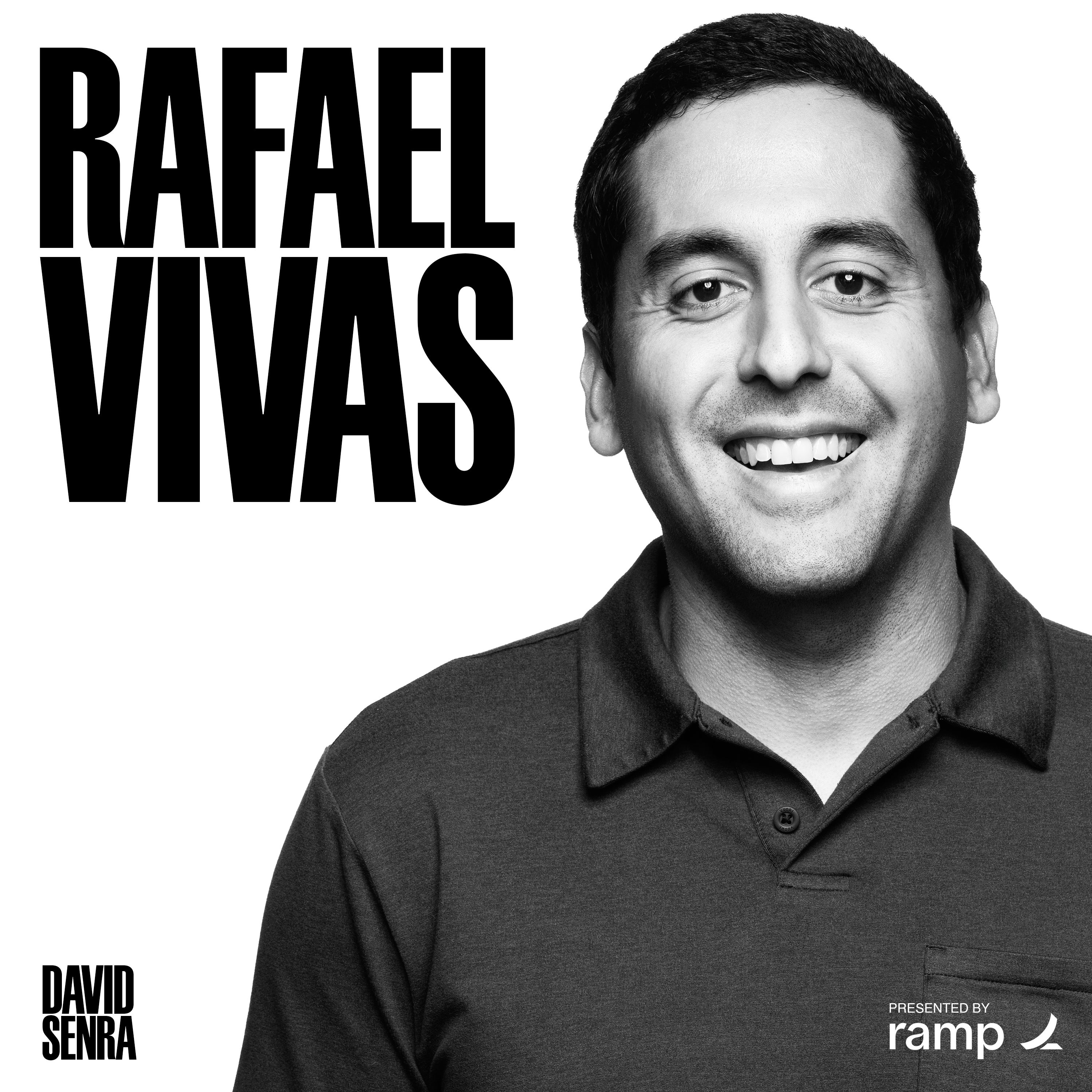
Rafael Vivas’s rise from high school dropout to multi-billionaire co-leader at AppLovin, driven by performance marketing, relentless value delivery, and “in-the-weeds” leadership. He explains why he left school, how he built early ad systems, and how AppLovin scaled by focusing on tech, profitable returns, and hands-on customer success.
Rafael Vivas is a performance marketer turned AppLovin executive. He started working online around age 14, interned with his brother’s performance marketing business, and later co-built AppLovin’s ad platform and its game publishing efforts. The host is an entrepreneur/podcaster who interviews founders (no specific background provided in the transcript).
Titles/seniority are “bullshit”; success comes from delivering the most value. AppLovin wins by prioritizing algorithm/tech over sales, living in the weeds, leading with “bad news,” and pushing advertisers toward data-backed decisions. Short-term stock moves don’t matter if customer growth is right.
Getting kicked out at ~16 after skipping school; building AppLovin’s mobile ad platform at ~17 after being banned by a competitor; living inside the Palo Alto office; out-monetizing rivals (often “double”); building Lion Studios to dominate a partner (Cheetah Mobile) and reaching 250M+ revenue in two years; persistent outreach to Nadir Khan (2 years to connect).
Written by AI. May contain mistakes.
Rafael shares his journey of being kicked out of his house and becoming independent.
“And literally it was like a day later, got my stuff, moved to my best friend's house.”
Rafael discusses how he transitioned from school to performance marketing.
“In business, for me, I always just focused on being the most valuable person in the room, doing what I could to drive the most value for everybody.”
Exploration of parallels between gaming and business success strategies.
“Like he'll send me his Spotify rap every year and it's like founders to the top.”
Rafael recounts the inception of his ad platform at a young age.
“Deal is how the best founders turn the world into their talent pool.”
Discover the pre-revenue phase of AppLovin and the challenges faced.
“Adam had a bunch of engineers just working on different apps.”
Learn how focus on technology helped AppLovin outcompete larger firms.
“I think what it came down to was that we have a very untraditional story and background.”
Explore the unique performance-driven culture within AppLovin.
“So just talk about like what it's like working inside of AppLovin.”
Understand the importance of delivering value to clients for business growth.
“Because Adam told me he thinks like you're one of the best deal guys in the world.”
Learn about the goal of creating a durable business that outlives its founders.
“What do you think are some of the other parts of Apple and culture that's very different from the inside that you would compare to like some of the other companies that you may see?”
Learn about the importance of purpose in business and personal fulfillment.
“I've heard you say in other places too that one of your goals is to build AppLovin into a durable business where it actually outlives you.”
Discover the challenges of burnout and the motivation to innovate in business.
“You were just like completely burned out.”
Explore the transition from an ad platform to a thriving game development business.
“I came back to this partner had pushed to the ends meet and I went to Adam and I said, It's very simple.”
Understand the emotional challenges faced after exiting a business and searching for purpose.
“you're the kind of person who's like, I couldn't go back.”
Reflect on personal goals and the importance of family and purpose in life.
“Like I was 28 when I took a step away from the business And I was like, I need to start thinking about like having children.”
Explore the challenges faced by founders after selling their companies.
“I thought I was going to go off to the sunset and enjoy my life and chill on a beach and never work again.”
Discuss the return to AppLovin and the realization of personal purpose.
“For me, if they don't do well, it doesn't set well with me.”
Understand the impact of stock price drops after an IPO and the company's response.
“if the business was ripping in a good spot and the stock price was going up?”
Learn about the emphasis on frugality and efficient management within AppLovin.
“No, because you're talking to a guy who my hobbies are like$15 a month.”
Examine how AppLovin achieves high productivity with fewer employees.
“Yeah, so the thing for us is like— Is that our same situation?”
Discuss the unique performance culture at AppLovin and leadership dynamics.
“What things are not important that you're wasting time on that we just shouldn't be doing at all.”
Delve into how sharing founder stories can impact business success and customer loyalty.
“So you described him before as like an incredible taskmaster.”
Learn how personal stories and connections drive consumer loyalty and business success.
“If you know all the struggle that he went through to make his products and you read the book on him or you listen to the podcast on him or you watch an interview with him, what are you going to do at the end of that?”
Explore Rafael's journey from high school dropout to a thriving entrepreneur and his motivations.
“or 99.9 out of a hundred people would be like, app who?”
Discover the impact of mentorship on professional development and attention to detail.
“Like, uh, Richard Branson says like, the only thing worse than being poor is like becoming rich and going for again.”
Understand the significance of perseverance and the importance of enduring challenges in one’s career.
“who had a ton of skill, but it wasn't honed in.”

Get the gist, explore an idea or ask about something said.
 Claude
On David Senra, what are the key points of this episode?
Searching your listeningAutomatic transcript. May contain errors.
0:02You have a very interesting story, one of the most interesting entrepreneurial stories I've ever come across. You're a high school dropout, you got kicked out of your house, you lived in an office, and now you're a multi-billionaire. So I want to start with, how did you manage to get yourself kicked out of your house? I always focused on driving as much value as I could. And so I realized, you know, when I was in school, I wasn't really good at it. horrible grades, couldn't pay attention, didn't really care about anything the teachers were talking about. But internet advertising was something that I gravitated to and kind of grabbed onto.
0:34And so for me, once I got into the business, I stopped going to classes. I was skipping school. I was working 24 seven. And it came to the point where my dad was like, all right, you think you're this big guy? You think you're this hot shot making all this money online? Then just move out of the house. And literally it was like a day later, got my stuff, moved to my best friend's house. And it was kind of funny because at that time it was, you know, I go ship to my best friend's house. His mom was a really sweet lady. And she was like, you know, hey, good to see you. I was like, oh, can I live in your house?
1:05And I was like, but I've got a great deal for you. I will employ your son as an intern at this business. I'll help clean the house. That was pretty much it. And so that was, you know, I would say the first foray of me moving out of the house. But you were how old when this happened? I was around 16 years old. Okay. But Why drop out of high school? Why did you, like, how did you, a lot of people drop out of college, but like you dropped out of high school. Why did that? So take a step back. I started working online around 14 years old doing performance media buying. And what I saw during that period was really eye-opening.
1:36I saw, at the time, I was working for my brother, you know, these guys were making $20 ,000,$30 ,000 a day in profit advertising different products. My teacher would make$25 ,000 a year. So it was a no-brainer to me really quickly that school, the upside was nowhere as high as compared to if I were to put all my efforts into performance marketing. And so your older brother was kind of teaching you the trade? Yeah. Is that how it worked? Yeah. So, you know, kind of backstory, I come from a family, it's four brothers, two stepbrothers, all boys, but my parents got divorced very early. I was, you know, not growing up with my oldest brother, but I was always online, always on the computer, I was building websites, did game servers business for a little bit.
2:21And at one point, my brother came to go visit my dad. And, you know, he was telling my dad that he was doing performance marketing. And my dad had this brilliant idea that I would go and intern for him. I go and intern for him for a summer, which initially I was against because I was like, I'm making$1 ,000 a month, you know, selling stuff online and doing game servers. And, you know, as at that time, you know, 14-year-old kid, that's a lot of money, you know, in middle school. So, you know, what ends up happening is he convinced me to go and join him. I start working there and I started doing like, I would say like I'm below the water boy.
2:56I'm like, you know, like the boring terms of service and privacy policy, like I'm the guy adding that onto the site. Whatever work that those guys didn't want to do, you know, was pretty much foisted onto me. But through that, I got to learn a lot about the industry. So I learned about what types of products people are interested in, what types of ads get people's attention, how money is made online just in general. And so that was kind of my big foray into it. And at the time, you became obsessed with online advertising, which is a funny obsession for a young teenager to have. But your other obsession was video games, right?
3:29Yes. Was there parallels that you drew between the two activities? I was never really good at sports. I played soccer and baseball as a kid, but I wasn't good at any of them. The thing that I loved about video games for me was that it was all about based on merit. If you're competing in a multiplayer game or a single player game, ultimately, it's just to out-compete the people that you're competing against effectively. And that was something that I loved. So taking it into business, for me, I always had this analogy in my head of when they sent the warriors out, you know, back in the days to go get food for the tribe, the only thing that people would care about back to the tribe was who brought back the food?
4:08Who killed the animal? In business, for me, I always just focused on being the most valuable person in the room, doing what I could to drive the most value for everybody. Say more about this. I think titles and, you know, seniority, I think it's all bullshit. I think in business, similar to sports and similar to video games, it's just about delivering the most value possible. And that was something that I realized early on is that if you go kind of down the same route as everybody else where it's like, okay, I'm going to go start a company. I'm going to be an analyst for a few years. You know, then I'm going to go and try to get to the next level of a manager and then a senior manager and so on.
4:44And it's this linear and very boring path where actually you limit your ability to grow personally and then also the ability to deliver value to a company. Versus if you take this other approach of what is the most important thing to the business? And in my skill set, what can I do to deliver as much value as possible? If you take that mindset very quickly, it may not be a linear route, but very quickly you will be exposed to opportunities that you wouldn't be otherwise. And so that is kind of the approach I've always taken. But this is one of the most fascinating things about you. when I tell other people about you and Adam Farooge is you had that trait when you were like a kid.
5:18You've been working with Adam since you were 17, 17 or 19, something like that. My brother and Adam had worked together. So I'd known of Adam since, you know, I was 14. I met him at 15. And when I told you I was the water boy, he came to the office. My brother was like, go get Adam a water. But I knew who he was before because there was kind of this leaderboard in my brother's performance marketing company. And, you know, Adam was at the top of the leaderboard at the time. and I was the guy behind him. Initially, I started building websites, I started building ads and then building campaigns. And so I knew where he knew who he was.
5:50So that's how I got connected with Adam. And then from there, we didn't really communicate that much in the beginning. I would say when I was around 17, 18 is when we got closer. And that was because, you know, my road was very, it was not linear at all. I didn't wait to be given opportunities, right? For example, like when I started building websites, that was one thing, But I was curious about, okay, like how are ads made? So I just started getting on Photoshop and making ads. And then at the time, somebody showed me how to put up a, it was like a MySpace campaign, and I did that. And then from there, it was like, okay, I want more traffic.
6:27And I just started reaching out to brands on my own, right? And nobody gave me the permission to do it. I just started doing it. Fast forward, I was like, hey, we started our own ad platform, right? Why are we buying from all these other ad platforms when we can just go and reach out to the publishers ourselves? And we have demand. Wait, so when you had this idea, we're going to start our own ad platform, you're how old? At that time, I was about 17 years old. Okay, that's a very unusual idea for a 17-year-old. Yeah, it was, the reason we started the ad platform was at the time, this advertising platform that we were working with, they had their own advertisements, their own offers.
7:01And they banned us off of it because we were competitive. And I got so angry that night that I was like, I remember I went home, like pretty much cried. And I was like, we're going to bury these guys. And I went to my brother and I was like, hey, I'm going to leave your company to go start my own ad platform. I want to go head to head with this company. And he started laughing so hard. And he was like, you're not going anywhere. I'll give you a few engineers. Go build what you want. And, you know, that was the idea at the time of Appenda. Appenda was a mobile ad platform. him. Around this time, Adam had already left my brother's company and he was actually done with ads and wanted to start building consumer products.
7:38And so, you know, the beginning of AppLovin actually was at first, it was a dating app. And then there was a fashion app. And then there was all these other products that they kind of built. Adam was buying traffic from me. Adam was buying traffic from your ad network for his apps that he was developing. Exactly. Okay. Exactly. So during this time, you know, Adam and I would talk a lot over AIM because it was effectively his account manager. But I would screw with him a lot. You know, I'd be like, hey, I'll teach you a lot about making money online. You know, I'll teach you how to run real business.
8:10Which is also another crazy thing because he's like 10 or 12 years older than you. 12 years older than me. Way smarter than me. Guy's a walking calculator. But ignorance is bliss. And I just had this ship on my shoulder, right, that I feel like I could take on the world. And as we spend more time, you know, talking, what ended up happening very intelligently, Adam was like, okay, this kid who works around the clock, but isn't that intelligent, has built this ad platform in kind of this wide open blue space that's seeing success. I'm going to go build a mobile ad platform. So he's going to compete with you.
8:42Yes. This is where he like pulls you in the room. He's like, don't get, he came on the show. Let me back up before we get to this, because some people are listening. They haven't seen an episode. And the Adam Ferugui episode, when people are like, I think that is one of the episodes I'm most proud of, because I think I titled it like the best entrepreneur you've never heard of. And, you know, it's the fact that like at the time it's like, whatever, Apple was a$150 billion market company. They're going to print$6 billion in cash this year, and they're doing it with like 400 employees. And the reason I'm proud of that episode is because it goes out and all of the like, almost like I think the next like five or six guests that we had on the show that came on, this happened over and over again.
9:23We did this episode that'll be out in December with Mr. Beast, right? And I've known Mr. Beast for a while. He listens to my other podcast founders. Like he'll send me his Spotify rap every year and it's like founders to the top. And as soon as we stopped recording, he leaned forward, he goes, hey, can you introduce me to Adam? Mickey Malka, over and over again, like who is this guy and can you introduce me to him? He was like such an unusual, like unfiltered, like hardcore person. So this is the person that we're talking about. This is the person you've been working with for like half your life.
9:48Yeah. So now this guy is like this fucking kid is making all this money with this ad network. Don't I think he told the story is like, pull you in the room. He's like, don't be mad, but I'm going to compete with you. Yeah. You know, it's funny. He was in the office and he had this shit eating grin like on his face, like like somebody who would just like eating your food. And it was actually that he pulled me. I pushed him into a room because I saw the smile on him. I was like, what the hell? Like, why are you so happy? What are you smiling about? And that's when he goes, hey, don't be mad. I'm building a competing ad platform.
10:18And at the time, I didn't care because I was, you know, like you mentioned earlier, I'm a massive gamer. I love playing video games. I was actually going to go join my friend's company in Y Combinator that built mobile games. And then Adam Reverso-ed me and he said, whoa, wait, what do you mean you're going to go join somebody else's company? You should come work for me. You know, you know how to work your ass off. You know everyone in the space here in mobile gaming, but you know nothing about building a real business. not of respect for Adam because even though I talked a lot of shit to him online and, you know, I always knew he was a really intelligent guy.
10:48I decided to come down to Palo Alto and meet the rest of the team. Is this when you move into the office? Yes. So a lot of people like, oh, I'm here 24-7 or, you know, I work 996. Like, Raph moved into the office and then it speaks to the unique culture that you guys have. Adam built the bed. He did. He did. Him and another engineer. So double click into it. So what happened was this. So interviews went great. I was like, these are the smartest guys I've ever, you know, really spoken to in my life. It's a no brainer. I'm going to join. You know, we negotiate. I'm like, I want half the company.
11:21He's like, oh, somebody in your role gets a quarter of a percent typically. You know, I got a little bit more than that. I didn't get half the company though, obviously. And so I was like under, but there's one circumstance I have. And he was like, what is it? And I was like, I have to live inside of the office. And he was like, like sure but why and i was like think of this as like the vietnam war right like we have this goofy name called app loving we have no vc funding right you're gonna have some five foot eight chubby kid go out there and go sell you know to game developers and advertisers the only way that we're gonna win is we're gonna have to out hustle everybody else which means i have to live here right like this is the only way this will work and you know obviously he's very happy it's like your first business hire, the guy's like, I'm going to fucking live in the office.
12:08Like you couldn't ask more for out of an employee. So yeah, him and this guy called Furkan at the time, they went to Ikea and they built my, built me. And this other guy who's, I brought over another engineer to come live inside the office, our bunk beds. I can tell you the other engineer, the second he saw the bunk beds, he was like, screw that. I'm definitely not living here. When I saw it, I was like, home, sweet home. You know, I'm in time to get started. I want to tell you about the presenting sponsor of this podcast, Ramp. I have been reading a lot about SpaceX lately. SpaceX is one of the most valuable businesses in the world.
12:37And one of the main themes in the history of SpaceX is constantly attacking and questioning your cost. Ramp helps many of the most innovative businesses in the world do exactly that. The median company running on Ramp cuts their expenses by 5%. And one thing SpaceX has demonstrated is that a religious dedication to controlling costs can help actually increase revenue because you can pursue opportunities you couldn't otherwise. and we see that in the Ramp data too. The median company running on Ramp also grows their revenue by 16%. So when you're running your business on Ramp and your competitors are not, you have a massive competitive advantage that compounds over time.
13:15Ramp is the only platform designed to make your finance team faster and happier. Many of the top founders and CEOs I know run their business on Ramp. I run my business on Ramp and you should too. Go to ramp.com to learn how they can help your business save time, save money, and grow revenue. That is ramp.com. Deal is how the best founders turn the world into their talent pool. I've been studying how history's greatest founders operate for a decade. And one thing they all have in common is they understand that recruiting and hiring the very best talent is your most important priority. A players recognize other A players, which is why top companies like ramp, Shopify, 11 labs, Uber, and DoorDash all use deal.
13:54Many of the top founders I know have personally invested in Deal after using their product. And what they discovered is that Deal is the best company in the world at building infrastructure for global hiring. Deal will help your business hire, pay, and manage any worker anywhere in the world so you can retain the best talent anywhere and spend the rest of your time focusing on what you do best, delivering value to your customers. The founder of Eleven Labs has a great description of the value Deal can give your company. He said, we built Eleven Labs to break down language and communication barriers.
14:23With Deal enabling us to hire and support exceptional talent anywhere, we can accelerate our innovation and bring more voices, stories, and ideas to every corner of the world. Deal is trusted by over 40 ,000 companies and growing fast. Learn how they can help your business by going to deal.com forward slash Senra. That is deal.com forward slash Senra. What is the state of the business at the time you move into the office? State of the business is pre-revenue. It was like an animal house. Adam had a bunch of engineers just working on different apps. And they were just trying to find a product market fit.
14:59Their next idea was to build Apple of an ad network. And, you know, for context on Adam as well is that Adam before had ran a very successful ad platform called Social Hour. That was an ad network on Facebook. And then before that, you know, he'd been doing advertising as well. So he was very, very familiar with the space. And something that he mentioned in your last episode, he already saw a lot of user activity switching from PC to mobile. So it was kind of like he was the perfect person to tackle the space because he understood the problem. It was a wide open field. And then also me coming on board, I was able to connect us at that time to the right advertisers and publishers and the rest is history.
15:40He also told this story too where he tried to sell 25 % of the company to VCs for a million dollars. Yep. He's like, you know, you can buy 25 % of the company. You should back this. You guys got in really early where you just said this transition from desktop to mobile. And he was turned down because they thought they're like gaming and ads. Like these are terrible businesses. They didn't understand that. And then a few years later, they go and fund a bunch of other competitors to you. And he said, you guys made it a company principle to put those, to drive those other competitors out of business.
16:10So take us to the back here. So there was actually plenty of other companies in the space that were very well funded. and they were backed by the top tier VCs at the time. So Benchmark, Sequoia, and so on. Some of them were very, very successful already. It felt like the market actually at the time was very mature. It was like, how are these, at the time, it was like this one kid is doing sales and a few people in Palo Alto are going to succeed against these behemoths that already had, at that time it looked like a lot of the market. And also when Adam went to go try and raise his money, we were already profitable.
16:42It's funny because he was giving them a deal on a silver platter. Revenue traction, companies growing like crazy month over month, very profitable, you know, world-class margins compared to everyone else in the space. And he still got turned down. Why do you think that is? I think what it came down to was that we have a very untraditional story and background. A lot of people that, you know, had raised money before, you know, they were doing these mobile game app, they were game publishers or they were part of these big corporate companies. And so on paper, you know, they worked at Facebook or they worked at Google.
17:17They were on the AdMob team, which was one of the biggest ad platforms at the time. You know, they worked for all these businesses. So on paper, they looked great. Versus us, we were performance marketers who, we always ran arbitrage businesses. We'd never run an ad network that had kind of seen its way to a very profitable exit. So I think that's really what it was. How do you start? Like you guys are a smaller team, no funding, essentially bootstrap, competing against already established players that have more money and have more people. So how do you guys start building a company? How do you start winning?
17:49What Adam understood better than anybody else in the space was that the tech is the most important part. Everyone else focused on sales, right? So they had hundreds of advertisers, and they had these premium publishers, but their algorithms were shit. A lot of these algorithms were people just manually optimizing things in the background. Now, we didn't have a state-of-the-art machine learning model that's not what existed back then, But we had rules in place and we did regression learning around, you know, kind of deciding what to serve. And that in itself allowed us to outcompete our competitors, even though we didn't have as much demand.
18:24And even though our publishers at that time weren't as high quality of some of the other ad platforms. And so when we would go and we'd actually see our monetization, let's say we'd go head to head with another ad platform. And a lot of times we would monetize at, you know, double the clip of somebody else. So the conversation of when I would run into, when I'd walk into a room where I'd reach out to a publisher was, I guarantee you more money than you're making elsewhere. It was a no brainer, right? A lot of people, they believed it was too good to be true actually. So they make us put it in writing.
18:51We had no issue doing that. I would really say it was like Adam's vision and going all in on the tech is what allows us to succeed. Okay. We were talking before we started recording. You're like, I think our brand is like too soft and it doesn't represent like the insane performance culture that we have inside the company. Okay. I want to skip ahead, way ahead in the story, because I spent a ton of time with you, spent a ton of time with Adam. And it does kind of remind me of like the Chicago Bulls being led by Jordan that you see in like the last dance. So just talk about like what it's like working inside of AppLovin.
19:22AppLovin is a company where we're always on. And our goal is to make sure that any dollar that is given to us that we're driving a profitable return. And so the businesses that we partner with and we work with, we treat ourselves as an extension of their team. And that is really different than a lot of these other ad platforms where they look at it as they're just providing a service. So I'll give you an example. We've interviewed a lot of people from some of these bigger ad platforms, and they try to come get a job at AppLove. And one of the questions I'll simply ask them is that, hey, would you set up a campaign?
19:52Would you upload ads? Would you come up with creative ideas? And a lot of times, like, whoa, if I haven't done that, why would you do that? And for us, we do all of these things. And this is a part of like our operational excellence is that it's, we feel like all of these little things, they all add up to delivering incredible returns for our advertisers. And so that I would say is one big thing that's different. We are so focused on performance. That is actually like the cornerstone of our company. So a lot of people may say to us, like customers, they love and hate us for it. Some customers say like, or well, I say a lot of customers would say, we're very competent.
20:27We're great. We're, you know, we deliver great results for them. But they would say, like, you guys are pretty arrogant and aren't always the nicest people. But it's not that, you know, we're trying to be arrogant. It's that we just ultimately are trying to deliver the best returns for them. And so we are very opinionated on what they could be doing better and always pushing them. Versus other companies out there, they would say, well, whatever the customer wants, the customer's always right. It's like, if our goal is to deliver more customers profitably for you, then, like, there is data that you can look at and there is right and wrong decisions.
20:56and for us, like we're always trying to push towards the right decision. So say more about this like anti-delegation take that you have. Yeah, so like we talked about this before the show, like a lot of leaders, like, you know, and you hear about it in podcasts, is like hire people, delegate, delegate. That's not a cloth we're cut from at Uploven. And the reason why is kind of like to be a great leader, you have to be in the weeds. If you think about like in a sports analogy, right, like why did Michael Jordan always get the ball? You know, or why was he, you know, effectively like considered the captain of the team?
21:25It wasn't because he was like the oldest person there, the most senior there. It's because when they gave him the fucking ball, he made the shot, right? And so for us, we look at it as in like, if you're in the weeds, you understand what the customers want. You understand what the customers need for them to succeed. And you understand what's also important. Like when you delegate and you hire all these people, you focus on a lot of things that are not important for your business. But you've hired these people, so they need something to do, right? So you just go and have them work on these tasks that don't really move the needle.
21:51Did you watch the Todd Graves interview that I did? I did. Where he says that he's a delegate. He's like, what does that word even mean? He had like this nasty look on his face. He's like completely anti. There's a lot of great founders that are kind of like anti-delegation. Yeah, I also think it's like, it's what makes the game fun, right? Like going back to like video games, it's like, imagine like you play all these levels and then you get to like a boss, like the final boss. Like you're gonna hand the control to your friend? Fuck no. You're gonna like go and do it yourself. Like that's a new challenge, right?
22:19And that's what keeps the job exciting for me personally. What do you spend most of your time on? Because Adam told me he thinks like you're one of the best deal guys in the world. I focus on doing the highest leverage deals that we can that's possible for the business, right? So like we have a very small team. Luckily, we're a business that's very profitable and growing very quickly. And so we try to do deals with whether it's, you know, companies, their advertisers or doing partnerships with other companies that can bring us thousands of advertisers. That's my goal is to generate or to bring as many customers onto AppLovin as possible so we can build the best business possible.
22:52and one of the biggest ad platforms in the world. And then you try to expand the existing customers too. Adam told this great story on this podcast where he's just like, yeah, Raf's like an animal. And he's just like, I get calls from customers all the time. He's like, what's up with this guy? This guy's a multi-billionaire and he's harassing me to spend an extra$5 ,000 a day. And he's like, this shouldn't matter to you. And he goes, it matters to us. Everything matters. Everything fucking matters, right? It's like, if you can't do the small things, right? How can you be excited to do the big things right?
23:18And like, you know, I've said this online before, but like, we're just getting started. Like, you know, Adam talked about this. We're on pace for$20 billion of advertiser spend. When you look at like the two behemoths in the room combined, they do half a trillion dollars of ad spend on the platform, right? Or across their ad platforms. So like there is so much room for us to grow. And when you're able to get into the weeds, make sure that you're succeeding for your advertisers. and by the way, a lot of times, like we do deliver better results for advertisers, but they may not move budget in the beginning because like they're not focused on us or they're focused on other things.
23:55Like it's important that you get in there and you make them care about your business, right? And that's actually one of the, I'd say one of the superpowers I have is that when I reach out to these customers, like what the hell is this billionaire reaching out to me for an extra$5 ,000? It's like, it goes to show like, we're very serious about your business. Like we really care about working with you. you're not just a number and a spreadsheet to us. Is this just like a persistence thing? Like I just read Ari Emanuel's new book and his whole thing, he's going to come on the show. And one of the things I want to ask him is just like, just literally just calling people over and over again, actually work.
24:25Because people do this with me. They're like, hey, I want to get in touch with you. And they're like, I'm just going to email you every day to your response. Like you're getting blocked immediately. Like that's just not going to work with me. If you just email people like nonstop, right? And just send them useless stuff. Like they're just going to tune you out. And as you said, you'll block them. I think what matters is like you're persistent, but you're always figuring out ways to deliver value for the customer, right? So give me an example of that. So it's a really funny story. So we're going to Miami after this, and there is this guy called Nadir Khan.
24:53He ran a business, an apps business out of Miami, sold it for a few hundred million dollars. And it took me two years to get a hold of him. And every single time I had reached out to him, it was about ways that they could make more revenue, right? Whether it was like, hey, this level could be optimized, or you should be showing ads here, or like, hey, in this market, you're like, you're dropping the ball here. And there was this inside joke within their company, which was, we wish we had a Rafael Vivas on our team because this guy's always like on top of things trying to help us become better.
25:26And eventually he like responded back to me. He goes, you are one of the most persistent folks that I've ever encountered in my whole entire life. And then after that, we started doing a lot of business together and we helped them grow dramatically. Okay, so it's not like, hey, I'm gonna keep bothering you, calling you, emailing you because I want something from you. I'm going to keep getting in contact with you and delivering value. And you'll just realize after I tell you six good ideas, hey, maybe I should take this call. Exactly, right? And also it's not like a lot of times like these people don't think that your ideas are good.
25:51It's just like they have other things going on, right? It may not be the right time. They may not have the right people. It's important to always stay in their ear. Like you said, right? If you're delivering value, like these people will eventually want to work with you. What do you think are some of the other parts of Apple and culture that's very different from the inside that you would compare to like some of the other companies that you may see? The really big difference about us is like, we are very, very hands-on. That's what I touched on before, but like even Adam sometimes will set up campaigns or like we'll be checking in on these small clients.
26:24And I would say like really just like giving a shit, like really caring is one of the biggest things for us. And then also like, I would say like we lead with bad news internally. Like, you know, a lot of companies like, you know, They're like, hoorah, we did this thing and it's great for our business. But a lot of the internal app love and monologue is like, this sucks, this sucks, this sucks, this sucks. And then we just tackle it one by one to go and improve it, right? I would say those are really the two big things. You guys seem to be immune to your stock price volatility, too. I remember something happened recently, and I don't pay attention to the news, so I don't even see this.
27:04But I think it dropped by quite a bit for some reason. and I had called Adam and he'd called me back like right away. And I just had like a joke for him that had nothing to do with anything. And like, he was like laughing and he was in a good mood. And then I found out after the fact, in fact, we were flying back from a recording. And then somebody on the plane had told me, they're like, dude, their stock dropped by like, I don't know, 20 % today. I was like, you would never know talking to him. He just did not give a shit. We don't care about the short term, right? And we don't care about the short term because ultimately, if we feel like we're doing the right things for our business and growing, ultimately, the stock price will reflect that.
27:40Right. And, you know, you saw the company went to one point worth$3 billion, or actually, sorry, $4 billion. So like the stock dropped over 90%. So like being cut by 20 % or being cut by half, it's just like another day in the NFL for us. Like it doesn't, doesn't faze us. As long as we know we're doing the right things and helping our customers grow, the score will take care of itself. I've heard you say in other places too that one of your goals is to build AppLovin into a durable business where it actually outlives you. Yes. Where did you get that idea? Purpose is extremely important in life.
28:14And for me, I'm probably not going to be the guy who cures cancer or I'm not going to build AI or robots or anything like that. But what I'm very confident that we can build is a business that will be able to help companies grow many, many, many years past our lifetime. And that, to me, if I can do that successfully, I would say I have succeeded in my lifetime, personally. So is that why you're still working? Is that why it keeps you going? because like there's some people, I was just at this event in England and one guy sold his company for like$13 billion and he's kind of like chomping at the bid to get back in the game.
28:56You know, he doesn't regret the sale, but he's just like, I can't be an employee. I have to have a company. I have to have like some kind of vehicle for all my creativity and my energy. And he, but he said his other co-founders are just fine. They made, you know, a billion dollars each or whatever the case was. And he's just like, they're like building houses and they're like writing angel checks and they're hanging out on the beach. So it's a few things. One, like when I say like we're still early in the game like i didn't work 14 years of my life to like leave before the game even got started like what are we talking about the job's not done yet right like we are so early in our life like as a business and like our impact like it makes no sense to me i'm like why i would leave this early i have to be a part of something bigger than me right and And bigger than me is helping businesses grow, delivering tens of billions of dollars, hopefully someday hundreds of billions of dollars of value back into the economy.
29:49I think that's one of the great things that we do, right, is that as we help these businesses grow profitably, they can hire employees, they can invest in better products. And ultimately, that gets consumers purchasing their products more and stimulates the economy. And I think that's something great that I can do for society. What happened where you had to take a year off, though? You were just like completely burned out. Like, tell me the story again. Yeah, so I, it's the back. So we started a games business. And the reason of starting a games - Wait, the ad platform first, then the games business, because what was the reason for just starting the games business after the ad platform?
30:26You know, we did a lot of business in Asia. China's like one of my favorite places to do business because the founders are so intense. They move very quickly. They're intelligent. Just like everything you'd want in a business partner. It's no bullshit. One of our partners at the time was this company called Cheetah Mobile. And they were one of our biggest publishers. And what they would do is they would just squeeze us, right? Squeeze us in every way possible you could imagine. And, like, we had an agreement signed with them. And they were like, screw the agreement. We don't care about it. Like, you know, and they would just break it all the time.
30:56You know, there were so many nights I'd stay up when I was staying in the States until 4 or 5 a.m. to, like, go and manage them. And then, you know, spend a lot of time in Asia with the leadership over there, too. But throughout this journey, you know, I was thinking to ourselves, like, We will never be in a position where we are so dependent on one of these partners. And we'd also seen what Netflix had done at the time. And we thought there was this great opportunity for owning the vertical, really. Great, we have that platform, but also having our own content as well. You have better economics, you have a distribution advantage, and overall you build more enterprise value.
31:30And by the way, this is not an uncommon business tactic in Asia. Like the biggest gaming companies in the world are all also distribution companies. Like Tencent being a perfect example, NetEase being a perfect example. These are companies that have other things outside of the games and they use that to distribute their games. So that's how we got into the games business. But Cheeto, you know, really pissed me off so bad. It kind of like I told you the story earlier about how we started the ad platform because one of our partners fucked us. I came back to this partner had pushed to the ends meet and I went to Adam and I said, It's very simple.
32:04I'm going to leave to go and build this competitor against Cheetah Mobile, or I'm going to do it here. And I really want to do it here because— Wait, wait, pause there. Why is that simple to you? Why would you leave to go build the competitor? It's Cheetah, the animal? Yes. Okay, to Cheetah. Because I had so much rage in my heart that I wanted nothing but to, like, dominate those guys. It wasn't about, like, you know, I'm a very simple guy, David. You know, and we talked, I stay in the$200 hotel. hell, I'll take the, you know, the shitty, you know, commercial airline flight. So like money to me, like, of course, like it's important, but like, I don't, you know, some people like, hey, I'm going to make more money and buy the big house.
32:40I don't care about any of that, right? Like for me, when I work, like it's for purpose. And that company would push me to a point where I was like, my purpose at this point was to destroy these guys. And so that was really the start of, at the time, Lion Studios. And why did I call it Lion Studios? Because Lion is the only animal that can kill a cheetah. And our thesis was, let's go work with the best developers in the world. We have one of the largest distribution platforms in the world, and we'll help distribute their games. And within two years, we boiled that from zero to over 250 million in revenue profitably.
33:14It was a great business. But throughout that, it was really fucking tough for two reasons. One, as you can imagine, when you start building games, all of our customers started looking at us as competitors, right? Because at the time, the app loving is essentially, it's advertising in games, but at this point, you're still just doing game installs? Exactly. Okay. Exactly. So we're the new kid on the block doing games. And our partners didn't like that, obviously, right? They looked at us as hostile. And in reality, you know, there was more benefit, right? We were creating more inventory for the market.
33:50This data was helping improve our machine learning model. And so we're able to be more efficient at effectively driving traffic for them. And so they worked with, like, even though these partners didn't like us, they worked with us because of the value we delivered. But there was a lot of internal stress. And then also the games businesses are very hits-driven. You're working around the clock. And our best partners that we publish games with, they were not sitting in America. They were sitting in Europe. They were sitting in Asia, you know, all around the world. Why do you think they weren't in America?
34:18I think they were in America really for two reasons. One, the cost of labor is a lot higher here. And games, like the games that we were building at the time, you didn't need the best of the best, right? It was just about getting the most amount of reps as possible. And a lot of the games that we built, these games called hypercasual, there were these methodologies we would use to determine what would be a hit game. And a lot of it was just based on like, how marketable was the game? What we saw was like, You could get more cost-efficient employees over there. And then also, they would just work.
34:50They would out-hustle the hell out of the American studios. So we'd interview these people at some of these game studios. And they'd be like, yeah, I worked nine to five. I handled this really small part of the equation for this game studio. They'd have these bloated teams. Versus I would go meet. It was actually a perfect example. There was this team called Game 5 Mobile. We released a game that did close to$100 million in revenue together called Happy Glass. It was a husband, wife, and little brother. And they were so poor that they all lived in the same house. And their house was also their office.
35:24And I think at one point, and I may be wrong right here, I'm pretty sure they all slept in the same bed. I think this is literally how poor these guys were. So when you come from that, you can't compete against somebody like that. They will die before they fail. And I think two things. One, those partners, they're incredible to work with. But it also drove me to work harder. right? Because I saw what they came from. And I know this was their big shot. I loved making people like that successful. They were the underdog. Nobody had believed in them. And actually, it was funny, this company, Game 5, these three people, they worked, I think, at HP.
35:58They took this bet on this game studio. And for them, like, if it didn't work in like the next month, they were gonna have to go get jobs again. So it was like make or break for that. I found one of my all time favorite quotes when I was reading the book Zero to One. The quote says, The single most powerful pattern I have noticed is that successful people find value in unexpected places. And they do this by thinking about business from first principles instead of formulas. That is exactly what AppLovin has done with their advertising platform. AppLovin connects you with over a billion potential new customers in mobile games.
36:30AppLovin allows you to capture undivided attention. AppLovin ads are full screen videos that are watched for an average of 35 seconds. That is retention that blows other ad platforms out of the water. And you can launch on AppLovin in minutes. You set the goal and AppLovin achieves it. No complex setup, no expertise needed. And AppLovin scales quickly. They can put your ads in front of over a billion potential customers. Other businesses have seen immediate results, scale to hundreds of thousands of dollars of spend per day, and increase their revenue by millions. So you want to get started quickly before all of your competitors are on AppLovin.
37:07And you can do that by going to applovin.com. That's applovin.com. Your story is similar where you've told me in the past where it's just like, you're the kind of person who's like, I couldn't go back. I got kicked out of my house. I'm moving into the office. Like this either works or I die. Yes. That was literally what you said. Yep. Like there is no turning back. Like I'm going to die. I'm going to succeed. It's like 50 cents. It's like get rich or die trying. I'm going to succeed or die trying. Yeah. I mean, I would, it's funny, I dated a girl all the time and I told her, I'm going complete black mamba.
37:38And when I would work, I would listen to like these motivational, I was kind of a psychopath. I listened to these like motivational videos all day while working. I did this every morning when I was like, because I, you know, because like you're a fan of founders, that's how we met. And five, first five and a half years, I was just like, I don't get it. Like, this is a better podcast than like, I'm obsessed with podcasts. I know what a good podcast is. This is better. No one's listening to it. And I'd have to wake up every day and brainwash myself with this stuff. Right. It's like, it really works.
38:03Yeah, yeah. And like, especially because like, It was such an intense environment internally, right? Adam is, like, pressing really hard on me. I understand, like, the future of the company is on my back because at this point, like, all guns are pointed out at us. We've burned the ships, right? Like, we are there to, like, win. There is no other option. So I would wake up, you know, at, like, 4 a.m., and I would stay up until, like, midnight. And you're in your early 20s? I was, yeah, I was at that time, let's say, like, 26 to 28. So, you know, I was doing this. But no kids. No kids. No long-term relationship.
38:36basically just work. Yeah, just work. Nothing else mattered to me besides work. It was the most important thing. So I did that for two years. And I kind of, at two years then, I kind of put my mind up again, like from the frame, I realized like, oh shit, this business does like not need me anymore, actually. This is the game studio? The game studio. It was a game publishing business. Okay. So like the way that I would, I would compare it to the universal music group, right? Like we had the distribution, we'd go find talented game developers and like bring their games to the masses. And by the way, we drove over 20 games, number one, over 3 billion downloads.
39:06Like this was an incredible business. And we were one of the biggest at the time. I'd gotten to the business to a point where I was no longer mission critical. And at that same time, I started like reflecting on myself and I was like, okay, so like the business no longer needs you to succeed. Right. And we'd also done other acquisitions that helped lead up of other game studios. So like, what do I really want to focus on? And for me, like making a family was really important to me. Right. Like I was 28 when I took a step away from the business And I was like, I need to start thinking about like having children.
39:35This was something that was always really important to me. I always knew I wanted to be a father. And so I took some time off from the business. It was funny, you say a year, but I wasn't really good at taking time off because three months in, I started going crazy and just started building products for fun. But yeah, I moved to Miami at the time because San Francisco was so depressing. COVID, everything was shut down. I went to Miami. It was supposed to be just like a vacation for like a weekend. And I was like, oh, my God, COVID doesn't exist here. Like, everything's open. And then, you know, I ended up planning my roots there and meeting the world with my life and having a family.
40:07Yeah, I was there during that time, too. Yeah. I remember because one of my favorite pizza spots is Lucali in Sunset Harbor. And at the time, you used to go up. First of all, there would be, like, never wait. And then there started being wait during COVID. And you would put your phone number. And I kept seeing all these, like, 415 and 212 area codes. Because everybody from San Francisco and New York came to Miami at that point. So wait, you take a sabbatical? Like, how did you frame this with Adam? Was it a sabbatical? Like, what did you say? I'm fucking done forever? Yeah, so this was really good at breaking the news to him, right?
40:38This is like, you know, Adam's like a big brother to me. And so I waited for my birthday. You know, I'd actually been like diarying it for a while of kind of like what indirectly, I was actually just kind of, I kind of knew I wanted to take time off. I'd say about a year before I was just writing about like, what are the things that the business, like, where am I the bottleneck? And where does the business need to be in a place where I don't exist, but here for it? So I kind of just started marking things off the list. And before I knew it, like, everything had been accomplished. And like, you know, I could not be around and new games were being released and revenue was growing.
41:13And so I called Adam. And I was like, hey, like, you know, it's my birthday. It was a happy birthday, of course. And I was like, hey, I want to take some time off in the business. And Adam is not a very emotional guy. He's just like, are you sure? I was like, yeah. He was like, well, I respect whatever you want to do. And then we kind of like ended the conversation. And then what happened after that was like a lot of people calling me being like, what the hell are you thinking? What are you doing? My brother, this guy, Harold Chen, all these guys, they're trying to convince me to stay. They're trying to offer all me all these different packages.
41:46And I was like, it has nothing to do then there's other things in my life I want to go and accomplish. And so I took a step away from the business. I would say, like, from that conversation, probably it was supposed to be like a six-month transition, but within three months I was kind of out. At the time, though, did you think I'm out of app-loving for good? Oh, yeah. I thought I was going to go off to the sunset and enjoy my life and chill on a beach and never work again. But you realize very quickly that it's a very fucking depressing life. Like, there's no purpose. We should have a fucking ad in every one of our episodes about this.
42:18It's like go these post exit founders that have never found something else to work on is like the most miserable souls to be around. Yeah. And to double click on it, you know, so I like, you know, I love playing video games, which you realize that like on a Wednesday afternoon, you have no one to play games with. None of your friends are around. They're all fucking productive. They're doing things. Right. So you have no one to hang out with. It gets lonely. But then I started, you know, I started working on these businesses. And actually this double clicks into like what drives me. What I realized is like, you know, I found this great tech team and we were working together and working on these products.
42:50I didn't, one, I didn't care about the products we were building with. I had no connection with them. For me, it was just like. You're talking about the ones you're doing in your sabbatical. Yeah, my sabbatical was like, oh, I just like opportunistically like, hey, I think this vertical is right. The KPIs look good. Let's go and build into it. So that was like one thing. One funny thing is I ran a dating show for a little bit. Don't recommend that. You ran a dating show. Yeah, it was Love or Fame. The idea was that you come and you, it was on a mobile phone, and you would compete for love or fame.
43:20But imagine watching 12 hours a day of dating shows if you want to jump out of a window. So that wasn't for me. And then the second thing is, like, you know. Sure, but you take time off to go on a beach and not even on a beach. Yeah, not on a beach. Just, like, low-quality work. Yeah, and that, which was horrible. And then the second thing was I, like, did not truly care about the people I was working with when I started the second company. So I would say, like, one of the things that's kept me here at Apple for so long, outside of helping our customers succeed, is, like, I really deeply care about the success of Adam and the rest of our team.
43:56For me, if they don't do well, it doesn't set well with me. I will die. I will run myself into the ground to make those around me succeed. And I didn't have either of those things. And so my journey back to AppLovin was we're New York Stock Exchange, ringing the bell. We're all hanging out. So when you go public, you're still outside of the company? Still outside of the company. Great shape, by the way. So yeah, so go there. We ring the bell. And like, first day out, stock drops, right? And, you know, I'm talking to people there and, you know, things, they were, the company is still growing, but like there was definitely some flaws within the business.
44:43And it was like very clear to me that like, I need to be here. Like, this is my calling. You found your purpose. This is my company. and, you know, we were drinking our sorrows. I wouldn't say partying because it wasn't like a super happy moment. You know, your IPO happens, your stock immediately drops after. And Adam, you know, he looked at me and he was like, hey, I'm hearing from people you're thinking about coming. And I was like, I'm fucking in. And then I've been here ever since. I got drawn back in through the purpose of the business and I knew there was a lot more I could be doing here.
45:15Do you think you would have made that decision if the business was ripping in a good spot and the stock price was going up? I think I would have, because at that point, there would have been nothing else for me to offer to the company or no value that I could deliver. So you would have stayed out of it? I would have stayed out of it, and I would have had to figure something else out. But I felt like at that point, the business needed me. And this is where I think you guys go public, something like$28 billion market cap or something like that, and it goes down, I think, almost every day for 200 days or something like this.
45:42This is the legendary stock buyback, which we should retell this story now because it's incredible. The company's crashing. It's funny. It's inverse, right? Stock is crashing. Revenue is going up. And so like Adam tells a story better than anybody, but you know, he just doubled down on buying up Lovin stock and levered up the company. And it was one of the greatest returns of all time, right? Yeah, because I think at the time, I think you went down to$3.8 billion market cap, right? Something like that. But I think you guys were doing like a billion in cash flow or something, right? And so the idea is like, let's take, no one else is going to buy our stock.
46:11Let's take this billion in cash flow, start buying back our stock. And then at one point, the company reaped like a$50 billion windfall on that decision to buy back the stock. Yes, yes. And it was funny because at the time, we were thinking if the stock continues dropping, we're just going to buy the company and take it private, kind of like Michael Dell did with his own company, right? So that was kind of one of the directories we were going to go if it didn't keep free falling because we thought it was such an incredible business and we knew we wanted to continue running it. Well, that was going to be my next question to you.
46:40Like, when this is happening, you're like, okay, we went public 28, now we're down to 3.8. You're not, like, stressed? No, because you're talking to a guy who my hobbies are like$15 a month. You know, like I play like a game of World of Warcraft, right? It's like a subscription. I, you know, I hang out with the same friends I did in high school or people I work with. You know, I wear clothing that's like, you know, pretty cheap. I don't have like these extravagant tastes. Like, I think what ends up happening with a lot of these people is that their lifestyle creeps a lot more than what they end up, you know, having.
47:18That was something that never had happened to me. And so I was never concerned about cash flow. I knew we had a great business and, you know, they were still growing. So I was just like, you know, let's double down on what we have. It's like frugality, like a company. Like, is that something you guys talk about inside the company? Because like, I remember talking to Adam and at the time the stock price was amazing. On paper, he's worth like 20 billion. and he's like taking JetBlue. And then I introduced him to my friend Patrick and he was like, I think doing like investor meetings. He was like flying like Southwest or something.
47:50There's like a normal like budget airline. It's like, what is this guy doing? Yeah, so I think it's less about like, you know, we're talking about frugality, but you know, if you look at dashboards all day and the main key period is return on ad spend. Like we think about life like that, like how much return am I gonna get for my investment, right? If I can get to the same place at the same time, but one is 10x cheaper, why wouldn't I take that every time? I think that was really kind of the mindset of it. So it was less about frugality, but the return wasn't there for it. What is this relentless focus you guys have on the amount of employees you have in the business?
48:25Yeah, so the thing for us is like— Is that our same situation? We can hit this much revenue with half the—it's almost like a demonstration of an actual skill set of an entrepreneur. It's like I can do twice as more with half of what you're doing. Exactly, right? Because it's a distraction, right? You're managing C players that are just wasting your time, or you're focused on things that don't matter at all, right? And so it's actually great when you have less people. It forces you to be very focused. Is this like something that's talked about inside the company, or does it just happens naturally?
48:54It just happens naturally, just who we are. Because this goes back to your insane performance culture. Yeah, I'd say like Amazon was maybe one of these companies where they really focused on being frugal. But for us, and also because the company is founder-led, we spend the money like it's ours, right? We're also very data-driven, very analytical. We look at everything that we do, right? When you look at it from a spreadsheet perspective, it's just very obvious the things that make sense to double down on and other things that don't. So is there not like lots of, you mentioned earlier, we can do every single job in the company.
49:25We can do the campaign. We can make the creative. There's not many layers of management inside of it then? No, not really. I mean, obviously the algorithms, we obviously can't do that. And luckily we have like an incredible team that has, that's able to like build those systems that Adam and I and others can't. Like for us, like, like this goes to like the controls of our company. Like there's not much red tape, right? Like our belief is like, we're hiring smart people, right? They understand the value of a dollar and we let them go out there and do what we feel like is best with the company. It's not like there's these layers of approval to go get things done.
49:58But is there anything else that you think is rare or unique in the approach, the way you guys run your company, that you don't see outside the company and other businesses? We try to give people as much ownership and as much work as possible versus, like, a lot of companies, oh, you're overworked? Like, we're going to go hire a bunch more people. Our approach from it is, like, okay, what can we build to, like, automate, like, your work, certain parts of your work to make it a lot more efficient? What things are not important that you're wasting time on that we just shouldn't be doing at all. There's no peer managers in AppLov.
50:31Everyone is a doer. Even our CTO is pushing code himself, right? And he manages 100 % engineering work. Really just being relentless on prioritizing what we work on and then also being very hands-on, really the two difference makers. There is no special magic, David. It's like fucking work on the things that matter and do it over a long period of time. Success will come. You and I were talking about the Luca Ferrari episode that I just did. A lot of what you just said is very similar to Luca. He has this idea. He's like, hey, I don't really give a shit about pedigree. I want to hire young people.
51:03He loves people, has no experience. And he goes, and then you find somebody who's young, talented, and hungry, and you saturate their capacity, which is exactly what you just said. It's like, we're all working. I'm going to give you more than you can handle. Why do you think you and Adam and Luca arrived at the same conclusion, and why is that so important? I think it's because we weren't able, we didn't have the cash to go and hire out these massive teams. And at the time, we didn't have kind of the pedigree or kind of background to be able to hire the best talent out there, right? So we had to go get the people we could, and we had to torture them into greatness, kind of like Jensen Huang talks about.
51:36I love that idea. It's like, I don't like giving, in this biography called The NVIDIA Way, Jensen has a line, he's like, I don't like giving up on people. I'd rather torture them into greatness. And you get to the end of your book, and he's talking about, he wakes up every day, he looks in the mirror, he's like, why do I suck so much? And this is even after I think he has the most valuable company in the world. It's like, oh, he tortured himself and degraded us too. Yeah. And I would say Adam did that to me, right? So like, and I would say to this day, it's like, it's always conflict. It's always confrontation.
52:02Like he's always pushing. And that just like, it starts at the top and like it boils its way down throughout the organization. So you described him before as like an incredible taskmaster. Yes. Like for somebody on the outside, explain what that feels like. He understands the right buttons to push for everybody, right? So if you're insecure, he's going to double click on that and say, oh, you're stupid. You're not that good. You can't do it. And you're like, well, I'm going to show this guy I can do it. And for other people, it's like he will be really nice to them. And that's how he gets more out of them.
52:31Or like other people, it's like he would just be like, oh, well, that's interesting that you think about it this way. And then that person senses doubt. And then they go and execute on it. Adam is just, he's hyper competitive. And that's what also makes him a great leader is that he understands the things that make people tick. and really pushes them to do their best work. Does he push you further than you think you can go? I think there's this great quote in Andre Agassi's biography where he says, his dad tortured him. And at a certain point he goes, I no longer need my dad to, I'm probably butchering this, but I no longer need my dad to torture me.
53:06I am old enough to do it myself, right? And that's how I am with him now. It's like, I went through so many years of it, I don't need him to do it, right? It's ingrained in me. Yeah, this is what I love about you guys. And I want to, the next question I'm going to ask you is like, what do you think people from the outside get wrong about this performance culture? It goes back to this idea. It's like, hey, maybe we should like, our brand's a little too friendly and too soft. It doesn't like represent like this, this ruthless culture inside. I think I mentioned on the episode I did with him, it's like, what I like about Raf is I can call him on like 11 PM.
53:37And like, he picks up, you mentioned earlier, it's like, dude, you don't believe in scheduled phone calls. It's like, no, I just called him. And that's it. Like, let's just like talk now. What do you think like you should update in terms of like the new brand of Apple oven and like the communication you guys are going to start doing externally? Like what's going to be different than what you were doing? I think what's going to be different is that we're really going to focus on telling the story of the founders that we work with and the brands and kind of showing them from when they were this small business to how we helped them grow into these massive companies and the journey throughout it.
54:08I think what a lot of people get wrong about Apple oven is they say, oh, they see this ad platform and it's outperforming its peers, it must be a scam or a fraud. And what they don't take the time is really peel back the fruit and say, oh, wow, look at these guys, they have the perfect edges. They etch everything in great. Like if you really take time to like look into the details of our business, we care about every single detail. And you notice these little things they've add up and that's what sets us apart from our peers. And this is what Luca Ferrari talks about as well, right? Is that, you know, if you compare, if you look at his business or also like Long Lake as well, and you say, oh, it's just a PE shop.
54:45What do they do? They just go and they fire a bunch of people and they make it more efficient. It's like, no, it's way more than that, right? It's, they have better technology stacks, right? They're actually hiring more people. Well, that's Long Lake specifically, right? Like they're hiring more people, right? They're, they're, they're able to make their employees more efficient to get more output, right? And that's one of the things for us is that the way that we approach things are different than everybody else. We optimize on inefficiencies of these other businesses. And those combined allow us to set ourselves apart.
55:10I think telling the story of the founders of the companies you work with is really smart. I think obviously telling the story of the founders of AppLovin2 and the important people that play a role in the company is super important. You just mentioned Long Lake. Me and you had a dinner with one of the Long Lake founders. And the first dinner, you're like, oh, no shit. This is like, if that guy's involved, remember you calling me after this? Yeah. I was like, I was honestly, there's not many times I walk away from dinner. Like this human is so impressive. I thought he was part of the Illuminati.
55:38Yeah, you're like, I don't understand. How come I never heard of him? How come you never heard of him? And then you see, oh, of course. Then you see the other companies' involvement. Oh, they're all outperforming. Well, it makes sense. It ties back to this person. This is something that you and I have talked about going over a lot of the biographies, the same biographies I do on Founders Podcasts. People don't understand how important, and this really is a superpower. If you know, let's use James Dyson, who both me and you are a fan of. If you know all the struggle that he went through to make his products and you read the book on him or you listen to the podcast on him or you watch an interview with him, what are you going to do at the end of that?
56:12You're going to be like, hey, this guy cares so much. I'm buying his product. And this is what has happened to me where like a lot of people didn't know who the hell, they didn't know what Apple was. They never heard about him for a read. They listened to it like, I have to, like, if that's the guy running it, I'm going to at least try to use this tool for my business. It's super valuable. 100%. Why is Elon out there doing all product demonstrations. Why does Steve Jobs? It's like the people want to back people, not companies. They don't have a love of companies. They have a love of people. Yep.
56:40A hundred percent. Yeah. So the more you guys can do that, even this, I don't remember, did you, when I first floated this idea to do this, did you tell me no? I didn't want to do it, you know, but you pushed me. You're like, you got to go out here and get on the podcast. And, and, you know, I did it in a podcast before this as well. It's kind of like my, my media training into it. And you're like, no, we're that you were right in the deep end. Yeah, I mean, because we've had a million conversations. Your story, like, how did I start? It's like, wait a minute, this kid dropped out of high school?
57:07What? He lived in the office? This isn't a joke. He did this. He's working for this company for 14 years. He's in his early 30s. Like, how did this happen? Again, like, understanding the personality, like, that develops the ideas and makes sense why, you know, you have a bunch of older brothers. You have a dad that, like, you know, kind of talks shit about your, I think he wanted you to be a doctor or something, right? Well, he wanted me to be a doctor. And, you know, it's funny. So my dad, you know, doesn't own the stock of Apple, right? So, like, you have a man. By the way, he thought the internet was a scam.
57:38That's right. Like, thought the internet was a scam. And he was like, he didn't take the time to, like, care about our business. And I don't hold it against him. But, like, yeah, like, I have it in me. Like, I hook in me to, like, prove everybody wrong, right? And the beauty is, like, we've done a good job over 15 years. but we still have so much more room to go, right? Like I think my journey will be over when like I walk, like if I walk down the street and everybody's, oh, I know that Apple and brand, right? But today you walk down the street and 99 out of a hundred people or 99.9 out of a hundred people would be like, app who?
58:13What is Apple and right? Like we obviously, even though we make a big impact in these businesses live, like we were very early in our journey. What's your relationship with your dad like today? It's good. You know, I never hold it against him because I always think about like, How was he raised? You know, my father, his dad died when he was 15 years old. He had four other siblings that he had to go and take care of and a mom that couldn't speak English, right? So they came from Colombia. My dad's from Iwage, came from Colombia to West Palm Beach in the United States. And his dad was a lawyer. He grew up in a house where, like, didn't have anything to fall back on.
58:49Dad was a hard ass. and like he became a doctor, not because he wanted to, because he needed to, right? It was the only way to make a lot of money to help support the family. And so now when I, when I think about that, I'm like, oh, of course it makes sense in who he is, right? Like that's why he was so hard on me, right? So like one of the things that we talked about before this podcast is like, you know, I grew up in a nice neighborhood. I went to a nice school, but like I was the poorest kid amongst all the rich kids. Like I had five pants, five shirts for the whole entire school year. And that was it.
59:22And when I would come home and complain about like, oh, my friend's got Nikes or he's got this nice shirt on my head. It's like, I don't give a shit. You want stuff? Go out there and go work for it. Like go out there and hustle. And that's like what pushed me to become a better version of myself. I know like you have this chip on your shoulder. I would say you have like a boulder on your shoulder is the way to put it. I don't think it's a chip. It's a giant rock. I know Adam pushed you in your professional career. Did your dad push you at all? And I know he's like skeptical on the internet and everything else, but like, is there something about your relationship where it's like, you can draw back that like some of your drive comes from him?
59:52Leading up to the point that I got, that I left his house, uh, was, was kind of when that impact ended. Right. He kind of like set me off to go free. And the most indirect was like, when I say this couldn't fail, there was no way I could ever move back into my parents' house. Right. Like, uh, Richard Branson says like, the only thing worse than being poor is like becoming rich and going for again. Like I'd moved out of my parents' house. I was living in San Francisco. I was working for my brother. And then I was doing the startup. I was like, there's no fucking way that I'm going to go move back with my parents.
1:00:23Right. Remember I dropped out of high school. So like, you know, it's not like I could have gone into any good college, but pretty much unhirable by the way, like on paper, right. Like who's going to hire this like high school dropout. And like the idea of like going to work back for my brother as well would have also been like equal failure to me. Like, I love my brother. Like, he gave me the tools I needed to succeed. And ultimately, I chipped my own stone and, you know, paved my own way. So, like, those things all combined, you know, helped me become the best version of myself and really pushed me forward.
1:00:53Where do you get this, like, attention to detail that you have from? Did, like, is that innate? Did somebody in, like, mentor you inside of Apple Oven? Yeah, so there's this guy called Mark Rosner, and he's my mentor. And before we had a lawyer, he was our in-house counsel. What was his position in Apple event? So he was our CRO. And how we got a hold of Mark was he ran, he was the CEO of this company called Zedge, which did ringtones and wallpapers. And he like broke off on his own and he had this blog called Applied Revenue. It was just talking about like ways to make more revenue on apps and just within the mobile app ecosystem.
1:01:29And I told Adam, hey, like we want to work with Zedge. And like this guy seems pretty intelligent. You should reach out to him. what turned into like potentially was going to be a consultant. We decided he would come in as a CRO. What was hilarious that when Mark first met Adam and they were doing like the sit down, Adam put an NDA in front of him. And, you know, most people just signed that NDA. And Mark says, hey, can I get like 15 minutes? Adam steps out of the room. And like Adam comes back to the room and Adam calls me in with him. And like the whole thing is like marked up. And he's like, I can't agree to this.
1:02:03I can't agree to that. I can't agree here. And immediately I was like, you know, pull out of the side, right? Whispering, we can't trust this guy. There's no way we can work with this guy. Like what's up a fucking human being is going to like redline an NDA, like for a company they're interviewing for, like, what are they going to do is share trade secrets. Adam had a different perspective. He goes, this guy, if he was this diligent to take the time to redline the agreement and go over detail, this is somebody that we want to work with. Mark came on board. We ended up hiring him. And initially we did not get along well at all, actually.
1:02:32So he was managing the supply side. I was focused on the demand side. I brought in a center of demand. He was working on publishers. And what ended up happening was over time, I ended up working on his team. I'd say team because it was only one person. So I ended up working under him. And initially, you know, it wasn't a great relationship to turn into a great mentorship. Because what Mark saw was this raw kid who had a ton of energy, who had a ton of skill, but it wasn't honed in. He always pushed me to like really dig into the details. Like when we do contracts, make sure that we're very specific about what we do.
1:03:13And going back to like, I told you, like we didn't have any house counsel, like Mark probably did over 200 agreements himself. And we only got screwed on one of them. Like his hit record is incredible. When we hired our first lawyer and he started redlining agreements, he would redline our lawyer's Disagreed. Like, also the best Mark Rosner story. And by the way, he's going to hate that I'm bringing him up. Mark doesn't hate anybody besides the one guy that he lent 20 bucks to when he was in fifth grade. He still sees a temple today. So like, you're talking about a guy that like, every detail matters to him.
1:03:46And actually to kind of like go like further into the story. So at one point, you know, my grandmother, she had breast cancer. I had to go to the hospital. And there was this deal that we were working on that took months. It was with a company, actually out of, a little outside of LA. And we were so happy we got the deal done. And like, you know, I was working on the agreement while in the hospital and I sent it out and they signed it and I signed it. And Mark calls me and, you know, I was expecting him to be like, oh, how's your grandmother doing? He's like, Raph, you screwed up big time on this deal.
1:04:19There's like this, you know, one point that you're off effectively was off by like 1 % or 2%. and I was like, Mark, like, are you kidding me? We spent months, I can't go back to the client. I can't have this conversation with them. And he was just like, do you want to be Michael Jordan or Tiger Woods and just hung up the phone? And we're following up with me, following up with the client, renegotiating the deal. As you can imagine, the client's very irate. And, you know, we got the deal done and then he called me back and he was like, good job. You know, like that was the type of guy who mentored me.
1:04:52And so that's why I cared so much about every single detail, because for him, it wasn't good enough unless it was perfect. Yeah, I think the very common trait around people that like, where excellence is their North Star, they get to the top of their profession, is it's like, you'll hear them say the same maxim over and over again. It's like, how you do one thing is how you do everything. There are no small details. Yep. And the score will take care of itself, which is a book about Bill Walsh and, you know, the 49ers. When he took over the team, it was a losing team. And then he won over three Super Bowls under his management, was about every little detail, every little thing between that, like how they showed up on practice on time, how they answered the phones, how the locker rooms were.
1:05:31Everything, it was focused on like every detail, all the actions that you do are more important than focusing on the scoreboard. Because if you do all the little things right, then the score will take care of itself. So that's great advice that Mark gave you. What's the best advice that you've ever received? The best advice I ever received is staying in the game. And when it hurts, when you want to quit, that's when you know you're having growth in your career. And there's been many times in my career where, and this has come from my brother, where I've wanted to throw the towel and it's, I've already won, you know, why am I doing this?
1:06:07You know, I don't need to be working this hard. And he's just like, sack up, you know, work your ass off. And like, if you're feeling this pain, that's because you're growing. And so I think that was the best advice I ever got in my career. I think it's one of the best advice anybody could ever get. Just stay in the game. It's awesome. Raph, this was awesome, man. I had high expectations for this conversation. You exceeded them. I really appreciate you trusting me and actually letting me twist your arm and making you do the podcast. I hope we can run this back again in the future. Thanks. Thanks, Seth.
1:06:33I hope you enjoyed this episode. Please remember to subscribe wherever you're listening and leave a review. And make sure you listen to my other podcast founders. For almost a decade, I've obsessively read over 400 biographies of history's greatest entrepreneurs searching for ideas that you can use in your work. Most of the guests you hear on this show first found me through founders.
Rafael “Raf” Vivas is a founding team member of AppLovin, the digital advertising and marketing company led by Adam Foroughi, where he has worked since 2011 in roles spanning business development, eCommerce and growth marketing, and co-founded the game publisher Lion Studios. He started in performance marketing at 14 working for his older brother, dropped out of high school, and at 17 built his own mobile ad platform, where Adam was one of his customers. When Adam decided to build a competing ad network, he recruited Raf as his first business hire in 2011, and Raf's one condition was that he live in the office. Raf explains how a small, unfunded team beat VC-backed rivals by going all in on technology, why he started Lion Studios to beat one of AppLovin's own partners and grew it to over $250 million in revenue in two years, and why he walked away at 28 and came back after the IPO as the stock collapsed. He also shares why AppLovin is against delegation and keeps its team small, how his mentor Mark Rosner taught him that every detail matters, and the best advice he ever received.
Show notes: https://www.davidsenra.com/episode/rafael-vivas
Made possible by
Ramp: https://ramp.com
Deel: https://deel.com/senra
AppLovin: https://applovin.com/senra
Chapters
(00:00:00) Kicked out of his house at 16
(00:06:42) Starting his own ad platform at 17
(00:09:58) “Don't be mad, but I'm going to compete with you”
(00:11:06) His one condition: living in the office
(00:15:40) Turned down by VCs while already profitable
(00:21:00) Why he's against delegation
(00:24:15) Two years of persistence to land one customer
(00:30:42) Lion Studios: built to kill a Cheetah
(00:38:41) Walking away from AppLovin at 28
(00:44:13) The IPO that brought him back
(00:45:44) The stock buyback that made $50 billion
(01:01:01) The mentor who redlined the NDA
(01:03:54) “Do you want to be Michael Jordan or Tiger Woods?”
(01:05:46) The best advice he ever received: stay in the game
Learn more about your ad choices. Visit megaphone.fm/adchoices