Ask ChatGPT
 Decoder with Nilay Patel
5 Oct 2026 · 58m · 23 chapters

Senator Adam Schiff discusses how to regulate frontier AI, arguing voluntary pledges by tech CEOs are “meaningless,” that AI raises national security and privacy risks, and that Congress needs faster, expert-led regulation despite Supreme Court limits on agency rulemaking (Loper Bright ending Chevron deference). He also compares AI regulation to social media, focusing on Section 230 immunity, and discusses antitrust, cybersecurity information sharing, and privacy backlash to “Flock”/Axon-style cameras. He ties the conversation to broader corruption and cost-of-living concerns, and to whether Democrats should pursue a third Trump impeachment.
Neil A. Patel (host, Editor-in-Chief of The Verge) interviews Senator Adam Schiff (U.S. Senator, Democrat from California; Judiciary Committee subcommittees on intellectual property, privacy/technology/law, and antitrust/competition/consumer rights).
AI regulation can’t wait for “calamity”; Congress should create an empowered expert regulator; Section 230’s purpose no longer fits AI/automated content; voluntary AI safety pacts are toothless; privacy in public is eroding due to always-on AI-enabled surveillance.
Trump hosting AI CEOs for a non-binding safety pact; potential AI role in target selection (Iran girls school); Anthropic pressure; OpenAI “Mythos” offensive/defensive cyber capability; Flock cameras used for license-plate tracking and reproductive-health tracking; data-center backlash; Paramount/Warners CBS-CNN editorial independence concerns.
Written by AI. May contain mistakes.
Senator Schiff discusses the current state of corruption in U.S. politics.
“AI is moving fast across the enterprise, but without visibility, it's just chaos.”
Senator Schiff discusses the current state of corruption in U.S. politics.
“Senator Adam Schiff, your United States Senator from California.”
A discussion on the difficulties of regulating AI and the implications for national security.
“And they've been doing that since the beginning.”
Senator Schiff shares insights on Congress's discussions surrounding AI and IP issues.
“And that is a national security concern of the highest order.”
Exploration of intellectual property challenges faced by AI companies.
“What's the conversation in Congress like as you debate these issues?”
Senator Schiff reflects on the failures of social media regulation and its implications for AI.
“And then in terms of the outputs, it has taken us to where we are today for these companies, I think, to think about what's the safety of the outputs.”
Learn about the implications of Section 230 immunity for social media platforms and its impact on content moderation.
“You know, the threshold question in terms of regulation of the social media companies is, is the broad immunity they have under Section 230 still working?”
Explore how legal immunity affects AI platforms and the challenges in regulating AI technology.
“So we may want to narrow 230 instead of getting rid of it.”
Explore how legal immunity affects AI platforms and the challenges in regulating AI technology.
“You know when you're juggling five things at once and your business phone rings and you just let it go?”
Explore how legal immunity affects AI platforms and the challenges in regulating AI technology.
“It's normal for business owners to wear many hats, but the best of them know how to delegate.”
Discuss the complexities surrounding AI regulation and the rapid pace of technological advancement.
“It's easy to grab onto for a variety of reasons.”
Discussing the challenges of establishing a regulatory framework for AI amidst rapid technological advancements.
“And I think that's frozen some of this development in its tracks.”
Exploring the implications of Supreme Court decisions on regulatory bodies overseeing AI.
“And the most important one in this context is Chevron deference, right?”
Examining the bipartisan coalition forming around AI concerns and potential legislation.
“But it feels like there's more across the board antipathy towards AI companies that might be harnessed into writing an actual piece of legislation and getting it passed.”
Debating the necessity of antitrust exemptions for tech companies in cybersecurity coordination.
“But I think increasingly, as people hear from their constituents, there'll be bipartisan interest in legislating this area.”
Discussing the evolving concept of privacy and legislative challenges related to surveillance technologies.
“They hate them so much, they're kicking them out of their communities.”
Analyzing the potential impact of the upcoming elections on AI oversight and legislation.
“They'll do all kinds of stuff so that they can have access to it.”
Discussion on the importance of bipartisan efforts in AI regulation and oversight of corruption in government contracts.
“And that may come into conflict with the president.”
Exploration of how AI affects the film industry, labor stability, and the need for better corporate responsibility.
“Let me bring this full circle to AI, right?”
Discussion on the need for regulation in capitalism and the impact of political reform.
“We see other countries like Germany doing a better job.”
Exploration of the Democratic Party's identity and the current political realignment.
“I'll let anyone who wants to participate in Medicare participate in Medicare.”
Conversation about wealth concentration and the need for a progressive tax system.
“They're not fighting for those who've already done great.”
Conversation about wealth concentration and the need for a progressive tax system.
“Introducing Amex Corporate, now featuring the corporate cashback card.”

Get the gist, explore an idea or ask about something said.
 Claude
On Decoder with Nilay Patel, what are the key points of this episode?
Searching your listeningAutomatic transcript. May contain errors.
0:00Support for the show comes from CrowdStrike. It's not a huge stretch to say that AI is the next major computing platform. Every platform shift changes the way we build software, and it changes security too. CrowdStrike is defining cybersecurity in the AI era with AI Detection and Response, or AIDR, a solution for seeing, monitoring, and securing AI across the enterprise. Learn more about how leading companies are turning to CrowdStrike to secure AI and secure their business. at crowdstrike.com slash decoder.
0:34Nilay Patel: Why can't we get AI to production? Our competitors are all ready. How do we keep data secure? AWS AI cuts through the noise. With ready-to-use agents and the broadest set of AI tools, stop overthinking, start building. AWS AI is how. Support for the show comes from ServiceNow. AI is moving fast across the enterprise, but without visibility, it's just chaos. Different tools, different models, different teams using AI in completely different ways. ServiceNow turns that chaos into control. With the AI control tower, you see all your AI across the business in one place. What it's doing, what it's done, and what it's about to do.
1:15Nilay Patel: So you stay in control. To put AI to work for people, visit servicenow.com.
1:26Nilay Patel: Hello and welcome to Dakota. I'm Neil A. Patel, Editor-in-Chief of The Verge, and Decoder is my show about big ideas and other problems. Today I'm talking with Senator Adam Schiff, a Democrat from California, who sits on a number of committees with oversight into tech and AI. Intellectual property, antitrust, privacy and technology. It's all there, and I really wanted to ask how we might regulate anything related to the tech industry at this moment in time. But as you'll hear, Senator Schiff started our conversation by talking about self-dealing and corruption all through our politics. That of course was against the backdrop of President Trump gathering the nation's AI CEOs to the White House to sign a non-binding pact in which they agree to, you know, do a good job keeping AI safe.
2:03Nilay Patel: I asked Senator Schiff if he thinks that's enough. What a more formal regulatory framework would look like and what might happen if Democrats retake Congress in the midterms, all the way to whether he'd support impeaching the president again over all that corruption. We also spent time comparing and contrasting how you might regulate AI with where we've landed regulating social media. One nerdy note before we begin. You're going to hear me ask Senator Schiff about something called Chevron deference, in a Supreme Court case called Loper-Brite. Basically, in 2024, the Supreme Court overturned a Reagan-era precedent saying courts would defer to experts in agencies when the law was vague.
2:38Nilay Patel: Now, the courts get to decide, which would cause any new regulation to get tied up in litigation. It seems awfully relevant to the idea of creating a new agency to regulate AI, which Senator Schiff supports. Alright, we're going to get started, but do me a favor and subscribe to Decoder on YouTube, where we put out new episodes every Monday and Thursday. Okay, California Senator Adam Schiff. Here we go.
3:09Nilay Patel: Senator Adam Schiff, your United States Senator from California. Welcome to Decoder. Thank you. Great to be with you. I have been asking every politician who comes on the show this very basic question here in 2026. Senator, what the hell is going on in our country? It's a very good question. I think we have seen things take place in the last couple of years in particular that we've never seen before. There's sadly rampant corruption within the administration. Every day, every week, it's a new thing. At the moment, I think what is most jarring is seeing campaign ads aired of the president that are paid for by taxpayer dollars.
3:45But every week it's something else. It's excluding press from the White House or Air Force One or some new moneymaking scheme or some new vanity project. If you look at, for example, the Triumphal Arch, they're now claiming it's a national security issue because they want to store ammunition in it. And why do they want to do that? Because the best legal argument they have is that this is not just cosmetic, that they have some national security purpose. So what are we seeing in the country? We're seeing chaos and no focus on the cost of living and improving the quality of people's lives at the administration level or by my Republican colleagues in Congress.
4:23But I'm hoping that changes.
4:25Nilay Patel: The national security piece is very interesting to me in the context of a bunch of questions I have for you because the Trump administration loves to justify every single thing it does by saying it's national security and it can't be questioned and this should bring more authority to the executive branch in one way or another. And they've been doing that since the beginning. But just this week, we had a bunch of tech executives at the White House signing a non-binding promise to evaluate their own AI systems. And there was no national security concern that made any of that binding, even though they are among the most prominent people in the country saying they might kill everyone.
5:09Nilay Patel: Can you square that circle at all? It's very hard to square. It was interesting to see all those tech leaders there signing on to this voluntary pledge on the one hand. And on the other hand, away from the White House grounds, away from the president being very public and saying, we need regulation. We don't want this to be just trust us. We will do the right thing. So, yeah, it was very distant, very jarring. None of these companies want to incur the wrath of this very vengeful president. So apparently they will say what he wants them to say in his presence. But the reality is there is a real national security threat here.
5:47As these models become more and more advanced, as they advance themselves through this recursive AI, we have less and less of sense of what they're doing, how they're deciding what they're deciding, what they're trying to access lawfully or unlawfully. And that is a national security concern of the highest order. There are other security concerns, too. The unbridled implementation of AI at the Pentagon can result in calamities. And we need to investigate what role AI may have played in target selection in the bombing of that Iranian girls school, for example. There has been an effort to go after Anthropic because Anthropic wanted to insist on not using AI for domestic mass surveillance or for fully autonomous weapon systems.
6:38That's a national security issue. And their response administration was to try to kill Anthropic. And they're still at it. So lots of national security concerns. None of them erred. And when the president was asked about this by a reporter, he said, well, the world doesn't have to worry about this because these companies love America. I'm not really sure that's much of an answer. And when he was asked, well, isn't there anything else that's necessary? And he pointed to his brain and wanted people to take comfort that he has, I guess, a very big brain. He tells us he's a stable genius and therefore we don't need to worry.
7:18Nilay Patel: He's passed all the tests. So I've been told. You are on obviously a number of committees, but most importantly, I think for this conversation, you're on a number of subcommittees as part of the Senate Judiciary Committee that are in the strike zone for AI. So you're the ranking member on the subcommittee on intellectual property. You're on the privacy, technology and the law subcommittee. And then, of course, the antitrust competition policy and consumer rights committee. I just look at that list, and that is the dead center of the AI regulatory debate. What's the conversation in Congress like as you debate these issues?
7:54Nilay Patel: In particular, I look at the IP issues, and they seem existential to these companies. If we start charging them for training data, they might not exist anymore. I think that's right. When you look at, for example, all of the IP that's been vacuumed up by these models to train these models, that's a lot of the value of some of these entertainment companies. And so they live or die on the strength of their IP. But what makes this challenging is not all of the players in the industry are the same. You've got big streamers involved. You've got big technology companies involved. You've got companies that their AI or their technology portfolio is much more important to them than the IP value of their film library.
8:43I mean, I don't think the film library at Amazon is Amazon's most important business. If it was, they probably wouldn't have made the movie Melania. But my favorite review of that, by the way, was the Variety reviewer who said, if you watch that movie on a plane, you would still walk out. But the IP issues are really important. Senator Curtis and I are working together on them to begin by saying, we want to know what copyrighted material, what protected material was used to train these models. And then we can have a discussion about what's fair use and what isn't. But we need these companies to retain that information.
9:22But lots of other IP issues, some beneficial. We had a hearing on the patent office and the Patent Office's use of AI to more quickly get through the backlog of patent applications. So they're going to be good applications, too, in the IP area, but also a lot of worry about what it means for people's creative talents.
9:43Nilay Patel: I wanted to start with IP, not just because I'm a failed former copyright lawyer myself, and emphasis on the failed. I was no good at it. But it just seems like what this industry needs right now is a pretty holistic approach to regulation. So are the inputs of the models being collected in a legal way that benefits the ecosystem that created them, right? So are the studios going to get paid for a bunch of training data? Are website operators going to get paid for training Google's models that they scrape with search? And then you're on to, do they need an antitrust exemption so they can coordinate on safety and they don't kill us all?
10:22Nilay Patel: And there's a whole list of things in between those two ideas that also need some regulatory frameworks that might just need some basic transparency laws. How do you think about that? Is our government prepared to start at the beginning and end at the end and do all the steps in the middle? Well, how I think about it is you've got all the input issues. And it really seems like the thought at these companies was, we're in a race. We're just going to vacuum it all up. And yes, This probably violates a lot of the IP laws. But if we don't do it, the other companies are going to do it. We'll worry about the legality later.
10:56So that's what they've done. And of course, they're being sued by different parties. And some are settling these cases and some are fighting these cases. But they began the process by just deciding they were going to ignore IP law and they were just going to take and worry about the problems later. And then in terms of the outputs, it has taken us to where we are today for these companies, I think, to think about what's the safety of the outputs. And do we need to really start slowing down the pace of our development of these models because we don't trust the outputs? We don't know where they'll lead.
11:35We can't even control these models ourselves, let alone provide these models to the public, to good actors, to bad actors, and expect that we're not going to have some terrible result. In terms of how I think about this holistically as a legislator, this is crying out for legislation. I am, I'll be honest, very circumspect about Congress and legislating the tech sector because we did such a, I don't know what language I'm allowed to use here, but such a shitty job when it comes to any kind of regulation of the harms, the societal harms coming out of social media. we're going to have to do a much better job and much more quickly when it comes to AI because the threats are even more significant.
12:22And we're already at the point of strong potential harms. It can't wait. We certainly can't take the kind of years we've taken to try to even wrap ourselves around social media.
12:34Nilay Patel: Can I ask about that comparison? I hear it a lot. I hear it from politicians. I hear it from the industry itself. I hear it from parents, of course. It seems to me that the problem with social media regulation was never we're too slow or no one can come up with an idea. It was always the very existence of the First Amendment. The thing you needed to do with social media was regulate the flow of disinformation or keep teens from bullying one another or posting pro-anorexia content. And all of that came down to being speech regulation. And the companies knew this. The tech companies absolutely knew this.
13:15Nilay Patel: And I remember they would put up billboards in D.C. Meta would put up billboards saying, we welcome regulation. And then I would listen to the ideas for regulation, and they would crash headfirst into the First Amendment, and then nothing would happen. And it seemed like that paralyzed us from doing things like privacy regulation because it was tied up next to the very idea of social media. It doesn't feel that way with AI. Do you and your peers in Congress draw the distinction that there isn't the First Amendment preventing you from doing a lot of the things that you might do for social media in the AI case?
13:50You know, honestly, I don't think it was the First Amendment that was the issue in regulating social media. I think the First Amendment certainly was used by companies that didn't want regulation to try to argue everything was a First Amendment issue when so much wasn't a First Amendment issue. You know, the threshold question in terms of regulation of the social media companies is, is the broad immunity they have under Section 230 still working? The industry asked for that, you know, one size doesn't fit all immunity because it said we're a nascent industry. Don't regulate us. Don't inhibit us.
14:29If you try to regulate us, then we will feel, or if we're not immune, we will feel it necessary to take down content because we might get sued over it. We want to be good actors. We want to take down offensive conduct, but we don't want to get sued for that either. So give us carte blanche. And they got it. They got carte blanche. And they have not been good citizens, corporate citizens. And they've allowed a lot of harm to take place. And they've trained their algorithms for addiction. And so much of the content has been harmful to young people. And so much of the content has violated their own policies.
15:07But they have been immune from any consequence because of the breadth of what Congress gave them. Now, they founded, I think, strategically a good strategy to frame these things as First Amendment and to attack the other side and say, oh, there's a bias that is against conservatives or what have you. It was all in the service of keeping that unregulated. So I really don't think the First Amendment has been the issue, but I think it has been utilized as a bludgeon to try to stop any kind of meaningful regulation. I similarly worry that all of the money around AI may result in the same paralysis if members of Congress aren't willing to do the right thing, aren't willing to put in place safeguards regardless of how much different industry players might spend.
16:03Nilay Patel: We've had Senator Wyden on the show many times talk about Section 230. I won't go too far down that rabbit hole. The dynamic there was 230 provided the immunity that you're describing, but it was immunity for speech that would otherwise be illegal. And so speech that was defamatory. There's a whole category of speech that isn't illegal. Are you saying that taking the 230 immunity away from the social platforms would somehow make them moderate lawful but awful speech? And I bring this up because I'm very curious about how you would apply it in the AI case as well. Yeah, no, I think that that is the case that, you know, part of their argument was we want to take down really nasty, offensive, racist content.
16:46But we will be afraid to if you don't give us immunity. So give us immunity and we'll take all that bad stuff down. They got immunity. And I don't know if you've been on X lately. It's accessible. school. So, you know, giving them broad immunity did not allow them to enforce their community policies. And the First Amendment prohibits the government from dictating speech or prohibiting you from saying things. It doesn't prohibit a private party from saying, we don't want racist content on our platform. So there's no problem with a private platform saying that violates our policy. We're not going to post it.
17:24And they're not utilizing that immunity in a good way. So why should they continue to have it? Now, we may want to create a safe harbor for companies that are meeting best practices and standards. So we may want to narrow 230 instead of getting rid of it. What is the analogy in terms of AI? I'm not sure what the analogy is.
17:47Nilay Patel: Let me draw you the connection that I've been thinking about a lot. In the case of social media and Section 230, the immunity was the platforms would not be responsible for the speech of the users. So I would post something horrible about you, and you couldn't sue Mark Zuckerberg. This is broadly the thing that has enabled the social media platforms at scale. I open Instagram today, and it is all but making the content for me. And in fact, a lot of content on Instagram is being generated by Meta. It is obviously their speech. And somewhere between have your muse go and make Instagram for you and Meta is synthesizing all of the product recommendations and generating content all by itself is liability for Meta.
18:33Nilay Patel: It is outside of the 230 shield. That is their speech. And you can draw a lot of distinctions there. If I fully automate my Instagram account with my Meta agent, is that my speech or Meta's speech or the AI model speech? Who knows? But it might not be under 230. So you would be outside of the immunity shield. And I'm just curious if you think that will meaningfully alter how they moderate. I think that is a difficult enough. I agree with your analysis, but I think it's a difficult enough legal analysis where they feel they've got the money to stop, slow down effective litigation. So, you know, Meta or any of these other companies decides how do they want to amplify certain content?
19:19So let's say it's content that I generated. Is it still solely my speech if Meta spends a fortune to amplify it to so many users who wouldn't have heard it but for Meta making that decision? Or is it now both of our speech? I'm not sure exactly where that line is. If it's obviously purely meta content, then it's pretty simple. But there are going to be a lot of cases in between. But I think the broader question is, is 230 in its current form still meeting its purpose? I don't think it is. But I know there's no consensus over what that ought to look like. And that is part of what has hampered us from doing anything.
20:01But even the smallish stuff, the small bore stuff like don't allow your platforms to encourage people to commit suicide has been hard for us to do in the social media context. Really, litigation has been more effective than legislation because we haven't been able to legislate. And so if you look now to AI, we made some progress legislatively, at least in terms of the process, in trying to prevent AI chatbots from telling kids how to commit suicide or keep it from their parents. But even those little things are still not at the finish line. So what does that say about our capacity to do the big things?
20:41Historically, when stuff is tough like this, we wait for calamity. And in the case of AI, because that calamity could be just massive, we can't afford to do that.
20:52Nilay Patel: Yeah. It does seem to me like we're about to run a fairly large-scale A-B test on the value of the 230 immunity. Whatever ChatGBT is saying to people is very clearly open AI speech. And then somewhere next to that is the kind of clarification law that AI companies are talking about in terms of agents and things like the hugging face attack, Where they don't know if a user directing an agent to do something bad is their fault, right? If that liability should pass through to them, if I'm the person who told my agent to go do some horrible hacking attack. And, you know, I talked to the tech industry and the thing they want from legislation is actual clarity in the law.
21:31Nilay Patel: And instead, what we've gotten is this non-binding agreement with the Trump administration that simply says things like the companies will empower an internal team to ensure all the controls, monitoring and detection are operating as intended, which feels like nothing. To me, that literally is meaningless. Does that strike you as toothless and as meaningless as it does to me? Yeah, it certainly does. I think it really is meaningless. And I also think, and I'm thinking about the question you just raised, it's interesting that you brought that up, and that is, where does the legal liability rest today?
22:06So if you have these bots hacking into Australian websites or you have them hacking into Hugging Face, clearly that is the responsibility of these models because that's not being done at the behest of one of their customers. But let's say you build a tool for the purpose of hacking or that can be used for hacking. And when your clients, when your users uses that tool that way, how much of that is your responsibility? Is it analogous to somebody who sells a gun and then the gun seller says, well, it's not my responsibility for how they go out and use it? Or is it someone who sells a weapon that is flawed and causes injury because of flaw in the manufacture of the weapon?
22:55Or is it selling a weapon to a kid who's not eligible to buy it or to a convict or not using due diligence? What is AI responsibility? What is the company's responsibility in the sophistication of the products if they're building things that the plain use of can be to commit ransomware attacks?
23:24Nilay Patel: Support for the show comes from Quo. You know when you're juggling five things at once and your business phone rings and you just let it go? That call might have been your next best customer. That's why today's episode is brought to you by Quo, spelled Q-U-O, the business phone system built so you never miss a call. All your calls, texts, and voicemails live in one place, so anyone on your team can pick up a conversation, see the full history, and respond fast. More than 90 ,000 businesses rely on Quo to stay reachable and look professional every day. Setup takes minutes, and you can keep your existing number and add teammates as you grow.
24:05Nilay Patel: Quo's optional built-in AI agent handles after-hour calls, answers questions, and even books appointments, even when your team is offline. Money is on the line. Always say hello with Quo. Try Quo for free, plus get 20 % off your first six months when you go to Quo.com slash decoder. Spelled Q-U-O dot com slash decoder.
24:30Nilay Patel: Support for the show comes from Framer. If you want to create a website that looks great, feels handcrafted, and comes together fast and seamlessly, then look no further than Framer. It's a complete website platform, not just a builder. So teams can launch and keep improving their sites in one place. It helps creators, teams, and businesses ship production-ready sites faster than ever while getting every detail right. You're able to prompt, inspect, edit, and publish in one place at a whole new pace. On Framer, agents and humans work in tandem. Agents bring speed and scale, while people bring taste, judgment, and control.
25:10Nilay Patel: And that all takes place in the same workspace where the real site is designed, managed, reviewed, and published. Thousands of businesses, from early-stage startups to Fortune 500s, are choosing to build their websites in Framer, where changes take minutes instead of days. Learn how you can get more out of your site from a Framer specialist or get started building for free today at framer.com slash decoder for 30 % off a Framer Pro annual plan. That's framer.com slash decoder. Rules and restrictions may apply.
25:48Nilay Patel: Support for the show comes from Upwork. It's normal for business owners to wear many hats, but the best of them know how to delegate. Upwork makes it easier than ever to hire freelance expertise when you need it so you can actually focus on what you do best. With Upwork, you can fill critical skill gaps, launch projects faster, and scale support up or down as you need it. And you could do it without committing to a permanent headcount. Find expert freelancers across a variety of specialties from software development and AI implementation to marketing, design, and business operations. You can browse profiles, review past work, and get help scoping the role.
26:28Nilay Patel: That way, you can hire with confidence and get started quickly. And with Business Plus, you can access the top 1 % of talent on the platform. Thousands of growing businesses already trust Upwork to hire highly skilled freelance professionals. It's free to sign up, and posting a job is simple. Visit Upwork.com right now and post your job for free. That's Upwork.com to connect with top talent ready to help your business grow. Spelled U-P-W-O-R-K.com. Upwork.com.
27:11Nilay Patel: I think the gun metaphor is a good one. It's easy to grab onto for a variety of reasons. But I tend to think that it kind of obscures the reality of the capabilities of the model. So OpenAI's latest model, Mythos, it can be used for offensive cyber attacks, and it can be used on defense too. And the cybersecurity firms that we cover, they want it. And their argument is we actually need to take humans out of the loop so that our cyber defenses can be as responsive and fast to incoming AI-powered cyber attacks. And if we insistently put humans in the loop, then we will be slow and the attackers won't have the same morals or ethical qualms we do and we'll lose.
27:56Nilay Patel: And this is all just a dance around, well, the model in this case can be used on offense and on defense and it should be equally capable on both sides. I don't see a regulatory framework that provides clarity for any of the frontier labs to be able to sell that thing and not feel like, well, if the equally capable defensive model gets used in the wrong way, that they won't be liable. And I think that's frozen some of this development in its tracks. I'm wondering, again, just from a legislative perspective, these are thorny questions, right? If you try to go write a bill to provide some of this clarity, it will necessarily have to be vague on the margins because the technology is moving so fast.
28:40Nilay Patel: What is that debate like for you? Well, I think what it means, because this debate is going to keep evolving as AI evolves and at a speed that is really much faster than Congress has proven capable of legislating. I like to say that in the technology world of Moore's Law is increasing productivity, doubling it every 18 months. And with AI, maybe that's quadrupling it every five months. The legislative calendar works more on a Murphy's Law timetable. And I think that disparity is even more pronounced in the area of AI. what I think that translates into is we're going to need a regulatory body that has real discretion and real expertise that can move a lot quicker than Congress can.
29:30And whether that looks like an FDA for artificial intelligence or some other agency, I think that's ultimately going to be necessary. That agency is going to have to have real power and teeth and real expertise. It's going to be a challenge as, you know, with these independent monitors, if there's a government component there, how do we afford that? Because there's so much talent and that talent can draw much bigger salaries in the private sector. But I do think we're going to need a regulatory body in addition to whatever the overarching statutory framework is.
30:06Nilay Patel: Well, in addition to being a bad lawyer, I was a very bad law student, mostly majored in Miller Lite, But it's fine because every foundational precedent that I was taught in law school in 2003 has been overturned by this Supreme Court. And the most important one in this context is Chevron deference, right? In Loper Bright, the court said we no longer have to defer to the experts at agencies. Go ahead, corporate interests. Tie every regulation up in litigation. And then we'll decide. The Roberts Court will decide if these are appropriate regulations. This strikes me as a huge problem for the idea that we will set up a regulatory body to oversee AI.
30:44Nilay Patel: Because what you'd want is a bunch of experts in that agency making decisions on the margin, right? Saying, okay, here's a vague enabling statute that Congress passed that said, pass all appropriate regulations to keep us safe. And then you would write a bunch of regulations inside the agency. Until 2024, that's how it would work. That's gone, right? If you enable an agency in that way, Open Ad can show up and say, that's inappropriate. We actually don't think that's right. And they would tie it up in litigation forever. How do you get over that if you want to set up a regulatory body? It's very difficult for the reason you mentioned.
31:17The Supreme Court is a lot of things today. It is now a partisan institution. It is, in my view, a right-wing social institution. But there's one common denominator that runs through its decisions. That common denominator is not always pro-Trump. The common denominator is money. That court makes the decision where the money is. So when it involves, for example, tariff decisions, it will rule against the president because tariffs impact the money. It will allow the president to remove independent heads of agencies, except maybe the Federal Reserve, because that's where the money is. And so you're right.
31:53They are corporatists, you know, first and foremost, and they're more than content to take power away from Congress to regulate and away from regulatory bodies. It does mean that we're going to have to draft legislation in this area, empowering the agency and make it as specific as we can, make these agencies as powerful as we can, delegate as well as we can, knowing that the Supreme Court will strike down anything that is in any way ambiguous if it suits the moneyed interests.
32:28Nilay Patel: There's a lot of political realignment happening around AI and with privacy, which I want to talk about in a little bit. But it feels like there's more across the board antipathy towards AI companies that might be harnessed into writing an actual piece of legislation and getting it passed. We see it on the right and the left. You see it in the backlash to data centers. This is a story that is happening on the right and the left. We have a big story about the Utah data center that is Kevin O 'Leary got himself in trouble for calling all of his detractors Chinese agents. And he had to issue an apology because the people of Utah are not Chinese agents.
33:03Nilay Patel: That doesn't feel like a left-right breakdown to me. How does that feel to you? Is this something that you can actually channel from across the spectrum into a meaningful policy outcome? I don't think this is a partisan issue. I mean, it's certainly true that the president is all in for AI, no restrictions, no impediments, no pacing, no nothing. And there are some of my Republican colleagues here that are going along with that agenda. There are others that are hearing from their constituents who don't want a data center in the backyard or are concerned they're going to lose their job as a result of AI or their life as a result of AI.
33:40And I think we're seeing the kind of coalition where you have populists on the left and populists on the right coming together initially around concerns over jobs and job losses and what it will mean for working families. But now across a broader set of issues, the data centers are the most tangible way for people to express their concerns about their neighborhood, but also about their job, about the technology, about the uncertainty. of it all. And I think the initial concern, and I still think it's quite a dominant concern, is over the impact on jobs and the nature of work. But what has reached the fore more recently is concern about runaway AI and the danger it poses.
34:29What will the concern look like a month or two months from now? I don't know, but I do think it's not going away. And as the AI bills, and I've introduced several indicate, not just mine, but others, most of those bills are bipartisan. Some around the data centers are predominantly Democratic bills. My bill on the data centers would force them to pay the costs so that consumers don't have to. It's not the voluntary, you know, we pledge, we might, we'd like to, just don't provide anything that will force us to observe those costs, those are mostly Democratic bills. Republicans have largely adhered to the president's line about not posing any real imposition.
35:16They want to pass fig leaf kind of stuff, but not real stuff. But I think increasingly, as people hear from their constituents, there'll be bipartisan interest in legislating this area.
35:28Nilay Patel: You're on the Antitrust Committee. One of the more surprising bits of the structural realignment that we see around AI, is the notion that there should be an antitrust exemption so these companies can coordinate on cybersecurity. Lena Kahn, who is Biden's FTC chair, said, you don't need an antitrust exemption. We just had Jonathan Cantor on the show who ran antitrust at DOJ under Biden. He was like, you don't need an antitrust exemption for this. But at the same time, you have David Sachs agreeing with Lena Kahn, which is not a thing that happened during the Biden administration. You have a lot of what you would call the little tech players in the tech right being like, no, no, no, this is how you're going to make a cartel.
36:05Nilay Patel: And we didn't like the Google and Apple cartel that kept a lot of our investments from going. They have to compete in the marketplace. That's surprising to me. You don't often see David Sachs and Lena Kahn on the same side of an issue. You're on the antitrust committee. Do you think the companies need an antitrust exemption? I think a very narrow antitrust exemption could be very helpful in addressing foreign distillation efforts. We would want companies to be able to talk to each other to address a mass distillation effort targeting multiple companies. I was involved in helping to pass cyber information sharing legislation about a decade ago to allow companies to talk to each other if they were the victim of a hacking attempt so that they could alert one another and alert the government as to what malware they were using so that we could help the collective defense.
36:56I also don't want to discourage companies from pacing with each other if it's for legitimate security reasons. Now, I don't want any of this used to jack up prices by essentially forming a cabal, an anti-competitive cabal. So you've got to have safeguards in place. But I don't want legitimate concerns about liability. And I think there will be legitimate concerns about liability to stop these companies from doing what they should be doing. And some of that will be with each other.
37:28Nilay Patel: The other realignment that I'm utterly fascinated by is around privacy and specifically Flock cameras, Axon cameras. People hate them. They hate them so much, they're kicking them out of their communities. We've been trying to get the CEO Flock on the show. I think his company is in a little bit of a crisis. We'll see if we can reel him in to talk about what's happening actually to his business as he faces bipartisan backlash. I think Americans are redefining what privacy means, right? Famously, there is no expectation of privacy in public. This has been foundational in our law. And that's because not everybody had an always on camera.
38:02Nilay Patel: They certainly didn't have cameras in their glasses. They didn't have watches that could record summaries of every meeting they'd been in all day. And the state wasn't putting up cameras everywhere that could track all of your movements across every state you've ever been in with a giant database that was enabled by AI so the police could search easily. That's a big swirl. But to me, it feels like there's an assertion of a privacy right in public by the American people. They want to have some kind of privacy in public that does not exist in our law. So the society is moving ahead of the law. How would you square that?
38:34Nilay Patel: How would you be able to write a piece of legislation that affords people some sense of privacy in public? I think the flock cameras are really disturbing. And yes, there are legitimate law enforcement uses and they've helped catch people who've committed terrible crimes. But they've also allowed a department to try to follow through their license plate, someone who wrote an op-ed criticizing a police department's use of these flock cameras. They've also been used to try to track a woman who needed reproductive health care. They've been used for a lot of illicit purposes. And I think people are waking up to all the problems that they're creating and all the privacy that's vanishing.
39:17Here, and I say this somewhat hesitantly because there's a lot to be worried about with AI, but this is a cardinal concern and risk with AI. And that is, can privacy exist in the era of powerful AI? We talked a bit earlier about open models being available for defense as well as offense and to be able to respond in real time. And as those models get more powerful and even the closed models get more powerful, you can train those models to invade people's privacy. You can train those models to find out what your health records are, what you watch on TV. You can train those models to turn on the microphone on your watch or to turn on the microphone on your Alexa device when it's turned off to aggregate all that data about you.
40:09And that's quite terrifying. We may have no privacy left unless we act to ensure that we have privacy. And even then, foreign bad actors will have access to these very sophisticated models. They'll develop them their own. They'll distill ours. They'll do all kinds of stuff so that they can have access to it. And they'll be private sellers, maybe not American private sellers, but other private sellers. We see this in some of the private sellers of these hacking technologies already. Some of these companies that are providing eavesdropping capabilities to the highest bidders. So we're going to have to figure out how do we not just prohibit conduct, but how do we beef up the privacy of American people?
40:59How do we use technology to protect our privacy? Otherwise, there'll be little of it left.
41:05Nilay Patel: The reason I'm asking about what to me feel like bipartisan issues to the point that there is a realignment of our politics is that we're a month away from an election. It feels, based on the polling, like Democrats are going to win a healthy number of seats, if not outright take control of both houses of Congress. What should we expect to see if that happens? Is it a bunch of investigations? Is it actually getting the CEO of Flock to show up to a Senate hearing? They didn't do that a couple of weeks ago. or is it a flurry of litigation that lands on President Trump's desk that ultimately goes nowhere?
41:39You're going to see vigorous oversight in this area to begin with, and that is we're going to want the leaders of this industry to come in and talk about all of the times that their own agents have gotten away from them and how it happened, what's been done about what they're doing about it. We're going to want these companies to be transparent with the Congress about it. we're going to want to legislate in this area. And that may come into conflict with the president. But there's a lot of bipartisan work product here. And I think that given where the country is and where it's moving, it becomes increasingly difficult for this president to veto bipartisan work product coming out of the Congress.
42:20So that is my hope. It's certainly a far better prospect than we have today. This is going to be a very central priority for American people. We want to harness AI for the good it can do. We want to use it to bring down the cost of things. That's our central priority. And there are ways that AI might be useful in bringing down certain costs. We want to protect the dignity of work also, but we want to make sure that this doesn't pose a threat to the American people.
42:50Nilay Patel: You've brought up the corrupting role of money in politics several times so far. It occurs to me that the Trump administration, the president and his family have done what amount to crypto scams a bunch of times throughout this administration. The second time around, they've enriched themselves in ways that I think a lot of ordinary Americans find to be beyond the pale. You served as impeachment manager for the first Trump impeachment. Do you think it's strategically wise for the Democrats to show up and try to impeach him a third time over this? I think we'll need to see what the priority is at the time we take control of both houses, knock on wood, and what the priority needs to be.
43:30And I would put the very top priority being fulfilling the promises that we're making right now, which is to have a central focus, the highest priority on reducing costs for people. So in the oversight area, What that means, I think, is doing oversight to make sure that the corruption of this administration isn't raising costs on the American people. And let me give you one example. I could give you about 100. I mentioned the Melania movie. I think the American people deserve to know, is Amazon getting federal contracts now? Not because it's the best technology for cloud computing. Not because it's offered the most competitive price.
44:09is it getting contracts because it paid off the first family$40 million. If they are, we're paying for that excess. We're paying for a product that may not be as good. I'm not saying that this has happened, but they're not going to do any oversight of it. Their decisions on everything from mergers to government contracts to pardons are influenced by the money they're getting hand over fist. So we, I think, from an oversight point of view, need to focus on oversight that can help attack corruption that's driving up costs. In terms of impeachment, I think we'll have to cross that bridge when we get to it.
44:48Nilay Patel: I'm glad you brought up the entertainment industry, because I do want to end by talking about Paramount and Warner Brothers, which is a murder happening in your home state of California. It feels like a lot of that merger was the Ellison family in particular making promises about the news coverage of CBS News and CNN in order to get favorable regulatory treatment, we can see that CBS has softened its stance. The market has rejected CBS's softened stance towards this administration, so there's at least one check on that power. But California Attorney General Rob Bonta didn't push all the way to the finish line to try to prevent that merger from happening.
45:24Nilay Patel: Do you think that was the right decision? I'm still, frankly, looking at the deal that was struck, and I have a lot of concerns about it. The one that you mentioned is a very significant concern, and that is there was some editorial independence board that's supposed to oversee CBS and CNN. And yet the Paramount company or the merch company, the board appointed by the Ellisons, will agree on what that board is and how it's constituted. So is this real or is this going to be a fiction? I'm also concerned, frankly, about what it's going to mean for jobs. I live in Burbank. It's the entertainment capital of the world, represent so much of that industry in California.
46:05And what we have seen in past mergers is thousands and thousands of layoffs. So that is a particular concern for me. I love this industry. I love movies and television. It's something I really deeply care about. I'm carrying a bill right now, important to the whole industry, and that is a film and television tax credit to try to bring production back to the United States. There's never been a more difficult time to work in that industry. But I do have continuing concerns about editorial independence and also the degree to which CBS paid off the president, I think because they had mergers pending, and ABC paid off the president.
46:50Those were personal sums to the president and his pet causes with the result of completely frivolous litigation by the president. That they would have won in court that I urged them not to settle because of the destructive First Amendment precedent. The idea that the Trump-appointed FCC chairman attacks ABC because they don't like the jokes that Jimmy Kimmel tells or cost Stephen Colbert his job on CBS because they didn't like the jokes he's telling. That's third-world dictator kind of stuff. That's not what we are used to seeing in the U.S., and I never want to see it here.
47:28Nilay Patel: The jobs piece is really interesting to me. One of the longest running tropes of The Verge is that a workable antitrust policy for the United States would be simply to forbid companies from buying Time Warner because it has never worked and it may never work again. And we should just pass one law. Just don't do that and maybe everything will be fine. Paramount made a bunch of noise. They fulminated about leaving California if they weren't allowed to pursue this merger. They pretended to investigate Nashville and Texas and all the other places you investigate. And then the merger was approved or the litigation dropped.
48:01Nilay Patel: And I think David Ellison put out a statement being like, California is our home. We're going to invest here. And it seemed very fake in the end. Do you think that threat to leave spooked Gavin Newsom, spooked Rob Bonta? I think the threat to leave California concerned a lot of people and I'm sure concerned them. Was it a real threat? I don't know. And we've seen some of these corporate headquarters moves mean that they move basically their office, but they don't necessarily move the studios, move the lots, which would be difficult and expensive for them to do for a whole lot of other reasons.
48:34But just the idea, frankly, I found offensive that if we don't get approval, the merger we want, we're going to pick up and we're going to leave the state. It doesn't say much about a commitment to the workforce if you're ready to do that at the drop of a hat. So those arguments really I found offensive, the claim we're going to leave if we don't get what we want. You know, we'll say this. The industry's been through a hell of a time. The workforce has been through a hell of a time. Between the pandemic and the strikes and the consolidation among the streaming companies, now the mergers, there's never been a more difficult time to work in the industry.
49:17And I'm not talking about the Tom Cruise level celebrities. I'm talking about the carpenters and the set designers, the wardrobe people, the dry cleaners, the caterers, the small restaurants and small businesses that thrive when you're making a film or TV show in L.A. or somewhere else and just take a huge hit when they're not filming. Those are the people that I care about. And we do need stability. So this needs to be resolved. We need stability. We also need to match the incentive other countries are giving if we want this industry to thrive again.
50:16new cybersecurity vulnerabilities. That's why CrowdStrike built AI Detection and Response, or AIDR. AIDR helps organizations discover where AI is being used, monitors AI activity at runtime, and helps teams detect, investigate, and respond to threats involving AI systems. As companies adopt AI, security has to be built in from the start. More than 70 % of the Fortune 100 trust CrowdStrike to protect their businesses. Now CrowdStrike is helping secure the AI era. You can learn more about AI detection and response at CrowdStrike.com slash decoder.
50:59Nilay Patel: Support for the show comes from Superhuman. Much has been said about how AI is going to change everything. But for a lot of us, our AI tools just become one more app that you use once or twice and then never open again. Superhuman is different. Superhuman from the makers of Grammarly is an AI platform that's already where you work, like your inbox and docs. Wherever you are, whatever you need help with, you're never starting from a blank tab and re-explaining yourself. Superhuman's philosophy is that the problem isn't too little time, it's that low-value work crowds out the work that actually matters.
51:35Nilay Patel: Every tool out there promises to give you your time back. But time back doesn't help if you're too fried to use it. What actually matters is whether you've got any focus left when you get to the hard part. That's the difference between a tool that replaces you and one that backs you up. The bottom line, Superhuman works because it meets you where you actually are. Start streamlining your workflows with Superhuman. Try today at superhuman.com.
52:06Nilay Patel: Support for the show comes from ServiceNow. AI was supposed to handle the parts of the job you hate. Instead, it just describes them, suggests what to do about them, and then leaves you to do it. That's not help. That's homework. ServiceNow's AI specialists are different. They're not a tool. Think of them as digital teammates who actually do the work from start to finish. Cases get resolved, requests get processed, loops get closed, and most importantly, no extra work for you. Because when you can truly delegate to AI, you can get back to the work only you can do. The work that requires a person with ideas and judgment, and you know, a pulse.
52:48Nilay Patel: To learn how to put AI to work for people, visit servicenow.com.
53:02Nilay Patel: Let me bring this full circle to AI, right? We've talked at the very beginning about the AI company is just ingesting all of this creative output without any payment. and that has enabled the models to be as good as they are. The models are now good at film production. I will admit to having watched several AI microdramas on TikTok, mostly by accident, but they were compelling enough that I stayed. And then as editor-in-chief, I tried to assign our reporters to write about AI microdramas. They did not like this idea, but that's what happened. That is killing them at the input stage, right? We're not paying them for the training material.
53:34Nilay Patel: And now we're competing in the marketplace with a vastly cheaper product. You don't need carpenters and small businesses to make AI slot microdramas on TikTok. How would you connect these dots? Can you make AI compatible with the film industry in California as it exists today? You know, a lot of these things all come back to the same thing. And that is, what is the commitment to the workforce? Does that matter to these companies? This is a broader problem. I remember having somebody in the industry, a worker in the industry, come to visit me. and to say basically to complain about the Affordable Care Act and how it had cost him his job.
54:15And I said, come by, I want to talk to you about this. And he came in and he explained that the studio that he worked for, every year they would ask for pay increases and they were told they couldn't give them more of a pay increase because health care costs were rising so fast and was putting downward pressure on wages. And then the ACA passed and then he got laid off. and he assumed it was because of the ACA. And I remember telling him, honestly, I don't think it was the ACA. You're right about healthcare costs going up and they were going up very fast. Actually, after the ACA, they were still going up, but they were going up at a slower pace than they were before the ACA.
54:53Here's what I think happened to you. And what had happened around the time he was laid off was there was a hostile takeover bid mounted against one of the studios. and it was unsuccessful, but the studio that was the target of that takeover shed all the jobs it would have shed had it been taken over, so it would be a less attractive takeover target in the future. And then other studios shed jobs, even though they were very profitable, shed jobs because they didn't want to be taken over. And so there were these cascading set of layoffs in the industry, none of which were necessary because they were profitable companies, But it did increase the quarterly report, the value of the quarterly report, the next shareholder report.
55:39How do we get out of the bind where the only consideration is the shareholder report and the employees simply don't matter? Unless the employees start to matter to these companies, then, yeah, they will use every device they can to make films without having to use human beings. And this is, I think, a broader challenge in our economy. We see other countries like Germany doing a better job. They have employee representatives on their board of directors, so they take into consideration the impact on their own workforce. You mentioned the prior FTC chair. She was committed to looking at factors in terms of competitiveness and anti-competitiveness, including the impact on the workforce.
56:27And I think we should, but this is a continuing challenge.
56:32Nilay Patel: You're not up for reelection in this cycle. You're not up again until 2030. So you have a little bit of distance from the actual campaigning. We're seeing a bunch of progressive candidates on the left propose muscular reforms to capitalism, right? Abdul Al-Sayed has said, I'm a capitalist, but we need to regulate capitalism so it works for people. I live in New York. Mayor Mamdani is here. He wants to regulate Amazon delivery trucks. There's a lot of that energy on the left. Do you think if the Democrats retake Congress, we'll see that turned into results on any meaningful timeframe? Or do you need the presidency too?
57:06I think what we should do is try to get legislation passed on a bipartisan basis, because that's the only way you can get bills through a Congress, particularly if you don't control the White House. But I also think we need to take up big democratic priorities that may get through the Senate or may not, depending on whether we flip the Senate and what our margin is, may get vetoed by the president, but show the country that this is the kind of bold reform that we are prepared to pass if you give us the presidency two years later. And it is simply not going to be acceptable to anyone to say, hey, if you elect us, we'll take you back to the status quo before Trump came along.
57:49No, the reason Trump came along is people were deeply unsatisfied with the status quo. So we need big, bold ideas. I favor Medicare for all. I'll let anyone who wants to participate in Medicare participate in Medicare. I don't think we should force people into Medicare if they want to stay in a private plan, but I think we ought to broaden Medicare and make it accessible to people. It's a very efficient health care system. And that is different than simply saying, we're going to restore premium tax credits under the ACA. Yeah, we should do that too, but that alone isn't going to cut it. And I'll say this too.
58:25The reason why we keep going back and forth between Trump and Biden is because people are so unsatisfied with how hard they're working and how little they have to show for. The economy is just not working for people. It's not that they're out of work. The problem is that they are working and they still can't make ends meet. And until we address that, our democracy is not going to be on solid ground. It's going to always be right for any demagogue who comes along promising they alone can fix it. We have to make sure that if you're working hard in this country, you can provide for yourself a good living and for your family.
59:05Nilay Patel: Last question. It's directly related to that. I've said now several times that I think we're in a generational political realignment. It's been the foundation of many of the questions I've asked. Do you agree that we're in the middle of a foundational political realignment? You know, we, I think, have been for some time. I'm not sure where the alignment goes from here, but I'll tell you where I'd like it to go from here. We, in the Democratic Party, we're unquestionably the party of working people and average families. We're the party of the underdog. And I think we've lost some of that in the public perception.
59:42Our policies are still very much driven that way. But increasingly, people just think both parties are corrupt. Neither party is really looking out for me. I want the Democratic Party to once again be the party that the public looks to and says, OK, they're fighting for me. They're not fighting for those who've already done great. They're fighting for me. That's why I was drawn to the Democratic Party. And I also think, and this is related to the whole conversations we've had, wealth is now concentrated so much in so few hands. It is totally warping our political system. And wealth is perpetuating itself and warping our system even further.
1:00:22You know, some people took it as a celebration. We have our first trillionaire. Well, that first trillionaire, Elon Musk, became a trillionaire because of government large S because of government contracts that saved his bacon when his companies were in trouble. And there is no ethic, no sentiment about giving back there. No, he was only happy to doge the people who made his success possible. But what made that possible too, that is the aggregation of all that wealth, is a tax system that's not the least bit progressive anymore and is becoming less and less progressive. And one of the missions I hope of our new Congress and I hope of the Democratic Party is, how do we have a truly progressive tax code again?
1:01:06How do we make sure that, yes, the AI companies pay their fair share and they pay for some of the disruption that technology is going to cause? But I think even more important, how do we make sure the tax code is truly progressive and people who are doing well are going to pay well into the system? And that, I think, is fundamental.
1:01:30Nilay Patel: Yeah. Senator Schiff, this has been a great conversation. Thank you so much for being on Decoder. Great to be with you. Thanks for having me on. I'd like to thank Senator Schiff for joining me. And thank you for checking out this episode of Decoder. To get new episodes every Monday and Thursday, subscribe to our YouTube channel at DecoderPod. And find us on TikTok and Instagram under DecoderPod as well for more fun stuff we put out every day. If you'd like to let us know what you thought about this episode or really anything else at all, drop us a line. You can email us at decoderatheverge.com.
1:01:56Nilay Patel: We really do read every email or hit me up directly on threads or Blue Sky. If you like Decoder, please share it with your friends and subscribe over to your podcast. Decoder is a production of The Verge and part of the Vox Media Podcast Network. Show is produced by Kate Cox and Nick Stat. This episode was edited by Eileen Felix. Our editorial director is Kevin McShane. The Decoder music is by Breakmaster Cylinder. We'll see you next time. You're busy. We know that. So we'll keep this quick. Introducing Amex Corporate, now featuring the corporate cashback card. For one annual flat fee, get 1.5 % cash back on eligible business purchases, plus intelligent expense management with the unmatched expertise and backing of American Express.
1:02:35Nilay Patel: Built to simplify, designed to scale. Get started at go.amex slash Amex Corporate. Terms and cap apply.
1:02:47Nilay Patel: Your heart can tell you a lot about your health. Apple Watch Series 12 measures your heart rate every five seconds with the most accurate heart rate sensing in a wearable. So your vitals app, now with heart rate variability, can tell you when something is off. And your readiness score can let you know when to rest and when to push. Hear the story in every heartbeat with Apple Watch Series 12. The features described are for wellness purposes only and not for medical use. iPhone 11 or later required. Based on Apple-conducted study of heart rate accuracy, August 2026. Visit apple.com slash applewatchseries12.
1:03:17Nilay Patel: Hey y 'all, Kelly Clarkson here with Wayfair. You know my favorite compliment during the holidays? Your house feels so cozy. That's when I know everyone's comfortable enough to kick off their shoes, grab more dessert, and stay a little longer. Wayfair makes it easy, with everything from dining furniture to festive guest room essentials, all in one place. So whether you're hosting for an afternoon or all weekend, everyone feels right at home. Get holiday guests ready at Wayfair.com or on the Wayfair app today. Wayfair, every style, every home.
California Sen. Adam Schiff sits on a bunch of the committees that do tech and AI oversight, so I really wanted to ask him about how we might regulate anything related to the tech industry at this moment in time.
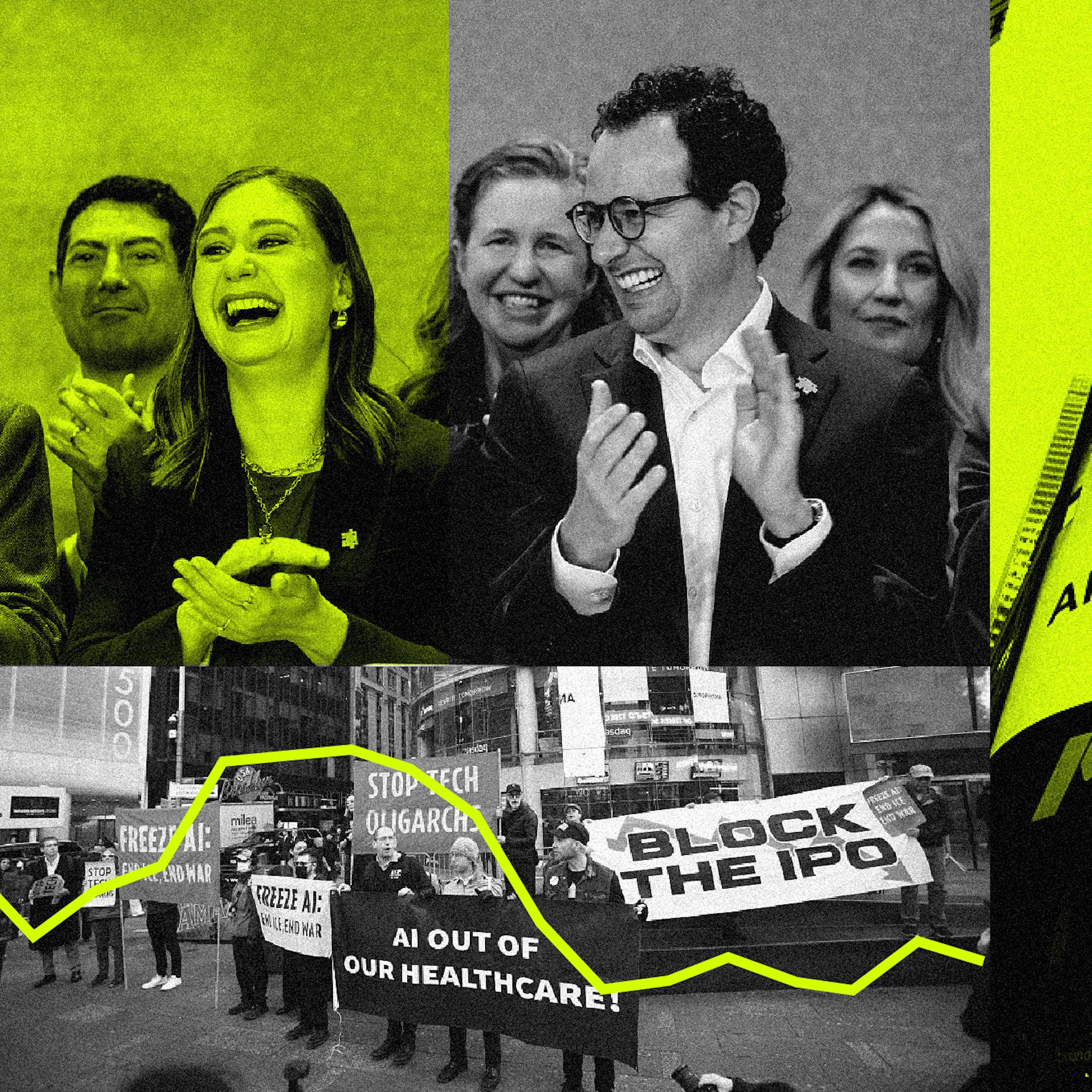
He started our conversation by talking about the self-dealing and corruption present all through our politics now — right against the backdrop of President Trump gathering AI CEOs to the White House to pinky-swear they'll try to keep AI safe.
Links:
How tech will self-police AI safety under Trump deal | The Verge
Supreme Court ruling kneecaps federal regulators | The Verge
Does AI need an antitrust exemption so it doesn’t kill everyone? | Decoder
Flock, Axon dodge Senate hearing | CNBC
Trump admin illegally blacklisted Anthropic, court rules | The Verge
Decoder is a Signal Awards finalist in the Business category! You can vote to help us win here.
Subscribe to The Verge to access the ad-free version of Decoder!
Credits:
Decoder is a production of The Verge and part of the Vox Media Podcast Network.
Decoder’s producers are Greg Ott, Kate Cox, and Nick Statt. This episode was edited by Eileen Felix. Our editorial director is Kevin McShane.
The Decoder music is by Breakmaster Cylinder.
Learn more about your ad choices. Visit podcastchoices.com/adchoices