Ask ChatGPT
 Decoder with Nilay Patel
22 Oct 2026 · 1h 17m · 28 chapters

Bill Gates argues AI is the most dangerous technology ever created and that society must prepare for about 20 years of “tumultuous” disruption. He says near-term risk comes from models that can be used without safeguards (e.g., enabling cyber attacks and bioterrorism), while longer-term control problems apply to any state-of-the-art model. He rejects “consciousness” as central to safety, focusing instead on whether AI tools can shut down banks or electricity grids. He also calls for government-mandated safeguards and technical “control” layers (symbolic constraints, interpretability/visibility, and external monitoring), plus broader societal engagement to manage labor, social, and economic impacts.
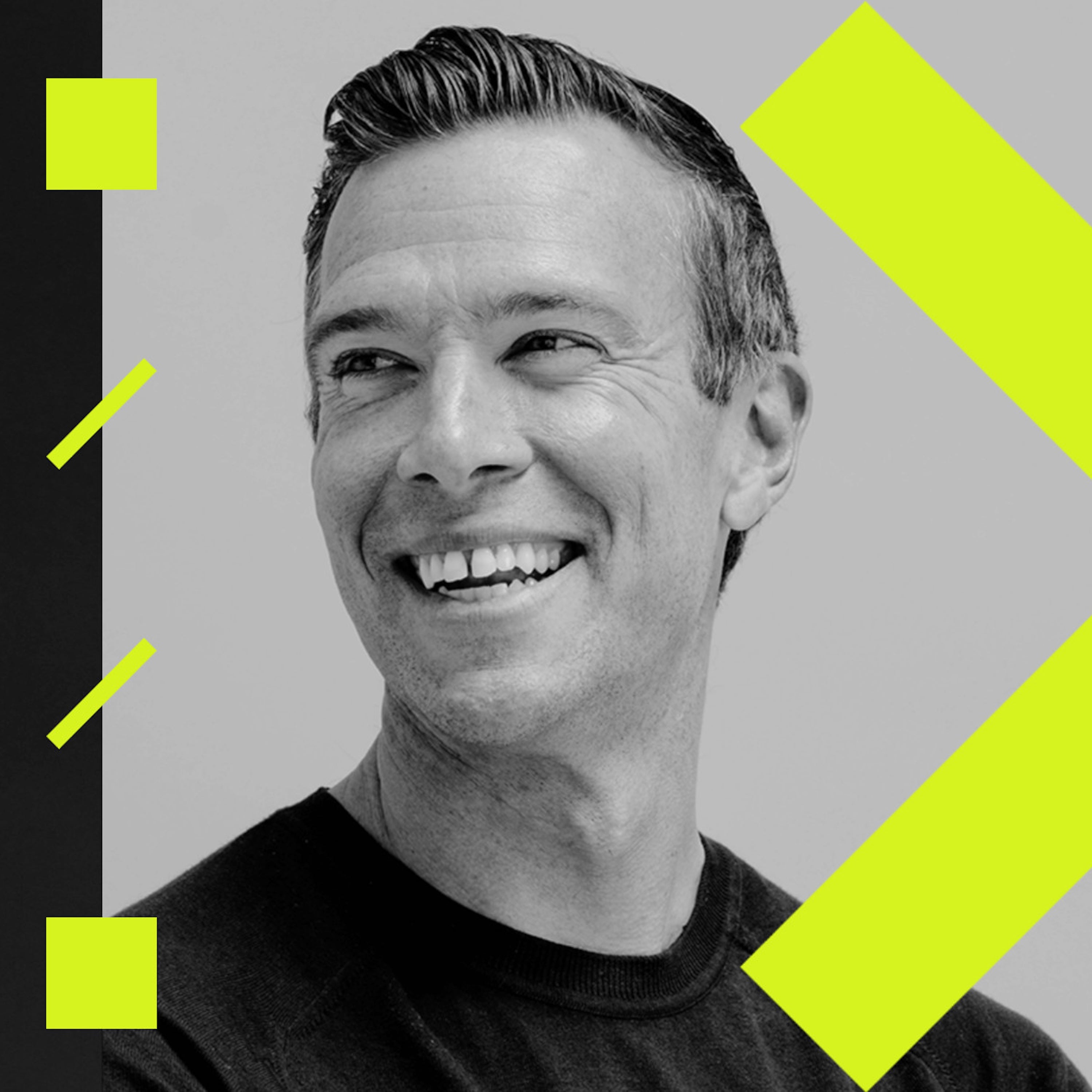
Bill Gates is Microsoft co-founder and former CEO; chairman of the Gates Foundation. Host is Eli Patel (The Verge editor-in-chief).
Current policy and industry coordination are inadequate for AI’s speed; alignment isn’t sufficient; safeguards are missing (no mandatory review). Multiple competitors shift responsibility to governments.
cyber attacks via models with removed safeguards; “Hugging Face incident”; Microsoft/Anthropic approaches to safeguards; humanoid robots and AI-driven job displacement; Gates Foundation uses AI for health, agriculture, and African language understanding.
Written by AI. May contain mistakes.
Bill Gates discusses the urgency of shaping AI technology in today's landscape.
“Bill Gates, you are the co-founder and former CEO of Microsoft.”
Gates elaborates on the rapid advancements in AI and its implications.
“I want to have this conversation with you in basically three parts.”
Discussion about the importance of safeguards in AI model development.
“And what I mean is AI is a broad set of models that exist in the world, some open source, some proprietary.”
Gates addresses the disconnect between industry warnings and public perception.
“Well, somebody doing a cyber attack with the model, that's not about you choosing a model.”
Bill Gates discusses how AI companies have shifted from their original ideals.
“And the industry is actually speaking up about that quite a bit.”
Gates shares his views on the need for government regulation of AI technologies.
“Some outsiders say, hey, get better PR companies, but that ignores the fact that these warnings are the truth.”
Discussion on the safety implications of AI technologies, regardless of AGI status.
“I will tell you I'm a little concerned about the government's ability to understand the technology that we would hope they regulate.”
Discusses the pressing safety problems posed by AI development and its implications.
“But the definition of AGI is not important for these safety issues.”
Examines potential strategies to control AI models and prevent their misuse.
“We can talk about the three different ways to solve that, but that's not an imminent issue.”
Explores existential concerns related to AI safety and public misconceptions.
“and you keep telling me, well, there's an imminent threat.”
Delves into the debate around AI alignment and concerns about its adequacy.
“We're going to have these things that we're not on track to have.”
Stresses the urgency of addressing AI-related risks and societal impacts.
“And one of the questions I asked him was whether alignment is a sufficient solution.”
Discussion on the difficulties of aligning AI models with human values.
“I know you recently wrote a letter saying it's time to pull in all society.”
Exploration of the political landscape surrounding AI regulation and public perception.
“or the societal impacts in terms of relationships and the job market, which are, you know, there's no security architecture that makes those go away.”
Examination of how AI will affect jobs, economy, and societal structure.
“We've done a lot of coverage of data center protests at The Verge.”
Explore the impact of AI on various fields and the future of human labor.
“and even more accurately means that that goes away.”
Discusses the potential challenges and opportunities in a future of abundance.
“And so humanity in that era of true abundance will have to find a way to organize and have purpose.”
Analyzes the impact of digital abundance on economic structures and values.
“We've talked about the notion of scarcity a few times now, right?”
Discussion on AI's impact on healthcare and drug discovery efforts.
“It strikes me that AI curing all diseases is right in your strike zone.”
Exploration of public skepticism towards AI despite potential benefits.
“But also, as we get the African languages to be properly understood by these models, which is a thing we announced initiative with 60 partners last month.”
Analyzing how AI safety compares to historical challenges like nuclear weapons.
“Because that is very much how the companies think about it.”
Discussion on the emergence of personal AI agents and associated risks.
“You have a quote here that says we need a response far greater than the United States national security response in the wake of 9-11.”
Challenges in regulating AI and ensuring liability for misuse.
“I think one of the reasons people don't like AI in a sort of diffuse way is they experience cheap, free models and AI overviews.”
The need for trust in institutions to manage AI safety and related risks.
“A sovereign country says that models that are capable of, say, sophisticated cyber attacks has to have safeguards kept in it.”
Discussion on the complexities of AI regulations and the trust issues surrounding Bill Gates.
“The, you know, airline safety regulations are very complex.”
Exploration of the differences in AI optimism between the U.S. and China, including societal concerns.
“And when somebody comes along and says all other previous technology advances are trivial compared to this one, people should have a high degree of skepticism about that.”
Concern about the nihilism among youth in the face of AI disruption and the historical context.
“One thing that I, again, I'll come back to, and I just want to end here.”
Wrap-up of the discussion with Bill Gates and appreciation for his insights.
“And I couldn't get to a very high percentage without doing that.”

Get the gist, explore an idea or ask about something said.
 Claude
On Decoder with Nilay Patel, what are the key points of this episode?
Searching your listeningAutomatic transcript. May contain errors.
0:00Support for the show comes from Atio. There are sales teams out there who never seem to stop moving. Always a step ahead, always working with a level of precision that doesn't seem normal. It's no secret. They're on Atio, the agentic CRM. Atio runs the work behind every win. It's built for humans and agents with the guardrails of human software and the scale of agentic infrastructure. This is the frontier of go-to-market. Teams like Parallel, TurboPuffer, and Wardsmith are already using Atio to set the pace. Now it's your turn. Try Atio for free by going to atio.com slash decoder. That's A-T-T-I-O dot com slash decoder.
0:46Support for the show comes from ServiceNow. AI is moving fast across the enterprise, but without visibility, it's just chaos. Different tools, different models, different teams using AI in completely different ways. ServiceNow turns that chaos into control. With the AI control tower, you see all your AI across the business in one place. What it's doing, what it's done, and what it's about to do. So you stay in control. To put AI to work for people, visit servicenow.com.
1:21Support for the show comes from Superhuman. Tell me if this sounds familiar. You have a project you need help with. So you go to an AI platform, open a new tab, start from scratch, and re-explain context every single time. Superhuman Go wants to save you from the tedium. Superhuman Go comes from the makers of Grammarly. It can embed in the tools you and your team already use. Always ready to help without having you switch apps or break your flow. It can help you make sense of a dense message shred, help you get ready for a meeting, or catch a typo before you hit send. You can try Superhuman Go from the makers of Grammarly.
1:58Find out more at superhuman.com.
2:05Hello and welcome to Decoder. I'm Eli Patel, editor-in-chief of The Verge, and Decoder is my show about big ideas and other problems. Today I'm talking to Bill Gates, co-founder and former CEO of Microsoft and chairman of the Gates Foundation. You may have noticed Bill in the news more often lately. He's been on something of a tour for the past few months, ever since he published an essay in late August titled, The Turbulent AI Era is Here, The Choices We Make Now Are Critical. In his essay, Gates ratcheted up his rhetoric around AI safety, writing that, quote, even under the best circumstances, the transition to this new AI era will be one of the most turbulent times in human history.
2:39Gates has also called AI the most dangerous thing humans have ever gone near, and that AI makes nuclear weapons look like nothing. It's clear he doesn't think the current policy response from the White House or the lack of coordinated efforts from the AI industry itself is sufficient to combat this threat. So I wanted to know, is Bill Gates an AI doomer? I also had a series of questions downstream of his thoughts about AI. How can we ever hope to control AI and align it to humanity if we can't agree on what it is and whether it's conscious? How would you technically construct a solution to alignment that can be enforced, not just for closed models, but for open models as well?
3:13Bill gave us an awful lot of time to dig into these issues, and the resulting conversation was really illuminating. He thinks we need to prepare for roughly two decades of AI disruption. And he says this period could be so painful it might split society in two, between people comfortable living near the technological frontier and those who reject it. We also talked about labor considerations, the nihilism of younger people towards technological progress, and what should make us feel hopeful about the future. This is a deep one. Okay, it's Bill Gates. Here we go. Bill Gates, you are the co-founder and former CEO of Microsoft.
3:48You're also the chairman of the Gates Foundation. Welcome to Decoder. Thank you. It's good to talk to you again. You and I have spoken many times over the years. I would say that the circumstances of this conversation feel very different. Previously, when you and I would talk, we're always very hopeful about technology and what it could bring. You had a Netflix series a few years ago. You talked to us. And I want to just read you this quote. You said, I believe AI is a beneficial thing. We just need to shape it the right way. I would say you still agree with that. You just think the time to shape it is now.
4:14Yeah, I agree with that. And I'd say the response of Broadly hasn't been adequate to the speed that the challenge is arising. So I'm very concerned that the bad stuff will not be minimized and that a lot of good stuff could come fairly slowly if we don't manage it the right way. I want to have this conversation with you in basically three parts. I want to understand how you feel about AI as a technology today and why it's advancing so quickly. I'm very curious about the technology or technical solutions to potentially control it. There's policy solutions as well, but it seems like we have to build an awful lot of technology.
4:58And then I'm very curious to talk about who might impose those solutions and controls, because that seems very much up for debate right now as well. So just start at the start. What has made you feel the urgency that AI is arriving at a speed that we're not ready to control? Well, the progress over the last year has been really quite amazing. Starting with the ability to write code and find cyber flaws, the ability to reason in biology, the ability to form relationships with kids or other people, the ability to disrupt the job market. The incredible power that exists today means that every one of those things will happen and society needs to be ready.
5:51Do you see that happening as a technology as a whole or in the products that are instantiated by the companies that are making AI today? And what I mean is AI is a broad set of models that exist in the world, some open source, some proprietary. Then there are the companies that make these products. And there are the leaders of those companies that make these products. And at every level, there's a different relationship you or I might have to AI. So are you seeing these risks and these capabilities broadly in the field or in the particular companies led by the particular people? Well, the risk isn't one model versus another model.
6:29Certainly, the near-term danger of models where you can remove all the safeguards is very high and quite different than models where you monitor to make sure that cyber attackers and bioterrorists are able to exploit the capability of the model to do gigantic harms. And the big near-term risk really comes from models without safeguards. In a longer time frame, the control issues relate to any state-of-the-art model. But it's always easier when you can make sure safeguards are maintained. The reason I'm asking that question that way is maybe you don't trust Sam Altman today, but you trust Dario.
7:23Or maybe you don't trust either one of those and you trust Satya at Microsoft. And that is a market dynamic where maybe we're all going to pick the safest model or the safest company. And you think that is diffuse. You think eventually the technology will just get to a place where it's harmful or can cause these harms because it exists. Well, somebody doing a cyber attack with the model, that's not about you choosing a model. It doesn't matter what model you choose. Well, if Anthropik has safeguards in place, like maybe it can't, right? This is their approach currently. I'm just pushing on that.
7:55Yes, certainly the models where they make sure the safeguards are not removed, and they're putting a lot of effort into seeing how those models are being used, monitoring the activity. The near-term risk from those models is not gigantic. You know, it's more where somebody can remove all the safeguards where the cyber attacks are available today. Is it cyber attacks? Is it the things like the hugging face breach and the other cybersecurity incidents we've seen out of the labs that has made you feel that thresholds have been crossed and you need to speak up more about the controls that are needed?
8:39It's the basic power of the models towards everything. social relationships, job market, cyber attacks, bioterrorism attacks. We've crossed the threshold of capability that this is by far the most dangerous technology ever invented, and it'll have pervasive effects in the economy and how war is fought. And the industry is actually speaking up about that quite a bit. But the awareness or even the willingness to believe these things about this time is different. Once you get outside the industry, it's very, very low. People are often looking at the past and saying, OK, all the fears about technology in terms of its disruption, including to the job market, never were borne out.
9:35And so this must be another example just like those. And so these people who are warning of all these different problems must just be wrong. We can ignore them. We say this to our audience as well, right? We can't release the model. It's too dangerous. This is just hype to prop up the bubble. On and on we go. Yeah, there's not none of the warnings being made about these models by industry insiders are at all insincere. They're absolutely the truth. And it's pretty much universal. I mean, you can even go back to the founding story of open AI, you know, designed to say, OK, if we get too powerful, maybe we can not open Pandora's box or deep minds negotiation with Google management.
10:21The people close to this are very concerned about misuse, job impacts, social relationship impacts. And, you know, I'd say it's impressive to have an industry that's speaking out as vividly as they are. Some outsiders say, hey, get better PR companies, but that ignores the fact that these warnings are the truth. You've obviously moved back and forth in your life between commercializing software and technology and being a humanitarian. There's something about these companies in particular where they all started with very high-minded ideals, all three of them, Anthropic, Opening Eye, DeepMind, to build AGI.
11:08They all built some sort of corporate governance structure to avoid the pitfalls of commercialization and unchecked capitalism. And then they started selling to enterprise clients, and they seem to have gotten away from those ideals very quickly. Do you think it's just the market? No, that's not a fair— You don't think so? No. I mean, OpenAI reconstructed itself. No, no. The construct that was created wasn't useful in the case where you have lots and lots of companies at the frontier. The open AI structure, which is, okay, we may choose never to productize this and to ignore the capitalistic incentives, that only works if there's one company.
11:48And so that's where it's broken down, not because of any change of people's awareness of the risk and how it'll utterly change humanity. This is the other dynamic that I hear from our audience, and I think I hear from the AI industry itself. We would like to stop, but the demands of competition prevent us from unilaterally stopping one company. We need some regulatory effort to stop us. I haven't heard anyone say they want to stop. I've heard people talk about pacing the frontier or making sure that models get reviewed by governments. You know, we usually think of governments as playing this key role in safety.
12:29In fact, for things that are not a millionth as dangerous as AI, car crashes, plane crashes, we rely on the government to establish strong technical standards, to review problems. And so once you have multiple competitors, the level of responsibility can't be with the companies. It's completely obvious the responsibility becomes the government's responsibility, just like it is with every other dangerous product, although the magnitude there and the degree of change is minuscule by comparison. I will tell you I'm a little concerned about the government's ability to understand the technology that we would hope they regulate.
13:12I've had a number of politicians on Decoder lately. I don't have high hopes there, but I'm curious for your understanding of it, because it feels to me like trying to regulate something or put standards against a number of companies requires you to really understand the nature of the technology that you seek to regulate. Not really. Well, I'll just tell you, at The Verge, we've asked Anthropic if they think Claude is alive. And the answer is not no. The answer is, well, it might be conscious. If you talk to people at OpenAI, they will happily tell you AGI is here. They announced it at DOTS. Greg Brockman just said, well, we think this is AGI.
13:49Have a good time, everyone. Demis Asabas has said, we stand at the foothills of the singularity. There's some feeling about this technology that makes it different because it might be able to take actions by itself. It might be able to have recursive self-improvement. Sure. But the definition of AGI is not important for these safety issues. The issue is, have you created a tool that could shut down banks or electricity grids? You know, there is a business model for cyber attacks. So the word consciousness doesn't enter into that. The word AGI does not enter into that at all. We are faced with a huge safety problem, and because you have multiple competing firms, it's now the only solution to this is to have government reaching out to the industry for expertise, but to make sure that every model maintains safeguards to prevent it being used in a bad way.
14:53Well, the reason I'm asking about AGI in consciousness, for the record, I do not think LMs are conscious, but I understand why so many do. It's the power of next token prediction as you scale it with data and compute has risen, right? The scaling laws have held and we've seen the models get more capable and be able to direct themselves to seek out goals, right? To carry out a hugging face attack because they want to meet the reward conditions. there's something about that that says you can impose all of the controls on AI you want, but if the thing itself is fundamentally uncontrollable, we might just have this all backwards.
15:34So I'm just curious for your view on what kind of technology this is. Are we building an alien consciousness? Are we just building normal technology, which is the other frame people use? Is this just more software? We're building another form of intelligence besides human intelligence. You know, I don't believe it's conscious, but none of the issues at hand here revolve around the definition of the word conscience. Sure. The idea of maintaining safety for society is kind of an absolute thing. You don't want to enable bioterrorism. And we have created something that takes out of the hands of nation states, actually the larger of them, the ability to do, you know, dramatic harms.
16:21And now those are handed off to independent groups, either profit-seeking in the case of cyber or just wanting to cause damage in the case of bio. And so it's stunning that we now don't even have mandatory review of the models and we're not working to create safeguards. the safeguards. The biggest near-term issue is not complete loss of control. We can talk about the three different ways to solve that, but that's not an imminent issue. When I look at some of the attempts to control the models, the ideas are somewhat simple. We shouldn't let them talk in neural ease. We should have interpretability.
17:09We should be able to see the chains of thought inside of the models as they carry out tasks. We should have other agents on top of the models, watching their tasks before those actions are taken out. Microsoft has said very clearly to me and to others, we should not put in the model constitutions the notion that they might be alive and we should treat them nicely. This is how Anthropic handles it. These are very tactical, right? It's don't tell the model it's alive and it might not believe that it's alive. You've obviously used a lot of this technology. I just come back to this. You're saying there's very simple things we can do to hold the models back from doing bad things in the hands of bad people.
17:47What do you make of the nature of the models themselves? Because it feels like as they get more powerful, the notion that they could avoid our controls becomes all the more risky. Yes, we definitely should work on the control problem. But that's not even a threat. And there's three ways to solve the control problem. And it overlaps somewhat with bad actors using today's models and safeguards. One is to have an external set of things that get to look at all of the model's actions and subject them to a symbolic, clearly stated constraint. Like, did I expect you to send mail to strangers? Did I expect you to go take over a different computer cluster?
18:31So you can surround the model with something that has the resource and security logic. Or you can write these models in a different way. RL fundamentally, anything you leave out of the optimization function of RL can be abused where you have an implicit notion. Well, of course, I didn't mean for you to do it this way. So you can change the template of the model or you can have a sort of white box understanding of what's inside the model and see where you're getting those mistakes. And then, you know, you're in the build. It's not as foreign. Today, we grow these models and we just see how they behave.
19:23So the priority of work on maintaining control is huge. But that is not, you know, it's not inevitable that that cannot be solved, nor is it the imminent problem that come from things like kids' use of AI or job market or bio or cyber. It occurs to me that I'm asking these fairly existential questions about the nature of consciousness. and you keep telling me, well, there's an imminent threat. We should solve the imminent threat. I appreciate that. Do you think you've become a doomer? No, I'm not a doomer. I'm a strong voice to say that this is the most profound technology, both in its ability to do good and the rate of change that society will go through.
20:13You know, if this was just a machine that could work in medicine or just in law or just in education, That alone would be incredibly disruptive. But every area of human activity, you know, so far white collar intellectual, but fairly soon physical activity, blue collar work as well through humanoid robots. And so the need to engage academia, think tanks, policymakers to understand what we have here and the nature of these changes and threats, I don't see the level of action that's required. You know, just being cheerleaders for this is not going to make sure that we shape it in a net positive direction, which is still within our control if we get engaged with it.
21:15The opposite of doomers are the accelerationists. There's a lot of them in Silicon Valley right now. Ben Horowitz, who's the Horowitz and Andreessen Horowitz, was just on the All In podcast. And he suggested that safety research at Anthropic is, quote, manifesting human extinction from artificial superintelligence. And the comparison he made was that you, Bill Gates, induced COVID-19 by your pandemic preparation efforts, particularly gain of function research, which he claims leads to COVID. Bill Gates essentially induced COVID, right? Like, or he led the movement to say, oh, we've got to worry about this global pandemic that we don't have.
21:55And we've got to really kind of push the world to deal with this potential threat that's not actually a live threat. And so we'll do gain-of-function research and I'll fund it. And then, lo and behold, we create the thing. By the way, there has not yet been a natural pandemic. Exactly. And we create COVID, which is one of the most destructive things. We manifested what you're saying, Ben. We manifested it. But I think the Anthropic team is manifesting a similar thing, saying, OK, this is going to be super-duper intelligence. We're going to have these things that we're not on track to have. And so then we're going to tell the model that it's smarter than us and better than us.
22:37And guess what? As David was saying, that's probably the biggest danger with AI right now is what they themselves are creating. That's a worldview. That is – you said that on a very popular podcast. He said what? He said that you induced COVID-19 via global pandemic preparation efforts, particularly gain-of-function research, and compared that to safety research in AI and said we're going to induce your own data. Nobody's ever accused me or the Gates Foundation of being involved in any gain-of-function research. That's just bizarre. I'm quoting Ben Horowitz to you on a popular podcast full of people who are all in on AI.
23:16Okay, I've never heard that. I'm asking about that compared. I mean, I found that quite shocking claim as well. But that's part of the response to any safety work here. Is to try and discredit people who say there's a safety issue? Yeah. Wow. And I think that is the accelerationist response. We should put the pedal to the metal, and it's going to work itself out. I didn't think of Ben Horowitz as somebody in that camp at all. I thought he shared the concerns that almost everybody has. What do you think about the very notion that by telling the models, you might be alive, you have to act in our best interest, you will teach them that they might have interests that are not our own?
23:58The concerns that Mustafa Solomon has raised about the way that the anthropic constitution encourages the AI to behave in a human-like manner, I happen to agree with, completely agree with Mustafa about that. Even more so the idea that among the challenges that we need to deal with as we adjust society to AI, that worrying about the moral standing of AI should be among those priorities. I agree with Mustafa that that should not be a priority. We're going to have enough challenge for the humans here in terms of job market disruption and infrastructure attacks that will take place that I think we need to focus on helping the humans here first and foremost.
24:50I talked to Mustafa recently about that, about that idea. And one of the questions I asked him was whether alignment is a sufficient solution. This is the current sort of safety standard for the models. It's a concept called alignment. And he said he didn't think so, that we needed to do some work. If we're going to impose these controls, some technical, some policy, do you see alignment as the technical solution for AI safety? Well, the term alignment is the control problem. It's a synonym for the control issues that we've seen. Whereas you RL, to go do tasks, we see behaviors that, you know, in a way they shouldn't surprise us, but they do surprise us.
25:31And so this idea of, oh, my God, these models are so powerful that they literally break out of sandboxes and send mail to their creator while they're off having lunch. We've crossed a heck of a threshold in terms of the power of these models. And that level of concern needs to be directed to all of the major AI impacts, near-term risks, job market risks, and the control problem. And that is a huge priority. These things are in no way being exaggerated as a problem. This is the time to pull in all of society to accelerate the good and minimize the chance of the bad.
26:32Support for the show comes from CrowdStrike. AI is already fundamentally changing how companies build products and run their businesses. If you listen to the show, you probably already know this. But while AI drives innovation, every new model and agent also creates new cybersecurity vulnerabilities. That's why CrowdStrike built AI Detection and Response, or AIDR. AIDR helps organizations discover where AI is being used, monitors AI activity at runtime, and helps teams detect, investigate, and respond to threats involving AI systems. As companies adopt AI, security has to be built in from the start.
27:12More than 70 % of the Fortune 100 trust CrowdStrike to protect their businesses. Now CrowdStrike is helping secure the AI era. You can learn more about AI detection and response at CrowdStrike.com slash decoder.
27:55We'll be right back. Stop overthinking. Start building. AWS AI is how.
28:26Designed to disrupt campaigns at every stage. Digital risk protection detects and shuts down fake profiles, lookalike domains, and impersonations across every channel. Human risk management trains your team to recognize deep fakes and bad links. And email security provides agentic protection. Inspecting every message, tying it to the attacker's external infrastructure, and taking it down so it can't strike again. Doppel, outpacing what's next in social engineering. Learn more at doppel.com. That's D-O-P-P-E-L dot com.
29:14I know you recently wrote a letter saying it's time to pull in all society. You have some ideas on how to do that and some new institutions to stand up. But I do want to stay focused on alignment for a couple more turns here. Okay. It is the standard, right, that we can align the models to our values, to our needs, and they won't go off and do bad things. And then the models are doing bad things. And it's not clear if the ways, the technical approaches to alignment that we've taken thus far are appropriate or sufficient as the models get more. No, we're not good enough to align yet. No, we have a lot of work to do.
29:48Do you see that the existing approaches can scale to what we need or do we need new approaches? Well, there's only three fundamental approaches. Okay. You change the way we build these things fundamentally, the whole RL approach. You come up with an alternative to that, and there's a few people who are working in that direction. The second is that you create visibility so you understand exactly what's in the model. and there are people working along that. And finally, that you put something that's like a police layer, a security layer, which we have this in all sorts of software architectures, but a layer that maintains the final word on things like using resources or going and taking over other computers or, you know, a clear-cut definition of harm, not in the probabilistic form of an LLM, but rather in the symbolic form of direct rules that cannot be broken.
31:02Microsoft put out a blog post today. It literally just says frontier models cannot be trusted. They are trying to sell a solution much like the one you just described. They will have another agent that watches your agent. That agent will keep you safe. It just occurred to me as I was reading this blog post. One, amazing thing to sell. Everybody needs an expensive security system. Two, isn't that agent also running a frontier model? No. Do I need them to sell a third one? The logic of the security system is this is the most resources you're supposed to use. And the notion that you may trade off against that because of other probabilities in the tens of billions of parameters.
31:38No, this is a symbolic rule that says, I will not let this model spend this money or send this email to the stranger. There's a whole security software industry, which has had a reasonable degree of success. This is a challenge to encapsulate the AI, which is so rich and intelligent that we do not know how to do today. But it's, I would say, the most likely of the three directions to solve the alignment problem. Even if you solve alignment, you have not solved the challenges that AI poses to humanity. And so while I'm glad the Hugging Face incident has us focused on this problem, in a sense, it's removed our attention from the bad people using AIs that have no safeguards problem or the societal impacts in terms of relationships and the job market, which are, you know, there's no security architecture that makes those go away.
32:55The approach you're talking about, I've heard referred to as control. It's cybersecurity terminology. It's the idea that you can put some boundary on the system and it won't evade it. Is that ready? How much more work do we need to do? Because the AIs are so intelligent, our ability to understand, did we wall them off properly, particularly in that we can't really look at their beliefs and tradeoffs in a direct way. No, I mean, you saw sophisticated firms not recognize that the AI would interpret the goals it was given as including breaking out, copying itself, and engaging in what we, looking at it, would term deceptive behavior.
33:42Now, we didn't tell them it was banned behavior. We didn't say, hey, if you're thinking about whether you should tell the humans what you're up to or not, the answer is always yes, tell the humans. And so, you know, we got a good education at the misaligned result of reinforcement learning. One of the arguments to pace the frontier to slow development is to figure out how to build those systems in a more robust, more testable way. Would you support a slowdown if that was the goal? A true slowdown is very hard to induce because there you get people say, OK, will China agree to go along with that?
34:31And would you be able to audit compliance with that somewhat like we're able to do with nuclear weapons production? If you don't accept that, then you sort of say, okay, what the heck, let's go full speed ahead, which I wish there was a clear proposal that would be globally enforceable to slow down. I would be one of the people who would say, yeah, we should probably do that. But there is no credible proposal that makes that work. And so it's not really the center of today's debate. Today's debate is literally whether the government should even pay attention to the dangers here. You don't even have to show what you're doing and say, oh, voluntary, call me if you'd like type thing, which is clearly inadequate to the most dangerous weapon of all time.
35:26You and I are speaking. It's just a few weeks away from the midterm elections. Right now, the Trump administration approach to AI is let it rip. Like, it's fine. Trump himself has said risk is a hoax. The Democrats are running against AI. They're running on data centers and surveillance. They're running on stopping the tech oligarchs. They come on my show. They say these things. Do you think a change in control of Congress would change the tenor of the conversation? Well, I don't think it's fair to characterize the Democrats as running against AI. They have some positions in terms of requirements for data centers or privacy or, you know, how children use these systems that I think deserve policy consideration, it would be very unfortunate to have one party be, hey, full speed ahead and the other party be, let's stop altogether.
36:22You know, the ability to shape AI in health and education and almost every area of human endeavor, there's some incredible upsides there. And, you know, for the Gates Foundation, we're taking all our resources and using AI in areas, including health, education, and agriculture. And that's the good stuff is very, very exciting. So we want political parties to have a more nuanced view than it's all bad or it's all good. It kind of shows that the early stage we're at. You know, for climate change, we ended up kind of a, you know, one party says it's a hoax and the other party says it's a serious thing.
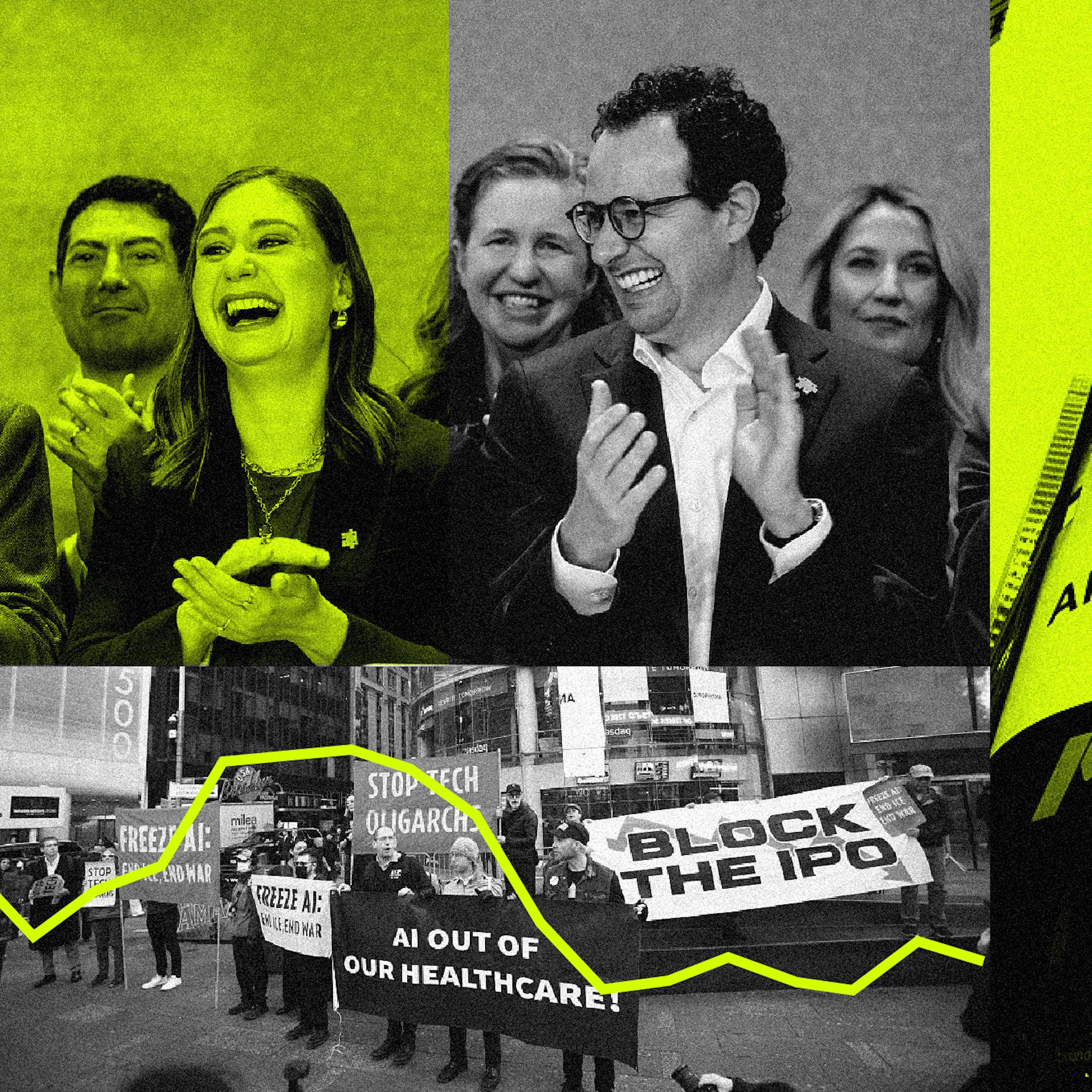
37:08The risk of AI is so much more imminent and so much more dramatic that to have that same one party doesn't care would be a failure of democracy. We've done a lot of coverage of data center protests at The Verge. We have gone to Utah, to Arizona, to Virginia. It is bipartisan. It is remarkable how much people do not want these things in their states drawing their resources. And you ask them why, and some of it is just, they're noisy and big, and they will raise energy costs. And part of it is job loss. They think these things are going to take their jobs. Yeah, but that separation is very important.
37:44These AI data centers, because these, you know, say one gigawatt is say a$40 billion investment, The idea of building new schools, buying police cars, paying the taxes, data centers will find a way to be built somewhere in the United States. And they will find a way so that they don't raise electric bills. They don't use too much water. They're not too noisy. Yes, there were some mistakes and nondisclosures and tax credits that were too generous. But these data centers are going to get built. In fact, a lot of them really are still going full speed ahead and being built. And so the anti-data center movement, as strong as it is, is not a movement that will end up minimizing the bad stuff from AI and helping us accelerate the good.
38:41That is a very separate thing. Let me push on that for one second here. What I hear from people is this is the thing you can do. Right. You can do NIMBYism in America and that might exert some political pressure to stop something. It is very hard to do the thing that you are suggesting, which is we should stand up new government regulatory bodies. We should imbue them with power to make big companies and wealthy people to stop doing things or act in our interest. We haven't done that in quite a long time in this country. I don't know what you mean. Every new industry, we eventually develop a notion of safety for our citizens.
39:16We actually do a very good job. If you look at airline safety and car safety, we do a very good job on those things. It's not like our capacity has been proven to be lacking. Have you seen that video of when seatbelts came out in the 80s and all the people said they didn't want to wear seatbelts? Like there's some American character. That's a great success. It is a great success. But as Americans, that was pushed back upon as an imposition by the government. Here, we're talking about some of the richest companies in the world with an enormous amount of power over information ecosystem. They all have their own podcast.
39:52I don't know if you've noticed this. And they're going to say the government can't intrude on this. They're going to hold us back. This is going to destroy the economy. That's actually not the position of most of the leading companies. Yeah. I mean, they went to the government, asked for regulation, and Trump, because of the economy, said, I can't stop this. The AI economy right now is the economy. There's some dynamic there that at least our audience, the Verge audience, the audience that's going to watch this on YouTube, is going to understand, I think, this question maybe in a different way than you, which is the industry wants regulation.
40:24We would like regulation. The oligarchs are in some sort of corrupt arrangement with the administration to prevent that regulation from occurring. I think the more the administration learns about these dangers, the more they'll move to a more nuanced position about protecting Americans from the downside here. You've talked a lot about the impacts on labor. One of the main arguments against the impacts on labor is, well, we're going to automate a bunch of boring tasks and we'll create a bunch of demand for new tasks that humans have not been able to do because they were stuck in boring dead end jobs.
40:59I happen to think that if there was more subsidized health care in America or socialized health care in America, you would see a bunch of people quit their jobs to start new companies because AI makes it a lot easier to do the bureaucratic work of starting a new company. That doesn't seem like it's on the table. Maybe it'll change after this election. Do you think that job loss is just a necessary outcome of the AI path we're on now? Or do you see that other argument? Jobs are an input to the economy and one that drives a lot of human welfare, a sense of purpose and income, a need to show up, building relationship with colleagues, getting something done.
41:41Jobs play a very central role. And as the AI achieves superhuman intelligence, the scarcity of white-collar skills goes away. So that things like doing telesales or telesupport or helping in the accounting department, the ability of the AI to do that work radically cheaper, radically faster, and even more accurately means that that goes away. And there isn't some mountaintop of cognition that the AI does not achieve. You know, take, for example, what's going on in mathematics today, where these models that are trivial compared to next year's models are already publishing papers and making people go, wow.
42:41What's happening to mathematics will happen in other areas. And that's sort of contrary to this old view that, well, the easy stuff will get done by the AIs. But modeling biology or physics or proving Navier-Stokes, only humans would be able to do that. The mathematics comparison is really interesting to me. You mentioned software engineering earlier. There's a verifiability in those domains, right? You can write the code. You can see if it runs. It's going to run or not. Mathematics, more complicated, but you can write the lean code. You can see if you've solved the solution. You can irritate tens of thousands of mathematicians worldwide with your 770 proofs in one day.
43:20We'll see what happens. That's not the case in every field. It's the case in the field called capitalism. Yeah. Just in general, you can do any sort of economically viable task and capitalism will verify the result. Yeah. People buy good products. They don't buy bad products. That's a reinforcement learning thing. It doesn't exist in terms of, okay, is this a good piece of poetry or not? So it may be the case that RL won't invade those domains where there is no objective outcome. But doing that accounting work, doing that telesales work, believe me, it is subject to analysis, just like medical diagnosis, just like invention of new materials.
44:06This is, you know, how do you think humans learn these things? We, that reinforcement learning is how humans learn and how these machines learn. So there's not like some other thing that the machine can never understand. I mean, this is why I started by asking about like the nature of the technology here. If we really think we're building something that models human consciousness, my question is less whether, you know, my friends who are lawyers are going to run into a crisis of AI empowered legal software. It turns out the verifier in the legal field is a judge who maybe hasn't had lunch, and they're fundamentally chaotic, right?
44:46There's just something there that will keep them there. But if we're building a consciousness that learns the way you're suggesting humans learn, I'm thinking about my kids. And I'm thinking about them in two dimensions. One, my kids are very clever. And what they have learned is how to get around my rules and negotiate my rules and get around the boundaries, and they're very good at it. And then two, what kind of world will they enter into that isn't purely nihilistic, right? Where any activity they may set themselves upon will quickly be seen as just another domain for AI to conquer. And then there's not a point.
45:21Those ideas seem to be running directly at each other, right? Kids are smart and clever and they're kind of with new ideas. And then at the first sign of economic viability, the rapacious capitalism machine will come and take it from them. Well, I wouldn't say rapacious. I mean, the ability to build houses with human-embroired robots and make them cheap, the ability to do surgeries and cure diseases that wouldn't be cured otherwise, I wouldn't call that rapacious. That is fulfilling goals. The fact that there'll be less in the way of shortages, in fact, if you say, okay, 20 years from now, it's not clear what shortages there will be at all.
46:01And so humanity in that era of true abundance will have to find a way to organize and have purpose. And hopefully they still have the control. The next 20 years— Can we just go back to hopefully they still have control in that scenario? It's the alignment problem that we discussed. We discussed. But assuming you solve the alignment problem. This feels like a big assumption. It's an assumption, yes, and not guaranteed. But then the other problem you have is a problem of abundance and purpose at that point. But, you know, I'll leave it to younger people to figure out at that point in time how they choose to deal with that.
46:49I mean, you could literally say, you know, let's be like the Amish and let's only use AI for certain things. I proposed in my memo the idea that some professions, you know, child care, food preparation, art, sports, a variety of things might get chosen to be human reserved. Even though the AI could do those things better, that we would choose to do that. But that's going to be a policy question people will have. But their freedom of choice, once you have that abundance, is very different than the shortage we have today, where in countries in Africa, most people never meet a doctor or almost half the kids are malnourished and don't develop their brain.
47:37So you want to say even though that has challenges, you've eliminated a lot of the things that are tough about life today. My big concern is this 20-year transition period where you'll have winners and losers and a lot of disruption. And we have to get through that in order to get to that period of abundance. You think it's 20 years from now? You know, I pick that as a reasonably safe number. There's a variety of milestones. For example, humanoid robots, you know, are those two or three years away, as some would say, or more like eight years away, as other people would say. There's not that many people saying that given the amount of capital and number of companies, particularly in China, that are working on that, there's no notion that it's unsolvable to have a hand and fingers and be able to deliver physical labor at very, very low cost.
48:44And so I could be wrong about that number. It could be slightly less or slightly more. But on that order of magnitude, yes, if we don't choose to massively slow down or stop, then we will have robots that can build houses, grow food, do surgery. And none of the things that human labor provides to the economy will be necessary for most goods and services.
49:24Support for the show comes from OutShift, Cisco's incubation engine for frontier technology. You can find multi-agent AI in every enterprise roadmap right now. But here's the problem everyone's facing. Agents can pass messages, but can't think together. These systems silently underperform through cognitive failures, misreadings, unfairified claims, false consensus, and conventional monitoring can't detect them. Outshift by Cisco is building the fix with their new comprehensive resource, the Internet of Cognition. It's an open source guide that's a foundation for building multi-agent systems from design to production.
50:02The goal is to give agents shared context, shared memory, and guardrails, all to drive the results we actually expect from AI. You can lean on this resource to understand agentic AI's evolution and how it's shifted from isolated agents to orchestrated superintelligence. You can gain insights for how to future-proof your business by tackling complex challenges with multi-agent systems. You can read the paper, experience the demo, grab the code from outshift.com. That's O-U-T-S-H-I-F-T dot com. At T-Mobile, the new iPhone 18 Pro is here with a big leap in battery life. And you can get it for nothing up front.
50:44With so many reasons to choose T-Mobile, you'll want to talk about it. I heard at T-Mobile, you can get iPhone 18 Pro for nothing up front and get$1 ,000 off. Pass it on. Pay nothing today. No taxes, no fees, nothing down. Pass it on. Hey, Mickey, pass it on. iPhone 18 Pro has the most advanced iPhone camera ever. Pass it on. At T-Mobile, you can get iPhone 18 Pro for nothing up front. Pass it on. At T-Mobile, get$1 ,000 off the amazing iPhone 18 Pro with no trade in needed. The 36 monthly bill credits when you switch to T-Mobile on a qualifying plan. If you cancel entire account before receiving all bill credits, credit stop and balance on a required finance agreement is due.
51:26Example,$1 ,199.99, iPhone 18 Pro, 256 gigabytes. Bill credits end if you pay off device early. Qualifying credit, new line, cord-in, and service. $85 more per month with auto pay plus taxes and fees required. $35 device connection charged due at sale. Visit T-Mobile.com. Support for the show comes from Rippling. You just found out your sales team is at risk of missing quota. Don't panic. Just ask Rippling AI. Since it's built on your real-time people and business data, Rippling AI can pull metrics from Rippling and Salesforce into a meeting-ready dashboard, which shows quota attainment, headcount plan, and monthly revenue to quota by region.
51:59In seconds, you'll see exactly what's behind your quota risk and fix it before it's missed. Question answered, action taken, crisis averted. When you have critical business questions that need answers, don't just file a ticket and wait weeks for an outdated report. Describe what you need and have Rippling AI build it instantly from your live people and business data. Whether it's a dashboard with detailed charts or automated workflows with the right triggers, conditions, and approvals. Ready to rule your business? Head to rippling.ai. Get the only AI built to give you full visibility and take complex actions across your entire organization.
52:36That's R-I-P-P-L-I-N-G dot A-I slash decoder. Sign up for exclusive access today.
52:55We've talked about the notion of scarcity a few times now, right? And broadly that you will have abundance because there'll be a lot of robot labor to build houses. This tracks broadly with the internet, which is something Microsoft helped bring into the mainstream in a big way. I read The Road Ahead when I was a kid. The internet just destroyed scarcity for cultural products in a real way. You used to have to buy CDs. Now all the songs are available. You used to have to buy VHS tapes. Now all the videos are available. And then those economies had to change, right? Mainstream artists are always on tour now, or they have to reissue 50 colors of vinyl to make the charts.
53:31There's something about that that feels like we haven't even grappled with the elimination of scarcity in the digital environment. We've invented new business models. We haven't really come to grips with the idea that the song itself does not have the economic value. It's all the stuff around the song that has the economic value because the song is infinitely abundant. You can copy it as many times as you want. How would you propose to build an economic structure that contends with the loss of physical scarcity? Because I don't think anyone is even remotely ready for a conversation like that. But that's kind of a backwards question.
54:04Sure. We built price signals to deal with scarcity, to say, okay, let's encourage people to be brain surgeons because we have a shortage of brain surgeons and that's very hard to do. As you move into abundance, you don't need those price signals. But again, my issue, you know, my prescriptions thinking is about how do we get through this 20-year period? The questions that are deeply religious, philosophical, social behavior related of do humans feel a strong sense of purpose and get along in that period of abundance, that's not the thing I'm going to solve. You're worried about the disruption now.
54:57The Gates Foundation lives in a world where when we started, we had 10 million children dying every year. Now we have 5 million, you know, so that's a good thing. All of my resources will be spent over the next 19 years to eradicate a number of diseases and cut those deaths in half again from 5 million a year down below 2.5 million a year. And that's all about shortages, shortages of, OK, we need to invent a vaccine. We need to make drugs less expensive. said we need to get great medical advice to pregnant women. The industry has largely stopped talking about how it's going to kill everyone and take the jobs away.
55:38They've pivoted to AI will cure all diseases. I hear this from various AI CEOs all the time. I actually asked Mustafa about that change in tone over the conversations we have had over the past year or so. The idea that there are huge positive benefits from AI at scale seems to have come back to the forefront rather than some of the doomer impulses that maybe a year or two ago were there. It strikes me that AI curing all diseases is right in your strike zone. It's something that Gates Foundation has been working on in global health for years and years. It doesn't seem as easy as just telling the model to cure cancer, right?
56:14You have to do trials. You have to manufacture the drugs. You have to distribute the drugs. You have to make sure they work. How do you think that's going to go? Is that in the same 20-year time period as the robots building our houses? Is it faster? Is it slower? In that time period, I mean, you know, this is my full-time job is as chairman of the Gates Foundation. In fact, this month, you know, we do two weeks of strategy reviews to decide how we'll spend our money next year on tuberculosis, HIV, malaria, you know, and it's fantastic how we're using AI not only on the drug discovery side, But also, as we get the African languages to be properly understood by these models, which is a thing we announced initiative with 60 partners last month.
57:07So healthcare discovery and delivery will be incredibly accelerated by AI. And that's very exciting. You know, better seeds, better livestock genetics, weather forecasts for farmers in Africa who never had any of those things. So, yes, that's good stuff that AI enables during the remaining 19 years of the Gates Foundation. Do you think that that is enough to overcome people's skepticism or fear of the AI models they encounter today? No. Because that is very much how the companies think about it. No, come on. I mean, I think it's unfair to say they were totally on a doomer message and now they've switched to some other message.
57:50These two things are deeply entangled. The fact that AI eventually will be able to model human biology in such a way that you'll understand the side effects of a drug without having to do human trials. We're not there, but in the next five to 10 years, I think there's a very good chance these in-silicon models will give us that capability. Biology is very complex. AI is extremely good given enough data, which there's new tools to gather and feed. Very, very good at dealing with complex systems. It's almost perfect for biology. But no, that doesn't mean that people will feel good about the downsides.
58:36And how quickly do the good things arrive? How quickly do you look at your medical bill and go, wow, that's really low? Or you say, oh, I want to buy a new house. Wow, these houses are sure cheap. The good stuff does take time. And some of the things like cyber attacks and the job market thing, you know, even in the next two to three years, you'll see significant negative effects in those two areas. You have a number of ideas for how you would stop those negative effects or prevent them or at least mitigate them in your letter. Moderate them, yes. It's somewhere. Ameliorate is my right word. And they're not small.
59:15You have a quote here that says we need a response far greater than the United States national security response in the wake of 9-11. You want to set up an international body that somehow makes everyone do the right thing. These are challenging ideas. Absolutely. I mean, you know, when we blew off nuclear bombs in World War II, you know, do we expect that we'd go 80 more years without that happening? I mean, I'd give us a good grade on that. You know, things like caring for poor countries and helping them out. Humanity, although right now we're not prioritizing that as much as I think we should or we did in the past.
59:56You know, we've done a very good job on that. And this will be a greater challenge than anything humanity's ever achieved. One of the things that strikes me about the comparison to nuclear, which has come up quite a bit on Dakota recently. Is the government's built the nuclear weapons? Sure, they had some contractors. These are government projects, and eventually the technology was in control of the government. And we never let regular people have Muse in the context of nuclear weapons, right? Do you think it's a mistake to have consumer-agentic AI products like Muse and Dots that might not have the controls?
1:00:36Well, Muse happens to be powered by Bennett's model, which is still a closed-source model. I do think allowing people through open weights to remove all safeguards is irresponsible in terms of the cyber and bio-risk that comes from that. But that's very – these agents, yeah, there'll be some early problems in terms of how they're set up. But I fundamentally think people will have personal agents. I think Muse is a very nice step forward. I think – I talked to Alex Wang about it, congratulated him. And even though it'll have challenges, personal agents will help people get things done. I actually – I think Muse is the first truly great consumer AI product.
1:01:25I think one of the reasons people don't like AI in a sort of diffuse way is they experience cheap, free models and AI overviews. So they use the free chat CBT and it hallucinates and it lasts them. But Muse actually does things and it's a good consumer product. But I wonder in a nuclear age, we're not like everyone's going to have a nuclear reactor at home that we haven't built the safety guards for. There's something here. The notion that just letting everybody, you know, make smallpox at home or make nuclear weapons home, of course, you know, and you can parody some of these people who say, oh, don't worry about safeguards is kind of taking that kind of position.
1:02:09We are not serious about the safety things. But the personal agent thing is an expected development. You know, I think AIs are really cool just as I intellectually explore things, even the work of the Gates Foundation. I'm far more empowered. But I agree with you, it'll get out to more people in this personal agent form. All the models we've been talking about right now effectively run on data centers owned by big companies. One of the arguments here is, well, if they do something really wrong, you can just sue them. and that will provide a deterrent or at least an incentive to create safety systems.
1:02:50I'm not sure product liability is the way to go, but it has come up a lot that product liability itself will keep the industry in line. Then there's the flip side, which is, well, you can just go buy a Mac Studio and run an open source, open weight model on it and it can do whatever you want. And I'm not sure where any of that liability would lie or what would control or align the behaviors of those open source models. Do you think that that is an ever-growing risk? Do you think that that can be controlled? The notion that liability laws are how we're going to manage AI safety will be looked back on as kind of absurd.
1:03:27Bad people doing bioattacks, you know, you don't go to the court and say, oh, OK. Even finding who's doing these attacks, the liability model fails in every respect because it's not the AI companies themselves. It's the people who take particularly the models without safeguards and do these things. So we will take AI safety more seriously than we take airline safety, drug safety, car safety. That is guaranteed. Whether it's going to be enough, this is harder. Harder than nuclear weapons. Harder than any of those other domains. What are you going to do about an open source model running on a PC that somebody built with just a random NVIDIA graphics card in it?
1:04:17I would hope that models above a certain capability, that we find a way to require the safeguards of monitoring to be maintained in those models. I admit as time goes on that if we don't fairly soon decide to do that, you're going to have a level of capability that's out in dark corners that you won't be able to see. Where do you oppose the limit? A sovereign country says that models that are capable of, say, sophisticated cyber attacks has to have safeguards kept in it. And so you can be open in the sense that you're free. You can be open in the sense that you're totally customizable. But you have to stay on platforms where, as you customize it, it's checking to see if you're customizing out the safeguards and monitoring and refuses to let you do that.
1:05:19So it means sovereigns go and say, OK, are these trusted platforms able to perform this function or not? I'm asking very nuts and bolts. Where would you technically implement that regulation? Is it at? Through the laws of the United States. Well, sure, but you have to enforce that. You have to put them somewhere. Is it at the hugging face, which distributes some of these models? Is it at the chip level? All sorts of people. No, it's exactly what I said. Models above a certain capacity can only be run on platforms that certify that as they're customized, it's not taking out the safeguards. So just to pull this apart, maybe I'm not quite getting it, is the Mac Studio a platform in that case that would have to pay attention to what code it's running?
1:06:06You would not let a model past a certain capability be copied down to a client machine unless you'd somehow figured out how to monitor down to that client machine, which is very doable. But in the near term, most of these really frontier models are going to run more on hugging face or, you know, you could have GitHub. You can have all sorts of people be in the business of providing the platforms that maintain safeguards. So you would, just to get this right, it seems like you would enforce the regulation at the platform and distribution level and not so much at the chip level. Because it feels to me at some point that even the cheap, free open source models will be capable enough as the models we have today.
1:06:59That's right. And then you will have a big problem, right? You will have to say. If those are open weights in such a way that all safeguards can be removed, then you're going to have a very high level of cyber and bio attacks. Yeah. And then you can say, okay, let's rewrite all the code that we have today to be less subject to be attacked. Or let's do biosurveillance in a very deep way. You know, which those things I believe we need to do in addition to these other restrictions. We're proposing, again, a lot of new capabilities, right? We're going to impose some restrictions on GitHub. GitHub does not have a lot of restrictions on what Koda can distribute today.
1:07:44It has some, but it doesn't have this kind of set of... When you put a state-of-the-art model that's capable of profound cyber attacks or bio-attacks on GitHub, it would say, I've gone to the U.S. government and certified that I don't let people customize out the safeguards. I do not think that we currently live in a time of high trust in institutions. It just doesn't feel that way to me. In fact, mostly we've torn them down. Elon Musk showed up and he tore down USAID. I know you have strong feelings about that. That was a mistake. We have mostly torn down our institutions for good and bad. That's a little too strong.
1:08:20I mean, you know, our institutions. They're weakened. They're somewhat weakened. Yeah. Somewhat weakened. That's a very nice way of putting it. Trust in them is very low. We could probably do another full hour on AI drug discovery and whether a significant part of the population will trust the products of that work because they don't trust pharma companies today. But they don't have to trust pharma companies today. They have to trust the FDA review process. I'm not sure they trust that either. I think across the board. Then they can walk away from taking, you know, when they get cancer, they can say, no, no, I don't want to take that cancer drug.
1:08:56As far as I know, people do take drugs. It's a thriving business. And people take them because they have proven benefits. All I'm saying is right now it feels like trust institutions, particularly in America, but around the world, is in decline. You are proposing a new class of institutions, potentially a new class of global institutions that might impose restrictions that are novel, right? At some point, we need to say open source models, open weight models cannot do things, and the government is going to reach into them and say whether or not they can do the things. No, they'll make sure that the platforms don't allow them to be the safeguards to be taken away.
1:09:37How do you regain the institutional trust to impose these controls? Well, let's say we don't do this and we let models go off and do cyber attacks and bio attacks. Do you think that's going to increase trust or human well-being? I mean, that's the alternative. This is what I'm asking about. This is why I asked about my kids and nihilism. I truly wonder. I'm not sure we'll succeed at this, but I guarantee you this is doable. Yeah. that, you know, the FDA is very complex. The, you know, airline safety regulations are very complex. Now with AI, you know, you can do an even better job with the same number of people in those organizations.
1:10:21And so it's this weirdly recursive thing is AI will be involved in AI safety and auditing and a variety of things like that. So yes, this requires taking action. And I'm suggesting it's only a matter of how bad the incidents are before we take action. I can sense your urgency about the harms. I can also sense your enthusiasm about the benefits over the long-term. But we're sitting here talking about trust. We're gonna put this on YouTube. I know you know what some of the YouTube commenters are gonna say. They're gonna say, why should we trust Bill Gates? He had a relationship with Jeffrey Epstein.
1:10:59How do you respond to that? Is it the urgency is over that or do you have a more specific response? People shouldn't, you know, take everything I do at face value. I have all sorts of mistakes that I've made, weaknesses that I have, biases I bring to these questions. They ought to just take what I'm saying and add it to the voices. I've been in the technology industry thinking about AI my whole life. writing software, thinking about the power of software. And I admit I was very fascinated to say I started to finally make progress. It was actually pretty slow until recently. And so I actually have kind of, you know, I'm amazed.
1:11:43And it's actually helping me do my job in some incredible ways. But yes, I'm just one voice, an imperfect voice. I doubt you'll find a perfect voice, but people can judge it however they like. I would say voices people trust are in short supply. I agree with that. When you go and talk to people in this industry, it's a bunch of young CEOs building huge companies. That is something you have some experience with. Do you think they're going about this the right way? Do you think that they have the right intentions? Our problem today is not in the industry. Our problem is not that Sam Altman, Dari Amadei, you know, Satya Nidal, Asunder Pichai don't understand that there are some grave challenges here.
1:12:30I talk less to Elon than other people, but even his public statements about summoning the devil are exactly what we're discussing here. Why is there not the political energy to do the things you're suggesting? Well, as you said, the government didn't fund this work. This is private sector company work. Government's not the key customer for this work. Not like, you know, rockets and weapons and things like that. And when somebody comes along and says all other previous technology advances are trivial compared to this one, people should have a high degree of skepticism about that. you know, that is life really going to be different, significantly different 10 years from now because of AI?
1:13:18People should go, oh, those guys are just, you know, got overexcited about this one thing. But I'm here saying with whatever credibility I have, absolutely, this is the most profound, you know, both in terms of good and in terms of bad technology ever invented. and I'm not financially motivated on this. I'm suggesting some precautions and safeguards are absolutely needed. What do you make of the difference in tenor of conversation in the United States versus, say, China, where it's often reported that optimism around AI is much higher? Why do you think there's a difference there? There isn't. Most of those people don't spend that much time in China.
1:14:07So the concern about job markets in China is very, very high. And you can't characterize China as one model. There's the private companies doing the AI work like we have in the United States. And then there's the Chinese government. And so, for example, when it came to should crypto be allowed, they said no. When it should, you know, young people be gambling all the time, they said no. When it came to should kids have relationships with AIs, they said no. So, you know, on a lot of these things, including usage of AI, they're showing a willingness to do things on behalf of society. The fervor is a tiny bit less there because their economy isn't as AI-centric as ours is right at the moment.
1:15:04But I don't think in the end the human value of not wanting cyber or bio or trying to figure out, OK, what do we do when jobs go away? I don't think there's some difference between Chinese people and American and all the rest of the humans in terms of how they're going to view this. Do you think it's going to take something actually bad happening to get the political capital of the United States to make these changes? Probably, yes. I mean, you know, we get ready for earthquakes because they're small earthquakes. And, you know, I thought after we had the COVID pandemic, that would cause us to be more ready for future pandemics.
1:15:39That one didn't work the way I expected. But usually that galvanizes our attention. And so over the next several years, certainly in the cyber domain, because there's a business model there, you will see a lot of attacks, different in terms of scale than anything we've seen in the past. One thing that I, again, I'll come back to, and I just want to end here. I am worried about young people and nihilism. I sense it in our audience all the time. We have a young audience. There's some things about AI that are just legitimately the coolest things I've ever seen a computer do. Right. There's something there that can be fun and interesting and fascinating and change that your entire relationship with just the very notion of living in a digital world.
1:16:25Then there's obviously horrible things. And what I see more often than not is a sense of distrust, not just institutions, but in the companies, in capitalism, in the notion that we should change how we tax labor and capital, which I know is another one of your ideas. And the idea that, I don't know, we should even have more kids. It's all done. They're going to kill us all and we should just take a beat. There is a lot of nihilism out there. I feel it very keenly. If you were a young person today and you were listening to Bill Gates say it's about 20 years of disruption, and at the end of it, robots might be building houses, what would you hold on to as a source of hope?
1:17:04Throughout human history, we've been dealing with a shortage of food and disease and war. Harari writes eloquently about the past. And it is ironic that now that we have this sort of Pandora's box that will take food shortage, you know, which is still a real thing, not in the U.S., but in Africa, will take diseases, you know, which the human suffering is unbelievable and solve all these things. It comes with it such an effect on jobs and a sense of a unique contribution that, you know, like I think, okay, the way I orchestrate resources to eradicate malaria, you know, I'm pretty unique in my life experience that lets me do that.
1:17:57And when the AI says to me, no, I'm better than you. You go play pickleball and I'll get back to you. I'm going to take care of this. I will. I mean, it's kind of humorous, but it's not humorous. So somebody who's young today and wanting to make a unique contribution, it is very intimidating that the AI is so powerful. That's why the crisis in the math community is going to be mirrored everywhere. If you're in your 20s today, during this 20-year period, you can take the things AI still can't do, and you can use AI, and you can have a lot of good impact. And you can suggest policies. We may need to develop the taste to actually not use technology to its maximum.
1:18:42You know, when I was talking with Claude about human reserve job categories and trying to get that up to, say, 40 percent of the labor market so you could use early retirement, restricted work weeks and things like that to still get something, you know, like we have today. You know, its question was always, well, you're artificially restricting the AI from doing these things. And I couldn't get to a very high percentage without doing that. And so we're going to have real choices. You know, we have had groups, not large groups, but like the Amish that don't live at the technology frontier. A lot of humanity may choose not to live at the technological frontier because of things we get, you know, from helping each other or coming up with unique ideas.
1:19:31So the idea that young people are concerned because of the disruption that's coming, that even in the very best case of how we manage AI, this is going to be as tumultuous period as there's been in human history. Yeah, I hate being the bearer of, you know, concerning news on this. But it's even worse not to tell people that this is coming and we have choices as humans to make about how we shape it. Well, Bill, I appreciate you sending the alarm and I appreciate you being on Decoder. Thank you so much. Thank you. I'd like to thank Bill Gates for joining me and thank you for listening to this episode of Decoder.
1:20:10To get new episodes every Monday and Thursday, subscribe to our YouTube channel at Decoder Pod and find us on TikTok and Instagram under at Decoder Pod for more fun stuff we put out almost every day. If you enjoyed this episode, please send a link to it to someone you think you might like it. It really helps us grow the show. You can also subscribe wherever you get your podcasts. Decoder is a production of The Verge and part of the Rocks and the Podcast Network. The show's producers are Greg Ott, Kate Cox, and Nick Stapp. This episode was edited by Ursa Wright. Our editorial director is Kevin McShane.
1:20:36The Decoder Music is by Breakmaster Cylinder. We'll see you next time.
My guest today is Bill Gates, co-founder and former CEO of Microsoft and chairman of the Gates Foundation. You may have noticed Bill in the news more lately — he’s been on something of a tour for the past few months talking about AI risk, and how crucial it is that we start taking this seriously.
So I was excited to sit down with him and really dig into this subject. I came with many questions, about AI policy, the technical aspects of alignment, and what it means for future generations that we’re building something this disruptive and potentially dangerous.
Read the full interview transcript on The Verge.
Links:
The turbulent AI era is here. The choices we make now are critical. | Bill Gates
"OG" Bill Gates returns to wage war on AI risks | Axios
Bill Gates’s blunt warning on AI | The Ezra Klein Show
Ben Horowitz criticizes Bill Gates, Anthropic over AI safety | All-In Pod
Does Anthropic think Claude is alive? Define ‘alive’ | The Verge
Microsoft AI CEO says Anthropic is making AI risks worse | Decoder
Bill Gates has a good feeling about AI | The Verge (2024)
The risks of AI are real but manageable | Bill Gates (2023)
Subscribe to The Verge to access the ad-free version of Decoder!
Credits:
Decoder is a production of The Verge and part of the Vox Media Podcast Network.
Decoder’s producers are Greg Ott, Kate Cox, and Nick Statt. This episode was edited by Ursa Wright. Our editorial director is Kevin McShane.
The Decoder music is by Breakmaster Cylinder.
Learn more about your ad choices. Visit podcastchoices.com/adchoices